




Abstract
Sexuality is integral to most romantic relationships. Through stress spillover, however, factors such as individually experienced stress outside of the relationship (i.e., extradyadic stress) can negatively impact sexuality. In this study, we explored how a possible (mis)matching of both partners' levels of extradyadic stress is related to sexual activity and tested for gender differences. Analyzing 316 mixed-gender couples from Switzerland, we employed Dyadic Response Surface Analysis to assess how extradyadic stress is associated with sexual activity. Our results showed that extradyadic stress was positively linked to sexual activity for women (in general) and men (in the case of matching stress levels). As this result was surprising, we conducted additional exploratory analyses and split the measure of sexual activity into (1) exchange of affection and (2) eroticism (petting, oral sex, and intercourse) and controlled for age. Results from this second set of analyses showed that for women, matching stress levels were associated with higher exchange of affection, whereas men’s exchange of affection was higher if men reported higher stress levels than women. Notably, after accounting for age, the link between stress and eroticism dissipated. Our findings suggest that exchange of affection may serve as a coping mechanism for stress, with gender influencing this dynamic. However, future research investigating stress and sexual activity should consider additional factors such as age, relationship satisfaction, stressor type, and stress severity.
Keywords
Introduction
Sexuality plays a significant role in most romantic relationships (Diamond, 2013) and is a factor that differentiates romantic relationships from other types of close relationships (Schwartz & Young, 2009). Research shows that different aspects of sexuality, such as sexual desire and satisfaction, have been consistently linked with relationship satisfaction (e.g., McNulty et al., 2019; Park et al., 2023; Quinn-Nilas, 2020; Vowels & Mark, 2020), quality, and stability (Yeh et al., 2006). Moreover, sexually active couples report higher individual and relational well-being. For example, several studies have shown that having more frequent sex (up to once a week) is associated with increased life and relationship satisfaction for established couples (e.g., Muise, Schimmack, & Impett, 2016). Sexually inactive couples, on the other hand, report lower relationship satisfaction, fewer shared activities, and an increased likelihood of separation (Donnelly, 1993). Hence, sexual functioning and relational well-being are closely linked and underscore the importance of sexuality in romantic relationships.
However, several factors may hinder couples from engaging in sexual activity, including stress. According to Randall and Bodenmann (2009), stressors can be intradyadic or extradyadic in nature. Intradyadic stressors originate from within the couple (e.g., conflicts or different values and relationship goals), whereas extradyadic stressors are experienced outside of the relationship context (e.g., high workload, disagreements with friends, or financial strain). Although extradyadic stress is experienced outside of the relationship, it can negatively affect relationship functioning through stress spillover (e.g., Bolger et al., 1989; Randall & Bodenmann, 2017). For example, extradyadic stress is associated with increased conflicts and disagreements within the relationship (Randall & Bodenmann, 2017), lower relationship satisfaction (Neff & Karney, 2004; Randall & Bodenmann, 2017), and is indirectly linked to lower relationship quality and communication (Ledermann et al., 2010). Through different detrimental processes, stress can undermine romantic relationships (Karney & Bradbury, 1995; Randall & Bodenmann, 2009). For instance, when couples are stressed, they spend less time together (Bodenmann, Charvoz, et al., 2007) and experience decreased physical and psychological well-being which can, in turn, negatively affect relationships (Falconier et al., 2015). Thus, stress might also spill over to sexual aspects in romantic relationships.
Stress and sexuality in close relationships
Research shows predominantly negative links between stress in general and sexuality. Studies found that an increase in subjective stress levels is associated with lower sexual desire (Balzarini et al., 2022), more sexual problems (Bodenmann et al., 2006), and lower sexual function (Abedi et al., 2015). Furthermore, stress in different life domains might reduce the amount of time partners spend together, which has been shown to reduce intimacy (Milek et al., 2015). In addition, women who were exposed to an erotic stimulus reported lower levels of subjective arousal under acute stress (ter Kuile et al., 2007). Also, chronically stressed women showed decreased genital (but not psychological) arousal predicted by higher distraction (Hamilton & Meston, 2013)—possibly a result from cognitive shifts in attention when stressed (e.g., Barlow, 1986; Sliwinski et al., 2006). Hence, stress is negatively linked to sexual functioning.
However, stress might not always impede sexuality, given that some previous studies have documented an opposite pattern of effects. In a daily diary study, participants in highly satisfied relationships reported increased sexual function on days after having experienced stressful events (Ein-Dor & Hirschberger, 2012). Daily stress can also accelerate the positive bidirectional association between sexual and relationship association (Zhao et al., 2022). Furthermore, Morokoff and Gillilland (1993) found a positive association between job stress (i.e., unemployment) and sexual dysfunction among men but surprisingly, a positive association between daily hassles and sexual desire among both men and women. They concluded that the psychological significance of stressors might also play a role in the association between stress and sexual functioning. Another plausible mechanism linking stress with increased sexual activity may lie in the excitation transfer theory (Zillmann, 1971, 2008). According to this theory, negatively arousing situations, such as stress, can heighten sexual arousal and desire, possibly owing to the physiologically arousing nature of stressors. While some studies hint at this association (e.g., Schippers et al., 2022), further research is warranted to substantiate these findings.
Whereas there is ample research on the link between general psychosocial stress and sexuality, we only know of two existing studies that have specifically examined extradyadic stress, in particular, and sexual activity. In one study, women completed weekly diaries over a three-month period, in which they reported their stress levels within the past week and sexual activity retrospectively for each day of the past week. The results showed higher stress was linked with lower sexual activity (Bodenmann et al., 2010). The second study focused on dyadic associations between extradyadic stress and sexual activity moderated by relationship satisfaction and mediated by intradyadic stress (Bodenmann, Ledermann, et al., 2007). They found that in dissatisfied women, higher extradyadic stress was negatively associated with sexual activity, while for dissatisfied men, there was a positive association. Furthermore, extradyadic stress was linked with higher levels of intradyadic stress, which then again was negatively associated with sexual activity (Bodenmann, Ledermann, et al., 2007).
A dyadic perspective of extradyadic stress and sexual activity
To date, it is not yet clear how stress impacts sexual activity if both partners' combined stress levels are examined. Given that partnered sexual activity is a between-dyad variable (i.e., it varies between but not within dyads; e.g., Iida et al., 2023), a dyadic perspective is needed. Furthermore, interdependence theory (Rusbult & Van Lange, 2003) highlights that interpersonal interactions (such as sexual activity) involve partners who influence each other’s motives, behaviors, and outcomes. Therefore, understanding the patterns of interdependence inherent in dyads becomes crucial for a comprehensive understanding of relationship dynamics (Gonzalez & Griffin, 2012). Neglecting to consider both partners’ viewpoints in a given interaction can result in an incomplete understanding of relational processes (Iida et al., 2023).
However, to the best of our knowledge, no studies to date have integrated both partners’ levels of extradyadic stress to examine the effects of stress (mis)matches on sexual activity. From a dyadic standpoint, however, it is plausible that the combined stress levels of both partners play a crucial role in the association between extradyadic stress and sexual activity beyond the impact of individual stress. In instances where partners’ stress levels align, the conventional assumption of a negative link between extradyadic stress and sexual activity remains applicable. Thus, couples with higher (matching) stress levels are likely to exhibit a stronger negative association between extradyadic stress and sexual activity.
When partners report mismatching stress levels, though, two contrasting scenarios can be posed: In scenario A, the partner experiencing higher stress may exhibit reduced levels of desire to engage in sexual activity, thereby undermining the couple’s overall sexual activity. Consequently, in the case of mismatching stress levels, the higher-stressed partner significantly influences the couple’s sexual activity. Mismatching couples, in comparison to those with matching high-stress levels, may show equal levels of sexual activity, whereas compared to couples with matching low-stress levels, they may report lower sexual activity due to the undermining effect of the high-stressed partner. In scenario B, despite the stressed partner’s reduced desire for sexual activity, effective communication, and negotiation of desires and needs with the less stressed partner may eventually lead to sexual engagement, facilitated by the compensating effect of the low-stressed partner. Research suggests that stress expression and dyadic coping (i.e., coping with stressors as a couple using emotion- and problem-oriented coping strategies; Bodenmann, 1997, 2005; Bodenmann et al., 2016), while mitigating stress, may foster feelings of connection and “we-ness” (e.g., Bodenmann et al., 2016) that may increase sexual intimacy (e.g., Feeney & Noller, 2004). Consequently, couples with mismatching stress levels might report comparable sexual activity to those with matching low stress levels due to the compensating effect of the less stressed partner. Conversely, compared to couples with matching high stress levels, mismatching couples may report higher sexual activity.
Thus, it may be possible that only one stressed partner is needed for couples to be less likely to engage in sexual activity (i.e., the higher-stressed partner is predictive of the couple’s decision to engage in sex) or that a lesser stressed partner could buffer the negative effect extradyadic stress possibly has on the couple’s sexual activity (i.e., the low-stressed partner is predictive of the couple’s decision to engage in sex). This way, this study may give further insight into the prediction of sexual activity in couples, above and beyond the main effects associated with each partner’s stress (Attridge et al., 1995; Oriña et al., 2011; Waller & Hill, 1951).
Current study
This current study is the first in the literature to examine the link between extradyadic stress and partnered sexual activity using both partners’ stress levels simultaneously and, therefore, also considering possible (mis)matching of stress levels. In our first research question (RQ1), we aimed to test whether we could replicate the findings on the predominantly negative link between extradyadic stress in general and sexual activity (e.g., Bodenmann, Ledermann, et al., 2007). In line with these previous findings, we hypothesized that higher levels of extradyadic stress within the couple in general would be associated with less sexual activity (H1). This hypothesis applies to a general link and to matching stress levels of both partners. However, our second research question (RQ2) examined how stress affects sexual activity if partners within a couple show mismatching stress levels. In the case of mismatching stress levels, two competing hypotheses were posed: (1) In the case of a mismatch of extradyadic stress, less sexual activity is reported than if partners report matching stress levels (H2a); (2) In the case of a mismatch of extradyadic stress, more sexual activity is reported than if partners report matching stress levels (H2b). In our third research question (RQ3), we tested possible gender differences to understand how gender may affect the association between (mismatching) levels of extradyadic stress and sexual activity. As previous research indicated, there may also be gender effects in how stress affects sexual activity. In their dyadic study, Bodenmann, Ledermann, et al. (2007) found that in maritally dissatisfied men, stress was associated with more sexual activity, while in maritally dissatisfied women, the contrary was true. They conclude from their results that men might use sexual activity as a strategy to cope with stress. Thus, gender might be an additional variable that needs to be considered when studying the link between extradyadic stress and sexual activity. We therefore hypothesized that in case of a mismatch, if men show higher stress levels than their partner, sexual activity would be less affected than if women show higher stress levels than their partner (H3). All hypotheses and analyses were preregistered (https://doi.org/10.17605/OSF.IO/4CVZ6).
Methods
Sample and procedure
The sample for this study stems from a larger longitudinal research project in Switzerland at the University of Zurich, examining the impact of stress on relationship development across the lifespan. In this study, several individual and relationship variables were collected annually for ten years (for further information, see https://doi.org/10.15139/S3/IUGVBK). Data from the first wave of this longitudinal study was used for the current analysis, in which a total of 368 couples participated. We did not include subsequent waves to ensure we had enough power for our statistical analysis due to increased attrition at each wave.
Couples were recruited via newspapers and radio broadcasts. To be eligible, both partners had to be at least 18 years old and in a romantic mixed-gender relationship for at minimum one year. Interested couples were contacted by phone and given details about the study procedures. Subsequently, they were invited to the laboratory, where partners signed informed consent and completed questionnaires in separate rooms followed by three videotaped interaction tasks which are not relevant for the current study. At the end of the first measurement, they were debriefed and received 100 CHF (approximately 111 USD) as a reimbursement for their participation. The Faculty of Arts and Social Sciences Ethics Committee at the University of Zurich approved all study procedures. For this study, we used questionnaire data from the first wave of the study. However, 52 couples in which one or both partners had missing data in their scale of extradyadic stress were omitted, which led to a final sample of N = 316 mixed-gender couples (N = 632 individuals). The Little (1988) test showed that women in the final sample differed from those in the original sample (χ2(2) = 9.17, p = .010), but there were no differences among men (χ2(2) = 5.18, p = .075). The missing data in women were predicted by age (F = 4.74, p = .030), whereas the final sample did not differ from the original sample in relationship duration and sexual or relationship satisfaction.
Sample characteristics.
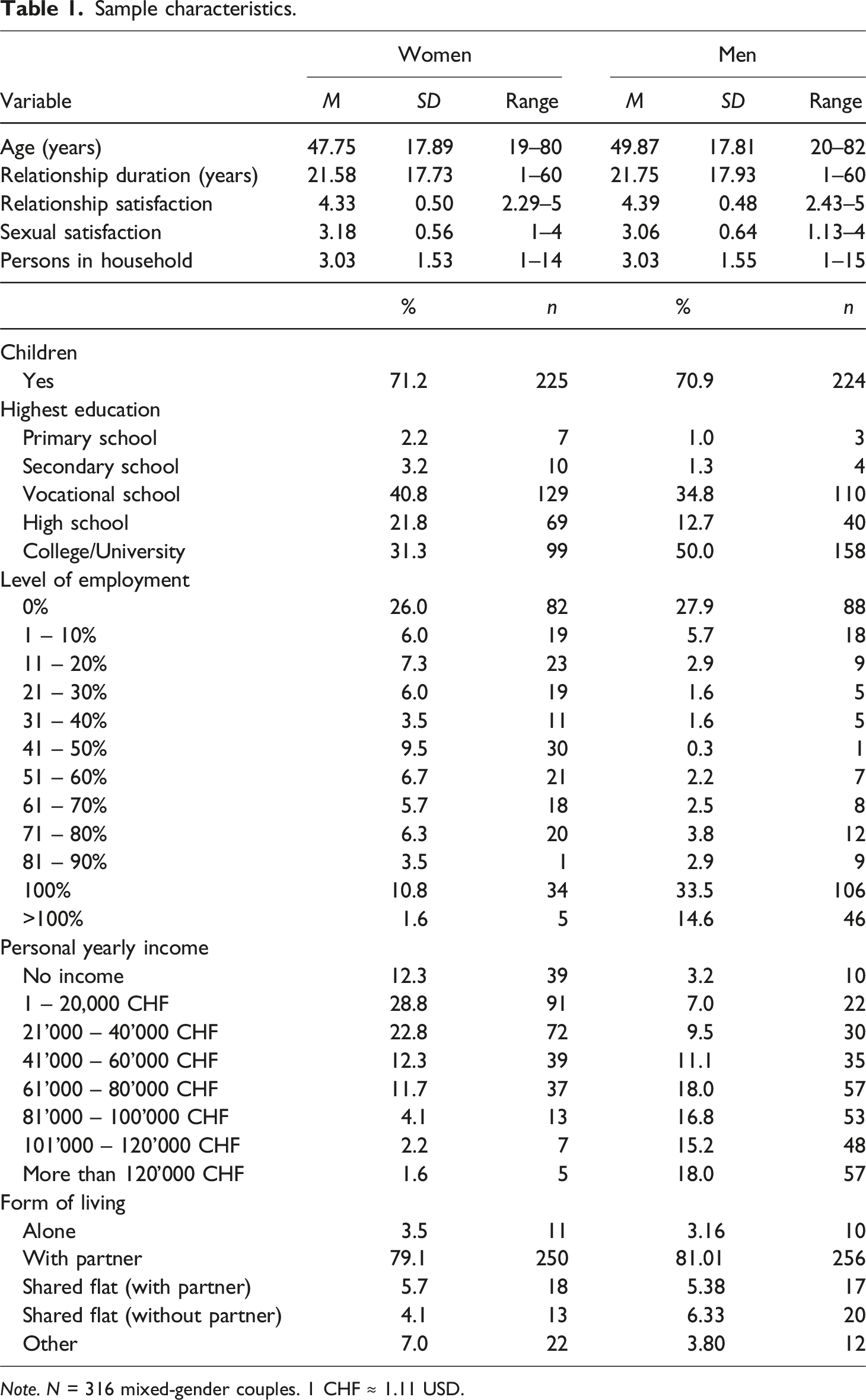
Note. N = 316 mixed-gender couples. 1 CHF ≈ 1.11 USD.
Measures
Extradyadic stress
Extradyadic stress was measured with the Multidimensional Stress Questionnaires for Couples (MDS-P; Bodenmann et al., 2008). The scale comprises eight domains including job/education, social context, leisure time, children, family of origin, housing situation, finances, daily adversities, and odds and ends. For each domain, participants were asked to indicate on a 4-point scale how stressful each domain was for them within the last 12 months (1 = not at all, 2 = somewhat, 3 = average, 4 = very). We used the average score across these eight items to measure the level of experienced extradyadic stress. Given that the experience of stress in one situation does not have to be paralleled by stress in another situation, we refrained from calculation of the internal consistency of this scale (e.g., see Rusu et al., 2020).
Sexual activity
Sexual activity was measured with the Sexual Activity Scale (SAS; see Bodenmann, Ledermann, et al., 2007). The original scale includes four items assessing the frequency of four specific sexual behaviors in which couples engage in their relationship. However, we only used three items (i.e., exchange of affection, erotic stimulation, and sexual intercourse) and excluded the fourth item about the frequency of reaching climax (orgasm) because of the well-documented “orgasm gap” between women and men in mixed-gender relationships, with men experiencing more orgasms more frequently than women during sexual encounters (Mahar et al., 2020). For each of those three sexual activities, participants were asked to indicate on a 5-point scale how often they engaged in each sexual behavior (1 = never, 2 = rarely, 3 = from time to time, 4 = frequently, 5 = very often). In our sample, the Cronbach’s α indicated acceptable internal consistency (women: Cronbach’s α =.71; men: α =.73).
Analytic plan
To test our hypotheses, we used Dyadic Response Surface Analysis (DRSA; Schönbrodt et al., 2018). The DRSA is a combination of actor-partner-interdependence models (APIM; Kenny et al., 2006) and response surface analyses (Edwards, 2002; Humberg et al., 2019). DRSA is based on polynomial regression and provides three-dimensional graphs that illustrate the dyadic associations for each partner’s outcome. It further allows a differentiation between how one’s own and the partner’s reported extradyadic stress is associated with their own and their partner’s sexual activity. Moreover, other than difference scores, DRSA can give insight into how (mis)matching of both partners in their predictor variable affects the outcome variable and is able to detect possible curvilinear effects (Edwards & Parry, 1993; Shanock et al., 2010). Response surface analysis has recently been used to study sexuality, for example, sexual desire (Kim et al., 2021; Muise, Stanton, et al., 2016), attitudes toward sex (Tavares et al., 2022), sexual advances (Dobson et al., 2018), and orgasm consistency (Leonhardt et al., 2023), but not yet in regard to sexual activity.
To address our research questions and hypotheses, we examine the surface test parameters (a1–a5) of the DRSA. While none of the individual parameters can singularly answer our research questions (Humberg et al., 2019), each surface test parameter serves a distinct purpose in addressing them. The a1 parameter evaluates the linear association between extradyadic stress and sexual activity. A significant negative a1 suggests reduced sexual activity with higher stress levels. The a2 parameter explores the curvilinear link between extradyadic stress and sexual activity, indicating whether moderate stress levels correspond to more (or less) sexual activity than extreme levels. A significant negative a2 implies increased sexual activity at moderate stress levels compared to low or high stress levels. The a3 parameter assesses whether sexual activity is higher when one partner’s stress exceeds the other partner’s. A significant positive a3 indicates higher sexual activity when the actor’s stress level exceeds their partner’s. The a4 parameter examines whether mismatched (versus matched) stress levels correlate with higher or lower sexual activity. A significant positive a4 parameter suggests increased sexual activity with a greater stress level mismatch, while a significant negative a4 parameter implies decreased sexual activity with a greater stress level mismatch. Finally, a nonsignificant a5 parameter determines the presence of a (mis)matching effect when other conditions are met (for detailed guidance on interpreting the surface test parameters, see Kim et al., 2021).
Regarding statistical power, to our knowledge, there is no method to directly assess the sample size needed for sufficient power within the DRSA. According to the APIM calculator (Ackerman et al., 2016), a sample size of N = 121 couples would be needed to have 80% power to detect main medium actor and partner effects (r = .25) with an α of 5%. Current recommendations suggest that a sample 2–3 times larger is needed for the DRSA (Humberg et al., 2019; Nestler et al., 2015). Therefore, our final sample (N = 316) should give us sufficient statistical power to test our hypotheses. Furthermore, prior research has used similar sample sizes for DRSA analyses (Kim et al., 2021; Tavares et al., 2022). To potentially increase power, we tested whether actor- and partner effects can be set to be equal. However, since the likelihood-ratio tests indicated that the constrained couple-oriented model fitted the data significantly worse (p = .015), we used the full model without any constraints. We further checked the analysis for influential cases, which was not the case. All analyses were estimated in R (R Studio, Version 2023.06.1 + 524; R Core Team, 2017; Schönbrodt et al., 2018).
Results
Descriptive results
Descriptive statistics of main variables.
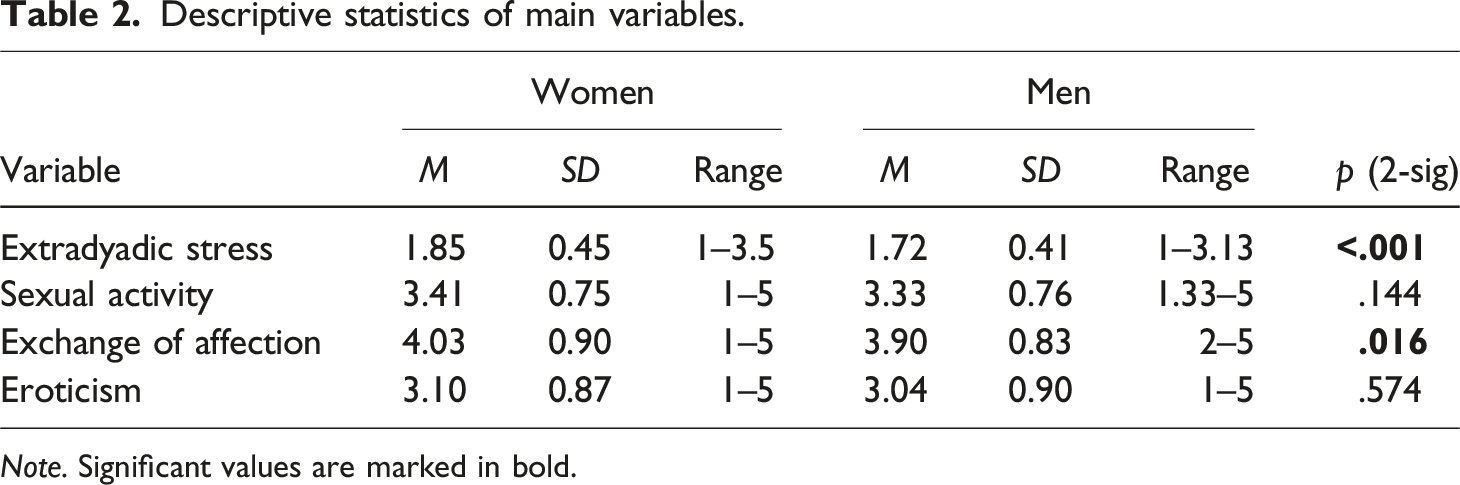
Note. Significant values are marked in bold.
Extradyadic stress and sexual activity
Response surface tests and polynomial coefficients for sexual activity.
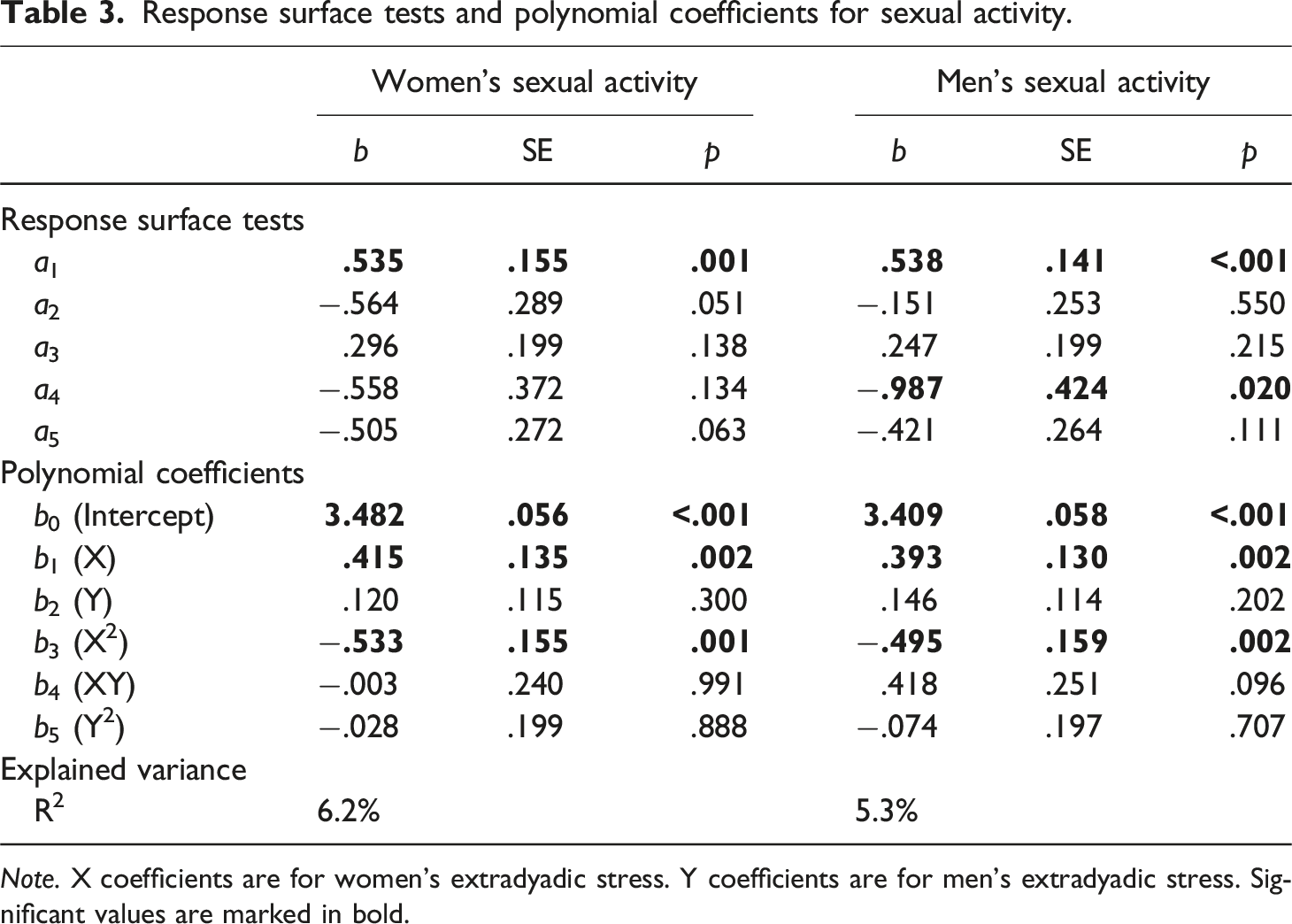
Note. X coefficients are for women’s extradyadic stress. Y coefficients are for men’s extradyadic stress. Significant values are marked in bold.
In our second research question, we examined how (mis)matching of extradyadic stress levels is linked to the couples’ sexual activity. The results of the DRSA showed that among men, the higher the partners match in their stress levels, the more sexual activity they reported (significant and negative a4 response surface test, while simultaneously, a2 and a3 and a5 were nonsignificant, see Table 3). We did not find any (mis)matching effects in women. However, these results did not support H2a or H2b, as we had expected the link between extradyadic stress and sexual activity to be negative. Nonetheless, the results suggest that in terms of sexual activity, similar (i.e., matching) stress levels in both partners are associated with higher sexual activity more so than if partners show different (i.e., mismatching) stress levels.
In our third research question, we examined if women’s or men’s stress is more influential in predicting sexual activity, hypothesizing that women’s stress may be more influential (H3). We did not find any significant response surface tests (nonsignificant a3 response surface test in both partners, see Table 3) suggesting that neither women’s nor men’s stress levels seem to be more important in the association between extradyadic stress and sexual activity. Therefore, H3 was not supported, as we did not find any gender effects. See Figure 1 for a visual presentation of women’s and men’s sexual activity as an outcome. Dyadic response surface analysis plots of women’s (A) and Men’s (B) Sexual activity. Note. The z-axis represents sexual activity. The x-axis represents women’s extradyadic stress, whereas the y-axis represents men’s extradyadic stress. Dots represent individual measurements of women (A) and men (B) over which the surface is placed. The line on the surface leading from front to back is the line of congruence (LOC; i.e., where stress levels match). The line on the surface leading from left to right is the line of incongruence (LOIC; i.e., where stress levels mismatch), leading from cases where men show higher stress levels than women to cases where women show higher stress levels than men.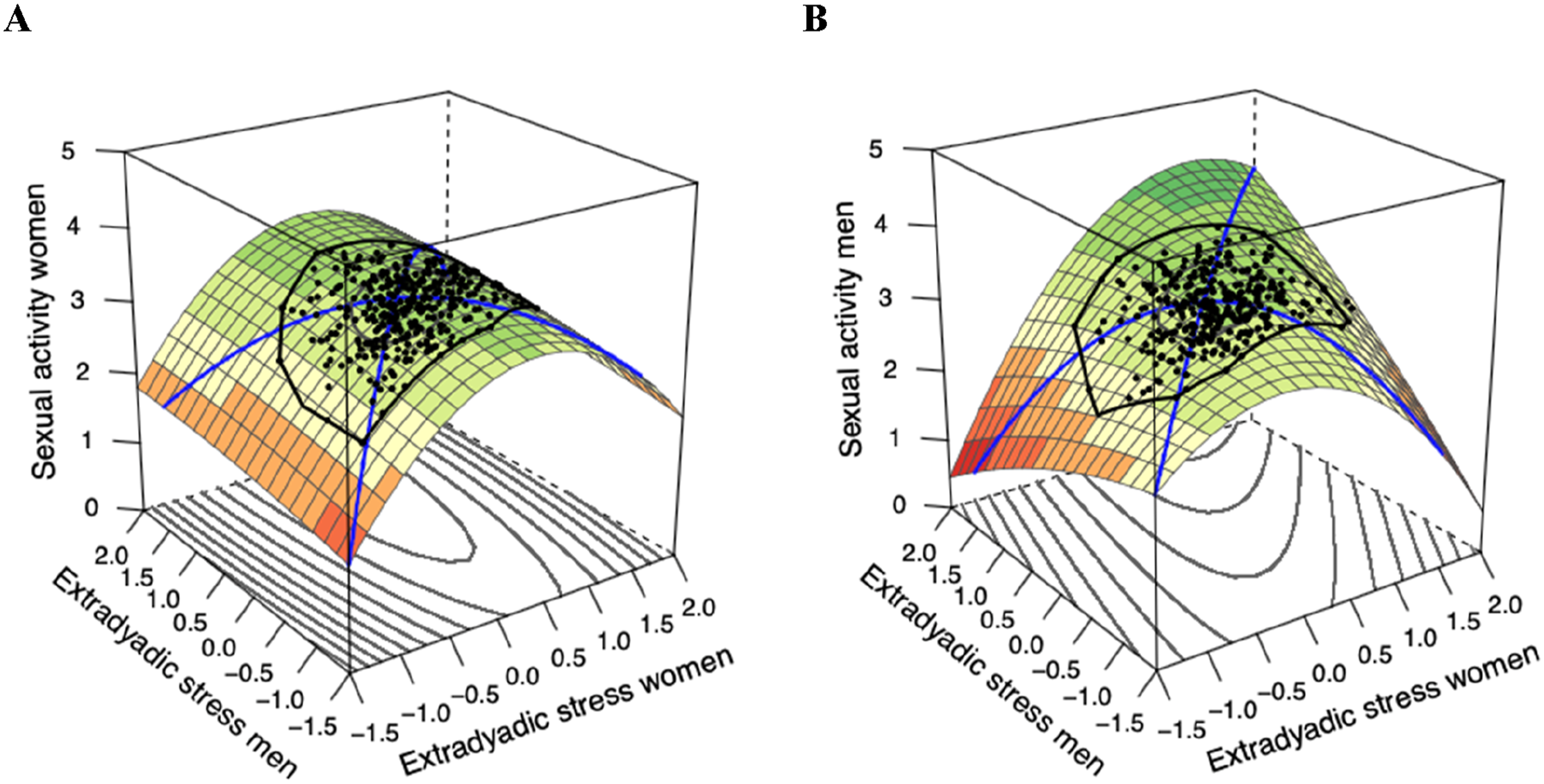
Extradyadic stress, exchange of affection, and sexual stimulation and intercourse controlled for age
Due to the unexpected results of this first set of analyses, indicating a positive link between extradyadic stress and sexual activity, we conducted a second set of follow-up preregistered analyses (see addendum to the preregistration: https://doi.org/10.17605/OSF.IO/2MWTF). We made two modifications to our analyses. First, we presumed it possible that the positive link between extradyadic stress and sexuality may have been due to how we measured sexual activity, where we combined three items assessing the exchange of affection, erotic stimulation, and sexual intercourse. Therefore, we conducted a subsequent set of analyses in which we split the measure into (a) measuring the exchange of affection with one item and (b) measuring eroticism with the two items of erotic stimulation and sexual intercourse (Cronbach’s α = .76 for women and α = .74 for men). This is the first time the scale has been divided like this, and no previous studies have used the scale in this way. Mean and standard deviations of exchange of affection, and sexual stimulation and intercourse can be found in Table 2.
Second, given the diverse range of ages of participants in our sample (19–82 years), we thought that possible changes in both extradyadic stress and sexual activity over the lifespan might have been relevant for our results. In addition, some of the stressors may be particularly relevant and stressful for participants in a certain age group (e.g., job/education and children for younger couples). Thus, participants in some age groups (e.g., younger couples with young children) may have had higher scores in their overall levels of extradyadic stress than others (e.g., older couples who are retired). Therefore, the overall stress levels may vary during the lifespan. As such, in our additional analyses, we also controlled for participants’ age. In the preregistration, we indicated that we would make these two modifications to the analysis simultaneously. However, we opted to introduce the changes gradually, initially splitting the measure without accounting for age (see Supplement A). Nonetheless, we solely present the results of the final model here to maintain consistency with the preregistered plan.
Exchange of affection
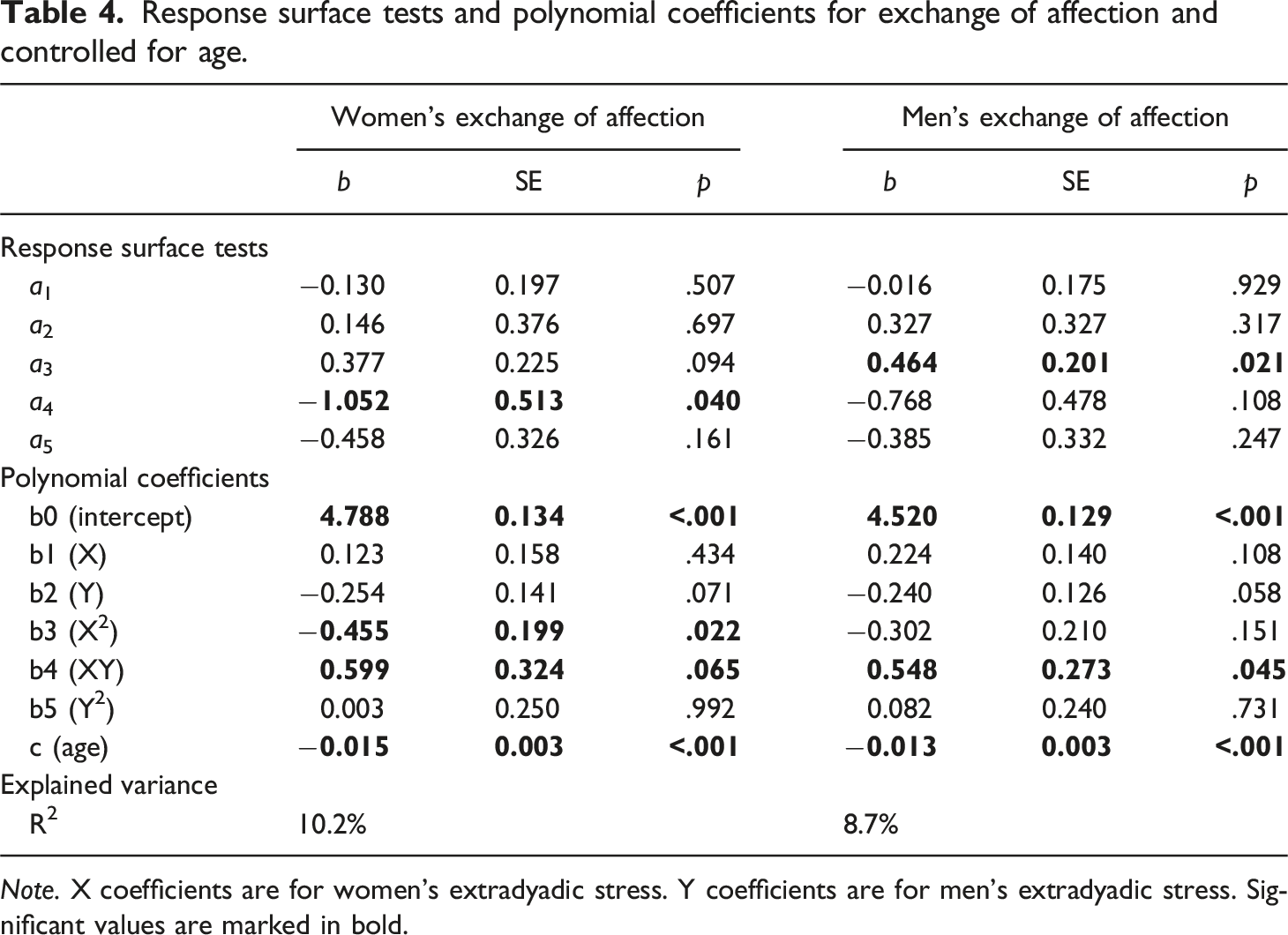
Response surface tests and polynomial coefficients for exchange of affection and controlled for age.
Note. X coefficients are for women’s extradyadic stress. Y coefficients are for men’s extradyadic stress. Significant values are marked in bold.
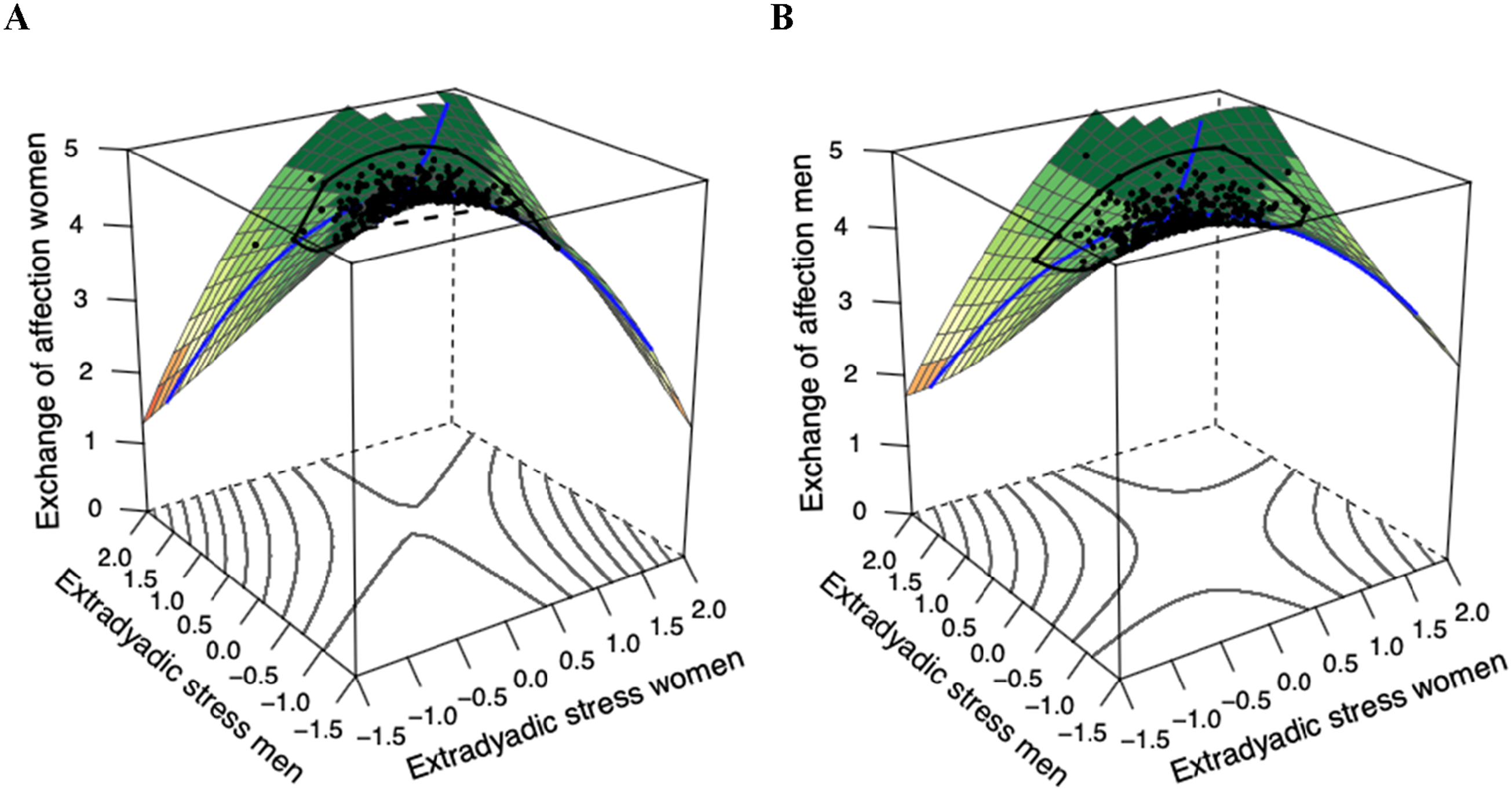
Dyadic response surface analysis plot of women’s (A) and Men’s (B) Exchange of affection. Note. The z-axis represents exchange of affection. The x-axis represents women’s extradyadic stress, whereas the y-axis represents men’s extradyadic stress. Dots represent individual measurements of women (A) and men (B) over which the surface is placed. The line on the surface leading from front to back is the line of congruence (LOC; i.e., where stress levels match). The line on the surface leading from left to right is the line of incongruence (LOIC; i.e., where stress levels mismatch), leading from cases where men show higher stress levels than women to cases where women show higher stress levels than men.
For men, on the other hand, results showed that if they reported higher stress levels than their partner (compared to vice versa), they reported higher exchange of affection (significant and positive a3 response surface test, see Table 4). Hence, in men’s reports of exchange of affection, their own stress levels seemed to be more informative than those of their partner. We did not find any gender effects in women’s reports of exchange of affection. For both women and men, the control variable age was significant, indicating that age plays an important role in the association between extradyadic stress and exchange of affection.
Eroticism
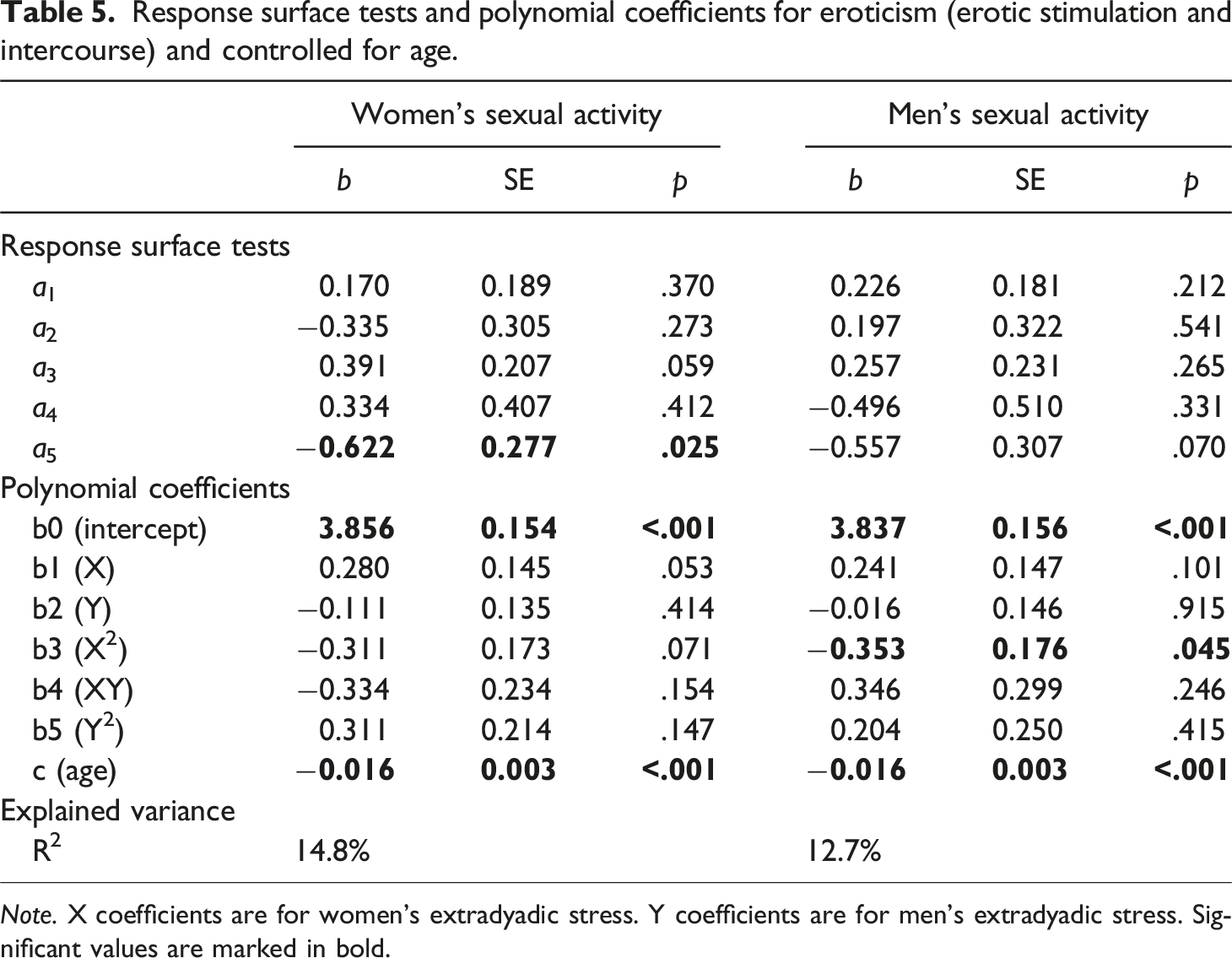
Response surface tests and polynomial coefficients for eroticism (erotic stimulation and intercourse) and controlled for age.
Note. X coefficients are for women’s extradyadic stress. Y coefficients are for men’s extradyadic stress. Significant values are marked in bold.
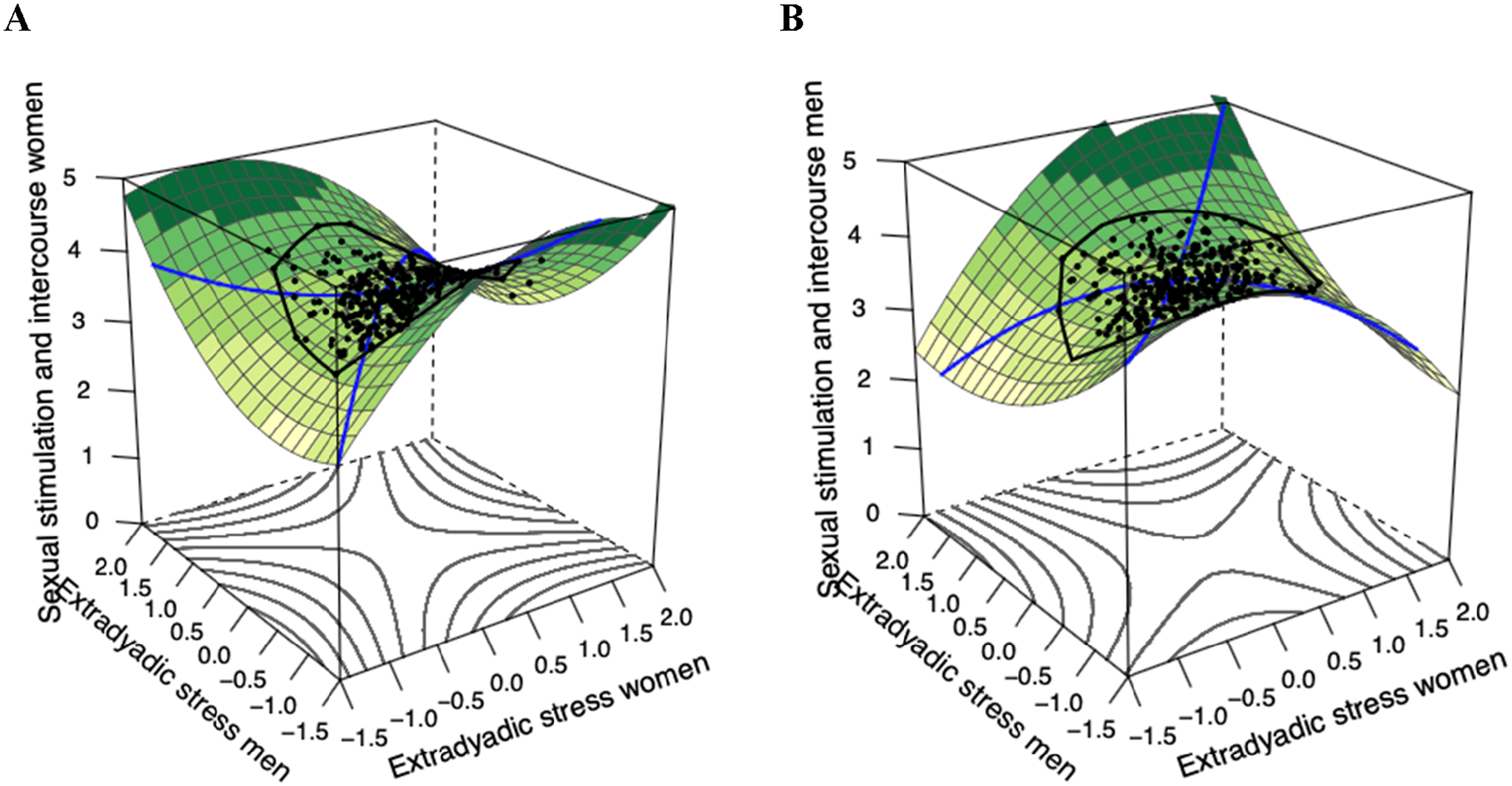
Dyadic response surface analysis plot of women’s (A) and Men’s (B) Eroticism (sexual stimulation and intercourse). Note. The z-axis represents eroticism (i.e., sexual stimulation and intercourse). The x-axis represents women’s extradyadic stress, whereas the y-axis represents men’s extradyadic stress. Dots represent individual measurements of women (A) and men (B) over which the surface is placed. The line on the surface leading from front to back is the line of congruence (LOC; i.e., where stress levels match). The line on the surface leading from left to right is the line of incongruence (LOIC; i.e., where stress levels mismatch), leading from cases where men show higher stress levels than women to cases where women show higher stress levels than men.
Discussion
In this study, we examined whether extradyadic stress—stress experienced outside of romantic relationships—is linked with sexual activity among romantic couples and how (mis)matching levels of stress and gender play a role in this association. In our original preregistered set of analyses, we documented a positive link between extradyadic stress and sexual activity. Given these unexpected findings, we conducted an updated preregistered set of analyses in which we distinguished between exchange of affection and eroticism (erotic stimulation and sexual intercourse), in addition to controlling for age given that the participants in our sample comprised a diverse range of ages.
The results of this second set of analyses showed that extradyadic stress was no longer associated with eroticism, but it was associated with exchange of affection in couples. This result echoes research documenting a positive link between psychological distress and affectionate touch (Jakubiak et al., 2021) and studies on the calming effects of touch in the face of stress (Eckstein et al., 2020). In particular, women in our sample reported more frequent exchange of affection with their partner when they experienced matching as opposed to mismatching levels of extradyadic stress. In contrast, men reported more exchange of affection when they experienced more extradyadic stress than their partner compared to when their partner showed higher stress levels than them. These results showed that there are some gender differences in terms of how stress affects relationship aspects, such as the exchange of affection. However, for both women and men, exchange of affection might act as a coping mechanism. Indeed, studies show that exchange of affection can act as a form of stress regulation in satisfied couples (e.g., Debrot et al., 2013; Jakubiak & Feeney, 2019a) with bidirectional effects, meaning that if couples exchange more affection, they consequently are less stressed but also that more stress may subsequently lead to more exchange of affection in order to reduce their stress levels (Jakubiak & Feeney, 2017). In terms of gender differences, research has also shown that stressed men are less able to regulate their partner’s stress, while in women, their own stress did not impact their ability to regulate the stress of their partner in the same way (Bodenmann et al., 2015). In summary, we found that extradyadic stress was positively associated with exchange of affection independent of age. This may suggest that exchange of affection is a coping mechanism in times of stress for people in different age groups.
The nonsignificant results regarding the association between extradyadic stress and eroticism (i.e., erotic stimulation and intercourse) after controlling for age may hint at the importance of changes in stress and/or sexuality over the life course. This is supported by age being a significant control variable in our second preregistered set of analyses. After controlling for age, there was no longer a significant association between extradyadic stress and eroticism. This is important as previous studies have mainly investigated this research question in younger to middle-aged couples (Bodenmann et al., 2010; Bodenmann, Ledermann, et al., 2007). Hence, the negative association between stress and sexual activity might be particularly true for younger people.
However, an alternative explanation may be that depending on the type of stressor (e.g., stress during leisure time vs. stress with children), the impact on sexual activity might differ. Indeed, studies on stress and sexual function show that some stressors may have a facilitatory effect (i.e., are linked to enhanced sexual functioning; e.g., Barlow et al., 1983), while others act in an inhibitory way (i.e., are linked to reduced sexual functioning; e.g., Beck et al., 1987; Palace & Gorzalka, 1992). In this way, some facilitatory stressors may be leveled out by inhibitory stressors. Further, it is also possible that stress may have a negative effect on sexual activity only after it is experienced at a particular threshold.
In regard to our research questions, we did not replicate the predominantly negative link between stress and sexual activity (RQ1). However, our second set of analyses showed that age is an important variable in this link, and results vary if we differentiate between sexual activity in a narrower sense (eroticism) and exchange of affection. Dyadic analysis concerning stress spillover seems to provide additional information (as also seen in From et al., 2023), as we found that matching stress levels yielded better outcomes than mismatching levels of stress (RQ2): Similar stress levels were linked to higher exchange of affection in women. In men, however, gender played an additional role in our results (RQ3), as their report of exchange of affection was higher if men themselves reported higher stress levels than their partners.
Limitations and future directions
This study has several limitations that give rise to interesting directions for future research. First, the research design was correlational. As such, we do not know if extradyadic stress shapes sexual activity and exchange of affection or vice versa. Nevertheless, it is possible that the exchange of affection (and sexual activity) might act as a coping strategy in stressful times, and therefore, more affection and sexual activity are reported in stressful times. A longitudinal daily diary study of stress and sexual intimacy (e.g., Ein-Dor & Hirschberger, 2012) or cyclical analyses might be especially beneficial for future study designs.
In addition, we employed broad assessments of the variables of interest, measuring general stress levels and sexual activity. Consequently, these reports may be influenced by sentiment override and retrospective biases. Moreover, this approach may have limited our ability to detect real-time effects that occur on a day-to-day basis. For instance, while stress may reduce the likelihood of sexual activity on the day it occurs, couples may compensate by increasing sexual activity once the stress diminishes. This dynamic could obscure a clear association between stress and sexual activity when examining general levels over an extended period. Future experience sampling studies would enable the observation of such patterns with greater granularity.
Additionally, our sexual activity measure was relatively subjective, employing response options ranging from “never” to “very often”. While such subjective response formats are common in other well-validated questionnaires, such as those assessing psychological symptoms (e.g., the Depression Anxiety Stress Scales; Lovibond & Lovibond, 2011) or specific behaviors like dyadic coping (e.g., the Dyadic Coping Inventory; Randall et al., 2015), future research could benefit from using measures with clearly indicated frequencies (e.g., “once per week”). This approach could enhance result interpretation by providing more accurate data and objective insight into individuals’ levels of sexual activity.
On the whole, the couples in our sample reported relatively low levels of extradyadic stress. It may be possible that with low levels of stress, there is a positive correlation with sexual activity, and only after a certain stress-threshold, stress and sexuality could be negatively correlated (i.e., curvilinear association). However, our sample might not have presented sufficiently high stress levels to reach this threshold and demonstrate a curvilinear effect in the DRSA. Furthermore, it may be that only if extradyadic stress levels are high enough to induce intradyadic stress (Bodenmann, Ledermann, et al., 2007) that sexual activity is affected as well.
Also, our sample showed relatively high levels of relationship satisfaction. For satisfied couples, exchange of affection (and sexual activity) might act as a coping mechanism (e.g., Burleson et al., 2007; Jakubiak & Feeney, 2019b), as individuals turn towards their partners in times of stress to seek support, whereas in dissatisfied couples, this might not be the case. Future research on stress and sexual activity should aim to obtain a sample of couples who experience greater levels of extradyadic stress as well as couples with lower relationship satisfaction. This way, an examination of relationship satisfaction as a potential moderator in the link between extradyadic stress and sexual activity would be possible.
Another limitation that needs to be noted regarding the sample is that we did not assess race or ethnicity nor sexual orientation. With a few exceptions, race or ethnicity is typically not asked within socio-demographic questions in European studies (Hoffmeyer-Zlotnik, 2003). In addition, we did not ask participants about their sexual orientation. One inclusion criterion was that the couples needed to be mixed-gender, suggesting that many of our participants would identify as heterosexual, but likely not all of them. Given that our results showed some gender differences, it would be interesting to replicate this study in same-gender couples. This way, we could elaborate on what role gender plays in the association between stress and sexual activity and compare couples consisting of the same gender.
Furthermore, in our measure of extradyadic stress, we used a questionnaire asking about stress levels in different life domains. Nevertheless, specific stressors (financial stressors and stressors related to social, health, and environmental factors) are related to lower levels of sexual functioning in women but not in men (Hamilton & Julian, 2014). In addition, previous research has revealed that depression mediates the link between stress and sexual functioning (Hamilton & Julian, 2014). Hence, stressors that are linked with increased depressive symptoms may impact sexual activity and function more so than others. Further research might investigate what kinds of stressors may be particularly harmful to people’s mental health and, therefore, also to their sexual functioning.
Finally, future research might investigate the link between stress and sexual activity in different age groups, as some associations might differ based on age. Future analyses of the link between extradyadic stress and/or sexual aspects in romantic relationships could dive into how stress and/or sexual activity change over the course of life to get a deeper understanding of the trajectories of these variables. Hence, longitudinal analysis would allow to examine how sexual activity changes over the lifespan (i.e., with increasing age) and with increasing relationship duration.
Conclusion
Our results did not provide support for the commonly held belief that general stress acts as a barrier to sexual activity, and instead, suggest the importance of considering alternate factors that could influence this association (e.g., age, relationship satisfaction, type of stressor, amount of experienced stress). In addition, it makes sense to adopt a dyadic design when assessing the impact of stress within romantic relationships, as one’s partner’s stress is typically brought into the relationship. This way, a better understanding of relationship dynamics, such as sexual activity, can be achieved. Although the results of this study with highly satisfied couples experiencing relatively low levels of stress did not show the negative link between extradyadic stress and eroticism when controlling for age, a positive link between extradyadic stress and exchange of affection became evident. Hence, exchange of affection might act as a coping strategy in times of stress independent of age, while age and type of stressors seem to be particularly relevant when studying stress and sexual activity and eroticism.
Supplemental Material
Supplemental Material - Extradyadic stress as a barrier to sexual activity in couples? A dyadic response surface analysis
Supplemental Material for Extradyadic stress as a barrier to sexual activity in couples? A dyadic response surface analysis by Selina A. Landolt, Emily A. Impett, Katharina Weitkamp, Michelle Roth, Katharina Bernecker and Guy Bodenmann in Journal of Social and Personal Relationships
Footnotes
Acknowledgements
We would like to thank all the couples that participated in the study and our research assistants who assisted in collecting the data. We would further like to express our sincere gratitude to the entire RAWlab team at the University of Toronto Mississauga for their support in the preregistration process, fruitful discussions on the paper and its findings, and their hospitality during the first author’s research stay there.
Declaration of conflicting interests
The author(s) declared no potential conflicts of interest with respect to the research, authorship, and/or publication of this article.
Funding
The author(s) disclosed receipt of the following financial support for the research, authorship, and/or publication of this article: This research was supported by the Swiss National Science Foundation (CRSI11_133004).
Open research statement
As part of IARR’s encouragement of open research practices, the authors have provided the following information: This research was pre-registered. The aspects of the research that were pre-registered were the hypotheses and the analyses. The registration was submitted to: https://osf.io/dxz7p and  . The data used in the research cannot be publicly shared at this point but are available upon request. The data can be obtained by emailing:
Supplemental Material
Supplemental material for this article is available online.
References
Supplementary Material
Please find the following supplemental material available below.
For Open Access articles published under a Creative Commons License, all supplemental material carries the same license as the article it is associated with.
For non-Open Access articles published, all supplemental material carries a non-exclusive license, and permission requests for re-use of supplemental material or any part of supplemental material shall be sent directly to the copyright owner as specified in the copyright notice associated with the article.
