Abstract
An extensive body of literature shows how people deal with conflicts, verbally and nonverbally, in interpersonal interactions. However, the role of technologically-mediated communication (TMC) in romantic relational conflict has received less attention. Through the lenses of Relational Turbulence and Expectancy Violations Theories, this study explored how a chronemic expectancy violation from a romantic partner impacts emotional well-being in a TMC-involved conflict discussion. Two online questionnaires were distributed. First, a pilot study was conducted to understand the basic online communication dynamics between emerging adult romantic partners (e.g., usual response latency) and possible emotions when they experience a chronemic expectancy violation from their partner on TMC. Results show that people are likely to experience negative affect and other specific emotions (e.g., disillusion, loneliness, frustration, hurt, anger) if their partner takes longer than expected to respond. The main study then further explored how individuals’ expectations differ in a hypothetical TMC-involved conflict scenario where they use text-based TMC to discuss a recent romantic conflict with their partners. Participants were instructed to imagine a chronemic expectancy violation whereby their partner does not respond within their expected time period (i.e., conflict expected latency) and report their feelings about it. Results show that people expect their partners to respond more rapidly in the conflict scenario than usual and report negative feelings after the expectancy violations. Conflict-specific (e.g., seriousness), personal (e.g., attachment anxiety and avoidance), and relational (e.g., commitment) variables also influence the intensity of their emotional experiences. This research enhances comprehension of nonverbal cues in text-based TMC and potential emotional repercussions in romantic conflict management.
Keywords
Introduction
With the widespread use of TMC (Maguire & Kinney, 2010), “fexting,” fighting over text messaging, has become prevalent in romantic relationships. Popular press accounts even suggest an emerging trend in which couples intentionally move their relational conflicts out of the face-to-face context and into text messaging to take advantage of texting’s unique affordances (Harmanci, 2022). Research on text-based conflict management in romantic relationships, however, is quite limited. This includes work focusing on potential complications of the relational phase during which conflicts arise. TMC-involved conflict communication might, for instance, backfire when romantic partners are experiencing relational turbulence. As suggested by Relational Turbulence Theory (RTT), people tend to have more biased and polarized emotional, cognitive, and communicative experiences when they have high relational uncertainty and interference from their partner (Solomon, 2015).
Certain features of TMC can contribute to increased relational uncertainty and negative relational outcomes when discussing a recent conflict. Although TMC potentially works as an emotional buffering tool, it simultaneously hides other nonverbal cues that could be beneficial for the conflict communication. For example, the offline activities of romantic partners, such as their working status, remain unseen if not revealed through online communication. This invisibility of partners’ offline status thus becomes a new source of uncertainty. With limited cues, people pay more attention to the existing cues (e.g., timestamp) and even attribute their partner’s behaviors based on these cues. Further, as described by Expectancy Violations Theory (EVT; Burgoon, 2015), the deleterious communicative effects are most likely to happen when there is a negative expectancy violation, such as a longer-than-expected response latency. As a tumultuous context, conflicts can make people engage in vigilant information processing, experience heightened emotional awareness, and make more pessimistic interpretations of specific experiences (Solomon, 2015). A small violation in nonverbal cues could be interpreted as an extremely negative signal (e.g., criticism, contempt, defensiveness, or stonewalling; Gottman et al., 1995), and become detrimental to the conversation, or even the relationship. Basic questions emerge when thinking about text-based conflict management. How, for instance, do people’s expectations for their partner change in a relationally tumultuous context? How will the conflict communication initiator feel when their partner takes longer than expected to respond via TMC?
To address these questions, we explored how a chronemic expectancy violation in TMC shapes the communicative outcomes of a romantic conflict under the framework of RTT. We first conducted a pilot study to understand the basic TMC dynamics between emerging adult romantic partners, including their commonly used text-based communication platforms, usual response latency, and possible emotions that can be triggered from a delayed response. Then in our main research study, participants were presented with an imaginary scenario where they initiate a conversation via text-based TMC to discuss their most recent conflict, but fail to receive a response from their partner within an anticipated time frame (“expected response latency”). By introducing an expectancy violation from the chronemic perspective, we intend to understand how certain features of TMC could influence romantic partners’ management of their ongoing conflict and the potential emotional outcomes when TMC backfires with an expectancy violation. Furthermore, to offer additional insight into the phenomenon of text-based conflict management in romantic relationships, this research examines personal (e.g., attachment anxiety and avoidance), relational (e.g. commitment), and situational (e.g., conflict seriousness) factors that are potentially linked to expected response latency and negative emotions.
Relational conflict and chronemic expectancy violation in technologically-mediated communication
Relational conflicts can invoke numerous emotional reactions. Indeed, as Bodtker and Jameson (2001) put it, “to be in conflict is to be emotionally charged” (p. 260). A diversity of emotional reactions can be triggered as people adopt various communication acts to navigate these conflicts, such as hostility (e.g., anger, frustration, jealousy, and contempt), vulnerability (e.g., hurt and sadness), flatness (e.g., apathy, boredom, and indifference), positivity (e.g., respect, fondness, empathy, and interpersonal warmth), self-consciousness (e.g., embarrassment, guilt, and humiliation), and fearfulness (Guerrero, 2013). As a dynamic process, conflict also exposes more negative communication patterns (e.g., contempt and stonewalling; Gottman et al., 1995) than other common interactions in romantic relationships.
Emerging adults’ romantic relationships are especially vulnerable to conflicts because of a higher level of relational turbulence. During emerging adulthood (the life stage of the current study’s participants), people begin to leave home, establish independence, and have new experiences before they transition into careers and marriage (Arnett, 2007). Most of the romantic relationships during this period are still at an early stage of relationship development and the ongoing life changes encountered by emerging adults can intensify the onset of relational turbulence. Empirical evidence shows that students not only experience higher levels of relational uncertainty at the outset of their first college semester (Shin et al., 2022), but the lives of many emerging adults are also frequently characterized by relational instabilities, involving shifts between committed relationships and sporadic romantic encounters (Shulman & Connolly, 2013). Conflicts during this period can cause a sense of chaos and instability, forming a context for particular interactions that bias the relational meanings people attach to a partner’s behaviors (McLaren et al., 2011). Within a state of intensified subjectivity, people with high relational uncertainty tend to appraise irritating circumstances within the relationship as more serious and view their partners’ communication in a more negative light (Solomon, 2015).
To further unpack the interaction patterns during these TMC-involved conflict episodes, we use expectancy violations theory (EVT; Burgoon, 2015) as a blueprint to map out the impact of situational (e.g., cues in TMC) and relational factors (e.g., commitment) on emotional outcomes. EVT proposes that human interactions are strongly governed by expectations (Burgoon, 2015). Reaching out to a romantic partner through TMC to express a desire to start a conflict management conversation ostensibly sets forth an expectation for timely reciprocated communication from the receiver. A delay in the receiver’s response, which might be considered negligible in normal (i.e., non-conflict) circumstances, can be interpreted as a painful rejection of the sender’s needs and a strong negative signal for the relationship during relationally turbulent periods. In essence, a delay in response time could be construed as a violation of established expectations, thereby forming a chronemic expectancy violation.
During a text-based TMC interaction, people have to rely on limited nonverbal cues to gather information to interpret the relational messages (Walther & Tidwell, 1995). The invisible offline status of a romantic partner creates more relational uncertainty for people when evaluating this partner’s behaviors, especially during conflict scenarios. One of the most salient nonverbal cues in TMC is the chronemic cue, defined by Burgoon et al. (1996) as “how humans perceive, structure, and use time as communication” (p. 122). As “structural features” of messaging systems, chronemic cues are embedded automatically in a message in the form of timestamps (Walther & Tidwell, 1995, p. 356). In other words, romantic partners will take the timing of the messages into consideration when they are processing the relational messages, as it manifests the responsiveness of their partner.
According to EVT, formed expectations are a product of social norms and known idiosyncrasies of the interactants (Burgoon, 2015). Following Afifi and Metts (1998), the present study defines expectancy violation as “a behavior that a receiver notices as different from the behavioral display that (s)he expected” (p. 367). Essentially, EVT proposes that expectancy violations are physiologically and/or psychologically arousing and can trigger an appraisal process moderated by the rewardingness of the violator (Burgoon, 2015). With further specification, Afifi and Metts (1998) found that expectedness is an important factor for the outcomes of a violation, which indicates the degree to which the violation “is unexpected” (p. 379). By capturing the extent to which the communicator’s behavior deviates from a predictable action, we can enhance our understanding of its relational implications.
When it comes to the chronemic cues, the more people expect an immediate text response, the more negative feelings a delay triggers. Early studies on interpersonal interactions show that long response latency is associated with negative impressions of the interactants, such as less attraction and lower social skills (McLaughlin & Cody, 1982). Chronemic expectations have also been found in both synchronous and asynchronous TMC (Lew et al., 2018). More recent work highlights how members of Generation Z, or “digital natives,” which characterizes the participants in the current study, tend to have strong expectations that others are reachable and responsive to mediated messages (especially urgent ones) throughout the day (Kalman et al., 2018).
With an increasing centrality of urgency in everyday communication in the digital age (Kalman et al., 2021), relational turbulence, in the form of conflict episodes between romantic partners, can intensify the desire for an immediate response. In a scenario where a romantic partner sends a text message to discuss a recent conflict, this partner is likely to expect a higher-than-usual responsiveness from their partner as relational turbulence renders people generally more reactive to events in their relationship (McLaren et al., 2011). Therefore, we propose the first hypothesis here.
When using TMC, people expect their partners to respond faster during a conflict scenario than they usually do.
We use the concept of response latency, which is defined as “the speed with which responses appear” (Lew et al., 2018, p. 204) to indicate people’s responsiveness. Research indicates that high responsiveness (in the form of shorter response latency) can be interpreted as a relational maintenance behavior (Sidelinger et al., 2008), such that it expresses attention, care, and love to a romantic partner. Low responsiveness or unresponsiveness, in contrast, can be interpreted as rejection or indifference (Tu et al., 2018). Within an EVT framework, when a short response latency is expected in conflict-related TMC, violations will instigate negative emotions. Therefore, we propose the second hypothesis.
When discussing a recent conflict via TMC and one’s partner takes longer than expected to respond, the amount of negative feelings people experience in this situation is dependent upon their expected response latency, such that negative feelings will be higher for people with shorter, relative to longer, response latencies.
Attachment styles and commitment
According to RTT, indicators of relationship development play an important role in how people experience conflicts and the communicative manifestations of turbulence. EVT also emphasizes the impact of communicator characteristics and relational characteristics on these expectancies and related outcomes. Therefore, it is important to consider how personal (e.g., attachment) and relational features (e.g., commitment level) can also influence romantic partners’ emotional well-being in their conflict discussion.
Characterized by anxiety and avoidance, attachment styles often originate from childhood experience with primary caregivers and develop through subsequent experience with important attachment figures in adult relationships (Brennan & Shaver, 1995). They play an important role in individuals’ perception of relational turbulence in romantic relationships by shaping how they cope with conflicts. Previous research (Crowell et al., 2002; Kobak & Hazan, 1991; Mikulincer et al., 2003) has documented that attachment anxiety and avoidance influence spouses’ biased cognitions and negative emotions in marriages, both of which are mediators in RTT (Solomon et al., 2016). Goodboy et al. (2022) verified that RTT’s propositions (e.g., indirect effect of relational uncertainty on relational turbulence through biased cognitive appraisals and heightened negative emotions) are dependent upon romantic partners’ attachment avoidance and anxiety. Specifically, preoccupied, fearful and dismissive individuals reported higher uncertainty than secure individuals.
Attachment anxiety also has the potential to exacerbate negative emotional experiences. Joel et al. (2011) found that anxiously attached individuals experience more dissatisfaction and worries about negative evaluation from their partners in their relationship, especially in conflict contexts. Similarly, they are likely to interpret ambiguous cues in TMC in a more negative way, bringing about more negative emotions. Therefore, we make such prediction.
When discussing a recent conflict via TMC, the sender’s attachment anxiety is positively associated with negative feelings after an expectancy violation.
In comparison, there are mixed emotional outcomes regarding attachment avoidance. To start with, those with high attachment avoidance tend to deny or suppress emotion-related thoughts, memories and action plans, as well as verbal and nonverbal expressions of emotions (Mikulincer & Shaver, 2019). For relational turbulence, Goodboy et al. (2022) found that the dismissive individuals (high avoidance) also reported low interference from their partner. However, avoidant individuals also tend to exaggerate the seriousness of threats, over-emphasize their sense of helplessness and vulnerability (Mikulincer & Shaver, 2019), and overestimate the intensity of their partners’ negative emotions, resulting in physical and emotional distancing (Feeney & Fitzgerald, 2019). Although they rely on cognitive distancing and emotional disengagement to cope with threatening events, these avoidant defenses are fragile (Mikulincer & Shaver, 2019), especially when they experience great stress rather than a simple cognitive load. Not only do avoidant individuals exhibit physiological signs of distress (e.g., heightened diastolic blood pressure) in response to laboratory stressors, they also sometimes show strong negative emotions and a loss of self-control in response to chronic, uncontrollable, and severely distressing events (Mikulincer & Shaver, 2019). Considering the intensity of distress in a relational turbulence event, it is plausible that attachment plays a key role. Given the dearth of research on TMC-based conflict to date, we pose the following research question to examine the links between attachment avoidance and negative response latency in TMC-based conflicts.
What are the relationships between attachment avoidance and negative feelings after an expectancy violation in TMC-based conflict scenario?
In addition to attachment, the commitment level of an individual in a romantic relationship can also be associated with how they experience conflicts (Arriaga et al., 2007). Perceived partner responsiveness is positively associated with relationship satisfaction and investment, which predict the commitment level (Segal & Fraley, 2016). Therefore, with a higher level of commitment, individuals are more likely to expect a higher degree of responsiveness from their partner. Drawing upon Expectancy Violation theory (EVT), it can be postulated that highly-committed individuals are predisposed to heightened negative emotional responses following an expectancy violation, given their elevated expectations for their partners (Vannier & O’Sullivan, 2018). Furthermore, when faced with a conflict that threatens the relationship, those deeply invested in the relationship tend to view their communication (e.g., initiating a text-based conflict discussion) as part of a constructive resolution process (Gonzaga et al., 2001). In the absence of a timely response, these individuals may interpret such delay as a denial of their constructive efforts, signaling a refusal of their partner to engage in resolution. Consequently, this may exacerbate negative emotions as these highly committed individuals have invested more significantly in the relationship compared with their less committed counterparts. Therefore, we propose our next hypothesis.
When discussing a recent conflict via TMC, the sender’s commitment level is positively associated with negative feelings after an expectancy violation.
Perceived seriousness of the conflict and usual response latency
Finally, we introduce two control variables from previous RTT and EVT literature: perceived seriousness of conflict and partner’s usual response latency. According to RTT, relational uncertainty and interdependence correspond with appraising irritating circumstances within the relationship as more serious, and evaluating a partner’s hurtful behavior as more intentional (Solomon, 2015). In other words, the more serious people perceive a conflict, the more relational uncertainty and interference from their partner they experience. In a tumultuous relational context, the relational uncertainty and partner’s interference are high, people are more likely to expect higher responsiveness (lower conflict expected latency) from their partner since they have engaged in vigilant information processing (Solomon, 2015). Conflict perceived as “serious” also indicates higher levels of emotional activation, negative affect, and heightened probability of aggressive behavior (Guerrero, 2013). Therefore, our model (which we review momentarily) also incorporates the relationships between perceived seriousness of conflict and our main variables (conflict expected latency and negative affect).
The concept of usual response latency is derived from literature on EVT. Known idiosyncrasies of the interactants are essential in forming expectations (Burgoon, 2016). Even if there are, as noted earlier, generational expectations for quick response latencies in text-based communication, people differ in their typical behavior (Kalman et al., 2018). Romantic partner’s usual response latency captures these individual differences and provides a baseline for conceptualizing response latency expectancy violations for individual partners. Latencies can also be conceptualized at the relational level. That is, couples might negotiate expectations for response latencies within their relationship. Once a rule is established, individuals can more closely predict their partner’s response latency based on daily interaction, mutual understanding, and relationally-engaging behaviors. Usual response latency can potentially influence both the chronemic expectancy and the emotional outcomes after a violation. Therefore, in this study, we asked participants to report their usual response latency and account for it in our analyses.
Model overview
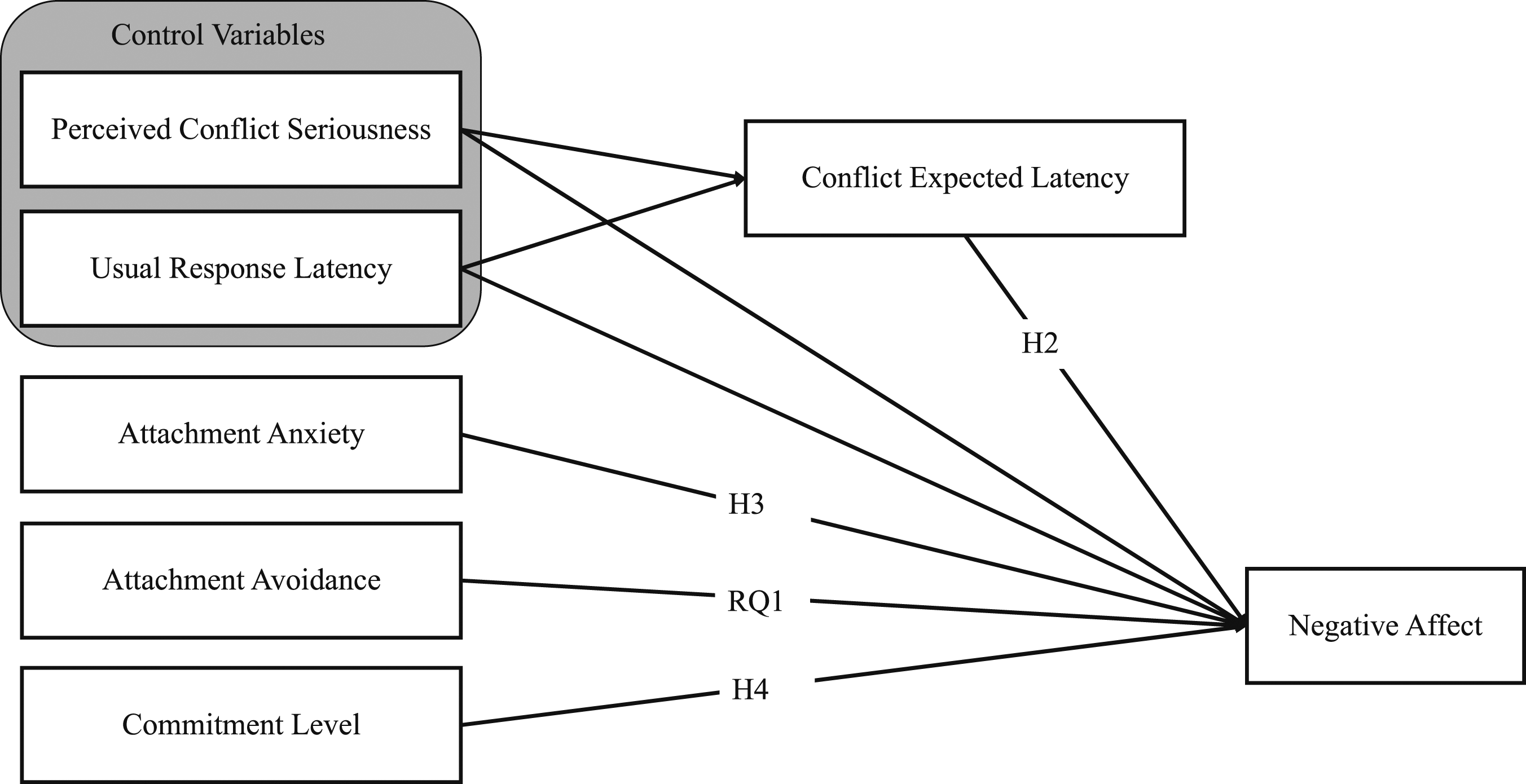
Derived from RTT and EVT, we proposed a model for the emotional experience of TMC-involved conflict (see Figure 1 in Appendix B). We predicted a negative association between conflict expected latency and negative affect. Attachment anxiety, attachment avoidance, and commitment level were predicted to increase the negative affect. Meanwhile, perceived conflict seriousness and usual response latency (control variables) were proposed to influence both conflict expected latency and negative affect.
Pilot study
Overview
To understand the basic online communication dynamics between emerging adult romantic partners, we conducted a pilot study to investigate their typical text-based TMC platform, usual response latency, and possible emotions that can be derived from not receiving their partners’ response within their expected latency.
Participants
The participants were enlisted through the SONA system (i.e., an online research participation system that the school uses to manage extra credit research participation) from a public university located in Austin, United States. Fifty undergraduate students currently or previously in a romantic relationship participated in this pilot study. Aged from 18–23 (Mean = 20.1, Median = 20, SD = 1.30), this sample included 3 (6.0%) males and 47 (94.0%) females. Racial demographics were reported as follows: 24 (48.0%) White/Caucasian, 13 (26%) Hispanic/Latino/Latina, 12 (24.0%) Asian or Asian American, 1 (2.0%) Black or African American. Only 44 participants reported their relationship length, ranging from 1 month to 58 months (Mean = 11.25, SD = 10.28). Each participant received .5 extra credits in a pre-approved course.
Procedure
After consenting to participation, subjects completed an online survey. Participants were first asked whether they had ever been in a romantic relationship before consenting. If they clicked “No,” the survey would end to collect qualified data. If they indicated that they were currently or previously in a romantic relationship, they were prompted to think about the communication dynamics of one of their relationships. The survey consists of 4 sections: (1) participants’ typical TMC platform with their partners; (2) participants’ romantic partners’ usual response latency; (3) possible negative emotions of partners derived from unexpected response latency; (4) demographic information.
Measures
Typical technologically-mediated communication platform
Given the question “Think of a romantic relationship you are having/used to have, what platform do you usually use to text your romantic partner,” participants chose from a list of common TMC platforms including Text Message, Facebook Messenger, WhatsApp, Instagram, Snapchat, LINE, WeChat, or other.
Usual response latency
We listed various time intervals (“immediately,” “within 5 minutes,” “5 to less than 10 minutes,” “10 to less than 15 minutes,” “15 to less than 20 minutes,” “20 to less than 25 minutes,” “25 to less than 30 minutes,” “30 to less than 40 minutes,” “40 to less than 50 minutes,” “50 to less than 60 minutes,” “about 1 or 2 hours,” “about 3 or 4 hours,” “about 5 or 6 hours,” and “other”) for participants to choose based on how long it usually took for their partners to respond (“How long does it usually take for your partner to respond to you when you text them on that platform?”). If participants chose the “other” option, they were prompted to specify. As seen from the options, for the first half hour, we set the time interval as 5 minutes as people are more likely to recall a shorter latency. Then we extend the interval to 10 minutes for response latency that is less than 1 hour but more than half hour. Finally, we use hours as measure units for longer response latency. The unusual design of this measure intends to correspond with peoples’ memory habits. We reasoned that it would be difficult for anyone to recall a time interval in minutes when it is over an hour. These options were transformed into their average minute-unit (e.g., “30 to less than 40 minutes“ → 35 minutes; “about 3 and 4 our” → 210 minutes) for interpretations (Mean = 12.75, SD = 10.07).
Negative emotions
Participants were given a list of emotions to choose from, consisting of a 10-item negative mood scale from the Positive and Negative Affect Scale (PANAS) (Watson et al., 1988). Defined as “subjective distress” and “unpleasurable engagement,” the negative affect (NA) dimension covers various aversive mood states such as anger, contempt, disgust, guilt, fear, and nervousness (Watson et al., 1988). A neutral emotion option (“I feel nothing”) was included. Participants also had the option to write in any other emotions they may experience.
Results
For TMC platforms, 38 (76%) participants chose Text Messages, 10 (20%) chose Snapchat, and the other 2 (4%) chose platforms such as Instagram or WeChat. Furthermore, more than 90% of the participants indicated that their partners usually respond to their texts within 30 minutes, including 8% “between 25 to less than 30 minutes,” 6% “between 20 to less than 25 minutes,” 12% “between 15 to less than 20 minutes,” 16% “between 10 to less than 15 minutes,” 34% “between 5 to less than 10 minutes,” 10% “less than 5 minutes,” and 8% “immediately.”
Participants also reported the negative emotions they felt when they did not receive a response from their partner within their expected latency. Table 1 shows the percentages of negative emotions experienced by participants. Derived from PANAS, all negative emotion categories were chosen by more than 10 participants (20%), except for “guilty.” About half of the participants would feel “anxious” (n = 26, 52%) and “nervous” (n = 24, 48%). Lastly, 20 (40%) participants chose “irritable,” 15 (30%) participants reported that they felt nothing, and 9 participants (18%) provided “other” emotions, such as loneliness, curiosity, impatience, jealousy, and disillusionment.
The prominence of negative emotions compels an exploration from the functional viewpoint of emotional experience. Emotions serve crucial intrapersonal and interpersonal roles (Fitness, 2015), functioning as an “evolved, trouble-shooting system” (p. 299) in close relationships, responding to perceived interruptions to one’s expectations. Despite extensive studies on emotions, such as anger and hurt (McLaren & Steuber, 2013), there remains a scarcity of research on discrete emotions like contempt (Fitness, 2015). Consequently, instead of using the results of this preliminary study to identify the primary emotions experienced by participants, we decided to utilize the PANAS to measure the intensity of the overall mood state that participants might experience following a chronemic expectancy violation from their partner.
Main study
Overview
The aim of this study was to test the proposed research question and hypotheses using conflict scenarios. Instead of only identifying categories of emotions after not receiving partners’ responses within conflict expected latency, we tested the intensity of emotional reactions towards the chronemic expectancy violation in this study. Drawing on the information collected in the pilot study about basic TMC dynamics among romantic partners, we confirmed the possibility of negative emotional experience after chronemic expectancy violations. To further examine the expectancy and negative feelings in a TMC-involved conflict scenario, we added the conflict expected latency into the main study.
Participants
The survey for this study was distributed in the SONA system from the same public university. Participants from the Pilot Study can also get access to this study. Subjects need to be currently in a romantic relationship to participate, so data of those who were not in a relationship were deleted. Eventually, 200 effective surveys were collected. These 200 participants were all undergraduate students from this university, aged from 18–23 (Mean = 20.14, Median = 20, SD = 1.07), including 41 (20.5%) males and 159 (79.5%) females. The ethnicity breakdown was: 91 White (45.5%), 58 Hispanic/Latino/Latina (29.0%), 28 Asian/Asian American (14.0%), 17 Black or African American (8.5%), 3 mixed race or multiracial (1.5%), 2 American Indian or Alaska Native (1.0%), 1 Native Hawaiian or Pacific Islander (.5%). Their relationship length ranges from 1 months to 80 months (Mean = 15.91, SD = 15.66).
Procedure
After consenting to the survey, participants were led to an online survey. In this study, participants were prompted to think about a recent conflict with their romantic partner (“Think of the most recent conflict you had with your romantic partner”) and imagine themselves texting their partner to discuss this conflict (“If you choose to text on that platform to discuss this conflict with your romantic partner”). We tried to examine how their expectancy for their partner changes in this imaginary scenario. The survey consisted of 7 parts: (1) participants’ partners’ usual response latency; (2) participants’ perceived seriousness of conflict; (3) expected response latency after the conflict; (4) participants’ emotion intensity from not receiving responses within conflict expected latency (“If your partner doesn’t respond to your text about the conflict in your expected time period, indicate the extent you might feel the following way”); (5) participants’ attachment styles (Fraley et al., 2000); (6) participants’ commitment level with their romantic partners (Rusbult et al., 1998); (7) participants’ demographic information. Questions within each scale were randomized.
Prompt validation
If participants cannot imagine the scenario described in the survey, their answers might be less representative of real situations and responses. To control the influence of this limitation on the findings, we added the question “how easy or difficult it was for you to imagine the scenario described below” at the end of the survey section as a prompt validation. Only 17.5% of the participants found it somewhat difficult or very difficult, which means it is relatively reasonable for participants to initiate a conflict-resolution talk with their romantic partners through text-based TMC. For the final model testing, we excluded these participants and any records with missing data to enhance the data validity (final N = 162).
Measures
Perceived seriousness of conflict was measured using a 5-scale Likert-type question (“Think of the most recent conflict you had with your romantic partner, how serious do you think this conflict was?”), from 1 = “not serious at all” to 5 = “extremely serious.”
Usual response latency
In the pilot study, we listed some time intervals for participants to choose from regarding how long it usually took for their partners to respond. Feeling confident in the utility and validity of this measure, we continued using it in the current study. To test our proposed model, we first transformed all options into their average minute-unit (e.g., “30 to less than 40 minutes“ → 35 minutes; “about 3 and 4 hour” → 210 minutes). The average usual response latency was 19.32 minutes (SD = 44.88). Considering the relatively small sample size (N = 162), we then conducted a logarithmic transformation (In(X+1)) on this variable to fulfill the normality assumption of structural equation model (SEM).
Conflict expected latency
We presented the participants with the same options as the usual response latency to choose how long they expect it would take for their partner to respond in the given scenario (“If you choose to text on that platform to discuss this conflict with your romantic partner, how long do you expect it would take for your partner to respond?”). The results were also transformed into minute-units (Mean = 9.89, SD = 16.41). The same logarithmic transformation (In(X+1)) was also conducted for the normality assumption of SEM.
Negative Feelings were measured using the 10-item negative mood scale from the positive and negative affect scale (PANAS) (Watson et al., 1988). For PANAS, we measured the intensity of both positive affect and negative affect participants feel in the conflict discussion with five choices: “very slightly or not at all,” “a little,” “moderately,” “quite a bit,” and “very much.” Five emotions mentioned by participants from the Pilot Study were also added: “disillusioned,” “jealous,” “lonely,” “anxious,” and “worried.” Lastly, the neutral emotion “I feel nothing” was listed as well at the end of the emotion section. For the model testing, we only included the negative affect measure due to its validity and reliability in previous literature (Crawford & Henry, 2004).
Attachment anxiety and avoidance
Participants’ attachment styles were tested using The Experiences in Close Relationships-Revised Questionnaire (ECR-R; Fraley et al., 2000). This revised 36-item questionnaire assessed participants’ attachment styles on two dimensions: anxiety (the first 18 items) and avoidance (items 19–36). For the anxiety dimension, questions include “I’m afraid that I will lose my partner’s love,” “I often worry that my partner doesn’t really love me,” “When I show my feelings for romantic partners, I’m afraid they will not feel the same about me,” or “My partner only seems to notice me when I’m angry.” For the avoidance dimension, example questions were “I find it difficult to allow myself to depend on romantic partners,” “I am very comfortable being close to romantic partners,” “I find it relatively easy to get close to my partner,” or “My partner really understands me and my needs.” All questions were assessed using a 7-scale Likert-type, from 1 = strongly disagree to 7 = strongly agree. The Cronbach’s Alphas were .925 for attachment anxiety and .937 for attachment avoidance.
Commitment level was assessed with a 7-item scale asking participants the degree to which they intend to persist in their relationship (Rusbult et al., 1998). Questions were measured using a 7-scale Likert-type, from 1 = strongly disagree to 7 = strongly agree. Questions included, “I want our relationship to last for a very long time,” “I am committed to maintaining my relationship with my partner,” “I would not feel very upset if our relationship were to end in the near future,” “I want our relationship to last forever” etc. The Cronbach’s Alpha was .901.
Hypotheses testing
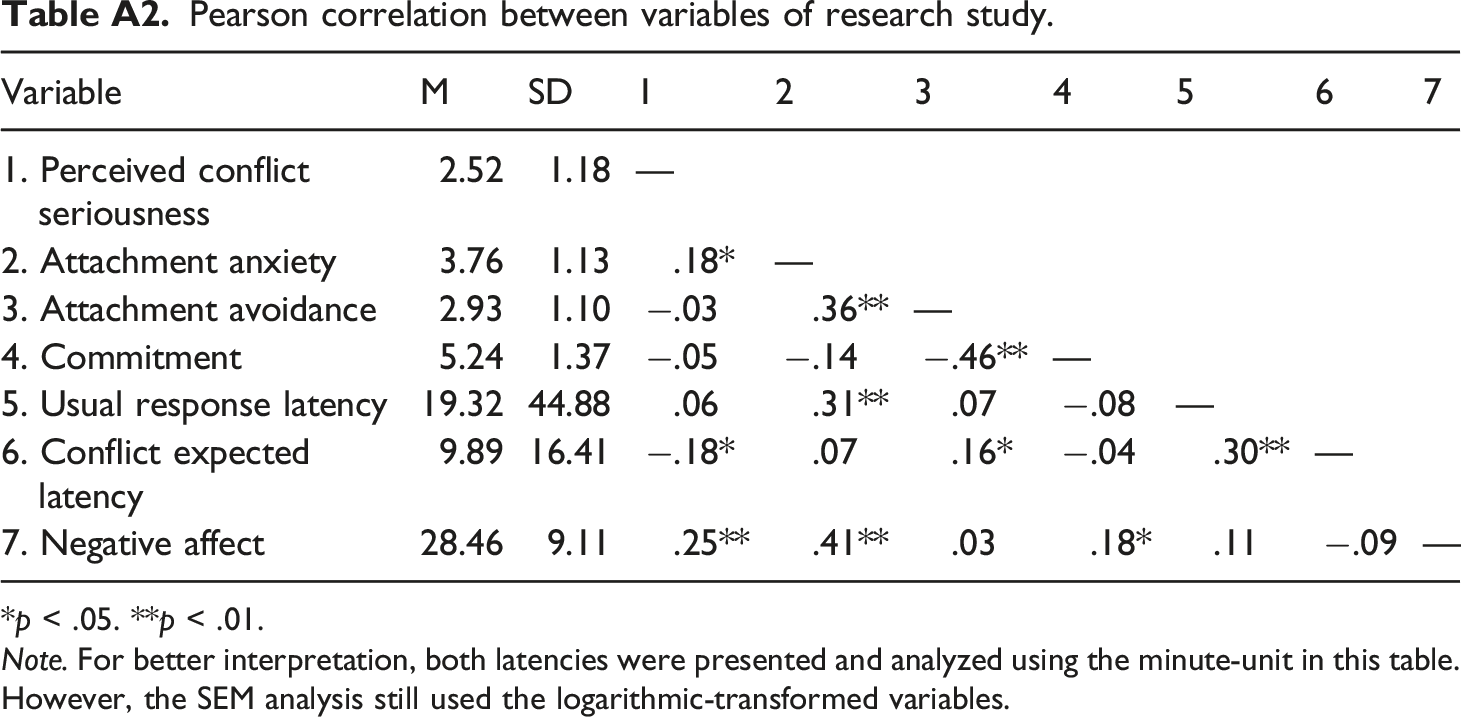
Descriptive statistics and a correlational matrix of the main study variables can be found in Table 2 in Appendix A.
To test the first hypothesis, we conducted a paired sample t-test between perceived partners’ usual response latency (M = 19.32, SD = 44.88) and expected partners’ response latency (M = 9.89, SD = 16.41) in the TMC-involved conflict scenario. The results show a statistical difference (t(161) = 2.79, p < .01) between these two variables, supporting the hypothesis that people expect their partners to respond faster than usual during TMC when discussing a recent conflict.
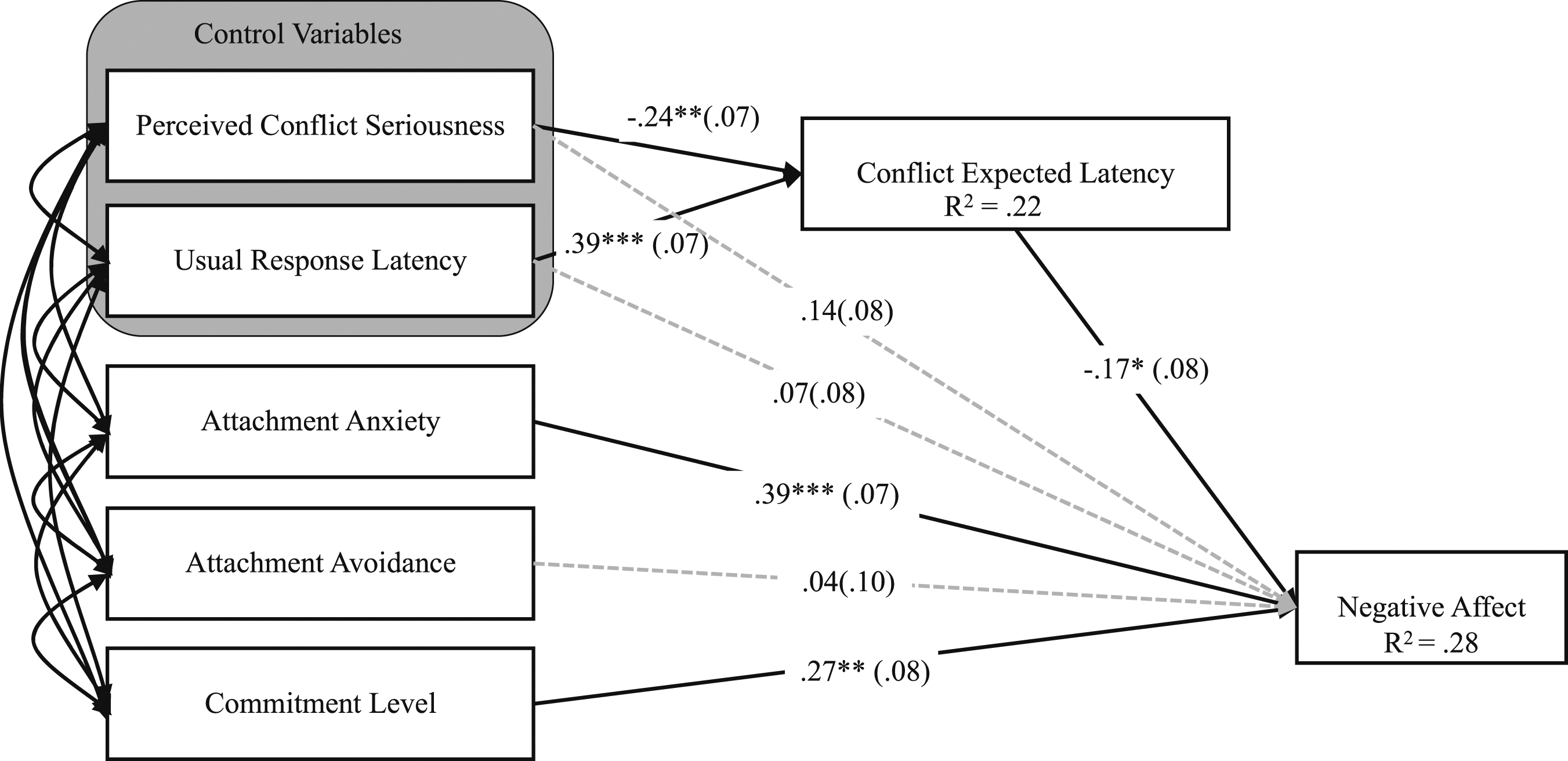
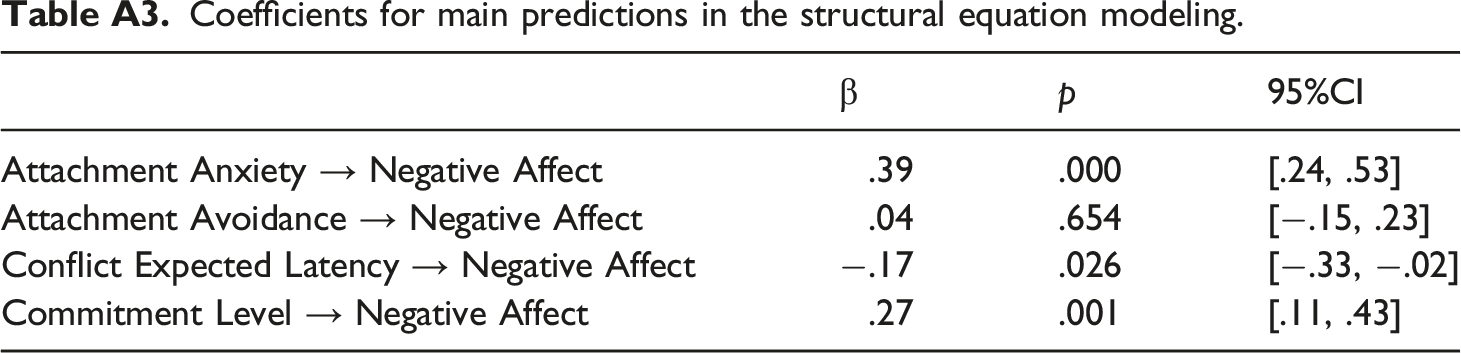
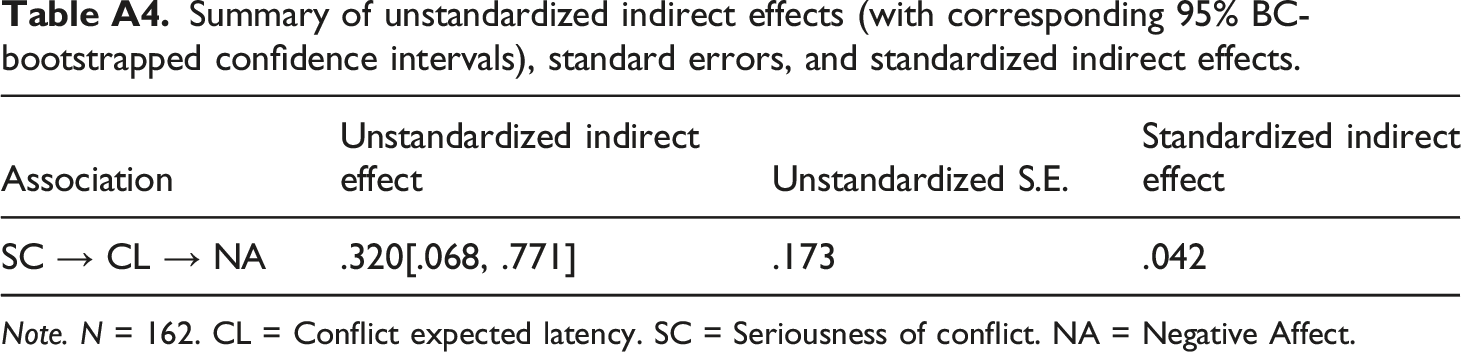
We conducted a structural equation model (SEM) using Mplus 8.0 (Muthén & Muthén, 1998–2017–2017) to test the proposed model (see Table 3). All variables were treated as manifest and continuous. For exploratory purposes, we also examined potential indirect effects (see Table 4) using Mplus’s MODEL INDIRECT command and obtained bias-corrected bootstrapped CIs (5,000 bootstrap draws; MacKinnon, 2008). The proposed path analysis model demonstrated excellent model fit, χ2(3, N = 162) = 4.00, p = .26, CFI = .99, TLI = .96, SRMR = .033, RMSEA = .045 (90% CI: .000–.147). Results for the final model are presented in Figure 2.
H2 proposed that conflict expected latency (i.e., the anticipated response time from their partner upon initiating a discussion about their most recent conflict) was negatively associated with negative affect. Aligned with our prediction, there was a negative association between these two variables (β = −.17, p = .03): the sooner people expect their partner to respond, the more negative feelings the delay can trigger.
H3 and RQ1 examined the relationship between an individual’s attachment and their negative affect after the chronemic expectancy violation. There was a strong positive association between attachment anxiety and negative affect, β = .39, p = .000, supporting the third hypothesis. However, no significant association was found between attachment avoidance and negative affect, answering the RQ1. Attachment avoidance does not appear to influence degree of negative affect after a chronemic expectancy violation in the TMC-involved conflict scenario.
Next, H4 considered the role of commitment level in people’s emotional experience of TMC-involved conflict communication. Aligned with EVT, our data provided evidence for H4, β = .27, p = .001, such that the more committed an individual is in a romantic relationship, the more negative feelings they will experience after the hypothetical chronemic expectancy violation (i.e., not receiving a response within the expected time period) in the TMC-involved conflict scenario.
Also of note, perceived conflict seriousness (β = −.24, p = .001) and usual response latency (β = .39, p = .000) had significant impacts on conflict expected latency (see Figure 2).
Discussion
The goal of this research was to examine how romantic partners’ behaviors in text-based TMC influence their emotions during a conflict discussion. This study was guided by the theoretical frameworks of RTT and EVT. This research also explored how expected latency for partner responses changes when discussing a recent conflict, relative to non-conflict periods, the consequences of such changes for negative emotion, and role of personal (i.e., attachment) and relational (i.e., commitment) features in this process. The results showed that individuals’ expected response latency significantly decreased in the context of relational conflict, which indicates that expectations for TMC are altered during periods of relational turbulence. Aligned with EVT, people reported feeling negative affect after a chronemic expectancy violation (their partner does not respond within the expected time frame). The intensity of such feelings was shaped by conflict expected latency, attachment anxiety, and relationship commitment.
Chronemic cues in technologically-mediated communication
This research shows that EVT not only can be applied to face-to-face interaction from the verbal and nonverbal perspectives (Bond et al., 1992; Burgoon & Hale, 1988; Miller-Ott & Kelly, 2015), but also can serve as a powerful tool to understand the emotional outcomes of TMC from the chronemic perspective. Under the TMC-involved conflict scenario, people change their expected response latency for their partner. When initiating conflict discussion through a commonly used text-based TMC platform, participants expected their partners to respond more rapidly than usual. This finding may be explained by a heightened need for information in this TMC scenario. RTT proposes that relational uncertainty characterizes the periods of turbulence (Solomon et al., 2016). Not only can relational uncertainty cause biased cognitive appraisals about relational events (Solomon et al., 2016), it can also introduce an information deficit (Goodboy et al., 2020) in this conflict scenario. In the throes of uncertainty, partners are trying to navigate changes in their relationship, which can hinder both message production (Knobloch, 2006) and message processing (Knobloch & Solomon, 2005). Furthermore, EVT suggests that a non-normative period of interaction might intensify focus on the remaining nonverbal cues in a TMC environment, such as latency. The combination of heightened uncertainty and exaggerated focus on chronemic cues can create a greater sense of urgency for people who are waiting for a response.
Attribution Theory (Weiner, 1985) proposes that how a person interacts with others partially depends on their interpretation of the other person’s behavior. The emergence of emotions is related to this cognitive attribution (Lewis, 2008), which can be biased by relational turbulence. If people interpret their partner’s behaviors (e.g., no response within the expected time period) as intentional rejection or indifference, they will feel more negative emotions (Tu et al., 2018). Our participants may not have enough evidence to support this attribution in the TMC context, but the conflict scenario is likely to trigger these negative feelings by forming a tumultuous relational context.
Controlling for their partners’ usual response latency in our model, we found a negative association between the conflict expected latency and the negative affect. A salient change in participants’ expected latency from their partner’s usual response latency reflects an “activated” internal state in the conflict discussion scenario. Under this state, participants demand higher responsiveness and become more sensitive to the available communication cues that could be seen as potential rejection signals. The shorter the conflict expected latency is, the higher deviation from their expectancy is perceived when a delay happens. The degree of this deviation appears to be related to the intensity of negative affect. Negative feelings, as a reaction towards partners’ negative communication behaviors, can be triggered by the change in these chronemic cues. Previous EVT research shows that nonverbal violations heighten attention and generate physiological arousal (Burgoon, 2015). Instances of violations vary in the degree to which they were unexpected (Afifi & Metts, 1998), indicating a deviation from the expectancy. In a study of unexpected feedback messages, researchers found that violation unexpectedness is positively related to negative emotional responses, such as hurt and anger (Bennett et al., 2020). Similarly, the negative feelings of our participants were associated with their conflict expected latency, which indicates the degree to which a “no-response” from their partner is unexpected.
Relational turbulence and emotional well-being
Our proposed model was generally supported and revealed connections among chronemic expectancy violations, emotions, personal features (attachment anxiety and avoidance), a relational characteristic (commitment), and a situational characteristic (perceived conflict seriousness) in a TMC-involved relationally tumultuous context. Aligned with previous literature (Joel et al., 2011), anxiously attached individuals experience more negative feelings in a conflict context. In laboratory experiments, anxiously attached participants reported more hostility and distress during conflict discussions (Simpson et al., 1996). In our hypothetical TMC scenario, those with higher attachment anxiety also reported more negative feelings. Highly anxious individuals tend to use “hyperactivating” strategies (e.g., approaching partners and intensifying arguments) driven by their fears of losing their partner’s interest (Mikulincer & Shaver, 2003), which can contribute to more intense negative feelings. Feeney and Karantzas (2017) summarize that the physiological arousal and hyperactivating behaviors of anxiously attached individuals are designed to force partners to give more attention and support.
The non-significant correlation between attachment avoidance and negative affect can be a result of conflicting external strategies (e.g., deactivating) and internal status (e.g., exaggerating negativity). Instead of exposing themselves to relational risks, avoidant individuals prefer to engage in physical and emotional withdrawal under the defensive mode (Feeney & Karantzas, 2017), which can be triggered by relational turbulence. However, they can still experience physiological arousal and intense negative feelings in this high-stress context.
Commitment level was positively associated with negative feelings after a chronemic expectancy violation in TMC-involved conflict scenario. Although previous literature argues that highly committed individuals tend to make benign appraisals of their partner’s transgressions (Menzies-Toman & Lydon, 2005) and become less vulnerable to their partners’ negative characteristics (Arriaga et al., 2007), our study indicates that they can still be exposed to negative feelings in a tumultuous relational context. It is possible that those who are more committed to a relationship, are more confident in the belief that their partners will respond within their expected time period. When this belief is denied, they may experience a stronger sense of betrayal.
When it comes to the factors that influence emotions, the intrapersonal state of an individual (e.g. attachment anxiety) might play a more important role in their emotional well-being than their interpersonal dynamics (e.g. conflict expected latency, commitment) with their romantic partners. In our study, attachment anxiety was a stronger predictor of negative affect (β = .39) than that of conflict expected latency (β = −.17) and commitment level (β = .27). One reasonable explanation might be that oriented in the self, the intrapersonal state may establish a relatively stable internal system to automatically create emotional reactions when receiving stimuli. For an individual, all previous emotional experiences from childhood to adulthood may be accumulated and analyzed in this system and then contribute to building patterns to interpret and emotionally react to some specific external signals in a consistent way. For example, some individuals may have experienced the benefits of showing anger in their childhood to deal with challenges and these past experiences may shape their internal systems that anger could be an effective way to protect themselves in similar situations. Consequently, when they are dealing with a conflict, their anger might reflect a more-or-less default response stemming from their established internal working models for relational conduct (Bretherton & Munholland, 2008). As such, our study maps emotional elicitors onto this intrapersonal-interpersonal dimension, calling for more attention to the role of intrapersonal states in conflict management literature.
Directions for future research
Relational turbulence theory provides us an insightful approach for understanding the chronemic cues in romantic conflict communication on text-based TMC channels. Our study examined the general negative emotional impact of potential chronemic expectancy violation. The next step is to identify the specific emotions (e.g., confusion) and explore why certain types of emotions are elicited. Are these emotions driven by different attributions? Qualitative research methods like in-depth interviewing, may provide some insights into these questions.
To better unpack the casual mechanisms, we also encourage scholars to collect longitudinal data or conduct dyadic experiments. It will also be helpful to collect and analyze the real records of these technologically-mediated conflict conversations and further examine their relational outcomes. There are also potential moderation effects of situational and relational factors that may be detected by larger datasets with sufficient statistical power.
Future research should also examine whether romantic partners discuss their expectations for TMC (e.g., timing, channel, content) and how they negotiate and establish the ground rules. These can be important forms of relational maintenance in contemporary relationships.
Limitations
There were limitations to the present study. First, although this study tried to remind participants of the real-world events within their real relationship, the use of the hypothetical scenarios (e.g. “If you choose to text on that platform to discuss this conflict with your romantic partner” and “if your partner does not reply within your expected time period”) is a significant limitation. Participants’ answers could be less representative of real-world situations and responses. Meanwhile, some participants might envision the scenario as a continuation of the recent conflict, whereas others could perceive it as a broader conversation centered around a past conflict. Although both scenarios involve heightened emotional sensitivity and conflict engagement, nuanced differences could emerge. A second limitation is the use of self-reported data, which might also limit how representative the data are of participants’ actual relational experiences. The use of single-item measures (e.g., latency, conflict seriousness) can also potentially cause reliability issues. Third, and relatedly, the cross-sectional nature of the surveys restricts us from drawing any conclusions about causality. Thus, the paths in the final model represent potential pathways by which TMC shapes negative emotion, specifically through variations in conflict expected latency. Future experimental work is needed to confirm the directionality of the associations present in the model.
Finally, this study did not examine other important factors potentially relevant to TMC-involved conflict communication, such as gender identity, sexual orientation and disability information of the participants. Although our findings provide some insightful observation about the experience of chronemic expectancy violation on TMC between romantic partners, whether or not these findings can be generalizable to all types of romantic relationships remains unclear. We encourage future researchers to look into these and other personal and relational factors that could potentially shape an individual’s emotional experience in a romantic relationship.
Conclusion
Current research expands the literature of TMC by linking response latency, relational turbulence, and emotional outcomes in a conflict discussion scenario. Under the framework of relational turbulence and expectancy violation, we uncovered an underlying emotional mechanism in a proposed TMC-involved conflict scenario: people feel negative emotions when they do not receive a response from their romantic partner within their expected response time period on TMC. Our proposed model, which predicts these negative feelings based on conflict expected latency, attachment styles, and relationship commitments, was generally supported. Practically, this study adds to our understanding of the role of chronemic cues in romantic conflict on TMC, investigates the mechanism for potential emotional outcomes through the lens of EVT, and may help individuals in dating relationships improve their well-being by highlighting the importance of their TMC-involved conflict communication.
Footnotes
Acknowledgements
We would like to express our sincere gratitude to Andy Merolla for his invaluable guidance and support throughout this work, to Anita Vangelisti for her insightful comments that helped shape the research idea of this article, and to all editors and reviewers for their thoughtful and constructive feedback during the review process.
Authors’ note
The abstract of this study was showcased during the Research in Progress Roundtables at the 2020 National Communication Association’s annual meeting, while portions of this paper were presented at the 2021 International Communication Association’s annual conference.
Funding
The author(s) received no financial support for the research, authorship, and/or publication of this article.
Open research statement
As part of IARR’s encouragement of open research practices, the authors have provided the following information: This research was not pre-registered. The data used in the research are available. The data can be obtained by emailing:

Appendix B: Figures.
Number and percentage of negative emotions experienced by participants. Pearson correlation between variables of research study. *p < .05. **p < .01. Note. For better interpretation, both latencies were presented and analyzed using the minute-unit in this table. However, the SEM analysis still used the logarithmic-transformed variables. Coefficients for main predictions in the structural equation modeling. Summary of unstandardized indirect effects (with corresponding 95% BC-bootstrapped confidence intervals), standard errors, and standardized indirect effects. Note. N = 162. CL = Conflict expected latency. SC = Seriousness of conflict. NA = Negative Affect. Proposed model. Standardized Model Testing Results for Negative Affect. Path model depicting paths from main variables to negative affect. Model fit: χ2(3) = 4.00, p = .26; Comparative Fit Index (CFI) = .99; root mean square error of approximation (RMSEA) = .045; standardized root mean square residual (SRMR) = .033. The model was estimated using 5000 bias-corrected bootstrap samples. Standardized estimates are followed by standard errors in parentheses. Estimates for covariates can be found in Table 4. Solid lines indicate significant paths; dotted lines indicate non-significant paths. Results reported above are all standardized solutions. *p < .05, **p < .01, ***p < .001.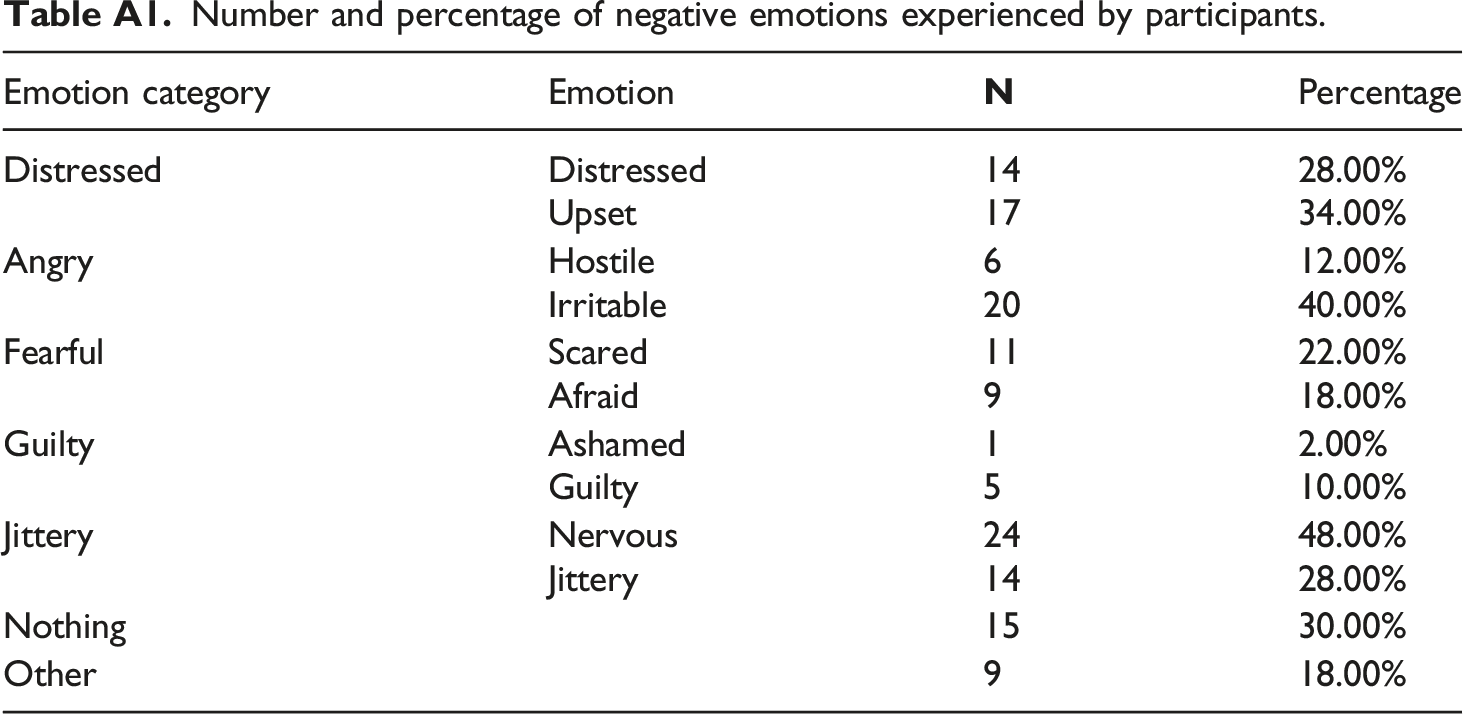
Emotion category
Emotion
Percentage
Distressed
Distressed
14
28.00%
Upset
17
34.00%
Angry
Hostile
6
12.00%
Irritable
20
40.00%
Fearful
Scared
11
22.00%
Afraid
9
18.00%
Guilty
Ashamed
1
2.00%
Guilty
5
10.00%
Jittery
Nervous
24
48.00%
Jittery
14
28.00%
Nothing
15
30.00%
Other
9
18.00%
Variable
M
SD
1
2
3
4
5
6
7
1. Perceived conflict seriousness
2.52
1.18
—
2. Attachment anxiety
3.76
1.13
.18*
—
3. Attachment avoidance
2.93
1.10
−.03
.36**
—
4. Commitment
5.24
1.37
−.05
−.14
−.46**
—
5. Usual response latency
19.32
44.88
.06
.31**
.07
−.08
—
6. Conflict expected latency
9.89
16.41
−.18*
.07
.16*
−.04
.30**
—
7. Negative affect
28.46
9.11
.25**
.41**
.03
.18*
.11
−.09
—
β
p
95%CI
Attachment Anxiety → Negative Affect
.39
.000
[.24, .53]
Attachment Avoidance → Negative Affect
.04
.654
[−.15, .23]
Conflict Expected Latency → Negative Affect
−.17
.026
[−.33, −.02]
Commitment Level → Negative Affect
.27
.001
[.11, .43]
Association
Unstandardized indirect effect
Unstandardized S.E.
Standardized indirect effect
SC → CL → NA
.320[.068, .771]
.173
.042