




Abstract
Relatively little is known about how commitment manifests in couples’ everyday lives in a way that orients couples toward their future together. Building on the Investment Model of Commitment, we propose that, in everyday life, individuals with high levels of commitment are more likely to (a) assure their partners about the future of the relationship and (b) behaviorally invest in that future by spending more time in the partner’s presence. Results from a sample of individuals (N = 100) suggest that relationship commitment is associated with greater time investment in the relationship (i.e., time spent with the partner in daily life); results from a second sample of couple members (N = 269) replicate this effect and suggest that relationship commitment is associated with the use of daily assurances, which mediate the relationship between commitment and time spent co-present with the partner.
Keywords
Introduction
I love you always forever Near and far closer together Everywhere I will be with you Everything I will do for you I Love You Always Forever, Betty Who
Relationship commitment is critical for promoting a lasting bond that carries a couple forward into the future (Le & Agnew, 2003; Rusbult, 1980). As a rich history of research demonstrates, people vary in the degree to which they are psychologically committed to and invested in their relationships. Commitment tends to be high for those in exclusive relationships, regardless of whether the couple is married or not, or whether this is measured as self-reported global levels of commitment (Sprecher, 1988), or as maintenance behaviors (Dainton & Stafford, 1993; Rhoades et al., 2011). Even within such relationships, individual differences in the psychological construct of commitment at one point in time positively predict meaningful outcomes, like future relationship status (e.g., Bui et al., 1996; Impett et al., 2018; Rhoades et al., 2010). Here we draw attention to one key element of longstanding conceptualizations of and theory about commitment that may illuminate everyday behavioral processes through which those meaningful outcomes might come to pass: Committed people self-report that they are invested in the future of their relationship (Rusbult et al., 1998). Building from this, we propose that (1) commitment manifests behaviorally in daily life as assurances to the partner about one’s focus on the future, and building on recent theory suggesting that this focus on the future motivates present day pro-relationship behavior (Lemay, 2016), we propose that (2) committed people invest more time in being physically co-present with their partners (i.e., a pro-relationship behavior).
Assurances: A manifestation of commitment in everyday life
Much of the early research on relationship commitment treated the concept as a stable experience, commonly captured at the beginning or end of an individual’s experience in a study utilizing a trait-level measure (e.g., Rusbult et al., 1998). More recently, researchers have begun to study fluctuations in commitment over time (i.e., days) utilizing similar self-reported perceptions of commitment (e.g., “Today, how committed were you to your relationship with your partner?” Totenhagen et al., 2016; Totenhagen et al., 2013; Lemay, 2016; Akçabozan et al., 2017; Arriaga et al., 2006; Monk et al., 2014; Leonhardt et al., 2022). This work documents that, like other feelings and motivations toward the partner often measured on a more global level, such as satisfaction (e.g., Debrot et al., 2018; Rosen et al., 2015; Saslow et al., 2013) and passion (e.g., Carswell et al., 2021; Rubin & Campbell, 2012), commitment can ebb and flow in daily life. This makes sense: Theoretically, commitment represents a motivational shift, whereby people are driven to enhance interdependence with their partner (Agnew et al., 1998; Rusbult et al., 1998), meaning highly committed people are motivated to maintain their interdependence with their partner regularly. What is most interesting for the present work is that these theorized day-to-day motivational shifts suggest that behavioral demonstrations of commitment in daily life will likely show variability across days, too. In turn, such behaviors may have meaningful implications for future relationship outcomes.
What is the behavioral demonstration of commitment? In addition to being characterized by a present psychological attachment to and orientation toward a relationship partner, commitment requires an intention to persist with a partner into the future (Arriaga & Agnew, 2001; Rusbult & Buunk, 1993). In fact, Lemay theorizes that it is this intention to persist that helps motivate present-day pro-relationship behaviors (2016). Analogous to people who are dispositionally more appreciative of their partner being more likely to express their gratitude in daily life (Gordon et al., 2012), and given the centrality of a focus on the future in commitment, we expect that people who say they are more committed to their relationship at one point in time (i.e., at a global level at study entry) will be more likely in daily life to simply express that intention to persist.
We draw from prior conceptualizations (Dainton & Stafford, 1993; Kubacka et al., 2011) to call these “assurances” of one’s commitment (e.g., “I stressed my commitment to him/her”, “I implied a future of our relationship”). Like expressions of love or affection, we expect that assurances about the future of the relationship emerge in a wide range of situations. This might look like anything from making plans to take a trip together next summer, to expressions that communicate the desire to grow old together, to statements of “forever” like the lyrics at the beginning of this article. We recognize that much work on the behavioral consequences of commitment has focused on times of relationship threat (i.e., as someone becomes increasingly committed, they are more likely to derogate or devalue alternative partners, accommodate, and forgive bad behavior [see Rusbult et al., 2012; Agnew et al., 1998]), but we believe assurances likely occur in a wide array of situations, including those that are safe and loving. Further, unlike relationship maintenance behaviors frequently described as consequences of commitment, given the centrality of a focus on the future to the very construct of commitment (Lemay, 2016; Rusbult et al., 2012), commitment assurances may be a behavioral enaction of the psychological experience of commitment.
In this work, we provide an initial operationalization of daily commitment assurance behaviors (Study 2) and a test of the foundational hypothesis that more globally committed people will be more likely to use them in daily life (Hypothesis 1a). In addition, as an initial test of corroboration of the committed individual’s self-reported behavior, we test whether partners of committed people perceive that more committed people are more likely to enact assurance behaviors in daily life (Hypothesis 1b). By studying commitment in this way–behaviorally–we hope to set up future research on the everyday interpersonal processes that account for some of the association between present-moment individual differences in commitment and future relationship status.
Critically, evidence in support of these hypotheses would also provide initial evidence supporting our theoretical focus on the intention and desire to persist in the relationship as a driver of future investments in the relationship (Lemay, 2016). That is, this daily behavioral measure may reflect an amplified motivation to enhance interdependence with the partner (Rusbult, 1980); such interdependence could be enhanced by investing time in the future of the relationship (Johnson & Anderson, 2013; Rusbult, 1980). This could be either on average (e.g., mean levels across days) or this present-day investment, like the motivation to do so, could fluctuate from one day to the next. We measure present-day investment in the relationship’s future as time spent co-present with the partner in daily life.
A novel outcome of commitment: Time spent co-present in daily life
Researchers often study relationship duration as a predictor of commitment, describing it as the relative time investment that partners have made to their relationship thus far (Ogolsky & Bowers, 2013). This investment is part of what determines how committed partners are to their relationship (Rusbult et al., 1998). Here we are interested in a different kind of time investment, one that is measured in minutes and hours versus months and years. Specifically, we draw attention to the value of how much time out of their day individuals choose to spend co-present with their romantic partner as a behavioral outcome of commitment. To contrast these characterizations of time investment, a couple may have been together for many months (duration), but only choose to see one another for a few hours each week (time spent co-present).
Although several researchers have profitably focused on shared (leisure) activities as a way of investing time into the relationship (e.g., Johnson & Anderson, 2013; McDaniel et al., 2021; Melton et al., 2022; Orthner, 1976; Totenhagen et al., 2023), our complementary work arrives at the behavior of spending time co-present from a different empirical tradition that influences our measurement approach and predictions. Specifically, we merge recent theorizing on positive interpersonal processes (Algoe, 2019)–which amplifies the intrinsically rewarding nature of connecting with a loved partner (see also Algoe & Jolink, 2020)–with evidence and theory from literature on non-human animal behavior (e.g., Williams et al., 1992), and theory about the development of human physiological defaults (Beckes & Coan, 2011) to focus on the value of time spent physically co-present with the partner across a 24 hour period. This could include leisure time, working on a project together, sleeping in the same bed, or completing separate tasks while in the same physical space. We believe that this is an important outcome for researchers to turn their attention to because it conceptually and empirically links the human literature on the psychology of social bonds with theory and evidence from other disciplines including evolutionary biology, neuroscience, and health (e.g., Holt-Lunstad et al., 2010; Smith et al., 2020; Williams et al., 1992).
The investment model of commitment documents the key role of relationship satisfaction in driving commitment (Rusbult, 1980) and plenty of evidence shows a positive correlation between relationship satisfaction and commitment (see Le & Agnew, 2003): committed people tend to like their partners. This translates to joyful, positive, and therefore rewarding, interactions in daily life (Algoe, 2019). This need not be limited to doing something prototypically “fun” together, like leisure; even challenging individual tasks may seem easier with someone we care about by our side (Kamarck et al., 1990; Schnall et al., 2008). Additionally, much of the time couples spend together is not leisure, and we believe any time co-present offers the opportunity to strengthen their bond. Indeed, other researchers have indicated that spending time together is a frequently used maintenance strategy for married couples (Dindia & Baxter, 1987) and have theorized that close relationships require significant time investment for maintaining a particular level of closeness (Huxhold et al., 2022). Each instance an individual chooses to spend time co-present with their partner, they are building a foundation for the future.
Given that commitment reflects an intention to persist with the partner, highly committed individuals are likely to devote more time to their partner throughout daily life as an investment to the future of their relationship (Hypothesis 3). They are behaviorally persisting by devoting time and attention to the person they care about and enjoy, investing time into their relationship. At a global level, time spent co-present should be forecast by broad individual differences in commitment (Studies 1 and 2). On a daily level, it should be forecast by its behavioral manifestation, commitment assurances (Study 2).
Commitment assurances likely reflect a motivation to follow through with investment in the future of the relationship; someone who implies a future of their relationship should be motivated to make that future a reality. One way they may do this is by investing in the relationship by spending more time co-present with their partner, thus strengthening their bond. We hypothesize that as commitment rises to the surface in day-to-day life in the form of assurances (Hypothesis 1), those in-the-moment behavioral indicators of commitment will forecast actual efforts to invest in that future (i.e., spending more time co-present; Hypothesis 3). Finally, because assurances may capture the ebb and flow of commitment as it is enacted interpersonally in daily life, we predicted that the use of assurances would statistically mediate the association between global relationship commitment and time spent co-present in everyday life (Hypothesis 4; Figure 1). Mediation model depicting the indirect effect of commitment on time spent together in daily life via assurance behaviors.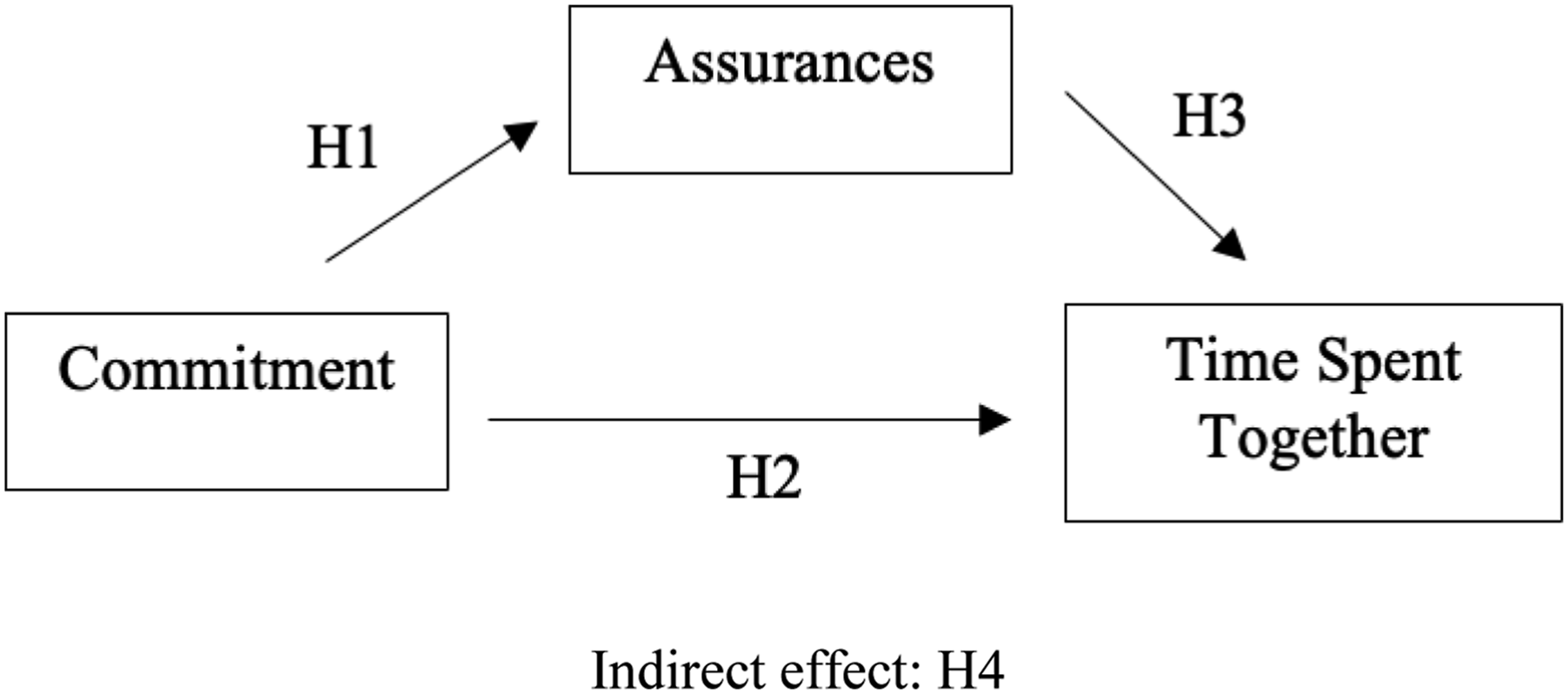
The present research
The present research tested novel hypotheses about the role of relationship commitment in behavioral manifestations of the intention to persist in daily life. It did so by measuring self-reported assurance behavior as well as time spent in the physical presence of the partner in a 24-h period. To establish the association between commitment and time spent together, Study 1 tested Hypothesis 2 using five assessments of time spent co-present with the romantic partner in the prior 24 hours. To test the role of assurances in this process, Study 2 tested Hypotheses 1–4 using dyadic data analyses of 14 nights of reports from both members of the couple.
Study 1
Method
Participants
One-hundred fifty-nine romantically-involved individuals were recruited to test a separate research question related to everyday interpersonal interactions and health in romantic couples in 2017 (Algoe, 2022a). Participants were recruited using online email listservs, such as an informational email sent to staff and students at UNC Chapel Hill, online research participant registries (jointheconquest.com, researchmatch.com), and physical flyers. Eligibility criteria were relevant to the original purpose of the study examining relational behavior and inflammation (see SM); relevant to the present study, participants had to be at least 18 years of age and in a romantic relationship for at least six months. Some participants had partners who did not live locally (N = 59), so we present analyses with only those who had partners nearby (N = 100). 1 Nearby was defined as not endorsing being in a long-distance relationship and endorsing that the partner “typically lives in this area.” Of those with partners nearby, 82 participants identified as female and were an average of 25.45 years old (SD = 8.13). Most participants identified as White (N = 82, 82.%), with 8.70% (N = 8) identifying as East Asian, 6.38% (N = 6) identifying as Black, 6.38% (N = 6) identifying as South Asian, 2.04% (N = 2) identifying as Hispanic, 2.04% (N = 2) identifying as Latino, and 1.0% (N = 1) identifying as Pacific Islander or Hawaiian. Participants had been with their romantic partner an average of 4.1 years (SD = 5.15, Range = .50–27.92, Median = 2.25). Most participants reported being in an exclusive dating relationship (n = 69, 69%), with others reporting being married (n = 24, 24%), engaged (n = 6, 6%) and casually dating (n = 1, 1%). Forty-three participants reporting cohabitating with their partner.
Procedure
At baseline, participants completed a 7-item measure of global relationship commitment (e.g., “I am committed to maintaining my relationship with my partner”, “I am oriented toward the long-term future of my relationship”;
Analysis strategy
Data and syntax are available to reviewers on the Open Science Framework page for this study: https://osf.io/fquxm/?view_only=7cd5a4977f644670a50d270e7c8285f4. We used multilevel analyses to account for the fact that the five different time points were nested within participants, estimating random intercepts and fixed slopes. Variables were not transposed (centered). In an a priori power analysis conducted using G*Power, a target sample size of 98 participants was estimated to have 80% power to detect a medium effect (f = .25) across 5 repeated measurements. Linear mixed models with random intercepts and fixed slopes were conducted using the lmer function from the lme4 package in R (Bates et al., 2015). Effect sizes (r) for individual coefficients presented were calculated based on the method used by Kashdan and Steger (2006). We first examined the association of baseline commitment with time spent in the presence of the partner. Then, we added relationship duration as a covariate to control for the possibility that people with greater baseline commitment are more likely to spend time co-present with their partner because they have previously invested more time in their relationships, potentially explaining the link between commitment and present time investment in the relationship. Finally, to account for participants who simply had more access to their partners because they lived with them, we ran a third model controlling for cohabitation.
Results
Hypothesis 2: Does commitment predict time spent co-present?
Baseline commitment was significantly associated with spending more time with the partner across five time points (b = 89.01, p = .01, CI 95% = [21.19, 156.82], r = .25). Specifically, a one-unit increase in commitment corresponded with spending approximately 89 more minutes with the partner, on average. Commitment continued to be positively associated with daily co-presence (b = 81.88, p < .001, CI 95% [25.28, 158.47], r = .26) when relationship duration was added to the model (b = .99, p = .05, CI 95% [−.01, 1.99], r = .17). When controlling for cohabitation, results held; commitment was still positively associated with time spent co-present, b = 71.48, p = .01, CI 95% [16.69, 126.26], r = .25. Cohabitation was also positively associated with time spent co-present, b = 377.93, p < .001, CI 95% [276.46, 479.41], r = .59.
Study 2
Study 1 established initial support for Hypothesis 2 using five days from the participant’s life: More committed participants at study entry later reported that they had spent more time co-present with their romantic partner in daily life. In Study 2, we aimed to test all four paths of the hypothesized mediation model (Figure 1), using fourteen days of data collected from both members of the dyad.
First, we tested for replication of support for Hypothesis 2, using the participant’s daily report of time spent co-present with the partner. Then, to address the possibility that self-reporting time spent co-present could be biased by the participant’s relationship commitment, we tested for conceptual replication using the partner’s independent report of time spent co-present with the participant.
Second, we triangulate approaches to provide a robust test of Hypothesis 1. In addition to assessing the association between baseline commitment and daily use of assurance behaviors, we conducted two additional tests. (1) We checked our assumption that assurance behaviors might be a particularly strong “manifestation” of commitment in daily life by testing whether baseline commitment predicts another important relationship maintenance behavior, acting positively toward the partner (Reis et al., 2010), and comparing the strength of those associations. (2) Although our theorizing is about within-person processes, by which we mean that one’s individual difference in commitment will emerge in their own behavior, we explored whether the partner’s observations offered corroborating evidence by testing the association between participant baseline commitment and partner reports of participant daily assurances.
Third, to test Hypotheses 3 and 4, we took advantage of the daily nature of reporting on assurances to partial the within-person variance and the between-person variance in a dyadic multi-level model (Bolger & Laurenceau, 2013). The within-person tests–looking at daily deviations in use of assurance behaviors to predict greater time spent co-present–provide a conservative test of our hypotheses.
Method
Participants
One hundred thirty-six couples (N = 272 individuals) were recruited for a five-week study on “Everyday Couple Interactions” in 2014 (Algoe, 2022b). Participants were required to have been involved in an exclusive romantic relationship for at least one year, be at least 18 years old, and were all in mixed-sex relationships (50% female; relevant to original study hypotheses about biology). Couples had been together for an average of 4.18 years (SD = 5.16; Range = 1–40; Median = 2.58); 61.0% were dating exclusively, 10.3% were engaged, 26.8% were married, 1.9% reported another status. Finally, participants were on average 27.07 years old (SD = 9.85); 65.4% reported being White/Caucasian, 11.0% African American, 4.8% East Asian, 2.6% South Asian, .4% American or Alaskan Native, and 15.8% were of other ethnicities; 8.5% of participants self-identified as Hispanic. One-hundred twenty-nine participants reporting cohabitating with their partner.
Procedure
Couples attended the first laboratory session after consenting to participate and completed the same baseline measure of commitment as Study 1 (
Across the two weeks, each night participants reported on a list of 16 relationship maintenance behaviors they may have enacted toward their partner that day (reported as Yes = 1, No = 0). We focused on two behaviors characterized as “commitment assurance behaviors” (Kubacka et al., 2011): (1) “I stressed my commitment to him/her.” and (2) “I implied that our relationship has a future.” 2
Additionally, each night participants estimated the amount of time they spent in the physical presence of their partner in the prior 24 hours using the same item as Study 1 and these numbers were converted to a total number of hours per day.
Analysis strategy
Due to participant agreements, data are only available upon request; syntax is available to reviewers on the Open Science Framework page for this study: https://osf.io/wucdx/?view_only=7c02836fc7f84fc4b9c8e058e2f0f6b2. We conducted a series of multilevel analyses for dyadic data (Bolger & Laurenceau, 2013). For multilevel daily analyses, power is determined by (a) the number of persons in the study, (b) the number of daily observations within-persons, and (c) the size of the effects one is examining (Bolger & Laurenceau, 2013). Power was determined a priori for the original study these data were a part of. However, for these secondary analyses, with 269 persons (136 couples), a total of 3,333 daily observations, and small-to-medium-sized anticipated effect sizes, we reasoned that our analyses would be well-powered to test our hypotheses. A post-hoc power analysis using APIMPowerR revealed a power coefficient of .76 and .99 (Effect = .18–.29) to test our actor effects on each member of the dyad respectively and a power coefficient of .26 and .89 (Effect .09–.21) to test our partner effects on each member of the dyad respectively (Ackerman & Kenny, 2016).
To predict the use of assurance behaviors in daily life, we conducted dyadic, multilevel analyses for binary outcome variables. This approach calls for selecting a factor on which to distinguish the dyad members; we had no theoretically derived predictions regarding a distinguishing factor (e.g., gender 3 ), so we selected an arbitrary distinguisher that was part of the larger study design from which these data were derived. Specifically, after this two-week baseline period, participants were randomly assigned into within-dyad roles for the rest of the study (for study design, see Algoe, 2022b). Here, we refer to them as A and B to reflect their arbitrary nature. Therefore, we had no theoretical reason to predict a difference in these halves of the sample and so any empirical difference that arises should be ascribed to natural variation in the effect. As such, we utilized this as the within dyad distinguishing factor for dyadic, multilevel, daily analyses in this research (Bolger & Laurenceau, 2013). We specified these models to include separate random intercepts for A and B partners to estimate the unique predictive effects of A and B partner baseline commitment on assurance behaviors in daily life. To de-trend the data, we also included fixed effects of time (i.e., day of data collection, separately by A and B) to account for the possibility of change in the outcome variable across the course of the study. Models were specified with an unstructured covariance matrix for the random term and with an autoregressive covariance structure for the repeated term. Given the binary nature of the assurance variables, in all models using them, we tested the behaviors separately, beginning with stressing commitment, followed by implying a future.
To examine how commitment and assurance behaviors predict time spent co-present in daily life, we conducted multilevel, dyadic analyses for a continuous outcome variable (Bolger & Laurenceau, 2013). These models also included separate random intercepts and separate fixed effects for A and B partners for all predictor variables of interest. In these models, we again included time (i.e., day of data collection) as a covariate, to account for any possible change in the outcome variable across the course of the study. Models were specified with an identity covariance matrix for the random term, and with an autoregressive covariance structure for the repeated term.
Finally, we tested the indirect effects of baseline commitment on daily time spent co-present through daily assurance behavior using the Monte Carlo method in the RMediation macro (Tofighi & MacKinnon, 2011). Using coefficients and standard errors from the original analyses, RMediation allows for computing unbiased confidence intervals for the indirect effect of two paths of interest (one for each assurance behavior).
Results
Usage rates of commitment assurances
Participants’ reports of their use of the two assurance behaviors were moderately correlated (r = .61). On average, participants reported stressing their commitment to their partner on 51.1% of the days and implying a future to their partner on 65.2% of the days over two weeks.
Hypothesis 2: Does commitment predict time spent co-present?
For partner A, greater baseline commitment was associated with greater time spent co-present in daily life, controlling for prior day time spent co-present (b = 1.75, p < .001, 95% CI = [.68, 2.82], r = .32). A one unit increase in commitment corresponded with spending approximately 105 more minutes
4
with the partner, on average. For partner B, the association was not statistically significant (b = .84, p = .07, 95% CI = [−.07, 1.75], r = .19), although the effect size was meaningful and in the expected direction (50.40 minutes; full results presented in Table S1 in SM). As in Study 1, conclusions did not change (for either Partner A or B) when adding relationship duration to the model (see Table S2 in SM). Unlike in Study 1, when controlling for whether the couple lived together in this model, commitment was no longer associated with time spent co-present for either partner (see Table S3 in SM). We explore this in the Discussion. Finally, because the participant and partner reports of time spent co-present should theoretically be the same, minus personal factors contributing to misestimation, we ran the first analysis swapping in partner report of time spent co-present. This analysis provides a check that the above finding was not due to more committed people misestimating how much time they spent co-present. Results of the partner reports corroborated evidence with the participant reports (see Table S4 in SM) and gave us confidence in using the participant reports of time spent co-present to test Hypotheses 3 and 4, as well as more confidence in conclusions about Hypothesis 2.
Hypothesis 1: Does commitment manifest as assurance behaviors?
Baseline commitment predicting daily assurance behavior in study 2.
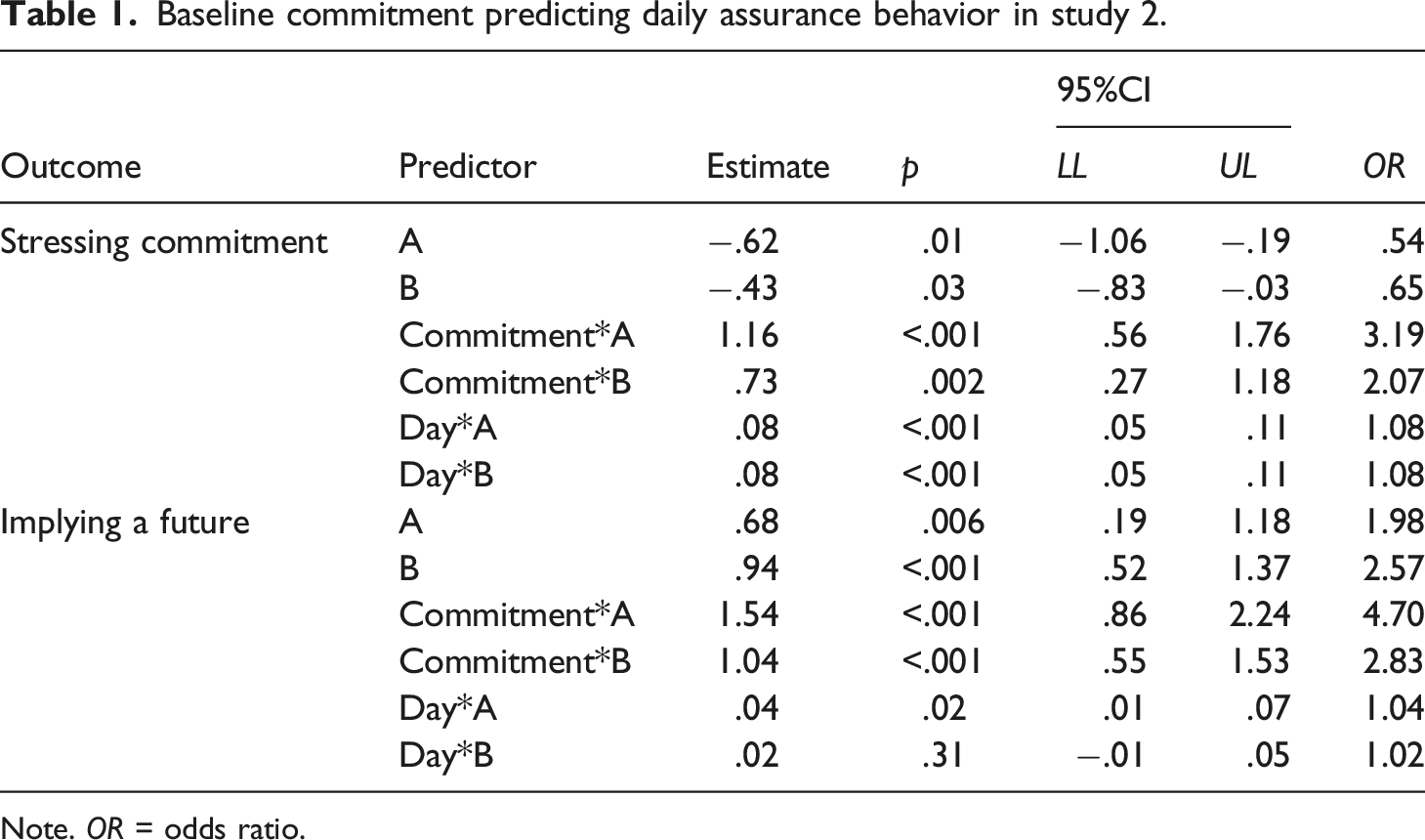
Note. OR = odds ratio.
Actor baseline commitment predicting partner reports of daily assurance behavior in study 2.
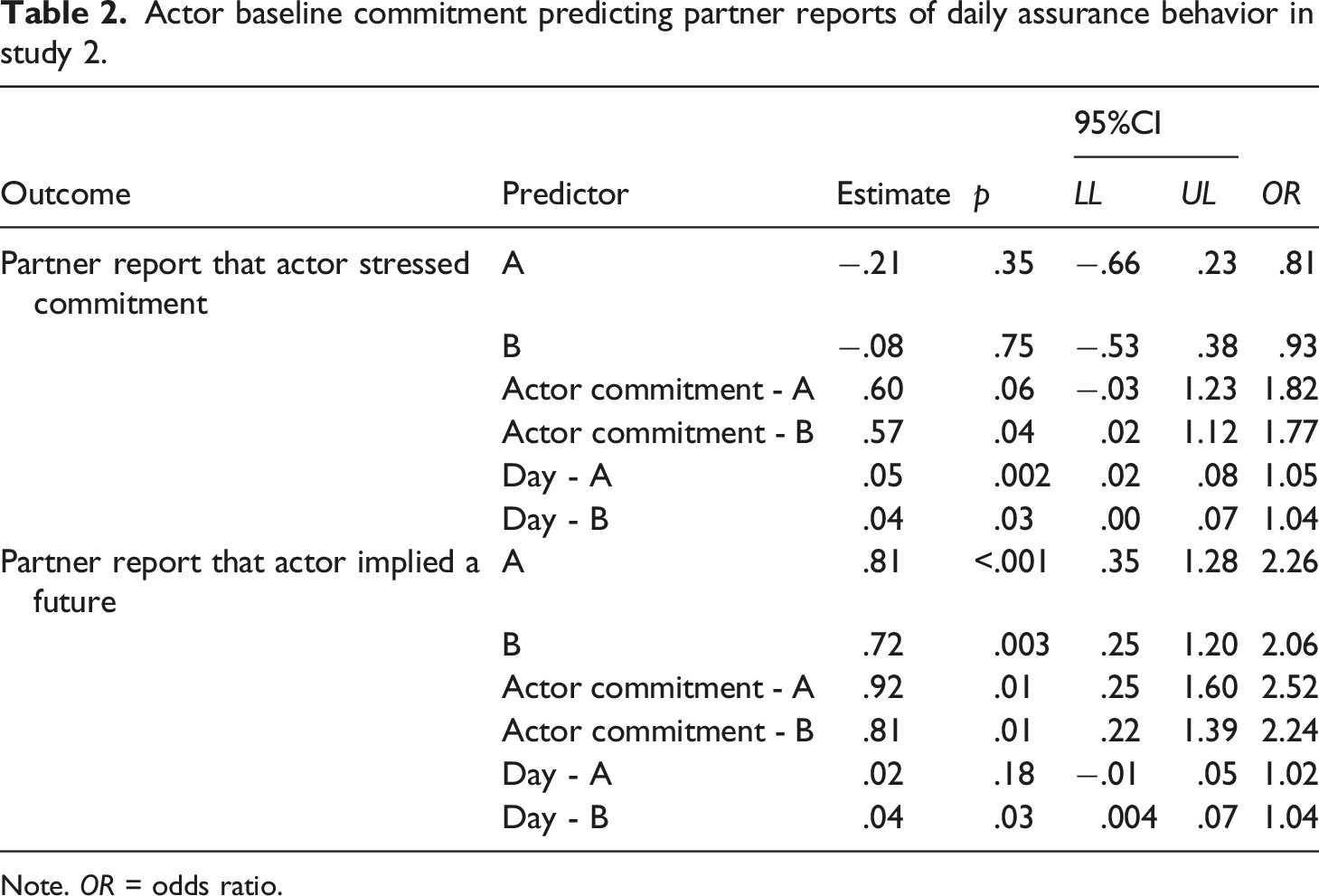
Note. OR = odds ratio.
Hypothesis 3: Do assurance behaviors predict time spent co-present?
Daily assurance behavior predicting time spent together controlling for prior day time spent.
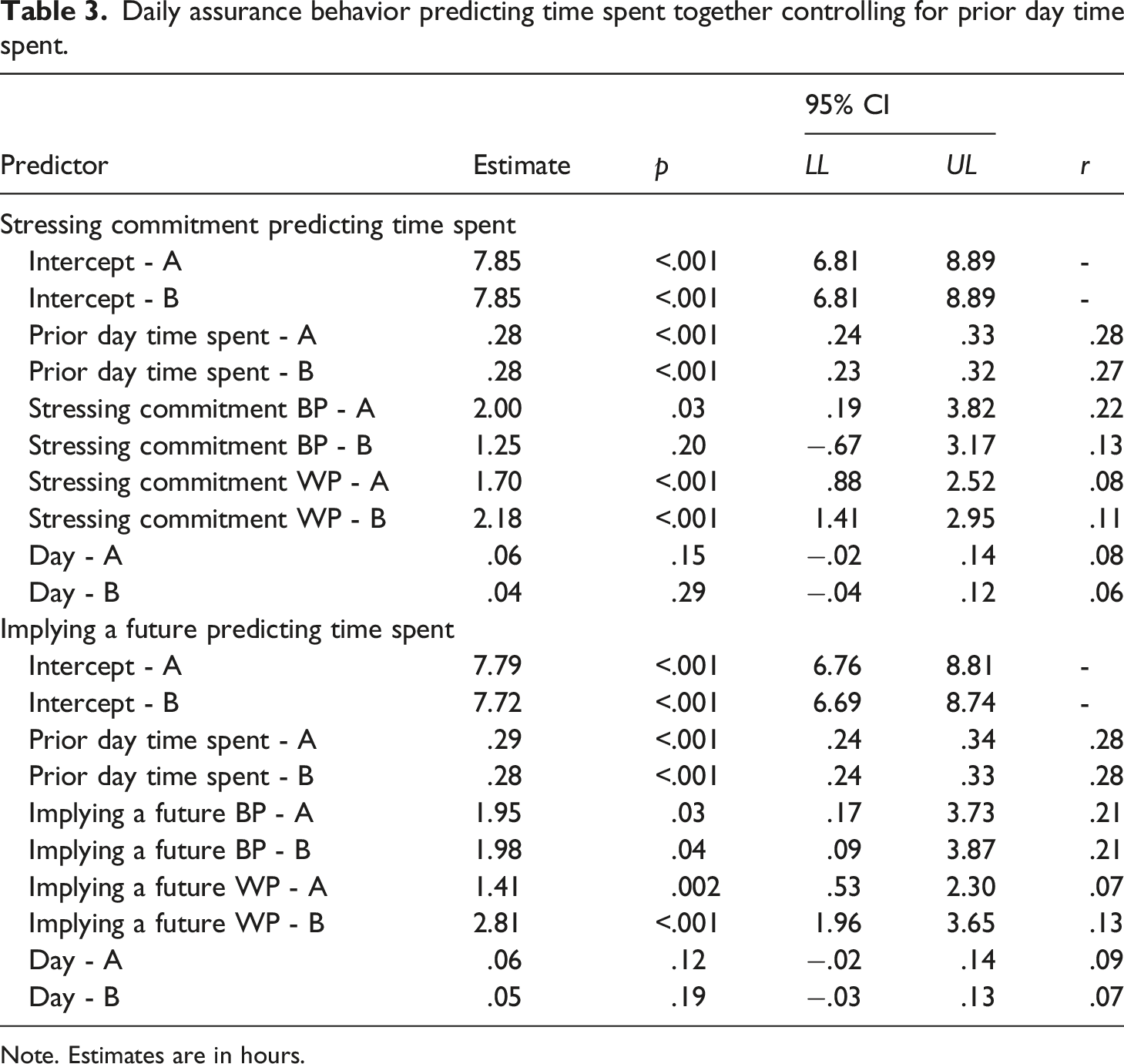
Note. Estimates are in hours.
At the within-person level, all results are consistent with Hypothesis 3: When either group (A or B) used more of either behavior than their own average, they spent more time co-present with their partner, even controlling for how much time they had spent co-present with the partner the prior day. These within-person effects held when controlling for whether the couple lived together (see Table S6 in SM).
Hypothesis 4: Does commitment predict time spent co-present via assurance behaviors?
Results of multilevel analyses to test Hypothesis 4, which control for prior day time spent co-present, are presented in Figures 2 and 3 (full results in Tables S7 and S8 in SM). At the between-person level of analysis, the indirect effect was not statistically significant for either behavior for both partners A and B. Mediation Model Depicting Results from Study 2: The Effect of Commitment on Time Spent Together via Stressing Commitment. Note. W = within-person. B = between-person. Paths presented in bold were statistically significant. * = p < .05. ** = p < .001. Estimates and effects sizes (e.g., r, OR) are depicted for each path as: estimate (effect size). Model controlled for day in the study. Estimates are in hours. Mediation Model Depicting Results from Study 2: The Effect of Commitment on Time Spent Together via Implying a Future. Note. W = within-person. B = between-person. Paths presented in bold were statistically significant. * = p < .05. ** = p < .001. Estimates and effects sizes (e.g., r, OR) are depicted for each path as: estimate (effect size). Model controlled for day in the study. Estimates are in hours.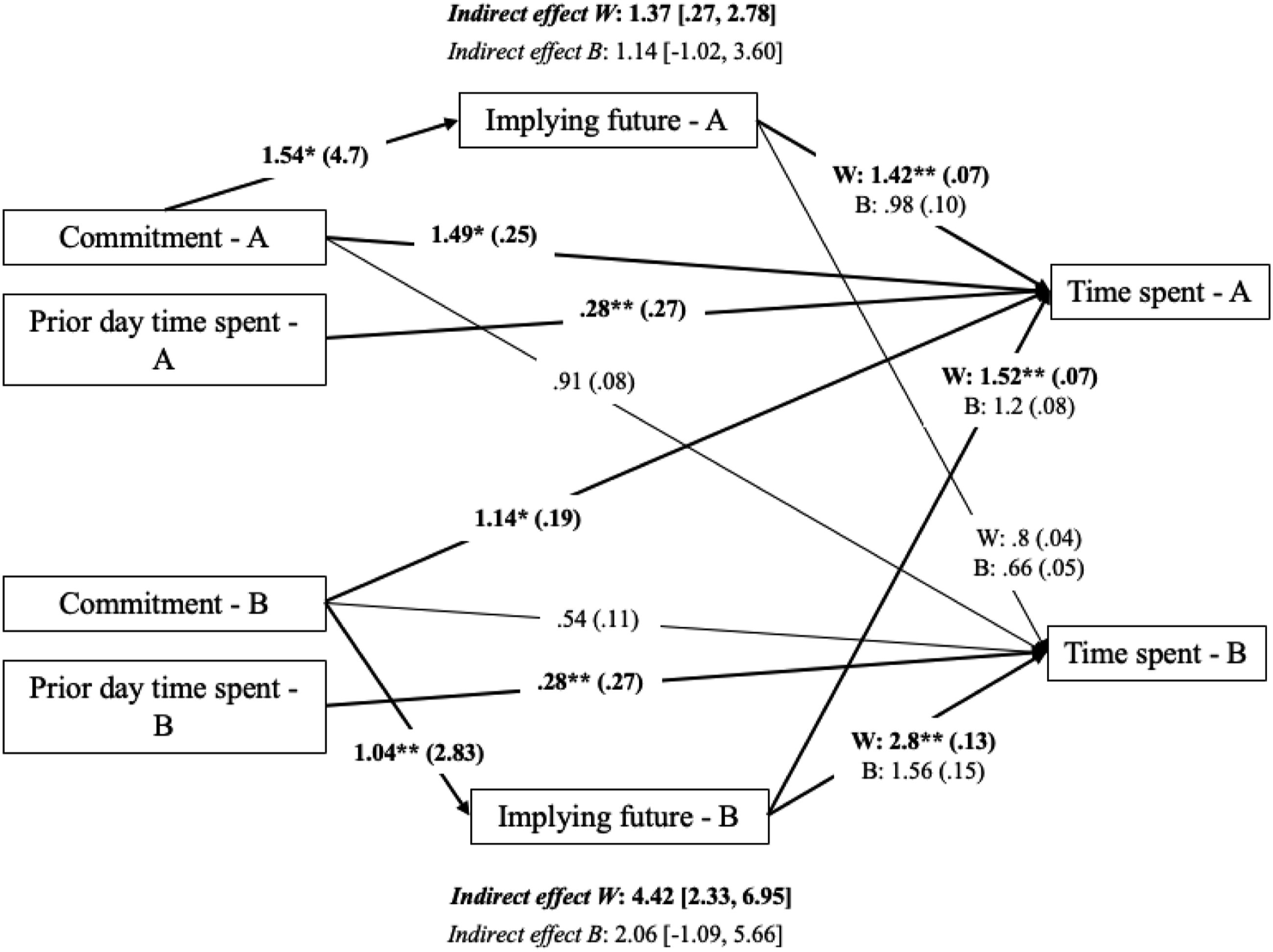
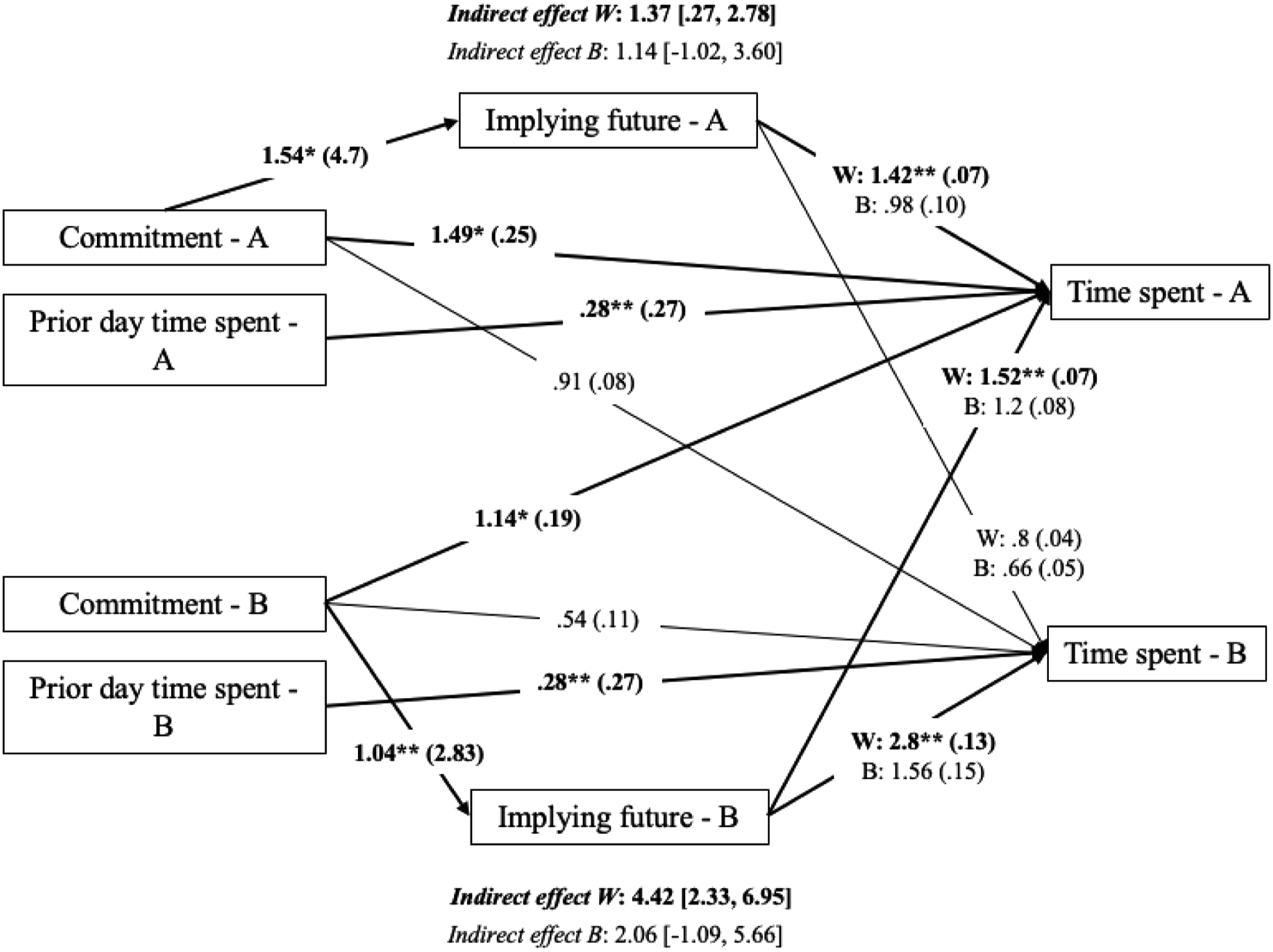
However, at the within-person level, the indirect effects were consistent with Hypothesis 4: When either person (A or B) was more committed, they enacted more of both assurance behaviors than what is typical for them, and in turn they spent more time co-present with their partner, even controlling for how much time they had spent co-present with the partner the prior day. Thus, greater commitment at baseline was linked to greater use of both assurance behaviors in daily life, and on days in which people were more likely to engage in assurance behavior, they tended to spend more time co-present with their partner on that day, controlling for their own general tendency to engage in assurance behavior, as well as their reports of prior day time spent co-present. 5 We also explored these tests using partner reports of time spent co-present, which introduces additional conceptual questions, and conclusions were consistent for B partners (see Tables S11 and S12 in SM).
Discussion
Two studies provided an examination of the intent to persist feature of relationship commitment, specifically focused on how global commitment to the relationship may manifest within the ebbs and flows of daily life. Supporting Hypothesis 1, self-reported commitment manifested in daily life as the use of assurances about future investment: People higher in commitment at baseline were more likely to stress their commitment and imply a future of the relationship to their partner across 14 days. Both studies supported Hypothesis 2: greater self-reported commitment was associated with spending more time co-present with the partner in daily life, an effect that held when accounting for relationship duration. Moreover, supporting Hypothesis 3, at the within-person level, when participants engaged in greater assurance behaviors, they were more likely to spend more time co-present with their partner on that day, and this finding held when we controlled for prior day levels of time spent co-present. Finally, in line with Hypothesis 4, we found evidence in support of mediation: greater baseline commitment predicted greater likelihood of providing assurances in daily life, and on days in which people engaged in greater assurance behaviors, they were more likely to spend more time in their partner’s presence on that day, controlling for their own general tendency to engage in the assurance behavior as well as the time they spent co-present the day before.
We believe this is the first investigation of how the intention to persist may emerge as a behavior in daily life through assurances about the future of the relationship. Whereas prior research has focused on pro-relationship behaviors resulting from commitment defined more broadly, our evidence shows strong effect sizes [OR = 2.07–4.70] for behaviors that imply the future of the relationship. Further, as initial discriminant evidence, we found relatively weaker associations with another affiliative, pro-relationship behavior [OR = 1.46–1.54]. Our data suggest that assurances are a behavioral representation of commitment itself as it rises to the surface in daily life. Thus, tracking these daily behaviors may be a useful tool for studying how commitment ebbs and flows in daily life, above and beyond the trait-level, more static measures of relationship commitment commonly used in research (e.g., Rusbult et al., 1998).
We focused on an examination of a potential behavioral outcome of the intention to persist: spending time co-present with the partner. Our results suggest that commitment may orient couples toward the future of their relationship at any stage, regardless of relationship duration. Thus, time spent co-present may be a fruitful avenue for future research investigating the interplay between daily investment behaviors and the development of longer-term investments among couples.
Limitations and future directions
There are several limitations to note. Of interest, although we found support for commitment relating to daily co-presence when controlling for cohabitation at the trait level in Study 1 and the daily level in Study 2, in our trait level model in Study 2, controlling for cohabitation made the effect go away. One possible reason for this is due to the particularly conservative nature of this test because, unlike in Study 1, we also controlled for yesterday’s time spent co-present in these models, which may introduce collinearity issues with the cohabitation control variable: couples who live together are much more likely than those who do not to have spent significantly more time co-present on the prior day. In our sample, cohabitation status and prior day co-presence were significantly corelated (r = .4; p < .001). Further, while it is possible this particular effect may just not appear in this sample, another possible alternative explanation is that perhaps for these couples, their commitment drove them to live together because it allowed them to spend more time co-present. Future studies could investigate this idea by examining committed couples who are not cohabitating and then later choose to do so.
While the analyses examining the outcome of time spent co-present were set up to control for time spent co-present the previous day, the conclusions of the results are limited by their correlational nature. In fact, spending more time co-present in daily life may offer more time to express assurances. Thus, experimental work is needed to examine the causal nature of commitment assurances on time spent with a partner. Additionally, our samples, like many in relationship science, were largely satisfied couples. Future work with samples of less satisfied couples could be used to understand how assurances function in less satisfying relationships, if spending time co-present is as beneficial in these contexts, and if assurances may be used to soothe relationship threat (e.g., when a partner misbehaves).
Further, assurances were measured with binary items and therefore we were limited in our predictions about the frequency and intensity of these behaviors. For example, offering too many assurances in a day could be perceived as overbearing those who are avoidantly attached and too few could be concerning to those who are anxiously attached. Additionally, future work is needed to gain better understanding of what qualifies as assurance behavior. Could it be as simple as making plans to go on a trip together next month or must it communicate being together indefinitely? We were also limited in our ability to determine what specifically the couples were doing when spending time in each other’s presence (e.g., eating together, being physically intimate) and thus we were unable to test questions related to the quality of the time spent co-present. Given the potential value of understanding whether and how quality time together may be beneficial (e.g., for health, happiness, or marital status; Melton et al., 2022; Milek et al., 2017), this could be an interesting direction for future research. Finally, we were limited in our ability to determine if our findings extend to identities we did not ask about. For example, we did not collect demographic data related to class, gender identity (only sex), sexual orientation, or disability status, and thus these would be valuable additions for future studies.
Questions remain about the influence of assurances at the developing stages of romantic relationships. As newer couples begin to grow in their commitment to the relationship, are assurances utilized as a tool to begin to introduce the idea of staying together? Could assurances be received less positively if perceived as an overstep too early in the relationship? Further, it could be interesting to investigate whether couples’ assurance behaviors change when entering marriage, since some may consider this an ultimate signal of the intention to persist.
Assurances are, theoretically, communicative signals to the partner. How might this impact the partners receiving them? Feelings of commitment are suggested to emerge as a result of investments made in the relationship (Rusbult, 1980), so relationship maintenance behaviors that result from commitment can potentially strengthen one’s commitment cyclically (Canary et al., 2002; Monk. et al., 2014; Van Lange, et al., 1997). Receiving a communication about a partner’s motivation to maintain the relationship has the potential to bolster someone’s own commitment if perceived as an investment in the relationship (Joel et al., 2013), and thus could shape the response to these signals and impact future interactions within the dyad.
Conclusion
The present investigation extends research on commitment and daily relationship maintenance behavior. Highly committed individuals express more commitment assurances in daily life, and on days in which they do so, they tend to spend more time in their partner’s presence. Therefore, assurances may represent a manifestation of commitment in daily life, as an expression of one’s dedication to a future, and highly committed people may be driven to make that future a reality by investing more time in their relationship.
Supplemental Material
Supplemental Material - Making the future a reality: Commitment assurances and time investment in daily life
Supplemental Material for Making the future a reality: Commitment assurances and time investment in daily life by Kylie R. Chandler, Brian Don, Tatum Jolink, Brett Murphy, and Sara B. Algoe in Journal of Social and Personal Relationships
Footnotes
Author’s note
Data from this article were presented at the 2022 International Association for Relationship Research Conference and The Love Consortium's 2022 Love Conference.
Declaration of conflicting interests
The author(s) declared no potential conflicts of interest with respect to the research, authorship, and/or publication of this article.
Funding
The author(s) disclosed receipt of the following financial support for the research, authorship, and/or publication of this article: This research was supported by the John Templeton Foundation (Grant ID 56458) and the Expanding the Science and Practice of Gratitude Project run by UC Berkeley’s Greater Good Science Center in partnership with UC Davis with funding from the John Templeton Foundation.
Open research statement
As part of IARR’s encouragement of open research practices, the authors have provided the following information: This research was not pre-registered. The data and syntax used for Study 1 is publicly shared. The materials for Study 1 can be obtained at: https://osf.io/fquxm/?view_only=7cd5a4977f644670a50d270e7c8285f4. The data for Study 2 cannot be shared publicly but can be requested by emailing  .
.
Supplemental Material
Supplemental material for this article is available online.
Notes
References
Supplementary Material
Please find the following supplemental material available below.
For Open Access articles published under a Creative Commons License, all supplemental material carries the same license as the article it is associated with.
For non-Open Access articles published, all supplemental material carries a non-exclusive license, and permission requests for re-use of supplemental material or any part of supplemental material shall be sent directly to the copyright owner as specified in the copyright notice associated with the article.
