




Abstract
Building on the extant research, the current work outlines a comprehensive model of post-dissolution distress (CMPDD). The model integrates the previous research and includes both distal (static; e.g., controllability of breakup, relational anxiety) and proximal (dynamic; e.g., desiring reconciliation, coping, quality of alternatives) factors in predicting both initial distress and change in distress over time. Potential mediating mechanisms are also proposed. We conclude with a discussion of several ways the model could be potentially refined with empirical research to generate a more specific and parsimonious theory of PDD. Ultimately, testing and refining the model will provide insights on identifying those who will be more distressed following a breakup and highlight the factors that could be altered (e.g., contact with the partners, coping strategies) to best alleviate distress.
Explicating a comprehensive model of post-dissolution distress
The dissolution of romantic relationships can be one of the greatest stressors in life (Chung et al., 2003; Monroe et al., 1999; Rhoades et al., 2011). Breakups can cause negative emotions (Fagundes, 2011; Sbarra & Emery, 2005; Sprecher et al., 1998), anxiety and depression (Mirsu-Paun & Oliver, 2017; Monroe et al., 1999; Rhoades et al., 2011), substance use (Overbeek et al., 2003), and self-concept confusion (Lewandowski et al., 2006; Mason, Law, et al., 2012; Slotter et al., 2010). As such, many feel ill equipped to navigate a breakup (Beckmeyer & Jamison, 2020). Each study on post-dissolution distress (PDD) provides insights on the complex puzzle of both its causes and effects. Although various reviews have summarized the research (e.g., Hunt & Chung, 2012; Lee & Sbarra, 2013; Sprecher et al., 1998; see also Fine & Harvey, 2006), no explicit, comprehensive model or theory combining all the dimensions of PDD currently exists. In their review of the past two decades of research on relationship dissolution, Machia et al. (2022) advocated for a comprehensive model of the dissolution process to consolidate the various perspectives utilized, and we argue there is a similar need for a comprehensive model regarding the experiences after dissolution.
Our overarching goal of this paper was thus to outline a model of PDD. This paper first offers a conceptualization of PDD that integrates various definitions and operationalizations from previous research. This paper then offers a synthesizing framework for the diversity of research on breakup distress and adjustment. We offer a set of propositions to formalize these hypothesized associations and guide future theorization and empirical testing of the model (see Bailey, 1970). We conclude with a discussion of how this model can be refined with future research. Collectively, this model provides a foundation for future research as well as more nuanced practical applications to assist individuals in managing the distress associated with one of life’s largest stressors.
Post-dissolution distress (PDD)
Conceptualizations in previous research
A standard definition of PDD has not yet been established. This is likely, in part, because breakup circumstances and individual responses to breakups vary, and individual studies focus on different aspects of these experiences. Researchers have previously conceptualized PDD as involving multiple negative emotions, mental health consequences (e.g., depression, anxiety, post-traumatic stress symptoms), or grief or separation distress. Although in-depth explications of the construct of PDD have not been developed, certain theories or perspectives have been utilized, and a clearer understanding of distress in most articles is typically gained through its operationalizations.
Most common in both the divorce and non-marital breakup literatures is to measure the negative emotions and emotional coping strategies that characterize PDD. Some studies measure general emotional upset (Fox & Tokunaga, 2015; Simpson, 1987; Spielmann et al., 2019), positive and negative affect (Fagundes, 2011), and the intensity of specific emotions including anger, frustration, guilt, and unhappiness (Booth & Amato, 1991; Johnson & Wu, 2002; Sprecher et al., 1998). Millings et al. (2020) developed a measure of emotional adjustment to relationship dissolution focusing on emotions such as frustration, shame, guilt, anger, and resentment. Some researchers include depression and anxiety as negative emotions (Field et al., 2009) and use these to measure PDD (Frost et al., 2016; Rhoades et al., 2011; Slotter et al., 2010; Slotter & Ward, 2015). In addition to the emotions themselves, researchers also measure strategies associated with emotional coping such as avoidance and repetitive negative thinking (Saffrey & Ehrenberg, 2007; Wrape et al., 2016), brooding and regret (Saffrey & Ehrenberg, 2007), and positive and negative adjustment (Frazier & Cook, 1993; Saffrey & Ehrenberg, 2007). Using a principal components analysis of a battery of these measures, Verhallen et al. (2019) found that many of these, including negative emotions, intrusive thoughts, and lingering feelings of love and affection, reflected what they termed heartbreak.
Although losing a partner to death is not equivalent to relationship dissolution (e.g., dissolution can involve rejection but also the potential for reunion), perspectives on grief/bereavement and separation distress have also been used to characterize distress following dissolution. Researchers who have compared dissolution to grief (e.g., Boelen & Van den Hout, 2010; Field et al., 2009) have used versions of the Inventory of Complicated Grief (Prigerson et al., 1995) to assess breakup distress (Brenner & Vogel, 2015; del Palacio-González et al., 2017; Field et al., 2009; Harvey & Karpinski, 2016). In more extreme cases, the trauma of a breakup can be overwhelming to process and lead to flashbacks and rumination, which can have negative effects on mood and the ability to function (Joseph et al., 1995). Although researchers have not explicitly classified PDD as post-traumatic stress disorder (PTSD; e.g., instead characterizing the experience as involving post-traumatic stress symptoms; Chung et al., 2003; Van der Watt et al., 2021), some have used a PTSD measure–Impact of Event Scale–to assess individuals’ responses to relationship dissolution (Chung et al., 2003; Hunt & Chung, 2012; Sbarra & Emery, 2005). Both PTSD and grief conceptualizations of PDD focus on the traumatic nature of the breakup event and how one’s coping changes over time.
Some researchers have utilized attachment theory and Bowlby’s (1973, 1988) concept of separation distress to explain PDD. Although more often applied to the death of a parent or partner, the disruption to the attachment system is considered to also apply to the loss of a partner through a breakup. Relationship dissolution is the loss of the very person in whom we seek security. Sbarra and Hazan (2008) explicate how the loss of one’s secure base leads individuals to seek to regain homeostasis. Researchers argue that this perspective includes not only a psychological and behavioral connection between partners but also a physiological co-regulation (Diamond, 2001; LeRoy et al., 2019; Roisman, 2007; Sbarra & Hazan, 2008). Generally, when security is lost, the stress arousal is considered disruptive and distressful. Particularly for those with greater attachment anxiety, the attachment system is hyperactivated and they are preoccupied with regaining security (Mason, Sbarra, et al., 2012; Mikulincer & Shaver, 2012).
Stemming from attachment as well as other perspectives, researchers are increasingly assessing the physiological manifestations of PDD. Paralleling individuals’ physiological and neurological responses when initiating relationships (e.g., experience of love and passion; Aron et al., 2005; Mercado & Hibel, 2017) and experiencing rejection (Fisher et al., 2010), individuals also have physiological and neurological responses to dissolution. For example, marital separation is associated with impaired immune functioning (Kiecolt-Glaser et al., 1987), and rumination and difficulties in regulating emotions after relationship dissolution are associated with physiological effects (e.g., effects on blood pressure; Roos, 2018; Sbarra et al., 2009). Mason, Law, et al. (2012) also showed that physiological responses (i.e., non-visible facial movements associated with negative emotions when thinking about an ex-partner) can be linked to dissolution adjustment.
The collective of this research shows that PDD is likely multi-dimensional, with each separate definition or operationalization capturing specific aspects or dimensions of PDD. For example, under the umbrella concept of breakup recovery, Spielmann et al. (2019) assessed general distress, affect, and intrusive thoughts in separate analyses. Similarly, Verhallen et al.’s (2019) heartbreak was comprised of negative emotions, intrusive thoughts, and lingering feelings. Perhaps the most general conceptualization to date is the characterization of PDD as grief, which encompasses negative emotions, rumination, and the disruption of normal activities (Field et al., 2009).
Combining the foci of previous research, we take a holistic approach to PDD that includes cognitive, affective, behavioral, and physiological components. We define PDD as an unpleasant state of disruption following the termination or suspension of a romantic relationship characterized by varying degrees of impaired cognitive (e.g., intrusive thoughts, self-concept confusion, relational ambivalence), affective (negative emotions), behavioral (e.g., interference with daily activities), and physiological functioning. We acknowledge that positive experiences can result from dissolution (e.g., positive emotions, relief, growth; Lewandowski & Bizzoco, 2007; Sprecher et al., 1998; Tashiro & Frazier, 2003), but in explicating distress, we center on the negative, undesired aspects of these experiences. Based on factors prominent in previous literature, we propose six separate but related components of PDD: degree of upset, intrusive thoughts, negative emotions, relational ambivalence, self-concept confusion, and physiological dysregulation. Degree of upset pertains to the general upheaval the breakup caused in the person’s life (e.g., feeling as though the world has been turned upside-down, interference with accomplishing daily activities; Field et al., 2009; Simpson, 1987). This is perhaps the most general component as well as similar to the grief conceptualization. Yet, this overall sense of upheaval can be distinguished from other components. Intrusive thoughts is a second component that is cognitive in nature. These involve unwanted thoughts about, or a preoccupation with, the ex-partner (e.g., Field et al., 2009; Spielmann et al., 2009; Verhallen et al., 2019). Negative emotions is the affective factor incorporating a variety of emotions such as guilt, sadness, and anger (e.g., Johnson & Wu, 2002; Sprecher et al., 1998). We also include the concept of relational ambivalence as this likely reflects distress in the aftermath of a breakup (e.g., Dailey et al., 2020); feeling both positive and negative about a partner or the relationship reflects a lack of resolution which might exacerbate the pain and disorientation of a breakup and impede recovery. A breakup also typically involves self-concept confusion; uncertainty about one’s identity or self-concept likely contributes to the turmoil felt in processing the end of a relationship (e.g., Cope & Mattingly, 2021; Lewandowski et al., 2006; Rodriguez, Øverup, et al., 2016; Slotter et al., 2010). Finally, physiological dysregulation is an internal experience of changes in, but not limited to, blood pressure, cortisol levels, and immune functioning (Kiecolt-Glaser et al., 1987; Roos, 2018; Sbarra et al., 2009). Obviously, these six factors are interrelated, but each likely makes an independent contribution to the broader experience of PDD.
We limited this conceptualization to components that are inextricably linked to the negative experiences of breakups. A subset of the research on PDD focuses on breakup recovery and adjustment. Yet, much of this literature often either measures indicators related to distress (e.g., depression, anxiety, loneliness) with their reverse presumably indicating adjustment (Kurdek, 1997; Larson & Sbarra, 2015; O’Sullivan et al., 2019; Spielmann et al., 2019) or combines measures of both distress and adjustment into one composite (e.g., Barutcu & Demir, 2015; Blackburn et al., 2014; Dailey et al., 2020) implying that distress and adjustment are opposites. Other research focuses on post-dissolution growth (e.g., Marshall, 2012; O’Connor & Canevello, 2019) assessed by measures such as Tedeschi et al.’s (2017) Post-Traumatic Growth Inventory which includes subdimensions such as personal strength, relating to others, new possibilities, appreciation of life, and spiritual changes. Growth following dissolution, however, could have different predictors than experiencing distress. Further, our review of the research suggests growth is typically characterized as a means of coping which we include as a proximal factor in our model. Thus, in conceptualizing PDD, we focus on the negative experiences rather than positive experiences or growth. Yet, following the extant research, a decrease in PDD likely implies recovery or adjustment to relationship dissolution.
We additionally exclude generalized anxiety and depression within PDD as it is difficult to determine if these are an integral part of the distress or a predictor or antecedent of the distress (e.g., a person’s anxiety could have existed prior to the breakup but worsened after, or depression could be a result of the distress). Our definition of these components thus pertains specifically to experiences in the post-dissolution period (e.g., thoughts about ex-partner since breakup, loss of self due to the breakup). Yet, our conceptualization of PDD taps into symptoms associated with depression and anxiety that would be specific to the breakup (e.g., negative emotions, disruption of daily functioning).
This conceptualization, however, could be refined with future research. Currently, it is unknown if the components equally contribute to the overall experience of PPD or when and for whom the components might be differentially weighted. Additionally, research might identify certain components as predictors or antecedents of distress. For example, physiological dysregulation might drive intrusive thoughts, or relational ambivalence might be an outcome of distress rather than an inherent component of distress. Yet, this conceptualization, based on an integration of the extant research, is a foundation for future work on PDD. We thus propose the following proposition:
PDD is characterized as a collective of degree of upset, intrusive thoughts, negative emotions, relational ambivalence, self-concept confusion, and physiological dysregulation.
Comprehensive model of PDD (CMPDD)
With a conceptualization of PDD delineated, we turn to a theoretical model of factors that predict PDD. Our full CMPDD is presented in Figure 1. In surveying the literature on PDD, we identified the more consistent or stronger predictors of PDD to include in the model. Many of these factors have been identified in past reviews of the literature (e.g., Hunt & Chung, 2012; Lee & Sbarra, 2013); yet, these factors have not yet been combined into an overall model. In galvanizing the corpus of previous research on PDD, this proposed model organizes the various predictors of distress into two general categories of factors that we term distal and proximal. Research shows that the experience of PDD changes over time and that some predictive factors might have more immediate effects whereas others might have more dynamic or enduring effects over time. Thus, a flexible framework was needed to accommodate how the process of PDD changes over time, and we grouped the various factors into the general distal and proximal categories. Distal factors are conceptualized as components that existed or happened prior to or during the breakup (e.g., cohabitation or relational quality before the breakup) as well as breakup characteristics (e.g., breakup controllability) that cannot, or would be unlikely to, change over time. We conceptualize proximal factors as those that can change over time such as contact with the ex-partner, quality of alternatives, and coping strategies, which could have more immediate, dynamic, or enduring influences on distress. To graphically represent this, the proximal components are denoted with darker lines in Figure 1 as compared to the distal factors. The comprehensive model of post-dissolution distress.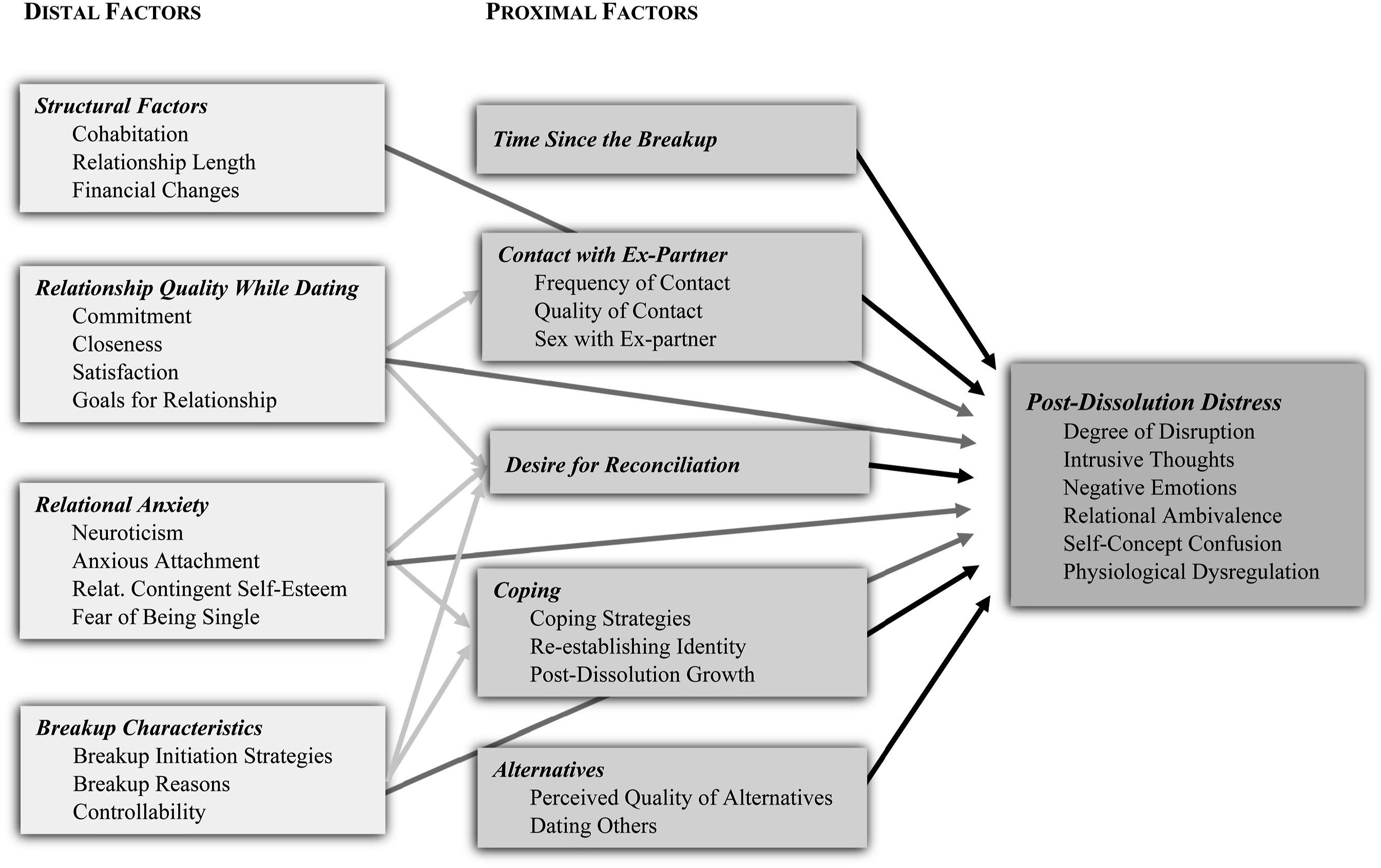
The direct effect of time since the breakup will be discussed as a proximal factor below; but given this distinction between distal and proximal factors here, we propose that proximal factors will have a stronger influence on PDD over time than distal factors. Although current theory does not specifically address how different factors predict distress over time, Sbarra and Emery (2005) hypothesized that distress might decrease at different rates; some factors might expedite recovery while others might prolong the distress. Their research found that relational security was associated with faster declines in sadness over time but that contact with the ex-partner slowed this process. Applying this reasoning to the CMPDD, the effect of distal factors that are unlikely to change should have stronger influences on distress initially but dissipate thereafter. For example, the controllability of the breakup might be substantially linked with distress initially but weakly associated after several months. Alternatively, the effects of proximal characteristics might have sustained or stronger effects over time. For example, contact with an ex-partner or self-medicating coping might have stronger effects as time since the breakup progresses. Our second proposition thus highlights how CMPDD accommodates both initial distress and change over time. Additionally, classifying predictors as those that are unlikely to change as compared to those that are dynamic should provide a first step in theory-building regarding the effects of time.
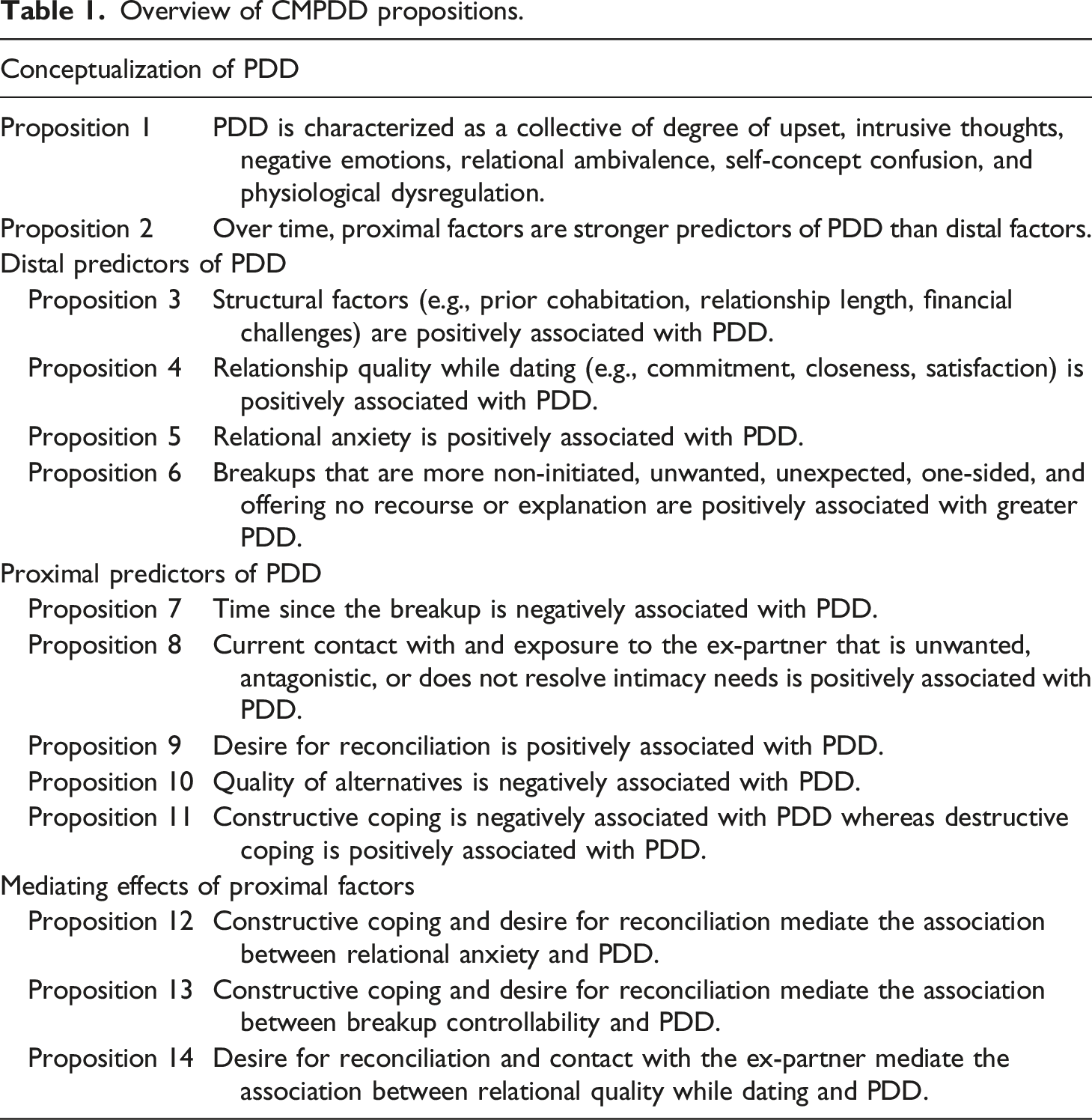
Over time, proximal factors are stronger predictors of PDD than distal factors. Within these general categories of distal and proximal, we also grouped together individual predictors of PDD that were conceptually similar as they likely have equivalent or overlapping effects. The following sections detail the major components as well as associations among these components in predicting PDD. Table 1 includes a list of all propositions outlined in the CMPDD. We draw on several theories, most prominently interdependence theory (Thibaut & Kelley, 1959) and attachment theory (Bowlby, 1973, 1988), to help explain the links between the predictors and PDD. In the same way that interdependence theory explains how factors such as costs and rewards and perceptions of alternatives lead people to be dependent and committed to a relationship, similar factors can be used to understand PDD. Indeed, because social exchange theories such as interdependence and the investment model are often used to predict dissolution (Le et al., 2010; Machia et al., 2022), tenets of interdependence should also be helpful in explaining why dissolution is distressing. If people maintain relationships considered to be more rewarding than alternatives, it is distressing when the relationship is lost and lower quality outcomes are experienced. Simply, to the degree that people are dependent on the relationship for satisfying their needs, the more they will be distressed if the relationship is terminated. Additionally, with more interdependence, partners’ lives are more entwined (e.g., they affect each other on a day-to-day basis) and greater efforts are needed to disentangle this interconnectedness after dissolution, which can be disruptive to one’s daily functioning. In addition, adult attachment has been widely used to explain individuals’ affective, cognitive, and behavioral responses to relationship dissolution (e.g., Davis et al., 2003; Fagundes, 2012; Sbarra & Emery, 2005). The predominant conceptualization of attachment in adult relationships focuses on two dimensions: avoidance (uncomfortable with dependence and intimacy) and anxiety (fear of being abandoned by close others; Mikulincer & Shaver, 2012). The dimension of anxiety, in particular, is consistently linked with greater PDD. Specifically, the attachment system of those with greater anxiety is hyperactivated and they become preoccupied with regaining a sense of security. Because they more deeply define their well-being based on a relationship (i.e., need a partner to feel a sense of security) and have integrated their self-concept more fully within the relationship (Slotter & Gardner, 2012), they experience more disorientation and a loss of a grounding when losing their relationship. Below, we use these theories and the extant literature to explicate the effects of the individual distal and proximal factors included in the model. The direct effects of each are reviewed followed by a description of proposed mediating effects.
Overview of CMPDD propositions.
Distal factors
Structural factors
Although relationship dissolution likely causes distress for most individuals, some individuals may experience greater distress as compared to others. In fact, certain structural factors (e.g., cohabitation while dating, relationship length prior to dissolution, having children) may potentially exacerbate the negative impact of relationship dissolution. For instance, research reveals that cohabitation and having plans for marriage are associated with a greater decline in life satisfaction following relationship dissolution (Field et al., 2009; Rhoades et al., 2011). In addition, individuals whose relationships had lasted longer prior to dissolution feel more distressed than those whose previous relationships were shorter in length (Simpson, 1987; Sprecher et al., 1998). Thus, cohabitation and relationship length suggest greater interdependence in which partners have more mutual effect on each other’s lives. In addition, the marital dissolution literature shows that divorce comes with financial and social network changes (Horan et al., 2019; Sayer, 2006; Terhell et al., 2004; Thielemans & Mortelmans, 2022), which can result in a destabilization of financial security and support systems. Dissolution in the context of greater interdependence will incur greater structural changes for partners as compared to the dissolution of relationships in which partners are minimally intertwined. Greater interdependence makes the process of dissolution and becoming independent more complex and difficult (see also Coan & Sbarra, 2015). As a result, structural changes increase individuals’ PDD and complicates their recovery.
Structural factors (e.g., prior cohabitation, relationship length, financial challenges) are positively associated with PDD.
Relationship quality while dating
Another distal factor that may be associated with individuals’ PDD is the relationship quality while the partners were dating. Research suggests individuals who were committed to their ex-partner, perceived a high level of relational closeness, or had higher relational quality prior to breakup were more likely to experience PDD (Field et al., 2009; Fox & Tokunaga, 2015; Sprecher et al., 1998). Commitment to a romantic relationship may also reflect individuals’ relational goals. For individuals who desire their relationship to be permanent or anticipate marriage, the termination of such relationship may engender greater distress (Field et al., 2009; Rhoades et al., 2011; Sprecher et al., 1998) while previous relational volatility or instability may predict less PDD (Monk et al., 2022). Generally speaking, it makes sense that those experiencing greater rewards and fewer costs while in a relationship lose more resources when dissolution occurs, which is likely more distressing than if the relationship offered few rewards.
Relationship quality while dating (e.g., commitment, closeness, satisfaction) is positively associated with PDD.
Relational anxiety
Individual differences may also account for the degree of distress ex-partners may experience and how they adjust to relationship dissolution. A variety of personality characteristics might predict PDD, but the research thus far points to a general sense of relational anxiety. Drawing on various lines of research, we focus on a combination of neuroticism, attachment anxiety, fear of being single, and relationship-contingent self-esteem as the primary personality factors associated with PDD (Gunthert et al., 1999; Knee et al., 2008; LaFontaine et al., 2016; Spielmann et al., 2016). First, neuroticism reflects an individual’s predisposition to experience negative affect, such as anxiety, depression, and hostility. In general, highly neurotic individuals tend to experience more life stressors and have heightened reactivity to stressful events (Gunthert et al., 1999). In the context of relationship dissolution, neuroticism is positively related to stress symptoms (e.g., anxiety and social dysfunction; Chung et al., 2012).
Low self-esteem and high relationship-contingent self-esteem are also associated with greater PDD. Self-esteem refers to one’s evaluation of self-worth (Leary & Baumeister, 2000), and research suggests that lower self-esteem is associated with diminished health (Chung et al., 2012), poorer breakup adjustment (Frazier & Cook, 1993), and greater distress (Waller & MacDonald, 2010) following relationship dissolution; as such, individuals with compromised evaluations of themselves are particularly prone to the negative effects of relationship dissolution. More specific to relationships, relationship-contingent self-esteem refers to individuals’ tendency to depend on romantic relationships for validation of self-worth (Knee et al., 2008). To stake one’s self-esteem on the domain of romantic relationships is associated with greater commitment and satisfaction, more inclusion of significant others in self, more negative emotions, and less fulfillment of need (Knee et al., 2008). Accordingly, relationship dissolution may have a pronounced effect on individuals with high relationship-contingent self-esteem, as these individuals regard the continuance of romantic relationships as an important component of their self-concept. Indeed, individuals with higher relationship-contingent self-esteem are more likely to long for ex-partners and to experience greater PDD (Parks et al., 2011), and they are more likely to be negatively affected by contact with ex-partners (Rodriguez, Wickham, et al., 2016).
Additionally, individuals’ attachment anxiety is an important component of this general sense of anxiety. Attachment theory suggests that those with more attachment anxiety have attachment systems that hyperactivate in the presence of relationship threats resulting in more emotional and physiological distress, which they have difficulties managing (Mikulincer & Shaver, 2012; Sbarra & Hazan, 2008). Research suggests that as compared to those with more security, those with greater attachment anxiety are more likely to recall negative emotional experience following a breakup (Millings et al., 2020; Pistole, 1995), report a loss of identity (Davis et al., 2003), and feel caught in feelings of anger and sadness (Sbarra, 2006; Sbarra & Emery, 2005). Those with more attachment anxiety often find it difficult to adjust to the breakup as they often experience prolonged emotional attachment to their ex-partners (Fagundes, 2012; Spielmann et al., 2009) and ruminate about the dissolved relationship (Saffrey & Ehrenberg, 2007).
A related but distinct theoretical concept associated with anxiety about relationships is the fear of being single, which is defined as the general concern, anxiety, and distress regarding not having a romantic partner (Spielmann et al., 2013). A fear of being single explains unique variance in individuals’ emotional and behavioral responses to relationship challenges above and beyond attachment anxiety. It not only motivates individuals to stay in dissatisfying relationships but also underlies longing for ex-partners and desiring to renew dissolved relationships in the wake of breakup (Spielmann et al., 2016). Such emotional attachment to ex-partners may heighten the experience of PDD and impede breakup recovery.
All of these concepts theoretically overlap into a general anxiety about self and relationships. Those who have a sense of anxiety and insecurity when not involved in a romantic relationship are likely to feel more distress following a breakup. As noted above, attachment theory suggests that those with greater attachment anxiety tend to stake their well-being in the relationship, have more strongly integrated their self-concept within the relationship (Slotter & Gardner, 2012), and experience greater physiological changes with the disruption of the attachment system (LeRoy et al., 2019). As such, they are likely to report more PDD. We model relational anxiety here as a distal (static) characteristic given that these concepts are typically considered personality characteristics or relatively stable traits.
Relational anxiety is positively associated with PDD. Given the use of attachment theory in this model construction and explication, we should note that we additionally considered attachment avoidance in predicting PDD. Those with higher attachment avoidance can deactivate their attachment systems in the face of relational threats and exhibit signs of detachment when experiencing distress (Mikulincer & Shaver, 2012; Sbarra & Hazan, 2008). The empirical findings regarding attachment avoidance are mixed, however. A few studies show that avoidance is linked with less distress perhaps given their proclivity to neutralize their emotions (Marshall et al., 2013; Sprecher et al., 1998) and this may be more true for men (Simpson, 1990). Yet, much of the research shows that attachment avoidance is either not related to distress (Davis et al., 2003; Fagundes, 2012; Perrier et al., 2010) or is linked with greater distress or less recovery but with much weaker associations than attachment anxiety (Millings et al., 2020; O’Hara et al., 2020). Related research shows that those with higher attachment avoidance process breakups less (Harake & Dunlop, 2020) or experience less post-dissolution growth (Davis et al., 2003; Marshall, 2012), but it is currently difficult to know if these are related to the experience of distress. As such, attachment avoidance is excluded from the current model.
Breakup characteristics
We further propose that the manner in which the breakup is initiated and executed (i.e., breakup characteristics) could predict individuals’ feelings of distress. We conceptualize these characteristics as static and manifested in three categories: breakup initiation strategies, reasons for breakup, and controllability of breakup.
Early research examining breakup strategies typically found types reflecting withdrawal (e.g., avoiding contact), positive tone (e.g., caring for the other partner’s feelings), manipulation (e.g., asking the third party to deliver the breakup), and directness (e.g., discussing the reasons for breakup in an open and honest way) (Banks et al., 1987; Baxter, 1982; Metts et al., 1989). More recent investigations have additionally identified manipulatory and cost escalation strategies (Collins & Gillath, 2012; Sprecher et al., 2010). The effect of strategies varies. For example, Sprecher et al. (2014) found that positive tone and open confrontation strategies were perceived as more compassionate than strategies that involved manipulation or avoidance, the former of which might elicit less distress. More positive strategies are also associated with more satisfaction with post-dissolution communication (Lambert & Hughes, 2010). In contrast, Metts et al. (1989) found that using the strategy of withdrawal to end a relationship reduced the likelihood of maintaining friendship with an ex-partner, which was associated with distress in different ways than direct strategies. Additionally, more unilateral (one-sided) breakups might also prompt more distress; if partners on the receiving end of the breakup are given no rationale or opportunity for discussion or renegotiation, this might amplify feelings of rejection. Recent research characterizes this one-sided withdrawal via technology as being “ghosted” (LeFebvre et al., 2019; Timmermans et al., 2021) which can be more distressing than being the “ghoster” perhaps due to a lack of explanation or closure (Koessler et al., 2019; LeFebvre, Rasner, & Allen, 2020).
A second component of breakup characteristics is reasons for the breakup. Research has shown that partners attribute the dissolution to factors such as individual attitudes or behaviors, conflicts or problems regulating interaction, problems regarding intimacy or cohesion, and external forces such as third-party involvement (Cupach & Metts, 1986; Kurdek, 1997). Specifically, individuals experienced greater distress when they attributed reasons for separation to issues related to compatibility and commitment than when they ascribed the reasons for separation to communication (Kurdek, 1997). Indeed, individuals try to make sense of a relationship termination by attributing it to a variety of internal and external factors, and these attributions may be associated with the experience of distress in different ways. For instance, perhaps somewhat counterintuitively, ascribing blame to the ex-partner (e.g., partner’s personality) or to environmental factors (e.g., social network disruption) was linked to greater PDD (Tashiro & Frazier, 2003).
Controllability of the breakup is a common and strong predictor of PDD. We draw on previous research to suggest that this concept encompasses factors such as initiator status and breakup unexpectedness (Field et al., 2009; Frazier & Cook, 1993; Sprecher et al., 1998). Although initiators of the breakup can experience distress or depression (Akbari et al., 2022), they tend to see more benefits with regard to dissolution, and thus, adjust better to breakups than non-initiators (Carter et al., 2018; Pettit & Bloom, 1984; Thompson & Spanier, 1983; Tran et al., 2023). Non-initiators, by contrast, report more emotional distress and preoccupation with former partners (Davis et al., 2003; Field et al., 2009; Waller & MacDonald, 2010). Anticipating the breakup, however, might lessen the experience of PDD and augment breakup adjustment for even non-initiators (Kurdek, 1997). Overall, a lack of control or predictability about the breakup tends to exacerbate distress.
In terms of interdependence theory (Thibaut & Kelley, 1959), not initiating the breakup would suggest that individuals’ relational needs were being satisfied to a higher degree than their alternatives would offer, and that the breakup is undesirable. Although initiators also face stress related to the breakup (Sprecher, 1994), they have likely gone through a significant process of detachment and have determined alternatives are preferable to remaining in the relationship. Hence, initiators are losing less rewards (and perhaps gaining more) by exiting the relationship as compared to non-initiators. Appraisal theories (Folkman & Lazarus, 1985) would also suggest a lack of recourse (e.g., if the breakup was unexpected and abrupt) contributes to a compromised sense of coping. Because the stress is created by the very person from whom they would seek support to cope, efficacy in managing the stressor is likely diminished.
Thus, breakups that are not initiated and are more unexpected and undesired should elicit more PDD. Each of these could have their own individual effect, but a combination of these characteristics is likely related to greater PDD.
Breakups that are more non-initiated, unwanted, unexpected, one-sided, and offering no recourse or explanation are associated with greater PDD.
Summary of distal characteristics
In the CMPDD, distal factors include structural factors (e.g., relationship length, cohabitation prior to the breakup), relationship quality while dating (e.g., satisfaction, commitment), relational anxiety, and breakup characteristics (e.g., breakup strategy, controllability of the breakup). These characteristics are relatively stable or occurred at the time of the breakup and cannot, or are not likely to, change, and should thus have stronger effects initially as compared to over time (as denoted by lighter lines in Figure 1). These factors might, however, also shape the more dynamic factors that occur after the dissolution as outlined in the proposed mediating paths in a later section.
Proximal factors
In addition to factors that are static, several dynamic factors also influence individuals’ experience of PDD. In the proposed model, we include time since breakup, the frequency and nature of contact with the ex-partner, desire for reconciliation, the quality of and contact with alternative partners, and coping processes as proximal factors.
Time since the breakup
Aligning with the adage that “time heals all wounds,” research has established that distress diminishes with time (Field et al., 2009; Millings et al., 2020; O’Hara et al., 2020; Sbarra & Emery, 2005; Sprecher et al., 1998; Tran et al., 2023). Several studies have included time since the breakup as either a control variable (e.g., del Palacio-González et al., 2017; Moller et al., 2003) or predictor or mediator of PDD (Field et al., 2009; Knopfli et al., 2016; Sprecher et al., 1998; Yarnoz-Yaben et al., 2016). Yet, all of these studies show that PDD generally decreases over time for most individuals. For example, Sbarra and Emery (2005) showed that the sadness experienced from a breakup dissipated within a month. Theoretically, time allows ex-partners to establish different sources of security to better regulate their physiological responses. In addition, time should help ex-partners disentangle themselves from each other’s lives to adjust to structural changes (e.g., a new residence, new patterns of daily life) and renegotiate their identities outside of the relationship. We here propose time’s direct link to PDD.
Time since the breakup is negatively associated with PDD.
Contact with ex-partner
For many individuals, relationship dissolution does not equate to the termination of contact with their ex-partner (Rollie & Duck, 2006), and often the relationship evolves into a different form (Agnew et al., 2008; Dailey, 2020). In fact, many people continue to stay in touch with their former partners for reasons pertaining to shared possessions or shared social networks (Griffith et al., 2017; Masuda, 2006; Mogilski & Welling, 2017; Rodriguez, Øverup, et al., 2016). Individuals who were committed to their ex-partner pre-breakup were more likely to maintain some form of relational closeness via more frequent and deeper connections (Tan et al., 2015). The type of relationship (e.g., friendship or co-parent) and frequency of contact with an ex-partner represent the degree of lingering closeness that is maintained between ex-partners (Tan et al., 2015). Research demonstrates that contact with ex-partners is associated with negative emotions (e.g., Banas et al., 2021; Sbarra & Emery, 2005), decreased well-being (Kluwer, 2016), and decreased life satisfaction (Rhoades et al., 2011); contact might also have a delayed effect on distress (O’Hara et al., 2020). Furthermore, a specific type of contact, online surveillance (e.g., maintaining Facebook friends with an ex-partner, keeping tabs on an ex-partner’s social media posts) also impedes post-breakup recovery, as it is associated with individuals’ experience of more distress, more negative feelings, stronger desires for the ex-partner, and less personal growth (Fox & Tokunaga, 2015; Lukacs & Quan-Haase, 2015; Marshall, 2012; McDaniel et al., 2021). Decisions about relational curation (i.e., keeping/deleting posted media about the relationship; LeFebvre, Brody, & Blackburn, 2020) and amount of online interaction may also be motivated by desired future romantic or sexual contact (Banas et al., 2021). Indeed, in today’s landscape, a vast majority of contact between ex-partners (interaction such as texting or viewing the other’s social media) and even the process of breaking up might be via technology (Brody et al., 2020; Fox et al., 2021; Koessler et al., 2019; McDaniel et al., 2021).
The nature of communication with the ex-partner likely also influences distress. Stage models highlight changes in communication content and patterns between partners as they progress through different dissolution and post-dissolution stages (Rollie & Duck, 2006). Yet, much of the research focuses on the prevalence (whether ex-partners have communicated or not) or the frequency of such communication or contact (e.g., Lee & O’Sullivan, 2014; Mason, Sbarra, et al., 2012; O’Hara et al., 2020; Rhoades et al., 2011; Rodriguez, Øverup, et al., 2016; Tan et al., 2015). However, research on the trajectories of post-dissolution relationships shows that turning points in these relationships are often marked by positive (e.g., emotional support, civility) or negative forms of communication (e.g., disrespect, conflict, harassment) (Frisby et al., 2014; Koenig Kellas et al., 2008). Further, recent evidence suggests more positive forms of communication between ex-partners is associated with greater satisfaction with this communication (Lambert & Hughes, 2018) as well as post-dissolution adjustment (Herrero et al., 2020). Generally then, antagonistic communication or unwanted pursuit likely exacerbates distress (Dardis et al., 2021), whereas positive and supportive communication could alleviate distress.
As another form of contact between ex-partners, sexual contact might be assumed to mitigate breakup adjustment, and the research suggests that sexual contact could serve as a comfort for individuals who still long for their ex-partner, particularly in the short-term. Although Spielmann and Colleagues (2019) findings suggest that sex with an ex was not associated with breakup recovery, Mason, Sbarra, et al. (2012) found that for separated marital partners with less acceptance about the separation, having sexual contact with an ex-partner correlated with better psychological adjustment, whereas having nonsexual contact was associated with poorer adjustment. Birnbaum and Finkel’s (2015) stage model of sexual desire also suggests that dissolution might prompt greater sexual desire to regain the connection or intimacy lost. Sex with the ex-partner might provide solace from the distress while sexual contact continues but yet not resolve the need to establish security outside of the dissolved relationship.
Overall, disentangling oneself from the relationship and establishing a new identity becomes more complicated with continued contact with the ex-partner. In attachment terms, continued contact could maintain a longing for the ex-partner to be the secure base (Cope & Mattingly, 2021) rather than finding security from other sources thus prolonging (and not resolving) the distress. Thus, PDD might be more tied to continued interaction or exposure to the ex-partner that does not satisfy intimacy needs. In addition, unwanted and negative communication could prolong distress and hinder individuals from establishing an identity and security apart from the ex-partner.
Current contact with and exposure to the ex-partner that is unwanted, antagonistic, or does not resolve intimacy needs is positively associated with PDD.
Desire for reconciliation
Related to the above factor, maintaining a seemingly close and satisfying relationship with an ex-partner may be motivated by individuals’ desire for renewing a dissolved relationship. Underlying the type and frequency of contact with an ex-partner are individuals’ reasons for doing so. Individuals vary in their motivations for staying connected with their ex-partners, such as continued romantic attraction, investment in the previous relationship, maintaining a friendship, pragmatic considerations, and keeping the previous relationship as a backup plan (Banas et al., 2021; Mogilski & Welling, 2017; Rodriguez, Øverup, et al., 2016). These motivations should differently predict individuals’ PDD and recovery from a breakup. One study suggested that ascribing pragmatic reasons for maintaining contact with an ex-partner was positively associated with the likelihood of forming a post-dissolution friendship with the ex-partner (Griffith et al., 2017). Additionally, the same study indicated that when individuals stayed friends with their ex-partner due to romantic desires, they were more likely to experience negative outcomes of maintaining such friendship (e.g., feeling depressed, making it more difficult to find a new partner). Collectively, the research has demonstrated that desire for renewal and longing for an ex-partner is negatively associated with breakup recovery and emotional adjustment (Davis et al., 2003; Eisma et al., 2022; Fagundes, 2012; Frazier & Cook, 1993; Lannutti & Cameron, 2002; Sbarra & Emery, 2005; Spielmann et al., 2016).
This desire for reconciliation can be explained by a desire for resuming the previous resources lost when the relationship was terminated. For partners who were experiencing more rewards, particularly with lower alternatives available (i.e., greater dependence), renewing the previous relationship is the best means of satisfying their relational needs. This can also be explained by Sbarra and Hazan’s (2008) model of attachment dysregulation. After separation or loss of a partner, one’s attachment system is disrupted, and individuals desire to regain the ex-partner as the secure base. Thus, desiring reconciliation might be a key predictor of distress, particularly because the CMPDD is focused on the post-dissolution phase. Many relationships actually do renew and have a history of renewing multiple times (Dailey, 2020), which might play a role in the PDD experienced (e.g., if a renewal is expected based on previous patterns, PDD might be lower). This model, however, is focused on the period in which ex-partners might want or attempt to renew but are not (yet) successful in which desire for reconciliation likely is a more prominent predictor of distress.
Desire for reconciliation is positively associated with PDD.
Perception and experience of alternatives
Following previous research, we propose that perceiving quality alternatives or being in a new relationship could attenuate individuals’ emotional attachment to ex-partners (Spielmann et al., 2009) and PDD (Imhoff & Banse, 2011). Individuals who perceive fewer or lower quality options for future relationships may experience heightened emotional distress, which could hinder breakup recovery (Frazier & Cook, 1993; Simpson, 1987; Sprecher et al., 1998). As denoted by interdependence theory, the termination of relationships involves the loss of rewards and resources (Monroe et al., 1999; Prigerson et al., 1995); yet, perceiving high quality alternatives in one’s dating landscape could provide confidence in recapturing those losses elsewhere. Additionally, the effect of current relationship status on individuals’ attitudes toward their ex-partner is especially pronounced for non-initiators, as research reveals that dating a new partner is associated with fewer positive attitudes toward an ex-partner (Imhoff & Banse, 2011) and greater adjustment (Tran et al., 2023). Other substitutions for the relationship can serve a similar function to alleviate PDD (Baumeister & Leary, 1995; Spielmann et al., 2009; Vaughan, 1986). For example, increasing contact with a family member can reduce distressed feelings, and reconnecting with a friend or making new friends can help regain a sense of identity. In this way, individuals gain support and companionship from quality relationships with social network members in the process of adjusting to the dissolution.
Quality of alternatives is negatively associated with PDD.
Coping
In the current model, we conceptualize coping as both cognitive and behavioral responses to relationship dissolution. For example, when partners try to accept a degree of responsibility of relationship dissolution or accept (rather than deny) that the relationship is over, they are less likely to experience distress following breakup (Fletcher, 1983; Millings et al., 2020; Newman & Langer, 1981; Sbarra, 2006). Individuals also experience less PDD when they have developed a narrative of the past relationship that is more resolved or complete (Frost et al., 2016; Koenig Kellas & Manusov, 2003). In addition, cognitive reappraisals or reframing the experience to find the benefits of the breakup have been linked with greater dissolution adjustment (del Palacio-González et al., 2017; Larson & Sbarra, 2015; Slotter & Ward, 2015). In terms of behaviors, support seeking (Frazier & Cook, 1993) and actively engaging in self-compassion (e.g., being kind and mindful to enrich oneself; Sbarra et al., 2012; Zhang & Chen, 2017) are also related to achieving greater emotional recovery following dissolution. Conversely, coping through escaping, avoidance, and self-medicating strategies (e.g., using drugs and alcohol) is linked with depression, anxiety, and social dysfunction (Chung et al., 2003; Millings et al., 2020). Hence, to the degree individuals engage in more constructive coping strategies (e.g., acceptance, reappraisal, support-seeking) as compared to more destructive coping strategies (e.g., denial, self-medicating), they should experience less breakup distress.
Appraisal theories help explain why constructive coping alleviates distress. The distress caused by stressors (e.g., breakups) is amplified when individuals perceive they lack the resources or capability of dealing with the stressor (Folkman & Lazarus, 1985). In other words, it is the interpretation of the stressor rather than the stressor itself that determines the level of distress. Use of avoidance or self-medicated coping only prolongs the distress as these strategies do not allow individuals to process the significant stress, accept the new situation, and establish a new identity outside of the previous relationship. In contrast, emotion processing and cognitive reappraisals can help individuals work through their emotions, accept the circumstances, and see the stressor and their capabilities from a different perspective (e.g., Slotter & Ward, 2015). Attachment theorists would also suggest that prolonging the protest and despair phase of losing the attachment figure (i.e., not reorganizing the attachment system to find security elsewhere) by ruminating, distraction, and self-medicated coping exacerbates distress, whereas coming to terms with the breakup and using social support to regain a sense of security should alleviate distress (Saffrey & Ehrenberg, 2007; Sbarra, 2006). More broadly, acceptance and reframing the situation also allow individuals to redefine the costs and rewards of the dissolution as well as available alternatives.
Constructive coping is negatively associated with PDD whereas destructive coping is positively associated with PDD.
Summary of proximal characteristics
Proximal factors that affect PDD include dynamic characteristics that can change over time. Our model includes current contact with the ex-partner, desire for reconciliation, perceived quality of alternatives, and coping as the proximal characteristics that are integral to the experience of PDD. Although proximal factors likely influence initial PDD, they likely have more pronounced effects over time as compared to certain distal factors (e.g., controllability of the breakup, prior relationship length). Given the dynamic nature of these characteristics, they might have a greater ability to change distress over time, which has implications for interventions. In addition, certain distal factors might facilitate these proximal factors. In the next section, we thus delineate our proposed mediating effects of certain proximal factors.
Mediating paths
In addition to the direct effects of both distal and proximal factors on individuals’ experiences of PDD, we outline certain mediating links among these variables. Although others are likely to be revealed with additional research, the literature thus far points to coping and desire for reconciliation as key mediators among the components included in this CMPDD. Because these are indirect associations and likely have less impact on PDD, these paths are denoted by lighter lines in Figure 1.
The mediating effects of coping
We first propose that coping should mediate the positive association between relational anxiety and PDD. Extant research has lent support to the effect of personality on coping with life stressors. For instance, attachment anxiety is associated with both positive (e.g., support seeking) and dysfunctional (e.g., substance abuse) coping strategies (Davis et al., 2003). Sbarra (2006) found that acceptance coping mediated the association between attachment security and individuals’ recovery from feelings of sadness, suggesting that secure individuals more readily accept the reality of relationship dissolution, which in turn, enhances their recovery from the breakup. Chung et al. (2012) revealed that negative self-esteem and attachment anxiety were associated with avoidance coping (e.g., restraining from talking about breakup, not thinking about breakup), and these maladaptive coping strategies might hamper individuals’ recovery from breakup. Taken together, relational anxiety may drive certain coping strategies (Davis et al., 2003; Eisma et al., 2022; Saffrey & Ehrenberg, 2007), which may ultimately exacerbate their distress (via self-medication, denial) in the aftermath of relationship dissolution.
Furthermore, coping might also mediate the negative association between breakup controllability and PDD. When individuals have less control over breakups, such as when breakups are unexpected and unwanted, they engage in less effective coping and try to reconcile with the partner resulting in relational intrusion (Cupach et al., 2011; De Smet et al., 2015; Spitzberg & Cupach, 2014). For example, those who did not want to break up might have a harder time accepting the breakup or reframing it to see the positives and be more likely to deny the breakup or engage in self-blame. Hence, the effect of breakup controllability on distress might operate, at least in part, through the coping strategies individuals choose to use. For example, greater control over the breakup is likely linked with more constructive coping, and accordingly, less PDD.
The mediating effects of desire for reconciliation and contact with the ex-partner
We also propose that desire for reconciliation should mediate the association between relational anxiety as well as breakup controllability and PDD. Although inducing anxiously attached individuals to consider alternatives can help them move on (Spielmann et al., 2009), individuals who are anxiously attached or have a fear of being single are more likely to have unresolved romantic desires for their ex-partner and seek to renew the relationship (Cope & Mattingly, 2021; Davis et al., 2003; Eisma et al., 2022; Griffith et al., 2017; Parks et al., 2011; Spielmann et al., 2009, 2016). Additionally, certain breakup characteristics such as not initiating or being surprised by the breakup are likely related to more distress because these individuals did not want the breakup (Davis et al., 2003; Field et al., 2009; Waller & MacDonald, 2010), and thus, likely want to get back together with their ex-partner. The breakup strategies used are also likely associated with desired amounts of contact and reconciliation (Banks et al., 1987; Collins & Gillath, 2012; Metts et al., 1989; Sprecher et al., 2010). As such, those with greater relational anxiety and less control over the breakup are more likely to have a continued focus on maintaining a connection with the ex-partner (i.e., desire to retain the ex-partner as the attachment figure), which likely hinders recovery from the breakup.
It is also likely that those who had higher quality relationships prior to the breakup would want to maintain contact and desire reconciliation. For example, individuals with greater commitment prior to relationship dissolution are more likely to engage in frequent and close contact as well as hold positive emotions toward their ex-partner, thus cultivating a sense of closeness with their ex-partner (Tan et al., 2015). Similarly, those who were satisfied in the previous relationship were more likely to maintain friendship with their ex-partner following a breakup (Bullock et al., 2011). Hence, the effect of prior relationship quality on distress might be at least partially mediated through post-dissolution contact as well as desire for reconciliation.
This reasoning that proximal factors serve a mediating role in explaining PDD guides us to the following propositions.
Constructive coping and desire for reconciliation mediate the association between relational anxiety and PDD.
Constructive coping and desire for reconciliation mediate the association between breakup controllability and PDD.
Desire for reconciliation and contact with the ex-partner mediate the association between relational quality while dating and PDD.
Potential areas of refinement and future research directions
Because much of the extant research on post-dissolution experiences focuses on specific aspects of the full PDD experience, the CMPDD can aid in developing a more comprehensive understanding of distress following breakups. Studies could either holistically implement the CMPDD or test certain combinations of factors. This would aid in determining which predictors are more salient as well as their relative contributions thus facilitating an overarching, but more parsimonious, theory of PDD. It is possible that some factors overlap to the degree that they could be merged into one. For example, desire for reconciliation and perceived quality of alternatives likely covary. As such, one or both might make smaller or negligible independent contributions in predicting PDD. In addition, future research could employ the CMPDD in conjunction with specific theories to test specific subsets of components; the model could inform additional factors that would be important to incorporate with the main theoretical variables of interest. For example, research utilizing attachment theory might also want to incorporate structural factors (e.g., prior cohabitation) to explain more of the process of dissolution recovery.
Additionally, although this proposed model of PDD delineates the components and associations most evident from previous research, this model is likely not exhaustive and other distal or proximal factors as well as mediating and moderating variables could emerge with additional research. Our review of the literature hints at interactions between certain factors, but research has not yet provided enough evidence to include them in the model. For example, given the mixed effects regarding sex with an ex-partner, it is quite possible that the link between sex with an ex and PDD is moderated by the motivations for sex or desire for reconciliation. Similarly, the quality of the previous romantic relationship might interact with desire for reconciliation to predict PDD; those who can maintain a friendship without wanting to get back together might have less PDD than those who desire a reconciliation. In addition, the controllability of the breakup might interact with perceived quality of alternatives to predict PDD. Moreover, other proximal factors (e.g., perceived alternatives) might be explained by distal factors (e.g., structural factors) to show additional mediating paths.
Certain distal and proximal factors might also play larger roles in predicting the different components of distress. For example, desiring reconciliation might be particularly related to relational ambivalence and acceptance coping might particularly address self-concept confusion. Understanding these links is not only theoretically beneficial, but those struggling with certain facets of PDD might benefit from recommendations targeting certain causes of distress. In addition, although we demarcate factors as either distal or proximal, certain factors could be reclassified. For example, we model relational anxiety as a distal characteristic given that much of the research characterizes attachment security and neuroticism as relatively stable traits; yet, breakup and post-dissolution experiences might modify individuals’ relational anxiety (Hunt & Chung, 2012; Ruvolo et al., 2001; Spielmann et al., 2016). Thus, if relational anxiety is found to fluctuate over time, this might be modeled as a proximal factor. Alternatively, future research might find that any enduring influences of relational anxiety are largely mediated by proximal factors (i.e., indirect effects).
The CMPDD could also be enhanced by incorporating socio-demographic factors. Few demographic factors have been assessed with regard to PDD making predictions on how to incorporate them into the model difficult. The demographic factor assessed most – biological sex – was concluded to have inconsistent results based on Hunt and Chung’s (2012) review of the literature. As such, we did not include this as a moderating variable here, but it might be shown in future research to interact with some of the distal or proximal factors. Culture and race as well as other socio-demographic characteristics could also significantly influence PDD (Afifi et al., 2013). Much of the research on PDD stems from Western cultures, which has certain conceptions of love, relationships, and dissolution. As such, the CMPDD would likely need to be modified for cultures that have, for example, more collectivist orientations or in which divorce and relationship dissolution are more or less stigmatized (e.g., Amato, 1994; Toth & Kemmelmeier, 2009). Different races or ethnicities even within a particular culture might have different access to resources after dissolution, which can affect adjustment (e.g., McKenry & McKelvey, 2003). Moreover, although research has not widely assessed sexual orientation (for exceptions see, Carter et al., 2018; Kurdek, 1997), and sex differences have been mixed (Hunt & Chung, 2012), it is also worth investigating whether experiences with dissolution vary by more nuanced measures of gender identity and sexual orientation. For example, Holland and Lannutti (2023) highlight some factors related to dissolution in LGBTQ relationships that might have implications for PDD (e.g., structural characteristics, minority stress, perceived alternatives). In sum, as Machia et al. (2022) have argued, although samples in dissolution research have increased in diversity, there is room for improvement in terms of being more inclusive and viewing dissolution experiences from non-WEIRD lenses (Henrich et al., 2010).
The CMPDD model is also likely most applicable to emerging adults and adults in dating relationships as much of the research has been conducted with these populations. However, additional research would yield insights on how it could be applied to young adolescents as well as those experiencing divorce. It is probable that many of the factors would still predict PDD regardless of developmental or life stage; yet, certain factors might be more or less influential. For example, certain paths might be more pronounced in long-term relationships (e.g., Knopfli et al., 2016), perhaps particularly for those who divorce and remain in contact to co-parent (Ahrons, 2007). Specifically, the links between structural factors and contact with the ex-partner might be stronger for these relationships and weaker for relationships among younger adolescents.
Much of the research on post-dissolution experiences has also focused on the individual. Yet, dissolution is a dyadic process, and the behaviors by the ex-partner after dissolution might assuage or exacerbate distress. Research, however, has not largely assessed post-dissolution interactions with dyadic data. This is likely for ethical reasons as asking participants to contact ex-partners might pose safety concerns. Exceptions tend to stem from researchers identifying divorcing couples through court records (e.g., De Smet et al., 2013; Monk et al., 2022). Influences by the ex-partner, however, are important to consider and might be assessed with studies starting with intact couples and contacting partners separately over time. Additionally, relationships (and their dissolutions) are embedded within social contexts (Sprecher et al., 2006). Although the CMPDD includes structural factors, the social network or context of the partners likely impacts PDD perhaps through proximal elements such as perceived alternatives, coping, and contact with ex-partner. The substitution hypothesis (Vaughan, 1986) suggests that social connections are relatively interchangeable; hence, people may strengthen their friendships in response to the loss of a romantic connection (Spielmann et al., 2009). This would be predicted by the dyadic withdrawal hypothesis as well (Johnson & Leslie, 1982); the time devoted to the romantic partner could be redirected to friendships after breakups (Dailey et al., 2015), which could help alleviate distress. Research indeed finds that post-dissolution support from the social network is beneficial in adjusting to dissolution (Krumei et al., 2007; Tran et al., 2023). On the other hand, the social-cognitive processing model explains how behaviors from social network members that are unsupportive or constraining can discourage individuals from disclosing, thereby increasing distress (Lepore, 2001; Lepore & Revenson, 2007). Both ex-partners might also be a part of the same social network and are thus compelled to have post-dissolution contact. These kinds of social constraints might be especially salient to those whose peers may have objections based on feelings about dissolution/divorce, the presence of dependents, or the reason for breakup (e.g., infidelity or prioritizing work). Given the impacts of the social network, future research could show how the role of family and friends in adjusting to relationship dissolution could be best incorporated into this model (e.g., as a separate component or a moderator of certain paths). As with any relational experience, a richer understanding can be gained through considering the multiple contexts in which the relationships are situated (e.g., ecological models).
Beyond merely predicting PDD, this model could also be used to assess how PDD affects other outcomes such as well-being or growth after dissolution (Kansky & Allen, 2018), how it affects or co-varies with the pursuing reconciliation or the development of post-dissolution relationships (Griffith et al., 2017; Mogilski & Welling, 2017), and how it affects the initiation and stability of future romantic relationships (Shulman et al., 2017). For example, Millings et al. (2020) modeled how emotional adaptation to dissolution was related to co-parenting support and conflict. As an additional avenue, relational goal pursuit theory (RGPT; Cupach & Spitzberg, 2004) shows that people will pursue reconciliation with an ex-partner to the extent that they are experiencing negative affect, ruminating, and perceiving the relationship as important for achievement of personal goals such as esteem and happiness (Cupach et al., 2011). This theory is especially helpful in conceptualizing post-dissolution pursuit in which interest in the relationship is unrequited (Foshay & O’Sullivan, 2019). Unlike other PDD literature, RGPT situates PDD as the predictor variable for behaviors intended for relationship re-initiation. Components that are modeled in the CMPDD as distal or proximal elements in predicting PDD (e.g., contact with an ex-partner, relational anxiety, coping) could also predict relational or intrusive pursuit (De Smet et al., 2015).
Overall, we offer CMPDD as a foundation based on the literature to date, but additional research could identify other components or consolidate associations to improve and refine the current model. Multiple studies employing various samples, particularly with longitudinal data, could map out the most salient factors in predicting PDD and how their salience changes over time. Analyses such as growth modeling could be particularly useful in this regard. Latent profile analysis might also be useful in identifying classes or types of people who experience PDD differently. Based on future accumulated evidence, a more specified theory of PDD could be constructed isolating the factors that make independent contributions and delineating how they operate together.
Conclusion
Building on the corpus of research on PDD, we offered an explicit conceptualization of this type of distress and outlined the CMPDD that incorporates both distal (static) and proximal (dynamic) factors that predict PDD. Potential mediated paths were additionally proposed. The CMPDD is presented as a foundation on which additional research can refine and extend the model to better predict distress following dissolution. The CMPDD can aid in holistic theory development to better understand the complex experience of PDD, identify who is most susceptible to such distress, and reveal how to best adjust to one of life’s common yet impactful stressors.
Footnotes
Declaration of conflicting interests
The author(s) declared no potential conflicts of interest with respect to the research, authorship, and/or publication of this article.
Funding
The author(s) received no financial support for the research, authorship, and/or publication of this article.
Author’s note
A previous version of this paper was presented at the 2021 International Association of Relationships Research (virtual) conference.
Open research statement
As part of IARR’s encouragement of open research practices, the author(s) have provided the following information: This review of the research was not pre-registered. No data were collected or analyzed for this paper.
