




Abstract
Adolescents’ relationships with friends and with parents provide them with access to potential sources of assistance when they are experiencing problems. However, we lack more nuanced information about the types of peers and parents they intend to approach and about the contributions their individual characteristics make to their plans. This study examined adolescents’ intentions to seek help for a personal/emotional problem from five types of peers and parents (female friend, male friend, romantic partner, mother, father) and evaluated the unique, common, and total contributions of youth’s individual characteristics (gender, adaptable temperament, negative affect, self-disclosure competence, and conformity to the emotional control, self-reliance, and nice in relationships gender norms) to their intentions. Participants were 358 Canadian adolescents (51% boys; Grades 9–12) who completed a survey at school. On average, adolescents reported moderate intentions to seek assistance from each type of peer and parent. Hierarchical regression and commonality analyses showed that adolescents’ gender, self-disclosure competence, and emotional control beliefs made the largest total contributions to help-seeking intentions for both types of friends; self-disclosure competence and emotional control and self-reliance beliefs were most salient for help-seeking intentions for a romantic partner; and self-reliance beliefs and negative affect were most salient for help-seeking intentions for each parent, with emotional control beliefs also contributing to help-seeking intentions for mother. These results highlight the need to include more precise terms for peers and parents in help-seeking models and in assessments of adolescents’ help-seeking intentions, and the benefit of examining the unique, common, and total contributions of adolescents’ individual characteristics to clarify their relevance to youth’s plans to seek help.
Introduction
For over 35 years, research has shown that friends and parents are important sources of support for adolescents (e.g., Furman & Buhrmester, 1992; McKenna et al., 2022; Scholte et al., 2001; Youniss & Smollar, 1985). In fact, young people identify friends and parents as their first choices for help with managing problems (Chiang et al., 2022; Sears, 2020). This occurs, in part, because adolescents prefer to seek help from people with whom they have established relationships characterized by feelings of closeness and trust and by spending time together (Chiang et al., 2022; Sears & McAfee, 2017; Stanton-Salazar & Spina, 2005). Even though these relationships provide many young people with potential sources of assistance, whom they access or plan to access for help typically has been studied using general terms (e.g., friends, parents) rather than more precise terms (e.g., female friend, male friend, romantic partner, mother or father). This more detailed information is necessary because adolescents have relationships with each of these types of peers and parents, not one relationship that generalizes across their peers or one relationship that generalizes across their parents (Youniss & Smollar, 1985). Accordingly, this study examined adolescents’ intentions to seek help from five types of peers and parents. Additionally, because factors other than access to potential sources of assistance through close relationships are expected to shape adolescents’ help-seeking intentions, the contributions of youth’s individual characteristics to their help-seeking intentions were also evaluated.
Adolescents’ Intentions to Seek Help from Types of Peers and Parents
Intentions to seek help capture an individual’s readiness, plan, or motivation to communicate a need for advice, support, or assistance (Husky, 2016; Wilson, Deane, Ciarrochi, & Rickwood, 2005). Research has shown that when the general terms friend and parent are used, adolescents have moderate to high intentions to seek help from these sources for a personal/emotional problem (Ciarrochi et al., 2002; Liddle et al., 2021; Wilson, Deane, Ciarrochi, & Rickwood, 2005). However, in two studies that used more precise terms and combined personal, family, and peer problems, boys had moderate intentions to seek help from female friends and male friends (girls were not assessed; Sears et al., 2009) and girls had high intentions to seek help from a female friend (boys and help-seeking intentions for a male friend were not assessed; Sears & McAfee, 2017). Adolescents have also reported moderate or high intentions to seek help from a romantic partner for a personal/emotional problem (Ciarrochi et al., 2002; Liddle et al., 2021). Finally, youth have reported moderate intentions to seek assistance from their mother and from their father for interpersonal, school, health, and mental health problems, and their intentions to seek help from their mother were higher than their intentions to seek help from their father (Leavey et al., 2011; Sullivan et al., 2002). These studies suggest that young people are motivated to seek assistance from these types of peers and parents and they distinguish between them when they have the option to do so.
Adolescents’ Individual Characteristics and Help-Seeking Intentions
Multiple models and frameworks that describe help seeking, social support, and coping identify individual characteristics of the help- or support-seeker as one of several important factors that contribute to help-seeking processes (e.g., Barker et al., 2005; Heller & Swindle, 1983; Newman, 2008; Skinner & Zimmer-Gembeck, 2007; Srebnik et al., 1996; Wills & DePaulo, 1991). Consistent with these models and frameworks, we use the term individual characteristics to refer collectively to a variety of personal qualities or attributes. For example, Heller and Swindle (1983) included person characteristics, described as traits and skills that assist with accessing and maintaining social connections, in their model of social support and coping. Similarly, Srebnik et al. (1996) presented predisposing characteristics, including gender, as features that are linked to youth’s decision to seek help and to their selection of a help option, and Barker et al. (2005) included individual factors, such as gender norms, in their help-seeking framework as potential predictors of adolescents’ motivation to seek assistance.
Studies have examined a wide variety of adolescents’ individual characteristics as potential correlates of their help-seeking behavior and help-seeking intentions. However, help-seeking models and frameworks have seldom been used to select specific characteristics for evaluation and there has been little overlap across studies in the characteristics that have been assessed. As a result, some potentially important characteristics have received little consideration and it is not clear which characteristics are most relevant to youth’s intentions to seek assistance from potential helpers or whether different characteristics are associated with youth’s intentions to access different helpers. Moderate to high intercorrelations among characteristics that are included in the same analysis have also made it difficult to accurately assess the contributions of specific characteristics. Whether there are gender differences in the relevance of specific characteristics is also not clear, primarily because gender differences have not been examined. Drawing on models and frameworks of help seeking, social support, and coping, seven characteristics were selected for this research: gender, adaptable temperament, negative affect, self-disclosure competence, the masculine gender norms emotional control and self-reliance, and the feminine gender norm nice in relationships.
Gender
A literature search did not reveal any studies examining gender differences in adolescents’ intentions to seek help from a female friend, a male friend, or a romantic partner. However, when the general term friends was used (i.e., gender of the friends was not specified), multiple studies have found that girls have higher intentions than boys to seek help from this source of assistance (e.g., Grinstein-Weiss et al., 2005; Wilson, Deane, & Ciarrochi, 2005). In one study that evaluated adolescents’ intentions to seek help from their mother and from their father, there were no gender differences in youth’s intentions to seek help from their mother for problems with parents, a friend, school, or health. However, boys had higher intentions than girls to seek help from their father for friend and school problems (Sullivan et al., 2002).
Adaptable Temperament
Temperament describes individual differences in attention, activity, and emotional and behavioral reaction and regulation patterns that are evident early in development (Shiner, 2015). It is related to preferred ways of coping, such as planning or problem-solving, and to other people’s reactions to youth who exhibit specific features (e.g., sociability), thus making coping strategies such as help seeking more or less viable (Derryberry et al., 2003; Skinner & Zimmer-Gembeck, 2007). Research has shown that adolescents with a more positive, sociable, and flexible temperament, also referred to as adaptable, used support seeking more often (Wills et al., 1995), and that boys higher on adaptable temperament had higher intentions to seek help from their female friends and male friends (Sears et al., 2009).
Negative Affect
Negative affect is a general term used to describe experiences of negative or low mood, such as fear and sadness (Watson, 2000). Negative affect may be distressing for some individuals, prompting them to perceive a need for help (Srebnik et al., 1996). However, the extent to which this experience contributes to forming intentions to seek help from specific others – a subsequent step in the help-seeking process – is not clear, in part, because researchers have operationalized negative affect in various ways (e.g., psychological distress, symptoms of depression or anxiety). Studies with adolescents have shown links between depressive symptoms and lower intentions to seek help from friends and from family members (Sawyer et al., 2012), links between anxiety symptoms and higher intentions to seek help from friends (Grinstein-Weiss et al., 2005), and no correlation between boys’ depressive symptoms and intentions to seek help from either their male friends or female friends (Sears et al., 2009).
Self-Disclosure Competence
Self-disclosure competence is a person’s assessment of their ability to voluntarily communicate personal or private information. It is thought to be key for help seeking because self-disclosures may be used to initiate help-seeking interactions and to maintain positive relationships with individuals who are viewed as potential helpers (Buhrmester & Prager, 1995; Newman, 2008; Wills & DePaulo, 1991). Although various aspects of adolescents’ self-disclosures to parents and peers have received attention (see Vijayakumar & Pfeifer, 2020), only a small number of studies have examined their self-disclosures in the context of help-seeking activities. For example, more frequent self-disclosures to friends and to parents were related to adolescents selecting these sources as their first choice for help for both personal and interpersonal problems (Sears, 2020), and higher perceived competence at self-disclosure was related to girls’ higher intentions to seek help from a female friend (Sears & McAfee, 2017).
Masculine and Feminine Gender Norms
Adherence to traditional masculine and feminine gender norms by males and females, respectively, is often used to explain the general pattern of males seeking help less often and having lower intentions to do so than females (Addis & Mahalik, 2003). Both quantitative and qualitative studies with adolescent boys have indicated that higher conformity to two masculine gender norms, emotional control (i.e., inhibition of emotional expression) and self-reliance (i.e., dependence on one’s own abilities), deters help seeking from both informal and professional helpers (e.g., Radez et al., 2021; Sears et al., 2009; Timlin-Scalera et al., 2003). Whether higher conformity to these masculine norms is also related to adolescent girls’ lower help-seeking intentions is not known. Very little research has considered whether adolescent girls’ or boys’ adherence to specific feminine gender norms, such as the importance of having friendly and supportive relationships, is related to help seeking from specific sources, although girls’ use of help seeking to enhance intimacy in their friendships has been discussed (Stanton-Salazar & Spina, 2005; Sullivan et al., 2002) and adolescents who endorsed more positive feminine attributes also reported higher intentions to seek help (Kessels & Steinmayr, 2013).
The Current Study
Adolescents typically regard friends and parents as primary sources of assistance with problems (Chiang et al., 2022; Sears, 2020). However, more detailed information about their intentions to approach types of peers and parents for help and about the contributions their individual characteristics make to these plans would expand what is known about adolescents’ use of help seeking. This study examined adolescents’ intentions to seek help from five types of peers and parents (female friend, male friend, romantic partner, mother, father) for a personal/emotional problem. A female friend, a male friend, and a romantic partner were selected as types of peers because many youth expand their peer network during adolescence to include same-sex friends, other-sex friends, and romantic partners (Connolly et al., 2000) and both adolescents and adults prefer to seek help from female friends rather than male friends (MacGeorge et al., 2003; Poulin & Pedersen, 2007). Help seeking for a personal/emotional problem was specified because problem type has been related to adolescents’ preferences for help (e.g., Sears, 2020; Sullivan et al., 2002). The unique, common, and total contributions of adolescents’ individual characteristics (gender, adaptable temperament, negative affect, self-disclosure competence, and conformity to the emotional control, self-reliance, and nice in relationships gender norms) to their help-seeking intentions were also evaluated because help-seekers’ characteristics are a key component of multiple models of help seeking, and gender differences in these associations were assessed. It was hypothesized that adolescents’ intentions to seek help from a romantic partner would be highest and from their father would be lowest (H1), and that girls would have higher intentions than boys to seek help from a female friend and from a male friend (H2). It was also expected that each individual characteristic would be related to adolescents’ help-seeking intentions for one or more types of peers or parents, but no hypotheses were formulated about the relative contributions of these individual characteristics to youth’s help-seeking intentions or about gender differences in the associations between their characteristics and help-seeking intentions because there was no theory or empirical work to guide their development.
Method
Participants and Procedure
The participants were 358 Canadian adolescents (174 girls, 184 boys) who were enrolled in Grades 9–12 and ranged in age from 14–18 years (M(SD) = 15.89 (1.17)). Consistent with the ethnic composition of the population in the province of New Brunswick (Government of New Brunswick, 2017), 97% were White and 3% were members of various visible minorities. More than 2/3 of the youth reported that they were living with both parents (69%); others were living with a parent and a stepparent (11%), one parent (17%), or with someone other than a parent (3%). According to the adolescents, 69% of mothers and 63% of fathers had completed some form of post-secondary education and 78% of mothers and 89% of fathers were employed full-time or part-time.
In Canada, university-based research ethics boards are governed by the Tri-Council Policy Statement: Ethical Conduct for Research Involving Humans (TCPS; Canadian Institutes of Health Research, Natural Sciences and Engineering Research Council of Canada, & Social Sciences and Humanities Research Council, 2018). In keeping with this policy statement, following approval from the institutional research ethics board and the school district superintendents and school principals, adolescents and their parents were informed about the study through a letter that was sent home from two high schools. Parents who objected to their adolescent’s participation in the research were asked to contact the school principal or the researchers, but no objections were received. Because the TCPS focuses on a research participant’s decision-making capacity to provide consent rather than taking an age-based approach, the data collection involved inviting adolescents in their classrooms to review and sign a consent form before completing an anonymous survey during one class period. Signed consent forms were used in draws for a variety of $10 gift cards. The response rates at the schools were 83% and 87%, respectively. A total of 17 surveys were excluded – 12 because of excessive missing data or suspect response patterns, 4 because the age of the participants exceeded the 14–18 years range for the study (2 youth were 13 years old and 2 youth were 19 years old), and 1 because the youth did not complete the help-seeking intentions items. The final sample size was 358. Five subsamples were identified for the analyses to ensure that adolescents reported intentions to seek help from individuals to whom they had access: 352 adolescents with a female friend, 347 adolescents with a male friend, 175 adolescents with a romantic partner, 342 adolescents who were living with their mother/stepmother, and 317 adolescents who were living with their father/stepfather. Thus, each subsample overlaps with each of the other subsamples.
Measures
Demographic Characteristics
Adolescents reported their gender, age, grade, with whom they were living, and their mother’s and their father’s level of education and employment status.
Help-Seeking Intentions
Adolescents’ help-seeking intentions were measured using a matrix of five items modeled after the General Help-Seeking Questionnaire (GHSQ; Wilson, Dean, Ciarrochi, & Rickwood, 2005). Participants were asked to report how likely it was that they would seek help from their female friend, male friend, boyfriend/girlfriend, mother, and father if they had a personal/emotional problem. The response scale ranged from 1 = Extremely Unlikely to 7 = Extremely Likely, with a higher mean score indicating a higher intention to seek help from that person. Using the same probe, format, and response scale, the authors of the GHSQ reported good test-retest reliability over a 3-week period (.86) and evidence of convergent and discriminant validity (Wilson, Dean, Ciarrochi, & Rickwood, 2005).
Adaptable Temperament
Adaptable temperament was assessed using three subscales from the Revised Dimensions of Temperament Survey (DOTS-R; Windle, 1992; Windle & Lerner, 1986): approach-withdrawal (7 items), flexibility-rigidity (5 items), and mood quality (7 items). These subscales can be combined to create an adaptability dimension that captures adolescents’ reactions to new people or situations (e.g., On meeting a new person I tend to move towards him or her) and environmental changes (e.g., I can make myself at home anywhere) and their positive mood (e.g., My mood is generally cheerful) (Windle, 1992). Participants responded using a 4-point scale (1 = Usually False, 4 = Usually True), with a higher mean score indicating higher adaptability. The authors have reported good internal consistencies (.85, .86) and moderate stability over 6 months (.65) and 6 years (.47) for the adaptability dimension as well as evidence of predictive validity (Windle, 1992; Windle & Windle, 2006). Cronbach’s alpha was .78 in this study.
Negative Affect
A 6-item version of the negative affect subscale of the Positive and Negative Affect Scale for Children (PANAS-C; Laurent et al., 1999) was used to measure negative affect. Adolescents reported the extent to which they felt sad, frightened, upset, scared, miserable, and afraid in the past week using a 5-point scale (1 = Very Slightly or Not at All, 5 = Extremely), with a higher mean indicating more negative affect. The PANAS-C is a widely used, reliable, and well-validated measure of positive and negative emotions. The authors reported good internal consistencies (e.g., αs = .92–.94) and good convergent and discriminant validity (Laurent et al., 1999). In this study, the internal consistency was also good (.86).
Self-Disclosure Competence
Adolescents’ perceived competence at sharing personal information with others was measured with the self-disclosure subscale of the Adolescent Interpersonal Competence Questionnaire (AICQ; Buhrmester, 1990). Participants rated eight items (e.g., How good are you at sharing personal thoughts and feelings with others?) using a 5-point scale (1 = Poor at This, 5 = Extremely Good at This). Scores were computed as a mean, with a higher score indicating higher perceived competence at self-disclosure. Buhrmester (1990) reported good internal consistencies (αs = .93 and .92) for the AICQ total scale. Sears and McAfee (2017) reported an internal consistency of .86 for the self-disclosure subscale in their sample of adolescent girls. The internal consistency for the self-disclosure subscale in this study was .87.
Conformity to Masculine and Feminine Gender Norms
Conformity to two masculine gender norms was measured using the 11-item emotional control and 6-item self-reliance subscales of the Conformity to Masculine Norms Inventory (CMNI; Mahalik et al., 2003). Adolescents responded to statements using a 4-point scale (0 = Strongly Disagree, 3 = Strongly Agree). Higher summed scores indicate stronger adherence to the emotional control norm (e.g., I tend to keep my feelings to myself) or self-reliance norm (e.g., It bothers me when I have to ask for help). The authors reported good internal consistencies (emotional control = .91, self-reliance = .85), good test-retest coefficients over a 2–3-week period (emotional control = .90, self-reliance = .80), and evidence of discriminant, convergent, and concurrent validity (Mahalik et al., 2003). In this study, Cronbach’s alphas were .90 and .88 for emotional control and self-reliance, respectively.
Conformity to a feminine gender norm was measured using the 18-item nice in relationships subscale of the Conformity to Feminine Norms Inventory (CFNI; Mahalik et al., 2005). This subscale assesses someone’s belief in the importance of having friendly and supportive relationships (e.g., Being nice to others is extremely important). Adolescents responded to statements using a 4-point scale (0 = Strongly Disagree, 3 = Strongly Agree), with a higher summed score indicating stronger adherence to the gender norm. The authors reported an internal consistency of .84, a test-retest coefficient of .83 for a 2–3-week period, and evidence of discriminant, convergent, and concurrent validity (Mahalik et al., 2005). Cronbach’s alpha was .84 in this study.
Data Analysis
The small amount of missing data, in total (less than 3%) and on any one individual characteristic (6% or less), was replaced using gender-based mean substitution. To assess whether this approach influenced the findings, the multivariate analyses were conducted with and without missing data (Tabachnick & Fidell, 2013). The same results were found, so the data set with no missing values was used. The variables were screened for normality by examining frequency histograms and skewness values. Competence at self-disclosure, emotional control, nice in relationships, and help-seeking intentions for a male friend had normal distributions. Self-reliance was slightly positively skewed (.37, SE = .13), adaptability was slightly negatively skewed (−.48, SE = .13), and negative affect was positively skewed (1.27, SE = .13). Help-seeking intentions for a female friend and for mother were slightly negatively skewed (−.41, SE = .13, −.28, SE = .13, respectively) and help-seeking intentions for father was slightly positively skewed (.23, SE = .14). Help-seeking intentions for a romantic partner was moderately negatively skewed (−.89, SE = .18). Because a positively skewed distribution for negative affect was expected in a school-based sample of youth and the degree of the deviations from normality were not expected to make a meaningful difference in the results given the large sample size (Tabachnick & Fidell, 2013), no transformations were applied.
The descriptive statistics and intercorrelations among the variables for each subsample were reviewed. Then, hierarchical regression analyses with centered predictor variables were used to evaluate the contributions of the seven individual characteristics (Step 1) and the six two-way interactions between gender and each of the other individual characteristics (Step 2) to adolescents’ intentions to seek help from each type of peer and parent. Because some predictors were at least moderately intercorrelated, the standardized beta weight and the structure coefficient for each predictor were used to interpret the results (Courville & Thompson, 2001; Kraha et al., 2012). Next, a commonality analysis was used to evaluate multicollinearity among the predictor variables in each regression analysis by decomposing the variance explained by the regression model (R2) into nonoverlapping unique and common components (Kraha et al., 2012). Unique and common commonality coefficients indicate how the variance explained in the dependent variable is accounted for by each predictor alone and by all possible combinations of the predictors, and are evaluated by their magnitude (Nathans et al., 2012). In each commonality analysis, the 7 predictors generated 7 unique effects and 120 common effects. The descriptive and hierarchical regression analyses were conducted in SPSS Version 27; significant two-way interactions were decomposed using PROCESS (Hayes, 2022); and the commonality analyses were conducted in SPSS using a script described in Nimon (2010).
Results
Means, standard deviations, and correlations among the variables separately by type of peer or parent.
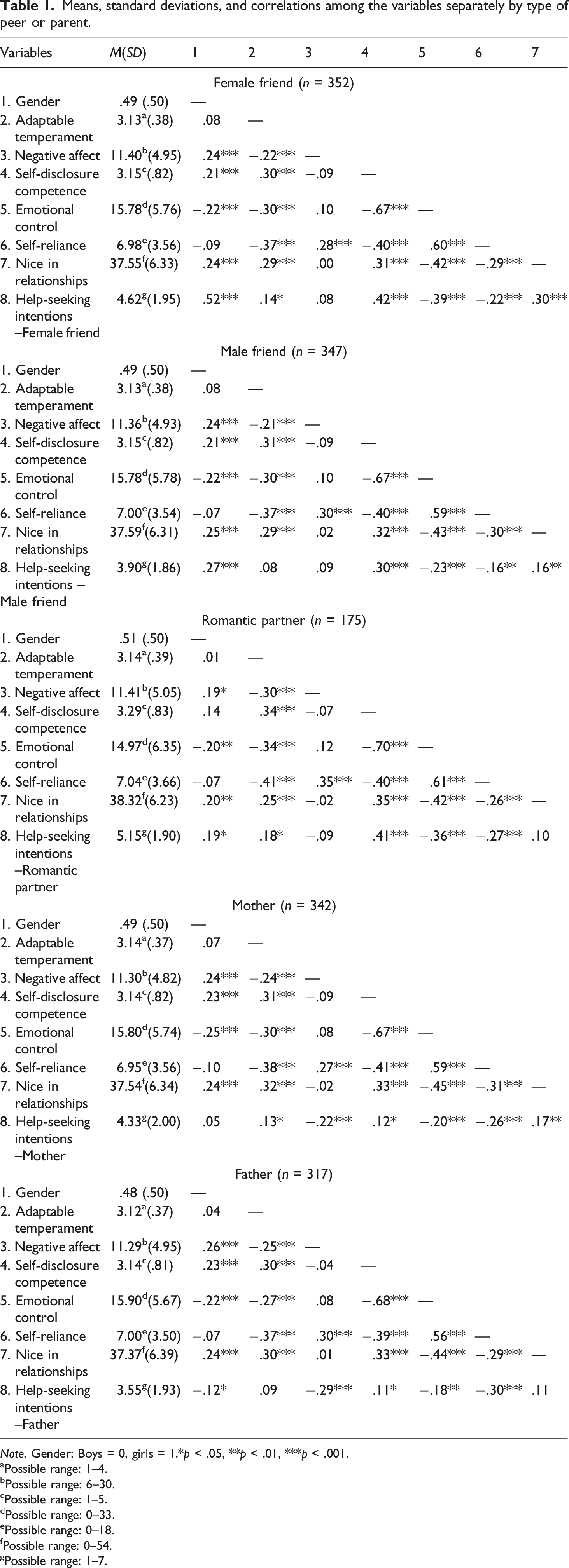
Note. Gender: Boys = 0, girls = 1.*p < .05, **p < .01, ***p < .001.
aPossible range: 1–4.
bPossible range: 6–30.
cPossible range: 1–5.
dPossible range: 0–33.
ePossible range: 0–18.
fPossible range: 0–54.
gPossible range: 1–7.
Adolescents’ Individual Characteristics and Intentions to Seek Help from Types of Peers and Parents
Female Friend
Regression and commonality analysis results for individual characteristics predicting adolescents’ help-seeking intentions to seek help for a personal problem separately by type of peer or parent.
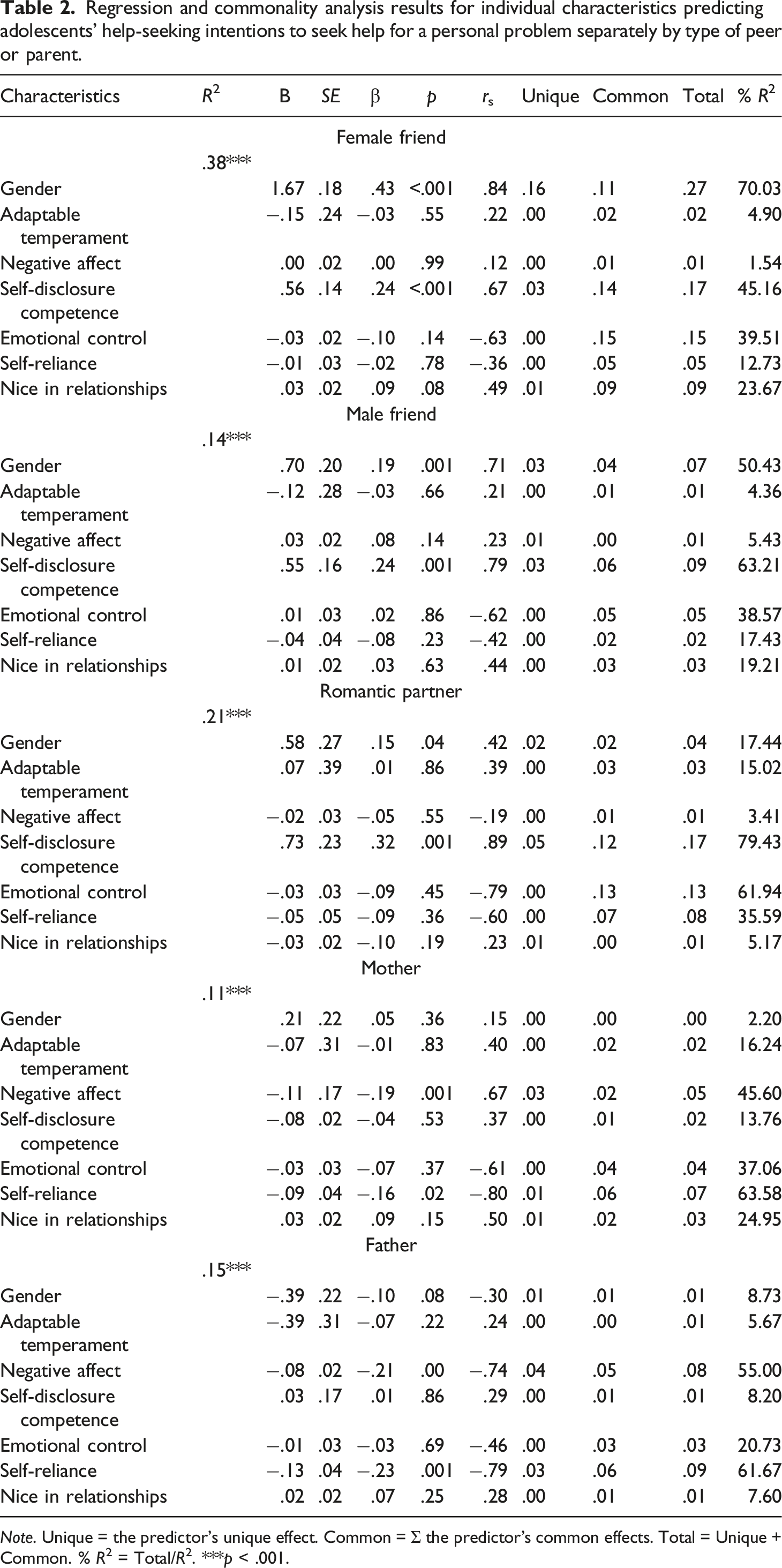
Note. Unique = the predictor’s unique effect. Common = Σ the predictor’s common effects. Total = Unique + Common. % R2 = Total/R2. ***p < .001.
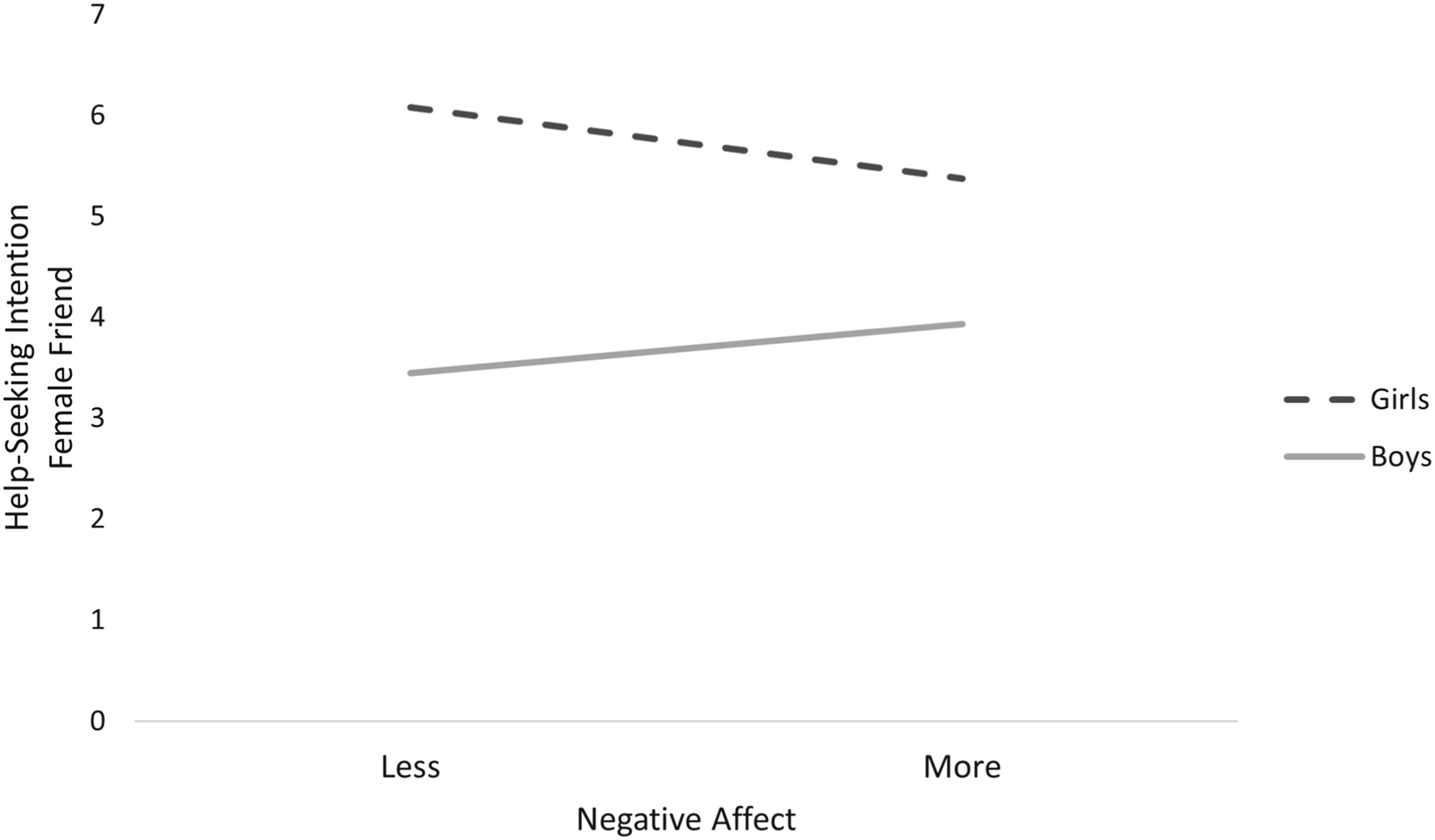
Simple slopes analysis results for the gender by negative affect interaction predicting adolescents’ intention to seek help from a female friend.
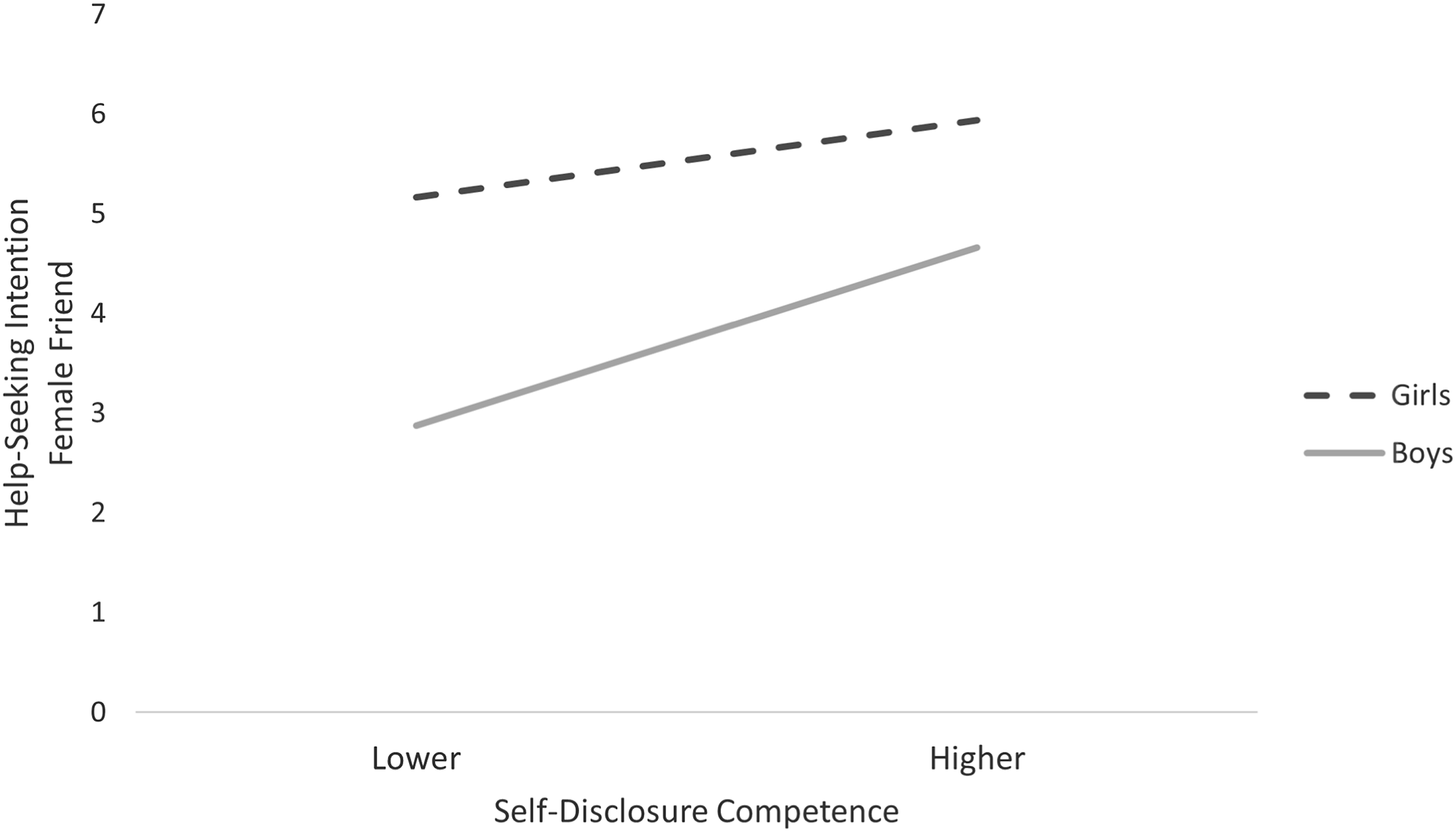
Simple slopes analysis results for the gender by self-disclosure competence interaction predicting adolescents’ intention to seek help from a female friend.
The commonality analysis results revealed that gender accounted for 70% of the variance explained in adolescents’ intentions to seek help from a female friend, making the largest unique contribution and a substantial common contribution (see Table 2). Self-disclosure competence accounted for 45% of the explained variance, with a small unique contribution and a substantial common contribution. The emotional control gender norm accounted for almost 40% of the explained variance through a substantial common contribution. The remaining characteristics made smaller total contributions.
Male Friend
For adolescents’ intentions to seek help from a male friend, the regression results showed that the block of individual characteristics was significant, F (7, 339) = 7.91, p < .001 (see Table 2). Gender was a significant predictor, with girls reporting higher intentions than boys to seek help from a male friend. Higher self-disclosure competence also predicted higher help-seeking intentions. The beta weights for the other characteristics were smaller and nonsignificant, but their larger structure coefficients indicated that multicollinearity was affecting these results. The block of two-way interactions (not shown) was not significant, F (6, 333) = .64, p = .70.
The commonality analysis results indicated that self-disclosure competence accounted for the largest proportion of the variance explained (63%) in adolescents’ intentions to seek help from a male friend, making a substantial unique contribution and the largest common contribution (see Table 2). Gender accounted for 50% of the variance explained, also through substantial unique and common contributions, and the emotional control gender norm accounted for 39% of the explained variance through a substantial common contribution. The total contributions of the remaining characteristics were smaller and occurred primarily through shared variance.
Romantic Partner
For adolescents’ intentions to seek help from a romantic partner, the regression results showed that the block of individual characteristics was significant, F (7, 167) = 6.38, p < .001 (see Table 2). Only adolescents’ higher self-disclosure competence was related to higher help-seeking intentions. The beta weights for multiple other characteristics were smaller and nonsignificant, especially when compared to their larger structure coefficients, indicating that multicollinearity was affecting these results. The block of two-way interactions (not shown) was not significant, F (6, 161) = .91, p = .50.
In contrast, the commonality analysis results revealed that multiple characteristics accounted for noteworthy proportions of the explained variance in adolescents’ intentions to seek help from a romantic partner (see Table 2). Adolescents’ self-disclosure competence accounted for almost 80% of this variance, making the largest unique contribution and a substantial common contribution. The emotional control gender norm accounted for more than 60% of the explained variance through a substantial common contribution, and the self-reliance gender norm accounted for almost 36% of the explained variance, also through a common contribution. The total contributions of the remaining characteristics were smaller.
Mother
The regression results showed that the block of individual characteristics was significant for adolescents’ intentions to seek help from their mother, F (6, 334) = 5.86, p < .001 (see Table 2). Only two characteristics were significant – youth’s reports of less negative affect and less conformity to the self-reliance gender norm were related to higher intentions to seek help from their mother. The beta weights for the other characteristics were smaller and nonsignificant, but they had larger structure coefficients, indicating that multicollinearity was affecting these results. The block of two-way interactions (not shown) was not significant, F (6, 328) = .89, p = .50.
The commonality analysis results indicated that three characteristics accounted for substantial proportions of the variance explained in adolescents’ intentions to seek help from their mother (see Table 2). The self-reliance gender norm accounted for almost 64% of the explained variance, with a larger common than unique contribution. Negative affect accounted for 46% of the explained variance, with both unique and common contributions. The emotional control gender norm accounted for 37% of the explained variance through a common contribution. The total contributions from the remaining characteristics were smaller and made primarily through shared variance.
Father
For adolescents’ intentions to seek help from their father, the regression results showed that the block of individual characteristics was significant, F (7, 309) = 7.79, p < .001 (see Table 2). Only two characteristics were significant – adolescents’ reports of less conformity to the self-reliance gender norm and less negative affect were related to higher intentions to seek help from their father. The beta weights for the other characteristics were smaller and nonsignificant, but the structure coefficients were larger, indicating that multicollinearity was affecting these results. The block of two-way interactions (not shown) was not significant, F (6, 303) = .48, p = .82.
The commonality analysis results indicated that two characteristics accounted for meaningful proportions of the variance explained in adolescents’ intentions to seek help from their father (see Table 2). The self-reliance gender norm accounted for the largest proportion of this variance (62%) followed by negative affect (55%), with both variables making unique and common contributions. The remaining characteristics made smaller total contributions.
Discussion
Adolescents identify friends and parents as their first choices for help with problems (Chiang et al., 2022; Sears, 2020). The goal of this study was to provide a more nuanced understanding of these help-seeking preferences by examining youth’s intentions to seek help from five types of peers and parents for a personal/emotional problem, assessing the unique, common, and total contributions of multiple individual characteristics to these intentions, and evaluating gender differences in the associations. Overall, the results showed that adolescents have moderate intentions to seek help from types of peers and parents for a personal/emotional problem. In addition, different combinations of adolescents’ individual characteristics made substantial total contributions to their help-seeking intentions in relation to their friends, romantic partner, mother, and father. There were also few gender differences in the relationships between youth’s individual characteristics and help-seeking intentions for the five types of peers and parents.
Adolescents’ Help-Seeking Intentions for Types of Peers and Parents
The descriptive analyses revealed that adolescents’ average intentions to seek help from a female friend, a male friend, a romantic partner, their mother, and their father for a personal/emotional problem span a moderate range. A moderate level of motivation or readiness to seek assistance is consistent with initial studies of youth’s intentions to seek help from types of peers and parents (Sears et al., 2009; Sullivan et al., 2002; Wilson, Deane, & Ciarrochi, 2005). It also indicates preparedness to use this form of coping with these help sources effectively or in an adaptive way (i.e., when they cannot manage a problem on their own, but not when they can manage a problem independently) (Nadler, 2015). Although statistical comparisons between the five help-seeking intentions variables could not be conducted because the variables reflect reports from nonidentical subsamples of adolescents, the means showed that the highest help-seeking intentions were for a romantic partner and the lowest help-seeking intentions were for their father, supporting Hypothesis 1. This pattern concurs with youth’s descriptions of support in their close relationships with types of peers and parents (Hand & Furman, 2009; McKenna et al., 2022). The distinctions made between the types of peers and parents also reflect adolescents’ increasingly sophisticated view of help seeking as a coping strategy that involves choosing a specific helper for assistance with a problem (Zimmer-Gembeck & Skinner, 2016). In addition, they illustrate adolescents’ responsiveness to precise terms for types of peers and parents in assessments of their help-seeking intentions.
Adolescents’ Individual Characteristics and Help-Seeking Intentions for Types of Peers and Parents
The multivariate analyses showed that different combinations of adolescents’ individual characteristics made substantial total contributions to help-seeking intentions for friends, a romantic partner, their mother, and their father. Turning first to the results for types of peers, adolescents’ gender, self-disclosure competence, and conformity to the masculine norm emotional control accounted for the largest proportions of the variance explained in help-seeking intentions for a female friend and a male friend. Together, these characteristics enhance our understanding of adolescents’ views of friends as potential sources of support. This view was especially strong for girls who reported higher intentions than boys to seek help from the two types of friends, supporting Hypothesis 2. Girls focus on support as an expected part of friendships (Kitts & Leal, 2021; Stanton-Salazar & Spina, 2005) and there are similarities between features of girls’ relationships with friends and features of a help-seeking interaction (e.g., dyadic structure, feelings of closeness) (Sears & McAfee, 2017). Adolescents are also more likely to plan to seek help from a female friend and a male friend when they see themselves as able to share personal information with others. Higher self-disclosure competence appears to be especially salient for boys in relation to help-seeking intentions for a female friend and may reflect past experiences making self-disclosures to a female friend and receiving help. However, self-disclosure competence was also the most salient characteristic for adolescents’ help-seeking intentions for a male friend. Perhaps this characteristic, which may make it more likely that adolescents will reveal their problem directly and in detail, is important for initiating help seeking in this peer context because male friends may have less experience detecting and responding to help-seeking communications. The common contribution of less conformity to the emotional control masculine norm reflects noteworthy overlap with higher self-disclosure competence. Both characteristics position adolescents to share feelings with their friends.
In comparison, adolescents’ self-disclosure competence and conformity to the masculine norms emotional control and self-reliance accounted for the largest proportions of the variance explained in intentions to seek help from a romantic partner. Young people regard the availability of support as a distinguishing feature of their romantic relationships (Hand & Furman, 2009; Stanton-Salazar & Spina, 2005) and self-disclosures are a primary means by which they envision accessing that support. Self-disclosures are also more likely when adolescents are less conforming to beliefs about the importance of controlling their emotions and managing situations without help. This combination of characteristics may be especially salient for intentions to seek help from a romantic partner to the extent that it promotes interdependence (i.e., more frequent interactions, intimacy, and reciprocity), a feature that distinguishes romantic relationships from friendships (Adams et al., 2001). To our knowledge, these three characteristics have not been examined together previously. Their intercorrelations were the highest among the individual characteristics in each subsample and their varying total contributions to adolescents’ intentions to seek help from the five types of peers and parents highlight the importance of examining their common as well as unique contributions.
In contrast, a different combination of characteristics – conformity to the masculine norm self-reliance and negative affect – accounted for the largest proportions of the variance explained in adolescents’ intentions to seek help from their mother and from their father. These two variables may be especially relevant for adolescents’ intentions to seek help from each parent because they contribute to adolescents’ positive perceptions of their parent which, in turn, assist with the maintenance of a positive relationship that provides a context for help seeking. Less conformity to the self-reliance masculine norm may signal adolescents’ developing autonomy and a desire to balance managing problems on their own and accessing help from a parent when they need it (Zimmer-Gembeck et al., 2011). Adolescents with less negative affect may have more positive interactions with their parent and may be more likely to view their parent as an available and reliable source of support, making help seeking from that parent more likely (McKenna et al., 2022; Sears, 2020). The masculine norm emotional control also made a substantial common contribution to youth’s help-seeking intentions for their mother. The emotional control and self-reliance masculine norms were moderately positively correlated and less conformity to these two beliefs points to the importance of youth’s openness -- to expressing emotions and to receiving support and assistance from others -- for the presence of intentions to seek help from their mother. This openness may be more relevant for help seeking from their mother given that young people report feeling closer to and more comfortable talking about problems with their mother than their father (McKenna et al., 2022; Smetana et al., 2006; Youniss & Smollar, 1985).
Two other issues merit attention. First, with only two exceptions, both in relation to adolescents’ intentions to seek help from a female friend, there was a noteworthy absence of gender differences in the relationships between the individual characteristics and adolescents’ help-seeking intentions from the types of peers and parents. This indicates that the characteristics associated with help seeking for a personal/emotional problem contribute in similar ways to girls’ and boys’ help-seeking intentions, at least in relation to the peer and parent contexts in which adolescents are most likely to seek assistance. Second, the analytic strategy of examining subsamples of adolescents who had access to the potential helpers they were asked to report intentions for was chosen to enhance the validity of this research as it seems plausible that an adolescent’s intention to seek help from a romantic partner, for example, could differ depending on whether they had access to such a person. Another analytic strategy would be to examine the help-seeking intentions of adolescents who had access to specific combinations of types of peers and parents or to all five helpers considered in this study. Using a sufficiently large sample, this approach would generate additional information about the relative help-seeking preferences of young people when multiple options for help are available.
Implications for Help-Seeking Models and Programs
The overall findings of this study are consistent with help-seeking models and frameworks that have included help-seekers’ individual characteristics as an important factor for this form of coping (e.g., Barker et al., 2005; Heller & Swindle, 1983; Newman, 2008; Srebnik et al., 1996). Our results highlight the benefit of using these models to select variables for research as each of the individual characteristics in this study accounted for 15% or more of the total explained variance in adolescents’ help-seeking intentions for at least one type of peer or parent. They also inform further development of these models by drawing attention to the importance of considering individual characteristics in relation to one another since no one individual characteristic was most relevant to adolescents’ help-seeking intentions across all five helpers. While relationships between types of factors (e.g., individual characteristics, social networks) are implied in help-seeking models, relationships among the variables within types of factors are not. In addition, specification in help-seeking models of types of peers and parents as potential sources of assistance rather than peers, parents, or informal helpers is needed to better capture the variation in adolescents’ help-seeking intentions and behavior. Eventually, it may be necessary to create separate models for types of peers and parents to accurately describe youth’s use of help seeking.
The results of this research can also be used to refine the content of programs aimed at increasing adolescents’ help-seeking intentions. For example, programs should discuss explicitly with youth that moderate intentions to seek help from types of peers and parents for a personal/emotional problem are typical and are viewed as adaptive as they signal readiness to seek assistance when it is needed but not when a problem can be managed independently. This information would allow young people to assess if they are prepared to seek help from these sources effectively or if a reduction or increase in their help-seeking intentions would be a more adaptive use of this form of coping. Programs should also present help seeking as a complex activity that is determined by multiple factors, including a person’s individual characteristics, with different combinations of characteristics more important for help seeking from each type of peer and parent. This information clarifies the need for programs to target multiple individual characteristics, including those that will assist youth with help seeking from peers (e.g., self-disclosure) and from parents (e.g., self-reliance beliefs). In addition, programs should address gender differences in adolescents’ help seeking to explain that while girls usually have higher help-seeking intentions for friends than boys, boys also plan to access their friends for help, and there may be no gender difference in help-seeking intentions for romantic partners or parents or in the importance of many individual characteristics. This information would distinguish patterns in adolescents’ help seeking with types of peers and parents from patterns found when general terms (e.g., professionals, parents) or no sources of help were used.
The results of this study must be considered in light of various limitations. First, almost all the participants were White adolescents who were attending high school and no information was collected about their gender identity, sexual orientation, or disability status. As a result, it is not known to what extent the results generalize to more ethnically diverse samples of youth, youth who are not attending school, or youth with various gender, sexuality, or disability identities. Second, this study examined adolescents’ intentions to seek help for a personal/emotional problem. While this type of problem is often presented in research on adolescents’ help seeking, youth also encounter other types of problems in their daily lives (e.g., academic, family, peer) and the contributions of individual characteristics to their help-seeking intentions for these problems may differ. The contributions of specific individual characteristics may also differ in studies of adolescents’ help-seeking behavior given that youth’s help-seeking intentions and help-seeking behavior are only moderately correlated (Raviv et al., 2000; Rickwood et al., 2005). Third, this study focused only on the contributions of adolescents’ individual characteristics to their help-seeking intentions. Many help-seeking models recognize that other types of factors, including social characteristics such as the quality of one’s relationships with potential helpers, also contribute to help-seeking intentions and behavior (e.g., Heller & Swindle, 1983; Skinner & Zimmer-Gembeck, 2007; Srebnik et al., 1996). Future research should investigate how relevant individual characteristics combine with other types of factors to predict help seeking. Fourth, although individual characteristics were examined as predictors of adolescents’ help-seeking intentions, the cross-sectional design of this study does not indicate the directionality of the relationships that were found. It is plausible that youth’s help-seeking intentions may contribute to specific individual characteristics (e.g., self-disclosure competence). Possible bidirectional relationships between adolescents’ individual characteristics and help-seeking intentions should be evaluated using a longitudinal design.
In conclusion, the results of this study expand our current understanding of adolescents’ help-seeking preferences by providing more nuanced information about their intentions to seek assistance from types of peers and parents and about the contributions their individual characteristics make to these intentions. Young people have moderate intentions to seek help from five types of peers and parents for a personal/emotional problem and different combinations of individual characteristics are most prominent for their plans to seek help from their friends, a romantic partner, and each parent. These findings highlight the importance of including more precise terms for peers and parents in assessments of adolescents’ help-seeking intentions and the benefit of examining unique and shared contributions of predictors to clarify their relevance. They also suggest modifications that may enhance existing help-seeking models and programs. Incorporation of these features will better capture some of the complexities associated with adolescents seeking help, including situations in which they are more or less likely to access those with whom they have a close relationship.
Footnotes
Acknowledgements
The authors thank the adolescents, the school principals and school district superintendents, and the research assistants who supported this study.
Declaration of conflicting interests
The author(s) declared no potential conflicts of interest with respect to the research, authorship, and/or publication of this article.
Funding
The author(s) received no financial support for the research, authorship, and/or publication of this article.
Open research statement
As part of IARR’s encouragement of open research practices, the authors have provided the following information: This research was not pre-registered. The data and materials used in the research cannot be publicly shared but are available upon request. The data and the materials can be obtained by emailing:
