




Abstract
Drawing upon construal level theory (CLT) and relational turbulence theory (RTT), two studies developed and assessed three operationalizations of relational construal level, defined as how concretely or abstractly people conceptualize their romantic relationship, and evaluated relational construal level as a mediator of the associations between relational turbulence and supportiveness, collaborative planning, and social network engagement using data reported by individuals in romantic relationships. In Study 1 (N = 405), preference for abstract versus concrete descriptions of relational activities and tendency to make extreme versus neutral judgments about a partner demonstrated desirable measurement properties and negative associations with relational turbulence, as predicted. A third measure indexing the accessibility of relational judgments was associated with neither relational turbulence nor the other measures of relational construal level. Study 2 used a more ethnically diverse sample (N = 414; Asian: n = 103, Black: n = 105, Hispanic: n = 102, White: n = 104) and identified preference for abstract versus concrete descriptions of relational activities as the most robust operationalization of relational construal level. Specifically, this measure was negatively associated with relational turbulence and mediated the associations between relational turbulence and supportiveness, collaborative planning, and social network engagement, as predicted by RTT.
Keywords
Research indicates that people in romantic relationship sometimes experience their association as fraught – unpredictable, chaotic, and highly variable. That condition, labelled relational turbulence, has been associated with numerous phenomena that have relevance for ongoing personal and relational well-being (Solomon et al., 2016). For example, relational turbulence has been associated with loneliness, negative affect, and negative perceptions of a partner’s communication (Goodboy et al., 2021; Solomon & Brisini, 2019; Yoon & Theiss, 2021). What remains unclear, however, is how relational turbulence has bearing on those experiences. Because relational turbulence appears to be relevant to the emergence and persistence of dysfunctional patterns, we seek to advance efforts to explain its role in romantic relationships.
Drawing upon the program of research on the relational turbulence model (Solomon & Knobloch, 2001, 2004), relational turbulence theory (RTT) advanced a framework to explain how experiences of relational uncertainty and qualities of interdependence between romantic partners can contribute to cognitive biases and polarized emotions that, in turn, affect communication within specific communication episodes (Solomon et al., 2016). One novel aspect of relational turbulence theory is the suggestion that ongoing exposure to the resulting communication episodes can lead to the emergence of relational turbulence as a general quality of romantic relationships that exerts a pervasive effect on communication within and concerning the relationship dyad. Relational turbulence theory offers two theoretical mechanisms to explain these effects of relational turbulence: construal level and dyadic asynchrony. More specifically, Solomon and her colleagues suggested that relational turbulence leads people to conceptualize their relationship in less abstract terms and experience less coordinate dyadic interaction, and that these conditions are manifest in a variety of pervasive and often maladaptive communication phenomena. Our aims in this paper are twofold: (a) to develop an operationalization of relational construal level to index people’s tendency to think about their relationship in more or less abstract ways, and (b) to test RTT’s claim that relational construal mediates the association between relational turbulence and various relationship phenomena.
We drew upon the tenets of relational turbulence theory to identify several theoretical constructs that provide a meaningful nomological network suitable for developing and evaluating operationalizations of relational construal level. Specifically, in relational turbulence theory, relational uncertainty and qualities of interdependence are causal antecedents to biased and polarized emotional, cognitive, and communicative experiences that give rise to relational turbulence. Thus, drawing from Solomon and Brisini (2017), we focused on six constructs. Relational uncertainty, which captures the degree of confidence people have in their perceptions on involvement in their romantic association, is manifest in three variables: self uncertainty indexes questions people have about their own involvement in the relationship; partner uncertainty reflects questions people have about their partner’s involvement in the relationship; and relationship uncertainty refers to questions about the status or future of the relationship as a whole (see also Knobloch & Solomon, 1999). Two variables provide insight into qualities of interdependence: the extent to which people experience interference from a partner or facilitation from a partner in the achievement of their everyday goals (see also Knobloch & Solomon, 2005). Finally, relational turbulence, defined as a global characterization of the relationship as chaotic, unstable, or shifting, is the proximal predictor of relational construal level within relational turbulence theory (see also McLaren et al., 2011). In this paper, we used measures of these constructs evaluated by Solomon and Brisini (2017) to anchor our assessment of new measures we developed to assess relational construal level.
In advancing RTT, Solomon et al. (2016) also identified a variety of relationship phenomena representing the effects of relational turbulence on interpersonal processes. Although these phenomena were offered as illustrative, rather than exhaustive, they provide a starting point for testing the theoretical role ascribed to relational construal level within RTT. In this paper, we focus on three of these outcomes nominated by Solomon et al.: (a) supportiveness, which encompasses both perceiving a partner as available to provide support and seeking support from a partner; (b) collaborative planning, which is the extent to which partners work together to organize their activities; and (c) social network engagement, which involves both a willingness to disclose about the relationship to social network members and perceptions of the quality of those interactions. We selected this set of outcomes as criterion variables in this study for their focus on engagement with the partners or others, rather than the self. Whereas other studies have linked some of these phenomena to relational turbulence in romantic relationships (i.e., social network support, partner supportiveness; Brisini & Solomon, 2020; Brisini et al., 2022; Knobloch et al., 2018; Tian & Solomon, 2020), this is a first investigation of relational construal level as a mediator of those associations.
As a foundation for this investigation, we first define relational construal level, drawing on previous research on construal level theory (Trope & Liberman, 2003, 2010), and we propose three potential measures for operationalizing relational construal level as a tendency to characterize their romantic relationship in abstract versus concrete terms, which influences and is responsive to the day-to-day and over-time experience of the relationship. Next, we elaborate on the role of relational construal level in RTT, and we advance hypotheses deduced from the theory. We then report two studies that used self-report, cross-sectional data from people in ongoing romantic associations to evaluate properties of the three measures of relational construal level and test our predictions.
Operationalizing relational construal level
Construal level theory (CLT, Trope & Liberman, 2003, 2010) is a theory of mental representation and psychological distance. CLT posits that the human ability to transcend their immediate environment to plan for the future, reflect on the past, or become immersed in others’ narratives resides in the formation of mental representations of objects, persons, and events (i.e., construals). Construal level (CL) is, in turn, defined as the degree of abstractness or coherence of those representations. High CL is tied to a greater focus on goals and desirability of actions, central features and global evaluations of objects, and intrinsic attributes of persons, whereas low CL is linked to attention to procedures, peripheral features, and contextual factors in people’s perceptions of actions, objects, and others. According to the theory, CL is bidirectionally associated with a person’s psychological distance from the focal mental representation, such that when an object is perceived to be temporally or physically distant, it is likely construed at a high (i.e., abstract) level, and an abstractly construed target is also likely to be perceived as distant.
In line with CLT, we define relational construal level as the degree of abstractness in a person’s conception of a relationship, and we posit that relational construal level both influences and is influenced by people’s experiences within their relationships. As with other mental constructs, it is difficult to measure construal level directly. Scholars working with CLT often employ experimental inductions to operationalize CL. For instance, in one classic paradigm, participants in the high CL condition are asked to consider why questions related to a supplied activity (e.g., planning a party), while those in the low CL condition consider how questions (e.g., Freitas et al., 2004; Fujita et al., 2006, Experiment 1; Wakslak & Trope, 2009, Study 3), as these questions orient participants toward abstract versus concrete aspects of the focal activity. Another approach uses an exemplar/category task that prompts participants to generate either exemplars that instantiate a given category (low CL) or categories that subsume a given object (high CL), relying on the notion that movement toward categorical thinking is associated with higher CL (Fujita et al., 2006, Experiments 3a, 3b, & 4; Wakslak & Trope, 2009, Study 2). Besides these two approaches, researchers have used visual or linguistic cues to vary the psychological distance between participants and a target to manipulate CL, based on the bidirectional link between distance and CL proposed in CLT (e.g., Bar-Anan et al., 2007; Liberman & Förster, 2009; Soderberg et al., 2015; Wakslak & Trope, 2009, Study 4a & 4b). In general, these operationalizations treat CL as a mindset that can be induced with regard to a particular target. Our efforts to assess, rather than induce, the construal level of thinking about a relationship required us to consider other strategies for indexing construal level.
To derive one measure, we drew on prior work that measures CL by examining people’s preference for abstract or concrete alternative descriptions of common activities. As a theoretical foundation of CLT, action identification theory notes the variation in the abstractness at which people consider (i.e., identify) their own behavior, and the conditions that predict change in the level of abstraction. In particular, Vallacher and Wegner (1985) contend that an abstract identification (e.g., having dinner) is naturally preferred over a concrete one (e.g., using utensils), because it conveys the purpose of an action without getting bogged down with details that are often less important. In testing their theory, Vallacher and Wegner (1989) developed the behavioral identification form (BIF) as a general measure of individual differences in how people identify their own actions. The BIF includes 25 focal activities and corresponding pairs of abstract and concrete alternative descriptions of them, and the sum of all the abstract descriptors chosen indexes this individual difference. For example, for the focal activity making a list, if the participant chooses getting organized over writing things down, the participant scores 1 on this item. In addition, in direct tests of CLT, Reyt and Wiesenfeld (2015; Reyt et al., 2016) developed and used the work-based construal level scale, a work domain-specific adaptation of the BIF, and found support for the theory. We based our first relational construal level measure on this action descriptor approach by focusing on people’s preference for abstract versus concrete descriptions of shared activities with a partner.
We considered CL’s influence on prediction, judgment, and person perception in developing our two additional measures of relational construal level. In work examining confidence in predictions about the future, Nussbaum and colleagues (2006) found support for the idea that high CL fosters confidence because it diminishes the influence of the low-level noises (i.e., variability) in a person’s prediction. In addition, corresponding to high CL, greater psychological distance from a focal object has been shown to reduce ego involvement, and possibly give rise to shallow and cursory processing of relevant information (e.g., Petty & Cacioppo, 1984; Trope & Liberman, 2010). In terms of person perception, CLT predicts that when construed at a high level, a partner is more likely to be evaluated in an abstract, decontextualized, and disposition-driven manner (Trope & Liberman, 2010). For example, dirty dishes in the kitchen sink viewed from a high construal level might make salient weekend house-keeping routines, the division of labor in the relationship, or a partner’s messy or forgetful disposition; when viewed from a low construal level, the sink full of dirty dishes might be experienced as a task to perform, a momentary inconvenience, or a source of irritation.
Research on memory and attitudes (Bassili, 1996; Ratcliff, 1978; Sherif et al., 1965) suggest both extremity and accessibility (measured as response time) of judgments index the stability of those judgments. Because high CL corresponds with judgments that should be relatively immutable and resistant to the influence of isolated observations, taken together, we argue that relational construal level is reflected in the ease with which people make relational judgements. In the relational context, when one construes a partner at a high level, seeing idiosyncratic deviations in a partner’s behaviors should not alter the valence or confidence in dispositional judgments about a partner. On the other hand, at a low level, similar deviations would likely sway those dispositional judgments. While this outcome is arguably similar to that of judgment confidence, and that confidence and construal level are conceptually related, there is a subtle difference between the two. Certainty is the subjective sense of security one feels in their own state of knowledge (Brashers, 2001), while construal level concerns the degree of integration of discrete events and information which may inform that sense of security. Thus, we argue that how one perceives a partner indexes relational construal level. In particular, low relational construal level – a person’s tendency to think about specific and distinct experiences – should be reflected in more neutral relational judgments, and more time spent in reaching those judgments. Conversely, when relational construal level is high, we anticipate that people make more definitive evaluations about their relationship, and that they do so more quickly.
To review, we offer relational construal level as a construct that refers to a person’s tendency to think in more or less abstract terms when their relationship with a partner is the focal object. Drawing from prior work, we offer three potential means of operationalizing relational construal level: (a) preference for abstract versus concrete relationship activity descriptors, (b) a tendency toward neutral versus definitive characterizations of the relationship, and (c) the length of time required to form a relationship evaluation. Next, we elaborate on the theoretical predictions concerning relational construal level within relational turbulence theory.
Relational construal level, relational turbulence, and interpersonal processes
Relational construal level, as a dimension of relational thinking, occupies a central role within relational turbulence theory. In particular, Solomon et al. (2016) suggested that people in turbulent relationships tend to conceptualize their relationships in an episodic, disorganized, and highly contextualized manner, because the variability in their day-to-day experiences precludes a confident, general characterization of the relationship. In contrast, when people’s experiences of communication in specific episodes are more consistent, coherent, and straightforward, generalizations about the relationship can be drawn with little difficulty. This linkage between relational turbulence and construal level echoes Vallacher and Wegner’s work (1985), which suggests obstacles in executing an action drive people’s attention to lower-level details, whereas smooth execution helps maintain an abstract mindset. Based on this reasoning, Solomon et al., argued that experiencing a variety of interactions with a relational partner, in which communication engagement and valence oscillate widely, interferes with the task of distilling conclusive judgments about the relationship, and hence creates a lower relational construal level.
In articulating RTT, Solomon et al. (2016) further proposed that relational construal level influences a variety of interpersonal processes within romantic relationships. As one example, Solomon et al. suggested that relational turbulence, through its impact on construal level, can undermine all aspects of the supportive communication process – including a person’s ability to describe their problems to a partner, the partner’s ability to comprehend support-seeking message, and the partner’s ability to enact sensitive and responsive support. Because a low relational construal level is focused on more concrete and immediate concerns, partners experience relational turbulence may overlook the bigger picture that puts stressors into perspective. Consistent with this reasoning, a recent investigation on women who experienced miscarriage found perceived partner supportiveness positively associated with three antecedent conditions of relational turbulence (i.e., relational uncertainty, facilitation from a partner, and interference from a partner; Tian & Solomon, 2020). Similarly, Knobloch and colleagues (2018) found negative associations between five types of reported partner support and relational turbulence among military spouses.
Solomon et al. also identified collaborative planning, defined as future-oriented decision making, as a communication activity problematized by a low relational construal level. Specifically, they reasoned, “Through its effect on construal level, relational turbulence is likely to attenuate motivation to engage in planning with the partner; to focus people on pragmatic concerns, rather than aspirations; and to limit creative ideation by emphasizing constraints, rather than opportunities” (Solomon et al., 2016, p. 520).
In similar fashion, RTT describes how relational turbulence can disrupt social network engagement because a low relational construal level impedes a more abstract and stable characterization of the relationship that can be shared with outsiders. The result may be a tendency to both refrain from sharing information with social network members and a tendency to find social network engagement less fulfilling. For example, Brisini and Solomon (2020) found that relational turbulence was negatively associated with the perceived quality of parenting advice received from couples’ social networks in a sample of parents of children with autism spectrum disorder. Partners who experience relational turbulence were also found to engage in forms of negative reasoning about social support messages received from their social network (Brisini et al., 2022).
Although these findings support the associations between relational turbulence and interpersonal processes predicted by RTT, the aspects of RTT summarized previously (specifically Axiom 6 and Proposition 6, Solomon et al., 2016, p. 522) remain untested to date, because of the lack of a suitable measure of relational construal level. If our first aim to develop such a measure is satisfied, we propose to test the following hypotheses: H1: Relational construal level is negatively associated with relational turbulence. H2: Relational construal level mediates the relations between relational turbulence and outcomes, including perceived partner supportiveness, collaborative planning, and network engagement.
Next, we report a study in which we tested these three operationalizations within a nomological network of constructs highlighted by relational turbulence theory. Subsequently, we use the measures derived from Study 1 in a second study that provided another evaluation of the relational construal level measures and also allowed us to test our two hypotheses.
Study 1
We conducted a self-report, online survey to evaluate the measures. If successful, this method yields operationalizations of relational construal level that are most adaptable for use in future research.
Method
Participants
We contracted Qualtrics to recruit our participants (Female = 211, Male = 193; 1 participant did not report sex) who were over the age of 18, currently married or cohabiting, and residing in the U.S. Participants were White (89%), Hispanic (13%), Asian (7%), Native Hawaiian/Pacific Islander (3%), Black (1%). Participant were 18–75 years of age (M = 41.06, median = 40, SD = 11.36), and had been married or cohabiting for 1–59 years (M = 14.79, SD = 11.11). Participants reported a median household income between $70,000 and $79,999, and 59.3% of participants completed a 4-year college degree or higher.
Measures
Qualities of relationships
Participants rated RTT-related qualities of their relationships in general. 18 Likert items were used to assess relational uncertainty resting within three sources (Solomon & Brisini, 2017): self (e.g., “I sometimes wonder how much I liked my spouse as a person”), partner (e.g., “Sometimes am unsure whether or not my spouse wants our marriage to last”), and relationship (e.g., “Sometimes I am unsure whether or not me and my spouse feel the same way about each other”). Interdependence was measured using 10 Likert items. Five items indexed interference from a partner (e.g., “My spouse interferes with the plans I make”), and five items indexed facilitation from a partner (e.g., “My spouse helps me in my efforts to make plans”; Solomon & Knobloch, 2004). Finally, relational turbulence evaluated perceptions of turmoil in the relationship using four, 6-point semantic differential items: chaotic/stable (reverse coded), calm/turbulent, tumultuous/running smoothly (reverse coded), peaceful/stressful (McLaren et al., 2011). All six measures were reliable (α = .86–.94)
Relational construal level
As detailed previously, we included three alternative operationalizations of relational construal level. The first of these was informed by a preliminary study, and the other two adapted scales used to index relationship judgments.
Action descriptor
We developed our first measure of relational construal level employing procedures similar to Vallacher and Wegner (1989) and Reyt and Wiesenfeld (2015), who respectively developed general and domain-specific measures of construal level. We took inspiration from the Relational Closeness Inventory (Berscheid et al., 1989) and generated a list of 35 common activities partners in close relationships engage in (e.g., “doing laundry,” “going on a trip,” and “talking on the phone”). Using Vallacher and Wegner’s (1989) procedure, we invited 50 students enrolled in a lower-division interpersonal communication class at a large research university in the eastern United States to generate abstract and concrete alternative descriptors for each of the common activities using the following instructions as part of an in-class activity: For each of the given action, generate two alternative descriptions that vary on levels of abstraction. For the concrete description, you may think toward the kinetic or physical aspects of the action, while the abstract description typically highlights the needs and wants that drive the action.
After reviewing responses from students, the authors selected 16 activities that were most comprehensible and best differentiated between the abstract and concrete forms to include in the study. In line with CLT, candidate descriptors that focused on the goals and desirability of an activity were characterized as abstract, while those that highlighted the motor actions and feasibility of an activity were characterized as concrete. For each activity, we selected two pairs of alternative descriptors, which were presented to participants in the main study as forced-choice binary options for each focal relational activity. For example, the focal activity “going to a restaurant” corresponded with two pairs of alternative descriptors: eating a meal (concrete) versus going on a date (abstract) and driving somewhere to eat (concrete) versus enjoying a special evening (abstract). From the inter-item correlation and reliability statistics obtained in our survey sample (available from the first author), we selected 14 items with descriptor pairs to form our final scale. Instructions and a complete list of items are provided in the Online Supplemental Materials.
Relational judgment extremity and accessibility
Our second measure of relational construal level rests on the CLT’s predictions about person perceptions and evaluation, such that when construal level for a partner is high, the partner is more likely to be evaluated in an abstract, decontextualized fashion, and their behavior is more likely attributed to dispositions, rather than the situation (for a review, see Trope & Liberman, 2010). In addition, whereas relational uncertainty corresponds with relational judgments that are less extreme (Knobloch & Solomon, 2005), high construal level fosters people’s certainty in their own predictions about future events (Nussbaum et al., 2006). These findings suggest higher construal level can be indexed by the extremity of individuals’ judgments about their partners. Based on this reasoning, we adapted Wiggins et al.’s (1988) Interpersonal Adjective Scale (IAS), a circumplex measure assessing judgments about a partner along dimensions such as dominance/submissiveness and warm/cold, to evaluate participants’ tendency to make neutral versus extreme judgments about their partners. The IAS items were on 6-point semantic differential scales, and extremity scores were calculated by recoding scale responses into a 3-point scale, such that 1 = neutral responses (i.e., 3 or 4 on the original scale); 2 = moderate responses (i.e., 2 or 5 on the original scale); and 3 = extreme responses (i.e., 1 or 6 on the original scale).
A third measure of relational construal level was based on the assumption that judgments about a partner are more stable and accessible to those who construe the partner at a higher construal level. Thus, we recorded the time participants spent on each IAS item to index relational construal level. To ensure statistical control over confounding factors, including general survey completion speed and item wording effects, we also asked the participants to make these judgments about a parent/guardian. Response time recorded from the partner IAS items were log-transformed due to its skewness and controlled for the log-transformed parent IAS scale score.
Analytic strategy
To test the performance of our relational construal level measures, we began by fitting a measurement model to the focal variables (qualities of the relationship, and three construal level measures), and we evaluated model fit using criteria of CFI >.90, RMSEA <.08, SRMR <.08. Next, we calculated scale scores for those variables and explored patterns of covariation among them. Finally, we assessed the relationships among the variables within a structural model based on prior research on the relational turbulence model (McLaren et al., 2011), where variables were adjusted for measurement error by fixing the error variance at (1-α)*variance (Bollen, 1989). All models were estimated with maximum likelihood with robust standard errors (MLR) using Mplus 8.3.
Results
Latent Factor Descriptives, Reliability, and Correlations (Study 1 CFA Results).
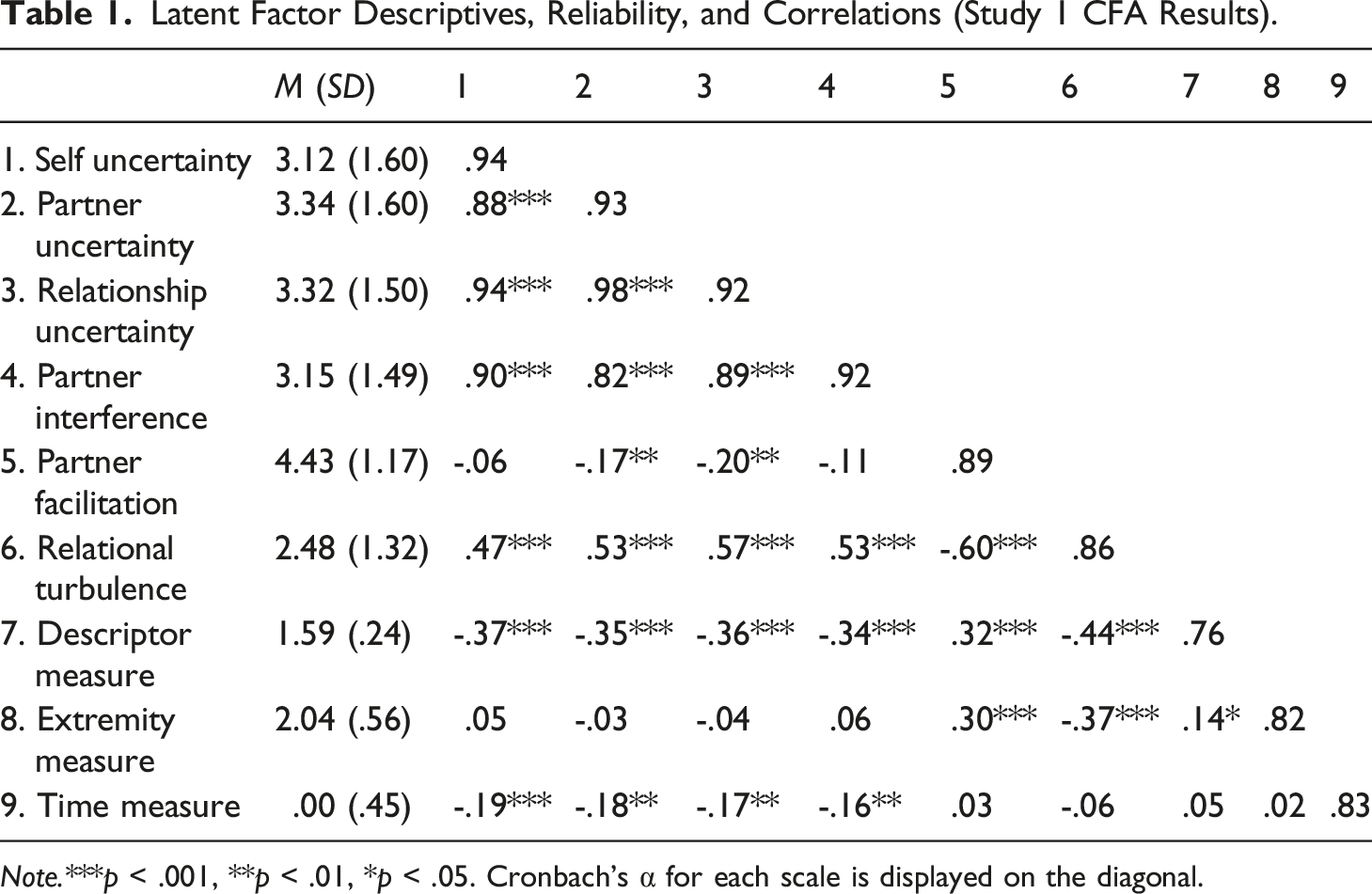
Note.***p < .001, **p < .01, *p < .05. Cronbach’s α for each scale is displayed on the diagonal.
Examining the first-order correlations, we observed differential patterns of association between qualities of romantic relationships and measures of relational construal level. In particular, the action descriptor measure was significantly associated with all six RTT constructs in expected directions (all r = -.44–.32, p < .001). The judgment extremity measure was correlated with facilitation from a partner (r = .30, p < .001) and relational turbulence (r = -.37, p < .001) at similar magnitude to the descriptor measure’s associations with these two constructs. However, the extremity measure was not correlated with relational uncertainty or partner interference (all r = -.04 to .06, n.s.). The time measure was significantly related to relational uncertainty and partner interference (all r = -.19 to -.16, p < .01), but not relational turbulence (r = -.06, n.s.) or facilitation from a partner (r = .03, n.s.). We also observed a small yet positive correspondence between our action descriptor and judgment extremity measures (r = .14, p < .05), but neither measure was correlated with the accessibility measure.
Having established a measurement model, we constructed a structural equation model in accordance with previous tests of the relational turbulence model (e.g., McLaren et al., 2011; 2012; for a meta-analytic review, see Goodboy et al., 2020) and incorporating relational construal level as a consequence of relational turbulence, per relational turbulence theory (Solomon et al., 2016). Specifically, the model specified that self and partner uncertainty predict relationship uncertainty; relational uncertainty and qualities of interdependence predict relational turbulence; and relational turbulence is the proximal cause of variation in all three relational construal level measures (Figure 1). In specifying the structural model, we modeled all nine constructs using factor scores with adjustment of measurement error to minimize the influence of model fit from the measurement model. The structural model fit the data reasonably well (χ
2
(22) = 78.782, p < .001, CFI = .967, RMSEA = .080 [.061, .099], PCLOSE = .005, SRMR = .066). Path coefficients are reported in Figure 1. Study 1 Structural Equation Model Results. Note. self = self uncertainty, part = partner uncertainty, rel = relationship uncertainty, int = interference from a partner, fac = facilitation from a partner, turb = relational turbulence, time = response time (accessibility) measure, desc = action descriptor measure, extm = judgment extremity measure. Observed indicators were omitted for parsimony. Dashed paths were nonsignificant. Path coefficients are standardized.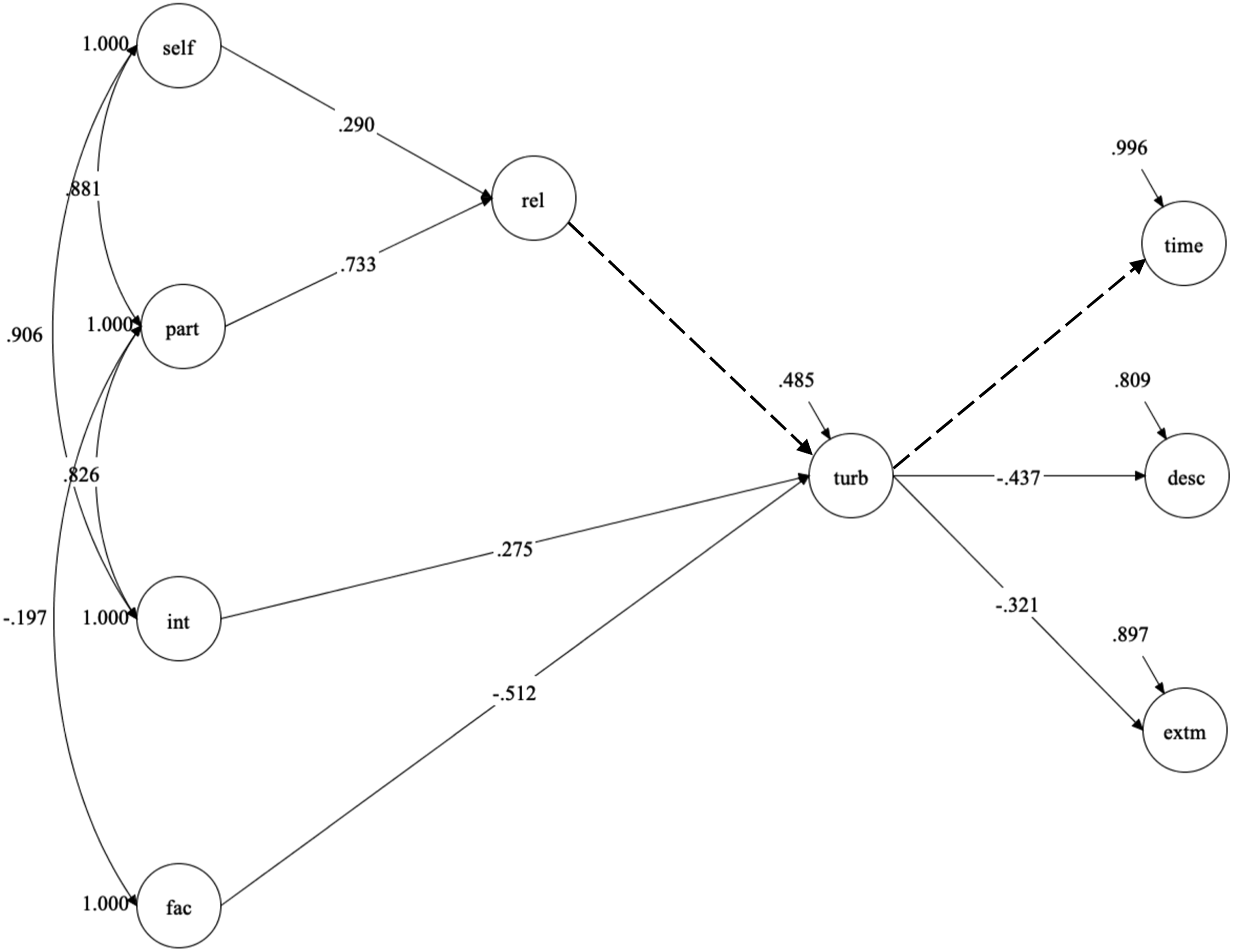
As theorized, relationship uncertainty was positively predicted by self uncertainty (β = .29, p < .001) and partner uncertainty (β = .73, p < .001). However, relationship uncertainty was not predictive of relational turbulence (β = .18, n.s.), possibly due to multicollinearity between uncertainty and interference, and high correlations between uncertainty variables (r = .88–.98; see Table 1). As expected, both interdependence variables were significant predictors of relational turbulence (β = .28 for interference from a partner, β = -.51 for facilitation from a partner, p < .001). Of the three proposed strategies to index relational construal level, the action descriptor measure was the most sensitive to variations in relational turbulence (β = -.44, p < .001). Extremity in judgments about the partner was also negatively predicted by relational turbulence (β = -.32, p < .001). Contrary to our predictions, accessibility of the same partner judgments were not influenced by relational turbulence (β = -.07, n.s.). The findings related to the accessibility measure notwithstanding, we are encouraged that our action descriptor and judgment extremity measures successfully indexed relational construal level, and that they shared a relationship with relational turbulence as theorized in RTT and predicted by H1.
Study 2
Following Study 1, we conducted a second self-report, online survey study to continue our validation of the proposed measures using a different set of variables, as well as to test the predictions we derived from RTT. We also addressed two limitations of Study 1. Specifically, we assessed general construal level as a potential confound in our measurement of relational construal level, and we implemented quota sampling to ensure racial and ethnic diversity in our Study 2 sample.
Method
Participants
Four hundred and fourteen participants were recruited through Qualtrics using the same screening criteria as Study 1 (over 18 years of age, married or cohabiting with a partner, and residing in the U.S.). The sample included 223 females, 190 males, and 1 participant who did not report sex. Participants were between 18 and 87 years of age (M = 51.58, median = 51, SD = 17.36) and had been in a relationship with a partner for between 1 and 71 years (M = 22.37, SD = 16.32). Participants reported a median household income between $80,000 and $89,999, and 56.4% of participants completed a 4-year college degree or higher. We requested equal distribution among four ethnicities (Asian, Black, Hispanic, and White) in our sample, and participants who identified with more than one group were randomly assigned to one of the groups they identified with. Thirty-two percent of our participants identified as White, 30% Hispanic, 28% Black, 26% Asian, 4% American Indian or Alaska Native, 1% Native Hawaiian or Pacific Islander, and 1% other. Three hundred and thirty-seven participants (81%) identified with one race/ethnicity group, 69 (17%) identified with two, and 8 (2%) identified with three or more. The sample was divided into Asian (n = 103), Black (n = 105), Hispanic (n = 102), and White subgroups (n = 104) in the subsequent multi-group SEM analysis.
Measures
Qualities of relationships
Relational turbulence was indexed by the same 4-item semantic differential scale used in Study 1 (McLaren et al., 2011; α = .88). We also measured relational satisfaction with 5 items from the quality marriage index (Norton, 1983), as a second index of relational qualities to use in measurement analysis (α = .96). 1
Relational construal level
As in Study 1, three alternative measures were administered to index relational construal level. We used the same subset of items for the descriptor measure, and the same transformation method for both the judgment extremity measure and accessibility measure. All three scales were reliable (all α = .76 to .85).
General construal level
The 25-item behavioral identification form (BIF; Vallacher & Wegner, 1989) was included to examine whether the action descriptor measure of relational construal level was distinct from a general construal level. This measure instructed participants to select their preferred alternative identification from supplied descriptor pairs for each focal activity, in the same manner as the action descriptor measure for relational construal level. For instance, for the focal activity “filling out a personality test,” response “answering questions” indicates low construal level, whereas “revealing what you’re like” suggests high construal level. This measure was reliable (α = .84).
Outcomes of relational turbulence
Five measures were included to tap outcomes of relational turbulence. Perceived partner supportiveness (PS) was assessed by a 4-item significant other subscale of the multidimensional scale of perceived social support (Zimet et al., 1988; e.g., “My spouse is around when I am in need”). Tendency to seek support from a partner (TSS) was measured with an adapted 5-item scale from Bodie (2013; e.g., “If I experienced a stressful situation, I feel like I can talk to my spouse about it”). 12 items were used to index collaborative planning (CP; “My spouse and I work together to figure out how we will manage things”).2 Network engagement was indexed following Brisini and Solomon (2020) using both a 6-item measure of topic avoidance (TA; e.g., “in-depth feelings and beliefs”) and a 5-item scale assessing engagement valence (NEV; e.g., unhelpful—helpful, judgmental—accepting). All scales were reliable (all α = .86–.96).
Analytic strategy
As with Study 1, we began our analysis with a confirmatory factor analysis using the same criteria to assess model fit, and we identified and addressed areas of local misfit with within-scale adjustments. Next, we retested the relational turbulence-relational construal level portion of the Study 1 model with multi-group data to evaluate the performance of our measures. Finally, we conducted a series of multi-group SEM analyses with ethnicity as a grouping variable, and scale scores of relational turbulence, general and relational construal level, and outcome variables to test RTT’s predictions. All models were estimated with maximum likelihood with robust standard errors (MLR) using Mplus 8.3. They were evaluated using criteria of using criteria of CFI >.90, RMSEA <.08, SRMR <.08, and compared using the Satorra-Bentler Δχ2 difference test. 3 All structural models used the (1-α)*variance formula to specify error variance of the single-indicator scale scores of all latent variables (Bollen, 1989).
Results
Measurement analysis
Latent Factor Descriptives, Reliability, and Correlations (Study 2 CFA Results).
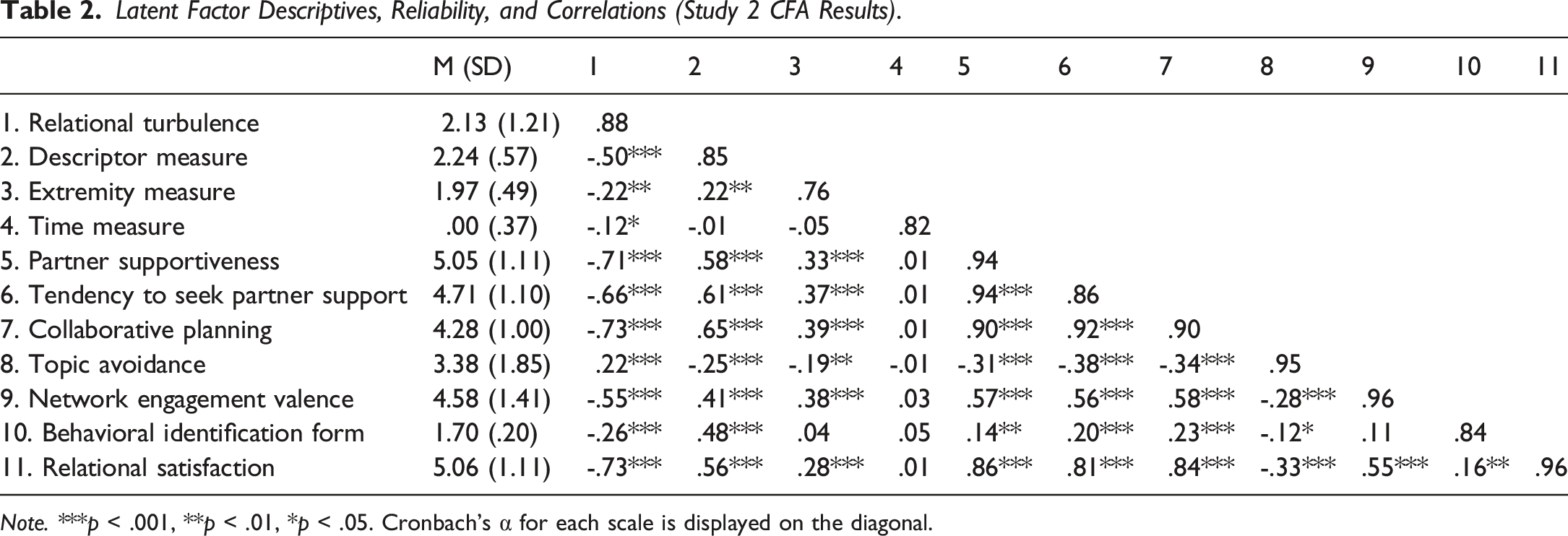
Note. ***p < .001, **p < .01, *p < .05. Cronbach’s α for each scale is displayed on the diagonal.
Hypothesis 1
Study 2 Hypothesis 1 Model Comparisons.
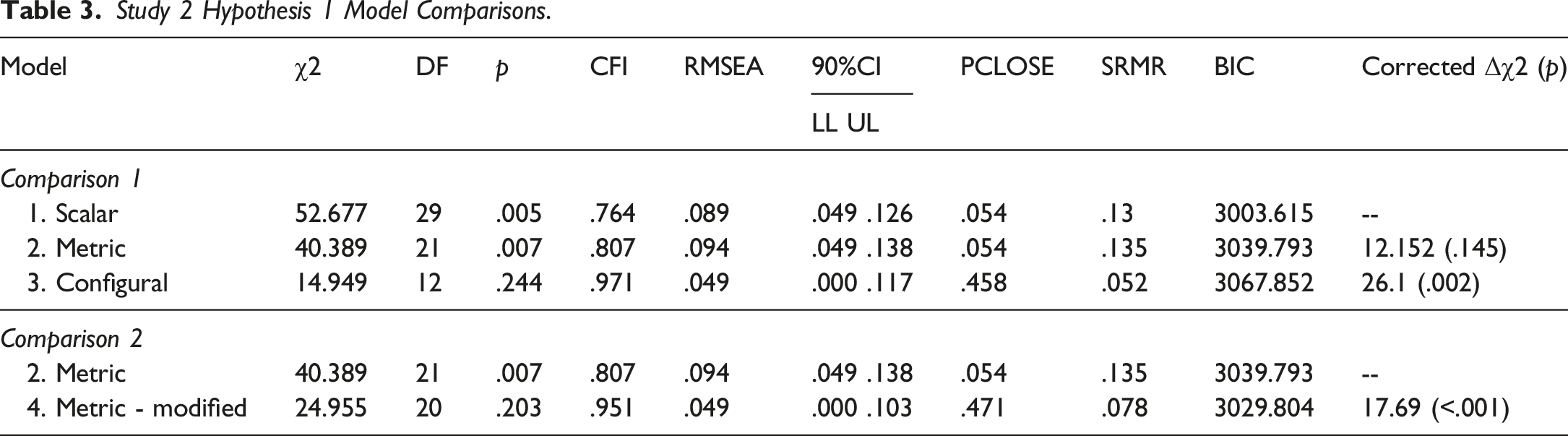
Next, we tested several sequences of models with stepwise removal of equality constraints for the paths and groups identified, and we used fit statistics to guide our decisions. Because we did not have an a priori basis for expecting between-group differences on particular paths, we adopted the empirical respecification approach to model fitting (Kline, 2015). The resultant model released the RT to descriptor measure path for the White group on the basis of the metric model (see Table 3 for model comparisons). This model fit the data well (χ 2 (20) = 24.955, p = .203, CFI = .951, RMSEA = .049 [.000, .103], SRMR = .078, BIC = 3029.804), and had a significant improvement in fit compared to the metric model (S-B Δχ 2 (1) = 17.690, p < .001, ΔBIC = -9.989). All path coefficients between relational turbulence and relational construal level measures in this model were negative and significant across all groups (all β < .105, all p < .047; see Table 4), with the descriptor measure being considerably less robust within the White subsample (Asian β = -.520, Black β = -.635, Hispanic β = -.623, all p < .001; White β = -.234, p = .028). Although the accessibility measure was sensitive to variation in relational turbulence in the multi-group model, we observe that this effect was nonsignificant in an overall (groups collapsed) model, and the effect seemed to be driven by the White group only. Thus, in subsequent tests of our theoretical model, we only focused on the descriptor and extremity measures.
Study 2 Hypothesis 1 Standardized Coefficients (Final Model).
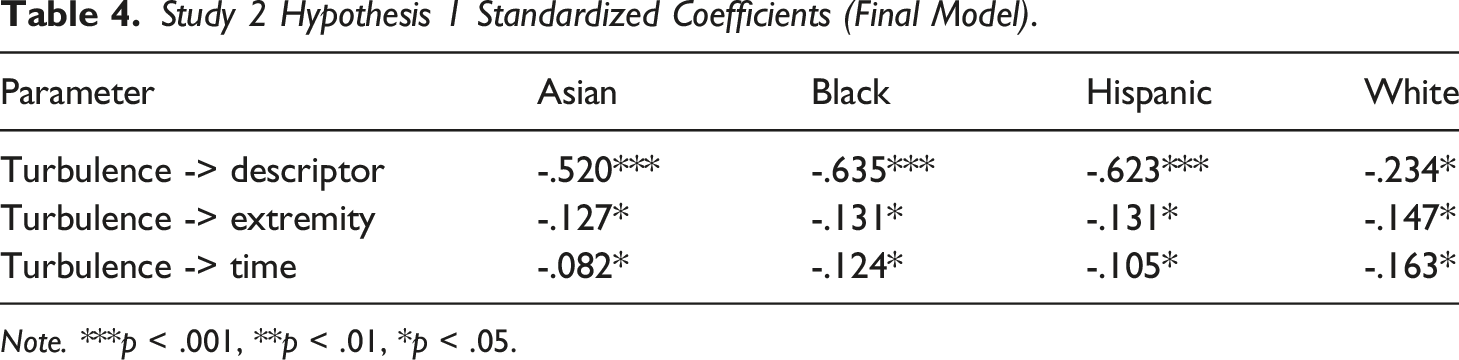
Note. ***p < .001, **p < .01, *p < .05.
Hypothesis 2
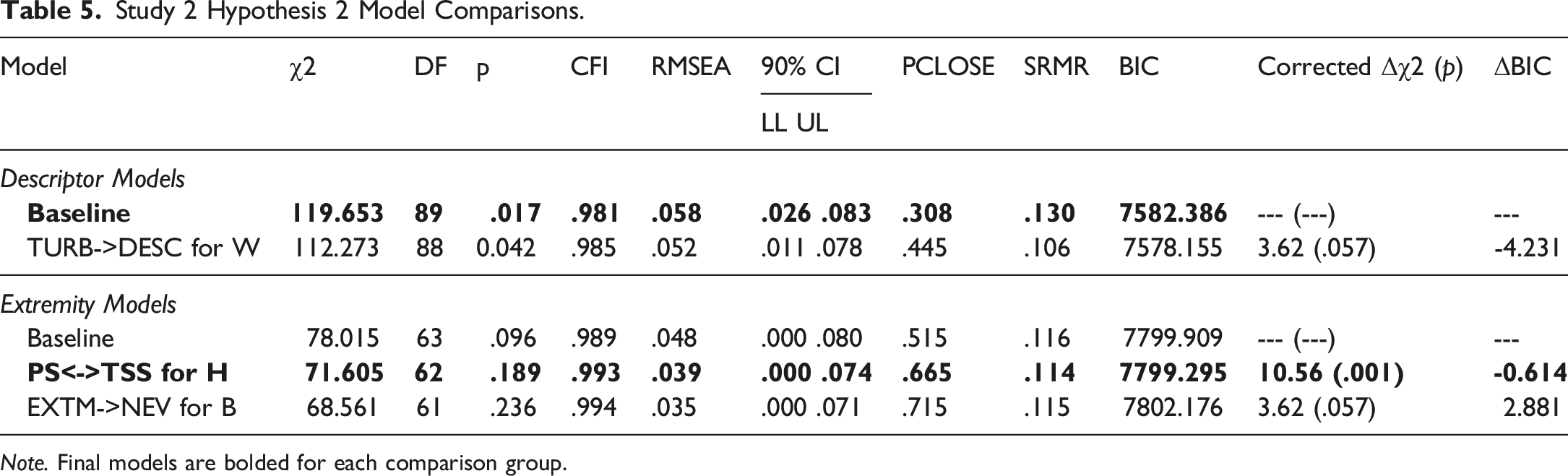
Next, we tested a series of theoretical models that included relational turbulence, construal level, and outcomes. The descriptor measure and extremity measure were tested in separate models (see Figure 2 for depiction of descriptor and extremity models). These models were structurally identical, except that the descriptor models included the behavioral identification form, while the extremity models did not. Again, we used a pair of configural models without equality constraints to identify regression and covariance paths that potentially contributed to model misfit in the more stringent models, released paths one at a time to identify a modified model with the greatest improvement in fit, and repeated the process on the basis of the modified model until there were no significant improvements in fit. Details of our stepwise model comparisons are provided in Table 5. Study 2 Hypothesis 2 Conceptual Models. Note. Panel 1: descriptor measure model; panel 2: extremity measure model. turb = relational turbulence, bif = behavioral identification form, desc = descriptor measure, extm = extremity measure, ps = partner supportiveness, tss = tendency to seek support from a partner, cp = collaborative planning, ta = topic avoidance, nev = network engagement valence. Observed indicators and covariance paths between outcome variables omitted for parsimony. Study 2 Hypothesis 2 Model Comparisons. Note. Final models are bolded for each comparison group.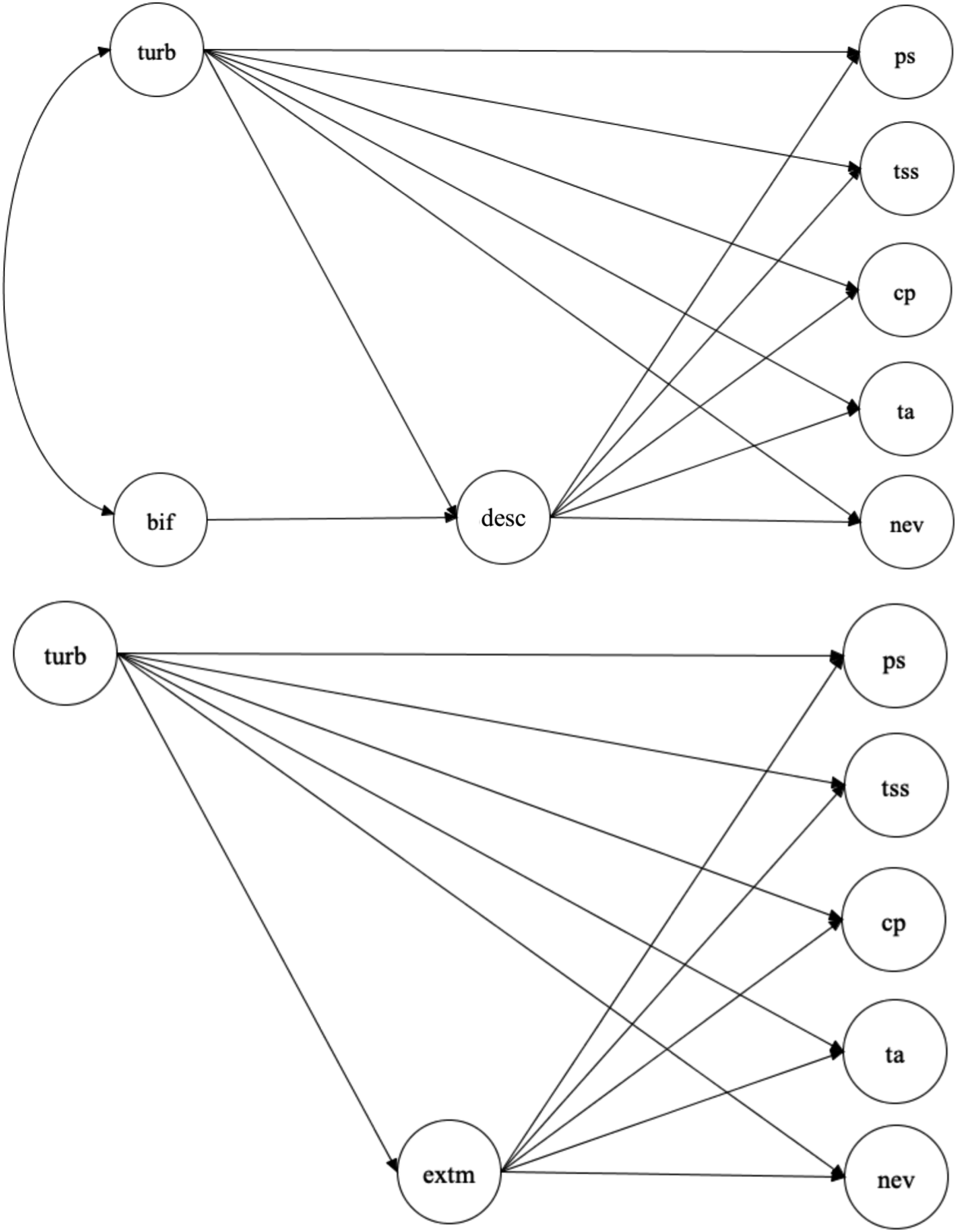
Study 2 Hypothesis 2 Standardized Path Coefficients
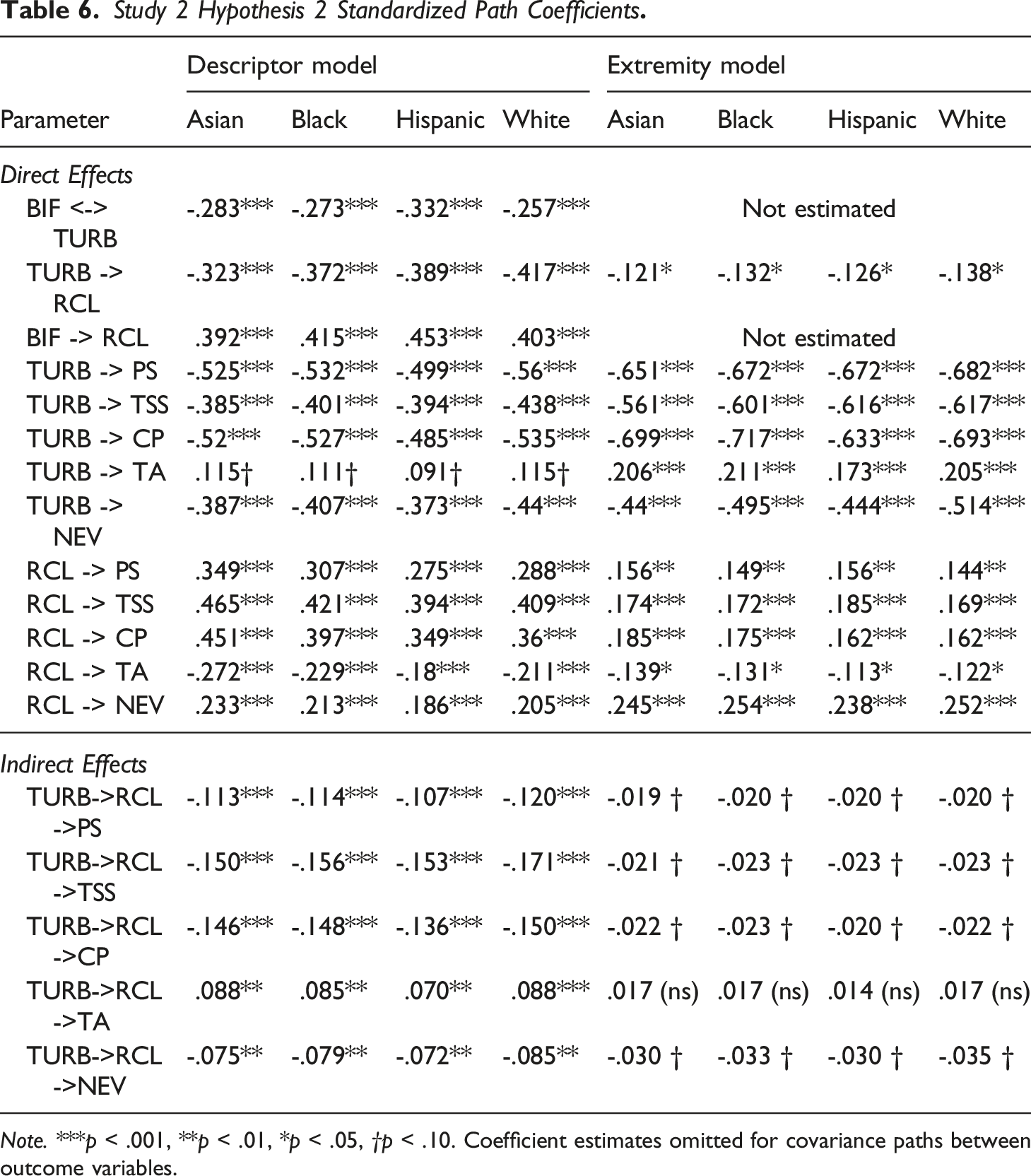
Note. ***p < .001, **p < .01, *p < .05, †p < .10. Coefficient estimates omitted for covariance paths between outcome variables.
A second set of models used judgment extremity to index relational construal level. The fully restrictive model provided good fit to the data, again with the exception of SRMR (χ 2 (63) = 78.015, p = .096, CFI = .989, RMSEA = .048 [.000, .080], PCLOSE = .515, SRMR = .116, BIC = 7799.909). In arriving at a final model, we released the equality constraint for the covariance path between partner supportiveness and tendency to seek partner support in the Hispanic group. This modification significantly improved model fit (χ 2 (62) = 71.605, p = .189, CFI = .993, RMSEA = .039 [.000, .074], PCLOSE = .665, SRMR = .114, BIC = 7799.295; S-B Δχ 2 (1) = 10.559, p = .001), and no further modifications provided substantial improvement in fit (all S-B Δχ 2 > -3.623, p > .057). Direct effects on all five outcome variables were observed for both relational turbulence and the extremity measure, but the indirect effects of turbulence through judgment extremity were marginal for four outcomes, and nonsignificant for topic avoidance (β = .014–.017, p > .100; see Table 6). Thus, H2 received limited support when relational construal level was indexed by the extremity measure.
Discussion
We opened this paper by observing the central role of relational construal level in the reformulation of the relational turbulence model into relational turbulence theory (Solomon et al., 2016). Drawing upon the heuristic value of construal level theory, Solomon and colleagues used that theoretical logic to link relational turbulence, as a relationship quality, to a variety of interpersonal processes. In the absence of a suitable measure of relational construal level, however, the core tenets of RTT remained untested. To address this gap and inform further theoretical advances, we aimed to develop a self-report measure of relational construal level and to evaluate its predicted role within RTT.
Measuring relational construal level
We reported two studies that piloted three operationalizations of relational construal level and provided a first test of relational construal level as a causal mechanism within the theoretical framework of RTT. One strength of our studies is the evaluation of multiple strategies to index relational construal level, and we are encouraged by the support for the descriptor measure found in our multi-group analyses of these measures. Also, because these measures are somewhat indirect indices of relationship thinking they are largely free of downfalls of conventional self-report measures, such as the social desirability bias. At the same time, the cross-sectional nature of our data and a lack of detail on participants’ gender identity, sexual orientation, or disability status limit our ability to make claims of causality and generalize our findings. In addition, we were somewhat puzzled by the difference in the association between relational turbulence and the descriptor measures between Study 1 (an 88% White sample; β = -.437) and the White subsample of Study 2 (β = -.234; weakest among the whole sample). Because this difference may be attributable to sampling error, future studies should continue to evaluate and validate this measure in different populations. This discrepancy notwithstanding, the results of these two studies point to the descriptor measure as a preferred operationalization of relational construal level within relational turbulence theory.
The other two operationalizations of relational construal level fell short of the descriptor measure in a variety of ways. The judgement extremity measure performed similarly to the descriptor measure, but generally manifested smaller associations with the criterion variables. The pattern of results for the judgment accessibility measure was generally not robust and, where evident, tended to run counter to theory. One explanation might be the methodological manipulations required to transform self-reported responses to variables (e.g., folding the response scale and adjusting the response time distribution), that render these measures less sensitive indices of relational thinking. We recognize, as well, that measuring judgment accessibility as response time using online surveys does not afford the control typical in response time measurement protocols. Although we see these challenges as further reason to advance the descriptor measure of relational construal level, our evidence does not definitively reject these avenues for measuring construal level.
Considered more broadly, our paper coheres with framing relationships as existing, at least in part, as relational schema, and that the level of abstraction and coherency of those mental models is important to an array of interpersonal phenomena. A relational schema is a cognitive structure that organizes knowledge about romantic relationships, which provides a foundation for the enactment and interpretation of behaviors within a relationship (Fitzpatrick, 1990). High construal level predisposes people to relying on existing schemas, rather than salient and isolated incidents, to make judgments about their partners’ behaviors (Trope & Liberman, 2010). As new relational events are experienced, relational construal level may determine how new, relationship-relevant information is integrated into the existing knowledge structure (Fiske & Taylor, 1991). The stability and valence of these schemas may further color the interpretation of relational communication (Dillard et al., 1996). The measurement of relational construal level, in turn, will facilitate further investigations into the effects of cognitive structures on experiences within romantic relationships.
Implications for relational turbulence theory
Relational turbulence theory positions construal level as a causal mechanism linking relational turbulence and its outcomes related to the relationship and communication. In this investigation, we found support for this account. Specifically, greater perceptions of relational turbulence were associated with a preference for concrete descriptors of relational activities, rather than abstract ones, and this relation explained variability in interpersonal processes, such as supportiveness, collaborative planning, and network engagement. These findings are the first to support RTT’s formulation that construal level conveys the influence of relational turbulence onto relational functioning (Solomon et al., 2016).
Just as empirical evidence sparks theoretical innovation, new theories call for methodological advances. Those methodological advances, in turn, make possible new empirical investigations. We see four directions for future research at the intersection of relational construal level and RTT. First, we see value in studies that seek to evaluate the properties of the measure of relational construal level we have advanced – a measure that focuses on tendencies to use concrete or abstract descriptor terms to describe relationship phenomena. In our second study, we aimed to have an ethnically diverse sample; however, we were not attentive to other demographic variables that may have bearing on how people construe their romantic associations. For example, partners in long-distance relationships experience relational thinking and communication differently from those in geographically close relationships (e.g., Lee & Pistole, 2012), and aging appears to inhibit older adults’ ability to suppress irrelevant information and thus leads to a concrete mindset (Hadar et al., 2021). These factors align with variations in the psychological distance dimensions central to CLT, and are potentially key to shaping people’s conception of their relationships.
Second, this line of work would benefit from longitudinal or experimental designs to evaluate factors that causally impact relational construal level, as well as provide a more definitive test of the assumption the construal level for relationships shapes interpersonal processes. For instance, future studies may use experiential sampling method or daily diary to assess if cumulative exposure to relational turmoil leads to a low level of relational construal level. In addition, manipulation protocols similar to those in CLT research can be used to induce high or low relational construal level, and researchers may theorize about and observe if differences in relational judgment and communication behaviors are attributable to a difference in relational construal level.
Third, Study 2 is only the first empirical test of the new claims linking relational turbulence to interpersonal processes advanced by Solomon et al. (2016). Supplied with the measure we have developed, we look forward to studies that provide an empirical base of data testing those propositions and, ultimately, laying the foundation for future theoretical reform. Having laid the groundwork of establishing these theoretical associations, future RTT studies can help locate the role of communication experiences in the development of less fulfilling relationship climates. In addition, reasoning from its effects on perceptual and communicative outcomes, relational construal level may also temper or intensify cognitive appraisals and emotional experience within specific communication episodes. It may be useful to theorize about and test the potential reciprocity effects between turbulence and construal level.
Finally, we believe relational construal level is key to a number of interpersonal processes and phenomena, beyond its ascribed role in RTT. Conversationally induced reappraisals have been identified as a mechanism through which comforting behavior alleviates the emotional distress of another (Burleson & Goldsmith, 1996). In addition to its positive effect on perceived supportiveness, relational construal level could potentially alter the quality of social support by orienting the support provider toward what matters and facilitate the receiver’s reappraisal more effectively. Relational construal level may also influence how shared relational stressors are viewed by partners, and thus modify the content, intensity, and frequency of relational conflict. A partner operating at a higher level of relational construal may be more readily able to distill patterns of transgressive behaviors in a relationship, and therefore more effective in addressing disagreements and negative emotions than a counterpart with a lower relational construal level. We think relational construal level is at play in the arena of interpersonal relating and communication, and we encourage researchers to theorize about this construct in diverse contexts and phenomena.
Conclusion
In this study, we explicated relational construal level within relational turbulence theory as a dimension of relational thinking responsive to variations in levels of turmoil in a romantic association. We developed and tested three operationalizations of relational construal level within a nomological network comprised of relational qualities, general construal level, and interpersonal processes. Our studies provide preliminary evidence for the validity and utility of a self-report measure that indexes relational construal level through preference for abstract versus concrete descriptions of relational activities, and empirical support for previously untested propositions of RTT.
Supplemental material
Supplemental material - Operationalizing relational construal level to test relational turbulence theory: Linking relational turbulence in romantic relationships to interpersonal processes
Supplemental material for Operationalizing relational construal level to test relational turbulence theory: Linking relational turbulence in romantic relationships to interpersonal processes by Yuwei Li and Denise H Solomon in Journal of Social and Personal Relationships
Footnotes
Declaration of conflicting interests
The author(s) declared no potential conflicts of interest with respect to the research, authorship, and/or publication of this article.
Funding
The author(s) received no financial support for the research, authorship, and/or publication of this article.

Supplemental material
Supplemental material for this article is available online.
Notes
References
Supplementary Material
Please find the following supplemental material available below.
For Open Access articles published under a Creative Commons License, all supplemental material carries the same license as the article it is associated with.
For non-Open Access articles published, all supplemental material carries a non-exclusive license, and permission requests for re-use of supplemental material or any part of supplemental material shall be sent directly to the copyright owner as specified in the copyright notice associated with the article.
