




Abstract
Ethnic diversity and interethnic contact are increasing in Europe. Intergroup contact theory suggests interethnic contact to improve interethnic attitudes, but for young children, parental attitudes toward child interethnic relations might be an important factor determining whether they are exposed to these potentially positive contact effects. This study therefore examined maternal attitudes toward child contact with different ethnic outgroups among 251 mothers (137 White Dutch, 69 Turkish-Dutch, and 45 Afro-Dutch) of a 6- to 10-year-old child (M = 7.51, SD = 0.98). Furthermore, associations between maternal attitudes toward child interethnic relations and child outgroup rejection were examined, as well as mediation effects of child actual outgroup contact. Neutral to positive maternal attitudes toward child interethnic relations were found, with relatively more negative attitudes among Turkish-Dutch than White Dutch and Afro-Dutch mothers, and toward child relations with Muslims as compared to another outgroup among White Dutch and Afro-Dutch mothers. Furthermore, results did not indicate that maternal attitudes were related to child actual outgroup contact or child outgroup prejudice and no support for the intergroup contact theory was found. These results suggest that intergroup contact theory does not easily apply, highlighting the need for more research on children in various populations and contexts using different measures and informants. Patterns from the present study suggest that most improvement in terms of maternal attitudes fostering child interethnic relations can be made in the interethnic relations including ethnic groups in the Netherlands that predominantly identify as Muslim.
Interethnic prejudice refers to a negative evaluation of an ethnic outgroup (Nesdale, 2004) and is already present among young children (Raabe & Beelmann, 2011). Intergroup contact theory suggests that interethnic contact is related to reduced prejudice (Pettigrew & Tropp, 2006). As ethnic diversity in European countries such as the Netherlands is increasing (Centraal Bureau voor de Statistiek, 2020), interethnic contact is likely to increase with potential positive implications for children’s interethnic attitudes. Parental approval, however, can be an important factor determining the degree of children’s interethnic contact, and thus, insight in parental attitudes toward child interethnic relations is needed. The present study examines attitudes toward child interethnic contact among White Dutch, Turkish-Dutch, and Afro-Dutch mothers of 6- to 10-year-old children. Moreover, whereas previous research suggests an association between generalized parental approval of child contact with outgroups and child interethnic prejudice in White Dutch families (de Bruijn et al., 2020), the present study examines whether these patterns are similar for parental approval of child contact with specific outgroups and in families of different ethnic backgrounds. In addition, based on intergroup contact theory (Pettigrew & Tropp, 2006), mediation of these associations through child actual interethnic contact is tested. The results will provide a more complete picture of parental attitudes to child interethnic contact in the Netherlands, and how they relate to children’s actual contact and prejudice, and can help guide future work on improving interethnic relations and attitudes in children.
Racism has very negative effects on the physical and mental health of stigmatized individuals (Paradies et al., 2015), on social capital (Brondolo et al., 2012), and on societal issues such as a lack of social cohesion (Dandy & Pe-Pua, 2015). Whereas prejudice refers to attitudes, racism (or discrimination) refers to behaviors or actions (Dovidio et al., 2010). Although racism is often defined as being based on race, it is often (also) based on other ethnic characteristics such as culture, religion, and language (Grosfoguel, 2016) that partly overlap with race in multicultural societies. In the Netherlands, where the present study is conducted, the term race is not commonly used (Berg et al., 2014), and people experience discrimination based on combinations of religious, racial, and other ethnic characteristics (Sociaal Cultureel Planbureau, 2020). Therefore, we use the term ethnicity rather than race in the present study. Interethnic prejudice can eventually develop into racism, highlighting the importance to do research on interethnic prejudice and its predictors early in development. Young children already show varying degrees of interethnic prejudice (e.g., Doyle & Aboud, 1995; Katz, 2003). Some scholars argue that prejudice can entail positive and negative evaluations (Fish & Syed, 2020), and refers to a relative group-devaluation (Eagly & Diekman, 2005). Social Identity Development Theory, however, describes prejudice as a negative evaluation and distinguishes it from positive evaluations or higher preferences for the ingroup (Nesdale, 2004). It is proposed to develop in four stages: (1) undifferentiated, (2) ethnic awareness, (3) ethnic preference, and (4) ethnic prejudice. Various factors, such as an ingroup identification and ingroup beliefs that one’s group is threatened or can benefit from outgroup negativity, are related to the shift to the fourth stage (Nesdale, 2004, 2017). Therefore, it is argued that not all children reach this final stage (Nesdale, 2017), making it specifically interesting for examining potential predictors. Generally, the level of prejudice toward lower status outgroups is at its peak in middle childhood (5–7 years) and slightly decreases toward late childhood (8–10 years), whereas prejudice toward higher status outgroups increases from middle to late childhood (Raabe & Beelmann, 2011). In this phase, relatively high divergence is found, and environmental influences thus might play a particularly important role (Raabe & Beelmann, 2011).
Meta-analytic results show a moderate association between parent and child interethnic prejudice (Degner & Dalege, 2013). One mechanism explaining the association between parental and child attitudes is parental socialization (Grusec, 2011). Socialization literature distinguishes direct transmission, referring to direct instructions by parents through words and gestures, and indirect transmission (Katz, 2003). This indirect transmission can take many forms, such as modeling behaviors, reinforcement, and forming the general social environment (Katz, 2003). Parental prejudice in the form of objection toward child interethnic relations might be particularly salient to and expressed in the direct environment of children and thus transferred directly. Adolescents and adults in both dominant and underrepresented ethnic groups, for example, seem to copy their parental attitudes on interethnic relations, specifically on interethnic marriage (Carol, 2014; Huijnk & Liefbroer, 2012; Maliepaard & Lubbers, 2013). However, studies on young children are rare. Some first results show that parental attitudes toward child interethnic relations in general are indeed related to young White children’s interethnic prejudice (i.e., children whose parents object less show less outgroup rejection, de Bruijn et al., 2020). However, parent–child similarity in attitudes might be different for generalized forms of parental prejudice, reflecting broader values and ideologies that are transferred more frequently in more different ways, versus parents’ prejudice toward specific outgroups (Degner & Dalege, 2013). A more sensitive analysis of this association will provide more insight in specific patterns, and potentially in more specific suggestions on how to improve child interethnic attitudes. As multiple ethnic groups are involved in interethnic contact, and parental attitudes toward child interethnic relations differ toward different ethnic groups (Munniksma et al., 2012; Van Zantvliet et al., 2014), it is also important to include parents with different ethnic backgrounds. In the current study, the association between maternal attitudes toward child interethnic contact and child rejection toward specific outgroups is therefore examined among mother–child dyads of different ethnic background. It is expected that these maternal attitudes are negatively related to child outgroup rejection (H1).
Apart from being particularly relevant in light of direct parental instructions, one form of indirect socialization that is specifically applicable to parental attitudes toward child interethnic relations is forming the general social environment. In line with the idea that intergroup relations are influenced by third parties (Kalmijn, 1998), parents of young children can, for example, influence the neighborhood they live in, school they go to, and arrange playdates. Ladd and Parke (2021) describe the roles that parents can have in influencing and shaping their children’s peer relations as designers (creating the social settings), mediators (directly helping children engage in contact), supervisors (regulating relationships), and advisors or consultants (assisting in the case of problems). Specifically when children are in middle childhood, it seems that mothers most often take up the role of mediator and supervisor (Cohen & Woody, 1991). In the context of interethnic relations in particular, previous studies have exemplified that (perceived) parental attitudes on child interethnic relations seem to be “effective” and related to actual engagement and levels of intimacy in interethnic contact of adolescents and adults (Carol, 2014; Edmonds & Killen, 2009). In acting as mediators or supervisors, parents of young can even more directly shape the degree to which their children engage in interethnic friendships according to their own attitudes, but direct examinations of this process among young children are missing.
Engaging in interethnic friendships, in turn, is argued to reduce interethnic prejudice according to intergroup contact theory, based on the contact hypothesis (Allport, 1954). The negative association between intergroup contact and prejudice has received meta-analytic support (Pettigrew et al., 2011; Pettigrew & Tropp, 2006). Initially, it was theorized that intergroup contact had to meet certain optimal conditions in order to effectively reduce prejudice: (1) equal group status, (2) common goals, (3) intergroup cooperation, and (4) institutional support (or support of authorities, laws, and customs). Based on meta-analytic results, some scholars infer that these conditions are not essential (Pettigrew & Tropp, 2006), whereas others describe that more systematic research is needed to understand the role of these conditions (Paluck et al., 2019). Friendships are a specifically effective form of intergroup contact with regard to reducing prejudice, especially in the form of behavioral engagement with friends (Davies et al., 2011).
The condition of institutional support or support of authorities can be interpreted very broadly. As parents are traditionally important authoritative figures in the life of young children, their attitudes toward interethnic relations can be seen as a form of institutional support. For young children specifically, intergroup friendships are likely to meet the condition of institutional support in the form of parental approval, given that parents can play a large role in shaping their children’s social relationships as described previously. Therefore, parental attitudes toward child interethnic relations are likely to primarily influence the degree of interethnic contact among young children, rather than influencing the effect that interethnic contact has on children’s levels of prejudice. By approving of or even guiding interethnic contact experiences of their children, parents provide children with opportunities to reduce anxiety about intergroup contact and increase empathy and perspective taking, which in turn relates to lower levels of prejudice (Pettigrew & Tropp, 2008). In addition, such parental support gives children the opportunity to change social categorizations based on intergroup contact (Dovidio et al., 2017). More specifically, one result of interethnic friendships can be a recategorization of groups as us and them, which has been shown to produce more positive outgroup attitudes among children (Guerra et al., 2010). In the current study, it is thus expected that the association between maternal attitudes toward child interethnic contact and child outgroup rejection is mediated by child contact with outgroup friends (H2).
Intergroup contact effects are established within both dominant and underrepresented ethnic groups (e.g., Swart et al., 2011; Thomsen & Rafiqi, 2017) but are weaker among underrepresented groups (Tropp & Pettigrew, 2005). Possibly, members from underrepresented groups are more aware of their group status and the threat of experiencing prejudice, inhibiting effects of intergroup contact (Tropp & Pettigrew, 2005). Most studies on intergroup contact theory in underrepresented ethnic groups examined their relations with the dominant group. Research on contact between multiple underrepresented groups also supports the contact effect (Hindriks et al., 2014; Mähönen et al., 2013), with again stronger effects for groups with a higher status (Bikmen, 2011). Similarly, among children intergroup contact effects are found in the context of ethnic outgroups, most strongly among children from dominant groups (Tropp & Prenovost, 2008). In the current study, it is therefore expected that the association between child contact with outgroup friends and child outgroup rejection is moderated by ethnicity, so that the association is stronger for higher status ethnic groups (H3), and therefore, that the indirect effects of maternal attitudes toward child interethnic attitudes on child outgroup rejection via child contact with outgroup friends is conditional to ethnicity in a similar way (H4).
Europe provides an interesting context for examining parental attitudes toward child interethnic contact, as ethnic diversity is increasing (Ziller, 2015), prejudice and discrimination are prevalent (Zick et al., 2008), and media coverage of immigration tends to be negative (Eberl et al., 2018). In the Netherlands, the political and public discourse about immigrants in general, and about Muslims in particular, is also increasingly negative (Van Meeteren & Van Oostendorp, 2019). Although Muslim is a religious identity, members from the dominant ethnic group in the Netherlands likely equate Muslim with a Middle Eastern appearance because people of Turkish and Moroccan descent make up two third of the Muslim population and predominantly identify as Muslim (Huijnk, 2018). The Black population in the Netherlands (Afro-Dutch) has many different backgrounds, but the largest groups are of Surinamese and Antillean descent. The need to study interethnic prejudice in the Netherlands is illustrated by frequent experiences of racism based on ethnicity, religion, or skin color (Sociaal Cultureel Planbureau, 2020), and fierce societal debates about racism, for example, about the anti-Black racist nature of Dutch traditions, and language (Kiers et al., 2019; Rodenberg & Wagenaar, 2016). Given that opportunities for interethnic contact might grow because of the expected increase in ethnic diversity (Centraal Bureau voor de Statistiek, 2020), it is important to examine parental attitudes toward child interethnic contact among different groups involved, and the associations with child interethnic prejudice. Therefore, the present study includes three ethnic groups in the Netherlands: White Dutch (dominant ethnic group), Turkish-Dutch (representing the Muslim underrepresented group), and Afro-Dutch (representing the Black underrepresented group).
Generally, Turkish-Dutch parents are more involved and less accepting of children’s interethnic relationships than native Dutch parents, both toward the other outgroup and toward a different third group (Munniksma et al., 2012; Van Zantvliet et al., 2014). In addition, Afro-Dutch participants report less opposition to their child getting married to a native Dutch than their Turkish-Dutch counterparts, although no statistical comparisons were reported (Martinović, 2013). In addition, it was unclear whether the participants actually had children (Martinović, 2013). In the current study, it is therefore expected that Turkish-Dutch mothers have less positive attitudes toward child interethnic relations than White Dutch and Afro-Dutch mothers (H5) and differences between White Dutch and Afro-Dutch mothers are explored. However, parental attitudes toward child interethnic relations likely depend on the specific outgroup, based on perceived social distances, ethnic hierarchy, and religion. Research among White Dutch adults demonstrates that the Afro-Dutch underrepresented group is placed higher on the ethnic hierarchy, rated as closer to native Dutch, than the Turkish-Dutch underrepresented group, whereas for Turkish- and Afro-Dutch adults, social distances are smaller and feelings warmer toward the dominant than other underrepresented ethnic groups (e.g., Schalk-Soekar et al., 2004; Van Osch & Breugelmans, 2012; Verkuyten et al., 1996; Verkuyten & Kinket, 2000; Verkuyten & Martinović, 2016). It is therefore expected that White Dutch and Afro-Dutch mothers have more negative attitudes toward child relations with the Muslim outgroup than with the other outgroup (H6), and that Turkish-Dutch mothers have more negative attitudes toward child interethnic relations with the Black than the dominant ethnic group (H7). Previously, no difference in attitudes toward child relations with individuals of either Turkish, Moroccan, or Surinamese descent are found among White Dutch adults, but it was again unclear whether the participants actually had a child (Tolsma et al., 2008). Additionally, since then, the hostile public discourse toward Muslims has increased (Van Meeteren & Van Oostendorp, 2019), and attention for discrimination against Black people has grown in light of the Black Pete debate (Rodenberg & Wagenaar, 2016).
The Present Study
The present study will examine maternal attitudes toward child interethnic contact and their association to 6- to 10-year-old children’s prejudice in the form of outgroup rejection among the dominant (White Dutch) and two underrepresented ethnic groups (Turkish-Dutch and Afro-Dutch) in the Netherlands, while testing a mediating pathway through children’s actual interethnic contact, based on intergroup contact theory (see Figure 1). This study adds to the literature by testing the role of maternal attitudes toward child interethnic relations in light of intergroup contact effects among young children and by including attitudes of and toward multiple ethnic groups in the Netherlands. Results will shed light on levels of acceptance of child interethnic contact in mothers with different ethnic backgrounds in the Netherlands, how these attitudes relate to their children’s interethnic prejudice, and whether intergroup contact theory explains this association. Model examined in the present study.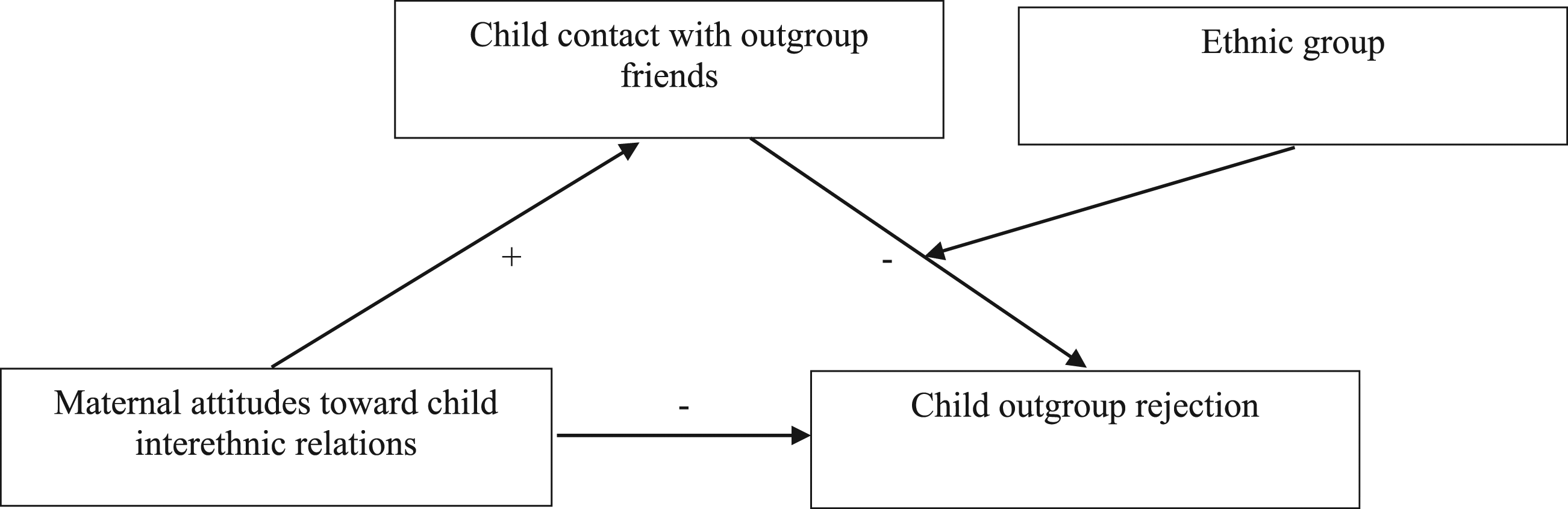
Method
Sample
Families were recruited through events aimed at children or the ethnic target groups, locations for children (like playgrounds), organizations aimed at the ethnic target groups, social media, researchers’ networks, and snowball sampling. Parents were informed that the research focused on how children view diversity in society, and procedures were broadly explained. In the case of face-to-face events, parents’ with children in the target age group were approached to be informed verbally and received a folder with written information about the study. The same folder was used for online recruitment. Parents could leave their contact details during the face-to-face recruitment or at a website if they were interested to participate, and were phoned afterward so that a researcher could explain the procedures of the study and answer questions. Several inclusion criteria were used: (1) the child was between 6 and 10 years old, (2) parents were the biological parent and (3) living with the child, (4) parents did not have severe mental or physical illnesses, (5) the child did not have severe developmental disorders, and (6) families lived in the urban Western region of the Netherlands. In addition, White Dutch parents and their parents had to be born in a North-Western European country. Exceptions were made if grandparents were born in another country during a temporary stay, (grand)parents did not identify with the other cultural background, and their ethnic appearance was White. Turkish-Dutch parents had to be born in Turkey or a North-Western European country if their parents were born in Turkey. Afro-Dutch mothers, or at least one of her parents, had to be born in Surinam (identifying as Afro-Surinamese), Aruba, the Dutch Antilles, Ghana, or Cape Verde. Background of the father was not a specified criterion because romantic relationships with partners of different ethnic backgrounds are common among Afro-Dutch women (Kalmijn & Van Tubergen, 2006).
Sociodemographic variables.
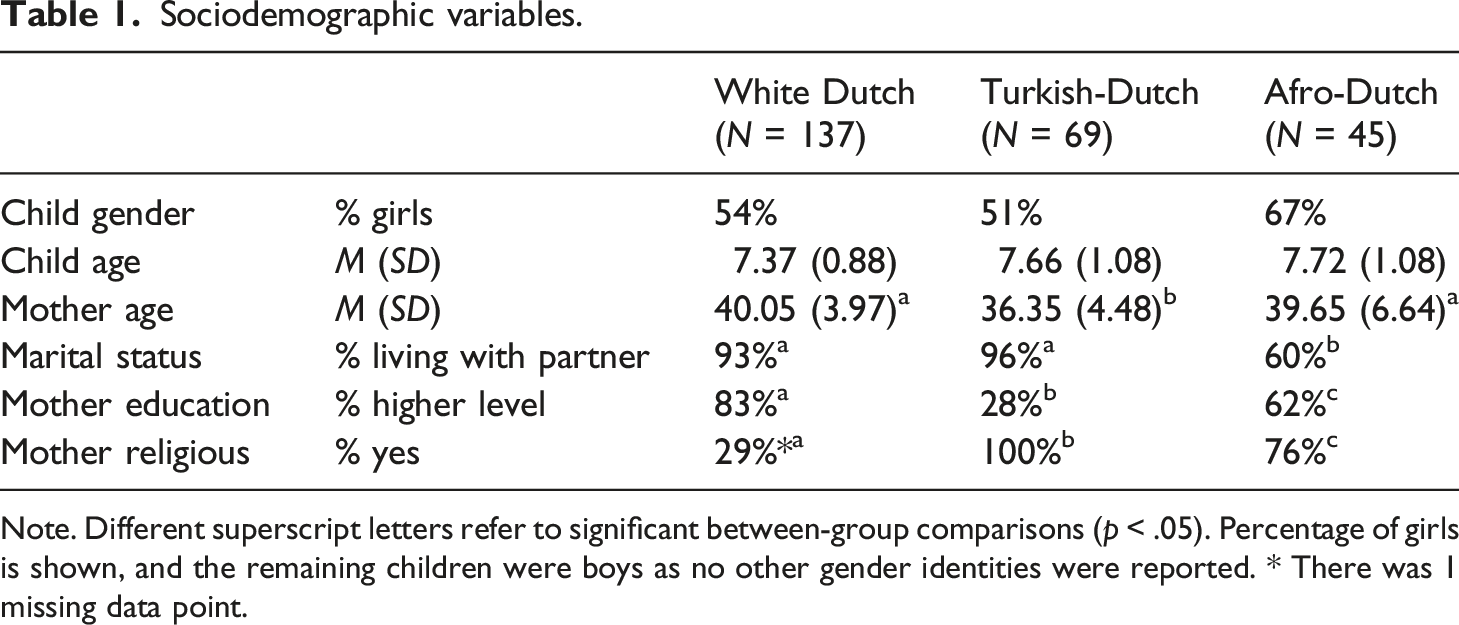
Note. Different superscript letters refer to significant between-group comparisons (p < .05). Percentage of girls is shown, and the remaining children were boys as no other gender identities were reported. * There was 1 missing data point.
Procedure
Families were visited at home by two researchers. After obtaining consent, several standardized parent–child interaction tasks and child tasks were administered. These tasks were videotaped to allow for post-hoc coding. In addition, parent(s) and child performed computer tasks, and the parent(s) answered some questionnaires, leading up to a total duration of 1.5–2 hours, after which the child received a small gift. The week after the visit, parents filled out an online questionnaire, after which they received a gift card. Data collection was part of a larger study, and data relevant to the research questions addressed in the present study are used in this paper. This visit was the first visit in a larger research project consisting of three home visits in total. The study’s procedures and methods were approved by an Ethics evaluation committee.
Measures
Child outgroup rejection: Children completed a social preference task based on work by Levy et al. (2005) with 12 pictures: two boys and two girls of three ethnic groups (White, Black, and Middle Eastern as an ethnic proxy of Muslim). The children in the pictures wore white t-shirts, faced the camera straight, smiled and were placed against white backgrounds. A pilot was conducted among 74 adults (39% male, aged 18 to 53 (M = 26.96, SD = 6.91)) of diverse ethnic backgrounds (31 White Dutch, 23 Turkish-Dutch, and 20 Afro-Dutch). Results revealed that the White children were consistently classified as Dutch (100%), and the children of Middle Eastern descent were consistently classified as Turkish or Moroccan (90–100%), with the exception of 78% for one girl. The Black children were consistently classified as Surinamese or Caribbean (95–100%), with the exception of 34% for one boy. The two pictures that were classified “correctly” less often were replaced with pictures of other children whose ethnicity was consistently classified correctly (95–100%), after 76% of the children had already participated. For the first set of pictures, no differences between the ethnic groups were found in terms of attractiveness, but the Black children were rated cuter (M = 6.16, SD = 1.63) than the Middle Eastern children (M = 5.93, SD = 1.49, t(73) = 2.11, p = .039). In the second set of pictures, the Black children were rated more attractive (M = 6.28, SD = 1.48) than the Middle Eastern children (M = 6.03, SD = 1.62, t(72) = 2.47, p = .016), and the Black (M = 6.02, SD = 1.65) and White children (M = 6.08, SD = 1.45) were rated cuter than the Middle Eastern children (M = 5.69, SD = 1.63, t(73) = 3.06, p = .003, t(73) = −3.84, p < .001).
The 12 pictures were presented simultaneously, and five questions were asked in a fixed order, of which two were formulated negatively: “Who would you not like to sit next to in class? Who would you not like to invite for a play date at your house?”. The child could select one picture or select nobody. Rejection scores reflect the frequency of selecting a child of a specific ethnicity to not sit next to or play with, so that higher scores reflect more rejection (range 0–2). For each participating child, two outgroup rejection scores were computed: Black and Middle Eastern rejection scores for White Dutch children, Black and White rejection scores for Turkish-Dutch children, and White and Middle Eastern rejection scores for Afro-Dutch children. The analyses testing the model (Figure 1) were run including moderation of the picture set on each path. As these moderation effects were not significant, overall results are reported.
Child contact with outgroup friends: During the visit, mothers filled out questionnaires about the interethnic contact of their child. For several ethnic backgrounds (Dutch/Western, Turkish, Moroccan, Surinamese, Antillean, Aruban, and African), mothers indicated whether her child had a friend and how often they played together outside school (1 = almost never, 2 = sometimes, 3 = often). If a child did not have a friend of that background, the frequency of interethnic contact was scored 0 (never). Frequencies of contact with Turkish and Moroccan friends were combined into a Middle Eastern contact score, and frequencies of contact with Surinamese, Antillean, Aruban and African friends were combined into a Black contact score, by selecting the highest score on frequency of contact. Frequencies of contact with Dutch/Western friends formed the White contact score. For each participating child, two outgroup contact scores were computed: Black and Middle Eastern contact scores for White Dutch children, Black and White contact scores for Turkish-Dutch children, and White and Middle Eastern contact scores for Afro-Dutch children. Higher scores indicate more contact (range 0–3). Using mother-reports for this construct ensured that children remained unaware of the emphasis on ethnicity.
Maternal attitudes toward child interethnic relations: Online, mothers filled out a questionnaire concerning their attitudes toward child interethnic relations, based on the “Tolerantiebarometer” (Ipsos Belgium, 2009). Mothers indicated to what extend they would have a problem with their child (1) becoming best friends, (2) dating, (3) marrying, and (4) having children with someone of a different ethnicity, on a 5-point Likert scale ranging from 1 (no problem at all) to 5 (a big problem). White Dutch mothers answered these questions about Black (“with a dark skin”) and Muslim individuals (“with an Islamic background”), Turkish-Dutch mothers about Black and White individuals (“with a Dutch/Western background”), and Afro-Dutch mothers about Muslim and White individuals. Scores were reverse coded and the sum was computed for each outgroup, so that higher scores reflect more positive attitudes toward children’s interethnic relations (range 4–20). The internal consistency was good (for all outgroups and in all subgroups Cronbach’s α was higher than .87).
Sociodemographic variables: Mothers reported on sociodemographic characteristics in the screening, the interview during the visit, and the online questionnaire. Marital status was measured as (1) living with partner or (0) not, and religion was measured as (1) religious or (0) not. Maternal highest level of education was categorized in (0) lower and (1) higher level (a bachelor or master’s degree at higher vocational education or university, or PhD).
Analyses
First, all main variables were examined for outliers (i.e., 3.29 SD below or above the mean; Field, 2005). Four outliers (two on child White rejection and two on maternal attitudes toward child interethnic relations with Black people) were winsorized (i.e., brought closer to the distribution). No multivariate outliers were identified. Due to non-normality (i.e., standardized skewness > 3) of some of the main and sociodemographic variables, the preliminary analyses are run non-parametrically. Preliminary analyses included Kruskal–Wallis tests, Mann–Whitney U-tests, and Wilcoxon signed-rank tests to examine differences in sociodemographic variables and child outgroup rejection and contact between and within ethnic groups. Additionally, bivariate Spearman correlations between main variables and between sociodemographic and dependent variables (maternal attitudes and child outgroup rejection) were performed to examine potential covariates.
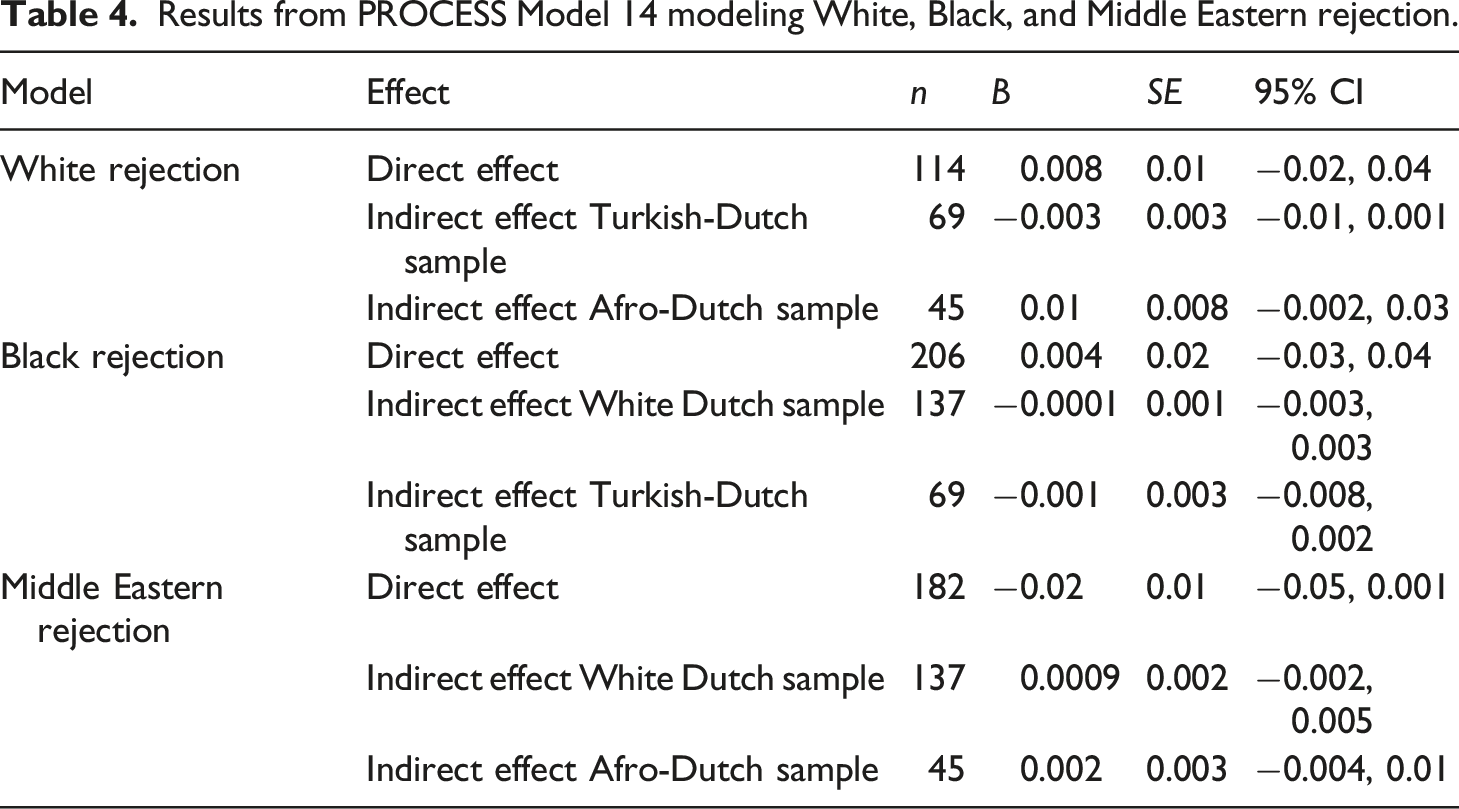
The main analyses start with testing the model presented in Figure 1 (testing H1–4) for the ethnic outgroups separately (i.e., for White rejection, Middle Eastern rejection, and Black rejection with other variables accordingly aimed at the same outgroup). Model 14 from PROCESS is used, a macro designed by Hayes, with a bootstrapping procedure set at 20,000 samplings with replacement that does not assume normality and the confidence interval (CI) set at 95% (Preacher & Hayes, 2004). Results are recognized as significant if the CI does not include zero (Hayes, 2018). Significance of moderated mediation is tested with the index of moderated mediation. In these models, the dependent variable is child outgroup rejection, the independent variable is maternal attitudes toward child interethnic relations, the mediator is child contact with outgroup friends, and the moderator is ethnicity of the family. Because the model is run for outgroup rejection variables separately, data of two participating ethnic groups are included in each model. Next, non-parametric tests (due to non-normality) are conducted to examine between- and within-group differences in maternal attitudes toward child interethnic relations (Mann–Whitney U-tests, testing H5; Wilcoxon signed-rank tests, testing H6–7).
A priori power analyses for testing H1–4 using a Monte Carlo power simulation (Shoemann et al., 2017) revealed that based on moderate expected correlations a sample size of N = 156–180 was needed to detect indirect effects, and an analysis in G*Power 3.1 showed that a total sample of N = 77 was needed to detect the moderation effect with .80 power. Furthermore, calculations using G*power 3.1 (Faul et al., 2007) showed that a total sample of at least N = 27 (paired t-test) and N = 142 (independent t-test with allocation ratio 0.3 reflecting the biggest group difference) was needed to detect medium effects with a power of .80 and α set at 0.05 for tests of H5–7. Our sample is thus sufficient for most of the proposed analyses yet might be somewhat small for the analysis of the model in Figure 1 for the White outgroup (sample of N = 114).
Results
Preliminary analyses
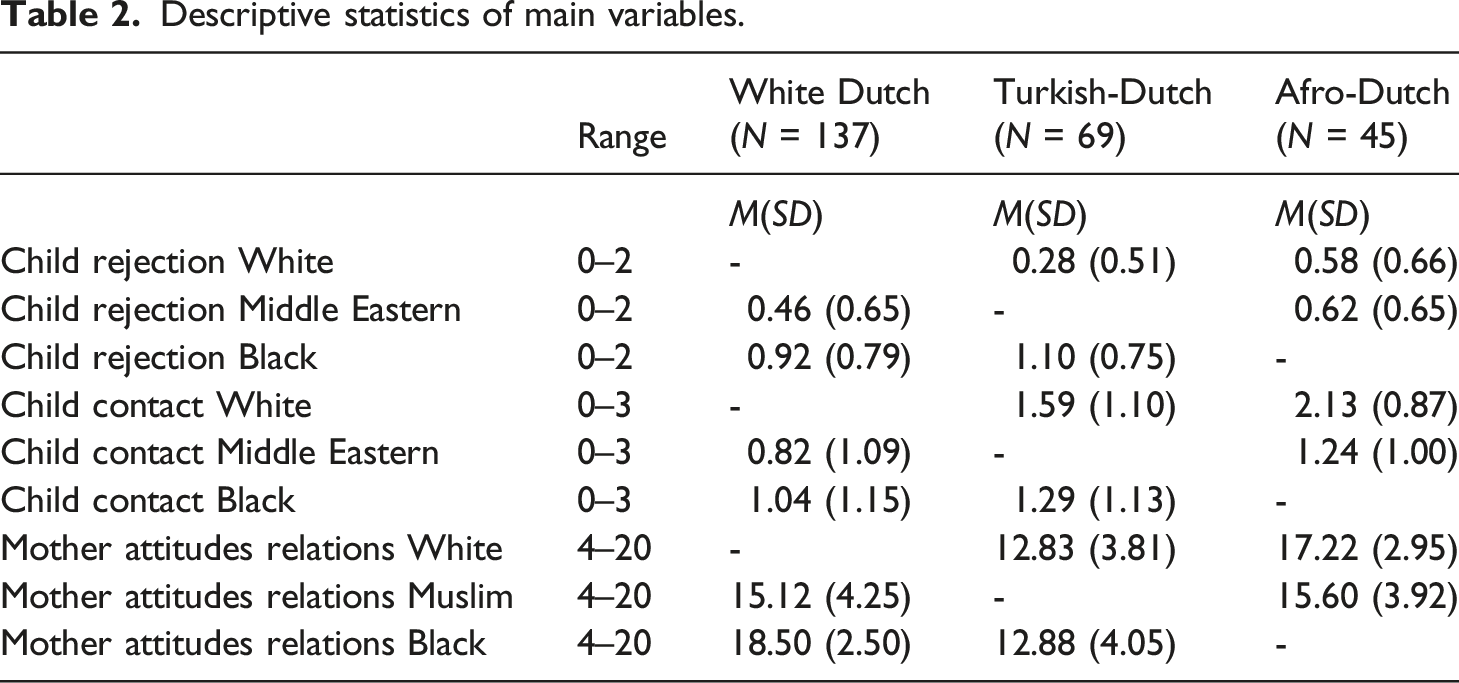
Descriptive statistics of main variables.
Bivariate correlates between main variables.
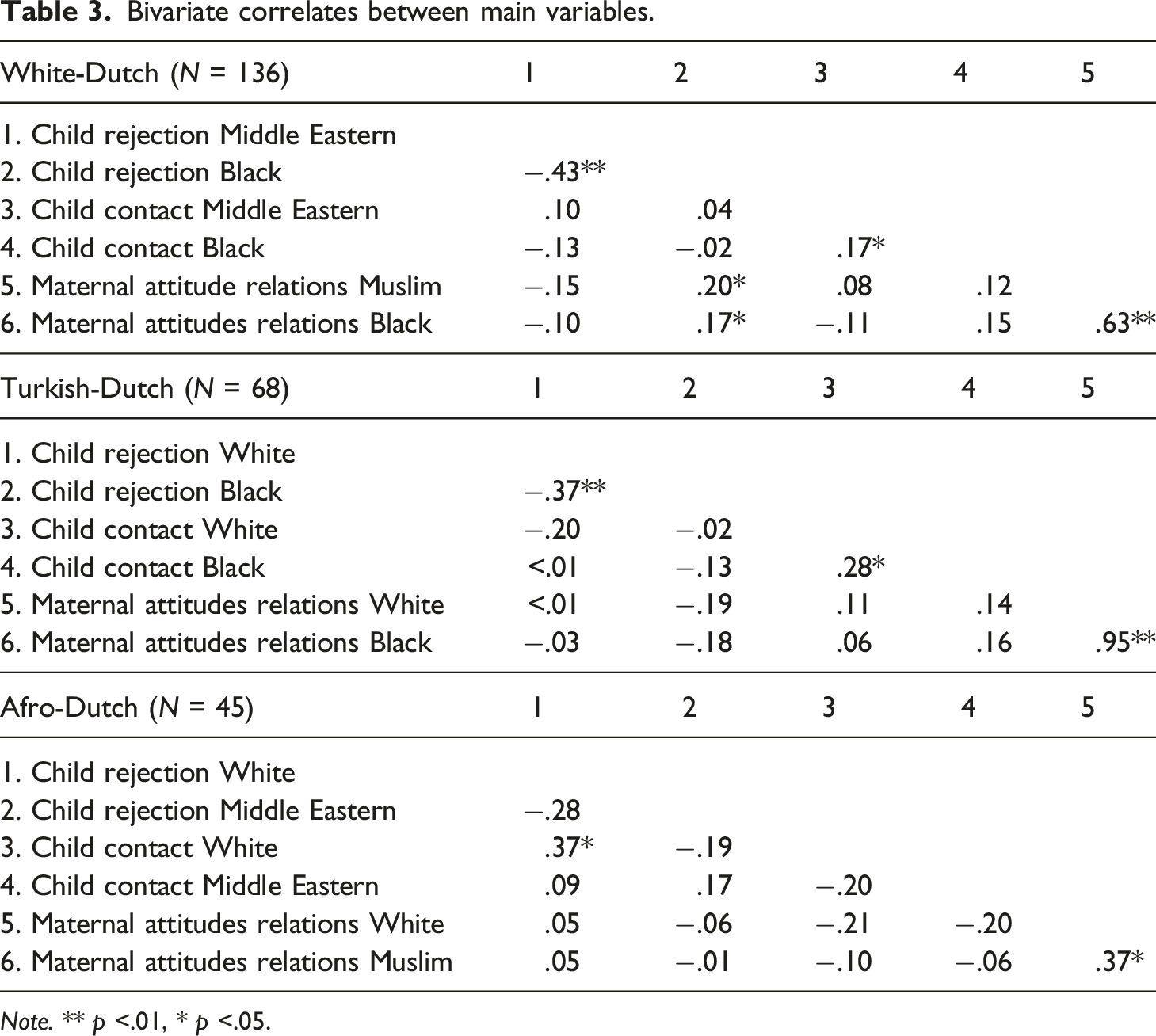
Note. ** p <.01, * p <.05.
Main Analyses
Results from PROCESS Model 14 modeling White, Black, and Middle Eastern rejection.
Maternal attitudes toward child interethnic relations: Between-group differences in maternal attitudes toward child interethnic relations appeared (Figure 2 and Table 2). Turkish-Dutch mothers had less positive attitudes than White Dutch mothers regarding child interethnic relations with Black individuals (H5, U = 1268.5, p < .001, r = −.64) and than Afro-Dutch mothers regarding child interethnic relations with White individuals (H5, U = 554.5, p < .001, r = −.55). White Dutch and Afro-Dutch mothers’ attitudes toward child interethnic relations with Muslims did not differ significantly (U = 2916, p = .581, r = −.04). Within-group differences also emerged: White Dutch (Z = −8.17, p < .001, r = −0.49) and Afro-Dutch mothers (Z = −2.60, p = .009, r = 0.27) were less positive toward child interethnic relations with Muslims than with the other outgroup (H6). There was no difference in attitudes of Turkish-Dutch mothers toward child interethnic relations with the different outgroups (H7, Z = −0.60, p = .551, r = −0.05). Maternal attitudes toward child interethnic relations.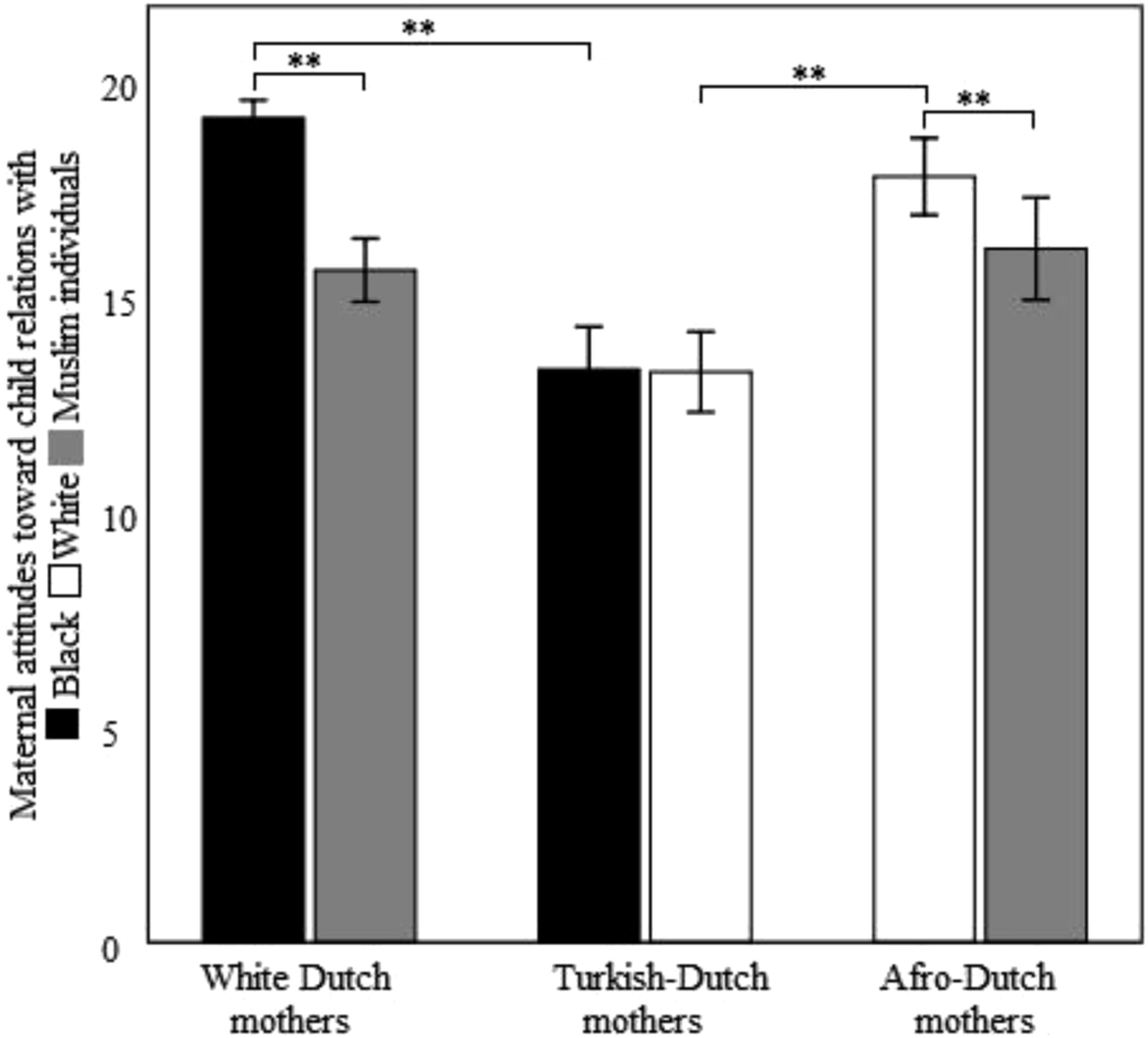
Because the items for maternal attitudes toward child interethnic relations reflect increasing levels of intimacy, we explored patterns for the items separately. In all ethnic groups and in the context of all outgroups, mothers were more positive about child interethnic friendships than about dating, marrying and having children (p s < .001). In addition, mothers were more positive about intergroup dating than marrying (in the context of the Muslim outgroup for White Dutch, p = .021, and Afro-Dutch mothers, p = .011, and in the context of the White outgroup for Turkish-Dutch mothers, p = .012), or having children (in the context of the Black outgroup for Turkish-Dutch mothers, p = .003). No other significant contrasts emerged. We examined group differences again while distinguishing between friendships and romantic relationships (dating, marrying, and having children combined). Between-groups results for friendships and romantic relationships were similar to the overall results. Within-group results were also consistent with overall results in White Dutch and Turkish-Dutch mothers. For Afro-Dutch mothers, attitudes toward child friendships did not differ significantly between the two outgroups (Z = −0.91, p = .366, r = −0.09).
Discussion
The present study examined maternal attitudes toward child interethnic contact and their association to children’s prejudice toward specific outgroups among the dominant (White Dutch) and two underrepresented ethnic groups (Turkish- and Afro-Dutch) in the Netherlands, while testing a mediating pathway through children’s interethnic contact based on intergroup contact theory (Pettigrew & Tropp, 2006). Results indicated that Turkish-Dutch mothers were less positive about their children engaging in interethnic relationships than White Dutch and Afro-Dutch mothers, and that these latter two groups of mothers were specifically less positive about child relations with Muslims. These maternal attitudes, however, were not related to actual child interethnic contact or child interethnic prejudice. Results also did not support intergroup contact theory, as child contact and prejudice were either not or positively related.
Contrary to expectations, results did not demonstrate significant associations between maternal attitudes toward child interethnic relations and child outgroup prejudice. Although meta-analytical results indicate that parental and child intergroup attitudes are moderately related (Degner & Dalege, 2013), methodological moderators might explain the non-significant results. For example, associations are weaker when parental attitudes are reported by parents, and when measures are not very similar (Degner & Dalege, 2013). The fact that mothers reported their own attitudes is also a strong aspect as children’s attitudes are less likely influenced by a desire to be similar to mothers, in order to reduce cognitive dissonance (Carol, 2014). Previous work with similar measures did find an association between generalized parental attitudes toward child interethnic relations and child outgroup prejudice in White Dutch families (de Bruijn et al., 2020). Parent–child similarity seems more pronounced for generalized or common components of prejudice as it relates to similarity in broader ideological values like right-wing authoritarianism and social dominance orientation (Meeusen & Dhont, 2015). More general rather than specific forms of parental interethnic attitudes may also be more strongly related to specific child prejudice. Future research needs to examine both common and specific components of prejudice among families with young children of various backgrounds.
Moreover, the present study unexpectedly did not find associations between maternal attitudes toward child interethnic contact and child actual contact with outgroup friends, suggesting that mothers did not turn their attitudes into behavioral strategies, or that these strategies were not effective. Mean levels of maternal attitudes were above the midpoint, indicating that on average mothers did not find children’s interethnic relations problematic. As the mean scores reflect the reserved degree to which mothers would have problems, positive scores however do not necessarily reflect how important mothers find interethnic relations for their children. Therefore, mothers might not have felt the urge to restrict nor promote children’s interethnic contact. In addition, parental messages tend to be more direct about dating than friendships (Edmonds & Killen, 2009). These messages might thus be more salient and influential but are less applicable to children in the age group of the present study. Future research should ideally include a measure of maternal attitudes tapping into multiple facets of interethnic friendships and thereby focusing on the current social developmental state of their children in more detail, although exploratory analyses including maternal attitudes toward friendships only revealed similar results. Furthermore, factors moderating the association between maternal attitudes toward child interethnic relations and child contact with outgroup friends may have been overlooked. For example, parents may act upon their attitudes more strongly if there are more opportunities for interethnic contact. Additionally, children may be more or less compliant to parental rules based on their relationship quality (Kok et al., 2013), or their temperament (Braungart-Rieker et al., 1997). Therefore, the role of quality of the parent–child relationship and child temperament should be included in future research on the role of mothers in intergroup contact effects among children. Although we did not expect (and therefore not test) any moderating effects of ethnicity on the size and direction of the association between maternal attitudes toward child interethnic relations and child contact, an interesting avenue in future research would be to more closely observe whether different parent or child behaviors and underlying mechanisms are present in families with different ethnic backgrounds.
Child contact with outgroup friends was furthermore expected to be negatively related to child outgroup rejection, based on intergroup contact effects (Pettigrew & Tropp, 2006), strongest for White Dutch and weakest for Turkish-Dutch children. Support for intergroup contact theory, however, was not found (i.e., not significant for Black and Middle Eastern rejection and opposing for White rejection), contradicting the meta-analytic finding that intergroup contact has a prejudice-reducing effect in children (Tropp & Prenovost, 2008). This may be due to the use of maternal rather than child reports (e.g., Feddes et al., 2009; Turner et al., 2007), possibly evoking social desirability and hindering the detection of associations with other constructs. A strength of the measure is that it reflects behavioral engagement with friends, which is more strongly related to attitudes than other friendship measures (Davies et al., 2011). However, possibly different factors of interethnic contact play a role among different ethnic groups. Among Hispanic students in the United States, for example, school ethnic composition seems equally important as interethnic friendships (Carlson et al., 2003). Moreover, recent conflicts with friends, which are as frequent as with other children (Hartup et al., 1988), are not captured, and negative contact can have negative effects on interethnic attitudes (Barlow et al., 2012). This could possibly explain why contact with White friends was related to more White rejection among Afro-Dutch children. Although the direction of this association is unexpected, it partly supports the expected moderation of ethnicity: stronger effects among higher status groups, that is, stronger for Afro- than Turkish-Dutch children based on the hierarchy according to the dominant ethnic group (Schalk-Soekar et al., 2004).
Between-group differences confirmed the hypothesis that Turkish-Dutch mothers were less positive about child interethnic relations than White Dutch and Afro-Dutch mothers. These results are in line with earlier patterns among White Dutch and Turkish-Dutch parents (Munniksma et al., 2012), and extend these to attitudes toward a different outgroup (Black people). They are also in line with suggested differences between Afro- and Turkish-Dutch participants (Martinović, 2013) and extend these to mothers of young children. However, also in the Turkish-Dutch group, attitudes on average were not particularly negative as scores were just above midpoint. Factors such as educational qualification and religion are related to levels of individuals’ own intra-ethnic marriage (Van Tubergen & Maas, 2007), and religion is an important factor in parental acceptance of children’s interethnic relations (Munniksma et al., 2012). Although group differences in the present study remained significant after including sociodemographic variables such as maternal education and religion, we only asked participants whether they were religious, and not how important religion is to them. It can therefore not be ruled out that religious devotion still plays a role.
In line with expectations, White Dutch and Afro-Dutch mothers had more negative attitudes toward child interethnic relations with Muslims than with the other outgroup. These results reflect patterns of perceived social distance (e.g., Schalk-Soekar et al., 2004; Van Osch & Breugelmans, 2012) and are not surprising given the negative discourse on Islam in the Netherlands (Van Meeteren & Van Oostendorp, 2019). However, as mean levels were relatively positive (i.e., around 15 in a range from 4 to 20), mothers did not strongly object to child interethnic relations. Furthermore, among Afro-Dutch mothers, this difference in attitudes toward the two outgroups was not found for friendships. Perceived intergroup differences (Van Osch & Breugelmans, 2012) suggested that Turkish-Dutch mothers would be more positive toward child interethnic relations with the White than Black outgroup, but no difference emerged. In previous work, measures explicitly described the background of Black outgroups (“Surinamese” and “Antillean”; Van Osch & Breugelmans, 2012), whereas the present study measured maternal attitudes toward the Black outgroup as a whole. Although only a small percentage of Surinamese-Dutch people identifies as Muslim (9%), this identification is very common among Somali-Dutch people (95%, Huijnk, 2018) who generally are also Black. More detailed measures of attitudes toward specific Black subpopulations might reveal deviating patterns and should thus be included in future research. Similarly, the present study referred to people with a Dutch/Western background as a proxy for the White outgroup. Future research should examine whether other linguistic choices to describe groups alter results. Taken together, these results show that mothers on average did not object to child interethnic relations, but that attitudes on relations with Muslims and of Turkish-Dutch mothers were least favorable. Improving these attitudes could decrease social distances and increase opportunities for interethnic contact among mothers themselves and thereby benefit cohesion in society.
The present study has some limitations. Firstly, the pilot revealed some differences in attractiveness and cuteness of the children in the pictures. However, the children that were rated most favorably in the pilot were actually rejected most often by participating children, suggesting that attractiveness and cuteness do not explain their responses. Secondly, the number of participating fathers was too small to include them. Including both maternal and paternal attitudes would provide a more complete picture, although for child attitudes about ethnic outgroups specifically, mothers seem most important (Castelli et al., 2007; O’Bryan et al., 2004). Thirdly, the correlational design of the present study inhibits inferences about causality. Moreover, the sample sizes for some of the analyses, specifically those testing the hypothesized model, were relatively small, reducing the power to find results. Therefore, findings should be interpreted with care. Specifically, the sample sizes may have hindered establishing small effect sizes in the present study. Lastly, sample characteristics like the high level of maternal education hinder the generalizability of results, and some demographic information (i.e., gender identity, sexual orientation, and disability information) is missing. The recruitment method additionally might have attracted mothers with relatively positive attitudes toward the topic of ethnic diversity, possibly painting an overly optimistic picture.
In conclusion, more research on the forms, conditions and specific contexts in which intergroup contact positively impacts children’s interethnic attitudes is needed, in order to further examine the role that parents can have in this process. Specific attention should be paid to processes underlying the contact effects. In the present study, maternal attitudes toward child interethnic relations on average were not very negative. However, the results suggest that specifically ethnic groups that (predominantly) identify as Muslim are at higher risk of being isolated from interethnic contact. In light of general trends of Islamophobia in the Netherlands and Europe (Abdelkader, 2017), these results stress the need for further research on how to work toward a more inclusive society for all.
Footnotes
Author’s Note
This work is part of the research program “The parenting origin of prejudice” with project number 453-16-008, which is financed by the Dutch Research Council (NWO).
Declaration of conflicting interests
The author(s) declared no potential conflicts of interest with respect to the research, authorship, and/or publication of this article.
Funding
The author(s) disclosed receipt of the following financial support for the research, authorship, and/or publication of this article: This study was supported by the Nederlandse Organisatie voor Wetenschappelijk Onderzoek [grant number 453-16-008].
Open research statement
As part of IARR’s encouragement of open research practices, the authors have provided the following information: This research was not pre-registered.
The data used in the research are available upon reasonable request. The data can be obtained by emailing
