




Abstract
Individuals who score high on the dark triad of socially aversive traits—narcissism, psychopathy, and Machiavellianism—are prone to engage in short-term, non-committal romantic encounters. However, little is known about the transferability of this behavior to these individuals’ intimate interactions with media characters (i.e., romantic parasocial interactions). To close this research gap, we conducted a two-level-between-subjects experiment with young adults in Germany (N = 116). Our results reveal that, although individuals who score high on the dark triad traits are particularly prone to engage in the specific sub-dimensions emotional love and responses to the media character of romantic parasocial interactions, they are not particularly prone to experience physical love for the media character. Moreover, our results show an alternative negative effect operating through an enhanced tendency to perceive a narrative as “corny” among those with Machiavellian and psychopathic personalities. To underline the similarity between parasocial and real-life romantic interactions, we further investigated the relationship between romantic parasocial interactions and an individual’s perceived relatedness gratification. The results suggest that interacting with and responding to the media character enhance perceived relatedness gratification, but that the romantic connotation of the parasocial interaction is not crucial for the feeling of relatedness during media reception.
Keywords
Egoistic, manipulative, and emotionally cold: This is an exemplary scientific description of a person who scores high on the dark triad of personality traits—narcissism, psychopathy, and Machiavellianism (Furnham et al., 2013; Jones & Paulhus, 2014; Paulhus & Williams, 2002). Although these traits might be beneficial for a professional career (e.g., Spurk et al., 2016), they often lead to difficulties in an individual’s personal life. People who score high on one or more of these traits often struggle with interpersonal interactions and relationships and, in particular, lack high-quality romantic relationships, as they prefer to stay uncommitted (Foster et al., 2006; Jones & Paulhus, 2011). In other words, narcissistic, psychopathic, and Machiavellian personalities use a short-term mating strategy, which implies having more romantic partners rather than concentrating on and committing to just one partner (Jonason et al., 2011).
To summarize briefly, individuals with high scores on narcissism, psychopathy, and Machiavellianism are relatively open to engaging in non-committal romantic encounters with social others. These social others can be known through friends, work, or online dating, for example. In addition to these real-life encounters, individuals may turn to media and form what are referred to as romantic parasocial attachments to media characters (Erickson & Dal Cin, 2018; Tukachinsky, 2010). In many ways, romantic parasocial attachments are similar to real-life interactions and relationships (Horton & Wohl, 1956; Tukachinsky & Stever, 2019). Given this similarity, previous research has suggested that individuals mirror their real-life social behavior in media contexts (e.g., Tsao, 1996). With regard to individuals with narcissistic, Machiavellian, and psychopathic personalities, this means that they should be prone to engage relatively actively in non-committal romantic parasocial attachments, just as they apply a short-term mating strategy and have a strong preference for non-committal romantic encounters in real life (e.g., Jonason et al., 2011).
Here we present our arguments on the role of the dark triad traits in romantic interactions between media users and media characters. In doing so, we further investigate how these romantic interactions with media characters can provide a form of perceived relatedness gratification for media users. After explaining the theoretical background, we test our assumptions by conducting a laboratory experiment. We then conclude by discussing the implications and limitations of our findings and offering suggestions for future studies.
Theoretical background
The dark triad of personality traits
Although they were developed on the basis of distinct theoretical roots and differ in their specific nature, the three socially aversive traits of narcissism, psychopathy, and Machiavellianism involve similar characteristics of callous, manipulative, and exploitative behavior toward others (Jones & Paulhus, 2011, 2014). Individuals with high scores on one or more of these traits are indifferent to the harm they cause to their social surroundings while pursuing their goals. Because of this overlap, Paulhus and Williams (2002) coined the term “dark triad of personality” to refer to these three traits.
Narcissism, psychopathy, and Machiavellianism—Facets of the dark triad
In this section, we introduce narcissism, psychopathy, and Machiavellianism separately and point out the similarities and differences among the three traits.
Narcissism
Originally introduced in Greek mythology, the term “narcissism” represented self-love and hubris. Narcissism has long been viewed as a rather pathological phenomenon (Kernberg, 1975). Most studies investigating narcissism in subclinical samples have defined the concept through characteristics such as egocentrism, superiority, entitlement, dominance, and grandiosity (e.g., Corry et al., 2008). From this perspective, individuals with a high score on narcissism see themselves as superior to others and even as gifted or remarkable. Accordingly, they are prone to overestimate themselves, devalue others, act dominantly toward others, actively engage in self-presentation, and they usually possess high self-esteem (e.g., Jones & Paulhus, 2011). However, if this self-esteem is threatened, such individuals may react aggressively and manipulatively toward others (e.g., Wright et al., 2010).
Psychopathy
The modern understanding of psychopathy is based largely on Cleckley’s (1976) description of the term, which characterized psychopaths as mainly exploitative, impulsive, and incapable of feeling empathy toward others. Individuals with high scores on psychopathy behave callously toward others—a quality they share with those with narcissistic and Machiavellian personalities. However, unlike narcissism and Machiavellianism, psychopathy is correlated with impulsivity and, in turn, a lack of self-control (Hall & Benning, 2006). Consequently, individuals scoring high on psychopathy act callously toward others in the short term with no strategic plan or long-term goal in mind. One example of this is the attitude of psychopaths that payback should be quick and nasty (Jones & Paulhus, 2014). Although such behavior might be harmful to these individuals in the long run, they prefer to take immediate revenge on those they feel have caused them harm.
Machiavellianism
The construct of Machiavellianism is named after the 16th-century political strategist Niccolò Machiavelli and, even today, our understanding of the construct is based mainly on his writings (Jones & Paulhus, 2011). Reflecting on this source, it is unsurprising that Christie and Geis (1970) associated the Machiavellian personality with a cynical worldview, a lack of morality, manipulation, planning, and reputation building. Unlike psychopaths, Machiavellians focus on long-term goals and are therefore able to control their impulsive behavior. Whereas psychopaths might, for example, alienate friends because of their impulsiveness, Machiavellians control such impulsive behavior and focus on building alliances that they might benefit from in the future (Jones & Paulhus, 2011).
The dark triad—Implications for intimate relationships
The dark triad traits influence the development of intimate relationships in a complex way. In the long run, all the dark triad traits are associated with callousness and manipulative behavior (Jones & Paulhus, 2011). Because they strive toward goals that benefit themselves without caring about others, individuals who score high on the dark triad are often seen as toxic and antagonistic in long-term intimate relationships (Rauthmann, 2012). Furthermore, people with narcissistic, psychopathic, and Machiavellian personalities tend to lower their own standards by seeking out romantic partners who are volatile and unreliable rather than kind, resulting in a short-term mating strategy (Jonason et al., 2011). In line with this, narcissism, Machiavellianism, and psychopathy are associated with dating several individuals at the same time and with higher levels of infidelity (e.g., Brewer et al., 2015). The consequent lack of high-quality romantic relationships is critical, as healthy intimate relationships are generally associated positively with aspects of subjective well-being such as positive affect, happiness, and life satisfaction (Pinquart & Sörensen, 2000), particularly for intimate romantic relationships (e.g., Demir, 2010).
Scoring high on the dark triad traits also has advantages for individuals. In the beginning of a romantic relationship, for example, scoring high on one or more of the socially aversive traits can have a positive effect on an individual’s attractiveness (e.g., Holtzman & Strube, 2010). Moreover, following the abovementioned short-term mating strategy (e.g., Jonason & Kavanagh, 2010) helps people to avoid entangling commitments in relationships in which they do not want to engage (e.g., Jonason & Buss, 2012).
The dark triad and romantic parasocial interactions
It is only very recently that the role of the dark triad traits has been investigated in the context of parasocial phenomena. Previous research has found evidence of a positive link between the dark triad traits and parasocial phenomena (Brodie & Ingram, 2021; Greenwood et al., 2021), but no existing work has focused on the romantic nature of parasocial phenomena. In the following section, we introduce the concept of parasocial phenomena in general and romantic parasocial interactions (romantic PSIs) in particular, and further lay out our argumentation on the relation between the dark triad traits and romantic PSIs, as well as the influence of romantic PSIs on media users’ relatedness gratification.
From parasocial phenomena to romantic parasocial interactions
Initially introduced by Horton and Wohl (1956), the term parasocial interaction describes a mediated, one-sided form of social interaction between a media character and a media user. Horton and Wohl considered PSIs to be quite similar to face-to-face interactions between two real individuals, except that PSIs lack mutuality, whereas real social interactions are marked by bi-directional communication (e.g., Schramm, 2008). As there is not only interaction during media consumption (e.g., reading a book or watching a movie) but also bonding between media characters and the audience over the longer term, the concept of PSIs was extended to parasocial relationships (PSRs) (Tukachinsky & Stever, 2019). A PSR may continue after media consumption and lead to a cross-situational relationship between a media character and a media user, whereas a PSI is limited to situational interaction between a media character and a media user and may therefore occur only during media consumption (Schramm, 2008).
To date, most studies of PSIs and PSRs have investigated amicable forms of parasocial phenomena such as friendship-like PSRs with celebrities (Liebers & Schramm, 2019). However, real social interactions and relationships generally involve more than just amicable aspects. Consequently, the scope of recent research has been expanded to include romantic aspects of parasocial phenomena (e.g., Adam & Sizemore, 2013; Erickson & Dal Cin, 2018; Liebers & Schramm, 2017). Although amicable parasocial phenomena comprise primarily platonic feelings such as support and commitment, romantic parasocial attachments manifest in emotional and physical love for a media character (Tukachinsky, 2010; Tukachinsky & Dorros, 2018).
Combining the well-established distinction between PSIs and PSRs with the current definition of amicable versus romantic parasocial phenomena, we differentiate between romantic PSIs and romantic PSRs. Romantic PSIs are interactions between a media user and a media character that occur during media consumption and that are marked by emotional and physical love for the media character. Moreover, romantic PSIs entail a direct form of responses to and interaction with a media character during a specific media reception situation (similar to face-to-face interactions). Romantic PSRs are long-term, cross-situational relationships with media characters that comprise feelings of emotional and physical love but lack direct responses and reactions directed toward the media character.
Intimacy despite distance: The dark triad, “corniness,” and romantic parasocial interactions
Mainly based on the Panksepp–Jakobson Hypothesis, which argues that evolution has not had enough time to adapt to the existence of media, leading to ancient emotional reactions to media content that are similar to real-life reactions (Panksepp, 1998), researchers in the field of parasocial phenomena have assumed that individuals tend to respond to media characters in a similar way to how they respond to real people in their actual environment (Tukachinsky et al., 2020). In line with this assumption, previous research on parasocial phenomena has revealed that the predictors of parasocial phenomena resemble the predictors of real-life social interactions and relationships (e.g., Liebers & Schramm, 2017). Thus, individuals who are prone to seek out immediate romantic encounters with social others in real life should tend to engage in romantic PSIs with media characters as well. Hence, because of the tendency of those with narcissistic, Machiavellian, and psychopathic personalities to employ a short-term mating strategy, higher scores on one or more of the dark triad traits should correspond to a greater likelihood of developing an intense romantic PSI with a media character.
This assumption implies that higher scores on the dark triad are associated with enhanced media involvement in the form of romantic PSIs. However, recent research by Appel et al. (2019) suggests instead that individuals with narcissistic, psychopathic, and Machiavellian personalities distance themselves from emotional involvement with media content. The authors label the distance taken from the media content as “perceived corniness,” which they define as “a concept akin to reactance but specific to stories in which the emotion-evoking aspect of the story is dismissed as contrived and artificial” (Appel et al., 2019, p. 776). Eudaimonic narratives, a media type that is particularly emotionally involving, can be described as narratives that grapple with issues pertaining to the purpose of life, the human condition, and human virtue. One example is a Melodrama. Hence, eudaimonic narratives deal with strong affective processes such as love, loss, and the transience of life itself (Slater et al., 2018). Appel et al. (2019) assumed that individuals with high scores on narcissism, psychopathy, or Machiavellianism are particularly prone to perceiving eudaimonic narratives as corny, as these individuals try to minimize the emotions they experience that are in conflict with their self-system. As a consequence, narcissistic, Machiavellian, and psychopathic individuals should be particularly inclined to perceive a eudaimonic narrative (compared with a non-eudaimonic narrative) as corny (Appel et al., 2019). Higher perceptions of corniness can be seen as a way of maintaining distance from the narrative (Appel et al., 2019). Because media characters are a substantial part of narratives, especially when the storyline is emotionally involving, we assume that the distance relates not only to the narrative as a whole but also to its characters. Accordingly, perceived corniness should decrease the intensity of romantic PSIs. Following this reasoning, we assume two parallel mechanisms: 1) an enhancement of romantic PSIs in individuals who score high on narcissism, psychopathy, and Machiavellianism because of their tendency to engage in non-committal romantic encounters in real life; but 2) greater perceived corniness among these individuals, particularly with eudaimonic narratives, which should decrease romantic PSIs.
To summarize briefly, we assume that narcissism, psychopathy, and Machiavellianism come with an enhanced motivation to seek out romantic encounters with media characters, leading to increased romantic PSIs. However, if a narrative becomes too emotionally involving, individuals with narcissistic, psychopathic, and Machiavellian personalities might be inhibited in their development of romantic PSIs because they distance themselves from the narrative by evaluating it as corny.
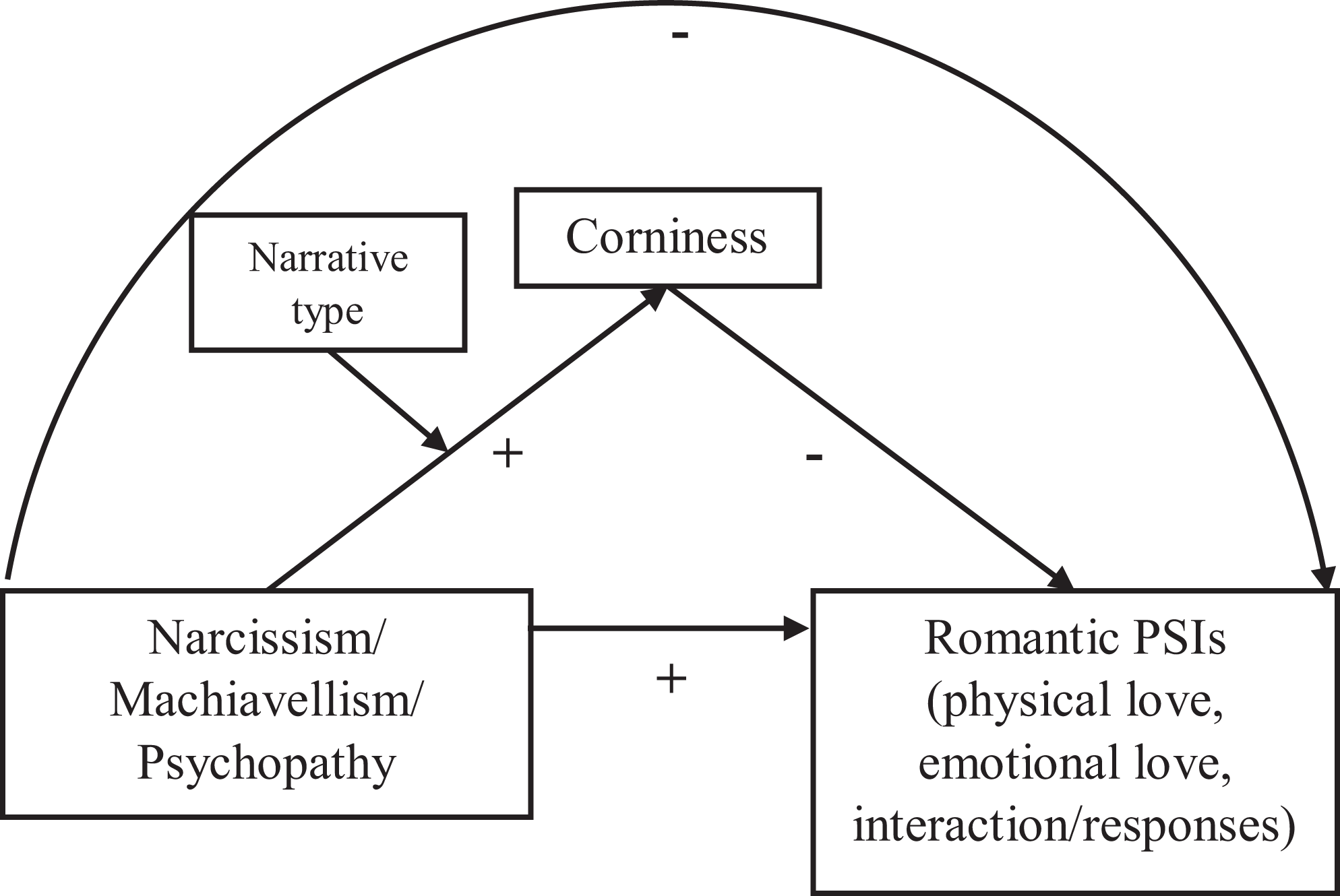
Predicted influence of the dark triad traits on romantic PSIs with media characters.
For a better understanding, the hypotheses regarding the effects of the dark triad traits on romantic PSIs are summarized in Figure 1.
According to our hypotheses, individuals who score high on a dark triad trait should be particularly prone to seeking out romantic encounters with media characters in the form of romantic PSIs. However, romantic PSIs are a complex construct consisting of emotional and physical love, as well as direct responses directed toward a media character. Although all three sub-dimensions are essential parts of romantic interactions and should therefore be triggered by an individual’s tendency to engage in romantic interactions, it cannot be ruled out that the sub-dimensions might operate at least slightly differently. Moreover, previous research on romantic PSRs has found differences in the effects of emotional and physical love on individuals (Tukachinsky & Dorros, 2018). With the aim of creating a nuanced understanding of the effect of the dark triad traits on the development of romantic PSIs, we examine the differences among the sub-dimensions of romantic PSIs, guided by the following open research question:
A pleasant extension? Parasocial phenomena and perceived relatedness gratification
Assuming that PSIs and PSRs are similar to real-life interactions and relationships, a considerable number of studies have focused on the question of whether parasocial phenomena can be seen as a kind of functional alternative to or extension of real-life interactions and relationships (Liebers & Schramm, 2019). To summarize briefly, the majority of the results of these studies suggest that parasocial phenomena do not compensate directly for loneliness and other forms of social deficit, as demonstrated by a recent meta-analysis by Tukachinsky et al. (2020). However, these authors have found that motivations for social companionship and social interaction are positively linked to parasocial phenomena, underscoring the similarity between social and parasocial interactions and relationships. A recent study by Bond (2021) adds further support for this assumption, finding that individuals who reduced their face-to-face engagement with friends during the COVID-19 pandemic formed particularly intense PSRs. Accordingly, although parasocial phenomena do not necessarily function as a substitute for real-life interactions and relationships, they may nevertheless generate a feeling of social connection resembling an extension of one’s real-life social environment (Tsao, 1996). In line with this idea, previous studies in entertainment research have shown that, to a certain extent, media exposure can enhance media users’ feelings of relatedness as a form of entertainment gratification (Wirth et al., 2012). On the basis of these findings and the similarity between parasocial phenomena and real-life interactions and relationships (Tukachinsky & Stever, 2019), expecting that having a romantic interaction with a media character during media exposure will enhance this media effect, we propose the following hypothesis:
Again, all three sub-dimensions of romantic PSIs are crucial parts of romantic interactions and should, therefore, be able to enhance an individual’s perceived relatedness gratification. However, as mentioned above, previous findings by Tukachinsky and Dorros (2018) suggest differences between the sub-dimensions in the context of romantic PSRs, and it cannot be ruled that the sub-dimensions of romantic PSIs might also vary in their impact. Hence, a second open research question is investigated:
Method
Design and procedure
To test our hypotheses, we conducted a laboratory experiment with a two-level-between-subjects design at the University of Wuerzburg, Germany. We manipulated the meaningfulness of a movie between the experimental groups by using a movie with either a eudaimonic or non-eudaimonic narrative (for more details on the stimuli, see the following subsection). The laboratory was designed to allow up to eight participants to watch the movie together, similar to viewing a film in a cinema. This laboratory setting was used to create an externally valid situation during the experiment, but it also ensured that internal validity remained high by keeping the variables (such as the incidence of light, volume, and screen size) constant. Each movie session was randomly assigned to one of the experimental conditions. We decided that the participants should watch an entire movie instead of only specific scenes to simulate a natural setting and enable the steady development of all three sub-dimensions of romantic PSIs. After watching the movie, the participants were asked to indicate the protagonist to whom they felt a sexual and romantic attraction. The participants were then asked about their romantic PSI with their chosen character. In addition, the participants were asked to rate the perceived meaningfulness and corniness of the narrative and their perceived relatedness gratification. At the end of the session, the participants answered questions on the dark triad of personality traits and provided their demographic information, including their sexual orientation.
Materials
Following the procedure used by Appel et al. (2019), the movies were defined as having a eudaimonic narrative if they grappled with issues pertaining to the purpose of life, the human condition, or human virtue. To achieve greater generalizability, we used six separate movies (three eudaimonic and three non-eudaimonic), instead of comparing only one of each type. Further, because we wanted professional-looking stimuli with high external validity, we used existing movies instead of creating our own. The movies had to feature two protagonists—one female and one male—to ensure that the majority of the participants, who had different genders and sexual orientations, had a potential character to interact with in a parasocial romantic way. To foster the development of all three sub-dimensions of romantic PSIs, we selected movies with likable and physically attractive protagonists. Moreover, all selected movies involved a romantic plot to make it easier for the participants to imagine a romantic interaction with the protagonists. We initially preselected 12 potential movies. Then, we conducted an online experiment with a within-subjects design using a separate sample of participants (N = 33; age: range = 18–51, Mage = 23.12, SDage = 7.18, median = 21 years; gender: 69.70% female, 30.30% male). The participants were asked to watch the trailer of each movie and then rate the movie’s focus on issues associated with eudaimonic concerns. Using our definitions of eudaimonic and non-eudaimonic narratives, and again following Appel et al. (2019), we asked the participants to rate the perceived meaningfulness of the narratives on a 5-point Likert scale ranging from 1 (strongly disagree) to 5 (strongly agree), using the following items: “The movie grapples with issues pertaining to purpose in life” (Item 1), “The movie addresses human existence and the human condition” (Item 2), and “The movie attends to moral values and human virtues” (Item 3). These 3 items were combined into an index to reflect the meaningfulness of each movie (Cronbach’s >.67; M = 3.24, SD = 1.01). The three most meaningful movies according to the pretest were Now is Good (M = 4.35, SD = 0.85), Love and Honor (M = 3.92, SD = 1.00), and Love and Other Drugs (M = 3.83, SD = 1.00). The three least meaningful movies according to the pretest were What Happens in Vegas (M = 2.49, SD = 1.04), The Proposal (M = 2.40, SD = 1.07), and The Ugly Truth (M = 2.29, SD = 1.00). On the basis of these ratings, in our main study, the participants in the experimental condition with a eudaimonic narrative watched Now is Good, Love and Honor, or Love and Other Drugs, and the participants in the experimental condition with a non-eudaimonic narrative watched What Happens in Vegas, The Proposal, or The Ugly Truth.
Participants
In total, 132 people, primarily students who received course credit for their participation, were recruited and took part in our study. After excluding participants with incomplete data, the sample consisted of 124 participants. Because we were particularly interested in romantic PSIs, we needed to ensure that there was at least a potential romantic attraction between a given participant and the chosen media character. Thus, we also removed from our sample those participants who indicated a sexual/romantic attraction to a protagonist who did not match their sexual orientation (e.g., if a woman indicated that she was straight but her chosen character was female, she was removed from the sample). This resulted in a final sample of 116 participants. All participants lived in Germany and were fluent in German. The majority of the participants (62.07%) were female (37.93% male), and the mean age of the final sample was 20.81 (SD = 2.54) years, with a range of 18 to 38 years (median = 20 years). Most of the participants (63.79%) described their relationship status as single. Others (36.21%) indicated to be in a romantic relationship with or without marriage. With regard to sexual orientation, the majority of participants identified as straight (93.10%, gay: 2.59%, bisexual: 4.31%). Due to our recruiting at a large university in Germany and as described above, nearly all of our participants were students (96.55%). In contrast, only 3.45% were nonstudent employees. The appropriate tests indicated no differences between the two experimental groups in the distributions of gender (χ2(1, N=116) = 0.59, p = .444), age (t(114) = 0.44, p = .663), relationship status (χ2(1, N=116) = 1.02, p = .599), psychopathy (t(114) = 0.35, p = .727), or Machiavellianism (t(114) = 1.01, p = .316). However, participants in the eudaimonic narrative condition scored higher on narcissism compared with those in the non-eudaimonic narrative condition (t(114) = 2.35, p = .021).
Measurement
All ratings were made on a 5-point Likert scale ranging from 1 (strongly disagree) to 5 (strongly agree).
Dark triad of personality
To assess the participants’ trait narcissism, trait Machiavellianism, and trait psychopathy (the dark triad of personality), we used Jones and Paulhus’ (2014) well-established Short Dark Triad Scale. The scale measures all three components of the dark triad of personality, using 9 items for each trait. Example items included “People see me as a natural leader” for trait narcissism, “I avoid direct conflict with others because they may be useful in the future” for trait Machiavellianism, and “Payback needs to be quick and nasty” for trait psychopathy. The Cronbach’s alpha values for the sub-dimensions of the Short Dark Triad Scale were .70 for narcissism (M = 2.55, SD = 0.58), .73 for Machiavellianism (M = 2.77, SD = 0.64), and .63 for psychopathy (M = 1.95, SD = 0.50). Although the value for psychopathy did not exhibit high reliability, all items were included in the index because we did not want to lose any facet of this complex construct.
Perceived corniness
To measure the perceived corniness of the movie, we developed five statements based on the measure used by Appel et al. (2019). For example, we used the original attribute “over-sentimental” in the statement “In my opinion, the movie was over-sentimental.” This approach made the composition of the items comparable to the other measures used in this study. Cronbach’s alpha for the 5-item measure of perceived corniness was .84, indicating good reliability (M = 2.51; SD = 0.90).
Romantic parasocial interaction
The intensity of the romantic PSI was measured using the three previously mentioned sub-dimensions: physical love, emotional love, and direct interaction/responses. The physical love and emotional love dimensions were measured with the appropriate sub-dimensions of Tukachinsky’s (2010) Multiple-Parasocial Relationships Scale. Originally, the items in this scale were designed to measure romantic PSRs—the cross-situational romantic relationship between a media character and a media user. However, the item wording does not suggest a temporal limitation to long-term aspects, which makes these items also suitable for the measurement of short-term and reception-related romantic PSIs (Liebers & Straub, 2020). Four items were used to measure the physical love sub-dimension, which reflects physical attraction to the media character during media reception (e.g., “My film character is very sexy looking”; α = .88, M = 3.59, SD = 0.84). The emotional love sub-dimension, which reflects emotional attraction to the media character during media reception, was measured with 7 items (e.g., “For me, my film character could be the perfect romantic partner”; α = .82; M = 2.21, SD = 0.68). The third sub-dimension, which encompasses aspects of direct interaction and responses to the media character during media reception, was measured using 8 items from Schramm and Hartmann’s (2008) PSI-Process Scales (e.g., “I carefully followed the behavior of my film character” α = .72; M = 3.36, SD = 0.65).
Relatedness gratification
To measure the participants’ perceived relatedness gratification during media exposure, we used 3 items that Wirth et al. (2012) developed to capture the feeling of relatedness in the context of eudaimonic entertainment (e.g., “It felt good to feel compassion for the film characters”). The Cronbach’s alpha value for the measurement of perceived relatedness gratification was .85 and thus good (M = 3.80, SD = 0.83).
Meaningfulness
Analogous to the approach adopted in our pretest, we measured the meaningfulness of the movies with respect to their eudaimonic substance using 3 items based on Appel et al. (2019) (see the “Materials” subsection above). Cronbach’s alpha for the measure was .63 (M = 3.54; SD = 0.79). Although the reliability of this measure was not good, we retained the 3 items to maintain the same operationalization of the construct proposed by Appel and colleagues.
Results
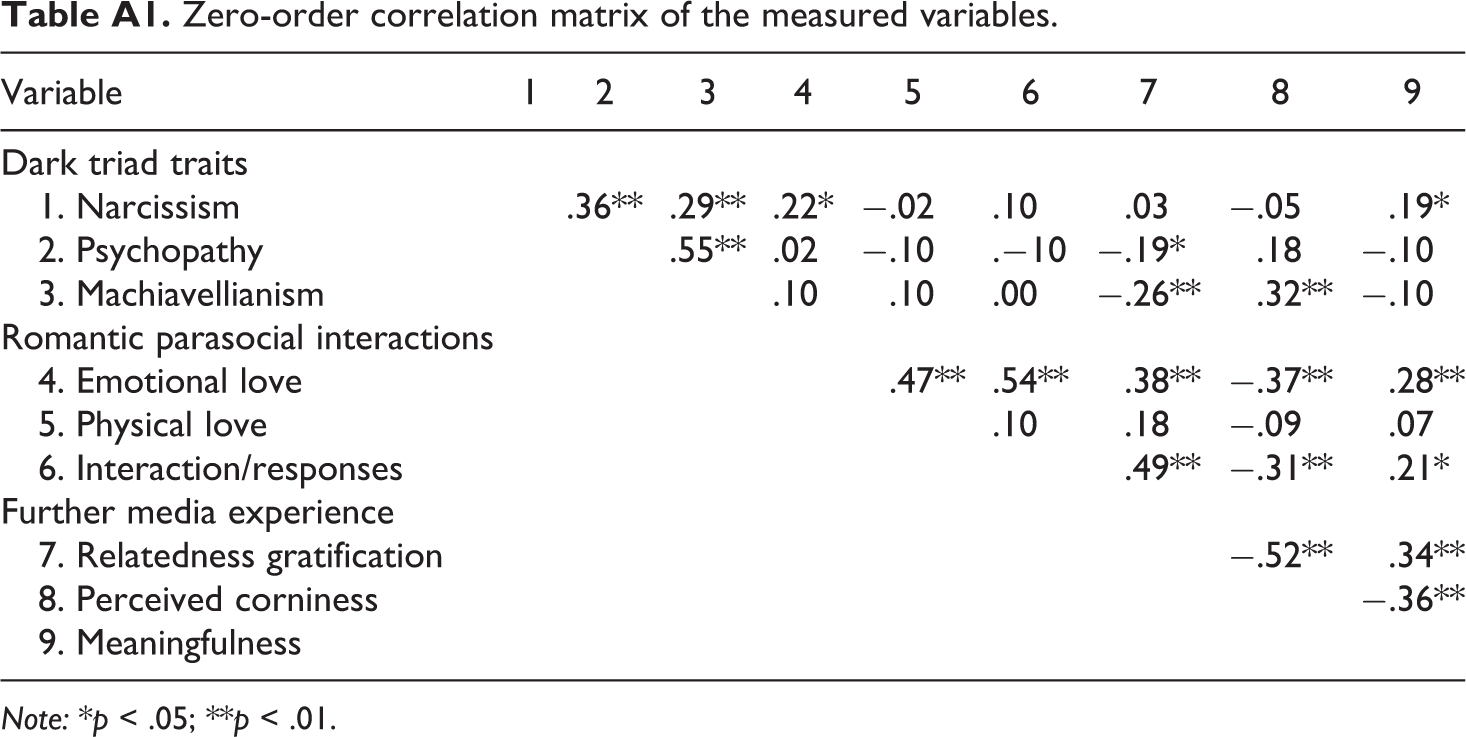
A zero-order correlation matrix of the measured variables can be found in the Appendix.
Manipulation check
A manipulation check was performed to validate the perceived meaningfulness scores of our stimuli. The participants exposed to the movies with eudaimonic narratives indicated that the movies they saw were more meaningful (M = 3.83, SD = 0.75), compared with those exposed to movies with non-eudaimonic narratives (M = 3.25, SD = 0.72; t(114) = 4.19, p < .001; dCohen = 0.78).
Influence of the dark triad of personality on romantic parasocial interactions
To investigate the influence of the dark triad traits on the development of a romantic PSI, we performed nine moderated mediation analyses—one for each of the three sub-dimensions of romantic PSIs, separately for narcissism (H1), Machiavellianism (H2), and psychopathy (H3)—using the PROCESS path analysis macro for SPSS developed by Hayes (2018; Model 7). Gender, age, and prior familiarity with the movie were included as covariates in all analyses. 1 The analyses were based on bootstrapped samples (m = 10,000) with bias-corrected 90% confidence intervals. All reported coefficients were unstandardized. On the basis of our hypotheses, we selected the sub-dimensions of the dark triad of personality as independent variables, the meaningfulness of the movie as a moderator variable (coding: 0 = eudaimonic narrative, 1 = non-eudaimonic narrative), perceived corniness as a mediator variable, and the intensity of the sub-dimensions of romantic PSIs as the outcome variables.
The results of the first set of moderated mediation analyses, with narcissism as the independent variable, are summarized in Figure 2. The prediction of a positive direct effect of narcissism on romantic PSIs was only supported for the emotional love sub-dimension—not for physical love or interaction/responses. The participant’s narcissism score also did not predict the perceived corniness of the movie, and the relationship between narcissism and perceived corniness was not stronger for eudaimonic narratives than for non-eudaimonic narratives. 2 However, higher scores on perceived corniness were associated with less intense romantic PSIs in terms of emotional love and interaction/responses. Narcissism had no significant indirect effect operating through perceived corniness on any of the sub-dimensions of romantic PSIs for either eudaimonic or non-eudaimonic narratives.
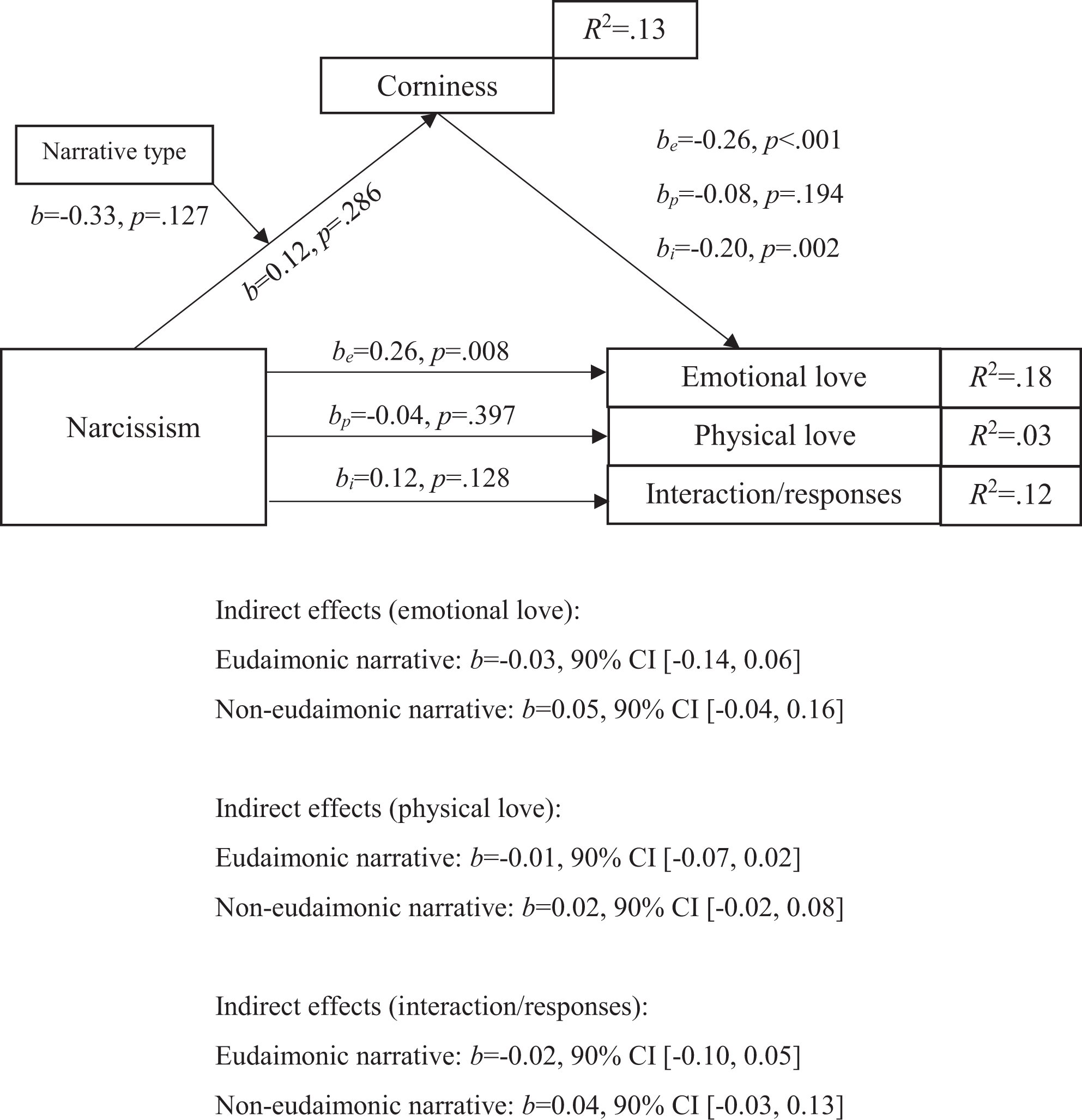
Moderated mediation analysis of the influence of narcissism on romantic PSIs (N = 116).
Figure 3 summarizes the results of the second set of moderated mediation analyses, with psychopathy as the independent variable. The predicted positive direct effect of psychopathy on romantic PSIs was only found for the interaction/responses sub-dimension—not for physical love or emotional love. Psychopathy predicted the perceived corniness of the movie, but the relationship between psychopathy and perceived corniness was not stronger for eudaimonic narratives than for non-eudaimonic narratives. Higher perceived corniness scores were again associated with less intense romantic PSIs in terms of emotional love and interaction/responses. Accordingly, psychopathy had a significant negative indirect effect on the emotional love and interaction/responses sub-dimensions operating through perceived corniness for eudaimonic narratives but not for non-eudaimonic narratives.
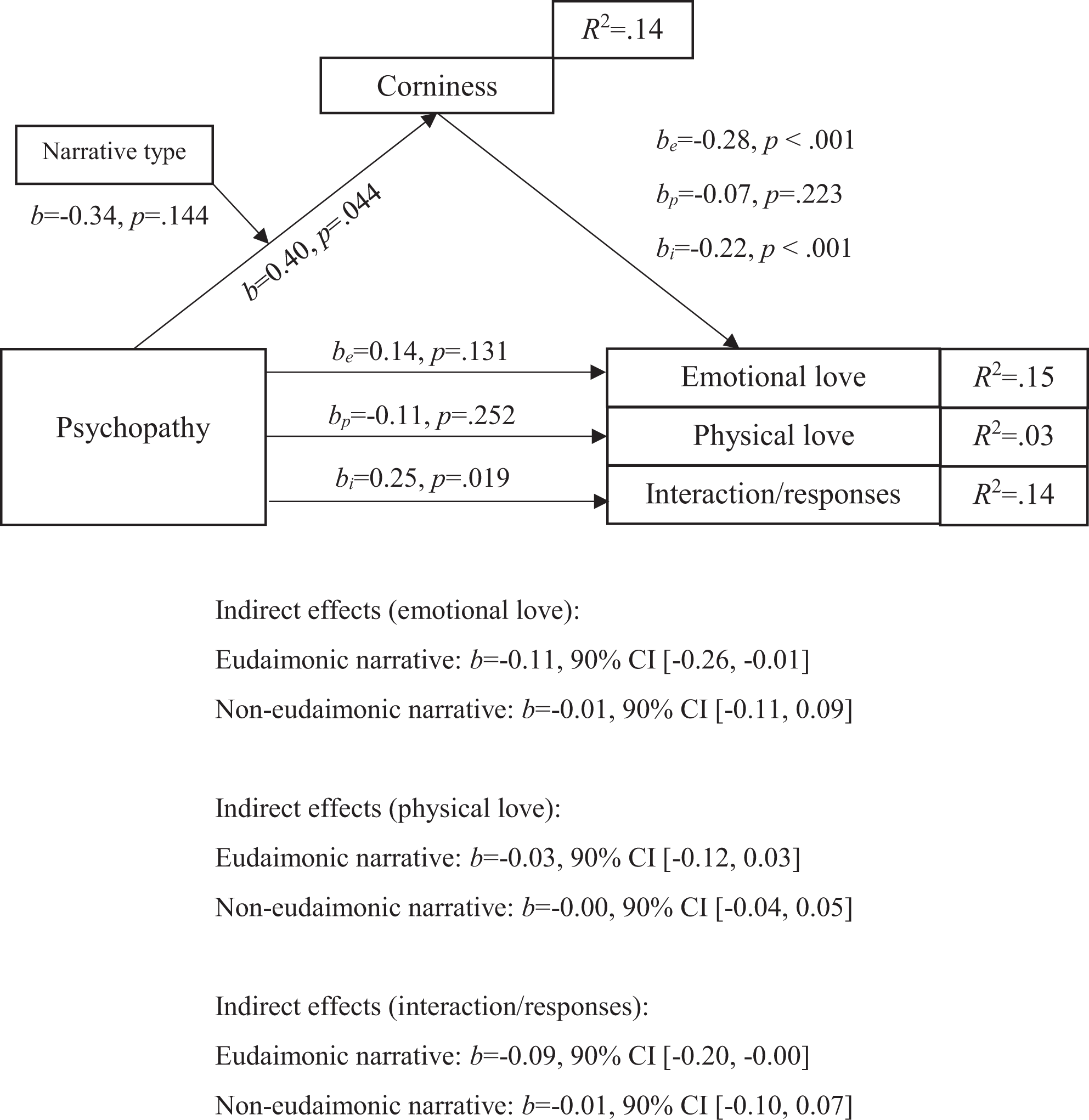
Moderated mediation analysis of the influence of psychopathy on romantic PSIs (N = 116).
The results of the last set of moderated mediation analyses, with Machiavellianism as the independent variable, are summarized in Figure 4. We found a significant positive direct effect of Machiavellianism on the emotional love sub-dimension. Moreover, Machiavellianism predicted the perceived corniness of the movie, but the relationship between Machiavellianism and perceived corniness was not stronger for eudaimonic narratives than for non-eudaimonic narratives. Higher perceived corniness scores were again associated with less intense romantic PSIs in terms of emotional love and interaction/responses. Finally, Machiavellianism had a significant negative indirect effect on the emotional love and interaction/responses sub-dimensions operating through perceived corniness, but this was the case only for eudaimonic narratives.
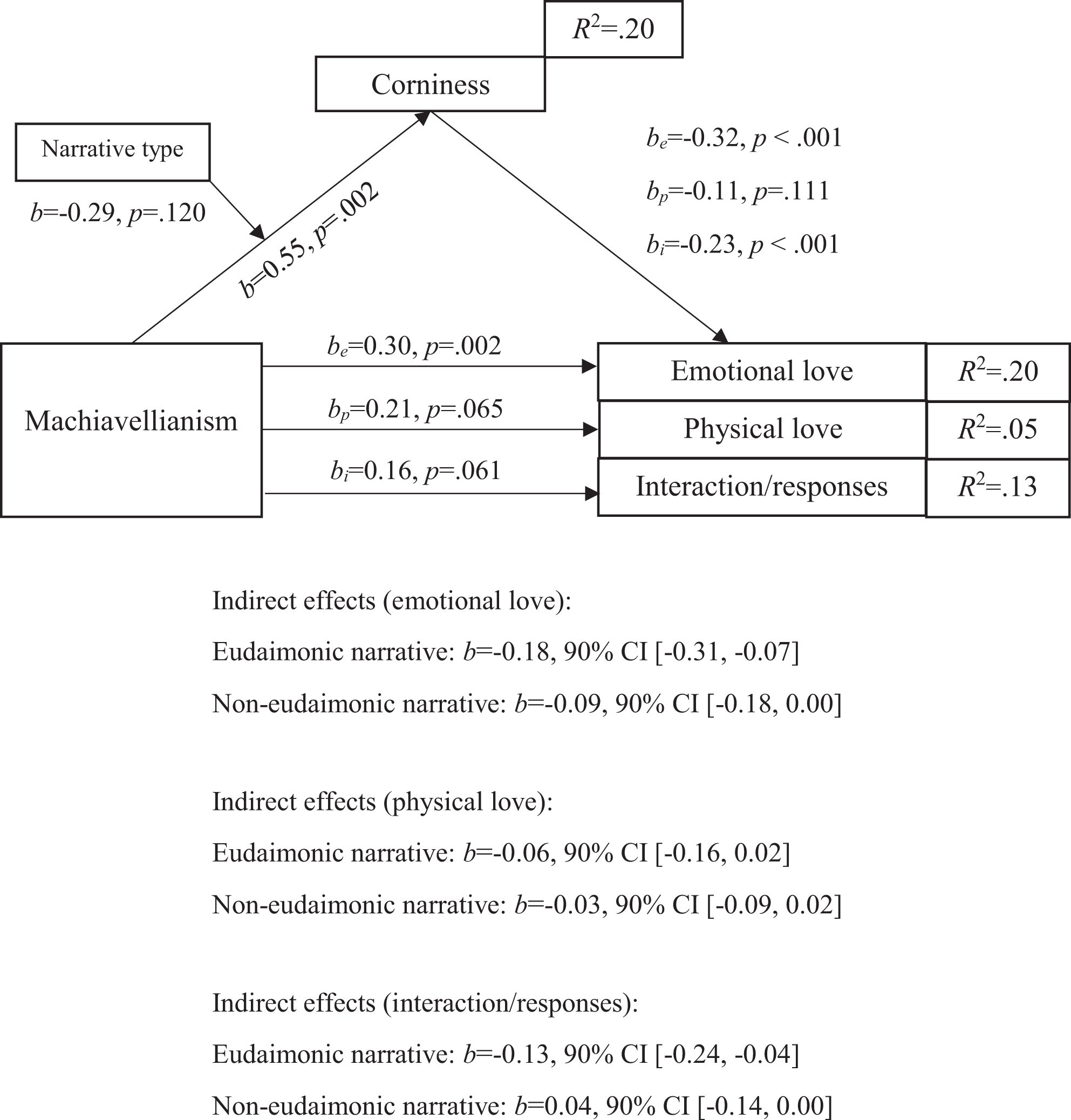
Moderated mediation analysis of the influence of Machiavellianism on romantic PSIs (N = 116).
Influence of romantic parasocial interactions on perceived relatedness gratification
To test our final hypothesis, regarding the influence of romantic PSIs on relatedness gratification, we conducted a multiple regression analysis with the romantic PSI sub-dimensions as the predictor variables and perceived relatedness gratification as the outcome variable. Gender, age, prior familiarity with the movie, and the experimental condition were included as covariates. The results supported our hypothesis at a significant level only for the interaction/responses sub-dimension (b = 0.53; p < .001), whereas neither physical love (b = 0.09; p = .160) nor emotional love (b = 0.13; p = .178) had a significant influence. The predictors explained 31.10% of the variance in perceived relatedness gratification (F(7,108) = 6.96, p < .001).
Discussion
The current study investigated the development of romantic PSIs using individuals’ scores on the dark triad traits of narcissism, psychopathy, and Machiavellianism. In real life, individuals with narcissistic, psychopathic, and Machiavellian personalities are known to prefer having a greater number of short-term romantic relationships rather than engaging in long-term, high-quality romantic relationships (e.g., Jonason et al., 2011). On the basis of the assumption that parasocial phenomena are similar to real-life interactions and relationships and that individuals are prone to extend their real-life social connections and habits with media characters by forming PSIs and PSRs (e.g., Tsao, 1996), we hypothesized positive effects of the dark triad traits on the development of romantic PSIs, which can be understood as a kind of mediated form of romantic flirting without any obligations (Liebers & Straub, 2020). However, a recent study reported that individuals with these types of personalities tend to distance themselves when narratives become too emotionally involving (Appel et al., 2019). Accordingly, we investigated an alternative mechanism by incorporating the concept of perceived corniness and the influence of the eudaimonic versus non-eudaimonic nature of narratives on the relationship between the dark triad traits and romantic PSIs.
In line with our hypotheses, our findings revealed an overall tendency of individuals with narcissistic, psychopathic, and Machiavellian personalities to be particularly prone to develop romantic PSIs. However, this tendency varied greatly depending on both the investigated facets of the dark triad and the sub-dimensions of romantic PSIs. As an example, narcissism and Machiavellianism predict an individual’s romantic emotional love for a media character, in terms of wanting to be mentally close to the media character or perceiving the media character as an optimal romantic partner for oneself (Tukachinsky, 2010). Those with psychopathic personalities, in contrast, were more engaged in actual interaction and responses to the media character while watching the movie, such as following the behavior of the media character closely throughout the movie (Schramm & Hartmann, 2008). With regard to the romantic PSI sub-dimension of physical love, narcissism, psychopathy, and Machiavellianism turned out not to be significant predictors. This finding is surprising because the dark triad traits are usually associated with rather superficial romantic encounters (Jonason et al., 2011), which are strongly based on physical attraction (e.g., Li & Kenrick, 2006). Hence, in the context of romantic PSIs with media characters, individuals with narcissistic, Machiavellian, and psychopathic personalities should be particularly likely to show physical love for the media character. This finding thus implies that the basic assumption that the social extension of one’s real-life social environment is the underlying reason for the positive effect of the dark triad traits on romantic PSIs should be reconsidered. A possible alternative explanation for the lack of transferability of real-life behavior to the media environment is offered by the social surrogacy hypothesis, which states that, to a certain extent, parasocial phenomena can compensate for real-life social deficits (Derrick et al., 2009). Although this hypothesis has been mostly debunked in the context of amicable parasocial phenomena (Tukachinsky et al., 2020), it has not yet been investigated in the context of romantic PSIs, which might perform differently as a more specific form of interaction—at least when it comes to specific corresponding forms of loneliness such as romantic loneliness (Tukachinsky Forster, 2021). This explanation fits the data analyzed in the current study well, as individuals with psychopathic, Machiavellian, and narcissistic personalities predominantly lack intimate emotional connection in real-life romantic encounters, whereas their need for physical love should be mostly satisfied through their short-term mating strategy (Jonason et al., 2011). In line with the social surrogacy hypothesis, the romantic loneliness experienced by individuals with high scores on the dark triad traits because of their lack of high-quality, long-term romantic relationships (Jonason et al., 2015) might be a motivator for such individuals to engage in romantic encounters with media characters.
With regard to the predicted indirect negative effects of the dark triad traits on romantic PSIs operating through perceived corniness, psychopathy and Machiavellianism were found to enhance the perceived corniness of a narrative (or at least the romantic narratives presented in our study). However, this effect was not significantly stronger for individuals who watched a eudaimonic narrative than for those who watched a non-eudaimonic narrative. Moreover, narcissism did not predict perceived corniness. The lack of an effect of narcissism, as well as the independence of the other effects from the meaningfulness of the movie seen, stands in contrast to Appel et al.’s (2019) findings. These differences may be explained by the different materials and experimental settings used in the two studies: Participants in the current study watched entire movies, whereas Appel and colleagues used short clips of different media genres ranging from advertising to news. However, in terms of the impact of perceived corniness, the current study extends Appel et al.’s (2019) findings, as its results support the hypothesis that individuals distance themselves not only from a narrative but also from its characters when the narrative is perceived as corny. More specifically, the current study reveals that perceiving a narrative as corny decreases emotional romantic engagement with a media character as well as an individual’s tendency to interact with and respond to the media character, which can be interpreted as a general disinterest of media users in media characters in the context of narratives that they perceive as corny. Physical love, by contrast, was not significantly decreased by the perceived corniness of the narrative. This leads to the conclusion that perceived physical attraction to a media character is not necessarily linked to the narrative and, that individuals can still experience physical love even after distancing themselves from the media character’s narrative. In sum, the hypothesized negative effects of the dark triad traits on romantic PSIs were only supported for the traits of Machiavellianism and psychopathy and for the emotional love and interaction/response sub-dimensions of romantic PSIs.
Finally, we investigated the influence of romantic PSIs on perceived relatedness gratification, assuming that romantic PSIs are beneficial for media users’ perceived relatedness. Our findings revealed that all three sub-dimensions of romantic PSIs have a tendency to enhance relatedness gratification, but only actual interaction with/response to the media character is a significant predictor of relatedness gratification. This result implies that individuals generally have to be involved through interactions and responses, such as watching a media character’s behavior carefully, to enjoy relatedness, whereas feeling emotionally or physically attracted to the media character is not particularly important. Given the finding that the romantic nature of PSIs is not the key factor in perceived relatedness gratification, it is likely that amicable PSIs or even negative PSIs (Dibble & Rosaen, 2011) can also contribute to media users’ relatedness gratification, as long as they provide a chance to interact with and respond to the media character. This finding alone contributes to our current understanding of the entertainment experience and its underlying processes, as previous research on this topic has only shown that individuals can experience relatedness during media exposure, without linking this result to romantic or other types of PSIs (e.g., Wirth et al., 2012).
Limitations, future research, and open questions
One major methodological limitation of the current study that might have led to the partly insignificant findings (in addition to the previously mentioned theoretical explanations) is low statistical power. The final analytical sample comprised 116 volunteers who participated in a time-consuming study that required coming to the laboratory, watching an entire movie, and then responding to questions. Although the required effort on the part of the participants (and the researchers) explains why the sample had to be kept rather small, the analyses conducted in the study might have required more power. This is particularly problematic for the regression analysis examining the influence of the romantic PSI sub-dimensions on perceived relatedness gratification, which included four control variables (e.g., gender). Because a multiple regression analysis with seven predictors and an assumed small-to-medium effect size requires a minimum of about 150 participants (Faul et al., 2009), it is possible that the predicted positive effects of the sub-dimensions of emotional love and physical love on perceived relatedness gratification would have reached significance if a larger sample had been recruited.
Another methodological limitation is the lack of measurement of other critical variables in the context of romantic PSIs. Broadly speaking, this study investigated the hypothesis that individuals with narcissistic, psychopathic, and Machiavellian personalities form stronger romantic PSIs because of their tendency to engage easily in non-committal romantic interactions and relationships in real life (e.g., Jonason et al., 2011). However, the current study did not measure the actual behavior of participants in their real-life romantic encounters. As we did not find significant support for all our hypotheses in this context (psychopathy, for example, was not linked positively to emotional or physical love), it is a major limitation that we do not know whether participants with high scores on the dark triad traits were not particularly likely to engage in non-committal romantic encounters in real life or whether this real-life behavior existed but did not transfer to romantic PSIs with media characters. Future studies should further explore this line of research by incorporating real-life behavior empirically rather than as an assumption presented as theoretical background.
Another limitation of the current study is the investigation with the help of a homogeneous convenience sample. The sample of the current study mainly comprised young, straight, and highly educated students from a specific region in Germany. With the aim of enhancing diversity and gaining more knowledge on the generalizability of results, future studies should use more heterogeneous samples. This includes not only a wider range of age classes, gender, nationality, and educational degree, but also ethnicity/race, gender identity, class information (e.g., income), and ability status (demographics that we, unfortunately, neglected in our measurements). It is only with research that includes all individuals of our society that we can fully understand which circumstances foster the development of romantic parasocial phenomena and how they impact individuals’ lives.
Future studies should also consider not only new variables or different samples to investigate but also alternative relationships among the variables. In the current study, we investigated the influence of perceived corniness on romantic PSIs using mediation analyses, assuming a causal relationship between the two variables. However, the direction of the relationship is based solely on theoretical assumptions, as we have no information on temporal order in our data that could statistically support our assumption of causality, and it is conceivable that romantic PSIs predict perceived corniness or that the two variables exert mutual influence on each other. Additional research is needed to clarify the temporal order of these variables.
In conclusion, this study investigated short-term romantic PSIs with media characters in movies rather than longer-term PSRs. This methodological approach was followed for two reasons: to ensure that the findings were as comparable as possible from an internal validity perspective, and to enable the manipulation of the surrounding narrative of the media characters. Nevertheless, it would be of great interest to investigate the role of the dark triad traits in the long-term romantic PSRs of media users. Based on the assumption that real-life social behavior transfers to parasocial phenomena, the positive influence of the dark triad traits on PSIs might be negative for PSRs and inhibit long-term romantic commitment to a media character, reflecting the influence of these traits in real-life romantic relationships (e.g., Jonason et al., 2011). Additionally, the impact of perceived corniness might vanish if media users were asked about their own favorite media characters rather than the predetermined protagonist of a movie, because they would probably not perceive the narrative of their favorite media character as corny. Furthermore, if—in contrast to previous findings in the context of amicable parasocial phenomena—romantic PSRs might indeed function as a form of social surrogacy (Tukachinsky Forster, 2021), individuals who have a deficit in long-term romantic relationships in real life (such as those with Machiavellian, narcissistic, or psychopathic personalities) might be particularly prone to engage in long-term romantic PSRs.
Footnotes
Funding
The author(s) received no financial support for the research, authorship, and/or publication of this article.

Open research statement
As part of IARR’s encouragement of open research practices, the authors have provided the following information: This research was not pre-registered. The data used in the research are available. The data can be obtained by emailing:
Notes
Appendix
Zero-order correlation matrix of the measured variables.
| Variable | 1 | 2 | 3 | 4 | 5 | 6 | 7 | 8 | 9 |
|---|---|---|---|---|---|---|---|---|---|
| Dark triad traits | |||||||||
| 1. Narcissism | .36** | .29** | .22* | −.02 | .10 | .03 | −.05 | .19* | |
| 2. Psychopathy | .55** | .02 | −.10 | .−10 | −.19* | .18 | −.10 | ||
| 3. Machiavellianism | .10 | .10 | .00 | −.26** | .32** | −.10 | |||
| Romantic parasocial interactions | |||||||||
| 4. Emotional love | .47** | .54** | .38** | −.37** | .28** | ||||
| 5. Physical love | .10 | .18 | −.09 | .07 | |||||
| 6. Interaction/responses | .49** | −.31** | .21* | ||||||
| Further media experience | |||||||||
| 7. Relatedness gratification | −.52** | .34** | |||||||
| 8. Perceived corniness | −.36** | ||||||||
| 9. Meaningfulness |
Note: *p < .05; **p < .01.