




Abstract
Shared leisure activities with one’s romantic partner are beneficial for both partners and their romantic relationship, but may not exclusively occur with only the partners present. The current research examines the impact of leisure and other relationship behaviors in various social contexts on romantic relationship quality (satisfaction and commitment). Data were collected from a representative sample of couples over the course of 9 months (N = 232 couples at Phase 1), including two 10-day daily diaries documenting engagement in 59 behaviors across various social contexts. Results demonstrated that leisure with one’s partner (without others) was positively associated with short-term relationship quality, whereas leisure with others (without one’s partner) was negatively associated with relationship quality; leisure with one’s partner and others and leisure alone were not associated with relationship quality. When considering engagement in other relationship behaviors with one’s partner, we found no unique effects of the rates of the behaviors, but significant effects for the proportion of physical affection relative to other behaviors. These findings suggest that the content and context of leisure have unique roles in romantic relationships.
Romantic relationships are an important contributor to well-being, impacting both physical and mental health (e.g., Holt-Lunstad et al., 2008). To sustain these relationships over time couples often engage in shared leisure activities, which aid in the development of shared interests; create opportunities for couple identity development, healthy communication, and conflict management; and increase relationship satisfaction (e.g., Berg et al., 2001; Johnson et al., 2006). In fact, the importance of examining leisure activities in romantic relationships has only increased over time, with both the proportion of time and the rate of shared leisure activities having increased over the last several decades (Voorpostel et al., 2010). The existing literature has focused on how couples’ time spent on shared leisure, independent leisure, and their satisfaction with each of these contribute to romantic relationship quality (e.g. Berg et al., 2001; Johnson et al., 2006). However, leisure activities may not exclusively occur alone or with one’s partner, but in a variety of different social contexts (i.e., with different individuals or groups present). In the current research, we consider how frequently leisure activities occur in the presence of various social groups, whether leisure in each context contributes to romantic relationship quality, and whether group leisure activities may be particularly beneficial for those experiencing lower relationship quality. Additionally, leisure is only one type of behavior among a host of relationship behaviors that have been linked to relationship quality (e.g., Berg et al., 2001; Dobson et al., 2020; Gulledge et al., 2003; Johnson et al., 2006; Sprecher & Hendrick, 2004). However, each relationship behavior has largely been examined independently, and thus the current literature has failed to account for the nonindependence of these behaviors. To address this limitation in previous research, we also examine the unique contribution of shared leisure with one’s partner to relationship quality over and above other common relationship behaviors.
Past research has consistently linked shared leisure time and leisure satisfaction with one’s romantic partner to relationship benefits, including greater love, relationship and marital satisfaction, supportive communication, cohesion, less conflict, and a lower likelihood of breakup (e.g., Berg et al., 2001; Orthner, 1975; Zabriskie & McCormick, 2001). However, to our knowledge, no research has documented couples’ frequency of engagement in leisure in various social contexts, opting to largely focus on leisure with one’s partner only or leisure engaged in alone. However, the environment, including the number and make up of people present for the leisure activity, can influence the complexity and level of arousal associated with the task (Iso-Ahola, 1980; Rossman & Schlatter, 2011), and thus is an important component of recent models of couple and family leisure (Melton, 2017). Graham (2008) speculated that the types of activities commonly engaged in with close others may frequently include exciting leisure activities. Thus, individuals and couples may commonly engage in leisure activities in the presence of others, and this differing environment may meaningfully influence the relational impact of these behaviors. Exploring this possibility for the first time, we examine the rate of engagement in leisure activities in various social contexts.
Past research has also suggested that couples’ positive interactions with close others are beneficial to their romantic relationships. Having a greater proportion of joint friendships with one’s romantic partner (people identified as a friend of both couple members rather than of only one of the couple members) is associated with higher relationship satisfaction, commitment, and investment, and a lower likelihood of breakup (Ogolsky et al., 2016). In addition, when individuals in romantic relationships self-disclose in a group setting with their partner and another couple present, they experience increased feelings of closeness toward the other couple and to their partner (Slatcher, 2010). This previous research provides preliminary evidence that engagement in relationship activities with close others has the potential to benefit one’s romantic relationship. Therefore, we proposed that engaging in leisure activities with one’s partner and others would be positively associated with relationship satisfaction and commitment.
Yet, experiences of emotion (both positive and negative) are stronger in dyads than in groups (Moreland, 2010). Thus, the positive emotions invoked by engaging in leisure activities may be greater when solely in the presence of one’s partner, leading to greater relational benefits of leisure in this context than in groups. However, this may only apply to high-quality relationships. Individuals in high-quality relationships report greater opportunities for excitement and alertness in the presence of their partners than those in lower quality relationships (Graham, 2008). In addition, when experiencing negative emotion or conflict with one’s partner, these experiences may impede enjoyment in shared leisure time, as partners may not be able to set aside these negative experiences to positively engage in the activity. Group settings, however, require conforming to a different set of social norms, one of which involves the suppression of emotion that targets any one particular group member and could be disruptive to the group (e.g. dating someone in the workplace requires you to set aside those emotions at work; Kanter, 1968; Moreland, 2010). Thus, being a part of a group may require couples experiencing negative emotions to temporarily set aside those emotions for the benefit of the group, and allow them to positively engage in the activity, thus promoting relationship satisfaction and commitment. That is, although we believe engaging in leisure activities with one’s partner and friends is beneficial for one’s romantic relationship satisfaction and commitment generally, this may be particularly true for those previously experiencing lower satisfaction and commitment. Therefore, we predicted that the benefits (i.e., greater relationship satisfaction and commitment) of engaging in leisure with one’s partner and others would be moderated by couples’ prior satisfaction and commitment, with those previously experiencing lower satisfaction and commitment enjoying greater benefits of group leisure activities.
Although engaging in shared leisure activities with one’s romantic partner is associated with relational benefits (e.g., Berg et al., 2001; Johnson et al., 2006), the practical limitations of day-to-day life necessitate engaging in other types of behaviors as well, including household chores and childcare, but also relationship maintenance activities such as communication and physical affection. Therefore, we examine how the rate and proportion of time spent with one’s romantic partner engaging in various relationship behaviors (leisure, household chores, communication, and physical affection) is associated with relationship quality and commitment to determine the unique contribution of leisure to relationship maintenance. Leisure, physical affection, and communication have all been independently linked to higher relationship quality (e.g., Berg et al., 2001; Dobson et al., 2020; Gulledge et al., 2003; Johnson et al., 2006; Sharaievska et al., 2013; Sprecher & Hendrick, 2004), and thus we predicted that higher rates of these behaviors with one’s partner would be associated with higher relationship satisfaction and commitment. The literature with regard to household chores is less clear, as the focus has largely been on equity in the division of labor, rather than on the relational impact of partner’s joint engagement in these behaviors. However, some previous literature (e.g. Graham, 2008; Muise et al., 2019) has linked doing household chores with one’s partner to self-expansion (enhanced self-efficacy and expanded self-concept) and flow (a state of intense focus and enjoyment), indicating the potential for these behaviors to provide relational benefits. For the current research, we opted to explore the association between the rate of engagement in household chores with one’s partner and relationship quality.
Finally, our prior hypothesis examines which types of relationship behaviors may be most strongly associated with relationship satisfaction and commitment, but another important avenue of inquiry is how engagement in these behaviors may develop and change over time. Past research on sexual frequency, quality, and desire shows marked declines in these factors as relationships progress (e.g. Klusmann, 2002). Similarly, couple leisure has been shown to decrease during transitional periods in relationships, such as the transition to parenthood (Claxton & Perry-Jenkins, 2008). Additionally, other factors that may be associated with leisure tend to decrease over time as well, such as the level of excitement and alertness invoked by the mere presence of one’s partner and opportunities for relational self-expansion (Aron & Aron, 1986, 1997; Graham, 2008). The frequency of engagement in chores with one’s partner, however, may increase over time, as partners begin spending more time together and transition to cohabiting. Given changes in similar constructs found in past research, we test an additional hypothesis regarding changes in the frequency of couple leisure, communication, physical affection, and chores over time. From a developmental perspective, these tests will provide necessary context to understand the boundary conditions under which each type of relationship behavior relates to relationship quality.
Current research
The current research is a longitudinal, multi-wave assessment of the frequency of leisure in various social contexts, the frequency of various relationship behaviors with one’s partner, and how each of these contributes to young adults’ romantic relationship satisfaction and commitment. We examine effects associated with leisure broadly, address limitations from prior research, and discuss the application of our findings to existing theory. To our knowledge, this is the first study to simultaneously examine leisure in various social contexts and is also the first to simultaneously examine the impact of various relationship behaviors (leisure, chores, communication, and physical affection) that have been independently associated with relationship outcomes in previous research. Merging the romantic relationships and group processes literatures, we proposed that engaging in leisure activities with one’s romantic partner regularly occurs in group settings (Hypothesis 1; H1) and that leisure activities in this context are beneficial for romantic relationships (H2), particularly for those in lower quality relationships (H3). Additionally, we anticipated that, consistent with previous research, leisure, communication, and physical affection with one’s romantic partner would all be uniquely associated with relationship benefits (H4). However, we also predicted that leisure and physical affection would decrease over time, whereas time spent on chores would increase (H5). The longitudinal nature of the current study allowed us to examine both short- and long-term effects, while also providing some clarification regarding order effects, as engagement in leisure activities at one time point was used to predict future relationship outcomes.
Methods
All preregistered hypotheses, materials, statistical code, data, and output are publicly available on the Open Science Framework (OSF) and can be found at https://osf.io/edbca/.
Participants
Participants were recruited by means of random digit dialing of approximately 36,000 households in an urban area of the southwestern United States. Participants were required to be in a heterosexual dating relationship, never married, between 19 and 35 years old, and available over a 9-month period to be eligible for the study. Each partner in the relationship was independently contacted and asked to participate. Initial calls identified 861 eligible individuals, 232 (26.9%) of whom consented to participate and whose partner also consented. The 629 eligible people who chose not to participate indicated they or their partners were unable, unwilling, or uninterested in the study. Thus, 464 young adults (232 couples) completed the first interview. On average, participants were in their early twenties (M = 23.59, SD = 3.59) and had been in their relationship for about 2 years (M = 26.84 months, SD = 24.32). Our sample was ethnically representative of the local population, with 69.8% White, 16.4% Hispanic, 7.5% African American, and 6.2% Asian American or other. Participants had an average of 14.69 years of formal education (SD = 1.91), largely did not have children (96%), and maintained a separate residence from their partner (62.5%).
Procedure
The current research was part of a larger, federally funded, three-phase study conducted from 1993 to 1995 mapping changes in romantic partners’ commitment to wed over a 9-month period. During Phase 1, an in-person interview was conducted where participants completed questionnaires that assessed their demographic information and relational variables (e.g., relationship satisfaction), as well as constructing from memory a graph of changes in the chance of marriage over the course of their relationships. All surveys in all phases were paper-and-pencil questionnaires.
Phase 2 consisted of seven short monthly interviews and two 10-day daily diaries (Diary 1 was conducted at the first monthly interview; Diary 2 was conducted at the seventh monthly interview). At each monthly interview respondents indicated whether they were dating the same partner and completed a graph of the chance of marriage from the date of the prior interview until the date of the current interview. During the daily diaries, participants recorded how frequently they engaged in various activities that day, as well as who they were with when they did so.
The Phase 3 interview took place approximately 9 months after the first interview. Participants first completed a monthly update of the graph. They then constructed a retrospective graph of the chance of marriage from the beginning of the relationship until the day of the Phase 3 interview and completed a series of relational measures (e.g., relationship satisfaction).
Measures
Activities by social context
During each day of the Phase 2 daily diaries, participants were provided with a table where the columns were different social contexts (with their partner, with their partner and other(s), with other(s) but not their partner, alone) and the rows consisted of 59 different behaviors. Thirty-three of these were common leisure activities (e.g., “Went out to eat at a restaurant,” “Watched a movie or video at home on tv,” “Went to the park”), 11 were household chores (e.g., “Did dishes,” “Cleaned house”), eight were associated with communication (e.g. “Talked about plans to do something,” “Caught up on the events of the day or night”), and six involved physical affection (e.g. “Cuddled, hugged, and kissed,” “Made love, had sex, or had sexual intercourse”). One item included in the original list of activities (“Exchanged gifts or cards”) was not used in our analyses as it does not fit into any of the above categories and occurred very rarely, if at all, over the 10-day diary. Participants indicated how frequently they engaged in each behavior in each context that day. Within each activity type and context, information was summed across all 10 days of the diary, divided by the number of diaries that participant completed to give their rate per day, and multiplied by 7 to give the weekly rate at which participants engaged in each activity type within each context.
We also calculated the proportion of the total activity type within each context by dividing the raw rate for each context by the total number of behaviors of that type. In this way, we calculated two activity rate and two activity proportion scores for each activity type in each context, one for each of the two diary periods.
Time spent with partner on relationship activities
The tables described above were also used to determine the rate and proportion of engagement in different relationship behaviors with one’s romantic partner. That is, we calculated the rate and proportion of behaviors in each category across the 10-day diary periods. Overall, each participant had two proportions and two rates in each category of behaviors, one for each diary period.
Relationship satisfaction
Relationship satisfaction was measured in Phases 1, 2.4 (the fourth Phase 2 monthly interview), and 3 using Huston and Vangelisti’s (1991) Marital Opinion Questionnaire. Participants were asked to rate their relationship over the past month on 10, 7-point bipolar scales (e.g. “miserable-enjoyable,” “rewarding-disappointing”), as well as a single-item global measure of satisfaction (“All things considered, how satisfied or dissatisfied have you been with your relationship over the last month or so?”) also rated on a 7-point scale (1 = Completely satisfied, 7 = Completely dissatisfied). We created a relationship satisfaction score by taking the average across all 11 total items, with items scored such that higher values represent higher relationship satisfaction (Phase 1: α = .90; Phase 2.4: α = .92; Phase 3: α = .93).
Commitment
Global commitment was measured in Phases 1, 2.4, and 3 with 3 items from Rusbult’s (1980) measure of commitment and satisfaction (“For how much longer do you want your relationship to last?,” “Do you feel committed to maintaining your relationship with your partner?,” and “How likely is it that your relationship will end in the near future?”). Items were scored and mean aggregated such that higher scores represent higher commitment (Phase 1: α = .85; Phase 2.4: α = .87; Phase 3: α = .90).
Results
This study began with 464 young adults (232 couples) at Phase 1. By Phase 3, a total of 30.6% (n = 142) of participants did not provide the relevant data because they had dropped out of the study (n = 86), were no longer in a relationship with the partner they started the study with (n = 55), or did not complete the Phase 3 measures (n = 1). In cases where one partner dropped out of the study, the other partner was retained in the sample. Individuals who were no longer part of the study by Phase 3 (satisfaction: M = 5.57, SD = 1.07; commitment: M = 6.14, SD = 1.81) reported significantly lower relationship satisfaction (t(462) = −3.37, p = .001) and commitment (t(461) = −3.10, p = .002) at Phase 1, and tended to be younger (M = 22.52, SD = 2.70, t(462) = 3.12, p = .002) than those who remained in the study (satisfaction: M = 5.87, SD = .88; commitment: M = 6.71, SD = 1.59; age: M = 23.84, SD = 3.73). There were no differences in attrition based on sex, income, education, race, or whether they have children.
With 464 total participants at Phase 1, the maximum possible number of data points was 4640 per diary (i.e. 10 days per person). However, 61 participants did not answer any surveys in Diary 1, reducing the number of valid data points to 4030. In addition, some participants completed some, but not all diaries (completed diaries: M = 7.49, SD = 4.16), or only completed some questions within a diary, further reducing the number of valid data points to an average of 3472.62 days of data available per activity variable. Finally, particular instances where participants’ daily rate for an activity in a given context was more than three standard deviations above or below the mean were also excluded as outliers. The decision to exclude these cases was not included in our preregistration, as it was made after examining the minimum and maximum values for each category, discussing the implausibility of some responses (e.g., physical affection with one’s partner on more than 190 unique occasions in a single day), and adding this step to our analytic plan. However, this decision was made prior to knowledge of the associations of the variables of interest in the Multi-Level Models (MLMs). This excluded 29–103 cases per activity variable in Diary 1, resulting in an average of 3412.77 days of data available per activity variable.
In Diary 2, 129 participants did not complete any diaries, reducing the number of valid data points for this phase to 3350. In addition, some participants completed some, but not all diaries (completed diaries: M = 6.41, SD = 4.68), further reducing the number of valid data points to 2976 days per activity variable. Finally, removing daily rates that were three standard deviations above or below the mean excluded 27–76 cases per activity variable as outliers, for an average of 2924.15 days of data available per activity variable. In all models, we used restricted maximum likelihood estimation to use as much of the available data as possible, as is consistent with previous longitudinal research (Bryk & Raudenbush, 1992); thus the degrees of freedom range within each model based on how many participants answered the relevant surveys. Correlations among study variables are presented in Table 1.
Correlations among study variables.
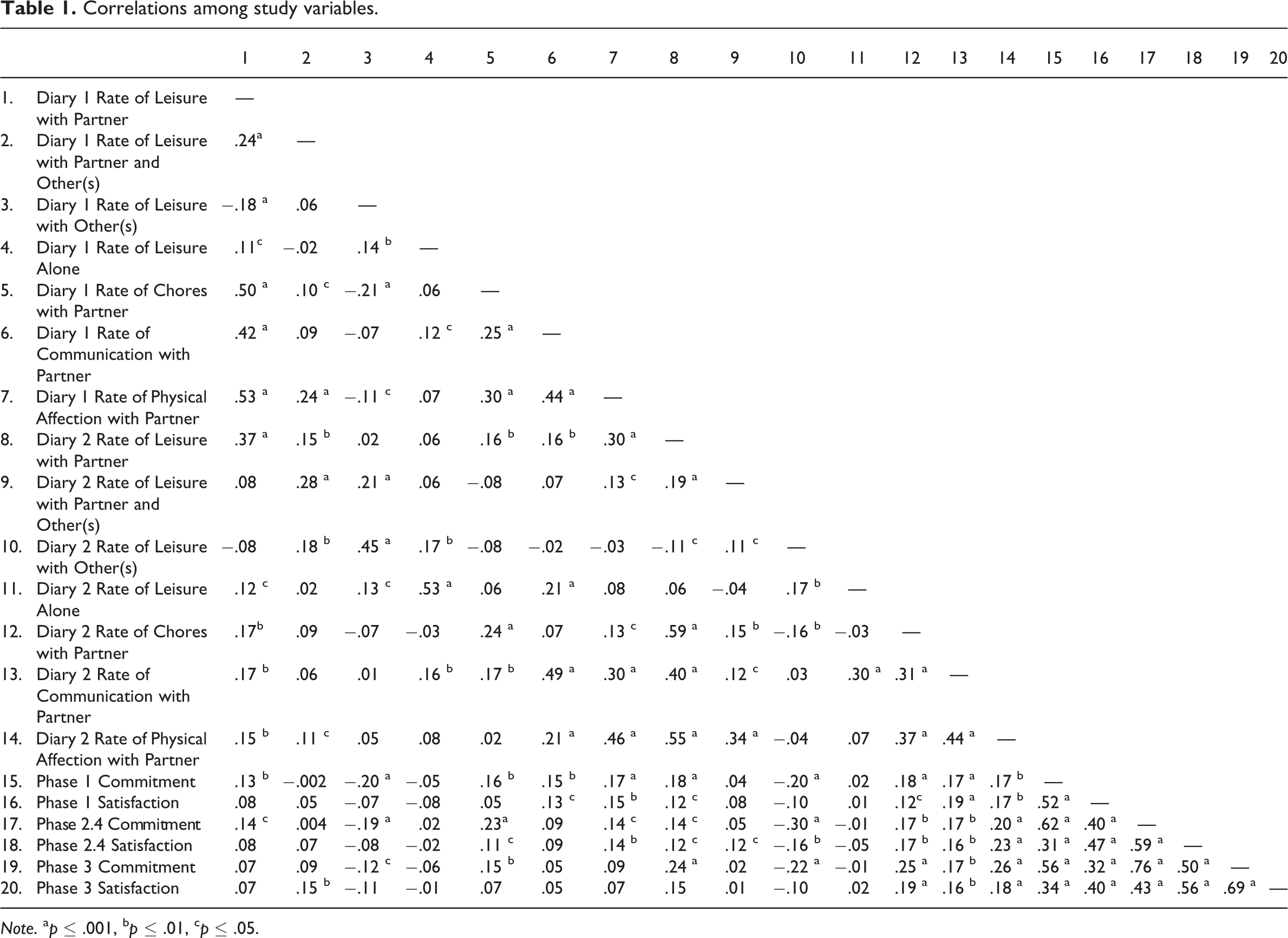
Note. ap ≤ .001, bp ≤ .01, cp ≤ .05.
Leisure in various social contexts
First, we examined the rate and proportion of each type of activity in each social context. The average weekly rates of activities and proportions of total weekly leisure in each social context are presented in Table 2. There were no reported instances of physical affection with one’s partner and other(s) or alone, or communication alone in either diary phase; thus, these sections of the table are blank. Participants engaged in the highest rate and frequency of leisure alone, followed by with their partner, with other(s) (but not their partner), and with their partner and other(s). On average, participants engaged in approximately 25% of their total weekly leisure activities with their partner in the presence of others. The rate of leisure with one’s partner and others and the proportion of total leisure represented by this context were significantly greater than 0 in both Diary 1 (rate: t(402) = 17.36, p < .001; d = .87; proportion: t(400) = 18.34, p < .001; d = .92) and Diary 2 (rate: t(333) = 14.80, p < .001; d = .81; proportion: t(333) = 16.08, p < .001; d = .88). This is consistent with our hypothesis (H1) that leisure activities with one’s partner regularly occur in group settings.
Average weekly rates and proportion of total weekly activities spent in various social contexts.
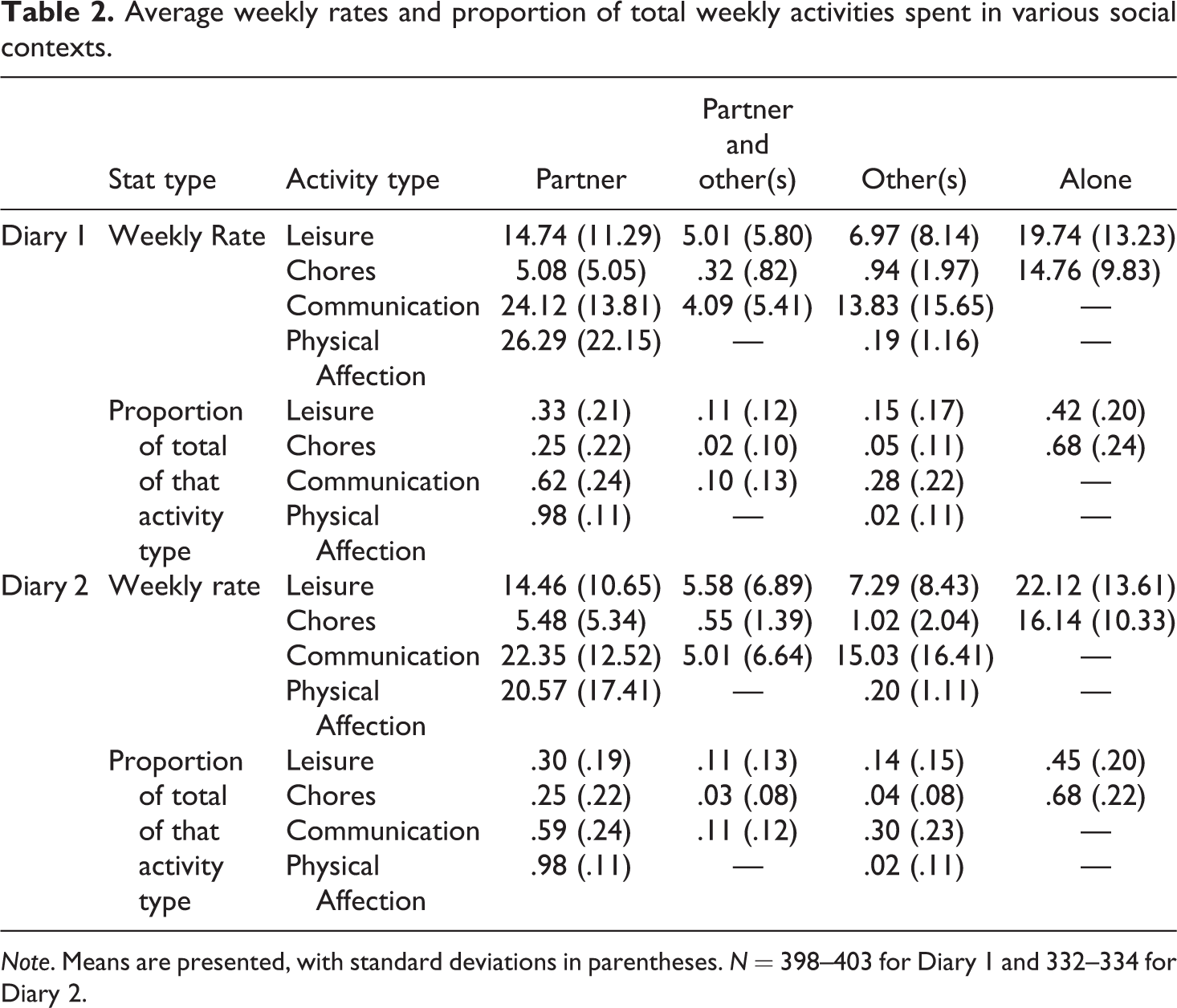
Note. Means are presented, with standard deviations in parentheses. N = 398–403 for Diary 1 and 332–334 for Diary 2.
Short-term associations with commitment and satisfaction
Next, we examined the association of the rate and proportion of engagement in leisure in each context with future commitment and relationship satisfaction. To do so, we ran MLMs with individuals nested within couples, with predictors and outcomes occurring at level one (individual) controlling for level two (couple). Four models were run examining the short-term effects, two with the weekly rate for each social context predicting outcomes (satisfaction and commitment), and two with the proportion for each category predicting the outcomes. The outcomes for the short-term effects were satisfaction and commitment from Phase 3, and were predicted by either the rate or proportion of leisure activities in each social context from Diary 2 (Phase 2.7). These time points were separated by approximately 1 month. For the proportion analyses, leisure activities alone was the reference category. In all models predicting relationship satisfaction or commitment we controlled for standardized Phase 1 values of the respective outcome.
Both the rate and proportion of leisure with one’s partner were positively associated with commitment, and the rate was positively associated with relationship satisfaction. In contrast, both the rate and proportion of leisure with others were negatively associated with individuals’ commitment. Inconsistent with hypotheses (H2), neither the rate nor proportion of leisure with one’s partner and other(s) contributed significantly to the models. These results are summarized in Table 3.
Short-term associations of leisure activities in different social contexts with commitment and satisfaction.
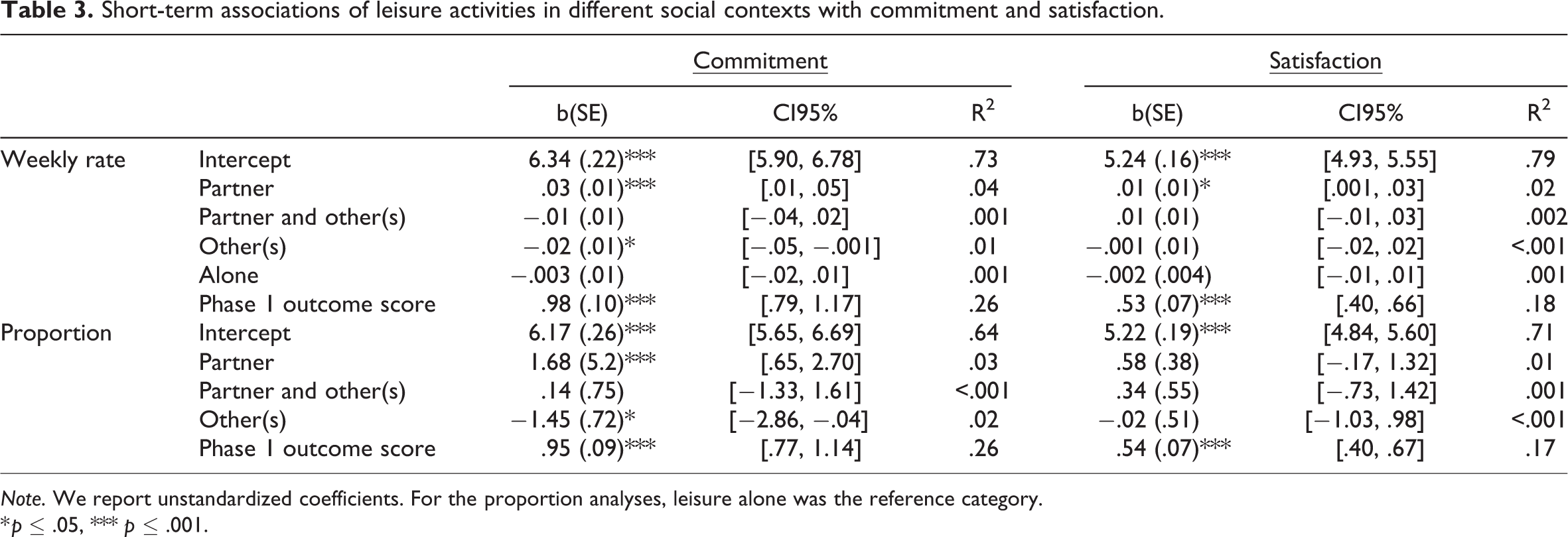
Note. We report unstandardized coefficients. For the proportion analyses, leisure alone was the reference category.
* p ≤ .05, *** p ≤ .001.
Long-term associations with commitment and satisfaction
Following the same specifications as above, we also ran MLMs predicting commitment and relationship satisfaction over a longer term, with Diary 1 (Phase 2.1) leisure activities in each social context predicting Phase 2.4 commitment and satisfaction approximately 3 months later. The rate and proportion of leisure were not significant predictors of long-term commitment or satisfaction for any of the social contexts. Results of these analyses are presented in Table 4.
Long-term associations of leisure activities in different social contexts with commitment and satisfaction.
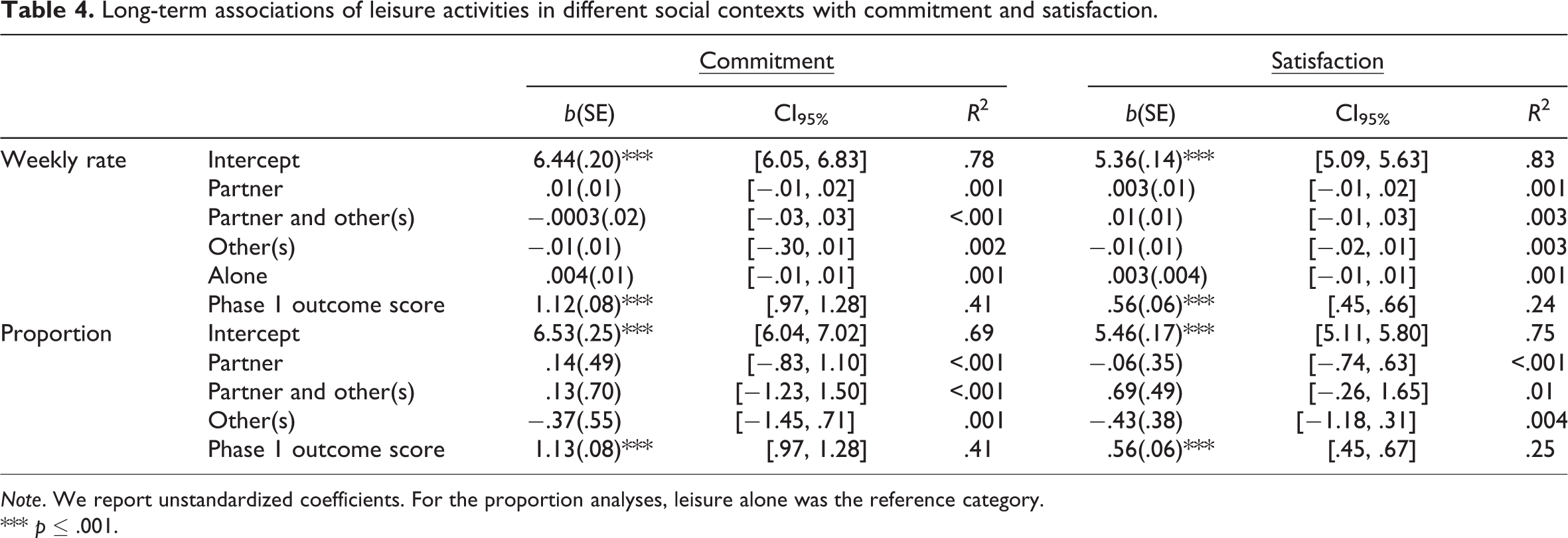
Note. We report unstandardized coefficients. For the proportion analyses, leisure alone was the reference category.
*** p ≤ .001.
Moderation by previous relationship quality
Next, we reran the models above with the respective Phase 2.4 outcome (satisfaction or commitment) included as a moderator of the association between rate or proportion and the same outcome at Phase 3. This analysis tested whether the patterns above were particularly true of those previously experiencing higher or lower relationship quality. We only ran these moderated models for the short-term effects (i.e., predicting Phase 3 outcomes with Diary 2 leisure in various contexts moderated by the respective Phase 2.4 outcome) given that the long-term effects were largely not significant. That is, we included all of the original predictors from a given model (e.g., weekly rate of leisure in each context), the respective Phase 2.4 outcome score (e.g., relationship satisfaction if relationship satisfaction is the outcome), and the interaction between the original predictors and the Phase 2.4 outcome, as predictors in the moderated model. When any of the interactions emerged as significant, we ran simple slopes analyses to determine how the effect of the predictor varied at high (+1SD) and low (−1SD) levels of the Phase 2.4 outcome.
Inconsistent with hypotheses (H3), only two interactions emerged as significant: the interactions of Phase 2.4 commitment and the rate (b = −.02, SE = .006, p = .001, CI95%: [−.03, −.01], R2 = .04) and proportion (b = −1.66, SE = .49, p = .001, CI95%: [−2.62, −.71], R2 = .04) of leisure with one’s partner during Diary 2 predicting Phase 3 commitment. Simple slopes analyses revealed that the association of leisure with one’s partner with commitment was significant for individuals with low (rate: b = .05, SE = .01, p < .001, CI95%: [.03, .07], R2 = .11; proportion: b = 3.45, SE = .72, p < .001, CI95%: [2.02, 4.88], R2 = .08) but not high (rate: b = .01, SE = .01, p = .382, CI95%: [−.01, .03], R2 = .003; proportion: b = .12, SE = .56, p = .826, CI95%: [−.98, 1.22], R2 < .001) Phase 2.4 commitment. This indicates that individuals previously experiencing lower commitment may experience the greatest relational benefits from engaging in leisure activities with their partner. These results are illustrated in Figure 1.
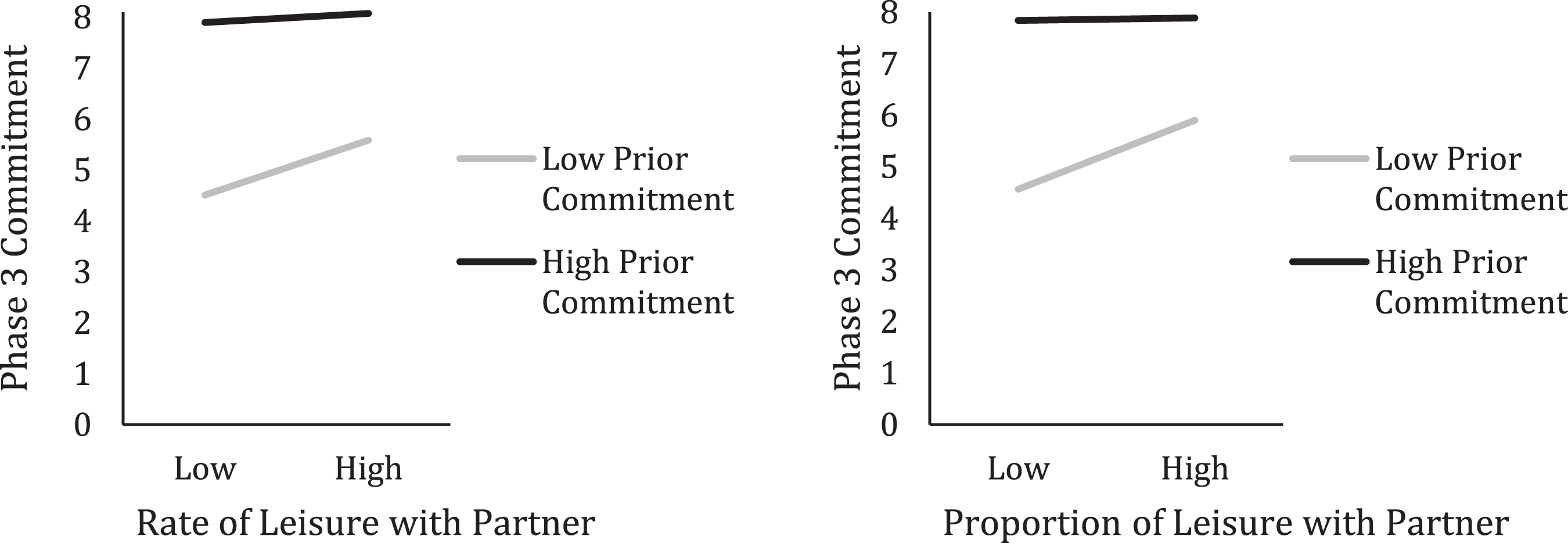
Association of engagement in leisure activities with one’s partner and commitment 1 month later as moderated by prior commitment.
Time spent with partner on different activities
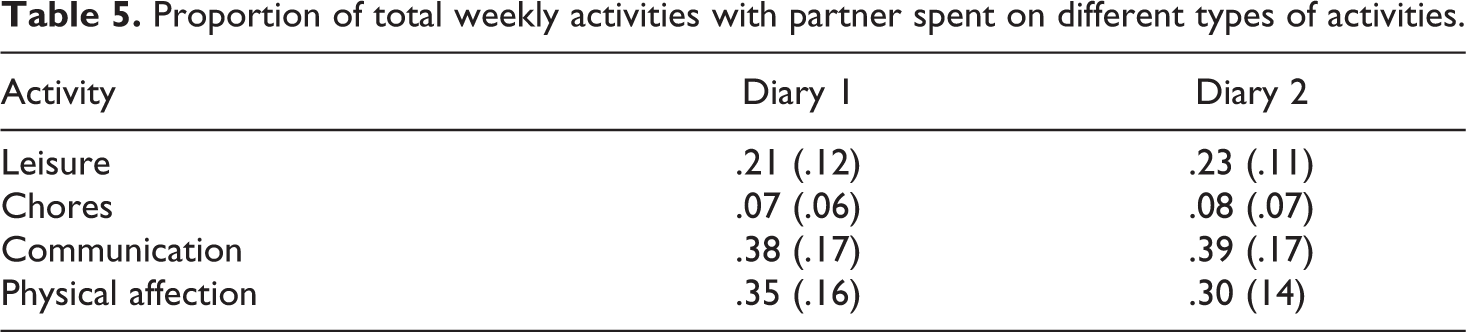
In our remaining analyses, we examined the rate and proportion of engagement in various relationship behaviors with one’s partner and their association with relationship quality. We calculated the weekly rate as described above, and the proportion of the total activities with one’s partner by dividing the raw rate for each activity type (total activities engaged in within each category over the 10 days) by the total number of activities with one’s partner overall. The descriptive information for these rates and proportions are displayed in Tables 2 and 5, respectively.
Proportion of total weekly activities with partner spent on different types of activities.
Associations with commitment and satisfaction
Next, we conducted MLMs with the rate or proportion of the relationship behavior predicting later commitment and relationship satisfaction. These models followed the same specifications as those above, but in this case the predictors were the rate or proportion of different activities with one’s partner, rather than the rate or proportion of leisure activities in various social contexts. Eight models were run, four with the weekly rate for each type of behavior predicting outcomes (Phase 2.4 satisfaction and commitment, Phase 3 satisfaction and commitment), and four with the proportion for each category predicting the outcomes. For the proportion analyses, we varied the reference category to allow for multiple group comparisons, but present the results in our tables when the reference category is physical affection. As above, we control for Phase 1 standardized values of the respective outcome in all models. The short-term effects (Diary 2 to Phase 3) are presented in Table 6; the long-term effects (Diary 1 to Phase 2.4) are presented in Table 7.
Short-term associations of different activities with one’s partner with commitment and satisfaction.
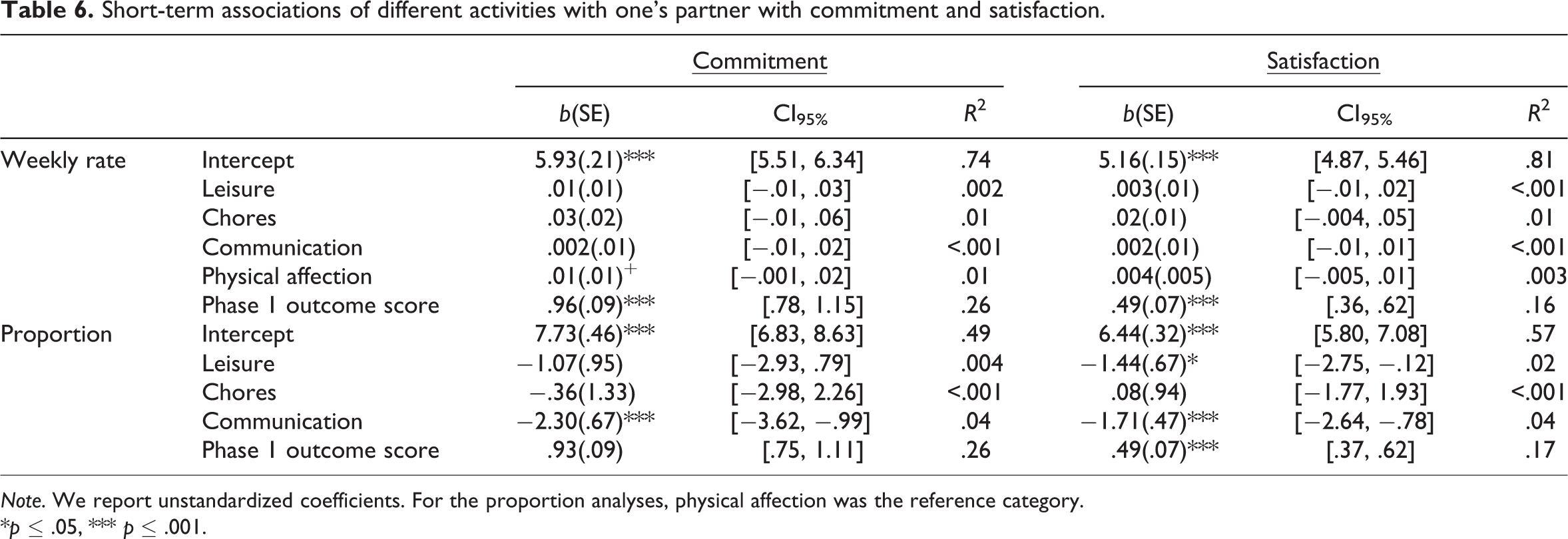
Note. We report unstandardized coefficients. For the proportion analyses, physical affection was the reference category.
*p ≤ .05, *** p ≤ .001.
Long-term associations of different activities with one’s partner with commitment and satisfaction.
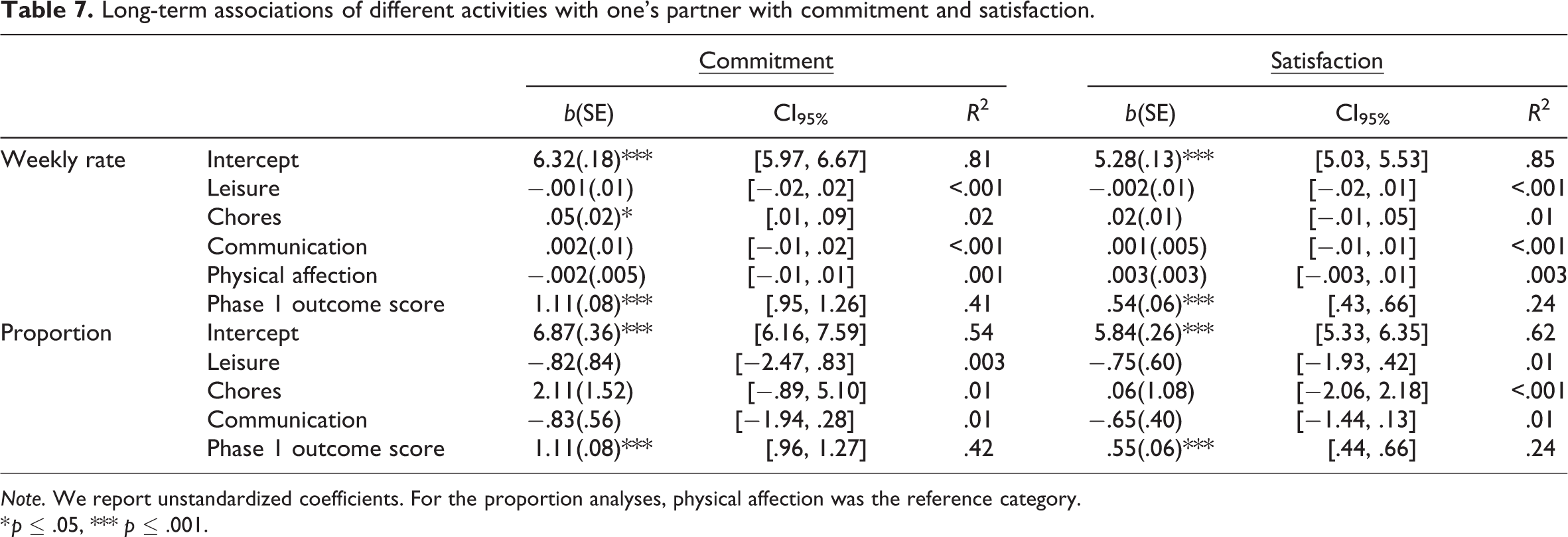
Note. We report unstandardized coefficients. For the proportion analyses, physical affection was the reference category.
* p ≤ .05, *** p ≤ .001.
In the short term, the rate of physical affection with one’s partner was marginally positively associated with commitment. In the proportion analyses, there was a positive association between physical affection and both commitment and satisfaction 1 month later, with communication being less strongly associated with satisfaction and commitment than physical affection, and leisure being less strongly associated with satisfaction than physical affection. When the reference group was changed to communication, there were no significant differences between communication and leisure (b(SE) = 1.13(.83), p = .178, CI95% = [−.52, 2.77]) or chores (b(SE) = 1.64(1.28), p = .204, CI95% = [−.89, 4.16]). These results are partially consistent with hypotheses (H4).
In the long term, only the rate of chores predicted commitment. That is, the more chores participants engaged in with their partner, the greater their commitment 3 months later. Changing the reference category to communication did not result in any significant comparisons. These results are partially consistent with hypotheses (H4).
Change in activities over time
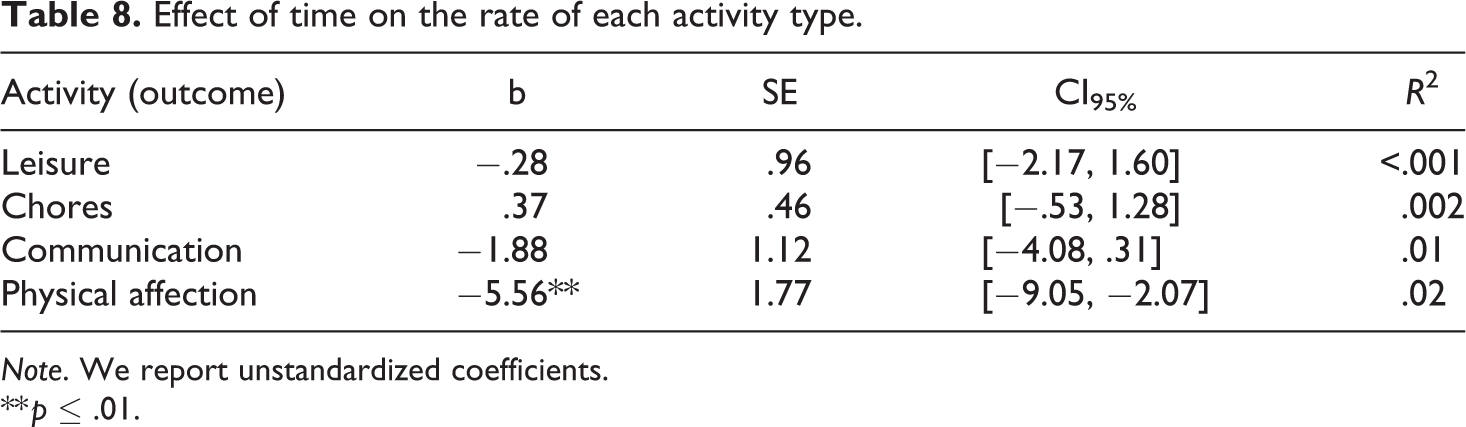
Finally, we examined the change in the rate of each type of activity with one’s partner from the first to second diary by running two-level growth models, with time nested within couples, and time (diary number, centered on Diary 1) predicting engagement in each category of activities. Separate models were run for each activity type, and results are summarized in Table 8. Partially consistent with hypotheses (H5), only the rate of physical affection changed over time, with partners engaging in significantly less physical affection (an average of approximately six fewer behaviors per week) at Diary 2 than 6 months earlier at Diary 1. Upon reviewer request, we reran models controlling for relationship length. The pattern of results above held for all types of behaviors.
Effect of time on the rate of each activity type.
Note. We report unstandardized coefficients.
** p ≤ .01.
Discussion
We examined the frequency of leisure activities in different social contexts, the frequency of different relationship behaviors with one’s romantic partner, and their association with relationship satisfaction and commitment. The shared leisure literature has demonstrated relational benefits of engaging in such behaviors with one’s romantic partner, including higher relationship satisfaction, love, and a lower likelihood of breakup (e.g., Berg et al., 2001; Johnson et al., 2006). The current research replicated these effects when examining the effects of leisure in various social contexts, demonstrating links between the rate and proportion of young adults’ leisure with their partner and short-term relationship satisfaction and commitment. We did not find any long-term effects of leisure with one’s partner, indicating the need for sustained leisure over the course of relationships to maintain its benefits.
We also extended this previous research by examining whether leisure in other social contexts is associated with relationship quality. We predicted that leisure with one’s partner commonly occurs in group settings, and that it would benefit one’s romantic relationship. Although we found that this is a fairly common occurrence, leisure in this context was not uniquely associated with romantic partners experiencing higher relationship quality. We propose two potential explanations for examination in future research. First, the lack of significant results in the current study could be attributable to one of the study limitations. That is, we did not record who the “others” or group members were that people engaged in leisure activities with. This generalization presents opportunities for a net zero effect, when in reality group leisure may be beneficial or detrimental depending on the group. For example, consider going out to eat at a restaurant with your partner and your mutual friends, whose company you thoroughly enjoy. Now consider the same behavior, going out to eat at a restaurant, but instead with your partner and your coworkers, who you do not get along well with. In the current study, each of these scenarios falls under the same umbrella category of leisure with your partner and others, but may be vastly different experiences triggering different emotional responses, and thus different relational consequences. Given this, the hypothesized relational benefits of group leisure may exist, but only in particular groups. Therefore, future research should examine the relational benefits of leisure in specific types of group settings.
Another explanation is simply that there are small or no relational benefits of group leisure. Previous research has demonstrated that self-expansion, which commonly includes shared leisure activities, and its association with perceived health is mediated by an increase in positive affect (e.g. Stanton et al., 2020), and experiences of affect are stronger in dyads than groups (Moreland, 2010). In the context of leisure solely with one’s partner, this strong, positive affect may be attributed to one’s partner, and thus benefit the relationship. In group settings, there are a variety of possible sources one’s positive affect could be attributed to, thus diluting the benefits for any one relationship. Similarly, Orthner (1975) found that leisure activities requiring greater interaction by those engaging in them are more strongly associated with marital quality than activities that require less interaction, suggesting that greater interaction in leisure settings provides greater opportunity for relational benefits. Group leisure may decrease the amount of interaction with any one group member, thus lowering the potential for benefits specifically to one’s romantic relationship. Therefore, engaging in leisure activities with one’s partner in group settings may provide fewer benefits for one’s romantic relationship, but provide small (though perhaps negligible) benefits to one’s relationship with each group member. Future research should determine whether this affect and interaction dilution occurs in group settings and how it may moderate the costs and benefits of positive and negative experiences for one’s relationships.
Consistent with research demonstrating negative associations between individual leisure and marital satisfaction (Orthner, 1975), we found that leisure alone did not contribute to relationship satisfaction or commitment, and leisure activities with others (and not one’s partner) was actually detrimental to one’s commitment in the short term. These results also mirror findings from previous research demonstrating that time outside the relationship with others may take time away from the relationship (e.g., Ogolsky et al., 2016). That is, given that individuals only have so much time and resources to contribute to their various close relationships, dedicating these resources to relationships with others rather than one’s partner may be costly for one’s romantic relationship. However, we note that although it does not necessarily contribute to romantic relationship quality, engaging in leisure activities with others may be beneficial to overall well-being (van der Horst & Coffé, 2012). Thus, it may be inadvisable to promote romantic relationship maintenance at the expense of other close relationships.
We also examined whether the impact of leisure across social contexts may be moderated by previous relationship quality. That is, we predicted that those previously experiencing lower relationship quality would benefit more from leisure in group contexts than those previously experiencing higher relationship quality. Although this hypothesized pattern of effects emerged, it was not for the interaction we anticipated. Instead, prior commitment only moderated experiences of leisure with one’s partner, with greater benefits of leisure in this context for those previously experiencing lower commitment. This might be explained by the same logic as our previous finding about leisure with one’s partner and others. Namely, the specific others involved may differentially affect the perceived relational benefit. That is, engaging in leisure activities in the context of mutual friends may help enhance the relationship whereas leisure in the context of less enjoyable others may do the opposite.
Interestingly, despite previous research independently linking each to relationship quality (e.g., Berg et al., 2001; Dobson et al., 2020; Gulledge et al., 2003; Johnson et al., 2006; Sharaievska et al., 2013; Sprecher & Hendrick, 2004), there were no significant, unique effects of the rate of leisure, chores, communication, or physical affection in the short or long term for satisfaction, and no short-term effects for commitment. These null findings should not imply that these behaviors are not meaningful or that they should be done less frequently. Indeed, past research on “routine” relationship maintenance (see Ogolsky & Bowers, 2013) demonstrates that although patterns of everyday communication may not dramatically influence relationship quality, the absence of these routines may have deleterious effects on the relationship. One interpretation of these results is that the overlap between these behaviors may account for the majority of their contribution to relationship quality found in previous research. The most obvious commonality between each type of behavior is that it involves spending time with one’s partner. Thus, the current findings, in combination with previous research, may suggest that it is perhaps not the specific type of behavior, but the desire and choice to spend time together, that contributes most to romantic relationship quality.
However, when examining the relative contributions of each type of behavior in the proportion analyses, one’s proportion of physical affection was more strongly associated with short-term relationship quality than communication and more strongly associated with short-term satisfaction than leisure. These findings replicate past research demonstrating relational benefits of sexual activity and physical affection (e.g. Dobson et al., 2020; Gulledge et al., 2003). Additionally, given that no other comparisons were significant, these results suggest that physical affection may be the type of behavior that produces the most relational benefit as measured by increased satisfaction and commitment. These results may be particularly important given that partners’ rate of physical affection decreased over 6 months by an average of approximately six fewer behaviors per week. This mirrors past findings on sexual frequency, quality, and desire, showing marked declines as relationships progress (e.g. Klusmann, 2002), and extends it to include physical affection more broadly. It also highlights the importance of future research regarding the causes and potential deterrents of declining physical affection in relationships over time.
These data also offered a unique opportunity to examine our hypotheses with a longitudinal, multi-wave study. However, the data were collected about 25 years ago, and some research suggests that patterns of activities engaged in with romantic partners have changed over time (Voorpostel et al., 2010). Interestingly, this previous research suggests that shared leisure time has become more important over the last several decades, not less, indicating that the effects observed in the current study may actually be larger in more recent samples. It is also possible that these effects may differ based on relationship stage. For example, our results suggest that physical affection may produce the most relational benefit, but our sample consisted of young adults in relationships that averaged only 2 years. It is possible that as couples age, physical affection may become less important and be overtaken by other relationship behaviors, such as communication, as the behavior producing the greatest relational benefit. Additionally, past research suggests that leisure satisfaction may be more strongly associated with relational outcomes than the quantity of leisure (Berg et al., 2001). This is important to note, as the majority of effects in the current research are fairly small, even when statistically significant. Given the potential for stronger effects of leisure satisfaction and for these effects to have changed over time or to vary by relationship stage, we recommend replication with the inclusion of leisure satisfaction in a more modern, diverse sample.
Finally, we focused on leisure broadly, providing initial evidence of these effects for the first time. However, the fact that this study involved secondary data analysis impacted our ability to incorporate recent models of couple and family leisure that categorize leisure into distinct groups. Some examples include Orthner’s (1975) joint and parallel leisure activities (which differ based on the amount of interaction they require), the Core and Balance Model’s (Zabriskie & McCormick, 2001) core and balance leisure activities (which differ based on their novelty), and the Family Activity Model’s (Melton, 2017) balance-parallel, balance-joint, core-parallel, and core-joint activities. Different types of behaviors have been differentially associated with relationship outcomes in this previous research, as joint leisure activities were most strongly positively associated with marital satisfaction followed by parallel activities, and individual activities (engaged in without one’s partner) were negatively associated with satisfaction (Orthner, 1975). Thus, future research may wish to examine the intersection of the current work and recent theory. For example, couples and families may commonly engage in core activities (predictable or typical activities) with only one’s partner or family present, but engage in balance activities (novel or rare activities) in various social contexts. Additionally, engagement in parallel activities with one’s partner and others could provide further explanation for its null effect on relationship quality, given the typically smaller contribution of parallel leisure to relationship outcomes than joint leisure (Orthner, 1975). Thus, further examination of the types of leisure in each context may illuminate why leisure in some contexts contributes more to relationship quality than others.
Conclusion
We present data from a longitudinal, multi-wave study of romantic couples investigating the association of leisure in various social contexts, and different relationship activities engaged in with one’s partner, with romantic relationship quality. Our findings suggest that shared leisure is particularly beneficial to one’s relationship insofar as it occurs with one’s partner and no one else. Additionally, although spending time with one’s partner generally may matter more for relationship quality than the specific type of behavior, physical affection appeared to be most strongly associated with relationship quality. Understanding why group leisure with one’s partner did not contribute to relationship quality, and promoting physical affection and couple-centered leisure activities may be the next step in aiding couples who seek to maximize the relational benefits of their leisure time.
Footnotes
Funding
The author(s) disclosed receipt of the following financial support for the research, authorship, and/or publication of this article: Preparation of this article was supported by a grant from the National Institute of Mental Health (R01 MH47975) and a U.S. Department of Agriculture/National Institute of Food and Agriculture HATCH grant (793-349).
Open research statement
As part of IARR’s encouragement of open research practices, the authors have provided the following information: This research was preregistered. The aspects of the research that were pre-registered were the hypotheses, methods, and analytic plan. The registration was submitted to the Open Science Framework (see  ). The data used in this research is publicly available at https://osf.io/edbca/.