




Abstract
This study’s goal was to investigate the extent to which general classroom teachers were implementing practices to promote the inclusion of students with visual impairment (VI) using self-regulated learning (SRL) as a framework for the study. SRL can help students, including struggling students or students with special needs, acquire the skills to take control of their learning situations as well as feel more included in the classroom. Observations and self-report questionnaires designed from SRL practices that foster inclusion were used to collect the data. Overall, the teachers provided limited opportunities at a depth that promoted inclusion or supported the SRL development of students with VI. Teacher training in SRL and student readiness to meet higher expectations will support inclusion within an SRL framework.
Introduction
How to effectively promote inclusion in the general education classroom continues to be an important focus globally (UNESCO, 2020). Several models exist from which educators can work to become more inclusive (e.g., Cast model of universal design for learning (UDL), Katz’s Three Block Model, differentiated instruction, Inclusive Pedagogical Approach in Action Framework (IPAA). Loreman (2017) took a critical lens to these models and proposes general principles upon which inclusive education instruction may be based. Loreman writes: The design of inclusive pedagogy is intended to engage all students in a rich, meaningful form of learning that is flexible enough to allow them to modify their learning situation to their needs and maximize their learning. It does not ignore individual differences, but it accommodates individual differences and advocates for personalizing means of learning without singling out individual students. At the same time, it does not “sacrifice” the quality of education. Instead, it promotes teachers’ use of high-quality instruction that supports “constructivist and social constructivist models of instruction that involve peer collaboration, goal-directed learning, communication, and teacher guidance (Loreman, 2017, p. 14).
Self-regulated learning as a means to evaluate inclusion
Self-regulated learning (SRL) practices align well with the principles that Loreman (2017) outlined for inclusive pedagogy and is a well-researched instructional practice for all students in schools. Self-regulation represents an individuals’ capacity to control thoughts and behaviors to achieve personal goals and respond to environmental demands (Zimmerman, 2008). Applications of SRL theory, as described by Butler et al. (2017), involves taking deliberate control of one’s behavior and thought to engage successfully in all kinds of activities. To achieve this goal, learners need to be “metacognitively, motivationally, and behaviourally active participants in their own learning process” (Zimmerman, 2008, p. 167). These elements have a profound influence on the attainment of skills that are necessary to succeed in school and beyond (Butler et al., 2017).
Developing an effective form of SRL is not solely determined by the individual but also significantly influenced by the environment (Butler, 2002b). Several researchers investigated and identified features of classroom interactions that shape and enhance SRL (Boekaerts & Corno, 2005; Butler, 2002b). The results of these studies contributed to the documentation of a set of practices that enhance academic outcomes and support learners in their approach toward SRL. Promising practices involve broad categories of educational instruction including: (1) creating supportive non-threatening environments and evaluations, (2) creating opportunities for learners to encounter challenges and control their learning situation, (3) fostering autonomy by providing choices and evaluating one’s behavior and techniques, (4) designing activities that support engagement in a full cycle of strategic actions, and (5) promoting positive motivational beliefs (Butler & Schnellert, 2015; Butler et al., 2017; Perry, 2004; Perry & VandeKamp, 2000; Perry et al., 2002).
As mentioned, these SRL practices are in direct line with the inclusion pedagogy principles described by Loreman (2017), making SRL a useful framework from which to observe the level of inclusive practices within a classroom. Teachers who design instruction with the intent of promoting self-regulation by emphasizing learning how to learn and by accommodating individual differences in learners’ interests and abilities, can also naturally support inclusion. Similarly, SRL-promoting practices offer choices to foster student autonomy, control challenges, and create a context accommodating individual differences (Perry, 2004). It engages the student in self-assessment, where they learn how to generate goals and information necessary for “good” achievement and guide their performance according to these objectives (Butler et al., 2017; Perry, 2015). It also provides support and guidance through teacher feedback and creates opportunities for peer support (Butler et al., 2017).
SRL prompting practices were not introduced initially to support inclusion; however, a number of researchers (Butler, 2002a; Butler & Schnellert, 2015; Perry, 2004) argue they are powerful instructional strategies that enable educators to address the diverse needs in general classrooms. In fact, strategies that promote self-regulation have been found “effective for improving achievement in students who struggle academically, including students with exceptional learning needs, such as learning and developmental disabilities” (Perry, 2015, p. 47). There is evidence to suggest that this model has been effective in high school and beyond in addressing the needs of students with learning disabilities (Butler, 2002a) and in supporting students with behavior challenges being served in a Response to Intervention Model (RTI; Menzies & Lane, 2011).
SRL and students with visual impairments
Currently, a lack of SRL research exists that focuses specifically on individuals with visual impairment (VI; Argyropoulos et al., 2012). However, efforts of some researchers to employ the theory of SRL in the education of students with VI is noted. For example, Van Reusen and Head (1994) presented a case study of a student with VI to explain how teaching metacognitive strategies could enhance their academic performance. Argyropoulos et al. (2012) conducted a study to assess and compare the self-regulation strategies that students with VI use in two academic subjects: language arts and math. They found that the students with VI used the same strategies regardless of content area and did not adjust their strategies to the task requirements, highlighting a need for more work in SRL. Zebehazy and Butler (2015) sought to demonstrate how SRL teaching strategies, such as implementing instrumental support, using strategic questioning, and providing meaningful feedback, could be integrated into disability-specific instructional needs (i.e., the expanded core curriculum [ECC]) to promote higher order thinking and problem solving skills of students with VI.
Students with VI are more likely to experience challenges with fundamental skills that are necessary to navigate daily activities due to vision impairment (Allman & Lewis, 2014). In an ideal learning process, students can increase their motivation to learn, develop, adapt, or even assess the strategies that are necessary to accomplish a task by observing and learning from others. This kind of interaction is more difficult and unlikely to occur incidentally for students with VI unless opportunities for social interaction, receiving and giving feedback, and engaging in self-assessment of their techniques are intentionally provided through classroom activities. In this regard, SRL can provide such opportunities by exposing the students to extensive situations in which they need to engage in a strategic action cycle, to share their strategies, assess each other’s strategies, receive feedback, adapt, and ultimately, generalize the learning experience to similar contexts (Butler & Schnellert, 2015). In turn, these opportunities also can enhance the inclusive atmosphere of the classroom as students with VI work together with peers on the same tasks.
SRL in international contexts
In addition to showing promise for students with special needs, some research also indicates success of the framework in the classroom context for students who are culturally and linguistically diverse (Perry et al., 2017), or from specific minority groups (e.g., Canadian First Nations students in the work of Yee, 2015). The major elements of self-regulation theory seem to have universal application. “Students across cultures who regulated their cognition, motivation, and behavior had higher academic achievement” (McInerney, 2011, p. 488). McInerney (2011) pointed out the importance of considering the cultural factors and their effect when researching SRL in non-western cultures. This is crucial to avoid neglecting findings that do not conform with Western models and might still be significant to its context. He suggests considering both cultural differences and similarities in the research.
SRL in the national context
Research and theory building on SRL has mainly been conducted outside the Kingdom of Saudi Arabia (KSA) context. However, in recent years, a switch to project-based learning has occurred in schools in the KSA where students with VIs are included (Ministry of Education of Saudi Arabia, 2016). This approach, which places the student at the center of the learning process, is believed to support SRL (Stefanou et al., 2013). Research shows that project-based learning can improve students’ metacognition, critical thinking, effort regulation, and peer learning, all key aspects of SRL (Stefanou et al., 2013). This type of learning should theoretically lend itself well to incorporating and studying SRL in the classroom, and, in turn, providing an inclusive environment for students with VIs.
Purpose of the study
This study aimed to investigate the level of inclusive teaching practices used in a general classroom to include students with VI, using SRL practices as a framework. The context of a secondary school in the KSA where students with VI attend general classes was used to achieve the study goal. SRL practices served as a base and a scale to observe for inclusive opportunities in classroom interactions for students with VIs as well as to identify ways in which inclusion might be enhanced. The following research questions guided the study:
What practices did the general classroom teachers use to include students with VI?
To what extent were these practices compatible with those suggested in SRL research?
Methods
Context of the study
The study took place in a public secondary school in the KSA area with a specific mandate to include students with VI. The school used a resource room model where students were included in the general classroom for all subjects except: English, computer science, physics, chemistry, math, and biology. Resource room teachers trained as teachers of students with VIs taught those subjects as well as braille and assistive technology. They also provided general classroom support (e.g., reading brailled products, adapting materials) when requested by the student or general classroom teacher.
The general classroom teachers in this school were trying to implement project-based learning as mandated by the Ministry of Education (Ministry of Education of Saudi Arabia, 2016). However, no teachers who participated received specific training on SRL practices or effective implementation of project-based learning. Given this context, teachers’ typical practices were examined through an SRL lens to identify those that naturally occurred and opportunities where use of SRL practices might further enhance inclusion of students with VI.
Participants and setting
The research ethics board at the University of British Columbia approved this study. In addition, the school district in Saudi Arabia reviewed and approved the research protocol and provided an approval letter to conduct the study.
Four general classroom teachers from the school and the four students with VI in their classrooms consented to participate. Since KSA has a dual system of education divided by gender, all participants were female. The classrooms of the participating teachers included 21 students (4 students with VI and 17 students with no identified needs) in their second level of secondary education (i.e., age 17). The same four students with VI were included in each of the four teachers’ classrooms. Two students had low vision (i.e., measurable vision but have difficulty accomplishing or are unable to accomplish visual tasks) and two were blind. The resource room teachers did not receive training to conduct functional vision or learning media assessments, so specific information about vision was limited.
Instruments
Mixed methods were used to gather information about inclusive practices and their relationship to SRL theory. In particular, the following instruments were used:
Running record for direct classroom observations
Student with VI self-report questionnaire
Classroom teacher self-report questionnaire
The observational running record was based on the methods and SRL categories described and used by Perry (1998, 2015) and other SRL researchers (Butler et al., 2017; Reeve & Jang, 2006). Other categories specific to VI were added based on inclusion and VI research (Holbrook & Rosenblum, 2017; Katz, 2012). For an additional check on the content validity of the instruments, Perry was asked to review them for compatibility with the originals used in her research. The full data collection instruments (running record and questionnaires) are available upon request from the first author.
Running record
Instrument
The running record included a space to document teachers’ practices and students’ interactions with the used practices as they occurred in the classroom and a section to categorize observations into eight SRL categories: (1) the physical environment and classroom climate, (2) autonomy support, (3) opportunities to control challenges, (4) self-assessment, (5) teacher assessment and feedback, (6) accommodations for students with VI, (7) classroom tasks and activities, and (8) teacher interactions with the students.
Data collection
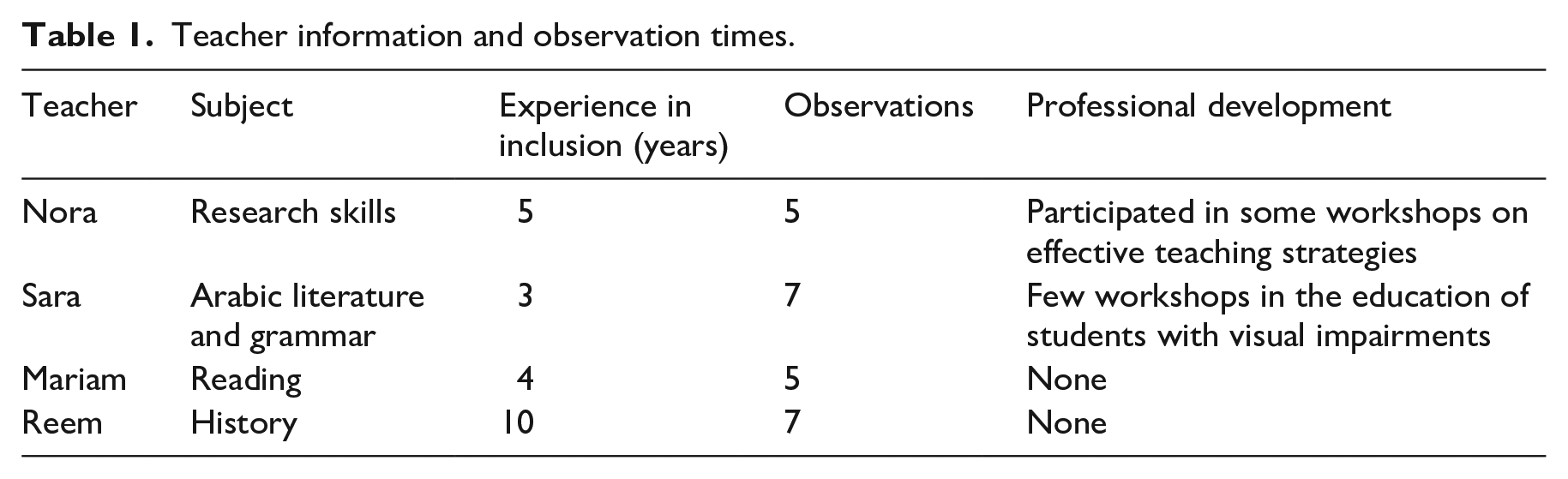
The teacher participants and students with VI were observed for one to two classes a week in their classrooms for 5 weeks. Table 1 shows teacher experience in inclusion, the total number of observations accrued in their classrooms, the subject areas that each teacher taught (all names are pseudonyms), and whether or not they reported having professional development opportunities. The number of observations differed based on the number of times the class was conducted per week and changes in the teachers’ schedule.
Teacher information and observation times.
During the observation, the researcher (first author) sat in a position that allowed her to observe what was happening in the classroom without interfering and recorded everything that was happening with attention to how the students with VI responded to each practice implemented by the teacher. After the observation, the researcher re-read the running record, elaborated on the information, and wrote questions beside the parts that needed clarification from the teachers or the students with VI. The general classroom teachers’ actions and interactions that were found relevant to the eight categories were gathered together under that category for analysis. For example, in the category of “autonomy,” the researcher would document from the running record instances where the teacher provided choices to the students in a given activity, project, task, or homework assignment and record the type of these choices (e.g., the time, the product, the learning resources, the partner[s], the working place).
Student self-report questionnaire
The student self-report questionnaire was based on the mentioned eight categories in the observation running record. Questions (a mix of yes/no and multiple choice questions) asked students to select an answer that was either indicative of high use of SRL practices, low use of SRL practices, or an absence of SRL practices. The researcher administered the questionnaire verbally to ensure its accessibility to all the students. Examples of selections by students in the questionnaire indicative of high use of SRL practices included: “I feel comfortable sharing my ideas in the classroom,” “the teacher gives us time to discuss the strategies we can use with a partner,” “my teacher asks me to assess my work,” and “my group is diverse including members with a mix of abilities.” Examples of selections by students indicating low or lack of use of SRL practices include: “I usually do the same work in a different way that my teacher decides” and “when I do not know an answer the teacher gives me the answer.”
The self-report gathered additional information about student interactions and perceptions in the general classroom based on their experiences overall as compared to the set number of observations conducted in the classroom by the researcher. It also highlighted where student perceptions about classroom interaction differed from the perceptions of teachers.
Teacher self-report questionnaire
The 14-item teacher self-report instrument was also derived from the eight SRL categories. In this instrument, the teachers placed themselves on a continuum regarding their teaching style. The continuum ranged from statements representing a high use of SRL practices (e.g., “I ask the students to assess their learning approach – provide a rationale for their choices in a learning task, identify what they learn from a discussion, reading, or activity”), to a low use of SRL practices (e.g., “I ask the student to assess simple aspects of their work – find their mistakes, give themselves a grade, evaluate their work”), to a lack of use of SRL practices (e.g., “I do not ask the students to reflect on their work or their learning approaches”).
This instrument obtained information about teacher practices that might not be acquired during the observation time and checked the compatibility of data (triangulation) that was generated from the responses of the teachers, the responses of the students with VI, and the observed interactions during the observations.
Data analysis
Running record data were organized and analyzed using Excel coding for teachers’ practices, behaviors, instructions, and language that met or did not meet the criteria for SRL practices in each of the eight categories. In addition, the analyses investigated the consistency to which the teacher engaged in SRL practices, using the rating system developed and described by Perry (1998, 2002, 2015). The system assigned a rating of 0 to 2 for each observed instance collected under each of the eight categories across observations. The rating was based on if and how well (i.e., quality of implementation) each observed practice aligned with that SRL category. Zero represented the absence of the practices in that category (e.g., no instances of self-assessment during the class observation); 1 reflected the presence of the practices but not in a way that fosters SRL (e.g., choices given that do not require much metacognition or lead to strategic action); 2 represented the use of practices believed to support students’ development of SRL. Then, based on the pattern of ratings (0–2) for each observed instance in each category of SRL practices across all observations, the teacher was given an overall rating for consistency based on the following 5-point scale:
Each time an instance in a category was observed, implementation:
5 = Always supported SRL (i.e., ratings of 2 for all instances gathered under that category across all observations)
4 = Most of the time supported SRL (i.e., ratings of 2 for more than half of the instances in that category across observations)
3 = Half of the time supported SRL (i.e., ratings of 2 for 50% of observations per category across observations)
2 = Seldom supported SRL (i.e., ratings of 2 for less than half of instances per category across observations)
1 = Never supported SRL. (i.e., no ratings of 2)
The self-report questionnaires of the teachers and the students with VI were analyzed using Excel and presented descriptively.
Researcher background and qualifications
In qualitative research, it is important to acknowledge the experience and lens of the researcher (Mays & Pope, 2000). The first author who collected and analyzed the data was a resource room teacher for students with VI 5 years ago in the school where the study took place. She studied supporting inclusive education at the graduate level and was familiar with the school system, had knowledge regarding inclusion issues of students with VI, understood the cultural context, and spoke Arabic as her first language.
Results
Phase 1: the consistency of the teachers’ use of SRL-promoting practices
Table 2 displays the consistency score (i.e., 1–5, see Data Analysis, Observation Data) each teacher obtained in each of the eight categories across all observation times. Most practices and strategies observed were not structured in a way to promote SRL. In terms of inclusion, some observed practices supported inclusion more than others.
Consistency rating of teacher practices across observations.
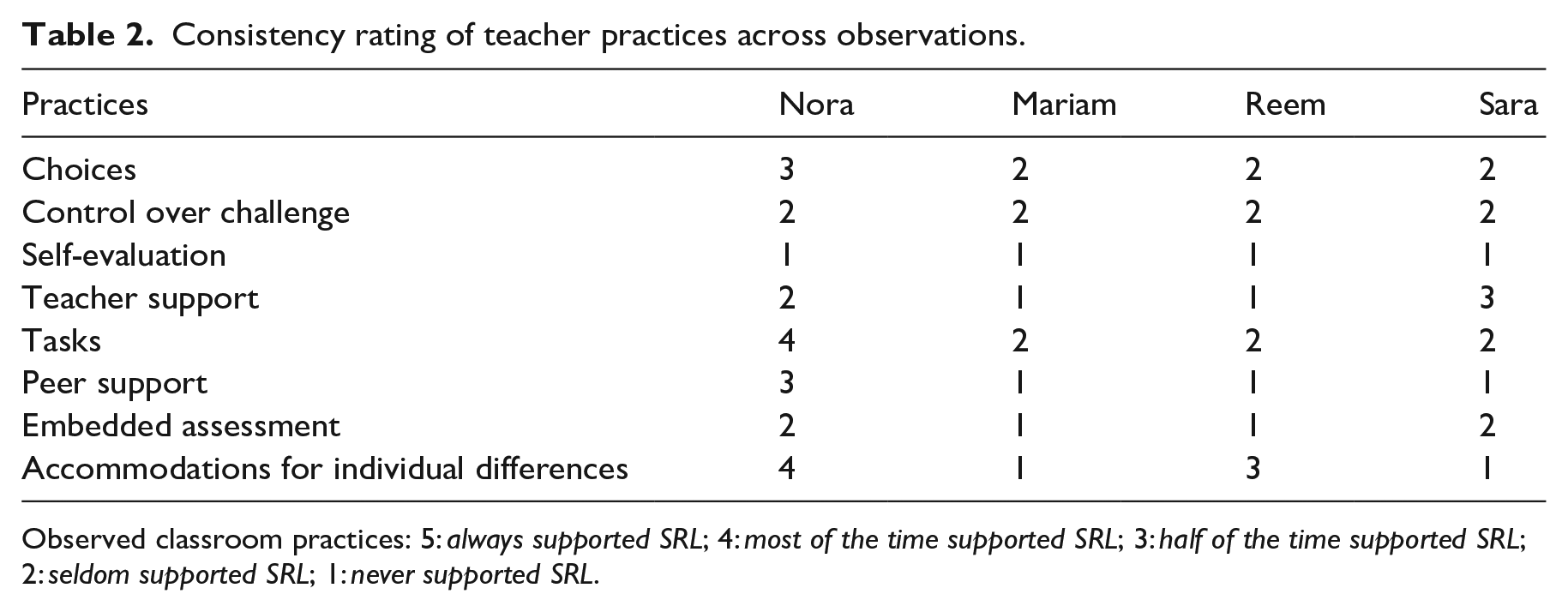
Observed classroom practices: 5: always supported SRL; 4: most of the time supported SRL; 3: half of the time supported SRL; 2: seldom supported SRL; 1: never supported SRL.
The physical environment and classroom emotional climate and routines
Classroom arrangement can send messages to students about who is in power, and who should be the source of information and social interactions (Katz, 2012). Decisions about seating arrangements should be made based on the nature of the task and the needs of the students (Wannarka & Ruhl, 2008). The nature of SRL activities and tasks require collaborative learning, giving the students opportunities to experience challenges and take control of their learning. While on the contrary, the nature of VIs requires arranging the environment in a way that fosters independence (e.g., freedom of movement, ability to access materials) and increases interactions and social skill development.
The participating students had to move between classes, which meant they encountered a variety of classroom environments that differed based on each teacher’s style and level and kind of professional development they received. In terms of adaptations to the classroom, Nora provided adapted worksheets that expected the student with VI to do the same quality and quantity of work as their sighted peers. They were observed engaging effectively in the learning process more often than in the other three classes. Nora provided the assistive technology (typically located in the resource room) needed to engage in activities on the students with VI table before starting the class. She also kept the table near the door for students with VI to make it accessible without requiring assistance from their teachers or classmates.
In the other three teachers’ classrooms, use of adapted learning materials or modifications to the classroom physical environment was not observed, which seemed to coincide with lower expectations. The students with VI engaged in the learning process doing something less demanding than their sighted peers. For instance, in Reem’s and Sara’s classes, the students relied on their memory and understanding of teacher instructions to guess the answer to questions, listened to the reading of a classmate instead of reading from their own book, and answered verbally instead of writing.
In terms of seating arrangements, all four teachers arranged the classroom in a way that would facilitate student interactions and collaborative learning; however, the teaching style and the activities were not always matched with this arrangement. In Reem’s and Sara’s classes, students worked mostly individually. In Mariam’s class, teacher-centered lectures predominated.
Opportunities to exercise autonomy and experience and control challenge
Developing student autonomy can be supported when teachers use three practices: providing choices, designing a learning experience that involves challenge with opportunities to control those challenges, receive teacher and student support, and to self-assess (Butler & Schnellert, 2015; Butler et al., 2017 Perry, 2004, 2015). Overall, few instances for autonomy were observed across the classrooms. During the observations, no instances of student self-assessment were noted.
Choices
Nora provided a lot of choices, but the designed learning experience was sometimes too complex for the students with little support on controlling the complexity. The other three teachers provided simple, limited, or no choices beyond the class project. Sarah and Reem’s activities were generally short-term, simple learning experiences, and Mariam’s tended to be too easy for the students.
Teacher support
Sara, Reem, and Mariam gave all the students including students with VI opportunities to choose their projects. However, they did not provide instrumental support to help them make choices that guided them toward independence or matched with their needs. In these classes, options were too open, requirements were simple, and no criteria was given to help the students make informed decisions regarding their partners or project.
For instance, Reem informed the students that they could choose any topic related to history and represent it in any format. The students with VI selected to work together on this project, although they had no restriction, as in Nora’s class, that prevented them from working with their sighted peers. The students with VI selected to print pictures of old currencies in Saudi Arabia and label the name of the king who was ruling the country at the time using Microsoft Word. Their project depended on the use of visuals and print, and printing and computer skills, which were challenging skill areas for all four students. This led to questions about how the students completed this project, why they were not encouraged to select something more relevant, and about how self-aware they were of strategies to support their unique needs and to use their strengths as a group.
Unlike the other three teachers, Nora tried to engage the students in a discussion regarding good and bad choices and how to select their topics. However, the discussion did not include rationales or co-constructed criteria with the students that guided their decisions. In summary, three of four teachers during the observations did not provide adequate support at any stage while the students worked on their projects, resulting in choices that did not meet the students’ needs or develop skills that could be generalized to other learning contexts. The fourth teacher (Nora) provided procedural support that was directive, and not designed in a manner that would guide the students toward independence.
Peer support
Essentially, the strategies and the practices that the teachers used to group the students limited productive forms of collaborative learning and opportunities to give and receive peer support. In one class, the students with VI were in a group that shared similar challenges (Nora’s class); in the other two classes (Sara and Reem), the students with VI mainly were paired or grouped with general students, participating in the learning process unequally and receiving unnecessary support from peers. This was evident when Nora gave general classroom students a survey to explore their interest and find partners with similar interests while grouping the students with VI together based on the disability. She thought this would help their learning as they all used technology to read and write and shared the experience of lack of vision. However, the group of students with VI was not really homogeneous. Not all of them read and write using braille or lack access to the visuals. Second, the group of students with VI, unlike the other groups, included students who all faced difficulty in using the computer, finding resources, and reading and using the resources, which put an extra burden on their learning and achievement.
Unlike Nora, Sara grouped the students based on their preferences. This resulted in one of the students with VI joining a diverse group, and the other three were together in a group with general students. Sara did not set or co-create criteria for grouping and engagement that ensured the diversity of the group or equal participation to effectively select a role in the learning task. Reem paired the students with VI with one to two high-achieving students to support them. Peers read for them when they did not bring their books, or gave them the answers to the teacher’s questions that were written on the board in place of them taking part in the text search for answers. The students with VI had no access to this task since they could not see the questions on the board. They were expected to remember the questions when the teacher read them once while the classmate could refer back while finding answers. The result was that the students with VI had far fewer opportunities to acquire essential learning skills that would encompass reading, understanding questions, scanning to find answers, or even feeling successful and developing a sense of competency.
Teacher assessment, feedback, and interactions with the students
Assessment
Nora was the only teacher who attempted to use assessment criteria to guide students’ learning; however, she presented it once on a slide and did not provide it to any of the students to refer back to at different stages of the project.
Reem was the only teacher who continuously (i.e., at the end of each class) assessed the students’ learning progress. However, her assessment did not target their learning approach or development, just their level of participation in class. The assessment criteria related to students’ learning were not given to the students to assess themselves or monitor their learning.
Feedback
The feedback that the teachers provided during the observations was primarily verbal, short statements, unconnected to the use of a specific strategy in a particular task. Overall, feedback did not provide rationales or help the students to monitor their learning or progress. The feedback that the teachers gave was mainly when the students answered their questions such as “excellent!” “wonderful!” “bravo!” They tended to give feedback that linked success to factors the students could not control (e.g., “G. is an intelligent student.”), and used language that compared the students’ achievement with the other students to comment positively or negatively on their performance (e.g., telling the students with VI that they had chosen a topic that is interesting and better than their classmates’ topics).
Teacher feedback related to students’ incorrect answers during participation in class activities and interactions tended to be negative. While some teachers just reflected on students’ mistakes with rejection (e.g., saying “No” or “Wrong answer”), others used criticizing language. Examples of the criticizing interactions included saying, “Unbelievable, we are in this time of the year, and you make this mistake,” or making the student look weak in front of their friends. One teacher who noticed a mistake in the writing of student H. with low vision, looked at the teacher of students with VI and told her to help the student fix her writing problems. After this incident, the student with VI stopped writing on her worksheet and responded that she would write it at home.
Interaction with the students
In all four teachers’ classrooms, the way language and interactions took place tended to inhibit opportunities for students to be involved in SRL development. Examples included the use of deadline statements (e.g., “5 minutes left!,” “quickly second level students!”), using directives or commands (e.g., “Second group answer,” “write this question it is important,” “change your topic.”), and asking closed-ended questions with the teacher elaborating the reason instead of the students. For example:
“Is the information correct?”
“Yes”
“No”
“No, write next to the question that the information is not from reliable sources or based on statistics and evidence.”
Use of open-ended strategic questions, practices, or language that emphasized that learning is a developmental process that takes time, or expressions of confidence in the students’ ability to learn or accomplish a task were mostly absent during the observations.
Classroom activities or projects
Nora integrated a research project into the in-class activities and homework. The design of the project met some qualities of SRL promoting activities: it worked toward multiple goals, focused on a large chunk of meaning, and extended over time. However, she was not observed to engage the students in a full cycle of strategic actions. The students usually started working immediately after the teacher explained the step to them. They did not spend time on planning, return their work to the teacher to receive feedback, seek help from a classmate, or adapt their project at any point. It seemed they would only receive feedback when the teacher graded their final product.
Self-report questionnaires
Students self-report questionnaire
The students were asked to confirm the absence or presence of practices that are believed to support the inclusion of students with VI through an SRL lens. Overall, the students’ evaluation of the opportunities their teachers provided concerning inclusion and SRL development was consistent with each other, and their responses were compatible with those observed in the general classroom. In one area, self-evaluation, the students expressed different opinions regarding opportunities in the four teacher classrooms. However, when they were asked to comment on a given example about being asked to find their mistakes by their teachers, they almost all agreed that they rarely experienced this practice in any of the four teacher classrooms. This indicated that the students experienced a lack of opportunities to monitor and assess their performance.
Based on the students’ evaluation, Nora was reported as the teacher who used SRL-promoting practices more often across the categories than the other three teachers. Mariam was indicated as the teacher using SRL-promoting practices the least, which was consistent with the observations. Table 3 summarizes the combined student evaluation of the learning experience in each teacher’s classroom.
Students evaluation of the learning experience in each teacher classroom.
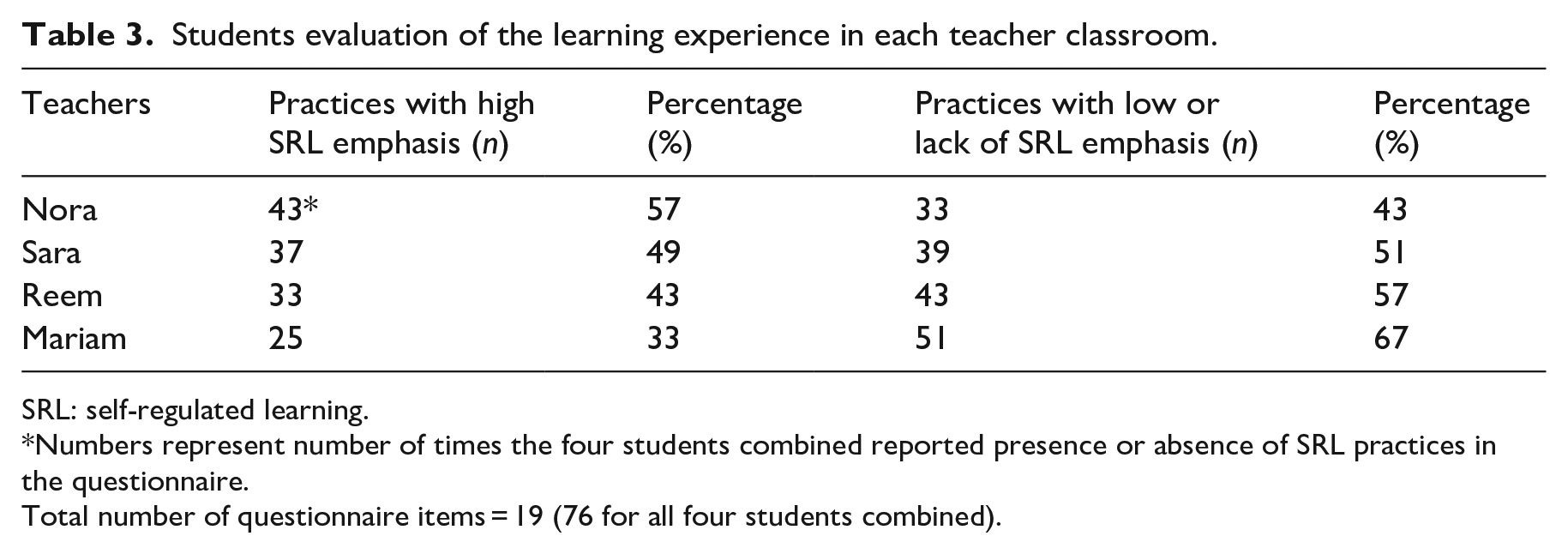
SRL: self-regulated learning.
Numbers represent number of times the four students combined reported presence or absence of SRL practices in the questionnaire.
Total number of questionnaire items = 19 (76 for all four students combined).
Teacher self-report questionnaire
Table 4 displays the teachers’ self- evaluation of their practices. All the teachers reported that they told the students at the beginning of the academic year the norms and routines, instead of co-creating classroom norms and routines with the students, which is considered a more powerful practice and recommended in SRL research. Nevertheless, unlike the students’ responses to the self-report questionnaire, the teachers’ self-evaluation of their practices were not all compatible with those observed in their classrooms or reported by their students. For example, when asked to characterize the extent to which tasks in their classrooms were complex and meaningful, the teachers reported that they had used activities in their classrooms that work toward multiple goals (e.g., curricular goals, social-emotional skills, problem-solving skills, research skills) and integrate relevant content and skills across the curriculum. However, in the observations, one teacher had solely used one activity during the five observations, and she expressed she used it because she did not have much information for that day’s lesson. Another teacher used activities that did not require student interactions or discussions. They worked in their groups individually, and each student participated alone to answer questions related to the content.
Teachers’ evaluation of their practices.
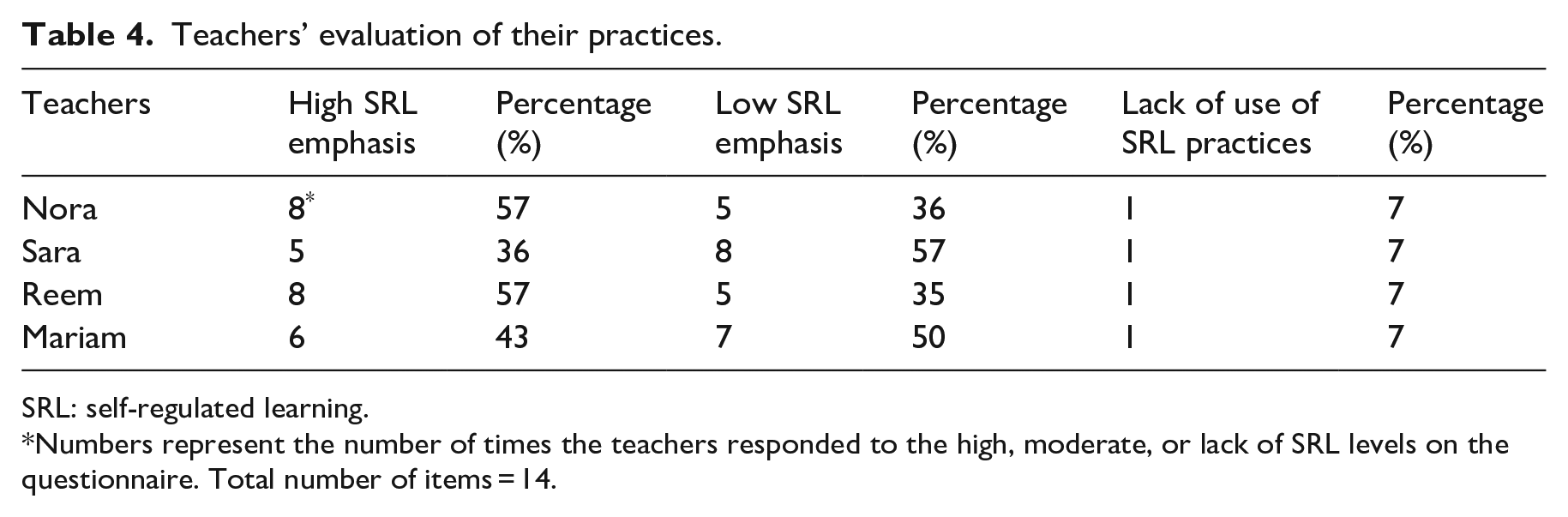
SRL: self-regulated learning.
Numbers represent the number of times the teachers responded to the high, moderate, or lack of SRL levels on the questionnaire. Total number of items = 14.
Similar differences in data sources were observed when teachers were asked if they usually provided opportunities for self-assessment. They selected that they let the students “assess simple aspects of their work (e.g., find their mistakes, give themselves a grade, evaluate their work). However, no use of self-evaluation practices was observed in the classroom, and the students had mostly agreed in their self-report questionnaire that they had rarely been asked “to find their mistakes” in the four teacher’s classrooms. The differences between the observations, student report, and the teachers’ self-perceptions might indicate a current difference in intention versus implementation in the classroom, which highlights an area for future development, or perhaps, the teacher used these practices but not during the observations.
Discussion
The findings of this study can be grouped into three themes: the importance of professional development, the importance of reconciling differences in perception about inclusion, and the importance of building skills and empowering students with VIs to be active learners. The following sections will discuss these themes in detail.
Importance of professional development
In general, results suggest that the four general classroom teachers used practices, from an SRL perspective, that support full inclusion of students with VI in a limited scope. Similar to the findings by Paris and Winograd (2003) and Michalsky and Schechter (2013) about the need for comprehensive training in creating SRL opportunities in the classroom, the findings of this study highlight that use of SRL practices in an effective manner to promote inclusion may not naturally be implemented at an effective level without appropriate and targeted professional development opportunities and coaching. The level of inclusion experienced by students with VI varied in each classroom. For example, in Reem’s and Nora’s classes, the two teachers with some professional development, the students with VI received some adaptations to learning materials, and modifications to the physical environment and teaching instructions. In the other two teachers’ classes, without similar professional development, minimum adjustments were observed. In all cases, however, moments of inclusion did not represent a truly inclusive environment built to engage all learners from the start (Loreman, 2017). There was more a focus on adapting or changing expectations to retro-fit class activities to the students with VI, often signaling them out as needing something different. The practices employed by the teachers might be more accurately labeled “integration” instead of inclusion as observed in the study (Hausstätter & Jahnukainen, 2014; Thomazet, 2009).
Moving from integration to inclusion
The feeling of inclusion by the students with VI varied as well when asked if they received adaptations that met their needs in each teachers’ classroom, an indication that additional consistent efforts are still needed to reach a situation of full inclusion and opportunities for SRL. This will involve working with the students and teachers to understand “inclusion” as well as modeling how inclusion and SRL look different from offering situational modifications or changes geared only to the students with VI that sets them apart from their peers rather than helps them feel connected as a classroom community.
During the observations, especially in Nora and Reem’s classes, there were “moments or snapshots” that indicated potential for inclusion and SRL development that could be further refined through professional development, mentoring, or other intervention. In order to provide optimal learning conditions to develop SRL, teachers will need to work toward providing more opportunities, more consistently. Perry (2015) described the qualities of SRL as “not mutually exclusive” (p. 50). She illustrated by stating that “tasks provide a context for embedding opportunities and support for SRL (Hutchinson & Perry, 2012), but opportunities for autonomy without instrumental support can result in academically ineffective forms of self-regulation, even chaos (Reeve & Halusic, 2009)” (Perry, 2015, p. 50). Table 5 summarizes some of the observed moments and provides examples of how they could be further shaped to represent higher levels of inclusion through the use of SRL practices.
Moving practices toward higher levels of SRL opportunities and inclusion.
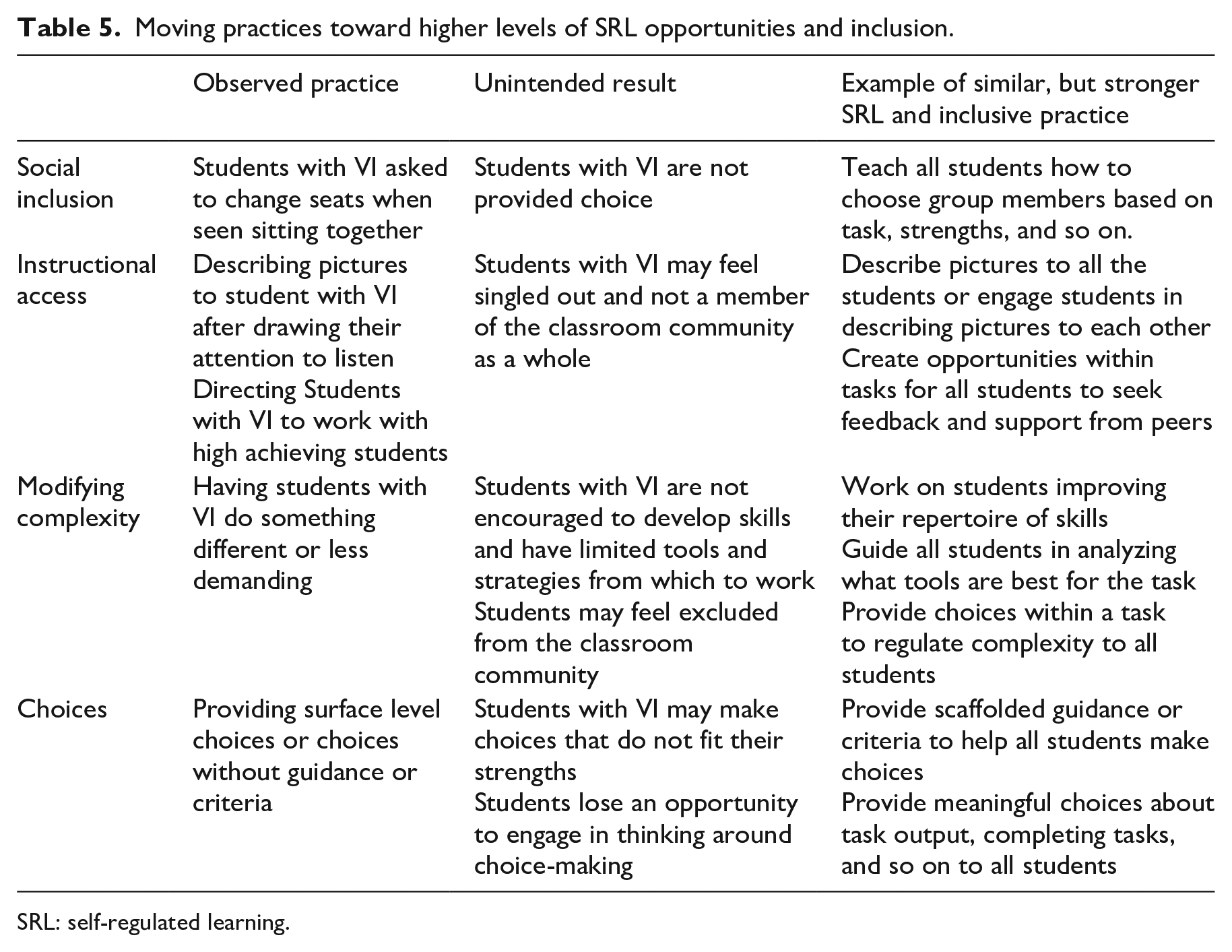
SRL: self-regulated learning.
Building skills and empowering students
Along with the need for professional development, there are also other factors that influenced the practices of the teachers, including characteristics that learners bring to the general classroom context (e.g., missing some prerequisite skills) and the role of teachers of students of VIs in the success of inclusion (Zebehazy & Butler, 2015). In this study, the students brought to the general classroom some ineffective beliefs (e.g., negative attitude toward braille and using assistive technology in the general classroom) and missing skills (e.g., using inefficient assistive technology to access information and complete tasks), which affected all areas of academic and social engagements in the general classes and limited opportunities for enhancing inclusion. The students were unable to efficiently use assistive technology in order to access information, read and interpret the task requirements, and create a finished product. This led the students and their teachers to come up with ineffective strategies, select choices that involved engagement in less meaningful tasks, and lower expectations. Students were observed to make choices based on a lack of information. For example, R., carried the misconception that braille would not be useful after secondary school, and therefore, relied mainly on auditory access, which reduced the variety of tools and strategies she had to select based on the task. Due to the lack of exposure or practice with devices such as a notetaker with refreshable braille display, R. was limited in making a fully informed decision.
Limitations of the study
Research findings cannot be generalized to the whole population of students with VI in the school. For example, some students received their training outside the school from a non-profit organization run by experienced teachers of students with VI and individuals with VI. The skills they would bring to the learning context may vary from those of the four student participants. The number of observations conducted is another limitation. A longer study over a full term might reveal additional developing practices related to inclusion and SRL. The study interpretation would also be enhanced with having a second observer and by obtaining teacher reflections after each observation in order to more deeply incorporate their perceptions and interpretation of the same event that the researcher observed compared to what they indicated on the questionnaire. Interviewing teachers about their SRL practices instead of using a written questionnaire may also have provided additional depth into how the teachers were interpreting each SRL-promoting practice category.
Implications for practitioners
While not the only means for supporting inclusion, SRL theory suggests a guideline, which can assist educators to design a learning experience that provides context for “individual differences in classrooms by creating multiple zones of proximal development and customizing support for individual students” (Perry, 2004, p. 67). SRL theory also has a direct connection to self-determination theory (Grolnick & Raftery-Helmer, 2015), an important area of the ECC for students with VI. It can serve as a framework for all educators (general classroom teachers, teachers of students with VIs) to reflect in a more nuanced way how well and often their instruction and feedback provides opportunities for students with VI to develop learning strategies, make choices, self-evaluate, and be more fully included as part of the learning community.
Employing SRL theory as a theoretical framework to guide this research, facilitated documenting and analyzing the educational practices, and its impact on students with VI. Teachers of students with VI could use a similar observation process to support general classroom teachers who are interested in better including students with VIs. The categories for SRL development would also benefit all students.
The primary intention of this research was to draw attention to promising practices in SRL that can contribute to inclusive practices that address the needs of all the students, including students with VI. The results of this study emphasize the importance of providing general and special educators with the necessary training and education that allows them to design and evaluate inclusive educational practices that focus on SRL development. Future research could focus on implementing a teaching intervention based on SRL to measure change in inclusion after such training.
