




Abstract
The objective of this study is to identify the impact of a training program in Reading and Writing Braille symbols in English language for students with visual disability in the elementary stage in Jordan. Participants are 60 students with visual disability, from Grades 1–6, studying at the blind school in Abdoun. Members were divided into two groups: control and experimental. In order to evaluate the efficacy of the training program, the researcher developed a scale to measure pre- and post-ability to read and write Braille symbols in English language. Means and standard deviations were calculated for both groups. Analysis was carried out using two-way analysis of variance. The results indicate statistically significant differences on reading and writing dimensions and on the total score, as well as on the post training results in favor of the experimental group indicating significant impact of the training program. The results did not show any significant differences between blind and partial visual disability in the experimental group on reading and writing scores and on the total score. Findings demonstrated the efficacy of the training program, which introduced reading and writing in a simple and interesting way according to certain levels ranging in difficulty, in addition to using different forms of reinforcement to motivate students. As for the implications for practitioners, teachers in inclusive schools of schools of visually disabled students can use the training program to teach both blind and partially sighted students reading and writing English Braille using both the hands.
Introduction
The World Is Under My Fingers is a book that describes the experiences and reactions toward teaching students with visual disability on how to read and write using the Braille method (Pierce & Cheadle, 2009).
Scholl (1986) and Bishop (2004) define Braille as a method of communication used by students with visual disability. This communication is a two-way operation that includes exchange of thoughts, feelings, and other information enabling students to gain social skills in order to integrate with in their society.
Auditory perception of language is usually considered as the main sensory mean that individuals with visual disability use to learn written language (reading and writing) (Savaiano et al., 2017). Thus, studies reveal that individuals with visual disability do not have problems with language functioning. Nevertheless, Braille which is officially learned at the second grade is more used, though it consumes more time during reading and writing and despite it being difficult to store (Scholl, 1986).
There is a need to highlight that learning reading and writing using Braille is a complicated process. Only few students are taught using both Braille and the regular method, when there is no clear indicator about the best method to use (Bishop, 2004). Braille enables students to be independent learners (Hallahan et al., 2020). Based on the belief in the capabilities of individuals with visual disability in learning and their right to participate in social activities, The Jordanian Disability Act No (31) for the year 2007 focuses on equal opportunities, especially in education for students with visual disability (The Higher Council for the Rights of Persons with Disability, 2022).
Visual loss causes many educational, psychological, and movement barriers and difficulties. Thus, there is a need to develop a number of educational programs that enable those students to perform their tasks fully and independently.
In Jordan, educational services provided for students with visual disability witnessed a vast development, as many specialized schools and associations were established, beginning with a School for the Blind in Jerusalem in 1938, Alnour School for the blind in 1969, The Friendship Association for the Blind in 1979, Aldeia’ Charity Association for the Blind in 1996 and Abdullah Ibn Im Maktoom School for the blind in 2009, and the Blind Cultural Forum (2001). Nevertheless, there are no formal curriculum or unified instructions monitored by the Ministry of Education to teach reading and writing Braille in Jordan, especially English Braille; rather, teachers rely on their experiences to design techniques that differ from one teacher to another.
Writing using Braille requires many skills, including fine motor skills, hand coordination, readiness or preparation, mastery in using fingers and hand coordination, attention, and linguistic ability (Khochen, 2011; Scholl, 1986). There are many tools used to write Braille symbols including Perkins Brailler, slate and stylus, Versa Braille, and the electronic line (Ali Alhabahbe & Subhi Alhadidi, 2022).
Reading, on the contrary, is a variable process that depends on experience. Meanings in reading are acquired through a comprehensive perception that comes from sensory input (visual, auditory, and tactical), depending on the sense used in reading (Savaiano et al., 2017). The main objective of reading is to develop the skill of deducting the meaning from written language. Reading using Braille symbols is time-consuming compared with reading performed by sighted individuals. When reading using Braille, each letter is perceived individually, then letters are grouped to communicate a special message (Bishop, 2004)
Erin and Corn (1993) suggest that individuals with visual disability share with their sighted peers the same aim denoted in accomplishing educational tasks effectively. Yet, they need additional time and educational aids (Ali Alhabahbe & Subhi Alhadidi, 2022).
In a study conducted by Holbrook and Nannen (1991), they suggest that classifying students with visual disability according to their skills in using Braille to read and write is very helpful when designing proper educational methods to help them acquire reading and writing skills.
Many studies have confirmed that reading and writing using Braille is essential for children with visual disability to be able to gain knowledge and information later during their school years, such as Amato (2002), Swenson (2008), Toussaint and Tiger (2010), and Susanti and Rudiyati’s systematic review (2019).
Radojichikj (2015) indicates that there is no uniformed way to teach students with visual disability how to read. Nevertheless, she highlights that the most commonly taught technique focuses on using all four fingers of both the hands side by side along a single line. She also confirms that new Braille learners face more difficulties combining body postures with spatial and tactile tasks and often become confused about keeping their hands on the same line.
Many researchers in the field of special education have developed programs and special techniques to teach reading and writing Braille to visually disabled students (Blake, 2003; Chaovanajinda et al., 2021; Horani, 2007; Kaen, 2017).
Consequently, this study as a part of the educational rehabilitation process, aims at evaluating the efficacy of an educational program that trains students with visual disability in the elementary stage in Jordan how to read and write Braille symbols in the English language. The importance of this study came from the scarcity of specialized programs based on scientific methods in teaching Braille in general and in teaching English Braille in specific. Still, there are no organized or unified method for teaching reading and writing English Braille to students with visual disability in Jordan. Rather, each teacher creates his own method according to his previous experience and training. This motivated the researcher as a blind individual to rely on her empirical experience with the educational practices used in the private and public sectors and on previous literature to develop a training program that would provide students with information, practical activities, and sequential learning experiences that are more compatible with the educational aims in later stages. English is the second language in Jordan and it is mandatory for all students to study it without exception.
The main objectives of this study include developing integrated educational services for students with disability, by allowing them to read and write English Braille symbols independently to enhance their vocational adjustment later in their adulthood. The researcher is interested in answering the following research question:
Are there any statistically significant differences at α > .05 in reading and writing Braille English symbols between blind and partially sighted students attributed to the training program?
Methodology
Participants
The study is conducted on 60 students, 32 male and 28 female, with visual disability, selected intentionally according to their medical reports from Grades 1 to 6 (age ranging from 6 to 11 years old) studying at the blind school in Abdoun/Amman. Vision acuity for participants was between 0.0125 and 0.3. Participants were divided randomly into two groups (control and experimental). The causes of visual disability for participants were glaucoma, retinitis pigmentosa, and maculopathy. All children could read and write Braille alphabetic letters in Arabic from kindergarten and all lost their sight at birth. All students with visual disability start learning English Braille from the first grade, as it is the method of learning English in the blind school of Abdoun.
Study tools
The researcher developed the following tools:
Reading and writing Braille symbols in English ability scale:
The new version of the scale developed by the researcher consisted of 24 items that measure the efficacy of reading and writing. Validity was investigated through referees’ agreement with percentages between 90% and 100% of agreement on each item, which signify a high degree of validity. Stability of the scale was investigated using test–retest reliability on a sample of 15 students with visual disability. Stability coefficient value was .84 for the total scale and values ranged between .80 and .89 on the scale dimensions. Internal consistency was also investigated using Cronbach’s alpha with a value of .92 for the total scale and values of .82 and .84 for the scale dimensions. The scale was applied on all participants in both of the study groups to compare the results and to investigate the effect of the training program.
A training program for teaching reading and writing Braille symbols in English for students with visual disability (Grades 1–6).
The training program is a set of information, activities, and sequential comprehensive learning experiences developed by the researcher, in order to train and ameliorate reading and writing skills using English Braille letters for students with visual disability. This training program differs in content with other traditional teaching methods applied by teachers in Jordan, taking into consideration improving student’s attitudes toward learning by using enjoyable activities and reinforcement. Furthermore, it also varies in that it is based on organized and scientific methods graded in difficulty levels as shown in the following description in addition to focusing on motivating students to learn.
The program includes the following phases:
Phase (1): teaching reading and writing Braille English Alphabets (A–Z).
Phase (2): distinguishing capital letters, small letters, and punctuation.
Phase (3): teaching reading and writing numbers (0–9) in English using Braille.
Phase (4): teaching reading and writing English Braille symbols using different levels of abbreviations.
The program is divided into three levels and 50 sessions according to the desired objectives. English alphabets are divided into three groups in the first level: from A to J; from K to T; and from U to Z.
The program aims in general to improve reading and writing skills using English Braille alphabets, identifying punctuation in reading and writing using Braille, distinguishing Arithmetic signals in English using Braille, in addition to improving the ability to use Braille contractions in reading and writing.
Procedures
Ethical approval was obtained from the Ministry of Education and the Blind School managerial reviewing board in Amman/Jordan and informed consents were signed by students’ parents. This research follows the World Medical Association Declaration of Helsinki on Ethical Principles for Medical Research Involving Human Subjects. A special education teacher was trained for 2 months, 3 hr per week to assist the researcher in teaching English Braille symbols for the experimental group. Demographic information was collected through reviewing students’ files and school reports. To assess the training program effect, the Reading and writing Braille symbols in English ability scale was developed by the researcher by reviewing previous literature on using Braille to train students with visual disability in order to develop the initial form of the scale (Ali Alhabahbe & Subhi Alhadidi, 2022; American Printing House for The Blind, 2002; Hadidi, 2011; Hallahan et al., 2020; Horani, 2007; Risjord, 2009). The researcher then consulted 10 experts with a minimum of 5 years’ experience in the field of Braille training; specialists in special education and in the field of statistics from Jordanian universities and the Ministry of Education as referees were applied on participants; then they were divided into two groups (control and experimental). The scale was applied before and after applying the program for both groups. A separate file for each student is arranged by the trained teacher to include a general information card, and medical reports, in addition to follow-up sheets to monitor the student’s performance (speed, accuracy, and comprehension).
Reading and writing Braille symbols in English ability scale was applied again as a post-test for both the control and experimental groups. Reading and writing skills for students were tested separately using the scale. A score from 1 to 5 was used to measure students’ performance as follows: 5 = an excellent degree, 4 = a good degree, 3 = a medium degree, 2 = a minimum degree, and 1 = a weak degree. The scores of the students on each dimension were calculated, and then the total score was determined by adding the scores of all the dimensions.
As for the training program, the researcher reviewed the previous literature (Ali Alhabahbe & Subhi Alhadidi, 2022; Argyropoulos & Papadimitriou, 2015; Bermejo et al., 2002; Dobree & Boulter, 1982; Fast, 2018; Hallahan et al., 2020; Hussain et al., 2021; Khochen, 2011; Risjord, 2009). Then she identified the core objectives of the program and discussed them with experts in the field of visual disability education. Afterwards, she prepared the content of the program in its initial version and sent it to referees with an expertise in special education from Jordanian universities and specialized professors in other Arabic universities. The researcher reviewed the content of the training program according to the referees’ notes.
The training program was carried out in one semester of 50 sessions, with 5 sessions per week, and a duration of 45 min per session. The experimental group was divided into 5 groups with 6 students per group, so it would be easier for the trained teacher to follow all the students and all were subjected to the training program using the following strategies:
Direct teaching: giving direct instructions for new learning experiences.
Indoctrination: verbal instructions used by the sighted teacher responsible for applying the training program.
Group and cooperative work.
Using activity work sheets printed in Braille.
Repetition is essential to ensure memorizing new symbols and terms.
Using recording machines especially in the abbreviation phase (using tactile and auditory methods at the same time, which enhances learning languages).
Using students’ curricula to confirm what has been learned at the end of each phase of the program.
Using Braille sell model, especially at the beginning of the program (teaching alphabets and numbers).
The program was applied during the first semester in 2021/2022, five sessions weekly for each subgroup in the experimental group. On the contrary, the control group was taught English using the traditional Braille method, which teaches students alphabets from easy to difficult, according to the number of Braille dots.
Statistical analysis
Statistical analysis was performed after data entry using SPSS. This is a quasi-experimental study. To investigate the effect of the training program and to investigate whether there are differences in students’ performance related to the degree of vision loss (blind, partially sighted) on reading and writing English Braille symbols, means and standard deviations were calculated for both the control and experimental groups before and after being subjected to the training program. Two-way analysis of variance was performed using SPSS.
Results
This study aims at investigating the impact of a training program (the independent variable) on Reading and Writing Braille symbols in English language (dependent variables) for students with visual disability in the elementary stage (Grades 1–6) in Jordan. Study variables were measured using the Reading and writing Braille symbols in English ability scale, which was developed by the researcher.
To investigate whether there are any differences between the control and experimental groups before and after applying the training program, means and standard deviations were calculated for students’ performance on the pre- and post-scale for the reading and writing dimensions and for the total score. Table 1 shows the results.
Means and standard deviations for students’ performance on the pre- and post-reading and writing scales.
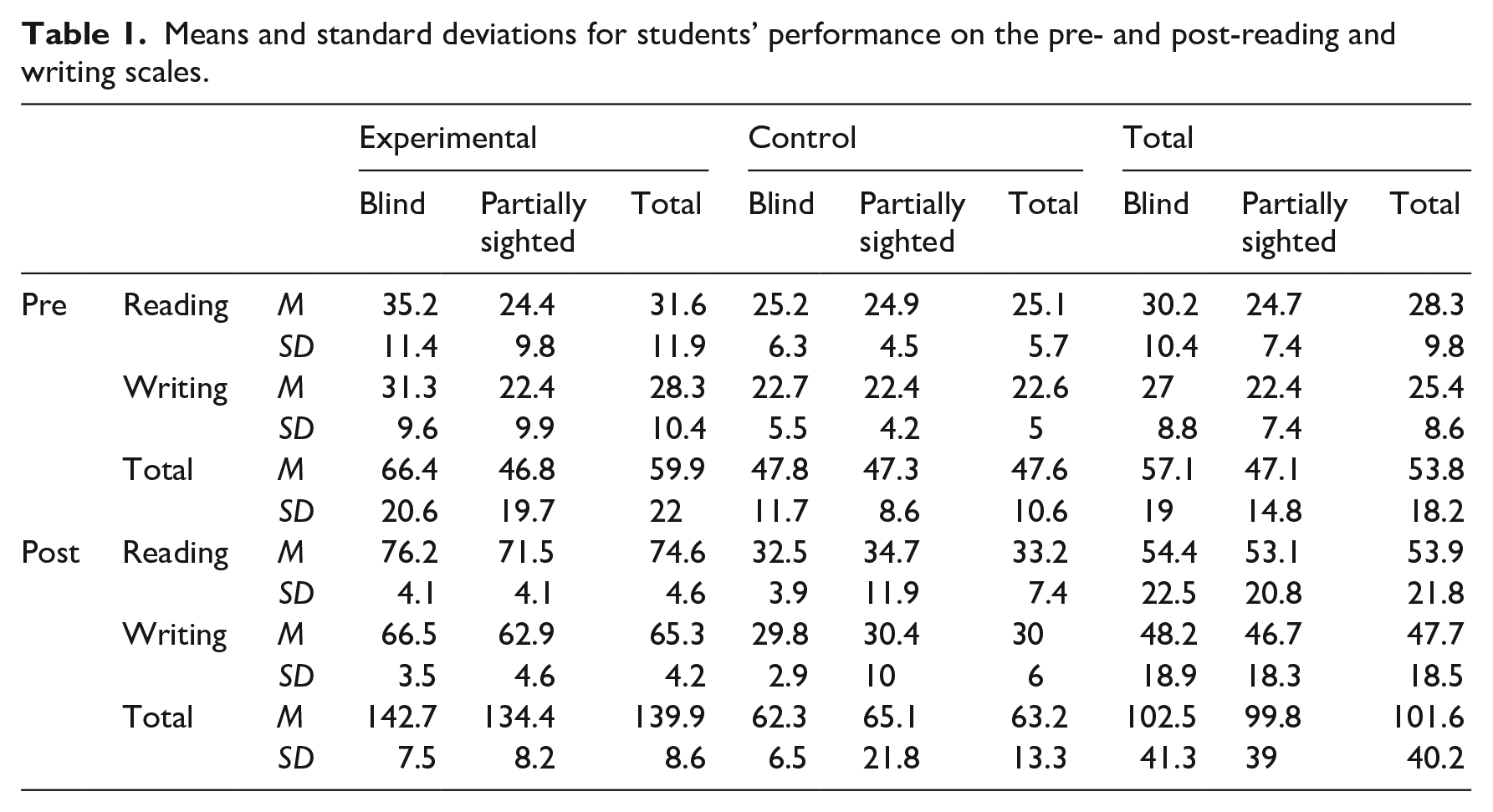
Table 1 shows that there are apparent differences in means between the two groups in the post-testing for the reading and writing dimensions and the total score. To investigate whether those differences were statistically significant, adjusted means of the post-total scores were calculated for both groups (Table 2).
Adjusted post-total scores for both groups.
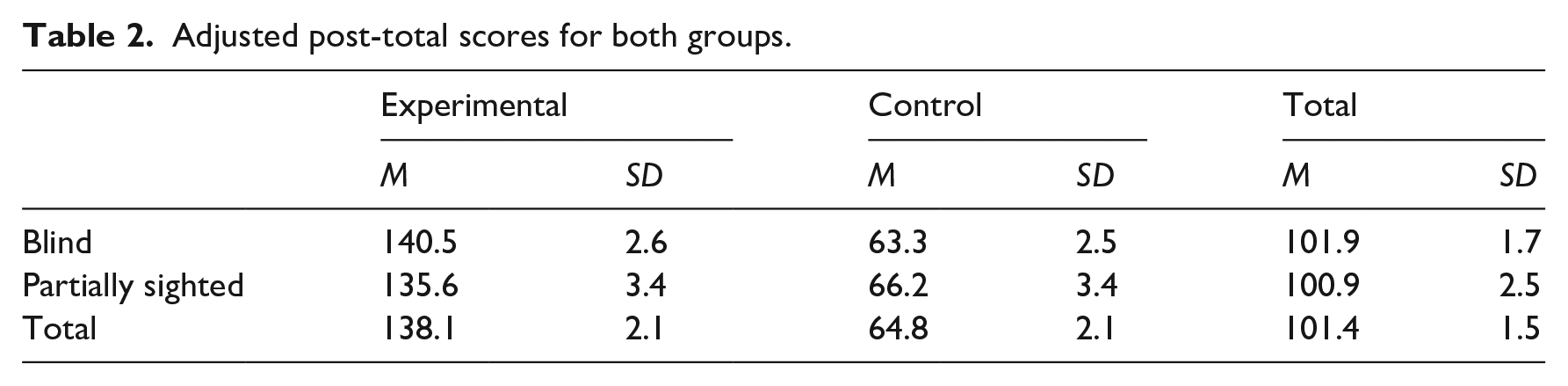
Afterwards, two-way analysis of variance was conducted to investigate the program’s effect on the total score, as shown in Table 3.
Two-way analysis of variance to investigate the effect of the program on the total score.
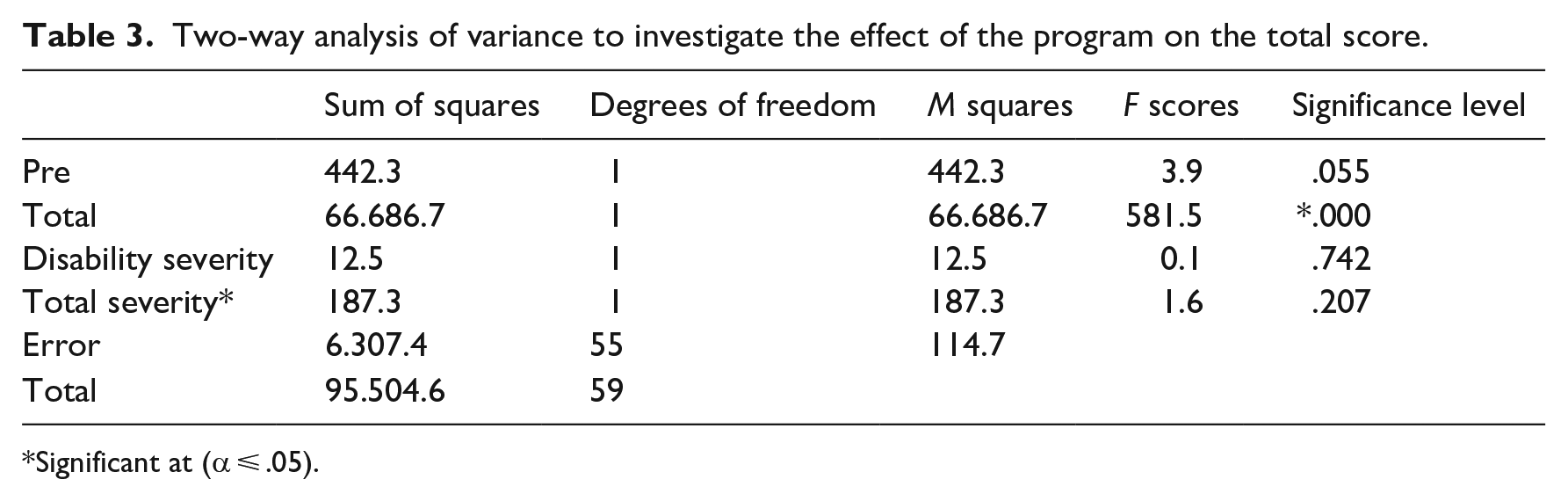
Significant at (α ⩽ .05).
Table 3 shows statistically significant differences in the total score due to the group variable which indicates statistically significant differences between the two groups (the experimental and the control) at (α ⩽ .05). Meanwhile, there were no statistically significant differences attributed to disability severity or the interaction between group and severity.
Adjusted post means were also calculated for both groups, as shown in Table 4.
Adjusted post means for both groups in reading and writing.
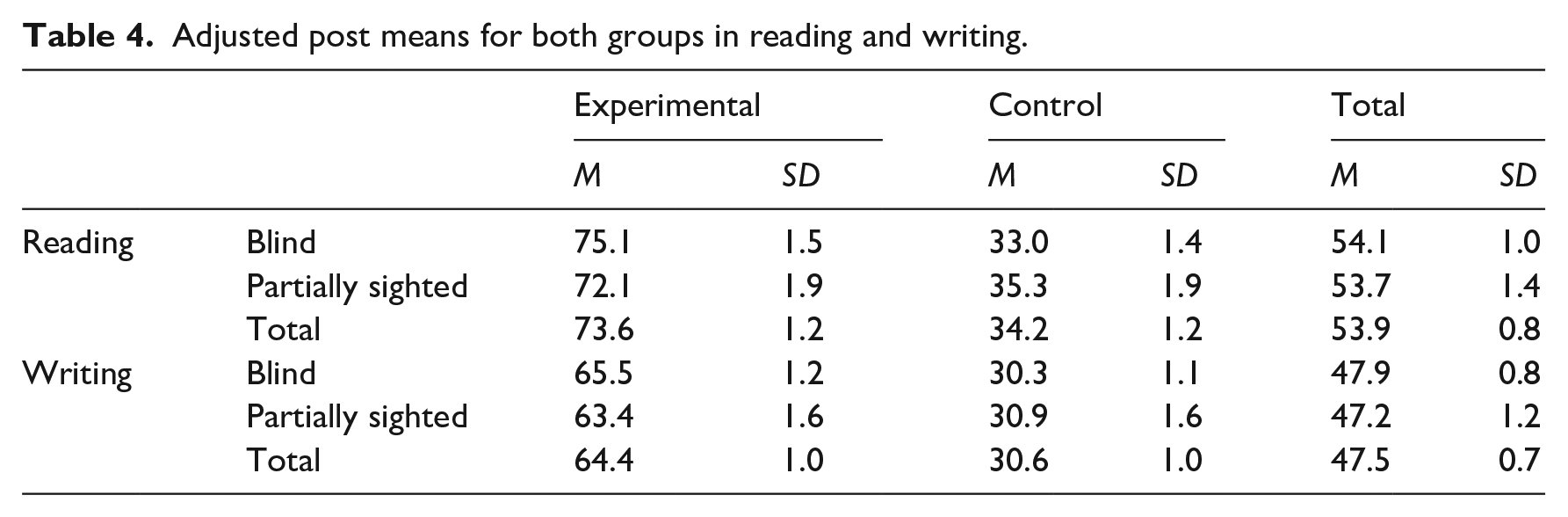
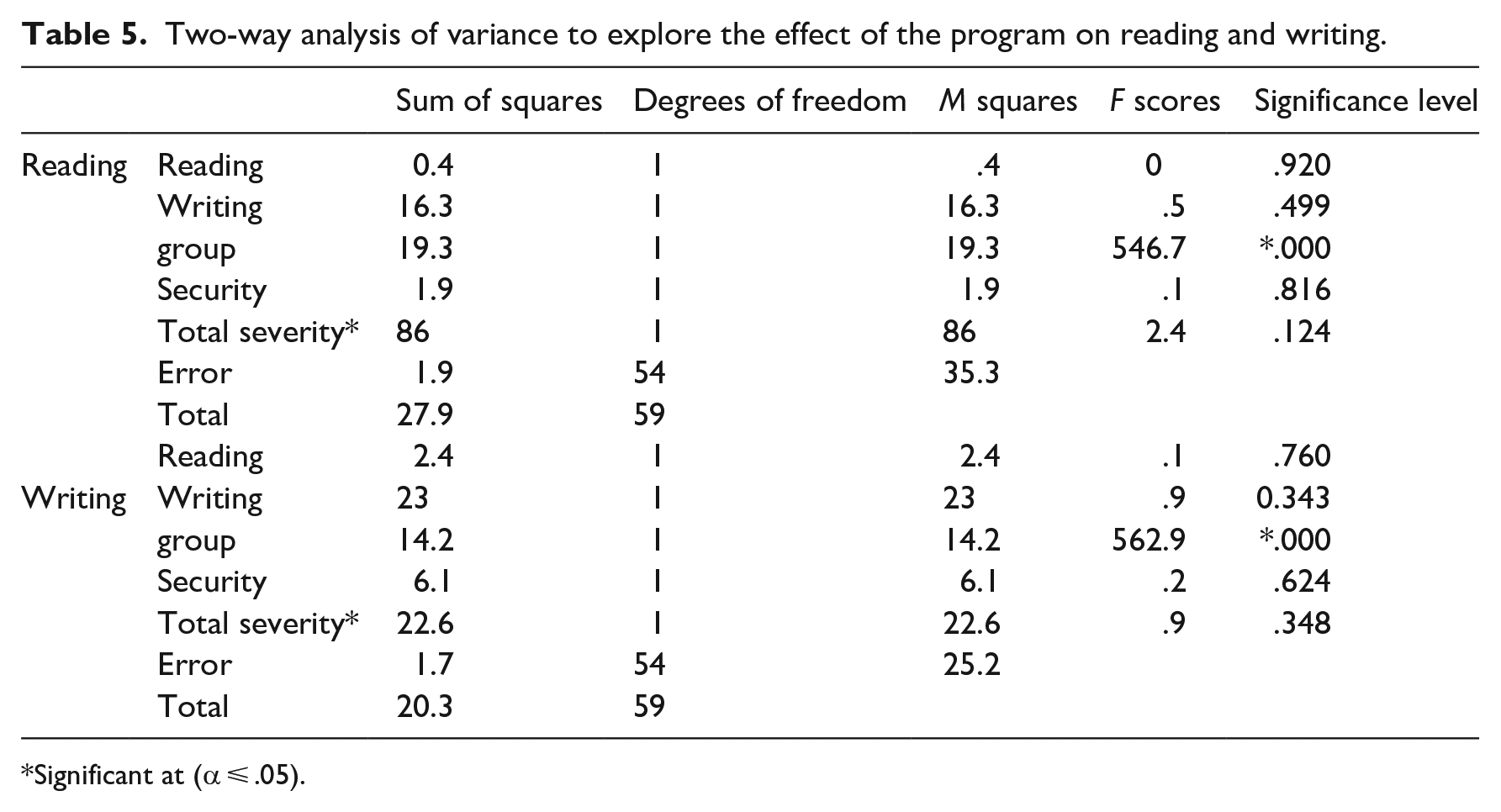
To investigate the differences in students’ performance in reading and writing (α ⩽ .05) attributed to group, disability severity, and the interaction between them, the researcher conducted two-way analysis of variance to explore the effect of the program on reading and writing, as shown in Table 5.
Two-way analysis of variance to explore the effect of the program on reading and writing.
Significant at (α ⩽ .05).
Viewing the previous table indicates that there are statistically significant differences in the means of students’ performance on reading and writing scales attributed to group, while there are no significant differences attributed to severity or the interaction between group and severity. This suggests a significant impact of the training program on students’ ability to read and write English Braille, despite the severity of disability (blind or partially sighted).
Discussion
The results revealed significant differences in students’ pre- and post-performance (in the total score) attributed to the group (control or experimental) variable in favor of the experimental group, which indicates the effect of the training program in ameliorating students with visual disabilities (Grades 1–6) and their ability to read and write English Braille. This result might be explained because the program introduced reading and writing skills using simple and interesting activities ranging in difficulty levels. Skills were also presented within an interesting content based on direct instruction raising students’ motivations, in addition to using different forms of reinforcement. Furthermore, the researcher focused on using both hands during reading, based on the results of previous research that indicated positive results for using both hands when learning Braille (Ali Alhabahbe & Subhi Alhadidi, 2022; Lowenfeld, 1974; Kaen, 2017; Kauffman et al., 2002; Mousty & Bertelson, 1985), in contrast to the traditional method of teaching English language at schools, which did not focus on using both hands when reading Braille. Moreover, the program includes various verbal and nonverbal activities and teaching aids used to achieve its goals, which in turn reflected positively on students’ responses and performance considering their young ages. This corresponds with Kuffman, Theort & Pascal-Leone’s study (2002) that suggested an impact of training on developing students’ somatosensory ability and performance by touching Braille’s alphabets.
The results also agree with Harrison et al. (2003), which indicated that using Braille improves reading and writing skills for blind students in addition to reflecting positively on their academic achievement. It also corresponds with Blake’s study (2003) and Susanti and Rudiyati (2019), which suggests that certain factors affecting reading and writing Braille should be considered, such as presenting Braille symbols and reading skills in a sequential way and focusing on students’ experiences. Moreover, the results also agree with the findings of Horani (2007), Crawford & Elliott (2009) and Toussaint and Tiger (2010), indicating a positive impact of using tactical methods on reading and writing skills for students with visual disability.
The results revealed significant differences in students’ performance due to their group in favor of the experimental group, while there were no significant differences attributed to disability severity or the interaction between group and severity. The absence of differences between blind and partially sighted students in the experimental group might be explained in light of the fact that all participants used Braille in reading and writing prior to this study. Previous research suggests that partially sighted students are not required to transfer from using printed materials to Braille or the opposite. On the contrary, using both Braille and printed alphabets to teach reading and writing is better for achieving the highest academic potentials of partially sighted students (Al Khateeb, 2010; Horani, 2007; Hadidi, 2011). In addition, students who are expected to experience a deterioration in their sight should use their remaining sight and gradually transfer to using Braille in order to maintain their ability to read and write as learning requirements (Toussaint & Tiger, 2010). Blake (2003) also agrees with the importance of teaching partially sighted students to read and write in Braille. Students, teachers, parents, and positive attitudes toward Braille play a significant role in viewing Braille as a teaching method and a communication tool rather than a weakness symbol or a method exclusive for the blind.
Nevertheless, further research on larger samples from different schools is recommended to confirm the validity and reliability of the study results, considering the limitations of participants’ recruitment. Other limitations include criteria of selecting students who can read and write English Braille and who are born with a visual disability, in addition to the limited time allocated to apply the training program (one academic semester).
Footnotes
Declaration of conflicting interests
The author(s) declared no potential conflicts of interest with respect to the research, authorship, and/or publication of this article.
Funding
The author(s) received no financial support for the research, authorship, and/or publication of this article.
