




Abstract
With vision being our most powerful sense and cerebral vision impairment (CVI) being a growing concern in our special schools, it is crucial that support staff working with children have a thorough understanding of both CVI and how to support their individual levels of functional vision. Creating an inspiring new innovation to support learners with profound and multiple learning difficulties (PMLD) was the focus of this research. Using an approach provided by the Education Endowment Foundation, questionnaires were given to all 49 support staff; training via PowerPoint was then provided to volunteer participants who also spent time using the innovation in the classroom. The main findings were that the training increased participants’ overall confidence in CVI and how to support learners with a visual impairment. Using the innovation in the classroom also positively impacted the participants’ daily practice. Potential challenges such as ensuring staff all have a thorough understanding of the innovation and having a suitable learning environment for visual work were identified.
Keywords
Introduction
As a teacher in a school for children with profound and multiple learning difficulties (PMLD), a holistic approach is needed where every learner has the opportunity to flourish and grow in whatever direction they are able. In a drive to achieve this and support all aspects of the individual, ensuring that school staff have the knowledge and understanding of the potential visual impairments throughout the school, specifically cerebral visual impairment (CVI), was identified as a key priority in the current school improvement plan. Unlike ocular conditions, CVI is caused by damage to the visual processing areas of the brain (Perkins School for the Blind, 2023), rather than to the eye itself. Indeed, the structure of the eye will appear normal, instead it being the brain that is unable to compute the messages it receives (Little Bear Sees, 2022). With over half of children with special educational needs (SENs) reported to have CVI (CVI Scotland, 2021), in a school of 66 pupils, whilst 40 have a visual impairment diagnosis, only 14 of them have the more specific diagnosis of CVI, with Woolvine (2022) suggesting that there may well be more.
With vision, being our most powerful sense and playing a vital role in children’s learning and social interactions (RNIB, 2016), CVI is a growing concern and is the most prevalent cause of visual impairment in children in the industrialised world (The CVI Society, 2022). With establishing a diagnosis of CVI being difficult (Pilon-Karnsteeg et al., 2019) and often being missed by ophthalmologists, awareness of how to support learners with CVI was the subject of Woolvine’s (2022) small-scale study. It found that further training on CVI was necessary for learning assistants (LAs), a need for more awareness of individual levels of functional vision, and for consistent support strategies throughout the school, thus requiring a new and innovative strategy. With the aim of providing a high level of quality education (Kilminster, 2021), the implementation of something new like this in schools is not unusual. However, implementing change can be challenging as people often become comfortable with familiarity and worry about doing something wrong when a change is introduced (Herrmann, 2017). This assignment was therefore an opportunity to investigate:
The importance of good quality training for support staff and its impact on their practice when using the new ‘Colour Coded Eye’ (CCE) innovation; and
The process and impact of implementing change within a school.
What can be found in the literature on this subject?
To ensure a comprehensive understanding of this area of study, a variety of literature was reviewed using Birmingham University’s online library resource FindIt@Bham. The key search terms were SEN, visual impairment and CVI, support staff, staff training, and implementing change in schools. This review of literature will focus on the importance of training support staff working with learners with SEN and CVI, and the process of implementing change in schools.
While the number of teachers has remained stable over the last 10 years, the amount of LAs present in the classroom has grown significantly (Education Endowment Foundation (EEF, 2018a; Hodge, 2015; Webster & Blatchford, 2013). Indeed, in November 2018, 52% of the education workforce were classed as ‘support staff’ (Department for Education, 2019) with the suggestion that they now need to be ‘front and centre of the future school system’ (UNISON, 2022). This increase has resulted including increased levels of academic progress (Weale, 2016) and the addition of a professional yet approachable person supporting the class teacher (Lindsay, 2015). LAs working alongside pupils with a CVI play a particularly valuable role and fall into a ‘specialist category’ of support staff having a distinct role in the delivery of learning (NatSip, 2012). With nearly half of children with CVI also having SEN (RNIB, 2022), and unable to explore and understand the world independently (Goold & Hummell, 1993), not only do staff need to anticipate and minimise barriers to their learning (NatSip, 2012), they also need to bring specific skills to the classroom (Cooper, 2018). As the number of children born with multiple physical and learning difficulties increases, there is a growing number of questions surrounding the level of skill required for staff working with such young people (McLinden & McCall, 2016). Indeed, there is concern that many support staff do not possess sufficient knowledge (Victa Parent Portal, 2016) and lack an understanding of the pedagogy behind the planning and teaching of those with a visual impairment (Bailey, 2012). Furthermore, despite a recent emphasis on upskilling LAs to work with increasingly complex children (Carpenter et al., 2015), visual awareness training remains optional. There is an abundance of literature suggesting that it is only when support staff have up-to-date knowledge and training, are they in a position to provide the level of support such children require (Alborz et al., 2009; Clamp, 2000). Furthermore, if staff fully understand the potential effect of CVI, it will support ‘increased empathy and understanding’ (Pilon-Karnsteeg et al., 2019) and help them to develop and grow in their role which is important in the cohesion of any school (The National College, 2020). With the aim to equip all staff in the school with such knowledge while ensuring that all pupils have equal access to what a setting has to offer (RNIB, 2022), the CCE was developed as a way to assess and categorise individual levels of functional vision for learners with SEN (with an emphasis on those with PMLD). Although the literature shows no evidence of a specific ‘CCE’ criteria and with every child’s visual journey with CVI unique, others have created their own visual assessment tool and supporting frameworks. For example, Roman-Lantzy (2007) brings all the characteristics of CVI together and through assessment places learners into one of three phases; Dutton’s visual skills inventory (Ulster University, 2022) identifies problematic areas of a child’s vision; Pilon-Karnsteeg et al.’s (2019) study focussed on identifying ways to support professionals in their knowledge of CVI through a presentation of the theory behind it and practical examples in their ‘CVI Toolbox’, while assessment using the Perkins Digital CVI Protocol is the latest to be developed (Perkins School for the Blind, 2023).
With all of this in mind, it must be remembered that introducing new ways of working is what schools continuously do to change and be more effective. Nevertheless, the implementation of change needs to be carefully managed; an understanding that it is a process and not merely a product is vital (Bates & Bailey, 2018). Furthermore, if staff are not introduced to change properly, they can become confused or cynical (Kilminster, 2021) with others finding the process challenging and disruptive, preferring to stay with what they know (Bates & Bailey, 2018; Rehill, 2017). If sufficient time is not given to the consideration of how the change will be carried out and what steps need to be taken, staff may also become doubtful and non-committal. Indeed, no matter how good an innovation is in principle, the most important factor is how it fits into the daily workings of the school (EEF, 2019). Airiodion and Crolley (2020) state that ‘change management’ is the key, suggesting that the process begins with the unpicking of the current behaviour, moving on to the training of the new practices and finally the reinforcement of the new ways of working, emphasising that guiding individuals is vital. Lancaster (2022) also focuses on the importance of individuals being involved suggesting that if they are encouraged, valued, and have their skills recognised, they are more likely to ‘buy in’ to the innovation. The EEF (2019) acknowledge these elements offering an invaluable tool to aid school improvement, with professional development and personal reflection being a priority.
Methodology
The innovation
Influenced by literature, using evidence from research (Woolvine, 2022), and in discussion with senior leadership team (SLT), creating an inspiring innovation supporting the functional vision of pupils became a key priority. As planning commenced, a decision was made to follow the approach suggested by the EEF (2019) (Figure 1), who describe a school as a ‘continuously improving system’ offering a framework that can be used when implementing any school improvement (Sharples et al., 2018). In addition, the content of the EEF’s (2019) ‘implementation plan template’ (Figure 2) was also considered.
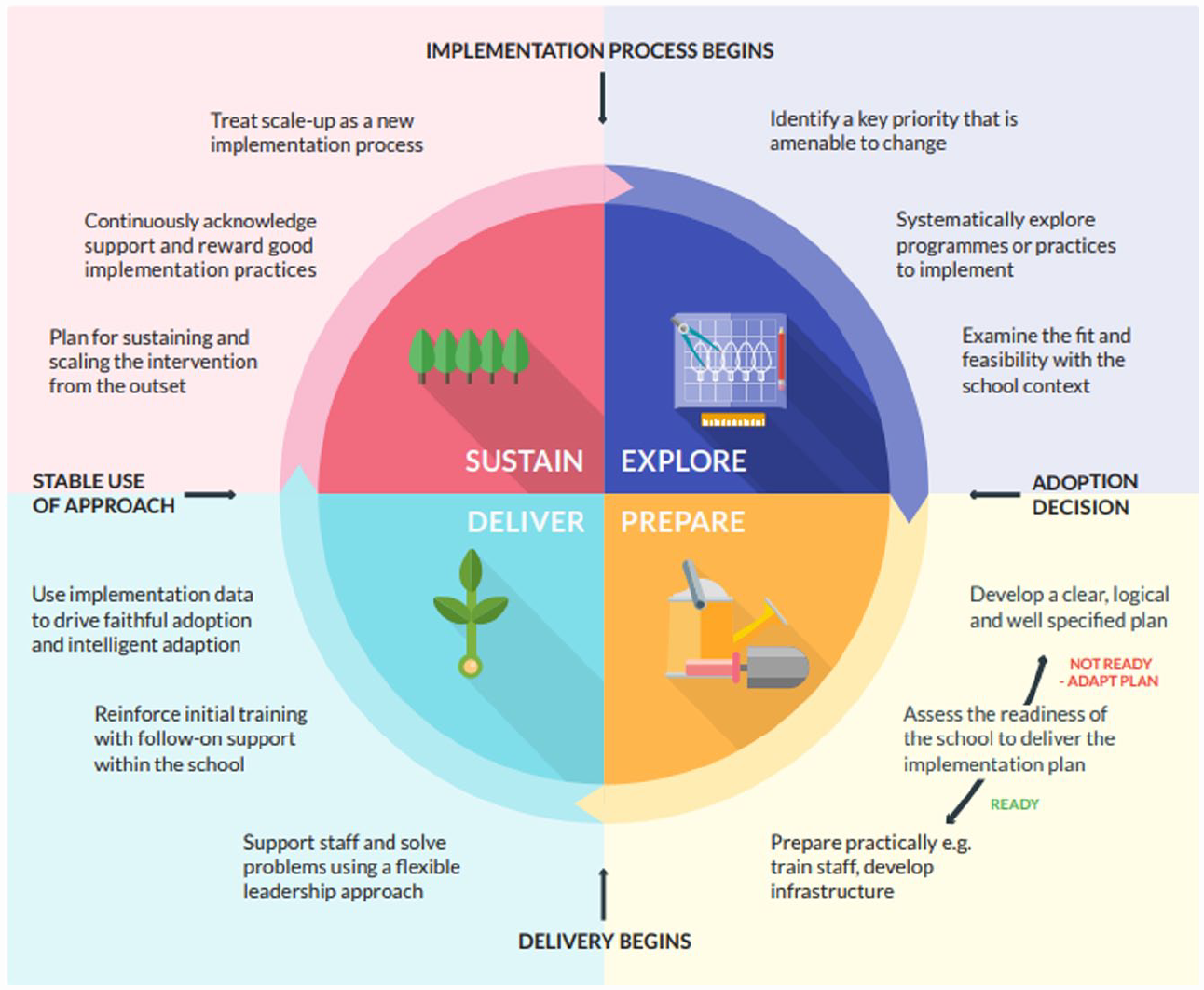
Implementation process diagram (EEF, 2019).
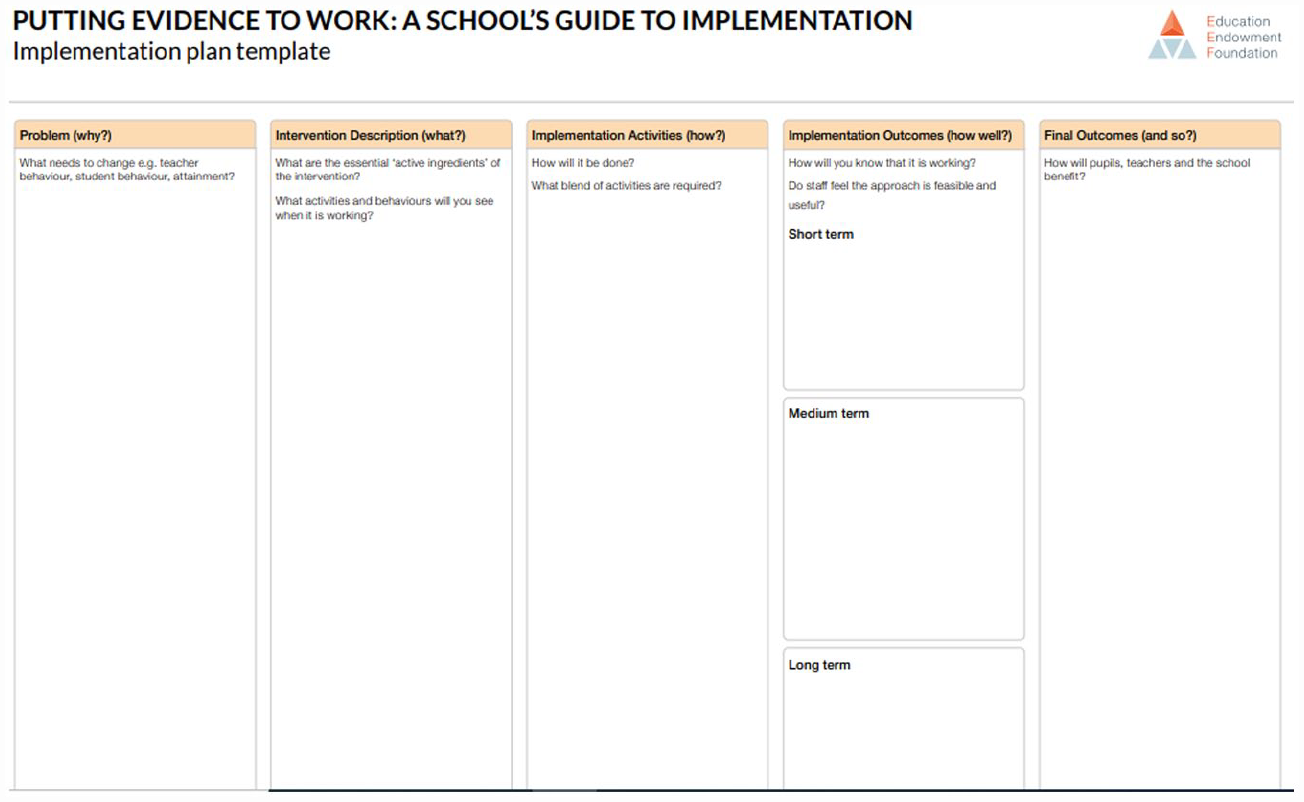
Implementation plan template (EEF, 2019).
Explore
During this first part of the process, consideration was given to the school’s current practice, what was required and a suitable intervention was debated. With the Visual Function Classification System offering guidance and reassurance (Smile Lab Stella Maris, 2023), the CCE and the three levels of functional vision (Supplemental Appendix 1) were created, whereby the visual characteristics of each learner were analysed and then allocated a colour/level: red, orange, or green offering suggestions of strategies and adaptations that may support them.
Prepare
Having created the basic structure of the innovation, the next part of the process was to develop the characteristics of each level of functional vision and finer details, including supporting strategies and adaptations. The EEF (2018b) call these the ‘active ingredients’ of the innovation or the key concepts that need to be understood if it is going to succeed. Having done this, the CCE innovation was brought to a teachers meeting for them to scrutinise. As a result of their positive and constructive feedback, a fourth level of vision, the ‘blue’ CCE was introduced, and an A4 poster to go on every classroom wall (Supplemental Appendix 2). In preparation for training school staff and similar to that of Pilon-Karnsteeg et al. (2019), a PowerPoint presentation was created (Supplemental Appendix 3) which initially focused on instilling knowledge of CVI, moving onto an introduction of the new CCE concept. As the delivery of training was considered, thought was given to Waugh (2017) who suggests a three-step process to ensure training is successful, including ‘engaging’ the audience and asking questions, making the training ‘relatable’, encouraging participants to share experiences, and ‘summarising’ the session. Reflection was also given to his seven top tips for delivering effective training, including approaching it as a fun ‘learning experience’ and not delivering death by PowerPoint! Although developed as a corporate concept, the Kirkpatrick Evaluation Model (Kirkpatrick Partners, 2022) was also considered a useful tool when measuring the overall impact and effectiveness of the training. Originally developed in the 1950s and with suggestions that the framework can also be used in the reverse starting with what you want to achieve (Academy to Innovate HR; Jay, 2022), the model can be used to measure:
Delivery
As the delivery stage of the innovation was reached, it became ready to launch; yet before it was rolled out to the entire school, its impact was assessed on a small number of LAs working in the classroom.
Participants
To gain the volunteers needed, all 49 LAs were emailed asking for their support. What would be required, why this investigation was being carried out, and future plans for the innovation were all explained. The number of respondents was not what was expected but one looked forward to training as many people as possible.
Pre- and post-innovation questionnaires
To gain baseline data, participants were asked to complete a pre-innovation questionnaire. They then received training via PowerPoint and were then asked to use the innovation in their day-to-day practice for 2 weeks. The participants were asked finally to complete a post-innovation questionnaire. The aim was that this data would then allow time to reflect, respond, and make improvements both to the training and the CCE before it became a new school way of working. Questionnaires (Supplemental Appendix 4) were chosen as a method of data collection, as they are cost-effective, flexible, and probably the best way of collecting both qualitative and quantitative data (Cleave, 2021) putting minimal pressure on respondents. The questionnaires included closed questions, which would be easy to analyse and encourage a higher response rate, and open questions, which then paved the way for richer and deeper data that perhaps were not anticipated (Farrell, 2016).
Ethical considerations
As data collection commenced, a number of ethical dilemmas were considered to ensure the research supported scientific integrity, human rights, and personal dignity (Bhandari, 2022). Participants were made aware that their participation was voluntary and that they could opt-out at any time; ensuring their consent was informed was also achieved by fully explaining the purpose of the research.
Results and discussion
In this section of the assignment, there will be a presentation and discussion of the findings from the research in a variety of ways, including pie charts and thematic analysis, with initial research questions always in mind. It is, however, relevant to begin with the key issue of the sample size. Having requested the support of 49 support staff, only 2 volunteered, both of whom had worked for the school for over 5 years. At this point, it was clear that such a small sample would undermine the internal and external reliability and validity of the research (Faber & Fonseca, 2014). Furthermore, the results would potentially be ‘skewed’ as the participants may have responded because of a genuine interest in the topic and/or wanted to improve their practice (Simmons, 2018). Indeed, one participant is currently training to be a teacher and the other is a highly valued and motivated member of the school support team. The other issue was then the ability to achieve confidentiality and anonymity as often their questionnaire answers led to an appreciation of whom the responses belonged to. However, the suggestion that despite a small sample, true anonymity is actually an ‘unachievable goal’ (Saunders et al., 2015) was held close and cannot be assured when collecting ‘any’ type of qualitative data (Wiles, 2013).
The impact of training on the practice of LAs when using the new CCE innovation
Support staff are a vital and significant commodity in the classroom; effective and high-quality training is therefore essential as they help work towards a school’s overall aim of improving educational standards, maintaining school policies, and providing support to the structure of a school (The CPD Certification Service, n.d.). Measuring the effectiveness of such training and its impact on practice is then vital as it supports a school to work together, improve their teaching and learning outcomes and encourages staff development (Cambridge Assessment International Education, 2022). Furthermore, high-quality training and ensuring that support staff feel fully prepared for their role are both key factors to maximising the effectiveness of any school support team (Foster, 2019).
The training delivered was via a PowerPoint presentation as it was easy to prepare and present, encouraged the eye contact and attention of the participants (Boundless.com, n.d.), and appealed to all learning styles (Commonwealth of Learning, 2018). Both participants found the quality of the training to be ‘very good’, and when asked what made the training particularly useful, an increase in knowledge and understanding was the main theme to emerge with one LA commenting on the importance of regular refreshers to keep the innovation current. A second point raised was that it would be useful during the training period to observe a visual assessment being carried out by a more experienced individual. As with most, the Local Authority offer a statutory service for children with a sensory impairment, but current understanding leads to a belief that it is an unachievable expectation for them to come and assess learners any more often than they already do. Furthermore, despite the Deputy Head being a qualified Multi-Sensory Impairment Specialist Teacher who has a particular interest in visual impairment and having collaborated with her when creating the CCE, her commitments would also not allow her to take further time out to work with individual learners. The value of observing others is however recognised and although this research does not seek to make anyone an expert in visual assessment, it may be beneficial to encourage staff to access resources such as the overview of CVI by Roman-Lantzy (YouTube, 2013).
Results demonstrate that as a result of the training and time using the innovation in class there was an increase in overall knowledge and understanding of CVI, its implications and of supporting adaptations and strategies (Figures 3 and 4).
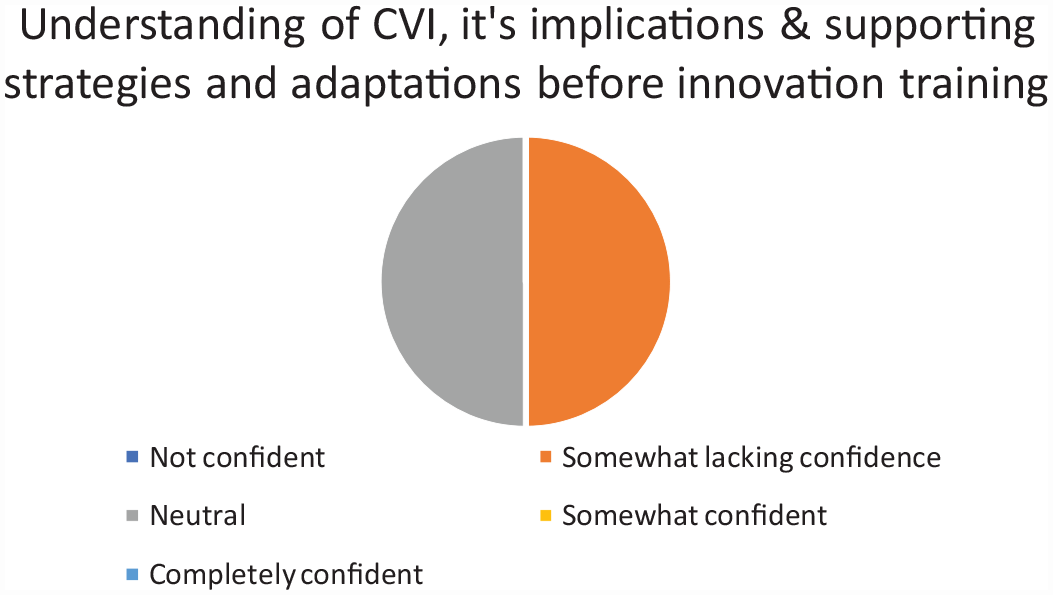
Levels of confidence before innovation training.
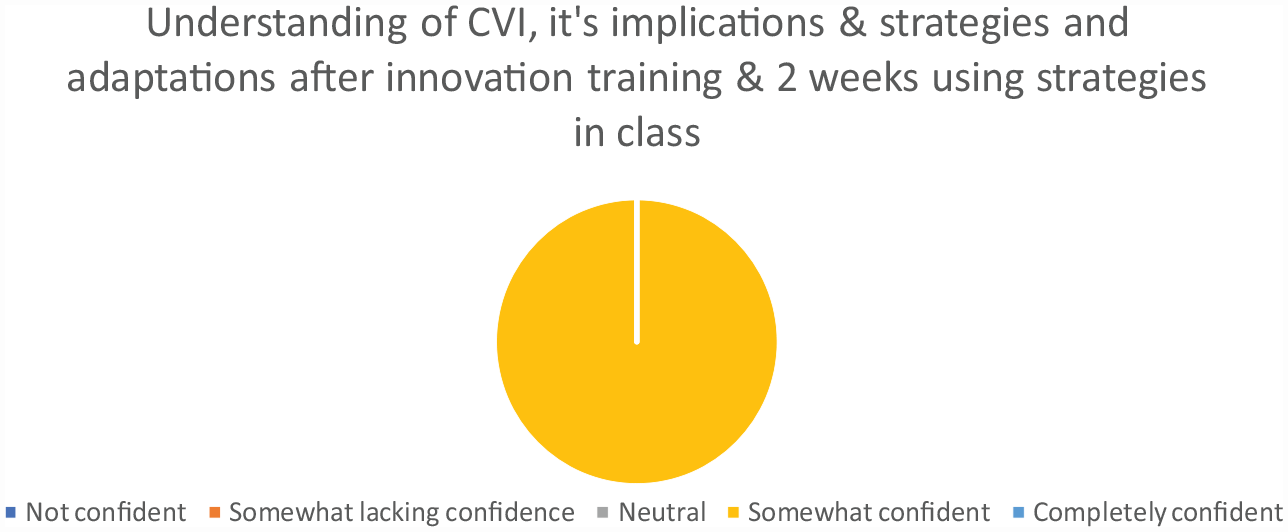
Levels of confidence after innovation training and 2 weeks using the CCE in class.
The pre-innovation questionnaire also identified that, despite initially having lower levels of confidence, the participants did indeed have some existing knowledge, as demonstrated in the thematic analysis in Figure 5.
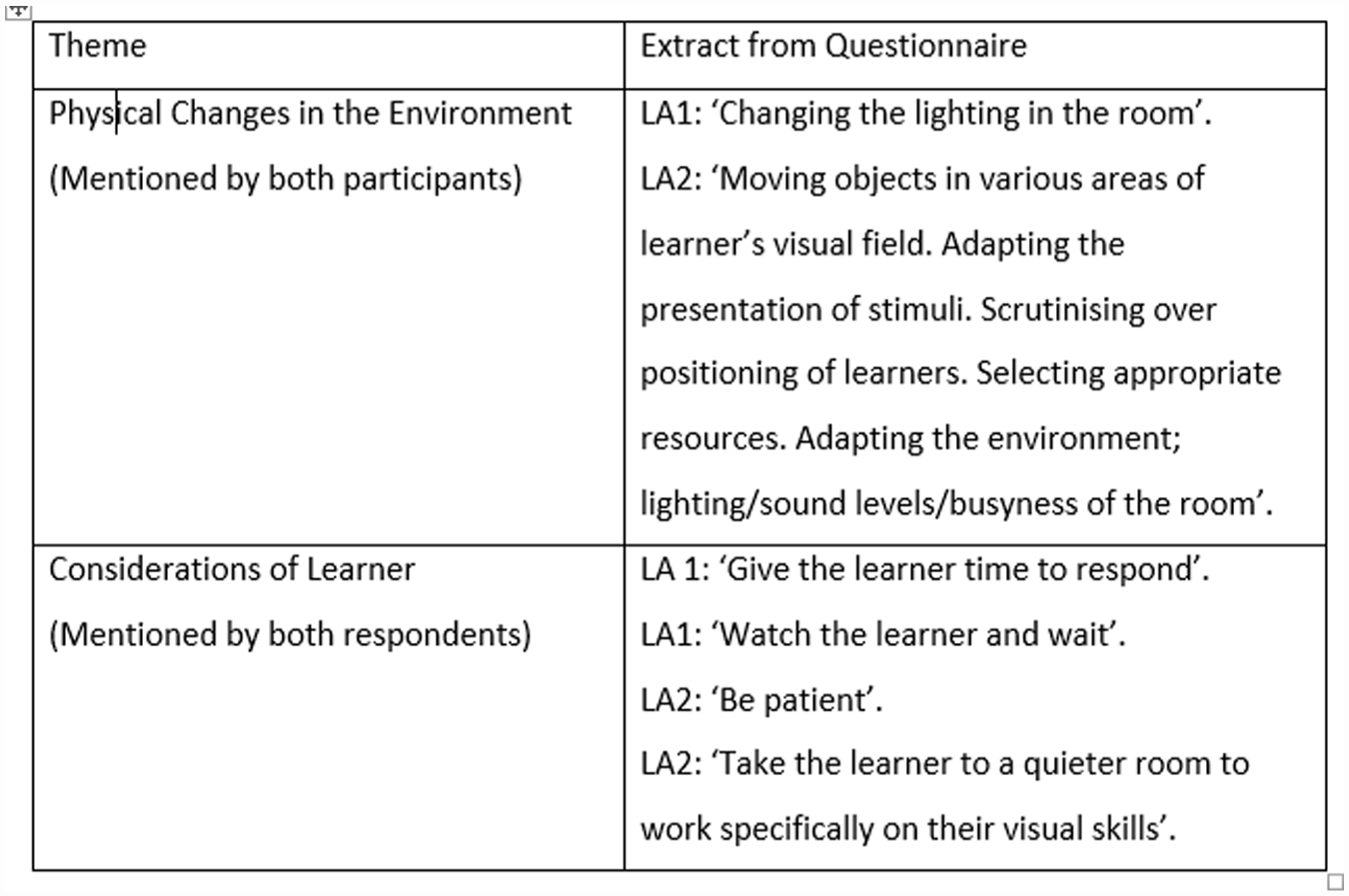
Adaptations and strategies identified in the pre-innovation questionnaire.
This is encouraging as CVI is misunderstood by many resulting in a wealth of children potentially growing up lacking adequate support (Perkins School for the Blind, 2022). Furthermore, it is reassuring that as a school, an awareness of the impact of visual awareness already exists as it works towards providing every learner with the individualised, accessible, and meaningful multi-sensory learning environment they deserve (Perkins School for the Blind, 2022).
After the training and time using the innovation in class, both participants felt ‘somewhat confident’ in using it. Although not yet ‘completely confident’, it is recognised that adults need reminding of new concepts three more times than children or risk the possibility of slipping back into doing things how they were done before (Sherrington, 2017). The thematic analysis in Figure 6 demonstrates the impact of the CCE on their practice and the primary themes to emerge.
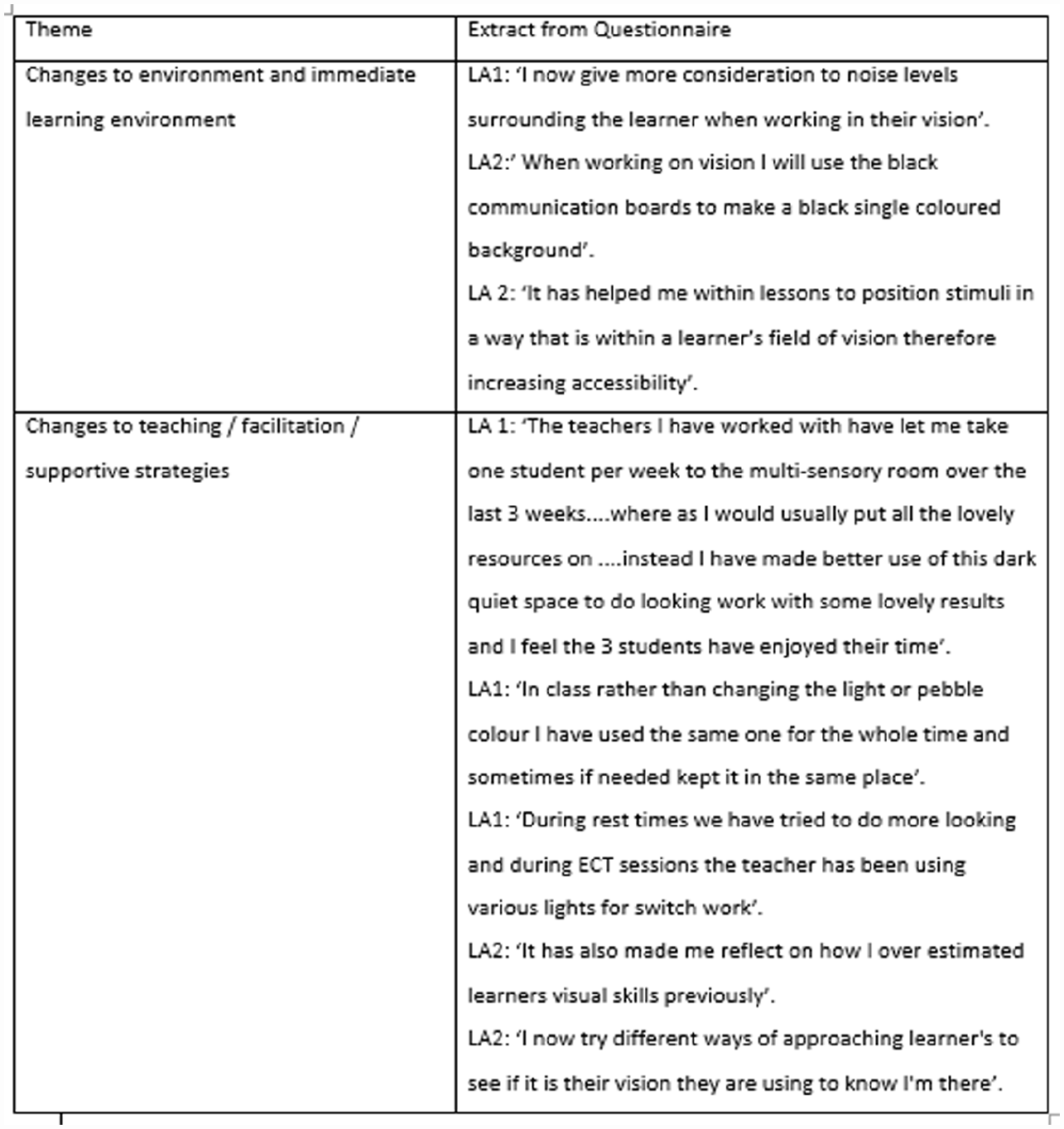
Impact of the use of the CCE on practice.
Despite this data, a strong belief remains that to ensure the positive impact of future training and for this study to gain more validity, both the sample size and the length of the training need to increase. Indeed, because of the training session, which was just a mere half an hour at the end of the school day, much of what was incorporated in the presentation and planned areas to expand on remained unexplored or not explained adequately (Shrotkatewa, 2022). Finding that a short, structured training course resulted in an increase in both skills and knowledge, not only did Argimon-Pallas et al. (2011) have a larger sample (152), their training was carried out over four half-day sessions, and included time for reflection after each session. Furthermore, McCluskey and Bishop (2009) also found that a longer 2-day workshop and 8 months of subsequent support had positive results and saw an increase in skill level.
Problems, obstacles, and challenges experienced and anticipated when introducing and using the CCE
It has been suggested that the process of implementing change in schools is rarely acknowledged or understood (Jerald, 2005). Not only is there often a challenge with the process itself but change is inevitably linked to emotions and can evoke a range of responses – both conscious and unconscious (Gibbs, 2022). In the pre-innovation questionnaire, both participants were therefore asked if they anticipated obstacles or challenges in introducing an innovation. Despite one participant saying ‘maybe’ (the other saying ‘no’), unfortunately, both participants appeared to interpret the question differently to the intended meaning and therefore the desired data were not acquired. Indeed, when asked to expand on their answers, one participant commented, ‘I am not sure of many strategies that we use’, while the other went into great depth listing some of the strategies they have previously used in the classroom. Although the later was a further insight into existing levels of knowledge, the aim was in fact to identify potential challenges within the school and on staff across the school. This raises the importance of getting the questionnaire right in the first place, and although they are a convenient and quick way of collecting data, they also run the risk of participants interpreting the questions differently and not giving you the data required (Debois, 2022). As a result, a reflection on the challenges anticipated by participants was not possible, nor was a measure against the reality after the innovation’s introduction. This made the responses from the post-innovation questionnaire even more important. Indeed, when asked about actual and potential challenges experienced using the CCE in day-to-day working in the classroom, the thematic analysis in Figure 7 demonstrates the three themes identified, the predominant one being individual learners and the challenges associated when working with and assessing such complex individuals.
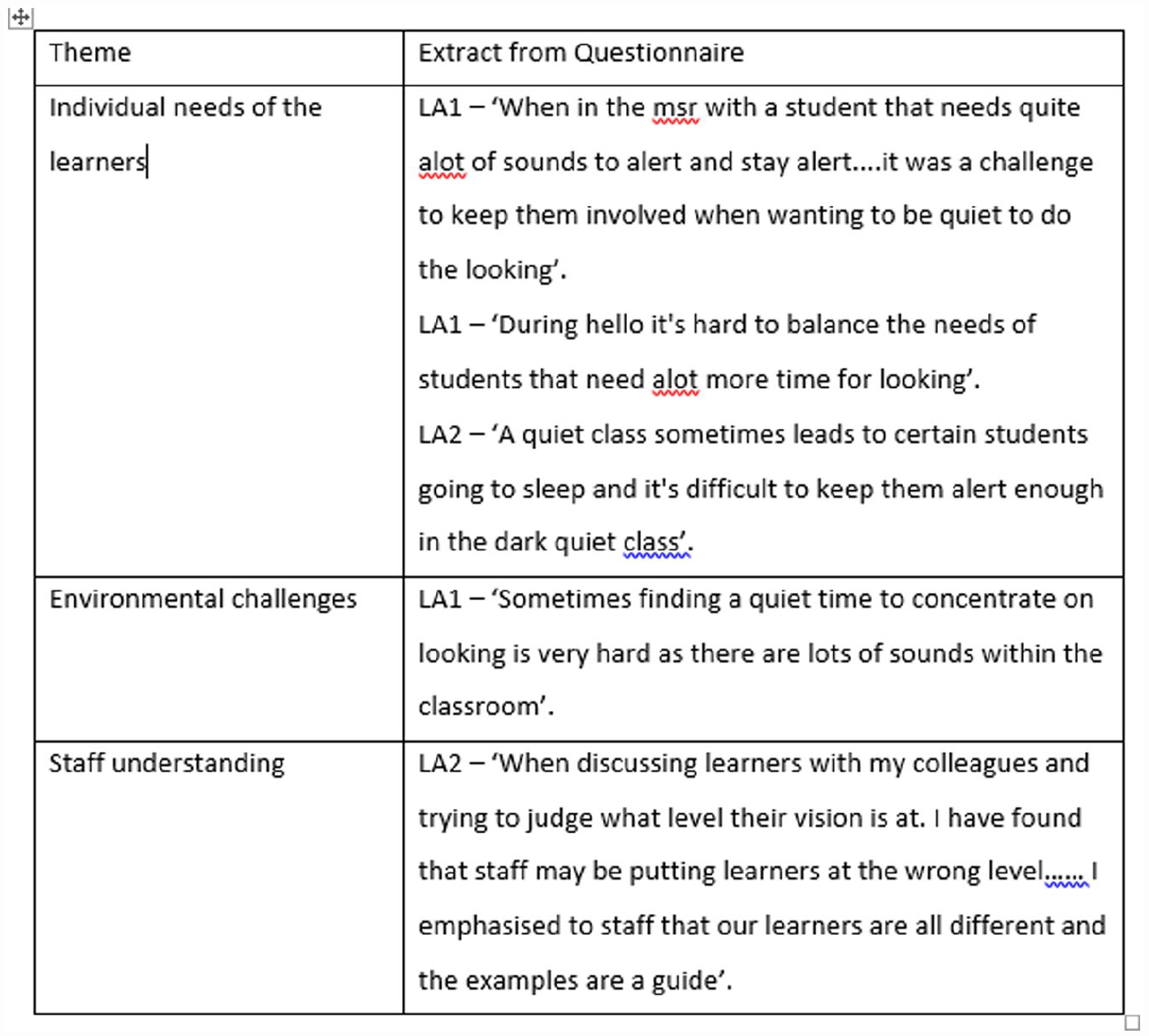
Problems, obstacles, and challenges experienced when using the CCE with learners in the classroom.
With this in mind and as the innovation becomes the new way of working, support staff will continue to be encouraged to use the school’s ‘Individual Vision Profile’ (School devised document updated 2017, Supplemental Appendix 5) as a starting assessment document. Furthermore, it is crucial that all staff continue to understand that those with PMLD have the same rights as everyone else and must receive appropriate support enabling them to achieve their potential and feel valued as individuals (Mencap, 2012).
When the participants were asked what they anticipated as the benefits of introducing the CCE across the school, both participants were very clear in their responses valuing the availability of a ready to use guide in their day-to-day work in the classroom. One participant commented that the CCE was a much easier and less confusing way to assess visual skills than previously available while the other said that the CCE ensures that we all appreciate how unique each learner is. Their main area of concern for the school as a whole was, however, the subjectivity involved in the assessment. To ensure consistency, this led to comments such as ‘it will be important to keep knowledge fresh and up to date and for new staff to have early access to training’ and ‘regular assessment and discussion time around these skills would be useful as our learner’s skills go up and down throughout the course of the year’.
Conclusion and recommendations for future practice and research
Although a small-scale study will indeed limit its scope and make it difficult to assume that the results are indeed true, this assignment has provided the opportunity to investigate the process and impact of delivering an exciting innovation to one individual school. The EEF’s (2019) approach gave a clear and structured pathway to follow enabling analysis and reflection at each important stage. The data has given a great deal to consider as the school moves forward to the final stage of the implementation: ‘scale-up and sustain’. During this stage, the delivery of training to the whole school will take place and the CCE will become a strategy that all staff will be expected to use and refer to on a day-to-day basis in the classroom. Prior to this, the results indicate a need to discuss precise timings and format of the training with SLT and investigate how support and guidance will be offered as well as monitor and review the overall adoption of the innovation. In this study, both forms of educational knowledge transfer were found to be effective, but reflection would need to be given to ensure that all individuals with their different learning styles are accommodated. To ensure that the needs of visual, auditory, reading, and kinaesthetic learners are met, consideration will be needed to ensure the training is as inclusive as possible. Finally, and importantly, to increase the validity of this study, to avoid the dilution of the innovation over time and ensure it remains current and relevant, monitoring and further research with a larger sample size will be necessary.
Recommendations for practice
Seek the support of one LA from each class to meet at a monthly focus group to discuss and track how the innovation is being adopted within the classroom and support any challenges encountered.
Provide termly training for new staff as well as offer top up training for anyone who wants it.
Recommendations for research
Following whole school training – collect data as to its quality and effectiveness including evaluation forms and a small number of interviews with LAs who have worked at the school for varying lengths of time.
Recommendations for future research
Once the innovation has been embedded across the school, work with the SLT and seek to offer it to SEN partnership schools in the County and track and support its implementation.
Continue to research strategies to support CVI and update CCE as required.
Supplemental Material
sj-doc-1-jvi-10.1177_02646196231183890 – Supplemental material for An investigation into the process and impact of introducing the ‘colour coded eye’ to learning assistants working with pupils with profound and multiple learning difficulties and cerebral visual impairment
Supplemental material, sj-doc-1-jvi-10.1177_02646196231183890 for An investigation into the process and impact of introducing the ‘colour coded eye’ to learning assistants working with pupils with profound and multiple learning difficulties and cerebral visual impairment by Nicola Woolvine in British Journal of Visual Impairment
Footnotes

References
Supplementary Material
Please find the following supplemental material available below.
For Open Access articles published under a Creative Commons License, all supplemental material carries the same license as the article it is associated with.
For non-Open Access articles published, all supplemental material carries a non-exclusive license, and permission requests for re-use of supplemental material or any part of supplemental material shall be sent directly to the copyright owner as specified in the copyright notice associated with the article.
