



Abstract
Victim/survivors of sexual violence have long served as volunteers in Circles of Support and Accountability (CoSA); however, little has been documented about broader victim/survivor input into CoSA. This research addressed this gap through an online survey and in-depth qualitative interviews with CoSA staff and volunteers across the globe. It documented that in participants’ views, victim/survivors need to occupy the ‘Goldilocks’ position by evoking empathy on the part of the perpetrator, while not doing so in a way that is too punitive so as to threaten perpetrator stability. Findings of the study may be relevant to CoSA programs around the world considering expanding and/or formalizing victim/survivor input.
Keywords
Introduction
Victim/survivors 1 of sexual violence have increasingly gained opportunities to participate in criminal justice processes such as via restorative justice (Marsh and Wager, 2015), Victim Impact Statements (Miller, 2014) and submissions to parole boards (Caplan, 2010). While far less attention has been given to victim/survivor involvement in perpetrator reintegration (also referred to as ‘re-entry’ or ‘resettlement’), the limited literature contends that victim/survivors can and should (where desired) be involved in perpetrator reintegration (Center for Sex Offender Management, 2000, Center for Sex Offender Management, 2016, Center for Sex Offender Management, 2018, Herman and Wasserman, 2001, Petersilia, 2009, Seymour, 2001). Seymour (2001: 3) argues that crime victims should be considered ‘partners’ in perpetrator reintegration, alongside government and non-government professional organizations. Embedding victim/survivor perspectives into the planning and delivery of perpetrator reintegration measures can improve these measures and contribute to reducing reoffending and enhancing community safety (National Center for Victims of Crime, 2005).
This is especially the case because unlike victims of many other types of crime, victim/survivors of sexual violence are often known (or even related) to the perpetrator, making reintegration measures particularly important to navigate effectively (National Center for Victims of Crime, 2005). As a corollary, the lived experiences of victim/survivors can provide a unique insight into what might reduce reoffending among people convicted of sexual offences (National Center for Victims of Crime, 2005). Victim/survivors of gendered violence are ‘experts by experience’ (Domestic Violence Victoria, 2020); as Petersilia (2009: 16) asserts, ‘victims often have the most detailed knowledge of the offender and the risks he poses to public safety’. In addition, involving victim/survivors in perpetrator reintegration efforts may counteract the re-traumatization that victim/survivors often experience by being excluded from criminal justice processes (Center for Sex Offender Management, 2018). In summary, as Herman and Wasserman (2001: 429) argue: Victims and victim organizations can positively assist in the reintegration of offenders by providing decision makers with important and relevant information; offering experience and expertise; encouraging offender accountability; and furthering the goals of victim empowerment, safety, restitution, and reintegration.
Victim/survivor involvement in circles of support and accountability (CoSA)
One way in which victim/survivors of sexual violence have come to play a role in perpetrator reintegration in recent years is through volunteering with circles of support and accountability (CoSA) (Richards & Weir, in press). CoSA are groups of trained volunteers who form a ‘circle’ to assist a person convicted of sexual offending (known as a ‘core member’) to reintegrate into the community after prison (Hannem and Petrunik, 2007, Wilson et al., 2005), with the aim of enhancing community safety by reducing sexual reoffending. CoSA volunteers typically meet weekly as a group and help the core member with everyday tasks associated with re-joining the community, such as grocery shopping and navigating transportation (McCartan and Kemshall, 2020). In addition, they exercise an important accountability function: ‘core members openly discuss their behaviours and thoughts with the circle volunteers, and are answerable to them for any deviations from their own aspirations to live non-offending lives’ (Almond et al., 2015: 27). CoSA were originally devised in Ontario, Canada (Heise et al., 1996) but are now practised across North America, the United Kingdom, Western Europe (see Thompson et al., 2017 for an overview, Richards, 2022) and, to a very limited extent, Australia (Richards et al., 2020).
Victim/survivors have long served as volunteers with CoSA; to be clear, this does not entail victim/survivors volunteering in a CoSA with their own perpetrator, but an unmatched perpetrator of sexual violence. Research into the motivations of CoSA volunteers reveals that some CoSA volunteers report that their own personal experience of sexual violence, and/or being close to someone who has experienced sexual violence, informed their decision to become a CoSA volunteer (Kerr et al., 2018, McCartan et al., 2014, Wilson et al., 2005, Richards, 2011, Richards et al., 2020, Muscat, 2009, Almond et al., 2015, McCartan, 2016, Wager and Wilson, 2017). In fact, Wager and Wilson (2017) estimate that up to one-quarter of CoSA volunteers in the UK are victim/survivors of sexual violence (see further Richards, 2022, Richards et al., 2020, McCartan et al., 2014, Armstrong et al., 2008, Armstrong and Wills, 2014, Cesaroni, 2001, Höing et al., 2017), and point out that this is not surprising given the prevalence of sexual violence in the broader community. While processes for screening prospective volunteers vary around the globe, CoSA programs often have procedures in place to identify whether a prospective volunteer has experienced sexual harm (see Höing et al., 2017) to ensure volunteer wellbeing.
Studies that provide an insight into victim/survivors who volunteer in CoSA (Höing et al., 2017, Richards and Weir, in press, Wager and Wilson, 2017, Wilson and Hudson, 2024) generally concur that victim/survivor volunteers can engage in CoSA without adverse consequences. However, they rely on current volunteers and thus likely suffer from ‘survivorship bias’ (Czeisler et al., 2021); i.e., they mistake a successful subgroup for the entire group. Other sources (Hinton, 2008, Richards, 2011) have documented that on occasion at least, victim/survivor volunteers have withdrawn from a CoSA due to suffering adverse impacts as a result of their participation (see Richards and Weir, in press for a discussion).
There are, of course, other ways in which victim/survivors of sexual violence could have input into CoSA that do not require their direct participation as volunteers. Richards, Death and Ronken (2021: 906) argue that ‘with appropriate supports in place, survivors can contribute unique knowledge and experience to…CoSA, to maximize their benefit and impact’. They thus advocate for a ‘survivor-informed approach to CoSA’ that ‘meaningfully embed[s] survivors’ perspectives [into CoSA] beyond the inclusion of survivors as volunteers on an ad hoc basis’ (Richards et al., 2021: 906).
The research presented in this article begins to address Richards et al.'s (2021: 906) injunction. It sought to document whether and how CoSA programs around the globe incorporate victim/survivor input into CoSA practice. As noted above, this is an important endeavour since involving victim/survivors may enhance perpetrator accountability, foster victim/survivor empowerment and safety (Herman and Wasserman, 2001) and counter victim/survivor traumatization (Center for Sex Offender Management, 2018).
Research design and methodology
To investigate this question, the research adopted an exploratory, mixed methods approach. Rather than testing a pre-defined hypothesis, exploratory research examines topics without a priori hypotheses (Nilsen et al., 2020) and seeks to discover something new (Swedberg, 2020). This broad approach was deemed suitable since little has previously been documented about incorporating victim/survivor input into the delivery of CoSA. A cross-sectional ‘convergent parallel’ design (Creswell, 2015) was used, which involves gathering both quantitative and qualitative data to investigate the same overarching research question(s) (Doyle, 2015) and analysing the data synchronously rather than sequentially (i.e., the qualitative component of the research is not reliant on the findings of the quantitative component or vice versa) (Creswell, 2015).
Data collection
Data collection occurred across two stages. The first was an online survey of CoSA staff and volunteers from around the globe that was designed and hosted on the Qualtrics platform. It aimed to examine: (1) whether and how victim/survivors of sexual violence have already had input into CoSA programs; and (2) whether and how CoSA staff and volunteers think victim/survivors of sexual violence could shape CoSA programs in future. Participants were recruited via the researchers’ contacts with CoSA programs around the world and CoSA peak bodies (e.g., Circles Europe). These contacts were emailed a copy of the Participant Information Sheet and asked to circulate this to CoSA staff and volunteers. The Participant Information Sheet and survey were translated into Italian, Spanish, Dutch, Flemish, French and Belgian to encourage participation from diverse CoSA programs. To be eligible to take part, staff and volunteers were required to be: aged 18 years or above; have experience as a CoSA staff member or volunteer for at least 3 months; and be willing and able to complete the survey.
Most survey respondents (n = 59; 69%) were volunteers, and the remainder (n = 26; 31%) were paid staff (total n = 85). They had carried out most of their work or volunteering with CoSA in Canada (n = 26; 31%), the UK (n = 23; 27%), Spain (n = 16; 19%), the USA (n = 14; 16%), Australia (n = 4; 5%), and the Netherlands (n = 2; 2%). While participants could respond to the survey in their chosen language, most did so in English (n = 68; 80%); 15 respondents (18%) wrote in Spanish, and 2 (2%) wrote in Dutch. Their length of experience with CoSA ranged from less than six months (n = 11; 13%) to more than six months but less than one year (n = 6; 7%), one to three years (n = 26; 31%), and more than three years (n = 41; 48%), demonstrating the significant experience of respondents. (One participant did not answer this question). Respondents had an average age of 47 years (min = 21; max = 85; R = 64). 62% (n = 53) identified as female, 35% (n = 30) as male, 1% each (n = 1) as non-binary and trans* male.
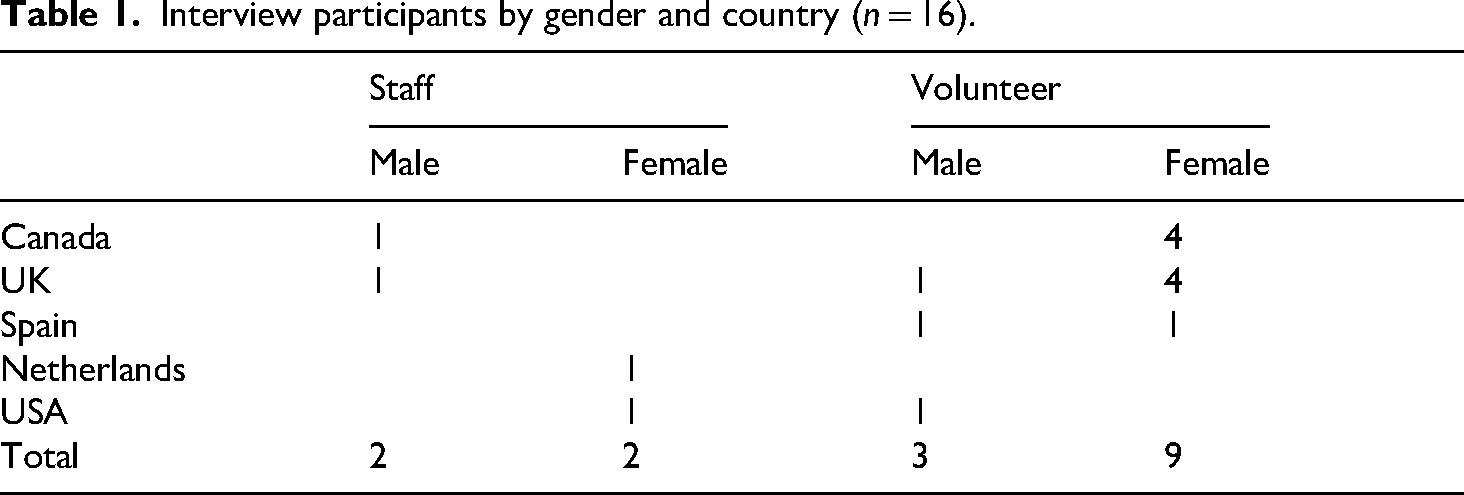
The second stage involved qualitative, semi-structured interviews with CoSA staff and volunteers (n = 16). To recruit interviewees, survey respondents were asked at the end of the survey if they would be interested in taking part in an in-depth interview to further explore their views and experiences. Others were recruited directly from the researchers’ networks (i.e., via the dissemination of project material to CoSA programs as outlined above). 2 The eligibility criteria for the interviews were the same as those for the survey (as outlined above). The interview questions reported on in this article were designed to elucidate staff and volunteers’ experiences of and views about incorporating victim/survivor input into CoSA practice. Interviewees were asked about the ways in which victim/survivors had already input into the CoSA program with which they work or volunteer, and about how victim/survivors and their perspectives could inform CoSA practice. Questions included: ‘In what ways do victim/survivors of sexual violence have input into your CoSA?’ and ‘Do you have any thoughts on ways in which victim/survivors could shape CoSA?’ Most interviews were conducted via the Zoom online platform; they lasted one hour on average. Participant characteristics are outlined in Table 1. As can be seen, interviewees were generally similar to survey respondents in terms of both gender (with 69% of interviewees identifying as female and 31% as male) and employment status (75% of interviewees were volunteers and the remaining 25% were paid staff). Interviewees’ countries of residence were mostly similar to those of survey respondents; the only notable exception is that a higher proportion of interviewees (38%) than survey respondents (27%) were from the UK.
Interview participants by gender and country (n = 16).
Data analysis
Qualitative data from the survey and interviews were read as a whole to facilitate familiarization with the data (Caulfield and Hill, 2014, Gareth et al., 2017). The data were then coded inductively (i.e., from the data rather than according to pre-defined concepts and categories (Xu and Zammit, 2020, Hsieh and Shannon, 2005)) in the qualitative analysis software NVivo 14 (Jackson and Bazeley, 2019) to generate initial themes (Braun and Clarke, 2019). The qualitative data were then subject to reflexive thematic analysis (Braun and Clarke, 2019), which involves the identification and description of implicit and explicit ideas within the data (Guest et al., 2012) and commonalities and divergences across research participants (Nowell et al., 2017). Importantly, in reflexive thematic analysis, themes are not topics or domains within the data, but ‘patterns of shared meaning underpinned or united by a core concept’ (Braun and Clarke, 2019: 593) and are relevant to the interpretation of the phenomenon in question (Xu and Zammit, 2020).
Ethical considerations
The research received approval from Queensland University of Technology Human Research Ethics Committee (approval #6050). As the research examined a sensitive area, a number of safeguards were implemented to ensure the ethical conduct of the study. In all instances, participation was voluntary. Prospective participants were provided with written information outlining the purpose of the research, what their involvement would entail, and any risks associated with taking part. Respondents to the online survey provided implied consent (i.e., their commencement of the survey indicated their consent). Interviewees were asked to provide verbal consent prior to the commencement of their interview.
To ensure the psychological safety and wellbeing of participants, the researchers informed participants that they were welcome to skip any questions that they were not comfortable answering. Information about local, 24-hour, free counselling/support services was provided to all participants. Information was provided about First Nations/Indigenous-specific counselling/support services both in Australia and abroad. Where requested, interviewees were provided with a full list of the interview questions prior to their involvement to enable them to feel better equipped and more in control of the interview.
The Goldilocks paradox: victim/survivors’ potential contribution to CoSA
This section outlines the three interlocking themes that were identified in the data set. In presenting the qualitative findings, we have heeded Mason's (2018) injunction to give the reader a sense of the frequency that themes were identified within the data set, by referring to ‘a few’, ‘many’ or ‘most’ participants for example.
Theme 1: Victim/survivors present a potentially destabilizing threat to CoSA
In the qualitative data collected for our study, victim/survivors of sexual violence were depicted as possessing a complex, often conflicting, constellation of characteristics that rendered them a potential threat to CoSA operations. This theme was present in a number of iterations. First, victim/survivors were considered by some research participants to be too damaged or psychologically fragile to have input into CoSA; participants held concerns that victim/survivors would be ‘triggered’ by becoming involved in a program for perpetrators of sexual violence. Survey participants cautioned that ‘[p]rograms like this have to be very careful about how they engage with victims/survivors of harm to keep trauma informed in order to not create further trauma’, and ‘I believe that this must be treated with great care and assessed on a case-by-case basis’. Interviewees noted: [I]f you have had experiences [of sexual violence], is this going to be triggering for you? Are you going to be able to take your experience away from it? And I think in the vast majority of cases, the answer is probably no, you can't….[I]t must be incredibly difficult for them. You know, very triggering, and you can't, it's not something you could promise that like, ‘oh, yeah, I'll be okay, for 12 months, while the Circle goes on, I'll be, you know, fine, weekly talking about sex offenses for 12 months’; that's a long time. (Interviewee 2, UK) [I]t can stir, stir things up if you have been a victim. (Interviewee 12, The Netherlands) [T]here's going to be I would imagine, there's got to be some mental or emotional conflict somewhere, I would have thought you'd have to be very, very I don't know, to face something like that. Have you actually got over your own emotional distraught [sic]? How far is that going to affect you? How, how long ago was it since you had that [experience of sexual harm]? (Interviewee 3, UK) I wouldn't think it will be right to do in the Circles program….I think it's introducing an extra element of blame. That isn't positive once they've [the core member has] reached the Circle stage….I think it would have added quite a lot more risk in terms of what the victim was going to say, to the offender. And how we're going to deal with that, and whether it's actually going to be the right message or if it's going to be, you know, ‘you're a monster, there's nothing more to be done’. I think it will be very useful for the victim. I'm not sure it'd be very useful for the offender. (Interviewee 2, UK) I think if you're coming in with any slight agenda at all, I think that might be a bit detrimental. (Interviewee 3, UK) [Y]ou don't want somebody who's angry and who's extreme. (Interviewee 5, Canada) I wouldn't take a volunteer that seems very vengeful, and wants to be doing this in order to, you know, potentially ruin the core member's life. (Interviewee 6, Canada)
For a few participants, victim/survivors’ experiences of sexual harm would potentially limit their broader understanding of sexual violence, and render them incapable of seeing beyond their own personal experience(s) of sexual harm: You know, it might be too limited an experience in a way. Like, you know, if you've had one incident, you might have ideas about how to rehabilitate that one person. I'm not sure it would be sort of generalizable or applicable to all the Circles….the whole point of the Circle is almost that you're kind of faceless members of the community, you could be anyone. You are like a representative of people. So, to have someone so personally invested kind of takes away from that. (Interviewee 2, UK) I think it's quite difficult because if you start to work with [a] sexual perpetrator, you always tend to think about your own, your own experience. (Interviewee 15, Spain) [W]e don’t involve victims or survivors of harm. I won’t go so far as to say that kind of defeats the purpose. But CoSA is a unique…opportunity where the guys or the girls, the people [core members] can work on themselves without having to, you know, worry about how to make amends for, for the victims and survivors. (Interviewee 6, Canada)
Indeed, for a couple of participants, victim/survivor input should only occur in circumstances in which the core member is also a victim/survivor of sexual harm. Survey respondents argued that ‘[m]any perpetrators of sexual violence are also victims/survivors of it – I think exploring that connection is particularly important for this work’, and ‘I think there could be more attention to/support for individuals who were both victims and perpetrators’. Interviewee 11 (USA) made a similar argument: [A] lot of our core members were victims, too. I know that they were. And so, while that does not…it just is it's an interesting kind of like binary that sometimes that can create. So, but I do think it's important, and I think that there are a variety of ways in which folks can, can do [address] that. And they should, right?
Taken together, these comments evince a reluctance to allow victim/survivor input into CoSA on the grounds that victim/survivors may pose a threat to the model or destabilize a core member's process of re-entry. In Interviewee 2's (UK) words: ‘you know, all it would take is one comment, one bad session, and then you've sort of tainted the relationship [with the core member]. And I think, you know, if then they [a victim/survivor] had to pull out, that would cause a lot of problems for the Circle’.
Theme 2: Victim/survivors could contribute – but at arm's length
Further underscoring the perception of victim/survivors as a potentially destabilizing force, many participants imagined indirect ways in which victim/survivors might contribute to CoSA. Most commonly, participants argued that direct victim/survivor input is not warranted since the very raison d’etre of CoSA is to prevent sexual victimization and this is the most potent way in which victim/survivor needs can be met. In other words, while CoSA may not respond to the needs of individual victim/survivors, they can prevent the creation of new victim/survivors of sexual harm. As Interviewee 13 (UK) put it, ‘[t]he whole ethos of the charity is to prevent further victims’. Others concurred: [W]e certainly reduce the recidivism. And I'm sure that's what most victims would, would hope for. Their individual needs or their individual circumstance – I'm not sure (Interviewee 1, Canada) I think the, the more we share about what CoSA does and, and, and, you know, the, the, the high rate of success compared to when they [perpetrators of sexual harm] aren't in CoSA. I think just sharing that information as, as often and as widely as possible, might help. (Interviewee 5, Canada) [I]t's something that I think CoSA is working on helping the victim to understand what CoSA is, and…if there's any chance of there being some reconciliation…seeing if they're willing to meet with the perpetrator. Or if they would at least, like CoSA to let the perpetrator know what they went through. Even though they're, they don't want to meet with them. But to just let them know. I think that may, that may, be something at CoSA we can do a better job of doing more of that.
Along similar lines, a few participants noted that victim/survivors have (or could have) input into CoSA through governance arrangements (e.g., ‘we have a board member…somebody from the governing body is, has identified as that is their experience’ (Interviewee 11, USA)) or through CoSA programs partnering with victim/survivor organizations: [S]ome sites like ourselves have started to work with organizations, partnering with organizations that specifically work with victims and survivors. So, in that way, they're kind of, and we're always open to input, so in that way, the victim/survivor perspective is being worked into the CoSA environment. (Interviewee 6, Canada)
Theme 3: Victim/survivors as ‘reminders’ of suffering
The one manner in which participants envisaged victim/survivors having concrete input into CoSA was by reinforcing to core members the harmful impacts of their sexually violent behaviour. Many research participants viewed victim/survivors as uniquely placed to foster victim empathy (and thus accountability) among core members. Survey participants championed the involvement of victim/survivors on the grounds that this would ‘[foster] a greater understanding of victim impact for perpetrator and everyone involved’, ‘promote empathy among the perpetrators’, ‘evoke empathy’, ‘[h]elp offenders to face impacts of offending’, and ‘[help] offenders…[to]…begin to have an idea about the damage they cause and how their actions continue to affect a victim long after the offending ends’. Interviewees concurred: ‘I think it's really important that they [core members] do hear that [victim/survivor] voice about what it's really like, however uncomfortable [that may make the core member]’ (Interviewee 10, UK); ‘they tell their core member about their story. And it's very powerful’ (Interviewee 12, The Netherlands). As one survey respondent noted, this might be especially useful for core members whose offences were perpetrated online, since ‘[o]nline perpetrators don’t seem to realize that images are of real people who are being abused. They see it more as victimless’.
Critically, for our participants, this role for victim/survivors would only be allowable if the victim/survivor was not overly fervent in this task. As one survey respondent put it, ‘it is important that staff have ‘reminders’ of victim experiences as I feel that this reduces the potential of minimizing the harm a Core Member has caused. However, I am not certain that direct victim contact with [victim/survivor] volunteers is the right path’. Interviewees similarly advocated for the involvement of victim/survivors who are sufficiently ‘open minded’ and not too punitive: Well, somebody who, you know, is retaining a lot of fear and resentment, anger, those, those kinds of things are, you know, and then the memories. So, it just really depends on the person and the situation, I think, whether they'd be, be suitable for that. (Interviewee 14, USA) I have spoken to victim/survivors who are very supportive of reintegration and not supportive of the sex offender registry and stuff like that. So yeah, if they're open minded, I think that would be really helpful. (Interviewee 8, Canada)
Discussion
Collectively, in participants’ views, victim/survivors need to occupy the ‘Goldilocks’ position of evoking core member empathy by demonstrating the impacts of sexual harm they have experienced, while not doing so in a way that is too close-minded or punitive so as to threaten the stability of the core member. In doing so, victim/survivors are expected to act in a way that is ‘not too much, not too little, but just right’. While this finding raises the somewhat uncomfortable proposition that there is a ‘right’ and ‘wrong’ type of victim/survivor input (and perhaps even a ‘right’ and ‘wrong’ type of victim/survivor), given that the purpose of CoSA is to reduce sexual recidivism among core members, this is likely very sound reasoning. Highly punitive victim/survivors would likely do more harm than good in terms of promoting desistance among core members; we want to be clear that we do not disagree with our research participants in this respect.
Nonetheless, this overarching finding merits further interrogation on two primary grounds. First, when considering victim/survivor input into COSA, some participants appeared to adhere to the myth of the ‘vengeful victim’ (Herman, 2005). This is curious given that the research literature demonstrates that victim/survivors’ attitudes toward perpetrators are about the same (Bowman, 2018, Brown, 1999, Comartin et al., 2009, Levenson et al., 2007), or less punitive (Ferguson and Ireland, 2006, Nelson et al., 2002, Socia et al., 2020, Spoo et al., 2018) than those of the general public. As Harper et al. (2017) contend, this is probably due to victim/survivors possessing more comprehensive knowledge of perpetrators, and thus relying less on stereotypes, than members of the wider public. In relation to CoSA, it makes little sense to hold concerns about victim/survivors’ propensity toward punitivism, when this may be a threat posed by any volunteer.
Second, participants’ enduring concern about the wellbeing of victim/survivors who engage with CoSA is interesting given that concerns about wellbeing likewise apply to any and all volunteers. In the existing research on this topic, both Wager and Wilson (2017) and Wilson and Hudson (2024) found that victim/survivor volunteers reported having ‘processed’ or moved on from their experiences of sexual violence before taking part in CoSA. Wager and Wilson (2017) found that although other volunteers held concerns that victim/survivors would be adversely affected by volunteering with CoSA, this was not realized in practice, and Wilson and Hudson (2024) likewise concluded that victim/survivor volunteers are no more at risk of being ‘triggered’ by participating in CoSA than any other volunteer. While Richards and Weir (in press) found that some victim/survivor volunteers were ‘triggered’ as a result of volunteering in CoSA, they did not compare victim/survivor volunteers with other CoSA volunteers. Their findings therefore cannot be taken to mean that victim/survivor volunteers experience distress any more than other CoSA volunteers.
An important point of note here is that all the aforementioned studies rely on samples of current CoSA volunteers, and therefore by definition exclude any victim/survivor volunteer who was sufficiently distressed by participating in CoSA to have ceased their involvement (see further Höing et al., 2017). A couple of sources (Hinton, 2008, Richards, 2011) do, however, offer anecdotal examples of victim/survivor volunteers withdrawing from CoSA due to adverse emotional consequences. This underscores the importance of recognizing the ‘survivorship bias’ (Czeisler et al., 2021) that characterizes the extant scholarship on victim/survivor volunteers. Crucially, however, literature has documented that other CoSA volunteers (i.e., non-victim/survivors) have also ceased involvement with CoSA due to the adverse consequences of working with perpetrators of sexual violence (Parkes et al., 2023). As a result, it should not be assumed that this is uniquely the province of victim/survivors. Indeed, as Richards and Weir (in press: 13; italics in original) tentatively argue: ‘it is possible that volunteers without personal experiences of sexual violence might actually be more confronted by what they observe in CoSA than victim/survivors, given that victim/survivors already have an understanding of sexual harm and those who perpetrate it’. Together, our findings might be useful for CoSA programs to consider, particularly if they are seeking to expand and/or formalize the role of victim/survivors in CoSA delivery.
Conclusion
Against the backdrop of expanding roles for victim/survivors in criminal justice processes, this research documents, for the first time, staff and volunteer reflections on victim/survivor input into CoSA. While staff and volunteers had a wide range of experiences with victim/survivor involvement in CoSA (and a wide range of views about the prospect of this), collectively, their comments revealed a degree of trepidation in this regard. Concern for the wellbeing of victim/survivors – and indeed, of core members – in CoSA is undoubtedly warranted; nonetheless, we emphasize that such concerns ought to apply to all CoSA participants, irrespective of victim/survivor status.
Limitations
Although the cross-national approach utilized in this research enhances the validity of our findings, as an exploratory study utilizing a small and potentially unrepresentative sample, our findings cannot be taken as conclusive. They do, however, provide a prompt for further discussion about this important topic, and provide a platform on which future research can build.
Footnotes

Ethical approval and informed consent
The Human Research Ethics Review Committee at Queensland University of Technology approved this research project (approval: 6050) on September 9, 2022. Respondents gave implied consent prior to undertaking the online survey and verbal consent before starting interviews.
Funding
The authors disclosed receipt of the following financial support for the research, authorship, and/or publication of this article. This work was supported by the National Office for Child Safety (Commonwealth Attorney-General's Department).
Declaration of conflicting interests
The authors declared no potential conflicts of interest with respect to the research, authorship, and/or publication of this article.