



Abstract
This research aimed to provide new insights into the behaviours and tactics of people who engage in coercive control. The research drew on the knowledge and experiences of a wide range of professionals working with people who actively violate social norms and harm and disadvantage others by conscious choice both inside and outside of forensic settings. The results provide a framework to inform social work practice, policy, and training requirements to support the assessment and management of risk to both vulnerable adults and children when they are targeted by people who perpetrate coercive control.
Keywords
Background
There is growing recognition of the need for social workers, working globally, with a wide range of service user groups, to recognise and intervene effectively in situations of coercive control. This is a core task in terms of assessing and responding to some of the highest risk situations where social workers are mandated to intervene (Bracewell et al., 2025; Hester, 2011; Ministry of Justice, 2023).
There is also growing recognition that coercive control can happen in a range of contexts including within families; within individual relationships; within institutions; between partners, parents and children; between carers and those cared for; and within and between professionals (Baines and van den Broek, 2017; Selwyn and Meakings, 2016). However, to date there is very little guidance for social workers on how to intervene effectively and how to recognise and fully understand the motivations and patterns of behaviours, including the shared attributes and commonly used tactics, of those who perpetrates coercive control (Mitchell, 2024; Pitman, 2017).
Drawing on the limited legal definitions and behavioural examples enshrined in the criminalisation of coercive control may not provide social workers with a framework which is comprehensive and nuanced enough to offer sufficient understanding of coercive control perpetrators nor provide victims and communities with the deep level of awareness required to prevent harm and protect targets (Hobson et al., 2023; Mitchell, 2024). Consequently, it is an area of challenging practice for social workers as well as the criminal justice and family courts systems. Areas of particularly challenging practice include but are not limited to; recommendations to the family courts where there are contact orders for children who have witnessed domestic violence, where a parent is at high risk of significant harm within an abusive relationship, where children have experienced parental intimidation and abuse and are nervous to speak out or where both parents claim they are the better parent and accuse the other of considerable abuse or mental health issues.
A second potential barrier to the effective use of coercive control legislation to prevent further harm by coercive control perpetrators, may lie in long held and fundamental values and principles of the social work profession (Coulter et al., 2020). For example, the imperative to give unconditional positive regard to all (Rogers, 1957) and the acceptance of the inherent potential of people to change through the relationship between social workers and those who come into services (Trevithick, 2012) are considered important principles in social work practice. Similarly, the promotion of strengths whilst understanding the wider social context of problems is perceived as an essential part of relational good practice (Featherstone et al., 2018). Further, the application of psychotherapeutic theory to the social worker client relationship has promoted the potential for this practice to act in a holding way including in situations of domestic abuse (Ferguson et al., 2020). Research on brain functioning and antisocial behaviours as well as the views of experts working with coercive controllers and their victims, in part, challenges the assumptions on which these principles are based (Blair, 2007; Mitchell, 2024).
However, in this article we aim to address a gap in the current knowledge base and provide a deeper and nuanced understanding of the characteristics of those who perpetrate coercive control in the context of family relationships including challenging the idea of the possibility of therapeutic change. It provides a counterbalance to the primacy given in current policy and practice guidance to understanding the vulnerabilities of victims or the complexity of multi-agency working. It draws on primary research that sought to identify the characteristics of a wide range of perpetrators of harmful behaviours, but which provided clear insights into how we can better understand those who perpetrate coercive control (Mitchell, 2024). The rich data comes from experiences in both forensic and non-forensic contexts so provides unique cross sector insights.
Coercive control
Coercion involves controlling the way someone behaves through the use of a wide range of tactics intended specifically for this purpose. Coercive control is typically understood as an interaction between a perpetrator and a vulnerable person or people who are compelled to behave in certain ways because of these tactics which might include, for example, threats, intimidation, highly loving acts which are withdrawn strategically, the use of pointed withdrawal of communication, severe punishment, reducing another's confidence through demeaning and disparaging remarks, to name a few. In families, the complex relational dynamic will also affect children of that relationship as associate victims (Melville-Wiseman, 2009). Coercive control is clearly understood as a form of intense, long-standing, and usually inescapable psychological ‘violence’ (Bishop and Bettinson, 2017) that can cause substantial harm to victims. It is considered a criminal offence in the context of interpersonal intimate relationships in the United Kingdom, New Zealand, and some states of Australia (Dutton and Goodman, 2005; Robinson et al., 2018).
Previous research has clearly identified negative consequences for victims including depression, substance abuse and suicidality (Stark and Flitcraft, 1995; Stark, 2007). The impact on children is recognised as complex both in terms of being direct victims or witnesses (associate victims) to the controlling behaviour. Other negative consequences for children include the loss of the emotional capacity of the non-controlling parent to be emotionally available and to have the capacity to provide necessary support ( Katz 2022; Mitchell, 2024). The direct impact on children, in situations where there is coercive control without associated physical violence has been identified as problem behaviours at school, depression, unexplained aggression, delinquency, anxiety, developmental delay, substance use and suicidality (Dishion and Snyder, 2016; Katz, 2016, 2022; Katz et al., 2019; Labatut, 2021; Mitchell, 2024; Stark, 2023).
There has therefore been a significant focus in the literature on understanding the relational dynamics of coercive and controlling behaviours, often using a feminist or gendered power dynamic lens to understand coercive control in the context of domestic violence (Katz, 2016, 2022; Morris, 2009). While this research is highly valuable, a model of coercive control built on a feminist or gendered power dynamic lens may be limited because it addresses the victim perspectives of only one biological sex where data indicates both men and women can be abusive of the other gender (Melville-Wiseman, 2009), does not account for a wide range of contexts, and is predominantly based on victim perspectives. In addition, much of the research does not encompass the experiences and insights of expert practitioners working with coercive controllers themselves as well as their victims, which research indicates offers equally as valuable data (Mitchell, 2024). In the wider context of institutional responses, it may also lead to the inadvertent blaming of victims for not being better at relationships or choosing the ‘wrong’ partners. Research on coercive control conducted with use of a feminist or gendered power dynamic lens may potentially limit the ability to identify male perpetrators of coercive control through the inadvertent omission of important indicators which are more readily recognised across both sexes and in all contexts.
People who perpetrate coercive control, and other harmful behaviours, often do so in ways that are difficult to recognise for primary and associate victims but also for professionals intervening in domestic violence so the most accurate, nuanced and comprehensive representation of coercive control perpetrators is crucial in the recognition of coercive control patterns of behaviours. Even when experienced at first hand it can be difficult to accept what is happening, especially if it is perpetrated by someone who had previously given the impression that they were committed to a relationship of mutual love, care and commitment.
In addition, the breadth, depth, and subtlety of tactics used by those who engage in coercive control, not just to control but also to slowly destroy their targets, is not well understood or easily identified. This means that the nature of the harm that is caused by coercive control is difficult to accept and understand by individual targets, social workers and others who are tasked with intervening. It is possible therefore that targets are only believed by investigators who have had their own experience of being a target. This may be compounded by the perpetrator being in an otherwise socially acceptable role or profession including the ‘caring’ professions (Dale and Alpert, 2007; Pohlmann et al., 2022). In addition, there is often a credible and convincing false image created by those exerting coercive control to hide their true nature and harmful behaviours, including from others who may subsequently inadvertently support them (Fritzon et al., 2020; Brooks et al., 2020 ). The ability of coercive controllers to disguise their true intent is dealt with in this article as are the patterns of behaviours evident in coercive controllers.
Social work education
Social work became a degree only entry profession in the United Kingdom in 2003. Prior to that many social workers were trained at Diploma or Certificate level. The aim of the move to degree only entry was to strengthen the calibre of social workers entering the profession in terms of their knowledge, skills and values (Orme et al., 2009). At that time, the profession became regulated by the General Social Care Council in England with similar bodies regulating the profession across the devolved nations of the United Kingdom. However, initial training in the United Kingdom has remained generic with the broad remit to train social workers for all areas of practice once they qualify. It was never the aim of this first level of training to equip newly qualified practitioners to practice in areas that require in-depth specialist skills or in situations of the highest possible risk. Initially the General Social Care Council provided a framework for specialist Post Qualifying studies but at present these are restricted to the field of mental health and mental capacity. In addition, initial generic social work training may prepare students for what the law says about child safeguarding processes, and private Family Court proceedings where parents seek direction from a court on post-separation care and contact but does not have capacity to provide the in-depth skills training needed to intervene or recognise where coercive control may be present. Some students will be exposed to some aspects of coercive control from placements with voluntary organisations supporting victims of domestic violence, individual lectures from interested academics or by undertaking individual projects during their training. However, working with domestic violence and coercive control is not a mandated part of their initial training. Their own personal connection to some aspects of domestic violence either as children or adults may be their best experiential knowledge to inform their practice at this stage of their professional development. This can be both an advantage but also a barrier if scenarios they work with feels as disempowering as their own personal experience.
In 2020, the Ministry of Justice for England Wales published what has become known as the ‘Harm Report’ into the risk of harm to children and parents in the context of relational separation dealt with by private family proceedings (Ministry of Justice, 2020). These proceedings typically involve the court making decisions about child residency and contact and are informed by reports by social workers working within the Children and Families Court Advisory Service (CAFCAS). These social workers are generically trained and at present there is no post-qualifying award to prepare them for this specialist area of practice. The report highlighted concerns that risks of further harm to adults and children in situations of domestic abuse were often minimised or exacerbated by a pro-contact culture. In addition, there was evidence that aspects of coercive and controlling behaviour were sometimes supported and endorsed by the proceedings that ignored evidence of the unequal power dynamics in favour of supporting a mythical level playing field (Ministry of Justice, 2020). Furthermore, the report highlighted significant stereotyping of victims in situations of domestic abuse in favour of assumptions that false allegations were the norm: ‘These stereotypes demonstrate a lack of understanding of domestic abuse and trauma, particularly the ongoing effects of coercive control’. (Ministry of Justice, 2020: 49)
There have also been assumptions that where perpetrators can be recognised, that treatment of their offending behaviour is a worthwhile investment. However, studies into the effectiveness of treatments such as anger management show both low completion rates and low reduction in harmful behaviours (Henwood et al., 2015; Sousa et al., 2024).
One of the key recommendations of the Harm Report (Ministry of Justice, 2020) is to improve the level of training available to all professionals involved in these proceedings including social workers employed by CAFCAS but with limited guidance on what should be included in that training (Ministry of Justice, 2023).
Social work professional values
Social work is recognised as a global profession with shared values enshrined in codes of ethics and professional standards. The social work curriculum is designed to reflect these values with a focus on teaching students’ theoretical perspectives such as the concept of unconditional positive regard for clients (Rogers, 1957). These professional ethics typically give primacy to the inherent worth of individuals and the professional duty of social workers to recognise that equally with people they work with alongside the importance of self-determination and the need to support relationships: ‘Social workers recognize and respect the inherent dignity and worth of all human beings in attitude, word, and deed’. International Federation of Social Workers (2018) ‘Social workers should build and sustain professional relationships based on people's right to control their own lives and make their own choices and decisions’. British Association of Social Workers (2021) ‘Social workers understand that relationships between and among people are an important vehicle for change. Social workers engage people as partners in the helping process. Social workers seek to strengthen relationships among people in a purposeful effort to promote, restore, maintain, and enhance the well-being of individuals, families, social groups, organizations, and communities’” National Association of Social Workers (US) (2021)
This means that to intervene in situations of domestic violence or coercive control and stay true to professional codes of ethics, social workers have to primarily construct it as a relational issue or where all parties should be treated equally. The International Federation of Social Workers does recognise that there may be some limitations to this model and states: ‘We [social workers] respect all persons, but we challenge beliefs and actions of those persons who devalue or stigmatize themselves or other persons’. International Federation of Social Workers (2018)
However, there is very little to support social workers in the difficult task of working with perpetrators of coercive control.
This article aims to provide new key insights to improve social worker training, policy, and practice, including how to better understand the perpetrators, the risks they pose and the most effective ways for social workers to intervene.
Research aims
This article aims to address the two potential barriers to the successful application of coercive control legislation and intervention in cases of coercive control abuse discussed earlier in the article. In addition, this article positions the need for kinaesthetic-based training of social workers to increase their knowledge, confidence and capability to identify and work with perpetrators and victims of coercive control.
First, we address a gap in the current knowledge base by providing a framework which offers potentially the most comprehensive and nuanced understanding of the characteristics of those who perpetrate coercive control in the context of family relationships. The article draws on primary research that sought to identify the characteristics of a wide range of perpetrators of harmful behaviours, which provided clear insights into how we can better understand those who perpetrate coercive control (Mitchell, 2024). The rich data comes from experiences in both forensic and non-forensic contexts so provides unique cross sector insights.
Second, the article explores the belief that all coercive controllers have the potential for therapeutic change based on the same primary research as well as other data. It provides a counterbalance to the primacy given in current policy and practice guidance to understanding the vulnerabilities of victims or the complexity of multi-agency working.
Finally, building on the research findings, this article outlines considerations for the social work profession in effectively managing those who engage in and are the victims of coercive control. This includes policy, appropriate training for social work professionals and the importance of positioning training as fundamental in the prevention of harm.
This article draws on innovative new research to support a more nuanced understanding of the behaviours often described as coercive control. It is drawn from a much wider research project to identify a pattern of behaviours perpetrated by a group of people who actively violate social norms and harm and disadvantage others by conscious choice referred to in this paper as ‘dark personalities’. Dark personalities are motivated differently to the rest of the population and are driven primarily by control (Mitchell, 2024), rather than motivations such as affinity. Their behaviour is exploitative and predatory in nature and can cause exceptional harm. Dark personalities may assert control over others overtly, covertly, physically, non-physically, mentally, emotionally, financially, sexually, socially, parentally, through intimidation or implication, for example. There are many ways control is asserted. Coercive control is a term used to denote a more covert means of controlling others, and which often involves a set of tactics that may be difficult for others to see such as use of threats and intimidation, isolation from friends, family and others, monitoring, and emotional manipulation. For the purposes of this article we focus on what this wider research can tell us about the behavioural manifestations, the tactics of dark personalities who perpetrate coercive control. While coercive control is an important distinction, placing coercive control in the context of dark personalities, provides greater potential for recognition of harmful behaviours because it provides a comprehensive framework of attributes and tactics common to those driven by control. These behaviours can manifest themselves in many different contexts but the focus here is on interpersonal dimensions of coercive and controlling behaviours where social workers are tasked with intervening to safeguard children and vulnerable adults.
The pragmatic contribution of this research includes the potential for a greater propensity to prevent harm across the human population through deeper knowledge about and visibility of such behaviours as opposed to focusing on the profiles of victims. It is proposed that clarity regarding the attributes and behavioural manifestations of those who actively violate social norms and harm and disadvantage others by conscious choice, including the engagement of coercive control will increase the potential for more effective education and harm prevention. Genuine leaders in organisations and communities will be better armed to protect, while those in the broader population will be better informed to avoid harm.
The greatest practical contribution of this work, though, is a framework which establishes a common set of attributes in and a commonly used set of tactics used by those motivated to control in a plethora of different ways including coercively. In the absence of physical evidence, coercive controllers can be difficult to hold to account in the justice system including the family court. What makes this work unique and powerful is the framework it offers which makes those who engage in coercive control far easier to identify so that the protective parent and children can be supported appropriately.
The theoretical contribution of this study is primarily an evidence base that aims to clarify whether coercive controllers can be characterised by typical behaviours, whether there is a continuum of those with controlling behaviours, and ultimately whether those who engage in coercive control, referred to in this article as dark personalities, can be cured.
Context complexity: ‘Dark personalities’, ‘coercive controllers’, the DSM
The context for identifying those who actively violate social norms and harm and disadvantage others by conscious choice is complex. This makes it more difficult to hold those who are dangerous to account because the representations of those who harm by conscious choice are numerous and, in many cases, overlapping or conflicting.
One of the key publications for identifying those who violate social norms and harm and disadvantage others by conscious choice is the Diagnostic and Statistical Manual of Mental Disorders (DSM), created by the American Psychiatric Association. It is a publication used for the classification, diagnosis, research, and treatment of mental disorders. The DSM contains a sub-classification titled ‘Personality Disorders’, defined as ‘an enduring pattern of inner experience and behaviour that deviates markedly from the expectations of the individual's culture, is pervasive and inflexible, has an onset in adolescence or early adulthood and leads to distress or impairment’ (p. 645). In general terms, the DSM V categorises personality disorders into three groups – cluster A disorders defined as people with ‘odd or eccentric’ behaviour; cluster B disorders defined as ‘dramatic, emotional or erratic’ and cluster C defined as ‘anxious’. Cluster B would most closely reflect those who are dangerous to others. Coercive control is a pattern of behaviours which would most closely fit with cluster B. It is not contained in the DSM, however.
There has been considerable debate, often argument, over the years as to which personality disorders should be included in the DSM, what they should be called, which attributes should be included for each and whether some are not personality disorders at all but rather human adaptations to abuse (Tyrer and Mulder 2024).
In addition to the items in the DSM, there are hundreds of other frameworks and assessment tools used by professionals in the identification of people who actively violate social norms and harm and disadvantage others by conscious choice (Mitchell, 2024). The Psychopathy Checklist-Revised (PCL-R) (18–19), for example, is an assessment tool used internationally to identify psychopathy, characterised by a constellation of personality traits and behaviours that society typically disapproves of and which infringe upon the rights and safety of others, including manipulation, pathological lying, superficial charm and proactivity towards aggression, associated with a lack of deep social emotions, especially guilt, remorse, empathy and love (Hare and Neumann, 2008) yet psychopathy is not contained in the DSM.
‘Dark personality’ is becoming a term used frequently in the academic literature to broadly encompass those who actively violate social norms and harm and disadvantage others by conscious choice, including those who use coercive control tactics (e.g., Mathieu 2021).
Methods
An overview of methods is presented here but for fuller details of the methods, participants and their knowledge, backgrounds and experiences, and the Delphi study please see Mitchell (2024).
The research methods drew on the knowledge and experiences of professionals and practitioners in a range of roles but who collectively had many years of continuous experience of direct work with people who exhibit harmful and controlling behaviours and their targets or victims. The identification of aspects of coercive and controlling behaviour was part of a larger study into a wide range of harmful and predatory type behaviours and the people who perpetrate them. The overarching research questions were:
What are the high-level, shared attributes of people (adults) who actively violate social norms and harm and disadvantage others by conscious choice? What are the specific behaviours that manifest from each of these high-level attributes across varying contexts, communities and personal circumstances?
In addition, the research aimed to identify the usefulness of a continuum model based on normal personalities traits in identifying people of dark personality. It also examined the assumptions about the capacity of people of dark personality to change (Mitchell, 2024). For the purposes of this article, we are focusing on the context of adult intimate personal relationships and situations of domestic violence.
The research design included semistructured interviews and the Delphi survey technique. The Delphi survey technique, which uses several survey rounds whereby data is further refined in each round, was chosen because it has been used successfully to gain consensus in areas where there is dissent, to extract experiential knowledge from practitioners who do not publish, and to elicit the emergence of new ideas while preventing the dominance of those who are more outspoken. The data collection and the data analysis process each had several stages. The data collection and analysis processes are presented in a one-page flow chart in Figure 1. The research included key informants who had a wide range of knowledge and experience of working within the domestic violence and coercive control arenas. The study included participants from both behavioural and personality research theoretical perspectives and practitioners. This was the first research ever to include practitioner experts working with those who actively violate social norms and harm and disadvantage others by conscious choice outside of the justice system. It was also the first research to combine practitioners and high-level academics focussed on dark personalities. In addition, it was the first research that combined practitioners working with forensic populations with those working with non-forensic populations of dark personalities and their targets or victims.
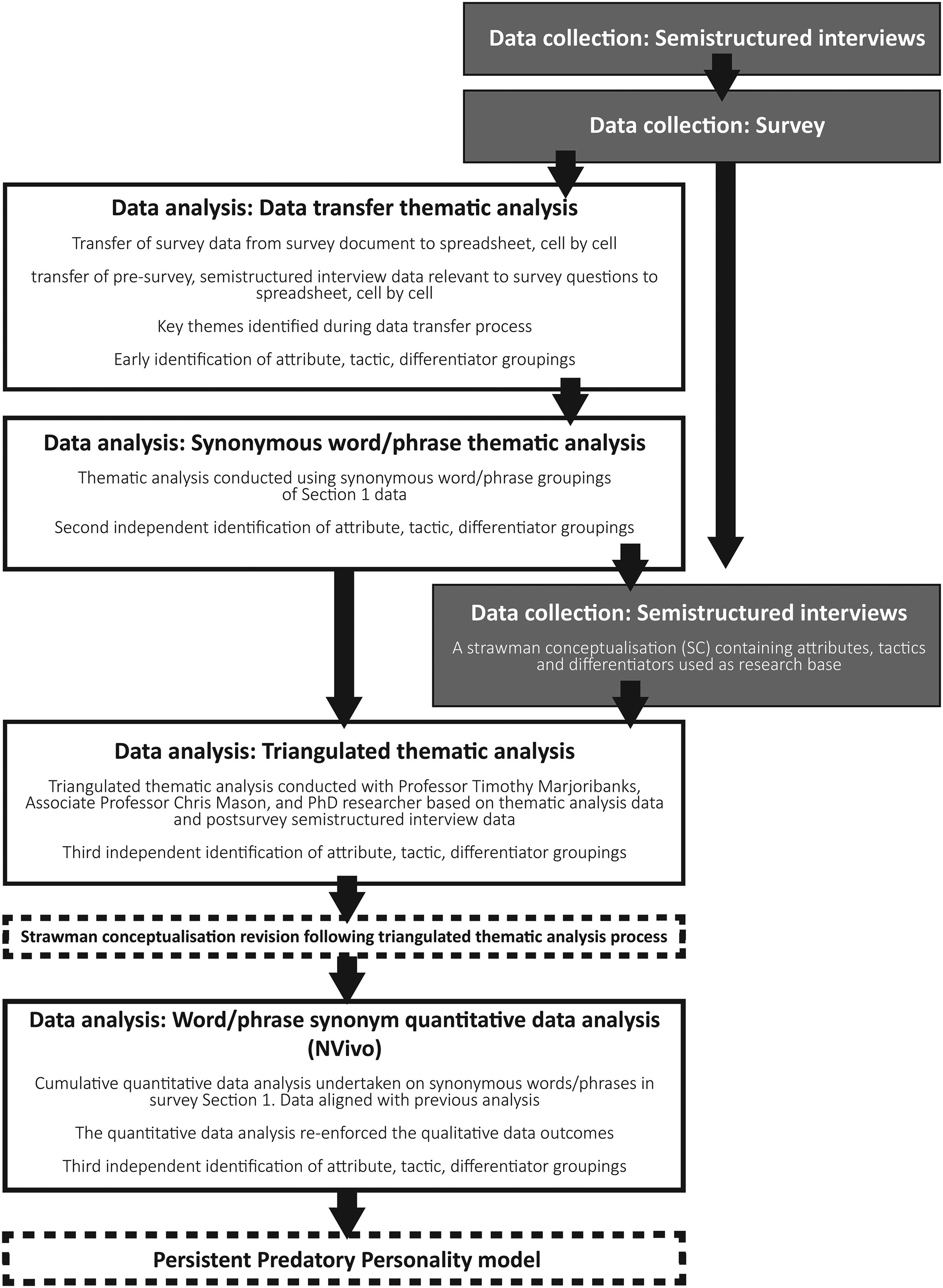
Data collection and analysis flowchart. Dr Karen Mitchell PhD (2024)
The design included potentially the most comprehensive literature review ever undertaken of all the fields of study researching people who actively violate social norms and harm and disadvantage others by conscious choice. It examined data from fields of study which are exploring the same behaviours but rarely interact with each other, including psychopathy, narcissism, Machiavellianism, dark triad, cults, coercive control in domestic violence, toxic leadership in commerce and politics, black swan events in medicine, child sex abuse in religion and others. These fields of research study the same behaviour so it made sense to bring all the data together and look for gaps and areas of contention. This extensive literature review was used to design the primary data collection and analysis approach. This is outlined in Figure 1. Semistructured interviews were undertaken initially with a subset of participants to identify any relevant factors not gleaned from the literature and that might also be important in research design and implementation. A survey which included all participants was then undertaken as the first round of the Delphi study. The extent and depth of data received in the first survey was substantial. Once the data were reviewed, it became evident that it was unlikely the data could be summarised and presented to research participants in a second survey in a way that would be easy to digest because of the sheer amount of information. Data was then analysed using thematic analysis. In addition, the researcher placed all the data into a spreadsheet manually, question by question, and then copied and grouped synonymous words and phrases. This took several hundred hours and resulted in a deep familiarity with the data. During this process, themes began to emerge. The researcher noted these themes during the data transfer process and started listing quotations that appeared to represent these emerging themes in different contexts, communities and personal circumstances.
Three high-level data groupings emerged from the data. Some of the data groupings were clearly attributes. For the purposes of this study, an attribute was defined as ‘a quality or feature regarded as a characteristic or inherent part of someone’ based on information in the research. There were also data groupings that did not fit this definition. Some of these groupings appeared to represent strategies or tactics that were used by people of dark personality to harm, to attack, to avoid exposure, and to achieve other goals. Other data groupings represented contradictory behaviours and indicated that research participants had experienced, observed or heard reports of behaviours that were opposites, like ‘impulsive’ versus ‘considered and calculated’. The data groupings that represented attributes, tactics and differentiating features were named.
The results of the thematic analyses were then further reviewed and refined in semi-structured interviews with a subset of research participants. The results were then reviewed again in a triangulated analysis with two academic supervisors and the study author. A word/phrase quantitative comparative analysis was then undertaken using the NVivo platform to cross-check the thematic results against the results of another form of data analysis.
Participants
Participants were identified using a snowballing technique from international professional networks, academic literature and other sources in the public domain such as media reports, social media and television documentaries. They included personality researchers, behavioural researchers, expert forensic practitioners and expert non-forensic practitioners. Prior to inclusion in the research potential participants were vetted for their experience with dark personalities. They were required, unprompted, to identify and elaborate on at least eight of a list of 13 key features of dark personalities, created from the initial literature search, in a vetting dialogue that took place by phone, video platform or at an in-person meeting.
Fifty-seven participants were recruited to the study, and this met the criteria for saturation for a Delphi study (Cresswell, 1998). Participants had on average 22 years continuous experience of working specifically with people of dark personality and their targets, with a range of 5 to 60 years. Participants were working internationally although it was not within the scope of the study to identify the impact of different geographical locations of their work. However, one of the aims of the research was to establish consensus across a number of perspectives and so this international perspective added to the potential transferability of the findings. During the research, some participants disclosed their own personal connection to their professional work in terms of having been victims themselves of controlling and harmful behaviours. This provided an unexpected positive dimension to the research and added to the rich data that was obtained. Ethics approval was provided for inclusion of those with lived experience on the condition they were currently in a working role. The total time contributed by each research participant for the vetting process, pre-survey interviews, Delphi survey, and post-survey interviews ranged from 1.4 to 8 hours.
Findings
The findings from this study, potentially the largest review ever conducted of research into those who actively violate social norms and harm and disadvantage others by conscious choice, in addition to the first research ever conducted with expert practitioners working with dark personalities and their targets outside the justice system (as well as inside the justice system), indicates there is just one type of dark personality. All dark personalities share the same attributes and use the same tactics to win, destroy and avoid transparency.
Behaviours representing attributes and tactics may manifest differently according to factors such as intelligence, impulse control capability, socio-economic status and context. All dark personalities, though, have the same set of 20 attributes and use the same 25 tactics. A wide range of factors including sub-standard research approaches, use of inadequate research populations, researcher bias and other issues have prevented the exposure of this one type of dark personality.
The data also indicates dark personalities are not on a continuum in terms of some being more dangerous than others. Dark personalities that are higher functioning are equally as dangerous and committed to destruction of their targets as those in prison for murder, they are just more covert about the way they harm their victims. Tactics engaged by this single dark personality type to destroy and avoid tranparency, such as manipulation and isolation of the target, are used more potently, persistently and brazenly than other people might use them. This is likely a result of brain anomalies. There is a substantial base of research that indicates brain differences in those of dark personality influencing their emotional world and which impacts their fundamental motivations and drivers. The key driver which emerged from the primary data is control. These research findings are powerful as they provide a comprehesive and nuanced pattern of behaviours that makes it easier to identify and hold dark personality perpetrators who do not use physical violence and engage in more covert forms of harm to account.
The one single dark personality type that emerged from the data is titled the Persistent Predatory Personality (PPP) model (Mitchell, 2024). It is potentially the most comprehensive and nuanced representation yet developed of adult people who actively violate social norms and harm and disadvantage others by conscious choice. It has three tiers – attributes, tactics and differentiators. Rich data underpins each of the attributes, tactics and differentiators. The PPP model is included in Figure 2.
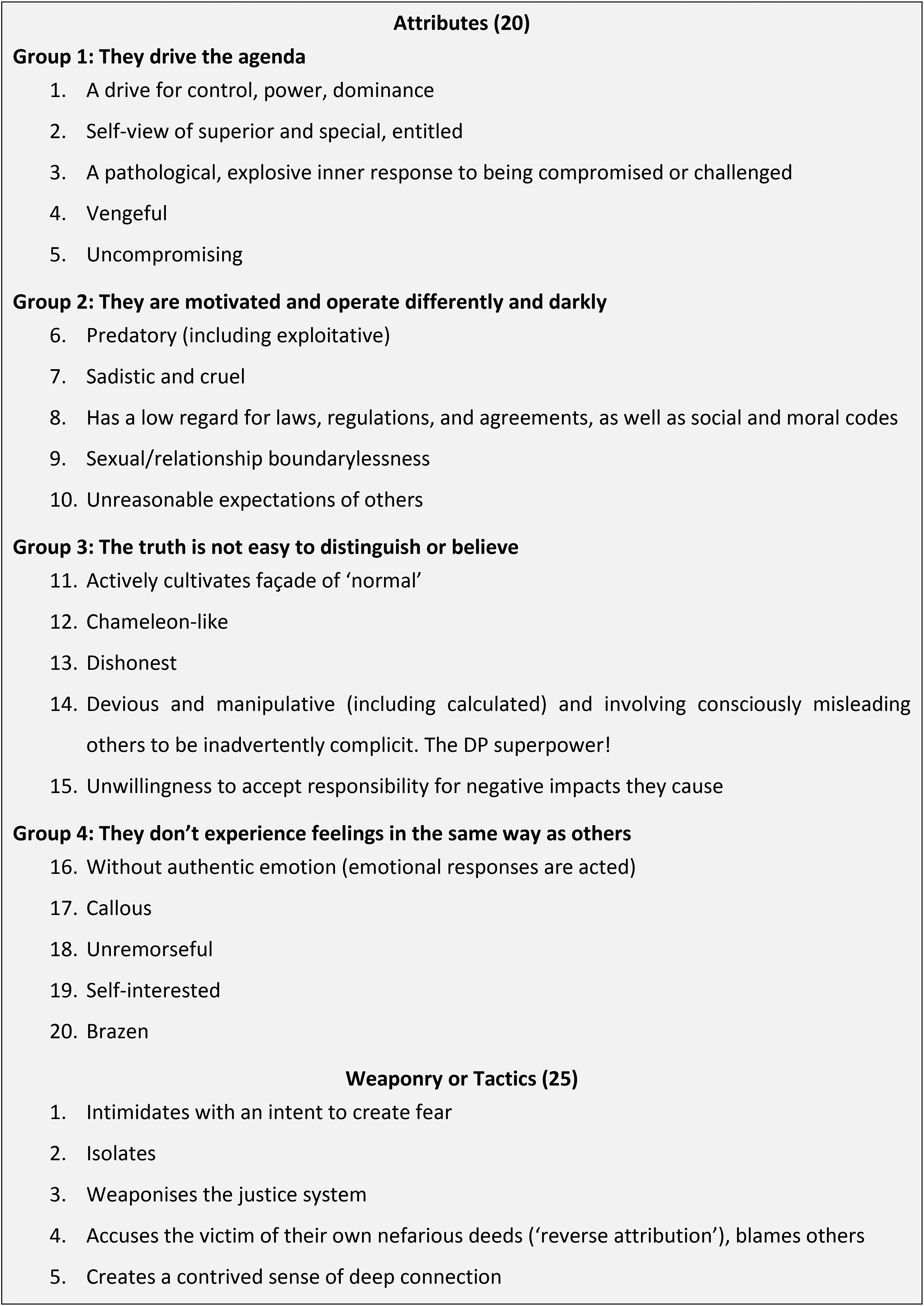
Persistent predatory personality model. Dr Karen Mitchell PhD (2024)
In addition to the shared attributes and commonly used tactics which have been discussed, there are also characteristics of difference amongst this dark personality type. For example, some are highly strategic while others are impulsive. These differences are inconsequential in identifying dark personalities and having them held to account. It is the shared attributes and tactics that give us a framework to ‘see’ them.
How does coercive control fit with the Persistent Predatory Personality model?
A key finding, common theme and overarching attribute of this research was the need for control and dominance in an intense and all-pervasive way. The data indicates control, and dominance is the greatest driver of PPP’s and that all PPPs engage in a wide range of controlling behaviours including those which are coercive. The data in this study indicates coercive control tactics are just a subset of the tactics used by PPP’s to control, destroy, exploit, disadvantage and avoid accountability. While it is imperative to focus on the contents of coercive control legislation, which is different in different countries, in regards to recognising human predators and having them held to account, the more comprehesive set of attributes and tactics of this research offer a means to make those who engage in coercive control tactics more visible.
Power and control can be over people or situations but the thought of losing that control can be threatening for the perpetrator. ‘They find loss of control intolerable and may even kill to prevent it. They are most dangerous to those who are closest to them’. ‘The psychological terror and control are a key attribute, especially in intimate partner relationships. You learn that it is dangerous, either emotionally or physically, to ‘upset’ them and will always be walking on eggshells’.
The data also showed that coercive controllers set rules specifically to gain and maintain control over their targets and will punish non-compliance and reward compliance in order to maintain that control.
This participant observed: ‘In my experience with coercive control, perpetrators are driven by their desire to have control over their target/s. They tend to have extremely high levels of entitlement and self-centredness. They use a variety of abusive tactics in their attempts to get those they target to comply with them. They feel entitled to their target or targets’ constant compliance and feel entitled to punish their targets for non-compliance. In coercive control, perpetrators are usually boyfriends, husbands and fathers/stepfathers, and their targets are their adult ‘partners’ and/or their children. For coercive control perpetrators there is little that is more important than being able to continue with their coercive control. For example, the harm they are causing to their children through their behaviours are not as important as continuing their coercive control’.
Attributes of the Persistent Predatory Personality
The 20 attributes in the PPP model each have a deep level of nuance and detail. The following presents several attributes common to PPP's, findings from the study, that are more relevant here in terms of how we can better understand coercive control. The word limit of this article prevents a detailed discussion of all the attributes and tactics of those driven by control and how they relate to coercive control however subsequent papers will discuss the attributes and tactics in more detail.
Self-view of superior and special, entitled
People who perpetrate coercive control do so from a position of entitlement and superiority. They seem to believe that they have a right to behave in whatever way they please regardless of who they harm. ‘I believe these individuals have little regard for social or legal norms. This may be due in part to their arrogance which leads them to feel entitled and better than other people’.
Their ability to manipulate and control others is in part reinforcement for their sense of superiority. It is of significant concern that this superiority can mean they are unlikely to see the need to change and will only engage superficially in any kind of therapeutic change process. They also do not see the need for reciprocity in their relationships.
A pathological, explosive inner response to being compromised or challenged
A theme from the data indicated that rage or ‘hot anger’ can emerge when the person is thwarted or challenged or when here is a threat that they will be exposed for who they are. This reaction is like that of a predatory wild animal having its meat taken than a normal human anger. When this happens, it may not immediately lead to violence but may be noticed in some of their physical reactions such as redness in their face. ‘They become hyper-focussed and cold. They do not express a lot of overt rage’. ‘A smirk and smile that said, “I will get what I want from you”. That can generate fear as much as an exhibition of rage’.
However, the data did show that threat of violence or the use of physical intimidation could also be part of an explosive response such as invading the target's personal space, moving close to the target's face, or gesturing with a finger. ‘They love to physically intimidate, get right up close to you, hover over you and be in your face. Their facial expressions are so angry, they are frightening. The look in their eyes is dark and dead’.
Vengeful
The findings identified a worrying pattern that vengeance, or punishment for thwarting or exposing a perpetrator, may occur immediately or days, weeks, months, or even years later. Being in a close or familial relationship with the perpetrator does not mitigate the possibility of being punished. ‘In coercive control, perpetrators can give subtle signals to their victims that they are angry and are going to punish them. It is often a movement of the head, a look in the eyes or something similarly subtle which they can give in front of others without others noticing, but the victim notices and is terrified’.
Uncompromising
The data showed that whilst perpetrators may appear to be helpful and caring at times this is often a deliberate attempt to create a mask or false façade and that their true nature is uncompromising. ‘Compromises are always strategic and might include faking good and demonising the other person or it might be exceptionally litigious’.
Also, their relentless pursuit of their own goals has a determination not seen in others including others who have high levels of commitment to achieve their goals. They also make use of others to pursue their goals. ‘They groom everyone they need to groom to get what they want’.
Predatory (including exploitative)
How we understand predatory behaviour is critical to our ability to intervene effectively. However, to date there has been very little guidance on how to conceptualise this. For the purposes of this research, it was understood as being: ‘…motivated to gain something out of someone else's weakness or suffering’. (Mitchell, 2024: 159)
It was a significant feature of the data and included the identification of similar attributes to animals who play with their prey to demonstrate superiority and control and to weaken their target's self-esteem. ‘Their approach is like persistence hunting in humans where we cannot run faster than a zebra, but we can run a lot further, follow until the zebra is exhausted and then pounce. They are not just trying to win a battle, but they are also getting pleasure out of it which is a different level. One is doing it to survive, and the other is doing it for fun, for pleasure, that reward’.
Evidence also emerged of how planful predators can be in their choice of victim with the majority of participants agreeing that this was not a random process. ‘My belief is victims are a certain type of person, successful in their own right, warm, creative, smart, accomplished, have something the perpetrator wants. I believe vulnerability plays a role, is a key attribute of a targeted victim. Vulnerability might be more closely explained as wishing to be loved, cared for, having been hurt—still healing, damaged. Perhaps targeted victims are hard on themselves to do well, be liked, appear together’.
This quote points to the complexity of who may become a target or prey. It includes a certain type of vulnerability alongside some key strengths that the perpetrator appears to want to destroy.
How the contact begins was also highlighted in the data including targets being manipulated by being offered things they may need or value as a form of grooming. 'Survivors I work with usually report that they were targeted and pursued in the beginning. This type of “love bombing” attention is usually welcome at the start and is deemed positive, an idea often reinforced in books and films about romance’.
However, evidence emerged that once the target has been engaged there then follows a process of weakening them which can include unwarranted criticism, humiliation, provocation, baiting, insults, playing on vulnerabilities and rejections. Gathering information about their target that can then be used to weaken them is a key part of this tactic. It often happens over a period of time and can be insidious. ‘They seek to identify the vulnerabilities of their targets in order to use these to exert control. Isolating their target enables them more freedom to enact their power without the target being able to access help’.
It is typically a well thought through process with the target unaware of the full impact until the psychological and emotional harm is so severe, that they have a limited ability to extricate themselves from the relationship. ‘They identify vulnerable people, the boys without fathers, women who are already emotionally damaged or who can be potentially isolated from their family and peers. For example, women born overseas, women with pre-existing trauma or mental illness’.
Predators also make planned efforts to isolate their target from others who matter to them or who might support them to break free. Examples of these behaviours include spreading false rumours or lies about the target. This might include that the target is really the aggressor. In addition, they can make false claims that their target is an alcoholic, or that they have a range of mental health issues. Other examples include falsely claiming concerns regarding their parenting or that they are having affairs. It was also clear that predators can provoke their target publicly in the hope that they will become dysregulated and appear to be unbalanced or ‘odd.’ ‘They isolate their victim by telling a group of people a series of untruths about a person so that the group will shun/reject that person’.
It also emerged that the ultimate aim of the perpetrator is the final destruction of their target/prey. ‘The victims are often the ones seen as crazy because they are frequently under attack regarding something very important to them like their children, their job, their freedom, their friends etc and in a way that takes a lot of energy to address and that others cannot see. In some cases, this has been going on relentlessly for years’.
The treatability of PPP
The data collected for this research project indicates that PPP are both dangerous and untreatable. They do not seek treatment by choice and if mandated to engage in some kind of therapeutic intervention, will use that experience to leverage, to learn from so they can exploit and harm more effectively or to manipulate others including therapists, social workers and other mental health professionals. This has substantial implications for some of the social work values stated earlier in this article which drive practice. For example, the value of unconditional positive regard for clients and the importance of promotion of strengths whilst understanding the wider social context of problems. Further, magnetic resonance imaging work on the brains of psychopaths (Deming and Koenigs, 2020; 23–22; Nowak and Nowak, 2023; Raine and Yang, 2006) indicate brain differences in people of dark personality so their fundamentally dangerous nature is unlikely to be addressed by therapeutic discussion and intervention.
Summary
The data showed that those who engage in coercive control have a common set of attributes and use a commonly understood set of tactics. The shared attributes manifest behaviourally according to intelligence, impulse control capability, socio-economic status, context and other factors. They also use the same set of tactics to gain and maintain control over their target as well as to harm in other ways. To that end they are planful in their choice of victim and then make conscious choices about how to isolate their victims, discredit and destroy them. Their tactics are designed to lead to the ultimate destruction of their victims. ‘They live a life where the intention is to consistently cause harm is the priority. This includes psychological, physical, emotional, spiritual, sexual, financial, economic, and parental harm, and the intention is destruction in one way or another with complete control over another and where this is seen to be lost, escalation occurs’.
Discussion
The findings from this research present several challenges for social workers working within situations of coercive control. The data clearly show that this is complex work that involves high risk to individuals including parents and children. The implications of these new insights need to be addressed across practice and policy arenas.
Practice confidence and expertise
The fundamental characteristics and tactics of those who engage in coercive control can be well disguised. This means that social workers need to develop confidence in their ability to discern levels of the fine grain detail of controlling behaviours in families where this is happening. Social workers also need to be alert to the possibility that there is the potential for them to be drawn into the different aspects of a perpetrator's planful tactics to exert control.
Perpetrators may appear benign at first sight which makes this task complex. They can also mask their true nature by appearing to be kind and caring with the specific aim of deceiving social workers or others. It may be counter intuitive for social workers, who are mandated by their training and professional codes of ethics to treat people equally and with unconditional positive regard (Rogers, 1957) but it is essential that they maintain professional curiosity and objectivity when dealing with coercive control and do not get drawn into manipulation. However, this is by no means a simple task.
First, the highest of risks are at stake including to the children in the situation and the target adult partner of the perpetrator. Social workers who are emotionally sensitive may even sense the potential for explosive anger in the perpetrator if thwarted or their true motives uncovered. This may lead the social worker to proceed down a route of placating the perpetrator in the false hope of protecting the individuals involved or even themselves. It was clear from the data as well that perpetrators can be consciously vengeful, and social workers may sense that they could fall target of that as well.
The data on how predatory perpetrators are points to social workers ensuring they undertake an in-depth history of the relationship including how it started but from each partner separately. The theoretical perspective underpinning this should be to identify the extent and nature of any possible targeting of the victim, how any aspects of vulnerability that shaped the start of the relationship, and how things may have merged later that were inconsistent with the early days of possible ‘love bombing’. Signs of emotional harm should be documented and also signs of how the target may have been purposefully isolated from other contacts, family and friends.
In terms of children of the relationship the imperative for social workers is to always give primacy to their needs. However, there has now been a discredited presumption of contact at almost any cost (Ministry of Justice, 2020) including if children express their wish for that regardless of how predatory or dangerous the controlling parent might be. It is important for social workers to be able to discern how and to what extent children may be being used or weaponised by the controlling parent, to what extent children may also be fearful of the potential for explosive anger which they may try to avert by giving the perpetrator what they perceive they want, and to what extent children may need to be protected if the coercive controller does not get what they want in terms of contact or a ‘win’ over their victim. The victim parent may have reduced ability to be emotionally present for their children, but social workers should support that parent to do the best they can for their children and keep sight of the root cause of the problem, rather than being judgemental about their struggle with the damaging impact of coercive control.
Policy implications
The development of a more nuanced understanding of coercive control requires policy to keep pace with that new knowledge and the implications of it for social work practice and education. The scenarios outlined above make it clear that the task of social workers intervening in cases of coercive control require greater support than perhaps previously identified. The skills and knowledge required suggest that working in this arena is for experienced practitioners with higher level post-qualifying training in coercive control as a specialism.
However, other practice-based strategies may be critical for social workers to be able to intervene effectively. Social workers are required to have supervision, but this is frequently focused on the management of their work. More clinically based and frequent supervision is needed to support social workers to explore the deep nuanced behaviours of perpetrators. In some situations where there may be risk to social workers being targeted or manipulated by the perpetrator a co-working model may be helpful where two or more social workers share the case and act as critical friends throughout the work.
Another aspect of policy might be the official adoption of the PPP model. This research indicates that one group of people has the same set of attributes and commonly use the same set of tactics to destroy others, achieve their goals, and avoid accountability and transparency. Coercively controlling behaviours are a subset of the behaviours of this group. To adopt the more comprehensive model gives far greater potential to identify behaviours that signify a predator because there are just more to see. For example, sexual boundarylessness, predatory patterns, sadism and brazenness are not often included in discussions about coercive control, but they are included in the PPP framework and are very much a part of the patterns of behaviour of those who coercively control.
Finally making the determination to deal with coercive controlling perpetrators effectively through visible policy and practice guidance may be an important part of the empowerment of social work practitioners but also to show victims that their situations are increasingly understood. It may also put perpetrators on notice that collectively the profession and system plan to find a way to deal with the harm they cause.
Training and development
The requirement for training in the area of coercive control and the wider pattern of behaviours in those who actively violate social norms and harm and disadvantage others by conscious choice cannot be over-stated. This is the first research ever conducted with expert practitioners working outside the just system with those who actively violate social norms and harm and disadvantage others by conscious choice and their victims. The data provides new data regarding the use of covert tactics to destroy. The percentage of people in the population who are thought to be dark personalities were previously derived from prison populations. Research participants were asked about their views of the percentage of the population who are dark personalities and the general view was upward of 10% of the population. While this figure is not statistically significant it is concerning and makes the requirement for social worker training in the area crucial. The mandated inclusion of specific training on coercive control in pre-registration education and training is important but that should only be seen as initial awareness development and not the specialist training that is needed for practice in this area (Ministry of Justice, 2020). The ability of those engaging in coercive control to hide their true nature, the complexity and depth of the tactics they engage in to control and harm and the high numbers of them in the population makes advanced training crucial if social workers are to make correct assessment for children in all cases
Conclusions
This article provides key new evidence to support social workers working in situations of coercive control. The research provides us with the best evidence we have of both the tactics and behaviours of those who control coercively. This has implications for both policy and practice with several immediate changes that can be made. However, further work is needed to support social workers to develop even more in depth understanding of the relational dimensions of coercive control such as how to assess risk of future harm based on how the relationship started. Further work is also needed to identify the levels of risks to social workers and other professionals when challenging those who engage in coercive control, identifying their harmful behaviours or recommending actions to the Family Court that threatens the perpetrator's sense of control and forms of support and protection potentially offered where the risk is assessed as high.
Footnotes
Declaration of conflicting interests
The authors declared no potential conflicts of interest with respect to the research, authorship, and/or publication of this article.
Funding
The authors received no financial support for the research, authorship, and/or publication of this article.
