




Abstract
Concerns have been raised about the readiness of social work graduates for criminal justice practice in many countries, including the United States and Australia. Social workers play an essential role in the criminal justice system, so equipping graduates with the necessary skills, knowledge, and confidence for effective practice is crucial. Using factor analysis and logistic regression, the study investigates the relationship (calibrated vs misaligned) between student self-assessed confidence and their graded competence in a simulated activity. This study examines the alignment and relationship between confidence and competence in American and Australian social work and criminology students (n = 204). Findings reveal a miscalibration between confidence and skill level, with students often over- or underestimating their abilities. The results indicate that field education and work experience support student skill-building but does not necessarily lead to high confidence-competence alignment. This suggests confidence fluctuates as students engage with increasingly complex knowledge and practice. The results reinforce the idea that graduates should not be considered ‘end-products’ but require ongoing workplace learning, supervision, and support. To enhance forensic social work readiness, universities and industry stakeholders must collaborate to integrate experiential learning, structured supervision, and reflective practice into both pre- and post-graduate education.
Most probation services have historical roots in criminal justice or forensic social work (Canton, 2024); however, this relationship is complex, with contemporary social work practitioners distancing themselves from probation due to a perceived shift towards penal and punitive ideologies focused on risk and offender management. Probation roles are often dismissed as not ‘real’ social work and are frequently omitted from the social work curriculum (Dawes, 2000). This has led to questions about the preparedness of contemporary social work students for criminal justice or forensic social work practice (Kheibari et al., 2021; Sheehan, 2016). In particular, students are not being exposed to key specialist knowledge (Copeland et al., 2024; Lattas et al., 2024b; Sheehan, 2016) or taught sufficient practical skills (Atkinson, 2022; Green et al., 2005; Kheibari et al., 2021), which can manifest as anxiety and lack of confidence when engaging in forensic contexts. This study examines practice readiness by evaluating student self-perception, such as confidence and self-efficacy, and their demonstrated ability in applying knowledge and performing skills in a simulated activity. It highlights the need for additional education and training in probation and forensic practice for social work graduates.
Criminal justice & forensic social work education
The approach to forensic and criminal justice practice in social work education varies depending on a country's history with probation services (Lattas et al., 2023). Early probation services in the United States, the United Kingdom and Australia had substantial involvement of social work practitioners (Canton, 2024; Lattas et al., 2023; Raynor and Vanstone, 2016). These practitioners were instrumental in developing service practice models and advocating for legal reforms to protect vulnerable persons and human rights (Lattas and Rock, 2025; Sheehan, 2016). In the 1970s and 80s, the rise of conservative ideologies saw expanded punitive practices in criminal justice systems and diminished professional autonomy for probation practitioners (Canton, 2024; Raynor and Vanstone, 2016). Social work as a profession began distancing itself from probation roles and criminal justice practice (Lattas and Rock, 2025; McCarter et al., 2025). In Australia and the United Kingdom, probation and statutory social work were increasingly removed from the social work curriculum (Canton, 2024; Dawes, 2000). In contrast, the United States (US) had the National Organization of Forensic Social Work (NOFSW), which championed forensic training (McCarter et al., 2025). As such, the US and Australia now represent vastly disparate models.
The US offers specialist education at the Master of Social Work (MSW) level, with twelve accredited social work programs offering specialist forensic social work certifications. Content can vary between universities, but common elements are found across these programs, including an understanding of the legal system, criminology, sociology, and human rights (Maschi et al., 2019). Additionally, students must complete a field placement within a forensic setting, such as prisons, community corrections, and courts. Non-specialist-trained social workers can be hired into forensic social work roles, but limited empirical literature has been done to understand how frequently this occurs or the impact of non-forensic specialist education in the US forensic workforce. Specialist forensic social work education does not exist in Australia; all social workers are considered qualified for forensic practice after completing their generalist degree, typically a Bachelor of Social Work or Master of Social Work (MSW). This has raised concerns about the readiness of graduates for specialist aspects of the role (Lattas et al., 2024a; Green et al., 2005; Sheehan, 2016). Australian generalist social work education predominantly relies on theoretical and structural analysis of crime and criminal behaviour, and there is an absence of skills-based learning for clinical proficiency (Lattas and Davis, 2024).
Readiness for practice
The ‘readiness’ of social work graduates is a complex and contentious concept (Joubert, 2020). Graduates are often understood as ready when they are able to perform technical abilities and skills in accordance with a professional standard (Mulder, 2014). However, extant research has shown that graduates’ confidence and self-efficacy impact internal perception of readiness and how they acquire skills and knowledge (Holden et al., 2017; Tompsett et al., 2017). Concerns have been raised that educators are increasingly using student self-assessed confidence and self-efficacy as an accurate measure of skill level and readiness for practicum or practice (Rawling, 2012). Thus, there is a need to examine practice readiness through both self-perception (confidence and self-efficacy) and ability to perform skills and knowledge (competency).
Confidence in social work students is positively associated with motivation and performance (Tompsett et al., 2017). High confidence levels are associated with attempting more complex tasks and being more resilient when unsuccessful, while low confidence has the reverse effect. Student confidence and self-efficacy have been positively associated with skill development (Fortune et al., 2005), preparation for practice (Bates et al., 2013; Smith and Worsfold, 2013) and academic success (Holden et al., 2017). Likewise, students with higher levels of anxiety, negative beliefs, and worries have decreased confidence in their interpersonal and emotional regulation skills (Baird, 2016). McDonald (2007) suggested that when social work curricula rely too heavily on theoretical knowledge at the expense of practice skills and knowledge, students have lower confidence and professional self-efficacy.
The ability to assess student competency in criminal justice or forensic social work education is complicated. It means that students perform knowledge, skills, and behaviours to a defined standard, but neither Australia nor the US have standardised forensic social work competency structures or frameworks (Lattas et al., 2023). In the US, professional guidelines are set by the Forensic Social Work Alliance (formerly known as the National Organization of Forensic Social Work), but these are not enforceable or mandated across institutions or programs (McCarter et al., 2025). Researchers have defined forensic professional competence as understanding the criminal justice system, effectively collaborating with multi/interdisciplinary professionals, de-escalation, and advanced interpersonal skills (Lattas et al., 2024; Maschi et al., 2019; Munson, 2011).
While there is a relationship between confidence and competency, these are not direct and accurate measures of each other. For example, communication training studies have shown that training increased students’ confidence and self-efficacy, but there was no evident change in their practical competency (Reith-Hall and Montgomery, 2022). Indeed, several studies have shown that newly enrolled social work students have high confidence and self-efficacy, inflated by inexperience with industry expectations and professional standards (Baartman and Ruijs, 2011; Holden et al., 2002; Rawlings, 2012). Additionally, low confidence and self-efficacy can be linked to a realistic awareness of the complexity and difficulty of the task rather than a negative self-belief (Bogo et al., 2017; Rawlings, 2012). Calibration provides a framework for understanding the interaction and interplay between confidence and ability.
Calibration focuses on the agreement between student self-assessment and performance outcome (Rutherford, 2017). As a metacognitive skill, calibration can help set realistic goals, allocate time, and use resources effectively (Stoten, 2019), which improves the likelihood of success in the task (Dinsmore and Parkinson, 2013). For example, high confidence without accurate calibration can lead to overestimating one's abilities, taking on too difficult tasks, and poor performance outcomes. Calibration is typically assessed using a 2 × 2 data matrix (Rutherford, 2017); see Figure 1. Domain A is a true positive and accurate calibration, student confidence matches with assessed performance; B is a false positive and poor calibration, student confidence misaligns with assessed performance; C is a false negative and poor calibration, low student confidence misaligns with positive assessed performance; and D is true negative and accurate calibration, low student confidence aligns with (low) assessed performance (Rutherford, 2017).

2 × 2 contingency table: accuracy and confidence.
Ideally, well-calibrated students occupy quadrants A (High-High) or D (Low-Low), functionally aligning their level of confidence with attained performance (Boud et al., 2014. In this same ideal scenario, quadrants B and C, represent dysfunctional arrangements where students’ level of confidence does not translate to their performance. Accurate calibration requires the learner to understand the task instructions and the professional standards associated with good performance (Boud et al., 2014). Misunderstanding the performance expectations negatively impacts calibration, with confidence inflated by unawareness of a deficit in skills and knowledge (Dunning, 2011).
Purpose of study
Inaccurate calibration raises questions about the nature of student confidence. Thus, the purpose of this study is to consider: RQ1: Are student levels of confidence positively associated with their assessed levels of competence? RQ2: To what extent do measured facets of confidence align into a single dimension of confidence? RQ3(i): Which factors significantly predict aligned positions (LL, and then HH) in the calibration typology? RQ3(ii): To what extent do the predictors of each of the aligned calibration quadrants (i.e., High-High and Low-Low) exhibit a simple reversal and, therefore, symmetry in their direction of effects?
Method
Design and procedures
This study was a quantitative, non-randomised pre-experimental design with confidence measures (pre-simulation) and competency measures (grade for simulation). The research was undertaken across two universities, one in Australia and the other in the United States. Students were invited to participate in the simulation activity during their coursework; participation was voluntary, and grading did not count towards final mark. Students could participate in the simulation without inclusion in the research; however, less than 5% of the sample chose this option. The simulation took approximately 1-h to complete, and some courses included the simulation synchronously, while others allowed students to complete it remotely asynchronously.
Traditionally, social work education has relied on field education as the opportunity to translate classroom knowledge and theories into practice skills and assess their practice readiness (Kuusisto et al., 2022). Field educators use competency-based learning structures to determine readiness to practice (Kay and Curington, 2018). During field education, students should refine their social work abilities under direct supervision, but even under best practices, it is impossible to establish standardised learning experiences and opportunities, meaning critical learning experiences are not guaranteed. This issue is compounded by the rapid growth of social work education programs, decreased placement availability, and concerns about the quality of supervision and learning activities (Harris and Newcomb, 2023; Kuusisto et al., 2022). This has given rise to the use of simulation-based learning, which allows educators to control the learning specifics and to ensure the observation and assessment of cognitive, technical, procedural, and teamwork skills associated with professional competency (Jefferies et al., 2023).
Simulation is an effective pedagogy in forensic social work education (Lattas et al., 2025); benefits include humanising clients, strengthening empathy, and increasing confidence (Bratina et al., 2023; Li et al., 2019; Moak et al., 2020), and building core skills (Atkinson, 2022; Martins, 2024). The simulation in this study followed an initial interview with a recently released client (see Lattas et al., 2025 for the design process). The simulation includes an ethical dilemma with the client asking for personal information from the practitioner. Throughout the interview, the client notes several key risks and protective factors, including a high risk of relapse with illicit substances. During the interaction, the client becomes heightened and stands over the worker, using an elevated tone and mild swearing. The simulation was paused at key intervals so participants could provide written answers on how they would handle the situation and possible next steps. All data was collected in a de-identifiable form, and informed consent was obtained in Qualtrics. Ethics approval for this study was provided by the University of Sunshine Coast (Ethics #A221822) and the University of Tennessee Institutional Review Board # UTK-IRB-24–08409-XM.
Participants
There were 204 participants, comprising 89 students (52 undergraduate and 37 postgraduate) from a US university and 115 students (undergraduate) from an Australian university. Most students were female (n = 174, 87%), with ages from 19 to 73, but a median age of 26 and 50% of the sample aged between 22 and 38 years of age, with a dichotomous indicator used to represent 42% of participants aged over 31 years of age. Samples did not vary significantly by dichotomised age group, gender, work or practical placement experience. However, the Australian sample was more likely to have a higher intention to work in a criminal justice setting after graduation, χ²(4, N = 204) = 33.04, p < .001.
Measures
Sociodemographic data: Prior to the simulation, data was collected relating to gender, age, degree level, and dichotomous indicators of work and practical placement experience, as well as intention to work in a criminal justice setting after graduation (5-point scale).
Confidence Level: Confidence and competency measures were developed from Lattas et al. (2025) forensic social work outcome measure framework. The framework is a structured benchmarking approach to measuring meta-competencies (higher-order conceptual and interpersonal abilities) and procedural competencies (performance-related tasks) in a simulated activity. Confidence questions were designed to match and reflect the learning outcomes assessed in the simulation (Lattas et al., 2025). These were measured using a 5-point Likert scale from very unconfident to very confident. Students completed 10 confidence questions:
Building Rapport with involuntary clients in the justice system Knowing theories to use when case managing a justice-involved person. Recognising an ethical dilemma when case managing a justice-involved person. Knowing how to respond when faced with an ethical dilemma when case managing a justice-involved person. Recognising trauma-related issues in justice-involved clients Using trauma-informed principles when case managing justice-involved clients. Identifying risk factors when working with justice-involved clients. Identifying strengths/protective factors when working with justice-involved clients. Identifying factors contributing to crises when working with justice-involved clients. De-escalating an emotionally heighted justice-involved client. My degree has given me the knowledge and skills to work with forensic clients.
Skill level: Skill level was assessed in the student's answers to the 13 open-ended questions during the simulation. Answers were graded using the metrics and indicators outlined in Lattas et al. (2025) framework as a 5-point rubric scale. Students were scored between 0 and 4 on each skill, with 0 being that they did not answer or that the answer was harmful to the client and 4 being an exceptional demonstration of skill. The rubric criteria were:
Able to use non-judgemental and professional language. Able to identify appropriate theories. Identification of key issues. Recognition of ethical dilemmas in a forensic context. Complete a file note to a professional standard. Identifies trauma and childhood adversity. Identifies risk factors in a forensic context. Identifies protective factors in a forensic context. Identifies appropriate actions when the client is in a heightened emotional state. Identifies appropriate actions for the next steps with the client.
The grading of student answers was conducted by experienced social work educators with substantial experience in field education, teaching, and assessing social work and community services, graded answers. Inter-rater reliability was conducted across all data; a random selection of 10% of the dataset was co-marked; the marking comparison had 100% agreement.
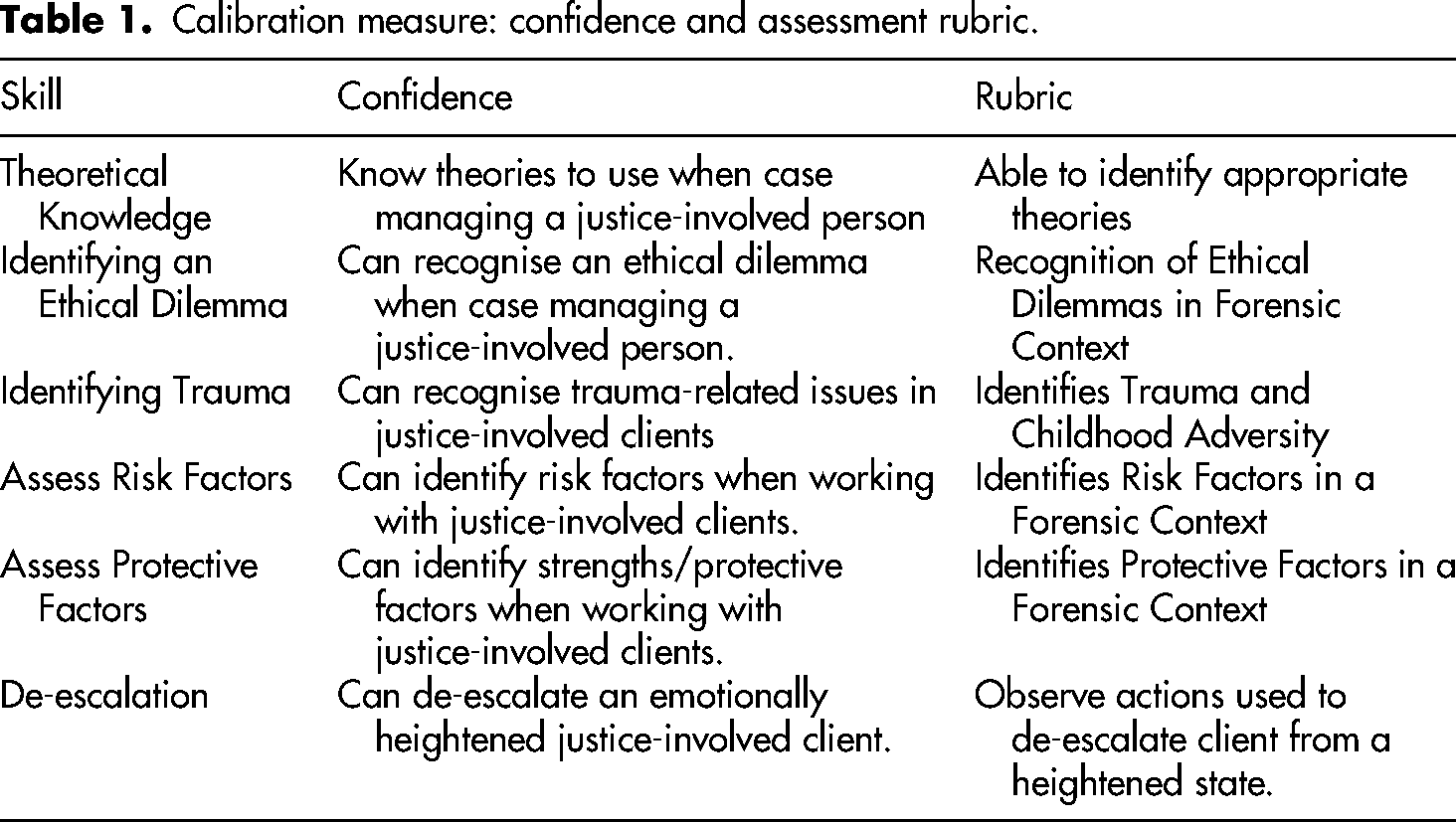
In addition, student answers were additionally coded to consider the impact of theoretical orientation and boundaries. Theoretical orientation was coded to distinguish if the answer focused on the client's well-being and personhood (psychosocial) or recidivism/offending behaviour (criminology). Psychosocial theories included microlevel relational and therapeutic theories (i.e., strengths-based practice and person-centred) and macrolevel theories (i.e., anti-oppressive practice). Criminology included psychology theories (i.e., social learning theory) and sociological theories (i.e., strain theory). Additionally, student answers to the simulated ethical dilemma were coded for whether they disclosed they had children when asked by the client. Six confidence measures were aligned with rubric measures to assess calibration (Table 1).
Calibration measure: confidence and assessment rubric.
Data analysis
The four research questions use different analytical tools. Research Question 1 focuses on a simple bivariate relationship between self-confidence measures and competence assessments. While most confidence measures on 5-point scales were normally distributed, the matched competence assessment measures, also 5-point scales, tended to be negatively skewed, therefore Spearman's rank correlations are used. Simple chi-square (SPSS Statistics) tests of independence are used between confidence and competence when aggregated across measures and dichotomised using a median-split (i.e., Low v High) category. Statistical tests use a conventional alpha of .05 for threshold rejection of independence (null hypotheses).
The second research question (RQ2) explores whether there is a single or multiple factors (components) which group the confidence measures. SPSS Principal Components Factor Analysis (PCA) was used to explore the components with both varimax (independent factors) and oblique (related factors) rotation. Suitability for factoring was assessed using the KMO statistic, with scree plots and components with eigenvalues > 1 used in conjunction to assess the extracted number of factors. Overall variation in measures explained by the factors, and minimum and maximum communalities are reported.
Research questions three (i and ii) examine the prediction of aligned typology groups by socio-demographic and other student and sample factors, with the predicted groups formed into two analyses by a dichotomisation of high-high v misaligned, and separately low-low v misaligned groups in the typology. SPSS Logistic regression is used, entering factors and refining a final model for presentation in four blocks: first, gender, age group (31yrs+); then second, Theory-Use (Psychosocial v Criminological); third, intention to work and own children revealed; fourth, Completed Field Education and Prior Work Experience; and lastly, fifth, country location of sample (AU v US). Block and model significance and Nagel-Kerke R squared effect sizes are provided.
Results
RQ1: Simple Relationships between Confidence and Competence measures (Spearman)
Of the six matched confidence and competence items, only two were statistically significant associations: assessing risk and identifying trauma. While the area of risk showed a weak positive association (rs (201) = .16, p = 0.025), indicative of correct “ideal” alignment in calibration, between confidence and assessed competence, the area of trauma exhibited a moderate negative association (rs (201) = −.38, p < .001), which reflects the opposite effect of higher confidence and lower competence. The overall confidence scale and competence score, each recoded using a median split into Low and High, requires first the examination of singular or multiple dimensionalities of confidence. RQ2: Checking the dimensionality of confidence items.
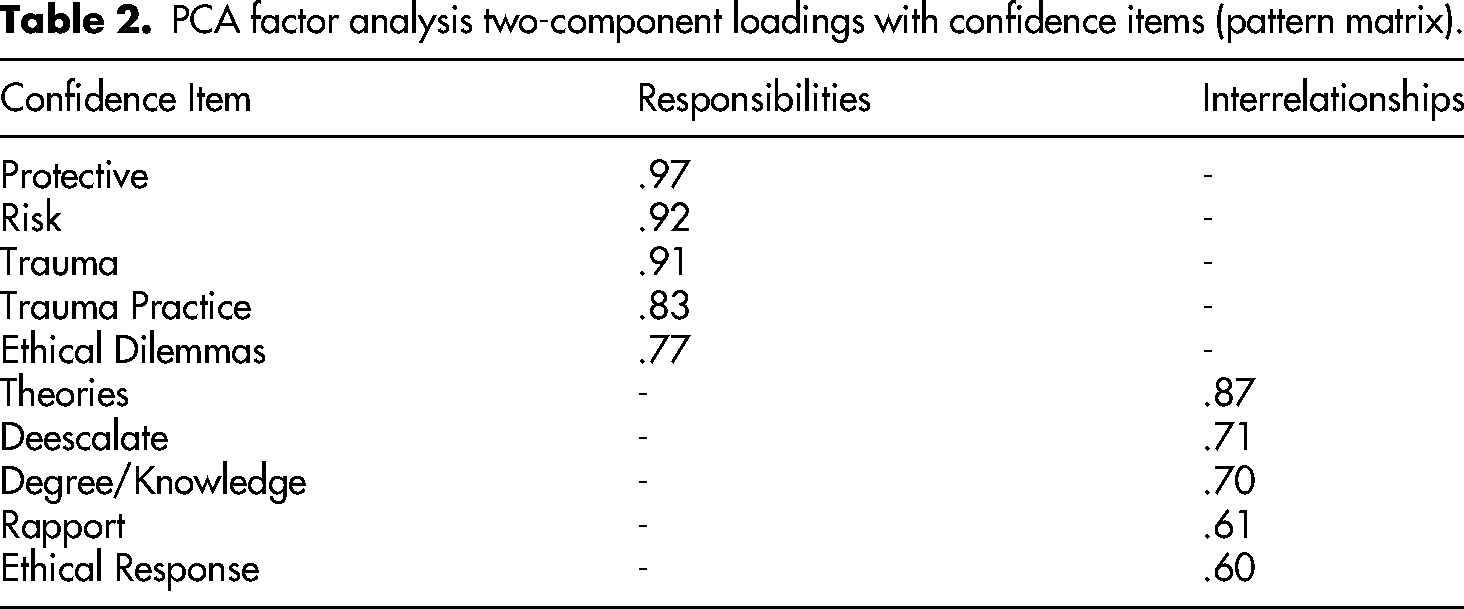
The PCA Factor Analysis compares both Varimax and Oblim rotation for item-factor identification. The KMO was .90, which indicates suitability for factoring. The communalities ranged from a high of .84 for the risk measure, down to .55 for the de-escalate measure. Both approaches indicated a two-factor solution, explaining a total of 70% of the variation in item responses. The which split confidence items into a first component indicating Responsibilities (risks, trauma, protective, trauma practice, ethical dilemmas) and a second component comprising Interrelationships and Theory (rapport, de-escalate, ethical response, theories, and degree/knowledge). Table 2 provides the unique loadings between confidence items and each component. Oblique (non-orthogonal) rotation was chosen to recognise and allow for components (based on the component loadings) to be correlated and not artificially independent. The overall component intercorrelation was r = .53, at a moderate level.
PCA factor analysis two-component loadings with confidence items (pattern matrix).
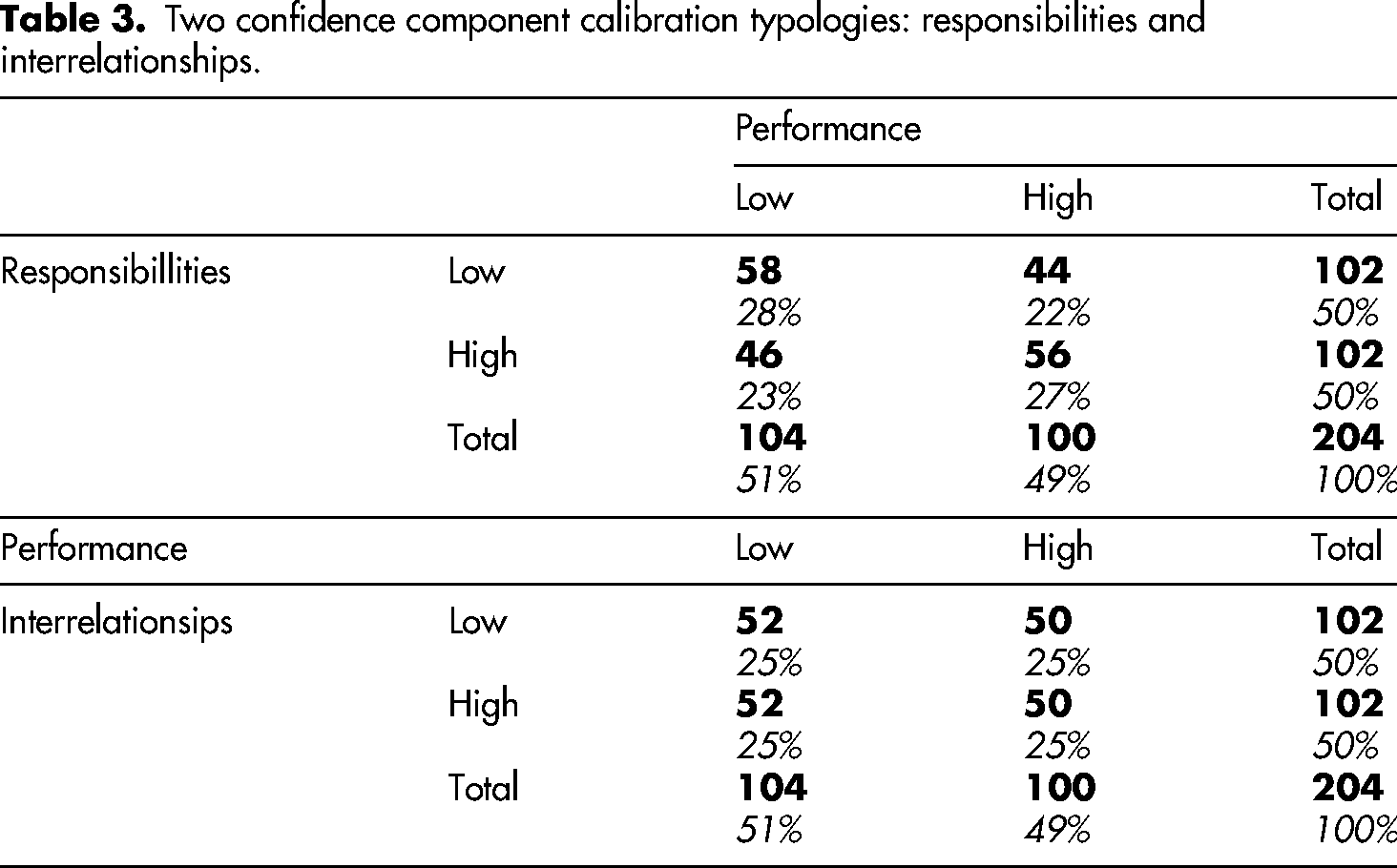
Naturally, with two confidence factors, the calibration typology was re-cast into two distinct typologies (Responsibilities and Interrelationships). Both tables showed independence between confidence type and competence, Responsibilities, χ² (1, N = 204) = 2.83, p = .093, and Interrelationships, χ² (1, N = 204) = 0.00, p = 1.00. Table 3 provides the 2 × 2 (Low/High) two calibration typologies and is used as the basis for next research questions. RQ3: Predicting aligned positions (LL, and then HH) in the calibration typology
Two confidence component calibration typologies: responsibilities and interrelationships.
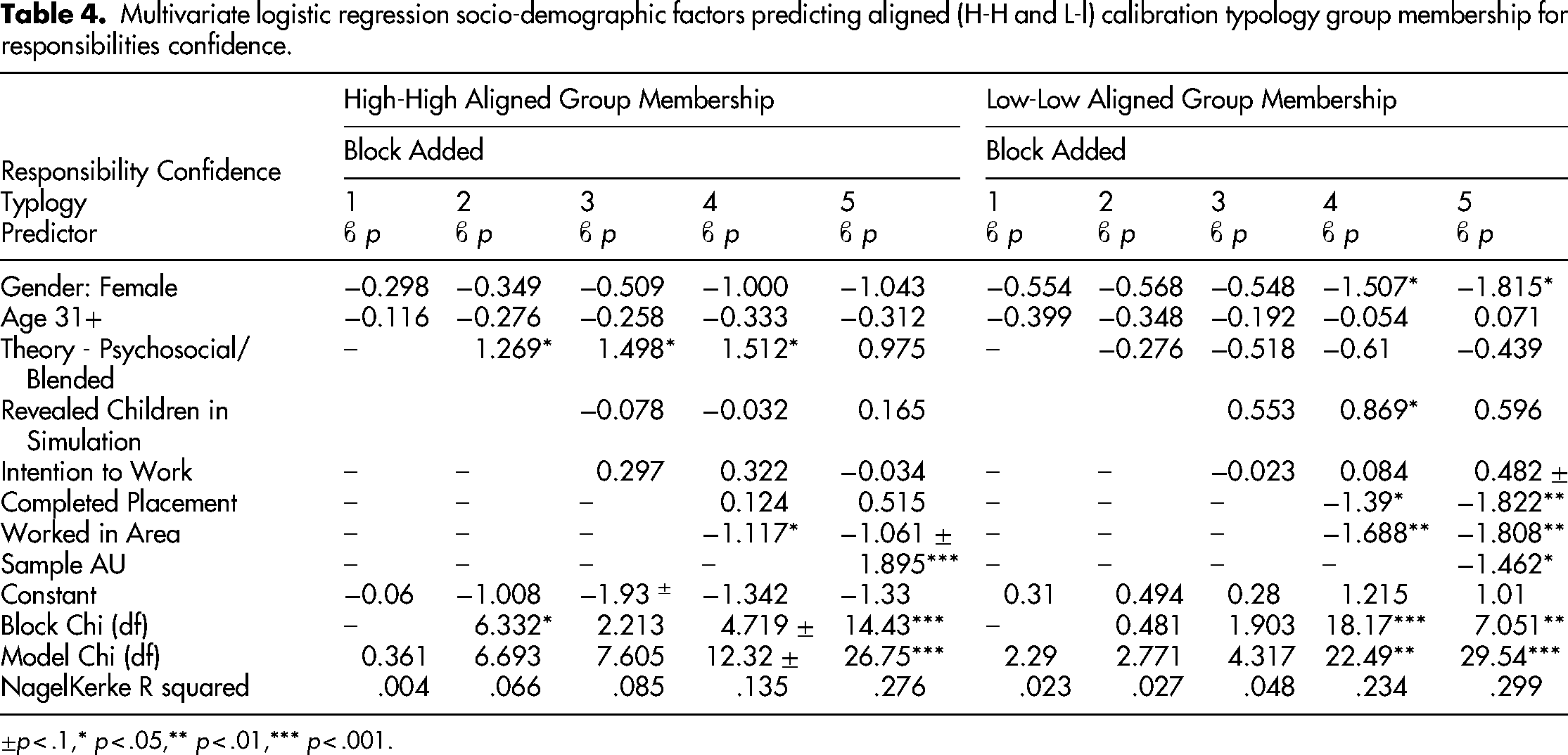
Separate prediction analyses were completed for the two confidence factors’ (Responsibilities and Interrelationships) typologies (High-High and Low-Low). Simple bivariate crosstabs confirmed adequate cell counts and nature of relationships before multivariate logistic regression, with any recoding or simplifying of measures undertaken at this point. For example, age groupings were recoded into two groups based on relatively balanced cell counts and effects in bivariate analyses with the two typologies. The final model retains, in the following order: first, the blocked entry of dichotomous sociodemographic variables with Age (31yrs+); followed second by Theory used (psychosocial); then third by intention to work in criminal justice system (5-point scale) and whether the student revealed they had their own children (dichotomous) in the simulation; fourth whether the student had completed a placement or had work experience; and finally the fifth block added sample Location (AU v US). Table 4 presents the Responsibility confidence typology for the prediction of High-High (left) and Low-Low (right) alignment; Table 5 presents the Interrelationships confidence typology, with the same High-High and Low-Low alignment predictions, respectively.
Multivariate logistic regression socio-demographic factors predicting aligned (H-H and L-l) calibration typology group membership for responsibilities confidence.
±p < .1,* p < .05,** p < .01,*** p < .001.
Multivariate logistic regression socioDemographic factors predicting aligned (H-H and L-L) calibration typology group membership for interrelationships confidence.
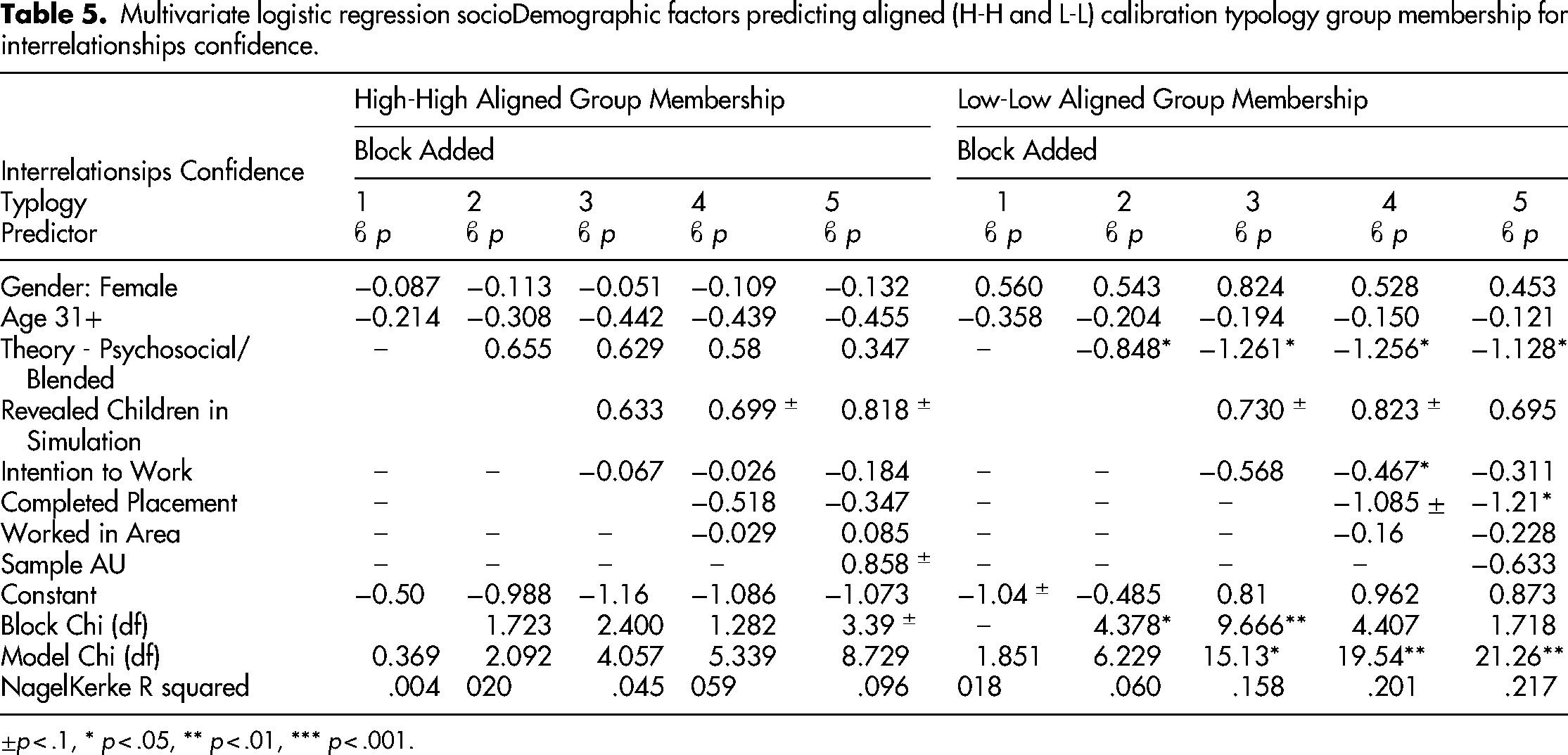
±p < .1, * p < .05, ** p < .01, *** p < .001.
The left side of Table 4 focuses on predicting the High-High (HH) Responsibility aligned calibration quadrant over misaligned quadrants. Predictor variables are added successively in five blocks, with each block testing the influence of that predictor, controlling for prior blocks’ predictors. The R squared at the bottom of each block represents how much variation in the prediction of the HH group over misaligned groups is explained by the predictors up to and including that block of predictors. For example, Block 2 on the left side of Table 4 adds Theory Use (psychosocial) to existing sociodemographic predictors of gender and age group added in a prior block, explaining a total of 6.6% of the variation in HH responsibility aligned quadrant membership.
Only three predictors featured in the prediction of HH responsibility group membership: Theory Use, Work Experience, and the Sample Site. While Psychosocial Theory and the Australian Sample site both positively predict HH group membership, interestingly, Work Experience has a negative influence on the prediction of HH group membership. In all, the final model explained about 28% of the variation in HH responsibility group membership over misaligned group membership.
The right side of Table 4 shows the prediction of Low-Low (LL) responsibilities confidence typology. A similar amount of variation in the prediction of the LL group over misaligned at 30% in comparison to the HH aligned group. However, more predictors were implicated, including the US location, Males (i.e., negative of Gender: Female), and not completing placement or having work experience, were more likely to be in the LL aligned group. Two weaker effects were also detected, with those students revealing they had their own children also more likely to be predicted in the LL aligned responsibility quadrant group, as well as those intending to work in criminal justice, although this was an effect at above conventional levels of null effect rejection (p < .1).
Table 5 examines the predictive influences on the Interrelationships confidence factors in the calibration typology quadrant group memberships, each over misaligned groups. For the HH interrelationships (left side, Table 5), there were fewer significant influences of predictive factors than for the LL aligned group (right side, Table 5). For the LL interrelationships aligned group, the negative (absence) of Theory (psychosocial), and (absence of) placements, as well as lower intentions to work in criminal justice predicted greater likelihood of LL aligned group membership. In all the LL interrelationships model predicted just under 22% of the variation in students across the LL aligned to misaligned groups.
Discussion
The results provide unique insights into students' confidence and competence for entering criminal justice and forensic social work. The findings from RQ1 show an infrequent association between confidence and competency, highlighting an issue of miscalibration. There are several potential reasons for this; it could be indicative that students are over or under confident in their skill set. Alternatively, calibration can be thought of as a qualitative “co-location”, existing in varying interlocking levels. For example, as students gain competence, they move back and forth along multiple avenues of confidence as they engage with newer, more advanced levels of knowledge and expertise. Drawing on Schön's concept of reflection-in-action (Schön, 1991), student learning can be understood as a dynamic, multi-stage process moving between moments of uncertainty and mastery. Students are actively interpreting and adapting their understanding of the task and their confidence in achieving the task at various points in their educational journey. As students engage with complex and often unpredictable scenarios, their confidence may fluctuate across these dimensions, reinforcing the idea that growth in professional capability is non-linear. Ultimately, the implication of these findings is a decoupling of confidence-competency, reinforcing that confidence is not a reliable measure of skill level.
The findings support the notion that practice readiness as a high competence-confidence alignment is not a singular construct but rather a fluid concept informed by multiple dimensions, including prior learning, previous experiences, relational confidence, and contextual familiarity with specific practice settings. For example, theoretical orientation was identified as an important factor in predicting alignment across both calibration typologies. Psychosocial theories positively influenced high-performing students (HH) in responsibility calibration but had a negative effect on low-performing students (LL) in interrelationships calibration. In the interrelationships models, the psychosocial theory effect is reversed, with negative coefficients predicting LL aligned group membership over misaligned groups. This suggests theoretical orientation is not universally beneficial across all contexts and doesn’t always predict poor performance. But it does support stronger performance. Overall, this aligns with extant research that holistic, person-in-environment approaches are better positioned to support the complex realities of people's lives, rather than behaviouralist models of individual risk (Canton, 2024; Maschi et al., 2019; Sheehan, 2016; Young, 2015).
While intentions to work in criminal justice did not play a strong role in the results, with only one of the models showing it reduced the likelihood of LL interrelationships alignment. By comparison, influence of completing a placement had a much greater impact in both LL models. This showing the benefit of field education in building practice readiness and a base level of student confidence and competency. Field education is considered the “signature pedagogy” of social work student learning; it provides students with an opportunity to apply classroom learning with clients and in real-world agency situations (Harris and Newcomb, 2023). These experiences are designed to allow students to refine their social work abilities under direct supervision, helping to enhance their confidence feedback and experiential application of skills. However, this effect was not reversed to be a positive predictor of HH alignments. This absence suggests that practicum education is important but may not be sufficient to make students practice ready for specialist areas of practice, such as forensic social work.
The above finding speaks to ongoing discussion about the effectiveness of the current framework of field education and its effectiveness in producing prepared social workers (Bogo, 2022). In the US, field education hour requirements have remained unchanged since 1982, requiring that undergraduate students complete 400 h and graduate students 900 h in field placements; likewise, Australia continues to require 1000 h per qualifying degree. Concerns have been raised that placement hours cater to political and policy-related pressures, not student learning needs (Buck and Sowbel, 2016), as there is limited evidence of a relationship between completion of hours relational to overall student competence (Petra et al., 2020). Jefferies and colleagues (2023) suggested that field education hours could be repurposed for simulation learning activities to ensure that students have specific learning experiences, and their handling of these situations meets professional standards. Our findings speak to important questions about the role generalist field education plays in developing competency for other areas of practice, including forensic and criminal justice roles.
Work experience in the criminal justice system was expected to function in the same way as field education, as a negative predictor of LL groups, and potential positive effect on HH alignment. However, that was not the case, it showed negative effects in both LL and HH responsibility models, indicating that students with work experience would be predicted to be significantly less likely in either LL or HH aligned groups. There are several possible explanations for this; for example, HL students (high performing with lower confidence) may be influenced by their awareness of the complexities of the system and the inherent challenges of the work, which can temper their self-assessment despite strong capabilities (Libradilla et al., 2023; Rawlings, 2012).
Work experience may introduce hidden dynamics at both ends of the alignment spectrum. For LL aligned groups, the industry knowledge and training functions in the same way field education did above, ensure students have a base level of confidence or performance, but with our results pointing to not both at the same time. For HH alignment, prior experience may require a degree of “unlearning”. As Young (2015) notes, social workers often face pressure to conform to institutional norms prioritising security and control over therapeutic or rehabilitative values. This tension between professional-organisational values may inhibit the development of a confident, values-driven professional identity aligned with social work principles, particularly if students internalise these organisational norms before engaging with critical, reflective education.
Finally, location functioned as important in the responsibilities domain, with the Australian students more likely to be in the HH aligned group, and, in reverse, the US university sample more likely to be in the LL aligned group. This is an interesting result for calibration, which shows our only true symmetrical effect, pushing each in reverse to the ends of the spectrum for alignment in the responsibilities calibration typology. This could be related to differing accreditation standards, competency frameworks or curriculum differences. Australian education places greater attention on structural inequalities and macro-level learning, while American education has more focus on clinical and microlevel skill development (Pawar and Thomas, 2017).
In self-efficacy research, questions exist about the relationship and transferability of generalised and professional self-efficacy across different tasks and domains (practice contexts) (Lu et al., 2023; Tetri and Juujärvi, 2022). Many researchers agree that confidence can be generalised or specific, and these co-exist, but there is little agreement in understanding how these beliefs influence each other, relative to the situation or task, or how they change over time (Yeo and Neal, 2006). Bogo et al. (2017) stated that students and practitioners can have general confidence in oneself as a practitioner which exists alongside situational anxieties related to fieldwork and simulation-oriented assessment. Boehm (2006) found that social work practitioners’ professional confidence in oneself as a practitioner (professional efficacy) did not directly translate to confidence in specific tasks (Boehm, 2006). While Ellett (2014) suggests that confidence was generalisable across parallel service areas, such as child protection, adoption services, and foster care. There is little insight into how confidence built in the generalist social work degree prepares graduates for the task and domain level confidence needed in criminal justice and forensic social work.
Across the findings there is a suggestion that students take dynamic pathways over time through their own calibration journey(s) which involve not just intentionality as a motivational driver, or experience, such as placements. Experience appears to begin the process of moving students out of LL alignment groups into a new, potentially transitory, area of misalignment, either providing greater confidence or greater performance, but not necessarily both. The lack of integration between confidence and competence indicated in our initial results (RQ1), as well as multiple calibrations (RQ2), does not undermine the utility of calibration. The predictive modelling highlighted several significant factors among those examined which predict aligned calibration quadrants (HH/LL) over misaligned groups. For calibration researchers, we underscore the notion of “multiple calibrations”, which are potentially interrelated to varying extents. Our results (RQ3) confirm both positions that there is predictive uniqueness within the ends of the spectrum of calibration as well as, to some extent, converging and generalising predictors which cross both calibration typologies. Future research in social work education should consider how confidence, competency and calibration grow and interact with each other over the learning journey, and how these can be supported to maximise learning potential.
Practical implications
There is a need for skilled, knowledgeable, and confident social workers who can navigate the complex terrain of criminal justice and forensic social work (Maschi et al., 2017). Much of the research on forensic social work education has focused on ‘what’ is included or missing from the curriculum. Prior to this study, there has been limited exploration into how general social work confidence and competency translates into readiness for criminal justice and forensic social work practice. Our findings highlight the limited conceptual clarity in social work regarding how general and specific self-efficacy develop and interact. There is a need for more research into what assists with the emergence, transfer, and application of self-efficacy in complex practice areas, and also how essential competencies are best taught and learned. This includes exploring how different educational models, including generalist versus specialist training (Lattas and Davis, 2024; Sheehan, 2016) and the combination of practicum education with simulation-based learning (Jefferies et al., 2022), shape practice readiness.
One implication from these findings is the need for post-qualification training, as seen in the British ASYE model (Lattas et al., 2023). Newly qualified social workers are given reduced responsibilities and increased training to develop specialist knowledge. Graduates are not a ready ‘end-product’ (Carpenter et al., 2015, p.171), but rather workplace learning needs to continue beyond (Howard et al., 2015). Graduates enter a new stage of learning, which should be supported by industry with support and supervision. A specialist learning model that considers students’ existing knowledge and/or experience relevant for intuitive decision-making, the role of continuous reflective practice (both at the individual and group level) and use of experiential and service-facing pedagogies to enhance students’ critical thinking abilities for high-pressure forensic environments. While work-based training models exist in both countries, e.g., Australia's Forensicare Graduate Program and the United States’ Colorado State Public Defender's Internship, these programs are localised to a single organisation, rather than mandated, as seen with the ASYE. Neither in the AYSE nor the work-based models is there a connection to higher education institutions.
Finally, workforce development is a chronic issue in probation and forensic social work (Canton, 2024; Lattas and Rock, 2025; McCarter et al., 2025). There is a need to reintegrate social work education and the probation and forensic social work industry (Canton, 2024). This requires collaborative partnerships between universities and industry stakeholders, with coordinated efforts at both pre- and post-graduate levels. It should be grounded in a knowledge-based view, which recognises organisational knowledge as a critical resource (Antunes and Pinheiro, 2020) and is informed by individual and organisational foresight (Innes, 2024). Such a framework could support the refinement of existing educational models to better develop key professional attributes, such as emotional intelligence, intuitive decision-making, situational assessment, prioritisation, and resilience.
Addressing the persistent challenges in workforce development within probation and forensic social work requires a strategic, collaborative, and future-focused approach. While mandated programs like the ASYE provide structure, they fall short in their integration with higher education and safe simulated environments to practice and learn competencies needed in complex criminal justice environments. Reintegrating social work education with industry through meaningful partnerships can bridge the gap between academic preparation and professional demands. Ultimately, creating structured, collaborative learning environments that prioritise relational skills, critical thinking, and contextual understanding is essential to preparing the next generation of forensic social workers for the realities of practice.
Limitations
This study has made several unique findings, but it is not without limitations. The sample size and locality in only two university institutions may limit the generalisability of results. Variations in curriculum, field education experiences, and institutional expectations could influence confidence-competence alignment in ways not fully captured in this study. In addition, we recognise that reliance on categorical and dichotomous variables may oversimplify the nature and relationships between key constructs. Finally, the study design limits causal inference, meaning it does not capture how confidence and competence evolve over time. Future research should use longitudinal approaches to understand how these dynamics change throughout education and into early career practice or incorporate qualitative insights to explore contextual influences beyond formal education.
Footnotes
Declaration of conflicting interests
The author(s) declared no potential conflicts of interest with respect to the research, authorship, and/or publication of this article.
Funding
The authors received no financial support for the research, authorship, and/or publication of this article.
