




Abstract
Probation in England and Wales is in crisis. Subject to internal and external scrutiny, political and public expectation, senior probation officers struggle with performance targets, high staff turnover, inexperienced staff and caseload pressures. We undertook a realist review and through testing and refinement, we derive a mid-level theory of effective (front-line) management comprising five interactive components: management oversight; clinical supervision; reflective practice; senior practitioner; and self-managing teams. We consider how this theory might be implemented, arguing that a governance reset founded on new public governance (NPG) principles can provide supportive conditions. We use NPG's public service value creation framework to test our theory of effective management and argue it provides a reform framework to address the challenges facing probation and other risk and care professions in the United Kingdom and internationally.
Keywords
Introduction
Senior probation officers (SPOs) in England and Wales are burdened by the span of their roles. Subject to scrutiny by the HM Probation Inspectorate (HMIP), top-down management demands and public expectation, they face a crisis of performance management, staffing and caseload pressures (HM Prison and Probation Services HMIP, 2024a; HMPPS, 2022). Their duties to protect the public, monitor and rehabilitate people with convictions, or more pointedly, perceived failure to do so leave them vulnerable to backlash and public opprobrium. Poor management oversight and poor work quality have been highlighted in serious further offence inquiries (HMIP, 2022a), prompting a ratcheting-up of management oversight (HMIP, 2022a) unintentionally breeding a culture of fear (HMIP, 2024) and excessive countersigning (HMPPS, 2020).
Our article addresses the practical and theoretical lacuna of effective (front-line) management in probation and youth justice (YJ) (HMIP, 2022a). We systematically synthesise the evidence from probation, YJ and other risk and care professions, social work, social care and health to conduct a realist review to articulate the mechanisms and outcomes of effective management, what works for whom, in what contexts, under what circumstances and why (Pawson and Tilley, 1997; Pawson et al., 2005; Pawson, 2002; Wong et al., 2013). Through testing and refinement we derive a mid-level theory of front-line management comprising five interactive components developed as context-mechanism-outcome (CMO) configurations: management oversight; clinical supervision; reflective practice; senior practitioner; and self-managing teams (SMTs).
Of course, probation and YJ executives need a route-map to implement theory. We draw on new public governance (NPG) (Krough and Triantafillou, 2024; Osbourne, 2006) as a sympathetic public reform paradigm to provide the context for change, and co-opt Osbourne et al.'s (2021) public service value creation framework as a tool to test our mid-level theory and contention that ‘effective management’ is relational and dynamic, kept live and relevant through dialogue and collaboration between practitioners, front-line managers and executives.
Using a realist review this article brings rigour to developing solutions to a significant challenge in the criminal justice system. Its originality comes partly from using a realist review to develop theory in this area and drawing on the public administration and management (PAM) literature to consider how the theory might be implemented. We are not the first to recognise that probation reforms have been influenced by the doctrine of new public management (NPM) (see for instance Albertson et al., 2020 and Albertson and Fox, 2019) which we argue has set the rules of the game within which the current management imbroglio has emerged, unwanted and unintended. However, part of the originality of this article is that we draw on NPG, one of the most influential PAM paradigms developed in response to NPM to propose a way forward for implementing the theory that we develop.
This article is significant for its wider application. Rooted in policy and public administration in England and Wales it has international relevance given that front-line management in probation and YJ occurs in other jurisdictions which are also subject to public service reform pressures. Our mid-level theory of effective management also has applicability for other risk and care professions.
Our paper comprises four sections. First, we set out background and context summarising: official definitions of effective management; the crisis of front-line management in probation; the influence of NPM on the crisis; and NPG as alternative governance framework. Second, we explain our methodology for theory development through realist synthesis. Third, we present the results of the review summarising the final CMOs for each component of the theory. Fourth, we discuss the findings, highlight the competing and interactive nature of effective management and how this is more than just ‘supervision done well’. Drawing on NPG we describe the reset required to nurture change and conclude with next steps.
Background
Effective management and operational challenges
Front-line managers in probation and YJ have complex multi-faceted roles (HMIP; 2022b; 2024a), however, national guidance on ‘effective management’ has emphasised management oversight (quality assurance, auditing of standards, staff accountability, oversight of risk of harm/safeguarding) (HMIP, 2022b, 2015; HMPPS, 2022). This guidance and the literature (e.g., Ainslie et al. 2022; Coley, 2020), points to one-to-one supervision between line manager and practitioner as the default vehicle for these processes. Some practitioners have resisted, viewing supervision as protected time for reflective practice not performance management (Coley, 2020; Pereira and Trotter, 2019).
Such tensions have paralleled the crisis in probation front-line management. Prior to the 2021 reunification of Probation in England and Wales (following part-privatisation 1 ), concerns had arisen about the workload of SPOs and management oversight (HMIP, 2024). These were re-emphasised through the 2021–2023 inspection programme which found management oversight to be insufficient in 72% of probation cases (HMIP, 2023a). The Bendall and McSweeney probation serious case reviews highlighted concerns with: casework oversight, enforcement decision-making and SPO workload (HMIP, 2024). The SPO thematic inspection found a reactive management culture, staff supervision had a broad agenda, restricting the time to review cases (HMIP, 2024a). Only 39% of SPOs considered that management oversight policies met delivery and caseload needs (ibid). Remedial action has had mixed results. The HMPPS ‘Touch Points Model’ and Reflective Practice Supervision Standards did not significantly improve probation management oversight or supervision (ibid). The quality development officer role intended to complement SPOs had only contributed to practice improvements in Wales (ibid). In England a culture of fear was embedded through: Serious Further Offence reviews; and the need to evidence management oversight (ibid). The ‘Human Factors’ approach in Wales is viewed as promising, incorporating morning check-in meetings, SPO protected hours had improved team communication and case oversight (ibid). The complexity and size of probation caseloads, an inexperienced workforce and the broad span of SPO responsibilities perhaps explains why only 17% of SPOs with case management oversight said they had time to do this effectively (ibid).
New public management
How did we get here?
The last decade has seen 35 probation trusts dissolved, the creation of a national service (NPS) and 21 private companies only for the latter to fail (HMIP, 2019; National Audit Office, 2019) be re-nationalised and subsumed within the Probation Service (PS) (HMPPS, 2021). The 2021 probation reunification has itself been problematic (HMIP, 2021, 2023a, 2024; Russell, 2022).
Several commentators have drawn on the extensive PAM literature on NPM to explain some of the drivers of these reforms and why they have been problematic (see for instance Albertson et al., 2020 and Albertson and Fox, 2019).
Hood's (1991, 1995) seminal texts (based on observations of U.K. public services in the 1980s) are widely regarded as capturing the essence of NPM (e.g., Hyndman and Lapsley, 2016, Osbourne, 2006, Palermo et al., 2009). They identify seven elements: visible hands-on top management; explicit standards and performance measures; greater emphasis on output controls; disaggregation of public services into corporatised units; competition and marketisation; private-sector management practices; and discipline and parsimony in resource use. The endurance of these elements and the doctrine(s) of NPM have been debated (e.g., Dickinson, 2016; Hyndman and Lapsley, 2016). But despite many criticisms of the theory and a recognition of the often negative impact of NPM thinking on public services, NPM remains pervasive (Dan et al., 2024).
It seems clear that some (though not all) of the prescribed functions of effective management (HMIP, 2022a, 2015; HMPPS, 2022): quality assurance, auditing of standards, staff accountability – echo elements of NPM – namely, explicit standards, performance measures and output controls (Hood, 1991, 1995). One result of the rise of NPM in the criminal justice system has been the erosion of practitioners' and front-line managers’ professional identities due to incompatibility between organisational (managerial) demands and their social responsibility to rehabilitate people with convictions (Burrell, 2022; Palermo et al., 2009). More obviously, the structural upheaval of the Transforming Rehabilitation (TR) reforms which saw the part-privatisation of probation (MoJ, 2013) – is the apotheosis of NPM of disaggregation of public services, competition, marketisation performance measurement and resource parsimony.
The 2021 reunification of probation following the failure of TR (HMIP, 2019; National Audit Office, 2019) may have signalled a shift, but these NPM elements have continued through the marketisation of services to address the social welfare needs of needs of the supervised (Maidment, 2023). The NPM focus on performance measures was not new. They were a key feature of NOMS (the former HMPPS) control of probation trusts (NOMS, 2014) along with NPM resource parsimony in successive budget cuts (Hall and Canton (2014). It's noteworthy that in YJ which has not experienced the same upheaval, while management problems have arisen, the extent of this is less severe (HMIP, 2023b), shielded in part by structural differences. Re-unified probation is a national service albeit organised regionally with top-down standards and targets (HMPPS, 2021); where YJ is locally organised and locally governed working to national standards and guidance from the Youth Justice Board (YJB, 2021).
In summary therefore, applying any theory of effective management, as balm to the probation crisis must contend with NPM in two ways: (a) embedded within existing constructions of effective management (HMIP, 2022a, 2015; HMPPS, 2022); and (b) its grip on probation governance. We propose measures to tackle these obstacles in the Discussion section, marshalling the NPG paradigm which emphasises collaboration, network management and focus on outcomes (Krough and Triantafillou, 2024; Osbourne, 2006) and Osbourne et al.'s (2021) public service value creation framework. Before that, we turn to the evidence synthesis and findings.
Realist synthesis
This realist review was commissioned by HM Inspectorate of Probation (HMIP) to inform their thematic inspection of SPOs (HMIP, 2022a). We followed Wong et al.'s (2013) realist synthesis guidance described below. Rooted in scientific realism, we followed a generative model of causality, that is ‘causal outcomes follow from mechanisms acting in contexts’ (Pawson and Tilly, 1997: 58). We used ‘context’, ‘mechanism’ and ‘outcome’ configurations as an analytic device to develop the components to understand effective management, answering the core questions: what works for whom, in what contexts, circumstances and why (Pawson et al., 2005; Wong et al., 2013). Adhering to guidance (Wong et al., 2013), ‘context’ includes: the policy and organisational conditions within which the mechanisms of management operate; the characteristics of individuals affected by the mechanisms; and features which could affect practice. ‘Mechanisms’ can be multiple, are generally linked to decision-making and agency, are generative (have the capacity to bring about change) and context-sensitive (ibid). The relationship between context, mechanisms and outcome is interactional. Mechanisms generate outcomes but ‘context matters because it changes (sometimes very dramatically) the processes by which an intervention produces an outcome. Both context and mechanism must therefore be systematically researched along with intervention and outcome’ (Wong et al., 2013: 9).
Stage 1: Clarify scope
Our starting point was that effective management included management oversight and reflective practice supervision (HMPPS, 2022). After an initial search of relevant literature, in conjunction with HMIP, we considered review options examining: a single theory, competing theories or the same theory in comparative settings (Pawson et al., 2005) before opting to develop component theories to deconstruct effective management.
The review was informed and focused by workshops and interviews with 16 stakeholders: HMIP staff (senior managers, research team and inspectors with recent probation and YJ practice experience); probation and YJ academics and researchers. These were guided by questions on: defining effective management; identifying the characteristics of staff delivering effective services and management processes that support this; the effects of context; and evidence.
We used the findings to develop a long list of component theories and whittled this down to five initial theories developed as CMO configurations: management oversight; clinical supervision; reflective practice; senior practitioner; SMTs. These were expressed at an abstracted level (not tied to specific people, place or things) (Wong et al., 2018: 8–9).
Stage 2: Search
We undertook a systematic search and sift to identify empirical studies to test the CMO configurations. This was iterative so that reflections, judgements, and decisions informed additional searching whilst keeping the process systematic and consistent. The search was conducted in two ‘waves’, a larger primary search followed by a smaller targeted search.
The first wave began with bibliographic searching. We then undertook a structured search of two academic databases: Applied Social Sciences Abstracts and Indexes, and the Criminal Justice Database. Informed by the scoping process, search strings were generated to find papers meeting the following criteria:
Studies reporting empirical findings AND Including discussion of factors relating to oversight and supervision by front-line managers AND Has either direct, or similar occupational focus to probation and YJ AND Was published between 2000 and 2023. Uses data collected in the United Kingdom OR Is a robust study in a particularly niche area of study OR Is highly cited, containing significant contributions to theory development.
And further criteria:
The searches and review of titles and abstracts to determine relevance was initially conducted by one researcher. A second researcher checked consistency from the search strings and reviewed over 20% of papers to confirm congruence with the search criteria. One hundred and two papers were identified. An evidence gap map was created summarising areas within the five CMO-configurations which lacked representation in these papers. The second wave manual search was conducted, yielding seven additional papers which produced a total of 109 papers.
A detailed relevance assessment was conducted by one researcher rigorously applying the search criteria. Papers with empirical data that met the search criteria were retained if they had relevance to the context, mechanism, or outcome of one of the CMO configurations. Papers were scored and the reasoning for rejecting or accepting the paper was recorded. A second researcher reviewed a random sample of 20% of the papers checking for congruence and then both researchers reflected jointly on how their assessments differed. At the end of this stage, 56 papers were retained.
These were assessed for methodological rigour. The majority were qualitative, some were mixed methods. We used Guba and Lincoln's (1985) ‘Four-Dimension Criteria for Assessing Rigour’: credibility, dependability; transferability; and confirmability – in conjunction with Spencer et al.'s (2003: 22–28) ‘Quality in Qualitative Evaluation Framework’ to guide our rigour assessment. Every paper was scored by at least two reviewers. Eighteen papers were removed as the rigour assessment raised further relevance issues. Further papers were removed because they lacked rigour leaving 32 papers.
Stage 3: Data extraction, analysis and theory refining
Each of the final 32 papers were subject to thematic analysis where relevant data was extracted from each study located within the ‘CMO’ framework for each component theory. The collective findings were synthesised to test the original CMO configurations developed at the end of Stage 1. These were refined and modified in light of the evidence and developed as final configurations (Wong et al., 2013).
Limitations
Capacity and time were limited. Three reviewers conducted the review, a larger team would have enabled wider scoping and other potential relevant literature to be included. The strength of evidence for each component theory varied due to the applicability, availability and rigour. Studies mainly drew on practice in England, Wales and Scotland, but the United States, New Zealand and Australia were also represented. The findings from these latter studies are useful and contribute to the development of the final CMO configuration for each theory. At the same time, differences in jurisdictional context suggest caution as to the extent to which they can be directly applied to the United Kingdom and more specifically England and Wales. Other limitations derive from the methodology. A realist review is not standardisable or reproducible in the way that a systematic review is (Pawson et al., 2005; Wong et al., 2013). It does not produce generalisable effect sizes, instead the findings and conclusions are contextual (ibid) as befits the principles underpinning the review and the complexity of delivering effective management. The quality features of the review are bound by the reviewers’ judgements and interpretative trail based on the reflexivity of the review team and decisions made (ibid). At each stage detailed discussions were held by the full review team. The research manager from HMIP (the review's commissioner) was also consulted at key points to sense check decisions. The review findings were shared with the HMIP staff consulted in Stage 1. Their feedback was incorporated in the finalised review.
Findings
In this section for each component theory we present: (a) the initial CMO configuration developed in Stage 1 (in italics); (b) the key findings from the evidence synthesis, used to test and refine each initial component theory; (c) a summary of the review results in a table; and (d) the revised CMO configuration, based on the review evidence determined at the end of Stage 3 (in a box).
Management oversight
In the context of management oversight required to ensure that staff practice meets legal and organisational demands, cases are reviewed between front-line managers and staff to provide quality assurance meeting organisational targets and aiding staff learning and development.
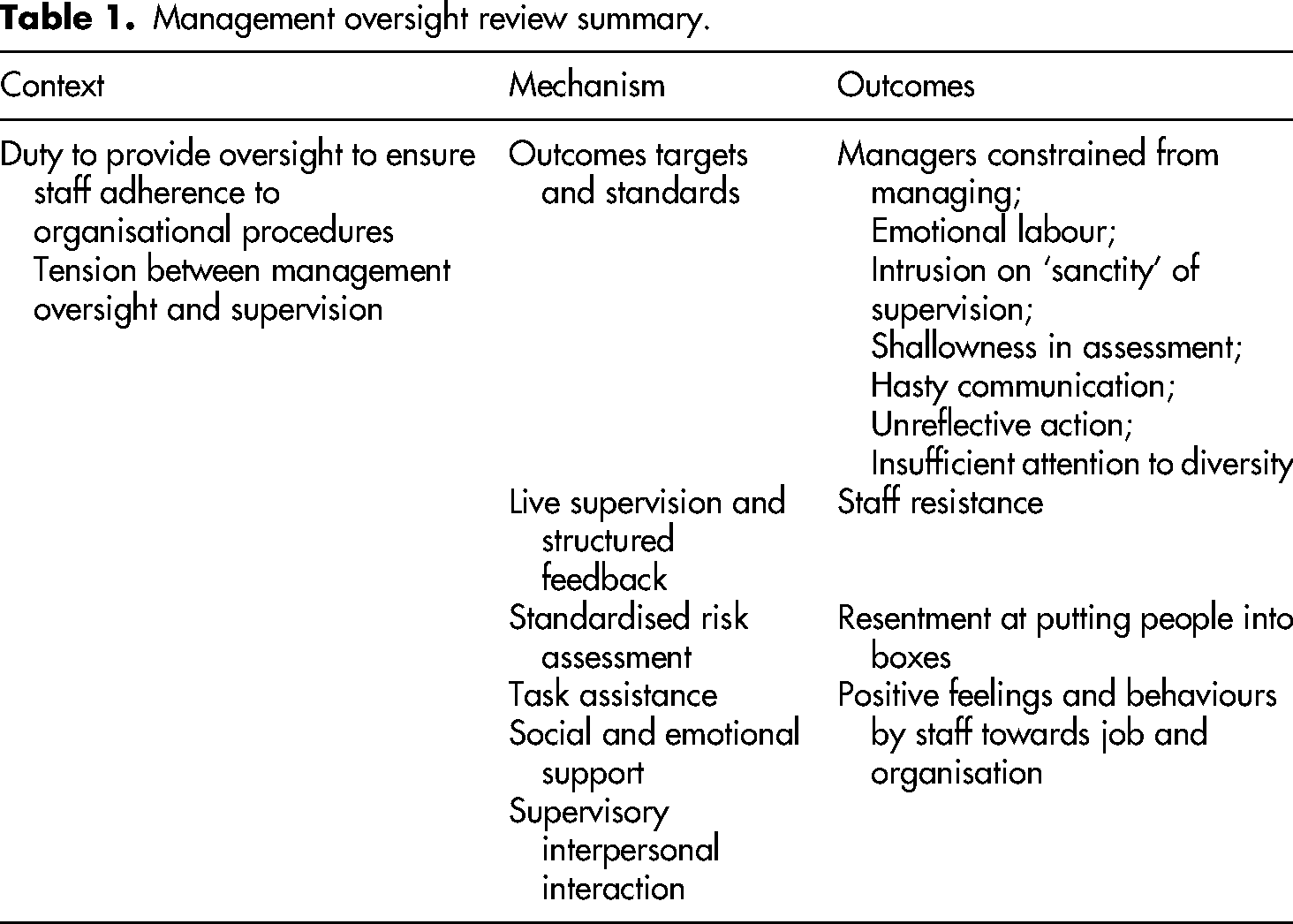
Front line managers balancing care and support with managing potential harm by service users have a duty to provide oversight to ensure that staff practice is safe and aligned to organisational procedures (Ainslie et al., 2022; Baines et al., 2014; Coley, 2020). However, this creates staff tensions (Coley, 2020; Dale and Trilin, 2010; Phillips, 2021), for example in New Zealand, where management oversight in supervision was rejected by experienced social workers (Beddoe, 2010).
Front-line supervisors in U.S. community corrections influence case management through staff coaching modelled on individual beliefs; and on observing practice (Kras et al., 2017). Such ‘live supervision’ (of observed practice) followed by structured feedback was resisted by social workers in New Zealand, who feared being judged (Beddoe, 2010). Probation and YJ literature in England and Wales points to the mechanisms of management oversight as being: outcomes, targets and standards (Coley 2020; Davies and Gregory, 2010; Philips, 2021) and standardised risk assessment (Philips, 2021). This is problematic. Targets in U.K. public services do the opposite of what was intended, constraining rather than enabling managers to manage (Gatenby et al., 2014). Coley (2020: 240) found ‘overemphasis in meeting targets’ encroached on supervision and was ‘frowned upon by practitioners’. The dominance of performance management in YJ supervision was counterproductive inducing reactive and mechanistic practice (Perreira and Trotter, 2019). Targets and outcomes undermined charity staff identities as caring people, detracting from quality of care and eroding their commitment to social justice, but were buffered from targets and measurement by supportive supervisors (Baines et al., 2014). Similarly, SPOs avoided/softened the pressure of centralised targets on practitioners (Westaby et al., 2021). More broadly in the United Kingdom, public service middle managers balance ‘managerial imperatives … and the demands and needs of professional elites…’ (Gatenby et al., 2014: 1132).
Barak et al.'s (2009) meta-review of supervision outcomes concludes that task assistance, social and emotional support, and supervisory interpersonal interaction are positively and statistically significantly related to beneficial outcomes for workers, generating positive feelings and behaviours towards their jobs and organisation. Unintended outcomes from management oversight include: the forementioned challenges and tensions for SPOs (Westaby et al., 2021); emotional labour (Ainslie et al., 2022); and intruding on the ‘sanctity’ (our phrase) of supervision (Coley, 2020). Focusing on probation targets and outcomes adversely affected service quality resulting in ‘shallowness in assessment, hasty communication, unreflective action’ and insufficient attention to diversity (Davies and Gregory, 2010: 405). Standardised risk assessment, classifying cases into risk categories generated resentment among probation practitioners who felt it was wrong to ‘put people into boxes’ (Philips, 2021: 119).
In summary, management oversight is important but is perceived by front-line staff, as ‘managerial oversight’, which requires ‘buffering’ by front-line managers, mediating between oversight requirements and supervision as a protected space for reflective practice and clinical supervision (Table 1).
Management oversight review summary.

Clinical supervision
In the context of service user experience of trauma affecting front-line practitioners, staff need space to consider the impact of this, in order for their practice to become ‘trauma informed’ and support their wellbeing.
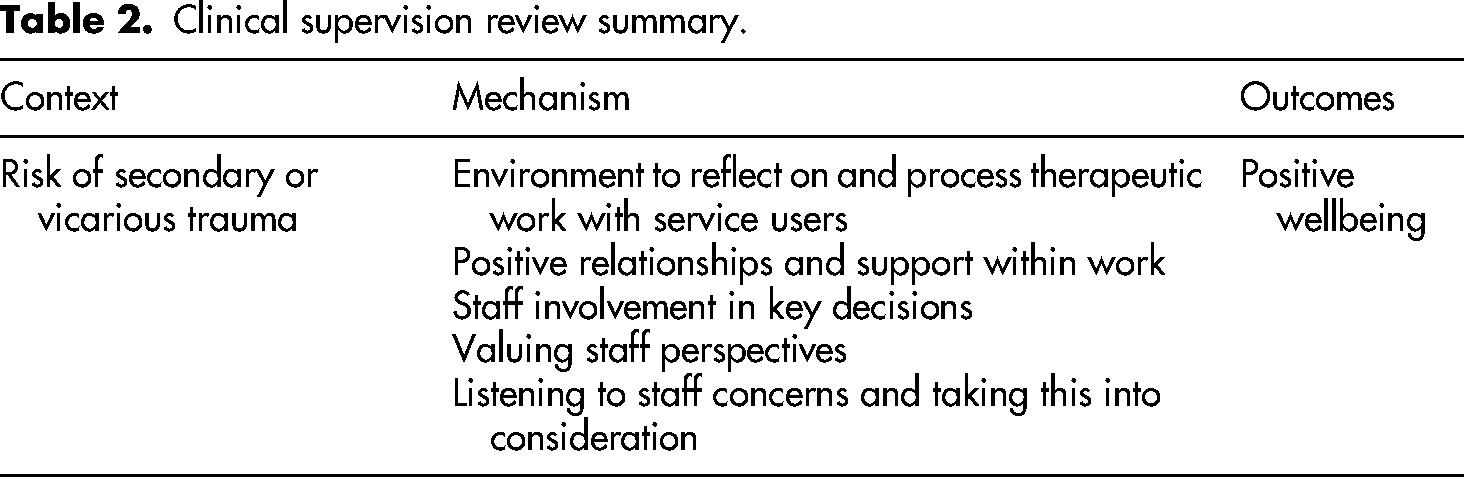
'Secondary trauma’ is the emotional duress that results when someone hears about the first-hand trauma of another. 2 The potentially traumatising effect of probation and prison settings on people with convictions in England may also have consequent secondary effects for practitioners (Senker et al., 2023). U.S. probation officers who reported: violent and sexual recidivism on their caseloads; supervisee suicide; and threats and/or assaults scored significantly higher on measures of traumatic stress and burnout than officers who did not experience this (Lewis et al., 2013). In nursing, vicarious trauma (i.e., secondary trauma) was amplified by high demands, low resources, and competing personal and professional demands (Isobel and Thomas, 2022). It was contagious, with indirect exposure to trauma, transmitted amongst health professionals through re-telling of stories, for example through clinical handover (ibid).Formalised access to clinical supervision to address vicarious trauma among nurses was recommended (ibid). During COVID, in Scotland, good probation managers involved staff in key decisions, valued their perspectives, listened to their concerns; and prioritised the ‘fundamental human needs of their staff’ and their uncertainty (Herzog-Evans and Sturgeon, 2022: 148). Supervision allowed Australian refugee and asylum seeker workers to reflect and process therapeutic work with service users, consider countertransference and explore if personal issues or histories were triggered by therapy (Posselt et al., 2020). Approximately half of the participants in this study reported that positive relationships and support within the work environment were crucial to wellbeing, with a third maintaining this through supervision, provided by managers, peers and individuals external to the organisation (ibid).
In summary, ‘secondary trauma’ was evidenced in professions including probation and YJ which work directly with individuals who have experienced first-hand trauma. This should be addressed through clinical supervision to support practitioner wellbeing through managers, peers or external individuals. Responding to this evidence we define clinical supervision as trauma-informed management practice, to demarcate this from the broader process of ‘supervision’ (Table 2).
Clinical supervision review summary.

Reflective practice
In the context of staff developing ‘professional curiosity’ and experience, dedicated time to reflect on case management enables these skills to be developed.
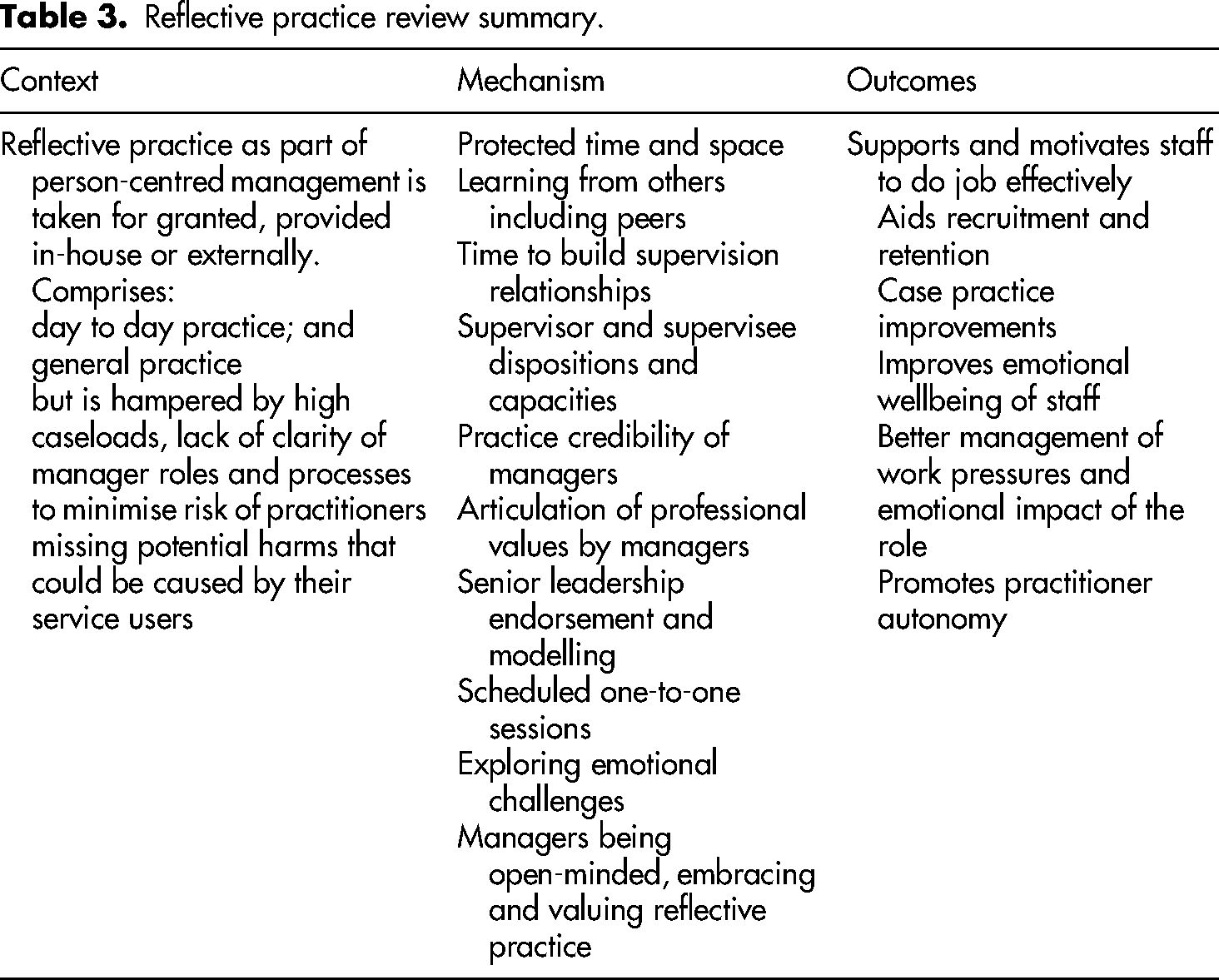
Person-centred management is taken for granted in risk and care professions: social work (Godden, 2012, Saltiel, 2017), probation (Ainslie et al., 2022, HMPPS, 2022, Westaby et al., 2021) and YJ (Perriera and Trotter, 2019). Reflective practice is a key element, conceptualised as: ‘general practice’, identifying thematic and overarching considerations from individual cases which is reflective and developmental (Ainslie et al., 2022) and ‘day to day practice’ – taking immediate decisions on individual cases (e.g., the Wales Human Factors approach; HMIP, 2024a). However, it is hampered by high caseloads, lack of clarity in the role of managers and bureaucratic processes focused on minimising the risk that practitioners will miss potential harms that could be caused by the individuals they supervise (Ainslie et al. 2022).
Conflict between reflective practice and management oversight is clear. New Zealand social workers went outside their agency to guard the space and time for reflective practice, where ‘in-house’ supervision increasingly focused on management oversight (Beddoe, 2010). Social workers in England used ‘reflection’ to describe practice exploration rather than management oversight to check procedures were followed (Saltiel, 2017).
The mechanisms of reflective practice were: protected space and time (Beddoe, 2010; Coley, 2020; HMIP, 2024a; HMPPS, 2022; McKeown and Yeung, 2023); learning from others including peers (McKeown and Yeung, 2023); time required to build relationships necessary for supervision, supervisor and supervisee dispositions and capacities (Ainslie et al. 2022); practice credibility of managers and their articulation of professional values (Dale and Trilin (2010); structure, such as scheduled one to one sessions with a manager (Ainslie et al., 2022; HMPPS, 2022); daily morning check-ins and weekly group supervision (McKeown and Yeung, 2023); and daily check-in and protected SPO hours (Wales Human Factors approach; HMIP, 2024a). Other mechanisms include: exploring emotional challenges (Ainslie et al., 2022, Webster et al., 2020); ‘holistic’ reflective practice, what practitioners did and how and why service users reacted in particular ways (Ruch, 2007) and management style: being open-minded; embracing and valuing reflective practice (ibid); senior leadership endorsement and modelling (Ainslie et al., 2022).
Reflective practice benefits practitioners, organisations and service users. It supports and motivates social workers to do their job effectively, aiding recruitment and retention (Godden, 2012). It improves case management; the emotional wellbeing of practitioners; and outcomes for service users (Ainslie et al., 2022; Beddoe, 2010; Godden, 2012; McKeown and Yeung, 2023; Webster et al., 2020); better management of the pressures and emotional impact of the role (Webster et al., 2020); and promotes practitioner autonomy (Ainslie et al., 2022). Not addressing the emotional challenges of staff working within the offender personality disorder pathway through reflective practice may result in negative attitudes towards service users, boundary issues and burnout (Webster et al., 2020).
Summing up, reflective practice can only occur in a protected time and structured space that is integral to the broad processes of supervision and person management in risk and care professions. It benefits organisations, practitioners, their practice and the people they supervise (Table 3).
Reflective practice review summary.

Senior practitioner
In the context of a gap in workforce practice wisdom, a senior practitioner role provides access to experience and support for less inexperienced practitioners.
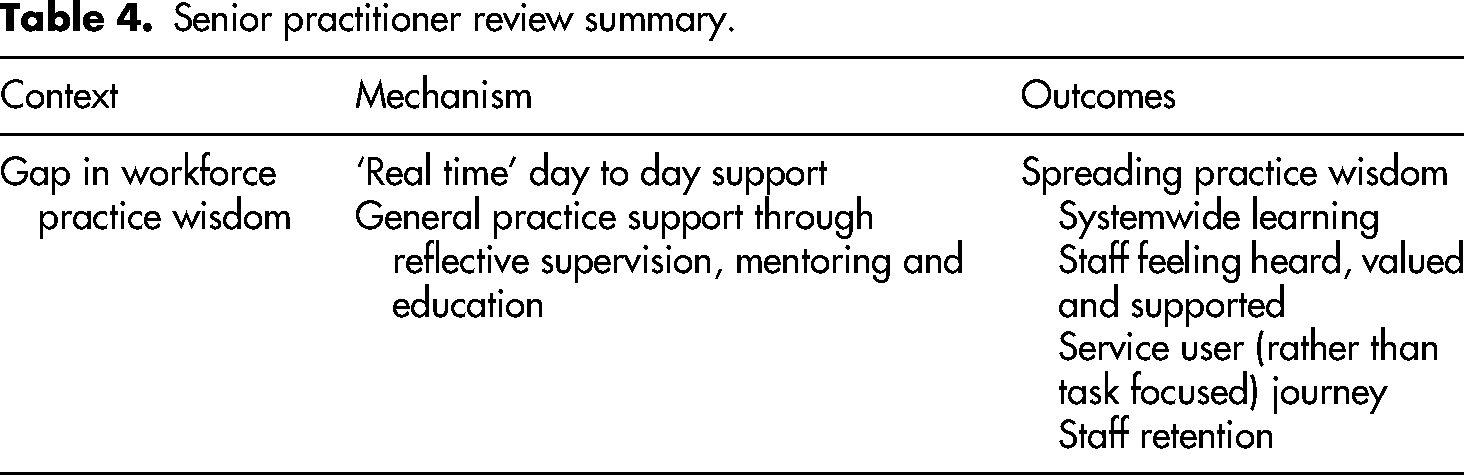
In England and Wales, almost two-thirds of practitioners leaving probation in the year to March 2023 had five or more years’ experience (HMIP, 2024a), leaving a significant gap in practice wisdom (practical and professional experience). Experienced staff are essential to peer learning (McKeown and Yeung, 2023) and support day to day practice (HMIP, 2024a). Stakeholders during Stage 1 of this review posited that a senior practitioner role would provide career advancement for experienced staff who did not want to leave practice and take on management oversight responsibilities. This role has never occurred in English and Welsh probation, it does exist in social work and YJ, and was posited by stakeholders as contributing to effective management.
To the review team's surprise the searches only uncovered one relevant study, of a comparable role – ‘Legacy nurse practitioners’ in England (Hardy, 2023). They provide day to day support, assisting less experienced colleagues and general practice support through reflective supervision, mentoring and education (ibid). Mirroring the outcomes of reflective practice (above), nurse practitioners: spread practice wisdom and systemwide learning; staff feel heard, valued and supported; they enable a person-focused (not task-focused) patient journey; and reduce the intention of other staff leaving the service (ibid).
Summing up, the senior practitioner role provides less experienced practitioners with access to practice wisdom to guide day to day practice and general practice, facilitates staff retention and organisational learning (Table 4).
Senior practitioner review summary.

Self-managing teams
In the context of over-extended front-line management, practitioners self-organise in teams to share case management responsibility and support each other to cope with large caseloads.
SMTs were posited by stakeholders during Stage 1 as having the potential to address the challenges of: complex and high caseloads, inexperienced workforce, the broad span of SPOs in probation (HMIP, 2024a); and insufficient management oversight in probation (HMIP, 2023) and YJ (HMIP, 2023b). Most of the identified SMT literature derives from health and social care.
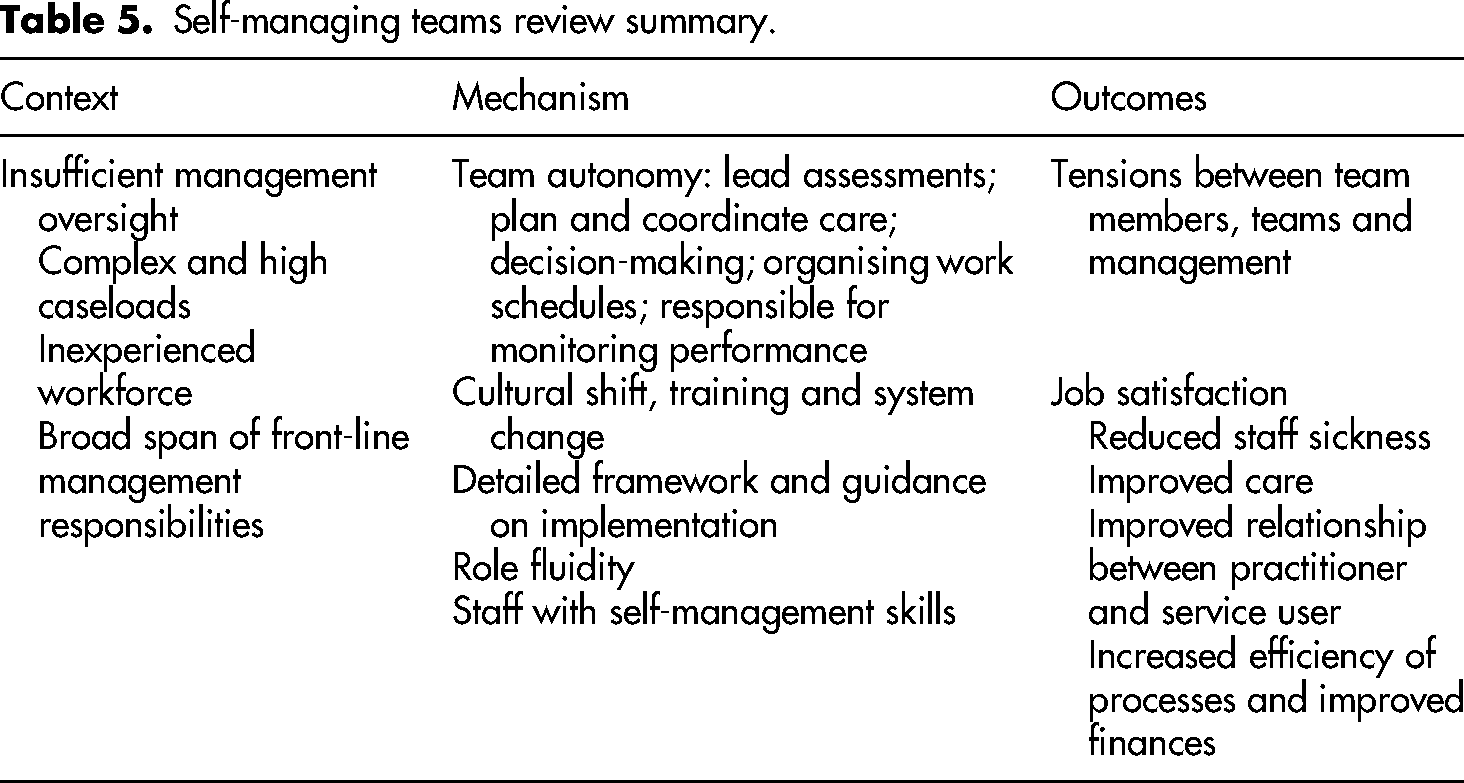
The following mechanisms were identified for effective SMTs. Team autonomy was a central feature of the Buurtzorg model of community nursing (Lalani et al., 2019, Leask et al., 2020) and Magpili and Pazos’s (2018) systematic review of SMTs. Autonomy was being responsible for service delivery, accepting referrals, care provision and staff rostering (Leask et al., 2020); leading assessments, planning and coordinating patient care, clinical decision-making, organising work schedules and determining professional development (Lalani et al., 2019). De Bruin et al., (2022) defined SMTs as staff being empowered to contribute their personal skills and expectations; and being responsible for its own performance.
Such autonomy required a cultural shift and training (Magpili and Pazos, 2018); a whole system approach for successful implementation (De Bruin et al., 2022; Magpili and Pazos, 2018); and implementation guidelines (Magpili and Pazos, 2018). Otherwise, tensions and communication difficulties may occur between team members, teams and management (Leask et al., 2020). System change required managers acting as coaches and efficient information, communication and technology systems to develop trust and teamwork (De Bruin et al., 2022). But effective SMTs also require staff with self-management skills, that is an aptitude for autonomy and commitment to teamwork (Magpili and Pazos, 2018). Role fluidity provided a responsive and agile approach to changing needs, but tensions need to be resolved between individual and team-level autonomy (ibid). Cultural and regulatory differences can affect SMT implementation exemplified by attempts to implement the Netherlands developed Burtzog model in England (Lalani et al., 2019).
SMT outcomes include: high-quality patient care (Leask et al., 2020); improved relationships between nurses and patients, better patient compliance with treatment (De Bruin et al. 2022); improved continuity of care (De Bruin et al., 2022; Lalani et al., 2019); longer appointment times (Lalani et al., 2019); posited improved user satisfaction (Weerheim et al., 2018); greater job satisfaction (De Bruin et al., 2022); and greater co-operation with family members and other care disciplines (ibid).
Studies which examined elements of SMTs identified complementary outcomes. Participation in workplace decision-making by U.S. probation officers was important for job satisfaction and alleviating organisational and physical symptoms of stress (Slate et al., 2003). Nurse involvement in quality improvement improved job satisfaction, reduced staff sickness; improved quality of care; increased efficiency of processes and improved finances (Robinson and Gelling, 2019).
In summary, SMTs demonstrated that their autonomy produced benefits for service users, practitioners and organisations. However, implementation was not straightforward, requiring staff aptitude, training, organisational and role changes beyond the SMT (Table 5).
Self-managing teams review summary.

Discussion and conclusion
The mid-level theory that we have developed (for probation and YJ) is a significant first step in addressing the theoretical lacuna in the understanding of effective front-line management. Critically it is relational, a collaboration between practitioners, front-line managers and executives. It supports day to day practice and general practice and comprises the CMOs of: management oversight; clinical supervision; person-centred management using reflective practice; and to lesser extent senior practitioner and SMTs. There may be an assumption that front-line management is (and should be) primarily effected through the bundling together of these components through one-to-one supervision, that is that effective management is ‘supervision done well’. However, this overlooks: (a) the interactivity of the components, they both complement and confound; and (b) context. To illustrate (a) clinical supervision and person-centred reflective practice contribute to staff wellbeing; the senior practitioner role and reflective practice aid staff retention; improved processes and finances occur through SMTs, which management oversight strives for; management oversight reduces time for reflective practice. As to (b) components such as reflective practice are hampered by high caseloads, lack of clarity of manager roles and working culture fearful of staff missing risks of the potential harms that could be caused by the people they supervise.
Governance reset
Turning to probation in England and Wales, throughout this article we have demonstrated the importance of context and specifically how NPM governance has affected front-line management to the detriment of staff and service quality. We stated earlier that applying any theory of effective management as balm to probation's crisis had to overturn NPM's influence on the construction of effective management and its grip on governance.
We argue that the first is addressed by the mid-level theory articulated through our evidence synthesis and the second by adopting NPG as an alternative framework to NPM's marketisation, performance management and output-oriented efficiency features (Hood, 1995; Osbourne, 2006). NPG affords a sympathetic governance context and normative values to support collaboration – the essence of effective management – through distributed leadership, trust based management and team management (Krough and Triantafillou, 2024). Distributed leadership sees public service managers (at all levels) and employees sharing leadership tasks and responsibilities to achieve organisational goals, through dialogue and joint action, motivating employees and their commitment to shared goals (ibid). This maps across to the mechanisms of giving staff a voice, involving them in decision making and autonomy to manage themselves. In contrast to NPM reforms which have eroded manager-employee trust in public organisations (Bouckeart, 2012), trust-based management (an NPG tool) assumes that trust between managers and employees contributes to and arises from employee empowerment in decision making, leading to organisational effectiveness and a collaborative culture (Krough and Triantafillou, 2024; Nyhan, 2000). We posit that trust (while not explicit) is integral to mechanisms associated with SMTs. Team management relies on managers respecting the professional autonomy of employees and commitment to collaboration to solve organisational problems and produce public value (Melo et al., 2022).
Mission and accountability
What about the contribution of effective management to the mission of probation? Our theory is limited by the existing literature we have drawn from. It has concentrated on the relationships between practitioner, manager, organisation and outcomes for each. The contribution of effective management to public safety and rehabilitation, the twin aims of probation (and YJ) has not been directly articulated in our theory. In part, because: these broader societal outcomes are distal to the mechanisms and processes we identified; and the accountability for these outcomes enacted through management oversight is problematic. The NPM (writ large) outcomes and targets model in probation appears counterproductive (HMIP, 2024) and lacks practitioner legitimacy (Coley, 2020). Front-line management and practitioner accountability should not be eschewed (see European Probation Rule 30). Instead, accountability needs to be reimagined and done differently.
Value creation
Osbourne et al.'s (2021) public service value creation framework offers this. Our argument for applying it is twofold. Firstly, effective management while critical organisationally serves the larger purpose of ensuring a quality public service. Secondly, effective management is not just about the relationship between practitioner and SPO, while this forms the nexus, executives, HMIP, politicians, the public and the supervised also have a stake, directly and in-directly shaping its construction and through their expectations holding probation to account. Osbourne et al.'s (2021) framework accommodates the interpretation of value and the pluralism of accountability placed on effective management from these stakeholders, providing executives with a planning and evaluative tool. We provide a worked example to illustrate this.
The pressures and expectations of SPOs from stakeholders place their role and effective management at the heart of probation value creation. In Figure 1, we replicate Osbourne et al.'s (2021: 650) generic value creation/value elements matrix. In Figure 2, we present our version adapted for effective management mapping across the outcomes identified through realist synthesis, guided by their commentary that public services will comprise different value elements and processes (ibid: 651).
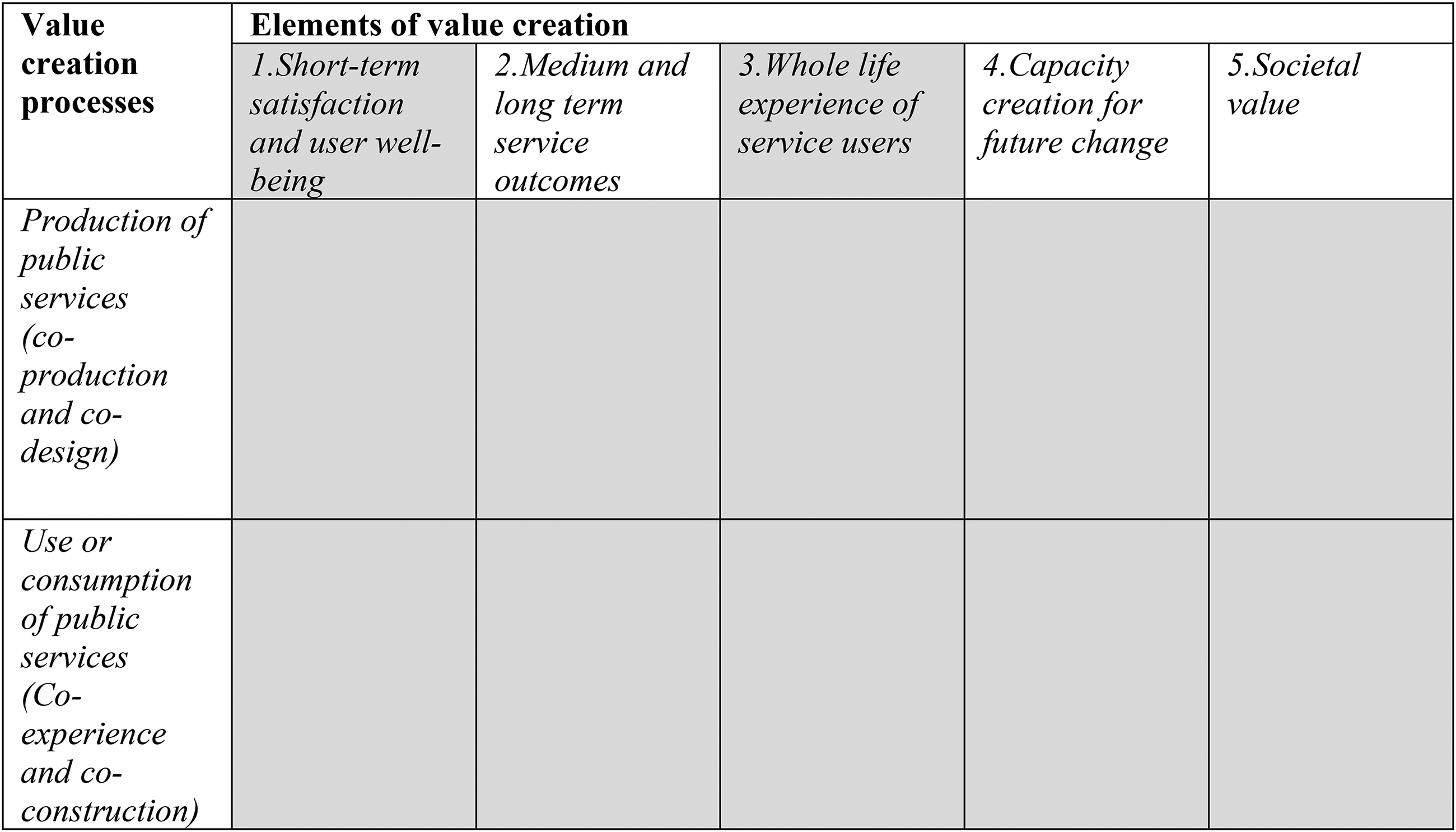
Value creation/value elements matrix (Osbourne et al., 2021: 650).
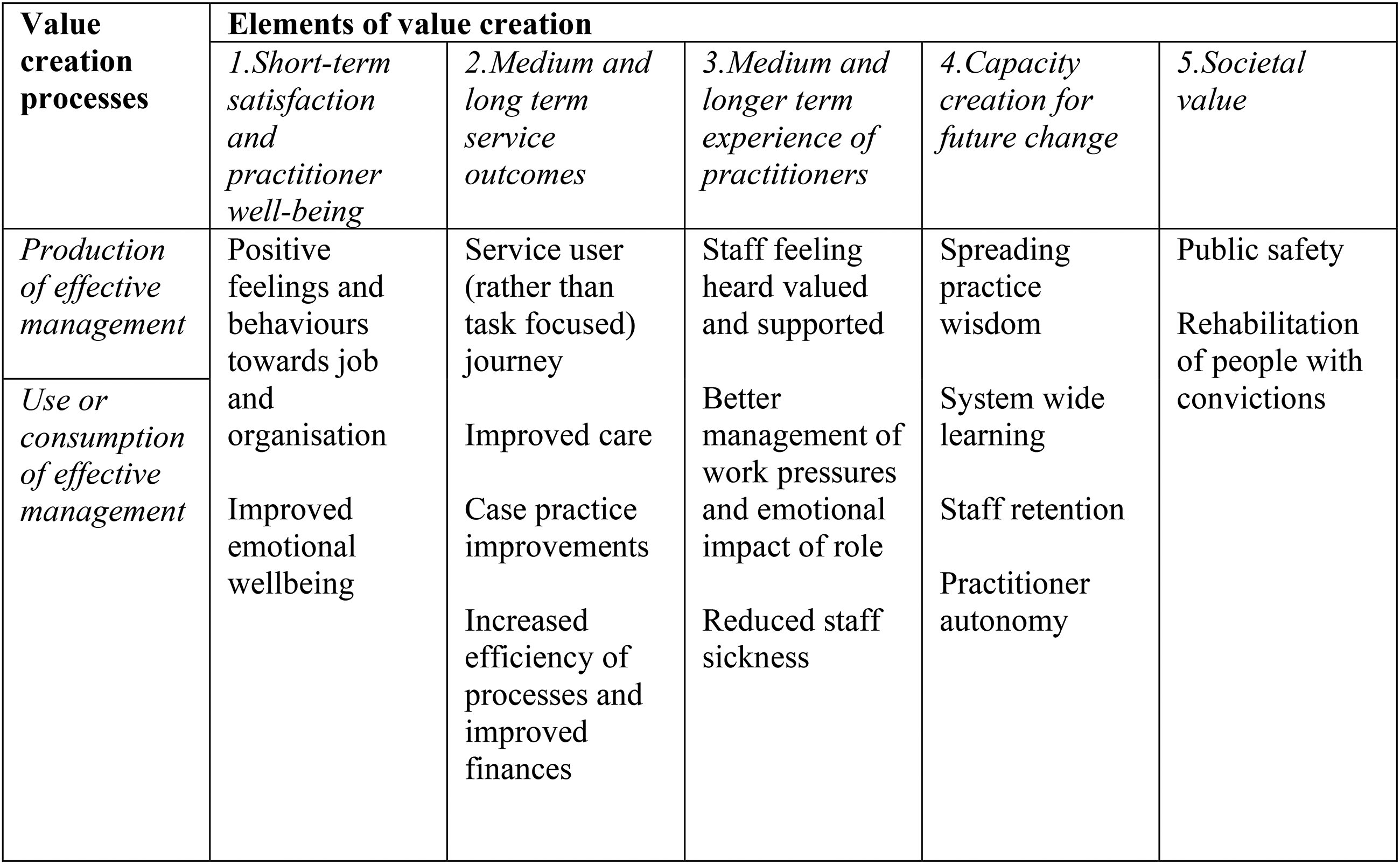
Effective management: value creation/value elements matrix.
Features to note in Figure 1 (see shaded cells) with points of adapted differentiation to Figure 2 follow:
In Figure 2, there is no disaggregation of value by process as in Figure 1. Based on the realist synthesis, the outcomes of effective management – the types of value created – result from the dynamic interaction between the processes of production and consumption, an inter-relationship acknowledged by the framework's authors (Osbourne et al. 2021). In Figure 2, we have broadened the reach of the framework to benefit practitioners (Value elements 1 and 3) as well as service users. Value element 5. Societal value is concentrated in public safety and rehabilitation articulated earlier as the twin purpose of probation which effective management serves. Ultimately public safety will always trump individuals’ needs.
We end this section with a heuristic, Figure 3 depicts the governance and organisational contexts which we are argue are essential for effective management at the individual (SPO and practitioner) level to thrive in probation. It's a simplification, while we have depicted interactivity between the levels, this occurs in much less linear ways, nevertheless it sketches out a route-map for change.
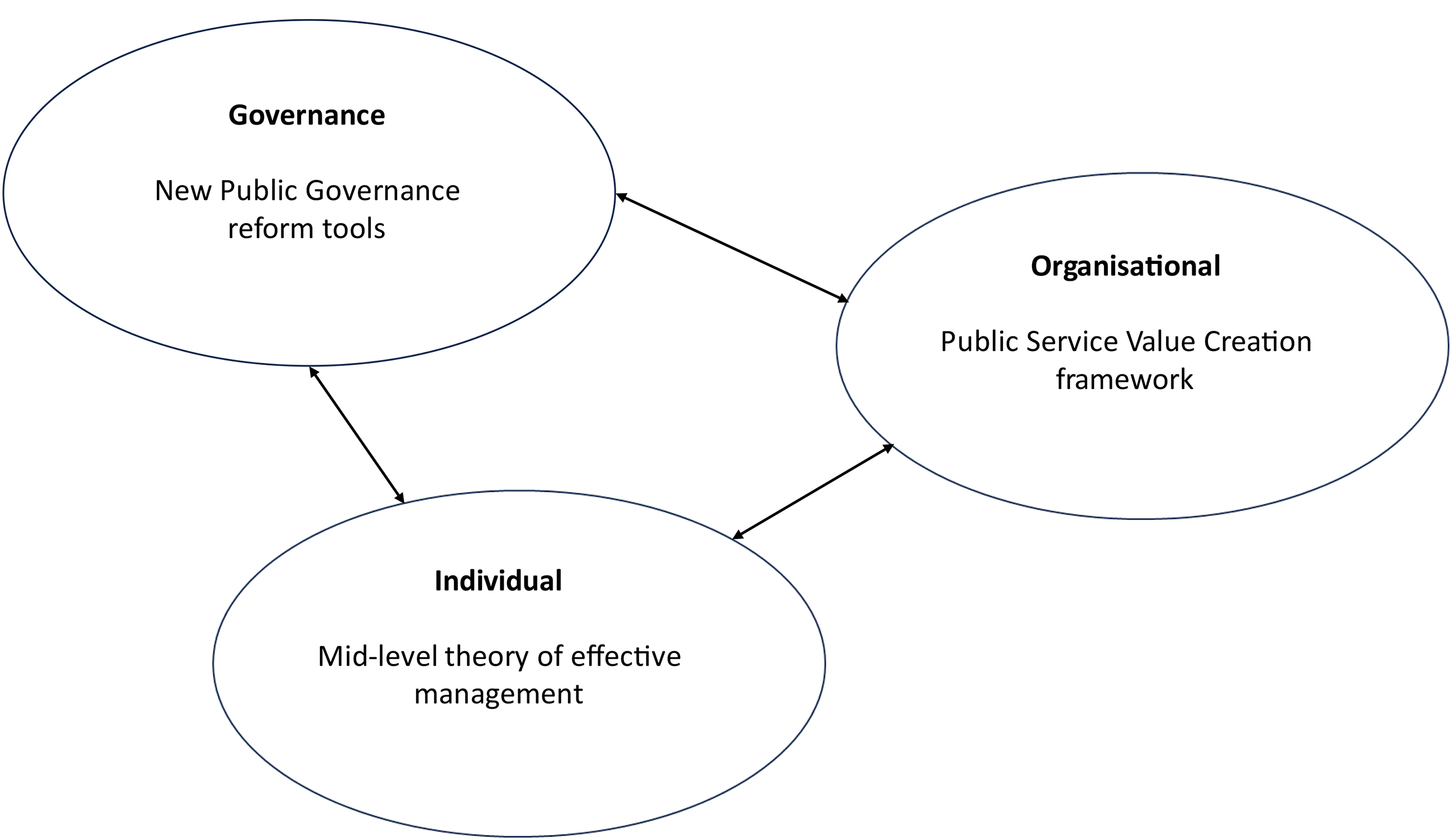
Effective management, the requisites of governance, organisational context to effect individual change.
Conclusion and next steps
During the development of this article, we shared the review findings and NPG principles (as a governance framework for effective management) with NPS executives, although not Osbourne et al.'s (2021) planning, design and evaluative framework – the final step in completing this article. Their response was encouraging. They acknowledged the fault-lines of front-line management. The final CMOs, the NPG framing and reform tools resonated, presenting opportunities, but they were cautious. Nervous perhaps about retreating from the NPM doctrine that has dominated their working lives but recognising their responsibility to lighten the burden on their colleagues. These executives should be reassured by their innate pragmatism which perhaps explains the observed hybridity of public service governance, mixing NPM, NPG and other paradigms (Dickinson, 2016). While hybridity appears to contradict our argument about NPM dominance of probation governance over the last 20 years, we do not demur from our earlier position, the evidence is clear. However, the potential of hybridity offers executives a way to transition probation that eschews the whole system shock of TR, instead focusing on ‘changing relationships; value and values; and workforce capabilities and capacities’ (Dickinson 2016: 47). Hybridity naturally emerged in our discussions with executives: piloting wholesale change in one region, while retaining current arrangements in the remainder and so on.
This article has adopted an original approach to address the crisis in probation management in England and Wales. We have taken this as far as we can informed by risk and care profession realist synthesis and the PAM and SM&M literatures we have reached into. The components of effective management; NPG governance to support a narrative and culture of change; and adapted public value creation framework are theoretical. The next step is to empirically test and refine these conjectures, but we urge swift action. The burden and morale of SPOs demands to be lifted. Notwithstanding empirical testing, the propositions as they stand are useful, they move us from some knowledge to more knowledge (Pawson et al., 2005). Significantly, they can be applied to other risk and care professions under duress in the United Kingdom or other jurisdictions, although adaptation to circumstances is a pre-requisite. We end by channelling Popper (1992) – ‘we cannot know, we can only guess’. What we have presented is our best guess. We await feedback.
