



Abstract
AssetPlus is an assessment and planning framework developed by the Youth Justice Board (YJB) for use by all youth justice services across England and Wales. Since its development in 2014, scrutiny and evaluation of the framework has been limited, with very little published outside of reviews commissioned by the YJB. Therefore, this article aims to collate existing information about AssetPlus and its effectiveness. It aims to critically evaluate the framework and consider how it could be improved. Recommendations are provided for the development of AssetPlus and directions for further research are identified.
Introduction
AssetPlus is a comprehensive assessment and planning framework developed by the Youth Justice Board (YJB) for use by all youth justice services (YJSs) across England and Wales (Baker, 2014). AssetPlus aims to ‘identify strengths, needs risks and issues’ which then facilitates the development of an individualised plan for the child's intervention (YJB, 2016: 6). Since 2014, AssetPlus has been the only formal youth justice assessment and has always been mandated for use with statutory cases (YJB, 2023a). However, it is now exclusively used with children who have received a court outcome, with the new Prevention and Diversion Assessment Tool being used for out-of-court cases (YJB, 2024b).
AssetPlus is a key element of the work completed by youth justice practitioners, and hence it is important for it to be critically evaluated to ensure it is fit for purpose. This review will therefore consider the strengths and limitations of AssetPlus for practitioners working with children involved with the youth justice system. Though AssetPlus is also used within the children's secure estate, this review will focus on its use in the community, where case management responsibility lies (YJB, 2018).
Development of AssetPlus
AssetPlus was developed in 2014 and implemented in YJSs across England and Wales between October 2015 and August 2017. Prior to this, YJSs had been using an assessment tool called ‘Asset’ for several years but it had been under criticism from stakeholders, practitioners and academics and significant areas of weakness had been identified (YJB, 2014). These included how well it aligned with the present policies and evidence base, as well as how efficient it was given resource constraints (YJB, 2014).
Prior to the development of AssetPlus, a consultation exercise was carried out which involved gaining feedback from youth justice practitioners, children and parents/carers. These ideas were combined with a thorough review of the existing literature base (Baker, 2014) and a review of the good features of Asset and other tools used by YJSs. The result was a new integrated assessment framework called AssetPlus. Its introduction was intended to improve operational efficiency, including making it easier to share information across services, as well as ensuring the development of high-quality intervention plans.
Summarised below, Baker (2014) outlines five foundations of AssetPlus:
Understanding young people's behaviour. AssetPlus draws from the Good Lives Model principles that offending behaviour is the result of attempting to meet primary human needs without access to prosocial manners in which to do so (Ward and Fortune, 2013). It considers the context in which the child is developing and aims to understand what needs their past behaviour has met for them. Understanding and using the concept of ‘risk’. Risk is not the only focus of AssetPlus but is considered important due to its goal of preventing harm. It gives credit to the Risk Need Responsivity model (Andrews and Bonta, 2010) which suggests those with higher ‘risk’ should receive more intensive intervention. AssetPlus emphasises the dynamic nature of risk and the importance of specificity when considering risks. Identifying strengths. AssetPlus focuses on factors which both help to prevent offending and help the child to achieve positive outcomes. Strengths are contextualised for the individual and intervention plans should consider how strengths will be developed. Desistance and the process of change. AssetPlus draws on desistance literature (e.g. Maruna et al., 2004) which focuses on the routes out of offending (rather than the routes in) and considers desistance as a process rather than an event, where there may be several ‘setbacks’ until desistance is achieved. Involvement of young people and parents/carers. AssetPlus draws on literature related to participation (e.g. Ellis and France, 2012), aiming to ensure that the child and carer's views are considered throughout assessment and intervention.
Overview of AssetPlus
AssetPlus is a relatively complex framework. Figure 1 provides a summary of the key sections which will be explained below, however, more detail can be found within documents provided by the YJB (2014, 2016).
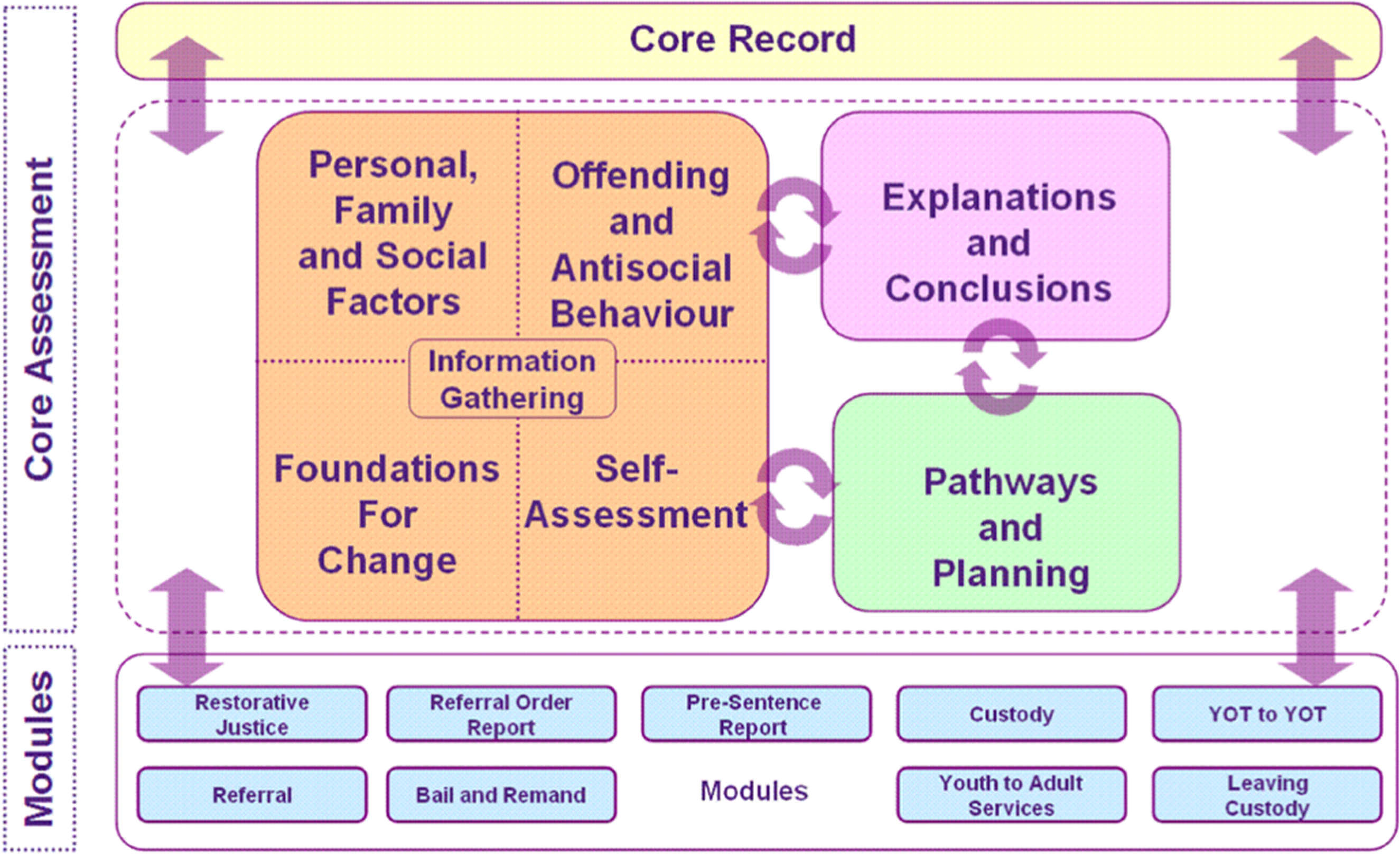
AssetPlus framework (YJB, 2016).
AssetPlus is embedded within the services’ Case Management System (CMS), which guides the practitioner through the questions and then produces a report from the answers inputted. An underlying principle of the framework is that it is interactive, meaning information entered by the practitioner in one section is pulled through to other sections, with the latter parts of the framework adapted based on the answers to earlier questions. There are also discrete modules for information and processes that are specific to the particularities of the child's involvement, such as if they are on remand. This means AssetPlus can be used with any child at any stage of their involvement with the youth justice system. It is also intended to be more flexible and dynamic than Asset, with the practitioner being expected to use their professional judgement to decide the order in which to complete sections, how much detail is required and how best to analyse the information. Updates can also be made at any time, based upon when the practitioner thinks it would be beneficial, rather than at set timepoints (Baker, 2014). This means that the assessment should always present up-to-date information to inform practice.
YJSs hold responsibility for quality assurance and usually, this is completed by managers who countersign some or all of the assessments completed by their team. AssetPlus training was delivered nationally at the time of launch and more recently a train-the-trainer scheme has been implemented whereby two practitioners from each service attend national training and subsequently deliver training and disseminate materials within their individual services (YJB, 2023b).
What is included?
The assessment starts with the Information Gathering section, where the practitioner collates all relevant information including a wide range of Personal, Family and Social Factors and details related to Offending and Antisocial Behaviour. Within this section, Foundations for Change aims to identify areas of the child's life that promote or prevent desistance. The child and their parent/carer's Self-Assessment is also included to provide their perspective on past and future behaviour.
Next, the Explanations and Conclusions section guides the practitioner to review the information gathered, analyse it to provide explanations for the child's behaviour and make predictions regarding future outcomes (e.g. reoffending or harm from others). This section includes graphs and diagrams of key events in the child's life to help make sense of instances of offending behaviour and periods of desistance. Within this section, practitioners are also asked to provide ratings for the strength of each desistance factor, the likelihood of reoffending, overall safety and wellbeing concerns and the risk of serious harm. The Youth Offender Group Reconviction Scale (YOGRS), an adapted version of the Offender Group Reconviction Scale (Howard et al., 2009), also provides an actuarial probability that a child will be sanctioned for any recordable offence within two years of sentence or release based on details such as their age, offence type and previous offending (Baker, 2014). This score gives a low, medium or high rating, with which the practitioner is not obliged to agree, but should use to support their decision making (Picken et al., 2019).
The Pathways and Planning section is the practitioners’ proposed intervention plan, which identifies pathways away from offending and interventions required to achieve specific outcomes. This could include work with the YJS or external agencies and may involve additional controls imposed by the YJS. The plan should include goals for promoting the child's development, as well as minimising future harm to others, and should consider how the strengths identified can be enhanced during the intervention. This plan is intended to be shared with the child, their parent/guardian and other professionals working with them.
Finally, the Core Record section provides an overview of the essential information about the child, including their personal circumstances, their previous offending behaviour, contact with other services and key actions from their intervention plan, which are pulled from other parts of the assessment. Within AssetPlus there are also screening tools for physical and mental health; speech, language and communication needs; and alcohol use (YJB, 2014) which provide a quick way of determining whether the child requires additional input from other services (Cordis Bright, 2022).
Youth justice board-commissioned reviews
In 2018, the YJB commissioned RAND Europe to carry out research into practitioners’ perceptions of AssetPlus (Picken et al., 2019). This review explores issues such as the use of AssetPlus in practice, its impact on operational efficiencies and the perceived quality of assessments created. This review provides important insights into the views of those who use AssetPlus; the salient points are included within the Strengths and Limitations sections below. However, one limitation of this review is that the second author is the same person who originally led the development of AssetPlus. While the team acknowledge and report to have managed this conflict of interest (Picken et al., 2019), the review does have a tendency to focus on issues with the implementation of AssetPlus, rather than considering potential flaws in the framework itself.
Another limitation acknowledged by the authors is that the findings are limited to the perceptions of a sample of practitioners, rather than any measurable effects. To overcome this, the YJB commissioned a second review by Get the Data (Cattell and Aghajani, 2022a) which focused on the impact of AssetPlus on a range of outcomes. The review initially intended to measure 18 outcomes, however, 10 of these were unmeasurable due to the nature of the data available (Cattell and Aghajani, 2022b). The outcomes identified by the YJB relate to general youth justice targets, such as reducing reoffending, rather than evaluating whether AssetPlus is a valid and reliable assessment tool. The logic YJB was implementing appears to be that if AssetPlus was a good assessment, it would lead to improved intervention planning, which in turn would lead to improved interventions and thus improved outcomes. However, as identified by Picken et al. (2019: 60), ‘a full theory of change that connects AssetPlus to such outcomes has not been developed’. This leads the report by Cattell and Aghajani (2022a) to present oversimplified hypotheses which fail to acknowledge the significant mediating factors present, and in particular, comparing data from Asset to AssetPlus without considering the significant changes in youth justice practice over the past decade. This leads them to present correlational relationships as causal, for example, concluding that AssetPlus ‘increase(s) compliance with orders’ (Cattell and Aghajani, 2022a: 9) due to an observed reduction in breaches from 10.6% to 9.6%, but failing to acknowledge that many other factors may have contributed to this change. They provide the explanation that ‘if a sentence is better tailored to meet the needs of the child, then it might be expected that they will comply with supervision contacts and attend interventions’ (Cattell and Aghajani, 2022a: 14). However, this misses significant steps in this process, including but not limited to the quality of the intervention provided. Furthermore, trends in breach rates are likely impacted by changes to youth justice practices and guidelines over the years, with practitioners now being encouraged to minimise the use of breaches as a ‘last resort’ (YJB, 2024a). It is misleading to suggest that this change is attributable to the use of AssetPlus alone. Another oversimplified prediction was that the number of concerns identified with AssetPlus would ‘reduce at the follow-up assessment because the intervening period of support would address them’ (Cattell and Aghajani, 2022a: 39). This gives no consideration to the fact that after a period of working with a child, the practitioner may learn more about them and their lives, and therefore be able to identify their needs more accurately, leading to more rather than fewer concerns identified. This further exemplifies the lack of scientific rigour implemented in this review and the tendency to evaluate AssetPlus as part of a systemic shift in practice, rather than as a standalone assessment framework in need of scrutiny.
Outside of these YJB-commissioned reviews, AssetPlus has been subject to minimal scrutiny, particularly in the form of peer-reviewed journal articles. There has also been no data collected by the YJB on the opinions of children and/or parents, despite the supposed importance of ‘participation’ (Baker, 2014: 8).
Psychometric properties of AssetPlus – reliability and validity
Unfortunately, there is no existing research pertaining to the internal or external reliability of AssetPlus, meaning we have no evidence regarding its consistency and dependability as a measure. The inter-rater reliability of Asset has been explored (Baker et al., 2005a, 2005b) to determine whether assessments were scored consistently by practitioners across different professions and services. However, this has not been repeated for AssetPlus. On the one hand, it could be argued that AssetPlus does not lend itself to statistical testing due to it being a holistic assessment where the outcome is a robust intervention plan, rather than a single score which can be easily analysed. Despite this, there are quantitative measures within AssetPlus which could be examined, such as the speech, language and communication screening tool which has never been evaluated. Furthermore, it would be possible to compare practitioners’ assessments when given the same information (e.g. a case study), to examine whether AssetPlus facilitates consistent assessment.
Similarly, the validity of AssetPlus has also never been statistically assessed. A key measure of AssetPlus’ validity would be its ability to predict outcomes for children, such as reoffending. Asset was found to be an accurate predictor of reoffending by Wilson and Hinks (2011) however, there is no high-quality data available to explore the predictive validity of AssetPlus. This could be a ‘considerable gap’ (Cattell and Aghajani, 2022a: 27) in the evaluation of the framework and further research could be done to establish the predictive validity of the Risk of Serious Harm and Likelihood of Offending (including YOGRS) scores. However, it must be noted that the purpose of AssetPlus is not only to predict reoffending and therefore assessing it in this way could be considered reductionist. AssetPlus aims to include all information that is of clinical relevance to practitioners for intervention planning and not just that which informs the assessment of risk (Baker, 2014). Consequently, it may be more relevant to study the quality of intervention plans created as a measure of the success of the framework.
There appears to be an assumption of AssetPlus’ content validity, due to the fact that it reports being informed by literature (Baker, 2014). However, it is now 10 years old, and much of the literature base is even older, meaning the factors included may be outdated. Furthermore, much of the desistance literature cited (e.g. Maruna et al., 2004) is based on studies with adults, which arguably may not be applicable to children given the impact of age and development on offending (Wigzell, 2021). There is also a tendency within both Asset and AssetPlus to focus on research related to risk factors for the onset of offending which may not be the factors most relevant to desistance (Fearn, 2014). It would therefore be beneficial to compare the domains included in AssetPlus to up-to-date research into desistance factors specific to children (Wigzell, 2021). It may also be beneficial to compare AssetPlus to other assessments that are well validated, such as the Structured Assessment of Violence Risk in Youth (Borum et al., 2006), in order to establish convergent validity.
Strengths of AssetPlus
Many of the features of AssetPlus described above can be considered strengths and few would dispute that it is an improvement from Asset, particularly in its shift away from reductionist, risk-focused practice and towards more child-friendly and holistic assessment (Case, 2021). The introduction of AssetPlus in 2014 has been suggested to have offered a ‘foundation’ for later changes to the youth justice system (Hampson, 2023: 306). In the years that followed, the Child First approach was developed and implemented by the YJB. Child First is made up of four tenets: to see children as children, to support the development of children's prosocial identities, to collaborate with children, and to promote children's diversion from the system and related stigma (Case and Browning, 2021). While AssetPlus is not perfectly aligned with these principles, as will be discussed later, it is certainly a closer fit than Asset (Case, 2021).
When the YJB surveyed practitioners after AssetPlus’ implementation, 80% of services reported it was ‘likely’ or ‘certain’ that AssetPlus resulted in better quality assessments and intervention plans (YJB, 2019a). The increased focus on analysis means AssetPlus facilitates an increased level of understanding of the individual child's behaviour, something that was lacking from Asset (Fearn, 2014). Greater consideration of strengths throughout the assessment is also an improvement, as Asset only considered strengths at the end, meaning they were often overlooked due to practitioner fatigue (Hampson, 2018).
Picken et al. (2019) found that practitioners had positive perceptions of key features of AssetPlus, such as its focus on strengths, its focus on desistance, its integrative design, and the extent to which it facilitates professional judgement. They reported that the framework is generally considered to promote the gathering of high-quality and relevant information, which in turn facilitates good analysis and judgement (Picken et al., 2019). Some participants felt that the framework helped them to consider information they might have otherwise missed, and others said features such as the diagrams supported their analysis (Picken et al., 2019).
AssetPlus encourages practitioners to be specific. For example, when judging risk, it considers what the outcome would be, who would be affected and how likely is it to occur (Baker, 2014). This specificity is also likely to have a positive impact on the intervention plan developed, as practitioners are encouraged to focus on the things that are most important for an individual child. The flexibility of AssetPlus is also understood to be a strength, as it empowers the practitioner to use the framework in whichever way best suits the child they are working with; sections can be completed in any order and there is no set information gathering process or interview schedule (YJB, 2016).
The shift in focus away from numerical scoring and towards the holistic exploration of behaviour of is another strength (Case, 2021). The removal of the scoring system also allows practitioners to use their judgement to determine whether referrals to external agencies are required. This allows the intervention offered to be more individualised, compared to the previous model where a certain score triggered various outcomes (YJB, 2010). Furthermore, while there is an element of actuarial assessment in the form of the YOGRS, this does not determine any outcome, and practitioners are able to override the YOGRS score with their own rating should they disagree. This is especially important when assessing children as their lack of offending history and rapidly changing lives means that predictions can be less accurate (Baker, 2014).
Finally, the statutory nature of AssetPlus means there should be a level of consistency in practice across local authorities which facilitates comparison and sharing of good practice. The standardised nature of AssetPlus creates the possibility for large-scale research within youth justice which is often lacking in comparison to research within the adult system (Paddock et al., 2021).
Limitations of AssetPlus
One of the aims of the introduction of AssetPlus was to increase operational efficiencies amidst resourcing cuts, including reducing the time taken to complete assessments (Cattell and Aghajani, 2022a). However, it seems to be widely agreed that this aim has not been met, with reports that practitioners perceive AssetPlus as laborious, time-consuming and ultimately not worth the time it takes away from direct work with children (Deering and Evans, 2018; Picken et al., 2019). AssetPlus is much longer than assessments in adjacent fields such as the Early Help Assessment used by social care (e.g. Somerset Professional Choices, 2024) and the Offender Assessment System (Moore, 2015) used by probation which both manage to synthesise relevant information and make an assessment of risk. While it is challenging to balance comprehensiveness and efficiency (Picken et al., 2019), it seems AssetPlus does not strike this balance. One participant interviewed by Creaney and Burns (2024: 14) described AssetPlus as ‘the most long-winded, repetitive thing I’ve ever seen’. From a practitioner perspective, the length of AssetPlus appears to be its most significant limitation due to the impact that it has on working pressures, both for those completing them and managers who spend considerable time countersigning them (Picken et al., 2019). Ultimately, this everyday impact is likely to overshadow any of the strengths of AssetPlus, as any value gained is outweighed by the frustration it causes.
One of the reasons AssetPlus is so long is that it separates ‘information gathering’ from ‘evaluation’. While this makes sense in theory, in practice it makes the process feel disjointed and repetitive (Picken et al., 2019) as participants are being asked about the same topics at each stage. Picken et al. (2019) suggested that practitioners may lack understanding of the difference between the two sections, meaning they evaluate prematurely within the information gathering section, and then are made to repeat themselves when this evaluation is requested later. On the one hand, as indicated by Picken et al. (2019), this may suggest that practitioners require further training on the proper use of the framework. However, it may also exemplify how difficult it is for practitioners to separate the two processes and suspend their analysis until later in the assessment, suggesting this may be a limitation of AssetPlus itself.
As well as being long, there appears to be a general perception that AssetPlus is ‘unwieldy’ (Deering and Evans, 2018: 17), difficult to navigate and ‘clunky’ (Picken et al., 2019: 23), which makes it more time-consuming to complete. Issues with navigation appear to be linked to the fact that the framework is non-linear, which is intended to make it flexible but can make it confusing for practitioners, alongside issues with CMSs which make navigation more difficult than intended (Picken et al., 2019). When it was created, AssetPlus aimed to save time for practitioners by pulling information through from one section to another (YJB, 2014) however, there is little evidence of this feature being helpful in practice. This is especially exemplified when practitioners are required to update an AssetPlus and have to spend significant time scanning through the various sections to change a single piece of information because the same topics arise multiple times throughout the assessment. Furthermore, features that were meant to increase efficiency, such as the module which populates a pre-sentence report, appear not to function well in practice, meaning many practitioners do not use them as intended (Picken et al., 2019).
Creaney and Burns (2024: 15) found practitioners believed the assessment length made children feel they were being ‘assessed to death’, exacerbating feelings of disempowerment. Furthermore, the need to elicit as much information as possible can lead practitioners to deliver interviews in a way that does not facilitate good engagement, for example, using mainly closed questions (Case et al., 2023). The report produced by AssetPlus is also lengthy, to the extent that it impacts its utility and could be considered inaccessible. It appears that the assessment is rarely perceived as useful for sharing with the child or other agencies (Bartasevicius et al., 2020). In particular, the Pathways and Planning section has been criticised by practitioners for being too long, complicated and not accessible for children (Picken et al., 2019). The overwhelming length of AssetPlus throws into question its purpose and intended audience, as the numerous boxes cause the focus to become about capturing everything that has ever been recorded about a child, rather than about capturing what is relevant to understanding their needs and supporting their desistance. The framework has been criticised by practitioners for being ‘bitty’ with numerous boxes interrupting their flow and impeding the development of a clear narrative (Picken et al., 2019: 40). If its purpose is to aid the development of this narrative understanding, then focus should shift from quantity to quality and from information gathering to synthesis.
The guidance suggests that practitioners use their professional judgement to determine how long and detailed an assessment should be, for example, creating a shorter assessment for those on out-of-court orders. Cattell and Aghajani (2022a: 15) found that practitioners spend a similar amount of time completing an AssetPlus for a sentenced case as for an out-of-court case, which they suggest indicates a need for ‘additional training to…ensure proportionate use of the AssetPlus’. However, it may instead be that it is difficult to create shorter assessments in practice, as each of the sections still requires completion. Furthermore, the level of need does not always correlate with the type of outcome received, meaning it is flawed to expect assessments for those processed out of court to always be shorter. This specific issue is resolved by the recent introduction of a separate Prevention and Dversion Assessment Tool (YJB, 2024b). However, it highlights a theme when evaluating AssetPlus, where flexibility is emphasised and the use of professional judgement is encouraged, but this is at odds with practitioners’ experience (Picken et al., 2019). For example, within the guidance, practitioners are encouraged to use their judgement to decide which parts of the assessment are relevant to the child and sections of AssetPlus can be completed in any order. Meanwhile, in reality practitioners appear to feel obligated to complete every part of the assessment, including those they do not feel are relevant, and will tend to address topics in the order they appear in the assessment, even steering the conversation back to this order if the child deviates towards a different topic (Case et al., 2023). This has the effect of limiting the child's influence over the assessment, which is not in line with Child First principles, and means assessments are often longer than necessary, which has a negative impact on engagement (Case et al., 2023). This suggests that practitioners may prefer more structure, particularly when they have a tight timescale in which to turn around assessments or may be misinformed regarding the intended flexibility of the assessment (Picken et al., 2019).
Similarly, the guidance suggests that practitioners should be able to review parts of the assessment that are relevant to the recent changes in the child's life, whereas in practice managers often want the full assessment to be reviewed (Picken et al., 2019). Again, we could consider this an example of managers not following the guidance, however, more likely is that managers have recognised updating just one section can lead to inconsistencies within the assessment and therefore think it is necessary to review the full assessment to ensure everything included is true at the time of the review. Furthermore, removing timescales and review deadlines and giving guidance such as ‘assessment is dynamic and ongoing’ and ‘timely and accurate’ (YJB, 2019b: 13, 18) appears to be providing flexibility, but in fact, it adds additional responsibility for the practitioners who are then left to determine when to update their assessments. The children they are working with have everchanging lives and this could necessitate constant reassessments to ensure the accuracy suggested by the guidance (YJB, 2014). Practitioners are working in a role where stakes are high, and they are fearful of the consequences of ‘getting it wrong’ (Day, 2023: 65). While there is limited research into the experiences of youth justice practitioners, extensive research in the probation service (e.g. Cracknell, 2022) teaches us that the personal impact of justice work on practitioners can be great, and there is a risk that AssetPlus’ unwieldiness may be adding to this.
The language used in AssetPlus has been criticised by practitioners for lacking clarity and specificity (Picken et al., 2019). Terms are used without clear operationalisation, for example, ‘gang association’ could be defined differently by different practitioners. Similarly, ratings such as ‘minor’, ‘medium’ and ‘major’ are open to interpretation. The guidance document attempts to provide clarity, but even it recognises that ‘local teams may have a locally agreed definition’ (YJB, 2016: 57), meaning there is likely to be discrepancies between services, if not between individual practitioners. This causes challenges when considering the use of AssetPlus to make reliable national comparisons. On the other hand, allowing practitioner discretion could be considered a strength of AssetPlus, compared to having a prescriptive manual where relevant information is excluded due to not fitting within the prescribed definition.
Since its creation over ten years ago, AssetPlus has never been updated, making it unsurprisingly outdated (Drew, 2023). For example, the language used within the framework has been criticised for not aligning with the Child First principle of building prosocial identities, which suggests all work should be strengths-based and future-focused. Using terms like ‘not offending’ and ‘not hurting others’ has been argued to guide practitioners towards developing deficit-based targets rather than properly exploring desistance (Hampson, 2018). The extent to which completed AssetPlus assessments aligned with desistance theory was evaluated by Kathy Hampson (2018) who found practitioners tended to focus more on ‘factors against desistance’ than ‘factors for desistance’ and tended to highlight things that would negatively impact the ‘factors for’ but did not do the reverse for the ‘factors against’. Intervention plans tended to focus on offence-focused work and missed opportunities to focus on personal goals, building social capital, accessing additional agencies and building relationships which are all important for desistance (Hampson, 2018). There appears to be a lack of guidance about how to ensure AssetPlus assessments are completed in line with desistance principles and practitioners have reported that the AssetPlus training focused more on practicalities, such as navigating the framework, than features of a high-quality assessment (Picken et al., 2019). In fact, this appears to be a symptom of a wider issue with respect to the extent that desistance-based practice is truly embedded within youth justice practice (Day, 2023), perhaps because of a lack of understanding of desistance theory (Deering and Evans, 2021) or because practitioners struggle to shift their practice after years of risk being prioritised (Hampson, 2018). However, it must be recognised that the embracing of desistance-focused practice is significantly impacted by external agencies such as the inspecting body, His Majesty's Inspectorate of Probation (HMIP), who continue to focus on risk in their inspections (e.g. HMIP, 2021b) and the courts, which practitioners also say can be very risk-focused (Case and Hampson, 2019). This means services feel somewhat compelled to prioritise how risk will be managed and reduced, rather than how desistance will be encouraged and maintained.
It has been argued that the inclusion of the YOGRS actuarial measure, and its inherent risk-focus, may be incongruous with Child First principles (Case et al., 2024). Though it was only ever intended to be used to support practitioner judgement and can be overridden (Baker, 2014), research suggests practitioners are more likely to override low risk scores than high ones (Ansbro, 2010), meaning YOGRS may have more of an impact on the assessment than was initially intended. Furthermore, it is important to recognise that measures like YOGRS, which rely heavily on past convictions to predict future offending, can perpetuate racial disparities (Goddard, 2021), as black and mixed-heritage children who are over-represented in the youth justice system (HMIP, 2021a) will then be rated as higher risk due to their past behaviour having been disproportionately criminalised. It is therefore important that practitioners are aware of the limitations of actuarial measures when deciding whether to override the YOGRS score.
Finally, another overall limitation of AssetPlus is its rigidity as an electronic framework. This is especially apparent within the Pathways and Planning section, where the plan is developed automatically within the software and therefore its design cannot be adapted, for example adding images to support a child's understanding. This issue appears to have been recognised by YJS managers, to the extent that some services have created their own intervention plan templates that are more accessible for children and families. While these locally developed plans are likely fit-for-purpose, they receive little scrutiny if not shared outside of the individual service. While opportunities for AssetPlus to be amended and improved are limited, services tend to develop their own practices in silos. Similarly, the 235-page guidance document for AssetPlus created by the YJB (2016) has been amended and simplified by individual services to create practitioner guides that are more accessible (e.g. South Tees Youth Offending Service, 2018). However, this means that guidance is not standardised, and locally developed documents may be influenced by the service's interpretation. While it is a strength of YJSs that they are given a degree of agency in how they interpret central guidance, this can mean service delivery is not standardised across the country, making evaluating practice difficult (YJB, 2015). Furthermore, as responsibility for training and quality assurance also lies with the individual service, it is impossible for the YJB to really know whether AssetPlus is being used as intended.
Discussion and recommendations
AssetPlus demonstrates a step in the right direction for assessment within the youth justice system, but it is clearly time for the framework to be reviewed and redesigned, both to ensure it is in line with the youth justice evidence base and that it is useful for practitioners.
However, prior to redesigning AssetPlus, the YJB first need to clarify how their Child First principles should be implemented more generally within youth justice practice and identify elements of current practice or guidance that is at odds with these principles, particularly that which is overly risk, deficit or offence-focused (Case et al., 2024). There is also work to be done in establishing how desistance-informed practice that is focused on reducing offending can be made compatible with Child First principles which consider positive outcomes for the child as a whole (Wigzell, 2021). Discussions must be held between the YJB and HMIP to establish a common understanding about what good youth justice practice looks like, including but not limited to the purpose of assessments and what should be included in a good AssetPlus (Day, 2023). Once there is clarity between the key stakeholders, this can then guide the redesign of AssetPlus to align with their established principles.
Clarity is also required regarding the purpose of AssetPlus. Is it a ‘risk assessment’, a ‘needs assessment’ an ‘intervention planner’ or something else? Is it intended to create a holistic summary of the child with respect to many welfare outcomes, or is it focused on reoffending? Is its function to help the practitioner to make decisions regarding intervention, or to have a complete record of the child's life history? Who is the assessment produced for – the case manager, the child, their family, the YJS, courts or other professionals? Clarity around these questions will allow those redesigning the framework to ensure everything included is focused towards achieving clear aims, and will reduce the need for services to create alternative intervention plans due to them not being suitable for certain audiences.
Review and redesign should be completed in partnership with youth justice practitioners and children involved with the system in a way that allows meaningful participation and co-production (Deering and Evans, 2021; Smithson and Gray, 2021). The expertise that both groups hold will be invaluable for those working on this project. To be more in line with Child First principles and desistance theory, significant changes should be made to the use of language and the way the framework is structured, to ensure the future-focus is clear and pathways to desistance are properly considered. This will also have a positive impact on children's engagement with the assessment process, by reducing shame caused by discussions of risk and offending (Case et al., 2023).
Importantly, the assessment must be simplified and streamlined to make it a more manageable length and more accessible to children, families and other agencies. A quicker assessment would allow practitioners more time to spend on direct work with children and would significantly reduce practitioner dissatisfaction. It would be prudent to start this review by considering existing youth justice assessments, including those piloted by the Department for Education (Bartasevicius et al., 2020) and the new Prevention and Diversion Assessment Tool (YJB, 2024b) to consider features of these which facilitate succinct assessment. It would arguably make sense for court and out-of-court assessments to use the same framework, as was originally intended when AssetPlus was developed (Baker, 2014), due to the fact these groups are not distinct and often have similar needs. Furthermore, practitioners often work with both types of cases and therefore using one model would likely lead to higher quality assessments.
The AssetPlus guidance document should also be updated to support practitioners to use AssetPlus as intended and to its full potential. As well as practical guidance, it should include guidance about how to translate desistance principles into practical ways of working with children (Deering and Evans, 2021). It should also include guidance regarding how to have important conversations about diversity needs, as research suggests staff lack confidence in talking about topics such as culture and discrimination which are important for holistic assessment (HMIP, 2021a). Best practice examples could be included within the guidance, with annotation to outline features of a good assessment. It would be beneficial to create an additional brief guidance document which highlights the key points that are important for a practitioner to grasp before beginning their assessment. Additionally, guidance could be embedded within the framework, for example, information boxes which can provide reminders about what should and should not be included in each section.
The training delivered by YJB should also be reviewed to ensure it effectively explains the underlying principles of AssetPlus, as well as how to use it. Practical exercises could be included to demonstrate the effective use of the framework. Refresher training should be offered to practitioners and made mandatory for those who have not attended training within a given time period (Bartasevicius et al., 2020). Wider training should make practitioners aware of things that can impact assessment validity, for example, unconscious bias regarding characteristics such as race and gender, and they should be taught how to mitigate this by completing assessments in a reflective manner (Sreenivasan et al., 2022).
Guidance on how practitioners conduct their assessments with children is also required (Leach and Powell, 2020). This guidance should be evidence-based and focus on how to ensure delivery is in line with Child First principles, for example techniques to allow the child to lead the interview and guidance on building rapport and adapting to their needs (Leach and Powell, 2020). Consideration of communicative barriers and facilitators will be important, as these can have as much of an impact on the success of an assessment as its content (Case et al., 2023). Furthermore, it may be possible to encourage practitioners to consider completing an AssetPlus as somewhat an intervention in itself; an opportunity to work with a child and their family to develop a shared understanding of their needs (Almond, 2012) rather than a ‘tick-box exercise’. To do this, it may be necessary to extend assessment deadlines so that practitioners have the space to focus on building the trust required to facilitate a high-quality assessment, rather than feeling it must be completed immediately (Picken et al., 2019).
It is recommended that the YJB ask all services to share any additional AssetPlus-related resources, such as guidance documents and intervention templates. These should all be reviewed to identify improvements that could be incorporated into the existing framework and guidance. In future, services should be encouraged not to create their own resources but to highlight issues with the YJB and provide suggestions of solutions where possible. AssetPlus was designed to be a framework that could be easily adapted and improved (YJB, 2014), but this does not appear to have happened since its implementation. The framework would benefit from an iterative reviewing process, where service managers communicate with the AssetPlus team who are able to implement suggested changes in a timely manner. If this does not happen, YJSs will likely return to using their autonomy to develop their own solutions and silo working will continue.
It is recommended that the four CMSs are reviewed to ensure the new framework can be used as intended on each and that interfaces are user-friendly. This is important due to the impact these systems can have on practitioner experience of using AssetPlus (Picken et al., 2019). Where possible, it would be beneficial to standardise the way the assessment is used within the CMSs to ensure there is national consistency in the outputs, and to allow for regular assessment updates to be made and rolled out with ease.
The YJB should consider how it plans to evaluate the effectiveness of its assessment tools in the future and ensure appropriate mechanisms are in place before implementation. For AssetPlus, evaluation appears not to have been prioritised at the start, evidenced by the YJB’s request for outcomes to be evaluated without the necessary data (Cattell and Aghajani, 2022b). It is recommended that evaluation focuses on how well AssetPlus facilitates accurate assessment and development of high-quality intervention plans, the extent to which practitioners find it aids assessment and children's experience of the assessment process. Outcomes such as reoffending rates have too many confounding variables to be valid measures of change. It will be important for evaluations to be specific about what exactly is being measured and ensure that data on these outcomes is routinely collected on a national scale. A greater focus on auditing the quality of completed assessments may be beneficial, as would investigation of the framework's use with diverse samples (Dellar et al., 2023). This research could then guide further improvements for assessment in youth justice.
Finally, it should be noted that, while good assessment is vital for intervention planning and delivery, it can only impact outcomes for children if it is followed by meaningful intervention from the YJS and other services surrounding the child. In the words of probation officer Becky Shepherd (2012: 270) ‘… the experience of completing a high-quality Asset can be akin to watching a car crash in slow motion and then being able to say “I told you so.”’ The YJB must consider assessment as part of a wider picture, as expecting an improved assessment tool alone to improve outcomes for children is fundamentally flawed.
Conclusion
Assessment is a key part of youth justice work and forms the foundations of effective intervention. Assessment quality is ultimately influenced by the tool used, and therefore it is important for assessment tools, such as AssetPlus, to be regularly reviewed, evaluated and improved. The introduction of AssetPlus in 2014 provided a welcome shift in assessment practices away from risk-focus and towards a more holistic and dynamic assessment and intervention planning framework (Case, 2021). However, AssetPlus has many limitations including its unnecessary length and complexity, its child-unfriendliness and its lack of empirical validation. Ten years on, a full review and redesign is overdue (Drew, 2023) and resource should be allocated developing a framework that is easier to use and better aligned to the Child First principles. This should be done in collaboration with children and practitioners and should build in opportunities for regular reviews and updates to ensure the tool can remain up to date with an ever-changing field.
Footnotes
Declaration of conflicting interests
The author(s) declared no potential conflicts of interest with respect to the research, authorship, and/or publication of this article.
Funding
The author(s) received no financial support for the research, authorship, and/or publication of this article.
