




Abstract

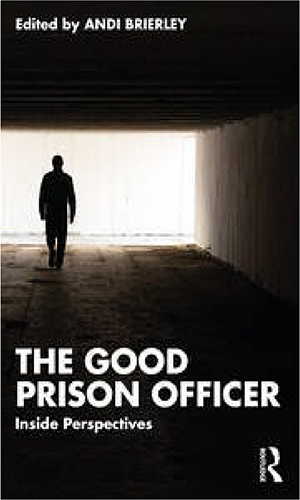
I came across this book on the completion of a criminology module with University College Cork (UCC) and their Inside-Out programme. The programme involves outside students entering places of incarceration to share a class with students from inside the establishment. One of the programme facilitators from the UCC Inside-Out programme gave me this book and I am so glad they did. I am currently in a state of incarceration and I have to say The Good Prison Officer has been one of the most profound reads of my life. It is written from such a unique perspective and its content really resonates with anybody who has experienced one of these establishments, both prison officers and the people that they are charged with looking after on a daily basis. There were times while I was reading it where I felt that it had been written based on what my own eyes had seen. The book contains contributions from seven individuals who have experienced life on the inside and it is their sharing of their lived experience of life on the inside but also of the pathway which led them there.
The foreword for the book is a great little piece by Shadd Maruna, Professor of Criminology and advocate for prisoners’ voices. The seven contributors are Andi Brierley, Kevin Neary, Max Dennehy, Kierra Myles, Daniel Whyte, Devon Ferns and James Docherty. Each has written a chapter from the unique perspective of someone who has experienced life in prison, care homes or secure units of some sort but has gone on to change their lives for the better and are all currently involved with the justice system in some way or other.
The book delivers its unique perspective in an unbiased fashion. There is no us against them from any of the contributors. Instead, we see a perspective from each of them that is balanced towards both prisoner and prison officer and it also delivers a gender-balanced perspective with inputs men and women with lived experience. Each contributor sees prison officers exactly how they would like to be seen themselves, which is as human beings. The combined contributions of this book show the importance of the human-first approach and how it needs to be a two-way street, where prisoners require recognition of their humanity above all else but also need to reciprocate this acknowledgement in the direction of prison officers.
The book also delves into the reasons why so many people including the contributors to this book ever arrive at a state of incarceration, whether it be prison, youth offender homes etc. Reasons such as dysfunctional families, poverty, abuse and addiction to name a few. I have seen a lot of this during my own period of incarceration. While each story is different, there are remarkable similarities in each. Many are negative but it is the positive experience of each contributor with a good prison officer, which are the ones that stand out the most. I have seen this at close hand in places like the school or gym, where you feel most like a human being when inside. Little things like being allowed play a game of ball or just an extra phone call make a world of difference to people on the inside and make them feel more human. Negativity feeds negativity but the same applies to positivity and by being positive and by treating prisoners as humans first, prison officers have the power to change lives.
In Andi's chapter he talks about the negativity of the gym officer who tells him he is too late for the gym but also about the officer who inspired him with a simple piece of advice, to stop being negative about himself. For Kevin the moment was just simply an officer calling him by his name and doing something for him. These little gestures of kindness and compassion made him feel human. Max found it was officers just giving him a little scope on the landings and under-enforcing the rules that helped him feel human and get through his time, while for Kierra it was the way her personal officer spoke to her and treated her with respect but also an officer who took time to train her in boxing while she was on the outside. Dan's life was changed by a few home truths and by the advice that if you exercise your body and mind, you’ll get through anything. Devon found it was the relationships that he was able to build with good prison officers that were the key to him changing his life around. Officers like Gary who helped him learn the guitar and Danni who nursed him through the loss of his granddad. James's redemption came in the form of a person with lived experience of rehab and an officer who ran a recovery café at Barlinnie Prison.
What all these stories have in common is that it took the goodness of somebody with the lived experience of prison to break the barriers for each of the book’s contributors. The lived experience of any situation in life should never be lost because if it is, then cycles will never be broken. In the case of the prison service, this book has shown how important it is to share these lived experiences. It shows that the relational status between prisoner and officer is vital for any changes to occur. Trust is the biggest factor in this being a success along with empathy. As Dan states “The way I behaved, thought and believed in a lot of instances, shaped the way I was perceived and treated by officers. Conversely, though, the way I perceived and treated those same officers was largely shaped by my adverse childhood experiences or early life traumas” (p. 81). This book shows that to be a good prison officer you need to see prisoners as human beings. You need to look beyond how they present themselves and realise there may be reasons behind why they ended up on this path.
As I mentioned earlier, I am currently incarcerated and from my point of view, this book is as if someone got inside my head and started writing my thoughts and memories. They may not be to the extreme of the stories in this book but what's in this book resonates so deeply with me. Everything that is said about how to be a good prison officer is bang on the money. I agree that prison officers need to be offered education on how to think human first, child first or whatever else is needed to make them good prison officers. From my own experience, I totally get how a simple ‘How are you doing?’ or ‘is everything ok with you?’ can make you feel more human in a place that can quite easily suck the life and soul out of you. I also realise that there will always be good and bad in every walk of life but it is mutually beneficial to both prisoner and officer to recognise the humanity of each other. Lack of funding and resources can limit what prisons can offer prisoners but at the end of the day it costs nothing to be nice. As James stated in his chapter “Prison is about loss of liberty; it should not be about loss of humanity” (p. 109). This should be in the minds of every prison officer and prisoner.
The recommendations in this book would be most welcome in any prison. To have university-trained officers would be great for the prison system, people who are in the job to make a difference in the lives of the people within their care. The role of a prison officer is the safety of the prison but also the public. By being Good Prison Officers, they could help more people to rehabilitate themselves, which in turn will lead to a safer environment for the public. As I sit here writing this I am imagining the implementation of some of the ideologies expressed within the pages of this book and it brings a smile to my face to think of this prison in such a way but more importantly, it brings hope to the heart in a place where hope is scarce. It is a fascinating read and should be shared with everyone within the walls of establishments like the one I currently reside in. It has the capability to be a guide for prison officers, as it would help them to help others and gain more job satisfaction for themselves. I believe it should be a mandatory read for anyone within the justice system, at all levels as it provides amazing insight into the workings of the prison system from both sides of the fence.