




Abstract
In recent years there has been an increased focus on military veterans as a distinct population within the criminal justice system. The prevalence and nature of offending, alongside the mental health concerns of this group have dominated existing research, bringing us closer to an informed evidence base. Yet, it is widely acknowledged that more research and insight into the complexity of the lived experience of this population is required. In response, this article proposes a ‘Military Integrated Nested Ecological Model’ (MINEM) as a useful analytical tool for those working with, supporting or researching military veterans post-conviction. In order to better understand the veteran offender, one must first understand the individual, familial, societal, and cultural spaces which they have experienced. Such insight into the veteran’s life course, across these ‘ecological spaces’, offers a framework to plot the life journey of the veteran, articulating the various risk and need factors therein. Ultimately, such an approach culminates in the realisation of the ‘veteran space’, or a representation of the complex and unique lived experience of veterans within the criminal justice system. To accompany this, the article will use alcohol-related domestic abuse, specifically intimate partner violence, as a case study to highlight issues specific to this offence and this population.
Keywords
Introduction
With an estimated ex-military population of over two million people in the United Kingdom, and approximately 14,000 people leaving the UK Armed Forces each year, issues facing veterans are widely acknowledged (MOD, 2019a, 2019b). Whilst the majority transition well, avoiding any interaction with health, welfare or criminal justice services; homelessness, unemployment, drug and alcohol dependency, post-traumatic stress disorder (PTSD) and criminality are all well-documented for a portion of Ex-Service Personnel (ExSP) (HLPR, 2011; MacManus et al., 2013; Napo, 2008, 2009). For some, entry into the criminal justice system will result. Yet, accurate numbers of veterans in the criminal justice system (CJS) vary, with estimates ranging from 20,000 (Napo, 2008) to ExSP representing 5% of all prison and community order figures (Kelly, 2014). As no formal and standardised data collection have been consistently employed, definitive figures remain elusive (Albertson et al., 2017).
Nevertheless, since Napo’s (2008) declaration around ‘alarming numbers’ of veterans in the CJS, this population has received broader academic attention. In 2010, Emmeline Taylor articulated the limited insight around the criminality of the veteran alongside the experiences and difficulties of transitioning from military to civilian life and pointed to the potential links between this process and subsequent offending behaviour. Concerns were also expressed around professionals working with this group, alongside the discipline of criminology more broadly, having little understanding of this population, necessitating further research and insight, to guide intervention and effective support of the veteran offender in the criminal justice system (Treadwell, 2010).
In response, this article will briefly reflect upon the evidence base regarding this population, alongside the subsequent implications for policy and intervention. Beyond this, the Nested Ecological Model proposed by Dutton (2006) will be delineated and adapted to incorporate a veteran-focussed analysis. Through this adapted framework, the links between militarisation and subsequent offending behaviour will be explored and the implications for practitioners and academics discussed.
Existing evidence base of the veteran in the criminal justice system
Since 2008, an increase in research around veteran criminality has taken place (HLPR, 2011; Kelly, 2014; MacManus et al., 2013; Moorhead, 2019; Murray, 2013; Wainwright et al., 2016). This, coupled with a sparse, pre-existing literature, aligned with a broader, international literature, primarily emanating from America, has contributed to something of an informed evidence base. Nevertheless, concerns remain that further research is required to effectively know the veteran offender and implement effective interventions for this unique population within the CJS (Ford et al., 2017). Concerning the literature that does exist, Murray (2016) suggests this predominantly advances a psychological, positivistic understanding. Largely within a quantitative framework, the majority of this research categorises veterans’ offending as individualised and pathologised, focussing around mental health issues, particularly PTSD and around individual characteristics of the former soldier, as well as linking experiences of deployment and combat, to the commission of violence post-transition (Murray, 2016; Treadwell, 2016).
Such classifications, accepted and reinforced through media and political channels, consequently result in individualised narratives of veterans, while any critical, criminological attention around the military institution and its attendant culture is largely omitted (Banks and Albertson, 2018; Murray, 2016; Treadwell, 2016). However, what about the experiences of service? Why does this represent such a stark omission? Whilst experiences of combat and subsequent links to violence have been determined as accepted fact, what about soldiers that experience service life, without being deployed, who also go on to commit violent offences (Treadwell, 2016)? Indeed, whilst an understanding of military culture is less covered terrain within academic circles, the need for such analysis is key: Few in the criminological community…would allow the highly masculinised setting of the street gang to be airbrushed out of a young man’s criminal biography in the way that politicians and veteran charities do with the violence of ‘veteran’ offenders.
Policy and Intervention for the veteran in the criminal justice system
Furthermore, policies and interventions that respond to the veteran within the CJS can be understood as shaped by the existing discourses outlined above. Ford and colleagues (2017) have concluded that a lack of comprehensive or robust data regarding the veteran offender remains, particularly so with respect to those subject to probation supervision. This can also be said of the CJS more broadly (see inter alia Cooper et al., 2018 for a comprehensive review). This has resulted in approaches and interventions, designed around civilians, being applied to the veteran offender, with limited adaption to incorporate a military history and experience (Murray, 2016). Indeed, even where some veteran specific interventions exist, these are often on an ‘ad hoc’ basis, resulting in inconsistent practice (Murray, 2013). As such, need for a more comprehensive and joined up policy approach, specifically designed to incorporate the military life course, to effectively engage with veteran offenders and reduce reoffending is required at this stage (Albertson et al., 2017).
This is particularly so around the violent veteran, as violence represents the most common offence type committed by this population, unlike their civilian counterparts (DASA, 2010; 2011). Undeniably, as violence can be understood as a key aspect of military life, in which the recruit is trained to inflict violence and ultimately to kill, it is perhaps surprising this aspect of the military environment has been ignored within a criminological analysis of offending behaviour and policy design for this population (Treadwell, 2016). More specifically, there has been even less focus concerning domestic abuse (DA) committed by veterans, despite some commentators pointing to this issue as problematic, well over a decade ago and persistently since (Napo, 2009; Treadwell, 2010; Phillips, 2014; Madoc-Jones et al., 2018).
Methodology
It is at this point that the article turns to consider the military life course of the veteran in the criminal justice system. Data emanating from a four-year doctoral research project was used, concerning the violence of veterans and the role of alcohol within this violence. More specifically, the research focussed around exploring the circumstances and subjective understandings around violence committed, mens’ subjective insight into their own alcohol use and influencing factors and experiences of the criminal justice system.
Suitable participants were identified by case managers or supervising officers within the community or custodial environments. Individuals were then invited, in writing, to take part in the research with the purpose and expectations of the study, location of interviews and confidentiality issues provided. For those who took part, informed consent procedures were articulated, verbally and in written form. Confidentiality issues were discussed, outlining disclosure issues, in particular regarding admission of serious offending or ongoing harmful behaviour. Clarification around how data would be used and stored was also explained. Each participant was required to sign a consent form, confirming their understanding and willingness to take part in the research at the start of the interview.
Twenty-two veterans who were convicted of violence in which alcohol was a criminogenic risk factor participated in the research. Nine were subject to probation-based orders, seven to licence conditions (or Post Sentence Supervision following the introduction of the Offender Rehabilitation Act, 2014) and six to custodial sentences. Overall, 17 veterans had previously received or were currently serving a custodial sentence. The most common offence was associated with domestic abuse (DA) (86%), with 16 being convicted of Intimate partner violence (IPV) specifically. The nature of the convictions spanned: Criminal Damage; Threats to Kill; Assault; Assault occasioning Actual Bodily harm; Breach of Harassment Order; Grievous Bodily Harm and Murder.
Principally from Army Infantry regiments (77%), only two participants were not Army veterans (RAF, 1; Navy, 1). All of the participants enlisted into military service between 16 and 25, with the most common age being 17 (32%). Enlistment dates varied, spread across the last six decades, with most of the sample with the 1980’s as the most prevalent (36%). Whilst in service, 6 left before serving at least 4 years, 10 between 5 and 8 years, 2 between 9 and 12 years, 3 between 13 and 21 years and 1 serving a full term of 22 years. During service, 14 were deployed into a combat zone.
Employing a qualitative approach, each participant was interviewed on one occasion, using semi-structured interviews, lasting between 45 minutes to 1 ½ hours. Interviews explored the ‘military life course’ which considered each participant’s biography, from point of recruitment into the military, up until interview, interrogating key themes around violence and alcohol use, as well as experiences of military life, returning to civilian life and the experiences of the criminal justice system. Data was thematically analysed, during which three key themes or phases of time were articulated, namely ‘the military phase’, ‘the transition to military life’ and then a specific focus around ‘the commission of violence’.
Connecting these themes and aligning them to the commission of domestic abuse, building on the Nested Ecological model (NEM) as proposed by Dutton (2006), represents the focal point for the remainder of this article.
An ecological approach
There remains little consensus around the aetiology of domestic abuse and in particular Intimate Partner Violence (IPV). Various disciplinarily approaches emanating from psychology, psychiatry and socio-biology (including individualised understandings such as pathology or poor impulse control); social psychology (individual and social considerations e.g. Learning theory); and sociology (e.g. explanatory factors around patriarchy, gender-power inequalities or broader gender theory) have sought to explain and theorise IPV commission (Connell, 2005; Dutton 2006, Heise, 1998). However, Dutton (2006) reasoned that these ‘singular’ approaches could be understood as complimentary in the explanation of IPV, integrating these into the development of the Nested Ecological Model (NEM) (see Figure 1).
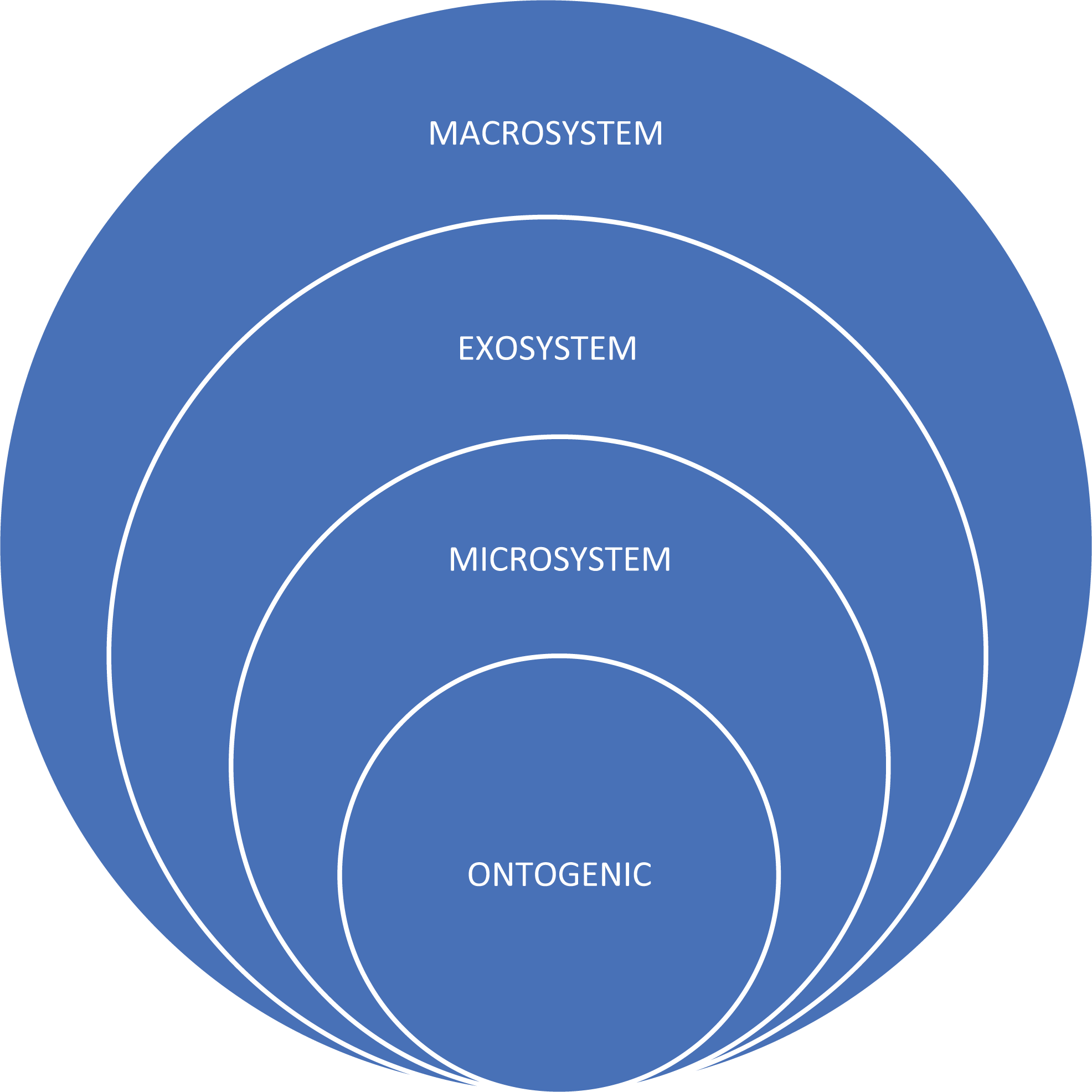
The Nested Ecological Model (Dutton, 2006).
Two key influences on Dutton’s work were conducted by Bronfenbrenner (1977) and Belskey (1980). Bronfenbrenner (1977) sought to separate out the various social influences on human development across the life course within his work, articulating three ‘ecological spaces’ namely the ‘macrosystem’, ‘exosystem’ and ‘microsystem’. Belskey (1980) then applied this ecological approach to explore child abuse and neglect, adding an ‘ontological’ or ‘personal history’ dimension and consequently proposed a four-tiered framework to guide future empirical inquiry in this field. This four-levelled framework was then applied to explore the various ecological influences around the commission of IPV by Dutton (2006) within the NEM.
At the broadest analytical or ecological layer of the NEM, the ‘macrosystem’ is concerned with wider, societal and cultural values and belief systems associated with offending where ‘attitudes and beliefs are developed as a result of cultural and sub-cultural norms and values’ (Dutton, 2006; Schumacher et al., 2001: 282). Beyond that, the ‘exosystem’ represents the stage at which social structures influence at a community or societal level. Formal or informal levels of social control such as friendships, work or peer groups can represent important dynamics at this stage. Alternatively, lack of employment or stress in work, may also represent contributing factors to offending (Dutton, 2006).
The ‘microsystem’ denotes the level at which the factors and characteristics associated with the immediate environment in which an offence takes place, such as relationship or family dynamics, can be located. Factors such as separation, marital satisfaction, communication issues and jealously all represent microsystem risk factors around IPV at this level (Stith et al., 2004). The ‘ontogenic’ level provides insight into the unique developmental history of the individual, concerning characteristics, behaviours, cognitions and emotional responses to various stimuli. Attitudes condoning violence, depression, history of partner abuse and anger/hostility can all be located at this stage as prominent risk factors regarding IPV (ibid; Schumacher et al., 2001).
Whilst there is room for interpretation around where certain factors can be located across the four systems, the focus should remain at all times, on the ‘dynamic interplay between factors operating at multiple levels’ (Heise, 1998: 266).
Applying NEM to military veterans
Developing this model further, a Military Integrated Nested Ecological Model (MINEM) (Figure 2) is proposed as a framework to assist practitioners and academics, to garner a broader understanding around the various and distinctive factors that can contribute to the offending behaviour of veterans, using IPV as a case study. The MINEM provides the opportunity to dissect the unique biography of the veteran offender across a range of the four ecological spaces, incorporating both military and civilian influences and (often competing) cultures. Consequently, more in-depth and ordered insight into veteran offending alongside the development of further and nuanced insight into the military life course can be developed.
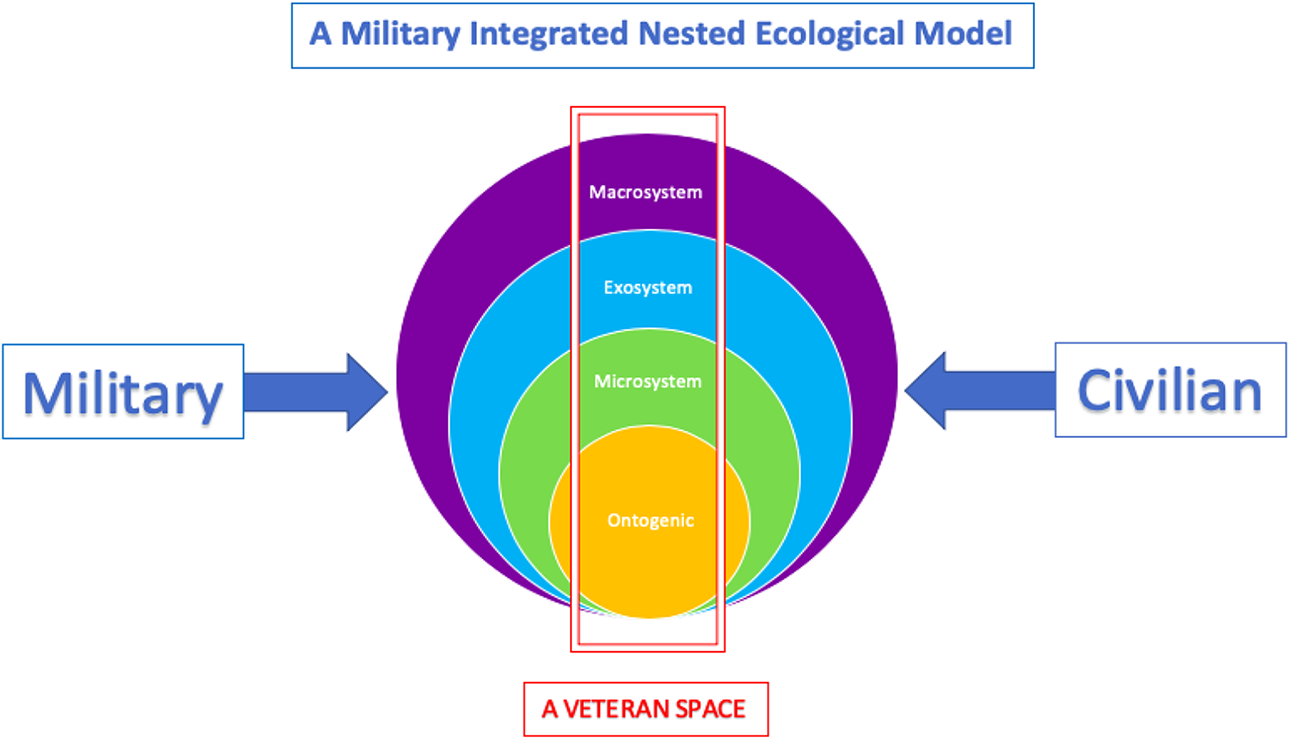
The Military Integrated Nested Ecological Model.
Results and discussion
As outlined within the methodology section, three key themes were identified within the data analysis stage. Initially, ‘the military phase’ can be understood as a new and powerful cultural influence on military recruits, located at the macrosystem level, in which context around perceptions of violence and alcohol use can be situated. Beyond this, the exosystem offers insight into the barriers experienced by the veteran upon returning to the civilian world. Finally, set against this backdrop, the commission of (intimate partner) violence committed by the veteran is explored across all four ecological levels.
The ‘military phase’ and the macrosystem: Understanding a military culture and its legacy
Transition into the military institution is like no other. Drawing from Goffman’s (1961) concept of the ‘Total Institution’, Brown (2015) describes the recruit as entering a ‘Military Total Institution’ (MTI) upon enlistment, in which the conditioning of trainees takes place in isolation from civilian society, during which each individual is (usually) treated the same, within the same set of conditions, monitored closely and expected to conform fully to the institutions’ rules, values and standards (Goffman, 1961; Brown, 2015: 122). Entering into a MTI, in which one’s civilian identity and cultural understandings are eroded and replaced with a new, military identity involves a ‘mortification of the self’ and in which a new ‘…set of blueprints at a cultural…level that dictates certain consistencies among similar settings’ are imposed (Bronfenbrenner cited in Edleson and Tolman, 1992: 14). Such an identity, embodying a new set of cultural blueprints, was found to endure well beyond service life, resulting in veterans experiencing additional layers of complexity post-transition, particularly around violence and alcohol use.
A fundamental aspect of military culture centred around differing forms of violence and aggression, spanning a ‘spectrum of legitimacy’. Training and preparation for deployment, alongside engagement in conflict, all represented, or were perceived as, ‘legitimate’ forms of violence (Treadwell, 2016). Violence in this capacity was understood as a necessary aspect of professional soldering and therefore accepted and even normalised unequivocally across the military institution. The capacity to commit serious and potentially fatal acts of violence alongside desensitisation to extreme forms of violence, symbolised an important transition experience for recruits: They (the military)…break you down from the start and try and rebuild you as a professional soldier that if it come to conflict, you’re not going to flap (panic), you’re going to go straight at the enemy…My job role was just to kill…at close quarters, yeah, just get the enemy and kill them. (Joe) …(there was) a lot of bullying. I never got physically bullied, but I think I got mentally bullied…One lad attacked this lad who’d been in for years…and he was soft as shit, used to cry and stuff over nothing, and the army weren’t for him…He was just standing in the foyer, and (another soldier) just attacked him, and nothing happened to him, because this lad’s a shitbag…it wouldn’t have got took any further anyway. Army law is, it gets dealt with in house…If it happened on civvy street, he probably would have got jailed for it. (John)
Violence was also used as an informal mechanism to establish order. It was an opportunity to develop informal hierarchies, to display power, both physically and symbolically, to control or subjugate others and to resolve disputes or conflicts. As such, proficiency in violence was an effective commodity: …. So, you’d give him a slap. It’s just like a family. Because a hierarchy has to be sorted out between privates, never mind the NCOs (Non-Commissioned Officers). When you’re in your company, platoon, section, you’ve got (to establish) a hierarchy…(Mo) I think it’s the testosterone. It’s the macho-ness of; ‘Right, I’ve been to fucking war…I don’t give a shit how big and hard you are, I’m going to stay and fight’. And that’s generally what a soldier’s mentality is like. ‘I ain’t running from nobody. I’m staying, I’m fighting and I ain’t going nowhere!’ (Peter)
Drinking in the military was also emphasised as a particular and prominent aspect of military culture. Alcohol was perceived as a mechanism that could assist and hone what is understood as key aspects of the military, such as bonding, comradeship and loyalty (Browne et al., 2008). It was institutionally and culturally approved alongside a form of escapism, to alleviate the stresses of work and a coping strategy for those unable to communicate problems or concerns with colleagues or family members: …the army has got a drinking culture…no ifs or buts about it…(Barney) …we’d always be scrapping…if you was there (in camp) the week, you’d go to the local town and I’d guarantee there’s going to be trouble against the civilians, we’re going to be fighting…(Matty) …if anything did kick off, the military police would come and get you, yeah, and the civvy police wouldn’t have anything to do with it. The military police got us off, quite a fucking lot…(Steve) It was more enjoyable to have a clash with other regiments. You’d be on parade with each other the next day and laugh about it…The next night you could go by someone a pint in the NAFFI (military bar/canteen). ‘Sorry about last night, there you go’. So, it’s all done and dusted, you know. (Bobby)
The ‘transition phase’ and the exosystem: Difficulties and barriers around civilian reintegration
Following a process of military ‘institutionalisation’ (Goffman, 1961) the return and reintegration to civilian life, post-transition, represented a difficult journey for participants. Understood as something of a culture shock, initially feelings of dislocation, loss and rejection were prominent responses, alongside a loss of structure, order, camaraderie and collective identity: (I found civilian life) Hard! bloody hard! Because I’d been used to living with a family, mates and all that and all of a sudden, I’m going back (village name) going back to me mam…and it…was crap. I just couldn’t settle in (and drank) to cope, you know, because I was missing my mates in the army, because you do. (William) I didn’t have no support when I come out from the Army themselves, they didn’t give me no transition. It’s alright for them to make me as I was, but to put me back into civilian life, there was nothing in place for that. To ween me off or to come out and check how I’m (doing)…(and) all the little problems…the financial difficulties, they were always on my mind, but what I was doing, was I was drinking, but they was always there the next day, which caused depression, and because I was depressed, I was drinking again. (Matty) I was quite lucky, but the lads who haven’t got anything like that, they’re going to come out and go the job centre…B&Q [hardware store] or Asda [supermarket] or whatever, stacking shelves. Lads don’t want to be doing that. They’ve fought for this country; they’ve put their lives on the line for these people…(Mo) …it was totally different…It really was. Being able to do what you want. I think that’s why I ended up drinking…because I could…I ended up in jail, then the violence started again because…I’d hit rock bottom and I didn’t give a fuck. Ended up living on the streets…chaos…because you are so used to having everything planned out for you, being told where to be, what to do, what time to be and even now, it affects me because I’m terrible with fucking times and places and stuff you know…because I’ve not got somebody there, telling me…the drinking was my escapism I suppose. (Steve)
Accommodation issues were also problematic post-transition (see Johnsen et al., 2008). Breakdown in relationships, increased alcohol consumption and confrontational behaviour, all contributed to experiences of homelessness for many veterans. In particular, alcohol was regularly described as either a reason for, or a catalyst leading to, homelessness as well as a consequence of it (also see CSJ, 2014): I lost my job, family threw me out, they didn’t want nothing to do with me anymore (due to substance misuse). So, I finished up on the streets then. (Paul) You get drunk and you fall asleep…If you’re homeless, you don’t really care. (Trevor) I find hostels quite impossible to live because of the temptation. So, I was having a drink quite often actually…. (Alan)
The commission of intimate partner violence: Crossing the ecological framework
At this stage, the article turns specifically to the commission of IPV, or the violence committed towards an intimate partner, through either one or a combination of; physical, sexual or psychological forms of violence and/or through controlling acts and behaviours (such as restricting the behaviours and interactions of partners) (Ali et al., 2016). This section builds on the cultural and social experiences of the military, providing nuanced and unique dimensions of this populations’ biographies, including perceptions around violence and alcohol, alongside difficulties in transition, using this as a backcloth to garner a deeper, ecologically informed understanding around the IPV committed by these men across all four ecological stages.
Difficulties in relationships were experienced by a majority of veterans. A lack of domestic responsibility-taking post-transition, or veterans’ absenting themselves from the family home during confrontations, were often observed as precipitating factors around future conflict. Inevitably, relationship conflict (microsystem) represents a well observed risk factor linked to civilian IPV, complicated further by a military biography (Klostermann and Fals-Stewart, 2006): …it would start with staying out one night, to staying out three or four nights and not wanting to go back to the family home to face the music…. yeah, yeah, and then that would lead to more serious arguments and accusations from both sides, and insecurities from both sides, and it would downhill spiral (into violence). (Kenny) She was pissed off (with drinking and associated behaviour) and that’s why I got kicked out and that led to more drink as well. (Matty)
Anger and hostility were also found to present important associated risk factors as in the general population (Schumacher et al., 2001). At this ontological stage, resentment, around the perceived treatment by the military (exosystem) coupled with responses of aggression, inculcated within the military (macrosystem) precipitated feelings of anger and hostility beyond service life: I do feel that the Navy did contribute to me losing myself a little bit. Even my mum said that you would not have been that angry person if you had not gone in the forces. (Alan)
Furthermore, in civilian cultures where violence is tolerated to resolve conflict, the risk of IPV was found to be heightened (Heise, 1998). When considering the military culture (macrosystem), violence represented an acceptable form of conflict resolution across a wide range of platforms (as discussed earlier) alongside an environment in which proficiency around violence is inculcated into the soldier and, post-transition no effective intervention is undertaken to address, minimise or even reverse this (exosystem): They forced us to be aggressive, forced us to be angry, forced us to be abusive but, they never showed me how not to be aggressive, not be angry, not to be abusive…All my relationships have had problems…because I was angry…I can’t get hit, without hitting back and that stems from the army…you hit me, I’m going to fucking hit you back. I’ve been done with domestic violence. (Gordon) (I) Didn’t really love her that much, and she was a major drinker herself. But, to me, it was great. She had stacks of Carlsberg (lager) under the stairs…and, very quickly, it became apparent that our relationship was volatile…so, eventually…the police were getting called every five minutes. (Trevor) …(I was) wondering what she was doing, what she was up to, and yeah, that was festering all day. And, as soon as I had a drink…where I was drunk, you know, it’d just be like…‘I’m going ‘round! (Trevor)
Mental health issues, particularly that of PTSD were also cited as factors within the commission of IPV. PTSD has been highlighted as a factor that can increase the likelihood and/or severity of IPV perpetration in veterans (Taft et al., 2005). Anger and the loss of control (ontogenic) as symptoms of PTSD were cited as problematic for veterans (see Finley et al., 2010). This, coupled with learned behaviour around the use of aggression from the military (macrosystem) exacerbated by alcohol use, represented a problematic combination: …I deal with my feeling and my emotions a hell of a lot more, a lot better that what I did do. Erm, but like I say, especially in the early stages of the PTSD, you feel a massive array of different emotions, and sometimes you struggle to control them emotions. So, if you’re angry, the only way you know to lash out is by punching something, or by actually showing physical signs of aggression. And, I think, sometimes that seems to be the problem with the soldier…when they’re shown animosity, what do they reply with? Violence! So that’s all a soldier really knows, is to reply with violence. (Peter) When I got diagnosed with PTSD, I tend to, erm, drink more, use more, to try and numb that feeling, you know…and I was lashing out at people, people who were close to me. (Aaron) I felt embarrassed because I should have been this macho geezer that I used to be, do you know what I mean. (Barney)
Conclusion
This article has explored violence committed by veterans and considered the role of alcohol across the military life course. Particular focus around alcohol-related IPV was employed and the MINEM was proposed as a framework to engage and analyse the violence committed by this cohort.
The MINEM can be understood as an analytical tool to guide information gathering and subsequent analysis around veteran offending, to be employed as a framework in which insights into veteran biographies can be articulated. The factors that influence offending can also be highlighted and ordered across the different stages and ecological levels of the military life course, culminating in the resultant ‘veteran space’ (see Figure 3). This space represents the nuanced state in which the veteran can uniquely sit, whereupon conflict and discrepancy between competing cultures and social mores experienced both within the civilian and military cultures exists. Beyond this, the barriers around reintegration into civilian life represent a further, unique experience of the veteran within this space, whereupon traversing these obstacles necessitate further consideration. Finally, the complexities experienced within the relationship or microsystem stages alongside the individual factors outlined at the ontogenic level, can all be identified as unique markers that potentially set aside a veteran offender to their civilian counterpart.
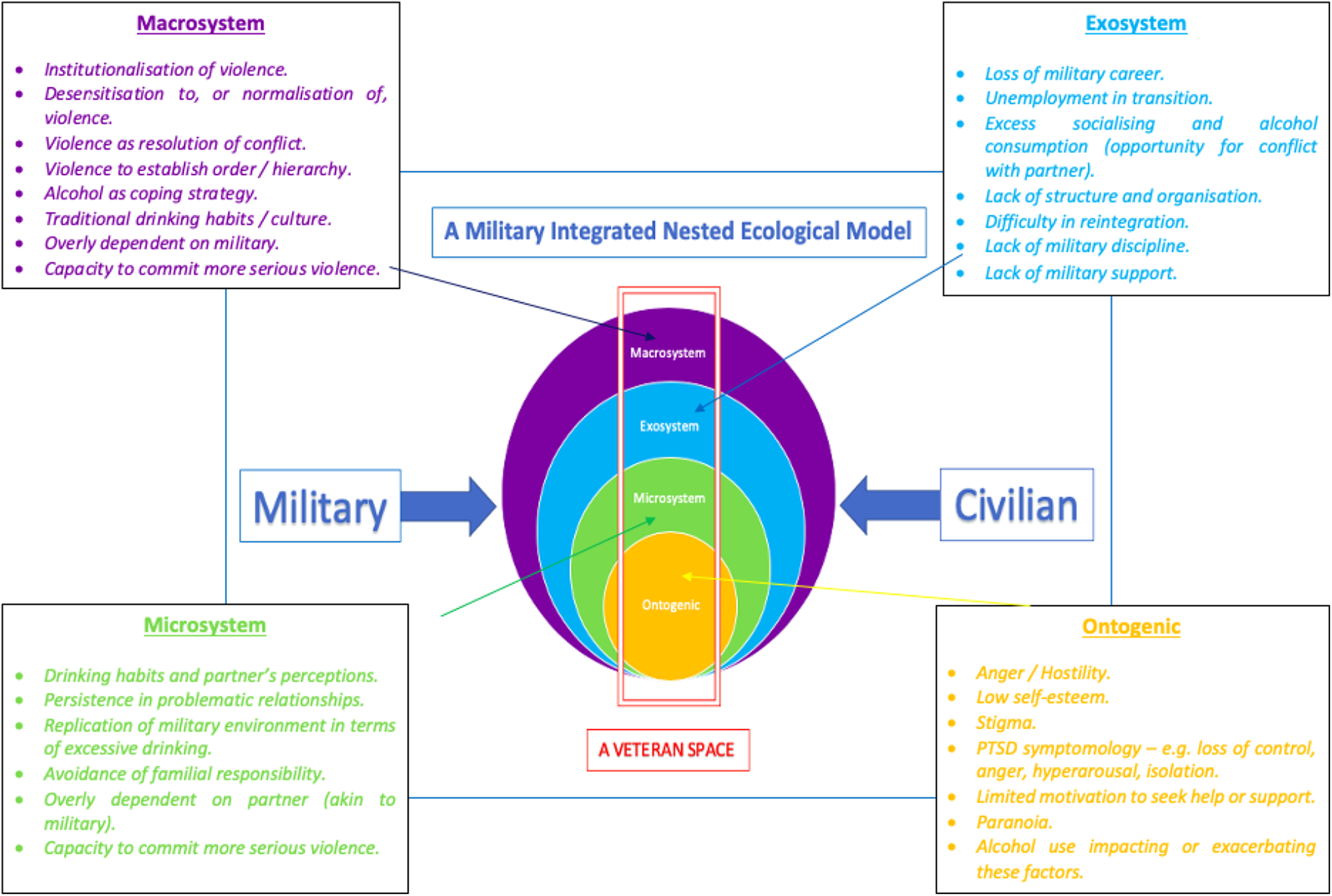
A summary of identified veteran IPV risk and need factors.
The criminogenic risk and need factors that have been pronounced as missing from existing literature (Treadwell, 2016), and in particular within the commission of IPV by this population (Madoc-Jones et al., 2018) can be mapped out using the MINEM on an individual and qualitative basis. Such an approach allows for a deeper and more holistic analysis around the risks and needs of the veteran, particularly as, whilst these can be seen to align to some of the risks and needs of the general offending population, they can also problematise and augment the generic risk and need factors that exist.
The current research presents qualitative evidence that militarisation can be understood to impact upon certain veterans at certain points across the military life course, with respect to their use of violence and/or alcohol consumption. Such violence and alcohol use not only occurs within post-transition experiences and offending, such as that of the IPV used within the current article, but also during military service, thereby existing more broadly across the military life course. Indeed, simply to acknowledge that violence represents a key aspect of military service for many can represent a starting point with a view to better understand veteran offending post-transition. Equally, to acknowledge that alcohol represents a cultural aspect of the military that individuals can assimilate and potentially bring back to civilian life, also requires unpacking for some veterans.
Furthermore, the MINEM can provide insight into protective factors that have existed across the military life course as well as offering an opportunity for veterans to engage with their own past experiences, with a view to articulate and comprehend their own military experience and its impact on transition and offending behaviour. If the effective rehabilitation of veterans is to be achieved, a greater understanding around the impact and experience of militarisation alongside the broader veteran biography is required. Such an approach will highlight the potentially numerous transitional difficulties experienced by veteran offenders across the life course as well as providing this population with an opportunity to narrate a subjective account of their own experiences, positively facilitating the desistance journey for the violent veteran in the criminal justice system.
Footnotes
Declaration of conflicting interests
The author(s) declared no potential conflicts of interest with respect to the research, authorship, and/or publication of this article.
Funding
The author(s) disclosed receipt of the following financial support for the research, authorship, and/or publication of this article: These research findings emanate from a PhD funded by Alcohol Change UK (formerly Alcohol Research UK) and Liverpool John Moores University. No support for the authorship or publication of this article has been received.
