




Abstract
In recent years growing numbers of fast-growing ‘mini forests’ have been planted around the world using an approach for rapid urban greening known as the ‘Miyawaki method’. Originating in Japan, the Miyawaki method was first developed as a relatively novel ecological engineering approach to the afforestation of industrial and degraded landscapes. However, in recent years escalating climate impacts and loss of biodiversity has inspired a new generation of Miyawaki forest practitioners working globally in diverse ecological contexts. In this paper, we discuss the Miyawaki forest movement's evolution, and discuss its introduction into Australia through the lens of three Australian-based practitioners. Connecting Australian practitioners with the work of global practitioner networks, we explore the methods, practices and collaborations involved in the making of Miyawaki forests, before turning to how their value is being captured. We draw from a multi-species cities perspective to explore the multi-dimensional values and benefits of Miyawaki forests, which span both human and more-than-human ‘well-beings’ as sites of human–nature gathering, but also requiring collaboration across ecological, cultural and social spheres in order to be sustained over time.
Keywords
Introduction
Cities around the world are facing unprecedented challenges in responding to climate change, biodiversity loss and the cumulative impacts of urbanisation on the living experiences of multi-species inhabitants in cities (MacDonald and McKenney, 2020; Seto et al., 2012). This paper is focused on the ‘Miyawaki method’ of afforestation, and how it is being taken up as a method for addressing critical issues of biodiversity and urban canopy loss. The method, named after the Japanese botanist Akira Miyawaki (1928–2021), was originally created in the 1970s as a program of community-engaged afforestation for existing industrialised and degenerated landscapes (Miyawaki, 2004; Miyawaki, 2008; Miyawaki and Box, 2007). Since Miyawaki's first forest was planted outside his laboratory at Yokohama University in 1976, Miyawaki's method has grown in popularity, especially in recent years, as practitioners, community campaigners and ecologists from around the world, from different backgrounds and experience, draw from his methods to plant versions of ‘mini forests’ in their communities (Association for Promoting Creation of Indigenous Forests by Miyawaki Method, 2022; Lewis, 2022). In Australia, a growing number of practitioners have been adopting the Miyawaki method as a means of regenerating urban and degenerated habitats.
In this paper, we draw attention to the expanding global potential of the movement, while also tracing very particular, place-based stories of three Australian-based practitioners who have been active in adopting the Miyawaki method in Australian contexts. Our discussion proceeds as follows. In the first section we introduce the core elements of the Miyawaki method as it was introduced in Japan in the 1970s, and how it has more recently been taken up across the globe, as practitioners from diverse backgrounds take up Miyawaki's call to regenerate degraded urban landscapes using his methods. In the second section, we explore how Miyawaki's method is being adopted in the Australian context, with a focus on the particular strategies and approaches being adopted to enable forests to be planted.
In the third section we reflect on this Miyawaki forest movement from a multispecies cities perspective. To do this, we link Akira Miyawaki's embrace of community and socially-engaged habitat restoration with the call to move beyond human-centric perspectives of urban health and wellbeing traditionally adopted by urban planning. By framing the work of Miyawaki forest practitioners from a multispecies cities perspective, we argue for close attention to the wide ranging benefits of Miyawaki forests occurring through shared social practices of more-than-human care and custodianship, which extend beyond traditional ecological measures to include the multi-dimensional benefits of human–nature gatherings occurring through these practices. By highlighting the human–nature care and collaboration practices, we emphasise values of symbolic and First Nations connection, storytelling, community care and social partnerships as foundational to the Miyawaki method and its continued global expansion as a project of ecological and civic repair.
Setting the scene: What is the Miyawaki method of forest planting?
So, what is the Miyawaki method? First developed in the 1970s by late Japanese botanist Akira Miyawaki (1928–2021), the Miyawaki method of forest planting has grown in popularity in recent years as a way to enable the regeneration and repair of degraded and industrial landscapes, particularly in urban areas. In essence, the method is an approach to forest restoration that seeks to accelerate processes of natural succession in order to achieve the ecological conditions of a natural ‘forest’ (or woodland) ecosystem. It is typically understood to involve a set of core techniques for restoration of these degraded ecosystems: identifying ‘potential natural vegetation’ (PNV) of an area through the study of remnant forests; careful preparation of soil to optimise growing conditions; and dense planting of native plantings (3-5 plants per square meter) to include a range of complementary species across vegetation layers (Miyawaki, 1998; Miyawaki and Golley, 1993). The dense planting of complimentary species encourages rapid growth, as young trees compete for light, which in turn enables a ‘forest’ to grow rapidly in degraded habitats. Miyawaki described his method as a ‘man- [sic] supported succession concept’ (Miyawaki and Golley, 1993: 20) designed to restore degraded habitat quickly. As Mio Urata, a contemporary Miyawaki practitioner based in Tokyo describes it, this means planting ‘not only the first forest, but also the second and third forest all at once’ (Urata, 2024).
Miyawaki's methods reflected his training as a botanist in the 1950s, with particular specialism in plant ecology and seed providence gained under the German botanist Reinhold Tüxen, known for the study of phytosociology (the study of plant communities). Through Tüxen, Miyawaki learned practices of vegetation mapping to identify the PNV of an area (Tüxen, 1956), describing the vegetation that would naturally exist in an area without human intervention – for example, based on environmental conditions alone (Miyawaki 1992; Robinson, 2024: 161–162; Schirone et al., 2011). Miyawaki applied Tüxen's methods of vegetation mapping to remnant forest ecosystems in Japan, locating existing remnants of ancient forests which he found around temples and shrines (Fujiwara, 2024). He would go on to inventory over 10,000 sites across Japan, identifying the potential flora of an area and how it was impacted by different types of human activity (Crowdforesting, n.d.; Robinson, 2024; Schirone et al. 2010). The work of this young botanist moved from academic surveys to applied restoration ecology in the 1970s, as Japan experienced a wave of environmental activism and awareness following post-war industrialisation. Miyawaki would go on to plant around 550 forests across Japan between 1973 and 1998, as well as in places like Malaysia, Brazil, China and Chile. Through this active work, Miyawaki produced strong evidence that his approach enabled rapid ecological growth in strongly degraded areas (Miyawaki, 1999; Schirone et al., 2010: 82–83). The oldest Miyawaki forest in the world was planted relatively recently, in 1976, so long-term data to do with processes of forest succession beyond this time period is unavailable.
The success of Miyawaki's forests depended on relatively high levels of preparation, care and maintenance in the early stages of growth (first 2–3 years), after which time the ecosystem would become quite self-sufficient (Miyawaki, 1998: 17). The success of these young ecosystems required more active attention by local communities, which saw social and community collaborations become quite important to the wider application of Miyawaki's method. Linking to the religious festivals attached to Shinto shrines, Miyawaki actively engaged local communities through ‘planting ceremonies’ that helped nurture a sense of responsibility for young forests in their early years. In his advocacy of forest restoration projects, Miyawaki (2014) described his forests as ‘Japanese and Chinju-no-mori Tsunami-protecting forests’, emphasising the important role of families, including children, in the forest planting process.
Over time, Miyawaki found his forest projects were able to protect communities from natural disasters. With initial investment by industrial corporations, the forest planting activities were expanded by municipal departments to create ‘secure zones’ where a denser canopy could help protect civilians from falling debris during earthquakes. Governments would also invest in his forest projects along expressways and dams, and use the method to create ‘buffer forests’ designed to halt forest fires (Miyawaki, 1998) and to protect the coast from tsunami wave action (Miyawaki, 2014). In time, Miyawaki became an advocate for anyone to plant a ‘mini forest’, no matter where they were. Miyawaki's work recognised that degraded industrial landscapes would continue to proliferate during the 20th century, and that therefore engineering ways for ‘forests’ to thrive in compromised circumstances, for example, small plots of land, wedged between buildings in dense cities, would be increasingly necessary to the work of restoration ecology. His method – to enable communities to get involved, through activities such as planting ceremonies – recognised the value of empowering many people, living in dense urban conditions, who could foster and support the forests’ early flourishing in such unlikely degraded spaces (Figure 1).
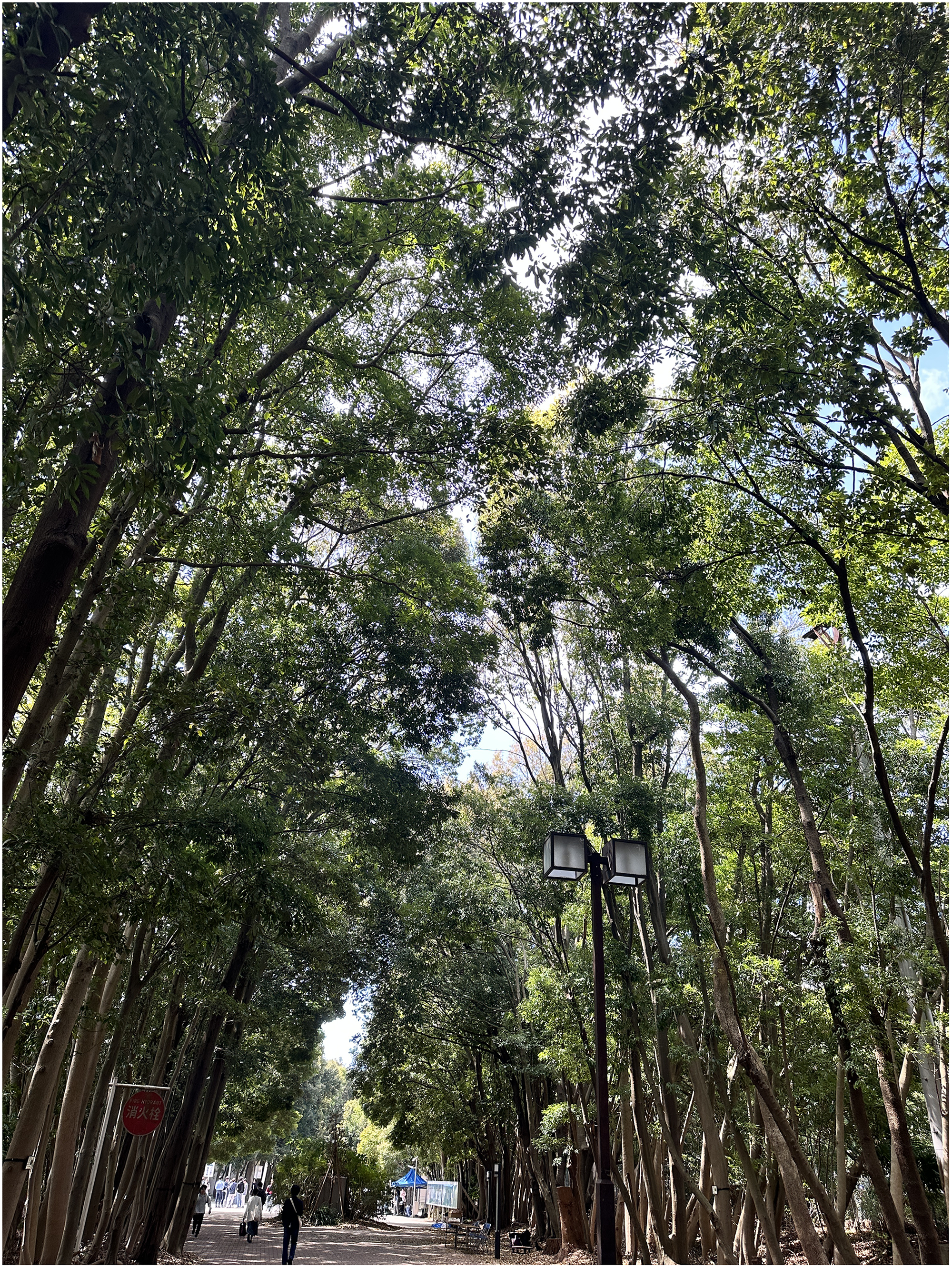
Miyawaki's first forest at Yokahama National University, Japan, was planted in 1976. Photo: Sarah Barns, April 2024.
The key ecological methods characteristic of Miyawaki's approach to forest planting can be summarised as follows:
Vegetation mapping is undertaken to identify the potential natural vegetation (PNV) of the planting area (Hattori 2001; Miyawaki, 2004, 2008; Schirone et al. 2010), including selection of stable indigenous plant species based on site surveys of local remnant population, incorporating climate tree species and smaller plants and shrubs; Dense mixed planting of seedlings to encourage competition and co-existence among early seedlings (Miyawaki, 1999; Nakasima, 2004); Attention to soil remediation; includes mulching and digging holes 1.5 and wider than the pot (to add air to the soil); Attention to weeding and watering in the first 2–3 years of propagation, after which time the forest becomes self-sufficient.
Also important to the method are the following social and cultural practices:
Planting festivals with schools, religious organisations and community groups help to establish a sense of responsibility and care towards a young ecosystem; Advocacy for planting of forests in highly urban environments, where there are dense populations present and able to care for the young forests in their early years; Emergence through business sponsorships and partnerships, underpinned by public advocacy for restoration, to enable restoration ecology on private as well as public land (Figure 2).
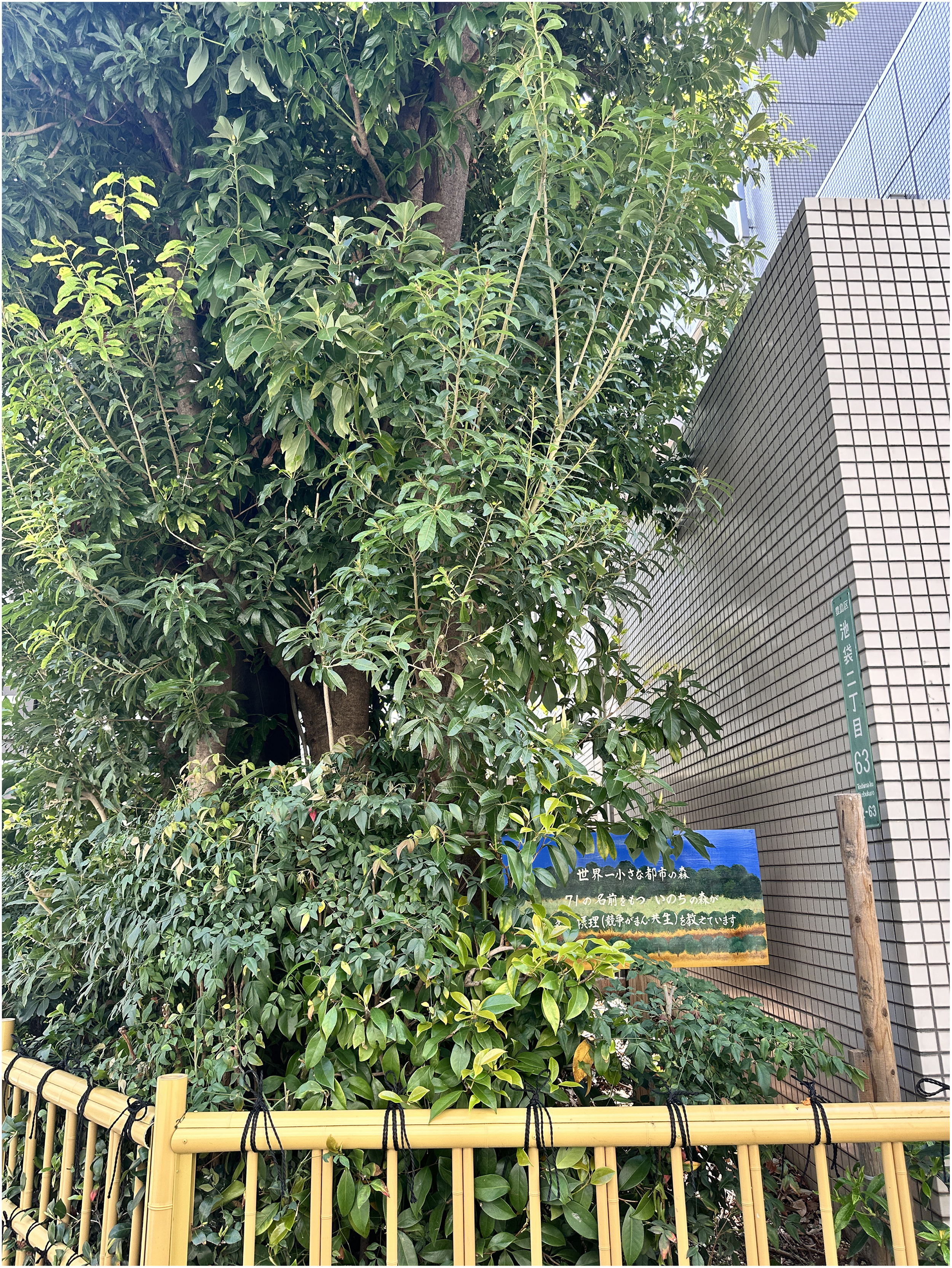
The smallest Miyawaki forest in Tokyo, Japan, planted at the site of a Buddhist temple. Image: Sarah Barns, 2024.
A global network of Miyawaki forest practitioners
Miyawaki's novel methods gained attention from the early 1990s, with his approach being reported as being ‘exemplary’ at the 1992 Earth Summit, and again promoted in 1994 at the UNESCO's Biodiversity Congress in Paris (Butfoy, 2023: 5). Since this time Miyawaki's method of forest planting has seen growing popularity around the world. With approximately 1700 Miyawaki forests in Japan (Urata 2024), forest planting activities that draw from his methods have proliferated widely across the world. They go by different names, including ‘Tiny Forests’, the name given by Earthwatch Europe (2023), ‘Mini-Forests’, described by Hannah Lewis in her 2022 book the Mini-Forest Revolution (Lewis, 2022), ‘Pocket Forests’, a name used by Coupland and ‘SUGi Pocket Forests’ by the SUGi Project, as well as the original ‘Miyawaki Forests’ (Butfoy, 2023). The work of planting and caring for these forests today reflects global support networks of ecologists, landscape practitioners, philanthropists, social entrepreneurs, citizen scientists, educators and community organisers who share resources and promote different toolkits and methodologies to support each other and advance knowledge. As we discuss below, the role of not-for-profit organisations in advancing global networks has been key to this global movement.
A key moment in the advancement of the global Miyawaki movement came in the form of a series of TED Talks by Shubhendu Sharma of Afforest, an Indian-based social enterprise. Sharma was inspired by a visit by Miyawaki to the Toyota car factory where Sharma worked as a young industrial engineer. Being inspired to planting a mini forest in his own backyard with great success, Shubendu went on to launch Afforest in 2011. Sharma's work was then promoted by a 2013 INK Talk ‘Stop making lawns, plant a forest!’ (Sharma, 2013), followed by a TED Talk in 2014 ‘How to go a forest in your backyard’ (Sharma, 2014), attracting great attention across India and globally, with approximately 3.8 million plays at the time of publication. Sharma has since developed a global network of Afforest partners to promote the rapid adoption of mini-forests across cities (Afforest, n.d.).
Another not-for-profit, SUGi Project, plays a key role in advancing globally-connected Miyawaki forests. SUGi raises funds from philanthropic and corporate partners, as well as crowdsourced donations, to support over 230 SUGi Pocket Forests in 53 cities on six continents between 2019 and 2024 (Middleton 2023). Key locations include the United Kingdom, Lebanon, Kenya, Chile, Australia and USA. For the launch of a brand partnership with Louis Vuitton to plant a ‘pocket forest’ in London, SUGi stated: ‘We rewild with visionaries from iconic global brands to sustainable startups, from city officials to pioneering designers, architects, and artists’ (Middleton, 2023).
Earthwatch Europe has also embraced the potentials of ‘Tiny Forests’ using the Miyawaki method, and is active across the United Kingdom, where it reports over 200 forest projects, and since 2023 has also commenced tiny forest planting in Australia as well (Earthwatch, n.d.; 2023). Earthwatch Europe also supports a Miyawaki Research Network to promote knowledge exchange across researchers, practitioners and interested decision-makers in the relative benefits and impacts of Miyawaki woodlands. Urban Forests, a Miyawaki-method company led by Nicolas de Brabandère, also works in Europe, and reports planting over 108 forests across 56,000 m2 in France and Belgium since 2016 (Giseburt, 2023). There are many more programs and practitioners also expanding the method across continents, and this growing network of Miyawaki-method forest practitioners has attracted growing media attention (Giseburt, 2023), including publication of Mini-Forest Revolution by journalist Lewis (2022), and an in-depth story in the New York Times (Buckley, 2023), as well as notable coverage through the TED Talks platform (Figure 3).
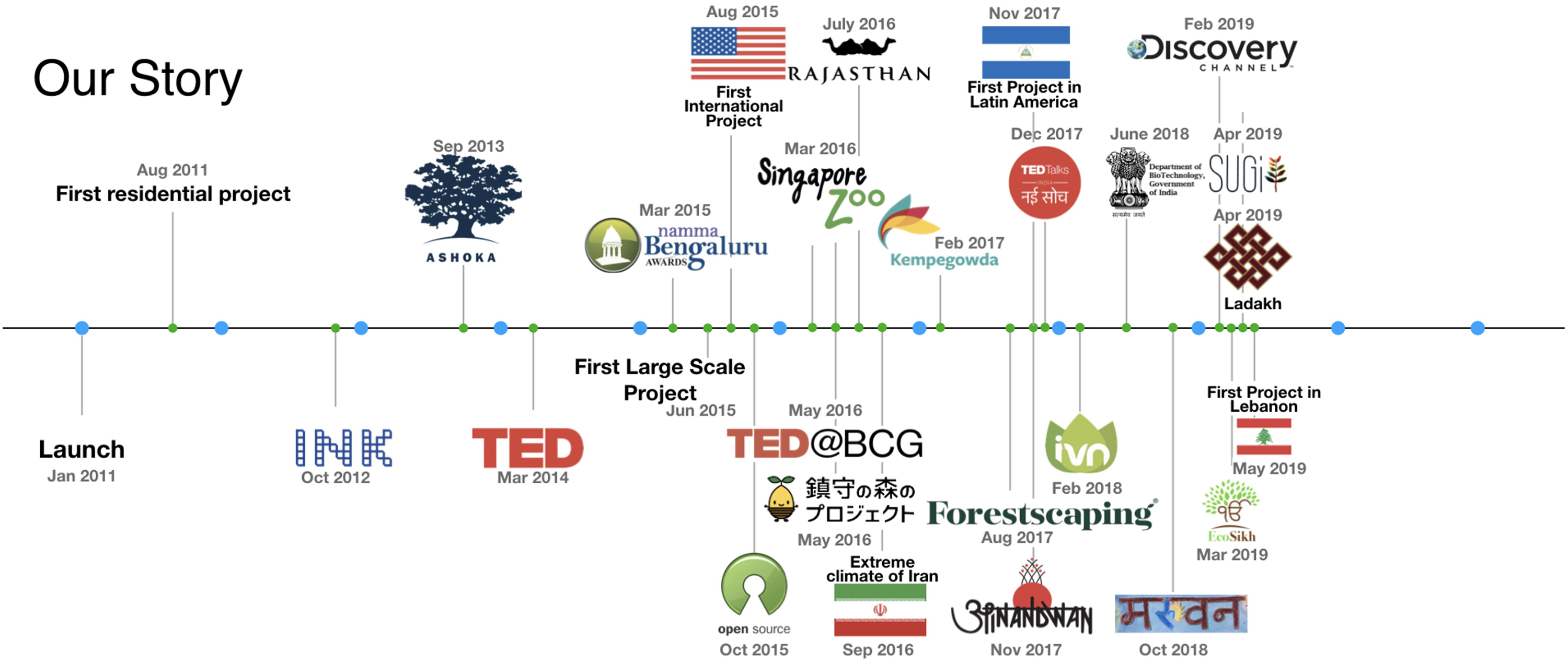
A timeline showing Afforest partnerships between 2011 and 2019. Source: Afforest, n.d., used with permission.
The application of the Miyawaki method in the Australian context
In this section we introduce three practitioners with experience advancing the Miyawaki method in Australia: Dr Grey Coupland from the Harry Butler Institute, Murdoch University WA; Edwina Robinson of Climate Factory in the Australian Capital Territory (ACT); and Brett Kraus of Bretta Corp, based in Queensland. An international online symposium called the Miyawaki Miniforest and Smart Green Networks Symposium, was hosted at the University of Adelaide in 2022 and supported by the Australian Government's Department of Foreign Affairs and Trade (DFAT), enabling practitioners and researchers to connect with each other and share their knowledge and experiences across different ecological contexts (Hawken et al., 2022).
Insights from each practitioner presented in this paper are drawn from a combination of presentations given to the 2022 symposium (Hawken et al., 2022), and additional follow up conversations and email exchanges. In the case of Grey Coupland, practitioner experience is also augmented by research on ecological impacts. By introducing the work of these individual practitioners, our aim is to highlight the adoption of Miyawaki's methods by practitioners working in a very different ecological and social context to that of Japan. Despite these differences, we note that Miyawaki's focus on collaborative communities for forest-planting continues as a key dimension to the work of Australian practitioners.
While very different to the Japan of the 1970s from which Miyawaki's methods emerged, relatively recent patterns of urbanisation in Australia have degraded many ecological habitats habitats of its long-term inhabitants Hall (2010) and Hurley et al (2020), many of whom have lived on the continent for millions of years. Carnaby's Black Cockatoo (Calyptorhynchus latirostris), the Regent Honeyeater (Anthochaera phrygia) and the iconic Koala are examples of species whose future remains uncertain. Working in this Australian context, the Miyawaki practitioners we discuss each adopt novel approaches to accessing available land to grow their forests, using a mix of public, private and community support networks. We discuss their approaches below. More details about these forests, including stories from practitioners, are available as part of a digital map called Renaturing Cities (Barns and Hawken, 2023).
Example 1: Grey Coupland, Research Fellow, Murdoch University, WA
Grey Coupland is an ecologist who works in the city of Boorloo (Perth), Western Australia at the Harry Butler Institute, Murdoch University. Coupland established her first Miyawaki Forest in 2021 at South Padbury Primary School as part of a Miyawaki Forest Research and Outreach program. As an ecologist, Coupland's research intention is to investigate the ecological application of the Miyawaki method under Australian conditions, including areas that prior to urbanisation were characterised by ‘woodlands’ rather than ‘forests’ (Hawken et al., 2022). The ultimate aim of her research is to evidence and enable the rapid creation of biodiverse habitat and urban greening for the Australian urban landscape. From 2021 and 2024 Coupland led the planting of 15 forests in Perth through partnerships with local schools, supported by initiatives such as Carbon Positive Australia and SUGi Project.
Coupland's citizen science outreach program has been recognised as one of 150 UNESCO ‘Green Citizens’ Projects and was a finalist in the Australian Museum's Eureka Awards in the ‘Innovation in Citizen Science’ category in 2023. Trained as an ecologist, Coupland designed her outreach program to empower students, drawing on the Miyawaki approach to prioritising community collaboration. As Coupland explains, she adopted the Miyawaki methods as a means to enable students to take environmental action with tangible outcomes, and to help create the next generation of scientists and ‘eco-warriors’. Through practices of forest making, Coupland aims to reconnect children with nature, and inspire them to be the champions for the environment, now and in the future (Hawken et al., 2022).
Coupland's first pocket forest, based in South Padbury, was planted in 2021 by 106 school children on a 100 m2 land area within the school grounds, and was created in collaboration with SUGi and The Seedling Bank – National Tree Day. This forest is comprised of woodland species as the dominant vegetation type characteristics of the Perth Swan Coastal plain is Banksia Woodland (Lamont and Connell, 1996). Coupland conducts botanical surveys for each forest in Banksia Woodland reference plant communities, which include unique plants found nowhere else on the planet and is part of a biodiversity hotspot. The Banksia Woodlands of the Swan Coastal Plain are recognised as endangered under the Commonwealth Environmental Protection and Biodiversity Conservation Act 1999 (Australian Government, n.d.) and through the outreach program, small pockets of this woodland community are being replanted across the Perth metropolitan area. Coupland's research has tracked the survival and growth of key plant species from 2021. She reported preliminary findings that growth rates of eucalyptus trees planted within the original forest were four times greater than control plants planted outside the forest (Coupland 2023). Coupland also found measures of soil microbial carbon being significantly higher inside the forest than soil outside the forest study area, meaning the capacity for absorption of carbon was higher. After 10 months of planting, the soil microbial samples were comparable to that of the nearby mature remnant woodland (Hawken et al., 2022). Coupland also measured significantly cooler temperatures at her planting sites compared to an adjacent sandy bank and nearby hard surfaces of a road and carpark (Coupland 2023).
As an ecologist Coupland advocates for greater knowledge and appreciation for a ‘whole of ecosystem approach’ considering various systems such as soils and microclimate alongside the growth and success of the plant community itself. She also reports evidence that the South Padbury ecosystem has attracted new species to the forest site, including skinks and a range of insects species previously not reported, such as ladybird nymphs. The outcomes of Coupland's initial study, presented at the Miyawaki forum in 2022 and subsequently the International Association for Vegetation Science conference (2023), have propelled this ecologist to expand the Miyawaki Forest Research and Outreach program. Following her first planting event at South Padbury, Coupland has led more than 14 Miyawaki ‘woodlands’ projects with school groups and the community over 2022–2024, with the majority of forest planting funded by the organisation Carbon Positive Australia (Figure 4).
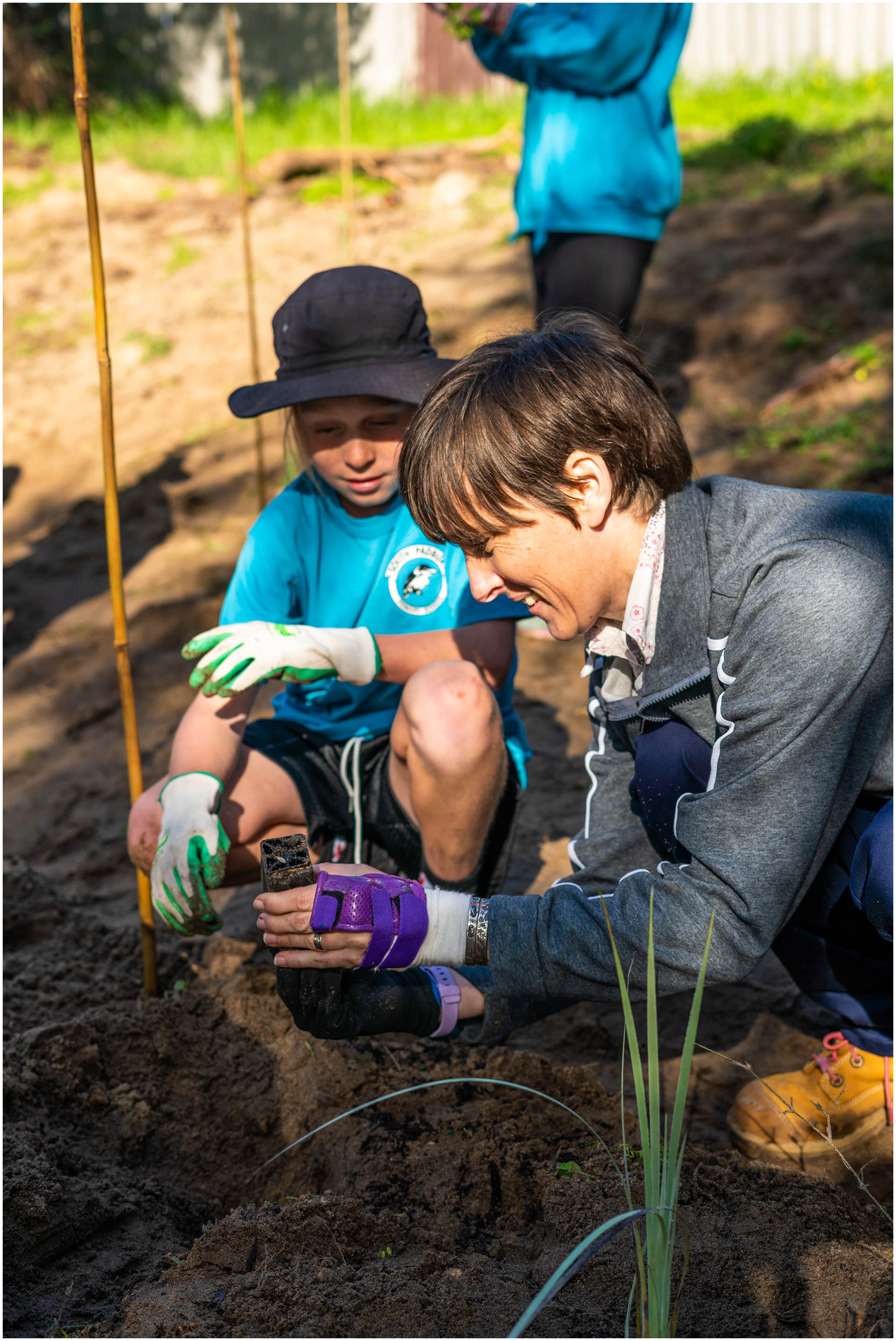
Grey Coupland at the South Padbury Planting Day, Perth, 2021. Image: Harry Butler Research Institute, Murdoch University. Image supplied by Grey Coupland.
Example 2: Edwina Robinson, Climate Factory Australia, ACT
Edwina Robinson is another practitioner operating in Australia to advance Miyawaki's methods of rapid afforestation. A landscape architect by training, Robinson established her social enterprise Climate Factory Australia, in 2020 in the Australian Capital Territory (ACT). At the Miyawaki forum in 2022 Robinson describes being inspired by a visit to the Australian National Botanic Gardens on a hot summer day, noting its temperature there was 26 degrees Celsius compared to the 37 degrees Celsius at the carpark outside. She then discovered Sharma's TED Talk and was inspired to start her enterprise to start the work of building mini-forests in her own community in Canberra (Hawken et al., 2022).
Robinson set out to create her first Miyawaki forest by initiating a crowd-funding campaign in her community of Downer. Over the next 14 months she collaborated with a company called Earthworks to introduce water harvesting and soil remediation on site, before leading a series of community working bees to establish the forest. The first mini-forest in Downer ACT saw the planting of 1800 native species in 2020, followed by the planting of another forest in Watson, ACT in November 2021.
Reflecting on her work in helping to establish mini-forests in Canberra, Robinson emphasises the important role of community volunteering to the selection, planting and maintenance of the forest. She reflects: ‘We asked the community what they wanted to see in their micro forest, they said they wanted to see habitat, nature play, and water harvesting’ (Hawken et al., 2022). This approach takes a slightly different approach to ‘vegetation mapping’ of the local environment, which is critical to the establishment of the PNV indicator for Miyawaki forests, because it includes both social and ecological mapping, resulting in adaptations to the final ‘forest’ created by the community, like the inclusion of nature play features. Robinson also adapts the original method to include ‘climate ready’ species in her selection of plants, diverging from a focus on PNV as the key input to species selection.
Following the successful establishment of the Downer forest, Robinson set out a series of steps to guide others. These are called the ‘Eight Steps to Regeneration’ and are designed to be applicable not only to mini-forests but to other kinds of community-led regenerative landscape projects. These steps include elements of the Miyawaki method, as well as an explicit focus on crowdfunding and community engagement activities.
Robinson's ‘Eight Steps to Regeneration’. Source: Climate Factory Australia, n.d.
Build a team: You can’t do it on your own
Consult with community in a transparent way
Seek investment. Crowdfunding and grants are sources of investment.
Invest in design, including water harvesting design as well as landscape design
Manage necessary approvals and permits
Plan and invest in earthworks, including soil preparation and water harvesting
Plan community planting days
Caring for landscape. Communities are recommended to care for their mini-forests for a period of two years, after which time they become self-sustaining.
Robinson reports relying heavily on crowdfunding investment to cover plant costs, earthworks, water harvesting, and design costs. She reports her campaigns as targeting a minimum of $20,000 AUD per forest, with a view to ‘ensuring the programs are not dependent on government grants’ (Hawken et al., 2022). Fundraising initiatives over 2020-2021 were reported to raise over $100,000 AUD, topped up by smaller investments from grant funding. She reports that one initiative in Watson raised over $80,000 AUD from the community alone. This community investment has allowed the Watson forest, planted at the end of November 2021, to include a nature play journey, a dry creek bed linked to the water harvesting, a fire pit, and a timber boardwalk that journeys through the forest. As discussed, these elements are not traditionally part of a Miyawaki forest but were advocated for by the local community as part of the community engagement process.
Robinson's work in developing mini-forests in her community highlights the important role of community leaders, volunteers and crowdfunding, leading to the development of tools and resources for other community groups to lead and support, including her ‘Eight Steps to Regeneration’. Her work explicitly addresses what she sees as a ‘lack of meaningful action from our authorities’: What this has really done is it's empowered the community to take control of their urban open spaces. So we are building urban parks, and really creating some amazing opportunities and amazing environment to help cool down their landscapes and create community connections. (Hawken et al., 2022)
Example 3: Brett Kraus, Bretta Corp, QLD
A third practitioner of the Miyawaki forest method in Australia is Brett Krause of Brettacorp. Krause, who by 2024 has led more than 15 forests in Australia, works in more regional settings and often on larger land sizes to those of other practitioners. Brettacorp is a registered charity based in the Cassowary Coast region of Tropical North Queensland, whose stated mission is ‘to revegetate degraded lands and rehabilitate habitat through conservation and preservation techniques’. The location for Brettacorp's activities has experienced significant loss of habitat due to land clearing and urbanisation, threatening the lives of long-term inhabitants such as the Southern Cassowary (Casuarius casuarius johnsonii). A large flightless bird classified as ‘Endangered’ under the Commonwealth Environment Protection and Biodiversity Conservation Act 1999 (Queensland Government, n.d.), the Southern Cassowary is also Keystone species. Some grow up to 2 m in size, and as frugivores (fruit eaters) play an important role in dispersing rainforest fruits across large areas, maintaining the diversity of rainforest trees and ecosystems. A number of rainforest seeds even require the southern cassowary digestive process to help them germinate, demonstrating the integral role of this inhabitant to the health of the forest ecosystem (Queensland Government, n.d.).
Considered to be the first Miyawaki method practitioner in Australia (Roads North Films, 2023), Krause established two prototype projects called ‘North of the Tully’ on property purchased purely for restoration experiments and nature conservation. Conventional planting techniques were also tested. The first Miyawaki Forest was planted at this site in August 2017, at a size of 100 square metres and using 300 native trees and plants, supported by Landcare Australia. The second, planted in March 2018, was 210 sqm and used 868 trees. His third project, Bilyana, was planted in September 2019 at a more typical ‘mini-forest’ size of 100 sqm with 380 plants. The third project was funded by SUGi, which has since funded the majority of Brettacorp's subsequent mini-forest projects. Brett also reports Federal Government grant funding supporting two projects through the Australian Government's Planting Trees for The Queen's Jubilee Program and the Communities Environment Program. Brettacorp's latest reported mini-forest project, from March 2023, was 750 sqm and supports 3000 trees, funded by Carbon Positive Australia (Hawken et al., 2022).
Krause describes himself as a passionate ‘forest builder’ who is seeking to regenerate degraded landscapes and support improved biodiversity. He states that ‘by creating hubs and small networks of forest in our region, we can connect the habitat and allow our endangered species to move through them’ (Hawken et al., 2022). Krause reports positive biodiversity impacts from the dense forest-planting. ‘With 300 trees and shrubs all growing at once, this also attracts birds, insects and this creates a positive feedback loop. We planted species to attract the Southern Cassowary (a Keystone Species) that is the only seed disperser of certain floral species, which will help to proliferate more of that native tree’. Krause is active on YouTube and online, and states in one of his documentaries, co-produced with SUGi: ‘I’d say to the next generation, if you want a better world stop talking about it, get out there, dig a hole and plant a tree, by the end of the next decade we’ll have a fully functional network around the world’ (SUGi, 2022).
These three Miyawaki practitioners in Australia each demonstrate distinct ecological and community contexts for their work. Selected examples of this work is included in the digital map Renaturing Cities (Figure 5).
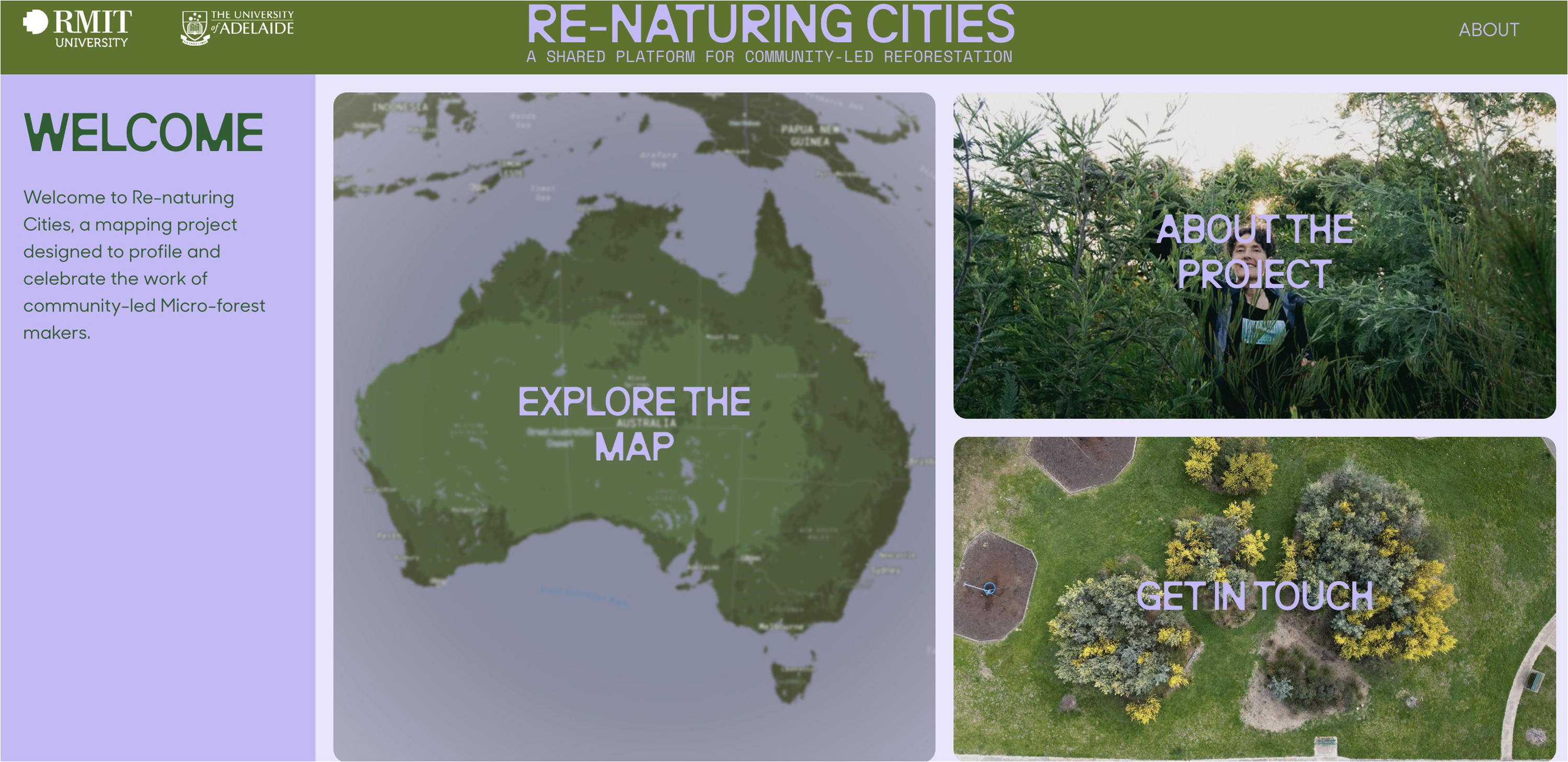
Renaturing Cities Interactive Map: sharing community-led reforestation initiatives. Map developed by Barns and Hawken (2023).
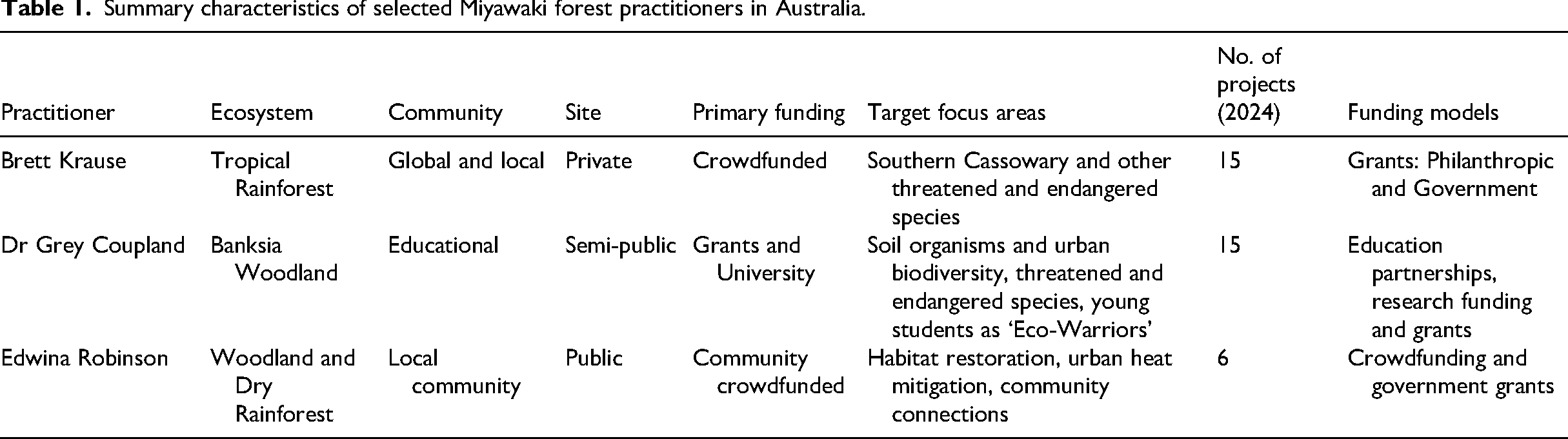
A summary characterisation is presented in Table 1.
Summary characteristics of selected Miyawaki forest practitioners in Australia.
Miyawaki forests for multi-species cities: Linking ecological, cultural and social practices
The proliferation of these Miyawaki-style forests in cities and communities across the world, including in Australia, can be seen as a positive, citizen-led movement that inspires hope in the capacity for people to work collectively to regenerate their local habitats. As we have discussed, the forest movement has grown from a relatively novel method adopted by a Japanese botanist to engineer ‘forests’ in largely urbanised, industrialised places into a movement championed by diverse practitioners and organisations around the world, working in distinct social and ecological contexts. In this section we consider the growth of this movement more from a multi-species cities perspective. Our aim here is to bring the movement and methods of Miyawaki practitioners, in Australia and beyond, into dialogue with methods and perspectives from geographers and practitioners advancing a more entangled ontology of living and dwelling in cities, in ways that move beyond human exceptionalism by foregrounding multi-species entanglements (Houston et al., 2017). As the movement of practitioners continues to expand, globally and in Australia, we are particularly interested in how we might pay attention to diverse cultural, social and ecological practices in play in the making of mini-forests in urban settings, highlighting the value of Miyawaki-inspired forest ecosystems as spaces for multi-species care and wellbeing.
Before exploring these ideas further, it is worth summarising what is distinctive here about a multispecies cities perspective. As Castree (2014) and others such as Houston et al. (2017) Calermajer et al (2021), Calermajer et al. (2021), and Rose et al. (2012) have argued, the multifaceted nature of the environmental crises, leading to the designation of a new geological era known as the Anthropocene, requires a fundamental rethinking of how humans relate to the world around them. In the rapidly expanding field of environmental humanities (Braidotti, 2006, 2013a; Haraway, 2016; Plumwood, 2002; Tsing, 2015; Abram, 1997), this means addressing the very premise of human exceptionalism. For example, post-humanist philosopher Braidotti (2013a; 2013b) argues that humans need to work much harder to become more enmeshed, psychologically, emotionally, as well as materially, in the lives of other species, rather than focusing on integrating the non-human into our worlds (Houston et al., 2017 et.al., emphasis added). Braidotti (2006: 185; quoted in Houston et al., 2017) champions ‘a living nexus of multiple inter-connections and alliances that empower the collective’ through a process of ‘reworlding’. Donna Haraway (2016: 12–13) conjures a ‘Terrapolis’, denying human exceptionalism, and conjuring companion species as modes of inter-species interactions and kinship, constantly shaping lively beings everywhere.
This call to usurp engrained practices of human exceptionalism has radical implications for urban planning and the design of cities. Instead of human-centric approaches to place design and the attributes of ‘wellbeing’ this supports, there is a greater focus on the possibility of care towards ‘well-beings’ (emphasising interspecies kinds of being-well) and an ethical appreciation of ‘what human, faunal, floral and abiotic elements (such as rock, water, sand, fire and so on) can do together’ (Houston et al., 2017, italics added). The implication, being taken up by planning theorists and geographers, is to also revise urban planning priorities and the measures of their success (Campbell et al., 2022). Instead of continuously emphasising human benefits, regardless of the impacts of urbanisation on the lives of other species, multi-species cities advocates urge for planning priorities and outcomes that recognise the co-constitutive role played by plants and other species as co-producers and co-beneficiaries of good urban planning and design outcomes. Design priorities also shift away from purely human benefits towards design for co-habitation (Fieuw et al., 2022). Foundational concepts of urban planning, like liveability and citizen engagement, are expanded to include what Hinchcliffe and Whatmore (2006 in Cooke et al., 2020: 178) call the ‘civic associations and attachments forged in and through more-than-human relations’.
This wider movement towards ‘reworlding’ urban planning and design through a multispecies cities perspective has, we suggest, important implications for the global movement of Miyawaki-inspired forest cultivation. In particular, it can influence how practitioners understand and advocate for the benefits of these forest communities, by drawing attention to the multiple co-benefits derived through human–nature relations. In the following section, we explore how co-constitutive nature-culture and community benefits might be made more clearly legible through Miyawaki forests, by practitioners who are seeking to adopt and advance these methods in their communities.
Linking ecological, cultural and social practices of Miyawaki forest care and cultivation
When considering Miyawaki forests from a multi-species perspective, there is opportunity to make more visible the range of ecological, social and cultural practices that intertwine to support the cultivation of these forests. As our case studies of Australian practitioners have shown, there are myriad community and social collaborations involved in the creation of Miyawaki forests, which in turn generate strong ecological benefits, but also important benefits across citizenship practices and personal and collective wellbeing. As the forest practitioner community grows in scale, we suggest a multi-dimensional, multi-species approach can provide a useful lens through which to understand how the method might cultivate not only fast-growing habitats, but also helping create fast-learning forest custodians. This supports a more integrated, nature-culture orientation towards care, wellbeing, and the co-constitution of live-abilities.
Attention to the cultural and social practices involved in Miyawaki forests-in-the-making is an important, but sometimes overlooked, dimension. This results in a focus on the dimensions of ecological health supported by forest practitioners, with less attention to connections between human and ecological benefits. For example, in the context of reporting and data on Miyawaki forests undertaken by major umbrella organisations such as Earthwatch Europe and SUGi, the following areas for data collection are identified below.
Common areas of data reporting for Miyawaki forests (Earthwatch Europe, 2023; SUGi, n.d.; Urban Natures, n.d)
Number of trees – total native trees, total plant species restored
Total square metres of forest cover
Carbon sequestered
Numbers of volunteers participating
Number of ‘ground dweller’ groups
Numbers of pollinator groups
Total numbers of species identified
Soil infiltration rates
Thermal Comfort
Numbers of citizen science hours devoted to tiny forest monitoring
Total value raised for planting of forests
Number of cities with active projects.
In the context of a multispecies perspective, we argue there are opportunities to expand the ways in which Miyawaki forests are both celebrated and documented across the practitioner network. This could include a greater focus on cultural and storytelling aspects that bring communities together to plant and care for the forests. As put by Miyawaki practitioner Shubhendu Sharma from Afforest (Hawken et al., 2022) Native species is not just ‘the environment’. Bring the beauty out of these trees and present them in the most artistic, beautiful, storytelling manner that we can. If you listen to the old fairy tales from Europe, the old folk lore from Japan, Africa and India, they all revolve around forests and their trees. In Indian religions, the stories are all full of stories about forests – by association, people today who are aware of these stories, we need to make people fall in love with their own heritage.
Mio Urata, a Japanese-based Miyawaki practitioner who has worked for many years as a community contributor to Miyawaki's forest planting activities in Japan, has shared insights into the value of community gatherings in Miyawaki's projects. Described as ‘planting festivals’, these events created a sense of community celebration, and ensured those involved could get to know each other more. At these events, she explains: ‘You get to know people you wouldn’t otherwise know, and over time they become a second family’ (Urata, 2024). This approach continues to be reflected in the approach adopted by practitioners in Australia, who are creating social networks of collaboration, across community and educational partnerships, in order to plant forests in urban settings.
Such wider community benefits have been noted in the Earthwatch Europe Tiny Forest Monitoring Report (Earthwatch, 2023: 2). ‘Taking part in Tiny Forest citizen science is an opportunity to build social cohesion, re-connect people to nature, raise environmental awareness and empower positive action. Results will deepen our understanding of how the Miyawaki method allows our Tiny Forests to develop rapidly into a multi-layered forest ecosystem’. Ashe Conrad Jones, a Miyawaki forest practitioner based in Dublin, Ireland also states that ‘when people learn and are educated about the connection below the ground and how they’re communicated, it strengthens their love and they want to be around them’ (Hawken et al., 2022). To return to Edwina Robinson's projects in Canberra, Australia, the value of hope acts as a core dimension to the work, perhaps equally as valuable as the ecological benefits of tree canopy growth and densities of planting.
These ‘acts of hope’ return us to the words of Australian environmental philosopher Val Plumwood, who argued that top-down strategies for ecological survival, which depend on scientific and policy solutions ‘being imposed on relatively recalcitrant citizenry’ ignore the potentials for democratic cultural change projects that ‘enhance awareness of our ecological embeddedness’ (2002: 3). We suggest the growth and expansion of the Miyawaki method of mini forest creation in cities and towns across the globe is itself constitutive of the act of civic as well as ecological renewal (Krasny et al., 2013; Jordan et al., 2019), in ways that bring together shared practices of care and custodianship around more-than-human 'wellbeings'. As one practitioner, Adib Dada, quotes a Kenyan ecologist Wangaari Mathai (Dada, 2024): ‘It's the little things citizens do. That's what will make the difference. My little thing is planting trees’. By adopting novel sites for afforestation in built-up urban areas, the method enables more diverse citizens to be engaged in forest towards what Krasny et. al. (2013, 2015) call 'civic ecology practices' (see also Bastian et al 2017). In the Australian context, whereby access to public land for urban greening is limited when compared to the habitat impacts of private land use trends, the need for engaged, ecologically-minded citizens is more critical than ever.
Where Miyawaki emphasised the connection to the sacred in his advocacy of forests, Australian Miyawaki forest practitioners are likewise recognising the vital role of First Nations custodianship and of ‘sacred geography’ (Langton, 2005) in shaping the conditions through which tiny forests are planned and cultivated. In this context, ‘two-way science’ is adopted to link western science with traditional knowledges (Deslandes et al., 2019). Coupland's forest planting days include smoking ceremonies and/or Welcome to Country by Whadjuk Noongar Elders, the traditional custodians of the Swan Coastal Plain. Smoking ceremonies represent a method of cleansing and purification, where the smoke from burning native plants wards off negative spirits, promotes healing, and connects people to their land and ancestors (Deslandes et al., 2019). Incorporation of Noongar names for plant species is a key aspect of the plant species guides created for the Miyawaki Forest Outreach Program, and Indigenous seasonal indicators observed in the forests are increasingly part of student learnings.
Linking ecological, cultural and social practices of Miyawaki forest care and cultivation
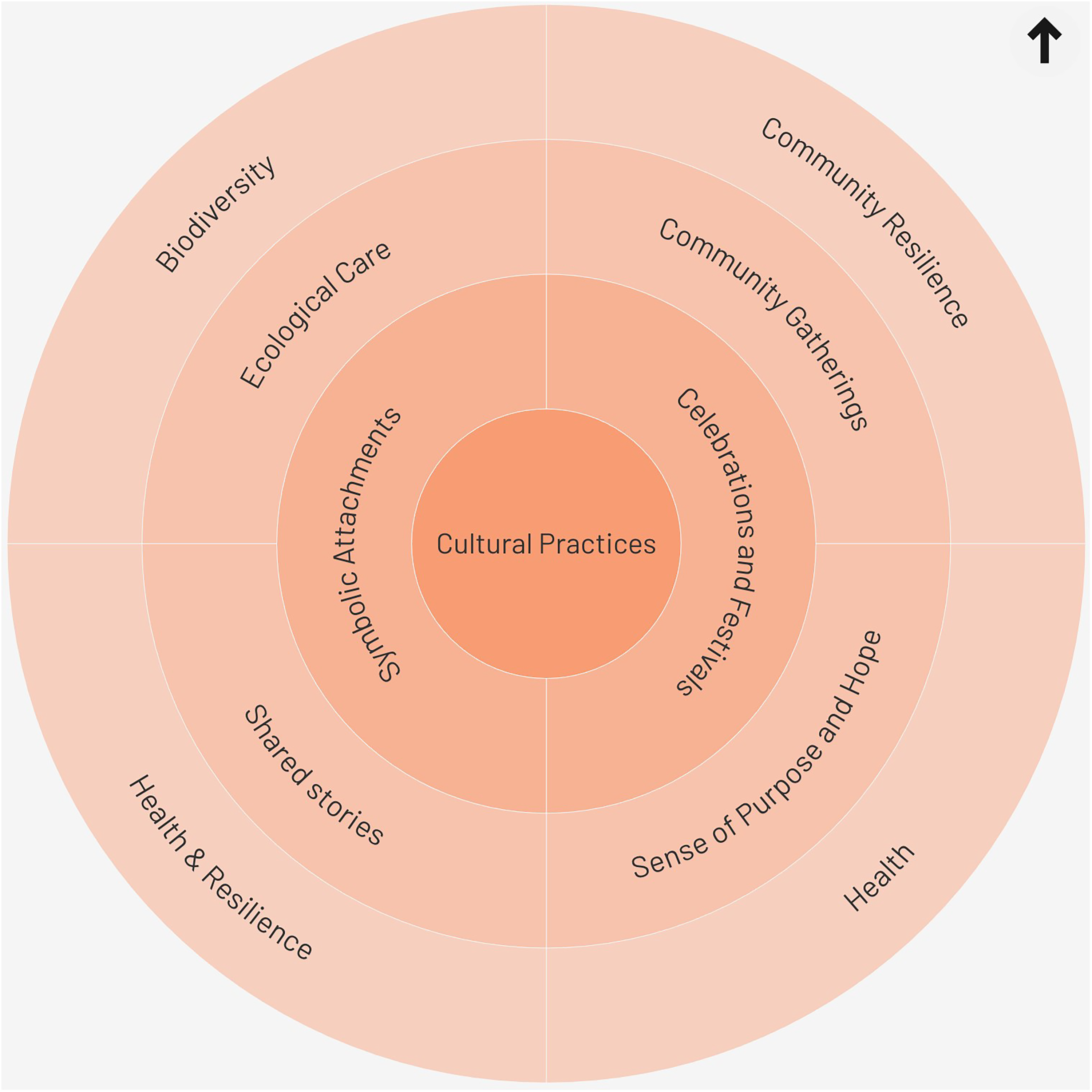
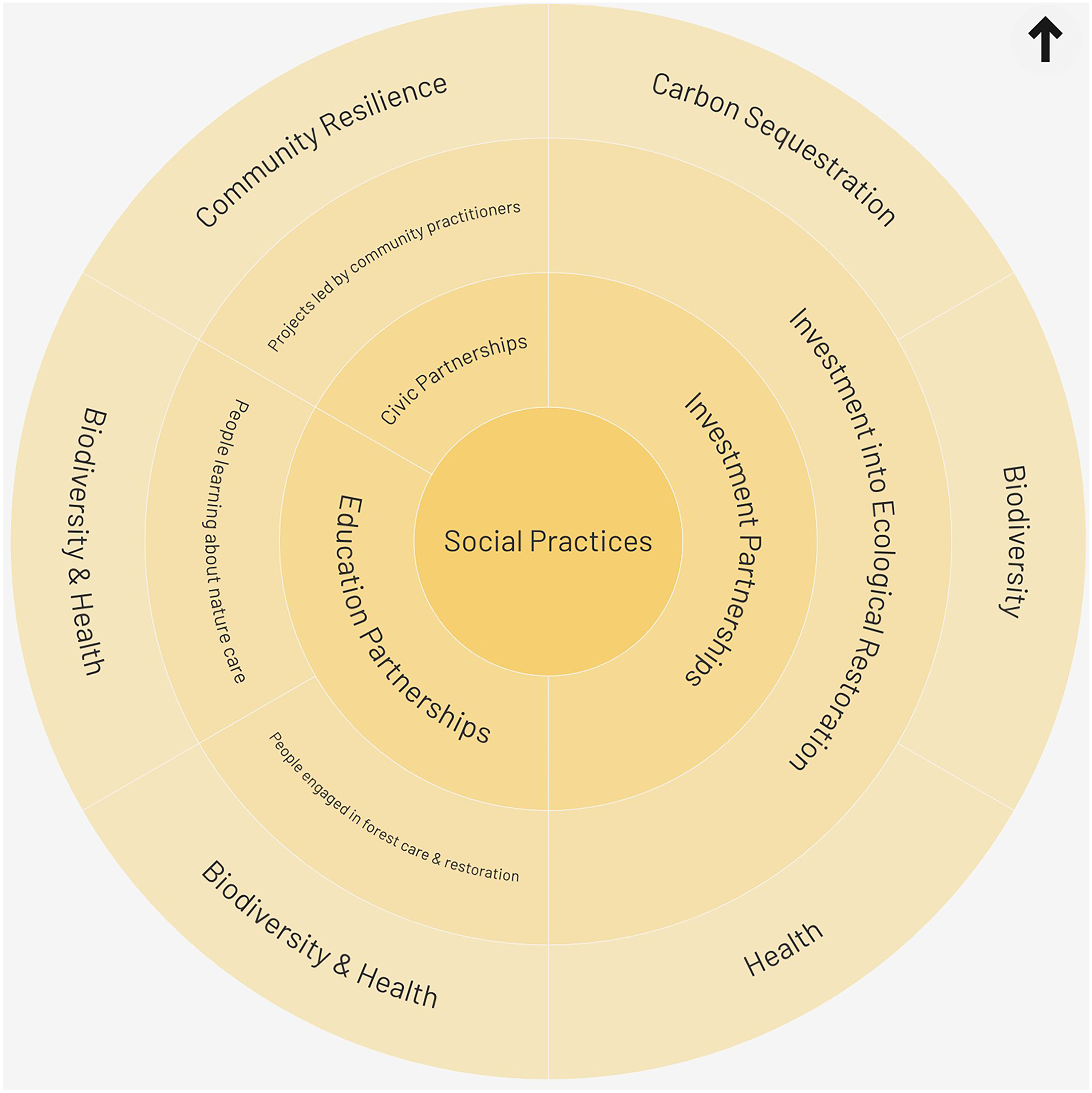
A multi-species cities perspective is, we argue, is vital as a lens through which to understand the multi-dimensional values arising from the global Miyawaki forest movement. As an exploratory exercise we have begun to explore how a multispecies cities perspective can help reframe the way in which Miyawaki forests are ‘counted’ and seen to produce benefits. The intention is be more illustrative than instructive, to explore how Miyawaki forest practices both support, and are enabled by, a wide spectrum of human–nature interactions, from symbolic storytelling, to biodiversity and human forms of gathering, human and ecological health, carbon sequestration, disaster resilience, a sense of hope and more. This, we hope, helps to underscore the unique dimensions of the Miyawaki method as a means to ‘pluralise ecology’ (Pickett et al., 2022), engaging and involving diverse communities in restoring plant ecologies in their local areas, with potentially powerful benefits across both human and ecological dimensions of health and wellbeing (Figures 6 to 8).
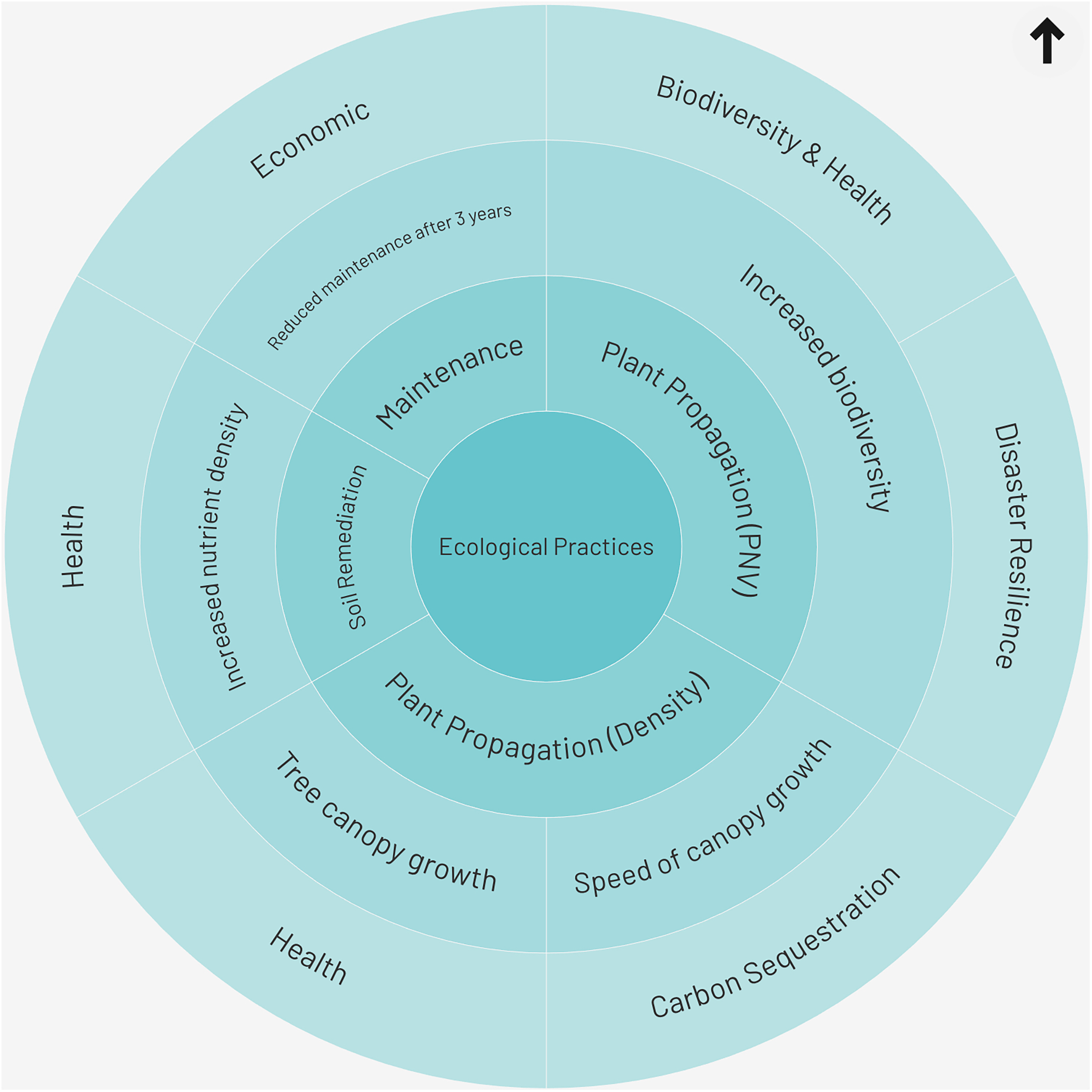
Indicative benefits deriving from ecological practices engaged through Miyawaki forests, incorporating vegetation mapping to identify PNV, enabling plant density, growth rates and biodiversity, supporting a range of ecological benefits.
Indicative benefits from the social practices engaged through Miyawaki forests, incorporating a range of civic, educational and investment/business partnerships.
Indicative benefits from cultural practices engaged by Miyawaki forest making through symbolic attachments and storytelling, including First Nations custodianship, planting ceremonies and celebrations.
Conclusion: towards multi-species values for Miyawaki forests-in-the-making?
In this paper, we have traced the remarkable evolution of the Miyawaki method of forest planting, today embraced by many diverse practitioners and organisations who seek to adopt Miyawaki's methods to engineer conditions of fast-growing forest-like ecosystems in different, often degraded, urban environments. We have drawn attention to the adaption of the method by selected Australian practitioners, who expand Miyawaki's methods in ecological and social contexts that are quite distinct to the Japanese context from which the method first emerged. We have also described the environmental contexts driving the interest in Miyawaki forests globally, including the need to reverse the decline of ecological habitat, the need to sequester carbon and the need to mitigate the heat impacts of escalating climate change.
Addressing how the values and priorities of urban planning are now being reframed from a multi-species cities, we have presented Miyawaki forest practices and programs as abundant sites for investigation, and storytelling, linking ecological, cultural and social care practices. A multispecies cities perspective, which promotes a wider re-think of the human-centric bias in urban greening, opens up the potential for novel ways to evaluate, document and celebrate the different civic care practices enabled through these forest planting festivals, ceremonies and community gatherings. To this end, we recommend attention towards the positive socio-cultural benefits arising from tiny forests, as well as their ecological benefits, as sites of nature-culture gathering.
As we have discussed, the value and benefits of Miyawaki forest projects, and the work practitioners do, lie in both restoring degraded habitats but also ‘gathering humans’ as ecologically-caring citizens and custodians, supporting different practices of belonging, connection, and even hope. Miyawaki forests, as we see them, are implicitly designed to activate an engaged and enthusiastic ecologically citizenry, bringing First Nations custodians, families, schools, ecologists and communities together as active forest carers. Tiny forests are, in this sense, ‘citizen forests’, actively enabling certain activities and ecological care practices by communities, which in turn facilitate more active and engaged more-than-human participants as well.
As Haraway (2016: 11) urges: ‘It matters what stories make worlds, what worlds make stories’. How the particular values and benefits of Miyawaki forests are described, captured, and communicated over time will benefit, we suggest, by diverse methodologies that reflect these multiple modalities of gathering and flourishing, across the human–nature continuum, across ‘diverse, multispecies communities, where humans, plants, soils, microbes, birds, fungi, insects, native and non-native animals shape urban landscapes and interactions’ (Houston, 2017: 194). Acknowledging the benefits of First Nations perspectives, citizen science and data collection methods, we also suggest an important ongoing role for storytelling, documentary making, art collaborations, and more, which enable diverse multisensory experiences of human–nature connections and custodianship to be celebrated. There are, in short, many exciting ways in which Miyawaki forest practitioners can promote multispecies care practices in a time of rapid anthropogenic change, expanding the possibilities of ecological citizenship and care, in diverse habitats across the planet.
Footnotes
Acknowledgement
We acknowledge funding from grant AJF2021022, by the Australia Japan Foundation, Department of Foreign Affairs and Trade which facilitated collaboration, along with the Adelaide University Environment Institute.

Funding
The authors disclosed receipt of the following financial support for the research, authorship, and/or publication of this article: Funding for forest making activities for the Miyawaki Forest Program at Murdoch University have been from Carbon Positive Australia and SUGi.
Declaration of conflicting interests
The authors declared no potential conflicts of interest with respect to the research, authorship, and/or publication of this article.