




Abstract
This article is concerned with urbanization as it shapes and is shaped by disaster finance instruments. It takes a critical look at the specific urbanizing qualities of these instruments by bringing an established theory of peripheral urbanization together with recent work on disaster urbanization to advance a theory of ‘everyday disaster’—or smaller-scale events that occur repeatedly in the same areas, or events with extended recovery periods so prolonged that they integrate with the precarities of everyday life; and ‘autorecovery’—or recovery processes that self-organize and improvise in response to the uneven distribution of state resources. It grounds these theories in extended ethnographic work done in Mexico City. It argues that where localized everyday disasters are ongoing, they fall through the cracks of existing financing schemes because of ongoing scalar mismatches between instruments and actually existing disaster conditions. These mismatches are compounded by state neglect and facilitated by the disconnectedness that defines peripheries. As disaster governance in global Southern states is pushed to global markets through risk transfer instruments, failure to effectively insure everyday disasters expands spaces of precarity that reproduce peripheral processes. These forms of governance affect urban spatial configurations, not only through disaster itself, but through modes of repair like autorecovery.
Keywords
Introduction
Cities are being made and remade, not only by disasters themselves, but by disaster governance as well. As the effects of climate change increase the frequency and magnitude of devastating disasters around the world, global Southern cities confront disproportionately high risk, rapid irregular urbanization, and development finance intervention that purports to mitigate—but also contributes to the production of—acute disaster risk. Because the burden of the climate crisis falls upon the most socioeconomically vulnerable communities, the interdisciplinary field of disaster studies remains dominated by a normative view of vulnerability that privileges ‘capacity building’ and ‘resilience’ (see Cutter et al., 2010; Pelling, 2003; Pelling and Manuel-Navarrete, 2011). This view shapes global development practice, the techniques of which have been critiqued for reproducing inequalities through homogenizing, pro-poor, ‘culturally undifferentiated’ approaches (Bankoff, 2001; Escobar, 1995; Goldman, 2005). These generalizing techniques are ingrained in the doctrine of development finance institutions. As some of these institutions foray further into the business of disaster finance at a global scale, there are significant implications for urban peripheries that face frequent, compounded climate and geological risks. Instrument design and government involvement in—or neglect of—reconstruction frequently leave peripheral communities to recover from disaster themselves in the shadow of ‘official’ processes.
Instruments designed and administered by development finance institutions dominate disaster finance models in the global South. The World Bank launched a MultiCat catastrophe bond initiative in 2009 with the government of México (World Bank, 2009) and continues to expand this risk transfer program to other countries, indicating the growing global reach of a market that fills a finance gap for securing vulnerable public infrastructures (World Bank, 2011 October). Cat bonds and similar insurance-linked security instruments financialize hazards and associated risks using technical expertise (catastrophe models) and global finance (bond markets) to predict the scale of a likely disaster and insure probable losses through global capital investment on a fixed term (Lewis, 2007).
One problem with financializing hazards and risks is that the practice enables a short-term scope focused on returns for investors, which then redirects resources away from investment in urban infrastructures—or long-term planning for disasters in places that are most susceptible to disaster risk. Another is one of scale. In practice, cat bonds are designed to address government finance gaps caused by large-scale, improbable disasters and otherwise ‘uninsurable’ risks (Jaffee and Russel, 1997) like major earthquakes and hurricanes. These instruments define an insurable event by parametric or ‘index’ triggers that model expected losses within specific parameters (Johnson, 2012: 35; Lewis, 2007). They can leave communities subjected to significant catastrophic damage caused by what I call ‘everyday disasters’ languishing in the margins depending on how bond resources are distributed and what other government resources are available. Everyday disasters can be thought of as smaller-scale, more frequent events like flooding or wildfires that occur repeatedly in the same area, or events (e.g., earthquakes) with extended recovery periods, so prolonged that they integrate with the precarities of everyday life.
This article is concerned with urbanization as it shapes and is shaped by everyday disasters and disaster finance instruments, wherein modes of repair can be thought of as processes of urbanization that are transversal, unsettled, and contingent with distinctly temporal features. I take a critical look at the specific urbanizing qualities of disaster finance instruments, bringing the established urban theoretical concept of peripheral urbanization (Caldeira, 2017) together with more recent work on disaster urbanization (Madden, 2021) to advance a theory of ‘everyday disaster’ and ‘autorecovery’—or recovery processes that self-organize and improvise in response to the uneven distribution of state resources. This framing offers a more expansive conceptualization of disaster governance, risk, and recovery that both contributes to and responds to calls to challenge the pervasive focus on ‘resilience’ in contemporary development, disaster finance, and critical urban studies scholarship while thinking from the South (see Bankoff, 2019; Knuth, 2020; Watson, 2009).
Further, I argue that where localized everyday disasters are ongoing in city peripheries—areas marked by logics of irregular 1 urbanization—they simply fall through the cracks of existing financing schemes. This happens because of deliberate prioritization of more regulated areas and ongoing scalar mismatches between instruments and actually existing disaster conditions. These mismatches are compounded by state neglect and facilitated by the disconnectedness that defines peripheries. As disaster governance in global Southern states is pushed to global markets through risk transfer instruments like cat bonds, failure to effectively insure these everyday disasters expands spaces of precarity that reproduce peripheral processes. In addition, these forms of governance affect urban spatial configurations within modes of disaster finance, not only through disaster itself, but through modes of repair.
I ground these arguments in extended ethnographic work that I performed in Mexico City from 2019 to 2022, which included participatory observation, semi-structured expert interviews, informal walking interviews, and photography in the peripheral alcaldía (borough) of Xochimilco. 2 Interviews in more central areas (e.g., la Condesa and Narvarte) were informal and took place in predetermined meeting places with community organizers and residents working with those groups. I performed an extensive document review—including a review of public auditor, risk map, and finance data compiled by a research team at el Colegio de México—and ongoing semi-structured expert interviews with organizational, government,3,4 technical, 5 and global financial 6 actors over the course of this and related studies. I also accompanied a research group from the Universidad Autónoma Metropolitana, Cuajimalpa (UAM) investigating recovery from the M7.1 September 2017 earthquake that devastated the area, and returned several times on my own over the three years that followed.
A note on walking
The importance of walking cannot be understated. Indeed, in my experience, walking is the best way to experience a place intimately and fully (see Solnit, 2002). That said, informal ‘walking interviews’ offer a methodological approach that combines that intimacy with access to people’s attachment to distinctive place characteristics (see Evans and Jones, 2011). I find this method of observation to be especially effective where there has been a dramatic change to the built environment, such as that experienced after a major crisis. This was absolutely the case when over multiple site visits—once with UAM in 2019, and later alone or with a research assistant—I walked through the streets of Xochimilco’s colonia San Gregorio Atlapulco. There, I observed extensive earthquake damage, reconstruction, and autorecovery still ongoing in various stages of progression years after the initial catastrophic event. During my visits, I met with residents and talked to vendors in the neighborhood tianguis (street market) about their experiences during and after the 2017 disaster, listened to their stories, and compared financial documents on resource allocation to San Gregorio with residents’ descriptions of events. Informal interviews during these walks also uncovered less obvious conditions. For example, a neighbor’s fruit stand that was moved to another street because of dust from prolonged construction, a preschool in a different house than before, and neighborhood dogs informants knew by name who had been living outside since the earthquake. By walking and talking, a place can be understood through someone else’s experience and expertise—someone who lives where you are walking—who can tell you the story of where you are, what they see, and what was lost.
Conceptualizing disaster finance in development
Before delving into the financial details of disaster management, it is imperative to remember that the risk to society from disasters has always been generated, or at least influenced, by human decisionmaking, behavior, and settlement patterns (Beck and Ritter, 1992; Tierney, 2014). While disasters are variable by scale, geological, and geographical factors, they happen when hazards (e.g., earthquakes or climate-related flooding, landslide, drought, wildfires) interact with human–systems infrastructure—meaning the built environment characteristic of human settlements (Comfort et al., 1999). Understanding risk as socially produced links disasters with concerns about the future effects of decisionmaking processes that emerged from ‘sustainability’ approaches to planning and disaster risk reduction in the 1990s and early 2000s (see Burby et al., 1998). These approaches, and the urban resilience and adaptation-focused disaster planning emerging around the same time (see Godschalk, 2003), were taken up by urban governments and the private sector as a critical space for innovation in the face of accelerating climate change risks. Sustainability and resilience approaches among private sector actors profoundly influenced national and subnational programming among global development finance institutions, which have since dominated disaster finance lending and administration in global Southern cities (Walker and Cooper, 2011).
The United Nations announced its ‘Sustainable Development Goals’ in 2015. These have since been taken up by development finance institutions like the World Bank, which operate in collaboration with a network of foundations and sovereign banks to promote ‘resilience’ through pro-poor lending and partnerships with sovereign governments, making a prerogative of coordinating for ‘critical future events’. (Bankoff, 2001; Walker and Cooper, 2011). While critical urban scholarship urges scrutiny toward global Northern ‘resilience’ narratives in ‘informal’ peripheries precisely because of resource disconnectedness, continued processes of displacement, and state neglect (Amin, 2013; Knuth, 2020; Yarina, 2018), a globalized form of ‘resilient’ disaster governance through finance instruments is assuredly dominating both discourse and practical intervention (Leitner et al., 2018; Parnell, 2016). In fact, the World Bank has published numerous reports outlining the very real ways disasters disproportionately harm the poor and vulnerable, advising that development institutional intervention is the ideal mode of support for ‘innovative’ resilience, adaptive capacity building, and financing for adaptation to risk and recovery from disasters in middle- and low-income countries (Hallegatte et al., 2016, 2017; World Bank, 2011 March; World Bank, 2021).
Disaster finance includes a range of instruments and programming but can generally be thought of as ex ante (earmarked—like insurance—before an event) and ex post (recovery—often aid and public finance—after an event) funding contingent on scale, political economic factors, and specific disaster risks. Disaster finance instruments provided by development finance institutions typically include ex ante instruments like catastrophe bonds, and other insurance-linked securities governments in many low- and middle-income countries rely on securing financial resources and public infrastructure against disaster and related climate risks. After a disaster in México, for example, a combination of both forms shapes the way recovery is done and where. In these cases, public finance from various budgetary sources may be combined with traditional insurance, which is used to fund ex post recovery up to a point. Then, where the government has purchased a cat bond, the bulk of any remaining funds is covered by ex ante pooled resources paid out by whoever holds the bond, such as the World Bank in the México example, and distributed by the government at its own discretion.
There is a trend toward these ex ante instruments for disaster recovery at the scale of the nation-state, where governments may not have the resources to insure their own public infrastructures in high-risk countries (Johnson, 2012). In fact, the World Bank is actively promoting cat bonds to secure disaster risk in global Southern states and has expanded its range of disaster risk management products and interventions (Evans, 2021). The Bank suggests that cat bonds are—and have been—the most efficient fiscal protection against disaster risk in places where limited government resources are not able to quickly rebuild public infrastructure using ex post funds (World Bank, 2013). After experimenting with sovereign risk management prototypes with the government of México, the Bank has worked with global reinsurer Swiss Re since 2009 to to launch its MultiCat platform, which is designed facilitate wider global Southern government access to the cat bond market. (Cardenas et al., 2007; World Bank, 2009).
While the Bank states that cat bonds and instruments like them will protect the poorest and most vulnerable communities disproportionately affected by disasters (Hallegatte et al., 2016, 2017; World Bank, 2021), catastrophe bonds are—for all of their issues and entanglements with private finance—less appropriate at the scale of the city or in rural areas, where frequent earthquakes or prolonged earthquake damage, localized landslides, and flooding in some countries do not trigger parametric resource allocation. In smaller Mexican cities and rural pueblos (towns), for example, recovery is reliant on more limited, request-based federal and municipal insurance resources—moreso nowsince the federal trust for designated ex post resources in México was shuttered and reorganized in 2020. 7 Notably, those I interviewed clarified that the World Bank and other debt-holding actors do not track how bond funds are used by governments once they are dispersed. If a disaster does trigger resource allocation, uneven distribution of those and public finance resources excludes areas already marginalized by state neglect.
The specific limitations of insurance-linked instruments like catastrophe bonds are most evident in nation-states with high inequality, highly urbanized and improvised peripheries, and government disinvestment—all common characteristics in México and in other global Southern countries where the Bank operates. When a disaster causes catastrophic damage in a vast metropolitan region like Mexico City, for example, state-led recovery programming is corruptible and unevenly distributed across urban space (Ward, 1998), leaving some residents in city peripheries to more or less fend for themselves through self-organization and improvisation. This happens within and against the ‘official’ logics of disaster governance, which can be thought of as a mode of peripheral urbanization in the context of disaster and repair—a process I call autorecovery.
Situating San Gregorio Atlapulco, Xochimilco
Originally a pueblo on a marshy lakebed located outside of what would become Mexico City, San Gregorio Atlapulco is over 400 years old—an important heritage site that predates the Spanish Conquest and the draining of the Lake Texcoco (Candiani, 2014; SECTEI, 2019). Now an important colonia within the extensive alcaldía of Xochimilco, San Gregorio boasts some of the last of the historical wetlands leftover from the Mexica (Aztec) Gran Tenochtitlan, where chinampas were originally developed to farm on the lake and along the vast system of canals used for water transportation at the time (SECTEI, 2019; Vitz, 2018). While this indigenous form of agriculture and its unique history attract tourism and boat rides along the canals, the chinampas are still used regularly to grow vegetables and ornamental plants for use by residents or for exportation to the rest of the city. The San Gregorio chinampera zone takes up an impressive 484.1 hectares, and is one of the few remaining agricultural conservation zones which still provides food and water to the rest of Mexico City (SECTEI, 2019).
The population of San Gregorio is mixed (INEGI, n.d.), with many indigenous residents and cultural connections to the land through distinct agricultural practices and festivals. There is political contention between residents and municipal and state governments because of the blatantly extractive practice of pumping water for use outside the colonia. This practice can be compared to similar extraction around California’s Owens Valley, where in the early 1900s, a vast aqueduct system pulled water from Owens Lake and the agrarian communities around it for use by residents in the rapidly growing city of Los Angeles (see Reisner, 1986; Vitz, 2018). To be sure, Porfirian era aqueduct infrastructure pulls water away from Xochimilco and into Mexico City’s central areas. Extraction and ongoing urbanization continues to cut San Gregorio residents off from the drinking water underground—and from the chinampas themselves—while damaging the canal systems vital to local agricultural practices and continually marginalizing residents from the rest of the city (Vitz, 2018). However, residents of San Gregorio have maintained most of the territory needed for farming, and have preserved important elements of their cultural heritage and solidarity through ongoing, organized resistance to those extractive practices (SECTEI, 2019; Vitz, 2018).
San Gregorio Atlapulco
When I first visited San Gregorio Atlapulco with the UAM research group in 2019, nearly two years had passed since the September 2017 earthquake. Damage throughout Mexico City was extensive, but in peripheral areas it was profound, compounded, and importantly ongoing—with San Gregorio sustaining significant damage compared to the rest of the region. Even the road to get there was damaged, with huge grietas (open cracks) in the ground splitting roadways and causing detours. Once there, my first, most striking observation was of the church, la Iglesia de San Gregorio Magno, which lost its bell tower during the shaking (Figure 1). It sat in the square, unimposing but dignified, with a rainproof tarpaulin still covering the now exposed roof where the tower used to be. The church is an historically significant heritage site—it was built in the 16th century when the Spanish first arrived—but has always been modest. It seemed much smaller without its celebrated bell, listing slightly in the plaza with old age and damage. There was a group gathered in the park adjacent to the church and people chatted with one another as as they passed in and out through its open doors. Moving among the crowd there were dogs, cats, and children—as well as vendors in the square selling candy and snacks to passersby. The whole colonial era square was shaded by old trees over occupied benches and animated with the motion of everyday life.
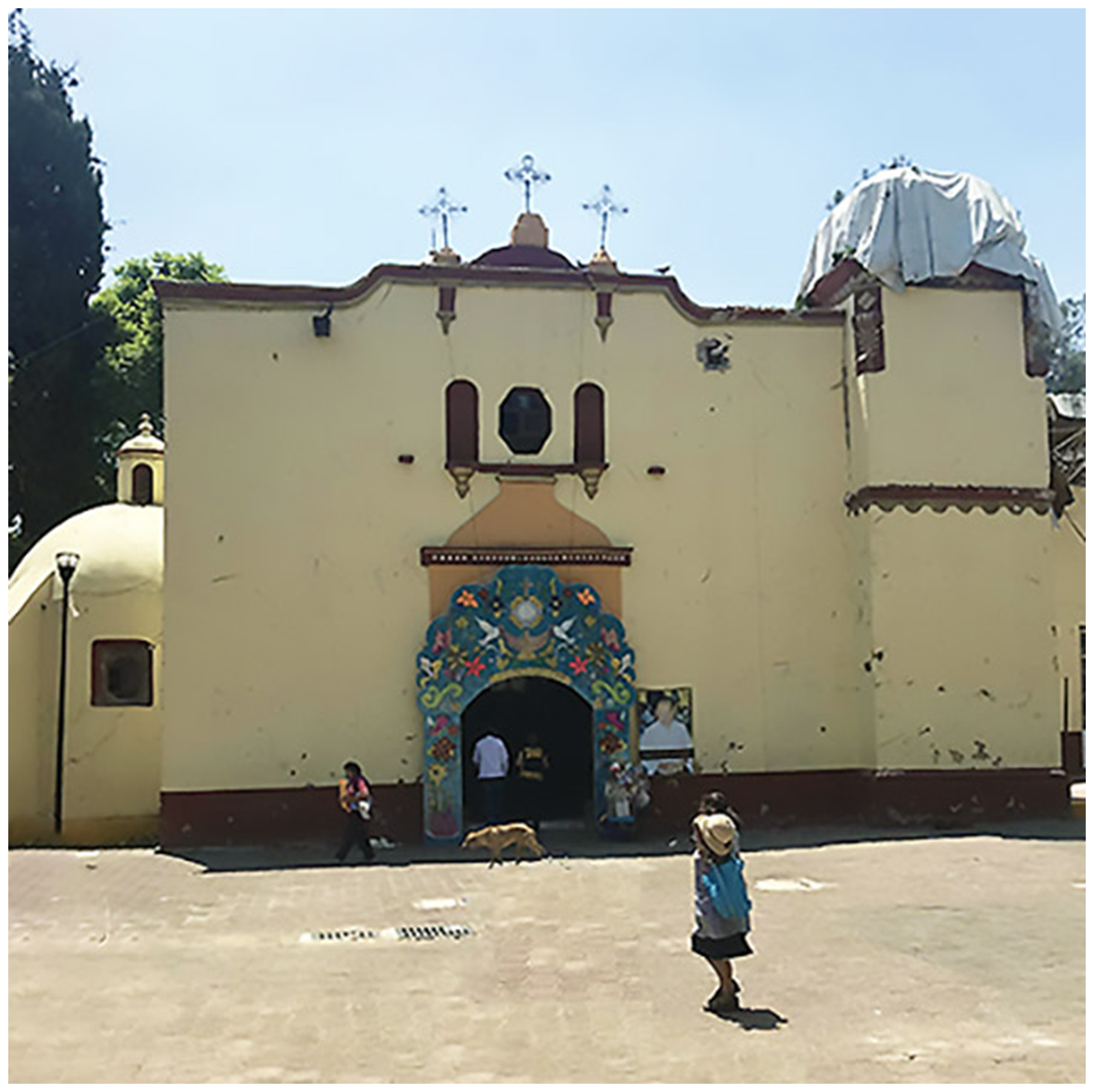
La Iglesia de San Gregorio Magno without its bell tower.
Walking through the square, past its still crumbled walls piled into small hills of rubble, and out into the downtown area, widespread destruction was evident, but the streets were filled with people going about their lives. Shops, schools, and homes showed varying degrees of damage—some completely collapsed, with piles of bricks stacked in the center of the lots where structures used to be. The neighborhood’s brick-and-mortar market, el Mercado de San Gregorio Atlapulco, was damaged and declared uninhabitable in 2017. In 2019, it remained vast and hollow—a former central meeting place for colonia residents now covered with tarpaulins protecting what remained of the building and timbers holding up its few remaining walls, all surrounded by a construction barrier. With the mercado out of commission, the local tianguis was bustling. México’s tianguis are an important part of every neighborhood, opening once or twice per week in designated areas and providing all of what a brick-and-mortar mercado would and more. During walking interviews through the stalls, local people said that funds from Fondo de Desastres Naturales (the Fund for Natural Disasters, or Fonden) were matched by large donation from the private Fundacion Carlos Slim (Carlos Slim Foundation) 8 and had been distributed immediately to rebuild the old mercado with new and updated amenities, but that nearly two years later the construction was ongoing and the market remained closed. El Mercado was not opened again until 2021—four years after the disaster—where it remained only intermittently functional during the ongoing COVID-19 pandemic in 2022.
Talking with people and observing the state of the neighborhood, the temporality of recovery emerged as a notable theme rather quickly. Importantly, I also observed partially collapsed residential buildings and ongoing reconstruction miles from San Gregorio in the city’s central areas, particularly in the upper- and middle-class colonias of la Condesa and Narvarte Poniente where damage was also significant. Informal interviews with residents there took a different tone: people were angry about the slow, opaque reconstruction process, but most had resources and could relocate temporarily or permanently as necessary. Those with fewer resources worked with coalitions like Damnificados Unidos de la Ciudad de México and organized around repair. Groups like Damnificados Unidos have worked in both central and peripheral areas with some success in getting reconstruction underway without subjecting lower-income families to relocation into subsidized housing with subprime government loans. Much of the work done by Damnificados Unidos, related coalitions, and organized protest groups has been necessary—not solely because of a lack of resources—but because of uneven distribution of those resources, which at the time of this study had stretched the process of recovery well into 2022.
Many of the rubble lots I observed where residential housing once stood are still there in Narvarte, la Condesa, and San Gregorio Atlapulco alike—a full 5 years after the 2017 disaster. But make no mistake, San Gregorio was hit harder than other places in the city and lost more overall. Targeted investment in recovery was reportedly uneven within the colonia, as well, causing tension between neighbors (Romero Castillo and Lovera Valencia, 2018). Community members also said that public works (e.g., SACMEX) left critical work incomplete in the neighborhood for years after the earthquake, and residents complained about respiratory issues because of dust from stalled construction leaving unpaved streets, and about an increase in crime and disorder brought on by the mess. Further, there remain ongoing water issues, including flooding and broken pipes underground that have still not been repaired—a few of which have remained broken in some way since an earlier earthquake in 1985. Residents in San Gregorio regularly complain to local and federal government bodies, and on social media, that there are still piles of rubble (see Figure 2), as well as grietas, socavónes (sinkholes), and bachas (potholes) in the roads from the earthquakes and steady subsidence. There is also regular flooding from the rainy seasons that cause transportation and pedestrian safety issues around incomplete construction. Meanwhile, other residents and community groups said that an influx ofreconstruction projects made coordination between neighbors and organizations complicated or even impossible, which contributed to recovery to dragging on longer.
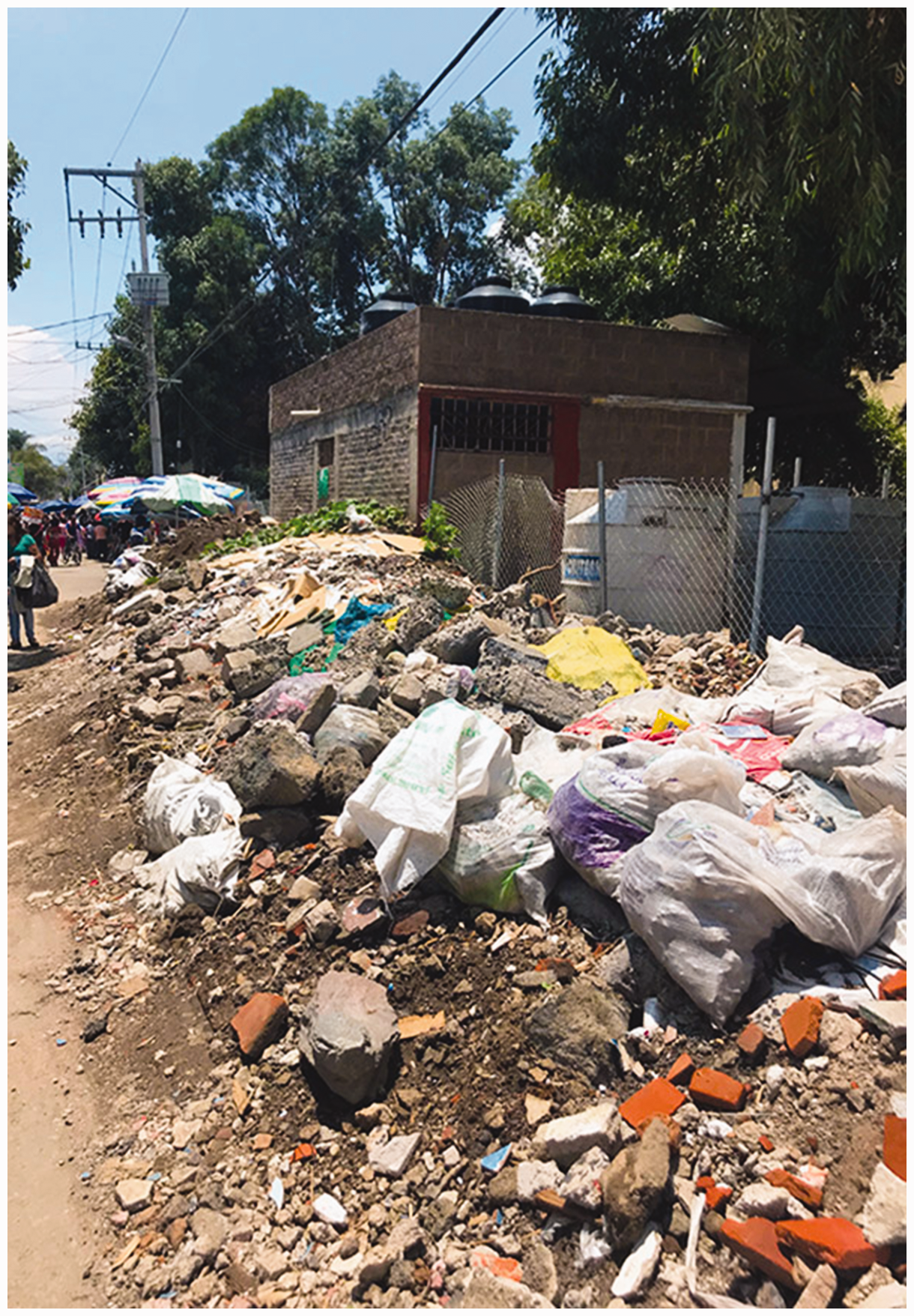
Rubble pile along a road from fallen structures.
Talking with residents in San Gregorio Atlapulco—and in other peripheral colonias throughout Mexico City at various points—I could see everyday processes of autorecovery in action. No water because of state-led extraction? Residents organize to have water delivered from private pipas (private water trucks). Local road damaged by a landslide? Neighbors organize to fill it in. Homes and schools collapsed in an earthquake? Communities work together to rebuild using many of the same materials from damaged structures. The autorecovery process is how many neighborhoods build back faster, while state and development financial support administered by governments makes its way to some—but not all—damnificados (victims) after a major disaster or crisis, and at a pace incommensurate with community needs.
Theorizing ‘everyday’ disasters and autorecovery
Cities will not be destroyed by disasters, but they are being changed by them. (Madden, 2021: 21)
Autorecovery emerges from established theories of peripheral urbanization that are themselves concerned with self-building and the construction of space. Holston (1991) describes urbanization in cities’ peripheries as an ongoing process of autoconstruction by which people create urban space and, in turn, society through the self-building of houses. Autoconstruction is the most predominant form of housing among the very poor in the global South, and is characterized by irregular, everyday processes that occur where policy and resource limitations necessitate that people produce their own spaces with their own aesthetics using only the resources they have themselves (Caldeira, 2017; Holston, 1991; Parnell and Hart, 1999). This does not mean that autoconstruction happens outside of state or institutional intervention, but rather in the shadow of official logics, where the process engages with and is sometimes harnessed by state actors in attempts to regulate or legitimize peripheral urbanization (Caldeira, 2017). Caldeira takes this up to advance a general theory of global Southern urbanization that has two important characteristics relevant to this article’s arguments and the process of autorecovery: peripheral urbanization operates with a specific temporality and residency; and it is always transversal, unsettled, and contingent.
Peripheral urbanization
The temporality and residency of peripheral urbanization describe space that is always being made and unmade by residents themselves—that is, ongoing processes of autoconstruction that are ‘always in the making’ over long-term continuous undertakings of improvement done incrementally (Caldeira, 2017: 5). This temporal quality of urbanization ensures ‘heterogeneous landscapes’ (2017: 6) in city peripheries, where whole communities remain in various states of remodeling or reconstruction, and where residents are the main agents of production rather than simply consumers of the spaces they inhabit. Improvements, however, can contribute to neighborhood change over time—an aspect of peripheral urbanization’s temporality that may improve the community’s spaces, but eventually exclude very poor residents, who then reproduce the process elsewhere (2017: 6). In the context of disaster, this aspect of temporality enables the expansion of precarity into unsettled areas that are compounded by high disaster risk. In many global Southern cities, these include dangerous hillsides, floodplains, and low-lying areas considered unfit for state-led development but open to unregulated land use (see Pelling et al., 2004).
The transversal, unsettled, and contingent logics of peripheral urbanization are marked by these and other significant inequalities, but unfold in improvisational ways that confound ‘official’ notions of legality, property, regulation, capital markets and so on (Caldeira, 2017: 7). Transversality is a key component of these logics, which Caldeira describes as less a contestation of official logics, but rather an always-shifting redefinition of these understandings (2017: 7). Notably, transversal logics show up in the consumption of materials needed for autoconstruction—many of which are acquired outside of regular credit markets by residents responding to an urgent need to build out, or rebuild housing (2007: 9). Further, the new political modes generated by the logics and processes of peripheral urbanization are underpinned by complicated arrangements of actors both responding to and operating within systems of inequality that are constantly being reproduced. Thus, heterogeneity shows up in new social constructs of citizenship, which drastically transform urban residents and the spaces they inhabit (2017: 9).
In the context of disaster, the transversal, unsettled, and contingent processes of making and unmaking precarious space by residents can also be thought of in terms of a global logic of public services delivery and repair. This is state responsibility for ‘repairing national and international infrastructure of public services’ that is administered in marketized ways that both ‘reflect and maintain’ global finance logics and priorities (Ponder, 2022). Following a disaster, these logics are woven into ongoing recovery projects, where they are organized and maintained through public–private capital that dominates discourses, set agendas that center the priorities of investors and private finance, mask contradictions and conflicts (Parnell, 2016), and which operate in spaces of international capital markets divorced from realities ‘on the ground’ (see Leitner et al., 2018).
Disaster urbanization
Madden (2021) brings critical urban theory reminiscent of Caldeira’s periphery work into his investigation of disaster urbanization, which seeks to understand relationships between disasters and ‘certain types’ of urban spaces. According to Madden, these urban spaces are produced and reproduced by ‘injustices and inequalities’ (2021: 92) that are made and unmade by neoliberal urbanization characterized by market capital logics like financialization, commodification, and so on in an ongoing historical process that magnifies precarity—particularly through the provision of housing (2021: 93–94). While Madden is focused more generally on housing precariousness and insecurity as an outcome and a driver of ongoing crisis (2021: 93), the concepts underpinning disaster urbanization can be mapped onto elements of peripheral urbanization specific to global Southern contexts where there is high disaster risk and dedicated disaster and development finance intervention. Caldeira’s theory of peripheral urbanization preemptively responds to Madden’s calls for seeking ‘ways in which contemporary urbanization encourages and amplifies disaster, and to examine the ways in which disasters might be productive of certain types of urban space.’ (Madden, 2021: 92). Indeed, by the means through which self-built housing is constituted, autorecovery produces materially hazardous conditions throughout the city’s peripheries through the process of autoconstruction in high hazard areas.
Disaster urbanization is characterized by structures of vulnerability that ‘encourage disasters’—a concept prevalent in contemporary disaster studies as the social production of risk (Madden, 2021; see Beck and Ritter, 1992; Tierney, 2014). Madden nods to ‘neoliberal’ processes of displacement and exclusion from housing in the affluent la Condesa colonia of Mexico City that push residents into ‘legally unrecognized’ irregular areas (2021: 97) known, of course, in global Southern critical urban scholarship as peripheries. The impression that the most socioeconomically precarious people in Mexico City are living in high disaster risk areas far from the city’s central areas is accurate. Peripheral neighborhoods experience increased disaster risk because of poorly maintained infrastructure, poor or nonexistent building code enforcement, neglect by official programs, and higher vulnerability due to poverty and unbalanced economic power made possible by historical settlement processes that produce disaster risk (Moreno Carranco and McElvain, 2020).
In the Mexican context of peripheral and disaster urbanization, there is a unique and contingent relationship with a distinctly historical Latin American ‘neoliberalism’ marked by privatization, resource extraction, unchecked accumulation, and—importantly—contestation (Rodríguez, 2021). However, as neoliberalism in Latin America is ‘manifested from above’ through technical expertise from development finance institutions, it is maintained through state-global contractual dynamics that play out in peripheral space (see Gago, 2015). Indeed, México’s neoliberal context can be understood as a ‘general reordering’ of relationships between the state and the market—including the increased adoption of an open market economy, profound austerity policies, and the privatization of public-sector responsibilities (see Ackerman et al., 2021). This includes disaster risk management and, for example, the resourcing and distribution of agriculture, labor, and water. Indeed, Mexico City is a high-risk, high inequity city, and its disaster risk and urbanization processes are tied up in zones of conflict (see Gago, 2015) due to extraction from peripheries that resource the urban center. Despite the current government’s insistence that México has entered a ‘post-neoliberal’ period (Ackerman et al., 2021; Animal Político, 2019), this extraction is a privatized process that produces scarcity and dangerous land subsidence 9 that exacerbates climate and geological hazards (Nikolaou et al., 2019; Vitz, 2018). However, peripheries by virtue of their existence do unsettle these and other ‘official’ logics—including processes of market capitalism—through mundane, everyday practice.
Autorecovery and the everyday
To theorize everyday forms of autorecovery requires a working understanding of what is meant by ‘the everyday’. While the everyday processes are assumed in both the peripheral and disaster urbanization literatures, these ideas are built upon foundational theories of everyday life and living. There is much to be read on everydayness, particularly those theories that emerged among 20th-century ethnographers and social theorists. 10 Substantial literature on ‘the everyday’ as it relates to urban studies can be traced back to the earlier works of Marxian scholars engaging with Claude Lévi Strauss’ concept of bricolage (1966) and Henri Lefebvre’s production of space (1991). The act of bricolage, a process of manipulating, reusing and reapplying elements of space—or ‘making do’—constitutes the mundane practices of life and living (see de Certeau, 1984; Holston, 1989). These practices make up the ‘real’ and repetitive routines constantly unfolding within broader systems (Lefebvre, 1987) and through the embeddedness of institutions (Cleaver, 2002). This unfolding shapes modes of building and consumption and in turn the production of space (Lefebvre, 1991); or, once destabilized by crisis, the rebuilding and reclamation of space through these everyday processes.
The very idea of destabilization assumes an alternative condition of stability—even where that stability is a normalized state of ongoing crisis—that both informs the mundane practice of everyday life and represents a goal of recovery. These ‘routine forms’ of destabilization (Madden, 2021: 93) can be thought of as everyday processes of peripheral urbanization that are disrupted by disasters and by a subsequent response to crisis. These processes have been described as the ‘temporal modes of emergency’ and their shift to recovery after a disaster as a heightened state during the moment before recovery happens (Bonilla, 2020). Any responses to a crisis depend entirely on the political economic contexts in which they happen, and when brought together with the effects of disaster finance (e.g., the material production of space through state neglect and instrumental marginalization), some responses are actually non-responses, leaving whole communities to respond for themselves with the knowledge and resources at hand through everyday processes of autorecovery. For example, peripheral communities in Mexico City regularly rely on deliveries from pipas to access water during days, weeks, or months when state provision is lacking, and organize payment and delivery together as a matter of course. Thinking about the social production of risk, all forms of autorecovery are both produced by and aligned with everyday practice—they are again transversal, unsettled, and contingent.
Madden correctly notes that the ‘more long-lasting forms of disaster urbanization’ happen after the emergency phase of a disaster has passed, situating the ‘rebuilding phase’ as a space of urban reconfiguration (2021: 98). Scholars have long discussed the temporality of disaster, where communities may be in a state of recovery that lasts for years—even decades (see Bonilla, 2020). While Madden (2021: 98–99) points to ‘grassroots’ rebuilding efforts—getting closer to processes prevalent in the majority of the world but citing the US example of Katrina and New Orleans—Holston tells us ‘the poor have always built their homes’ in global Southern cities (1991: 450), moving this interlocution toward a theory of autorecovery and everyday disaster. Evidence from Mexico City’s peripheries shows how these qualities and logics work together in everyday practice to reconstruct whole communities in a normalized, extended state of crisis.
Urbanization and disaster in Mexico City’s peripheries
Mexico City is prone to a range of hazards, which includes frequent earthquakes and climate-related flooding as well as less frequent but still significant landslides and wildfires in the broader region. There have been and continue to be socioeconomic and political factors that affect vulnerability and distribute risk for these events unevenly throughout the city (Castro, 2004; Moreno Carranco and McElvain, 2020), many of which are directly related to official capacity for implementing recovery efforts and funding priorities after a disaster. The city’s disaster risk is further complicated by government disinvestment in its deteriorating infrastructures, uneven development, and the materially hazardous autoconstructed homes prevalent throughout the city’s peripheries. Disaster risk in Mexico is well documented, as is the fact that land produced through autoconstruction generates particular risks in high hazard areas (see Pelling, 2003).
Urbanization in Mexico City itself is also well documented, and understood as a process of asentamiento irregular (irregular settlement) prevalent in the city’s peripheries that is both contested and contingent (see Davis, 1994; Duhau, 1998; Schteingart, 2001). Ward (1982, 1998) provides excellent accounts of this form of urban growth in the capital, describing ‘unserviced’ autoconstructed tenements and squatter settlements obtained through the transversal processes theorized by Caldeira as peripheral urbanization. Ward also notes post hoc service provision and legalization that has ‘dramatically changed the legal and physical status’ of many—but not all—neighborhoods (1982: 66–67). Importantly, this urbanization process happens both within and against existing disaster finance structures in México in post-disaster conditions, generally termed the ‘recovery period’, where reconstruction is vital. This distinction both differentiates and unites ‘autorecovery’ and ‘autoconstruction’. They share the same urbanizing qualities and the quality of everydayness—but autorecovery only exists in ongoing post-disaster conditions.
Disaster finance structures in México
México’s state-led disaster finance structures consist of insurance instruments, budget line items, and institutions that were not created until after the country experienced a disaster catastrophic enough to disrupt its entire economy. On 19 September 1985, an M8.1 earthquake devastated Mexico City and much of the heavily populated surrounding region. An estimated 10,000 people were killed and over 90,000 buildings were damaged or destroyed in the capital alone (CENAPRED, 1996; USGS, n.d.). Some estimates place the death toll at over 35,000 people (USGS, n.d.), although unregulated or irregular physical and economic structures make it hard to know the real numbers for certain. While the more affluent areas of the city located in the alcaldías of Benito Juárez and Cuauhtémoc (which include the upper- and middle-class colonias of la Roma, la Condesa, and Narvarte) experienced heavy damage due to magnified shaking and a dangerous below-ground soil transition zone (Nikolaou et al., 2019), low-income areas and public buildings (e.g., social housing, government offices) were the hardest hit there (Villarreal and Bielma, 2012). These low-income areas consisted of overcrowded rent-controlled tenements in the central areas that had fallen into disrepair before the earthquake, as well as irregularly autoconstructed homes at the edges of the city. Economic losses represented approximately 2.1% of México’s national GDP and nearly 10% of the GDP for Mexico City in 1985 (Bello et al., 2014; CENAPRED, 1996). While foreign aid offered some relief, damages cost México USD$25.2 billion in ex post resources (Bello et al., 2014). Some of the city remains in a state of ongoing repair over 30 years later.
Everyone I interviewed about the 1985 earthquake felt the reconstruction process differently but acutely, all agreeing that recovery after 1985 focused more consistently on the central, affluent areas, but that reconstruction was haphazard and ongoing for years even there. They also said that when government officials attempted to relocate low-income disaster victims from central areas to ‘outside of the city’ (the peripheries) as part of the reconstruction program, residents in some areas organized and pushed back against these efforts. Through a combination of this organized resistance, World Bank funding, debt-restructuring, and land expropriation, residents were allowed to remain in subsidized units sold back to them after they were rebuilt in the same places through México’s complex, loan-based social housing system (see also Comerio, 1997).
In addition to housing reconstruction and residential relocation, the September 1985 earthquake prompted long-view policy changes and the creation of new government agencies—most notably the Centro Nacional de Prevención de Desastres (CENAPRED), and the implementation of a trust called the Fondo de Desastres Naturales (Fonden), the first sovereign ex post disaster finance instrument of its kind in the world. There were also updates to building codes and their regulation, as well as infrastructure improvements throughout the capital, but only in areas that could be regulated—a significant caveat considering an estimated 59% of the population in the capital lives in irregular or unregulated housing (Connolly and Wigle, 2017).
Infrastructure hardening, building code regulation, and the institutionalization of disaster risk reduction programming bolstered México’s capacity for effective disaster governance. When an M7.1 earthquake shook Mexico City on 19 September 2017—exactly 32 years to the day after the 1985 disaster—fewer than 100 buildings were destroyed and an estimated 200 people were killed (Galvis et al., 2017). Evidently, updated building codes had a positive effect where they were implemented, showing a stark contrast in both damage and deaths between the two earthquake disasters. However, damage was still considerable in peripheral areas—especially in the alcaldías of Tláhuac and Xochimilco—where San Gregorio Atlapulco is located. Just as after the 1985 earthquake, it is hard to know exactly how extensive the damage was because housing there is a mix of subsidized, low-income, and unregulated or irregular structures. However, the effects of the disaster can be seen in the urbanization processes shaped by ongoing repair.
More than half of Mexico City’s residents live in areas that are or were once irregularly urbanized settlements, but those living in the soft-soil regions of the dried Texcoco lakebed—Xochimilco, Iztapalapa, Tláhuac—experience a distinct combination of state neglect and ‘everyday disaster’ that includes flooding, mudslides, and belowground infrastructural damage that remains poorly- or non-functional due to significant soil subsidence and disinvestment in reconstruction after major earthquakes. The muddy, porous soil in these areas makes earthquakes particularly dangerous to the high concentration of settlements there (Nikolaou et al., 2019)—a hazard condition only exacerbated by capitalist extraction and the privatization of the water system, which continues to drain the Texcoco lakebed catchment amid ongoing disaster recovery and simultaneous peripheral urbanization processes. Further, exponential population growth and urbanization have simultaneously produced risk alongside efforts to reduce it. The Mexico City region’s population has grown exponentially since the 1985 earthquake, impacting development and urbanization patterns in the city’s peripheries, creating a regional metropolitan zone that has vastly outgrown the original city (Connolly and Castro, 2016; Connolly and Wigle, 2017). The coupling of this population growth and urbanization through autoconstruction in high hazard areas with poor-quality materials results in ever-increasing disaster risk while reproducing conditions for material and socioeconomic precarity.
Establishing and dismantling Fonden
In response to poor preparation and the fractured recovery process following the 1985 earthquake, Fonden was implemented in 1996 as a budget line item intended to finance the reconstruction of federal and state public infrastructure—including public and low-income housing—in the event of a major disaster (Cardenas et al., 2007). The program was organized into a trust for recovery soon afterward along with another trust for adaptation, incorporating development finance and global reinsurance involvement over time. México is counted among development finance institutions’ most disaster vulnerable countries in need of ‘capacity building’ and ex ante institutional support to reduce the government’s economic vulnerability to hazards (World Bank, 2012, 2021). In 2006, Fonden began to integrate World Bank-issued cat bonds to support post-disaster reconstruction and financial protection against catastrophic losses. In 2011, the federal government also enacted an additional traditional insurance instrument through its own development insurance and finance institutions—the Secretaría de Hacienda y Credito Público (SHCP) and Agroasemex S. A.—to bolster financial resources in the Fonden trust and further protect public infrastructure from smaller-scale disasters than those covered by the cat bonds.
The cat bonds in México cover large-scale earthquakes over a certain magnitude and hurricanes within a specified wind speed or low-pressure threshold over two to four years, and are distributed to governments the moment these parametric thresholds are met. In contrast, the traditional insurance instrument requires municipalities to apply for funding after a disaster to support the reconstruction of roads, schools, and municipal infrastructure. Although México is the policyholder, its traditional insurance instrument operates a yearly policy that is subject to its own rules and regular adjustment after a smaller-scale disaster. Informants told me that this adjustment period can result in reconstruction taking years to pay out. Although this instrument is intended to insure smaller-scale disasters, it still only covers specific kinds of events within a space of probability whose threshold is well above what I have outlined as everyday disasters, leaving vulnerable people exposed to hazards and potentially corruptible municipal decisionmaking.
In 2020, deep austerity measures and government restructuring resulted in the dismantling of the Fonden trust. All that remains in its place is a dedicated budget line item that operates as a ‘self-retention fund’ from which unused resources are dispersed to other programs yearly, in addition to the traditional insurance instrument and the World Bank cat bonds (which were renewed in 2020). Before it was dissolved and restructured, every phase of Fonden since its inception had included a provision for the reconstruction of low-income housing affected by catastrophic events along with those for federal and state public infrastructure. This is because low-income housing in México is substantially proffered through government subsidies and can reasonably be counted among public works infrastructure. However, how México’s ‘public’ and ‘low-income’ housing is defined in a disaster can be fuzzy because these signifiers include irregular, social, and subsidized housing alike. Because of this, informants I talked to said that distribution of funds from Fonden were often inconsistent. Further, payouts to damnificados were made through an opaque, unevenly distributed system that was widely considered problematic due to perverse incentives to misallocate funds by state politicians, leading to mismanagement and corruption to gain votes and advance private interests (Boudreau, 2015).
These claims are hard to trace. According to limited publicly available data, funding sources do often appear unaccounted for in the past, and the distribution of funds may have been uneven across income, place, and disaster type (see ASF, 2022; Sánchez Peña, 2018). A review of public auditor, risk map, and related data compiled by a research team at el Colegio de México suggests that communities with high concentrations of low-income housing and a high frequency of everyday disasters in cities throughout México may have received fewer, or inconsistent, resources from Fonden when compared to more central areas (Sánchez Peña, 2018). This team’s (yet unpublished) analysis of Fonden distribution versus spending over 1999–2017 for various Mexican States shows these inconsistencies may be common across the states they studied for their project, indicating an endemic issue with the trust and pointing to the finance gap I witnessed materially in my ethnographic work.
My qualitative work in Xochimilco could corroborate this for Mexico City’s colonia San Gregorio Atlapulco. Although the Fonden trust was still around at the time of the disaster, areas hit hardest by the 2017 earthquake continue to experience a slow, ongoing recovery. Indeed, funds were duly distributed from the sovereign program’s cat bond along with government self-retention and insurance funds for reconstruction, but funding allocation was still uncertain for many people in San Gregorio when I began my research in the colonia nearly two years after the earthquake. Because Fonden and the World Bank catastrophe bonds purport to cover social and ‘low-income’ housing (subjectively defined), much of San Gregorio’s residential housing should have been covered. However, issues are apparent around distribution over a recovery period that is not very distinct from the neighborhood’s everyday conditions. Many people reported seeing their neighbors receive support through Fonden-backed schemes while they did not. Lacking functional housing, these residents rebuilt with what was already there.
Notably, the temporal quality of recovery in Mexico City is still felt acutely throughout Xochimilco, and in San Gregorio Atlapulco more than anywhere else in the alcaldía,and the neighborhood is clearly suspended in a state of precarity and ongoing repair. When coalitions like the 19 Septiembre group formed for the purpose of working with neighbors and Fundación Slim to decide how Fonden and private funding would be allocated for housing recovery, community economic development was given lower priority out of necessity. This left shops, schools, and damaged chinampera zones to be dealt with separately—‘away, later, at another time’ according to community members. Most houses and apartment buildings in the area are no higher than three or four stories. Residents who were not provided any or adequate financial resources simply rebuilt these homes with the materials they had, using rubble from fallen structures (Figure 3). Some families said they were able to secure some funding for reconstruction of their top floors, but not enough for new materials (see Figure 4). They used what they could to rebuild with support from the community that they said ‘came easily’ because many people were rebuilding their own homes at the same time.
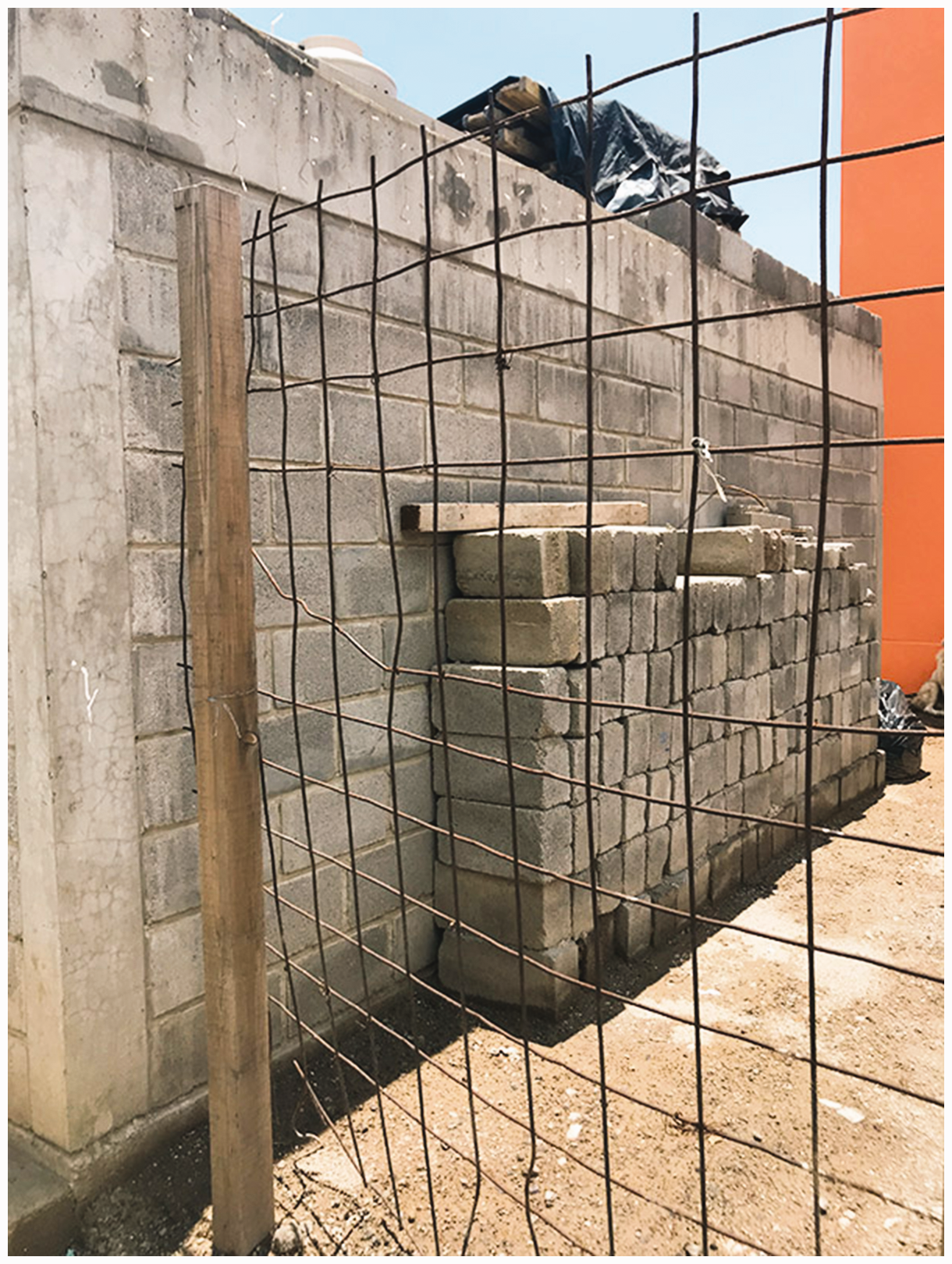
Bricks pulled from the rubble of a fallen structure, cleaned and organized for reuse.
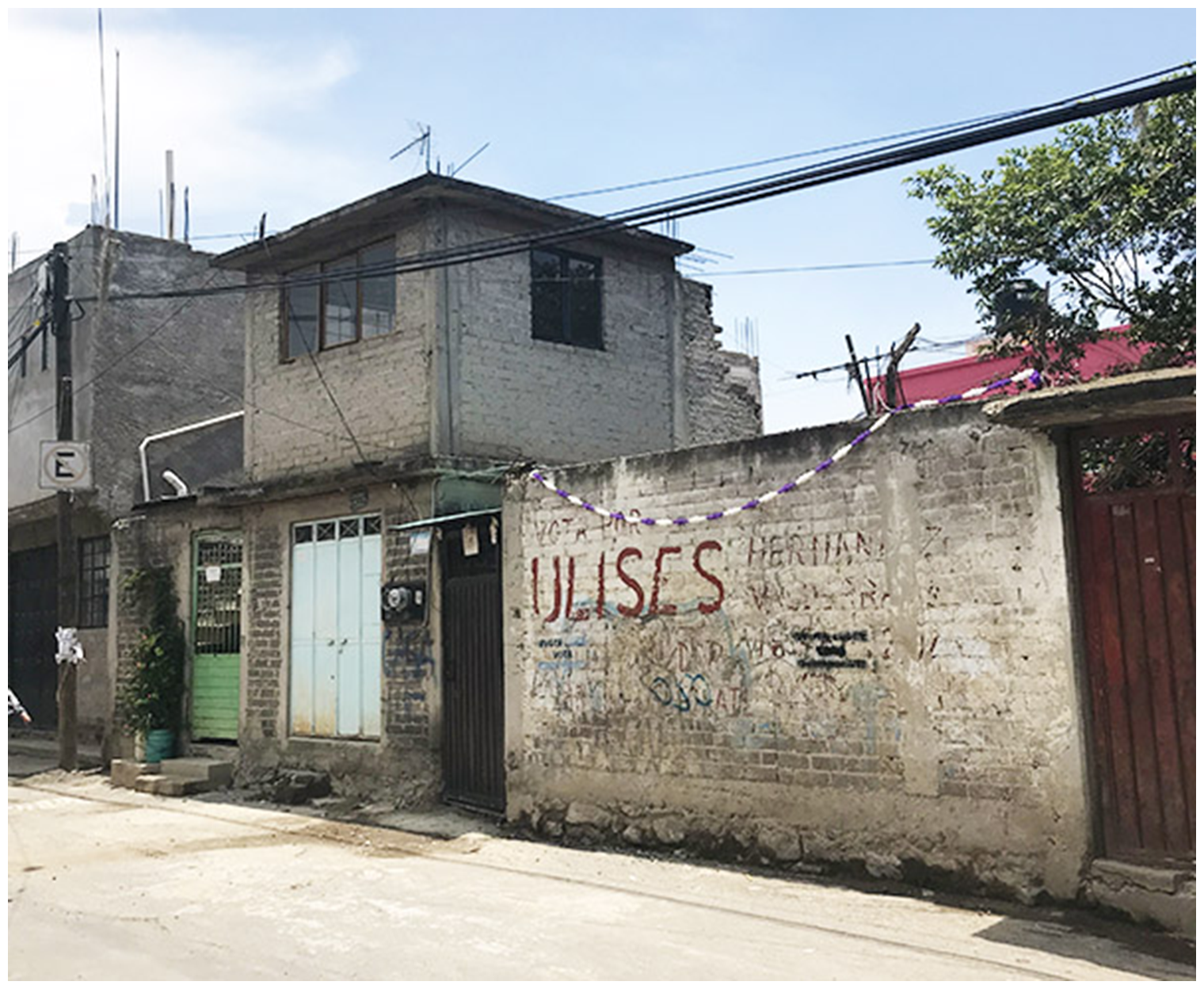
A home in San Gregorio with an autoconstructed second story.
Based on these observations and conversations, and evoking Madden’s (2021) intervention on disaster urbanization and Caldeira’s (2017) theory of peripheral urbanization, autorecovery in this case is contingent action operating both within the logics of disaster finance and state neglect, and in response to the temporal logics of ‘official’ and ‘community-led’ recovery. Further, autorecovery of housing and other critical community structures reproduces specific vulnerabilities. By design, irregular structures do not and would not adhere to the building codes Mexico City enacted for seismic safety after 1985. Therefore, if the residents in the central colonias of la Condesa and Narvarte Poniente are better resourced but frustrated by official state-led reconstruction and compensation, at least San Gregorio Atlapulco was able to recover some housing faster through an everyday practice of autoconstruction within the everyday disaster conditions that shape, define, and marginalize the community. But autoconstruction—although not always referred to as such by technical scholars and practitioners—has been a running concern of engineers and scholars working in seismic risk reduction in global Southern cities, where evidence overwhelmingly shows that self-built homes ‘perform poorly’ in even moderate earthquakes and flooding (Pozos-Estrada et al., 2019; Ward, 2015). Less discussed are the specific ways autoconstruction assists disaster recovery and reproduces vulnerability through the reconstruction process with reused or poor-quality materials and design. The process contributes to urbanization and contestation that remake political citizenship, but it also reproduces precarious urban space in the margins of finance structures designed to exclude.
Conclusion
In this article, I have woven emerging literature on disaster urbanization together with an established global Southern theory of peripheral urbanization to advance a theory of autorecovery and everyday disaster. To do this, I showed where disaster urbanization builds upon and extends what we know about peripheral processes by applying both ideas to spaces of ongoing precarity in the global South, where each supposition fills gaps for the other in the context of disaster finance as a specific urbanizing force. I grounded this in ethnographic observations and empirical data from the case of San Gregorio Atlapulco, Xochimilco, a peripheral colonia in Mexico City experiencing ongoing precarity in direct relationship to these global and state-led processes.
By highlighting scalar mismatches between finance instruments and actually existing disaster conditions, the San Gregorio case shows how existing state-led and globally marketized disaster financing schemes are insufficient for effective and complete recovery in marginalized places. In fact, these financing schemes constitute a form of disaster governance that reproduces irregularity where localized everyday disasters are ongoing in areas marked by logics of irregular urbanization. Further, these mismatches are shown to be compounded by state neglect and facilitated by the disconnectedness that defines peripheries—here disaster conditions are exacerbated and made ongoing by the deliberate prioritization of more regulated areas. The relationship between crisis and response continues to reproduce precarity in San Gregorio Atlapulco, which remains in a state of recovery that is indistinguishable from everyday life.
The broader case of México also shows that as disaster governance in global Southern states is pushed to global markets through risk transfer instruments like cat bonds, failure to effectively insure everyday disasters creates an additional finance gap that sits firmly below the insurance instruments designed to protect those funds. Inside this gap, the lived experience of everydayness is situated within state logics of neglect, which expands material spaces of precarity that reproduce peripheral processes. Ultimately, the case shows how financialized forms of global disaster governance affect urban spatial configurations within modes of disaster finance, not only through disaster itself, but through modes of repair.
Thinking through these forms of governance and modes of repair with the twin concepts of autorecovery and everyday disaster offers a more expansive conceptualization of disaster governance, risk, and recovery that responds to calls that challenge the pervasive focus on ‘resilience’ in contemporary development, disaster finance, and critical urban studies scholarship. Finally—and importantly—these concepts open up new ways to think about precarity and the burden of repair from lived experiences in the South.
Footnotes
Acknowledgements
I want to thank Desiree Fields, Yanin Kramsky, and Hayden Shelby for their helpful feedback on earlier drafts of this article. I also want to acknowledge María Moreno Carranco and Landy Sánchez Peña, who each generously included me in their own ongoing research projects in Mexico City. I have benefited significantly from their continued friendship and support. I also want to thank the two anonymous reviewers who took the time to offer thoughtful and constructive feedback. Finally, I am grateful to everyone who took the time to walk and talk with me about their experiences, or who shared their practical expertise during my research for this article.
Declaration of conflicting interests
The author(s) declared no potential conflicts of interest with respect to the research, authorship, and/or publication of this article.
Funding
The author(s) received no financial support for the research, authorship, and/or publication of this article.
