



Abstract
This paper interrogates the extent to which imaginaries of climate and ecological breakdown attend to the memories, knowledges, and experiences of communities already impacted by histories of racism, colonialism, and poverty. Drawing on insights from Black studies and decolonial thinking, the article reflects on how the causes and effects of anthropogenic climate change can be mapped onto geographies of racialised violence and social dispossession. Specific emphasis is given to Rio de Janeiro, notably its port area, a geographical space where future-oriented narratives remain oblivious to the city’s history of anti-Black violence and Indigenous genocide. In parallel, the paper looks at the recently built Museum of Tomorrow and its public representations of the Anthropocene. Overall, the article contends that pluralising accounts of the Anthropocene might offer alternative epistemic entry points for understanding and interrupting the mounting ecological catastrophe.
Eles combinaram de nos matar
Mas nós combinamos de não morer.
Introduction
This paper discusses forms of racial segregation, marginalisation, and erasure in a time of accelerating climate change and ecological decline. Drawing on understandings of the connections between racial formations and the designation of the Anthropocene as a new geological epoch (e.g. Baldwin and Erickson, 2020; Eichen, 2020; Saldanha, 2020; Vergès, 2017; Yusoff, 2018), this article considers how the causes and effects of climate and environmental change can be mapped onto geographies of racialised violence and social dispossession.
Climate change, extinction, and global environmental decline are processes that, over recent decades, have been associated with the thesis of the Anthropocene, that is, the proposed name for an epochal time period wherein humans have become the main agents of geological change (Crutzen, 2002). Drawing on insights from critical race studies, decolonial feminism, and Black geographies, this paper examines the idea of a new ‘human epoch’ in connection with the history of European colonisation of the Americas. I centre my discussion on Rio de Janeiro, a city marked by the historical violence of transatlantic slavery and the genocide of Indigenous people. In looking at the multiple and widespread reverberations of Brazil’s colonial past, this paper interrogates how the lives, histories, and experiences of Black and Indigenous people can inspire an alternative spatial politics in the Anthropocene.
In order to discuss public understandings of the new planetary phase, I provide a close reading of Anthropocene representations in museum exhibitions. In particular, I engage with the Museum of Tomorrow, a cultural venue recently built at the centre of Rio’s harbour area. An eye-catching and futuristic landmark, the museum’s main theme is the environment, specifically climate change and the deepening of global environmental degradation. Using this museum as a case study, I offer a discussion of cultural representations occurring in spaces other than Europe and North America, two regions over-represented within studies of the Anthropocene. 1 Drawing on six months of ethnography conducted in this institution, I examine the museum’s philosophy and practice, and analyse the ways in which epistemological and political orders are established and reproduced within its space.
Throughout the article, I combine decolonial theory with geographical readings of climate and environmental justice. Hence, my argument builds on a precept advanced by the decolonial turn in Latin America: the thesis that there is no modernity without coloniality. According to decolonial theorists (Mignolo, 2012; Quijano, 2007), coloniality can be defined as the imposition of racialised, patriarchal, and class-based hierarchies that marginalise non-Western cultures and histories. 2 In a similar vein, I draw on the work of scholars for whom modernity has been marked by the spatial arrangements of colonisation and domination (e.g. Bledsoe, 2015; McKittrick, 2006; McKittrick and Woods, 2007). As Katherine McKittrick (2006: x) notes, the modernity project has benefitted from ‘the profitable erasure of subaltern subjectivities, stories, and lands’. Therefore, from a geographical perspective, modernity has contributed to the production of space through the subjugation of ‘the other’, notably the Black and Indigenous body (McKittrick, 2006).
This article is divided into four parts. The first part outlines the broader research context of Brazil, a territory marked by the interlinked histories of African slavery and Indigenous genocide. The second part engages with Rio de Janeiro and its harbour area, focusing on its past as a slave-trade port and examining the afterlives of racial violence in its geography today. The third part reviews the Museum of Tomorrow, notably its Anthropocene gallery. It positions the museum exhibition as one that fails to critically interrogate racism as one of the most profound social relations shaping the current ecological crises. The paper concludes by arguing that accounts of the Anthropocene must be pluralised through alternative epistemic entry points. Principally, subaltern knowledges that offer guidance in heralding social justice and shaping inclusive futures.
Brazil: An intertwined history of Black slavery and Indigenous genocide
From the moment Portuguese colonisers first reached the coast of South America, the land that would come to be known as Brazil became a territory of extraction. Following the European invasion, fine woods, spices, pearls, animal furs, and other riches were transferred en masse to Europe. Later on, gold and diamonds, as well as coffee and sugar, became the primary commodities that Brazil supplied to an ever-expanding empire (Pádua, 2017). This predatory exploitation depended heavily on the forced labour of Indigenous peoples. Across the colony, large numbers of native people, mostly members of the Guaraní and Tupinambá groups, were captured and subjected to slavery by Portuguese settlers (Starling and Schwarcz, 2018). As historical accounts show, ‘from 1540 to 1570, Indian slaves were the primary producers of sugar in Brazil, accounting for almost all of the labour component in the southern sugar mills developing in the Rio de Janeiro region’ (Klein and Vidal-Luna, 2009: 27).
The slave-raiding expeditions, combined with direct violence and the spread of diseases, led to a rapid decrease in the Amerindian population (Marcílio, 1984; Starling and Schwarcz, 2018). This demographic decline, alongside a fierce resistance to subjection from the remaining Indigenous inhabitants and the imposition of legal constraints on Indian slavery, meant a decrease in the availability of forced labour for the colonisers’ plantations and mines. The need for an alternative supply of enslaved people was met when the Atlantic slave trade reached the flourishing market in Brazil around 1570 (Starling and Schwarcz, 2018).
As noted above, the colonial economy – based on sugarcane, cotton, mining, and coffee – generated a growing demand for enslaved African people, which reached its peak in the first half of the nineteenth century. Taken from their homelands in Central, West, and East Africa, the captives entered the American continent via several coastal cities, including Salvador, Recife, Fortaleza, Belém, and Rio de Janeiro (Eltis and Halbert, 2008). It is estimated that, between 1600 and 1850, approximately 4.8 million African slaves arrived on the coasts of Brazil (Curto and Lovejoy, 2004). It was not until 1850 that the transatlantic slave trade was forbidden, and 1888 that the lei aurea (‘Golden Law’) led to the total abolition of slavery (Klein and Vidal-Luna, 2009).
It is worth noting that during more than three centuries of Portuguese rule in the Americas, the violent forces of colonial expansion were met with fierce resistance by Indigenous peoples and African slaves alike. The formation of quilombos is a case in point. Quilombos or quilombola communities were formed by fugitive slaves and Indians who escaped to remote areas and developed systems of collective land use. Despite facing persecution from the colonial regime, these communities were not wholly eradicated, and today contemporary quilombos continue to keep the memories and legacies of those early insurgencies alive (Bispo dos Santos, [2015] 2019). 3
Resistance to Western colonialism and its aftermaths also found expression in the mythological systems of Amerindian cultures. A telling example is the cosmological thought of the Yanomami people, the main strands of which are captured with great eloquence and poetry in The Falling Sky (Kopenawa and Albert, 2013). Written by anthropologist Bruce Albert and Yanomami shaman Davi Kopenawa, The Falling Sky tells the story of a past mythical event that simultaneously prefigures the destiny of our contemporary world. Just as the sky fell before destroying a previous form of humanity, it will fall again, this time due to the emissions produced by Western and Westernised societies and their practices of devastation and extraction. Seen in this light, The Falling Sky can be read as a cosmo-ecological manifesto that underscores the ‘territorialisation of multiple forms of Anthropocene violence’ (Szerszynski, 2017: 266).
As the experience of the Yanomami people shows, when considering the multifaceted violence of the colonial project, one can argue that European colonisation entailed not only the plunder of natural resources but the eradication of local peoples’ forms of self-determination over their bodies and lands. As Danowski and Viveiros de Castro (2016: 104) put it, ‘losses of world, demographic catastrophes, and ends of History, means simply this: for the native people of the Americas, the end of the world already happened – five centuries ago. To be exact, it began on October 12, 1492’.
In summary, the entangled violence of slavery and genocide was one of the most deplorable and painful consequences of the colonial enterprise. In Brazil, and in other regions of Latin America, European rule instituted the domination of communities racialised as Black and Indigenous. 4 Since then, historically racialised populations have resisted the systems of oppression, dispossession, and extraction inaugurated by colonisation. Building on the above, the next section examines how the aftermath of modernity and colonialism is expressed in Rio de Janeiro’s contemporary spatial organisation.
Rio’s Little Africa and the spatial politics of race
Prior to European colonisation, the areas surrounding present-day Rio de Janeiro were inhabited by several Indian communities, including the Tamoio and the Temiminó, both belonging to the Tupinambá ethnolinguistic group (Karasch, 1985). It was in this region, known by the Indians as Ganabará and today called the Guanabara Bay, that a group of Portuguese sailors landed in 1502. In 1565, after repelling invasions by other European colonisers, the Portuguese settlers founded the captaincy of Rio de Janeiro, a military and religious outpost meant ‘to serve as a base for future military and missionary expansion into the interior’ (Karasch, 1985: 124).
From its foundation, Rio played a key role in the colonial economy, constituting a central node in the trade system sustained between Portugal, other regions of Brazil, the Spanish colonies, Africa, and Asia (Karasch, 1985). While Salvador and Recife constituted the two major slave ports during the 17th century, with the discovery of gold mines in the 18th century, ‘Rio de Janeiro became the busiest port, from where the captives were re-exported to Minas Gerais and Mato Grosso’ (Starling and Schwarcz, 2018: 80). This discovery was followed by the transferral of administration of the colony from Salvador to Rio in 1763 (Karasch, 1985). Henceforth, the volume of disembarked slaves increased at a dizzying rate. According to the Transatlantic Slave Trade Database, between 1811 and 1842, at least 620,000 African captives arrived in Rio de Janeiro (Eltis and Halbert, 2008). 5
An important entry point was the Valongo Wharf, a stone pier in the central area of the city (Figure 1). For more than 60 years, this wharf served as the first piece of land that African people set foot on after the long and painful journey across the Atlantic. The newcomers would be led directly to warehouses and quarantine facilities in the vicinity of the wharf. Those who did not survive the ordeal were buried in mass graves nearby.
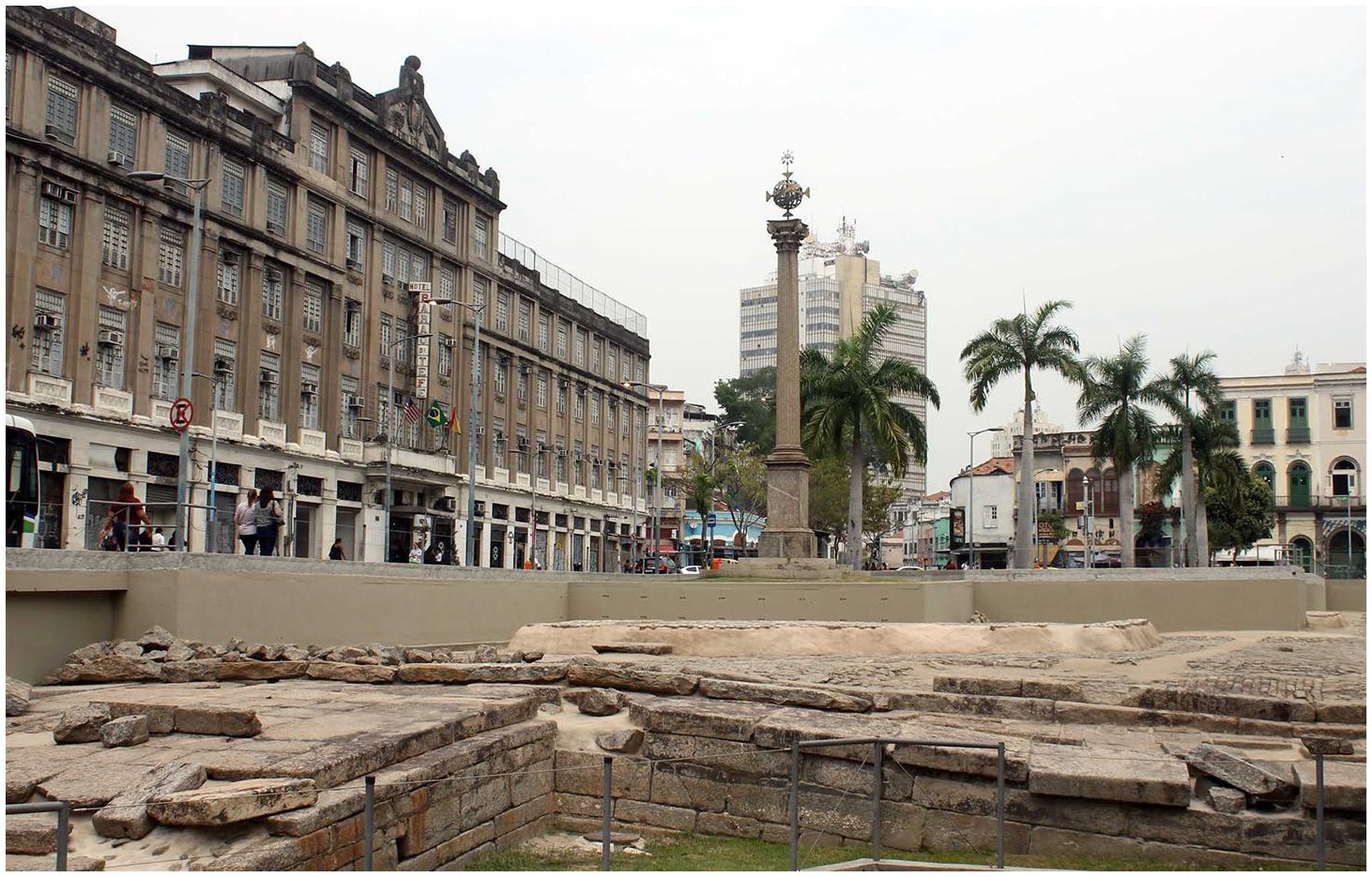
Valongo Wharf archaeological site (photo by the author).
Throughout the slave trade period, the Valongo Wharf and its immediate area was re-shaped by African people and the culture of their homelands. The constant movement of ships arriving from and returning to Africa meant that the area remained closely tied to the African continent. In other words, ‘at the Valongo Wharf, Africa was still very much alive’ (Lima et al., 2014: 106).
Following the abolition of slavery, the region around the old wharf remained inhabited by largely Black residents. At this point, favelas 6 became a visible part of the area, and ‘Black communities played an active if unrecognised role in their creation’ (dos Santos, 1996: 74). The Providência favela, the most populous community of the region, was founded when a group of former soldiers settled on a hill near the port and built small, mud-brick houses. Other inhabitants came later, including former slaves, many of whom had only been freed in 1888. Ultimately, the port region came to be known as Pequena África (Little Africa), establishing itself as a Black stronghold, where cultural and religious practices were grounded in the memory of African ancestry (Racy and Rodrigues, 2019; Sampaio, 2019).
In the second half of the 20th century, Rio de Janeiro underwent a period of economic decline and depopulation, two processes largely triggered by the transfer of the country’s capital to the city of Brasilia in 1960 (Gaffney, 2016). During this period, a lack of public investment exacerbated urban degradation and the rise of marginality, violence, and deprivation (Acioly, 2001; Sánchez and Broudehoux, 2013). By the start of the 21st century, Little Africa was predominately ‘classified by the city’s moral geography as a region of prostitution, drug traffic and favelas’ (Sampaio, 2019: 210). Moreover, the rise in industrial activity during the 20th century had led to a rapid deterioration of the area’s environment. From 1930 onwards, the Guanabara Bay was chronically impacted by raw sewage, petroleum residues, and industrial discharges (Fistarol et al., 2015). Today, the bay and its effluents exhibit high levels of eutrophication and the presence of polluting substances like mercury and micro-plastics (Kehrig et al., 2011; Olivatto et al., 2019). This level of pollution raises additional concerns in regards to the health of the area’s residents (Fistarol et al., 2015).
It was against this background of growing environmental degradation and inattention to social challenges that Rio de Janeiro won the bid to host the 2016 Summer Olympics. In preparation for the international event, a plan for the revitalisation of the port area was set in motion. By the name of Porto Maravilha (The Marvellous Port), the ambitious renewal plan intended ‘to sanitise, civilise, and project a cosmopolitan city image to both locals and tourists’ (Gaffney, 2010: 25). Enmeshed in a neoliberal mode of urban development (Gaffney, 2010), the revitalisation project soon led to a series of social injustices, including the displacement and forced removal of Black and impoverished residents (Worms and Sluyter, 2018). These spatial dynamics echoed Rio’s long history of inequitable social relations. As geographers and urban theorists have long argued (Arias, 2008; Larkins, 2014; Mitchell and Reiter, 2010 Perlman, 2010; Leeds, 1996 as cited in Worms and Sluyter, 2018), colonial ideologies and practices concerning land and slave ownership continue to influence contemporary Brazilian society.
The highly speculative nature of the Marvellous Port plan resulted in the production of ‘socio-spatial segregation and the creation of an enclave in which the poor had no right or place’ (Sánchez and Broudehoux, 2013: 146). Indeed, Little Africa’s spatial organisation renders visible a marked structure of racial inequality and class hierarchy. On its coastal side, the port landscape has been transformed into a commercial district where first-rate museums, corporate headquarters, and a new cruise-ship terminal act as Rio’s new international face (Sánchez and Broudehoux, 2013). A few miles away, residents of the Providência favela endure fragile infrastructure and inadequate access to public services (Worms and Sluyter, 2018). Moreover, as climate change brings extreme weather and other environmental challenges, favela dwellers will bear the brunt of climate-related impacts. 7 As studies of environmental racism remind us (e.g. Pulido, 2015, 2017), the damaging effects of climate change are not distributed evenly but are felt most severely by communities already affected by racism and poverty.
Despite the warnings of scientists regarding this climate vulnerability, the reaction of Rio’s authorities has been far from satisfactory. Rather than committing to building resilience, they have directed their efforts and resources towards constructing a glittering new future, overlooking the mounting vulnerabilities of Rio’s racialised populations. As I argue below, these populations’ efforts to resist environmental decline – intellectually, politically, and in practice – will be paramount to the pursuit of environmental justice in the Anthropocene.
The Museum of Tomorrow
The revitalisation of Rio’s harbour district entailed the conversion of working-class areas into sites of capital accumulation and global consumption (Gaffney, 2016). In the process, architectural change and gentrification were used to target international tourists, corporate interests, and upper- and middle-class lifestyles (Diniz, 2014 as cited in Gaffney, 2016). As part of this urban rejuvenation, a series of leisure amenities and cultural spaces were created, including the brand-new Museum of Tomorrow (Museu do Amanhã). Designed by world-famous architect Santiago Calatrava, the museum’s stunning white building soon became an architectural landmark, and the epitome of the modernisation of the port area (Pio, 2013; see Figure 2).
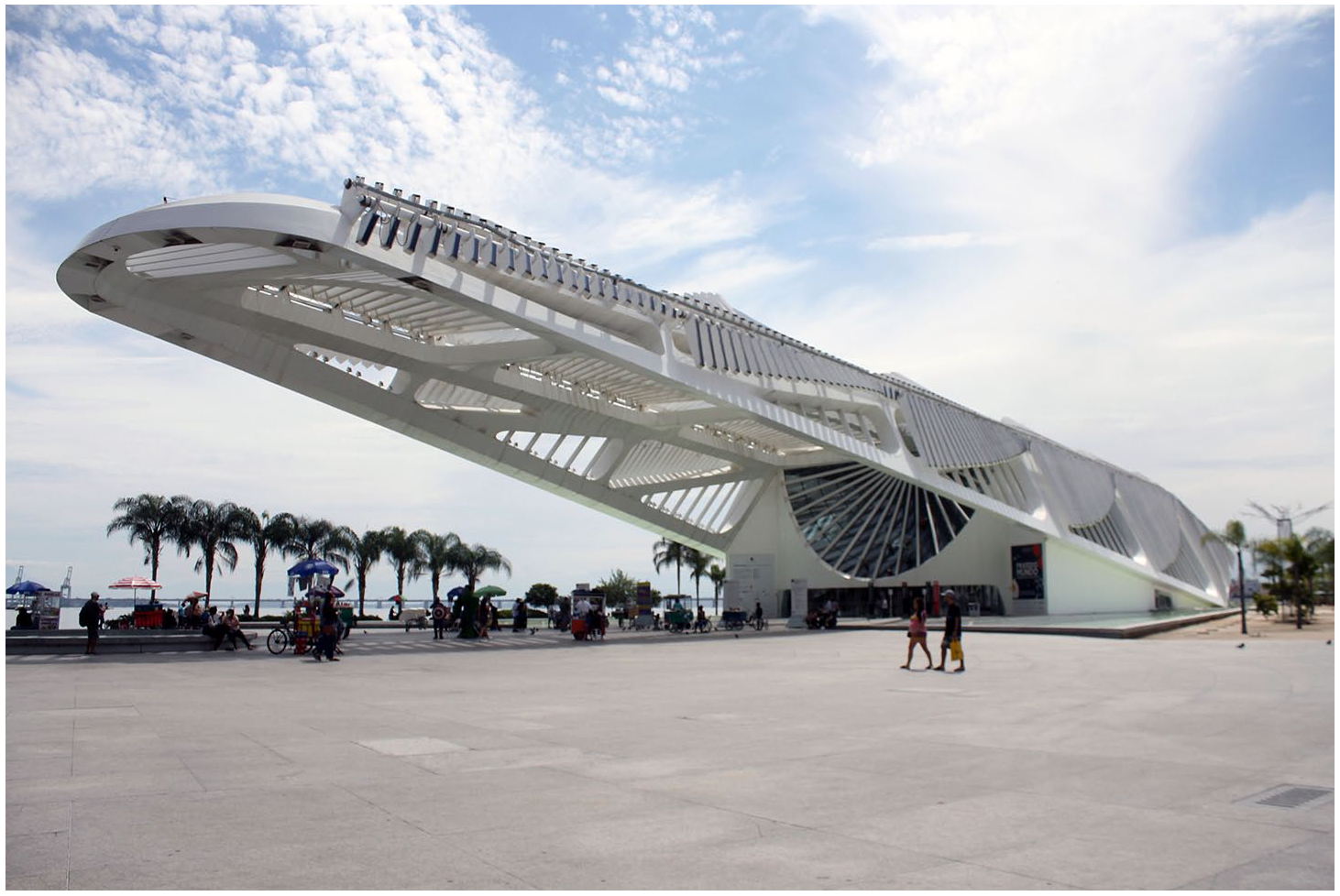
Museum of Tomorrow (photo by the author).
In what follows, I analyse the Museum of Tomorrow and its endeavour to communicate the climate and environmental crises to a broader audience. The discussion offered here is based on 6 months of ethnographic research conducted at the museum in 2019. This ethnographic immersion encompassed more than 30 independent walks across the museum’s galleries, as well as the observation of group visits mediated by museum guides. In addition, I undertook in-depth interviews with 13 members of staff, including curators, educators, scientific editors, and consultants. Finally, a collection of more than 800 photographs was used to conduct visual and textual analysis of the museum’s scientific contents.
As its name suggests, the Museum of Tomorrow aims to promote reflection on the shared future of humanity and the planet (MDA, 2018). Incorporating science and art, its in-house exhibition – which is almost entirely digital – leads visitors on a journey that stretches back to the origins of the planet and extends 50 years into the future. After presenting the geological emergence of the Earth and the evolution of life on its surface, the exhibition focuses on the more recent appearance of the human species. At this point in the tour, visitors arrive at the Anthropocene gallery, where a circular arrangement of 10-metre-tall digital totems play a video loop showing real-life catastrophic scenarios. Standing in the centre of this display, visitors are assaulted from every direction with clips of burning forests, melting glaciers, bleached coral reefs, and the death of wild animals. Emotionally distressing, the images and soundscape saturate the room, conjuring an atmosphere of apocalyptic anxiety (Figure 3). Intermingled with images of destruction, the screens display hockey stick graphs of ocean acidification, greenhouse gas emissions, and population growth.
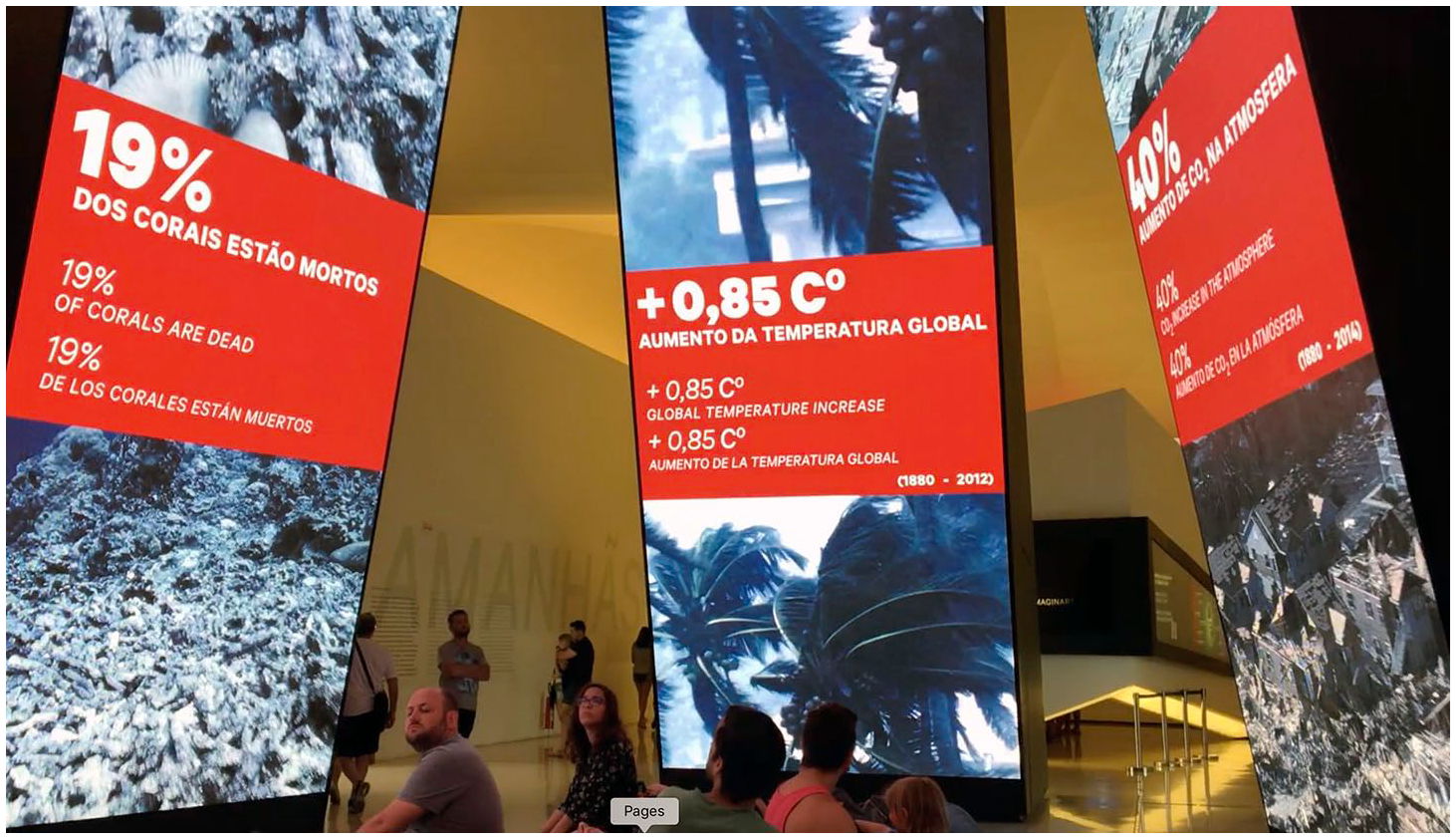
Anthropocene gallery at the Museum of Tomorrow (photo by the author).
In recent years, science and natural history museums have sought to provide insights into the environmental crisis, whether through the frame of climate change or the Anthropocene (see Cameron, 2012; Kiefer, 2020; Robin et al., 2014). In this context, the Anthropocene has served as a charismatic mega-category (Hartigan, 2014); an umbrella term that encompasses a long series of human-driven ecological outcomes. Correspondingly, at the Museum of Tomorrow, the Anthropocene is equated to a worldwide cataclysm, and the new planetary phase is described as a global problem that all members of humanity have contributed to. Against this backdrop, the exhibition suggests that all humans will be the victims of an ever more erratic and aggressive environment.
While there is no doubt that, to varying degrees, all humans are implicated in the production of the planetary crisis, the cultural and historical differences that divide humanity deserve some unpacking. As critical scholars have long insisted (e.g. Crist, 2013; Malm and Hornborg, 2014; Moore, 2016), universalistic accounts of the Anthropos obscure gender, race, class, and other inter-species differences. In a similar vein, decolonial critiques of the Anthropocene (e.g. Davis and Todd, 2017; Todd, 2015; Whyte, 2017) have called into question the inadequacy of an equal distribution of responsibility for environmental collapse among all human groups. At this junction, Indigenous voices from Brazil have come to view critically the meanings of collective existence reproduced by Anthropocene discourse. As intellectual and political leader Ailton Krenak (2020: 59-60) has noted: The Anthropocene plays such a dominant role in shaping our existence, our collective experience, and our idea of what humanity means. Our adherence to a fixed idea that the globe has always been this way and humanity has always related to it the way it does now is the deepest mark the Anthropocene has left. This mental configuration is more than an ideology, it’s the construction of the collective imaginary – various generations in succession, layers upon layers of desires, projections, visions, whole cycles of life inherited from our ancestors, which we have honed and chiselled into a version we feel really fits our purpose and aspirations. [. . .] It’s like we’ve settled on a memory that is comfortable and pleasant to us.
Further critiques of the Anthropocene contend that the species category fails to critically interrogate racism as one of the most profound social relations shaping today’s ecological crises. As geographer Laura Pulido (2018) claims, though it is unlikely that a single event or process created the Anthropocene, racism necessarily played an important part. Not only are the impacts of environmental pollution racialised, but many of the meta-processes that have contributed to the Anthropocene – industrialisation, urbanisation, and capitalism – run along racial lines.
Embracing the figure of the human-as-Anthropos, the Museum of Tomorrow diverts attention from the uneven vulnerabilities of the climate disaster. For instance, the video projected on the digital totems displays a series of headshots of individuals with varied phenotypes and cultural ornaments (Figure 4). While this representation denotes the racial and ethnic diversity that characterises humanity, it elides an explicit acknowledgement of those power relations sustained by racial difference. In a different section of the gallery, the geopolitical relations between an industrialised Global North and an impoverished Global South are expressly recognised through photographs and explanatory text. Despite these differentiations, the gallery avoids a more difficult conversation about racial formations and global inequality. Indeed, global environmental injustice is often pictured through dissimilar geopolitical relations between developed and developing countries, a narrative that risks side-lining the racial dimensions that permeate uneven vulnerabilities to climate-related impacts (Pulido, 2018).
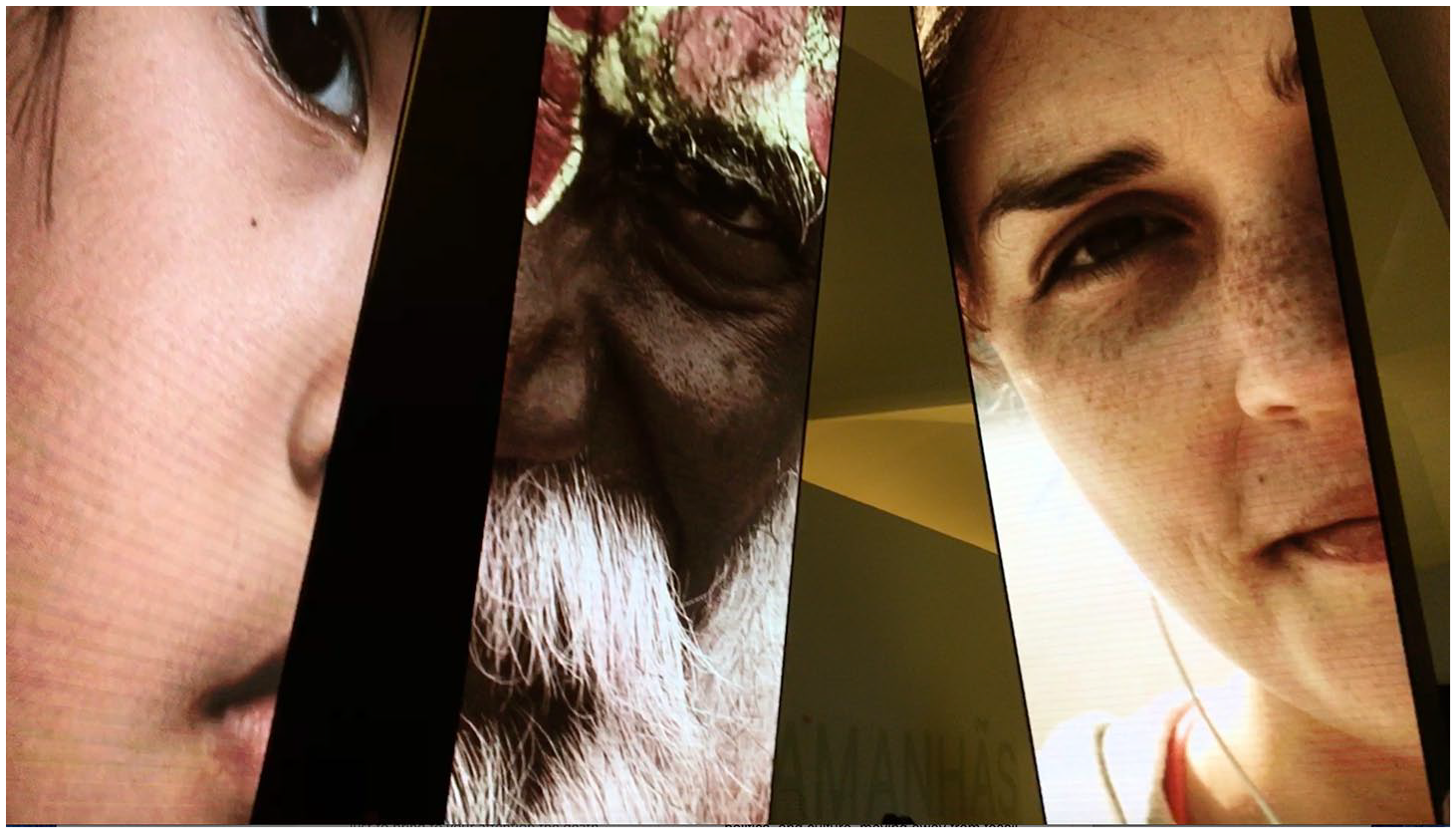
Anthropocene gallery at the Museum of Tomorrow (photo by the author).
While drawing on the most up-to-date evidence of environmental degradation, the Museum of Tomorrow remains incapable of critically engaging with the racial disparities that subtend the ecological crisis. As my interviews with the museum’s curators revealed, the institutional consensus was to focus on the geophysical evidence of the Anthropocene, while setting aside debates around racial inequality. This curatorial decision has manifested itself throughout the museums’ galleries, where the displays largely overlook the ways in which the worst effects of global warming and pollution are being felt by Brown and Black populations (Saldanha, 2020; Vergès, 2017).
Overall, these omissions at the Museum of Tomorrow reflect what Eichen (2020: 48) describes as ‘a general avoidance of the development of relations and linkages between climate change, the production of racialised subjects and capital accumulation’. To further illustrate this disjunction, I want to draw attention to the ties between the Museum of Tomorrow and a fossil fuel corporation. Since opening in 2015, the museum has welcomed corporate funding from Shell, a company widely accused of being one of the largest polluting enterprises (Taylor and Watts, 2019), and the culprit of multiple environmental disasters worldwide. 8 Considering that the museum’s central theme is the environment, this partnership appears incoherent at the very least. As evidence shows, only 90 fossil fuel companies and extractive industries are directly responsible for almost two-thirds of industrial carbon pollution emitted into the atmosphere since 1864 (Heede, 2014).
In their text Art in the Anthropocene, Heather Davis and Étienne Turpin (2015) argue that the devastation that characterises the Anthropocene is not merely the result of activities undertaken by the species Homo sapiens. Instead, these effects derive from ‘a particular nexus of epistemic, technological, social, and political-economic coalescences figured in petrocapitalism’ (Davis and Turpin, 2015: 7). Petrocapitalism, they suggest, is not an isolated driver of the climate disaster, but is at the core of its production. The insidious influence of fossil capital extends even into the world of art and culture, typically to promote stronger images of corporate responsibility (Evans, 2015). However, as climate change becomes an increasingly urgent concern, public pressure has led museums to reconsider their close relations with gas and oil corporations. In response to vociferous complaints from activists, scientists, and the general public, institutions like the Tate Modern (London), the American Museum of Natural History (New York), and the Australian Academy of Science (Canberra), among others, have announced their commitment to divest from fossil fuels (Evans, 2015; Lyons and Bosworth, 2019).
As critical scholarship shows (e.g. Blaser and de la Cadena, 2018; Estes, 2019; Gómez-Barris, 2017), the colonial agenda of the extractive industry is self-evident. At every stage of the industrial process, from extraction to transport and refinery, the fossil fuel and mining sectors have created countless catastrophes, the majority affecting Indigenous, Afro-descendant, and peasant communities. Coupled with these damaging polluting practices, the reluctance of extractive industries to stop adding carbon dioxide into the atmosphere can be seen as a deliberate act to perpetuate climate injustice.
Drawing on Ruth Wilson Gilmore’s (2007: 28) definition of racism as the ‘exploitation of group differentiated vulnerabilities to premature death’, Pulido (2018) argues that this indifference towards certain populations reinforces racism. As she points out, by not intervening in processes that will lead to mass deaths, governments, and corporations avoid both burdensome regulations and ethical responsibilities. Instead, they carry on as usual, working to maintain their profit levels and feeding the cycle of capital accumulation (Pulido, 2018). Seen in this light, a disregard for Black and Indigenous lives in the Global South interweaves with other socio-political conditions, including lax environmental regulations and a lack of corporate accountability, helping to perpetuate climate and environmental injustice.
Overall, the commercial ties between the Museum of Tomorrow and Shell illustrate how corporate-driven interests override the lives and livelihoods of Black and Indigenous populations, both in Brazil and elsewhere. While the museum claims to be invested in humanity’s survival, its financial priorities suggest otherwise, and its inability to find alternative sources of funding reveals a comfortable passivity in the face of looming climate disaster. As the extractive economy drives species towards mass extinction and endangers humans and non-humans alike, the complacency of museums towards the world’s biggest polluters can be interpreted as equivalent to consent (Lyons and Bosworth, 2019).
Decolonising cultural imaginaries of the Anthropocene
Building on the above, this section further considers the context of Brazil as a territory subjected to the expansion of the extractive agenda at the expense of communities already impacted by histories of racism and colonialism. As such, it attempts to answer the following two questions: what does the advent of the Anthropocene mean in the Brazilian context, and what is the role and responsibility of museums in this region at a time of climate crisis?
At this point, it is pertinent to consider the broader history of cultural representation in Brazilian museology. As Pacheco and Melo (2019) recount, throughout the 19th century, museums and archives in Brazil played a key role in the formation of the country’s national subjectivity, a process that gave little or no space to the voices of marginalised populations in the region. By the end of the 20th century, however, hegemonic representations of nationhood were significantly contested through the emergence of community-led museums, Indigenous museums, and like-minded associations. These new organisations were soon consolidated as spaces where historically overlooked communities could exert their right to self-representation (Pacheco and Melo, 2019). As a result, museums in Brazil saw a diversification in their forms of operation, giving way to collaborative work in the production of images and narratives, while putting the communities’ needs, premises, and political struggles at the centre (Roca, 2015).
When considering this regional context, one cannot help but wonder about the kind of stories the Museum of Tomorrow tells and the voices that remain excluded. As described above, the museum adopts a universal view of the Anthropocene, that is, a narrative that attributes changes in the global environment to the actions of a generic and universal Anthropos. In privileging this viewpoint, the museum fails to incorporate more embodied, situated, and contextualised experiences of the climate and ecological crises.
At this junction, a decolonial perspective proves useful in making sense of the epistemic erasures occurring through the production of cultural imaginaries of the Anthropocene. As Mignolo (2012: ix) contends, Western ‘civilisation [has] constructed its own history, assuming that the history of the planet [is] its property too and that it [is] the point of arrival in an ascending history of the human species’. This universal and linear worldview operates through the simultaneous construction of human subjects and less-than-human objects. As such, it produces schisms within humanity by inscribing itself onto bodies, minds, and histories, while concurrently promulgating a logic of objectification. In other words, coloniality denies subaltern people their full subject status as human beings, and establishes difference based on an alleged lack of knowledge, history, and development (Maldonado-Torres, 2007; Quijano, 2007; Wynter, 2003).
Seen from a decolonial perspective, much Anthropocene discourse re-inscribes a naturalised under-recognition of non-Western knowledge. Not only do scientific discussions of the Anthropocene’s temporal limit occur in the Euro-American academy, but imaginative configurations of the new epoch tend to be Western-centric (Davis and Todd, 2017). Drawing on this and other critiques of the universalising logic of the Anthropocene (e.g. Simpson, 2018; Whyte, 2017; Yusoff, 2018), in what follows, I describe two forms of erasure occurring in the Museum of Tomorrow.
The first erasure concerns the museum’s failure to recognise connections between the Black subjugation of the transatlantic slave trade and the Anthropocene disaster. Lacking specific reference to the aftermaths of the Middle Passage or the colonial plantation, the Museum of Tomorrow portrays the Anthropocene as an epoch limited by the chronology proposed by the Anthropocene Working Group, namely the mid-20th century boundary (see Steffen et al., 2015). From Indigenous and feminist perspectives, however, thinking about Anthropocene temporalities cannot occur without explicitly acknowledging the ‘interdependent violences of the transatlantic slave trade and the genocidal dispossession of Indigenous peoples and territories’ (Davis and Todd, 2017: 772). In following Christina Sharpe’s concept of ‘wake work’, Davis and Todd (2017) argue that if the Anthropocene is described as a disaster in dominant scientific discourses, these discourses must also consider the disaster of the Middle Passage. In Sharpe’s (2016: 7) words, ‘transatlantic slavery was and is the disaster’, and as an atemporal catastrophe, its reverberations continue to influence contemporary forms of spatial, political, and epistemic configuration.
When the Museum of Tomorrow refuses to pluralise its account of the Anthropocene, it obscures the entanglement between capital violence and white supremacy, both of which have direct roots in ‘the epistemic violences of discovery, dispossession, extraction, and the horrific capture of life, bodies, and worlds’ (Davis and Todd, 2017: 772). Despite being located only a few yards away from the Valongo Wharf archaeological site – a powerful reminder of the Middle Passage – the museum opts to elide historical perspectives on colonialism. This choice suppresses key entanglements of space, time, and injustice, while curtailing possibilities for the public to meaningfully engage with colonialism and capitalism as two forces that subtend today’s ecological catastrophe.
The second erasure concerns the absence of the voices, philosophies, and worldviews of contemporary Indigenous and Afro-descendant groups, notably those from the museum’s regional context. As widely documented (Bispo dos Santos, [2015] 2019; Issberner and Léna, 2017; Krenak, 2020; Pádua, 2017), Indigenous and quilombola territories in Brazil suffer from the ongoing invasions of agribusiness, illegal mining, and oil concessions. This entails not only the pollution and depletion of their lands but constitutes a direct threat to their livelihoods, knowledges, and futures. Numerous large-scale disasters illustrate this type of injustice, including the spilling of 1.3 million litres of oil in the Guanabara Bay in January 2000 (Jablonski et al., 2006), and the mudslides caused by the collapse of the Mariana and Brumadinho dams in 2015 and 2019, respectively. 9
The absence of an in-depth account of environmental injustice in the Museum of Tomorrow resonates with the wider exclusion of Indigenous experiences from dominant theorisations of climate change and the Anthropocene. As Anishinaabe scholar Kyle Whyte (2017, 2018) argues, Indigenous understandings of climate change often arise from memories and experiences of adaptation to seasonal and inter-annual environmental changes, differing from the knowledge produced by non-Indigenous scientists, environmentalists, and politicians who are prominent in framing the issue today. As societies that have been heavily disrupted by colonialism and industrialisation, Indigenous peoples deal with environmental disruption by offering radical strategies that respond to their own ancestral visions and ways of imagining the future (Callison, 2015; Estes, 2019; Krenak, 2020; Whyte, 2017).
With the abovementioned erasures in mind, I would like to suggest an epistemic move for the Museum of Tomorrow. That is, a paradigm shift that does not necessarily imply disregarding the Anthropocene as a category, but which considers the new epoch as part of a longer history of racial and colonial subjugation. This paradigm shift may offer the museum alternative epistemic entry points, as well as new opportunities to become an advocate of environmental justice, that is, to use its privileged position to amplify and legitimise the struggles of those groups at the frontline of the climate and environmental disaster.
In short, and as a response to the Museum of Tomorrow’s naturalisation of a post-racial apocalyptic future, I argue that this institution would do well to undertake self-examination and recalibrate its attitude towards climate change and the advent of the Anthropocene. Such a revision could not only encompass a pledge to cut ties with fossil fuel companies, but to seriously analyse the ways in which its operation benefits from colonial violence. In this respect, I contend that the museum’s relevance should not be solely gauged by its capacity to disseminate scientific evidence, but by its ability to participate in the processes of social change necessary for planetary survival.
Conclusion
Following the idea that ‘theorisations of the Anthropocene have mostly elided the thematic of race’ (Baldwin, 2017: 294; see also Pulido, 2018; Simpson, 2018; Yusoff, 2018), this paper has argued that the causes and effects of anthropogenic climate change can be mapped onto geographies of racialised violence and social dispossession. In particular, the paper has analysed the case of Rio de Janeiro, a city marked by the combined histories of genocide, enslavement, and ecocide. In focusing on Rio’s harbour area, this article has shown that, while much energy has gone into creating spaces of capital accumulation, less attention has been paid to the port’s inhabitants, whose socio-ecological vulnerabilities continue to mount as the climate and ecological crises unfold.
Furthermore, this paper has argued that cultural imaginaries of the Anthropocene have tended to ignore the memories, knowledges, and experiences of Black and Indigenous peoples. Taking the Museum of Tomorrow as a case study, I have sought to illustrate how cultural spaces can reinforce discourses of the future that erase Black and Indigenous subjectivities, replicating imaginative configurations in which Black and Brown lives are rendered un-geographic (McKittrick, 2006). Moreover, through an in-depth discussion of the museum’s curatorial practice, I have asserted that this cultural institution has failed to recognise the interconnections between local conditions of racial violence and global phenomena like climate change and the Anthropocene, thus remaining complicit with the status quo and hegemonic readings of environmental degradation. In line with this, I have contended that the museum’s lack of critical engagement with the geographical and socio-political context of Rio’s port area enhances this epistemic erasure and reproduces colonial violence.
Overall, and rather than arguing for alternative epochal names or the rejection of the Anthropocene category altogether, this paper has contended that Anthropocene conversations – in museums and elsewhere – hold the potential to openly recognise the colonial landscapes and deep histories of racism that have in part shaped the current socio-ecological disaster. Against this backdrop, pluralising accounts of the Anthropocene might offer ‘alternative epistemic entry points for understanding and interrupting the mounting ecological crises’ (Roane and Hosbey, 2019: para. 1)
In conclusion, it remains to be seen if contemporary Anthropocene thinking will become more attuned to the lives and experiences of colonised and racialised populations, particularly in the Global South, where these communities have long resisted systemic racism and the onslaught of extractive violence. For as long as the interdependencies between the Anthropocene and the pursuit for environmental justice remain overlooked, the possibilities of conjuring decolonial, climate-safe futures will remain severely limited.
Footnotes
Acknowledgements
I would like to thank Kathryn Yusoff, Kerry Holden, and special issue editors Lisa Tilley, Anupama Ranawana, Andrew Baldwin, and Tyler Tully. This article greatly benefitted from the intellectual engagement and generous feedback of two anonymous reviewers. Any faults remain my own.
Funding
The research for this article was supported by a grant from the Society for Latin American Studies.
