




Abstract
This article investigates the effect of length-to-thickness ratio and elastic foundation parameters on the natural frequencies of a thermoelastic microbeam resonator. The generalized thermoelasticity theory of Green and Naghdi without energy dissipation is used. The governing frequency equation is given for a simply supported microbeam resting on Winkler–Pasternak elastic foundations. The influences of different parameters are all demonstrated. Natural vibration frequencies are graphically illustrated and some tabulated results are presented for future comparisons.
Introduction
Nonisothermoelastic structures are of great interest and have become increasingly important in different engineering industries. It is well known that there are many generalized thermoelasticity theories devoted to treat the errors of the classical thermoelasticity theory. In the classical theory, 1 the heat conduction occurs at an infinite speed so that the heat wave propagation phenomena and other some behaviors cannot be successfully captured. Lord and Shulman 2 used one relaxation time parameter into the Fourier heat conduction equation which turns out to be of a hyperbolic type. Green and Lindsay 3 used two relaxation time parameters in their thermoelastic model. Green and Naghdi4,5 ignored the internal rate of production of entropy in their thermoelasticity theory without energy dissipation. Recently, Zenkour 6 presented a unified generalized thermoelasticity theory for the transient thermal shock problem in the context of Green–Naghdi (G–L), Lord–Shulman (L–S), and coupled thermoelasticity (CTE) theories.
The vibration analysis of micro/nano beams in the context of generalized theory of thermoelasticity has been treated by many investigators. The coupled thermoelastic problem of vibration phenomenon during pulsed laser heating of microbeams is investigated by Fang et al. 7 and solved using an analytical–numerical technique based on the Laplace transformation. Soh et al. 8 developed a generalized solution for the coupled thermoelastic vibration of a microscale beam resonator induced by pulsed laser heating. Guo et al. 9 investigated the coupled thermoelastic vibration characteristics of the axially moving beam. Guo and Wang 10 discussed the thermoelastic coupling vibration characteristics of the axially moving beam with frictional contact. Sharma and Grover 11 derived the transverse vibrations of a homogenous isotropic, thermoelastic thin beam with voids, based on Euler–Bernoulli (E–B) theory have been. Grover 12 derived the transverse vibrations of a homogenous isotropic, thermally conducting, Kelvin–Voigt-type viscothermoelastic thin beam, based on E–B theory. Belardinelli et al. 13 proposed the governing equations of a thermomechanical problem for a slender microbeam subjected to an electric actuation by making use of a unified model. The vibration of nanobeams induced by sinusoidal pulse heating via a nonlocal thermoelastic model is presented by Zenkour and Abouelregal. 14 The same authors 15 studied the nonlocal thermoelastic vibrations for variable thermal conductivity nanobeams due to harmonically varying heat. Carrera et al. 16 studied the vibrational analysis for an axially moving microbeam with two temperatures. Abouelregal and Zenkour 17 presented the generalized thermoelastic vibration of a microbeam with an axial force. Zenkour et al. 18 presented the state–space approach for the vibration of nanobeams based on the nonlocal thermoelasticity theory without energy dissipation. Zenkour and Abouelregal 19 presented the thermoelastic vibration of an axially moving microbeam subjected to sinusoidal pulse heating. Zenkour and Abouelregal 20 discussed the effect of ramp-type heating on the vibration of functionally graded microbeams without energy dissipation.
However, the vibration analysis of micro/nano beams resting on elastic foundations still rare in the literature is the main subject in many investigations.21–26 Şimşek 23 proposed analytical and numerical solution procedures for vibration of an embedded microbeam under action of a moving microparticle based on the modified couple stress theory within the framework of E–B beam theory. Akgöz and Civalek 24 investigated the vibration response of nonhomogenous and nonuniform microbeams in conjunction with E–B beam and modified couple stress theory. Şimşek 25 developed a nonclassical beam theory for the static and nonlinear vibration analysis of microbeams based on a three-layered nonlinear elastic foundation within the framework of the modified couple stress theory. Vosoughi 26 presented the nonlinear free vibration of functionally graded nanobeams on nonlinear elastic foundation.
In fact, the free vibration analyses of most structures are investigated using various foundation models by means of both numerical and analytical approaches. However, the vibration problems of such structures on elastic foundations with the inclusion of thermal coupling are not treated before. The present article has been proposed to the first time in its field. To the best of the author’s knowledge, the present article is not available in the literature. The inclusion of thermoelastic coupling in the free vibration of microbeam resting on elastic foundation is treated here for the first time. The present paper deals with the solution of the problem of generalized thermoelastic vibrations of a microbeam resting on two-parameter elastic foundation. The effects of the length-to-thickness ratio as well as the elastic foundation parameters are investigated. The natural frequencies are studied and graphically illustrated. Additional frequencies are tabulated for future comparisons.
The Green–Naghdi thermoelastic theory of microbeam resonators
Consider small flexural deflections of a very thin elastic beam (e.g. a nanotube, a micro/nanobeam, a microtubule) with length Schematic diagram for the microbeam resting on a two-parameter elastic foundation.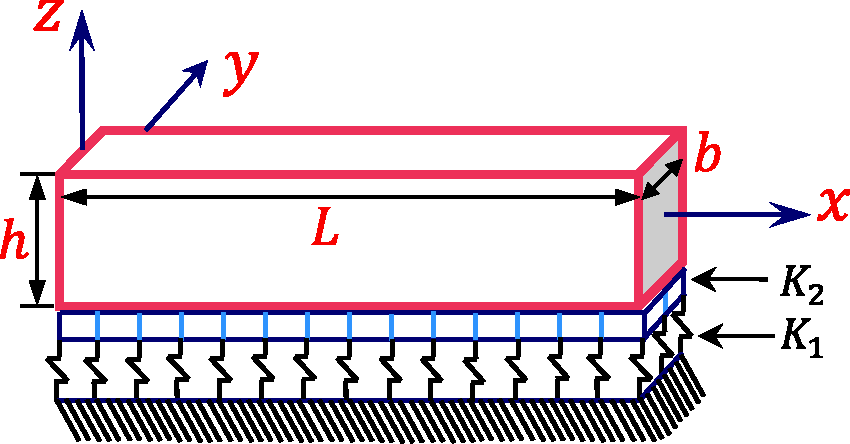

The relevant constitutive equation for the axial stress


For transverse vibrations, the corresponding equation of motion reads



Substituting equations (3) and (5) into equation (4), one obtains the motion equation of the beam in the form

The heat conduction in the context of Green and Naghdi’s generalized thermoelasticity theory without energy dissipation is given by
28


Multiplying the above equation by

For the present nanobeam, it is assumed that there is a cubic polynomial variation of temperature increment along the thickness direction. This assumption leads to
29

So, at this point equation (10) becomes

Analytical solution
At this point analytical solutions are sought for the coupled system of equations (7) and (12), along with equation (5) for the bending moment. Concerning the heat conditions of the present microbeam, it is assumed that no heat flow occurs across its upper and lower surfaces (thermally insulated), that is

However, the nanobeam is subjected to simply supported mechanical conditions at its edges

Following the Navier-type solution, the deflection and moment that satisfy the boundary conditions maybe expressed as





Numerical results and conclusions
Several numerical applications are considered here to put into evidence the influence of the length-to-thickness ratio, the foundation parameters, and the mode number of the minimum frequency. The present nanobeam is made of a silicon material with the following properties
30

Effect of mode number n, the foundation parameters k1 and k2, and the length-to-thickness ratio
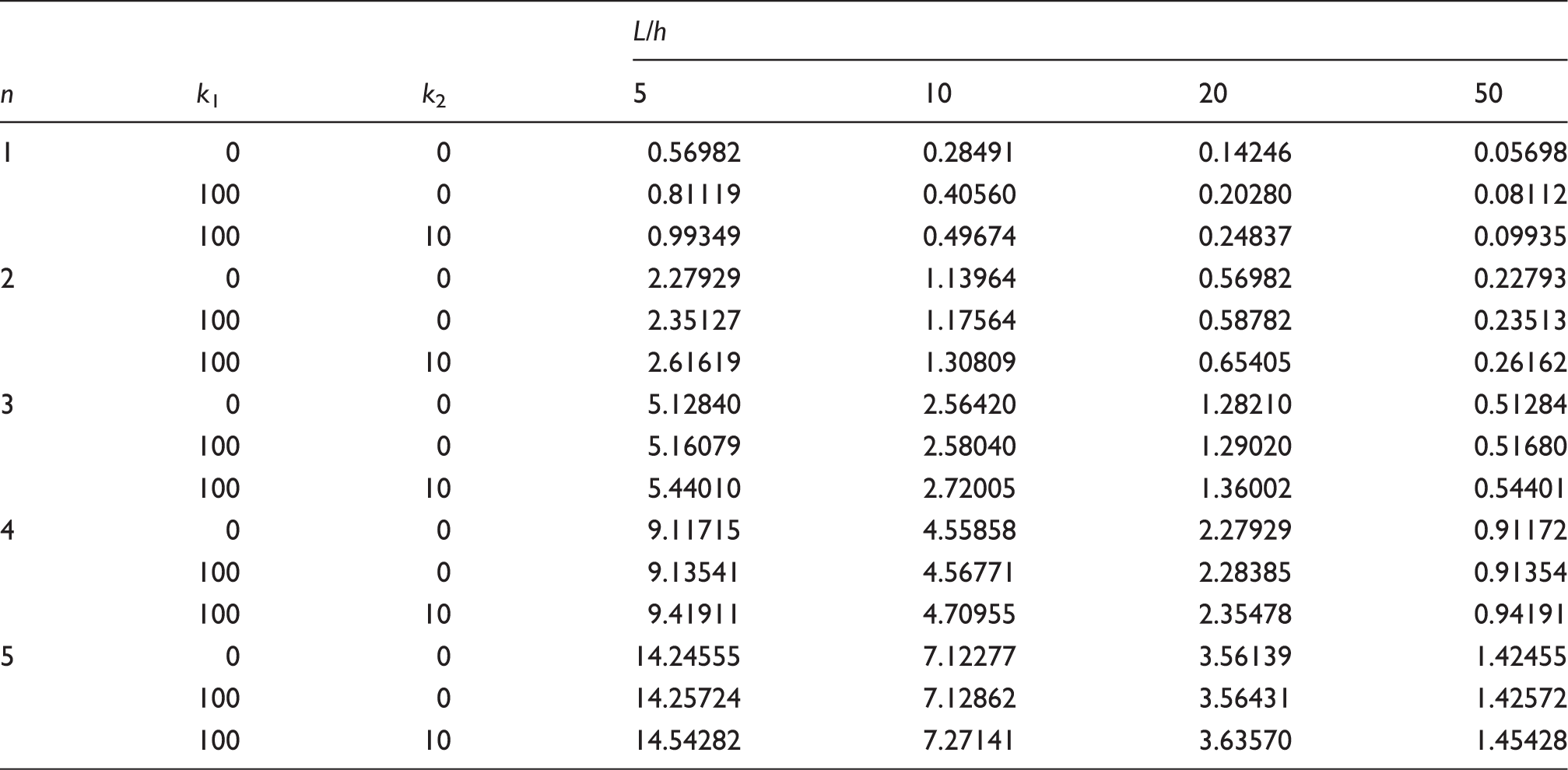
Figures 2 and 3 are prepared by using the dimensionless natural frequencies for a wide range of the length-to-thickness ratio. Figure 2 shows that the fundamental frequency The fundamental frequency The natural frequency 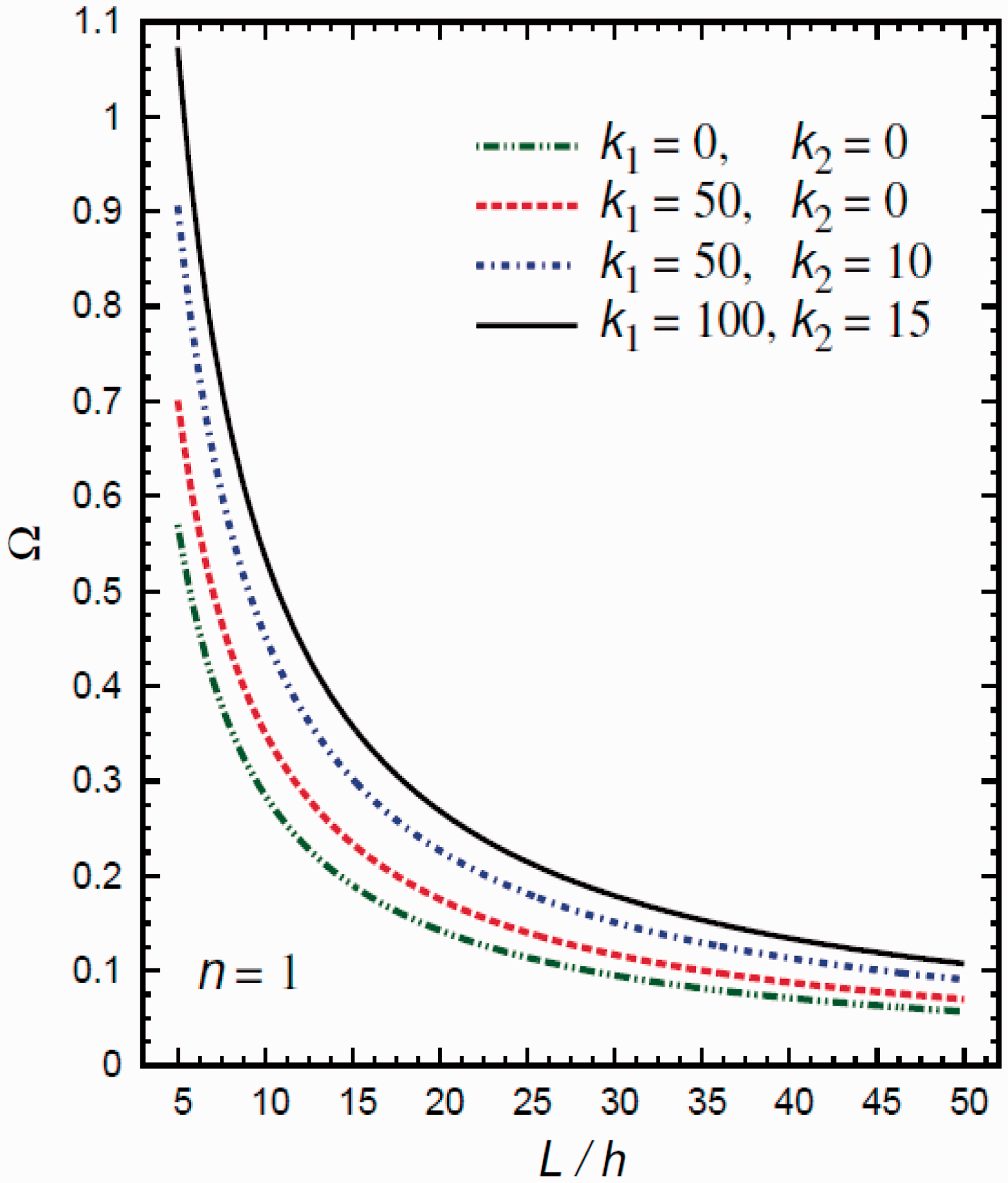
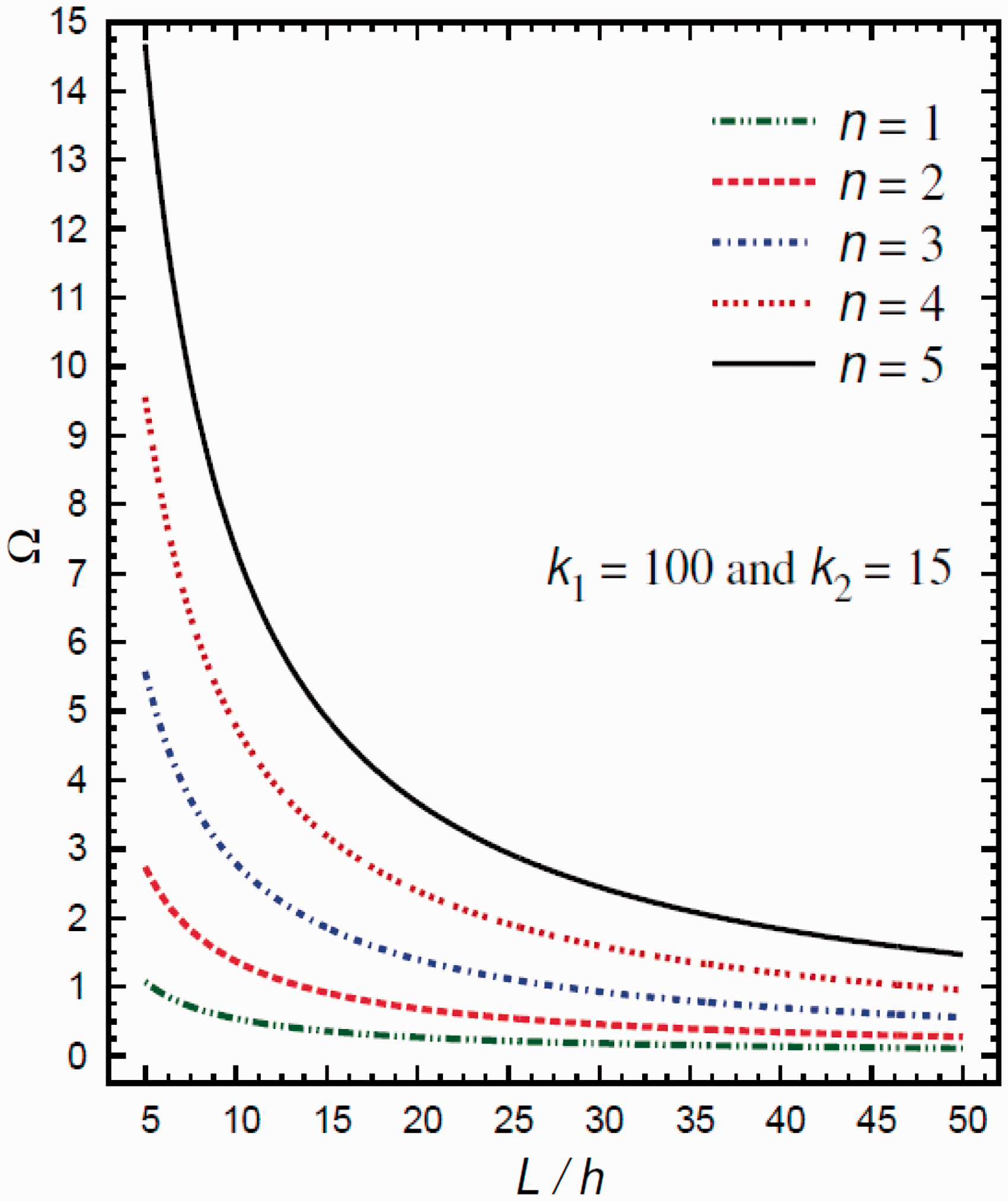
In Figures 4 and 5, the aspect ratio of the beam is kept fixed as The fundamental frequency The fundamental frequency 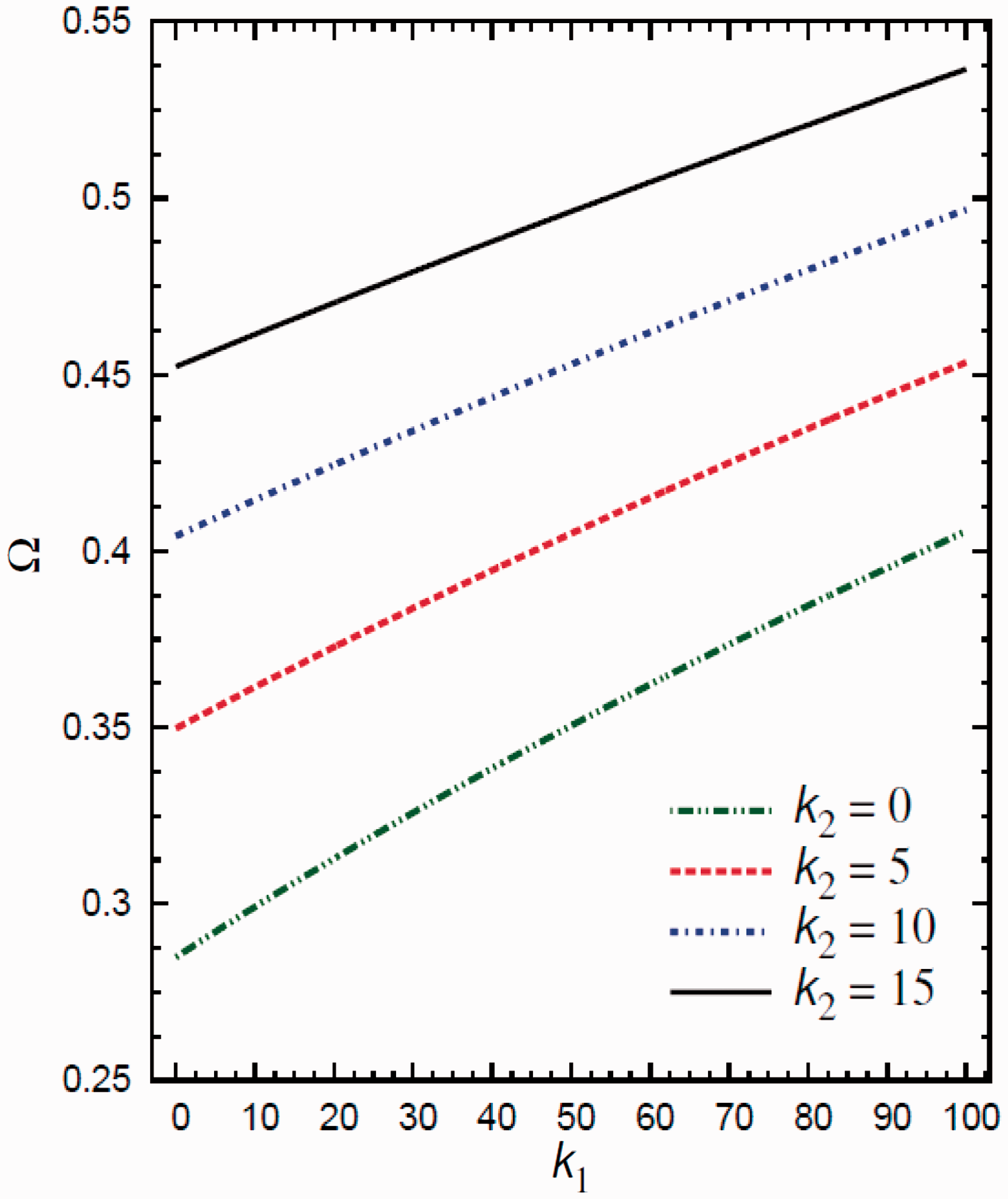
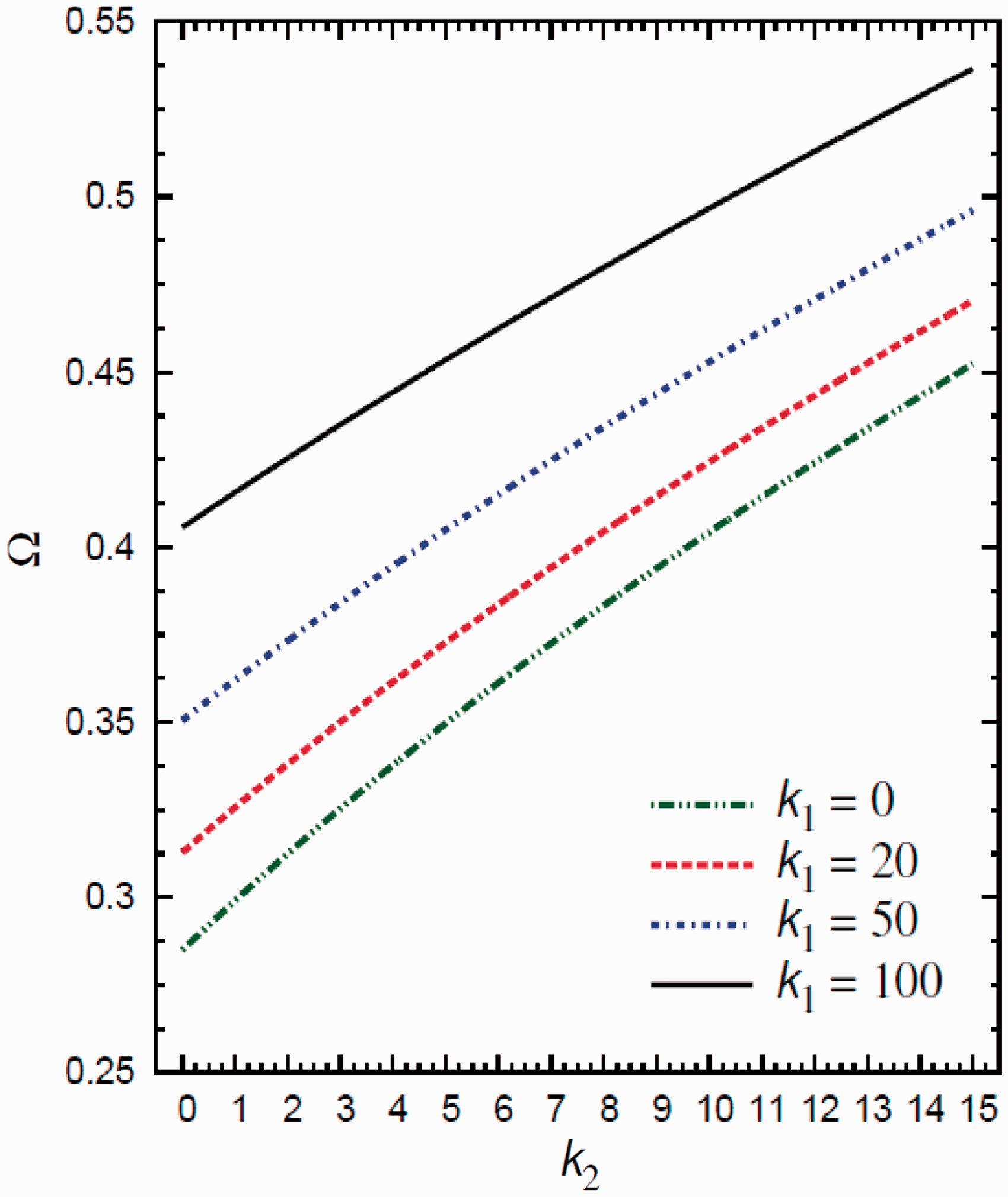
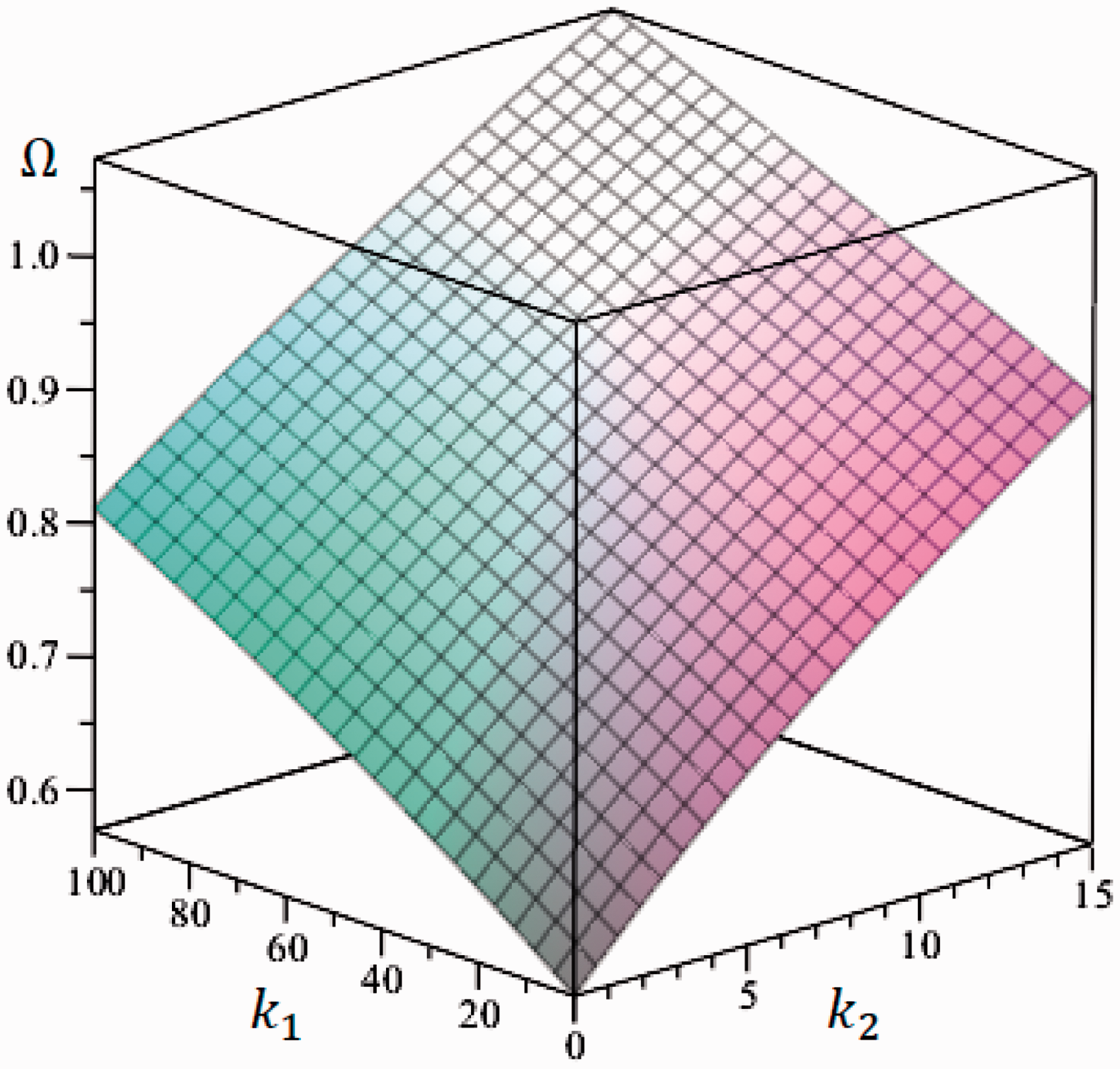
Finally, Figure 6 shows the fundamental frequency The fundamental frequency The fundamental frequency 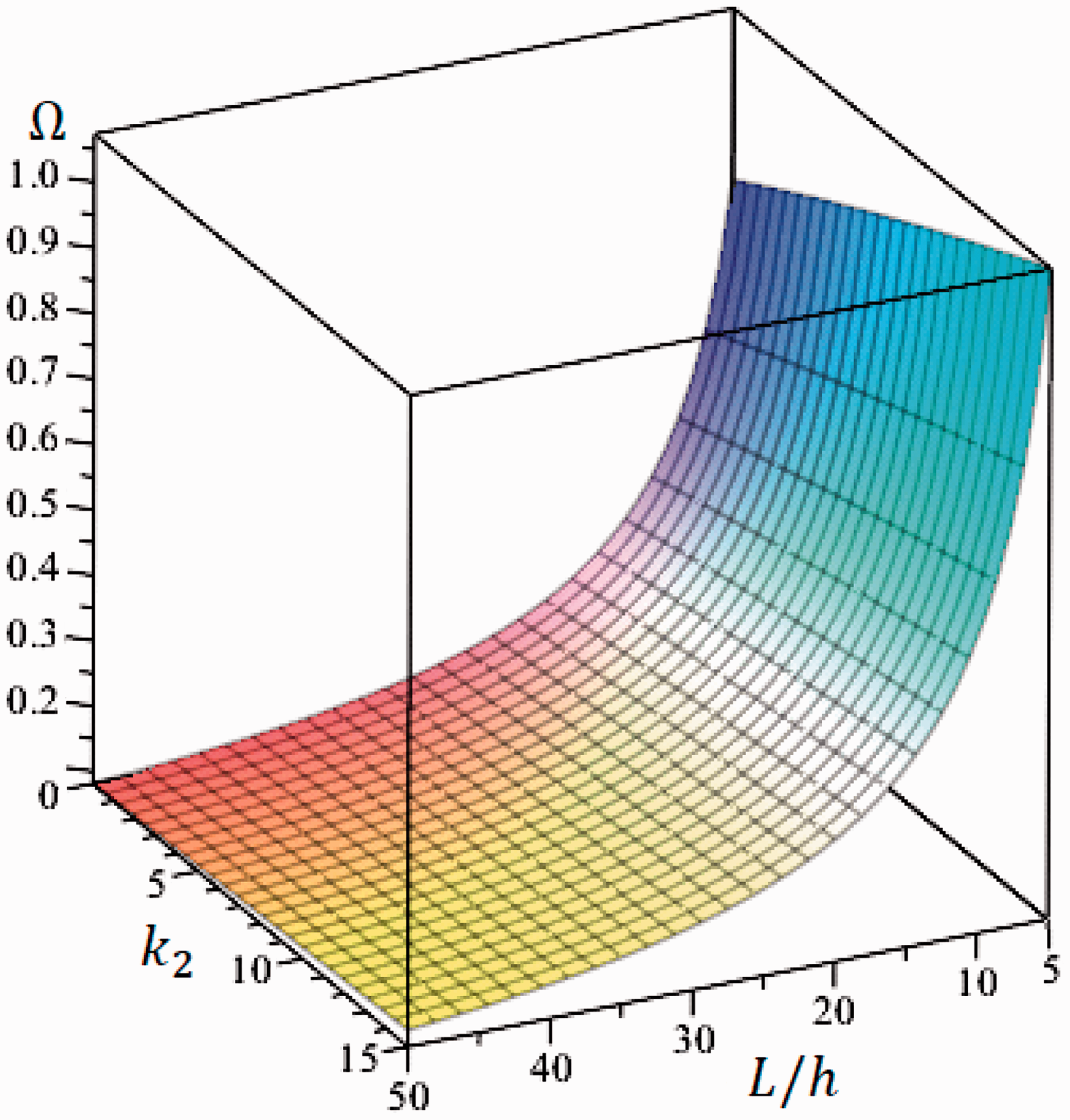
Footnotes
Declaration of conflicting interests
The author(s) declared no potential conflicts of interest with respect to the research, authorship, and/or publication of this article.
Funding
The author(s) received no financial support for the research, authorship, and/or publication of this article.