




Abstract
In this work, soundproof systems for the acoustic correction of large spaces, such as monumental churches, are studied. The Cathedral of Benevento is considered as a case study. Dated back to the seventh century, the church was destroyed during the Second World War and rebuilt in the mid-twentieth century, using marble for the floor and smooth plaster for the side walls. In the current state, the cathedral exhibits an excessive reverberation time (about 10 s) that causes poor understanding of speech and not good listening to musical performances. It is difficult to perform any form of acoustic correction inside the cathedral, since the walls and the ceiling cannot be covered with traditional sound-absorbing material due to architectural and aesthetic reasons. Therefore, the possibility of using ceramic material applied to the side walls for the acoustic correction of low-frequency components and transparent micro-perforated sheets placed under the ceiling for the acoustic correction of medium- and high-frequency components are considered. The work is divided into three phases: in the first phase, measurement of the current acoustic characteristics of the cathedral is performed. In the second phase, sound absorption material is investigated and in the third phase, the effects of insertion of soundproof systems on the acoustic characteristics of the cathedral are theoretically evaluated by means of a room acoustic software.
Introduction
Churches are acoustically complex spaces due to both their large dimensions as well as the acoustically reflective material used, with very long reverberation times. Over time, these characteristics have allowed for the development of sacred music; in fact, the sound tail inside the churches improves the listening to organ music as well as songs, increasing the participation of the faithful in religious functions. In recent decades, churches have been used both for classical and symphonic music concerts as well as conferences and conventions, but the results have not always been positive since the acoustic properties of churches are different from those of theaters. 1 Furthermore, the Second Vatican Council amended the Catholic liturgy, giving more importance to the verbal communication, although this requirement was not supported by the passive acoustics of the churches, where long reverberation times reduce speech intelligibility. Moreover, the sound fields in rooms at low frequencies are extremely complicated due to the existence of individual room modes. 2 Over years, in order to improve listening conditions, electro-acoustic systems with column speakers have been placed inside the churches, but these solutions are not sufficient. Speech intelligibility can be improved by means of an acoustic correction of the spaces through the reduction of length of the sound tail, by inserting appropriate sound-absorbing material. The traditional porous sound-absorbing material with a suitable thickness (glass wool, mineral wool and polyester), absorbing sound energy at medium and high frequencies, can be successfully used for the acoustic correction.3,4 However, monumental churches have various problems due to both the presence of low-frequency components of the sound tail as well as the difficulty of using traditional material for historical and architectural needs; the walls cannot be covered with traditional material. There is, therefore, a need to experiment innovative solutions for the acoustic correction of the rooms, such as transparent micro-perforated sheets for medium and high frequencies and acoustic resonators for low frequencies. Acoustic resonators can be obtained by perforating ceramic tiles and installing them at an appropriate distance from the rigid wall in order to obtain an adequate sound absorption at low frequencies.
Case study
As a case study, the Cathedral of Benevento (Italy) is considered. The origin of the Cathedral of Benevento dates back to the Lombard era (seventh century) while the current dimensions were achieved with the rebuilding of the eighth century, which transformed the ancient church into the new crypt. It was built with material from Roman disused buildings (theater, temples, thermal baths, etc.). Rebuilt, expanded and several times transformed, the temple is the expression of different artistic styles and historical periods. Originally, the church consisted of three naves, whilst in the fifteenth century it was divided into five naves (a larger central one and two on each side). In the seventeenth century, the ceilings of the nave and the chancel were raised and replaced by a Baroque gilded coffered ceiling. The Cathedral was destroyed in 1943 under the bombings in the Second World War and was later rebuilt but not following the original architecture. In the last reconstruction, the Cathedral kept the plant of five naves; large side windows were added, and marble for the floor and smooth plaster for the walls were used. Figure 1 shows the cathedral in the current state. Dating from the eleventh century, the façade has remained unchanged. During the Second World War bombings, it was hit and damaged and become highly unstable, even it was protected by a wall of sand bags. It was suggested to demolish it, but then this solution was avoided with ad hoc fortification intervention. In Figure 2, the section of the church is reported, while Figure 3 shows the ground plan of the Cathedral with the main dimensions. The church is characterized by an excessive reverberation time caused by a large volume (50,000 m3) and acoustically reflective material of the floor and side walls. The acoustic correction of this space cannot be performed using traditional porous sound-absorbing material due to historical and architectural requirements. In this work, measurements of the acoustic characteristics of the Cathedral were carried out with a spherical omnidirectional sound source placed on the altar and a microphone positioned at different points of the nave, usually occupied by the congregation. The results of the measurements show that the reverberation time exceeds 10 s, the church therefore has little aptitude for understanding speech and a poor predisposition for listening to musical performances. In order to correct the room acoustics, acoustic resonators made from ceramic tiles were considered for low frequencies, while micro-perforated transparent sheets for medium and high frequencies. To verify these solutions, a software for architectural acoustics “Odeon” was used; it was previously calibrated on the value of T30 measured in an empty room and then, the absorption coefficient values of the audience, the measured values of the pierced tiles for the side walls and the micro-pierced sheets for the ceiling were inserted into the virtual model.
Interior of the Cathedral in the current state. Section of the Cathedral with the main dimensions. Ground plan of the Cathedral with the main dimensions.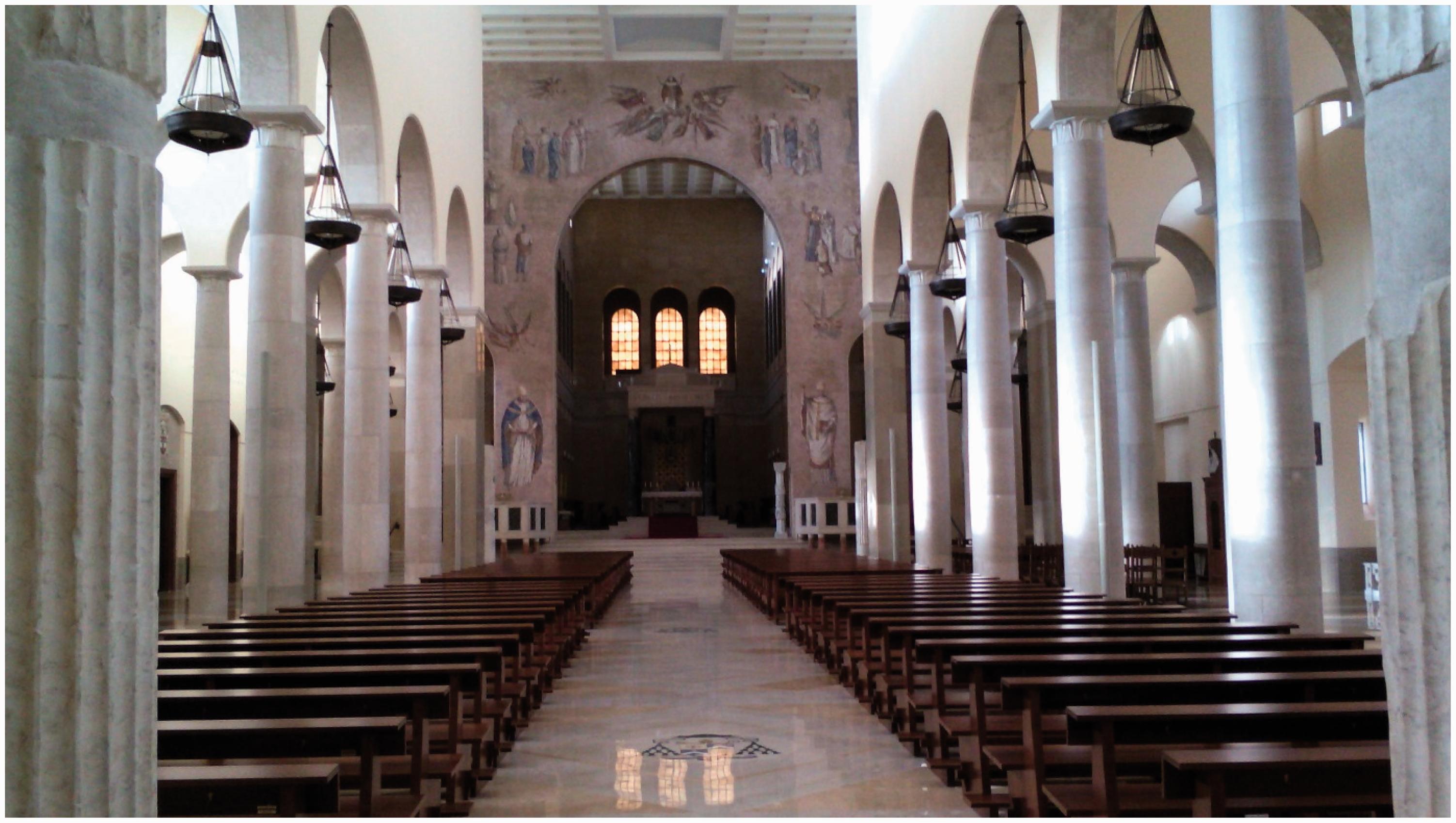
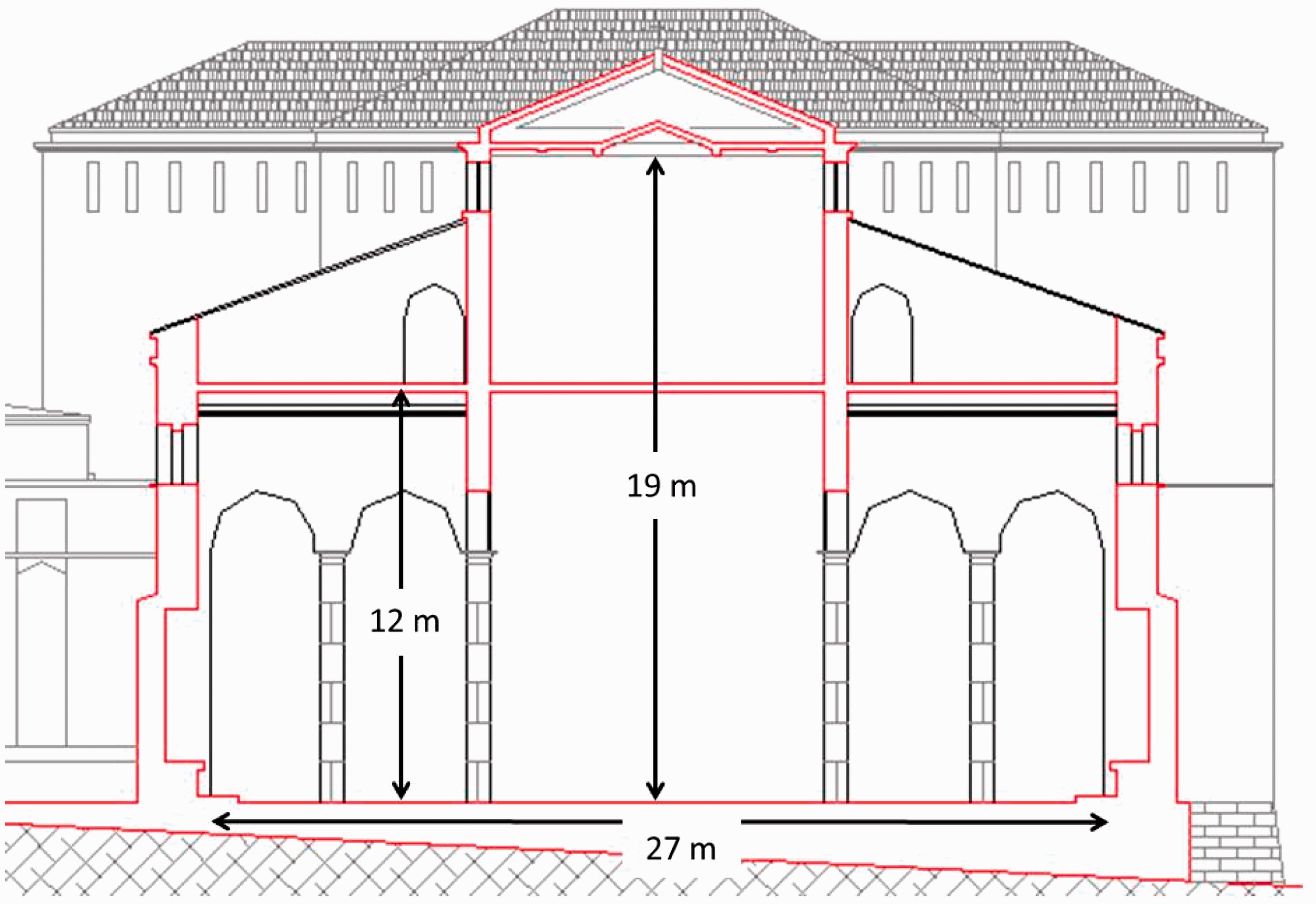
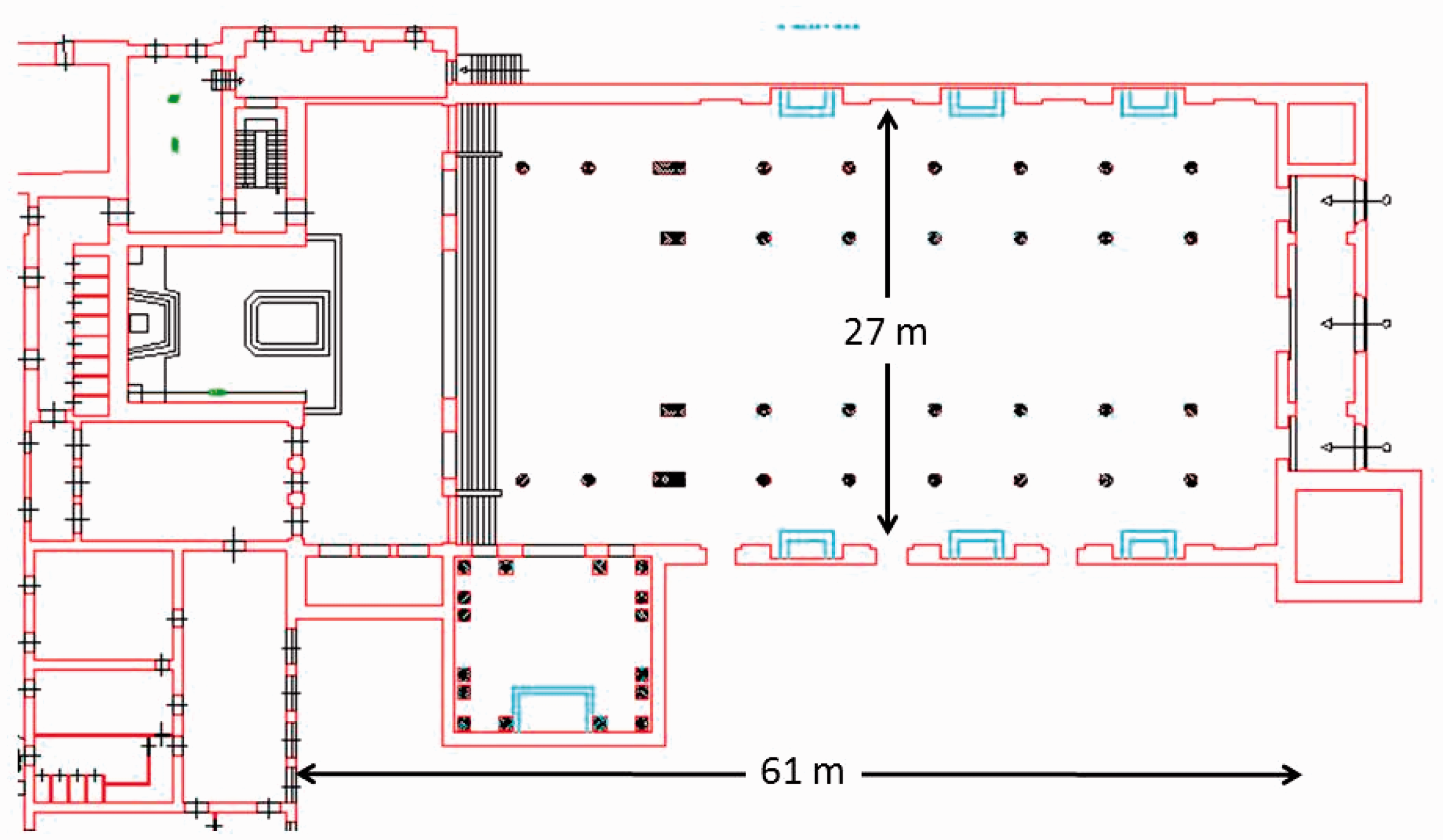
Acoustic measurements
The acoustic measurements were carried out with a spherical omnidirectional sound source located in the chancel, near the altar, and 12 microphone measurement points placed in different positions in the area occupied by the listeners, in accordance with ISO 3382.
5
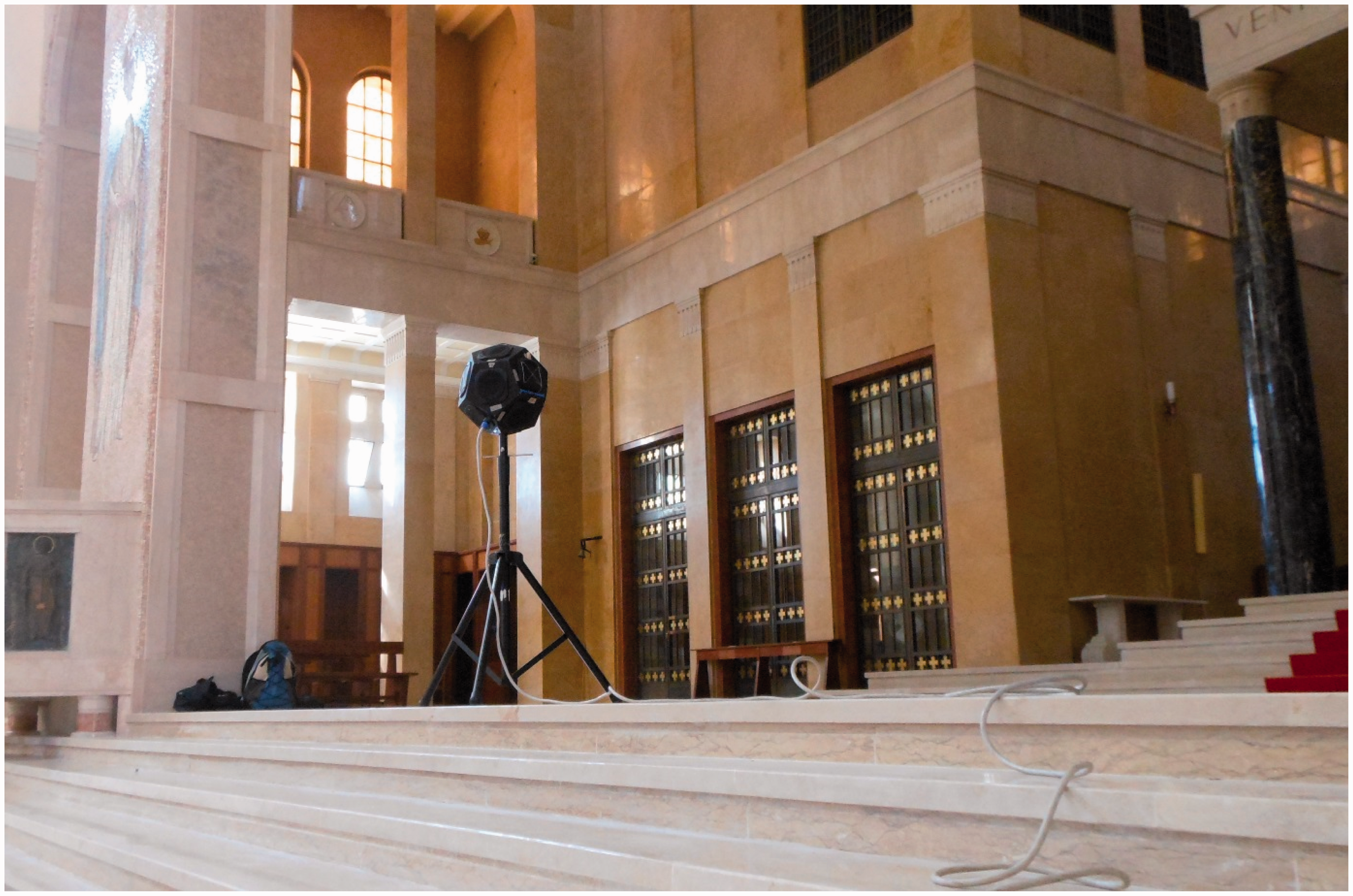
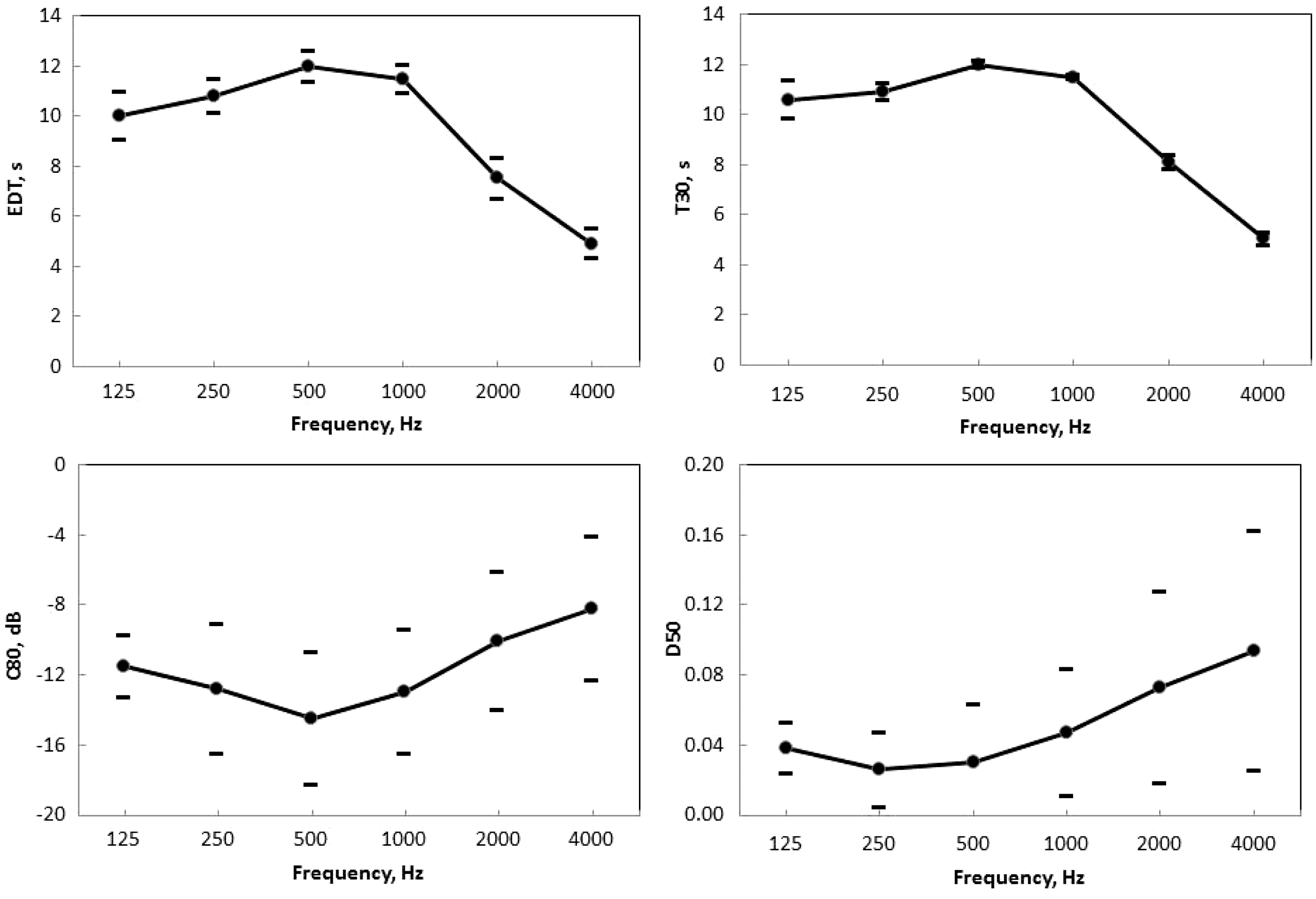
The impulse responses were detected with a measurement microphone GRAS 40 AR endowed with a preamplifier 01 dB PRE 12 H. The sound source was powered with a maximum length sequence (MLS) signal whilst the elaboration of the impulse responses was made with the software Dirac 4.0. During the acoustic measurements, the background noise was lower than 35 dBA, the church was empty and the furniture was hard chairs. Figure 4 shows the ground plan of the church with the indication of position of the source and the receiver microphone points, while Figure 5 shows the sound source during acoustic measurements. The sound source was placed at a height of 1.6 m from the floor and the microphone 1.3 m, in the area occupied by the audience. The following monaural acoustic parameters were analyzed: T30, early decay time (EDT), D50, C80, Ts and C50. Figure 6 shows the average values of the acoustic parameters in the octave bands from 125 Hz to 4.0 kHz. The values of EDT and T30 exceeded on average 10.0 s, the average value of C80 = −10.0 dB, the average value of D50 = 0.06, whilst the average value of the parameter STI = 0.21. The room did not meet the criteria of good listening for music and speech.6,7 The parameter T30 showed negligible values of the standard deviation; this parameter was not influenced by the position of the receiver. The other acoustic parameters showed standard deviation variations and, furthermore, for D50 the standard deviation increased when the frequency increased. For these spaces, the values of the considered parameters change by changing the position of the receiver. Similar results have been found in other monumental churches.8–10
Ground plan with the position of source and of the measurement points. Sound source during the acoustic measurements. Average values of the measured acoustic parameters and standard deviations.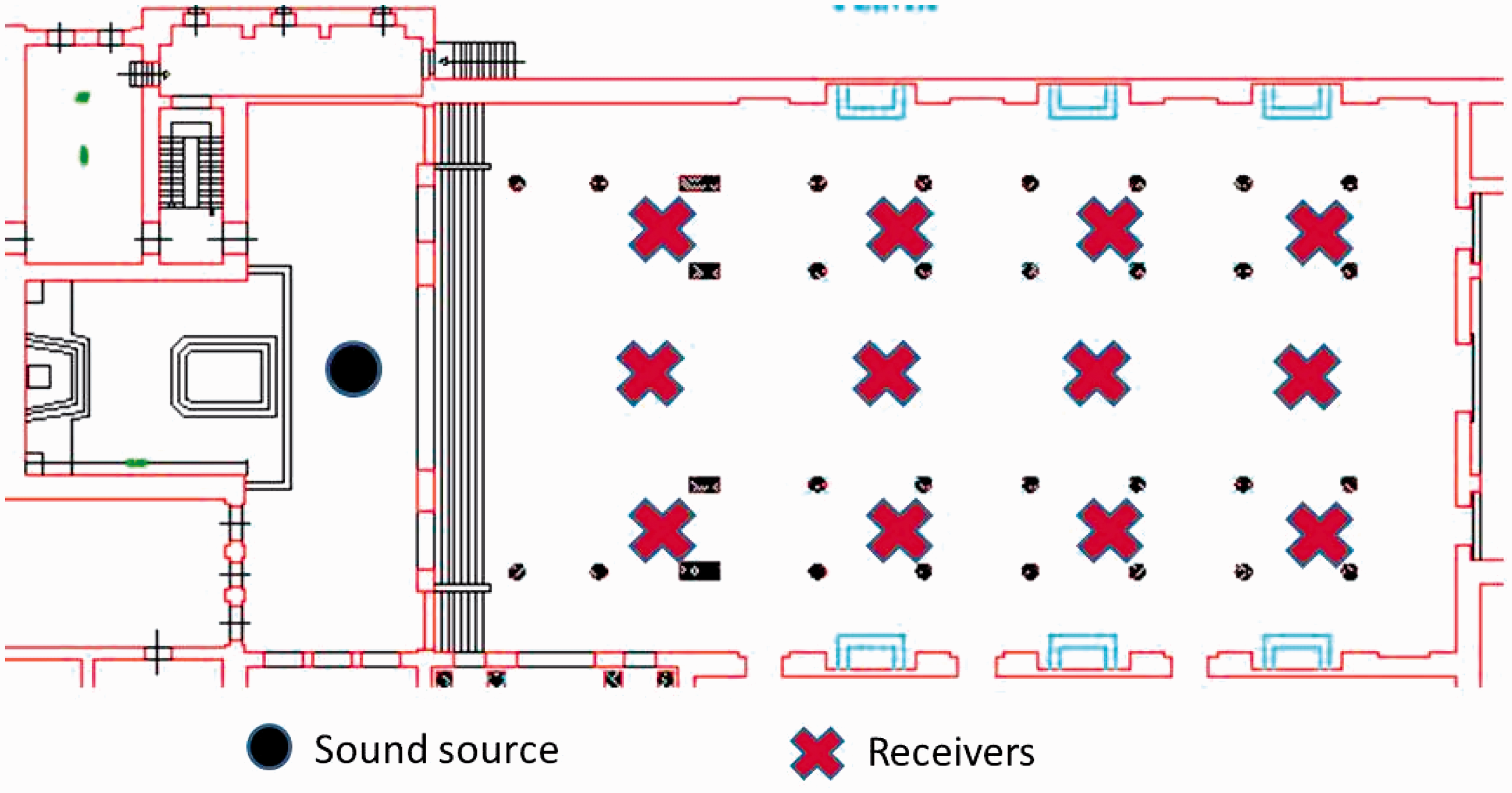
Acoustic properties of the materials
The acoustic correction of large spaces presents several problems due to the components of sound tail at medium and low frequencies that cannot be reduced by means of traditional porous material. Moreover, the walls of old churches or historical palaces cannot be covered with panels of soundproof material due to aesthetic and historical reasons. Therefore, it is necessary to find a solution for the acoustic correction of these places. In order to preserve their aesthetic aspect, the walls of these spaces may be coated with perforated ceramic panels (with colored and enameled ceramic assuming a pleasant appearance) for the sound absorption at low frequencies whilst micro-perforated transparent sheets can be used at medium and high frequencies. For the sound absorption at low frequencies, material based on the principle of Helmholtz resonators can be used. The sound absorption of perforated plates is based on the principle of Helmholtz resonators, which, however, are effective only in narrow frequency bands. The holes in the panel are like a series of “necks”, the air contained in these openings, similar to the Helmholtz resonator, behaves like a series of masses connected to a single spring. The sound absorption depends on the diameter of the holes, the distance of the panel from the rigid surface as well as the thickness of the panel, with there being a resonant frequency at which the sound absorption is maximum. The investigated acoustic resonators were obtained by perforating ceramic tiles and then installing them behind the rigid wall at an appropriate distance. The measurements of the absorption coefficient were performed as expected, for the same specimen, with the climax of the absorption coefficient moving to higher frequencies upon decreasing the thickness of the cavity between the specimen and the rigid wall behind it.11–14 According to the standard EN ISO 10534-2 “Determination of sound absorption coefficient and of the acoustic impedance in impedance tubes – Method of the transfer function”,
15
the measurement of sound absorption coefficient at normal incidence was performed by means of an impedance tube. The measuring tube had the following dimensions: inner diameter of 100 mm, length of 560 mm and the distance between the two microphones of 100 mm. For the dimension of the tube, the inner diameter and the distance between the two measuring microphones, the value of the absorption coefficient at normal incidence was valid in the frequency range of 100 Hz to 1.0 kHz.
16
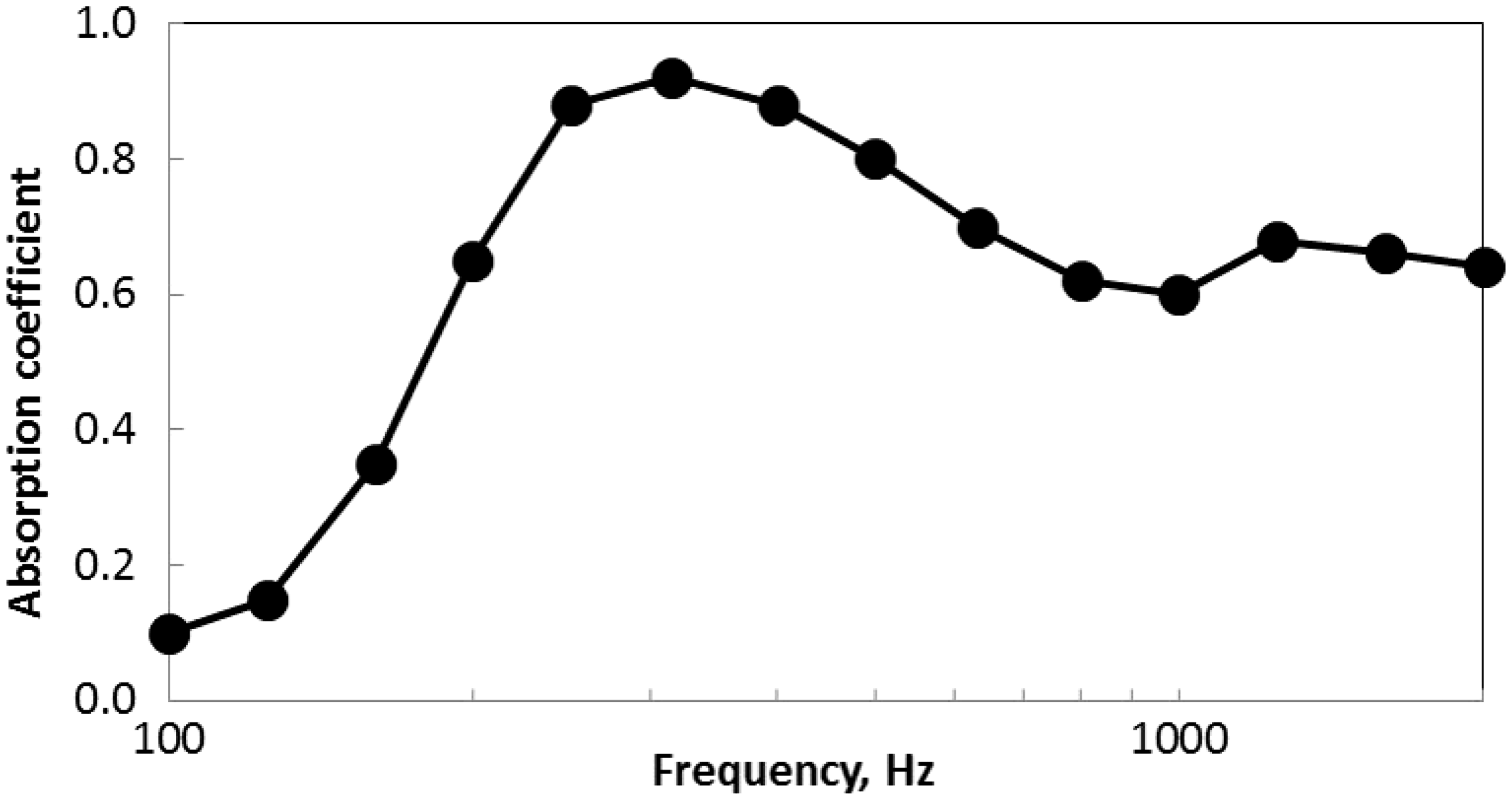
Figure 7 shows the absorption coefficient of the specimen with a cavity depth of 20 cm (specimen thickness 6 mm, holes diameter 6 mm, drilling percentage 32%). For frequencies above 1.0 kHz, the absorbent coefficients are equal to 0.01. At medium and high frequencies, micro-perforated transparent sheets can be used. Figure 8 shows the absorption coefficient values of the micro-perforated transparent sheet. This parameter was measured using impedance tube at normal incidence at a frequency range of 100 Hz to 2.0 kHz.
17
Ceramic specimen absorption coefficient with a cavity depth of 20 cm (specimen thickness 6 mm, holes diameter 6 mm, drilling percentage, 32%). Micro-perforated transparent sheets absorption coefficient values measured at normal incidence at a frequency range of 100 Hz to 2.0 kHz.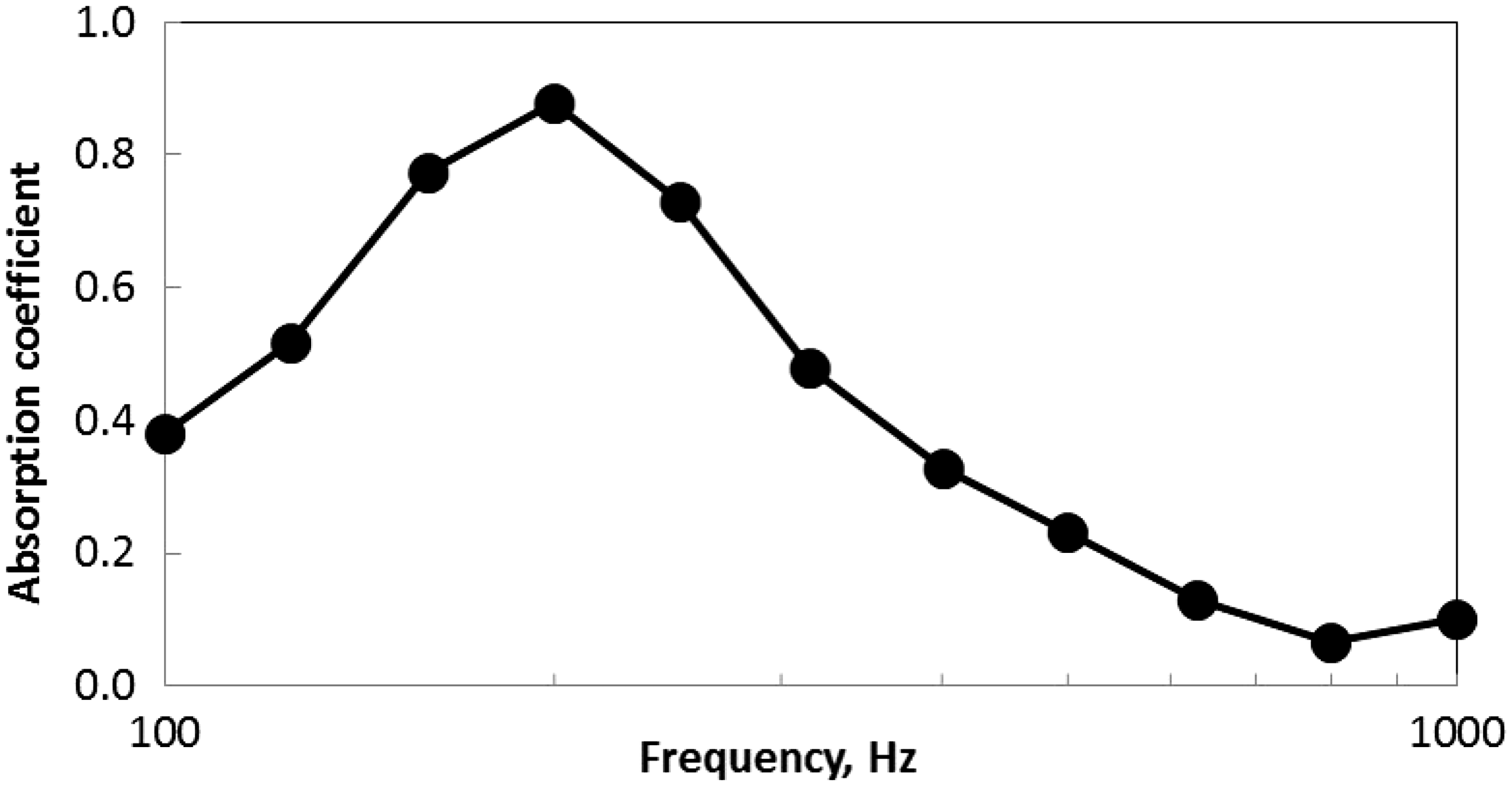
Virtual model
The virtual model drawn by a 3D CAD software was imported into “Odeon” Room Acoustics Software. Figure 9 shows the 3D virtual model created by the “Odeon” software, with the sound source placed on the altar and the receivers among the seats of the audience. The first step was the acoustic model calibration. It consisted of setting the absorbent coefficient values for all the virtual model surfaces and the scattering coefficient ones. For the “Odeon” software settings, the scattering coefficient (s) does not depend on the frequency, but on the geometrical surface properties. The empty seats were simulated as two parallelepipeds (one for each side), 0.8 m height, 3.0 m wide and 30 m long, with the assigned value of the absorption coefficient given in Alvarez-Morales and Martellotta
18
and Martellotta and Cirillo
19
and a value of the scattering coefficient s = 0.5.
3D virtual model by “Odeon” software.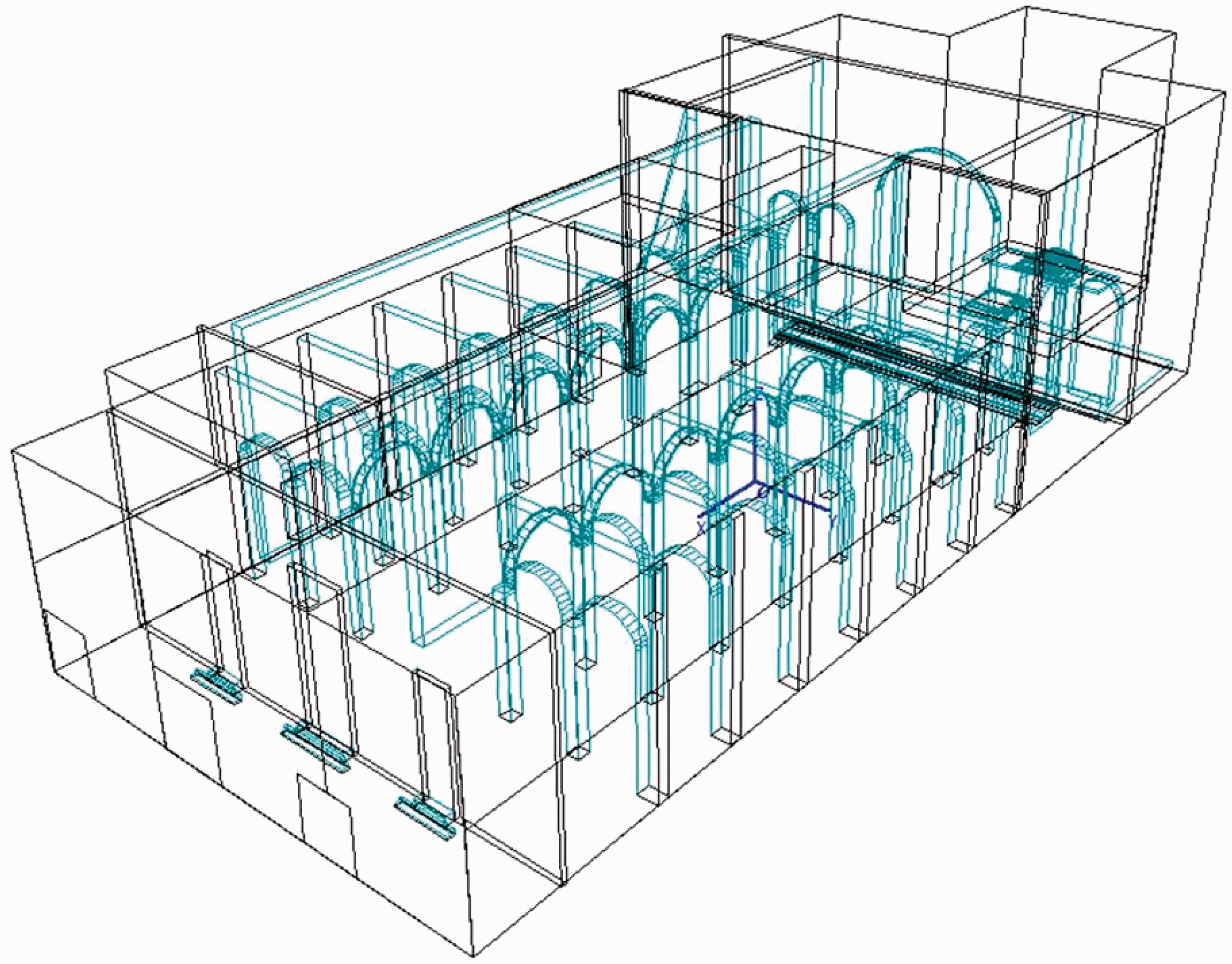
The calibration procedure was stopped when, for each octave band frequency (125 Hz to 4.0 kHz), the calculated reverberation time value (T30) was equal to the measured one. The first step of this procedure was to evaluate the presence of the public20–22; so, to the values of sound coefficients of box surfaces, simulating the empty seats, the values of the sound absorption coefficients of the audience were assigned.
23
The area covered by audience was 575 m2; while Figure 10 shows the audience position in the church, this area corresponds to the effective area covered by pews. Table 1 shows the values of the sound absorption coefficient of the material used in the numerical simulation.
Audience position in the church, this area corresponds to the effective area covered by pews. Sound absorption coefficient values of the material used in the numerical simulation.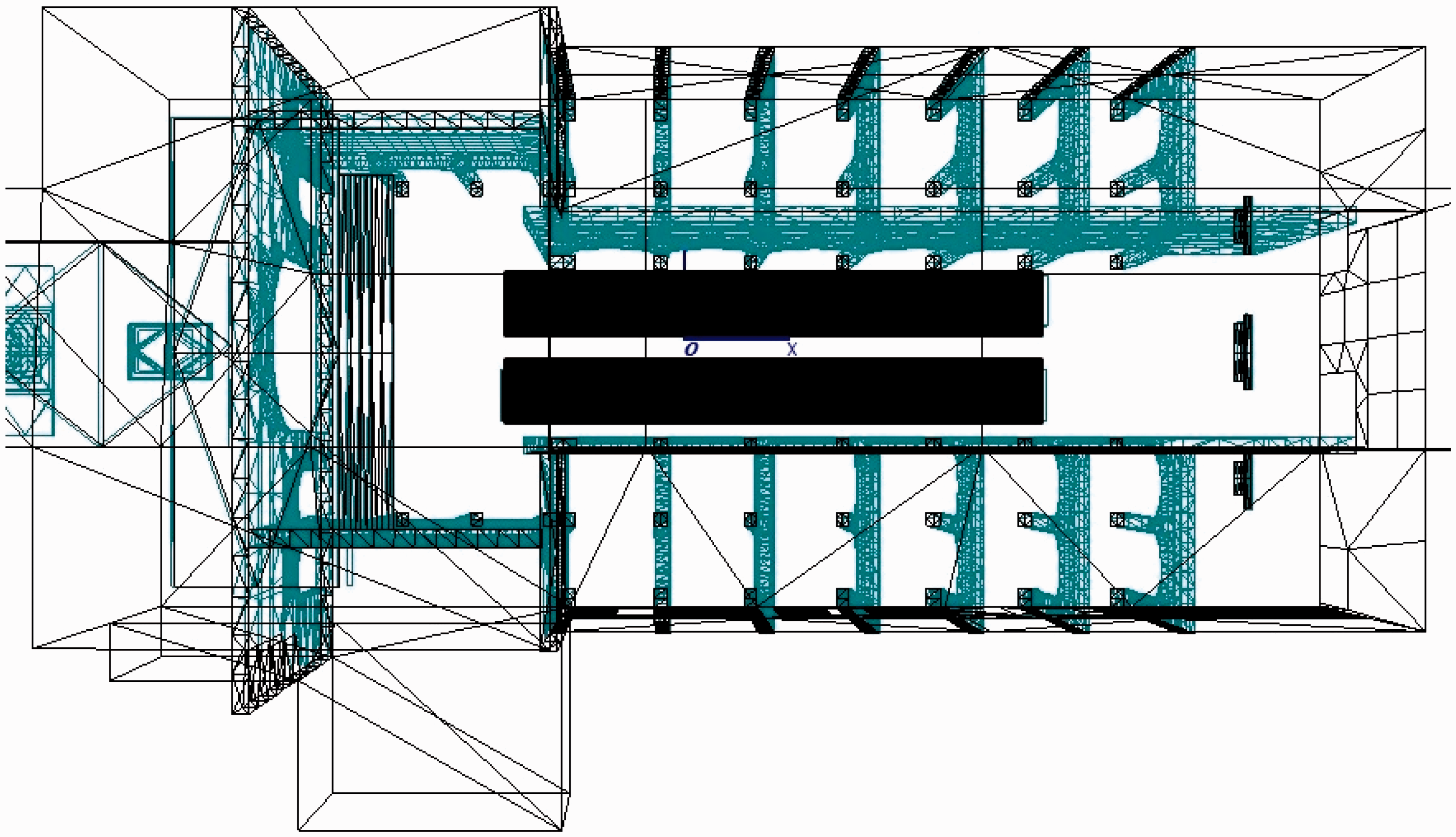

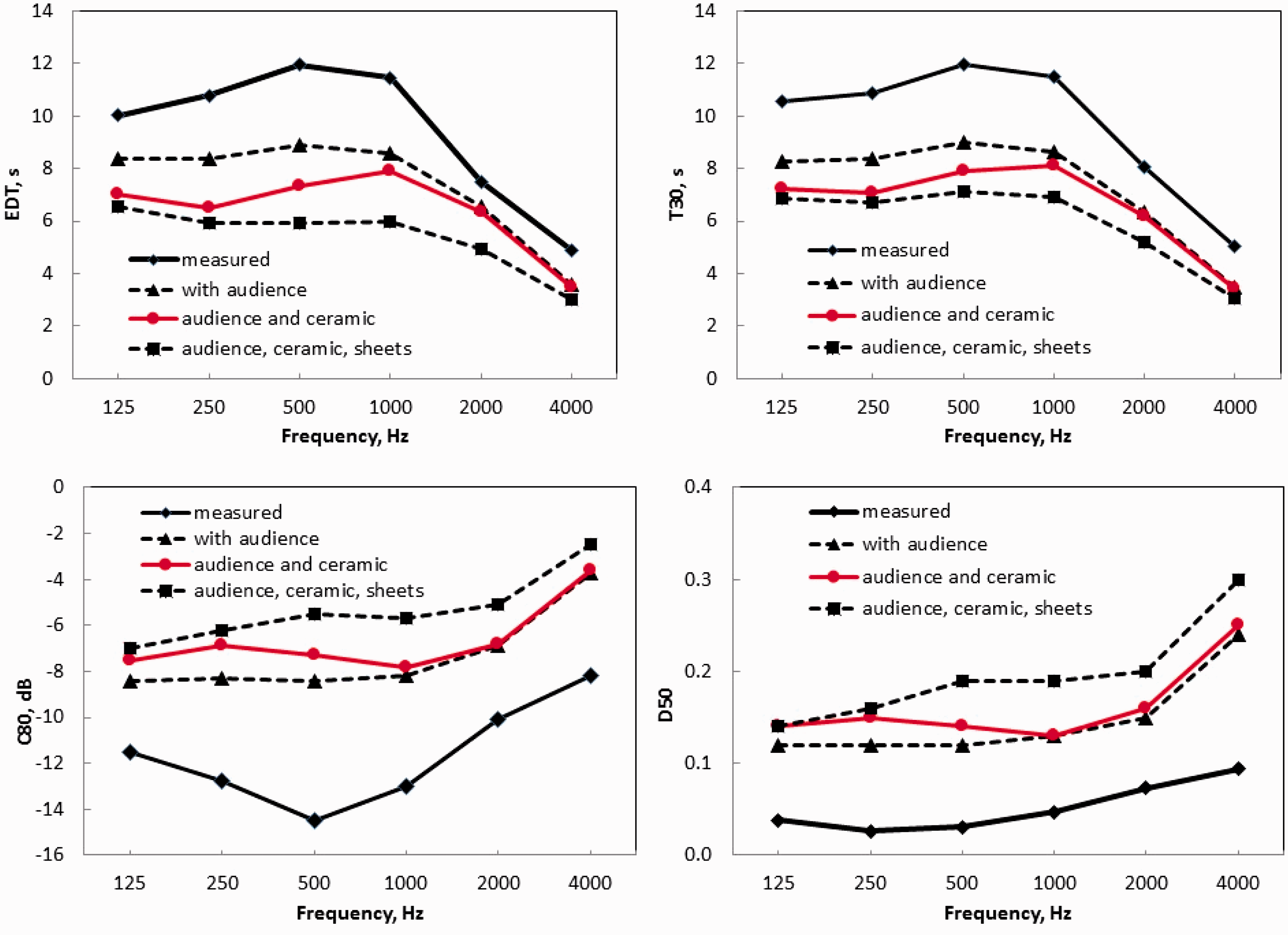
In order to improve the acoustic characteristics of the room, an acoustic correction, including different material for low, medium and high frequencies, was realized. For low frequencies, the ceramic perforated tiles were used, while for medium and high frequencies, micro-perforated panels under the cover of the naves were set in place. In the Odeon software, the measured absorption coefficient values of the ceramic material were assigned to the side walls of the imported virtual model, while the acoustic properties of the ceiling plaster were replaced with the micro-pierced sheets. Figure 11 shows the absorbent material disposition in the church. Figure 12 shows the values of the acoustic characteristics of the room; the values reported are only with the audience; audience and ceramic perforated tiles; with audience ceramic perforated tiles and micro-perforated panels.
Absorbent materials disposition. Acoustic characteristics in comparison with different types of soundproof systems included in the virtual model.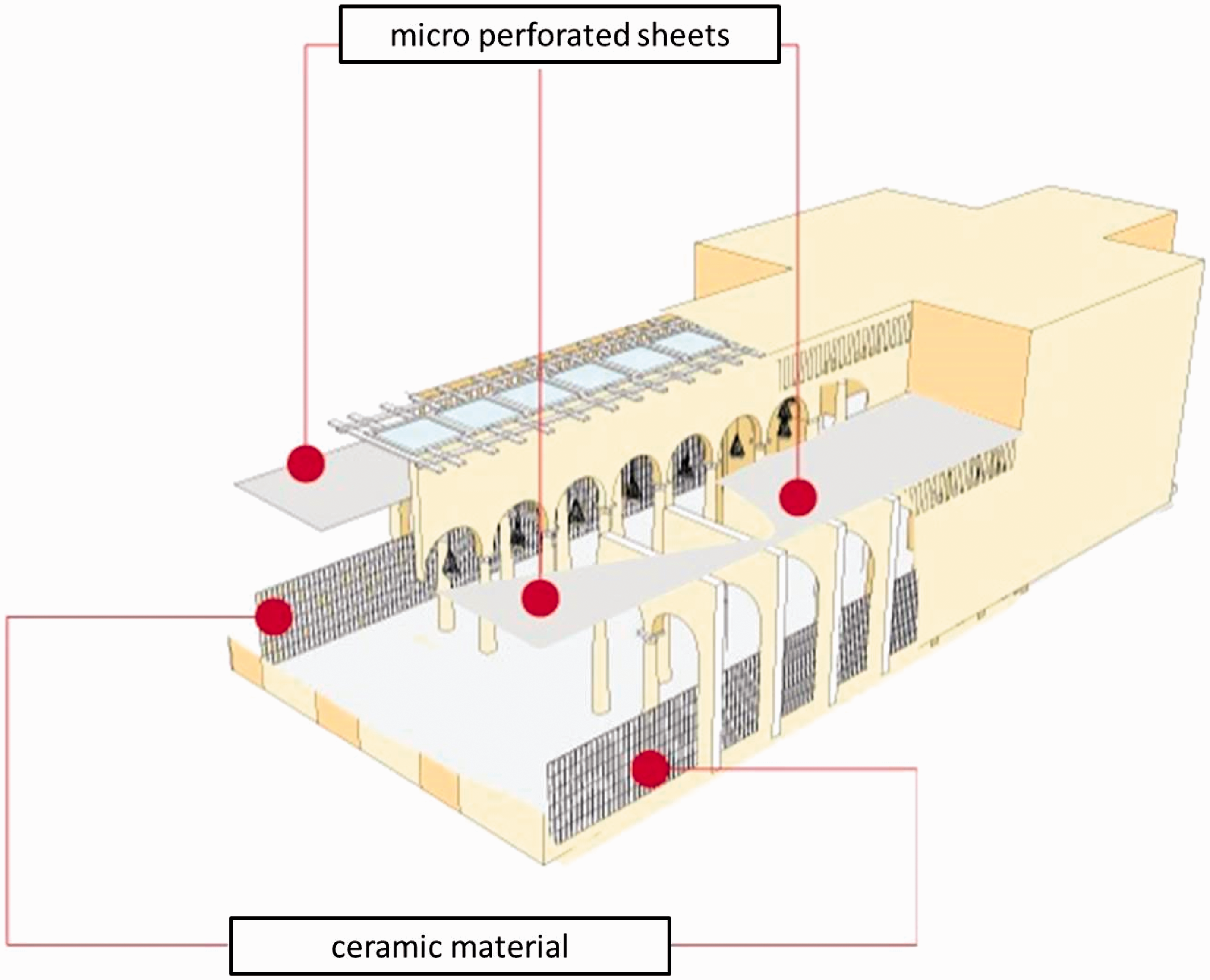
For the low frequencies, the acoustic correction is due to the absorption of the resonators that cover an estimated area of 540 m2, while for medium–high frequencies, the acoustic correction is due to the presence of micro-perforated sheets, covering an estimated area of 1500 m2. Figure 13 shows the values of STI for different distances of the sound source from the receivers; the STI values decrease with increasing of the distance between sound source and receivers.
Distance sound source—Receivers STI values.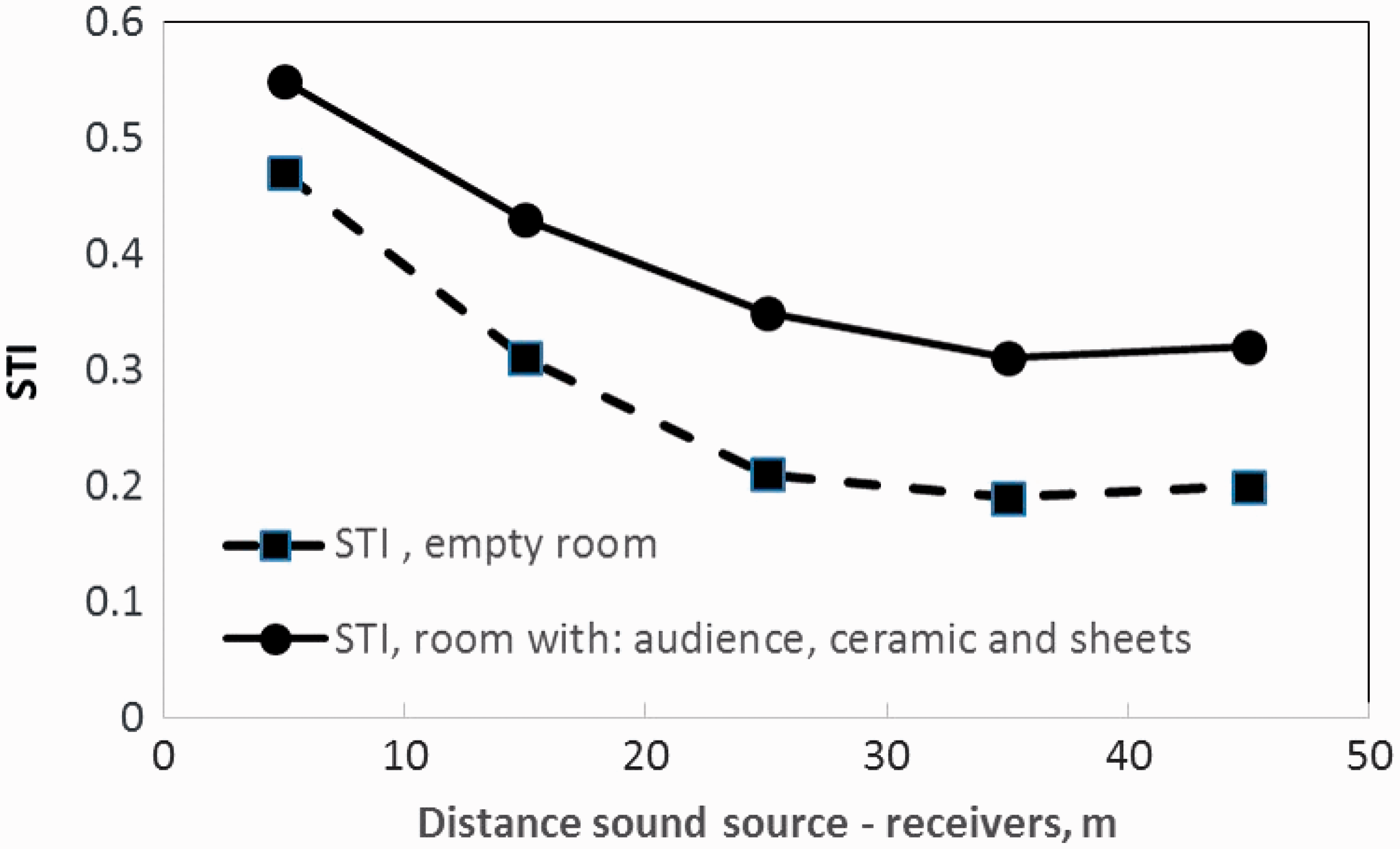
Discussion
Through the “Odeon” software, the effects of use of perforated ceramic tiles for sound absorption at low frequencies and transparent micro-pierced sheets for sound absorption at medium frequencies have been evaluated. The historical and monumental characteristics of the church were subsequently safeguarded: the side walls remained visibly smooth and the ceiling, covered with transparent sheets, retained its original appearance. The measurements of the acoustic characteristics of the Cathedral in the current state show an excessive length of the sound tail which is manifested through a reverberation time with an average value equal to 10 s; an average value of EDT equal to 10 s, a C80 average equal to −12 dB and a value of D50 equal to 0.04. These values, compared with the optimal recommended ones, 7 highlight how there is neither a good understanding of the speech in the space nor a satisfactory listening to musical performances. Furthermore after the Vatican II’s Council, that introduced a liturgy based on vocal message rather than on chants, ecclesiastical architectural spaces also had to adapt to this new requirement. The churches, in fact, had to present a good speech understanding. The numerical simulation highlights how the presence of the audience leads to a reduction in the sound tail length. The inclusion of sound-absorbing ceramic systems involves an absorption at low frequencies, while the installation to the ceiling of the micro-perforated sheets improves the characteristics of the midrange; these two sound-absorbing systems are integrated into the frequency domain of 125 Hz to 4.0 kHz. Despite the acoustic correction, the reverberation time is around 6 s, whilst the value of C80 is compatible with good conditions for listening to music. Therefore, the acoustics of this space should not be generalized for all music productions, but it is suitable only for some kinds of music and musical instruments.
Conclusion
Monumental churches present problems for speech understanding due to their large volume as well as the presence of reflective material. In this paper, the case of Benevento Cathedral was investigated. The acoustic measurements of an empty church provided an average reverberation time of about 10 s, with it not presenting very good conditions to either understand speech or listen to musical performances. The use of ceramic material and micro-perforated sheets allow for a good acoustic correction. The appraisal of improvements was evaluated with the “Odeon” software for architectural acoustics. The introduction of material for acoustic correction reduced the length of the sound tail and improved both the understanding of speech as well as the listening to musical performances.
Footnotes
Declaration of conflicting interests
The author(s) declared no potential conflicts of interest with respect to the research, authorship, and/or publication of this article.
Funding
The author(s) received no financial support for the research, authorship, and/or publication of this article.