




Abstract
A mathematical model is presented to analyse the vibration of a tapered isotropic rectangular plate under thermal condition. Tapering in the thickness of rectangular plate is considered bi-parabolic. Here, temperature variation is assumed bi-linearly, i.e. temperature varies linearly in the x-direction and linearly in the y-direction. First two modes of frequency of rectangular plate are calculated for five boundary conditions such as C-C-C-C, SS-SS-SS-SS, C-SS-SS-SS, C-SS-C-SS and C-C-C-SS, where C and SS stand for clamped boundary and simply supported boundary, respectively. The plate is considered homogeneous and made up of a visco-elastic isotropic material. Rayleigh Ritz technique is applied to get the first two modes of frequencies at different values of plate’s parameters. Numeric results are presented in tabulated and graphical forms.
Introduction
In recent years, tapered plates are being increasingly used in modern engineering structures or space vehicles due to their wide technical importance. Consideration of tapered plates not only helps to reduce the weight of structural elements but also improves the utilisation of the material. Almost every structure or vehicle works under the influence of elevated temperature field due to which a heat flux is created and it directly affects the efficiency of a vehicle or structure.
In the available literature, many authors have discussed the vibration of plates having one or two directional tapering with one-dimensional thermal effect but little work has been done in the field of two-dimensional thermal effects. Therefore, the authors of this paper discuss vibration problem of visco-elastic rectangular plate with bi-parabolic thickness variation along with bi-linear thermal condition.
A survey of research papers, monographs and books published in the last six decades is given as follows.
A monograph on vibration of plates with different shapes and boundary conditions is given by Leissa. 1 Leissa 2 studied the effect of non-homogeneity on the free vibrations of rectangular plate of various combinations of clamped, simply supported, and free boundary conditions. Jain and Soni 3 discussed the free vibrations of rectangular plate with parabolic varying thickness using classic theory of plate. In this paper, two parallel edges of the plate are considered as simply supported and different boundary conditions are considered for the remaining two edges. Tomar and Gupta 4 studied the effect of thermal gradient on the free vibrations of an orthotropic rectangular plate with bi-linearly thickness variation for various boundary conditions. Leissa 5 analysed the effect of thermal gradient on the vibration of parallelogram plate with bi-directional thickness variation in both directions for various combinations of boundary conditions. Qiu et al. 6 presented some experiments on the active control of circular disk vibration. Lal 7 studied transverse vibrations of an orthotropic non-uniform plate with continuously varying density. Two parallel edges are considered simply supported and different combinations of boundary conditions are considered for the other two parallel edges. Li 8 has given a vibrational analysis of rectangular plate with general elastic boundary support. Leissa 9 discussed the historical bases of Rayleigh and Ritz’s methods to minimise the frequency of the vibrations of different structures of beams, bars, plates, etc. Gupta and Kumar 10 studied the thermal effect on vibrations of non-homogeneous rectangular plate with bi-linearly varying thickness variations. Lal and Dhanpati 11 analysed the free transverse vibrations of non-homogeneous plate of varying thickness. Hota et al. 12 analysed the free vibration of perforated plates. Gupta and Kumar 13 analysed the effect of thermally induced vibration of orthotropic trapezoidal plate with linearly varying thickness. Shooshtari and Razavi 14 worked on non-linear vibration of laminated fiber-reinforced rectangular plates. Abu Bakar et al. 15 analysed axisymmetric vibration of circular plate with attached annular piezoceramic plate. Khanna and Arora 16 analysed the effect of sinusoidal varying thickness on the vibrations of non-homogeneous parallelogram plate with bi-linearly temperature variation. They also discussed the effect of non-homogeneity of the material. Khanna and Kaur 17 studied the effect of exponentially varying thickness, temperature, and Poisson ratio on the free vibration of visco-elastic rectangular plate.
The main endeavour of the present investigation is to study the effects of varying plate’s parameters, i.e. thermal gradient (due to temperature variation), taper constants (due to thickness variation) and aspect ratio (ratio of length and breadth of the plate) on the vibration of visco-elastic isotropic rectangular plate. Here, the first two modes of frequency of the vibration of isotropic rectangular plate are calculated with the help of Rayleigh Ritz technique for five different boundary conditions. Results are given in the form of tables and graphs.
Analysis of equation of motion
The differential equation describing the motion of a visco-elastic isotropic rectangular plate may be written as
18

The expressions for Mx, My and Mxy are given by
19

Here, D1 is the flexural rigidity of the plate’s material and it is expressed as
20

Substituting the values of Mx, My and Mxy in equation (1), one gets

Using variable separation method, deflection w may be considered as the product of two functions as
21

Substituting equation (4) into equation (3), one obtains

Equating both sides of equation (5) to a constant p2, one obtains

and

Equations (6) and (7) are differential equations of motion and time function for visco-elastic rectangular plate.
Since the research area of vibration of plates is too wide to discuss at once, the authors proceed with a few limitations.
Limitation 1
Thickness of the rectangular plate is considered non-uniform, i.e. thickness of the plate varies bi-parabolic
18
as (shown in Figure 1)
Rectangular Plate with 2-directional thickness variation.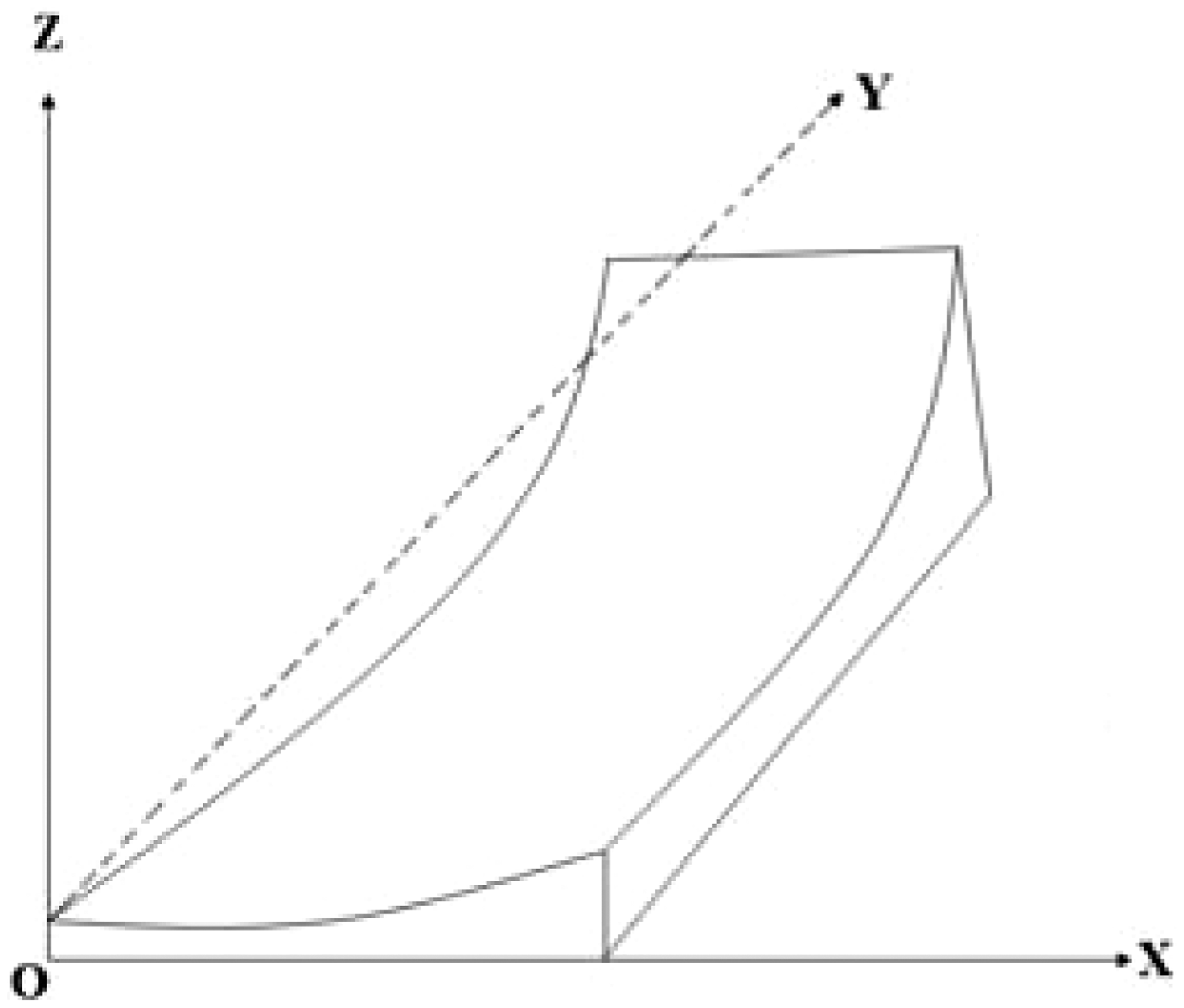

Limitations 2
The structures of high-speed space vehicles, i.e. supersonic flights, missiles, etc. are subjected to high surface temperature and large thermal gradient. These conditions can seriously affect or damage the structure of these vehicles. Variations in the structure’s characteristics as a result of thermal effect can be observed by the changes in frequency of vibration. Therefore, the authors assumed bi-linear temperature variations as
22

The temperature dependence of the modulus of elasticity for most of the engineering materials can be expressed as follows
20


Using equations (8) and (11) in equation (2), one gets

Limitation 3
In order to fulfil the practical aspects for using in structures or vehicles, the authors discuss five different boundary conditions for the rectangular plate, i.e. C-C-C-C, SS-SS-SS-SS, C-SS-SS-SS, C-SS-C-SS and C-C-C-SS23,24as follows:
When the boundary of plate is C-C-C-C, the boundary conditions are

To satisfy these boundary conditions, the two-term deflection function is defined as
When the boundary of the plate is SS-SS-SS-SS, the boundary conditions are
When the boundary of the plate is C-SS-SS-SS, the boundary conditions are
When the boundary of the plate is C-SS-C-SS, the boundary conditions are
When the boundary of plate is C-C-C-SS, the boundary conditions are









Here, A1 and A2 are the arbitrary constants occurred due to the first two modes of vibration.
Solution of frequency equation
Rayleigh Ritz technique is applied to solve the frequency equation. In this method, one requires that the maximum strain energy (S
E
) must be equal to the maximum kinetic energy (KE). So it is necessary for the problem under consideration that
25
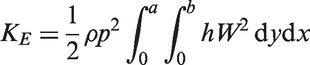
Here


Assuming the non-dimensional variables as

Using equation (14), the kinetic energy (KE) and strain energy (SE) become


Using the modified values of kinetic and strain energy in equation (13), one gets

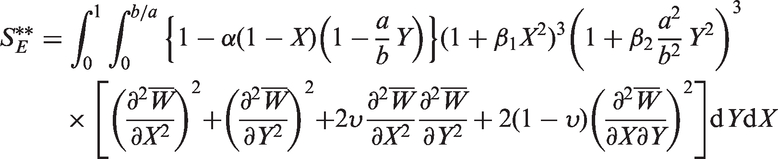

Here,
Equation (17) consists of two unknown constants, i.e. A1 and A2 arising due to the substitution of W corresponding to the different boundary conditions. These two constants are to be determined as follows

Simplifying equation (18), one gets


With the help of equation (22), one can obtain a quadratic equation in λ2 from which the two values of frequency parameter for both the modes of vibration can be evaluated easily.
Results and discussion
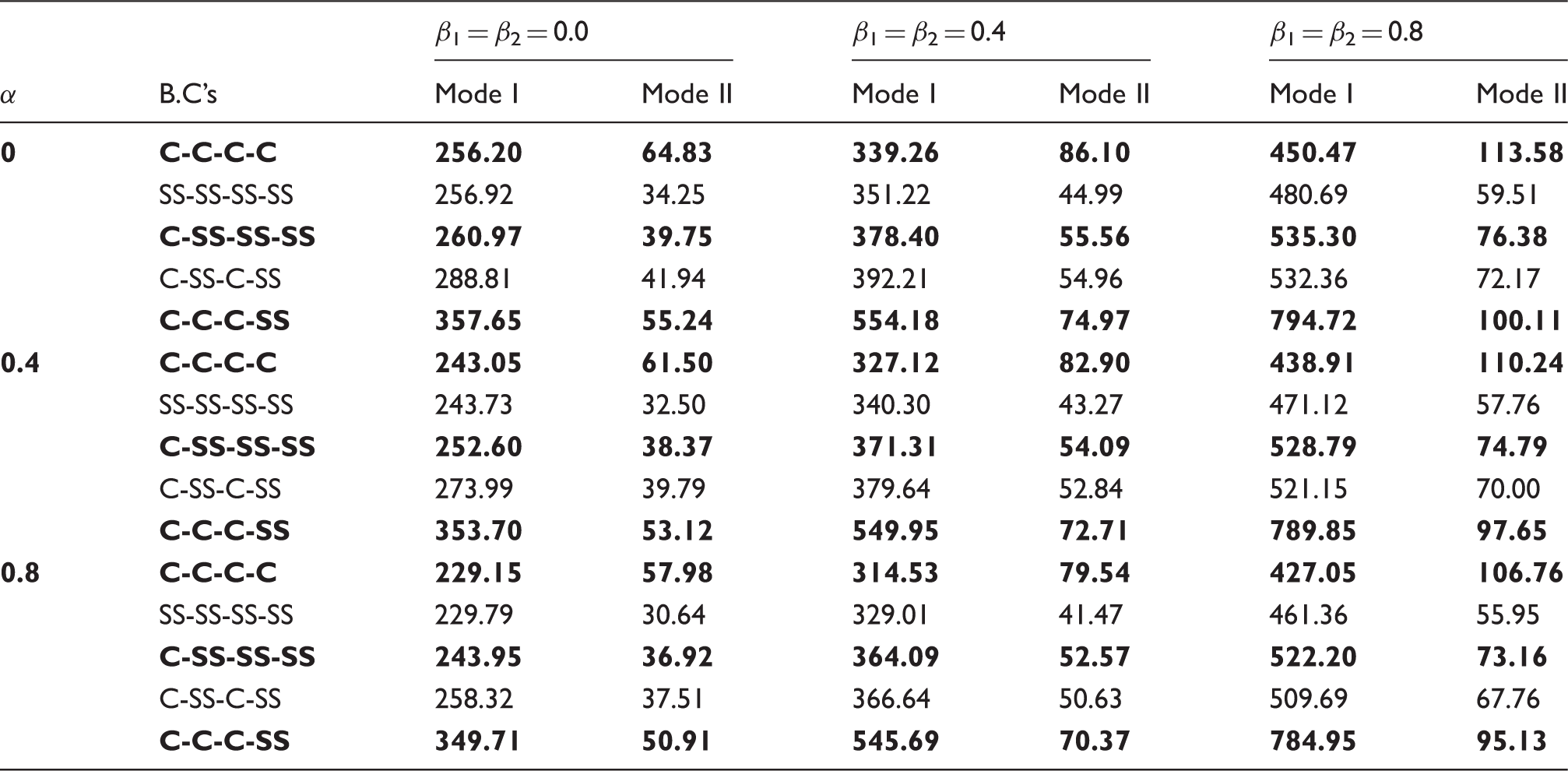
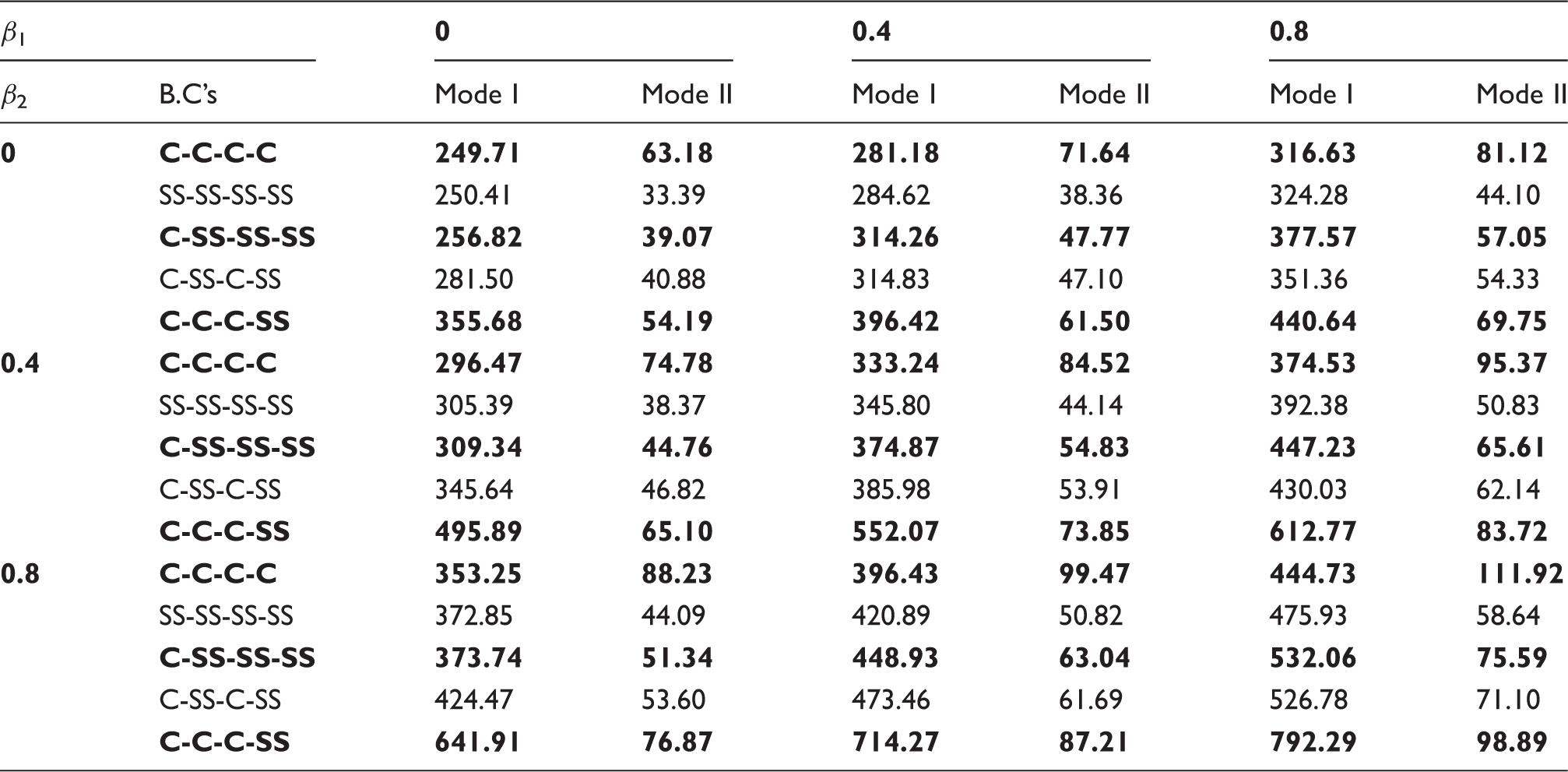
Computations were made for the first two modes of frequency at different values of thermal gradient (α), taper constants (β1 and β2) and aspect ratio (a/b) for the five different boundary conditions. In calculations, Poisson ratio is considered as constant, i.e. 0.345, and thickness of the plate h0 at X = Y = 0 is taken as 0.01 m.
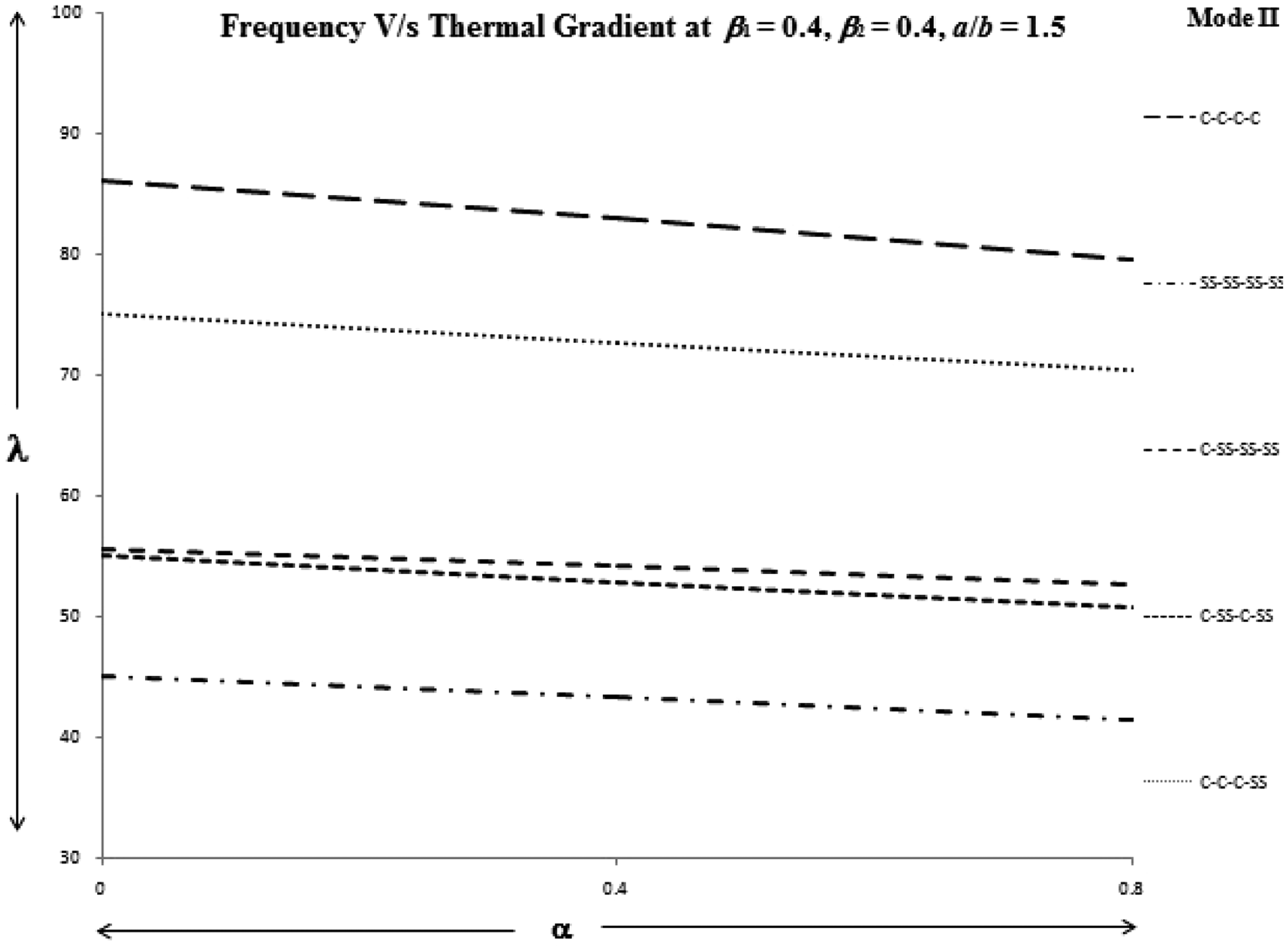
Frequency versus thermal gradient α at fixed a/b = 1.5.
Frequency versus taper constants at fixed a/b = 1.5, α = 0.2.
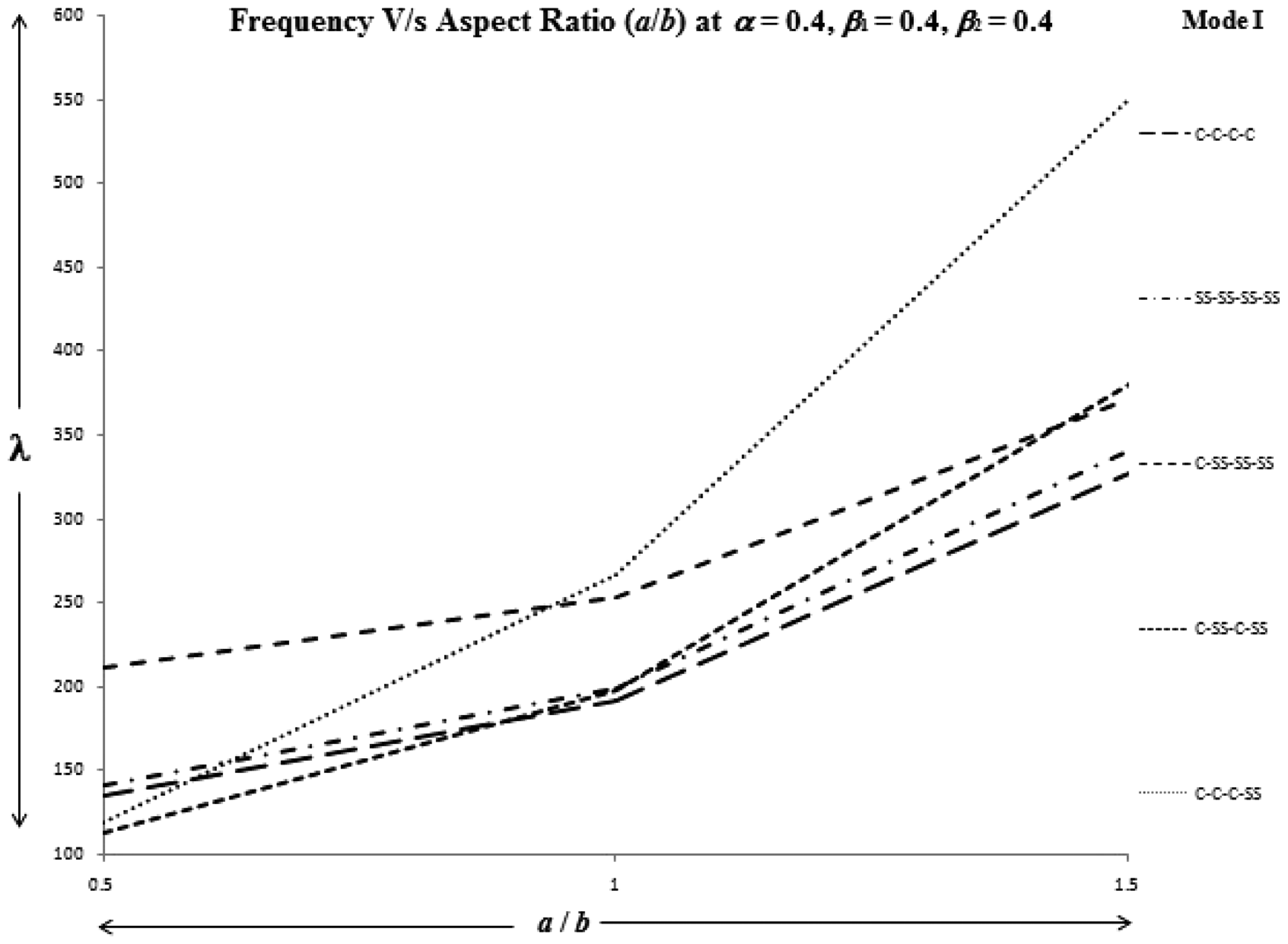
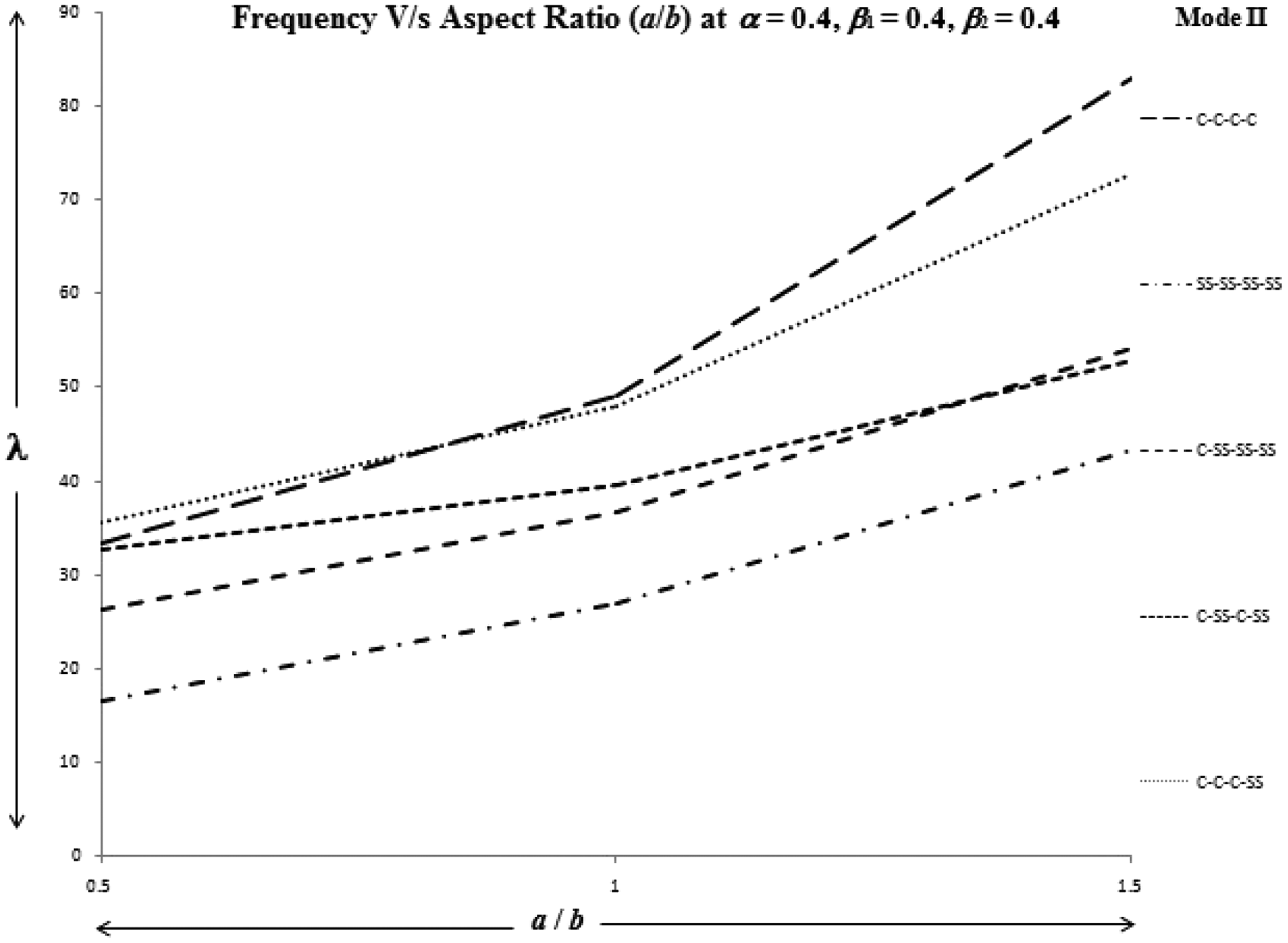
Frequency versus aspect ratio.
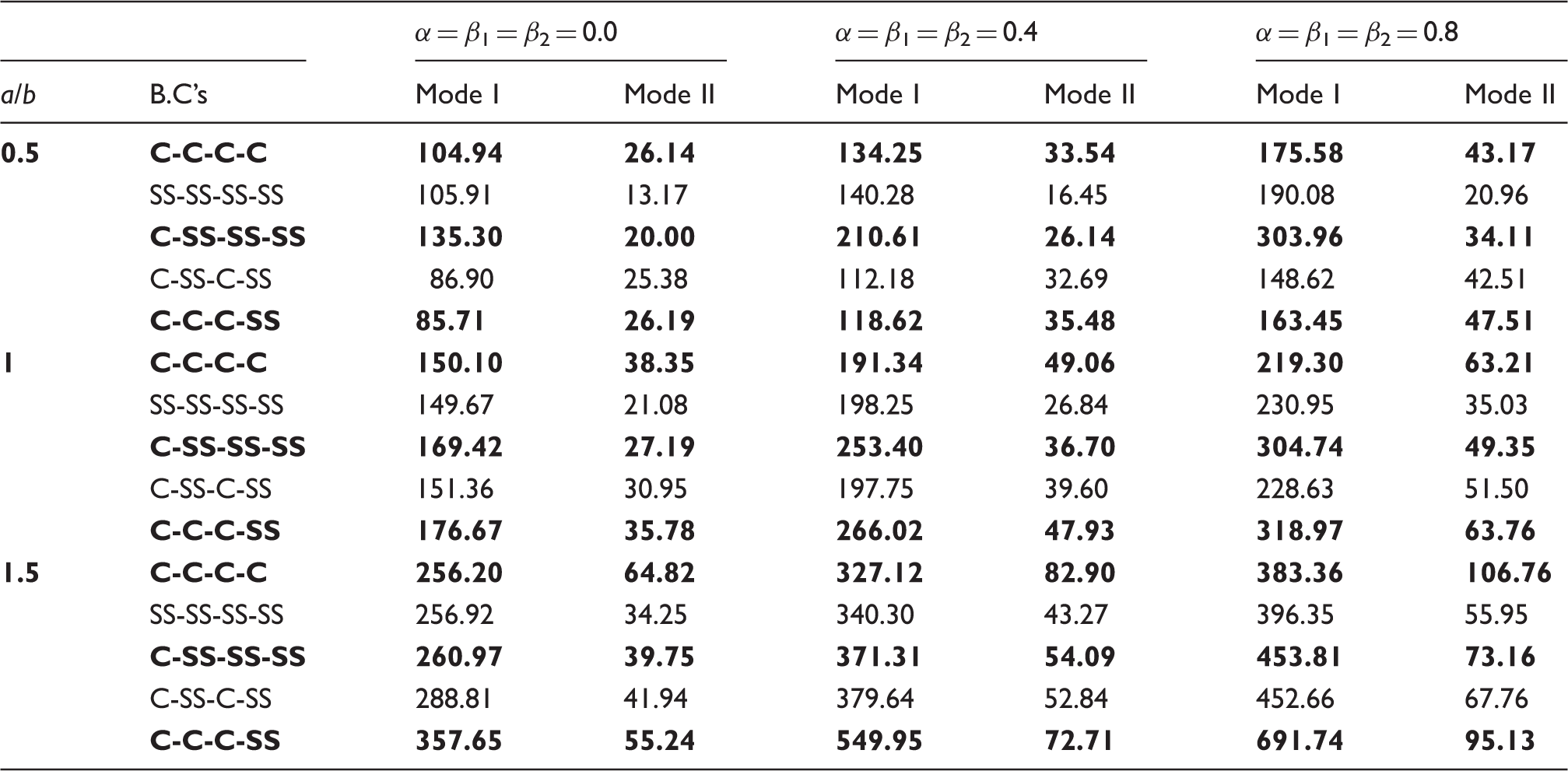
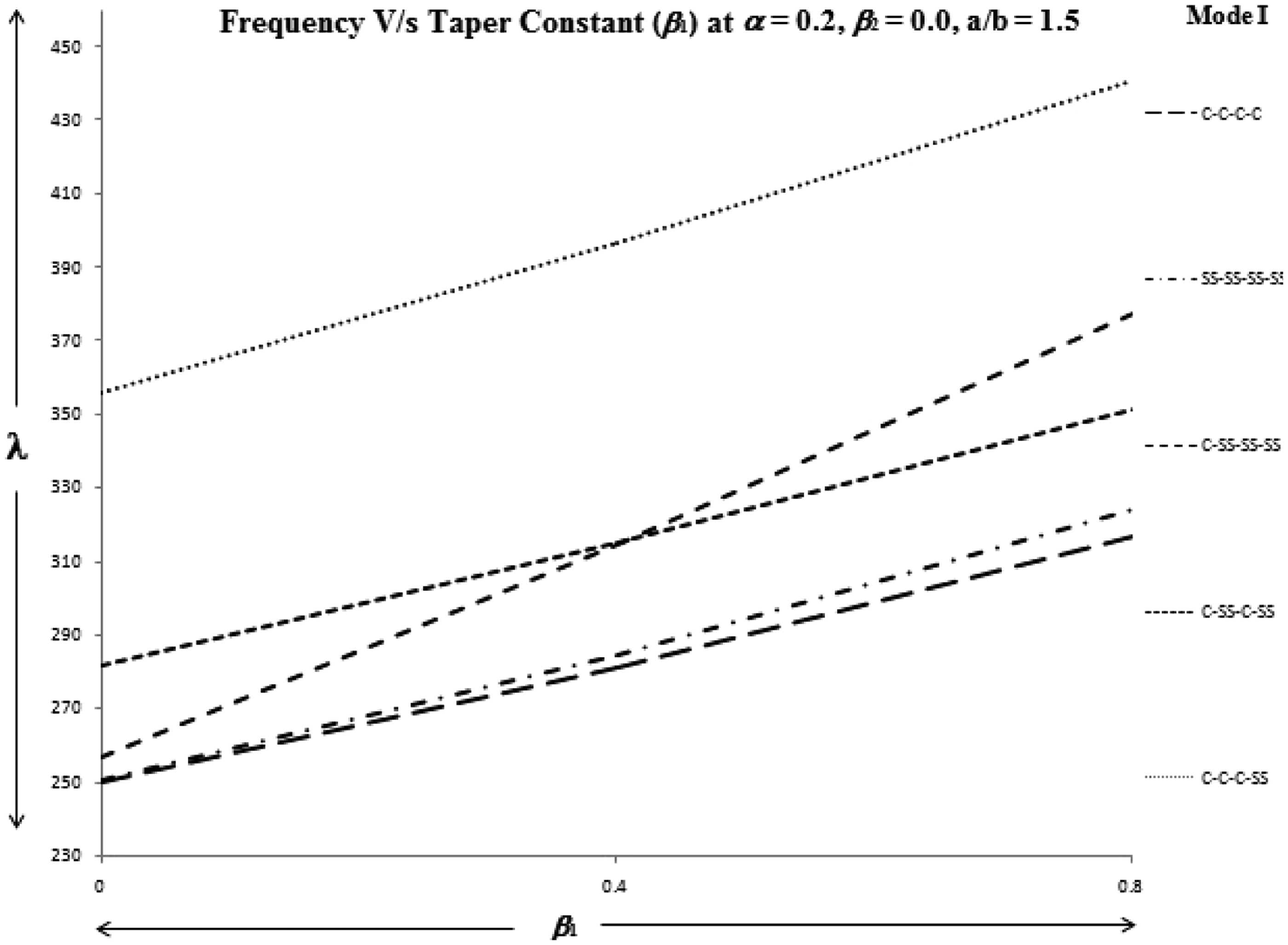
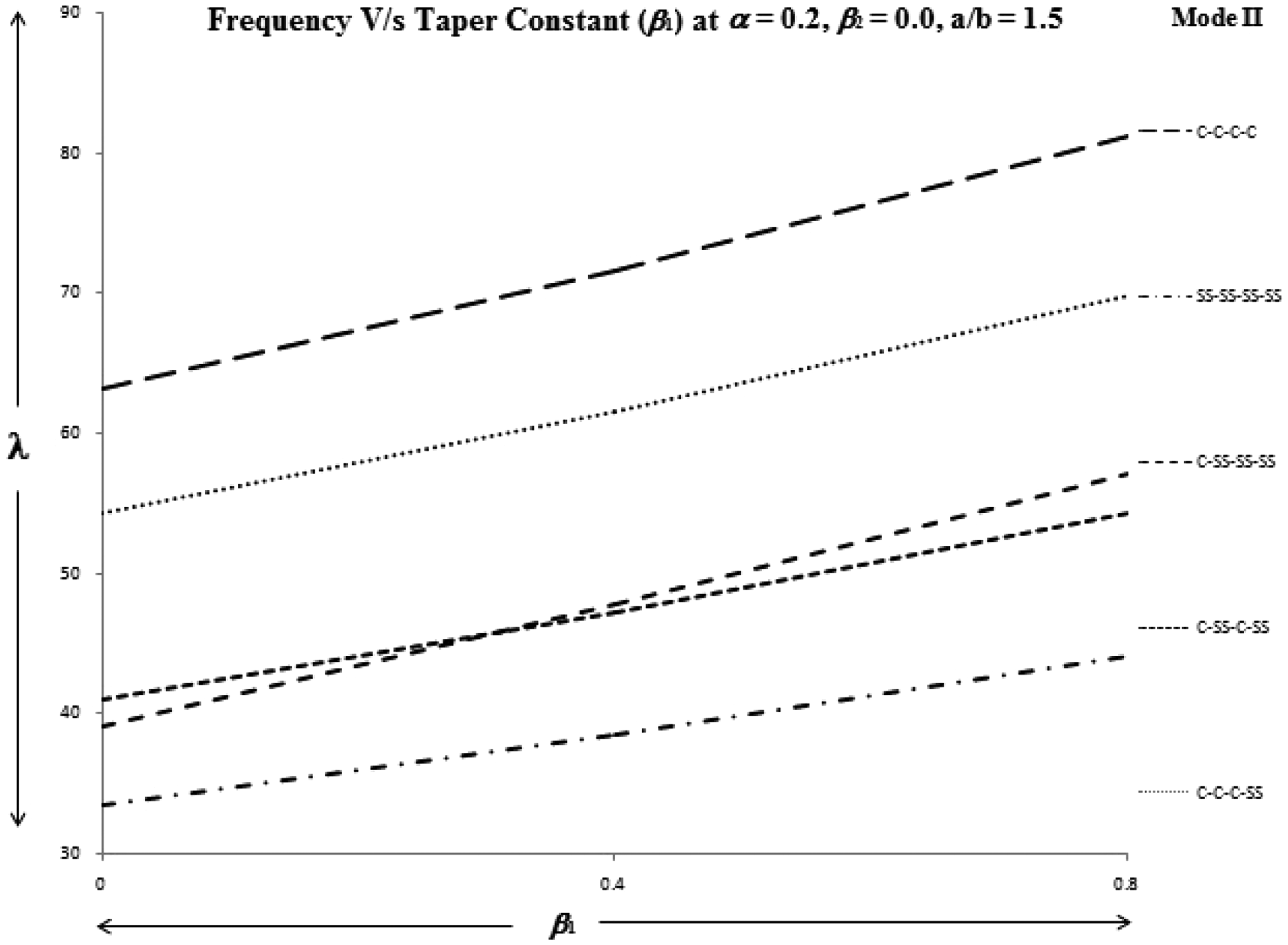
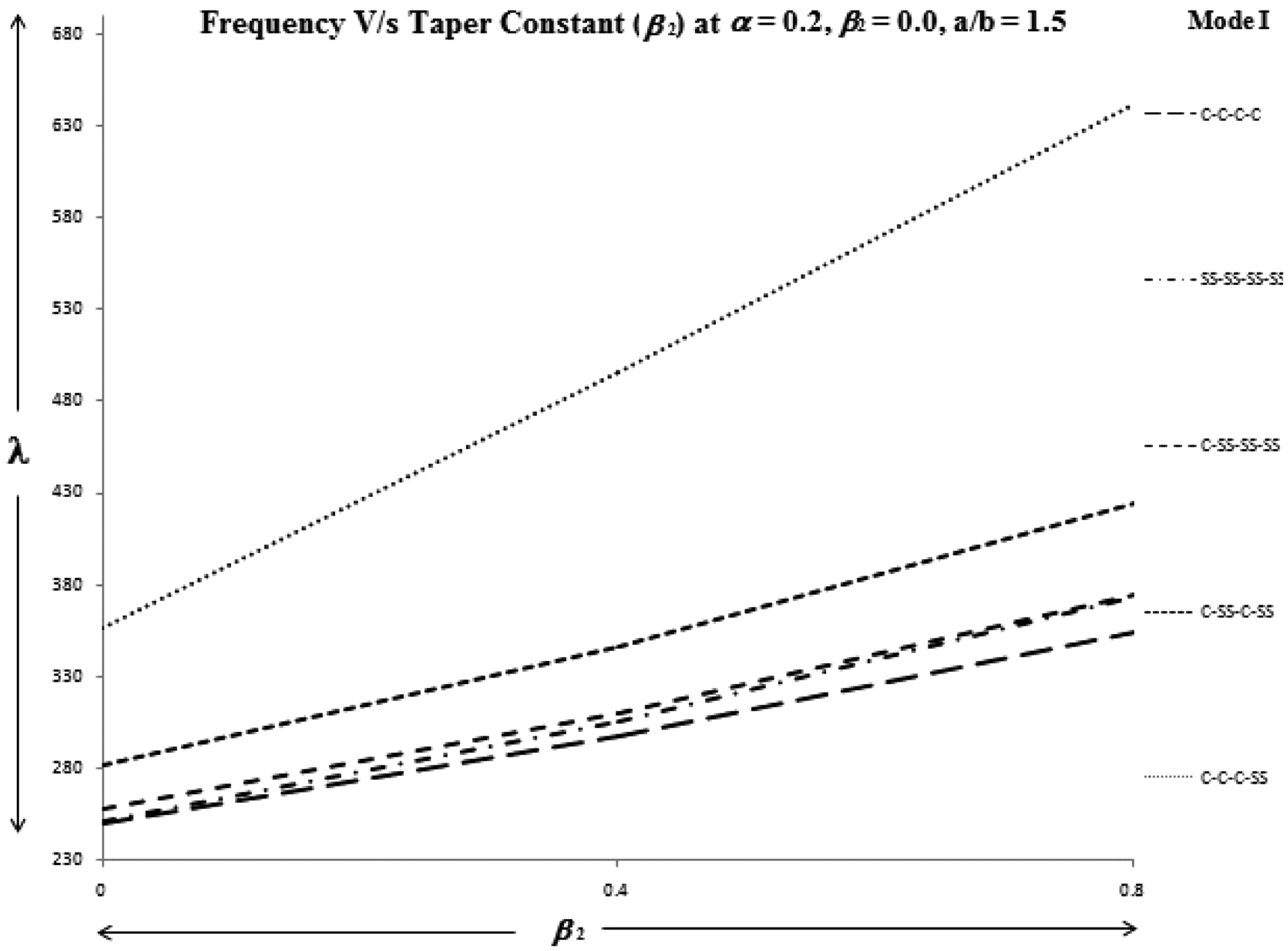
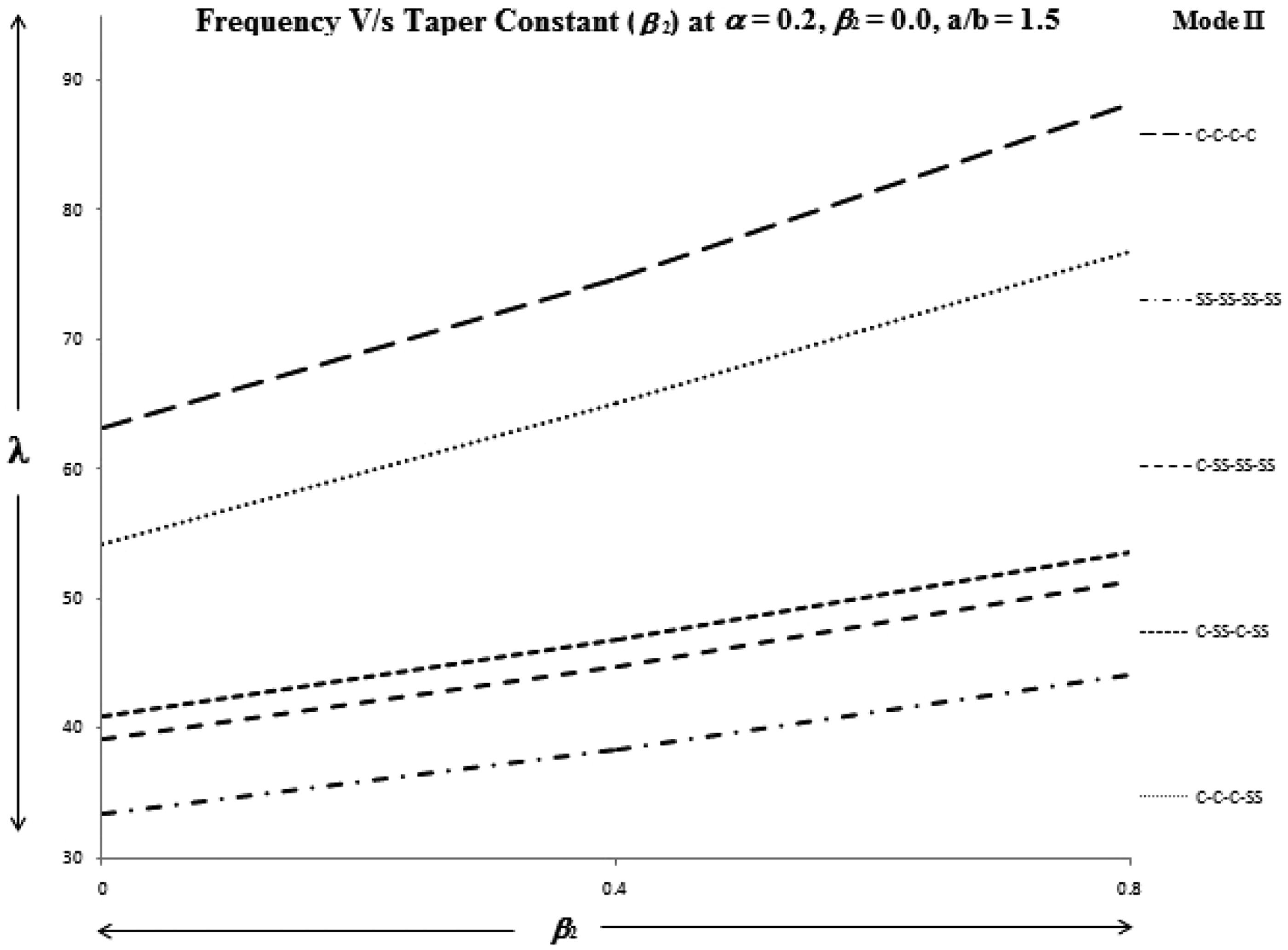
For better understanding of the results in terms of boundary conditions, the results in Tables 1 to 3 are presented in a graphical form. It is clear from Figures 2 and 3 that the frequency for both the modes of vibration decreases continuously at fixed values of taper constant and the aspect ratio for different boundary conditions. One can clearly observe from Figures 4 to 7 that the frequency increases continuously for the first two modes of vibrations as the taper constants (β1 and β2) increase for the fixed values of the thermal gradient and aspect ratio. The authors conclude from the graphs in Figures 8 and 9 that the frequency for both the modes of vibration increases very fast as the aspect ratio (a/b) increases from 0.5 to 1.5 for all the five combinations of boundary conditions.
Frequency (Mode 1) versus thermal gradient. Frequency (Mode 2) versus thermal gradient. Frequency (Mode 1) versus taper constant (β1). Frequency (Mode 2) versus taper constant (β1). Frequency (Mode 1) versus taper constant (β2). Frequency (Mode 2) versus taper constant (β2). Frequency (Mode 1) versus aspect ratio (a/b). Frequency (Mode 2) versus aspect ratio (a/b).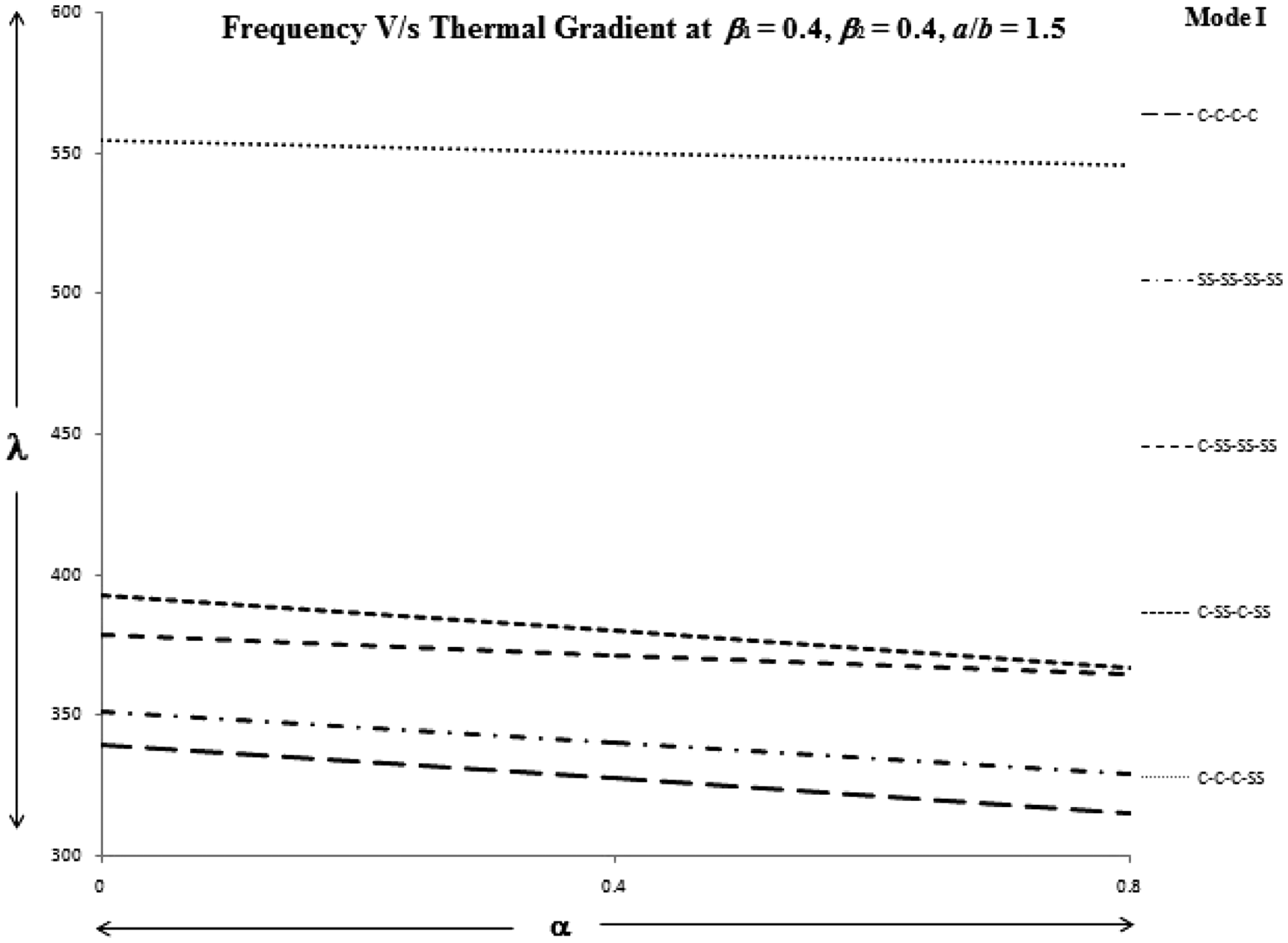
Comparison and conclusions
Frequency of present paper versus 15 at a/b = 1.5.

The results, in light of the comparison, can thus be summarised in the following points:
Frequency can be controlled by appropriate tapering, i.e. by assuming suitable values of taper parameters. Desired values of frequency can be obtained by choosing appropriate taper parameters. Boundary conditions directly affect the vibrational characteristics of the rectangular plate. First mode of frequency is maximum at C-C-C-SS boundary condition but minimum at C-C-C-C boundary condition. But second mode is maximum at C-C-C-C boundary condition and minimum at SS-SS-SS-SS boundary condition. With increasing values of thermal gradient, frequency decreases for both the modes of vibration of plate. It implies that temperature variations also directly affect the vibration of plate. Vibration can be controlled effectively by bi-parabolic thickness variation (present paper) as compared to the bi-linear thickness variation.
22
Therefore, scientists and design engineers who are working in designing space vehicles or structures are advised to analyse the findings of the present study in a practical manner to make more efficient and authentic mechanical structures and safe designs of vehicles.
Footnotes
Declaration of conflicting interests
The author(s) declared no potential conflicts of interest with respect to the research, authorship, and/or publication of this article.
Funding
The author(s) received no financial support for the research, authorship, and/or publication of this article.