



Abstract
An important mechanism for language maintenance is transmission from parents to their children. This mechanism is stronger for the regional language Frisian than it is for Low Saxon in the northern Netherlands. In this study, we assessed many variables potentially associated with parental language transmission for these regional languages. We analyzed questionnaire responses from around 25,000 Frisian and Low Saxon speakers participating in the Lifelines cohort study. Transmission was strongly associated with whether their children's other parent speaks the same language, and with the frequency of language use in different social contexts. Other important factors included language attitudes and the degree of urbanization of the respondent's neighborhood. Taken together, these findings suggest that language maintenance for Frisian and Low Saxon could potentially be bolstered by adequately stimulating positive language attitudes and the use of the language in different social contexts by both the government and smaller societal organizations.
Keywords
Background
It has been estimated that without intervention there will be a fivefold increase in languages without native speakers by the end of the century (Bromham et al., 2021, p. 169), severely reducing the world's linguistic diversity. State protection is usually formally or informally reserved for majority languages, such as a national language (or languages). Majority languages often enjoy stable intergenerational transmission from parents to children, which is crucial for language maintenance (Wölck, 2004, p. 7). The situation is often different for regional languages, such as Frisian and Low Saxon in the Netherlands (see Figure 1). For Frisian, the transmission rate was stable at around 70% in 2021, while for Low Saxon the transmission rate went down from around 50% to around 30% within two generations (Buurke et al., 2024). Most Frisian and Low Saxon speakers indicate that they acquired the language mainly through their parents (Buurke et al., 2024). Therefore, we explore which factors are associated with Frisian and Low Saxon parental language transmission. Our nonexperimental study precludes us from determining cause and effect, but these associated variables may serve as a useful starting point for future studies, and for government initiatives aimed at improving parental language transmission.
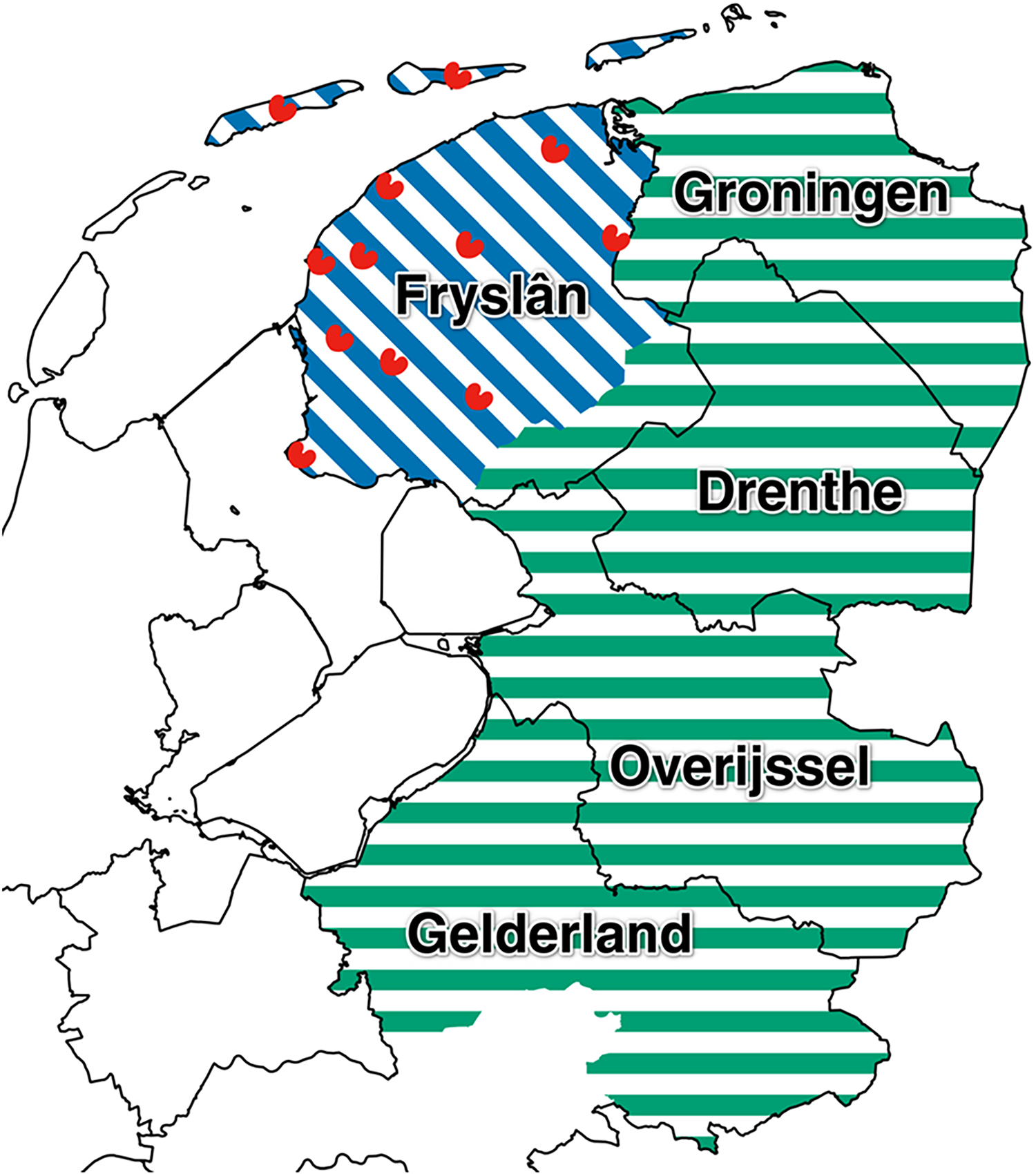
Map showing the main Frisian and Low Saxon areas in the Netherlands, with the names of relevant provinces. The area with diagonal lines and the area with horizontal lines is where Frisian and Low Saxon are in use, respectively. The icons in Fryslân indicate mixed dialects of Frisian and Low Franconian Hollandic.
Mutual intelligibility between Frisian and Low Saxon, and between these languages and Dutch, is high (Belmar & Pinho, 2020; De Vries, 2010; Ter Denge, 2012). Frisian and Low Saxon have been protected in the Netherlands since the 1990s under the European Charter for Regional and Minority Languages, although Frisian is protected according to Part III (as opposed to Part II for Low Saxon) and therefore enjoys more support from the government. The teaching of Frisian in schools and its use in government correspondence are uniquely facilitated in the Netherlands, although language attitudes toward Frisian have not improved much (Hilton & Gooskens, 2013), and teaching in schools consistently falls short of set targets (Bayat et al., 2023). In short, the Frisian language currently has more fortunate circumstances than the Low Saxon language, but they are still far from ideal.
Potential Determinants of Parental Regional Language Transmission
We rely on factors that can be extracted from a regional language questionnaire (Buurke et al., 2024), covering various variable groups that may influence parental language transmission behavior. An important variable group concerns language use, although it can be difficult to distinguish language use, knowledge, and maintenance. We assume a parent is more likely to transfer their language when they frequently use it in different environments (e.g., at home, work, or church) or with people they see regularly (e.g., siblings, partners, parents, friends, or neighbors). We also incorporate whether someone started learning the language at a young age and whether they did so mainly through their parents. These factors reflect whether someone grew up in an environment where the regional language was embedded.
Our data also include information about educational attainment, which serves as a proxy for socioeconomic status. Regional language use is known to monotonically decrease from lower to higher social classes (Chambers & Trudgill, 1998, p. 58), which has also been observed for regional languages in the Netherlands (Driessen, 2005; Schmeets & Cornips, 2022). We expect that language transmission decreases with increases in educational attainment in our data as well. The number of additional foreign national languages (e.g., English, French, or German; see the supplementary material for details) a parent speaks may also influence their transmission probability, because they are likely more conscious of the associated benefits of multilingualism (Chibaka, 2018; Cockcroft et al., 2019; Fan et al., 2015; for Frisian, see Blom et al., 2017). On the other hand, there is a common misconception that learning two languages simultaneously would be too confusing for children (Bialystok, 2011, p. 1249), although this has been disproven (Costa & Sebastián-Gallés, 2014). Given these conflicting ways of parental reasoning, we remain neutral in our prediction about whether a greater degree of multilingualism also increases the parental transmission rate.
Buurke et al. (2024) showed that around 87% of the Low Saxon speakers in Groningen and Drenthe perceived their dialect as a variant of Dutch, while this was only the case for 16% of the Frisian speakers in Fryslân. In addition, dialect leveling occurs between Standard Dutch and these regional languages (Buurke et al., 2022; Heeringa & Hinskens, 2015), and Standard Dutch itself has become less uniform (Grondelaers et al., 2016), which probably strengthens the perception of regional language variants as dialects of Dutch. This perception pattern can have important consequences, because speakers may be less protective of the language as a part of their identity (see, e.g., for Cantonese Groves, 2010). Given these findings, we predict that a parent's transmission probability decreases if they perceive their regional language (incorrectly) as a dialect of Dutch.
Frisian and Low Saxon are reported to be more commonly used in rural than urban areas (Buurke et al., 2024; Klinkenberg et al., 2018), which is often the case for regional languages (Goeman & Jongenburger, 2009). Consequently, we investigate the effect on parental transmission of where someone grew up. We expect higher regional language transmission for parents living or having grown up in less urbanized areas.
Speakers of minority languages maintaining positive attitudes about their language often use it more frequently (Wölck, 2004, p. 9), which we assume leads to increased language transmission (Bell, 2013). Language attitudes are affected by regional language attitudes in wider society (Dragojevic et al., 2021, p. 15), by whether there is a pragmatic purpose to the language (e.g., economically; Gao, 2009; Harbert, 1999), and by whether that language is part of someone's identity (Tseng, 2020). We assume that more positive language attitudes are associated with greater use and willingness to transfer the regional language.
Method
Sample
To investigate the potential determinants of language transmission for Frisian and Low Saxon speakers in the northern Netherlands, we rely on the participant pool of the Lifelines cohort study (Scholtens et al., 2015; Sijtsma et al., 2022). Lifelines is a multidisciplinary prospective population-based cohort study examining, in a unique three-generation design, the health and health-related behaviors of 167,729 persons living in the North of the Netherlands. It employs a broad range of investigative procedures in assessing the biomedical, sociodemographic, behavioral, physical, and psychological factors that contribute to the health and disease of the general population, with a special focus on multimorbidity and complex genetics. 1
The large sample size is advantageous for the generalizability of our findings, but it should be noted that the Lifelines cohort study is not fully representative of the northern Dutch population (Klijs et al., 2015). For example, women, middle-aged, and highly educated people are overrepresented in the sample. Klijs et al. (2015) also concluded that the risk of selection bias in the Lifelines sample was low, because the sample is broadly representative of the northern Netherlands on socioeconomic factors (as well as diseases and general health). There is no specific reason to assume that the data are biased for regional language use, and therefore we deem the Lifelines data generally suitable for regional language transmission analyses. We rely on the same questionnaire that Buurke et al. (2024) used to estimate regional language use percentages in the northern provinces. We focus on the 25,606 respondents who indicated speaking Frisian or Low Saxon in their traditionally associated provinces (see Figure 1): around 10,100 Frisian and 1,100 Low Saxon speakers in Fryslân, around 7,600 Low Saxon speakers in Groningen, and around 6,700 Low Saxon speakers in Drenthe.
Variables
The exact question formulations used in the questionnaire can be found on the Open Science Framework project page (https://osf.io/jthvq/). We used the question asking whether someone used their regional language with at least one of their children (i.e., as a binary variable) as our language transmission indicator. We excluded people who indicated that they did not have children (n = 4,467; 17%), because they cannot transfer the language through the mechanism we investigate.
The Respondent's Background
Educational attainment was included as a factor variable (low, middle, or high) and as a binary variable (contrasting high educational attainment with the other levels). 2 Participants were asked whether they speak a regional language or dialect spoken in the Netherlands. Being able to participate in a simple conversation was seen as being able to speak a language (and resulted in inclusion in this study when the regional language included Frisian or Low Saxon). Respondents were also asked to indicate which other national languages the participant could speak with the same conversational threshold. The participants were asked whether they perceived their dialect as a variant of Dutch or another language. They also filled in the exact age at which they started acquiring their regional language, which we coded as a binary variable: early acquisition in case someone filled in four or lower (i.e., primary school age in the Netherlands or earlier), and later acquisition for ages higher than four. Participants were also asked whether they acquired their regional language primarily through their parents or in another way (e.g., their environment), which was encoded as a binary variable.
Language use
We also included whether individuals used their regional language with their children's other parent (i.e., as a binary variable). We quantified participants’ use of their language, averaged over 12 specific environments, and prompted on a five-point scale ranging from “never” to “always.” Finally, a set of binary variables about language use with others in their close environment was included (e.g., parents, siblings, neighbors, or friends). Missing values were assigned when a variable did not apply to the participant (e.g., in case of death of the other parent).
Geographical Variability
The Lifelines cohort study includes the postal code of respondents at the time of the questionnaire by default, which we used to derive longitude and latitude coordinates and a factor variable representing their place of residence. Respondents additionally indicated in which Dutch province and geographical location they were (mainly) raised during the first 12 years of their lives from a drop-down list of known locations, which was included as a factor variable. Statistics Netherlands also provides a measure of how urbanized an area is by counting the number of postal addresses in a square kilometer: omgevingsadressendichtheid “environmental address density” (OAD; Centraal Bureau voor de Statistiek, 2023). More urbanized areas have higher OAD values. We averaged the OAD values for each geographical location instead of the postal code, because affluent neighborhoods may have a relatively low OAD but may reside in a highly urbanized environment. This information was only available for a respondent's place of residence at the time of the questionnaire.
Language Attitudes
We averaged how positive participants were about their regional languages based on 13 statements, measured on a 7-point Likert scale ranging from “very strongly disagree” to “very strongly agree” (see the supplementary material for details). These statements included three statements about prejudices toward the regional language, the average score of which was included in addition to the general language attitude score.
Statistical Modeling
A structured statistical modeling approach is necessary for obtaining an optimal model given the many interrelated factors. We construct logistic generalized additive mixed models (GAMMs) predicting language transmission in a forward stepwise procedure. GAMMs can incorporate nonlinear and linear relationships between the predictors and the predicted variable (Wood, 2017). They can also account for structural variability associated with random-effect factors in the data, such as the location of residence and growing up for respondents. We follow the procedures proposed by (Wieling, 2018), comparing models that differ only in a single model term using the itsadug package for model comparison (Van Rij et al., 2022). We report the explained deviance as an effect size indicator for individual predictors and the final model, which is a generalization of explained variance for non-Gaussian GAMs (Wood et al., 2016).
Results
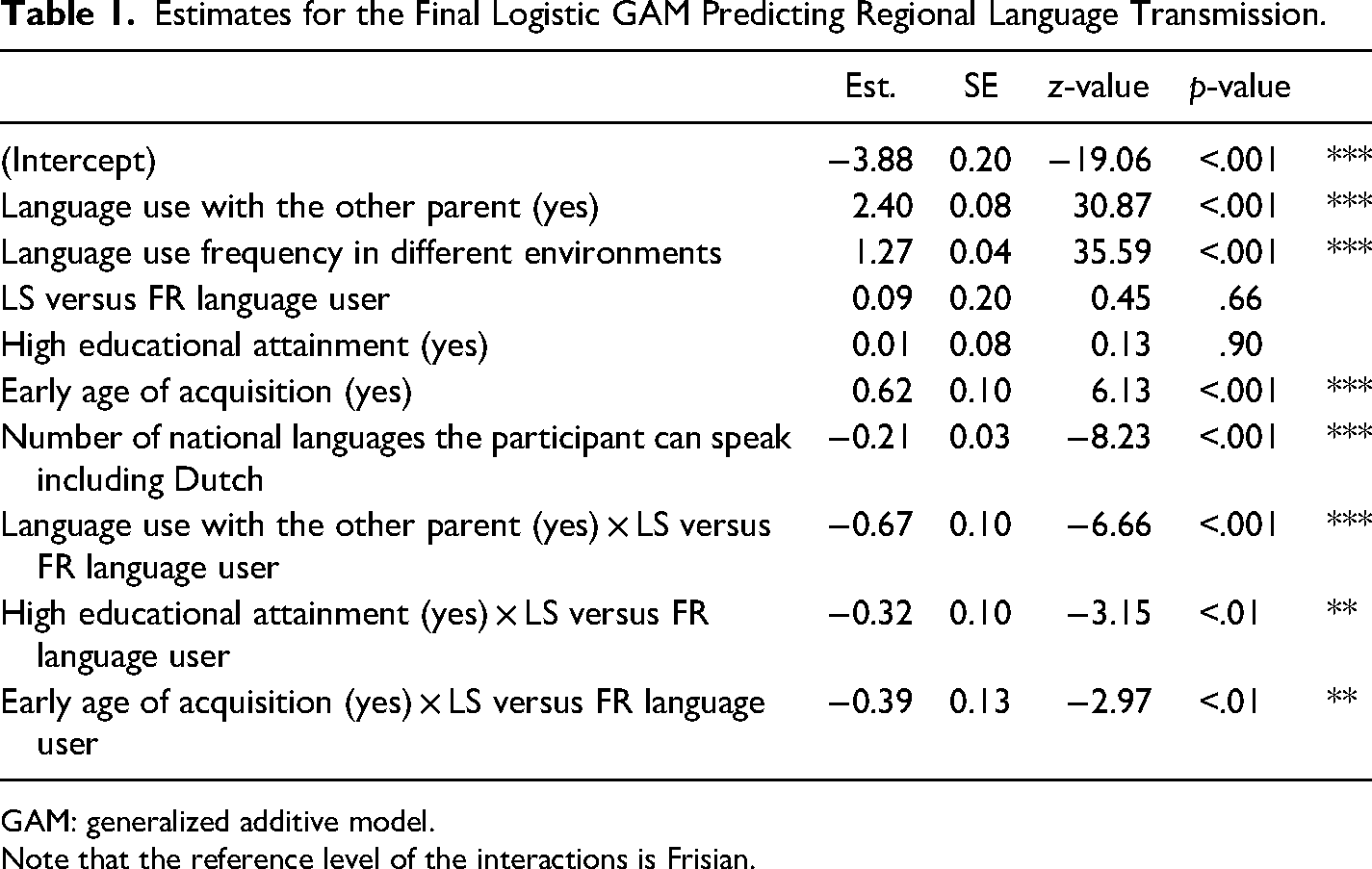
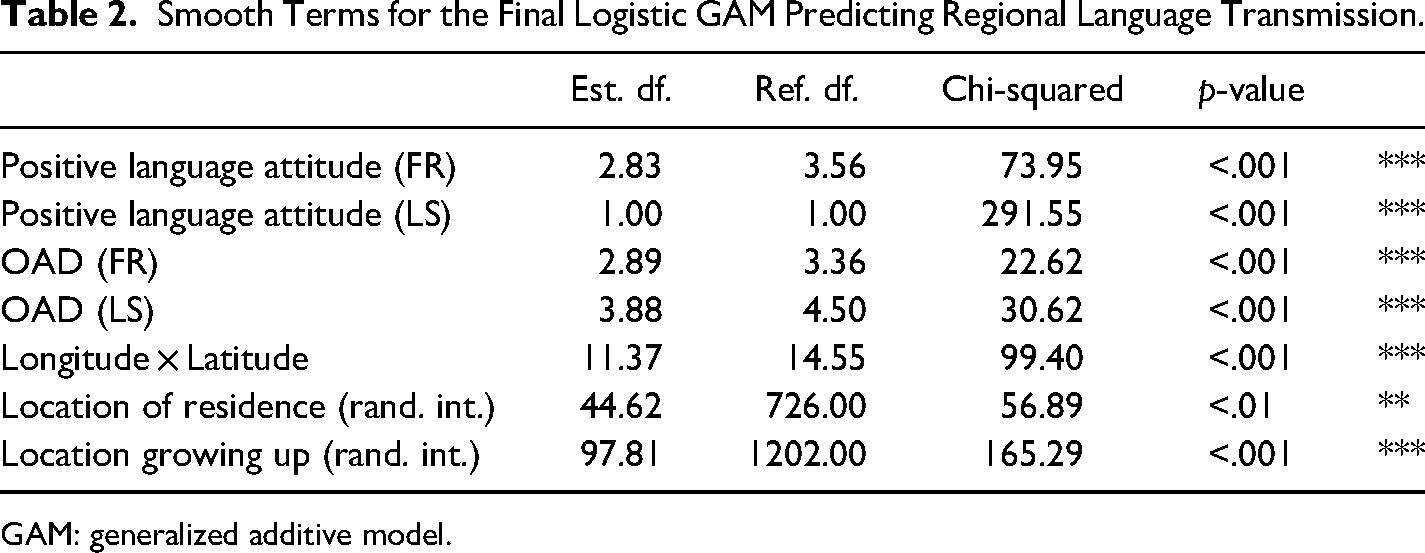
The summary of the final model is given in Tables 1 and 2. Marginal effect plots for the included predictors are given in Figures 2 through 5.
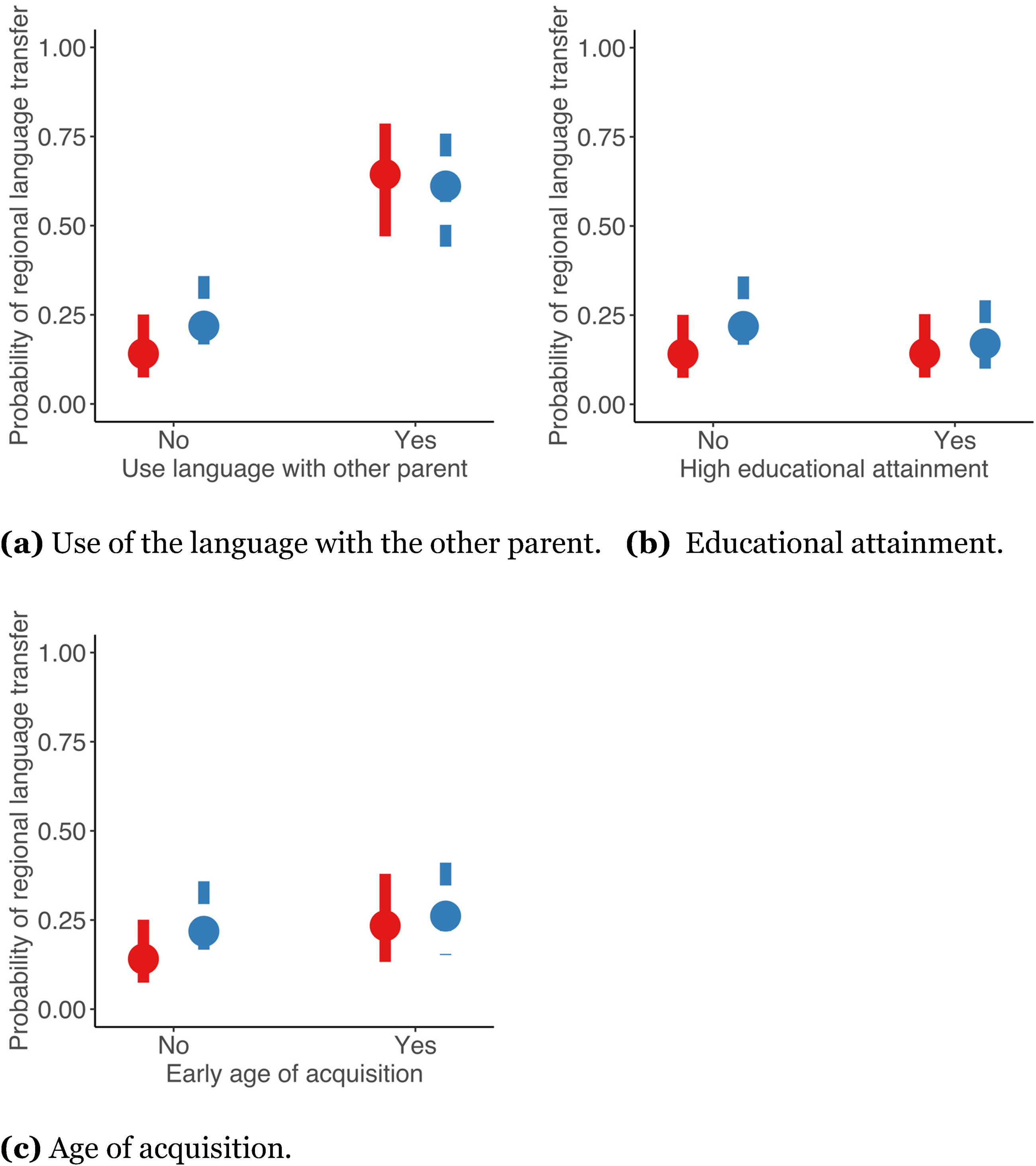
Marginal interaction effects for language by use of the regional language with the other parent, educational attainment, and age of acquisition. Frisian is shown with a regular line and Low Saxon with a dashed line.
Estimates for the Final Logistic GAM Predicting Regional Language Transmission.
GAM: generalized additive model.
Note that the reference level of the interactions is Frisian.
Smooth Terms for the Final Logistic GAM Predicting Regional Language Transmission.
GAM: generalized additive model.
The explained deviance of the final model is 49.9%, and most of the predictive power in the model comes from only a few predictors. Regional language use with the other parent accounts for 35.1% of the explained deviance, and language use frequency accounts for a further 10.4% of the explained deviance. The other model terms account for the remaining 4.4% of explained deviance. Note that the overall transmission rate across the sample for each language (Frisian: 66%, Low Saxon: 40%) cannot be derived from the model summary due to the interaction terms with the regional language contrast. A descriptive summary of all variables used in the model is given in the supplementary material.
As we are contrasting Frisian with Low Saxon speakers, we have checked for interactions with the regional languages. This revealed that the increased transmission rate when the other parent also speaks the same language was stronger for Frisian than Low Saxon (see Figure 2a). Low Saxon respondents with lower educational attainment had a higher transmission probability, while there was no significant difference for Frisian respondents (see Figure 2b). Similarly, the transmission probability increased for respondents who indicated an early age of acquisition, but this effect was weaker for Low Saxon speakers (see Figure 2c).
The transmission rate is larger for respondents residing in areas with a very low address density, but also for some areas with the highest address density (see Figure 3a). The transmission rate was higher in Low Saxon low address density areas than Frisian ones. Furthermore, respondents with a more positive language attitude were also more likely to transfer their regional language (see Figure 3b). This effect was strongest for Low Saxon respondents.
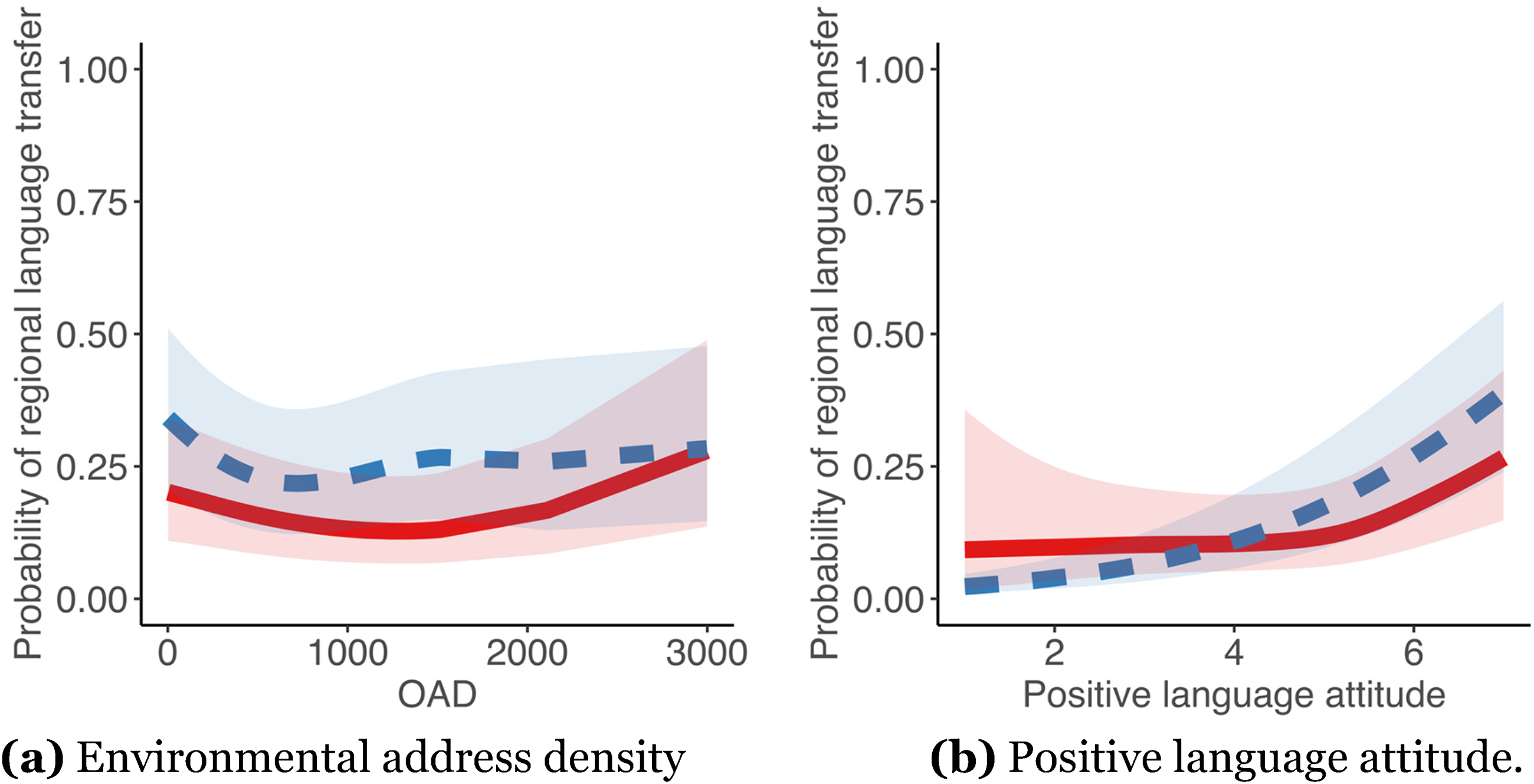
Marginal interaction effects for language by environmental address density and positive language attitude. Frisian is shown with a regular line and Low Saxon with a dashed line.
The contrast between Frisian and Low Saxon speakers was important in most cases, but there were two exceptions. The transmission probability increases with higher levels of language use frequency (see Figure 4a), and this effect was not statistically different for the two languages (but note that Frisian speakers have higher levels of language use frequency; see the supplementary material). When respondents indicated speaking more national languages, this resulted in a lower regional language transmission probability (see Figure 4b), again without showing a statistical difference between the regional languages.
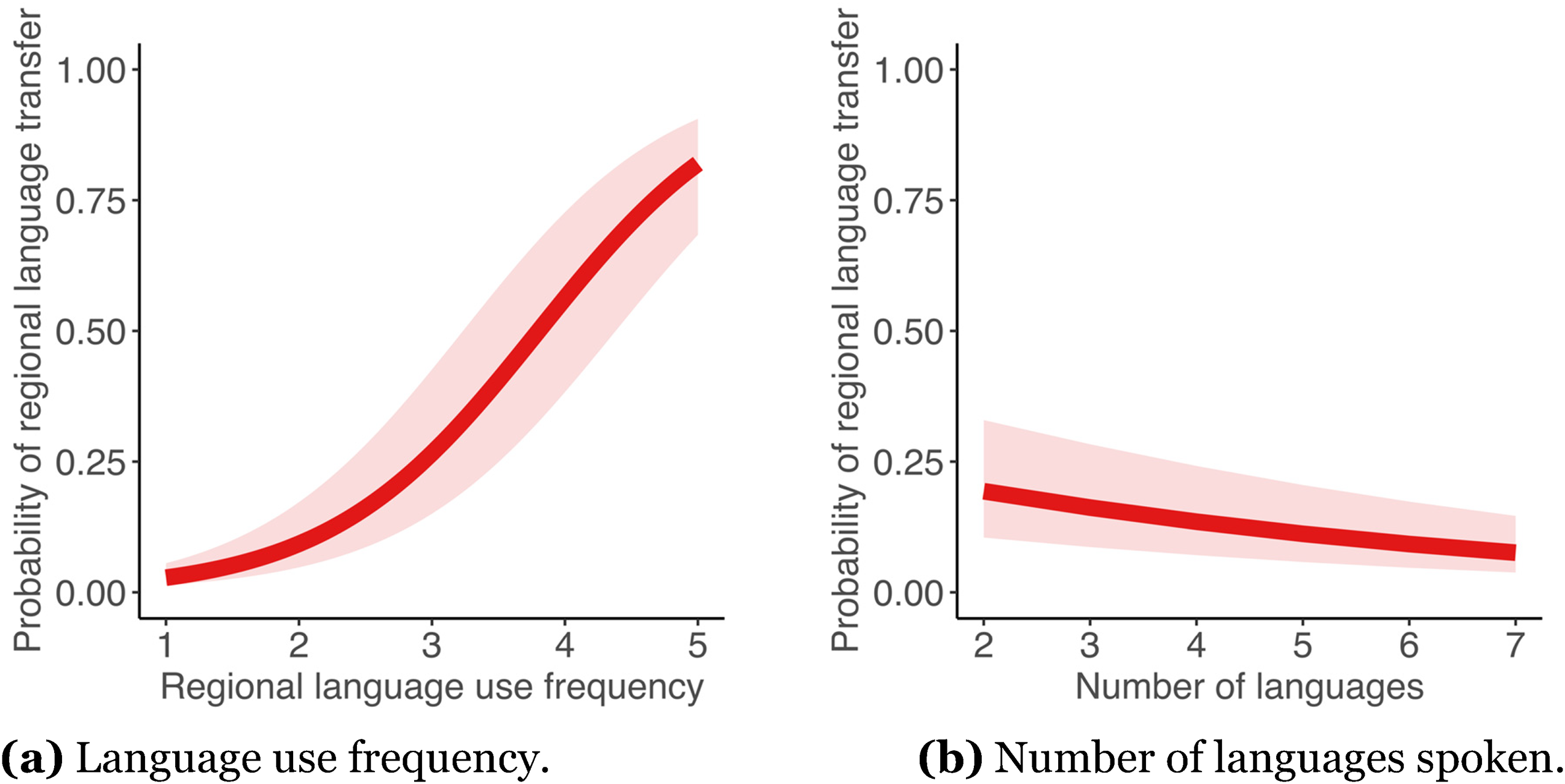
Marginal effects of language use frequency in different environments, and the number of languages a respondent speaks.
There is one specific area where a relatively low rate of language transmission remains after accounting for all other variables: the northeast of the province of Groningen (see Figure 5). The lower transmission rate fans out from that area and still covers a substantial part of the rest of the province.
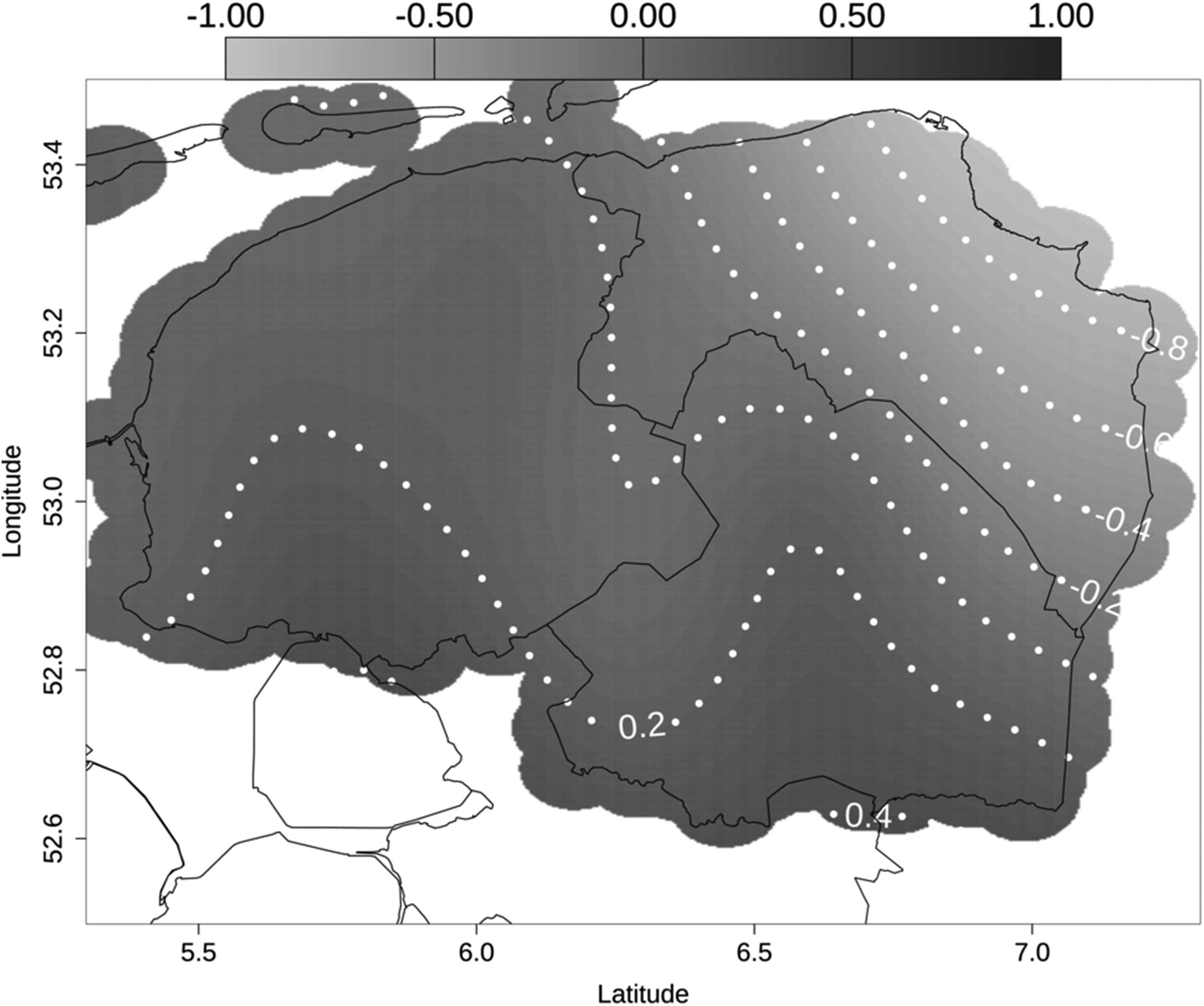
Marginal geographical effect smooth of the final model predicting regional language transmission. Darker colors indicate higher probabilities and lighter colors indicate lower ones.
We discuss these findings in the Discussion section, but we first explain why other variables are not included in the final model. Some variables (e.g., a respondent's perception of their language variety as a Dutch dialect or not) were not included, because other (statistically linked) variables had more explanatory power (e.g., language use frequency). Other variables (e.g., early age of acquisition) were strongly correlated with other more informative predictors (e.g., whether a respondent acquired the language through their parents), in which case the predictor with the greatest explanatory power was kept. Finally, some predictors were left out, because the direction of coefficients reversed when these were included in the final model (e.g., specific statements about prejudices), which means these were collinear with other predictors in the model.
Discussion
Stable and long-term survival of a language variety is largely dependent on language transmission from parents to their children, which Wölck (2004, p. 7) even named as the strongest candidate for a language maintenance universal. We investigated which factors are associated with parental language transmission for Frisian and Low Saxon, using an exploratory procedure and a large-scale questionnaire in the northern Netherlands.
We found that two variables, best described together as a reflection of the entrenchment of the regional language, strongly influenced transmission rates of Frisian and Low Saxon. A higher transmission rate was particularly associated with whether someone spoke their language with the other parent of their children. By definition, both parents can speak and transfer the regional language in this scenario. Furthermore, speakers who used the language more often showed much higher language transfer rates. The frequency of language use may be influenced by several processes, however. Speakers may be internally motivated to use their language in many contexts, but they are also increasingly expected to use the ubiquitous Standard Dutch (Hinskens & Taeldeman, 2013, p. 5), and opportunities to use the language are rare outside of rural areas (Buurke et al., 2024). This goes especially for Low Saxon speakers. Regional language users are unlikely to move to a different environment to use their language, however, so this finding does not directly aid in potentially increasing language maintenance.
An early acquisition onset (i.e., before attending primary school) is associated with a higher transmission probability. This variable largely represents whether the language is a common mode of communication in a person's family, because there is a strong association with whether someone uses the language with their parents, siblings, and their close environment (see the supplementary material). The transmission probability gap between early and late acquisition is greater for Frisian than for Low Saxon (see Figure 2c), but more people learn Frisian at a later age through one of the more widely available Frisian language courses (see the supplementary material).
More positive language attitudes were associated with higher language transfer rates, particularly for Low Saxon parents. Similarly, strongly negative attitudes were more strongly associated with lower transmission rates for Low Saxon parents than for Frisian parents. This finding suggests that fostering positive language attitudes for speakers of the lesser-maintained Low Saxon language may be beneficial to ensure its continued transmission and reduce its decline.
People with high educational attainment showed lower language transfer rates than those with lower or middle educational attainment, as we expected. We first assessed a three-level operationalization, but the most important contrast was found between participants with high educational attainment and the other participants. The effect was nonsignificant for Frisian speakers, which may mean that the use of Frisian is less stigmatized for speakers from different educational backgrounds than Low Saxon.
We also assessed whether transmission rates were higher in rural settings, which Figure 3a shows is the case. The transmission probability did not monotonically decrease from more rural to more urban areas, however. The transmission probability was higher for both strongly rural and strongly urban areas. These effects are probably best understood in the context of the ongoing worldwide urbanization (Zhang, 2008), with many rural regional language speakers moving to the cities due to higher employment opportunities.
The transmission rates were lower in the northern and eastern parts of Groningen (see Figure 5). This residual geographical variation is striking, given the strong explanatory power of the variables already in the model. It is unclear why this area's remaining regional language transmission rate is lower. We tested whether the predictors used in the modeling procedure showed unique geographical patterns in this region (see the supplementary material). The age of acquisition in this region was on average around one year later than the average (around 2.6 years). This suggests that more speakers start acquiring Low Saxon in primary school than elsewhere, and they may consequently be less likely to transfer the language later in life. An in-depth follow-up study of this region is useful, as it may reveal information about this process and help to identify further variables relevant to regional language transmission.
Against our expectations, we also found evidence that speaking more national languages was associated with a lower regional language transmission rate (see Figure 4b). For those investing in learning more languages, the lower prestige of regional languages may cause them to be seen as less useful than other national languages. Furthermore, positive language attitudes may be a relatively recent development. Language attitudes are known to be dynamic (Lenz, 2009) and susceptible to external influences, such as language policies (Dragojevic et al., 2021). If the parents had already decided not to transfer their language when they raised their children, these current positive attitudes would not have influenced their past behavior.
Some of our findings may be used for fostering positive language attitudes (especially toward Low Saxon) from an institutional perspective, which fits into recent governmental trends promoting regional languages (e.g., in teaching in secondary school; Prenger et al., 2023). Research on this topic rarely trickles down to language family policy (King et al., 2008, p. 913), so governmental organizations with a broad geographical scope are also advised to actively support parents in their multilingual child-rearing (as voiced by Wang & King, 2024). Studies focusing on parents with positive language attitudes (a substantial part of the population; see supplementary material) can assess how these parents can be encouraged to transfer their regional language and convince others to follow their example.
Finally, our results suggest the differences between Frisian and Low Saxon can potentially be mitigated by giving Low Saxon an equal status to Frisian. Both languages have been protected in the Netherlands since the 1990’s under the European Charter for Regional and Minority Languages, but Frisian is protected according to Part III and Low Saxon only according to Part II. An attempt to include Low Saxon under Part III was rejected by the Dutch government in 2012 (see Parliamentary paper 2012Z05658) 3 , but the political landscape frequently changes and new attempts are legally possible. By giving these languages equal status, the Dutch government can ameliorate the incorrect perception of Low Saxon varieties as Dutch dialects. If this perception is successfully corrected, language attitudes will likely become more positive among both Low Saxon speakers (e.g., due to a greater pride) and people who do not speak the language (e.g., due to more respect for the language and its users). People will likely also be more inclined to teach or learn the language, which is reflected by the greater number of Frisian participants indicating they learned the language in other ways than through their parents (e.g., in school or a language course; see supplementary material). Ideally, the language attitudes toward regional languages are then also regularly assessed by the Dutch government after implementing this change, because it may show the international community the effectiveness of maintaining linguistic diversity through government support.
Limitations
We only analyzed data from speakers in the northern provinces, but Low Saxon variants are also widely spoken in the provinces of Overijssel and Gelderland (see Figure 1). Low Saxon is used by more speakers in Groningen and Drenthe than in other areas (Bloemhoff, 2005), and there may be other sociolinguistic differences between these areas. For example, the pressure from Standard Dutch on the local Low Saxon dialects seems to be greater for the southern areas (Wieling et al., 2011), which may strengthen perceptions of Low Saxon as a dialect of Dutch and influence language attitudes in those areas.
A total of 87% of Low Saxon respondents perceived their dialect as a variant of Dutch, while only 16% of Frisian respondents indicated this. This state of mind may have serious repercussions, because reevaluation of varieties has been a powerful driver of political and sociolinguistic change in the past (Lenz, 2009). Furthermore, speakers who see their variant as a separate language may have a stronger tendency to support forming a written standard (see, e.g., Groves, 2010). A detailed investigation of what this pattern could entail for interpretations of questionnaire responses is warranted, especially for questions comparing Dutch and regional language use. If someone puts these languages in the same category, the interpretations may differ accordingly.
Finally, children are also active agents in family language policy and also subject to external pressures (e.g., from school and peers; Dragojevic et al., 2021), which can lead to different preferences and resistance to learning a minority language (Fogle & King, 2013; King et al., 2008). Such preference mismatches are not unlikely for Low Saxon, given the strong decline in parental transmission in the two recent generations (Buurke et al., 2024), and renewed interest in dialects in the Netherlands since the end of the last century (Slaats, 2020). This may lead to situations where the children would like to speak the regional language, while the parents discourage it.
Conclusion
We found that parental transmission of Frisian and Low Saxon in the Netherlands is primarily associated with environmental factors, such as the other parent speaking the same language and frequent language use. Other higher transmission contexts are when parents have positive language attitudes. The transmission rates can be high in both strongly urbanized and strongly rural areas, although they are often lower among parents with higher educational attainment. The methodology employed in this study cannot ascertain the direction of causality, so more experimental intervention studies are necessary to explore how these different factors interact.
To stimulate regional language use, our results suggest that it would be beneficial if governmental organizations support Frisian and Low Saxon parents with multilingual childrearing advice and practices. Furthermore, future studies may explore how parents with positive language attitudes can be activated to transfer their language to their children and encourage other parents to do so. These complementary approaches are necessary, because these regional languages are otherwise likely to disappear in favor of Standard Dutch, further increasing the substantial ongoing loss of linguistic diversity worldwide.
Supplemental Material
sj-html-1-jls-10.1177_0261927X241287765 - Supplemental material for Intergenerational Language Transmission of Frisian and Low Saxon in the Netherlands
Supplemental material, sj-html-1-jls-10.1177_0261927X241287765 for Intergenerational Language Transmission of Frisian and Low Saxon in the Netherlands by Raoul Buurke, Martijn Bartelds, Wilbert Heeringa, Remco Knooihuizen, and Martijn Wieling in Journal of Language and Social Psychology
Supplemental Material
sj-html-2-jls-10.1177_0261927X241287765 - Supplemental material for Intergenerational Language Transmission of Frisian and Low Saxon in the Netherlands
Supplemental material, sj-html-2-jls-10.1177_0261927X241287765 for Intergenerational Language Transmission of Frisian and Low Saxon in the Netherlands by Raoul Buurke, Martijn Bartelds, Wilbert Heeringa, Remco Knooihuizen, and Martijn Wieling in Journal of Language and Social Psychology
Footnotes
Declaration of Conflicting Interests
The authors declared no potential conflicts of interest with respect to the research, authorship, and/or publication of this article.
Funding
The authors received no financial support for the research, authorship, and/or publication of this article.

Supplemental material
Supplemental material for this article is available online: https://osf.io/jthvq/.
Notes
Author Biographies
References
Supplementary Material
Please find the following supplemental material available below.
For Open Access articles published under a Creative Commons License, all supplemental material carries the same license as the article it is associated with.
For non-Open Access articles published, all supplemental material carries a non-exclusive license, and permission requests for re-use of supplemental material or any part of supplemental material shall be sent directly to the copyright owner as specified in the copyright notice associated with the article.
