




Abstract
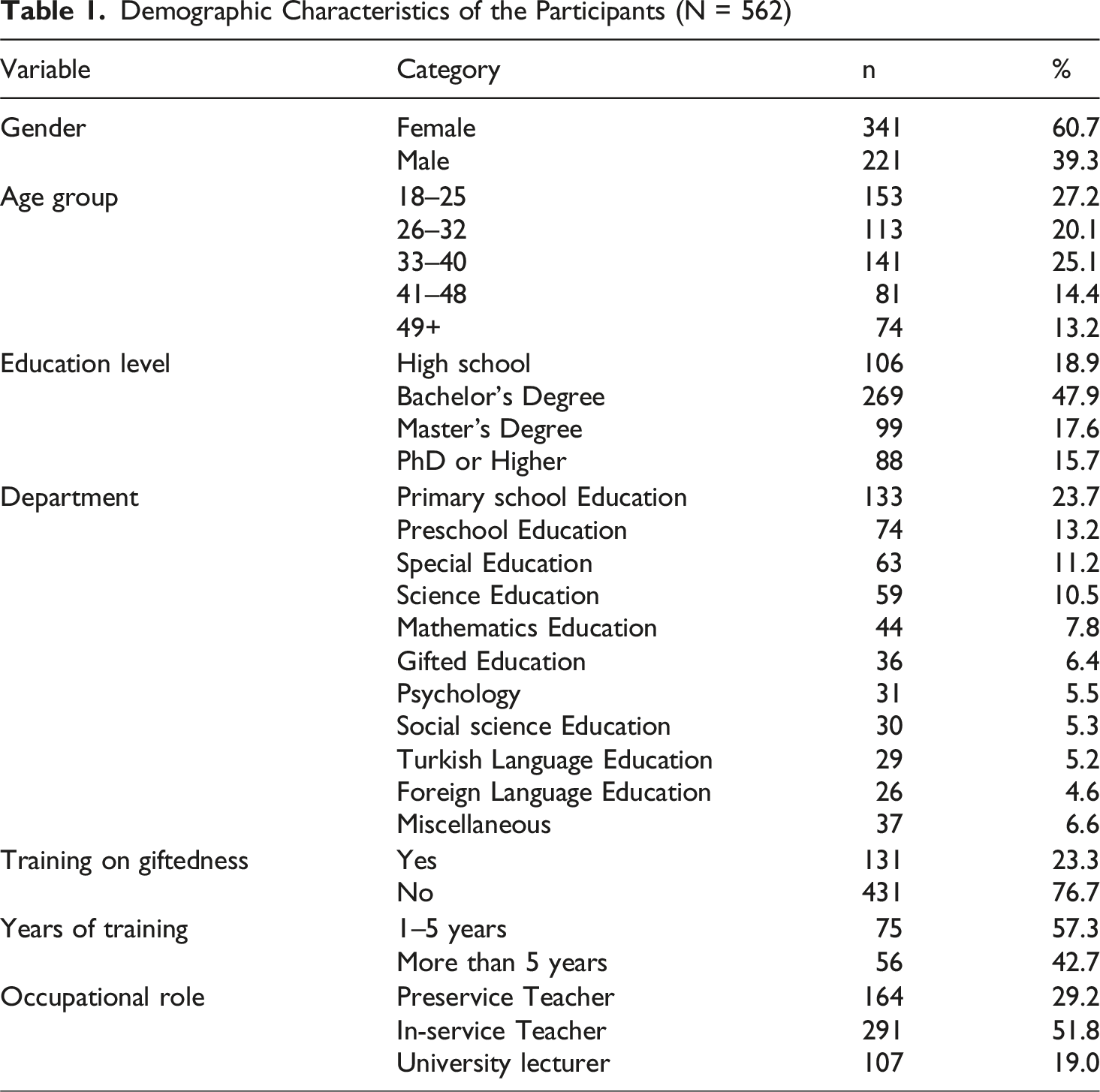
Despite growing research in gifted education, myths about giftedness remain widespread among educators and may hinder appropriate support for gifted learners. In this study, data were collected from 562 participants (60.7% female, 39.3% male), including preservice teachers, in-service teachers, and university lecturers in teacher education, using the newly developed, psychometrically validated the Rapid Assessment Test of Individual Misconceptions about Giftedness (RATIMAG) instrument. This study aimed to investigate how demographic variables affect educators’ beliefs about myths about giftedness. Mann-Whitney U and Kruskal-Wallis tests revealed significant group differences based on age, education level, academic department, training in gifted education, and occupational role. Gender was not associated with belief differences. Findings emphasize the importance of sustained, role-sensitive training throughout the educator career cycle. While conducted in Türkiye, the study raises broader questions about the persistence of giftedness myths across cultures and suggests directions for improving educator preparation and policy in gifted education.
Keywords
Introduction
Despite significant advancements in gifted education research, persistent myths and misconceptions about giftedness influence how educators perceive, identify, and support gifted learners. These myths—such as the belief that gifted students will succeed without help, that they excel in all domains, or that a single test score can definitively identify giftedness—can result in educational neglect and missed opportunities. Misconceptions of this kind affect teaching practices and undermine equitable access to gifted education services.
Early models of giftedness emphasized innate intellectual ability, as measured by IQ tests (Robinson et al., 2000). However, theories beyond this approach have shown that giftedness cannot be explained entirely by IQ test results. For example, Renzulli’s (1986) Three-Ring Conception of Giftedness defines giftedness as the interaction of above-average ability, creativity, and task commitment. Afterwards, Ziegler’s (2005) Actiotope Model frames giftedness as the result of adaptive interactions between an individual and their environment over time. More recently, contemporary perspectives underline the developmental, contextual, and dynamic nature of giftedness (Sak, 2023). Despite these theoretical developments, outdated conceptions remain influential, especially when educator preparation does not adequately address them.
Teachers hold subjective beliefs in addition to the knowledge they possess, and these beliefs are important for understanding teachers’ behaviours and their consequences. Teachers choose teaching goals and approaches based on their beliefs (König, 2012). While some ideas are correct, others are misconceptions that persist despite contradicting established scientific evidence (Siegel, 2025). A study by Asberger et al. (2021) emphasizes that assumptions about education are intricately linked to individual attitudes and values, making it more ambitious to overcome these beliefs. In this study, “belief” refers to teachers’ general cognitive frameworks, whereas “myths” and “misconceptions” refer to inaccuracies that contradict scientific evidence.
Teacher beliefs are a broad field that expresses educators’ explicit or implicit assumptions about pupils and teaching. Beliefs are formed through personal experiences; they are personal rather than universal, and these beliefs cannot be changed through persuasion (Pajares, 1992). Implicit beliefs influence educators’ behaviours and experiences without individuals being aware of them (Fives & Buehl, 2012). Attitudes are behavioural pattern that shapes thoughts and behaviors in different situations, and the attitudes that most strongly shape behaviors are the most difficult to change (Howe & Krosnick, 2017). Subjective and objective theories are also points that need to be mentioned in order to understand attitudes.
Subjective theory holds that something helps a person only if they desire it, enjoy it, care about it, or if it correlates with their positive attitude. However, objective theory argues that some things improve our lives regardless of our interests, likes, and cares. Subjective theories are consistent with the individual’s own experiences, but objective theories are knowledge-based and defend universality (Heathwood, 2014).
Research examining the influence of educators’ perceptions on student behavior and academic performance began in the 1960s. Rosenthal and Jacobson (1968) demonstrated the Pygmalion effect when educators anticipated intellectual advancement in their students, those students show improved intellectual progress. Subsequent research has demonstrated that educators’ views and instructional practices significantly influence students’ learning processes and academic achievement (Shulman, 1987). In addition to these studies, further studies have demonstrated that teachers’ behaviours substantially affect students’ academic performance (e.g.,Asbury et al., 2023; Klug et al., 2025; Maggioni & Parkinson, 2008; Patterson et al., 2016; Richardson, 1996). The mindset theory explains how teachers’ beliefs about intelligence shape their educational process (Dweck & Yeager, 2019).
The growth mindset theory emphasized that human abilities are not fixed but can be developed over time (Dweck & Yeager, 2019). Teachers’ beliefs are important because they filter the information they bring into the classroom, frame learning problems, and guide teaching behaviours, and thus influence teaching practices (Fives & Buehl, 2012). The study by Fives and Buehl (2012) proposes that teacher beliefs in the literature share five common characteristics: (a) their implicit and explicit nature, (b) their stability over time, (c) their situational or generalized nature, (d) their relationship to knowledge, and (e) their existence as individual propositions or larger systems. Furthermore, the COACTIV model developed by Baumert and Kunter (2013) is a theoretical framework for teachers’ professional competence. This model identifies pedagogical content knowledge, professional beliefs, motivational orientations, and professional self-regulation skills as essential components influencing teaching quality. Research by Baumert and Kunter (2013) shows that professional beliefs also influence teaching practices and the quality of teaching processes. Moreover, although the TEDS-M research focused solely on teacher candidates’ the mathematical knowledge, it is important research in revealing the importance of the knowledge possessed by teachers (Laschke & Blömeke, 2013 as cited in Laschke, 2013). A cross-cultural study conducted in Taiwan and Germany using the TEDS-M revealed that teacher candidates’ professional knowledge differed across cultures, with Taiwanese teacher candidates performing better than their German teacher candidates. This finding is consistent with the results of large-scale assessments of student achievement (Laschke, 2013). Moreover, the study by Rubie-Davies and Hattie (2024) demonstrates that teachers’ beliefs, including adherence to stereotypes and the perceptions of all students as equal, influence their expectations of students, with variations in these beliefs significantly affecting student outcomes.
Besides these differences in theories about gifted individuals, neuromyths -misconceptions about the brain and learning-indicate that educators’ myths about giftedness encompass a broad range of areas and that these myths need to be exposed. One of the most famous neuromyths about education is that there are visual, auditory, and kinesthetics learning styles, and that educational environments are designed for students’ learning styles (Torrijos-Muelas et al., 2021). There are also common neuromyths, such as “differences in hemispheric dominance (left brain, right brain) may help explain individual differences among students”, “we only use 10% of our brain”, and “learning problems associated with developmental differences in brain function cannot be remediated by education” (Macdonald et al., 2017).
Research consistently shows that educators’ beliefs about giftedness significantly impact their identification practices, instructional strategies, and attitudes toward gifted students (El Khoury & Al-Hroub, 2018; Subotnik et al., 2011). Significantly, various demographic and professional factors shape these beliefs. For example, gender has links to differing attitudes, with some studies showing more positive beliefs among female educators (Özcan, 2016), while others suggest the opposite or find no significant effects (Hoogeveen et al., 2005; Lassig, 2009). Age also plays a complex role. While younger teachers may be more open to inclusive or progressive practices (Kaya, 2019), other research suggests that older educators may hold more informed or nuanced views due to experience (Portešová et al., 2014).
Educational attainment is more consistently associated with fewer myths. Teachers with graduate degrees are often better informed about the nature and needs of gifted learners (Katırcı & Erdoğan, 2020; Sak, 2011). Similarly, training in gifted education—whether it occurred and for how long—has been shown to positively impact teachers’ understanding and attitudes (McCoach & Siegle, 2007; Sözel, 2019). Departmental background can also influence beliefs: educators trained in special education or psychology may hold more accurate or differentiated views than those in general education (Opoku et al., 2023; Özcan, 2016).
Another critical factor is the professional role. Preservice teachers often bring idealism and openness but may lack concrete knowledge or experience (Troxclair, 2013). In-service teachers, by contrast, operate within institutional routines that may reinforce or challenge myths depending on their training and context. University lecturers, particularly those engaged in teacher preparation or gifted education research, are expected to hold more evidence-based beliefs. In evidence-based learning, university lecturers play a key role (Diery, 2021). Additionally, university lecturers who are also practitioners are not only considered consumers of research but also producers of research, emphasising that they support evidence-based practice by providing empirical findings to support it (Georgiou et al., 2020; Smith, 2020;). In addition to research indicating that university lecturers have a positive attitude toward evidence-based learning, research also shows that more experienced lecturers, particularly those with a background in research and teaching, tend to be more positive attitude than those with less experience (Diery et al., 2020). However, they may also lack classroom-level engagement with gifted learners. These distinctions suggest that educators’ occupational identities significantly shape how giftedness is conceptualised and acted upon (Siegle et al., 2010).
This issue is especially salient in Türkiye, where national policies and cultural narratives jointly shape educators’ views of giftedness. Over the past decades, the Turkish Ministry of National Education has revised its official definitions, moving from a narrow IQ-based classification to broader concepts such as “special talent” (Milli Eğitim Bakanlığı, 1974, 2006, 2013). Nevertheless, cultural ideals that emphasize traits like practical intelligence, leadership, and verbal wit—reflected in national folklore figures such as Nasreddin Hodja or Keloğlan—continue to influence public and professional beliefs (Demirel & Sak, 2011; Sak et al., 2015). However, enduring misconceptions can be understood as informational gaps and entrenched belief systems resistant to change. From the perspective of conceptual change theory (Posner et al., 1982), such myths represent stable but scientifically inaccurate conceptions that persist until learners are cognitively and emotionally motivated to restructure their thinking. Educators’ beliefs are based on personal experiences, cultural narratives, and institutional discourses (Gee, 2014; Sternberg, 2007). In this view, altering myths about giftedness is both a cognitive and a systemic challenge.
While previous research has examined individual educator groups or isolated variables, few studies have conducted a systematic, comparative analysis of how myths about giftedness are distributed across different educator roles and demographic profiles using a validated, myth-specific instrument. To address this gap, the present study investigates how preservice teachers, in-service teachers, and university lecturers in Türkiye endorse common myths about giftedness. It further explores how these beliefs are associated with gender, age, educational attainment, departmental background, and training experience.
Related Scales Thoughout the Literature
Several scales have been developed to measure beliefs and attitudes toward gifted individuals. Although the scale Opinions towards Gifted Education (OGE) developed by Gagné and Nadeau (1985) in the 1980s is widely used in the field of gifted education, a recent review by Gagné (2018) emphasises that this scale has psychometric weaknesses and needs to be updated. In the study by McCoach and Siegle (2007), OGE was used as a measurement tool; it was observed that special education teachers had lower attitudes toward gifted students. Moreover, research by Troxclair (2013), using OGE, revealed that teacher candidates hold myths, particularly regarding elitism, ability grouping, and acceleration. Moreover, in a study by Heyder et al. (2020), teachers expressed positive attitudes toward the benefits of inclusive education but showed negative attitudes regarding professional competence in working with students requiring special education.
Furthermore, a study conducted by Asbury et al. (2023) concluded that teachers’ field-specific ability beliefs negatively affect their interest in the subject and their attitudes toward teaching competence. Moreover, in a recent study conducted by Klug et al. (2025), the researchers investigated whether teacher candidates’ attitudes toward giftedness differed depending on whether they were in a verbal or a mathematical field. This study found intra-individual differences in preservice teachers’ beliefs about mathematical and verbal abilities, as well as inter-individual differences in their beliefs about mathematical talents. However, this study did not find the same to be true for beliefs about verbal talents. These studies typically use scales that focus on attitudes and beliefs. The Rapid Assessment Test of Individual Misconceptions About Giftedness (RATIMAG) used in our study is a 20-item test that measures knowledge of myths and misconceptions. RATIMAG provides a complementary contribution to the literature because it is conceptually different from attitude and belief scales.
The Current Research
Despite increased awareness of gifted education, persistent misconceptions about giftedness remain common among educators. While theoretical advances have challenged traditional IQ-based definitions, these perspectives are not always reflected in everyday professional beliefs. Prior research suggests that educator characteristics such as professional role, training, educational background, and age can influence the extent to which educators endorse myths about giftedness. Research conducted by Uzunboylu et al. (2024) among teachers found that male teachers had a more positive attitude toward educating gifted students than female teachers. Following gender, another variable whose possible effect on educators’ view of myths is analyzed is age. The study by Opoku et al. (2023) with preservice teachers, they found that participants aged 26 or older had more positive attitudes towards gifted individuals than participants aged 18–25 years. Similarly, in study by Kaya (2019) with classroom teachers, participants aged of 22–30 had more positive attitudes toward gifted students than those aged 31+. These findings suggest that age may play an important role in modifying educators’ beliefs about giftedness. However, few studies have comparatively examined how these beliefs are distributed across key educational groups, particularly using validated instruments explicitly designed to measure misconceptions.
To address this gap, the present study investigates how myths about giftedness are perceived among preservice teachers, in-service teachers, and university lecturers in Türkiye.
Research Aim and Questions
This study examines the extent to which educators in Türkiye endorse common myths about giftedness and how these beliefs vary across different demographic and professional variables.
Main Research Question
• To what extent do preservice teachers, in-service teachers, and university lecturers differ in their beliefs about myths of giftedness?
Sub-Questions
• Do beliefs about giftedness myths vary by gender? • Are there differences in myth endorsement across age groups? • Does educational level predict belief in myths? • Are there differences based on participants’ departmental background? • Do participants who received training in gifted education differ from those who did not? • Does the length of gifted education training (e.g., 1–5 years vs. 5+ years) affect beliefs? • How does occupational role (preservice teacher, teacher, lecturer) influence beliefs?
This study is among the first to systematically explore these questions using a psychometrically validated measure to target common misconceptions about giftedness internationally.
Method
Research Design
This study employed a quantitative, cross-sectional design to examine differences in beliefs about giftedness myths across educator groups in Türkiye. The focus was on how misconceptions varied by occupational role and demographic factors, using a psychometrically validated self-report instrument.
Participants
Demographic Characteristics of the Participants (N = 562)
Instrument
We employed the Rapid Assessment Test of Individual Misconceptions about Giftedness (RATIMAG) (Ercan & Ziegler, 2025), a newly developed 20-item instrument to capture the most widely discussed myths in the giftedness literature. Beliefs about giftedness myths were measured using the RATIMAG knowledge test. • Characteristics and Needs of the Gifted (12 items): An example item is “Giftedness is a developmental construct.” • Assessment and Achievements (3 items): An example item is “Gifted students may have problems finding educational and social environments that promote academic development.” • Personality and Social-Emotional Aspects of Gifted Development (5 items): An example item is: “The gifted program is not an extension of the content considered important for gifted students. It is an “extra”.
Items were developed based on Treffinger’s (2009) list of 19 widely acknowledged myths about giftedness and refined through expert review and psychometric testing. The RATIMAG was developed through a rigorous multi-step process involving expert consultation, item vetting by authors of myth literature, and psychometric validation. Exploratory and confirmatory factor analyses confirmed a clear three-factor structure and high reliability for the full scale (α = .93) and each subscale (α = .95, .86, .75, respectively). The confirmatory factor analyses illustrates acceptable model fit, χ 2 (149) = 643, p < .001, χ 2 /df = 4.31,CFI = .931, TLI = .921, RMSEA = .071, and all factor covariances were positive and significant. The instrument was designed not as a comprehensive measure of gifted knowledge but as a practical tool to assess the prevalence of common misconceptions among professionals.
The questions used in this research are 5-point rating scale with the poles of strongly disagree (1) and strongly agree (5). Each item has one correct answer, with higher response values reflecting higher knowledge levels.
Procedure
The survey was administered online via Google Forms, with the survey link distrubuted through official institutional email lists, professional teacher associations, and controlled academic networks. Participation was voluntary and anonymous, with informed consent obtained at the beginning of the questionnaire. Completion time was approximately 10 minutes.
Data Analysis
Preliminary tests for normality indicated that the data were non-normal. Therefore, non-parametric statistical analyses were used. Mann–Whitney U tests were conducted for comparisons between two groups, and Kruskal-Wallis H tests were applied for comparisons involving more than two groups. When significant differences were found, post hoc pairwise comparisons were performed using Mann–Whitney U tests with Bonferroni correction to control for multiple comparisons. The significance level was set at p < .05 for all analyses.
Results
This section presents the findings of the research questions. Since the midpoint of the RATIMAG questionnaire is 3.00, average values above this threshold indicate participants’ tendency to reject myths and align with scientifically accurate concepts regarding superior abilities. For example, M = 3.60 indicates a moderate level of myth rejection, whereas M = 4.48 indicates a high level of myth rejection, demonstrating a strong alignment with accurate information. These interpretations are based on the RATIMAG test items.
Do Beliefs About Giftedness Myths Vary by Gender?
Descriptive Statistics for RATIMAG Subscale Scores by Gender
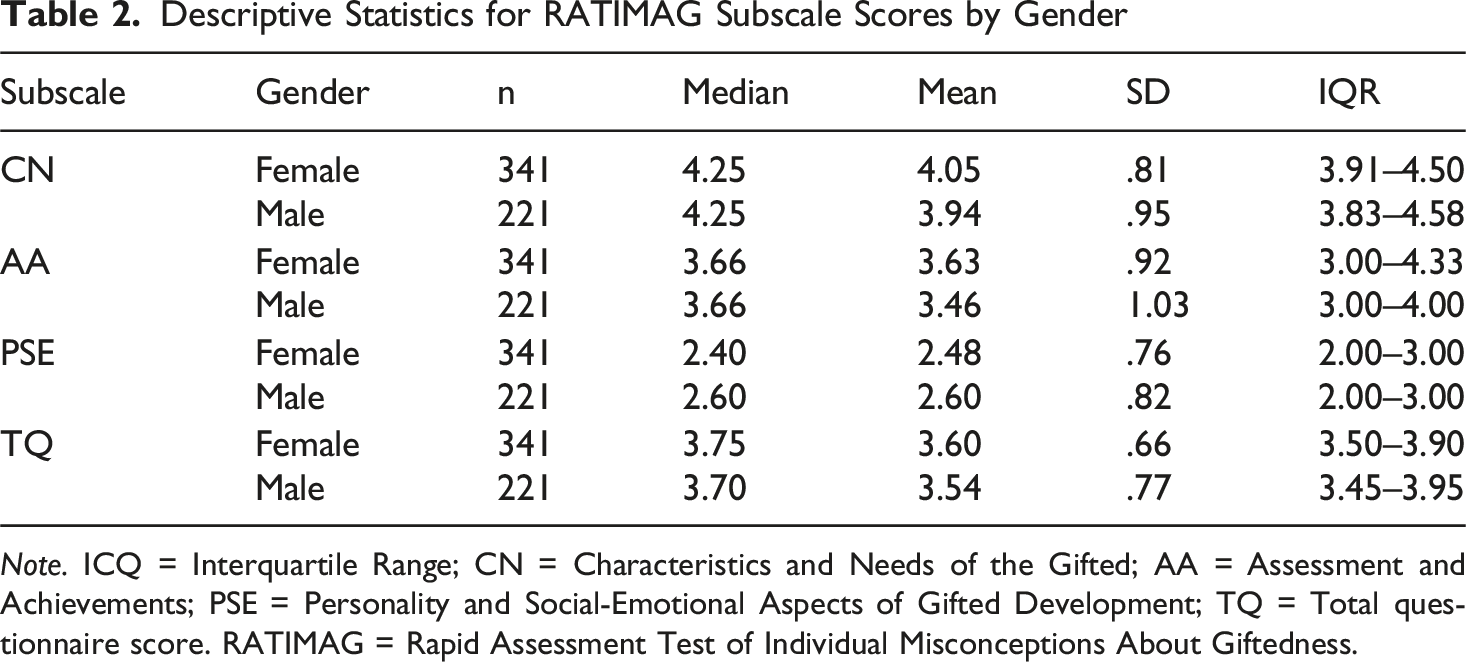
Note. ICQ = Interquartile Range; CN = Characteristics and Needs of the Gifted; AA = Assessment and Achievements; PSE = Personality and Social-Emotional Aspects of Gifted Development; TQ = Total questionnaire score. RATIMAG = Rapid Assessment Test of Individual Misconceptions About Giftedness.
Are There Differences in Myth Endorsement Across Age Groups?
Descriptive Statistics for RATIMAG Subscale Scores Across Participant Age Groups
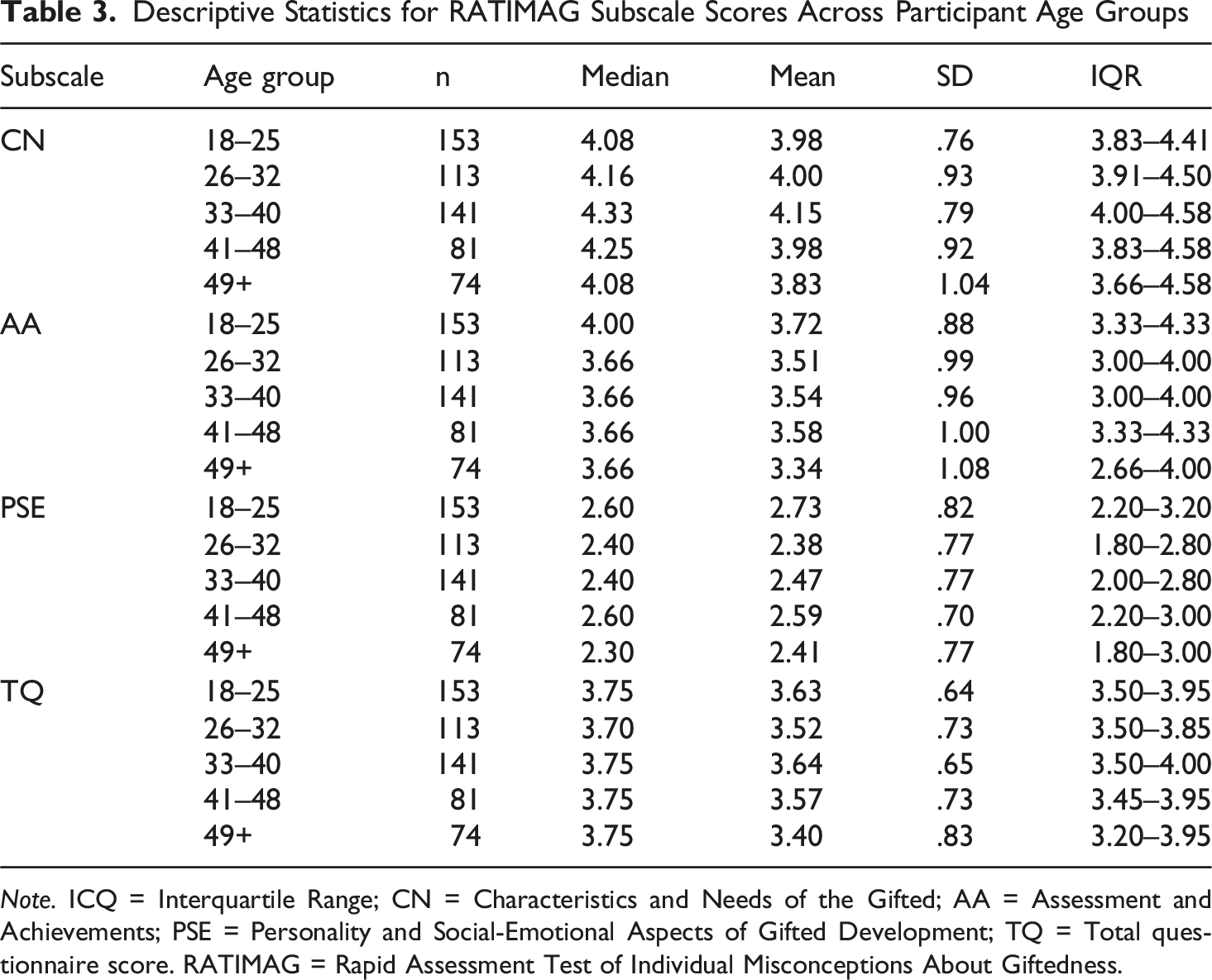
Note. ICQ = Interquartile Range; CN = Characteristics and Needs of the Gifted; AA = Assessment and Achievements; PSE = Personality and Social-Emotional Aspects of Gifted Development; TQ = Total questionnaire score. RATIMAG = Rapid Assessment Test of Individual Misconceptions About Giftedness.
Does Educational Attainment Predict Beliefs About Giftedness Myths?
Descriptive Statistics for RATIMAG Subscale Scores by Participants’ Educational Attainment
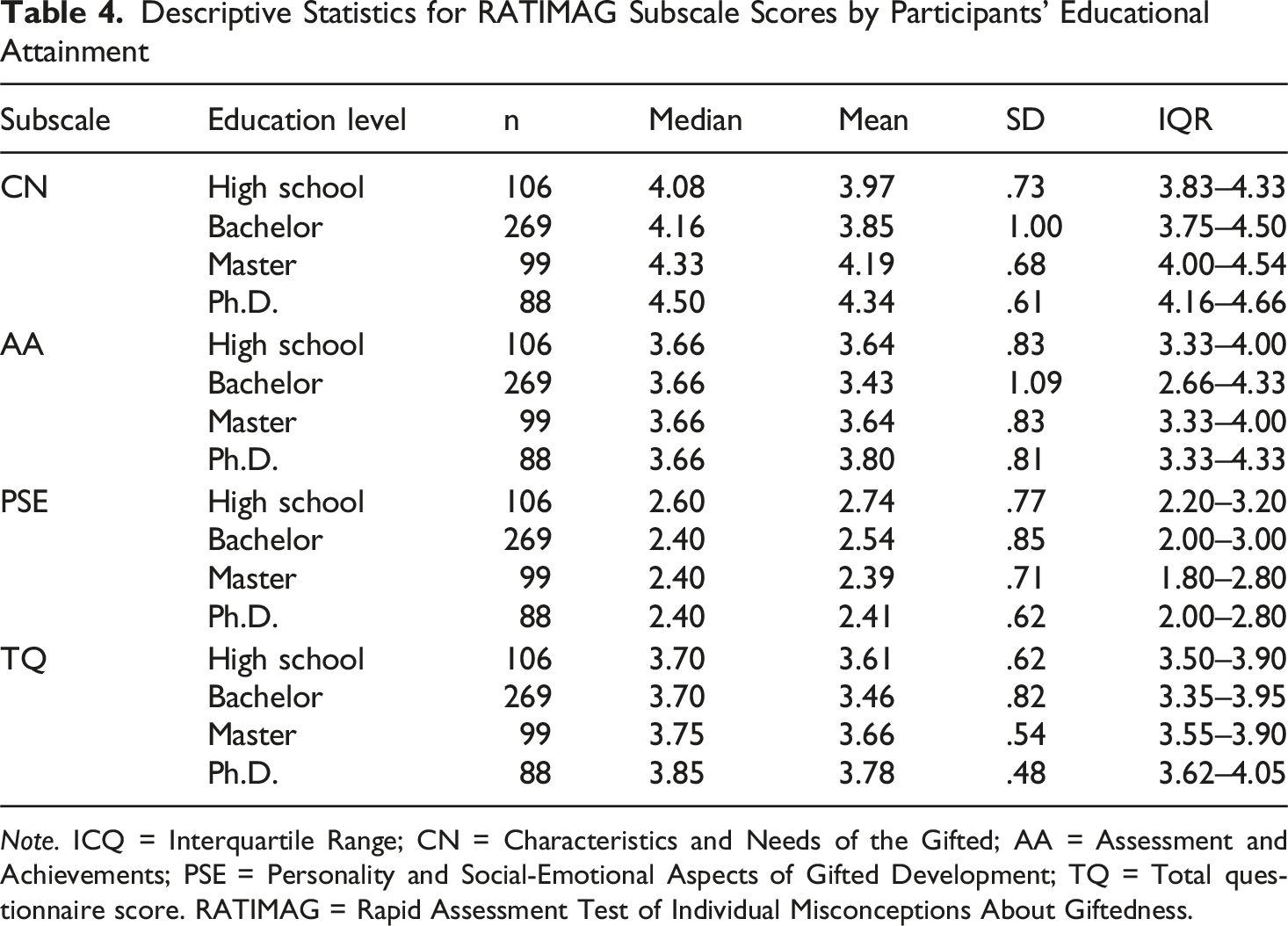
Note. ICQ = Interquartile Range; CN = Characteristics and Needs of the Gifted; AA = Assessment and Achievements; PSE = Personality and Social-Emotional Aspects of Gifted Development; TQ = Total questionnaire score. RATIMAG = Rapid Assessment Test of Individual Misconceptions About Giftedness.
Do Participants’ Academic Departments Influence Myth Beliefs?
Descriptive Statistics for RATIMAG Subscale Scores Across Academic Departments
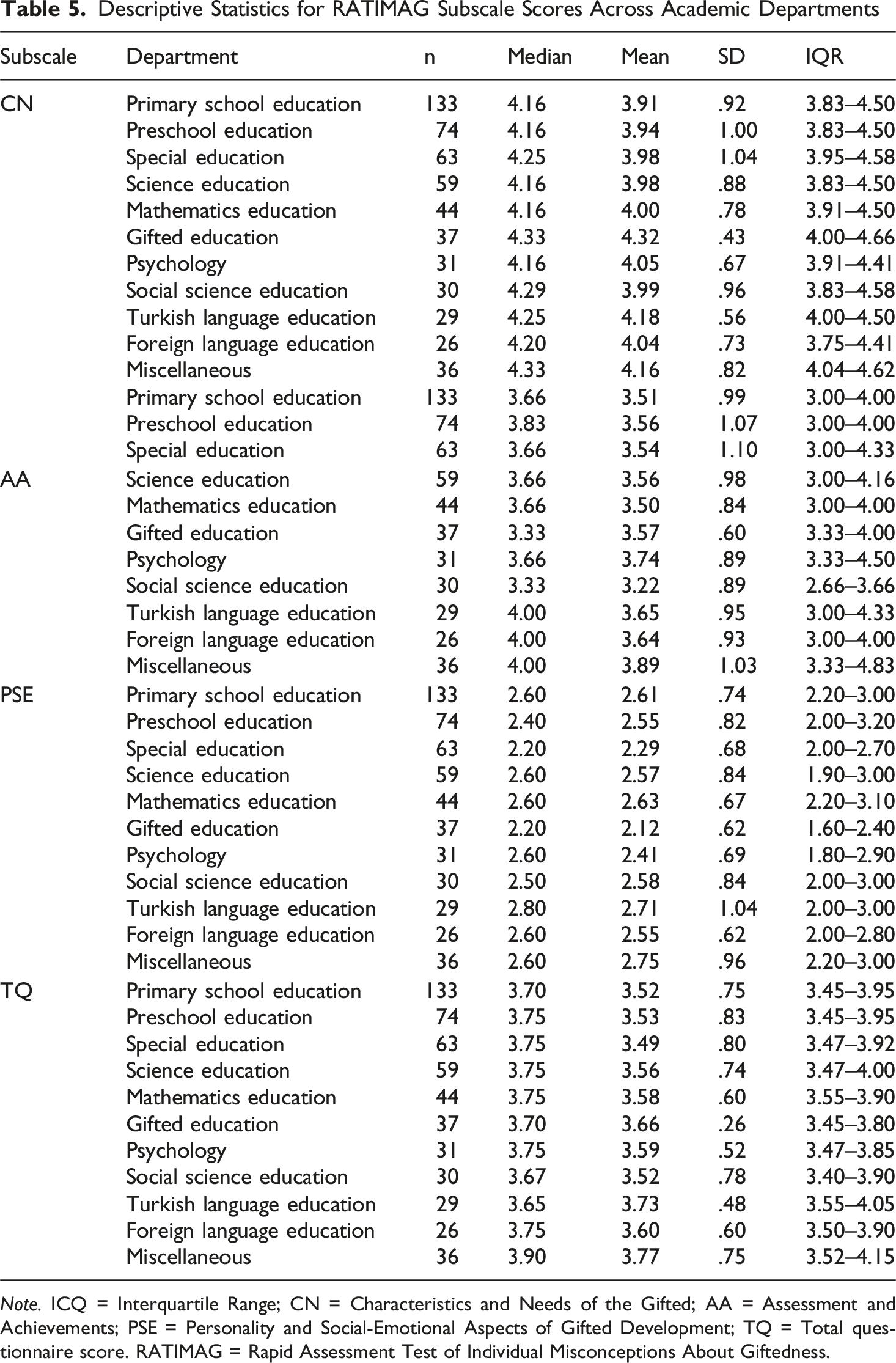
Note. ICQ = Interquartile Range; CN = Characteristics and Needs of the Gifted; AA = Assessment and Achievements; PSE = Personality and Social-Emotional Aspects of Gifted Development; TQ = Total questionnaire score. RATIMAG = Rapid Assessment Test of Individual Misconceptions About Giftedness.
Do Participants with Training in Gifted Education Differ in Their Beliefs?
Descriptive Statistics for RATIMAG Scores by Prior Gifted Education Training (Yes vs. No)
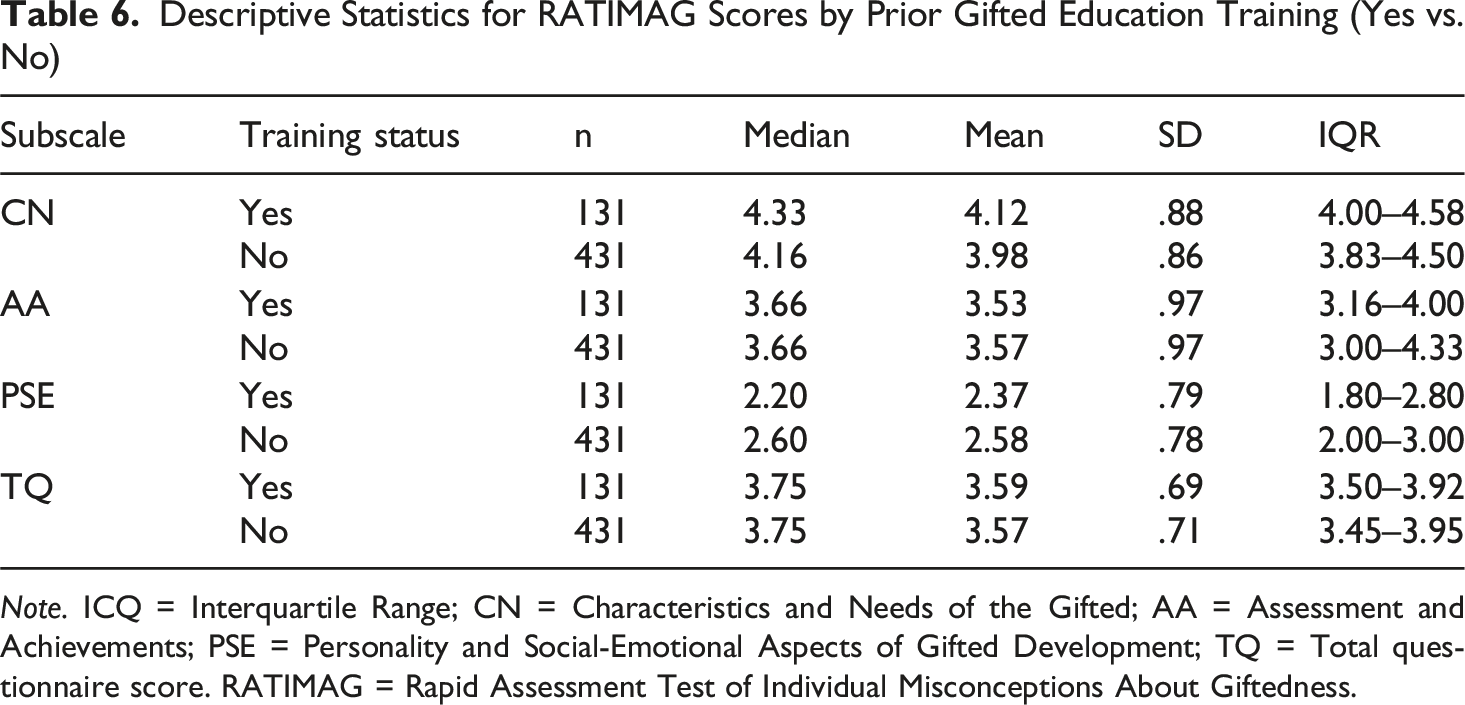
Note. ICQ = Interquartile Range; CN = Characteristics and Needs of the Gifted; AA = Assessment and Achievements; PSE = Personality and Social-Emotional Aspects of Gifted Development; TQ = Total questionnaire score. RATIMAG = Rapid Assessment Test of Individual Misconceptions About Giftedness.
Does Training Duration Influence Myth Beliefs?
Descriptive Statistics for RATIMAG Scores by Duration of Gifted Education Training
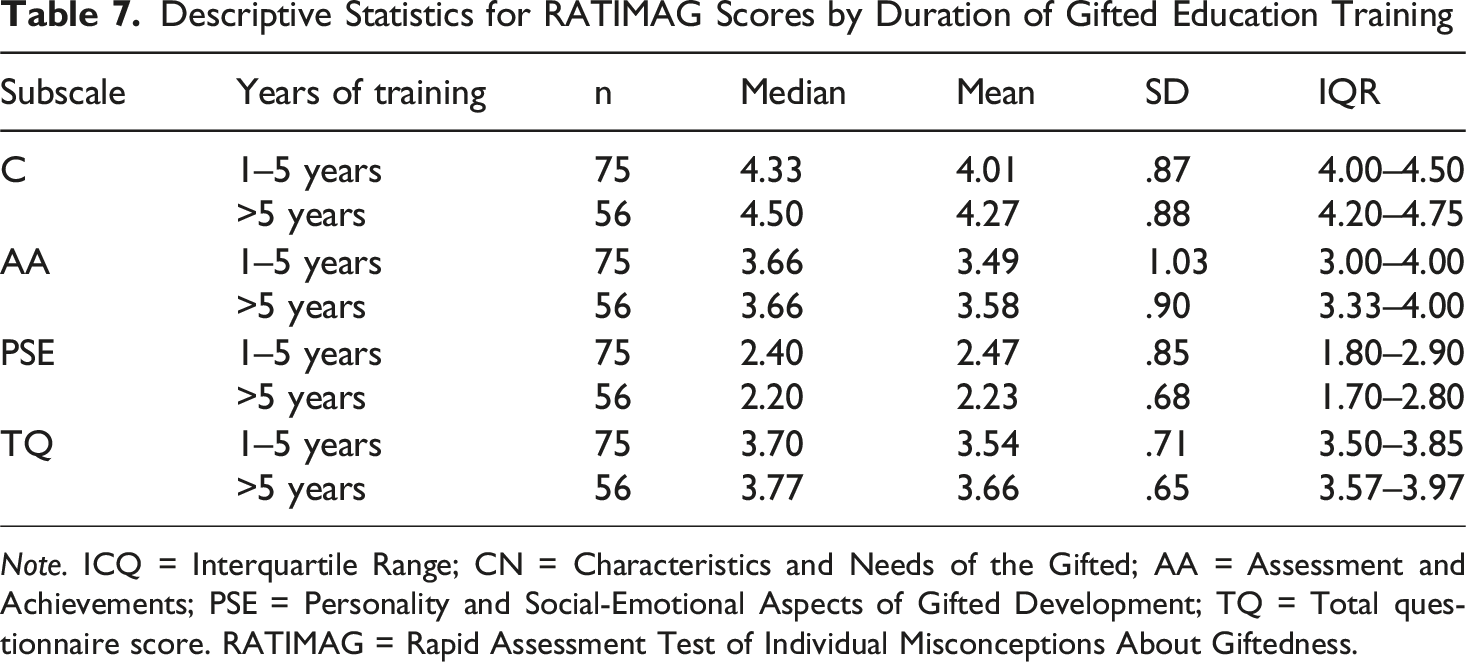
Note. ICQ = Interquartile Range; CN = Characteristics and Needs of the Gifted; AA = Assessment and Achievements; PSE = Personality and Social-Emotional Aspects of Gifted Development; TQ = Total questionnaire score. RATIMAG = Rapid Assessment Test of Individual Misconceptions About Giftedness.
Do Beliefs Differ by Occupational Role?
Descriptive Statistics for RATIMAG Subscale Scores by Professional Role (Preservice Teachers, Teachers, Lecturers)
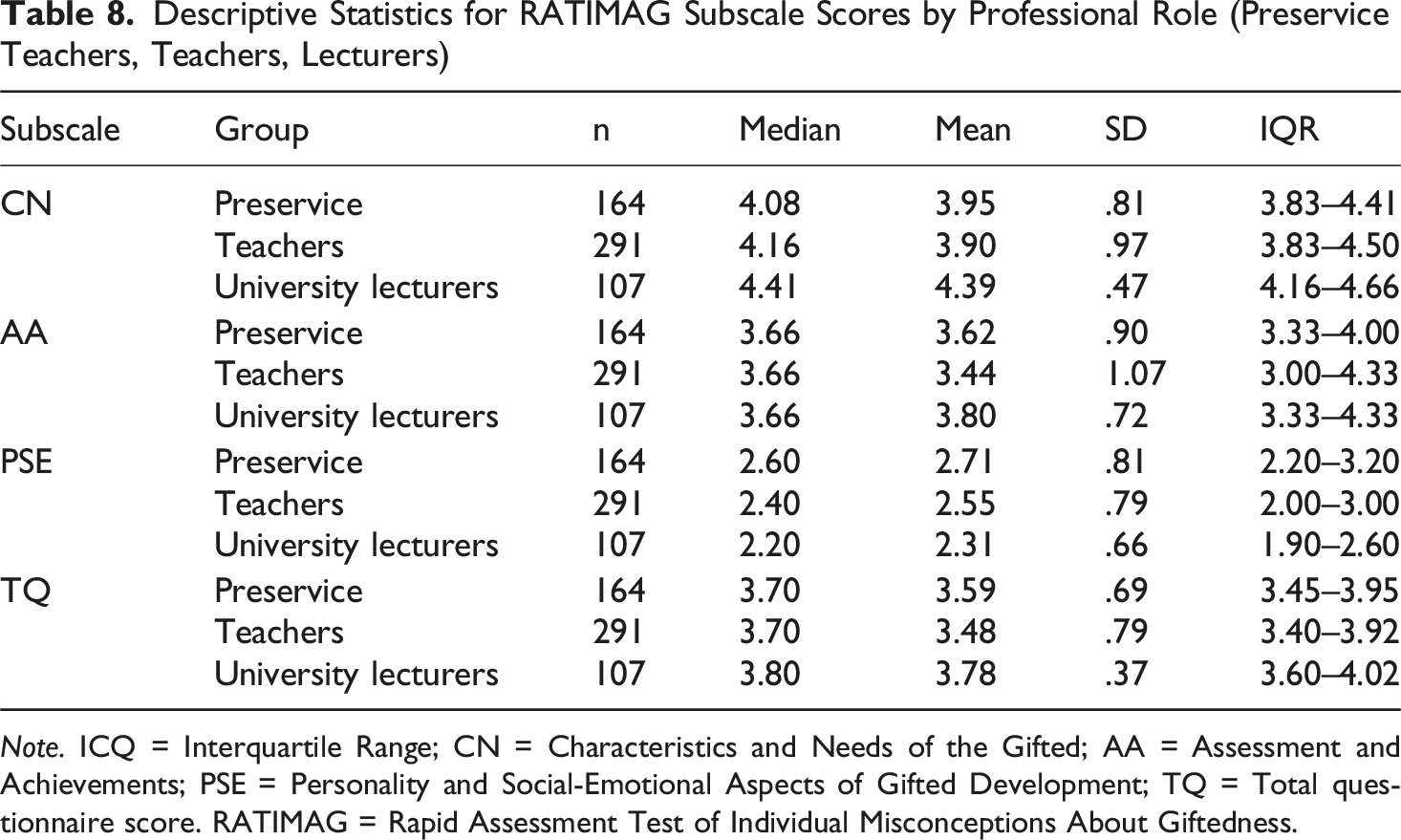
Note. ICQ = Interquartile Range; CN = Characteristics and Needs of the Gifted; AA = Assessment and Achievements; PSE = Personality and Social-Emotional Aspects of Gifted Development; TQ = Total questionnaire score. RATIMAG = Rapid Assessment Test of Individual Misconceptions About Giftedness.
Discussion
This study examined how myths about giftedness are distributed across different educator groups and demographic variables in Türkiye, using the newly developed and psychometrically validated RATIMAG instrument. As one of the first investigations to systematically assess prevalent misconceptions using a myth-specific scale across preservice teachers, in-service teachers, and university lecturers, it offers a timely contribution to international gifted education research (e.g., Sak, 2011; Subotnik et al., 2011). The findings are significant because educators do not merely hold beliefs—they transmit them. Teachers influence how gifted students are identified and supported (Siegle et al., 2010), while university lecturers shape the conceptual frameworks of future educators (Plunkett & Kronborg, 2011). If these professional groups endorse misconceptions, such as the belief that gifted learners thrive without support or that a single IQ score defines giftedness, such myths may become embedded in classroom practices and teacher training (Reis & Renzulli, 2009; Worrell, 2009). As the descriptive statistics show, participants moderately rejected myths; however, significant variation emerged based on age, educational level, departmental affiliation, training experience, and occupational role. In contrast, gender was not associated with variation in beliefs. The following sections discuss these findings in greater detail, considering how they align with or diverge from prior research and what they imply for teacher education and professional development.
Contrary to some earlier findings suggesting gender-based differences in educator attitudes toward giftedness (e.g., Jung & Lee, 2024; Özcan, 2016), our study found no significant gender differences in myth endorsement. This aligns with previous work by Hoogeveen et al. (2005) and Lassig (2009), who also reported non-significant or inconsistent gender effects. It may be that gender differences, when present, reflect culturally specific socialisation patterns or differences in professional development contexts—factors that may be less pronounced in our Turkish sample or adequately levelled by institutional training environments.
Age-related patterns, however, were more complex. Participants aged 33–40 endorsed significantly fewer myths on the Characteristics and Needs subscale than the youngest group (18–25), suggesting that greater life or teaching experience may contribute to more nuanced understandings of giftedness. At the same time, participants in the youngest group demonstrated comparatively lower myth endorsement on the Personality and Social-Emotional subscale than several older groups—a pattern also observed by Portešová et al. (2014). This apparent contradiction may reflect the differential emphases in teacher education curricula or generational shifts in gifted education discourse. While some studies suggest that older educators benefit from cumulative experience (Kaya, 2019; Krijan & Borić, 2015), others emphasize that younger educators may be more attuned to affective and inclusive perspectives due to recent pedagogical training (Cramond & Martin, 1987; Megay-Nespoli, 2001). Our findings indicate that age is not a unidirectional predictor of belief accuracy, but interacts with training exposure and possibly cultural narratives about giftedness.
This study, indicates a correlation between educational attainment and the accuracy of beliefs about giftedness. Participants with master’s or doctoral degrees were significantly less likely to endorse myths, particularly in the domains of characteristics, developmental needs, and social-emotional aspects, compared to those with lower levels of education. This finding aligns with previous research showing that advanced academic training often correlates with more profound and differentiated understandings of giftedness (Katırcı & Erdoğan, 2020; Sak, 2011). One likely explanation is that graduate-level education provides increased exposure to theoretical frameworks that emphasize the complexity and contextuality of gifted development (Renzulli, 1986; Ziegler, 2005). Furthermore, postgraduate education often fosters critical thinking and epistemic openness, which may help counteract simplistic or stereotypical conceptions (Heyder et al., 2018).
Interestingly, only one significant difference emerged when comparing participants across academic departments: those from primary education scored higher than those from the miscellaneous group on the Personality and Social-Emotional subscale. This limited departmental effect contrasts with earlier studies suggesting that educators trained in psychology, special education, or gifted education hold more accurate beliefs than those in general education (Opoku et al., 2023; Özcan, 2016). One possible explanation is that departmental influence may be diluted when curricular overlap exists or when the specific content of gifted education is absent from programs altogether. Alternatively, it may reflect institutional inconsistencies in how faculties embed giftedness-related topics. While educators in primary education may encounter more content related to child development, those in other departments may have less systematic engagement with affective or developmental frameworks.
Consistent with prior research, our findings highlight the importance of professional training in shaping educators’ beliefs about giftedness. Participants who had received training in gifted education were significantly less likely to endorse myths, particularly regarding the Characteristics and Needs of gifted individuals and their social-emotional development. Moreover, longer training duration (more than five years) was associated with even lower myth endorsement, especially on the Characteristics and Needs subscale, suggesting a cumulative benefit of extended engagement with the topic. These results echo those of McCoach and Siegle (2007) and Sözel (2019), who reported that educators exposed to structured learning opportunities or sustained practice with gifted students held more differentiated, evidence-aligned beliefs. In this study, the duration of education was examined through group comparisons; using a longitudinal pre-post design would allow us to obtain more generalizable results and better understand the effect of duration of education on myth beliefs.
Although the effect sizes observed in our study were modest, the pattern was consistent: increased exposure to gifted education, both in terms of whether training occurred and how long it lasted, was associated with more accurate beliefs. These results support calls for embedding gifted education more systematically within teacher preparation programs and ongoing professional development (Geake & Gross, 2008; Subotnik et al., 2011). Importantly, our findings suggest that short-term or one-off training may be insufficient to meaningfully shift deeply rooted misconceptions. Instead, longer-term engagement may be necessary to support conceptual change and foster a more sophisticated understanding of giftedness as a dynamic and context-sensitive construct (Ziegler & Stoeger, 2017). From a resource-theoretical perspective, belief revision may depend not only on exposure to new information but also on educators’ access to personal and contextual resources, such as critical reflection, domain-specific knowledge, and sustained social support (Veas et al., 2018).
Occupational role was a strong differentiator in participants’ beliefs about giftedness, with distinct patterns emerging across educator groups. University lecturers demonstrated the lowest overall endorsement of myths, particularly on the Characteristics and Needs subscale, suggesting a relatively advanced understanding of giftedness as a developmental construct. This finding is consistent with previous research indicating that academic professionals—especially those involved in teacher training—are more likely to be familiar with contemporary theories of giftedness and less influenced by outdated or popularized notions (Plunkett & Kronborg, 2011; Subotnik et al., 2011).
Interestingly, preservice teachers scored highest on the Personality and Social-Emotional Aspects subscale, outperforming in-service teachers and lecturers. This result may reflect a growing emphasis on emotional development and learner-centred pedagogy in current teacher education programs (Troxclair, 2013) or the influence of more recent curricular reforms that integrate inclusive perspectives. In contrast, in-service teachers consistently scored lower across domains, possibly indicating limited access to targeted professional development or entrenched instructional routines that reinforce traditional views (Cramond & Martin, 1987; Sözel, 2019).
Together, these findings suggest that occupational roles interact not only with knowledge access but also with training recency and professional context. While university lecturers may possess more abstract or theoretical knowledge, preservice teachers may be more receptive to current affective and inclusive frameworks. Meanwhile, between formal training and institutional practice, in-service teachers may benefit the most from updated, longitudinal interventions to unlearn persistent myths.
Taken together, the findings of this study underscore that, while myths about giftedness are moderately rejected across educator groups, significant variation persists, driven less by fixed personal attributes such as gender and more by dynamic, role-related and educational factors. The depth, duration, and context of professional exposure to gifted education shape beliefs. These patterns indicate the need for well-designed, evidence-based training programs integrated across all stages of the educator career cycle from initial teacher education to ongoing professional development. Moreover, the differences observed between preservice teachers, in-service teachers, and university lecturers highlight the importance of high standards in preparing teacher educators. Although this study was conducted in a single national context, its findings raise important international questions about the extent to which such myths are widespread in other educational systems and how cross-cultural differences in teacher preparation and cultural narratives may shape misconceptions. As Sternberg (2007) argues, conceptions of giftedness reflect broader societal values and institutional structures, and educators play a crucial role in reinforcing or challenging these norms. Addressing these gaps, within and beyond Türkiye, is essential for ensuring that gifted students are recognized, understood, and supported in ways consistent with contemporary research on giftedness.
The RATIMAG questionnaire used in our study reveals the myths held by educators. These myths should be interpreted in light of Gagne’s The Differentiated Model of Giftedness and Talent (DMGT), Renzulli’s Three-Ring Concept of Giftedness, and Ziegler’s Actiotope Model. According to DMGT, individuals’ innate abilities can be developed through education and appropriate conditions. Educators’ myths about gifted individuals negatively impact this process. For example, myths such as that gifted individuals are a homogeneous group (Reis & Renzulli, 2009), that a single curriculum is sufficient for gifted individuals (Kaplan, 2009), that it is fair to teach all students at the same way (Cooper, 2009), and that the gifted constitute 3% or 5% of the population (Gentry, 2009). These myths inhibit the talent development process emphasized in DMGT, the interaction of superior intelligence, above-average ability, creativity, and task commitment in Renzulli’s Three-Ring Concept of Giftedness, and the adaptive interaction between giftedness, the individual, and their environment over time in Ziegler’s Actiotope Model.
Our findings indicate that myths about gifted individuals are prevalent among groups in Türkiye. In this case, it can be said that the failure to make a clear distinction between the concepts of “giftedness” and “talent” as emphasized in Gagné (2004) “The Differentiated Model of Giftedness and Talent (DMGT),” and instead expressing them with the same concept has led to shortcomings in teacher training and contributed to the spread of myths in the Türkiye sample. Indeed, the definition of gifted individuals in Türkiye is persons who exhibit significant differences from their peers in the same age group (Sak, 2007). This approach differs from identification methods in the Anglo-American sample. In the United States, policies vary by state; however, under the No Child Left Behind Act, gifted individuals are identified as those with high potential for achievement in specific academic areas, including superior ability, intelligence, and creativity (No Child Left Behind Act of 2001, 2002; Alsuwailimi, 2024).
Furthermore, in the European context, Finland has no regulations that define giftedness. They accept individual differences and allow schools to be designed according to the age and abilities of the students (Reid & Boettger, 2015). Moreover, in the Asian context, there is no definitive definition of giftedness in Malaysia. However, despite the disadvantage that academic achievement is the primary requirement at PERMATApintar High School, which is the first fully residential school for gifted students, the school environment is designed to incorporate the DMGT model (Yassin et al., 2012).
To sum up, our findings demonstrate the applicability of the DMGT, the Three-Ring Model, and the Actiope Model in the Turkish context. Our research shows that a lack of service-oriented training and theoretical knowledge leads teachers to embrace myths, which in turn hinder the development of students’ abilities. In the Turkish sample, as emphasized in the DMGT, the concepts of “giftedness” and “talent” should be redefined, with a clear distinction between them. The needs of gifted individuals should be identified, and in-service training should be provided to current teachers. Preservice teachers should be provided with more information about gifted individuals and their needs before they graduate and begin their careers. Our research should be evaluated as demonstrating the need for educational interventions are needed in the education of gifted individuals in Türkiye, and appropriate measures should be taken accordingly.
Conclusion
This study provides new insights into how myths about giftedness are distributed across different educator roles and demographic backgrounds in Türkiye. Using a validated, myth-specific instrument across a large and diverse sample offers robust evidence that beliefs about giftedness are not uniformly held, even among professional educators. Although gender was not a differentiating factor, beliefs about giftedness were associated with age, educational attainment, academic department, training experience, and occupational role. Importantly, our findings underscore that professional training, particularly when sustained over time, is critical in reducing misconceptions, especially in giftedness’s developmental and social-emotional domains.
The results speak to a broader need for systemic reform: to ensure that myths about giftedness are not perpetuated in teacher education programs, in-service training, or university instruction. Thus, we call for the development and implementation of rigorous, research-based training standards in gifted education at all levels of professional training.
Though our findings are grounded in the Turkish educational context, they also raise international questions about the prevalence and persistence of myths in other countries. Cross-national research is needed to better understand the cultural and institutional factors that shape educators’ beliefs about giftedness worldwide.
Limitations and Further Directions
While this study provides important insights into educators’ beliefs about giftedness, several limitations should be acknowledged. First, participants were recruited through convenience sampling within existing professional and institutional networks, which may limit the generalizability of the findings. The occupational groups also varied in size, with notably fewer university lecturers than preservice and in-service teachers. These unequal group sizes may have influenced the power and stability of between-group comparisons. In addition, differences in sample size across departments (e.g., number of participants in the gifted education (n = 36) may have biased the results.
Second, non-parametric statistical tests were used throughout the analysis due to non-normal data distributions. While these tests are robust, they are generally less sensitive to detecting subtle effects than parametric alternatives. Additionally, the study’s cross-sectional design precludes any conclusions about the developmental trajectory or long-term change in educator beliefs. Longitudinal studies would be needed to assess how beliefs evolve over time or in response to interventions.
Third, all data were based on self-reports, which may be influenced by social desirability, particularly in a context where participants know the “correct” stance on common myths. Future research may benefit from triangulating self-reports with qualitative interviews or classroom observations to better understand how beliefs translate into practice.
Fourth, while the RATIMAG instrument offers a focused and psychometrically validated assessment of myth endorsement, it does not capture the full range of knowledge, pedagogical skills, or practical responses related to gifted education. Expanding future measures to include application-oriented or case-based components could provide a more holistic view.
In addition, no correction for alpha error inflation was applied despite the number of statistical comparisons conducted. This decision was made in light of the study’s exploratory character, where the primary goal was to identify patterns in belief endorsement across diverse educator groups. Applying a conservative correction, such as the Bonferroni correction, in this context would have substantially increased the risk of Type II errors, potentially obscuring practically meaningful group differences. We complemented significance testing with effect size estimates and descriptive statistics to mitigate overinterpretation. Nevertheless, future confirmatory studies should consider using adjusted alpha levels to more conservatively control for multiple testing.
Finally, the study was conducted entirely within the Turkish education system. Although Türkiye presents a culturally rich and policy-relevant setting, national traditions, institutional structures, and sociocultural narratives also shape beliefs about giftedness. Future research should explore how myths about giftedness vary across countries, using the RATIMAG or comparable instruments in cross-cultural designs.
Taken together, these limitations offer productive avenues for future inquiry. Comparative international research, longitudinal intervention studies, and multi-method assessments will be crucial for building a more nuanced, globally informed understanding of how myths about giftedness emerge, persist, and can ultimately be transformed through high-quality educator preparation.
Footnotes

Funding
The authors disclosed receipt of the following financial support for the research, authorship, and/or publication of this article: This work was supported by Merve Irem Ercan was supported by the Study Abroad Postgraduate Education Scholarship (YLSY) awarded by the Republic of Türkiye Ministry of National Education.
Declaration of conflicting interests
The authors declared no potential conflicts of interest with respect to the research, authorship, and/or publication of this article.