




Abstract
This study is a critical content analysis of gifted education policies, services, and programs in Qatar using the 2019 NAGC Pre-K-12 Gifted Programming Standards as the analytical framework. Through the examination of national legislation, ministerial decisions, strategic initiatives, and institutional programs, the study reveals that gifted education in Qatar remains diffuse and underdeveloped, lacking a coherent national policy to ensure consistency in identification, programming, and service delivery. Key stakeholders, including the Ministry of Education and Higher Education (MoEHE), Qatar Foundation (QF), and the Qatar Research, Development, and Innovation Council (QRDI), operate independently with limited systemic coordination. Findings indicate substantial gaps in assessment, curriculum differentiation, teacher preparation, and progress monitoring. The study concludes with targeted policy recommendations and highlights opportunities to align Qatar’s gifted education landscape with international standards, ultimately supporting national priorities for innovation, academic excellence, and human capital development.
Introduction
An effective gifted education system is a vital investment in human capital and national development, fostering the outstanding intellectual, creative, or specialized domain capabilities of gifted students, with the potential for transformative innovation and leadership across various contexts when well taught (Dai, 2019). However, without this system, gifted students are being deprived, and society is not gaining access to what they can contribute, such as advanced science, artistic expression, and economic development (Renzulli, 2012).
Internationally, high-performing education systems view the gifted as a strategic priority rather than a voluntary enhancement. Institutions such as the United States, South Korea, and Singapore have incorporated gifted programming into their national education policies, with positive outcomes in innovation capacity and global competitiveness (Guilbault & Cotabish, 2022). With programs such as these, models demonstrate that systematic approaches that promote early identification, diverse curricula with differentiated instruction, and dedicated teacher training programs can produce high-ability students (VanTassel-Baska & Brown, 2015).
In contrast, systems of fragmentation are not coherent, and there are inconsistencies in implementation, unequal access, and discrepancies in policy. This contradiction highlights the importance of coherent frameworks that integrate identification practices, curricular design, and policies that mandate (Ismail et al., 2022). Despite such investments and innovations, the State of Qatar still lacks a dedicated, cohesive legal framework for gifted learners (Alodat et al., 2025a, 2025b). Qatar has made significant efforts at human development, knowledge-based economic diversification, and educational excellence, among other national aspirations, which have resulted in a significant gap.
Background
Located on the Arabian Peninsula and covering approximately 11,571 square kilometers, the State of Qatar is bordered by the Arabian Gulf, with an estimated population of 2.8 million people (Planning and Statistics Authority, 2023). Based predominantly on large reserves of natural gas and oil, Qatar’s economy is highly wealthy, with the country’s per capita income among the highest in the world (World Bank, 2022).
Qatar made extensive investments in the education system in the 1990s, which evolved into reforms in the early 2000s, and subsequently implemented a series of national policies focused on competitiveness and human capital accumulation (General Secretariat for Development Planning, 2008). It has a broader, articulated development plan (Qatar National Vision 2030) that lays out a full spectrum of sustainable development programs (Anis, 2021), namely, economic, social, environmental, educational, and human development. Education has been a vital component of Qatar’s national development plan. Education reform is of paramount importance to the Qatari government, as it aims to drive a knowledge-based economic system towards a sustainable, long-term diversification model (Al-Kuwari et al., 2021). Qatar has a free education system, managed by the Ministry of Education and Higher Education (MoEHE), organized into primary, preparatory, and secondary grades (Ministry of Education and Higher Education, 2024).
The two-system approach comprises state-funded schools, including government-funded schools, as well as a wide range of private and international schools with heterogeneous curricula, offering diverse topics (Al-Kuwari et al., 2022). In addition, this structure reflects Qatar’s multicultural society, and the environment reflects the language diversity and cultural expectations of the expatriate families who reside in Qatar. Based on this information, students in the system receive a different student an enriching class experience and a higher quality of education worldwide.
Additionally, Qatar has partnered with globally recognized universities, which has enabled the creation of Education City. The impressive academic complex is home to campuses of institutions, which helps make Qatar a regional educational hub. Through these partnerships, the advanced learning and research experiences of students in Qatar and across the region have been greatly enhanced, knowledge transfer has improved, and academic excellence has been ensured (Qatar Foundation, 2023).
Gifted Education in Qatar
In alignment with Qatar National Vision 2030, the country has made significant strides in modernizing its education system by updating curricula, integrating technology, and fostering skills such as innovation, problem-solving, and creativity, which are essential for the development of gifted and high-ability learners (Sellami et al., 2024). Despite this progressive orientation, gifted education in Qatar remains underdeveloped and lacks cohesive national strategies. The concept itself is relatively nascent in policy and practice, receiving limited institutional attention and support (MacRaild, 2016).
The MoEHE is the central authority overseeing education in the country. While it introduced policy references to talent and excellence, the lack of institutional anchoring has led to fragmented efforts, with initiatives often implemented reactively rather than within a coherent policy infrastructure (Alodat, Al-Hendawi, et al., 2025). Consequently, many gifted students, particularly those from underserved populations, remain unidentified or unsupported (Chaar & Mesiridze, 2023).
In addition to the MoEHE, other organizations, such as QF and QRDI, have made significant contributions to furthering the gifted education agenda. The QF conducts standardized assessments to identify gifted students through the Pre-University Education department, based on verbal, quantitative, and general reasoning skills. It also provides enrichment and summer academies aligned with international best practice for students with high ability, offering accelerated learning opportunities in an inquiry-based format (Qatar Foundation, 2021).
The QRDI also supports gifted education indirectly by establishing national innovation pathways for youth with high potential in technology, science, engineering, and entrepreneurship at all levels of society. Its programs do not include gifted education, but via research competitions, hackathons, and mentorship initiatives, the QRDI cultivates elite talent. Such initiatives are also part of an overall educational enhancement by creating opportunities for challenging learning environments, especially for gifted learners (Qatar Research et al., 2025).
Despite these efforts, recognising and assisting gifted students in public schools remains a challenge. Currently, the process usually first entails a behavioral checklist administered by teachers and parents, followed by a reasoning ability assessment. However, they are conducted unevenly, and there are no age-specific tools for identifying giftedness in younger children or in those who might be gifted atypically (e.g., twice-exceptional learners) (MacRaild, 2016). Additionally, the dominant belief that giftedness is equivalent to high achievement rates often leads to the exclusion of gifted children who underachieve academically, often due to inadequate scaffolding or uneven approaches (Alodat, Al-Meqdad, et al., 2025).
Additionally, the scarcity of specialized teachers and the lack of professional training in giftedness further complicate matters. Most teachers are not particularly well-prepared to teach high-ability students (Chaar & Mesiridze, 2023; Lashuel & Chaar, 2024). These challenges give rise to a disjointed sector of the gifted education system in Qatar, characterised by heterogeneous services, institutional systems, and policy practice. Without a strong, legally established mechanism to harmonise systems between the public and private sectors, the promise of universal and inclusive gifted education in Qatar has thus far remained unrealized.
Purpose of the Study
This research examines the gifted education landscape in Qatar, critically and systematically analyzing national legislation, ministerial decisions, strategic education plans, and institutional initiatives. Guided by the NAGC Pre-K-12 Gifted Programming Standards (National Association for Gifted Children, 2019), the analysis comprises five broad frameworks: identification practices, curriculum and instruction, the learning environment, policy coherence, and assessment systems. The standards are based in the U.S. and not internationally mandated, but they have played a significant role in shaping the trajectory of gifted programming models in Qatar and have become a useful analytical tool for assessing how current initiatives and practices align with the frameworks.
This study employs this framework to critically evaluate the roles of major national stakeholders in the design and delivery of gifted education services, as well as their relationships with established models of excellence in gifted education settings (Guilbault & Cotabish, 2022). It also identifies significant gaps in legal mandates for equitable access and sectoral coordination.
By situating Qatar’s progress within the broader international context, this study provides empirically informed recommendations for developing a more consistent, inclusive, and sustainable national framework for gifted education. It emphasizes the importance of legislative clarity, fair and research-based identification procedures, and collaboration across institutions.
Methodology
This study employed a qualitative content analysis to explore Qatar’s current practices, legislative frameworks, and services for gifted education. Qualitative content analysis is a recognised method for systematically examining and interpreting textual data to gain meaningful insights into policy and implementation contexts. This approach is instrumental for understanding how gifted education is conceptualized and operationalized in the Qatari context, as reflected in official educational records, legal documents, strategic plans, and institutional reports.
Data Sources and Search Strategy
Publicly available documents related to gifted education in Qatar were retrieved from February 1 to April 30, 2025. Sources of information included national legislation, ministerial decision-making, strategic planning documents, and institutional reports. Additionally, the official websites of the MoEHE, QF, QRDI, and Al Meezan, Qatar’s formal legal database, maintained by the Ministry of Justice, were consulted. All documents were available without an institutional login.
An iterative and systematic search strategy was employed to identify relevant materials. Site navigation focuses on the major segments of the curriculum, talent and excellence, research and innovation activities, and national recognition. The embedded links provided additional references, including instructions for implementing these programs and procedures for identification processes, as well as descriptions of the enrichment programs.
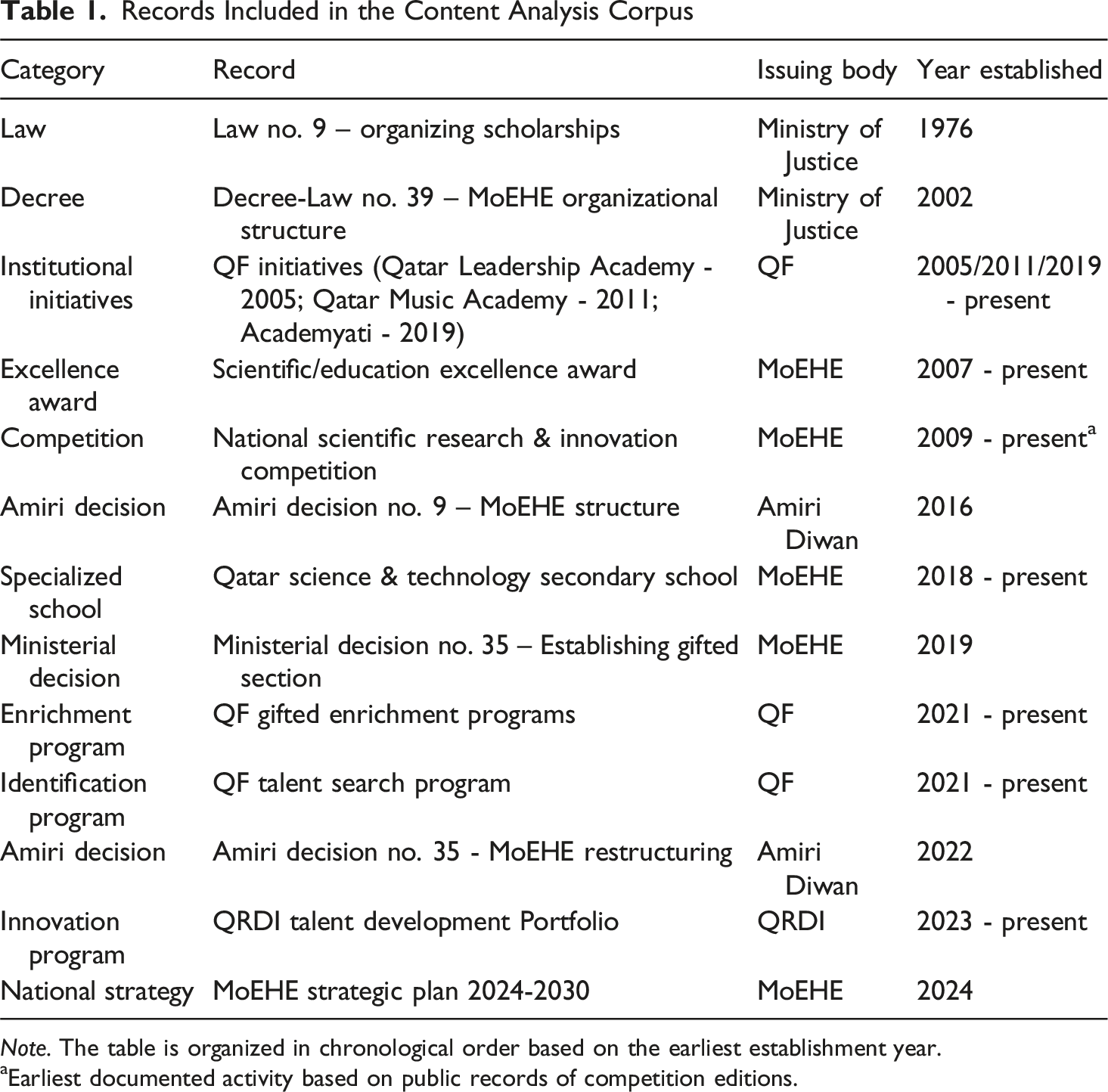
To complement manual navigation, internal search tools were activated to provide specific Arabic and English keywords, including gifted education, talent development, scientific excellence, innovation, enrichment programs, student identification, and high ability. It included only documents that specifically covered gifted education services, talent development policies, or institutional responsibilities for high-ability learners. Duplicative, irrelevant, or outdated materials were excluded. Only 13 records fulfilled the inclusion criteria and were retained for analysis. A summary of the content analysis is presented in Figure 1, and the final document corpus is shown in Table 1. Flowchart of Content Analysis Records Included in the Content Analysis Corpus Note. The table is organized in chronological order based on the earliest establishment year. aEarliest documented activity based on public records of competition editions.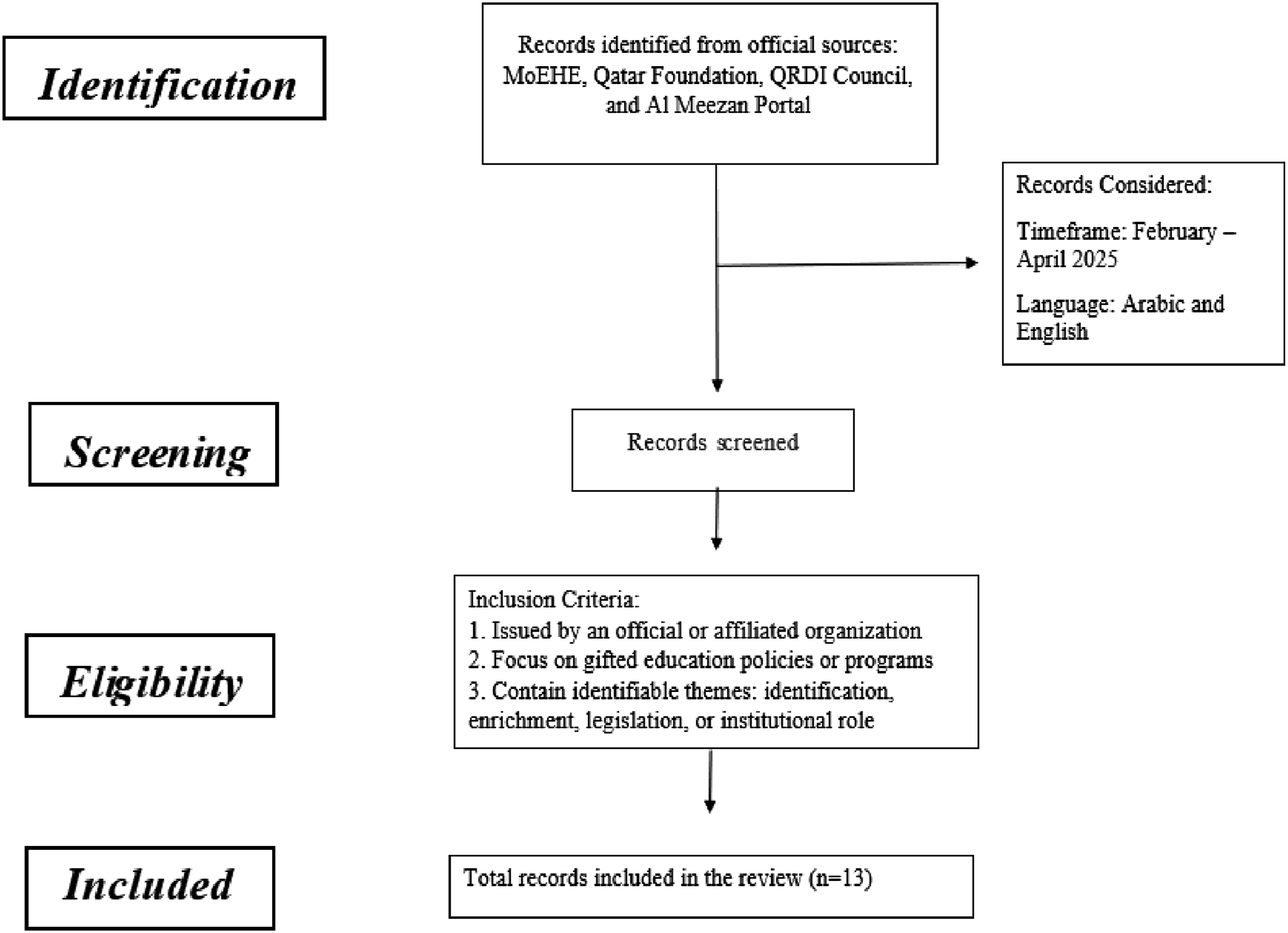
Data Analysis
This study undertook a qualitative thematic content analysis to explore the conceptualization and implementation of gifted education in Qatar’s legal, policy, and institutional documents. Indeed, such a study facilitates the systematic detection of emerging patterns and meanings within textual data (Preiser et al., 2021), lending considerable applicability to the evaluation of education systems and policy implementation contexts. The analysis drew from the five dimensions of the NAGC Pre-K-Grade 12 Gifted Programming Standards, a framework that includes elements recognized as components of successful gifted education programming (National Association for Gifted Children, 2019).
The analysis was guided by the dimensions: (1) identification practices that support and ensure equitable identification of gifted learners; (2) curriculum and instruction that provide challenge and enrichment; (3) learning environments that address teacher preparation and differentiated supports; (4) programming and policy structures that enable coherent and equitable service delivery; and (5) assessment systems that track program effectiveness and student outcomes. Each document was examined using a binary coding matrix to determine whether each dimension was present or absent. The coded data were synthesized to compare across sources and highlight thematic strengths and gaps in the current Qatari context.
To remain methodologically rigorous, the coding process included iterative verification of codes and cross-checking across institutional records. Moreover, data triangulation across various policy levels was conducted to enhance the trustworthiness and credibility of the findings (Tunison, 2023).
Findings
The findings of this study are presented in two sections that reflect both the source and thematic orientations of the content analysis. The first section, Source-Based Findings, examines identified records to determine how the specific policy mandate, institutional initiative, program scope, or strategic objective of these records contributes to the provision and governance of gifted education in Qatar. The second section, Theme-Based Findings, synthesizes coded data across all documents using the five analytical dimensions derived from the NAGC standards (identification, curriculum and instruction, learning environments, programming and policy, and assessment).
Source-Based Findings
Legislative and Governance Framework
The legislative progression in Qatar reveals an uneven, fragmented engagement with gifted education, marked by extended intervals between reforms and an enduring absence of a dedicated legal framework. Across the reviewed legal documents, there is no formal definition of giftedness, nor are there consistent or enforceable mandates outlining systematic procedures for identifying, supporting, or evaluating gifted students. Instead, references to talent and academic excellence appear sporadically within broader educational laws and policies, often without precise mechanisms for implementation or institutional accountability.
The earliest relevant document, Law No. 9 (1976), focused on organizing scholarships and prioritized academic merit as a criterion for awarding national and international scholarships (Law No. 9, Organizing Scholarships, 1976). While this indirectly acknowledged high-achieving students, it did not differentiate between general academic success and giftedness, nor did it provide the basis for structured programming or early identification systems. It was not until over two decades later, with the introduction of Decree-Law No. 39 (2002), that a more specific, albeit indirect, mention of talent development was made, charging the newly established MoEHE with the responsibility to identify and nurture student talents (Decree-Law No. 39, MoEHE Organization, 2002). However, these responsibilities were placed under the Department of Special Needs, blending gifted education with broader special education mandates and offering no targeted provisions for gifted learners.
Another significant gap existed before the introduction of Amiri Decision No. 9 (2016), which established a formal department, “Special Education and Gifted Care,” within the MoEHE (Amiri Decision No. 9, MoEHE Structure, 2016). Article 12 of this decision listed duties that included identifying and developing programs for gifted students. Nonetheless, these responsibilities remained conceptually and administratively tied to special education, limiting the visibility and autonomy of gifted services.
A significant development came with Ministerial Decision No. 35 (2019), which created a distinct “Gifted Section” within the MoEHE’s organizational structure (Ministerial Decision No. 35, Department Creation, 2019). This section was tasked with designing tailored policies, training educators, supporting parent engagement in identification, and coordinating enrichment services. The decision marked the first comprehensive institutional framework explicitly dedicated to gifted education. However, this progress was short-lived. Within three years, Amiri Decision No. 35 (2022) introduced another structural overhaul, dissolving the Gifted Section and redistributing its functions to the Research, Talent, and Innovation Department (Amiri Decision No. 35, MoEHE Restructuring, 2022). This change reflected a shift from centralized, specialized oversight to a more diffuse, generalized approach, raising concerns about consistency, specialization, and long-term strategic vision.
Ministry-Led Programs and Recognition Systems
Qatar’s institutional approach to gifted education has evolved, revealing a clear emphasis on both after-school enrichment and STEM-focused academic pathways. The now-defunct Qatar Center for Gifted and Talented, established in 2001, played a pioneering role in offering after-school services to gifted students. The center provided diagnostic assessments, individualized educational support, and counseling for both families and educators. It also organized enrichment programs that extended learning beyond the classroom, offering gifted students opportunities to develop critical thinking, creativity, and problem-solving skills in non-traditional formats. However, this initiative was discontinued in 2007, leaving a structural void in national coordination and service delivery for gifted learners (Almarri, 2025).
In contrast, the establishment of the Qatar Science and Technology Secondary School (QSTSS) in 2018 marked a significant shift toward STEM-based education for high-achieving students. Operated by the MoEHE, QSTSS is a specialized public school that targets academically talented students with interests in science, technology, engineering, and mathematics. The school integrates international standards into its curriculum through AP and SAT testing programs. It boasts 15 laboratories, including robotics, virtual reality, and renewable energy, designed to immerse students in hands-on, inquiry-based learning aligned with real-world scientific and technological challenges (Qatar Science and Technology Secondary School, n.d).
In parallel, scientific research competitions are among Qatar’s most influential mechanisms for identifying, nurturing, and showcasing student talent. Led by the Research, Development, and Innovation Department within the MoEHE, these competitions provide structured platforms for high-ability learners to engage in inquiry-based learning and authentic problem-solving experiences (Ministry of Education and Higher Education, n.d.-b). Foremost among these initiatives is the National Scientific Research Competition, a flagship program in which students across all grade levels design and implement original research projects under the mentorship of educators. High-performing students frequently progress to represent Qatar in regional and international scientific forums (Ministry of Education and Higher Education, n.d.-a).
Additionally, the Scientific Excellence Award, a long-standing recognition initiative since 2007, honors outstanding academic and extracurricular achievement at school and university levels (Ministry of Education and Higher Education, n.d.-c). Both programs function as de facto pipelines for gifted identification, although neither is embedded within a unified national gifted system.
Qatar Foundation Gifted Programs and Services
QF, through its Pre-University Education (PUE) division, offers one of the most advanced and diversified models for gifted education in the country. Its programs are distinguished by their integration of international partnerships, personalized learning environments, and multidisciplinary enrichment (Qatar Foundation, n.d.-b). A central pillar of QF’s gifted education strategy is its collaboration with the Johns Hopkins Center for Talented Youth (CTY), a globally recognized leader in identifying and developing academically gifted learners (Qatar Foundation, n.d.-a).
In Summer 2021, the collaboration between the Center for Talented Youth (CTY) and QF culminated in the launch of the Live Interactive Virtual Explorations (L.I.V.E.) Program, an innovative initiative designed for students identified through QF’s Gifted Talent Search. The program combined CTY’s academic expertise with QF’s local insight, offering a hybrid model of synchronous online instruction and in-person enrichment workshops. Through hands-on, inquiry-based learning, students explored advanced concepts in science, technology, and the arts while developing creativity, critical thinking, and global awareness. Courses were tailored to different gifted profiles in microbiology, physics, and environmental science through virtual labs and practical experiments. Beyond the L.I.V.E. program, the QF extends its support for gifted learners through specialized institutions such as Academyati, the Qatar Music Academy, and the Qatar Leadership Academy, each of which fosters excellence in personalized learning, musical talent, and leadership development.
QF’s infrastructure is further strengthened by institutional initiatives such as the QF Gifted Hub, which serves as a center for capacity building, curriculum development, and educator training. The hub serves as a resource for aligning instructional practices with the unique needs of gifted learners across QF schools. Moreover, the Learning Center (TLC) plays a pivotal role in supporting twice-exceptional learners, students who exhibit both high potential and learning challenges. TLC’s multidisciplinary teams provide individualized interventions that reflect best international practices in inclusive gifted education (Qatar Foundation, n.d.-a).
National Innovation and Research Talent Development
QRDI plays an increasingly significant role in identifying and nurturing high-potential youth through its national innovation agenda. Although QRDI programs are not formally classified as “gifted education,” they offer structured, high-level opportunities that closely align with global models of gifted programming, particularly in STEM, entrepreneurship, and research-based learning (Qatar Research, Development, and Innovation Council, 2025).
QRDI’s Talent Development Strategy is designed to build Qatar’s future innovation capacity by cultivating a new generation of thinkers, problem-solvers, and leaders. Through initiatives such as national hackathons, innovation challenges, and entrepreneurship boot camps, QRDI creates platforms for advanced students to engage in real-world problem-solving. These experiences not only cultivate technical competencies and design thinking but also provide exposure to cutting-edge fields such as artificial intelligence, biotechnology, and space science, areas particularly suited to gifted learners with domain-specific talents (Qatar Research, Development, and Innovation Council, n.d).
QRDI also oversees several competitive grant and research funding mechanisms designed to foster student-led inquiry. These include both institutional collaborations and open calls for proposals that support youth-generated research ideas. While these initiatives are often positioned within broader national innovation goals, their design inherently supports the development of high-ability students by challenging them to engage in independent investigation, advanced technical writing, data analysis, and scientific communication (Qatar Research, Development, and Innovation Council, n.d).
National Strategic Direction
The MoEHE recently announced the Education Strategy 2024-2030, outlining a vision aligned with Qatar National Vision 2030 to enhance innovation, equity, and future-ready learning across the education system (Ministry of Education and Higher Education, 2024). However, at the time this study was conducted, the whole strategy document had not yet been publicly released, and only high-level priorities from official launch communications were available.
Because the strategy has not been formally published, it remains unclear whether gifted education is explicitly incorporated into its objectives, implementation mechanisms, or performance indicators. The absence of any publicly stated provisions for gifted learners within the available material raises concerns that this population may again be overlooked in national planning, continuing the pattern of fragmented support documented in existing laws and policies. Thus, while the announced strategy reflects progressive aspirations for personalized and innovation-driven learning, the lack of publicly accessible details prevents determining the extent to which gifted learners are recognized as a distinct group requiring specialized identification and programming. This uncertainty highlights the need for a clear and comprehensive national policy to ensure that high-ability students are systematically supported within Qatar’s evolving educational landscape.
Theme-Based Findings
The thematic analysis synthesized patterns across all collected documents to assess Qatar’s gifted education landscape as a coherent system rather than a set of isolated initiatives. Guided by the five domains of the NAGC Programming Standards, the analysis examined the extent to which each domain is reflected across national legislation, ministerial directives, institutional programs, and innovation-based initiatives. As illustrated in Figure 2, the representation of these domains varies considerably across sources, suggesting gaps in coherence and systemwide implementation. Heatmap of Gifted Education Theme Coverage Across Records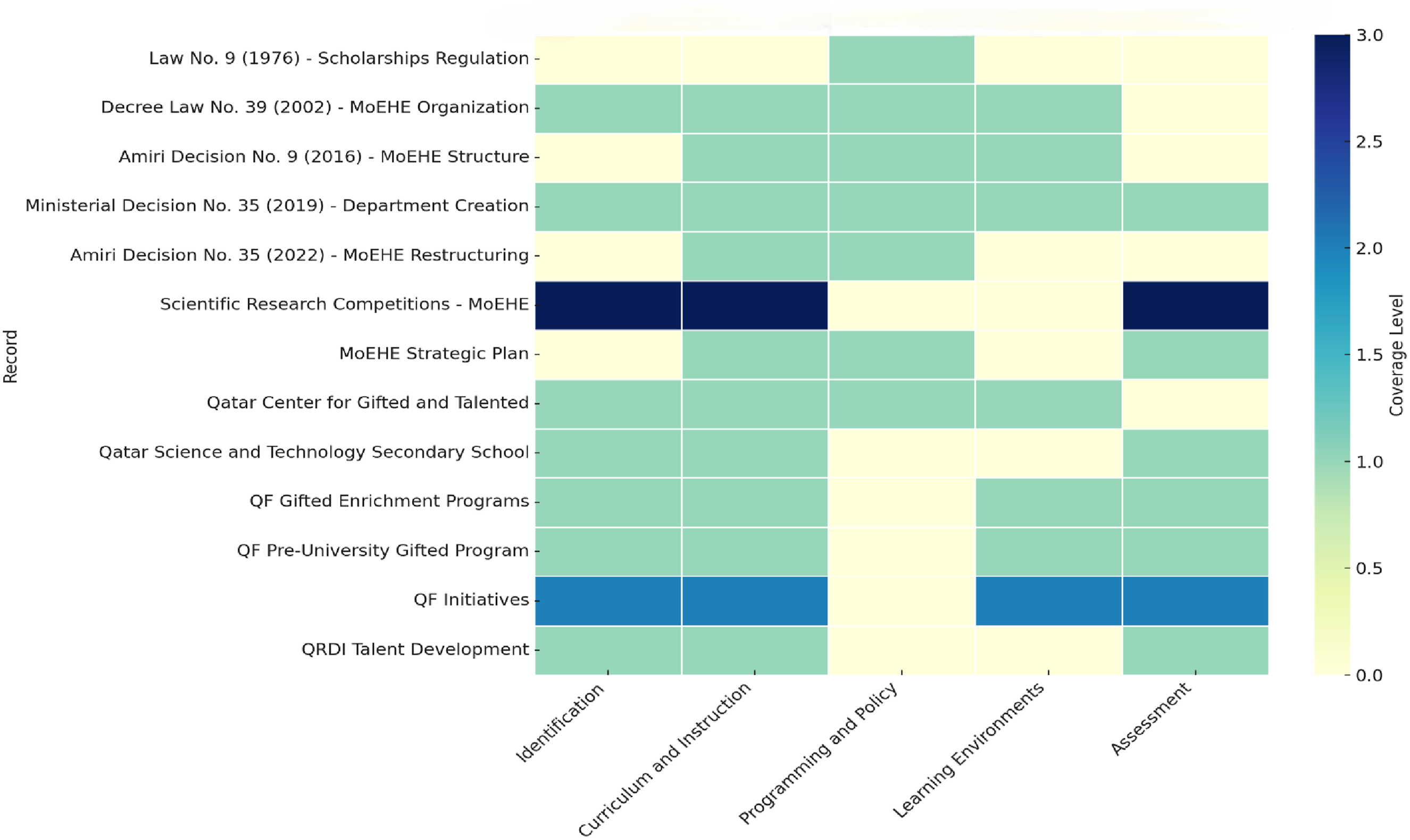
Theme 1. Identification
Findings indicated that gifted-learner identification in Qatar is primarily institution-driven, with no nationally standardized system to guide screening, referral, or eligibility practices. Structured procedures are mainly found within selective, well-resourced institutions such as QF schools and QSTSS. In contrast, national policy documents acknowledge giftedness only at a conceptual level without defining identification constructs or mandating operational procedures. Access to gifted programming, therefore, varies substantially by institutional affiliation and domain emphasis, with STEM talent receiving disproportionate attention relative to creativity, the arts, and leadership.
Subtheme 1.1. Institutionally Driven Identification Models
The most comprehensive identification model is found within QF’s Gifted Talent Search, which uses standardized cognitive assessments to determine eligibility for enrichment programs. As QF explains: “To qualify for any of Qatar Foundation’s Gifted Enrichment Programs, your child must join the Gifted Talent Search. This specialized gifted ability testing helps identify your child’s strengths and determines whether our advanced academic enrichment courses are the right fit” (Qatar Foundation, n.d.-a).
This practice illustrates alignment between identification and service provision, ensuring that placement decisions are evidence-based and linked to differentiated programming. However, participation is restricted to students within the QF network or those who can access its testing, limiting systemic reach and equity.
QSTSS also implements a rigorous admissions process emphasizing STEM aptitude and readiness for advanced coursework. The school’s mission underscores this focus by stating that it aims “to graduate generations of students in the fields of science and technology who are capable of keeping pace with scientific and technological progress and contributing to building a knowledge-based national economy” (QSTSS, n.d). While this approach identifies academically advanced learners in science and technology, it reinforces a narrow conception of giftedness that excludes other domains such as leadership, the humanities, and artistic expression.
Additionally, the National Scientific Research Competition, administered by the MoEHE, operates as an informal yet influential identification channel. Students “design and implement a scientific research project under the supervision of teachers and specialists, and present their work at school exhibitions leading to participation in the National Scientific Research and Innovation Week” (Ministry of Education and Higher Education, 2024). However, the recognition remains episodic and disconnected from sustained programming, meaning identified talent is not systematically nurtured beyond competition stages.
Subtheme 1.2 Policy Recognition Without Operational Systems
Gifted learners are repeatedly acknowledged within national policy documents; nevertheless, no Qatari regulation provides a formal definition of giftedness or establishes standardized identification criteria, tools, or screening timelines. For example, Law No. 9 of 1976 linked support to achievement rather than potential (Art. 16), diverging from international principles of equitable identification. Later, Decree-Law No. 39 of 2002 directed the Ministry to “prepare programs to discover talented and gifted individuals and provide them with appropriate care” (Art. 20) but embedded this function under the special education department, conflating giftedness with disability rather than distinguishing its instructional needs.
A more targeted step emerged with Ministerial Decision No. 35 of 2019, which tasked a newly established Gifted Section with “helping teachers and parents to identify gifted and talented students” (Art. 33). Yet this mandate lacked operational specifications such as validated instruments, referral pathways, universal screening, or cultural-linguistic equity safeguards. The subsequent restructuring under Amiri Decision No. 35 of 2022 dispersed gifted responsibilities across two broader departments (Arts. 12 & 16), diffusing accountability and eliminating centralized oversight.
As a result, Qatar’s current identification landscape remains procedurally undefined and inconsistent, with access to gifted recognition dependent on institutional initiative rather than national entitlement.
Theme 2. Curriculum and Instruction
Analysis revealed that gifted curriculum and instruction in Qatar are primarily developed and implemented by selective institutional providers, rather than mandated across the national education system. Some institutions offer differentiated and advanced learning pathways that are aligned with the cognitive and domain-specific needs of gifted learners. However, such pathways remain limited in reach, available primarily to those who meet selective admission criteria or who are enrolled within specific institutional ecosystems. Public schools, where most gifted learners are educated, do not operate under systemic requirements for acceleration, enrichment, or differentiated instructional design. Consequently, access to gifted-appropriate curriculum is primarily determined by institutional affiliation rather than national entitlement.
Subtheme 2.1. Enrichment and Acceleration in Selective Institutional Settings
QF demonstrates the strongest linkage between identification and differentiated instruction. QF’s Gifted Enrichment Programs are intentionally designed to extend learning beyond grade-level expectations, integrating inquiry-driven projects and complex, real-world applications. QF emphasizes that its courses are constructed to “enhance students’ academic skills through interactive learning experiences designed to build deeper understanding and community” (Qatar Foundation, n.d.-a). These offerings promote depth, complexity, and creative problem-solving.
Complementing these enrichment pathways, QF’s strategic school network supports domain-based gifted development. For example, Qatar Music Academy provides conservatory-style instruction in performance, theory, and composition to nurture advanced musical talent. At the same time, Qatar Leadership Academy’s mission focuses on developing “a generation of leaders who are committed to serving their nation with integrity and excellence” (Qatar Foundation, n.d.-b). Such institutional models exemplify sustainable gifted programming aligned with diverse domains of talent.
QSTSS delivers a parallel pathway within the public sector for high-achieving students in STEM fields. The school’s mission centers on preparing students to “contribute to building a knowledge-based national economy” by integrating advanced STEM learning with applied laboratory experiences and mentorship opportunities (QSTSS, n.d). These instructional environments closely align with global standards for developing STEM talent. However, QSTSS programming is accessible only through selective admissions and emphasizes scientific and technological achievement, excluding students gifted in non-STEM domains.
Subtheme 2.2. Research-Based Learning Opportunities
Outside formal schooling, extracurricular research and innovation initiatives extend gifted-level instruction to students who can access them. The MoEHE’s National Scientific Research Competition is described as “providing a suitable scientific environment for students… to develop their scientific and cognitive skills” (Ministry of Education and Higher Education, 2024). Through project-based research and expert feedback, students engage in advanced inquiry, scientific argumentation, and communication skills central to gifted curriculum standards. However, as a single-event enrichment activity, the competition does not mandate sustained instructional differentiation once students return to their regular school settings.
Similarly, the QRDI provides advanced learning opportunities that mirror components of gifted programming. QRDI states that its Talent Development initiatives aim to “identify, develop, and retain exceptional research talent to advance Qatar’s innovation ecosystem” (QRDI, 2025). These mentorship-rich, experiential programs reinforce authentic engagement with research and entrepreneurship, but participation depends on nomination or competitive access, further entrenching institutional inequalities.
While national policy expresses the importance of individual learner support, no existing legislation codifies requirements for curriculum modification or differentiated instruction for gifted students in mainstream schools. Neither Decree-Law No. 39 of 2002 nor subsequent ministerial decisions identify enrichment or acceleration as mandated instructional practices. Consequently, teachers in general education settings often lack both the obligation and the necessary structures to adapt the curriculum for gifted learners.
Theme 3. Learning Environments
Findings indicated substantial variability in the learning environments available to gifted students in Qatar. While certain institutions provide highly enriched spaces and advanced instructional resources, public schools generally lack requirements for differentiated physical, instructional, or psychosocial environments that address the advanced learning needs of gifted learners. Although national regulations acknowledge gifted students as a population requiring support, they do not define the environmental conditions necessary to ensure equitable access to high-quality learning opportunities.
Subtheme 3.1. Enhanced Learning Environments in Select Programs
Where specialized programming is in place, learning environments are intentionally designed to support advanced inquiry, creativity, and real-world engagement. For example, QSTSS frames one of its curricular goals as improving “critical thinking and reasoning skills and scientific literacy to enhance 21st-century skills” (Qatar Science and Technology Secondary School, n.d). This mission is operationalized through access to laboratories, robotics and fabrication studios, energy systems, and digital simulation environments that align closely with international guidance for science talent development.
Similarly, QF-affiliated schools leverage partnerships with universities and professional experts to ensure that high-ability learners interact with sophisticated tools and peers of comparable intellectual caliber. QF expresses its philosophy as ensuring gifted students are “provided ample opportunities to unlock their full potential” (Qatar Foundation, n.d.-a), reflecting a deliberate organizational commitment to cultivating advanced achievement. Specialized talent-domain schools within QF reinforce this infrastructure. Qatar Music Academy, for instance, “provides promising young musicians with a comprehensive music education program… incorporating both Arab and Western classical music curriculum” (Qatar Music Academy, n.d.), illustrating a tailored environment that nurtures artistic excellence.
These institutional environments demonstrate capacity for high-impact talent development but remain accessible only to those enrolled or admitted into selective settings. This produces an excellence model dependent on institutional affiliation rather than national entitlement.
Subtheme 3.2. Mandated Support Within National Policy Structures
National policy documents acknowledge that high-ability learners require differentiated support, yet they stop short of specifying the necessary environmental provisions. Decree-Law No. 39 of 2002 directs the Ministry to “discover and develop learners’ talents and inclinations… enable them to deal with the data of the future, and achieve excellence in acquiring advanced knowledge” (Art. 2), signaling a broad conceptual expectation of enhanced learning conditions. However, the decree does not identify required classroom adaptations, specialized facilities, grouping structures, or teacher qualifications necessary to translate intent into improved environments.
Ministerial Decision No. 35 of 2019 represented a step toward operationalization by establishing a dedicated Gifted Section tasked with “providing support for the implementation of educational programs for outstanding and gifted students” (Art. 33). Yet the policy did not introduce enforceable standards or monitoring mechanisms that would obligate schools to provide enriched learning contexts. Implementation was left to institutional interpretation.
Subsequent restructuring further dispersed accountability. Under Amiri Decision No. 35 of 2022, responsibilities were reassigned to two broader departments: one to “cooperate with schools to support innovation and gifted students” (Art. 12) and another to “support and nurture gifted students” (Art. 16). While gifted learners are explicitly referenced in both mandates, neither document establishes environmental benchmarks that schools must meet, such as access to advanced technology, mentorship opportunities, or flexible pacing arrangements.
As a result, support for gifted learning environments remains aspirational rather than actionable, resulting in significant disparities between well-resourced innovation hubs and typical public schools, where most gifted learners are educated. Without standardized expectations or accountability measures, environmental quality depends heavily on local initiative, school leadership philosophy, and resource availability—factors that vary widely across Qatar’s education landscape.
Theme 4. Programming and Policy
Programming for gifted learners in Qatar is primarily shaped by the priorities and resources of institutions rather than a unified national strategy. While strong initiatives exist, their work is not integrated into a coherent continuum of services. Access to programming is therefore determined more by institutional affiliation than by systemwide entitlement, contributing to substantial equity gaps in provision.
Subtheme 4.1. Institutional Leadership in Programming
QF represents the most comprehensive and sustained programming ecosystem for gifted learners in Qatar. Grounded in its mission to “unlock human potential” through advanced learning environments (Qatar Foundation, n.d.-b), QF offers long-term, domain-specific pathways that extend beyond episodic enrichment. These include leadership-focused development through Qatar Leadership Academy, which combines rigorous academics with structured character and civic formation to cultivate “strategic thinkers capable of leading and serving their nation” (Qatar Foundation, n.d.-b), and specialized arts programming through Qatar Music Academy, which provides a conservatory-style progression integrating Arab and Western classical traditions.
These models reflect international standards for gifted programming, continuity, domain-specific pathways, and mentorship with professional-level experts. However, access is selective, limited to students who meet competitive admissions criteria. Thus, while these programs illustrate what high-quality gifted education can achieve in Qatar, they do not operate within a national entitlement structure, leaving the majority of gifted students outside comparable developmental pathways.
Subtheme 4.2. Recognition Programming Without Sustained Development
Within the public system, recognition-focused initiatives remain the primary method of supporting high-achieving students. The Scientific/Education Excellence Award is Qatar’s flagship performance recognition program, intended to honor “outstanding students to encourage academic distinction across all fields” (Ministry of Education and Higher Education, n.d.-c). Although the award elevates visibility and celebrates accomplishment, it does not include structured follow-up opportunities such as acceleration, continued mentorship, or guided access to advanced pathways.
This performance-driven approach privileges students who already benefit from strong school and family support while overlooking high-potential learners who remain unidentified or underrepresented. Like the National Scientific Research Competition, which may lead to advanced competition opportunities but no guaranteed long-term development, recognition-based initiatives operate as endpoints of achievement, rather than entry points into sustained gifted programming. As a result, they contribute to excellence on a showcase level but do not build systemic capacity to nurture diverse talent.
Subtheme 4.3. Policy Structures Marked by Discontinuity
Gifted education has been intermittently referenced in national policy for more than two decades, yet the mechanisms for leadership and accountability have been inconsistent. Ministerial Decision No. 35 of 2019 briefly established centralized oversight through a Gifted Section within MoEHE. However, Amiri Decision No. 35 of 2022 dissolved this section and redistributed responsibilities across departments with broader mandates, resulting in a diluted focus on gifted education and unclear lines of authority.
The MoEHE’s forthcoming Strategic Plan 2024-2030 emphasized commitment to “igniting the spark of learning, empowering students to succeed in a knowledge-based economy” (Ministry of Education and Higher Education, 2024). However, because the plan was unpublished at the time of analysis, no information was available regarding gifted-specific objectives, performance indicators, or mandated services. These fluctuating policy signals indicate an absence of a stable strategic direction, leading schools to rely on individual initiative rather than systemic requirements to provide programming for gifted learners.
Subtheme 4.4. Innovation System as a Parallel Programming Channel
A significant complement to school-based provision is found in the national innovation sector. The QRDI articulates a goal of building a “strong pipeline of research talent in Qatar” (Qatar Research et al., 2025). Its youth innovation initiatives, such as research apprenticeships, national challenges, and entrepreneurship mentoring, offer advanced engagement opportunities aligned with the cognitive and creative needs of gifted learners.
However, these initiatives operate outside formal education pathways, lack guaranteed alignment with school curricula, and primarily serve students with the social and academic capital needed to participate in competitive selection processes. Thus, QRDI programming enhances the national talent landscape but reinforces a dual-system reality, one in which a small number of learners access high-level enrichment. At the same time, the majority of gifted students remain unsupported in mainstream educational settings.
Theme 5. Assessment
Assessment remains one of the least developed aspects of Qatar’s gifted education system. Although the NAGC Programming Standards emphasize that gifted assessment must be valid, reliable, multifaceted, and culturally responsive (National Association for Gifted Children, 2019), the current landscape in Qatar is marked by fragmented, institution-dependent practices. Assessment opportunities are concentrated within selective programs and extracurricular initiatives rather than embedded across the national school system. Hence, gifted learners are infrequently monitored for growth, and identification outcomes are rarely linked to ongoing educational planning or instructional adaptation.
Subtheme 5.1. Institution-specific Assessment Models
The most structured assessment practices are typically found within specialized institutions that serve a limited segment of students. QF implements standardized cognitive testing as a prerequisite for participation in its advanced enrichment pathways. QF notes that the Gifted Talent Search is designed to “discover your child’s strengths and whether our advanced academic enrichment courses are the right fit” (Qatar Foundation, n.d.-a). This assessment model aligns with international guidance by directly linking eligibility decisions to domain-specific acceleration and enrichment.
Similarly, the QSTSS employs a competitive admissions process that includes entrance examinations, academic record review, and interviews to determine readiness for advanced STEM learning. The school’s mission emphasizes graduating students who are prepared to “contribute to building a national economy based on knowledge, scientific advancement, and technological progress” (Qatar Science and Technology Secondary School, n.d). Despite strong alignment with national innovation priorities, reliance on achievement-based and STEM-specific assessments narrows eligibility to a limited group. It fails to reflect the broader spectrum of giftedness described in global frameworks, including creativity, socio-emotional leadership, and artistic talent.
Performance-based evaluations also occur through the National Scientific Research Competition, where “students participate in school exhibitions in preparation for the annual National Scientific Research and Innovation Week” (Ministry of Education and Higher Education, n.d.-b). Although this authentic, inquiry-driven assessment can reveal advanced reasoning and problem-solving abilities, participation is voluntary and dependent on school-based capacity. Furthermore, evaluation results are not systematically linked to formal gifted identification or individualized learning support, reducing the lasting developmental benefit of these assessments.
Subtheme 5.2. Policy Recognition Without Assessment Guidelines
While national legislation supports the discovery and nurturing of exceptional abilities, regulatory documents do not define giftedness or establish systematic procedures for its assessment. No policy prescribes a screening frequency, eligibility constructs, psychometrically sound instruments, or accommodations for culturally and linguistically diverse learners, resulting in inequities based on school resources rather than student potential.
The structural reorganization under Amiri Decision No. 35 of 2022 exacerbated this fragmentation by distributing gifted-related responsibilities across multiple administrative entities. For instance, the School and Student Affairs Department is tasked with “supporting and nurturing gifted students in cooperation with the relevant administrative units.” At the same time, the Curriculum and Learning Resources Department must “cooperate with schools to support innovation and gifted students” (Amiri Decision No. 35 of 2022Amiri Decision No. 35, 2022, Arts. 12 & 16). However, neither unit is formally charged with establishing or enforcing standardized assessment protocols. This diffusion of responsibility limits national oversight and perpetuates inconsistent assessment practices across educational regions and school types.
Discussion
This study investigated the current state of gifted education in Qatar by analyzing its national laws, policy documents, strategic plans, and institutional programs. Using NAGC standards (2019) as a theoretical lens, the findings reveal a fragmented yet evolving landscape in which identification, services, curriculum, and policy efforts are present but unevenly implemented.
The cornerstone of any gifted education system is the systematic and equitable identification of gifted students (Mun et al., 2021). Internationally recognized models, such as the Talent Search model used by CTY, adopt multi-criteria approaches to identify high-ability learners across cognitive, creative, and academic domains (Brody, 2021). QF, in partnership with CTY, mirrors this model through percentile-based assessments of verbal and quantitative reasoning. These assessments provide an evidence-based foundation for enrichment opportunities, such as the L.I.V.E. courses, reflecting their alignment with global best practices.
In contrast, the MoEHE lacks a unified national protocol for identifying gifted students. Although Ministerial Decision No. 35 (2019) introduced a “Gifted Section,” which was later dissolved in the 2022 restructuring, no national policy has mandated identification tools or equity safeguards since. This institutional instability undermines consistency in identifying gifted students across public schools, thereby risking the perpetuation of underrepresentation, particularly among learners from culturally or linguistically diverse backgrounds (Peters, 2022).
Regarding programming and curriculum, QF’s pre-university institutions, such as the Academyati and Qatar Leadership Academy, offer specialized learning pathways for high-ability students in the academic, musical, and leadership domains (Qatar Foundation, n.d.-b). These schools provide flexible, project-based curricula and cultivate talent through enriched STEM and arts programs. This design aligns with the NAGC standards that emphasize differentiation, real-world relevance, and acceleration as foundational instructional strategies for gifted learners (National Association for Gifted Children, 2019).
However, these efforts remain concentrated in niche institutions and lack integration into the national education system. Public schools rarely offer differentiated instruction, and general education teachers often lack training in recognizing and nurturing high-ability learners (Chaar & Mesiridze, 2023). This reflects a broader issue in Qatar’s gifted education system: the disconnect between advanced institutional programming and systemic inclusivity. International models emphasize early, scalable interventions supported by dedicated government units, an approach that Qatar has yet to institutionalize.
From a policy and governance perspective, Qatar’s legislative landscape reflects gradual but uneven progress. Legal references to giftedness appeared as early as Law No. 9 (1976), which emphasized academic excellence in the selection of scholarships. Subsequent legislation, such as Decree-Law No. 39 (2002) and Ministerial Decision No. 35 (2019), has recognized gifted learners as a specific group deserving of targeted support. However, none of these texts define “giftedness” or articulate enforceable service obligations, funding mechanisms, or accountability structures. The dissolution of the Gifted Section in 2022 marked a setback to institutional continuity, leading to a fragmented distribution of responsibilities across MoEHE departments without clear operational mandates.
The strategic gap is also reflected in the MoEHE Strategic Plan 2024-2030, which promotes innovation and personalized learning but does not explicitly mention gifted students as a distinct category (Ministry of Education and Higher Education, 2024). This omission underscores the lack of policy coherence. To develop a robust system, Qatar must institutionalize gifted education within its national education law, define service obligations, and clarify the roles of stakeholders across sectors. Countries such as South Korea (Kim et al., 2020) and Germany (Fischer & Müller, 2014) offer examples of national legislation that supports gifted education through funding, talent databases, and inclusive assessment strategies.
Another critical finding concerns the learning environment available to gifted students. The QSTSS, established in 2018, exemplifies a high-quality STEM-rich environment (Qatar Science and Technology Secondary School, n.d). However, access to such schools is limited, and no comparable facilities exist for primary gifted learners. Similarly, QF’s Gifted Hub and The Learning Center offer specialized services, including support for students who are twice-exceptional. However, these fall outside the MoEHE’s mainstream system (Qatar Foundation, n.d.-a). International best practices advocate for inclusive gifted education, where enrichment and acceleration opportunities are embedded across K-12 settings and are not restricted to elite institutions (Renzulli, 2012).
Finally, the area of assessment and program evaluation remains underdeveloped. While the QRDI and QF track student performance within their respective programs, there is no centralized national monitoring mechanism. Without data systems to evaluate outcomes, Qatar cannot effectively assess the efficacy of gifted education interventions or ensure continuous improvement. In contrast, high-performing systems, such as those in Australia (Phillipson & Ziegler, 2021) and the United States (Lockhart et al., 2022).
Implications for Policy and Practice
The findings of this study highlight the pressing need to transition from a fragmented, institution-led model of gifted education in Qatar to a coherent, equity-oriented national framework. While various stakeholders and select public institutions have initiated commendable efforts, these initiatives often operate in silos, lacking strategic alignment or policy integration. Thus, gifted education in Qatar remains accessible primarily to students enrolled in elite programs or those identified through informal or institution-specific mechanisms.
Given Qatar’s strong educational infrastructure and commitment to innovation, the country is well-positioned to institutionalize a gifted education system that is globally informed and locally responsive. There is an urgent need to embed gifted education into Qatar’s national education law. This involves formally defining giftedness in diverse domains (academic, artistic, leadership, and creative), establishing the legal right to services, and creating an accountable governance structure within the MoEHE. For example, reinstating and institutionalizing a dedicated “Gifted Education Unit” within MoEHE would ensure consistent policy implementation and sustain coordination across educational levels and institutions.
The current reliance on institution-specific tools and percentile-based thresholds must be expanded into a national, multi-criteria identification system. This should include performance-based assessments, creativity and problem-solving measures, and accommodations for students from underrepresented backgrounds. Qatar needs to adapt international frameworks, such as Renzulli’s Three-Ring Model (Renzulli, 2016) or Gagné’s Differentiated Model of Giftedness and Talent (Gagné, 2009), and integrate them into school-wide screening procedures, beginning at the primary level. Special emphasis should be placed on identifying twice-exceptional learners and those whose talents may not align with traditional academic metrics.
Gifted students require a challenging, accelerated, and enriched curriculum that goes beyond the standard grade level. Qatar’s current public school curricula must be reviewed to incorporate tiered instruction, inquiry-based projects, and flexible pacing models. National guidelines for curriculum differentiation, anchored in the NAGC’s Curriculum and Instruction Standards, should be developed and disseminated. Additionally, integrating gifted education principles into STEM and humanities programs can help bridge the gap between elite institutions and mainstream schools.
One of the most critical and underdeveloped areas of Qatar’s gifted education system is teacher preparation. Most general educators lack the training required to identify or meet the needs of high-ability students (Chaar & Mesiridze, 2023). The MoEHE, in collaboration with the QF and teacher education institutions, should design a national professional development framework that includes both preservice and in-service training. Courses on differentiation, cognitive development, socio-emotional needs, and culturally responsive pedagogy must be made compulsory. Internationally certified programs can be adapted for local use in the future.
To foster sustainability and innovation, Qatar must institutionalize collaboration among government entities, private educational foundations, and research councils. A national advisory board for gifted education could coordinate between the MoEHE, QF, QRDI, and higher education institutions, ensuring that policies are informed by research and practice. For example, QRDI’s research competitions and innovation labs can be more explicitly integrated with national gifted education goals by aligning their selection processes with MoEHE identification strategies and using student performance data to inform curriculum design.
Footnotes

Funding
The author(s) disclosed receipt of the following financial support for the research, authorship, and/or publication of this article: Open Access funding provided by the Qatar National Library.
Declaration of conflicting interests
The author declared no potential conflicts of interest with respect to the research, authorship, and/or publication of this article.