




Abstract
This study delves into the cultural perspectives surrounding gifted education practices in Ghana, focusing on 10 junior high school classroom mathematics and science teachers. Data were gathered through semi-structured interviews and analysis of lesson plans. The results brought to light a notable gender disparity of female participation in Science, Technology, Engineering, and Mathematics (STEM)-intensive courses compared to males. Teachers’ beliefs concerning giftedness tended to be tacitly naive, rooted in traditional notions and influenced gifted students’ development. Spiritual and supernatural giftedness emerged, perceiving the gifted to possess mystical powers. Implications underscore the implementation of gifted education within teacher educational institutions. This, in turn, addresses the tacit opinions and knowledge gaps among educators regarding gifted education in Ghana. The study advocates for a holistic approach to nurturing giftedness that extends beyond conventional academic realms, ensuring a more inclusive and equitable educational landscape.
Introduction
Gifted education has long been a topic of interest with scholars and practitioners exploring various dimensions of giftedness, including identification, curriculum development, and teaching strategies (Busse et al., 1986; Lee et al., 2022). While extensive research has been conducted on the cognitive and behavioural aspects of giftedness, there is a growing recognition of exploring how the cultural beliefs of educators influence practice (Lundy, 1988; Wai et al., 2010). This study builds on and extends previous research published in this journal by Allotey et al. (2020), which documented the strategies that mathematics and science teachers suggested they employed in the mainstream instructional classroom to support gifted students’ education in Ghana. The work reported in this paper explores the underlying cultural factors that influence teachers’ attitudes.
Education in Ghana has become the key to national development towards the promotion of socio-economic advancement. Technology and Science are seen as key domains that will contribute to advancing pressing challenges such as energy sustainability, healthcare innovation, and climate change adaptation. Gifted children grow into adults who have the potential to contribute significantly to society in multiple ways. Unlike Western and Asian nations, in Africa and Ghana, the recognition and learning needs of gifted children are often ignored (Allotey, 2019; Allotey et al., 2020; Deku, 2013; Maree, 2017; Ngara, 2017; Ngara & Porath, 2007). Teacher education institutions do not offer training modules and programs to sufficiently prepare teachers for supporting the needs of gifted learners.
Background
Three areas of research inform this study: cross-cultural attitudes of giftedness, the influence of spiritual beliefs and gendered attitudes, and the impact of teachers’ cultural beliefs and attitudes on pedagogical approaches. Recent studies further highlight the effect of cross-cultural attitudes on giftedness development and recognition across different societies, exploring how socio-cultural factors shape global gifted education (Alam & Mohanty, 2023; Nguyen et al., 2013). For example, a United States study explored how cultural attitudes influence educators' perspectives on gifted students’ development (Antoun et al., 2020). According to the work of de Soriano Alencar et al. (2009) in Argentina, individuals’ giftedness was defined solely in terms of higher academic achievements. In contrast, in Papua New Guinea, giftedness is considered the possession of knowledge and skills for lifelong, village-based living and workforce readiness (Nelson et al., 2004). In Asian cultures, giftedness is perceived through conformity to social norms within Confucian-heritage cultures (Phillipson, 2007). Whereas Conformism enhances collectivism, which prioritises group achievements over individual accomplishments, David (2017) in Saudi Arabia reveals that cultural attitudes including conformity to social norms and obedience within Middle Eastern cultures can constrain gifted students’ development. Most African nations view gifted education as a Western ideology. A Kenyan study of successful gifted education practices with adolescents showed that the aptitudes and characteristics related to giftedness knowledge are culturally inherent (Munro, 2011). The findings reveal that cultures vary in what is valued in the processes of knowing, thinking, and behaviour. However, Chan’s (2018) study proposed that the separation of Eastern and Western ideologies of giftedness is not ideal in a globalised, contemporary society.
Research in developed nations has acknowledged the importance of teachers’ cultural beliefs in supporting the gifted (Subotnik et al., 2023). According to Heyder et al. (2017) work, teachers only relied on inexpert beliefs suggesting a need for their attitudes to be grounded in evidence-based approaches. Lenvik et al. (2022) believe that teachers often lack formal education in gifted education, a situation not unique to developing nations. For example, a Ghanaian study highlighted insufficient support for gifted students due to teachers’ uninformed beliefs and limited knowledge about giftedness (Allotey, 2019; Allotey et al., 2020). Sak (2011), Sternberg and Zhang (1995) believe that such knowledge is the foundation for identification processes, guiding policies and practices within gifted education. Sak (2011) highlights how cultural influences not only shape the definition of giftedness but also give rise to various belief patterns, including misconceptions, myths, contradictions, and restrictive attitudes in educational contexts. For instance, the notion of academic giftedness often carries an impression of glamour surrounded by numerous myths (Cross et al., 2018; Geake & Gross, 2008). This perception is not limited to academics alone; exceptional talents are found in diverse domains. Surprisingly, the widely admired intellectual genius image contrasts sharply with the reality faced by intellectually gifted, who are often depicted as grappling with social and emotional challenges including distress, depression, and loneliness (Matheis et al., 2017). According to Pfeiffer (2008) and Sternberg et al. (2021), educators should move beyond rigid definition models when identifying gifted individuals, and instead consider the values rooted in individuals' cultural backgrounds. This holistic approach not only broadens our understanding of giftedness but also ensures a more inclusive identification process by acknowledging diverse talents (Hodges et al., 2018).
Giftedness and spirituality, a concept explored globally, finds diverse cultural interpretations in Africa. Ghana’s cultural heritage influences giftedness development (Allotey, 2019), emphasising that in Africa, Ghanaian spiritualism influences people’s beliefs about giftedness. In Zimbabwe, giftedness was perceived as an exceptional achievement even in challenging circumstances, involving problem-solving, creativity, interpersonal skills, and spirituality (Ngara & Porath, 2007), which is consistent with Gardner’s (1983) multiple intelligences. In practice, a multidimensional and culturally sensitive approach is recommended for supporting diverse talents and abilities in various domains including Science Technology Engineering, and Mathematics (STEM). Achter et al. (1996) advocate for an approach that considers multi-potentiality, since individuals who excel across multiple areas of endeavour may not be predominant among the intellectually gifted population.
Cultural beliefs and gender stereotypes exert influence over women’s roles in STEM. A study about the influence of gender norms and cultural opinions (Chan, 2022) in the United States reveals that gender belief roles impact girls’ engagement and career choices in STEM. The findings unveiled that girls who internalise traditional gender role beliefs are less likely to perceive themselves as capable in STEM areas. This is consistent with previous research conducted by Makarova et al. (2019), Wang and Degol (2016), and Xie and Liu (2023), which also highlighted the influence of gender role beliefs on self-perception in STEM. Conversely, boys embracing similar beliefs often consider STEM a male-dominated realm. This could result from parental pressure leading to gifted female perfectionism struggling based on Ryckman and Peckham (1987) with STEM gifted females' scant ability and confident perceptions they hold when nominated for gifted programs. Similarly, gender disparities in STEM exist in Tanzania (Kabote et al., 2014).
In Ghana, historical norms have relegated women to domestic roles, limiting their participation in revenue-generating activities (Amu, 2005). This has cast a shadow on the prospects for gifted females as they often lack support, opportunities, and motivation compared to their male counterparts. This impact stemmed not solely from the tradition of favouring men over women, but also from the deeply ingrained beliefs held by women and families (Xie & Liu, 2023).
Gender disparities extend to self-perception, with girls often attributing their struggles in mathematics to inherent inadequacy, affecting their confidence and engagement in STEM (Ryckman & Peckham, 1987). In contrast, gifted males might underachieve deliberately to maintain social relationships and status, a behaviour often influenced by perceptions of peer group’s support for academic achievements. Comparable gender discrepancies have been observed in Lee’s Australian exploration (1999), where gifted girls are less likely to be identified by teachers who associate giftedness with boys in STEM areas for gifted programs.
A related investigation focused on Ghanaian high schools revealed a disparity; male participation in mathematics stood at 50.5%, whereas female participation was lower at 27.2%
(Baah-Korang et al., 2015). This gender gap is reflected in mathematics engagement and national mathematics and science quiz competitions often held in Ghana, emphasising the underrepresentation faced by females. A culturally sensitive understanding of giftedness is vital in African contexts, with Ghanaian teachers addressing selectivity and elitism in gifted education (Allotey, 2019). Maree (2017) unveils a limited accommodation of gifted students’ needs in South African schools, stressing the need for holistic internationalisation in gifted education. Fostering diverse characteristics is essential, as neglecting students' needs may contribute to unemployment issues. While Western cultures value social intelligence, African cultures prioritise social intelligence differently. The varied cultural interpretations indicate that a singular definition of giftedness is inadequate and that a multidimensional global discussion must embrace all cultures to acknowledge and respect cultural diversity (Chan, 2018; Pfeiffer, 2008). Exploring the influence of spiritualism and gendered attitudes entrenched in Ghanaian culture on teachers’ behaviours towards academically gifted learners is paramount.
Research questions
This study aims to investigate the cultural beliefs held by teachers regarding gifted education practices in Ghana; through the following research questions: 1. What are the beliefs expressed by Ghanaian science and mathematics teachers about giftedness? 2. How do teachers’ cultural beliefs and attitudes influence their practices in support of gifted students’ diverse learning needs?
Methods
Participants
Participants’ background information.
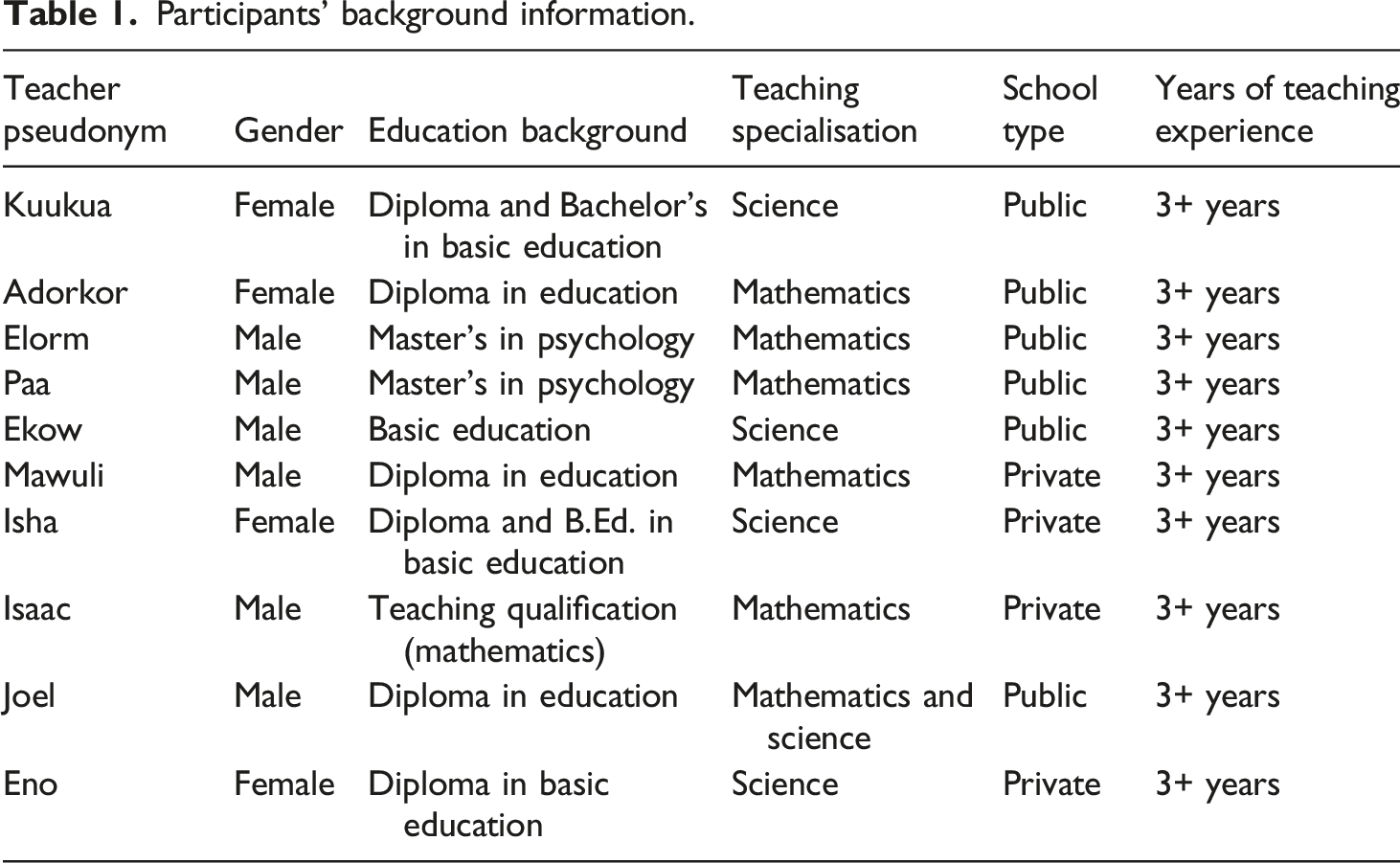
Private schools in Ghana are individually owned and operate under the oversight of the Ministry of Education through the Ghana Education Service. Participants hailed from sixteen (16) regions, each characterised by distinct languages, ethnicities, and tribal affiliations. For instance, individuals from Volta and Oti regions speak Ewe and Nkonya dialects; Central region; Fantse, Awutu, and Efutu, Ashanti region; Asante Twi. Western South and North regions; Fantse, Nzema, Sehwi, and Ahanta, Bono, and Asante Twi. Eastern region; Akyem, Akuapim Twi, Ewe, and Guan. Northern, Upper East, and West regions; Mamprusi, Wala, Gonja, Dagari, Dagbani, or Kusal. Accra; Ga and Adangme. Ghana is a multi-cultured society with a possible range of spiritualism and gendered beliefs.
Data collection
Sample interview questions.
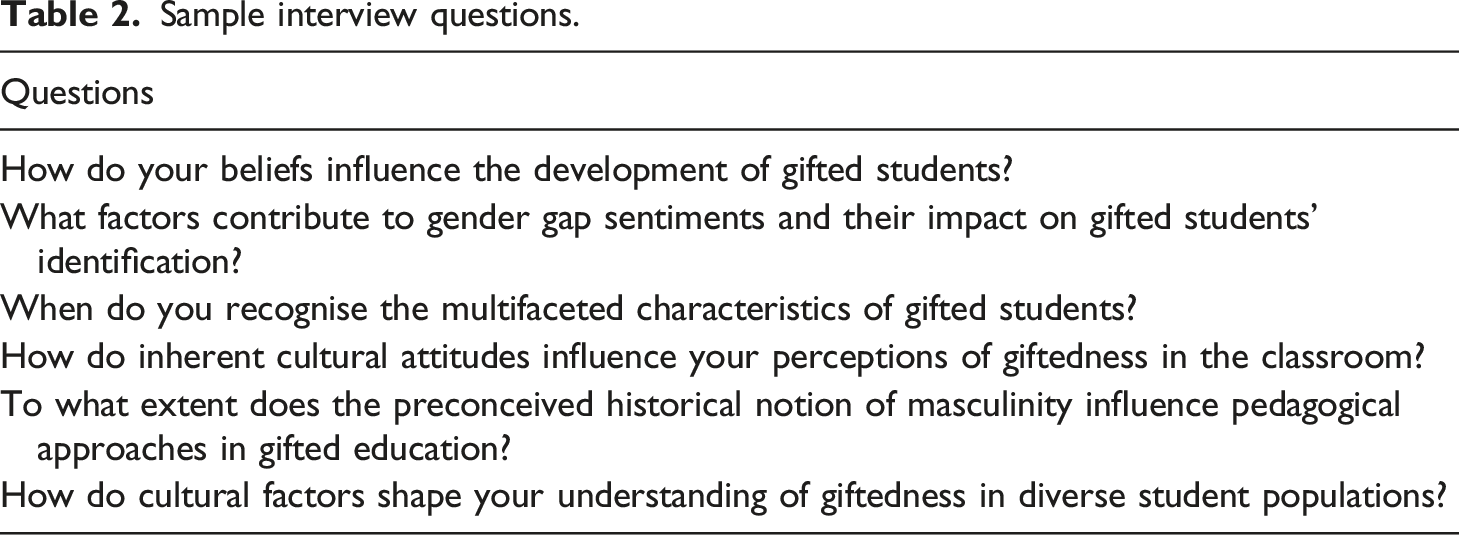
Teachers’ lesson plans were deemed essential data sources and were used to support or contradict data from participant interviews (Tofel-Grehl & Callahan, 2016). Lesson plans, covering both mathematics and science, varied based on each teacher’s position in the pedagogical cycle (Allotey, 2019). The scrutiny of teachers’ lesson plans aimed to determine whether participants employed differentiated learning strategies, evidence of analytical and creative teaching methods, used socio-culturally relevant instructional approaches related to giftedness, and lesson content sufficiently challenged students’ diverse needs and background cultures. Data collected from students’ written tasks in mathematics and science contributed additional insights into how classroom instruction addressed varied learning needs and supported socio-cultural classroom inclusion.
Data analysis
Data analysis consisted of two phases. Initially, deductive coding was employed to identify teachers’ beliefs about the nature of giftedness, focusing on two dimensions; giftedness characteristics in addressing research question one (RQ1). All ten lesson plans underwent analysis, with predetermined codes assigned to the attributes; ‘socio-cultural norms,’ ‘cultural giftedness characteristics,’ ‘giftedness as acquired concept,’ and ‘diversity’. Interview data were scrutinised for example, where teachers articulated their beliefs about the gifted, positioning these utterances with preset codes.
The next step involved inductive coding of the interview data (RQ2) to establish categories that encapsulated beliefs, influencing teachers’ approaches to identifying gifted students (Braun & Clarke, 2006). Initially, responses related to teachers' experience and views on identification processes were coded. For instance, when answering questions about beliefs regarding giftedness, teachers articulated their thoughts, and these were systematically coded. In a subsequent step of the analysis, codes were organised by scientifically exploring participants’ cultural perspectives, and identifying themes and patterns based on resemblances, differences, and incongruities in their responses. Some categories were condensed to a manageable number, aligning with Creswell’s (2013) ‘lean coding’ concept. The lead investigator restructured the remaining classifications, formulated a proposal for inclusion, and sought additional data closely associated with, and most fit for emerging groupings. Analysis underwent moderation, with discrepancies addressed through consultations with the team of authors. This study highlighted participants’ responses, which were thoroughly arranged according to emerging categories. The inconsistencies observed encompassed a range of pedagogical socio-cultural inclusion strategies, and the use of a ‘holistic’ approach indicated by participants for supporting the gifted. Emergent codes, categories, and subcategories were derived through the synthesis of coded data to generate themes. These themes were carefully organised and cross-verified with interview data for analysis and coherence. The identified codes and specific data examples were scrutinised and deliberated upon by the team of authors to ensure alignment with established categories. The summaries of these data sets, validated through corroborated themes were employed to address the research inquiries.
Results
The results are reported in two stages. Stage One presents beliefs expressed by Ghanaian science and mathematics teachers about giftedness. Stage Two reports on factors that underpin respondents’ cultural beliefs and attitudes that influence their practices in support of gifted students’ diverse learning needs.
Following RQ1, respondents were asked a range of questions about gifted students’ characteristics; all ten respondents, Kuukua, Adorkor, Elorm, Paa, Ekow, Mawuli, Isha, Isaac, Joel, and Eno, commented on key characteristics that gifted students exhibited: Supernatural dimension and high social expectations.
Supernatural dimension
Participants acknowledged how spiritualism influenced their conceptions of giftedness. Six teachers believed that gifted students possessed a “supernatural spirit” for multitasks. Eno highlighted: In Ghana, the gifted students we admire them…if I could use the word ‘witches’…have some supernatural gifts…for doing things and solving problems… (Eno, June 26, 2018, at 3:30 pm)
A shared belief emerged, with teachers describing gifted students as having “two-headed brains”, or being called “witches, weird, and nerds”. For Isha, ‘these gifted…have “strange powers” or “magical powers”, “solve unusual problems”; highlighting why teachers use this term and its potential connection to spiritual or traditional beliefs could be worthwhile to examine. These terms may have a deep cultural meaning. For example, “two-headed women” is a traditional African American term used to describe gifted women with access to the spiritual world and the material world (Clifton, 1980).
Also, “Two-headed doctors” appears to be a term used in hoodoo spirituality (Hazzard-Donald, 2013). Eight teachers believed that an “ancestral supernatural spirit of a prominent family member provided a blessed gift” to the beneficiary. Elorm revealed that a child can be gifted when an “ancestral spirit is invoked onto the child during the naming ceremony”. Eno noted: “This type of giftedness is everlasting, pure, provided the individual remains unadulterated, focused, and generous”. With Joel, the practice of “naming children after renowned ancestors with the expectation that they will embody similar characteristics” reflects a cultural belief “in reincarnation”, and Isaac describes the “ceremonies involving invoking incarnated spirits for wisdom and supernatural abilities”. This suggests that the supernatural dimension can create and affect change in individuals’ experiences and was a significant factor contributing to giftedness, as reported by the ten teachers.
A gendered dimension to giftedness
Teachers were asked about their beliefs of gender concerning gifted students. They all commented on a common characteristic about the cultural conceptions of the role of gender. These include socio-cultural beliefs that males are expected to be the ‘breadwinners’, and are supposed to do all the hard work (Amu, 2005). The interview data revealed that males are considered more gifted than females. Kuukua remarked: We educate boys more than girls…they say that whatever they do they are going to marry, boys work and take care of the family but your husband will take care of you so mostly boys are known to be gifted more than girls. (Kuukua, June 25, 2018 at 10: am)
This implies that females are disadvantaged if gifted in the Ghanaian culture. Mawuli articulated: …men are good, better perform than women so if women do better than men those men or boys…castigate and condemn them to nothing. How can you sit down, and a girl do better than you? It’s unheard of, …growing up…the first 10 in our class are always boys… (Mawuli, July 16, 2018, at 11:00 am)
Mawuli’s view highlighted a misconception about gifted girls, and their lack of rights to reach their highest potential. Isha highlighted, “I think boys being gifted are given more privileges than girls because the males are superior”. The pigeonholing of gifted girls was a consistent belief among all teachers. Joel disclosed; “the expectation that males are academically good or highly brilliant is real in the Ghanaian culture, and… [it] become [s] news if a female is academically good”. Further analysis revealed that male teachers fear being seen as inferior because they are afraid to be challenged by gifted boys. Similarly, female teachers of gifted girls feared the same challenge and feared being inferior.
High social expectations
The interview data showed that the gifted are expected to demonstrate a high degree of potential, projected as icons with promising prospects compared to their peers. The teachers discussed a variety of cultural contexts relating to giftedness. The following expressions emerged in the interview data: Spiritual dimensions in the giftedness discourse as evident in various sacraments; such as bathing children in water with lion bones for strength and courage. Ekow believed that the magical powers associated with the gifted students further contribute to the “mystification of these individuals’ geniuses” or “smartness”. Particularly, giftedness appears to mean individuals who are believed to “exhibit wisdom or distinctive brilliance compared to their peers”, especially when attempting to engage in “multiple tasks simultaneously”. Adorkor believed that this aspect adds “another layer” to the “spiritual dimensions influencing teacher perceptions”, characterising gifted students as possessing “extraordinary cognitive abilities”. Despite viewing the gifted as superior, teacher support is key but in Ghana, the story is different. For example, gifted students’ diverse needs tend to be ignored in Ghanaian mathematics and science mainstream classrooms as all students perform the same tasks at the same pace (Allotey, 2019).
In summary, giftedness is entwined with cultural practices and spiritual beliefs that manifest in diverse spiritual ceremonies. The broader societal view of gifted individuals may perpetuate stereotypes. If Ghanaian society views giftedness through a lens of mysticism or beyond the ordinary, respondents may unconsciously adopt these perspectives. Without understanding, behaviour of gifted students including advanced cognitive abilities or exceptional skills may be misconstrued as mystical or supernatural.
Stage Two presents findings, following questions from RQ2
What practices do teachers use when they have identified gifted students (i.e., boys or girls)? Teachers were questioned about the strategies they attempt to employ or advocate for gifted students’ diverse needs: Four levels of support emerged from the data analysis; teacher beliefs and experiences, curriculum differentiation, gifted students as peer tutors, and acceleration or grade skipping.
Teacher-beliefs and experiences
When teachers were asked about the support they provide for gifted students, nine of the teachers expressed that, “gifted students and their special needs are not given any attention”; “we haven’t seen anything like strategies for teaching the gifted”; “we teachers use our own experience, knowledge, and beliefs” in shaping gifted students and meeting their diverse needs. Joe expressed this opinion: Those people are not many, we use …our questions relating to what we have taught or learned, we haven’t seen before. (Joe, July 18, at 10:00 am)
Clearly, nine of the teachers explained an absence of strategies for teaching gifted students as they are “not many”.
Curriculum differentiation
Teachers were asked if they successfully applied differentiation strategies, and in response, they all admitted that “we do not do it”; “we do not use differentiation strategies, because all the students learn the same thing at the same time and the same pace.” Eight teachers shared their views about differentiation; “we teach as to how we think will benefit the child but we are being sort of forced to follow the laid down procedure”. Ekow expanded this view, stating that he “treats everyone equally in class.” All the teachers acknowledged that their major emphasis was “on the average students”. Presumably, a constructivist approach would imply that teachers ascertain what each individual’s needs are, and teach accordingly. That is, they would differentiate. Seven of the teachers acknowledged differentiation as an important technique for meeting students’ varying needs, but this was not used in Ghanaian classrooms. These results align with teachers’ lesson plans, which had no clear application of appropriate differentiated materials for mathematics and science teaching and learning (Allotey, 2019). Although teachers strictly followed the routine procedures that were stated in the curriculum, teachers’ lesson plans incorporated individual teacher experience and thus, did not provide specific teaching strategies for gifted students.
Gifted students as peer tutors
Seven teachers expressed that, “they encourage the gifted to teach others as (peer tutors/TAs), and as role models to their colleagues”, and with three teachers, “at times they served as mentors” in the mainstream classrooms. Research has shown that using gifted students to help other students in classrooms can be a deterrent for them (Maree, 2017) or something like this that links to literature.
Grade skipping or acceleration
Regarding teachers’ views about grade skipping or acceleration, all ten teachers’ responses during the interview revealed that it was relatively contextual. That is, the strategy was reliant on the type of school and if the student was far older than their peers or classmates. According to the majority of the teachers, accelerating students to an “above grade level or subject only” prevails in a few Ghanaian private schools. This practice was “rare in Ghanaian public schools”, and often relied on “students’ maturity”. Eight out of the ten teachers stated that accelerating or skipping gifted students to higher grade levels or subjects was “undesirable in Ghanaian public schools”. Joel expressed the belief that students would “miss the fundamentals.” Half of the teachers indicated that grade skipping or acceleration could be adopted “if the student was far older than their peers”.
In summary, findings revealed that practices are based on teachers’ culturally informed beliefs due to limited knowledge about giftedness, which constrained their teaching. They misunderstood differentiation and acceleration strategies, neglecting to incorporate them. There was insufficient evidence of recommended giftedness strategies including problem-solving and critical thinking, which often being teacher-led and lacking classroom discussion (see Allotey et al., 2020). There exists a rich drape of historic-cultural and traditional memories contributing to educators’ attitudes. The practice of invoking incarnated spirits and conducting ceremonies to impart wisdom and supernatural abilities to children is rooted in these cultural traditions. Naming children after respected ancestors with the expectation that they will embody similar characteristics may contribute to the belief that these children possess special, almost mystical, qualities, including in-class practices through differentiation, pullout or cluster grouping of gifted students, and acceleration or grade skipping or special schools which are needed will be overlooked.
Discussion
This study aimed to explore Ghanaian teachers’ cultural beliefs about giftedness focusing on teachers’ socio-cultural opinions of giftedness attributes and definitions RQ1: Cultural views that impact on practices in supporting the gifted, RQ2. Gifted education poses unique challenges to educators in cultural contexts like Ghana, where perceptions of exceptional intellectual abilities are intertwined with spiritual beliefs. Respondents viewed gifted students as “weird or possessing magical powers”, and hindering implementation of inclusive pedagogy. For example, traditional beliefs and cultural norms play an important role in shaping perceptions. The fear of intimidation may be exacerbated, and teachers may contend with perceived inferiority in reconciling their roles as authority figures; with predominantly gifted students’ abilities, often leading to a reluctance to embrace and support them. According to Busse et al. (1986), societal expectations regarding the role of educators may contribute to perceived pressure and fear of falling short of knowledge to identify and support gifted learners.
First, consistent with prior research, spiritual giftedness is often perceived as inherited from ancestors. Ngara and Porath (2007) and Soriano de Alencar et al. (2016) Brazilian indigenous context found links between spirituality and giftedness, with the latter referring to it as the ‘blossoming of spiritual intelligence.’ In the Ghanaian culture, teachers’ perceptions of giftedness are influenced by spiritualism with gifted individuals possessing “magical powers” and regarded as “icons”. This view aligns with the existence of spiritual and supernatural implications on giftedness within the socio-cultural environment in African and Brazilian studies, influencing Ghanaian teachers’ stereotypic views, and contributing to the fear of intimidation and perceived inferiority to accommodate the gifted.
Second, across various cultural tribes in Ghana, teachers share similar gender perceptions of giftedness, perceiving males as more gifted in STEM, influenced by socio-cultural norms (Allotey, 2019; Amu, 2005). This belief stems from implicit theories or tacit beliefs, described as common-sense opinions (Karlen & Hertel, 2021). Gender disparities in STEM participation align with global patterns, where gifted females face limited support due to cultural beliefs about women’s roles (Baah-Korang et al., 2015). Limited confidence and fear of intimidation contribute to female underrepresentation in STEM (Makarova et al., 2019; Xie & Liu, 2023). The study reveals that gifted individuals in Ghana come from diverse cultural backgrounds, echoing results from Carman (2011). Findings unveil that giftedness is viewed as a divine gift, with each cultural group valuing and describing giftedness in unique yet parallel ways. For example, in the Ghanaian local dialect, the Asante tribe describes giftedness as “Onyankoropon akyede”, (gifts from the supreme God). The Ga tribe-Accra describes it as “Nyomonikeenor” (God-given gifts). Volta region, the Ewe-tribe; “Mawu nunana” (God-given gifts). In Fantse is “Nyankopon akyedze”, meaning God-given gifts. All cultures in Ghana ascribe giftedness to gifts from God and ancestors. One teacher noted that “giftedness is from God, it’s God’s gifts”. Giftedness was noticed by all respondents as a blessed gift; “pure”, “open-minded” and “not selfish”. However, historical experience and socio-cultural uninformed beliefs hinder teachers’ approach to meeting diverse needs, aligning with Moon and Brighton (2008).
Third, teachers may feel inferior when working with gifted students due to students’ intellectual superiority, leading to concerns about the inadequacy of giftedness training. This can hinder the development of a positive teacher-student relationship and affect the implementation of effective teaching strategies (Allotey et al., 2020), leading to gifted students’ underachievement (Allen, 2017; Mofield & Parker Peters, 2019). Teachers may fear intimidation when working with exceptionally bright students, and worried that students’ advanced cognitive abilities could surpass understanding or challenge the teachers’ authority; creating a delicate balance in the classroom, and causing teachers to hesitate in fully engaging with, and developing gifted students’ potential, despite their expertise and experience. This study describes such uninformed views or misconceptions as “educator- naïve belief-patterns”. Sak (2011) believed that these beliefs rely on a nation’s educators’ socio-cultural norms which shape the definition and development of giftedness, contributing to restrictive attitudes.
Studies in different cultural contexts including Carman (2011) and Chan (2018) emphasise cross-cultural diverse knowledge, suggesting that integrating such knowledge can help alleviate misconceptions. The study highlights perceptions of giftedness as a rare phenomenon, aligning with Sternberg and Zhang’s (1995) criterion of Rarity; revealing that respondents held naive beliefs about gifted students’ academic achievement, viewing them as “geniuses”, and exhibiting excellence in STEM domains. This theory’s validity has been demonstrated in various cultural contexts, strengthening the findings of this current study The findings highlight parallels between the Ghanaian culture’s perception of gifted students as “icons” which entails fully developed potential into talent. This aligns with the criteria of Demonstrability and Superiority in Sternberg and Zhang’s (1995) model and relates to the concept of Rarity. Teachers express concern that labeling may lead to discrimination, causing “complacency and undermining efforts” of weaker students. This notion is characterised as either naive or tacit. In this study, tacitly naïve beliefs are identified in opposition to the prevailing trends in contemporary education within developing nations.
Conclusion
Three contributing factors were identified: inadequate preservice teacher education on giftedness, culturally restrictive instructional approaches in lesson planning, and obstacles preventing teachers from adapting practices to suit diverse student needs. Understanding and addressing the fear of intimidation and perceived inferiority of teachers in the presence of gifted students is essential for creating inclusive educational practices. There is a need for systemic shifts including formal inclusion of gifted education in professional development, along with workshops for in-service teachers to shift naïve perceptions and provide evidence-based strategies for educating gifted students. The study highlights the need for a teacher education that focuses on how to support gifted learners, cultural competence, and strategies for addressing diverse needs to empower teachers to overcome their fears and perceived inferiority. The findings advocate for open communication and creating a supportive school culture that values teachers’ expertise while acknowledging students’ exceptionalities. Affording opportunities for new approaches to teaching gifted students will contribute to more effective educational environments.
Limitations
This research, focused on ten teachers in Accra, lacks generalisability. Despite the researcher’s attempt at neutrality during interviews, her presence may have influenced participants. The inability to observe classroom teaching or students limits potential insights for future studies.
Footnotes
Declaration of conflicting interests
The author(s) declared no potential conflicts of interest regarding this paper, authorship, and/or publication of this research article.
Funding
The author(s) disclosed receipt of the following financial support for the research, authorship, and/or publication of this article: Allotey was supported by the Ghana Education Trustfund (GETFUND).
