




Abstract
One Welfare is an emerging concept that seeks to integrate the welfare of animals, humans and the environment. This systematic review examines the role of laboratory animal veterinarians in promoting One Welfare within the context of animal use for scientific research. By analysing 65 publications, we explored the diverse roles of laboratory animal veterinarians in advancing animal welfare, supporting human health and promoting environmental sustainability. The reviewed literature described veterinarians’ involvement in areas such as animal welfare oversight, implementation of the Three Rs principles, regulatory compliance and ethical review processes. Several themes emerged that are related to the One Welfare framework, namely: veterinary oversight, welfare assessment and implementation, emotional wellbeing, professional support, and contribution to education and training. The literature highlights the potential need for specialised training in laboratory animal medicine, and outlines the challenges veterinarians encounter regarding ethical considerations and cognitive dissonance in research environments. Based on the identified gaps, we propose measures to reinforce the principles of One Welfare, including interdisciplinary collaboration and the adoption of strategies to safeguard the environment (e.g. the use of composting for minimally-infectious waste and digesters for high-impact waste). Additionally, we recommend establishing institutional sustainability committees to oversee governance and resource management across research institutions.
Keywords
Introduction
An overview of One Welfare
One Welfare is a developing framework that acknowledges the close links between animal welfare, human wellbeing and environmental sustainability.1–5 This concept originates from the One Health framework, which highlights the importance of an interdisciplinary approach in improving the health of both humans, animals and the environment.5,6 The veterinary profession has long demonstrated a commitment to these principles across various specialties, with veterinarians involved in laboratory animal care playing a key role in ensuring that animal research upholds high welfare standards while advancing science.7–11 Veterinarians also serve as advocates for the animals under their care, and their presence in research facilities is crucial for fulfilling this welfare-oriented professional responsibility. Their advocacy is also part of the broader social contract of research, which acknowledges the need for an independent voice on welfare within scientific environments. Importantly, veterinary independence is maintained across different forms of engagement — whether as internal staff, external consultants or formally appointed roles like Designated Veterinarians — to ensure consistent and unbiased oversight of animal welfare.
Animal welfare considerations in research settings have evolved significantly since the introduction of Russell and Burch’s Three Rs concept.7,11–14 Modern approaches to laboratory animal welfare continue to evolve through improvements in animal facility design, experimental design, research procedures and animal welfare science.14–18 Animal welfare science plays a crucial role in helping veterinarians better understand the animals in their care by developing evidence-based welfare indicators and interventions, thus shifting practices from intuition-based methods to those grounded in solid research. These advances closely align with the One Welfare framework, which acknowledges that animal welfare is shaped by personal values and ethics, resulting in continued debates over how it should be assessed due to different viewpoints.19–21 The interconnectedness of welfare is demonstrated by research indicating that poor human wellbeing often coincides with compromised animal welfare.21–24 Animals have historically functioned as indicators of human health and wellbeing, as evidenced by established correlates between animal abuse and family violence. 25 This understanding has led to the recognition that welfare encompasses a spectrum of scientific, ethical, economic, religious, cultural and international trade policy considerations, thereby necessitating multidisciplinary collaboration to improve outcomes related to environmental sustainability, human wellbeing and animal welfare.1,26–31
The role of laboratory animal veterinarians
Laboratory animal veterinarians play vital roles across various parts of the research community and are acknowledged by the World Organisation for Animal Health for their expert skills as veterinarians in a biomedical research setting. 32 They are often members of animal welfare bodies (AWBs) or Institutional Animal Care and Use Committees (IACUCs), and supervise animal care programmes, support research activities and perform facility inspections. Their responsibilities can include all aspects from initial study design to post-approval monitoring, including advising on veterinary procedures undertaken within research projects, such as the administration of substances or experimental surgery, where the veterinarian’s critical role is to help refine these practices to minimise harm. In this context, the veterinarian’s role is not to design or carry out experiments for scientific research, but to act as an independent reviewer focused on safeguarding animal welfare and supporting One Welfare principles. It is crucial to distinguish these welfare-focused duties from other roles a veterinarian may have within a facility — such as providing clinical treatment, conducting research, or managing the animal care and use programme — since similar actions (e.g. administering an injection) can have entirely different purposes. When veterinarians hold managerial roles, potential conflicts of interest should be recognised, as operational or budget pressures (like decisions regarding environmental enrichment or housing resources) might impact welfare-related choices, such as drug administration, sample collection and animal housing. In many animal facilities, the veterinarian’s responsibilities extend to overseeing and implementing health monitoring, nutrition and quarantine programmes, depending on the size and operational needs of the facility.33–37 All these responsibilities are aimed not only at selecting the most suitable animal models, but also at employing refined, less invasive research methods.10,15,18,33,34,37–43
Laboratory animal veterinarians are key decision-makers in managing facilities, developing research protocols, training staff and shaping policies. 35 They are essential in educating researchers and technical personnel on animal care procedures, including humane killing, surgical practices, and the correct use of anaesthetic and analgesic medications.18,39–44 Veterinarians bring specialised clinical skills and training that are invaluable in research settings. Their medical background enables them to assess and understand the physiological and psychological effects of various experimental procedures on animal subjects, allowing them to anticipate potential welfare issues before they occur. This clinical expertise also helps them recognise subtle signs of pain, distress or illness that non-veterinary staff might miss, ensuring timely interventions to minimise suffering. Thus, veterinarians are the best suited to oversee these One Welfare issues, as their professional training prepares them to integrate the multiple, interdependent dimensions of each case such as animal health, human–animal interactions, environmental influences and broader societal context, to inform context-appropriate welfare decisions.45,46
Given the limited data on the involvement of laboratory animal veterinarians in One Welfare practices, this review aims to outline and analyse how One Welfare applies to animal use in scientific research. It provides insights into practical implementation, the role of laboratory animal veterinarians, operational challenges, ethical issues, innovations, best practices and policy implications related to animal use. Additionally, it highlights gaps in current knowledge, and suggests strategies to promote One Welfare in the field of laboratory animal science.
Methods
Review design
A systematic review with bibliometric analysis was conducted to examine the role of laboratory animal veterinarians in promoting One Welfare within the context of animal use for scientific research.
Search strategy
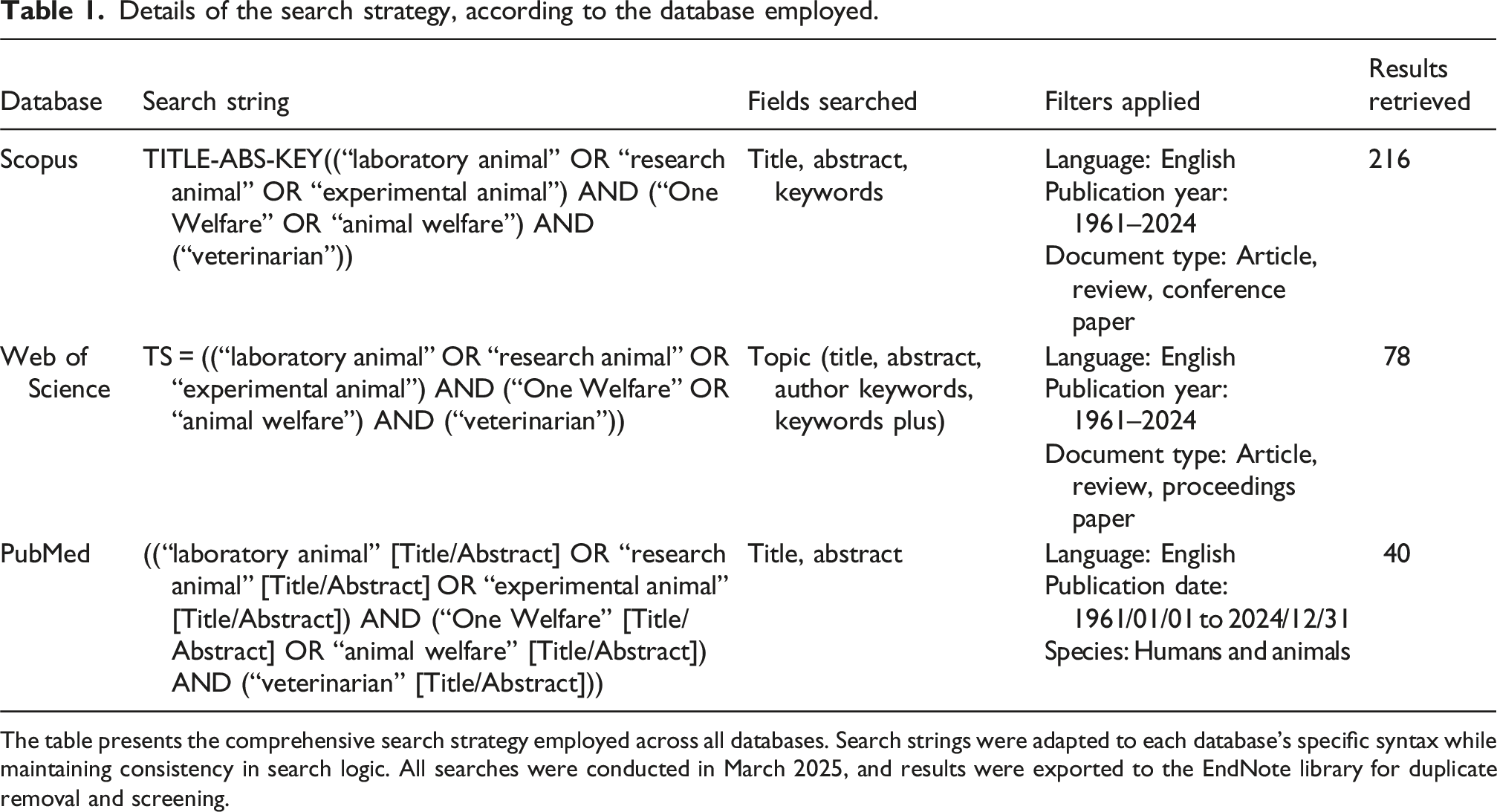
The literature search and selection process followed PRISMA guidelines to ensure transparency and methodological rigour, as illustrated in Figure 1. Our literature review covered publications from 1961 to 2024, utilising three major databases: Scopus, Web of Science and PubMed. The search strategy involved a combination of terms related to laboratory animals and welfare considerations (Table 1). Study selection process. The flow diagram shows the comprehensive literature search and screening process for identifying relevant publications on laboratory animal veterinarians and One Welfare. Details of the search strategy, according to the database employed. The table presents the comprehensive search strategy employed across all databases. Search strings were adapted to each database’s specific syntax while maintaining consistency in search logic. All searches were conducted in March 2025, and results were exported to the EndNote library for duplicate removal and screening.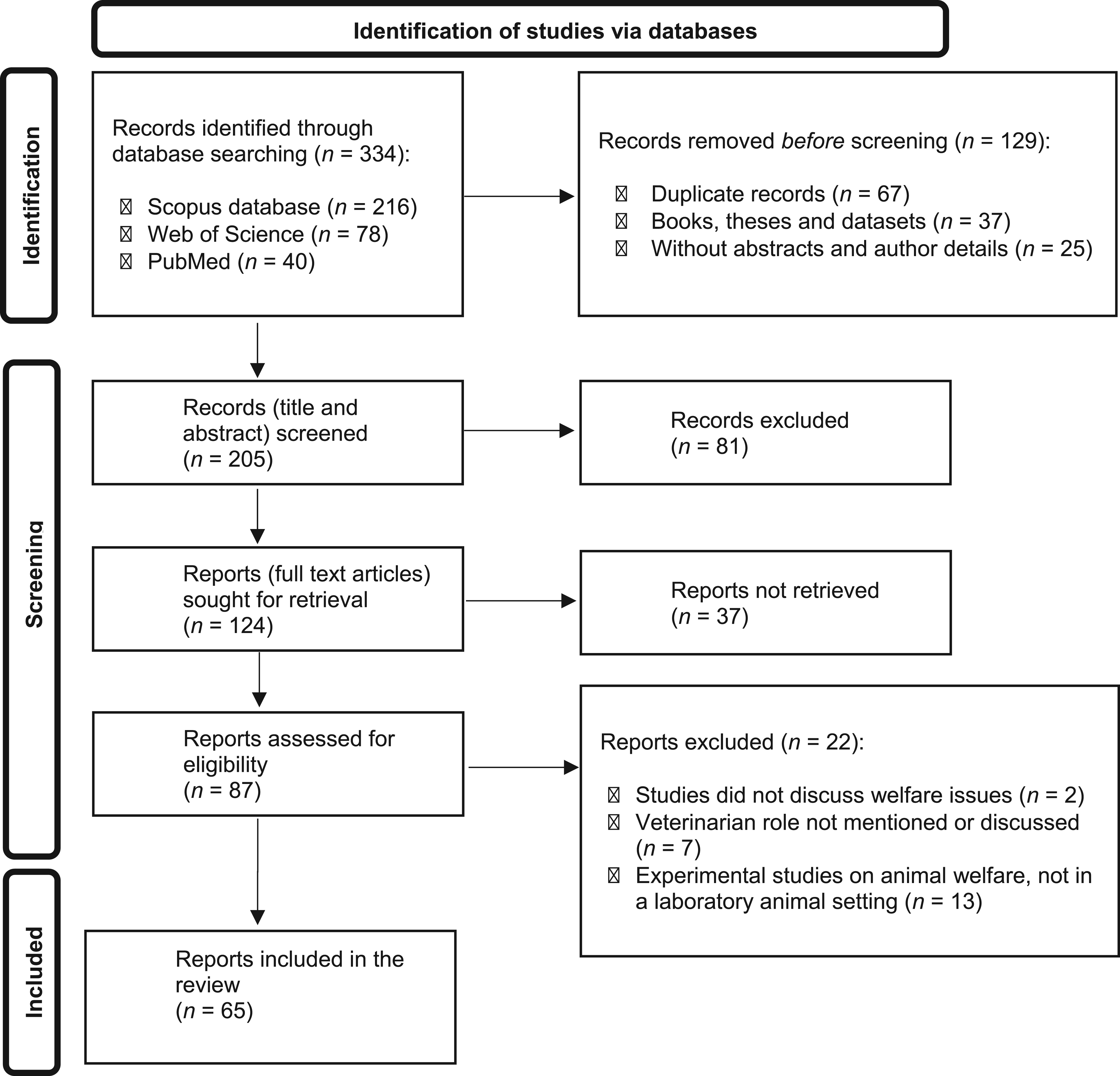
Study selection
The selection comprised peer-reviewed scholarly articles written in English that focused on laboratory animals and discussed topics such as One Welfare and/or animal welfare frameworks. Only publications in English were included, due to the international scope of the literature and resource limitations for translating articles published in other languages. Studies unrelated to animal welfare or One Welfare were excluded.
The titles and abstracts of the retrieved publications were reviewed, in order to determine whether or not they aligned with the inclusion criteria and whether they emphasised key elements that would improve our understanding of veterinary contributions to the One Welfare framework. This effort culminated in a selection of 65 publications. Selected papers needed to specifically address the roles of laboratory animal veterinarians and their relationship to welfare aspects in research settings. We particularly sought publications that discussed the operational or practical dimensions of veterinary work, while providing insights into the implementation of One Welfare. The review process prioritised papers that presented concrete examples and evidence-based recommendations for practice.
Data extraction and analysis
The study employed a mixed-method approach combining: 1. A bibliometric analysis, using the Bibliometrix R-package to identify keyword co-occurrence patterns; 2. The manual thematic analysis of full-text papers, to identify conceptual themes; and 3. The integration of both approaches, to develop the final thematic framework.
Quality assurance
One of the authors (JKC) was responsible for performing all of the data extraction and thematic analysis, systematically identifying and categorising relevant themes from the literature. This process consisted of the following components: 1. Data familiarisation through repeated reading. 2. Initial code generation from key concepts. 3. Theme identification through code clustering. 4. Theme review and refinement. 5. Final theme definition and naming.
The bibliometric keyword co-occurrence analysis was used to validate and supplement the manual thematic analysis. To enhance reliability, one of the other authors (ATK) independently reviewed a subset of papers (n = 13, i.e. 20%) and the preliminary theme structure. Disagreements regarding the identification and categorisation of relevant themes from the reviewed literature were resolved through discussion until a consensus was reached. While formal intercoder reliability was not calculated, this validation served as a quality check for theme consistency and comprehensiveness.
Results
Study characteristics
Our analysis identified 65 references, which comprised a range of publication types and research approaches. The publications consisted of peer-reviewed articles (n = 56), conference papers (n = 3), short surveys (n = 2) and editorial pieces (n = 4). For each of the studies, the geographical location of the corresponding author’s affiliation was noted. This showed a higher concentration of North American and European settings, with 24 studies from the USA, nine from the United Kingdom, five from Canada and four from Spain. Two studies originated from each of the following countries: Belgium, Denmark, Greece, Italy, the Netherlands and South Korea. One study originated from each of the following other countries: Australia, Austria, Brazil, Finland, France, India, Iran, Israel, Mexico, South Africa and Switzerland.
Co-occurrence of keywords
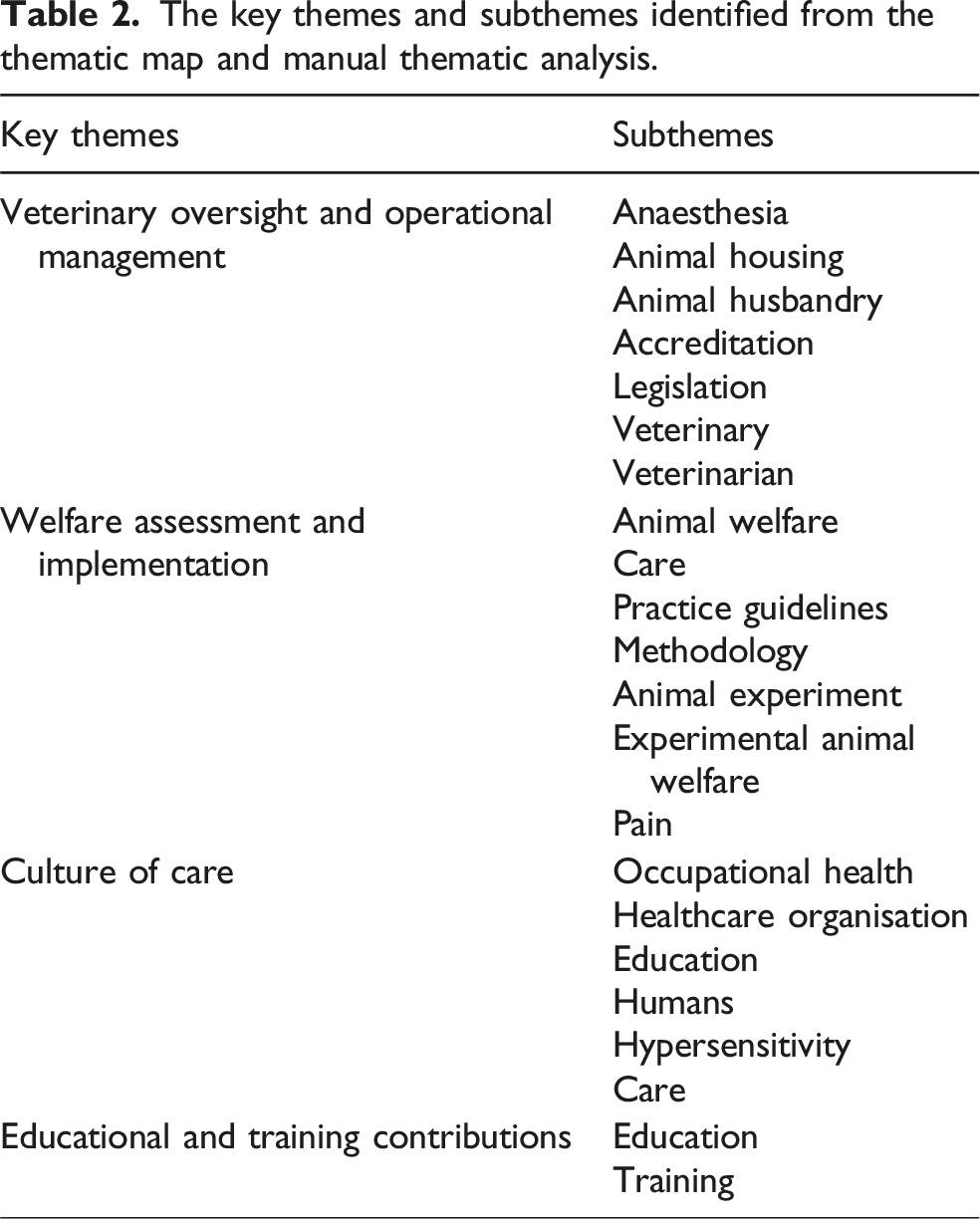
A thematic map (see Figure 2) was designed by clustering networks of authors’ keywords, to illustrate how research topics have evolved. In this map, each node represents a distinct research theme, with its size reflecting the number of associated keywords. The connections between nodes indicate the development of themes over time, and neighbouring nodes suggest the continuity of related topics. The visual attributes of these connections provide further insights: line thickness reflects the number of shared keywords, with thicker lines indicating stronger links, while colour differences denote separate research areas. From the thematic analysis, four key themes and subthemes were identified (see Table 2). A thematic map displaying authors’ keywords in network visualisation mode. The lines connect keywords that co-occur, while the size of each node represents how often the keyword appears in published articles. The key themes and subthemes identified from the thematic map and manual thematic analysis.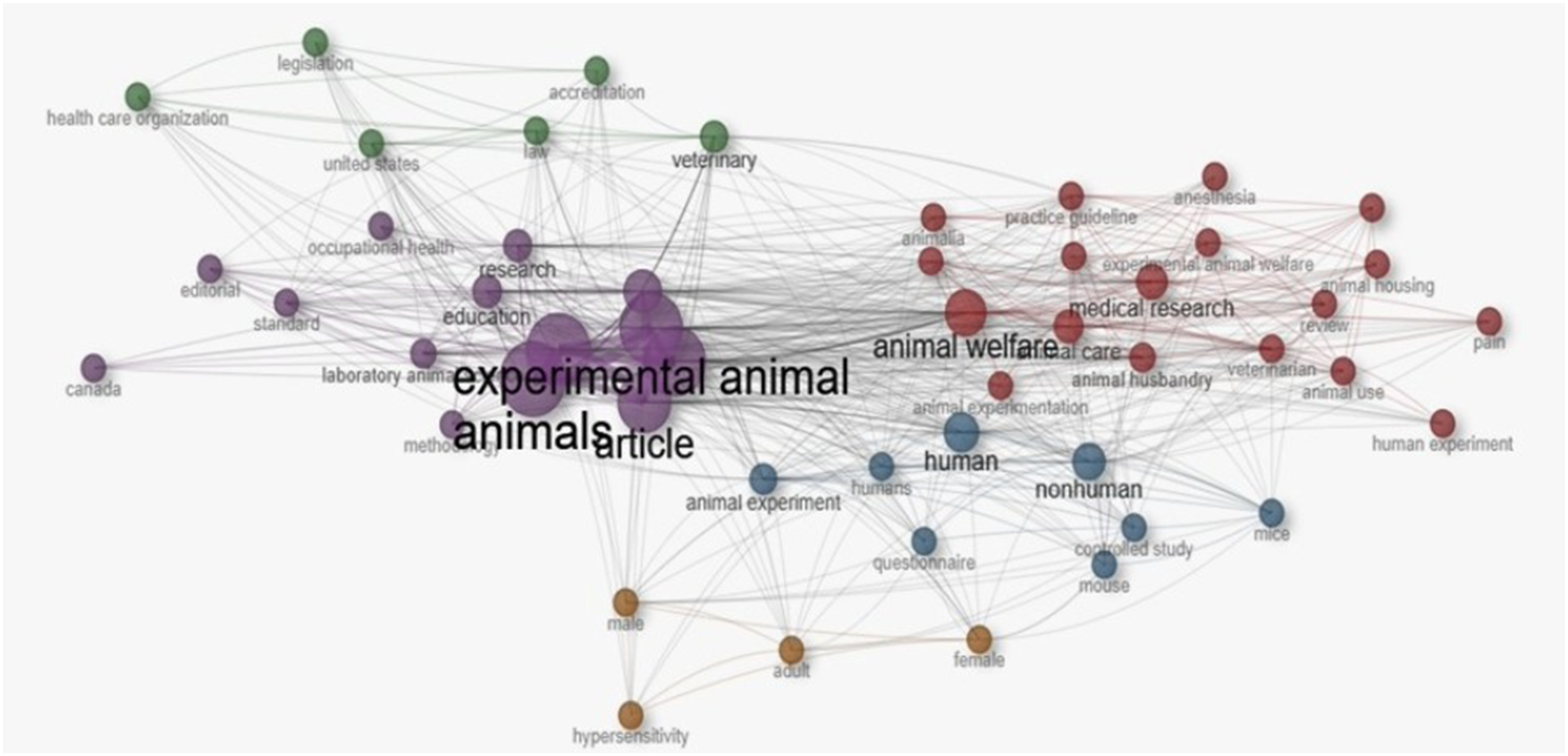
Discussion
The challenges confronting laboratory animal veterinarians in implementing One Welfare principles require careful thought and strategic responses. Integrating One Welfare principles into laboratory animal research demonstrates the sophisticated understanding that veterinarians bring to their roles. The thematic analysis of authors’ keywords identified four key themes, namely: veterinary oversight and operational management; welfare assessment and implementation; culture of care; and educational and training contributions — with several subthemes identified per key theme. The four key themes are addressed individually below. However, a notable gap exists in the lack of environmental sustainability and conservation themes, or related words about reducing waste and pollution to protect biodiversity and natural resources. This omission is particularly concerning in the context of laboratory animal research, where considerations such as waste management, experimental drug and compound handling, and the ecological impact of animal housing and care, are all becoming increasingly important. However, this should be interpreted with caution because our search strategy did not include any keyword search related to the environment. Consideration of antimicrobial resistance (AMR) and antimicrobial stewardship is also notably lacking, despite their crucial relevance to One Welfare. Due to their impact on animal and public health, and their connection to the United Nations (UN) Sustainable Development Goals, the inclusion of AMR and antimicrobial stewardship principles is vital for a full discussion of One Welfare in research animal settings.
Laboratory animal facilities often require substantial energy and resources, including climate-controlled environments, and a wide range of sterilisation procedures and single-use disposable products, all of which are necessary for biosecurity. For instance, individually ventilated cages (IVCs), although vital for maintaining biosecurity and animal welfare, consume large amounts of electricity, thereby increasing the carbon footprint of research institutions. 47 Likewise, disposable personal protective equipment and bedding materials generate significant waste, much of which is incinerated due to biohazard risks, thereby further impacting environmental sustainability. 37 Anaesthetic gases are also frequently used in research animal facilities for purposes of general anaesthesia and humane killing. Their use should be scrutinised, as some are recognised as greenhouse gases. 48 Artificial intelligence also consumes significant amounts of energy, and as laboratory animal facilities increasingly adopt artificial intelligence-assisted monitoring systems they are consistently escalating their energy consumption, thereby exacerbating ongoing environmental sustainability challenges.
Given the increasing focus on sustainable science and ethical research, the limited evidence in published articles about environmental sustainability indicates a gap in the use of laboratory animals in research.31,49–51 To fill this gap, we recommend incorporating environmental stewardship into experimental protocols, in order to ensure environmental impacts are considered within the specific context of the research. Research facilities could consider using biodegradable or recyclable materials instead of traditional disposables, and adopt green principles to minimise waste. Most of the waste from animal facilities is incinerated, which contributes to further environmental pollution. We suggest that facilities should explore alternative waste removal methods whenever possible, such as composting for minimally-infectious waste and digesters for high-impact waste. We advocate that laboratory animal veterinarians on AWBs/IACUCs consider these factors to align animal use with the broader UN Sustainable Development Goals. 52 Additionally, we propose that environmental scientists be made mandatory members of these committees, enabling them to review protocols and ensure that environmental impacts are carefully considered before approvals are made. Including environmental scientists will help refine laboratory animal research, promoting ethical animal care and reducing the ecological footprint of scientific studies. We also recommend establishing institutional sustainability committees, similar to existing biosafety and biosecurity oversight bodies, to oversee governance and monitor resource use across animal research facilities and broader institutional operations. These committees would ensure a systematic evaluation of environmental impact, promote resource efficiency, and support the implementation of sustainable practices that align with modern environmental stewardship principles while upholding research integrity and animal welfare standards.
Veterinary oversight and operational management
Laboratory animal veterinarians hold comprehensive oversight responsibilities that directly influence the implementation of One Welfare principles. Their regulatory compliance and quality assurance efforts involve developing and maintaining detailed health management protocols that protect both animals and human personnel.18,40,43 The laboratory animal veterinarian implements standard operating procedures for all veterinary procedures, and conducts regular facility inspections to ensure adherence to welfare standards and regulatory requirements.8,18,40,43,53–56 Animal facility management is another crucial area of veterinary contribution to One Welfare. Veterinarians oversee environmental monitoring and control systems, ensuring that housing conditions meet both animal welfare standards and research needs. They develop and supervise nutrition programmes, maintain water quality standards and establish sanitation protocols that safeguard animal and human health while minimising environmental impact.10,31,51 The veterinarian’s role in emergency preparedness planning demonstrates the integration of animal welfare concerns with human safety considerations. 57 Ethical review of experimental protocols, post-approval monitoring and oversight activities position veterinarians at the core of ensuring research practices align with One Welfare principles. Through participation in AWBs/IACUCs, veterinarians evaluate research protocols not only for scientific merit but also for welfare implications.34,35,58–61 They apply their veterinary clinical expertise to assess potential pain and distress, determine appropriate humane endpoints, and recommend refinements that enhance both animal welfare and research outcomes.
Welfare assessment and implementation
The implementation of welfare assessment programmes by laboratory animal veterinarians is a key part of their contribution to One Welfare.43,62 Clinical care and health management form the foundation of these efforts, with veterinarians developing comprehensive preventive healthcare programmes that extend beyond basic veterinary treatment.55,56,60 Disease surveillance systems designed by veterinary professionals34,40,62 not only protect individual animals, but also keep human personnel safe from zoonotic diseases, highlighting the interconnectedness of animal and human health in laboratory animal research settings.
Veterinarians contribute to laboratory animal welfare by assisting in the practical applications of the Three Rs principles, often by refining experimental procedures. While they support all three principles, their in-depth knowledge of animal health, behaviour and welfare requirements makes them especially effective at developing appropriate refinement strategies. Veterinarians use their clinical expertise to create better pain management techniques and environmental enrichment programmes, both of which enhance animal welfare and research outcomes. This ensures that procedures cause less pain and distress while maintaining scientific integrity. In promoting refinement options, veterinarians work closely with researchers to investigate opportunities for in vitro testing that can reduce reliance on animals. Some laboratory animal veterinarians help optimise statistical designs to assist research teams in minimising the number of animals used in experiments, while still ensuring scientific validity.
Laboratory animal veterinarians face significant challenges in managing resources and maintaining sustainability. Bayne and Turner emphasised the importance of international cooperation in creating and applying welfare standards, suggesting that sharing resources and knowledge can help overcome limitations at individual facilities. 15 Recent technological advances offer significant opportunities to improve welfare monitoring and evaluation through various strategies. These include digital monitoring systems that feature automated behavioural assessment tools, environmental parameter tracking and real-time health monitoring. Additionally, data management solutions, such as integrated welfare assessment databases, compliance tracking systems and performance metric systems, are vital for practical welfare evaluation. Integrated welfare assessment databases that systematically collect and store data from tools like the Animal Welfare Assessment Grid (AWAG) enable longitudinal tracking of individual animals and population-level trends over time. 63 The AWAG provides a quantitative framework for evaluating physical, psychological, environmental and procedural factors that affect animal welfare. 63 The AWAG moves beyond subjective assessments, providing objective measurements of quality of life, which is crucial for avoiding bias, especially when emotional attachments or perceptions such as ‘too cute to kill’ influence judgement. 64 These databases help identify patterns that might indicate emerging welfare concerns, allow comparison of welfare outcomes across different procedures or housing conditions, and provide an evidence base for improving protocols and husbandry practices. Communication platforms also play a key role, including staff training portals, welfare reporting systems and stakeholder engagement tools.
Environmental enrichment and behavioural welfare programmes created by veterinary professionals are vital in addressing both physical and psychological aspects of animal welfare. 65 Species-specific enrichment strategies developed under veterinary guidance consider not only immediate welfare impacts, but also potential effects on research validity and operational efficiency. Behavioural monitoring systems implemented by veterinarians provide essential data for assessing welfare conditions, while also advancing our understanding of animal behaviour in research environments. 66
Educational and training contributions
Research by Mohr et al. identified significant needs for advanced education and training beyond basic skills taught in undergraduate programmes. 8 Key areas requiring attention include: stress management; building resilience; maintaining wellbeing; preventing burnout; communication skills; and leadership development. The study emphasised the importance of training in recognising self-stress, implementing effective stress management practices, and developing resilience to prevent burnout. Laboratory animal veterinarians play a transformative role in the education and training of other veterinarians and non-veterinary staff.39,54,67–71
Laboratory veterinarians are organised through several professional organisations, such as the European Society of Laboratory Animal Veterinarians (ESLAV), which empowers laboratory animal veterinarians through education, support and advocacy. The European College of Laboratory Animal Medicine (ECLAM) and the American College of Laboratory Animal Medicine (ACLAM) aim to enhance expertise in the field of laboratory animal medicine. Beyond technical education, these networks provide vital peer support for veterinarians navigating the ethical complexities of their role. Laboratory animal veterinarians often find themselves ‘caught in the middle’, 72 balancing their duty to prevent animal suffering with the imperative to facilitate research that may cause deliberate harm to animals in their care. This inherent tension can significantly impact mental wellbeing, and peer networks offer essential mutual support and guidance that helps veterinarians remain effective in, and committed to, this challenging field. By connecting professionals facing similar ethical dilemmas, these organisations help safeguard the wellbeing of veterinarians while strengthening the quality of animal welfare oversight in research.
Training research personnel is a key part of veterinary contributions to One Welfare. Veterinarians develop and implement programmes that extend beyond basic animal handling, encompassing welfare assessment techniques, regulatory compliance and emergency procedures. This comprehensive approach helps all parties involved in animal research understand their role in supporting high welfare standards and preserving research integrity. We recommend that ongoing training for research animal staff and researchers, guided by veterinarians, incorporates One Welfare principles. For example, they can show how gentle handling reduces animal stress, improves data accuracy and lowers the risk of staff injury. They should also emphasise that enriched housing enhances animal welfare and prevents caregiver burnout by fostering pride in humane care. Highlighting responsible resource use, such as proper gaseous anaesthetic handling and exhaustion of fumes, connects laboratory practices to environmental sustainability. This can improve understanding of the connections between animal care, human health and safety, and environmental responsibility. The training should include recognising and managing stress, emphasising both animal welfare and human emotional wellbeing.
Culture of care
A significant challenge identified in recent research pertains to the emotional wellbeing of personnel working with laboratory animals, as compassion fatigue is a serious risk in the veterinary profession.18,28,29,73,74 Young et al. established that the professional quality of life of veterinary professionals is intricately connected to job satisfaction and staff retention, influenced not only by direct animal care but also by institutional culture and mental health support systems. 75 This finding is further supported by Goñi-Balentziaga and Azkona, who noted a higher prevalence of psychotherapy and antidepressant use among staff employed in animal facilities, as compared to the general population. 76
Human wellbeing should be included when promoting a culture of care in laboratory animal research, because there is a strong relationship between culture of care and individual performance. 77 O’Malley et al. emphasised the importance of comprehensive support programmes, recommending that employer compassion fatigue programmes include quiet spaces at work, self-care initiatives, physical and mental health support systems, and opportunities for animal memorialisation in cases where staff or researchers develop a bond with a particular research animal. 78 These findings highlight the need for veterinarians to consider both animal and human welfare in their operational strategies. In their analysis, Chipangura et al. describe the effective crisis management strategies used during the COVID-19 pandemic, emphasising the critical need to balance the operational requirements of facilities with the wellbeing of the individuals involved. 57 Their proposed framework includes implementing strong psychological support systems, such as conducting regular workshops with occupational psychologists, and establishing structured support for staff experiencing emotional distress. Furthermore, including welfare considerations in emergency response protocols is essential. Operational adjustments play an important role in this framework, as demonstrated by modified work schedules to reduce staff stress, improved communication systems for clarity and support during crises, and flexible resource allocation strategies to meet changing needs. Integrating welfare assessment processes is important for achieving optimal outcomes for both animals and personnel in research. The AWAG effectively identifies factors linked to behavioural disorders and welfare issues across species. 63 It quantifies cumulative suffering and lifetime experiences, allowing for the evaluation of overall impact of multiple interventions over time.79,80 This approach is vital for ethical research, recognising that repeated minor procedures can add up to significant welfare costs. This comprehensive approach promotes a holistic view of welfare, encompassing both human and animal considerations in crisis scenarios.
Future directions and research needs
Looking toward the future, it is clear that several key areas require further research and development. Establishing standardised assessment tools is essential, including creating validated welfare measurement instruments, human wellbeing assessment protocols and environmental impact metrics, despite facing challenges such as resource constraints (financial) and resistance to change by the role players (such as researchers, ethics committees and institutional management). However, these tools could be integrated within existing frameworks, such as assessments currently undertaken by AWBs/IACUCs and ethical review processes, creating synergies rather than additional bureaucratic burden.
Professional development programmes that include specialised training curricula, continuing education frameworks and leadership development initiatives, could leverage existing platforms such as the Federation of European Laboratory Animal Science Associations (FELASA) accreditation schemes and institutional training programmes, thus reducing duplication and implementation costs. Training courses would cover: leadership and policy guidance; integrated welfare assessment techniques that evaluate animal welfare, staff wellbeing and environmental sustainability; tools for identifying interconnections (like how enrichment programmes reduce animal stress and increase staff satisfaction); communication skills for advocating One Welfare; ethical frameworks for managing tensions in laboratory animal veterinary practice; case studies illustrating successful implementation; and workshops on holistic impact assessments for practical use.
Raising awareness about One Welfare involves strategies targeting ‘push’ and ‘pull’ factors at multiple levels. Individually, integrating modules into FELASA or institutional training serves as a ‘push’, while demonstrating benefits like reduced burnout and improved research can act as a ‘pull’. Institutions can mandate impact statements through AWBs/IACUCs and ethical review committees, creating structural ‘push’. ‘Pull’ benefits include cost savings, better animal health and reputation. Highlighting successful institutions would foster peer influence and mentorship to encourage adoption.
We suggest that policy development focuses on creating evidence-based welfare standards, comprehensive implementation guidelines, and strong compliance frameworks to improve overall welfare assessment practices. These can build on existing regulations like Directive 2010/63/EU or the US Animal Welfare Act, not create new systems. Pilot programmes in willing institutions can test and improve approaches before wider use. International collaboration through networks can pool resources and develop shared tools faster. The early involvement of researchers, veterinarians and animal care staff ensures that the tools are practical and promotes buy-in, turning resistance into collaboration.
Conclusions
Laboratory animal veterinarians play a crucial role in implementing One Welfare in research through their diverse responsibilities. Multiple studies show how the work of veterinarians contributes to the practical application of One Welfare principles, balancing research needs with animal welfare, human wellbeing and environmental sustainability. Progress in this field will depend on ongoing professional development, effective resource allocation and operational enhancements.
Creating evidence-based metrics for evaluating One Welfare efforts is vital, to demonstrate veterinary impacts and guide future enhancements. This review offers several key recommendations to boost the roles of laboratory animal veterinarians in the context of One Welfare, namely: 1. To include environmental scientists as members of institutional animal ethics committees, to ensure that laboratory animal use aligns with the broader UN Sustainable Development Goals. 2. To improve specialised training programmes to cover both technical skills for animal procedures and welfare assessment. 3. To develop standardised tools for measuring welfare outcomes across staff, different animal species and research environments. 4. To foster interdisciplinary collaboration to address complex issues concerning animal welfare, human wellbeing and environmental sustainability. 5. To implement evidence-based resource allocation systems that support welfare goals. 6. To use technological solutions for ongoing welfare monitoring and assessment. 7. To create clear metrics for evaluating success in implementing One Welfare.
These suggestions align with current trends in laboratory animal science, and reflect the growing recognition that animal welfare, human wellbeing and environmental health are interconnected within research settings.
Footnotes
Ethical considerations
This review did not require ethics approval, as no experiments involving humans or animals were conducted and only in silico data analysis was performed.
Author contributions
Conceptualisation, JKC; writing (original draft preparation), JKC and ATK; writing (review and editing), JKC, ATK, RAN, JB and VN. All authors have read and agreed to the published version of the manuscript.
Funding
The authors received no financial support for the research, authorship, and/or publication of this article.
Declaration of conflicting interests
The authors declared no potential conflicts of interest with respect to the research, authorship, and/or publication of this article.
Data availability statement
The data described in this article are available on reasonable request from John Chipangura.