




Abstract
In Mexico, there are no official public and reliably reported data on the total number and species of non-human animals used for scientific purposes. The aim of the current study was to calculate the total numbers of animals used for scientific and educational purposes in Mexico, from January 2015 to October 2021, based on data requested from the National Institute of Transparency, Access to Information and Protection of Personal Data (INAI, in Spanish). In this period, authorised laboratory animal facilities reported the use of 5,437,263 animals for scientific and educational purposes. However, these data should be viewed with caution, since there is no official register of all Mexican institutions that use animals for these purposes. The use of various species of different taxonomic groups was reported, including mammals, birds, reptiles, amphibians, fish and invertebrates. The main scientific purposes of this animal use were: technological development; innovation; laboratory testing; production of biologicals; quality control; diagnostic purposes; basic and applied research; and education. A robust system for the licensing and approval of animal use, as well as a means to ensure compliance with the relevant regulations, are both urgently required. In addition, in order to regulate animal use, monitor animal care and protect their welfare, the creation of a publicly accessible national database that records the number and species of the animals used is imperative.
Introduction
Despite the efforts of several countries to present annual statistics and make them available, official reports of the number of non-human animals (‘animals’ hereafter) used for scientific purposes are limited. 1 It is estimated that 45% of the countries with evidence of using a significant number of animals for such purposes do not have official statistics available; most of these countries are in Africa and Latin America. 1 In Mexico, the Ministry of Agriculture and Rural Development (SADER, according to its Spanish acronym), published in 2001 the Official Mexican Standard NOM-062-ZOO-1999, entitled Technical Specifications for the Production, Care and Use of Laboratory Animals. 2 This Standard legislation is mandatory throughout the Mexican territory3,4 and one of its main objectives is the standardisation of technical specifications for the production, care and use of laboratory animals. 3 The NOM-062-ZOO-1999 Standard is applicable to laboratory animal facilities and/or establishments that handle the following animals: mice, rats, guinea pigs, hamsters, gerbils, rabbits, dogs, cats, pigs and non-human primates. 3 It also stipulates that any organisation, institution or individual that hosts, produces, uses or distributes these animals for scientific purposes, is obliged to declare its activities through an annual report. 3 As outlined in the NOM-062-ZOO-1999 Standard, this annual report must specify the total number of animals used per year and their end-use — e.g. for sale and distribution, scientific research, technological development and innovation, production of biologicals, quality control, diagnostic purposes or in teaching/education. 3 The institution responsible for the collection and management of official animal laboratory data, in the form of these annual activity reports, is the National Service for Agro-Food Health, Safety and Quality (SENASICA, in Spanish), which is a decentralised agency of SADER. Its functions also include the authorisation of laboratory animal facilities and the promotion of adequate laboratory animal care.3,5 In addition to NOM-062-ZOO-1999, Mexico has federal, state, and institutional laws and norms that regulate the protection of laboratory animals used in experimentation and teaching. 6
Despite these various standards, laws and norms, there is no stipulated obligation to make the annual official statistics on the numbers of animals used in experiments publicly available. Thus, the reports that have to be sent to SENASICA, as stipulated in NOM-062-ZOO-1999, are not published in any way — i.e. there is no official website or other official documents whereby this information could be accessed by the public. In addition, the full extent of public institutions that use animals for scientific or educational purposes is not known. For these reasons, Mexico lacks reliable and accessible official statistics on the numbers and species of animals used for scientific and educational purposes. This lack of data results in an uncontrolled system, in which animal welfare cannot be guaranteed and thus the quality of the science could be compromised. 7
The aim of this study was to calculate the total numbers of animals used for scientific and educational purposes, based on reports requested from state (i.e. regional) and national institutions, for the period January 2015–October 2021. It included an analysis of the species used, as well as the types of work undertaken with the animals. We gathered this information to emphasise the importance and benefits of having publicly available data on the species and the numbers of individual animals used for these purposes in Mexico.
Methods
Obtaining official data
In November 2021, an information request was made to SENASICA (through the National Transparency Platform; PNT, in Spanish), asking how many animals, per species, had been used in experiments per year, since January 2015 (i.e. the period for which data were requested was from January 2015 to October 2021).
Furthermore, 422 other requests for information were submitted to various federal and state institutions that use public funding resources to carry out experiments and which, due to their profile, might use animals for scientific and educational purposes — for example, government agencies, research centres, schools, national commissions, councils, hospitals, national institutes, laboratories, attorneys’ offices, technical colleges and public universities. The information request was made through the National Institute of Transparency, Access to Information and Protection of Personal Data (INAI, in Spanish), which is an autonomous public agency in charge of ensuring that any authorised individual or institution that receives federal public funding, provides such information upon request. 8
It should be noted that individuals or institutions that do not receive public resources, or are otherwise unauthorised, e.g. private universities, pharmaceutical companies or private laboratories, are not obliged to provide information via the INAI.
9
However, any data that public institutions generate, obtain, acquire, transform or keep in their files, on any activity that they carry out, can be requested through the PNT.
10
Such institutions are usually obliged to provide the PNT with the requested information within 20 days; however, this deadline may be extended for up to a further 10 days.
10
It should also be noted that private universities with laboratory animal facilities that are authorised by SENASICA must report the number of animals used to SENASICA — thus the data on the animal facilities of private universities are found within the SENASICA reports and not the PNT reports. The following information was requested from each institution: — Do you carry out experimentation, research, and/or teaching with animals? If the answer to this question was affirmative, then they were asked: How many animals per species do you use per year in your institution, for the purposes of experimentation, research and/or teaching? — If applicable, they were asked to provide the available data. Finally, they were asked: — What are the purposes of this animal use in your institution?
The last estimation of the number of animals used for scientific purposes worldwide was undertaken in 2015. 1 Thus, in order to calculate the total number of animals per species used in Mexico in recent years, as well as to permit a comparison of international and Mexican data, the request for information was for the period of January 2015 to October 2021.
The information that was received after a period of three months from the date of the request was excluded from the count and was classified as ‘No response’. Cases that involved the use of less than seven animals, and/or did not mention the specific period/year of use, were not included in the analysis.
Standardisation of data from the various institutions
The absence of a specialised public body that regulates institutions where animals are used for scientific and educational purposes results in a lack of uniformity in the way in which data on the numbers and species of animals used are reported. Currently, each institution that carries out such activities involving the use of animals establishes its own set of internal regulations. Therefore, the data obtained were standardised, in order to help ascertain the total numbers of animals used per year for these purposes, and the animal group and/or species used. The standardisation process would also help to determine which data could have been underestimated. Likewise, the data were standardised so that they would be comparable with existing international databases. Therefore, the information received from the institutions was standardised and ordered as follows: — Where the total number of animals used per year was indicated by species, the information was used exactly as reported. — Where the total number of animals used for a period other than one year was indicated by species (i.e. total number of animals used in a project with X years duration), the mean of the total number of animals used was calculated per project, divided by the duration of the project in years. If necessary, the figures obtained were rounded. — Where only the use of a species was reported, but the total number of animals used was not indicated, the data were recorded with respect to the year(s) when the species-use was reported and presented in the Tables as ‘Incomplete information’. — Where only the number of animals used was indicated, but the species and/or group were not mentioned, the individuals were classified as ‘Unknown’ under animal group and species. — When the same actual animals were used continuously over several years, the number of animals (as indicated by species) that was originally reported was retained each year. — Any genetically modified animals reported were counted within the taxonomic group to which they belonged. — Where the taxonomic group of the animals used was reported, but the species was not, the taxonomic group was used as a reference for the count (e.g. the use of ‘domestic fowl’ was often reported, but not the actual species).
Data reporting
SENASICA is the institution in charge of collecting and managing data from authorised laboratory animal facilities. 3 Therefore, in order to obtain official data on the species and the total number of animals used for scientific and teaching purposes by authorised facilities, the data provided by SENASICA were analysed separately. A sum of the total number of individual animals reported as being used by each SENASICA-authorised laboratory animal facility, by year and by species and/or group, was then made.
The types of institutions and their expected reporting channels.
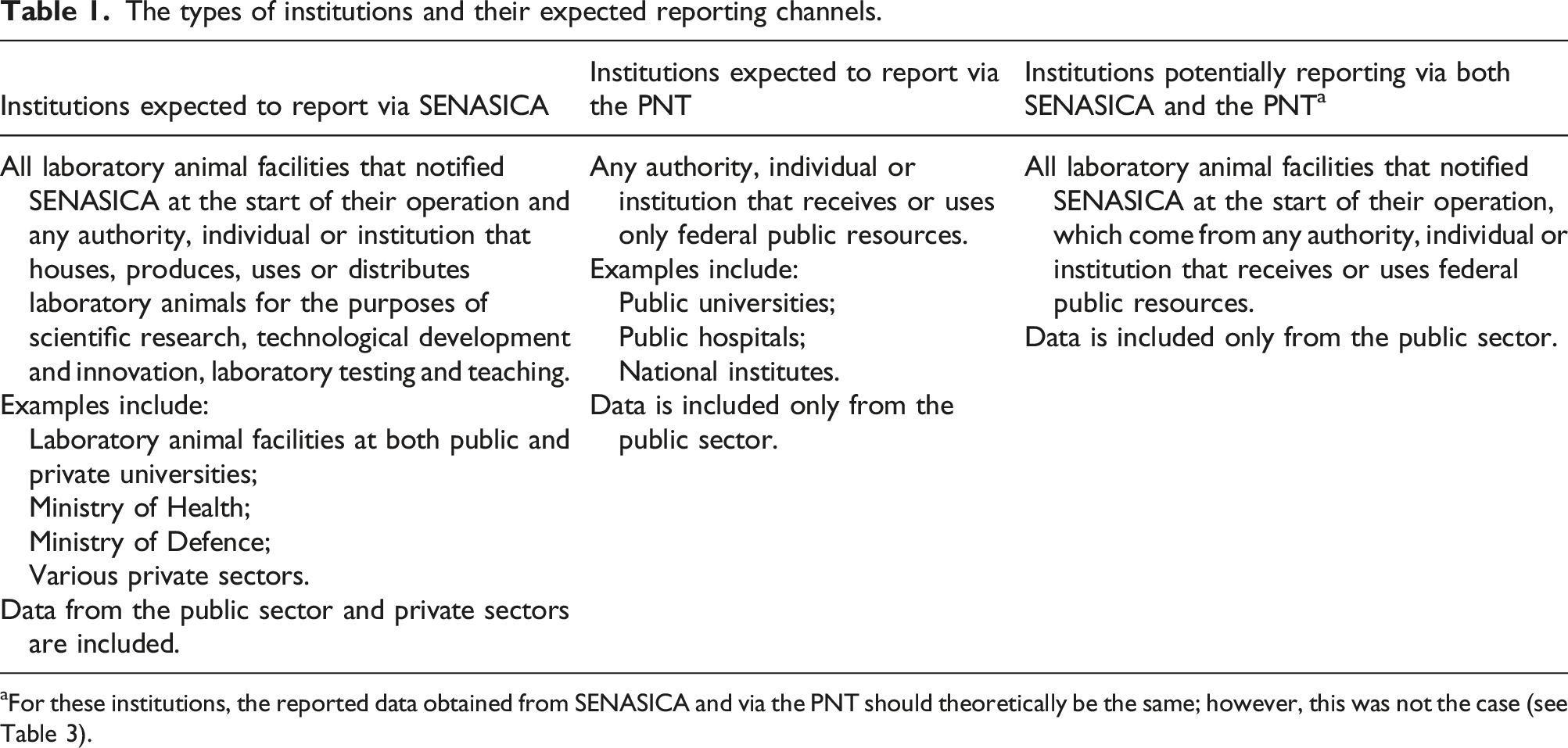
aFor these institutions, the reported data obtained from SENASICA and via the PNT should theoretically be the same; however, this was not the case (see Table 3).
Institutions used both fish and invertebrates (molluscs, crustaceans and other invertebrate species) for education purposes, and/or for basic/applied research (mainly research on aquaculture). The data obtained for invertebrates used only for aquaculture research (molluscs, crustaceans and others) were separately analysed, due to the complexity of the life histories of the invertebrate species used for this purpose (i.e. variation in the adaptations of organisms that influence aspects of their biology, such as offspring number, survival, size and age of reproductive maturity). 11 The standardised data from each institution reporting the use of invertebrate animals for educational purposes and for applied research on aquaculture, by year and by species and/or group, were collated.
Results
Official data from the SENASICA-authorised laboratory animal facilities in Mexico
According to the data provided by SENASICA, during the years 2015 to 2020, there were 50 authorised laboratory animal facilities in Mexico. Of these, 26 (52%) were in the private sector (including private universities); 18 (36%) were in public universities; two (4%) belonged to the Ministry of Health; two (4%) belonged to the Ministry of National Defence (SEDENA); one (2%) belonged to the Mexican Social Security Institute (IMSS, in Spanish); and one (2%) belonged to agencies affiliated to SADER.
The total numbers of animals, by group and species, that were used per year in Mexico for scientific and educational purposes, according to the SENASICA-authorised laboratory animal facility reports obtained from SENASICA.
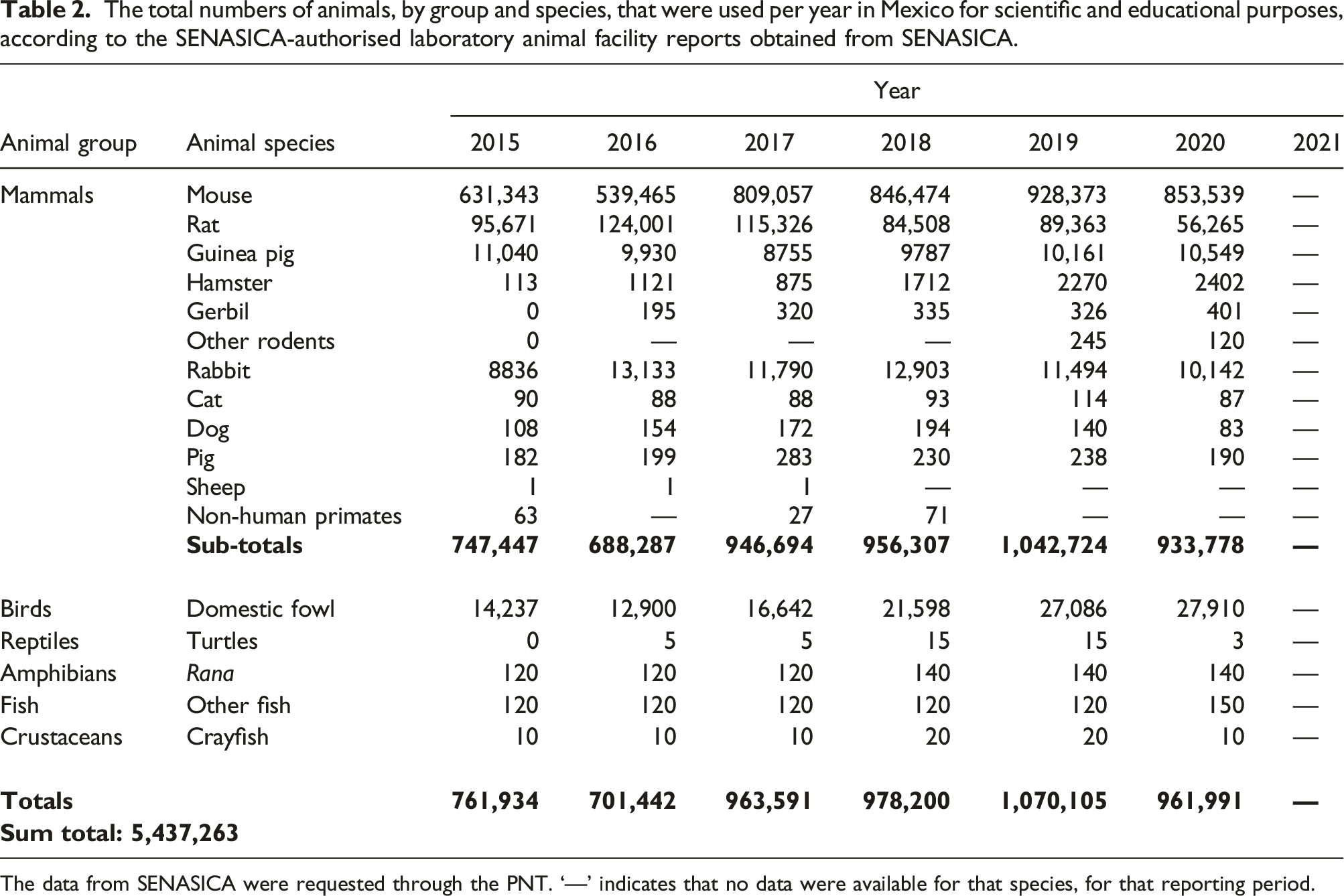
The data from SENASICA were requested through the PNT. ‘—’ indicates that no data were available for that species, for that reporting period.
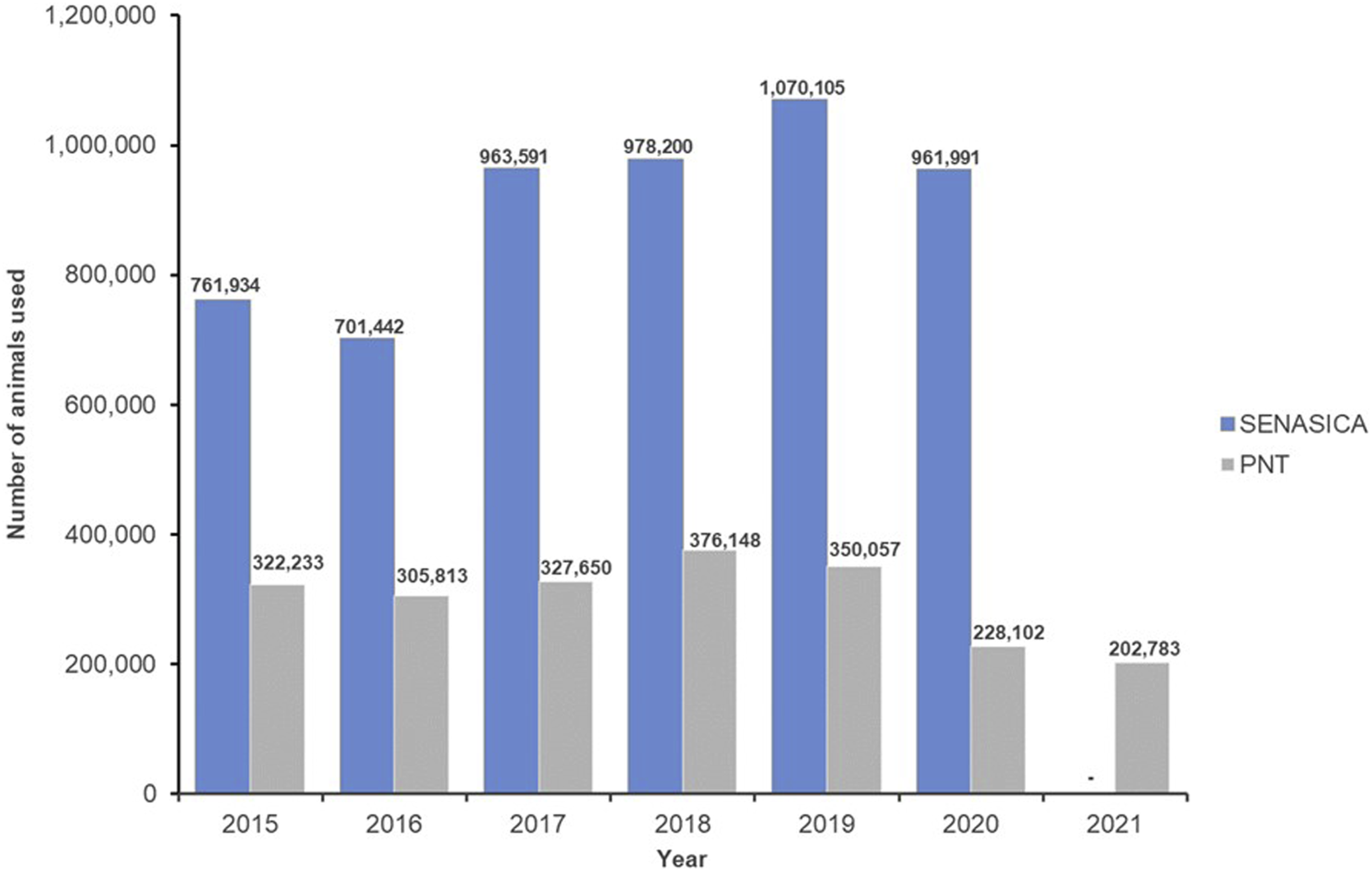
The total number of animals used per year in Mexico, according to reports obtained either from SENASICA or via the PNT. ‘—’ indicates that no data were available from SENASICA, for the year 2021.
Official data requested via the National Transparency Platform (PNT)
A total of 423 requests were sent through the PNT; one of these was to SENASICA itself. Of the remaining 422 requests: — 92 (21.75%) institutions responded that they did not have the requested information (nor were they obliged to collect it). Among these institutions were government agencies, national commissions, councils, laboratories and attorney general’s offices; — 80 (18.9%) institutions declared that they used animals for scientific and/or educational purposes. These institutions comprised research centres, schools, hospitals, national institutes, technical colleges and public universities; — 213 (50.35%) institutions answered that they did not use animals for scientific and/or educational purposes; and — 37 (8.7%) institutions did not respond.
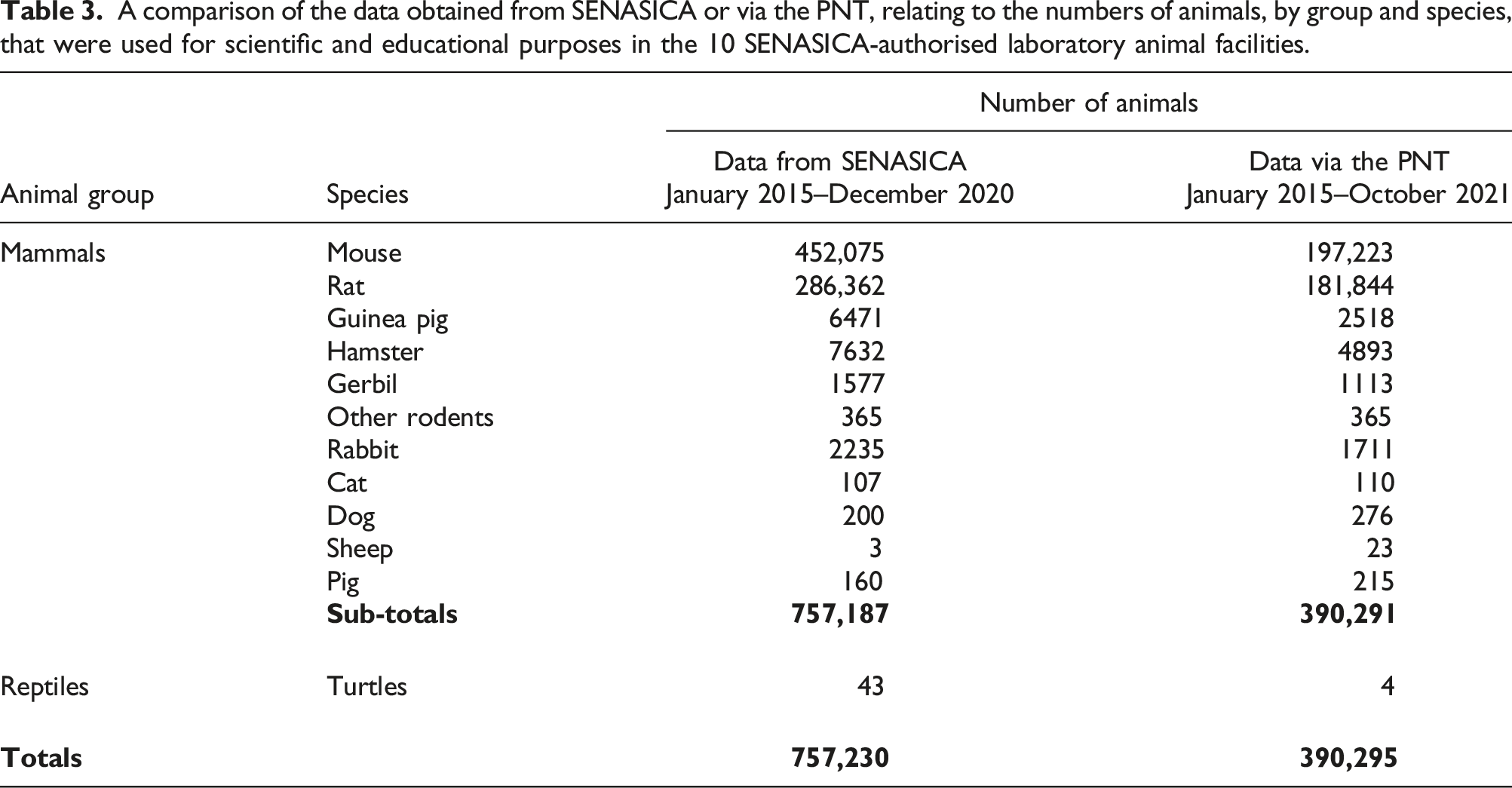
A comparison of the data obtained from SENASICA or via the PNT, relating to the numbers of animals, by group and species, that were used for scientific and educational purposes in the 10 SENASICA-authorised laboratory animal facilities.
The total numbers of animals, by group and species, that were used per year for scientific and educational purposes by Mexican institutions, according to reports obtained via the PNT.
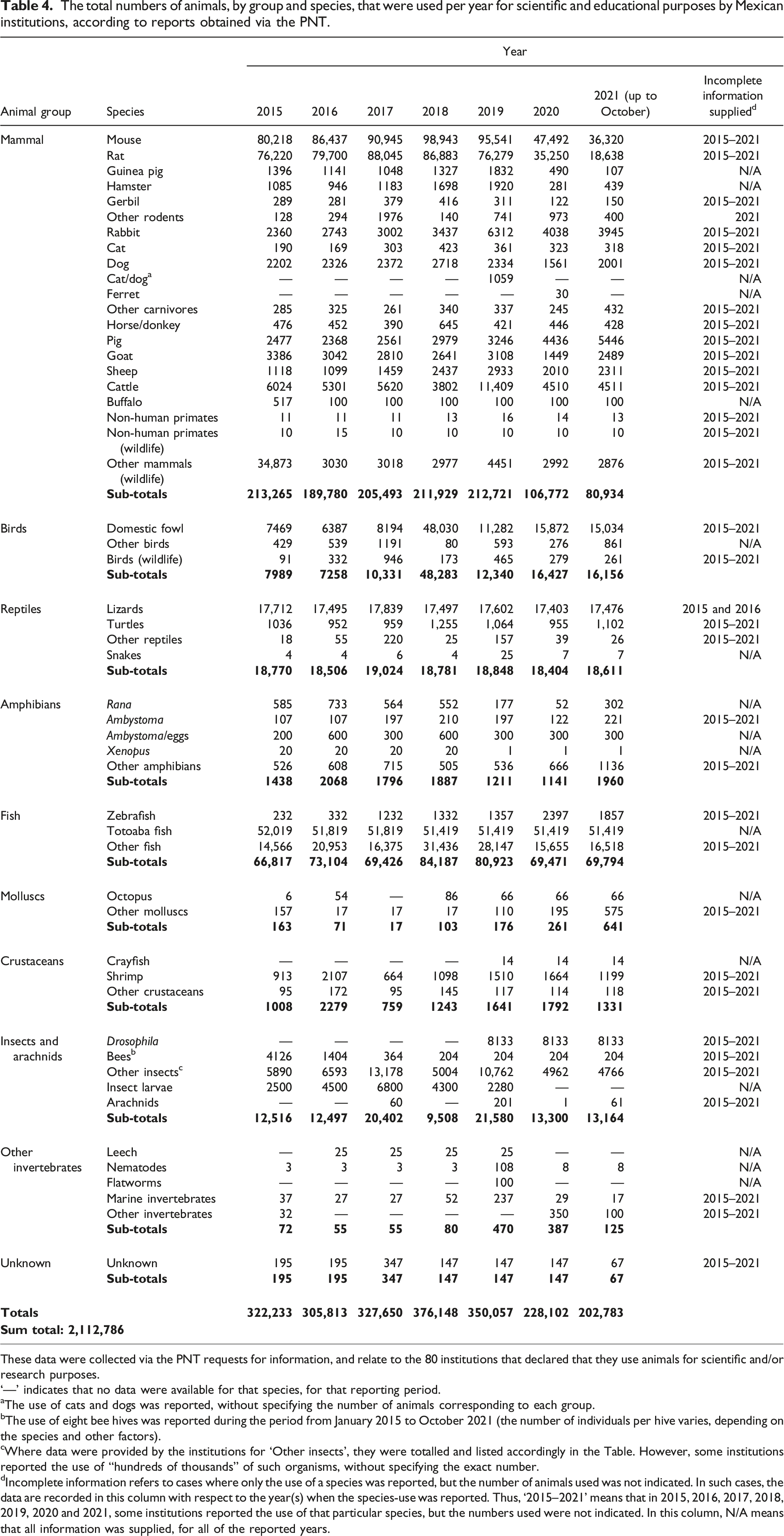
These data were collected via the PNT requests for information, and relate to the 80 institutions that declared that they use animals for scientific and/or research purposes.
‘—’ indicates that no data were available for that species, for that reporting period.
aThe use of cats and dogs was reported, without specifying the number of animals corresponding to each group.
bThe use of eight bee hives was reported during the period from January 2015 to October 2021 (the number of individuals per hive varies, depending on the species and other factors).
cWhere data were provided by the institutions for ‘Other insects’, they were totalled and listed accordingly in the Table. However, some institutions reported the use of “hundreds of thousands” of such organisms, without specifying the exact number.
dIncomplete information refers to cases where only the use of a species was reported, but the number of animals used was not indicated. In such cases, the data are recorded in this column with respect to the year(s) when the species-use was reported. Thus, ‘2015–2021’ means that in 2015, 2016, 2017, 2018, 2019, 2020 and 2021, some institutions reported the use of that particular species, but the numbers used were not indicated. In this column, N/A means that all information was supplied, for all of the reported years.
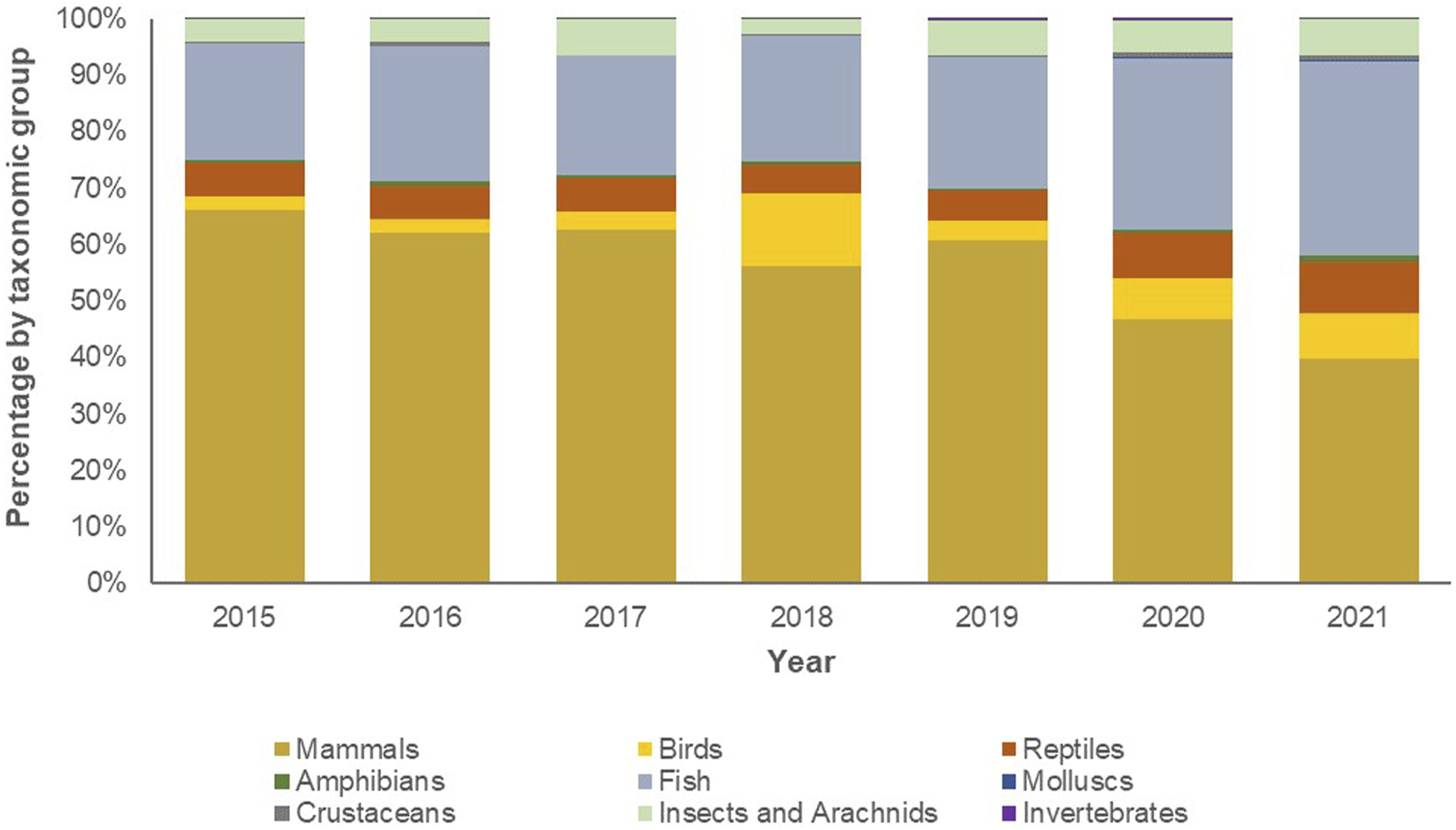
The proportion of animals reportedly used per year in Mexico, by taxonomic group, as reported via the PNT.
Official data on invertebrates used in aquaculture research
The numbers of invertebrates, by group and species, that were reportedly used per year in Mexico for aquaculture research.
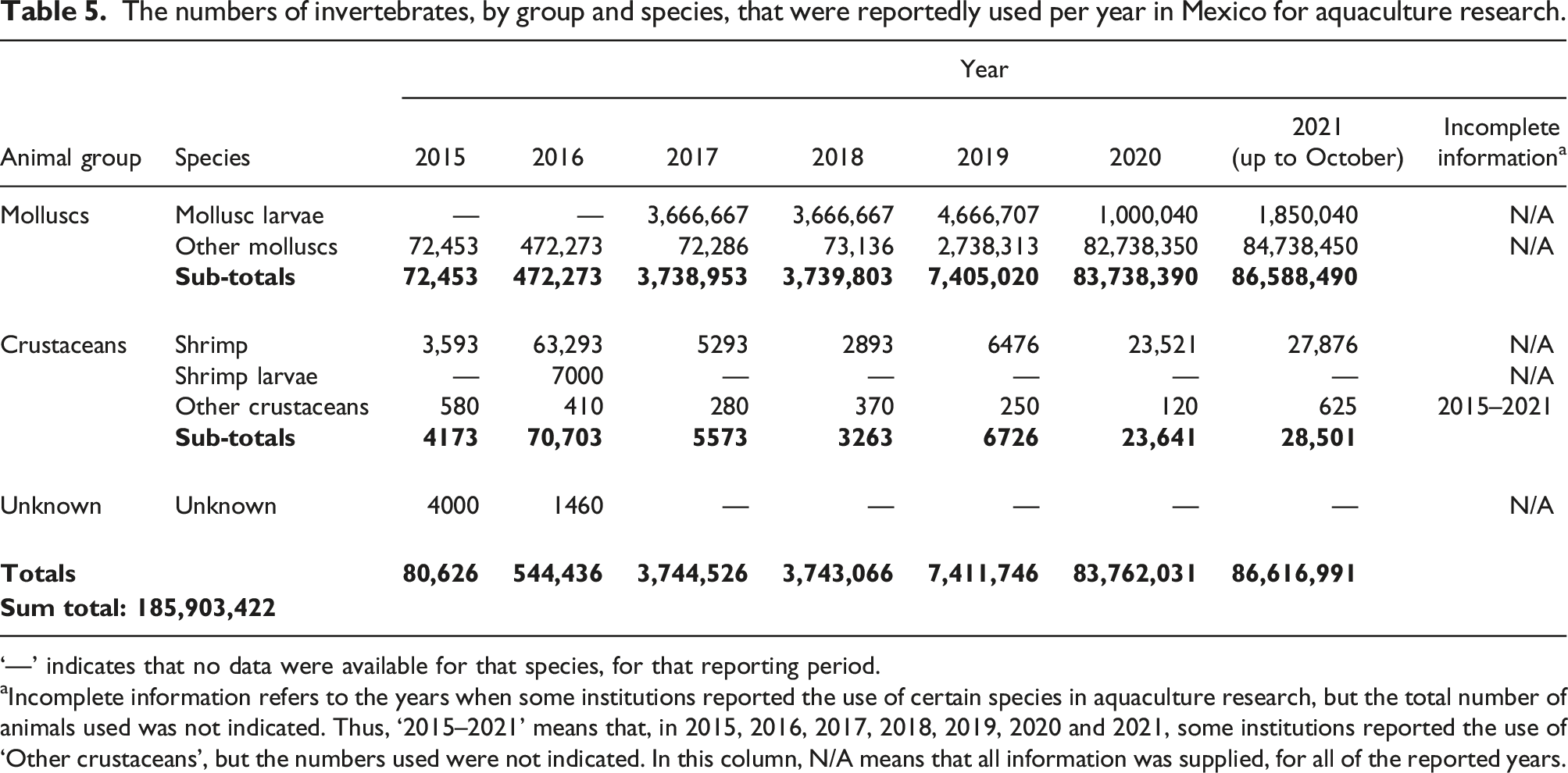
‘—’ indicates that no data were available for that species, for that reporting period.
aIncomplete information refers to the years when some institutions reported the use of certain species in aquaculture research, but the total number of animals used was not indicated. Thus, ‘2015–2021’ means that, in 2015, 2016, 2017, 2018, 2019, 2020 and 2021, some institutions reported the use of ‘Other crustaceans’, but the numbers used were not indicated. In this column, N/A means that all information was supplied, for all of the reported years.
Discussion
Official data on the numbers of animals used
The reporting requirements of the numbers of animals used for scientific and/or educational purposes are inconsistent and lack uniformity. Our analyses show that the numbers of animals and the species used for scientific and educational purposes reported by SENASICA are likely to be underestimated. In theory, SENASICA should have the data from all of the institutions that declared via the PNT requests that they use animals for scientific and educational purposes (i.e. 80 institutions) — however, this was not the case. Of these 80 institutions, only 10 (12.5%) were laboratory animal facilities authorised by SENASICA, meaning that SENASICA does not have the data from 70 (87.5%) of the institutions that declared that they use animals; thus, the SENASICA numbers are underestimated.
Similarly, the calculated numbers derived from the data provided by institutions through the PNT are also likely to be underestimated, due to the extent of missing information (see Table 3, the ‘Incomplete information’ column). Indeed, due to this lack of uniformity in the data, the total numbers of animals officially reported by SENASICA-authorised laboratory animal facilities obtained via SENASICA differ from the numbers of animals reported by these institutions through the PNT (Table 3). Due to the nature of the data, it was not possible to estimate how many of the animals reported by institutions through the PNT were also counted in the official data of the SENASICA-authorised laboratory animal facilities.
Research centres, schools, hospitals, national institutes, technical colleges and public universities reported that they conduct research with animals. However, the numbers of animals and the species used are likely to be underestimated, because many of the institutions that reported the use of animals in scientific research and/or education did not know the total numbers of individuals and/or species used per year. It should also be noted that not all institutions that use animals for such purposes report their operation to SADER (Anayantzin Heredia-Antúnez; personal communication, 2022), despite the fact that the Official Mexican Standard (NOM-062-ZOO-1999) states that such institutions (either publicly or privately funded) must provide notification at the start of their operation. 3
The data reported by the SENASICA-authorised laboratory animal facilities, in conjunction with that reported by the other institutions, show that mammals are the animal group most used for scientific and educational purposes. The other most commonly used groups were fish, birds, reptiles and amphibians. Within the mammals group, rodents (especially mice and rats) are the most used species in the country. These two species have been widely used around the world in biological, biomedical, psychological, and even engineering research. 12 Their short reproductive cycle, small size, low husbandry costs, ease of handling, tractability and the potential for genetic manipulation, have led them to become the most used experimental biological models worldwide.12,13
Fish are the second most used animal group for scientific purposes in the country. Over recent years, there has been an increase in the number of fish used, as compared to other species and/or groups (Figure 2). This increase may be due to the growth in aquaculture research, and the development of the pet aquarium industry. 14 Furthermore, over recent years there has been an increase in the study of aquatic ecotoxicology, in which the zebrafish has been widely used as a study model. 15 This type of research is carried out at all stages of zebrafish development — i.e. in embryos, juveniles and adults; 15 zebrafish embryos are typically used for developmental toxicity tests. 15 The notable increase in the number of scientific publications that specifically mention the use of the zebrafish as a biological model, illustrates the extensive rise in their use. In 2015, there were 2774 such publications, while in 2022 there were a total of 4045 publications. 16 It is reported that, currently, there are 1895 zebrafish facilities (laboratories and companies) globally.17,18
In addition, fish possess characteristics that are considered advantageous in their use as biological models for experimentation, such as abundant generation of progeny and rapid development. 19 In addition, they mostly produce transparent eggs, and this facilitates embryo observation and monitoring. 19 Additionally, fish are species that require a smaller investment in the associated infrastructure — i.e. the housing and annual maintenance costs per organism are relatively low. 20
Legislation and the species of animals used in Mexico
It is clear that institutions use a wider range of animal species for scientific and educational purposes than the species that are currently regulated by NOM-062-ZOO-1999. The data provided by SENASICA mentioned the use of many other species and/or groups that are not included in the NOM-062-ZOO-1999 legislation, such as other rodents, sheep, domestic fowl, turtles, frogs, fish and crayfish. Data on these non-regulated species and/or groups were frequently included in the reports submitted to SENASICA, despite this not being a legal requirement. In view of this extensive reported use, legalised protection should be formally extended to include all of these animals. This also includes animals such as ferrets, other carnivores, horses, donkeys, goats, cattle, buffaloes, birds (domestic fowl, other birds, wild birds), reptiles (snakes, turtles, lizards, other reptiles), amphibians (Ambystoma, Xenopus and others), and fish (zebrafish, totoaba fish and others), as well as invertebrates such as arachnids, insects, leeches and other invertebrates (Table 4), and even molluscs (e.g. cephalopods) and crustaceans.
The numbers of animals used
The global quantification of the number of animals used for scientific purposes is an estimation, since few countries collect and publish usage statistics.1,21 Taylor and Alvarez estimated that, in 2015, a total of 79.9 million animals were used for scientific purposes by 179 countries, including Mexico with the use of 277,689 animals. 1 In the Taylor and Alvarez study, in which only the animals reported in scientific publications were taken into account, Mexico was among the top 22 countries worldwide in their use of animals for scientific and educational purposes. However, if animals raised in (and reported by) authorised laboratory animal facilities were taken into account, with 761,924 animals (without crayfish) in 2015, Mexico would be in 14th position. To be comparable with the counts of Taylor and Alvarez, 1 only animals covered by the EU Directive were counted, i.e. non-human vertebrate animals, including: autonomous larvae for feeding; fetuses of mammals from the last third of their normal development; and live cephalopods. 22
In Mexico, since there are no official statistics on the numbers and species of animals used, 23 the estimate by Taylor and Alvarez 1 was based on scientific publications. The 174% discrepancy between the 2015 estimation by Taylor and Alvarez and our 2015 data in Table 2, which represents 484,235 animals, may be due to their use in experiments that served purposes other than the publication of basic and applied research. This might include areas such as technological development, innovation, laboratory testing, production of biologicals, quality control, diagnostic purposes and education.
Trends in animal-use
A number of countries show a clear ascending trend in the use of animals over recent years. Turkey showed a 75% increase in animal use between 2008 and 2017 (from 149,521 to 261,687 animals); 24 however, the 2017–2020 trend might be different to this. In Canada, an increase of 38.5% was observed between 2015 and 2020 (3,757,373 and 5,206,020, respectively).25,26 New Zealand also showed a 9% increase in the number of animals used from 2015 to 2020 (225,310 and 245,522, respectively).27,28 Similarly, in Mexico there has been an increasing trend in the number of animals used for scientific and educational purposes. From the official data reported by SENASICA, an overall increasing trend in the number of animals used for these purposes was evident between 2015 and 2020 (Table 2; Figure 1). More specifically, between 2016 and 2019 there was a clear increase of 52.6% in the number of animals used (Figure 1). However, between 2019 and 2020, a slight decrease in the number of animals used (10.1%) was observed. We postulate that the overall increasing trend may be a reflection of the development and implementation of new lines of research in the biomedical field over the five-year period, 29 while the 2019/2020 fall could be related to the reduction in research activities and/or closure of academic laboratories and other institutions during the COVID-19 pandemic. 30
Regarding the data reported by Mexican institutions through the PNT, modest annual fluctuations were observed in the numbers of animals used and no clear trend was observed (Table 4 and Figure 1). However, from 2015 to 2020, the use of animals decreased by 29.2% (and as of October 2021, the decrease from 2015 was 37.1%), but the period from 2016 to 2018 showed a 23% increase. As mentioned previously, the marked decrease observed over the last few years could be related to the effects of the COVID-19 pandemic. 31
Comparison with other countries
The reports released by EU countries illustrate the detail that is possible through the collection of specific data that is focused on animal welfare. 32 The 28 EU member countries used a total of 37,718,245 animals during the period 2015–2018. 32 Regarding the Americas, for that same period, the USA reported the total use of 3,130,579 animals.33–36 However, the US statistics do not include rats, mice or birds. 37 Given this, it was estimated that between 11 and 23 million vertebrates were used in the USA alone during 2018. 38 Meanwhile, in the same period (i.e. 2015–2018) Brazil reported the use of 17,003,088 animals 39 and Canada, 16,714,321 animals.25,40–42 Our data, obtained from SENASICA-authorised laboratory animal facilities, indicates that a total of 3,405,167 animals were used in Mexico during the same four-year period.
In several Latin American countries, the laws or regulations regarding the use and care of laboratory animals are insufficient or non-existent. Therefore, there are no official data available on the number of animals used. 1 However, some countries, such as Argentina and Cuba, are working on the creation and/or modification of laws focused on the protection of animals used for scientific and educational purposes.43,44 The marked variation observed between countries may be due to particular economic and social differences within distinct cultures, since these factors can influence public moral opinion on the use of animals in experimentation. 45
Numbers of invertebrates used in aquaculture research
The data provided by Mexican institutions that carry out aquaculture research with invertebrates (i.e. molluscs, crustaceans and other invertebrates) indicate that 8% of the animals used are in the larval stage of development (Table 5). It should be noted that, since 2015, there has been a considerable year-on-year increase in the number of invertebrate animals used for this purpose — indeed, from 2016 to 2017, and from 2019 to 2020, there were significant increases of 587.8% and 1030%, respectively. These findings are related to the widening use of bivalve molluscs for aquaculture (Table 5). In Mexico, aquaculture is a priority sector due to its social and environmental advantages, 46 as it diversifies jobs and income, in addition to improving sustainability. 47 Globally, in the last two decades, bivalve mollusc aquaculture has doubled, and in lower-income and middle-income countries this activity is playing a very important economic role.48,49
The importance of official data and statistics
Taylor and Alvarez 1 mention three main reasons for concern over the lack of official reports on the use of animals in experiments. Firstly, a lack of transparency in statistical data prevents informed debate among the public, as well as among scientists, politicians and regulators — thus preventing informed decision-making. Secondly, without periodic and accurate statistics on the number of species used and the procedures involved, it is impossible to evaluate animal reduction and replacement efforts. This, in turn, hampers the identification of scientific areas where reinforcement of the Three Rs principles (i.e. replacement, reduction and refinement) might be necessary. Thirdly, a lack of reporting leads to uncertainty over adequate regulation; proper reports on animal use can be directly correlated with the relevant legislation that regulates and protects the animals used for scientific and educational purposes.
The need for a competent Mexican authority and a surveillance system
The establishment of a competent national authority, to draw up and enforce a set of rules to help improve the welfare and reduce the levels of suffering of animals used for scientific and educational purposes, is a complicated process. 7 However, if it is successfully achieved, then this better regulation of animal use can help improve the quality of the research undertaken.
As a member of the World Organisation for Animal Health (WOAH), Mexico is obliged to follow its recommendations mentioned in Chapter 7.8 of the Terrestrial Animal Health Code (TAHC), 50 entitled Use of Animals in Research and Education. This document lists all of the resources required for the implementation of a system for the surveillance, care and welfare of animals used for scientific and educational purposes. The National Bioethics Commission (CONBIOETICA, according to its Spanish acronym) is a decentralised body of the Ministry of Health whose objectives include the development of standards to address current ethical dilemmas. 51 Currently, it is in charge of keeping a registry of ethics committees for human research projects. 52 SENASICA, in collaboration with CONBIOETICA, stand out as the appropriate competent authorities that could be tasked with the implementation of a surveillance system for animal use in scientific research and education.
The primary activity of any such competent authority would be the creation and management of a publicly accessible national database, which would be continuously updated and include standardised information on authorised projects and their final reports. As a result of this activity, data could be collected annually on the total numbers of all species used for scientific and educational purposes in the country, as well as the types of research undertaken, the purposes of animal use, and the severity of the procedures. Furthermore, the total number of individuals that are used for the creation of transgenic animals, as well as those that are reused, not used, killed to obtain tissues or killed because they are surplus to requirements, could also be included. 1 It is of vital importance that the competent authority, in addition to collecting, centralising and managing with total transparency the information, makes it publicly accessible and also keeps it updated. The absence of official, available and transparent data makes it impossible to implement and track efforts to ensure animal protection and welfare. 53
Regulatory insufficiency in Mexico
Despite the fact that a range of norms and Mexican regulatory laws on the care and protection of animals already exist, 6 there are a number of known regulatory insufficiencies that need to be addressed regarding the production, care and use of animals in research. 4 Likewise, more agile processes for reviewing and updating the animal protection regulations that apply to scientific research and education are necessary. The results of the current study show the need to extend the consideration of protection to all species and/or groups of animals used for scientific and educational purposes in Mexico, including all animals that are not commonly considered to be ‘laboratory animals’ (e.g. wildlife and invertebrates).
The process of obtaining and standardising the official data to carry out this study showed that there is, on the part of the institutions, a lack of clarity over the identity of the responsible competent authority, as well as poor understanding of their role in the protection and care of the animals used. Likewise, the lack of standardisation of the data showed that there is insufficient supervision of the production, care, procedures and use of animals in scientific research and education, by the competent authorities at all levels. Consequently, the absence of accountability by all those involved in the use of animals for such purposes (e.g. researchers, ethics committees, institutions and government agencies) is clearly evident. The implementation of updated regulations in which mandatory accountability is required, as well as the development of a publicly accessible national database and surveillance system that reports the numbers, species and purposes of animal use for scientific and educational purposes, will create a strong foundation for better animal protection and higher quality research. 1
Conclusions
This study showed that, in Mexico, a greater number of animals are used for scientific and educational purposes than was estimated in previous studies. The vast majority of the animal species and/or groups reported as being used in experiments, are not protected under the current Mexican laws and regulations.
There is no external surveillance and compliance system (governmental or other) for the protection of animals used for scientific and educational purposes. Currently, Mexican institutions — such as research centres, schools, hospitals, national institutes, technical colleges and public universities — regulate the use of animals for these purposes under their own internal systems. All institutions should follow the NOM-062-ZOO-1999 Standard.
Our results showed that SENASICA is not aware of all of the institutions that use animals for scientific and educational purposes. The existing regulatory insufficiencies result in a lack of accountability on the part of the institutions that use animals for these purposes. As such, the national regulatory framework for the production, care and use of laboratory animals should consider exhorting each and every institution that uses animals for these purposes to provide detailed information on their activities, and report the numbers and species of animals used. Animal protection legislation should also be extended to cover all species and/or groups used.
There is an urgent need in Mexico to create and manage a national public database, which is continuously updated and includes official annual data on the numbers of animals used for scientific and educational purposes in the country. This will help to ensure transparency in animal-use statistics, evaluate progress on animal welfare, assess implementation of the Three Rs, and monitor compliance with the official regulations.
Footnotes
Acknowledgments
We would like to thank Elizabeth Téllez-Ballesteros, Anayantzin Heredia-Antúnez, and Adriana Cossío-Bayúgar for their valuable comments and suggestions.
Author contributions
PFA and GOM formulated the idea for the study, PFA collected the information and wrote the manuscript, and GOM edited it.
Declaration of conflicting interests
The authors declared no potential conflicts of interest with respect to the research, authorship, and/or publication of this article.
Funding
The authors disclosed receipt of the following financial support for the research, authorship, and/or publication of this article: PFA carried out this work thanks to the support of a National Council of Humanities, Science and Technology postdoctoral grant (CONAHCYT, 171465). GOM carried out this work thanks to the support of the Dirección General de Asuntos del Personal Académico (UNAM), through a PASPA grant.
Ethical statement
Ethical approval was not required for the preparation of this article.
Informed consent
Informed consent was not required for the preparation of this article.