




Abstract
The fate of experimental animals represents an ethical dilemma and a public concern. In the EU, Directive 2010/63/EU allows the rehoming of former experimental animals instead of euthanasia. However, to our knowledge, there are no previous reports of rehoming Beagles in Finland. This study aimed to describe the process behind the first rehoming of laboratory Beagles at the University of Helsinki and evaluate its success. In total, 16 former laboratory Beagles were rehomed in collaboration with animal protection organisations and the University of Helsinki. The dogs had participated in animal cognition studies and had undergone minor procedures during the development of a veterinary drug. While the dogs were still in the laboratory, a socialisation training programme lasting several months was undertaken. Through surveying of the adoptive owners, and interviewing the various stakeholders involved (researchers, animal protection organisations and animal caretakers), the overall process was evaluated, including: the socialisation training programme; the comparative success of rehoming younger compared to older animals; the criteria that were used for the selection of the adoptive owners; and the eventual success of rehoming the dogs with the new owners. The majority of the dogs adjusted well to their new home environment. Euthanasia at the end of their experimental use would have been unnecessary and possibly against the objectives of European directives.
Introduction
In Finland, the national legislation that covers the use of animals for scientific or educational purposes (Act 497/2013) 1 is based on the European Directive 2010/63/EU on the protection of animals used for scientific purposes. 2 The EU Directive concerns the fate of experimental animals and gives all European institutions an opportunity to rehome laboratory dogs after they are no longer needed for experimental use. According to Article 19, animals that have been used in procedures can be rehomed, if certain conditions are met, namely if: the state of health of the animal allows it and there is no danger to public health, animal health or the environment. Preamble 26 of Directive 2010/63/EU also states that: “At the end of the procedure, the most appropriate decision should be taken as regards the future of the animal on the basis of animal welfare and potential risks to the environment. The animals whose welfare would be compromised should be killed.” Thus, by implication, animals whose welfare is not compromised should not be killed. It is possible that a large number of experimental animals meet the criteria for potential rehoming. However, it is not clear how many dogs or other laboratory animals are being rehomed, or killed, as there are no statistics nationally or in the EU. It is possible that, despite European legislation, the majority of dogs and other laboratory animals are killed rather than being rehomed.
The Directive also urges the provision of appropriate socialisation training for animals suitable for adoption, to safeguard the welfare of these animals and the public. Each laboratory animal facility has a named veterinarian to provide advice on animal welfare and handling. It is the designated veterinarian who must decide whether the animals are eligible to be rehomed or need to be euthanised, based on their health status at the end of the experimental procedures. The aim of rehoming is to offer laboratory animals a good quality of life in retirement, to compensate for their restricted experiences while being kept in the laboratory environment and undergoing procedures. Successful adoption and transition to a family pet lifestyle could ameliorate the emotional experiences that such animals have had during their lifetime. The knowledge that animals will be rehomed instead of killed could also reduce work-related stress of animal caretakers and validate their attachment to the animals in their care. 3
Recent papers have reported rehoming experiences, 4,5 and the Laboratory Animal Science Association (LASA) has encouraged rehoming practices. Their Guidance Report on the rehoming of laboratory dogs 6 suggests that animals suitable for rehoming should be selected and prepared for their new lives, and the suitability of new homes should be assessed. In addition, the report recommends working alongside animal welfare organisations and following up the progress of the animals after rehoming.
Beagles are a convenient size and are easy to manage and handle, which makes them popular experimental animals. They are especially bred for easy handling, high adaptability and good health, 7 and the breed scores high in terms of dog sociability. 8 However, kennelled Beagles are more likely to show unresponsive or freezing behaviours in a new test situation than family Beagles, perhaps demonstrating the impact of environmental deprivation on fearful behaviour. 9 As a possible consequence of their lack of boldness, they can suffer from increased nervousness and neuroticism. 10 The laboratory environment is stable and controlled, lacking the diverse stimulation and refinement strategies that are found in the environment of a pet dog living in a family home. Thus, socialisation training is needed prior to rehoming.
The rehomed laboratory dogs that were the topic of this study had been used in the development of canine drugs for veterinary purposes, which needed to be tested on dogs. During their life in the laboratory, they were trained, with positive operant conditioning methods, to lie still and observe visual stimuli on a computer screen, while electroencephalography or eye movements were recorded non-invasively. Later on, the same methodology was extended to domestic pet dogs and the need for the use of the laboratory dogs ceased. 11 –13
The current study describes the first rehoming and socialisation programme of laboratory Beagles to take place in Finland. Its aim was to describe the rehoming process of the dogs at the University of Helsinki and to evaluate its success for younger and older animals. We identified several practical and scientific factors that should be considered when rehoming ex-laboratory dogs.
Animals and methods
Dogs
The animals involved in this study consisted of 16 laboratory Beagle dogs owned by the University of Helsinki. These dogs were housed, trained and rehomed in two groups: the first group consisted of older dogs that were rehomed at eight years of age, and the second group comprised younger dogs that were rehomed as two-year-olds. Both groups included eight neutered dogs (two females and six males). All dogs were originally purchased from a commercial breeder (Harlan, the Netherlands); the dogs in the older group arrived at the research facility when they were six months old, and the younger dogs when they were four months old. Prior to rehoming, all dogs were examined by the facility veterinarian and had their teeth treated. All of the dogs in both groups, older and younger, were selected for rehoming, despite the potential adaptation problems of one shy dog in each group. During the 4-year follow-up period, no further dogs were acquired by the laboratory (and none were left for rehoming).
Housing
All the animals were kept according to Finnish and EU legislation (Directive 2010/63/EU). Each group of eight dogs was housed in a separate 25 m2 room. During the night, the rooms were divided into smaller compartments in which two to six dogs slept. In terms of refinement, the dogs had elevated wooden beds and access to toys and bones. Throughout their stay at the research facility, they had the same caretakers who interacted with them daily for about 2 hours. Once a day, the dogs were released into a covered, non-heated, 5 × 19 m2 outdoor run for 2–3 hours. This outdoor run had concrete flooring, wall dividers and a limited view of the surroundings. The view was obstructed to eliminate the risk of people passing by seeing the dogs, although the walls and transparent roof were not soundproof and did not eliminate the sound of barking. During their stay at the facility (for two or eight years), the dogs participated in non-invasive animal cognition studies 14 –16 and were used in clinical veterinary studies on new sedatives for dogs. The latter studies consisted of several sedation procedures, during which the dogs had their blood sampled, and their respiratory and heart functions monitored.
Socialisation programme
The aim of the socialisation programme was to prepare the dogs for their new environment and lifestyle as a family pet. Thus, the dogs were trained to walk on a lead, interact calmly and sociably in domestic settings and were conditioned to become less anxious when facing stimulating events. A large number of people were involved in this process, including animal caretakers, researchers, animal protection organisation staff and dog trainers. The individual behaviour of the dogs was taken into consideration throughout the process, and the training and conditioning progressed according to each dog’s individual capacity. In addition, smaller social housing groups were formed with compatible animals, to reduce overall stress levels during the training.
Training consisted of taking the dogs out of the research facility to familiarise them with walking on different surfaces and on a lead, as well as encouraging them to defecate and urinate outdoors. Two or more dogs were walked together. The older dogs were walked for approximately one hour per session, 25–35 times over six months. Due to time constraints, the preparation period available for the younger dogs was four months, and their training was adjusted individually to also include supervised play and rest periods in a fenced paddock next to the research facility. Persons unfamiliar to the dogs were welcomed into the facility to evaluate the responses of the dogs and prepare them for meeting new people.
The methods used to evaluate progress during the socialisation programme
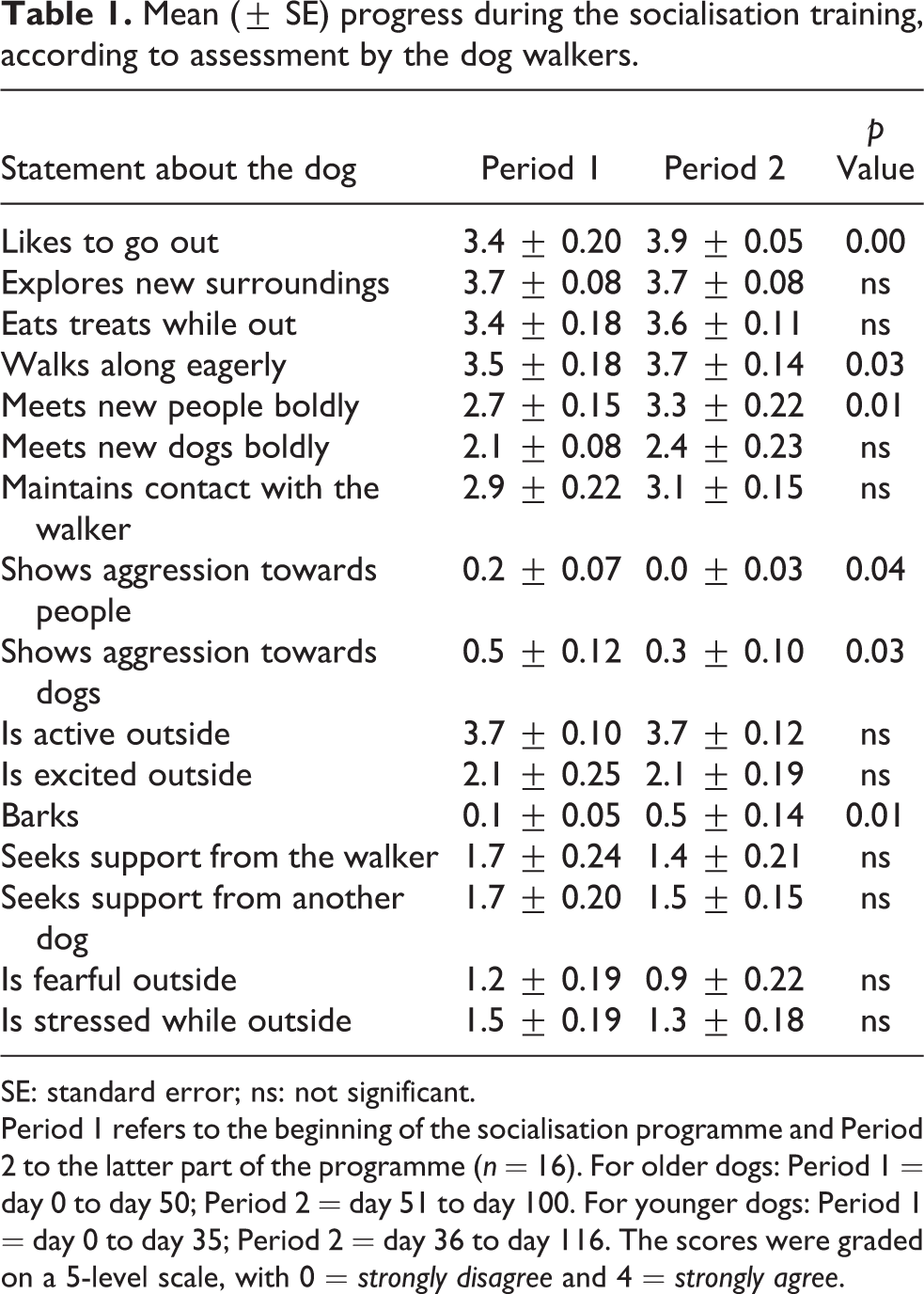
During the socialisation training walks, the walkers were invited to record on a form the reactions of individual dogs after each of the sessions. A list of 16 statements was put together to assess the behaviour of the dogs (Table 1), and each of the statements was scored on a 5-point scale (0 = strongly disagree; 1 = somewhat disagree; 2 = neither disagree nor agree; 3 = somewhat agree; and 4 = strongly agree). In order to evaluate the general progress of the training programme, it was divided into two stages: 0–50 days and 51–100 days for the older dogs; and 0–35 days and 36–116 days for the younger dogs. Even though the total length of the socialisation programme differed for the two groups, comparable periods were selected for this comparison. The walkers did not always complete the forms, especially in relation to the younger dogs; towards the end of the training sessions, the observation forms predominately referred to one dog. Some forms contained additional comments about specific defecation and urination behaviours.
Mean (± SE) progress during the socialisation training, according to assessment by the dog walkers.
SE: standard error; ns: not significant.
Period 1 refers to the beginning of the socialisation programme and Period 2 to the latter part of the programme (n = 16). For older dogs: Period 1 = day 0 to day 50; Period 2 = day 51 to day 100. For younger dogs: Period 1 = day 0 to day 35; Period 2 = day 36 to day 116. The scores were graded on a 5-level scale, with 0 = strongly disagree and 4 = strongly agree.
Statistical analysis
Progress during the socialisation training was analysed with a repeated measures linear mixed model. ‘Time’ was included as a repeated factor and ‘dog’ was considered as a subject within repeated statements. Statistical analyses were carried out with IBM SPSS 23 (New York, NY, USA). Standard deviations are reported in relation to the descriptive data.
The home selection and rehoming process
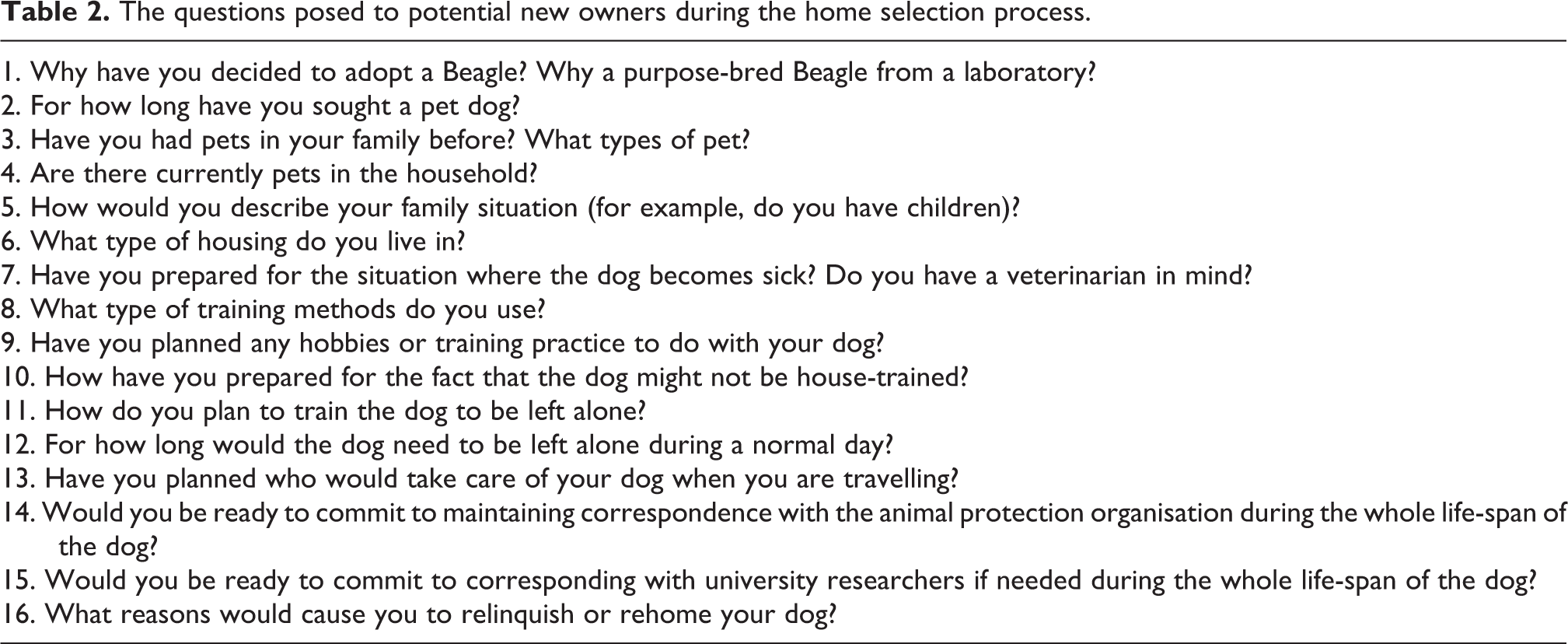
Animal protection organisations, namely the Finnish Federation for Animal Welfare Associations and its regional member organisation Pääkaupunkiseudun Eläinsuojeluyhdistys, worked alongside the University of Helsinki to find new homes for both groups of dogs. Agreements were signed to transfer the ownership of each dog from the University to the animal protection organisations, and then from the animal protection organisation to the new owner. The animal welfare organisations sought new homes by issuing a press release and reaching out to the animal protection community through the Internet. The publicity showed pictures of the dogs, and interested candidates were asked to answer several questions about their home environment and their motivation (indicated in Table 2).
The questions posed to potential new owners during the home selection process.
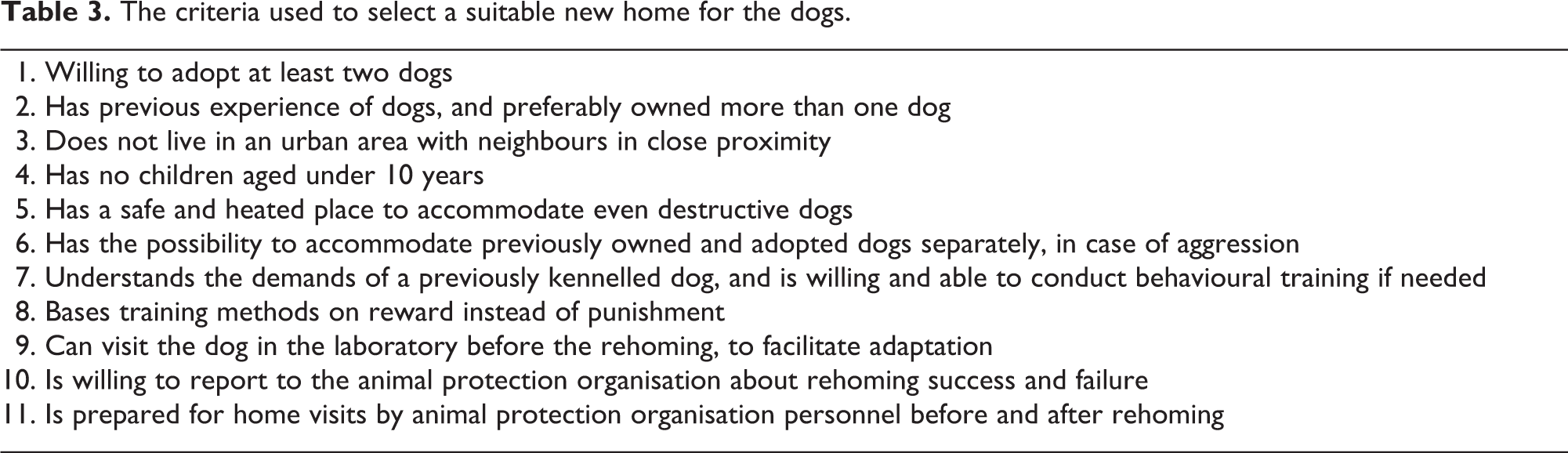
All of the dogs in each group were released for rehoming within a one-month window. Half of the younger dogs (four animals) spent some time in foster homes before being permanently rehomed with their new owners or were returned to foster homes after the first rehoming. All of the dogs were eventually permanently rehomed. Despite the originally stated criteria for selecting potential families (as described in Table 3), most of the dogs were individually rehomed with families that already had at least one dog.
The criteria used to select a suitable new home for the dogs.
Methods used to evaluate the success of rehoming
After the dogs were rehomed, progress was monitored via a questionnaire (Table 4), which was sent by e-mail. The owners were surveyed three times: one month after rehoming, six months to one year after rehoming and, finally, four years after rehoming. In these questionnaires, the owners recorded their perception of their dog’s progress and noted any hurdles that they had to overcome. The owners also reported their general satisfaction with their new pet.
The open-ended questions posed to the owners one month, six months to one year and four years after rehoming.
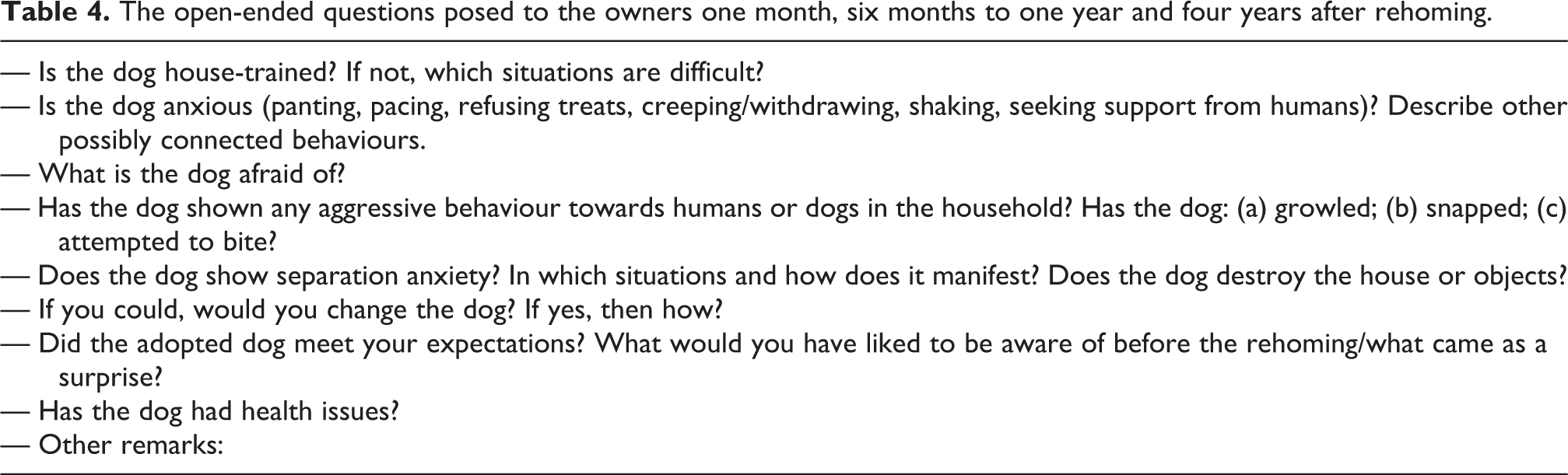
The final questionnaire (see Appendix 1) included the same open-ended questions as the previous versions (Table 4), but also had additional statements about animal attachment (modified according to Johnson et al. 17 ) and about empathy towards animals. 18 However, these data are not presented here for clarity reasons. In addition, the final questionnaire included questions about the socioeconomic background of the owners and questions on any behavioural problems that they had noted in their dogs. In the event of a lack of response to each questionnaire, the owners were sent two reminders, one month apart as necessary.
After the dogs were rehomed, the animal caretakers (two individuals) and animal protection organisation volunteers (four individuals, two from each organisation involved) were interviewed. The face-to-face interviews included questions about the process, facilities, socialisation training period, rehoming, and whether they would recommend rehoming to others. Two interviewers presented the questions to pairs of participants, in interviews lasting 1.5–2 hours, and recorded the answers. Four researchers were sent an open-ended questionnaire by e-mail; responses were received from three of them.
Results
Socialisation training
The participating researchers and animal caretakers were concerned that one dog in each group would be too shy and fearful for successful adoption. However, after careful home selection, including the provision of compatible canine family members, and advice given by an animal behaviour therapist, both of these shy dogs thrived. Anxious behaviour was observed in some of the older dogs who were the last dogs to be rehomed, and thus remained in the facility without the support of their familiar pack of eight dogs. No aggressive behaviour towards humans was reported, even in new and potentially stressful situations during the socialisation programme or after the dogs had been rehomed. Interestingly, the dog walkers felt that even though the dogs enjoyed going out and walked eagerly, they enjoyed the walks even more towards the end of the socialisation phase (Table 1). According to the sparse and anecdotal data collected, it seems that at least some good progress was made in terms of toilet-training during this socialisation phase, at least with some dogs. However, in the final questionnaire, the majority of the new owners reported that their dogs were less than optimally house-trained.
Owners’ perceptions of the rehoming process
In total, 11 of 14 owners responded to the final questionnaire four years after adopting their dog(s) (Table 4). It should be noted that the number of owners is lower than the number of dogs, as four of the dogs were adopted in pairs. The experience of the owners, according to the responses to the open-ended questions completed at one month and six months to one year after rehoming, as well as in the final progress update, is summarised below.
All responding dog owners overwhelmingly adored their new dogs and praised their good nature. None reported human-directed aggression. Some of the dogs showed signs of fear towards new people and/or situations, some noises, unknown dogs, separation from the owner or travelling by car. The final questionnaire (four years after rehoming) revealed that almost all of the dogs experienced some separation anxiety. Many owners commented on the inextinguishable appetite of Beagles and their ability to defend their feed from other dogs in the family. Most of the Beagles had not shown any destructive behaviour in the home. The new owners reported miscellaneous health issues that the dogs had encountered since the adoption, but the data are too limited to make any inferences about the dogs’ health status.
Nine of the adoptive Beagle owners, representing 64% of the owners and 56% of the dogs, responded to the section about behavioural problems in the final questionnaire, providing quantitative data. Overall, few behavioural problems were reported — on a scale of 1–4, where 1 = non-existent and 4 = a severe problem, the mean score was 1.5 (SD = 0.4), with a minimum score of 1 and a maximum of 2.1. The owners considered that the most severe problem was a fear of new surroundings, with a mean score of 2.1 (SD = 0.7), followed by a fear of unfamiliar people (mean score 1.9; SD = 0.7), fear of car trips (mean score 1.9; SD = 0.9) and pulling or lunging on the lead (mean score 1.9; SD = 0.7). House-training issues were mentioned by a number of respondents, but this issue was not considered to be a serious problem, as accidents occurred seldomly (mean score 1.8; SD = 0.4).
None of the individual respondents considered any problem to be severe, with a maximum individual score of 3. In general, the responses indicated that the dogs were not afraid of any members of the family (mean score 1.1; SD = 0.3) or of going out to familiar places (mean score 1.1; SD = 0.3), and neither were they aggressive towards unfamiliar people (mean score 1.1; SD = 0.3). None of the dogs were reported as aggressive towards familiar people or other dogs in the family, or to bite during play. In addition, the respondents reported no difficulties in handling the dogs, for example, when clipping their nails.
Other stakeholders’ perceptions of the rehoming process
According to the interviews, the animal protection organisations considered these dogs relatively easy to rehome, as they were small, gentle and easy to handle. Three of the younger dogs (from two adoptive homes) were returned to the animal protection organisation, but they were subsequently successfully rehomed. During the 4-year follow-up period, four older dogs and one younger dog were euthanised. Four dogs were euthanised due to health reasons and one dog due to persistent behavioural problems.
The animal protection organisations considered rehoming to be a better solution than euthanasia at the end of a dog’s laboratory life. They also suspected, based on the trusting behaviour of the dogs in general, that they had experienced good human interactions during their time at the research facility. The animal protection organisations considered that the original criteria for the selection of new homes were too restrictive, and concluded that they would adjust them in the future to better suit individual needs. They suggested that, to ensure easy adaptation to future rehoming, the social training should be planned and implemented over the whole lifetime that the dogs are kept within the facility, and that it should be performed in defined stages according to the capabilities and progress of the dog. Although the quality of the housing at the facility was perceived as adequate, they were surprised by the lack of a proper outdoor run for the dogs.
The animal caretakers felt that the dogs enjoyed the walks. They saw the need for some form of socialisation training, and perhaps the importance of retaining the familiar pack, until the dogs were considered ready for life outside the facility. The use of a lightly constructed fenced grass-based temporary outdoor run did not disturb the working routine of the facility, and the caretakers reported that the dogs enjoyed playing there with their trainers. They also felt that, ideally, training should be seen as an ongoing process and should be integrated into the whole of the dog’s life while at the facility. The rehoming gave hope to the caretakers, and they saw it as a much better outcome than euthanasia. Notably, it was common for animal caretakers to take a day off work, on the day when any dog in their care was going to be killed.
The animal caretakers also saw an opportunity to rehome many other species, such as farm animals that are used for blood draws. Although the animal caretakers liked the idea of rehoming, they would not recommend the socialisation training in its current form, but would prefer it to be better adapted to suit their daily routine and regulations. According to their views, the socialisation programme used in this case was too poorly planned, hasty and disorganised.
The animal caretakers, researchers, new owners and animal protection organisations would recommend rehoming and gave a mean score of 9 on scale from 1 to 10 (1 = not at all, 10 = most warmly).
Discussion
The dogs were relatively easy to accommodate in their new homes, being small and friendly. However, the new owners reported minor problems with house-training, fearfulness and separation anxiety. House-training and separation problems have also been reported earlier with adopted Beagles, 4,19 but these are common problems with dogs in general. 20 Despite the reported behavioural problems, all the responding owners were generally happy with their dogs. Thus, the lack of unsatisfied owners identified in this study makes it difficult to assess the factors affecting rehoming success or failure. Döring et al. 4 also reported high satisfaction rates (92%) among owners of rehomed laboratory Beagles, despite a concurrent relatively high occurrence of behavioural problems, indicating strong commitment by the Beagle owners. Interestingly, dog owners in general appear to be satisfied with their pets, according to a Dutch survey. 21 Even rescue dog adopters have reported high satisfaction rates (71%) with their newly adopted pets. 22
In the current project, all of the dogs were rehomed and no recognisable pattern in their adaptive capacity was identified prior to their rehoming. Döring et al. 4 were also unable to infer the adaptability of Beagles from prior behavioural test results. In addition, the predictive validity of behavioural tests was found to be poor in the case of rescue dogs. 22,23 No differences were seen in either the adaptive capacities or the rehoming success between older and younger dogs. Thus, it can be concluded that older dogs should also be considered eligible for adoption.
The socialisation training programme was considered beneficial for the adjustment of the dogs. However, socialisation training could be enhanced by research facilities providing separate toileting and rest areas, as well as a proper outdoor run and walks on a lead. The outdoor run is significant in that it offers a diverse, stimulating environment and permits the separation of toileting and rest areas. Access to an outdoor run can also increase activity and thus benefit welfare. 24 The introduction of the dogs to new and potentially fear-inducing stimuli in a gradual manner is likely to increase their resilience and lead to calmer behaviour. 25,26 Socialisation training could also include occasionally kennelling the dogs in a less restrictive environment, such as in the countryside or with their future adoptive family, whenever hygiene or experimental considerations allow it. A similar system of alternating the accommodation between the family home and training facility is already in use for guide dog training. 27
The attachment between a dog and its owner can be seen as decisive for the success of the adoption or owner satisfaction with the pet. 28,29 On the other hand, the success of the adoption of rescue dogs is often assessed based on return, other forms of relinquishment or euthanasia rates. 30 Patronek and Rowan 31 estimated that approximately 10% of the total US dog population is relinquished yearly. In the UK, 14% of rescue dog adoptions have been reported to fail. 30 Thus, the return rates reported for rehomed laboratory Beagles (6% by Döring et al. 4 ) and in the current study seem to be closely comparable with the general dog population. However, there are no statistics on general relinquishment rates that are specific to Finland.
The euthanasia of experimental animals ensures that there is an end to their suffering and negative experiences. However, a terminated animal is deprived of the opportunity for positive experiences. There are also differences in cultural norms between countries concerning the killing or euthanising of animals. In Finland and elsewhere in the Nordic area, such as in Sweden, the killing of a completely healthy pet is legal, in contrast with the situation in some other European countries. 32 Despite the somewhat apparent utilitarian view of animal ethics in Finnish culture, 33,34 the rehoming of laboratory Beagles was overall considered very positive, even though the dogs were not fully adjusted to domestic life before rehoming.
It is certainly critical to evaluate the welfare of the dogs after rehoming. The criteria for determining the welfare of kennelled dogs are still evolving and they should reflect individual differences between dogs. 35 However, there are no established assessment systems for the welfare of dogs in the home environment, as has been the case for farm animals for many years (e.g. see Botreau et al. 36 ). Thus, the change in welfare level that results from the rehoming process remains largely unresolved. According to this intensive, small-scale case study, the majority of the rehomed dogs adjusted well to the home environment, and euthanasia after experimental use would have been untimely.
All of the stakeholder groups involved, namely the animal caretakers, animal protection organisations, researchers and dog owners, agreed that the rehoming project was successful and would recommend it as an alternative to killing the animals. The successful interplay and trust between the project participants facilitated a rewarding outcome to the process. It is hoped that the results and recommendations from this study can be used when planning rehoming and socialisation programmes for laboratory dogs in the future.
Recommendations
We recommend that all institutions and research facilities seriously consider the possibility of rehoming dogs. Based on our findings, this process could be feasible even for older or shy dogs.
The collaboration with animal welfare organisations or such organisations experienced in rehoming should start early, to utilise their expertise to find and evaluate eligible homes.
The socialisation training programme should be planned and initiated early on in the dog’s life at the facility.
If possible, the research facilities should ensure that dogs have access to separate toileting and rest areas. Appropriate flooring surfaces should be provided, in order to enhance house-training.
The use of outdoor runs and/or regular walks is recommended as part of the socialisation training. In addition to preparing the dogs for a life outside the laboratory, these measures are also likely to reduce stress and ameliorate the dogs’ adjustment to experiments.
Monitorisation of the rehoming success would provide more information about the welfare status of the rehomed animals. In addition, statistics about the numbers of rehomed animals are needed to be able to evaluate the extent and effects of rehoming practises.
By following these recommendations, it is hoped that the rehoming approach will successfully allow former laboratory dogs to retire to a family home. It will also offer animal caretakers some reassurance that most of the animals under their care will not be euthanised at the end of their laboratory lives.
Footnotes
Declaration of conflicting interests
The author(s) declared no potential conflicts of interest with respect to the research, authorship, and/or publication of this article.
Ethical approval
Ethics approval was not required for this research article.
Informed consent
Informed consent was not required for this research article.
Funding
The author(s) received no financial support for the research, authorship, and/or publication of this article.