



Abstract
The intricate interplay between formal and informal social protection within an insecurity welfare regime, and the resulting harm and suffering caused by conflicts, remain inadequately explored due to methodological, logistical, and ethical challenges. This study fills this research gap by empirically investigating the roles of formal and informal social protection in mitigating harm and suffering, which lead to insecurity in conflict-affected regions like Pakistan. Drawing on household perspectives obtained through semi-structured interviews, in the conflict-ridden city of Bajor – a conservative society marked by armed and tribal conflicts and a breakdown of welfare institutions – our findings underscore that both armed and tribal conflicts significantly exacerbate harm and suffering, necessitating social protection measures. However, prevailing formal and informal efforts, while limited, fail to adequately address these issues, particularly affecting gender dynamics and social network. People use the network to obtain informal social protection, but this brings exploitation, domination, and clientelism. In a conservative society therefore, social network may worsen harm and suffering caused by conflict leading to severe insecurity.
Introduction
The article explores suffering and harm in an insecurity welfare regime through examining how conflict and the nexus of formal-informal social protection may engender social insecurity in Pakistan. Studying Pakistan as a case study to understand how conflict and the contentious informal-formal welfare nexus may exacerbate welfare insecurity is crucial because Pakistan resembles an insecure welfare regime, and it faces complex conflict and violence in some parts of the country (Mumtaz et al., 2023). However, this issue remains understudied. The concept of formal social protection has been utilized in various ways in the literature, including conditional or unconditional cash transfers, health benefits, and unemployment insurance (see, for example, Arnold et al., 2011; Mumtaz and Whiteford, 2021; Soares et al., 2010). However, in this study, we adopt a more comprehensive approach which conceptualizes formal social protection as the assistance provided to individuals and families through state and market mechanisms for meeting their basic needs, protecting them against risks, and enhancing their human capital (Holzmann and Jørgensen, 2001; World Bank, 2015). Similarly, extensive literature has discussed informal social protection in specific ways, such as assistance provided by immediate and extended families, kin and non-kin relations, and remittances for meeting needs (see, for example, Cammett and MacLean, 2014; Deacon and Tomalin, 2015, etc.).
In this article, we adopt a broader perspective on informal social protection that encompasses various private interventions channelled through informal sources such as immediate and extended family, religious organizations, Non- Governmental Organizations (NGOs), community networks, employers, and landlords. These entities, which offer welfare support, play a crucial role in aiding individuals and families in meeting their needs, mitigating risks, and improving human capital, often through activities such as skill training (Mumtaz, 2022a). The aim of adopting this approach is to include the majority of informal sources providing different forms of assistance. Drawing on household perspectives obtained through semi-structured interviews in the conflict-ridden city of Bajor - a conservative society marked by armed and tribal conflicts and the breakdown of welfare institutions - this study holds significant academic importance, as existing literature has called for rigorous empirical research to inform evidence-based policymaking and improve access to social protection and basic services in conflict-affected countries. Some studies show the complexity of war and conflict in Pakistan, which has been ongoing on a lesser scale since the Afghan war due to the American invasion of Afghanistan after 9/11 and in some parts of Baluchistan because of nationalist movements (Muzaffar et al., 2021; Shakirullah et al., 2020). The security situation in these areas often deals with violence, crime, human rights abuses, and limited social welfare services, which may cause harm and suffering.
This article discusses the role and interplay of formal and informal social protections in a conflict-affected sociological context and its consequences to social insecurity, using the theory of insecurity welfare regime conceptualized by Gough (2004) and Bevan (2004). Insecurity welfare regime refers to institutional arrangements that stimulate insecurity and hinder the emergence of informal social support to alleviate social risks and insecurity (Gough, 2004). The concept of insecurity welfare regime has been used to understand some welfare regimes in Africa (Bevan, 2004) and Southeast Asia (Sumarto, 2020). Specifically, this study employs two main theoretical concepts: ‘harm’ and ‘suffering’, which were used by Bevan (2004) to understand the insecurity welfare regime in Africa. By employing these concepts, we examine how conflicting situations affect the institutional welfare arrangement of Pakistanis and how this arrangement eventually generates (in)security in Pakistan. To understand insecurity in Pakistan's welfare regime, this article explores the insecurity stimulated by the conflict in the Bajor district of Pakistan. Bajor case displays features of an insecurity welfare regime due to the prevalence of armed and tribal conflicts and the breakdown of formal and informal welfare institutions, causing harm and suffering to the populations residing in the area.
There have been several studies on social protection provisions in conflict-affected countries conducted by scholars over the last two decades (e.g., Holmes, 2011; Mackinder, 2020; Oryema, 2017; Reilly and Sam, 2022). Holmes (2011) analysed the role of social protection in promoting education in conflict-affected situations, while Oryema (2017) explored the implications of formal and informal social protections in the resettlement of internally displaced persons in Northern Uganda. Mackinder (2020) examined the development and interaction of policy agendas of social protection and fragile and conflict-affected states, and Reilly and Sam (2022) examined the consequences of conflict on the distribution of welfare over short and long periods in Sierra Leone.
However, the interaction between formal and informal social protection in conflict-affected countries and how the conflict cause harm and suffering remain under-researched and poorly understood. This gap can be attributed to methodological, logistical, and ethical challenges of conducting studies in such situations. Therefore, this study aims to provide empirical insights into this under-researched field by determining the role and interplay of formal and informal social protection in meeting the welfare needs to restrain the emergence of harm and suffering of people in conflict-affected areas. This research is important because the evidence base derived from non-conflict countries cannot be applied without question to complex emergency contexts, given the increased economic, social, institutional, and security challenges faced by households in such settings. Furthermore, a sizeable global population resides in conflict-affected countries. Hence, it is crucial to conduct research and gain a better understanding of how households meet their welfare needs in such situations. By conducting research in conflict-affected countries, policymakers and practitioners can develop social protection policies and programs that are tailored to the specific needs of these populations, thereby enhancing the effectiveness and impact of social protection interventions in these complex emergency settings.
This research is ground breaking as it is one of the few systematic attempts to examine the role and interplay of formal and informal social protection in conflict-affected situations, offering unparalleled insights into households’ experiences and perspectives, shedding light on an underrepresented area in academic research due to logistical and ethical challenges. In doing so, this research makes a significant contribution to the evidence base on the role and interplay of formal and informal social protection in conflicts, which is crucial for designing effective and sustainable social protection policies and programs that meet the unique needs of communities facing violent situations.
Suffering and harm in insecurity welfare regime – Theoretical discussion
Welfare regimes in many developing countries grapple with insecurity (Bevan, 2004b; Sumarto, 2020), where people struggle against violence and conflict, resulting in problematic harm and suffering (Bevan, 2004b; Bjertrup et al., 2018; Griffey, 2021; Ilcan, 2021). An influential volume edited by Gough et al., (2004) provides a meaningful theoretical framework for understanding welfare regimes in developing countries in Africa, Asia, and Latin America, particularly focusing on insecurity welfare regimes. Within this volume, Gough (2004) and Bevan (2004a) offer a theoretical overview of insecurity welfare regimes and utilize it to analyse an insecurity regime in African countries (Bevan, 2004b). In insecurity welfare regime precarious conditions stimulate insecurity and hinder the emergence of informal social support to alleviate social risks and insecurity (Gough, 2004). Insecurity arises due to the division of labour, which can occur as a result of uneven access to livelihood governed by problematic political mechanisms (e.g., exploitation, destruction, domination, and exclusion) (Bevan, 2004). Fifteen years after the publication of the volume, some scholars reviewed it to examine whether the theoretical and methodological approaches are still relevant for understanding the development of welfare regimes in Africa, Asia, and Latin America (Amoah, 2020; Leyer, 2020; Roumpakis, 2020; Roumpakis and Sumarto, 2020; Sumarto, 2020; Yang and Kühner, 2020). In general, the reviews found that the approaches are still helpful in understanding the dynamics of welfare regimes and propose additional analytical approaches to explore the complexities of welfare regime changes in developing countries (Roumpakis and Sumarto, 2020; Sumarto, 2020).
One of the additional analytical approaches involves examining the concepts of ‘insecurity’ and ‘social risk’ as crucial elements within the framework of an ‘insecurity welfare regime (see Sumarto, 2020). Employing the concepts of ‘social risk’ discussed by Beck (2005; 2009) and ‘security’ elaborated by Giddens (1984), Sumarto (2020) considers that both concepts are closely interconnected. Social risk, reflecting a transitional situation between security and destruction, arises when trust in security and societal progress diminishes (Beck, 2005). Risk refers to possible threats for which society mobilizes socio-economic resources to deal with industrial accidents, global financial crises, climate change, suicide attacks, and wars (Beck, 2009). A set of efforts to alleviate social risk can be seen as a way to achieve security (Giddens, 1991). Using the term ‘ontological security,’ Giddens defines security as “[c]onfidence or trust that the natural and social worlds are as they appear to be” (Giddens, 1984, p. 375). A situation is insecure if people are obstructed from entering the labour market (Gough, 2004) and cope with unequal division of labour (as a result of uneven access to livelihood governed by problematic political mechanisms) (Bevan 2004), which may cause them to deal with insufficient livelihood. An insecurity may also occur when people struggle against instability, disruption, and violence (Giddens, 1984).
A notable contribution of the volume on the discussion of the concept of insecurity is the use of two important terms, namely ‘harm’ and ‘suffering,’ proposed by Gough (2004) and Bevan (2004a). Bevan (2004a) argues that security is associated with harm. Insecurity arises as a danger of harm; thus, to achieve security, people should protect themselves from harm (Bevan, 2004a). Harm, therefore, is detrimental to welfare (Hillyard and Tombs, 2007). Bevan's thought on ‘harm’ is closer to bodily issues. Harm refers to human concept that results in physical and psychological hurts, death, and the anticipation of these issues in the future (Bevan, 2004a). Other scholars (Canning and Tombs, 2021; Gurney, 2023; Hillyard and Tombs, 2007; Pemberton, 2015) uses term ‘social harm’. Inferring from ‘harm’, which cover only bodily issues (Bevan 2004), ‘social harm’ includes not only these issues but also social-economic concerns.
Social harm refers to perilous activities of states and corporations, which affect people's lives, such as issues related to food, housing, income, danger, violations, and victimization (Hillyard and Tombs, 2007). Social harm is an important perspective in criminology (Canning and Tombs, 2021; Gurney, 2023; Hillyard and Tombs, 2007; Pemberton, 2015), which argues that harms occur due to some problems of injuries, racism, and exploitation (Canning and Tombs, 2021). In this context, harm is seen as a crime and considered against the law, particularly criminal law (Canning and Tombs, 2021; Hillyard and Tombs, 2007). However, social harm extends beyond criminology (Gurney, 2023); thus, some occurrences of harm, such as excess winter death, can hardly be understood using criminology (Canning and Tombs, 2021). Considering the limitation of criminology, over the last three decades, there has been a proliferated debate on where social harm theoretically should be located. Some scholars propose to locate ‘social harm’ under zemiology (Canning and Tombs, 2021; Pemberton, 2015), which can be seen as the study of harm (Pemberton, 2015).
Under zemiology, we argue that the concept of social harm is closely interconnected with social policy. Zemiology brings human needs, which can be seen as an essential issue in social policy, as a crucial cause of social harms (Canning and Tombs, 2021). The concept of social harm puts the satisfaction of human needs as an important issue (Canning and Tombs, 2021; Gurney, 2023; Pemberton, 2015). In this context, a failure to satisfy human needs is seen as a manifestation of social harm (Pemberton, 2015). The concept of harm is considered a human condition, and the satisfaction of needs is seen as a requirement for human well-being (Pemberton, 2015; Tift and Sullivan, 2001). Social harm arises when people's efforts to satisfy their needs are prevented by social structures and/or individual actions (Canning and Tombs, 2021; Gurney, 2023; Tift and Sullivan, 2001). Under this conception, poverty, exclusion, exploitation, and loss of income generation, which may impair access to the satisfaction of human needs, can be seen as harm (Bevan, 2004a; Pemberton, 2015).
On the concept of suffering, Bevan employs the term ‘social suffering’, discussed in an influential work by Kleinman et al., (1997), to portray the enormity of people's experiences of harm caused by informal security and insecurity regimes (Bevan, 2004a). Kleinman et al., (1997) assert that social suffering is collective experiences that affect people's response toward adversity and insecurity. Under the concept of suffering, various problematic moral, legal, health, and welfare issues can be found. Suffering results from major kinds of social adversity, predominantly structural violence (Kleinman et al., 1997). Structural violence may encompass unequal power, restricted access to resources, economic oppression, injurious practices, social injustice, and denial of basic needs (Smye et al., 2023). Problematic access to healthcare and welfare may stimulate life disruption and social distress, leading to social suffering (Akbarzada and Mackey, 2017; Bjertrup et al., 2018).
Social suffering is tightly connected with the insecurity welfare regime. A welfare regime is insecure when policies and activities controlled by the regime engender suffering (Bevan, 2004a). Social suffering occurs due to violence and the exercise of power by social, economic, and political authorities (Kleinman et al., 1997). Social suffering is frequently stimulated by conflict (Bevan, 2004a). In more specific situations, such as conflict-affected situations, suffering may arise due to the complicated problems of human need fulfillment, social distress, exploitation, violence, life disruption, and loss of social networks (Akbarzada and Mackey, 2017; Bjertrup et al., 2018).
Both social harm and social suffering may arise in communities and countries in Africa and former Eastern Europe, where people deal with violence, exploitation, war, and conflict (Bevan, 2004b; Bjertrup et al., 2018; Griffey, 2021; Ilcan, 2021). These problematic situations may stimulate illfare and insecurity (Bevan, 2004a). Considering this problematic situation, social policy should focus on achieving the social welfare goal to avoid both harm and social suffering (Gough, 2004).
Social protection is an important tool for achieving social policy objectives and includes a range of measures aimed at reducing harm and suffering (Siu et al., 2023). Governments and international donor agencies widely employ social protection measures, such as assisting displaced persons due to conflicts, through the provision of temporary shelters, food assistance, education, and healthcare, to alleviate their harm and suffering (Krieger, 2001). Where governments capacities are lacking informal social networks may bridge the gap. Many scholars have extensively discussed the role of formal and informal social protection and how these two forms interact in non-violent situations (Mumtaz and Whiteford, 2021; Mumtaz, 2023; Stavropoulou et al., 2017). These discussions have highlighted the strengths and limitations of each approach, emphasizing the potential benefits that can arise from integrating them. The unique dynamics and challenges associated with conflict-affected areas necessitate a deeper understanding of how formal and informal systems interact in providing support and alleviating suffering. To address this issue, this study aims to advance the existing research by exploring the role of formal and informal social protection and their interplay in conflict-affected situations in Pakistan.
A case study of district “Bajor” – Conflict afflicted area in Pakistan
Pakistan has experienced long-term tribal and armed conflicts leading to the loss of human lives and livestock, damage to public infrastructure, and physical harm and suffering of the affected population (Mustafa, 2013). The root of the conflict can be traced back to the period during British colonialism when the Pakistani Government adopted the administrative structure, comprising settled and tribal areas (Tripodi, 2013). The north-western part of the country had seven federally administered tribal areas under the governance of the federal government. This arrangement remained in effect until 2018 when the government enacted the 31st constitutional amendment, merging the Federally Administered Tribal Areas (FATA) (Shad and Ahmed, 2018). Ethnic Pashtuns predominantly inhabit this area, which witnessed transnational militancy since the US invasion of Afghanistan in 2001 (Yousaf, 2019). The majority of the population in this region resides in remote areas and tends to hold conservative views. Their way of life is governed by the ancient ethical code “Pashtunwali,” which predates Islam and guides individual and community conduct. The region is considered a base for militant groups (Alam et al., 2012). Tribal and armed conflicts persist in certain areas, with the Taliban (hereinafter referred to as local militants) still exerting control, albeit to a much lesser extent, following the US withdrawal from Afghanistan (Ullah, 2016).
The former areas of FATA stand out as one of Pakistan's most economically disadvantaged regions, characterized by a lack of socio-economic opportunities (Haq and Javaid, 2016). Poor governance, education, law enforcement, employment prospects, development, and security measures have impeded the region's progressive social, cultural, and economic advancement (Zada et al., 2021). Non-state actors, including radical organizations, smugglers, and drug cartels, have compelled residents to participate in radical activities, smuggling goods, drugs, and human trafficking to sustain their livelihoods (Parveen et al., 2020). The region grapples with a concerning poverty rate surpassing 60 percent, evident from the inadequate provision of healthcare facilities, with only one facility available for every 4200 individuals and one doctor for every 7800 individuals (Ali, 2018). Adult literacy in FATA stands at a mere 28 percent, significantly trailing behind the national average of 75 percent, with a very low literacy rate of only 7.8 percent among women (Ali, 2018). The per capita annual income is relatively low. Formal employment opportunities are scarce, leaving the population reliant on traditional occupations such as trading (including smuggling), mining, and farming. Communal land ownership, however, results in individual land holdings being very small and primarily utilized for subsistence farming (Anwar and Khan, 2017).
Bajor, the smallest district of former FATA, exhibits militancy, which in turn leads to harm and suffering. Bajor covers an area of 1290 sq km (Rahmanullah, 2013) and is home to various tribes covering including Bram Khel, Khân Khel, and Ibrâhîm Khel being the major landholding tribes (Ullah, 2016). It shares borders with Afghanistan in the northwest and the Dir district in the northeast (see Figure 1). The militancy in Bajor was led by influential leaders of local militants in Pakistan. In the aftermath of the American invasion of Afghanistan, the local militants initiated a militant movement to enforce Sharia law in Bajor and the surrounding districts, effectively gaining control over the region (Rahmanullah, 2013). During this period, the militants also imposed restrictions on female education. In response, the military launched operations in the late 2000s, resulting in the internal displacement of Bajor's sizeable population (Amir-ud-Din and Malik, 2016). Collateral damage from the military operations in Bajor was extensive with complete destruction of 92 schools, including both boys’ and girls’ schools, and partial damage to an additional 37 schools, including 02 colleges (Ullah et al., 2021). The region also experienced severe losses in terms of damage to health facilities, housing, agriculture, livestock, poultry farms, and small-scale industries. The impact of the armed operations significantly caused harm to the local population and extended beyond the deteriorated living standards, leaving lasting socio-economic and political consequences for the residents of Bajor (Ibid). Moreover, tribal conflicts persist among various tribes in the area, contributing to the increased suffering of the local population.
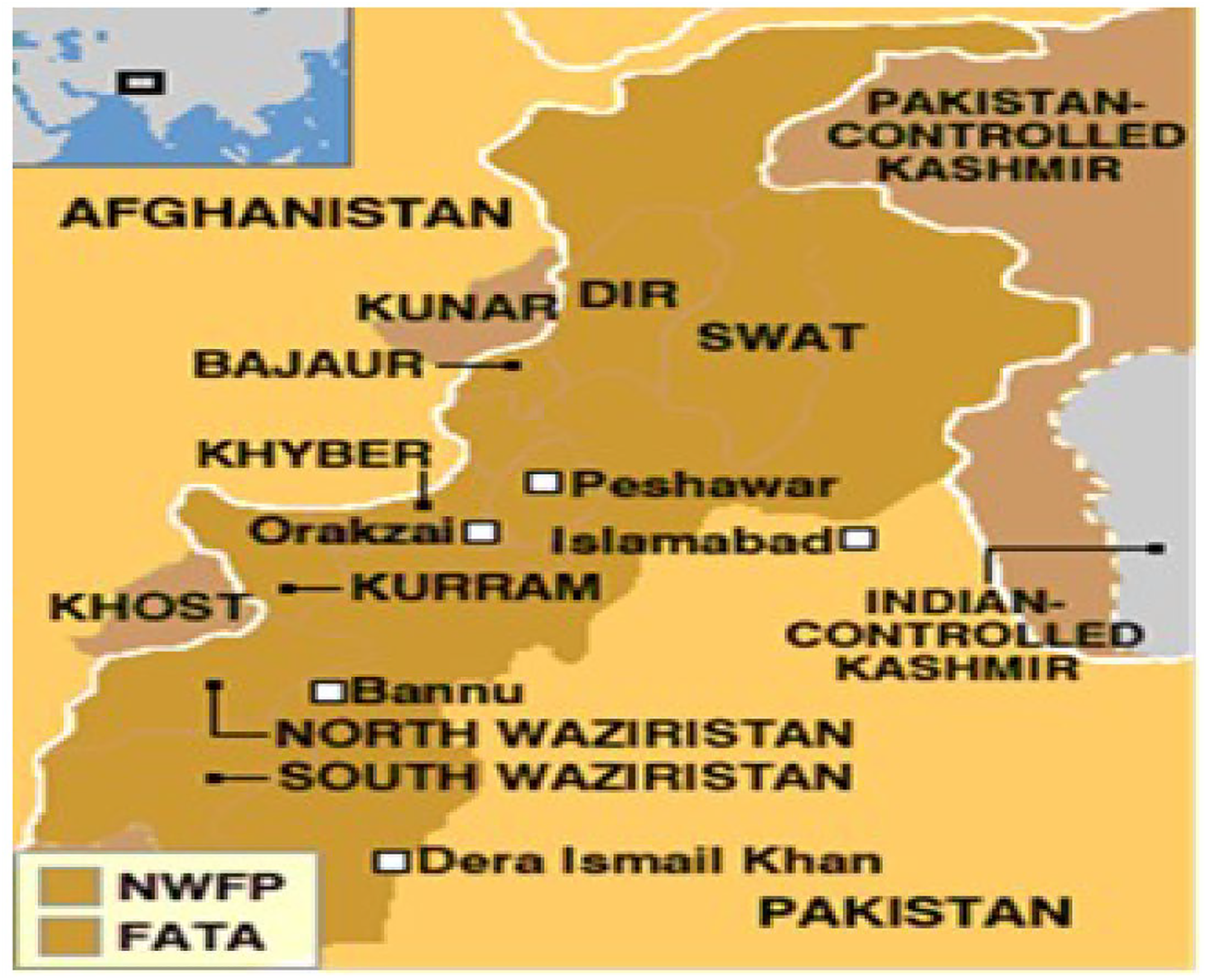
Location of Bajor.
Methodology
This study employs qualitative approach. We select Bajor as a case study to understand features of an insecurity welfare regime through exploring the interplay of formal and informal social protection in a conflict-affected area. The study draws upon semi-structured interviews with 18 households in Bajor that were experiencing or experienced tribal or armed conflict. The households for the semi-structured interviews were identified by approaching local madrassas (religious schools) that had information about households whose children were attending for education, residence, or receiving some form of welfare such as food or clothing. Madrassas were selected to obtain such information because they are organized informal provider of welfare institutions (Mumtaz and Whiteford, 2021; Mumtaz, 2022b) and were among the few places that were not affected during the conflict and continued to operate during such times. The reason for this is that madrassas are typically attached to mosques, and a sanctity is attached to Islamic worship places in such conservative societies even during times of war. It is clarified here that madrassas were only used as a sampling strategy to identify poor and vulnerable households for the semi-structured interviews. Although the vast majority of population of the district was poor, however, employing this strategy ensured that only those households are identified for the study that can provide perspectives and experiences about formal and informal social protection.
The semi-structured interviews were exclusively conducted with household heads. Bajor, as previously mentioned, upholds traditional values, and embodies a conservative society, where males not only function as breadwinners but also assume the position of household heads. However, we did encounter households led by females, often due to divorce or widowhood resulting from the loss of their husbands. Consequently, we interviewed these female heads, considering them representatives of their entire families, providing us with a comprehensive understanding of household conditions. Furthermore, cultural norms dictated that interviewing female or younger household members in the presence of the male household head was inappropriate. The interviews with female participants were conducted in the presence of “Mahram” male family members, who were either brothers or fathers of the female participants. In Islam, a Mahram is someone with whom marriage is prohibited due to their close blood relationship, breastfeeding, or marriage connection. The supportive presence of brothers or fathers created an environment where the female participants felt encouraged to openly share their experiences during the interviews. Additionally, since the researcher who conducted interviews with females was a Non-Mahram, all female participants adhered to the local custom of wearing a “Burqah” – a traditional garment designed to cover the face and body – during interviews to maintain their privacy. This practice, customary for females in the area, further ensured the anonymity of the participants, allowing them to express their views comfortably and without inhibition.
Out of the 18 household heads interviewed, five were females, while the remaining were males. The average household size stood at approximately 8 persons, with female household heads averaging 35 years and male heads averaging 45 years in age. The average living density equated to 6 persons per room, and the predominant housing type was mud houses. The surveyed households revealed an average schooling duration of 3 years for females and 8 years for males. Notably, disabilities such as polio and hepatitis were observed among the interviewed members. The majority of household members were unemployed or involved in precarious informal sectors such as mining in nearby cities and engaging in hawking. This socioeconomic situation within households is indicative of broader deprivations and adverse conditions in Bajor District.
The semi-structured interview questions revolved around three main themes. The first set of questions aimed to gather information regarding the participants’ socio-economic conditions, deprivations, the nature of the conflicts they experienced and suffering and harm caused by such conflicts. The second set of questions focused on formal and informal social protection resources available and exploring the strategies employed by households to manage the challenges they faced, encompassing both formal and informal social protection mechanisms. The final set of questions sought to assess the (in)effectiveness or (un)availability of these protective measures during times of conflict. Participants were informed by the researcher that formal social protection measures included various benefits provided by government or formal private institutions. These benefits encompassed support from public programs such as Zakat/Bait-ul-mal, the Benazir Income Support Programme (BISP), both public and private retirement pensions, free public education, technical education received from government vocational training institutes, free healthcare services from government dispensaries or hospitals, health insurance (Sehat card), youth loans, and programs offering free food and shelter. On the other hand, informal social protection measures encompassed any type of support received from kin or non-kin relations, immediate and extended family members, madrassas, landlords, employers, local and international NGOs, and other relevant sources. These sources of informal social protection are drawn from recent study (See, Mumtaz, 2022a) that offers a comprehensive examination of informal social protection and its conceptual framework, shedding light on the diverse sources. These questions aimed to provide a comprehensive understanding of the dynamic interaction between formal and informal social protection systems in areas affected by conflict. Each interview lasted around 45 min to one hour that provided an in-depth perspective of the households.
The necessary ethics approval was obtained from the University ethics committee, considering the vulnerability of the study participants. Children were excluded from the study to prevent any potential psychological harm. Informed written consent, which provided household heads with an information sheet (on voluntary nature of participation) and consent form (on the purpose of the research as well as the risks and benefits of participation in the study) were read because a significant portion of the population was illiterate. Two significant risks associated with the study included any information or views expressed by the participants concerning non-state actors like local militants or Tribal elders that could compromise their safety and the potential undermining of their reliance on informal support. These risks were effectively mitigated by maintaining complete confidentiality of the study participants and ensuring that their identities were never disclosed to anyone in any form. Therefore, fictitious names of study participants used in this paper to present the results of the study.
The information sheet emphasized the voluntary nature of their participation, assuring them that they could withdraw from the study at any time. The interviews were conducted in the local language to ensure accurate information gathering. A total of eight madrassas were approached to obtain lists of households receiving assistance from them. From these lists, 18 households were randomly selected for the interviews. The researcher made clear to the madrassas and households that the identities of the interviewed households would remain confidential and ensured that the study would not endanger their security and well-being.
Results
The interviews conducted were transcribed, and the resulting text data was subjected to an inductive analysis. This approach aimed to explore the perspectives of households regarding the access, availability, effectiveness, and interplay of formal and informal social protection. During the inductive analysis, emerging themes were identified, categorized, and grouped together. The data were then reorganized and synthesized based on these themes, focusing on the households’ views concerning the effects of formal and informal welfare. The interview quotes were color-coded according to the respective sub-districts. This allowed for the examination of any variations between different locations. It is important to note that this analysis was qualitative in nature and did not involve quantitative measurements. However, it enabled the identification of whether certain points made in the interviews were predominantly supported by quotes from specific sub-districts or colours. The major themes that emerged from the data are discussed below.
Austerity, suffering and harm caused by conflict to households
The study encompassed 18 households, among which 14 had encountered armed conflict, while 4 were presently grappling with tribal conflict. Both forms of conflict inflicted violence leading to significant harm and suffering upon the surveyed households, yielding severe consequences such as loss of lives and property, disabilities, the eradication of livelihood opportunities, destruction of public facilities and the decimation of farms and livestock. Notably, these resources served as vital means of income and sustenance for the affected households. Furthermore, the dearth of adequate healthcare facilities resulting from the conflicts led to an escalation in the prevalence of diseases (Ali, Khalid and Ahmed from Khar sub-district). The absence of education and healthcare services further compounded the challenges faced by the afflicted households, exacerbating an already precarious situation. Consequently, the physical and psychological well-being of these households suffered gravely, as they bore witness to the destruction of their homes, belongings, and even the untimely loss of loved ones (Ali & Ahmed from Khar sub-district). The ramifications of these conflicts exerted a profound influence on the overall welfare and safety of the households. Khalid shared their story: “I used to sell garments from my cart. When the military operation against the local militants started, I had to stop selling garments. We were not allowed to leave our house because of massive firing. I have six children, all under the age of ten, and our house consists of only one room, so we were confined to one room for months because of the conflict. There was no electricity because all the power stations stopped functioning. The water supply system was also cut off, and we had to collect water at night from a local water channel that was approximately 5 kilometres away from our house. To keep ourselves warm, we had to burn wood inside our house. Unfortunately, this led to further deterioration in the health condition of my two children who suffered from asthma, as the smoke in the house exacerbated their symptoms. The closure of dispensaries meant that we had to travel secretly to collect medicine, adding to the difficulties we faced. Tragically, one of my children died during that period because of an asthma attack due to a lack of treatment. I had a small piece of land where I grew corn, but it was also destroyed during the conflict. My one cow was hit by a mortar shell and died. This further compounded our losses, depriving us of a vital source of sustenance”. “I used to run a music CD shop. When the local militants seized control of our village, they burned my shop and took away my one kanal of agricultural land as a punishment. I had four kids to feed, and due to the loss of both my business and land, we were left with nothing. I had to sit on the roadside hoping to find some hard labour work, but there was no work available. There were days when we did not have food in our house to eat”.
Asad narrated that he owned one kanal of agricultural land. In Pakistan, a kanal is a unit of measurement for land, and one acre of land includes 8 kanals, which indicates a very small agricultural landholding - farm size - compared to the average farm size of 6.4 acres in other parts of the country. The results underscore the significant ramifications of tribal and armed conflicts, resulting in substantial harm and suffering for the households affected. These distressing conditions accentuate the pressing requirement for prompt welfare interventions to alleviate their sufferings especially for the population which is already impoverished.
Access and availability to formal and informal social protection
The majority of formal welfare services, such as the BISP, public health facilities, and schools, remained inaccessible to households during armed conflicts. However, in some areas, the local militants allowed governmental health and educational facilities to operate (Haider from Salarzai sub-district). Nevertheless, these facilities lacked doctors and teachers, as professionals were reluctant to work in violent areas. Similarly, only a few households mentioned receiving cash transfers from BISP. Some households were able to access informal social protection provided by local madrassas and received help from the community and landlords (Haider and Zubair from Salarzai sub-district). However, such assistance was limited due to the prevailing conditions, as most of the population in the area was impoverished. Zubair, a resident of Salarzai sub-district, explained that his 16-year-old son, Jehanzeb, had to flee their village due to the constant threat of violence stemming from the tribal conflict and sought refuge in a madrassa located in another sub-district, Khar. Zubair mentioned that Jehanzeb could not return home for fear of his safety, and they were unable to visit him in person, as doing so might reveal his hiding place. He further informed that they hadn't seen him for two years, and the only way of knowing about his well-being was through telephone. Zubair narrated: “Our family has been embroiled in a tribal conflict for 40 years. Many of our family members have been killed as a result. My elder son has sought refuge in a local madrassa where he receives minimal support of food and shelter. Unfortunately, there are times when he is not provided with food, especially when the madrassas do not have enough resources to feed everyone”.
(In)effectiveness and interplay of formal and informal social protection
The households that received cash transfers from BISP and utilized other government facilities still had to seek help from tribal elders or community members. This was because the amount received from such transfers was very meagre. The support they received from informal sources complemented formal welfare to some extent, but it was not sufficient to significantly improve their overall well-being (Sikandar from Barang sub-district). None of the households reported that the combination of formal and informal welfare had improved their well-being substantially. Moreover, the majority of households did not receive any form of formal social protection and had to rely on help from community members. The most important sources of informal welfare in such circumstances were madrassas and kin (tribal) relations (Farukh from Barang sub-district). As mentioned earlier, the security and economic conditions in the area did not allow individuals to improve their financial situation, thus limiting their ability to support others. Ali shared their experience: “I received a meagre amount of approximately 4500 PKR (approximately 20 USD) after three months from BISP, which I had to collect from an ATM that was a 2-h drive from my village. The local bus charged 500 PKR to take us to the city where we could withdraw money from the ATM. After paying for the bus fare, I was left with so little that I could not even buy consumption items for three days. As a result, I had to ask for help from my tribal elders. However, the people who had helped me in the past were unable to do so as their livelihoods were also destroyed.”
Subordination and domination
A few households shared their experiences, highlighting the distressing consequences of inadequate formal welfare support. The absence of sufficient assistance drove them to seek help from the local militants, who, in exchange for their aid, provided them with a significant amount of cash. However, the local militants imposed a condition on these households - they were expected to join their ranks if they required a stable job. Consequently, some individuals, desperately in need of support and employment, felt compelled to join the militants. Khadija shared the story of their son Omar who joined the local militants: “I am a widow and have five children to look after. After my husband died, I started selling clothes in a small shop. However, when the local militants took control of our area, they stopped women from working, and I had to close my shop. All my sources of income were lost because of the conflict. There were days when there was no food in our home. My elder son, who was 16 years old, was forced to join the militants’ ranks as they provided him with money that we spent on our needs”.
“I had to pledge my two Kanals of land to get 20,000 PKR (approximately 80 USD) from a local elder as I needed to get my wife treated for Hepatitis. The amount I received was insufficient to purchase the necessary medicines, and I ended up losing the land because I had no means to repay the loan. Unfortunately, my wife succumbed to Hepatitis after two years”.
The findings discussion vividly demonstrates the severe consequences that arise from the lack of or inadequacy of formal welfare systems. In the absence of reliable support, marginalized groups become susceptible to the domination and exploitation of more powerful groups. Faced with desperation and limited alternatives, individuals often turn to exploitative informal sources, subjecting themselves to exorbitant interest rates and trapping themselves in cycles of debt. Vrousalis (2023) argues that the exploitative dynamic is a consequence of servitude, whereby the powerful actors exploit and extract dividends from the vulnerable for their gains.
Class, gender, and formal and informal social protection
The access to formal and informal welfare services for the poor and marginalized was severely impacted by class relations – in this case the caste relations created the class distinctions. The interviewed households shed light on the significant challenges they encountered when attempting to access formal welfare support, primarily due to the actions of local tribal elders. The participants informed that the influential figures within the community prevented them or created obstacles from providing their personal details and registering for the BISP survey as they did not belong to their tribal caste. Consequently, they were deprived of the assistance and resources that the formal welfare system could offer (Humayun from Nawagai sub-district). In lieu of the formal welfare support, these households received meagre assistance from the local elders. The support provided amounted to a mere 500 PKR per month (approximately 2–3 USD), which proved to be insufficient in meeting their basic needs. Shahid informed: “Few years ago, I got the news that there was a survey taking place in the area, and the government would provide some financial assistance for it. I wasn't aware of the nature of the survey. People informed me that our Malik (tribal elder), was creating a list of individuals to receive this money as the government approaches such people to provide details of deserving households. When I approached the Malik, they informed me that I could not participate in the survey. This is not the first time that happened to me. I am from a low caste and Malik is from a different caste, so he prefers his own caste people over us”.
The female population in FATA faces multiple forms of inequalities, such as low literacy rates, short lifespans, poor health outcomes, and limited employment opportunities, which are generally attributed to patriarchal social norms of the region (See, for example, Khan and Samina, 2009; Levine et al., 2019; Mubeen and Quddus, 2021).The conflict in Bajor led females to experience exacerbation of these inequalities, including both physical and psychological harm. In addition, they faced significant obstacles in accessing education and healthcare services. With their schools destroyed and limited access to health facilities, their only option for education was to rely on religious education provided by local madrassas, or they remained illiterate. Fatima from Nawagai sub district mentioned: “My two daughters received education until year 8 before they got married. However, my third daughter could not progress beyond year 4 as her school was destroyed by the local militants. She did not attend school thereafter and only attended a madrasa before getting married five years ago”. “My wife was pregnant, and we needed to take her to the hospital for an operation. However, due to the ongoing tribal conflict, we were unable to move freely. We had to wait until dark before we could start our journey to the hospital. It took us two hours to reach the hospital, and tragically, our baby didn't survive the journey.”
This shows the dire consequences faced by women in conflict-affected areas. Limited mobility and restricted access to healthcare facilities significantly increased the risks and challenges associated with childbirth and medical emergencies. The lack of timely and adequate medical assistance further highlights the profound impact of armed conflicts on vulnerable populations, particularly women and their education and reproductive health.
Conclusions
The study highlights the insecurities faced by households during conflict within an insecurity welfare regime. It examines the interaction between formal and informal social protection systems during conflicts, evaluating the (in)effectiveness of welfare provisions for different groups. We conclude that conflict, which stimulates violence in the community, directly inflicts immense harm and suffering—a characteristic feature of an insecurity welfare regime (Bevan, 2004a)—upon households, significantly increasing their need for welfare assistance. This harm and suffering experienced by households stems from the breakdown of formal institutions, a consequence of external players like the local militants subverting state institutions, resulting in conflict and political instability.
We also conclude that the detrimental effects of the conflict in a relatively underdeveloped and conservative society like Bajor extend beyond the state's capacity to provide security and deliver formal welfare services. This inadequacy leads to the breakdown of even informal support mechanisms. The challenging security situation hampers economic activities and perpetuates harm and suffering among local people. While people receive some limited formal social protection from the government, its effectiveness is constrained, thus falling short of providing adequate remedy. This circumstance compels individuals to seek informal support from tribal networks and religious institutions; however, these resources prove insufficient in addressing their needs. The combination of conflict, restricted formal, and informal social protection, and limited governmental institutional capacity contributes to an overarching sense of insecurity.
The conflict highlights the vital role of social-political networks as an informal source of social protection to lessen suffering and harm. These networks comprise three distinct types: individuals and tribal members/elders, individuals and religious institutions, and individuals and local militants’ networks – each yielding distinct social-political outcome. Firstly, within the people-tribal member/elder network, conflict-induced harm and suffering intensify the demand for social support from this network, yet concurrently diminish its capacity. The heightened need arises from individuals seeking assistance, though satisfaction may prove elusive as other tribal members also grapple with similar circumstances due to harm and suffering. Secondly, the people-religious institution network supplies necessary aid, consequently establishing the institution as a benevolent haven, offering vital protection. Thirdly, the people- local militants network affords social protection, albeit engendering intricate consequences, including exploitation, subordination, domination, and potential clientelism.
All the aforementioned networks primarily manifest within conservative societies, especially those that stratified in castes and embrace tribal values as well as religious doctrines as primary life guidance. On one hand, this signifies a compassionate society, offering additional social support to individuals in coping with social risks stemming from the government's limited formal social protection. On the other hand, this could potentially exacerbate harm and suffering, contributing not only to social insecurity but also intricate social-political ramifications, such as exploitation, subordination, domination, and clientelism. The interplay of formal and informal social protection is a subject of considerable theoretical interest, with two prominent theories being the “crowding in” and “crowding out” effects (See for example, Gelissen et al., 2012; Ellwardt et al., 2014; Van der Meer et al., 2009). Crowding out of formal welfare by informal welfare occurs when formal support systems adequately meet people's needs, reducing their dependence on informal welfare, and vice versa. Conversely, crowding in of formal welfare by informal welfare happens when informal support mechanisms effectively fulfill people's needs, leading to reduced reliance on formal support, and vice versa. (Mumtaz, 2023). However, the findings of this study present a different narrative. They reveal a scenario where both formal and informal welfare mechanisms fail to complement each other adequately, resulting in a lack of sufficient support to meet the needs to most vulnerable.
Amongst those dealing with harm and suffering and needing most support, women encounter the most challenging situations. Scholars have long argued for the improvement of gender capabilities through targeted social protection measures as a means to enhance overall gender well-being (Hidrobo et al., 2020; Sabates-Wheeler and Kabeer, 2003). However, the study shows the precarious circumstances faced by women during conflicts and the ineffectiveness of (in)formal social welfare measures in addressing their specific needs. This is a deeply concerning issue, given that women confront multiple intersecting forms of discrimination and marginalization, including gender-based violence, restricted access to resources, and limited decision-making power (Crenshaw, 2017). During periods of conflict, these pre-existing vulnerabilities are intensified, underscoring the urgency of effectively addressing them within social protection frameworks.
Footnotes
Funding
The authors received no financial support for the research, authorship, and/or publication of this article.