




Abstract
The extant literature on hospitality and human resource management has not yet uncovered the hidden intangible chain of employee turnover intention, particularly in the hotel context. A theoretical framework was developed by applying the tenets of the theory of planned behaviour, social cognitive theory and the multi-dimensional commitment model. More specifically, this study investigated the impact of staff core personality (core confidence traits and core self-evaluation) on employees’ positive attitudes towards the organization, ultimately decreasing employee turnover intention. Further, the study scrutinized the moderating impact of organizational commitment dimensions in the extended model and the links that were missing in prior literature. It employed a self-administered survey and obtained 300 usable responses. The data were analysed through partial least squares structural equation modelling (PLS-SEM) software. The results revealed that all the core personality factors (CSE and core confidence traits, including resilience, hope and optimism) and self-efficacy significantly affect the staff’s positive attitude. Moreover, the study established the moderating impact of affective commitment and continuous commitment on the connection between attitude and employees’ intention to leave the organization. This article recommends several practices that hotel human resource managers can utilize to reduce employee turnover intention and upsurge the sustainability of the hotel industry.
Keywords
Introduction
The hospitality and tourism sector is a flourishing industry around the globe and a significant rising industry in Malaysia (World Travel & Tourism Council (WTTC), 2019). The industry generated 334 million jobs in 2019 (WTTC, 2019). Regrettably, McCartney et al. (2022) and Yao et al. (2019) pointed out that the Malaysian hospitality and tourism industry faced significant issues of high turnover rate and a considerable shortage of talent throughout the COVID-19 pandemic. The COVID-19 pandemic tremendously affected career aspects and required proactive human resource strategies to overcome the challenges (Ghani et al., 2022; Hite & McDonald, 2020). The industry as a service sector is highly dependent on the human factor (Radjenovic, 2018). By growing the number of hotels strictly allied with the hospitality and tourism industry, staff turnover becomes a significant issue for managers (Yao et al., 2019), compromising the industry’s sustainable progress.
The Malaysian hotel industry has been experiencing the unavailability of the workforce for many years (Aminudin, 2013) and is further intensified by employee turnover among the remaining workforce. According to Berber et al. (2022), employee turnover has remained the most challenging task for all companies. Thus, various quantitative and qualitative researchers (e.g., Chaichi & Salem, 2019; Master et al., 2016) tried to propose a different strategy for Malaysian turnover issues and emphasize the existence of this problem.
A very recent qualitative study by Agarwal (2021) that looked into the hotel industry revealed that overloaded work, occupational hazards, financial distress and insufficient organizational support significantly affected employees’ well-being. The unfavourable working conditions of the hotel industry, for instance, low wages, no routine holiday, seasonal service, prolonged working hours, fewer available job positions, excessive workloads and career hazards from being exposed to many customers who may carry the disease, result in employee anxiety (Agarwal, 2021) and dissatisfaction.
Salaries and wages are considered the main costs in the hospitality industry (Joo-Ee, 2016). Many organizations cannot provide reasonable compensation or adequate salaries (Brien et al., 2017). Since the employment circumstances and the hotels’ working conditions are difficult to control (Brien et al., 2017), the authors cannot consider this issue. Considering all these situations in the hotel industry, retaining employees seems a challenging task. Therefore, possessing notable personality characteristics that can assist hotel employees to remain in the hotel regardless of harsh working conditions can help to address employees’ intention to leave.
Individual personalities and personal psychological resources are essential, as these constructs critically affect employees’ job-related outcomes (Han et al., 2021; Luthans et al., 2007). Individual positive personalities may act as a source of their satisfaction with the hotel’s condition. According to Karatepe and Olugbade (2009), adopting staff personalities as the independent variable of employee intention to leave the organization is under-researched, especially in the hospitality and tourism sectors. This research is required as employees need to adjust their personalities by adapting to various situations. This could be a way to achieve acceptable performance and remain in the hotel industry regardless of the unfavourable working conditions.
The present research contributes to employee turnover theory by shedding light on intangible factors affecting employee turnover rather than monetary or tangible factors to make a meaningful contribution to both theory and practice. Current research suggests and empirically examines an integrative model of the theory of planned behaviour (TPB) (Ajzen, 1991), social cognitive theory (Bandura, 1986) and the model of commitment (Meyer & Allen, 1991) to predict employee turnover intention. Specifically, the main research objective is to test the intangible factors that impact employee turnover intention by evaluating employee attitudes by considering the impact of two sets of core personality traits, namely core confidence traits (CCT) and core self-evaluation traits (CSE). Additionally, the study established commitment as a multi-dimensional moderating variable in the association between employee attitude and employees’ intention to leave the organization.
Literature Review and Hypothesis Development
Turnover in the COVID Pandemic Era
During the COVID pandemic, in contrast to the high demand for employees in some industries, such as healthcare and e-commerce, other industries, such as hospitality and tourism, faced significant challenges, employee layoffs and high turnover rates. Laid-off employees have been drawn to other industries that offer more jobs and flexibility and started rethinking their careers (Business Standard, 2022). The pandemic’s impact on mental and physical health has led some employees to reevaluate their priorities and seek out new job opportunities that better align with their needs (Taylor et al., 2022).
As the economy began reopening in 2022, the hospitality industry faced staff shortages. The tourism and hospitality industry has been seriously impacted, and the employee turnover rate has been affected by various factors (Gursoy & Chi, 2020; Jung et al., 2021). For instance, many hotels served as isolation sites for suspected COVID-infected individuals, employees avoided providing face-to-face services for customers (Betsch, 2020) and an insecure environment of the job was likely to lead to the intention to leave work (Arasli et al., 2019). The feeling of instability and insecurity was one of the main reasons for hotel employees’ low-level engagement and high turnover intention during the COVID pandemic (Jung et al., 2022).
The COVID pandemic led to new challenges regarding staff retention and new staff recruitment, which highlighted the importance of turnover issues during this era (Filimonau et al., 2020). The hospitality industry’s staff shortage and turnover issues are receiving tremendous attention from academics and industry leaders. As a result, it is essential to understand the antecedents of employee turnover issues in the hospitality industry during the ongoing COVID pandemic (e.g., Bufquin et al., 2021; Filimonau et al., 2020; Jung et al., 2021; Yin et al., 2022). Researchers found that hotel employees showed high turnover intention due to the feeling of job insecurity and insecure environment due to the problematic COVID operational environment (Filimonau et al., 2020; Jung et al., 2021; Yin et al., 2022). Bufquin et al. (2021) and Irshad et al. (2021) revealed the importance of psychological distress and psychological anxiety on turnover intentions during the COVID pandemic. The hotel sector is confronting the challenge of employee turnover and facing a significant shortage in labour during the ongoing COVID era (Ahmad et al., 2021; Pu et al., 2022; Yin et al., 2022). The vast number of voluntary resignations and the high turnover rate of hospitality employees caused additional costs associated with recruitment, selection and training, resulting in poor service delivery during the COVID pandemic (Liu-Lastres et al., 2023). Another research conducted by Lee et al. (2021) on the turnover intention of hospitality employees during the COVID pandemic found that proactive employee personality and career adaptability can influence employee turnover intention. Another study by Chi et al. (2021) examined the management-level hotel employee’s behaviour during a pandemic and how working from home leads to positive outcomes (such as dedication and engagement) and adverse outcomes (such as burnout and turnover) for management-level employees.
Additionally, tangible aspects of organizations, such as payment and salary, have been shown to have a significant impact on employee turnover for many years. The latest research by McCartney et al. (2022) confirmed that these factors were still essential during the COVID pandemic. The McCartney et al. (2022) study among 301 hospitality retailer employees in Macao during the COVID pandemic showed that payment significantly impacts employee job satisfaction and reduces turnover intentions. They also found that organizational support and employee relationships can reduce turnover intention. However, unfavourable working conditions in the hotel industry, such as low wages, seasonal service, prolonged working hours, excessive workloads and career hazards by being exposed to many customers who may carry the disease, result in employee anxiety (Agarwal, 2021), and this has been going on in the industry for many years. The COVID pandemic has put extreme pressure on hospitality employees and caused workplace stress and burnout (Cuc et al., 2022). Salaries and wages are considered the main costs in the hospitality industry (Joo-Ee, 2016). Many organizations cannot provide reasonable compensation or adequate salaries (Brien et al., 2017). Since the employment circumstances and the hotels’ working conditions are difficult to control (Brien et al., 2017), the authors decided to look at intangible aspects that impact employee turnover.
Bajrami et al.’s (2021) study on employee turnover and attitude during the pandemic revealed different effects of COVID pandemic on work-related attitudes such as job motivation, job satisfaction and turnover intentions of the employees in the hospitality industry. Their findings indicated that job insecurity and organizational changes were predictors of all outcomes in a negative direction. Further, Bajrami et al. (2021) suggested that future research better analyses different organizational strategies, such as employees’ commitment and impact on work attitudes and turnover intentions, and alleviate the negative consequences of the pandemic. Current research considers this advice in the present study and in developing a framework to improve turnover intention during the COVID pandemic. Moreover, Jolly et al.’s (2021) research on turnover among hospitality employees during the pandemic emphasized the low wages and benefits in the hospitality industry and the lack of resources for organizations to increase pay. Their findings revealed that low pay is a significant factor in the high employee turnover in the hospitality industry. Their results proposed using creative means to develop the employee-organization relationship when organizations cannot increase pay; they also encouraged future researchers to consider ways beyond tangible aspects such as payments, which may enhance employee turnover. Current research tries to address this suggestion.
To summarize, the COVID pandemic caused significant challenges for staff recruitment, retention, turnover intentions, job instability and insecurity and added more pressure on the unfavourable working environments in the hotel industry. Consequently, considering all these situations in the hotel industry, retaining employees seems challenging. Therefore, possessing notable personality characteristics assisted hotel employees in remaining in the hotel regardless of tough working conditions, which can help address employee intentions to leave. As mentioned earlier, individual personal and psychological resources are essential, as these constructs critically affect employees’ job-related outcomes (Han et al., 2021) and are largely ignored in the turnover literature during the COVID era. Therefore, the present research contributes to employee turnover theory by shedding light on intangible factors affecting employee turnover rather than monetary or tangible factors to make a meaningful contribution to both theory and practice. The following sections, based on an extensive literature review, shed light on developing an effective intangible model of employee turnover which can be used during the ongoing COVID pandemic era. It is essential to note that there are two types of turnover: voluntary and involuntary (An, 2019). During the first year of the pandemic, employers laid off and terminated the employees due to the lockdown policies, which largely reduced the demand (Onyeaka et al., 2021), while after opening the borders in April 2022 and receiving the tourists, there were vast numbers of volunteer turnover among the hospitality staff (Abo-Murad & Abdullah, 2019; Jolly et al., 2021). In this research, we will focus on voluntary turnover, as we are identifying factors which reduce employees’ voluntary intention to leave the hotel industry. Addressing all the above suggestions, we began by looking at the comprehensive study of succinct facts of eminent theories of turnover, looking at employee attitudes and employee commitment and further investigated which positive personality factors have the most remarkable effects on employees’ turnover intentions to develop an intangible framework of the employee in the hospitality industry during the time that the COVID pandemic is still an on-going issue in the industry.
Succinct Facts of Eminent Theories of Turnover
Mobley et al. (1978) defined turnover intention as premeditation to leave the association. Both theory and empirical research have proved that turnover intentions were the most adjacent cause of actual turnover behaviour (Ajzen & Fishbein, 1974). Concentrating on turnover intention is also more helpful since corrective actions can be taken before the actual turnover occurs (Price & Mueller, 1986). Consequently, the current study examines turnover intention as a substitute for actual turnover. A literature review showed that individual factors are important predictors of employee turnover intention. Still, no theory has been found to specify any particular traits or how personality may influence turnover. Most of the relevant theories have generally focused on individual demographic factors such as age and gender.
As an example, March and Simon (1958) noted that an employee’s personality traits influence job options. However, their conception of ‘personality traits’ was limited to demographic qualities. Porter and Steers (1973) found that unstable and highly anxious individuals with a high degree of independence and aggressiveness tended to withdraw. This model was the first to include personality characteristics that included factors other than merely demographics (e.g., age, gender, etc.). Muchinsky and Morrow (1980) hypothesized that personal and job-related variables have an interactive effect on turnover, but they failed to identify which individual factors. Price and Mueller (1986) acknowledged that their turnover models were tested primarily on women (e.g., nurses). Therefore, the importance of some of their constructs is questionable, and it is not clear if they could apply equally to men. Finally, Mobley et al.’s (1979) model of turnover was based on the psychology of turnover and the belief that turnover is an individual’s choice. One limitation of Mobley et al.’s model, as it relates to the current study, is that although they included personality as one of the individual factors related to turnover, they failed to specify any particular traits or how personality may influence turnover other than through its influence on individual values. Instead, they focused more on demographic factors that have consistently been shown to be significantly associated with turnover.
In addition, having reviewed previous turnover models, researchers find job attitudes to be the central theme in all the major turnover models. Job attitudes in turnover models are commonly thought to consist of employee satisfaction and commitment. However, none of the theories has identified the influence of overall employee attitude towards the organization in general; instead, a particular attitude (e.g., commitment, satisfaction, etc.) was identified to predict turnover. The majority of theoretical models of turnover have emphasized the importance of attitudes and behavioural intentions. One of the leading and validated theories of attitude-behaviour research is the theory of reasoned action (TRA) by Ajzen and Fishbein (1974). An extension of the TRA is the TPB, the leading theory used in the present study. To the best of our knowledge, there is no empirical study on the personality of employees and the impact of their attitude, particularly in Malaysia. Moreover, previous models/ theories of turnover have identified individual differences (e.g., personality) as one of the significant antecedents of turnover intention. Including personality and individual attitude in a model of employee turnover might help enrich the literature on turnover in general, particularly in the Malaysian hotel context.
Theories of the Study
The current study intends to explore the under-researched theory of employee turnover by investigating the influence of employees’ personalities and other individual aspects on turnover intention. Present research empirically examines an integrative model of the TPB (Ajzen, 1991), social cognitive theory (Bandura, 1986) and the model of commitment (Meyer & Allen, 1991). According to the TPB model, the intention acts as the antecedent of the behaviour. Researchers agreed that TPB established the most convincing model for predicting intentional behaviour (e.g., Appleby, 2019; Kachkar & Djafri, 2021).
The social cognitive theory posits that personal and environmental variables influence individuals’ attitudes, behaviours and actions (Bandura, 1986) and provides a broad framework for understanding, predicting and changing human behaviour. The person–attitude–behaviour interaction is influenced by a person’s thoughts, feelings, biological assets and actions (Bandura, 1986), often expressed through personality-based interests. Additionally, according to Ajzen (1991), TPB is open to investigating personal and individual aspects of intention. The social cognitive theory offers personal factors to predict human attitude, action and behaviour. At the same time, TPB provides different variables that may have additional explanatory power in predicting turnover intentions. Integrating these two theories may strengthen the prediction of human attitudes and behaviour towards staff turnover intention, specifically in the hotel industry.
Further, the organizational commitment model established by Meyer and Allen (1991) was used as the theoretical foundation of the conceptual framework. They described organizational commitment as a psychological state operationalized into three different facets, namely affective commitment (employee’s identification with the organization), continuance commitment (employee involvement in the organization) and normative commitment (employee’s loyalty and obligation to the organization). According to Meyer and Allen (1991), the commitment model primarily emphasizes an individual’s personality and characteristic strengths. Organizational commitment is also viewed as a critical determinant of turnover (Mobley et al., 1978). The developed conceptual framework integrates positive personality traits as antecedents and commitment towards the organization as a moderator in the structural equation model. It is used as the prudent construct to investigate the ability of the whole construct to predict turnover intention.
Attitude and Turnover Intention
The present study employs TPB as the theoretical foundation for framework development. Ajzen (1991) believes that the three variables of TPB are separate concepts and can predict the intention to accomplish a specific behaviour. Attitude in the TPB model was considered the central concept and an essential factor that affected an individual’s decision-making process (Ajzen, 1991). Numerous studies (Chen et al., 2018; Verma et al., 2019) have discovered a positive linkage between attitude and intention. Contradictorily, several studies have exposed a negative relationship between attitude and intention (e.g., Yu et al., 2018; Zhu & Deng, 2020). Chen and Peng (2012) pointed out that in the case of joining tourism activities, an individual’s attitude will encourage their willingness to stay at a green hotel. Using the logical discussion above, positive employees’ attitudes towards the hotel industry are expected to increase their staying intentions and consequently decrease their intention to quit the hotel industry.
Personality Traits and Attitudes
McCrae and Costa (2008) indicate that personality traits are fundamental tendencies. These tendencies are factors with a biological basis and, laterally, environmental influences. These basic tendencies caused characteristic adaptations, including beliefs and attitudes (McCrae & Costa, 2008). As previously stated, attitude was observed as the primary construct in the TPB model, and it would be refuted should attitude fail to predict intention (Ajzen, 1991). Ajzen (1991) specified that the TPB theory is flexible and that the inclusion of additional variables is possible. After considering the present variables, the researcher can increase the value of the variance to predict intention and behaviour. The theory did not make any provision for a specific personality. A literature review found few studies to contain the ‘Five-Factor personality model’ in the TPB in different behavioural contexts to predict intention (e.g., Jeswani & Dave, 2012; Ong & Musa, 2012; Picazo-Vela et al., 2010; Poškus & Žukauskienė, 2017). Further, Chaichi et al. (2020) and Picazo-Vela et al. (2010) proposed that future research can apply different personality traits to enrich TPB and personality literature. Additionally, emergent psychological literature (e.g., Stajkovic et al., 2015; Villavicencio-Ayub et al., 2014) emphasized several personality traits, namely ‘Core Confidence Traits (CCT)’ (including resilience, hope, optimism and self-efficacy) and ‘Core Self-Evaluation (CSE) trait’, which play momentous roles in the organizational outcome. Multiple studies have proposed that discovering these personalities (CCT and CSE) in work-related outcomes is worthy of future research (e.g., Chaichi et al., 2020; Paul & Garg, 2014; Stajkovic et al., 2015; Villavicencio-Ayub et al., 2014; Youssef & Luthans, 2015). Henceforth, by adding core personality traits (CSE and CCT) to the model of TPB, the authors attempted to accept this proposition to add value to the literature.
Core Self-evaluation
Judge et al. (1998) define core self-evaluation as an individual’s basic assessment of their self-worth and abilities and considered it evaluation-focused, fundamental and comprehensive in scope. CSE is often linked with organizational commitment (Judge et al., 2003) and job satisfaction (Judge & Bono, 2001). Job satisfaction, in turn, is considered an attitude towards one’s job (Brief, 1998). Individuals with higher CSE are confident in their capabilities and desire to see severe occasions as a challenge in a constructive way. These individuals are more capable and have demonstrated more substantial job responsibilities (Judge et al., 1998). While confronting an unfavourable situation, employees with high CSE take the initiative to develop their job abilities. At the same time, individuals with low CSE show a lack of confidence in adapting to unfavourable situations and most probably create a negative attitude towards the organization and leave. Therefore, authors could argue that employees with high levels of CSE would respond to undesirable working conditions while showing a positive attitude towards the organization.
Core Confidence Traits
Core confidence is established by four personalities: resilience, hope, self-efficacy and optimism (Stajkovic, 2006). It is a higher-order personality construct. An individual’s constructive psychological state of growth is defined by four psychological personalities: resilience, hope, optimism and self-efficacy (Luthans et al., 2007). According to Stajkovic (2006, p. 1212), ‘all the variables have a common confidence core, and it is portrayed at an advanced level of abstraction’ and were disparate from psychological capital, core self-evaluation and the Big Five personality traits (Luthans et al., 2007; Stajkovic et al., 2015). Furthermore, this construct carries the concept of both a ‘state-like belief’ that indicates a specific field of activity and a ‘trait-like belief’ that would possibly be generalized to other areas of associated activity (Stajkovic, 2006). Meanwhile, Luthans et al. (2007) considered the four constructs as only ‘state-like belief’.
Resilience implicates people’s capability to alter opposing challenges emotionally or behaviourally in work and personal life into positive challenges (Coutu, 2002). Studies (Carvalho et al., 2006; Coutu, 2002; Youssef & Luthans, 2015) found that resilience yields favourable outcomes such as performance and productive work attitudes that include commitment and satisfaction. These findings support the value of resilience as a useful personality trait. Carvalho et al. (2006) emphasized that less resilient employees generally adopt an ‘indifferent attitude’ towards their work. Therefore, it can be argued that resilient individuals, even under challenging conditions, would adapt to the situation and increase their efforts to find alternative ways to involve themselves in the organization.
Consequently, the assumption of high psychological resilience in individuals arises. They tend to react more adequately to undesirable working conditions. At the same time, they would develop a positive attitude towards completing their assigned job.
As a psychological description, ‘hope’ is a cognitive construct with a mutual sense of achievement and willpower that serves as the driving force needed to move towards goals and a person’s capability to generate various optional channels to attain the goal (Snyder, 2000). Empirical studies found that ‘hope’ often relates to multiple after-effects such as satisfaction (Luthans & Jensen, 2002), less burnout (Yavas et al., 2018) and organizational commitment (Youssef & Luthans, 2015). According to Paul and Garg (2014), an employee who is inspired with hope is proven to have motivating energy and strive to achieve their career goals. In other words, hope helps people adapt to situations, enables them to continue having good feelings against obstacles and stay devoted to their work paths. Therefore, the current study assumes that, as a personality trait, hope assists individuals to extemporize undesirable working conditions and have faith that current complications are temporary. Eventually, the employee would develop an expectant attitude and remain in the organization.
Optimism was defined as a disposition associated with an expectation about the future (Tiger, 1979). Optimism has been associated with many positive outcomes, such as coping with difficulties (Peterson, 2000) and job commitment and satisfaction (Idris & Manganaro, 2017). Favourable outputs are commitment and satisfaction. These outputs are considered organizational attitudes, and they have an impact by lowering the organization’s turnover rate. Hence, it is reasonable to raise the assumption that optimistic individuals tend to remain with the organization despite multiple challenges. They are also expected to hold a positive attitude towards the hotel.
Albert Bandura (1997) defined self-efficacy as individuals’ abilities to establish and perform the sequences of action required to produce specified achievements. According to Bandura (1997), high-self-efficacy individuals portray a positive attitude in their ability against barriers and inclines to complete goals under challenging situations. Previous research found a promising connection between employees’ self-efficacy and organizational outcomes in job performance (Judge et al., 1999), job satisfaction and commitment to the organization (Luthans et al., 2006). Moreover, self-efficacy makes employees more confident in resolving their struggles, overcoming hindrances, staying calm and achieving greater career satisfaction (Bandura, 1997). Thus, this research hypothesizes that staff with self-efficacy are confident in their ability to accomplish assigned tasks and develop appreciative attitudes towards the organization.
Multi-dimensional Commitment as Moderator
Organizational commitment was a multi-dimensional notion including affective, normative and continuance commitment and employees could experience diverse associations of all three attitudes simultaneously (Meyer & Allen, 1991). The moderating variable is able to influence the strength or direction of a connection between variables (Baron & Kenny, 1986). Researchers demonstrated that work-related attitude significantly predicts future intention and consequence behaviour; this linkage could be enriched by including a moderating variable (Robbins & Judge, 2007). TPB is a well-known attitudinal behavioural model. It is believed that attitude as a TPB construct can predict individual intentions, such as turnover intention, which leads to turnover behaviour. Besides, organizational commitment is a prudent construct in discovering the shielded research area of employee behaviour and attitudes (Meyer & Allen, 1991). Therefore, organizational commitment can be an acceptable moderator in the TPB model in an attempt to enhance the relationship between attitude construct and turnover intention.
Empirical evidence shows that organizational commitment is closely linked with employees’ turnover intention (e.g., Chan & Ao, 2019; Guzeller & Celiker, 2019; Lin et al., 2004). Jaros (1997) suggested that while most of the research examines the direct relationship between respective dimensions of commitment and employees’ turnover intention, all forms of commitment dimensions could be included as moderating variables in the association between employees’ attitudes and staff turnover intention. To the researchers’ knowledge, no detailed research has contributed evidence on the moderating variable of organizational commitment on the specific links between attitude and employees’ turnover intention; nevertheless, some studies have discussed the moderating role of organizational commitment in various contexts. For instance, Griffeth and Hom (2001) proved that commitment displayed a moderating effect on the relationship between satisfaction and turnover intentions. It would be reasonable to suppose that, at a comparable level of attitude, committed employees are to stay in the organization and diminish their turnover intention. Meyer and Allen (1991) stated that the commitment component could decrease the likelihood of turnover intention. Therefore, based on the discussion above, it is plausible to assume that organizational commitment can play a moderating role between attitude and individual intention. In other words, organizational commitment (including affective, normative and continuance commitment) can moderate the relationship between attitude and turnover intention. As such, attitude believes in having a stronger negative association with the
This means that attitude will have a stronger negative relationship with turnover intention for individuals who are more committed to the organization compared to individuals who are less committed.
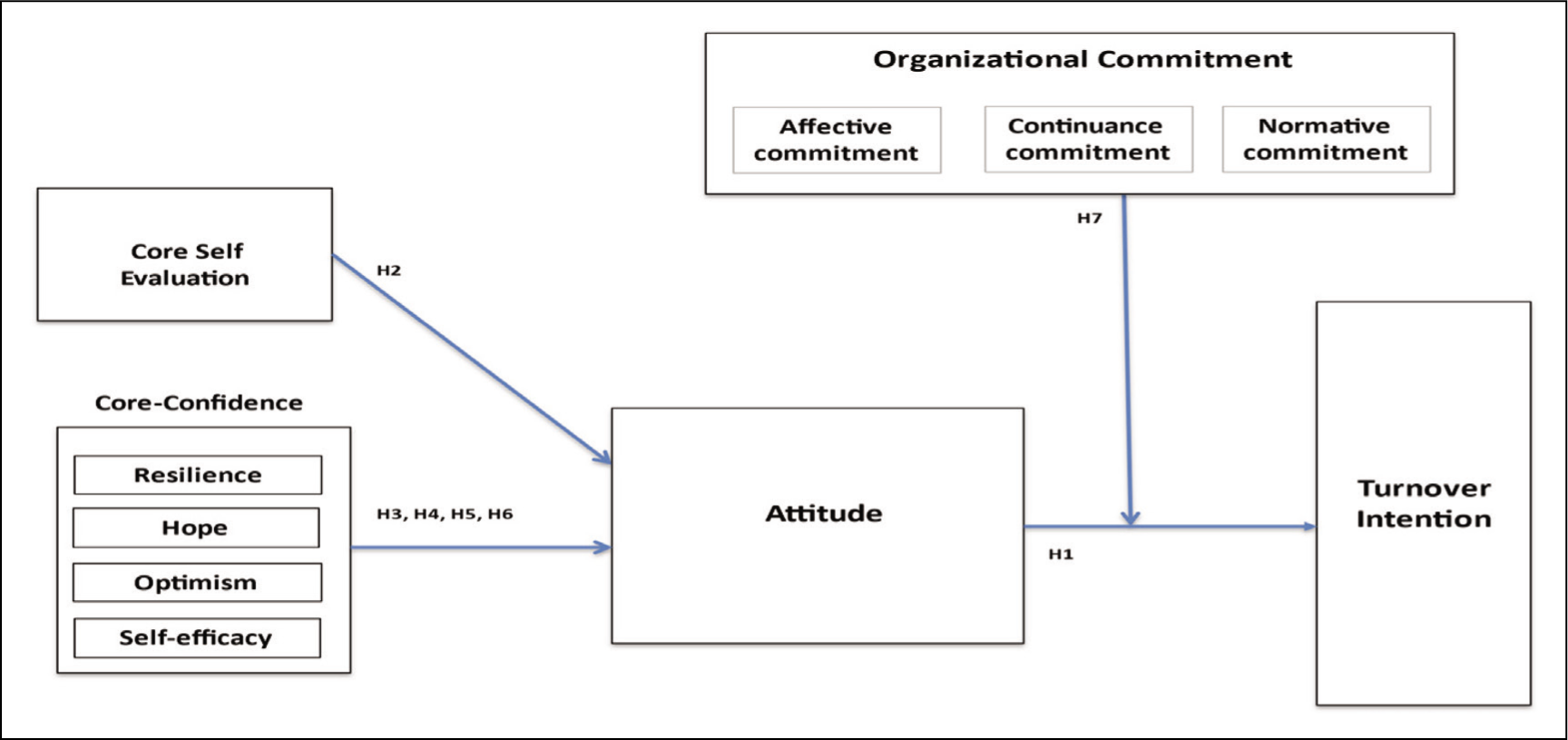
Therefore, a conceptual framework is proposed (Figure 1).
Proposed Conceptual Framework.
Methods
Research Design
The current research adopts a quantitative approach for data analysis and results from the discussion due to the following reasons: According to Cresswell (2009), the quantitative method supports the researcher with the administration of a questionnaire survey to recognize trends in attitudes, characteristics, or behaviour of the population. This deductive approach leads to the testing of theories consistent with the objective of the present study. Furthermore, the participants of this study are largely hotel employees in Malaysia who are working in different sections (e.g., guest services, entry-level, room service, kitchen staff, marketing, managers, etc.). Accordingly, the quantitative method, which allows more organized data collection from a large number of samples, is more adequate for the current study. Data collection occurs via instruments such as questionnaires or surveys.
Research Population and Data Collection
The target population of the current research is Malaysian hotel employees. This study applies the partial least squares structural equation modelling (PLS-SEM) method to analyse the data. Hair et al. (2014) stated that the accepted sample size in a PLS-SEM study should be ten times the major number of the structural pathways directed at a specific construct in the model. In the current study, the maximum number of paths pointing at ‘turnover intention’ would be 12 because of the 3 TPB constructs plus 9 interaction moderator terms (since commitment is analysed at the sub-dimension level). Therefore, the minimum sample size based on Hair et al. (2014) should be 10 × 12 = 120. Further, Sekaran (2003) reported that the sample sizes of 200 and 500 can be considered effective and more reliable. Consequently, to carry out a much more proper and adequate data collection, 300 proper survey responses were collected from the hotel employees. At the time of this study (June 2022), the world was still dealing with the COVID pandemic, and Malaysian borders were opened to tourism in April 2022 (Tourism Malaysia, 2022). Data were collected after Malaysia opened its borders to tourists after two years of lockdown in April 2022. The duration of data collection was about 40 days (about one and a half months) between June and July.
First, hotels with different rankings (1 to 5 stars) in the Klang Valley area were identified by the Malaysian Association of Hotels. Current authors visited 100 hotels in the Klang Valley area, but only 33 hotels (ranking from 1 star to 5 stars) were approved to participate in the survey. The hotel’s human resource managers and assistant managers were contacted to obtain their approval to conduct the survey. After receiving the approvals, human resource managers would be sent consent documents explaining necessary details regarding the research study, procedures, participants’ rights and confidentiality of responses. The survey forms were compiled in booklet format, including the introduction letter, consent letter and questionnaires. As a result, a total of 600 questionnaires were distributed between 33 hotels. Additionally, a complete guideline was given and explained to the human resources officer of the hotels to impose tighter controls on the respondent selection procedures. The survey was written in both English and Malay languages to be more accessible to the participants by allowing them to choose their preferred language. The participants were full-time hotel employees in Malaysia working in different job positions, including associate-level staff, administrative staff, supervisory staff and assistant managers.
Human resource managers were asked to randomly choose the respondents from all levels of employment (managerial level and non-managerial level) to reduce selection bias. This ensures that the respondents were the actual individuals required to deliver the applicable data. After three weeks, the completed questionnaires were handed back to the human resource managers, which were then collected by the researchers. Several follow-up actions via telephone calls, emails and visits were made to all the hotels’ human resource managers to encourage the respondents to complete the questionnaires given to them. A total of 600 questionnaires were distributed, with 318 responses returned, resulting in a 53.0% response rate. Out of the 318 responses, only 300 completed questionnaires were acceptable for the analyses, resulting in an adjusted response rate of 50%. From the final results, the majority of participants were 94 (31.3%) employees from three-star hotels, 65 employees (21.7%) from five-star hotels, 40 employees (13.3%) from four-star hotels, 70 employees (23.3%) were from 2-star hotels and 31 employees (10.3%) were working in one-star rating hotels.
Questionnaire Design, Validity and Reliability
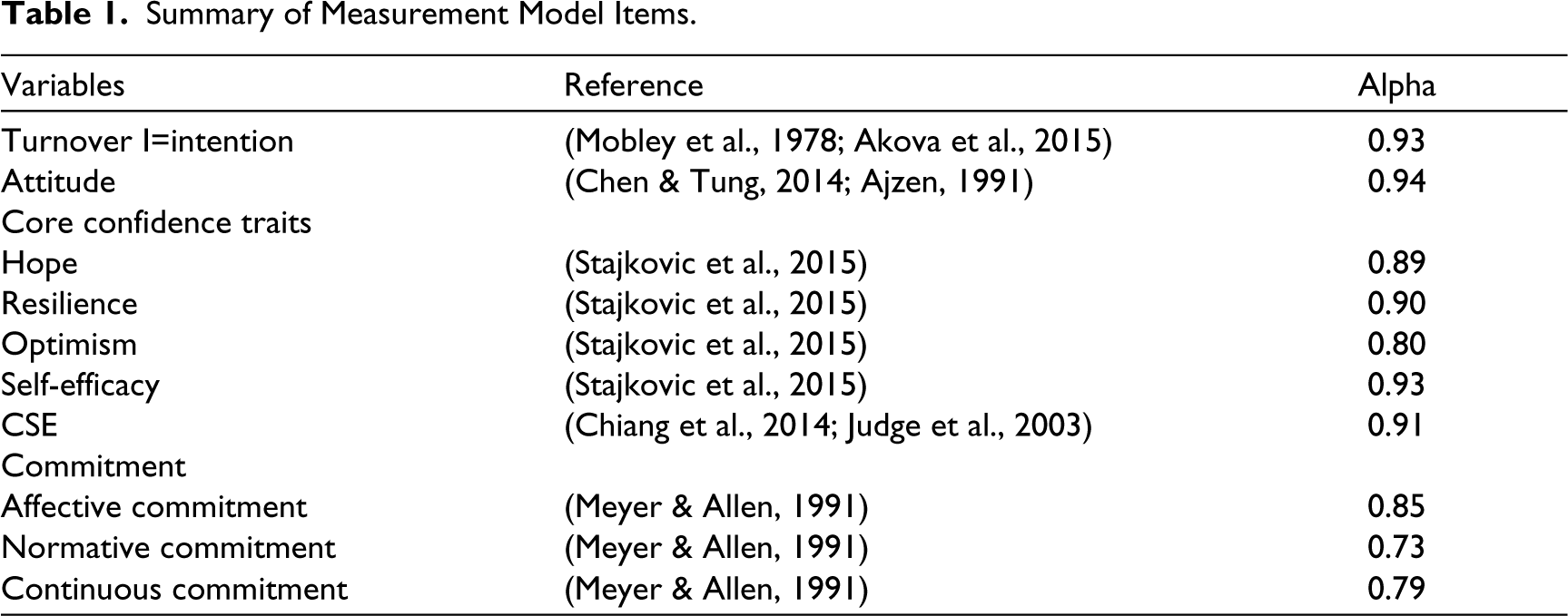
The survey questionnaires are outlined in different sections. The measurement items were selected from past studies with high reliability, some wording modification and the seven-point Likert scale (1 = strongly disagree; 7 = strongly agree). The turnover intention variable is evaluated using three items proposed by Mobley et al. (1978). Attitude is measured using the questions offered by Ajzen (1991) but adapted by Chen and Tung (2014) to predict employees’ attitudes (7 items). Commitment constructs were measured using Meyer and Allen’s (1991) established organizational commitment questionnaire’s (OCQ) scale. The 12-item scale introduced by Judge et al. (2003) is used to evaluate the independent variable of core self-evaluation. The core confidence traits used in the measurement proposed by Stajkovic et al. (2015) comprised 57 items, including resilience (25 scales), optimism (12 scales), hope (12 scales) and self-efficacy scale (8 scales). The questionnaire was also designed to collect information on the respondents’ demographic and professional backgrounds. Prior to the actual data collection, the questionnaire was pilot-tested by gathering data from 40 hotel staff to ensure that there was no vagueness and that the respondents understood the questions. Table 1 summarizes the information regarding the scales of the variables used in the study questionnaire.
Summary of Measurement Model Items.
Data Analysis Results
The current study utilized PLS-SEM to investigate the assumed conceptual model. Foremost, the primary analysis and descriptive results were evaluated using SPSS software. PLS-SEM was selected for the current study due to the following reasons: First, PLS-SEM has become dominant within a variety of disciplines, particularly organizational research, in analysing the cause-and-effect connections between constructs (Hair et al., 2014). Second, according to Hair et al. (2014), PLS-SEM uses existing data to approximate the path relationships in the model in order to minimize the error terms of the endogenous constructs. In other words, PLS-SEM approximates coefficients to maximize the R2 values of the target constructs. This feature achieves the prediction objective of PLS-SEM. Fourth, according to Leguina (2015) and Hair et al. (2013), normality of data, small sample size, extreme model complexity or methodological irregularities that occur in the process of model estimation can violate the CB-SEM, while these situations have no effect on PLS-SEM and it can be a respectable methodological alternative for theory testing. Moreover, PLS-SEM is the preferred method when the research attempts to develop a theory and explain the variance (prediction of the additional constructs) (Hair et al., 2014). For this reason, since the objective of the study is theory development, it is logical for researchers to use PLS-SEM as an alternative approach to CB-SEM (Hair et al., 2014).
The research model is then analysed and assessed in three steps, successively. The first step is the measurement model’s estimation of efficacy, followed by the evaluation and assessment of the structural equation model.
Descriptive Results
Employee turnover may be influenced by demographic factors such as age, gender, education level and length of employment. For instance, Choudhury and Gupta (2011) revealed that demographic factors such as age have a moderating effect on employee turnover intention. Their research explored that among older employees (compared to younger employees of 25 or less), pay satisfaction is more significant than job satisfaction when it comes to the intention to quit a job, while among younger employees, turnover intention is driven more by job satisfaction than pay satisfaction. Similarly, research by Peltokorpi et al. (2015) revealed that demographic factors such as gender moderate the relationship between organizational embeddedness and turnover intention. Additionally, demographic variables such as gender, age and organization tenure significantly affect employees’ stress levels and, consequently, affect their turnover intention (Dodanwala & Santoso, 2022).
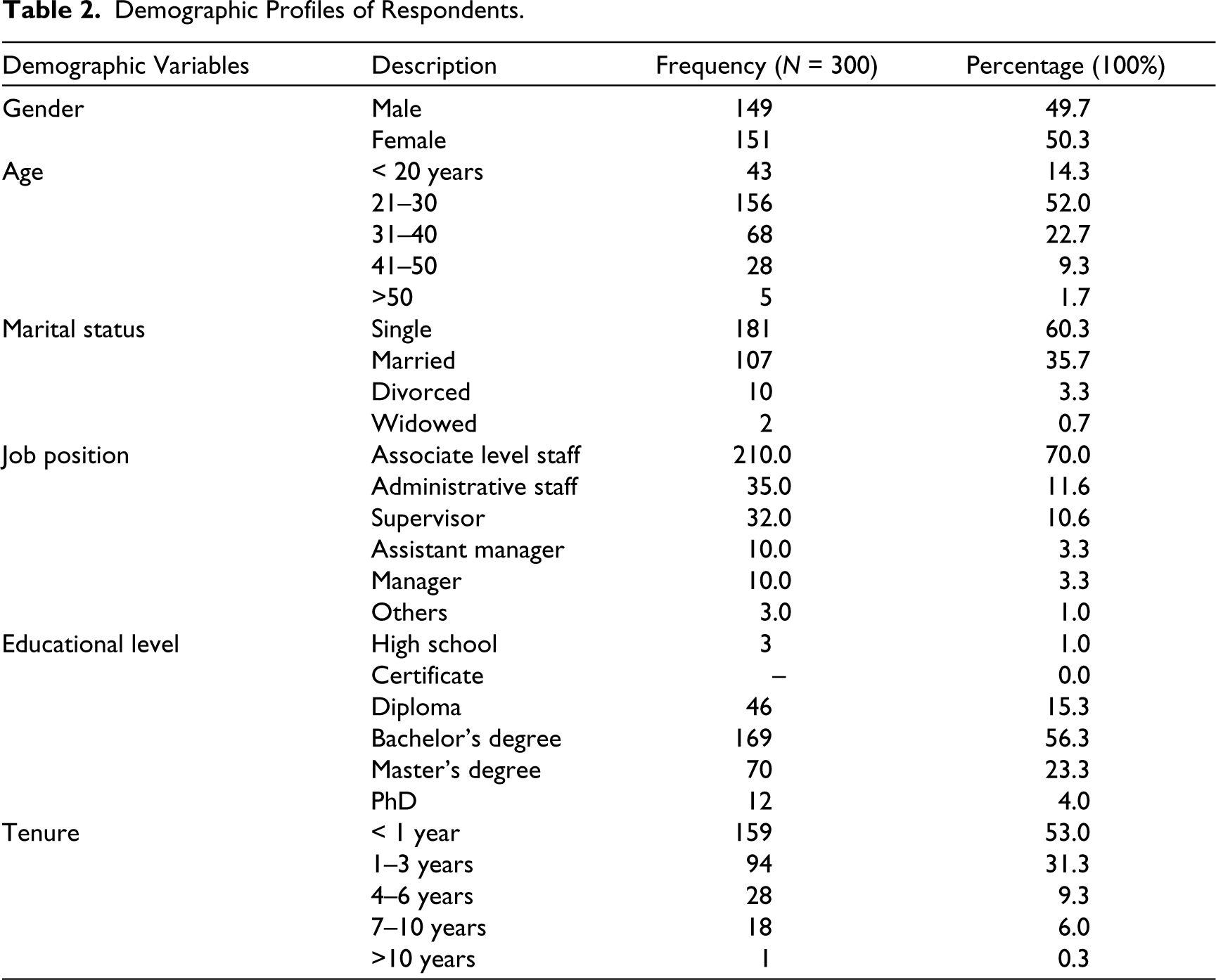
As tabulated in Table 2, all information in this section has been extracted from the 300 valid responses to the survey questionnaire. The study respondents comprised 149 males (49.7%) and 151 females (50.3%). The smallest age group among the respondents was more than 50 years (1.7%), while most (52.0%) of them were between 21 and 30 years old. As portrayed in Table 2, more than half of the respondents, 159 individuals (53.0%), have been working with the present hotel for less than one year and only one of them (0.3%) has spent more than 10 years working in the current hotel and about 253 employees have spent less than three years with the hotel. This could be a reflection of the industry with a high turnover rate.
Demographic Profiles of Respondents.
As tabulated in Table 2, all information in this section has been extracted from the 300 valid responses to the survey questionnaire. The study respondents comprised 149 males (49.7%) and 151 females (50.3%). The smallest age group among the respondents was more than 50 years (1.7%), while most (52.0%) of them were between 21 and 30 years old. As portrayed in Table 2, more than half of the respondents, 159 individuals (53.0%), have been working with the present hotel for less than one year and only one of them (0.3%) has spent more than ten years working in the current hotel and about 253 employees have spent less than three years with the hotel. This could be a reflection of the industry with a high turnover rate.
Descriptive Statistics for All Main Constructs
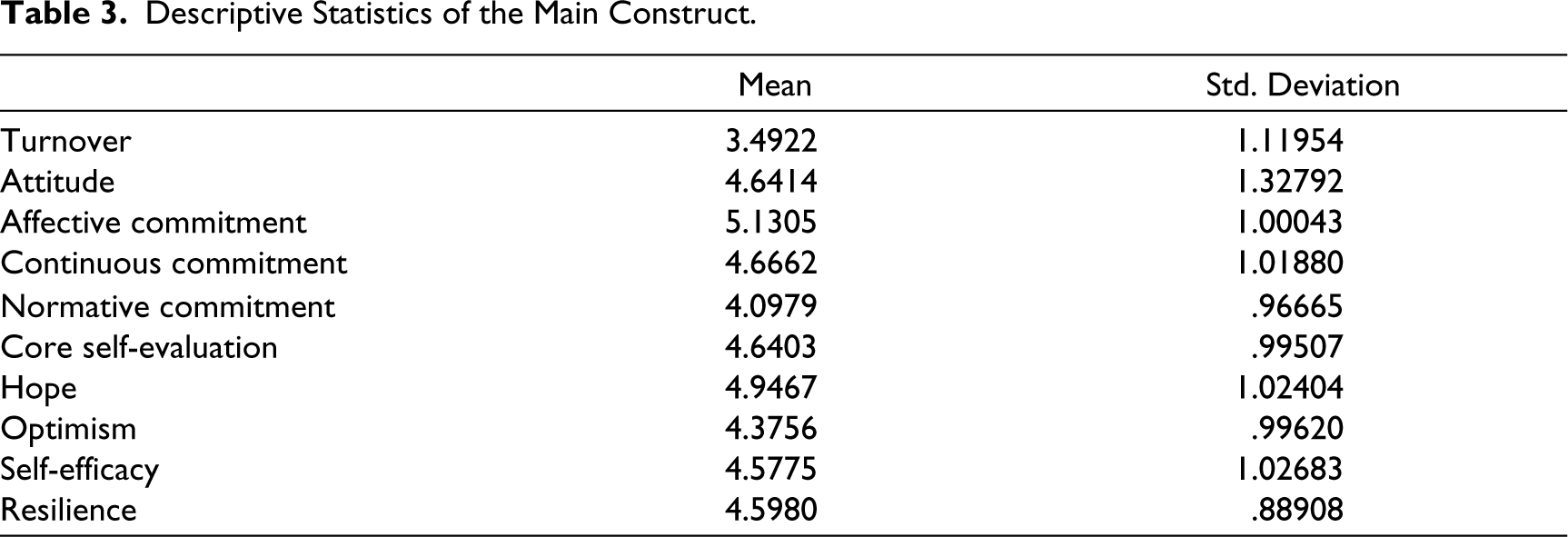
Table 3 depicts the average of each item and the standard deviation of each variable in detail. Turnover Intention: The mean score (M = 3.492, SD = 1.119) for turnover intention is moderately high, indicating that respondents probably already have the intention to quit the hotel organization. Attitude obtained an average mean value of M = 4.64, SD = 1.32, which demonstrates that respondents have a positive attitude towards their hotel. The first dimension of commitment is affective commitment, which obtained an average mean value of M = 5.13, SD = 1.00. Meanwhile, the second dimension of commitment, which is continuous commitment, obtained an average mean value of M = 4.66, SD = 1.01. The third dimension of commitment, normative commitment, obtained an average mean value of M = 4.09, SD = 0.966. Overall, the average of the mean falls between the range of 4.09 and 5.13, which is moderately high. Personality: Core self-evaluation obtained the mean value M = 4.64, SD = 0.99, which is moderately high. Hope obtained an average mean value of M = 4.94, SD = 1.02. Optimism generated an average mean value of M = 4.37, SD = 0.99. Self-efficacy and resilience measures attained average mean values of M = 4.57, SD = 1.02 and M = 4.59, SD = .88, respectively. The overall average mean value falls between the range of 4.37 and 4.94, which is moderately high. In total, Hope scores the highest, followed by other personalities with slightly lower mean scores.
Descriptive Statistics of the Main Construct.
In the provided descriptive statistics, the mean values offer insights into the levels of various constructs, such as turnover intention, attitude, commitment and personality traits, among others. Understanding the mean and standard deviation values is essential for aligning proposed HR interventions with organizational needs and employee perceptions. For instance, in the case of turnover intention, a moderately high mean score suggests a considerable level of intention to quit within the workforce. This finding underscores the importance of implementing retention strategies and addressing the underlying factors contributing to turnover. Similarly, mean scores indicating positive attitudes and moderately high levels of commitment among employees reflect favourable organizational climates. HR interventions aimed at reinforcing positive attitudes, enhancing employee engagement and fostering commitment can further strengthen employee satisfaction and reduce turnover intentions. Moreover, the descriptive statistics pertaining to personality traits, such as hope, optimism, self-efficacy and resilience, provide insights into employee resilience and coping mechanisms. Understanding these traits enables HR practitioners to design interventions that mitigate stressors in the workplace, promote positive personalities and decrease turnover intentions.
Measurement Model Evaluation
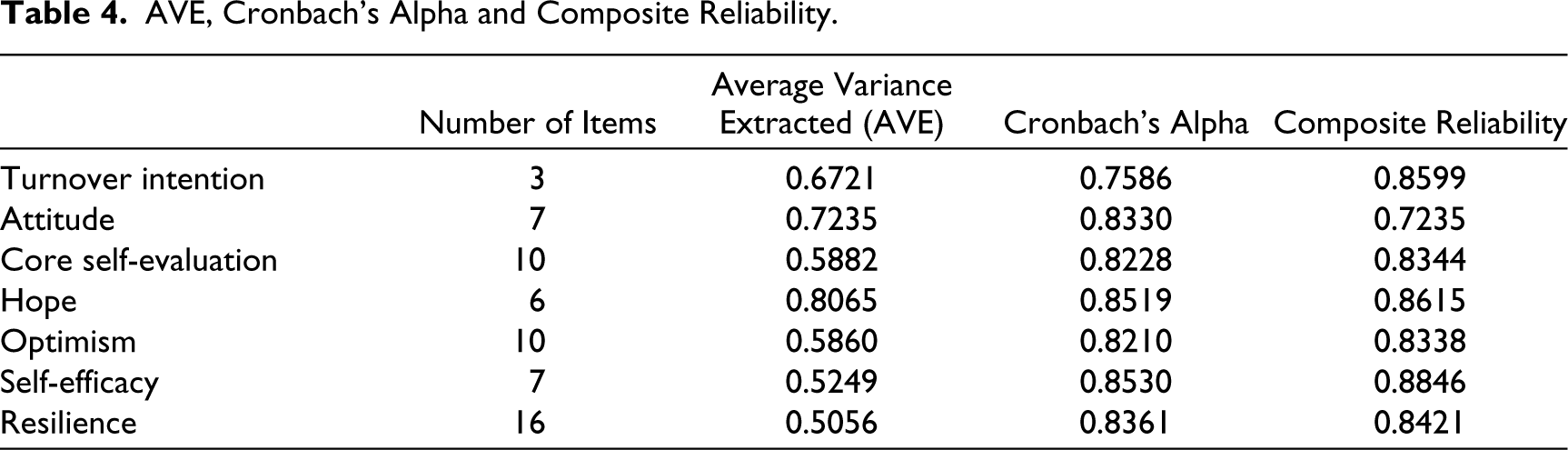
To evaluate measurement models with reflective indicators, researchers should confirm their reliability level through internal consistency and composite reliability with validity (convergent and discriminant) (Hair et al., 2016). The scale is considered significant if its factor loading is higher than 0.60 (Hair et al., 2016). Consequently, by examining the research results, all indicators with outer loadings lower than 0.4 are removed. According to Hair et al. (2016), composite reliability is measured by its composite alpha value, which is expected to be greater than 0.70. The result shows that the current study’s composite reliability values have met the requirement and are presented in Table 4. Convergent validity is measured by examining the average variance criteria (AVE), which should exceed the recommended cut-off value of 0.50 (Hair et al., 2016). Table 4 demonstrates all constructs’ convergent validity.
AVE, Cronbach’s Alpha and Composite Reliability.
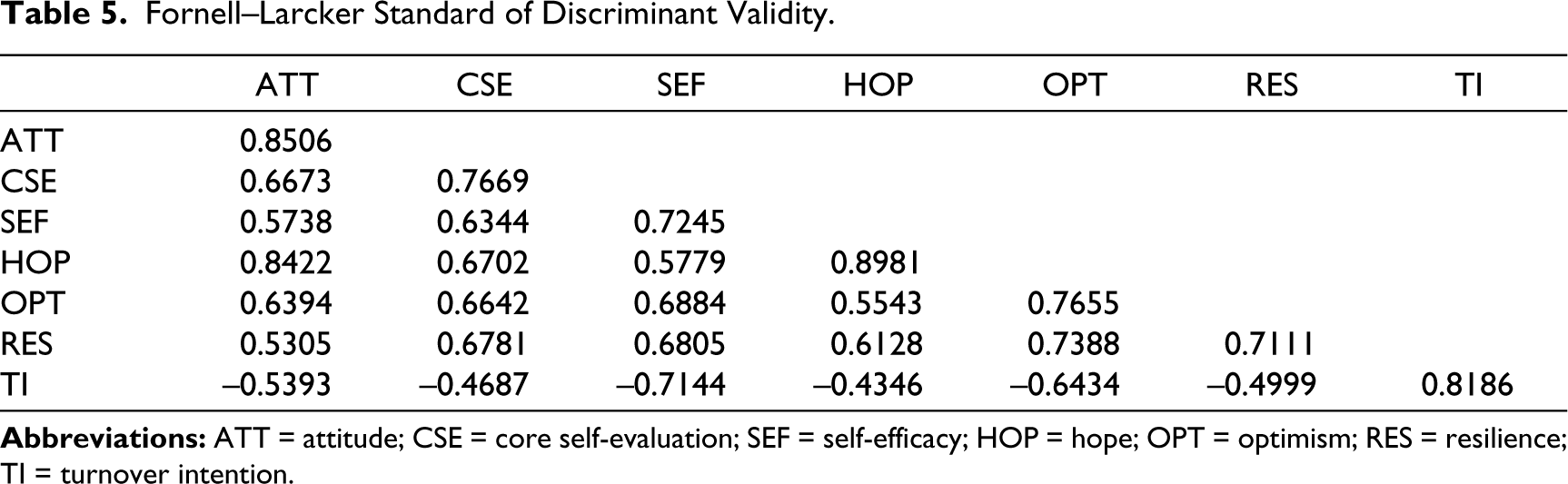
Discriminant validity was evaluated by referring to the standard proposed by Fornell and Larcker (1981). They claim that the specific variable should contain more variance in its associated indicating variables compared to the other constructs in the same model. Table 5 demonstrates that all AVE values of each concept are higher than the correlation with any other concept, proving discriminant validity.
Fornell–Larcker Standard of Discriminant Validity.
Structural Model Outcomes
For the current study, the authors use SEM-PLS to demonstrate and analyse the relationships in the research model associated with their t-statistics and path coefficients tabulated in Table 6.
Path Coefficient, t statistic, and p Value for Hypotheses Evaluation.
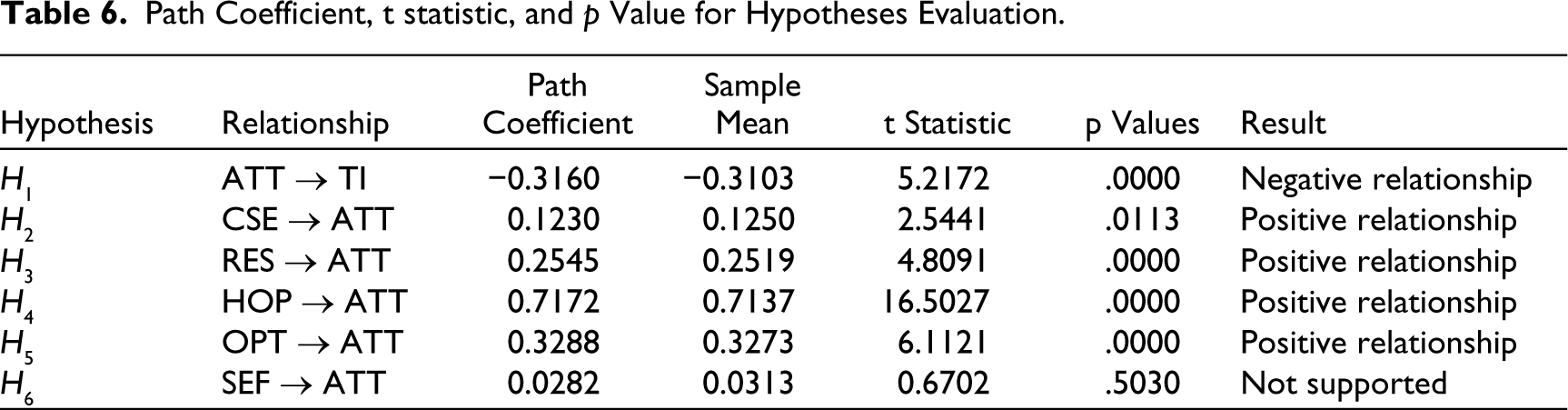
The findings show that the theorized correlation for H1 is significant and negative (t value = 5.2172, p < .05). Thus, employees’ positive attitude toward the hotel industry is expected to increase their intention to stay and decrease their turnover intention. For instance, if employees’ feelings and perceptions of the hotel are positive, they tend to stay with their existing company.
The hypothesized path for H2 is positive and significant (t value = 2.5441, p < .05). Proving that employees who believe in their capabilities and have high levels of core self-evaluation are more likely to work under undesirable working conditions and demonstrate a more positive attitude towards the organization.
The hypothesized path for H3 is significant (t value = 4.8091, p < .05), which confirms that resilient individuals, even under challenging conditions, can adapt to the situation. They will react more adequately to undesirable working conditions while demonstrating a good attitude towards their tasks and, subsequently, less intention to leave the company.
The hypothesized path for H4 is positive and significant (t value = 16.5027, p < .05), which provides evidence that hopeful employees look for ways to improve the challenging working conditions and demonstrate a more positive attitude towards the hotel.
The hypothesized path for H5 is positive and significant (t value = 6.1121, p < .05), confirming that optimism would positively influence employee attitude towards the organization and reduce the intention to leave.
The hypothesized path for H6 is not significant (t value = 0.6702, p > .05) and was rejected. The result of the research does not show any relationship between self-efficacy and attitude towards the company.
Assessment of the Moderating Effect of Dimensional Commitment
Table 7 shows the results of using commitment as a moderation factor between attitude and employees’ turnover intention. The results of the moderating hypotheses are as follows.
Moderating Results.
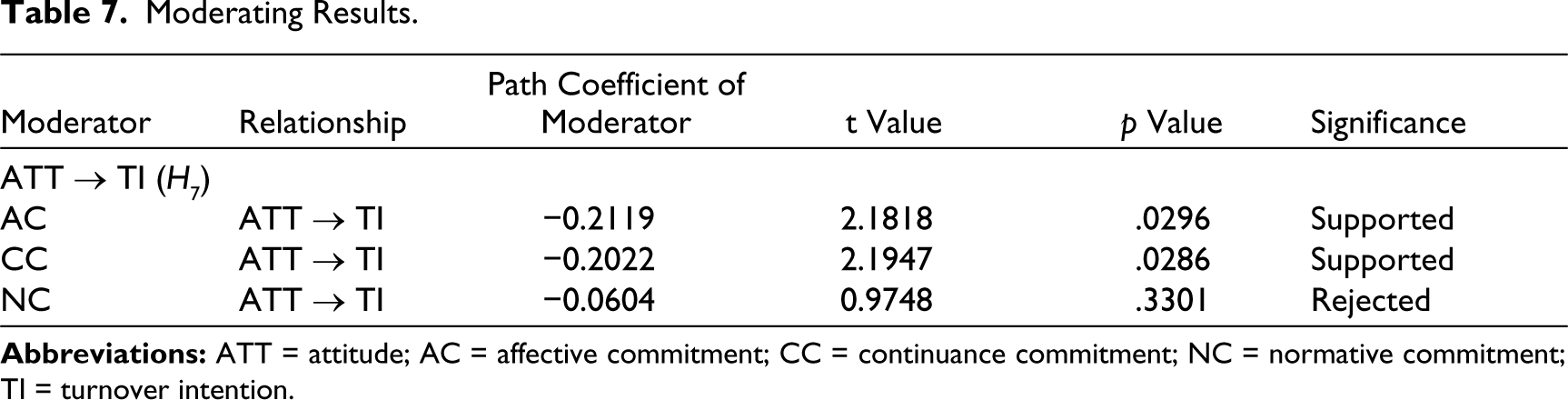
H7 proposed commitment moderates the link between attitude and turnover intention. H7 is partially supported for affective commitment (AC) and continuance commitment (CC) and rejected for normative commitment (NC). The results signify that if the employee shares the same feeling and attitude towards the hotel, those employees who have a more emotional attachment to the hotel (AC) or a fear of the cost associated with leaving (CC) are more likely to continue working with the organization and show less intention to leave.
Assessing the Overall Model
One remark about the model is that the path model with moderating effects generated R2 = 43%, whereas the model without moderating paths generated R2 =37 %, which indicates the satisfactory impact of the moderating factors in predicting the model. Contradictory to CB-SEM, no goodness-of-fit standard is obtainable in PLS-SEM. The R2 values of 0.20 in the human behavioural context are considered appropriate, while for some other contexts, researchers deliberated a different range of R2 as a guide (Hair et al., 2014). The result of the R2 values shows 77% for attitude and 43% for turnover intention. Meanwhile, the predictive relevance Q2 of the present model is 0.52 for attitude and 0.25 for turnover intention. This indicates the model’s predictive applicability, as it meets the minimum requirement suggested by Hair et al. (2014) to have a minimum of 0.02.
Discussion and Conclusion
Overall, the study’s findings have supported the usefulness of the proposed intangible model in understanding turnover intention in the hotel industry during the COVID pandemic. Ajzen (1991) stated that, among the TPB constructs, attitude is a core component that impacts individual decision-making. However, the model will be excluded if the employees’ attitude does not predict individual intention. Attitude demonstrated a negative effect on employees’ intentions to leave the organization. The finding also shows consistency with past research on employee turnover (Sasmita & Piartrini, 2019). Theoretically, staff with favourable attitudes would be more likely to stay with an organization.
Another aim of the study was to determine the impact of core personality traits (CCT and CSE) on employees’ attitudes and subsequently influence employee turnover intention. Current research confirms that personality traits affect the attitude of employees towards the hotel industry (R2 = 0.72). The relationship between CSE and employee attitude is significant. Previous researchers (Cho et al., 2018; Judge & Bono, 2003) found that CSE has been linked with attitudes, including satisfaction and commitment, which align with the current research. Notably, core self-evaluation is related to employee attitude, such that individuals with more positive self-evaluation grow more favourable attitudes towards the hotel. In addition, the attitude significantly influences employees’ turnover intention; hence, these individuals intend to stay longer and subsequently, the intention to quit the organization will be reduced.
Resilience is positively correlated with employee attitude. This result is in line with other research that has associated resilience with various job attitude outcomes (Avey et al., 2011). For example, high-resilience employees’ are able to handle changes arising from stress and exhaustion. They can demonstrate a more favourable attitude and present low turnover intentions.
The results also show that ‘hope’ is the strongest personality predictor of employees’ attitudes. This result is in line with other research in which ‘hope’ has been found to impact commitment and job satisfaction (Law & Guo, 2016). Employees who have high hopes can deal with the problems arising from stress and exhaustion. They would grow more positive attitudes towards the hotel and are prone to remain with the organization longer.
Optimism is positively correlated with employee attitude. This result is consistent with past research that found that optimism has been linked to job satisfaction (Bibi & Karim, 2017). Therefore, the effect of optimism on employee attitudes towards the hotel industry makes theoretical sense. When individuals believe that positive outcomes are in their future, they are more likely to have positive feelings towards their job and to develop a favourable attitude towards it.
Self-efficacy in the current study did not meet the expectations of the study. A positive relationship between attitude and efficacy is expected since a person who is good at doing and understanding their job tends to develop a positive attitude towards their job. However, the results of the research do not show any relationship between self-efficacy and attitude. This significant result is similar to a study by Jung and Yoon (2015) that examined the impact of personality traits, including self-efficacy, on job satisfaction in the hotel industry and failed to find any significant relationship. However, the results contrast with other research (e.g., Luthans et al., 2007), which discovered that self-efficacy significantly predicted job satisfaction. These differences confirm Bandura’s (1997) proposal, which stated that self-efficiency leans towards situation-specific rather than general perception. Therefore, it will differ across diverse situations and be personalized to the domain of interest.
The third objective was to identify the role of organizational commitment in each dimension as the moderator of the association between attitude and employees’ turnover intention. The findings indicate that organizational commitment has partially moderated the relationship. Evans (1985) noted that due to the difficulty in detecting the strength of the moderator variables, even a small difference in R2 square change, as little as 1%, should be considered important in evaluating the strength of the moderating effect. While the complete structural model analysis with the addition of commitment attained an R2 of 43%, the TPB model without commitment reported an R2 of 37%. The addition of commitment to the structural model has portrayed a 6% variance, which means the moderating effect is medium to high.
Of all the dimensions of commitment, both variables of affective commitment (AC) and continuous commitment (CC) negatively moderated the relationship between attitude and employees’ turnover intention. The affective component has induced employees’ psychological need to feel comfortable working within their dedicated organization and encouraged them to be competent in their work roles (Meyer & Allen, 1991). It can be said that highly committed employees wish to continue working with their working organization. The continuous commitment is closely related to the costs and limitations associated with departure and the low availability of alternatives (Meyer & Allen, 1991). Once these costs are challenged, high levels of continuous commitment may lead employees to stay with an organization to overcome costs or regain benefits by staying.
Theoretical Contribution and Practical Implications
The present research contributes theoretical value by putting forth an intangible conceptual model of turnover intention using core personality factors and three commitment components, which is considered a new application. The new correlation between core personality traits and attitudes showed that employees’ personalities are essential in predicting employees’ positive attitudes towards their organization, consequently reducing employee turnover intention. The findings support the new conceptual framework by increasing the effectiveness and predictive ability of the proposed model of employee turnover.
Besides theoretical contributions, this study demonstrates significant practical implications that improve intangible factors responsible for employee turnover intention and reduce the organization’s costs. According to Dirani et al. (2020), the responsibilities of human resource managers and supervisors are crucial in influencing the overall employee attitude and feelings towards the organization, especially during the COVID pandemic.
Hotel managers should try to support employees with small benefits during the COVID pandemic to reduce their concerns, providing a more positive attitude towards the organizations. For instance, giving exclusive benefits, such as a discount for holiday packages, a discount for family dinners at the hotel restaurant and other small advantages specifically for employees’ family and friends, should be provided to make them feel part of the organization. Human resource managers can also offer family emergency leaves or a voluntary reduction of working hours for employees to accommodate their family and personal needs if necessary. HR managers can help the staff by providing flexible work arrangements to cope with multiple demands.
HR managers need to praise employees’ efforts continuously. Praising employees doesn’t apply any cost to the managers of the organization. Still, it will significantly boost employees’ confidence. They feel more hopeful, encouraged to grow, feel more passionate about the organization, and develop a more positive attitude towards their job. HR managers can arrange virtual platforms among their staff to share challenges, wins and concerns with co-workers or supervisors.
Furthermore, positive psychology researchers have provided numerous guidelines and applications to enhance core personalities (Jung & Yoon, 2015). For instance, a few minutes of motivational speech every day does not cost the organization but will help employees relax, express themselves and share their concerns or ideas about the work situation, enhancing employee positivity.
Recognition and encouraging feedback by managers and supervisors are keys to helping employees feel more respected, supported and valued, which would make them generate a higher evaluation of themselves and enhance CSE. Organizations can implement agendas such as corresponding with and expressing gratitude to the employees. HR managers can ask unskilled employees to observe other colleagues with comparable skills perform more progressive duties. Observing individuals with comparable abilities succeed at a job will help them develop positive beliefs about themselves. HR managers and supervisors can create a vibrant, energetic, stress-free workplace by recognizing employees’ successes, expressing gratitude and appreciation and showing compassion. For instance, they can choose ‘best employee’ every four months and give a small gift as appreciation.
Human resource managers are significantly important in providing proactive strategies that improve employee resilience (Mitsakis, 2020). By taking a positive stance at work, employees can adapt to different challenges, control the stressful work environment, put more motivation and energy into their work and consequently increase their resilience during the COVID pandemic environment.
Another crucial finding of the study is that different commitment dimensions have moderating effects on turnover intention. Previous researchers stated that teamwork could enhance affective commitment (Jaiswal & Dhar, 2017). A supportive environment at the workplace (Pathardikar & Sahu, 2011) can enhance continued commitment in the organization. Therefore, HR managers and supervisors need to promote a culture of team-building and motivate employees to work together. This will boost employees’ emotional attachment and their commitment to the organization. Constant information sharing and support networks should be practiced by holding quick consultation sessions, team meetings, employee supervisors’ meetings, etc., to generate a more organized atmosphere that inspires novel ideas. Supervisors need to communicate regularly with employees and encourage them to share their concerns. Regular communication through short virtual meetings using smartphones, constructive feedback, encouragement, support and guidance instead of criticism (when only supervisors emphasize an employee’s mistake) can develop trust among employees and supervisors and create a more positive working environment, which consequently increases affective and continuance commitment.
The current research’s last practical implication is on the hotel industry’s selection and recruitment process. Human resource managers can include personality assessments in the recruitment process for supervisory and managerial levels (with higher-paying job positions) and seek employees with high core personality traits. HR managers can use the core personality questionnaire during and after the selection. Therefore, an assessment of this implication would be used to predict turnover at the time of hire.
Limitations and Future Suggestions
Although the proposed integrated model of turnover intention is supported by appropriate and conventional variance as explained in the full structural model, it is possible that other applicable variables could influence turnover intention, but these variables are not addressed in the current conceptual model due to time and cost constraints. The inclusion of emerging positive psychological personalities, such as ‘mindfulness’, ‘spirituality’, etc., could enrich the prediction of the turnover intention model. Moreover, different moderators in the TPB model can add more theoretical contributions. For instance, employee relations and employee engagement are key variables in predicting turnover intention. Hence, it is speculated that these variables might be possible moderators for the relationship between TPB constructs and employees’ turnover intention. Moreover, future studies can consider demographic factors such as age and gender as moderators in turnover models. The current article mostly focused on personality factors as intangible facets to improve turnover intention due to the time limit, while considering changes in turnover intention based on demography, particularly the age or longevity of hotel staff, which can be worthy of future research. Recognizing this moderating effect can improve management approaches and is significant for better understanding the different motives underlying turnover intention.
Footnotes
Declaration of Conflicting Interests
The authors declared no potential conflicts of interest with respect to the research, authorship and/or publication of this article.
Funding
The authors received no financial support for the research, authorship and/or publication of this article.