




Abstract
Organizational research has increased in the contemporary, digitalized and global society. Mainly researchers in Western countries conducted empirical, organizational research in the past. These studies have investigated combinations of psychological safety, knowledge sharing and leaders’ expression of humility because these variables have crucial roles in organizational functions. Japanese research on these variables has been scarce due to the lack of scales for assessing these variables in Japanese. From a methodological perspective, research conducted in Western and other cultures where most people understand English requires multicultural validation studies. Therefore, we developed Japanese versions of scales assessing psychological safety, knowledge sharing and expressed humility and assessed their structural validity, internal consistency and convergent validity. The results indicated factor structures and inter-correlations between the scales consistent with previous research. This work is novel because of its large samples across multiple job types in contemporary work organizations. We expect this study to make methodological and theoretical contributions to future research.
Keywords
Introduction
Employees in contemporary organizations must work with others in teams, use complex systems, and attend to clients’ unexpected needs. Moreover, for a team to be productive and innovative, its leaders must consider how they manage the team. The followers must also contribute to creating a suitable working atmosphere. Furthermore, all the team members must be responsible for criticizing each other and asking goal-directed questions regardless of age, experience, or job title to feel engaged in work and maintain their physical and psychological well-being. Research has indicated that a team of the best people does not necessarily perform best (e.g., Google, 2012). The accumulated literature on teams and individual employees has quantitatively identified constructs influencing a team’s work performance. These results indicate that psychological safety accelerates productivity (Google, 2012).
As defined by Kahn (1990), psychological safety includes ‘being able to show and employ one’s self without fear of negative consequences to the self-image, status or career’. This concept investigated by Google in Project Aristotle drew public attention, partly because the project was conducted by real teams in charge of ongoing work in a famous organization (Google, 2012). In this project, Google studied the efficacy of its engineering and sales department teams. The results indicated that team members’ work cohesiveness rather than their qualifications were critical for team efficacy. The study revealed that psychological safety was the starting point of successful teams among multiple variables analyzed. Team members can express their thoughts honestly when psychological safety is high. Such an environment enables members to understand their team more deeply and work more smoothly (Newman et al., 2017). Furthermore, a Canadian study has recently reported the essential role of psychological safety (Automatic Data Processing [ADP] Canada, 2022). ADP Canada surveyed over 1,000 Canadian employees and reported that minority employees (i.e., racial or indigenous) were more likely than their majority counterparts to feel undermined by their colleagues, leading them to perceive low psychological safety at work. Therefore, we can conclude that psychological safety underlies maintaining teams, which are more than a collection of individuals and form meaningful performance units. Edmondson (1996), May (2004), and Brown and Leigh (1996) developed Psychological Safety Scale (PSS).
Prior research suggests that a high level of psychological safety alone is insufficient to increase employee creativity and that we must improve the effect of safety by including knowledge sharing (Wang et al., 2018). In addition to psychological safety, knowledge sharing, defined as ‘activities of transferring or disseminating knowledge from one person, group or organization to another’, has become significant for organizations because contemporary business involves more people than in the past (Lee, 2001). Therefore, people inside organizations, including team members and co-workers, and people outside an organization, including service receivers and outsourced staff, must share knowledge about their projects. Knowledge is not necessarily shared tangibly through announcements or written rules because it can also be tacit (i.e., implicit). Tacit knowledge, acquired through apprenticeship and experience, is also critical for organizational success. The Knowledge Sharing Scale (KSS) (Lee, 2001) covers both explicit and implicit knowledge and helps assess the knowledge-sharing degree. Using this scale, Asbari et al. (2021) clarified the relationship between knowledge sharing and employee innovation (i.e., performance). Zhou et al. (2020) reported the critical role of knowledge sharing in green innovation as a sustainable supply chain. Moreover, Ahmad and Karim (2020) described the surge of literature on knowledge sharing and explained that knowledge sharing had been investigated in organizations across multiple job types at individual-, team-, and organizational levels. Most studies have reported that the antecedents and consequences of knowledge sharing affect performance positively (see also Castaneda & Cuellar, 2020; Wang & Noe, 2010). Knowledge is an essential resource in contemporary organizations surrounded by a globalized society and competitive markets. Therefore, more knowledge-sharing research is needed (World Bank, 1998).
Thirdly, organization research has associated expressed humility with leadership. The concept of humble leadership was not a past topic of academic research because past studies addressed leadership from the perspective of toxic characteristics and their consequences on organizations (e.g., narcissism and arrogance; Brunell et al., 2008; Green, 2014; Silverman et al., 2012). Followers are unwilling to express negative opinions about their work under a leader with toxic characteristics because the leader might blame them for criticizing, even though expressing negative opinions might be productive and beneficial to the whole team. In contrast, during the last 15 years, the research on humility and leadership has been conducted separately, for example, in the business and psychology fields. Owens, Johnson, and Mitchell (2013) conducted an early empirical study on leaders’ humility and proposed three aspects of humble leadership. To assess these aspects, they developed the Expressed Humility Scale (EHS) consisting of (a) willingness to see oneself accurately, (b) appreciation of others’ strengths and contributions, and (c) teachability. Leaders that consider these ideas have followers who can be authentic and feel connected to their jobs, allowing them to find the meaning of the self at work. This is possible because teams with leaders that reflect on their leadership welcome the followers’ commitment, including negative criticism. They are also willing to learn from their followers. Moreover, the teams led by such leaders are egalitarian. Xu et al. (2022) reported that egalitarian relationships within a research team of scholars contributed to developing novel ideas and higher productivity. Other studies have identified different aspects of humble leadership. For example, Oc et al. (2015) identified nine features, and Ou et al. (2014) described six facets of humble leadership. However, we can narrow down the core ideas of humble leadership to the three characteristics described by Owens et al. (2013), that is, an accurate self-view and self-awareness, teachability and openness to feedback, and the appreciation of others (Kelemen et al., 2022). Research on different perspectives of humble leadership has recently increased. For example, Chen et al. (2021), who focused on outcomes, reported that humble leadership resulted in followers’ proactive behaviour. Others have demonstrated the positive effects of humble leadership on individuals, teams, and organizational performance (e.g., Ali et al., 2020; Chiu et al., 2020; Mao et al., 2019; Ren et al., 2020).
At least two of these variables described by Owens et al. (2013) were simultaneously measured and tested in past studies (Chen et al., 2019; Mehmood et al., 2021; Rego et al., 2021). Furthermore, researchers have investigated the combined effects of variables described by Owens et al. on work performance and indicated that all three variables, directly and indirectly, influenced followers’ creativity (Wang et al., 2018). Additionally, a study conducted in Malaysia found that psychological safety influenced work engagement (Basit, 2017). As described above, studies have indicated that psychological safety, knowledge sharing, and expressed humility accelerate team productivity.
One of the major concerns surrounding organizational research is that researchers often develop theories and test them from the perspective of English language studies based on samples and perspectives of Western cultures. Most previous research on these variables was conducted in Western or non-Western cultures where English is widely understood. Research in Japan has been scarce because Japanese language versions of many measures used in organizational research are unavailable. Work engagement is known for its effects on the well-being of Japanese employees (Shimazu & Schaufel, 2009). Shimazu et al. (2008) demonstrated that Japanese employees are less likely to be engaged in their work than workers in other countries. However, Shimazu et al. (2010) pointed out that researchers should be cautious when interpreting low engagement scores among Japanese people without considering their cultural characteristics and situations. Thus, the next generation of research needs to realize the influences of Western standards and those of non-Western cultures such as Japan.
Previous research conducted in English-speaking cultures has led to valuable findings. However, these findings cannot be easily applied to Japanese organizations because they have characteristics unique to the Japanese culture. For example, labour productivity in Japan is relatively low. The Japan Productivity Centre, based on data collected by the Organization for Economic Co-operation and Development (OECD), reported in 2020 that Japan’s labour productivity was $49.5 per hour, which was ranked 23 among 38 member countries. Although this figure is a 1.1% rise from the previous year, the rank was the worst since 1970. Moreover, the idea of diversity and inclusion is relatively less disseminated in Japanese workplaces compared to other countries. Kenjo (2020) pointed out that the Japanese labour force’s gender rate is 0.814, the lowest among some major developed countries (i.e., Iceland, Sweden, Germany, France, the UK, and the US). Furthermore, a considerable gender gap is observed in Japan for salaries and the proportion of women in managerial positions, similar to the gap in disabled people in the workforce (Kumagaya et al., 2021). We could understand the Japanese conditions more clearly and conduct interventions to improve them by conducting relevant empirical studies in the Japanese context.
Empirical research conducted in Japan using the Japanese language is indispensable for precisely identifying and defining the aforementioned and other related issues. Therefore, it is worth exploring the role of the three variables described above in Japanese organizations. For example, Kobayashi (2017) suggested that knowledge sharing might be related to work engagement in Japanese workplaces and could improve employees’ mental health. Masaki et al. (2021) identified the mediating role of psychological safety in choosing a place to work inside the office and work engagement. However, these authors used an unvalidated scale to assess psychological safety. Iwasawa (2016) suggested that the level of work engagement in Japan could be attributed to managers’ lack of communication skills and respect for followers’ autonomy, which can be regarded as features of humble leadership. Kumagaya et al. (2021) discussed the significance of psychological safety, knowledge sharing, and humble leadership and addressed the possible effects of variables on different aspects of Japanese organizations. Therefore, research is needed to clarify the psychological mechanisms of work engagement that consider the Japanese culture. Understanding the three variables could facilitate understanding how people achieve successful work behaviours, work environments, and performance.
Several researchers have indicated the need for empirical evidence with a sample of Japanese employees. Mukae (2018) reviewed research on work engagement and suggested several issues that need empirical investigation. Kageyama (2021) emphasizes the critical role of psychological safety in diversity and inclusion in Japanese organizations. Nevertheless, it has been challenging to investigate variables surrounding Japanese employees’ work engagement, diversity, and inclusion due to the lack of Japanese versions of validated scales (Ministry of Health, Labour, and Welfare, 2019).
For the scales measuring the three variables mentioned above to validate, we chose the PSS (Edmondson,1996), the KSS (Lee, 2001), and the EHS (Owens et al., 2013) because repeated studies have found that they have adequate validity. Moreover, past research has used these scales extensively (Kelemen, 2022; Ochiai & Otsuka, 2021; Zhou et al., 2020). Also, we can use these scales with individual employees and with teams. Ochiai and Otsuka (2021) translated Liang et al. (2012) PSS into Japanese. However, they conducted their study with an online sample of the general population (see Kumagaya et al., 2021 about collecting general population data). The scale developed by Liang et al. considers cultural differences. However, it is not as widely used as the scale developed by Edmondson (1996). Therefore, we expected that using the PSS (Edmondson,1996), the KSS (Lee, 2001), and the EHS (Owens et al., 2013) to investigate work-related activities in Japanese organizations would clarify the combined effects of these variables in Japanese companies and enable replication studies and in-depth investigations. It would also facilitate cross-cultural studies, which could significantly contribute to organizational research in the rapidly globalizing contemporary organizations that face increasing uncertainty and new business environments.
This study developed Japanese versions of the PSS, the KSS, and the EHS. Then, we confirmed their factor structure, internal consistency, and convergent validity. We theoretically predicted a robust positive correlation among these scale scores (Wang et al., 2018). The unique aspect of this study is that we collected a relatively large sample across multiple job types in actual work organizations that previous Japanese organizational research has not undertaken due to difficulties in obtaining the cooperation of organizations. Another valuable feature of this study is that the sample included organizations of different sizes ranging from small- to large organizations. In addition, although studies have reported the significance of psychological safety, knowledge sharing, and expressed humility, these constructs have not been investigated due to the lack of Japanese language scales. As a result, we expect the current study to result in a methodological breakthrough in Japanese research.
Methods
Participants
Participants (N = 893, 403 men, Mage = 35.26, SDage = 10.50) were recruited from three sources, samples A, B, and C. The samples used to validate the factor structure of PSS, KSS, and EHS were composed of different company employees engaging in daily teamwork. We defined teamwork as working with the same objectives in teams of at least two people. Sample A comprises employees of seven IT-related corporations, including physically and mentally challenged employees. Sample B comprised employees of four corporations with different job types, including physically and mentally challenged employees. Sample C comprised employees of an employment and education support company for disabled people. The participants from these companies were employed in different job categories (i.e., IT-related jobs, administrative jobs, sales jobs, and service jobs). We collected all the responses anonymously in an online survey. Table 1 shows the descriptions of the samples. The sample covered different-sized organizations ranging from small and medium-sized enterprises to SMEs and large organizations.
Sample Characteristics.
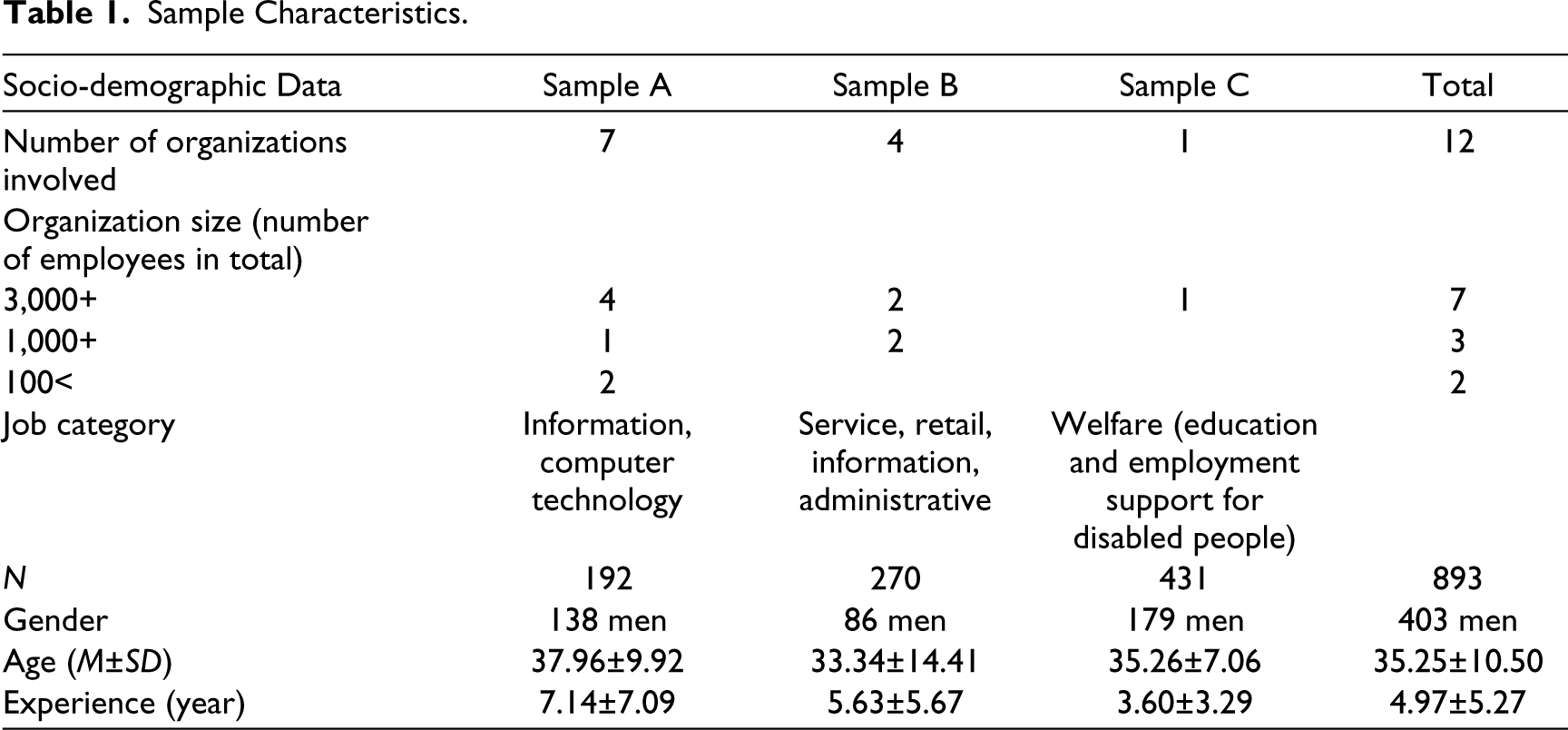
We divided the participant samples A, B, and C into two halves with the standardization of sample characteristics for independent factor analyses and explored the factor structure of the three scales. The sample sizes in each half of the sample used for exploratory and confirmatory factor analyses were larger than the number suggested by Kyriazos (2018) (i.e., for exploratory analysis, the number of items to participants = 1: 5; for confirmatory analysis, the number of items to participants = 1: 10). We used the identical halves (n1 = 446, 201 men, 240 women, 5 other, Mage = 34.93, SD = 10.38; n2 = 447, 202 men, 239 women, 6 other, Mage = 36.09, SD = 13.73) to analyze the PSS and KSS, but different halves (na = 367, 156 men, 206 women, 5 other, Mage = 35.18, SD = 14.48; nb = 368, 156 men, 206 women 5 other, Mage = 34.56, SD = 10.73) was used to analyze the EHS because only the followers in the team (not the leaders) responded to the EHS.
Measures
We administered the three measures described below to the participants as part of a larger research project. We also requested the participants to provide their age, sex, and length of work in their companies.
Psychological Safety Scale
We used the PSS originally developed by Edmondson (1999), consisting of seven items. Sample items include, ‘If you make a mistake on this team, it is often held against you’ and ‘My unique skills and talents are valued and utilized when working with members of this team’. The respondents rate the items on this scale on a Likert-type scale ranging from 1 (not at all) to 7 (strongly agree).
Knowledge Sharing Scale
We used the KSS initially developed by Lee (2001), consisting of seven items. Sample items include, ‘Our service provider and we share business proposals and report to each other’ and ‘Our service provider and we share know-how from work experience with each other’. The respondents rate the items on this scale on a Likert-type scale ranging from 1 (not at all) to 5 (strongly agree).
Expressed Humility Scale
We used the EHS originally developed by Owens et al. (2013), consisting of nine items. Sample items include, ‘This person actively seeks feedback, even if it is critical’ and ‘This person is open to the advice of others’. The respondents rate the items on this scale on a Likert-type scale ranging from 1 (not at all) to 7 (strongly agree).
Translation Procedure
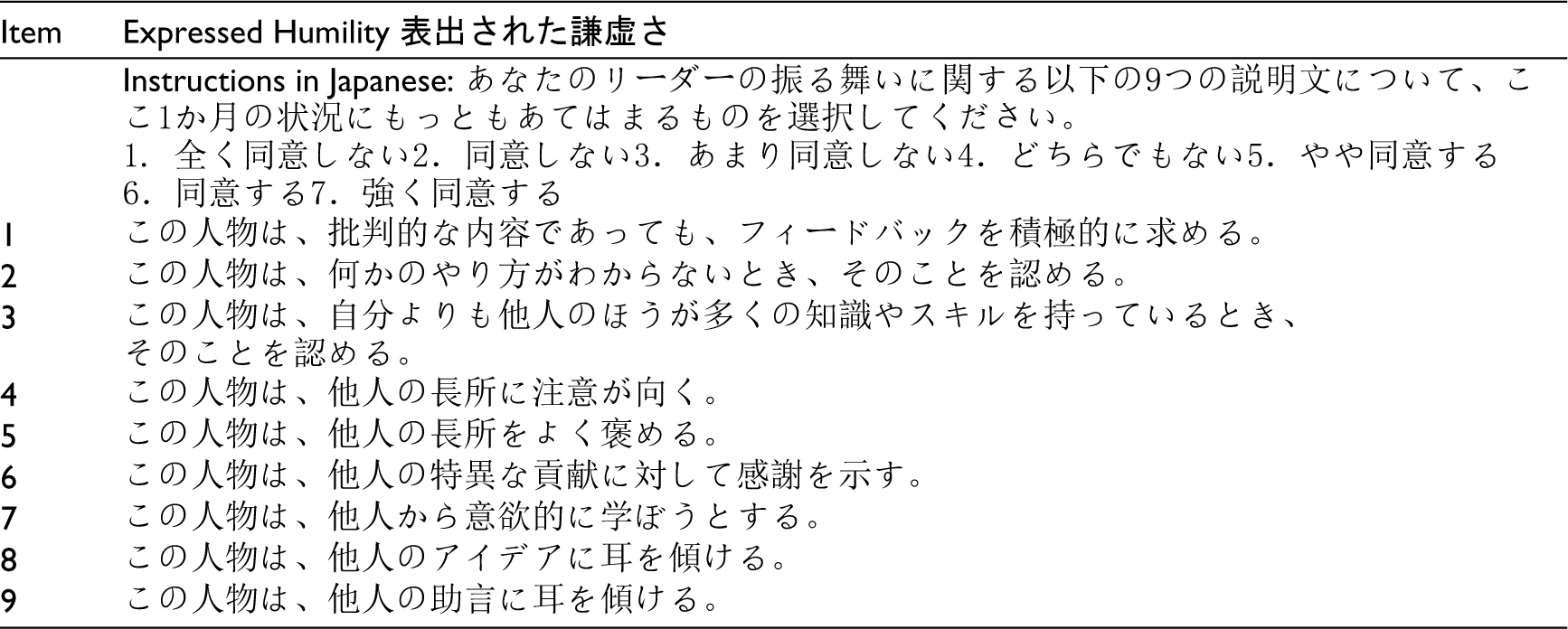
We contacted and obtained the permission of the original authors of the scales before translating them into Japanese. The last author translated all the scales from English to Japanese. Then, we asked a translation company to back-translate the scales. After the back-translation, a different translator in the translation company compared the back-translations with the original scales. Finally, the last author revised the translated scales based on the differences between the original and the back-translated versions of the scales. Appendix A shows the Japanese translations of the scales.
Results
Exploratory Factor Analysis
After examining the scree plot, we used half of the sample and performed an exploratory factor analysis on the three scales using the maximum likelihood method with Promax rotation. The Kaiser–Meyer–Olkin (KMO) measure was conducted for the PSS to determine whether we could analyze it further. The KMO measure of sampling adequacy was 0.88, indicative of the sample’s adequacy. No items were excluded because the factor loadings for all the items were over 0.55. The factor analysis identified one factor. The KMO measure of sampling adequacy for the KSS was 0.88. No items were excluded because the factor loadings for all items were over 0.55. The factor analysis identified one factor. The KMO measure of sampling adequacy for the EHS was 0.93. No items were excluded because the factor loadings for all the items were over 0.57.
Confirmatory Factor Analysis
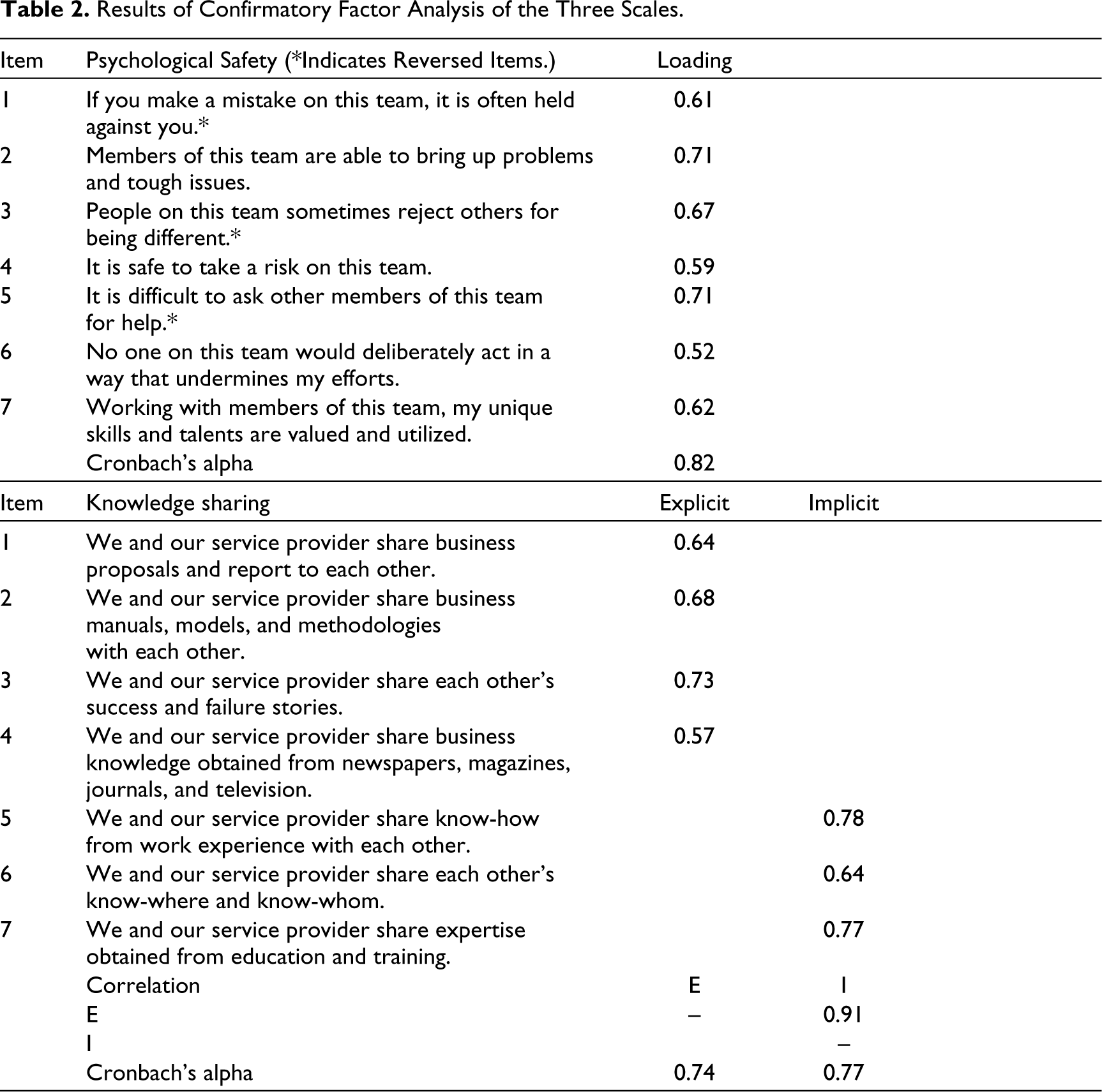
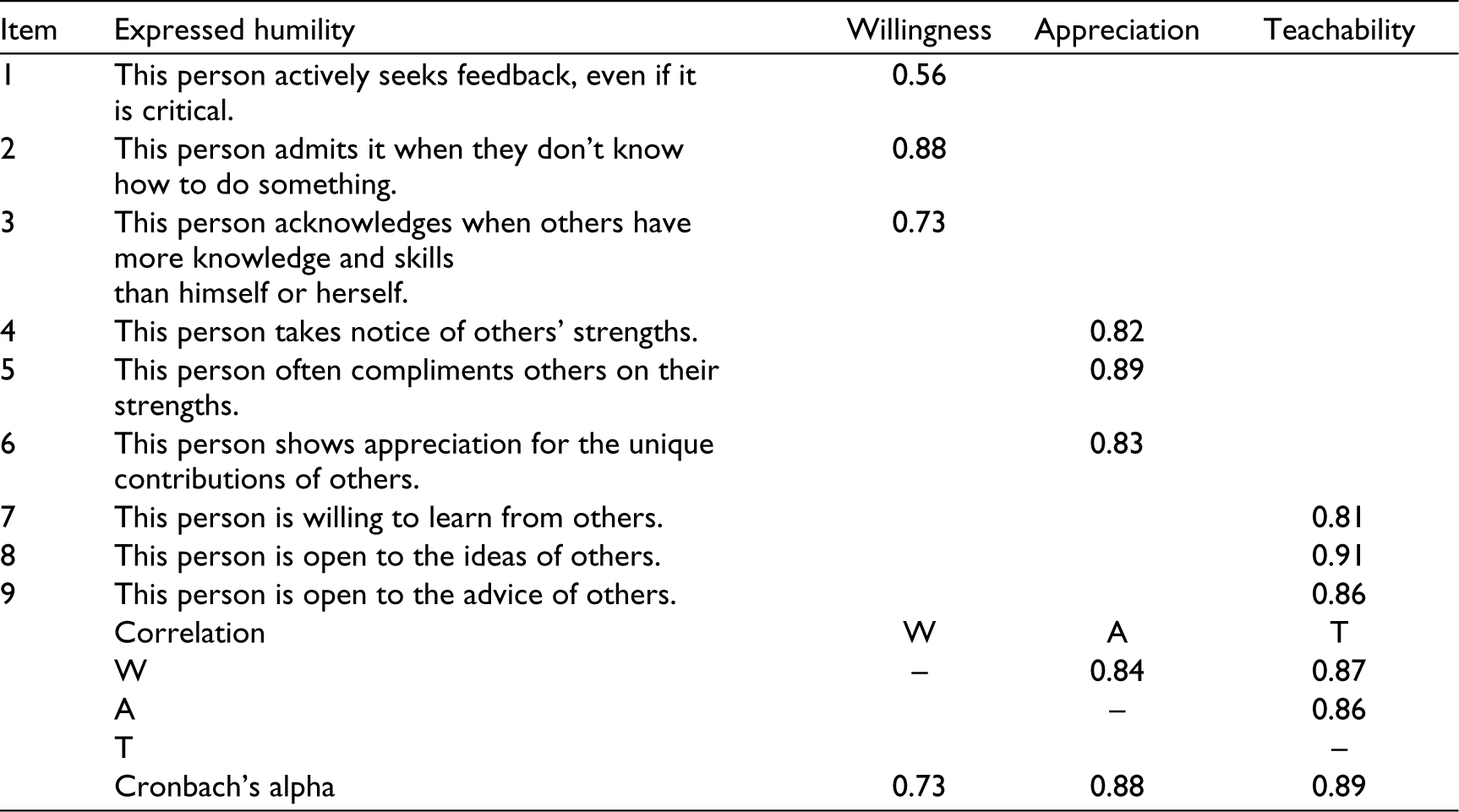
We used the other half of the sample to perform a confirmatory factor analysis for each of the three scales. The results of confirmatory factor analyses are shown in Table 2.
Results of Confirmatory Factor Analysis of the Three Scales.
PSS
The KMO measure of sampling adequacy figure was 0.87, indicative of the sample’s adequacy. We examined only a one-factor model because the factor structure described by the original author and the results of this study’s exploratory factor analysis indicated a one-factor structure. We employed the comparative fit index (CFI), standardized root mean square residual (SRMR), and root mean square error of approximation (RMSEA) based on recommendations for multiple fit indices for assessing the model fit (Kline, 2005). The results showed that this model fitted the data adequately, CFI = 0.95, SRMR = 0.044, and RMSEA = 0.089.
KSS
The KMO measure of sampling adequacy figure was 0.88. Because the factor structure of the original version of the KSS is a two-factor model, we compared the one-factor model found in the exploratory factor analysis of the current study and the two-factor model. The results showed a little better fit for the two-factor model (CFI = 0.95, SRMR = 0.041, RMSEA = 0.097) than the one-factor model (CFI = 0.94, SRMR = 0.045, RMSEA = 0.10).
EHS
The KMO measure of sampling adequacy was 0.93. We compared the one-factor model found in the exploratory factor analysis conducted in the current study and the three-factor model because the factor structure of the EHS’s original version was a three-factor model. The results showed a better fit with the data for the three-factor model (CFI = 0.99, SRMR = 0.026, RMSEA = 0.054) than the one-factor model (CFI = 0.93, SRMR = 0.039, RMSEA = 0.12).
Correlations
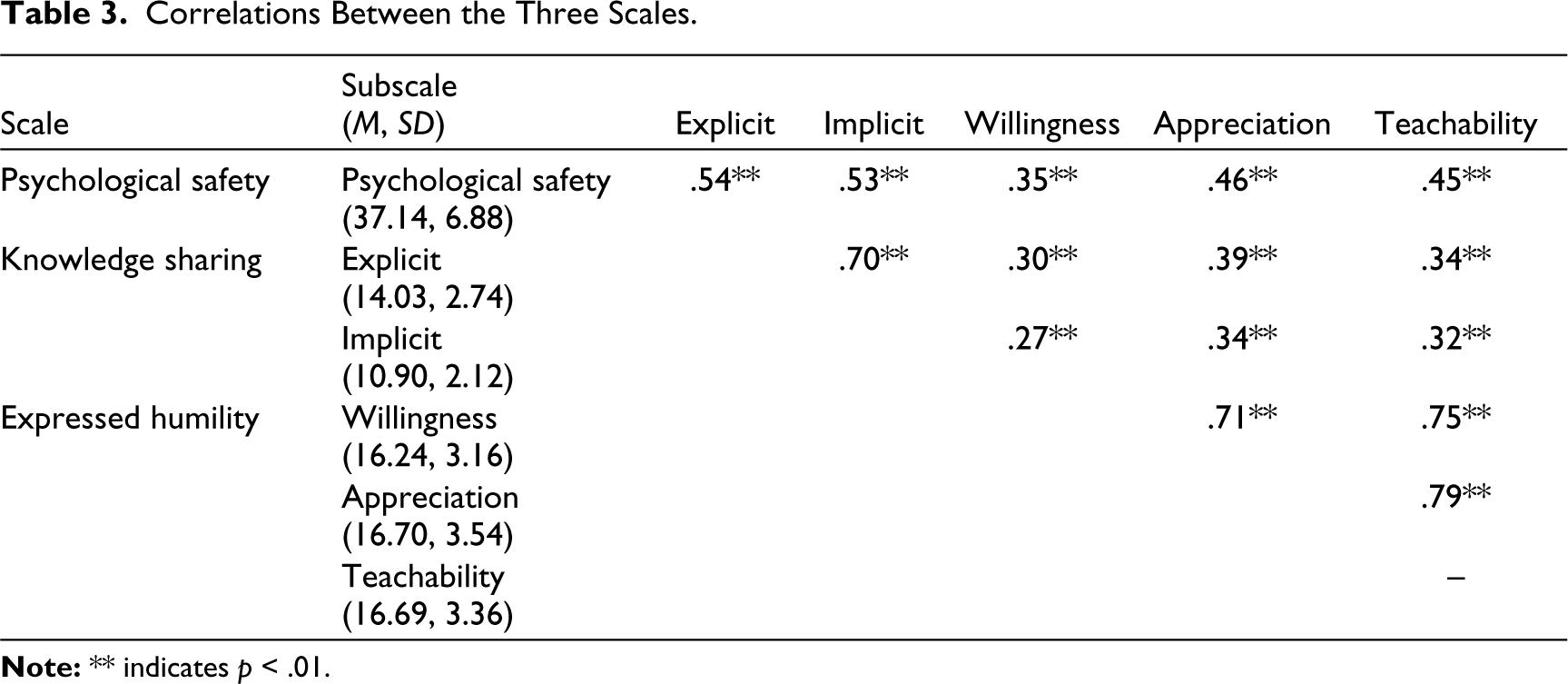
The correlations between all the scales, including the subscales, are presented in Table 3. Table 3 shows that the correlations between the PSS and all KSS and EHS subscales are highly significant.
Correlations Between the Three Scales.
Discussion
This work translated and developed Japanese versions of PSS, KSS, and EHS. The factor analyses showed the identical factor structure of all the Japanese versions of the scales as the original versions. Moreover, the correlations between the subscales were consistent with a previous study (Wang et al., 2018). This work shows that the Japanese versions of the three scales are valid measures for conducting organizational research in Japan.
This study updated and extended previous research by enabling the three variables to be assessed across job types, sizes, and cultures. It is noteworthy that this study’s sample comprised different-sized organizations, including small and large organizations, which were rarely examined simultaneously in previous studies conducted in Japan. As we have discussed, combinations of the three constructs assessed by these scales play critical roles in organizations, which gives these constructs the potential to explain complicated organizational environments and behaviours in more detail. For instance, psychological safety might be associated with minority issues and discrimination in the context of diversity and inclusion because members of racial minorities are less likely to feel psychologically safe in their workplaces (ADP Canada, 2022). Bresman and Edmondson (2022) reported that performance increased by combining diversity (e.g., gender, age) with psychological safety more than by either of these variables by itself. Additionally, Nembhard and Edmondson (2006) evidenced that inclusive attitudes shown by leaders predicted psychological safety in healthcare teams, which often have a rigid hierarchy. Inclusive leaders often show humility and appreciate team members’ contributions to work. The leadership style is a decisive factor in member assignment and performance. Therefore, leaders should be sensitive to authority gradients over their teams (Campos-Moreira et al., 2020). Teams with egalitarian authority gradients encourage team members (especially followers) not to be afraid of speaking up and exposing their vulnerability by making them feel safe (i.e., psychological safety). Therefore, members of flat teams are motivated to provide information inside and outside of work (i.e., knowledge sharing; Jiang et al., 2019; Rego et al., 2021). Moreover, contemporary IT technology helps individuals and organizations share knowledge (Lee, 2018). One recent study reported that digital knowledge sharing influenced creative performance (Tønnessen et al., 2021). We expect knowledge sharing to become even more critical in global organizations. Venkatesh et al. (2022) recently showed that knowledge-sharing motivation degree depends on cultural characteristics (i.e., collectivism vs. individualism). Therefore, the three constructs, psychological safety, knowledge sharing, and humble leadership, are worth examining in more detail using Japanese versions of these scales in the Japanese context.
This study has several limitations that we need to acknowledge. Firstly, due to the challenge of collecting data from the same participants multiple times, it was not possible to investigate the inter-rater reliability of the three scales. To establish the reliability of these scales, future researchers should consider administering them to the same participants using a longitudinal method, thereby demonstrating their consistency over time. Secondly, we did not examine the criterion-related validity of the scales by comparing them with other measures of related concepts. It was valuable to establish correlations between the ratings of the three scales, which were associated with each other in Kumagaya et al.’s (2021) work. However, future research should explore cultural differences by examining patterns obtained by comparing these scales and other measures, which would provide valuable insights for further research.
Another limitation of this study concerns the understanding of the psychological safety concept, which is relatively new to Japanese organizations. It was found that only approximately half of Japanese workers were familiar with the concept of psychological safety (Recruit Management Solutions, 2017). Therefore, participants in this study may not have accurately interpreted the PSS items as intended.
Despite these limitations, the implications of this study are significant. It has the potential to stimulate organizational research within the Japanese context by introducing new concepts and measurement tools. The translated scales from this study can help identify how we can approach productivity management in Japanese organizations. Given Japan’s status as a ‘super-aged society’, it is crucial to understand factors that affect employees’ productivity while considering their health issues (Goetzel & Ozminkowski, 2000). We expect that the widespread use of the tools developed in this study would contribute to understanding the current situation of Japanese workers and provide insights into aspects of Japanese businesses that should be maintained or modified for future generations.
In conclusion, we expect that this work will significantly affect different academic fields because the scales developed in this study are simple and convenient. Employees can administer them on-site with the help of researchers. Moreover, developing these scales is expected to stimulate future empirical research exploring the phenomenon and mechanisms of individuals, teams, and organizations in multicultural settings in Japan and other countries. Future cross-cultural research could identify the effects and mechanisms of organizations unique to Japan, which was rarely investigated in the past (Ochiai & Otsuka, 2021). In addition, the COVID-19 pandemic completely changed the mindset regarding work, including work values and workplaces (Ministry of Health, Labour, and Welfare, 2021). As a result, researchers need to reexamine the essential variables related to organizations and observe new organizational developments. Organizational research has just begun to catch up with the rapidly changing times. It is crucial to acquire scientific evidence to support the next stage of corporate development.
Footnotes
Acknowledgements
Data set A was obtained from FY2021 Ministry of Economy, Trade and Industry Research on the possibility of addressing ‘neurodiversity’ in the digital field to accelerate innovation creation.
Declaration of Conflicting Interests
The authors declared no potential conflicts of interest with respect to the research, authorship and/or publication of this article.
Ethical Statement
All the procedures of this study were approved by the Research Ethics Committee of the University of Tokyo (#21-48, #21-399, and #22-68). We conducted this study according to the standards specified in the 1964 Declaration of Helsinki. We explained the purpose of the study to all the participants, and they gave their informed consent before participating in the study. We informed the participants that they were free to drop out of the study at any time without facing any adverse consequences.
Funding
This study was supported by JSPS KAKENHI Grant Number JP21H05175 and JST, CREST Grant Number JPMJCR21P4, Japan.
Appendix
The Japanese Language Version of the Three Scales.
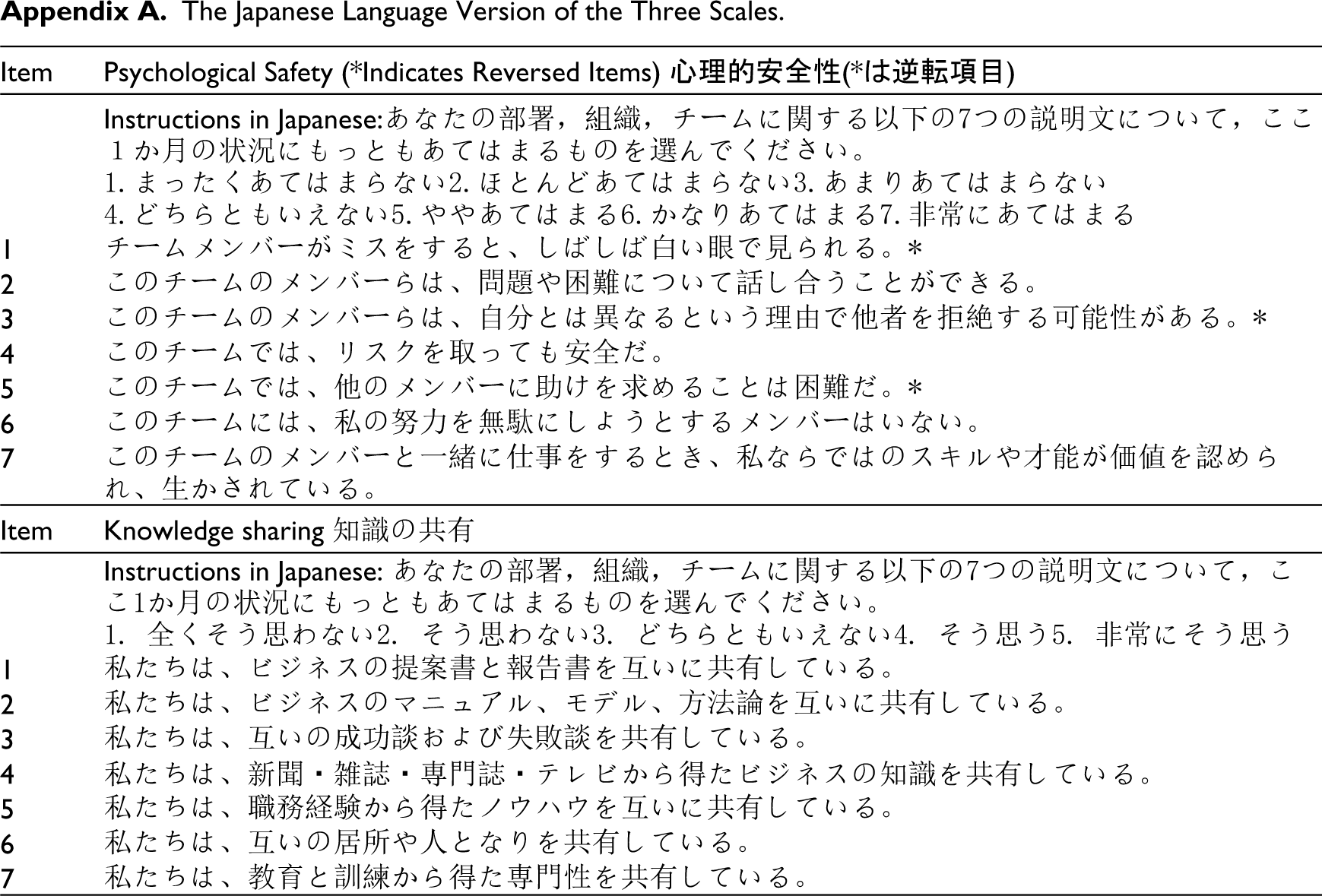
| Item | Psychological Safety (*Indicates Reversed Items) 心理的安全性(*は逆転項目) |
| Instructions in Japanese:あなたの部署,組織,チームに関する以下の7つの説明文について,ここ1か月の状況にもっともあてはまるものを選んでください。 1.まったくあてはまらない2.ほとんどあてはまらない3.あまりあてはまらない 4.どちらともいえない5.ややあてはまる6.かなりあてはまる7.非常にあてはまる |
|
| 1 | チームメンバーがミスをすると、しばしば白い眼で見られる。* |
| 2 | このチームのメンバーらは、問題や困難について話し合うことができる。 |
| 3 | このチームのメンバーらは、自分とは異なるという理由で他者を拒絶する可能性がある。* |
| 4 | このチームでは、リスクを取っても安全だ。 |
| 5 | このチームでは、他のメンバーに助けを求めることは困難だ。* |
| 6 | このチームには、私の努力を無駄にしようとするメンバーはいない。 |
| 7 | このチームのメンバーと一緒に仕事をするとき、私ならではのスキルや才能が価値を認められ、生かされている。 |
| Item | Knowledge sharing 知識の共有 |
| Instructions in Japanese: あなたの部署,組織,チームに関する以下の7つの説明文について,ここ1か月の状況にもっともあてはまるものを選んでください。 1. 全くそう思わない2. そう思わない3. どちらともいえない4. そう思う5. 非常にそう思う |
|
| 1 | 私たちは、ビジネスの提案書と報告書を互いに共有している。 |
| 2 | 私たちは、ビジネスのマニュアル、モデル、方法論を互いに共有している。 |
| 3 | 私たちは、互いの成功談および失敗談を共有している。 |
| 4 | 私たちは、新聞・雑誌・専門誌・テレビから得たビジネスの知識を共有している。 |
| 5 | 私たちは、職務経験から得たノウハウを互いに共有している。 |
| 6 | 私たちは、互いの居所や人となりを共有している。 |
| 7 | 私たちは、教育と訓練から得た専門性を共有している。 |
| Item | Expressed Humility 表出された謙虚さ |
| Instructions in Japanese: あなたのリーダーの振る舞いに関する以下の9つの説明文について、ここ1か月の状況にもっともあてはまるものを選択してください。 1. 全く同意しない2.同意しない3.あまり同意しない4.どちらでもない5.やや同意する 6.同意する7.強く同意する |
|
| 1 | この人物は、批判的な内容であっても、フィードバックを積極的に求める。 |
| 2 | この人物は、何かのやり方がわからないとき、そのことを認める。 |
| 3 | この人物は、自分よりも他人のほうが多くの知識やスキルを持っているとき、 そのことを認める。 |
| 4 | この人物は、他人の長所に注意が向く。 |
| 5 | この人物は、他人の長所をよく褒める。 |
| 6 | この人物は、他人の特異な貢献に対して感謝を示す。 |
| 7 | この人物は、他人から意欲的に学ぼうとする。 |
| 8 | この人物は、他人のアイデアに耳を傾ける。 |
| 9 | この人物は、他人の助言に耳を傾ける。 |