




Abstract
This study is an endeavour to assess the impact of different human resource management practices on the organizational performance of banks in India. Using a convenience sampling technique, a sample of 325 employees from four banks responded to a survey questionnaire. The psychometric properties of the constructs were established through confirmatory factor analysis, while structural equation modelling was utilized to examine the proposed hypotheses. The findings of the study confirmed a positive and significant influence of training and development, performance appraisal, and employee involvement on the performance of the banks under investigation. However, recruitment and selection indicated a positive but insignificant impact. The outcome of this research can assist policy and decision-makers in enhancing organizational performance by investing in appropriate human resource management practices. The study is equally significant for human resource professionals and practitioners to foster the professional development and advancement of their personnel.
Keywords
Introduction
Like in other developing countries, the banking sector in India enjoys a central role and contributes significantly to the nation’s economic progress. Currently, there are 12 public and 22 private sector commercial banks in India that have accumulated approximately ₹1.571 billion of savings and current bank accounts until March 2017 (Indian Brand Equity Foundation Annual Report 2019–2020). On the other hand, as per the statistics from the Reserve Bank of India (RBI), around 1.07 million bank employees are employed in private and public sector banks in India (excluding foreign banks and regional rural banks), thereby averaging at 1,468 bank accounts to be handled by each bank employee. This accounts for an enormous work burden which decreases the operational efficiency of each employee and adversely affects the performance of the banks (Jamal et al., 2021). An increasing workload on bank employees results in the decline of the operational performance of banks, thus necessitating the need for measures to improve organizational performance. According to industry experts and human resource (HR) professionals, this deteriorating situation can be tackled with the help of certain HR practices that will infuse the required competencies into the employees, thus improving their efficiency and, consequently, the performance of the organization. HR practices are those that drive banking operations efficiently and professionally to create effective and better banking products and services (Jelena et al., 2013). HR practices, along with organizational leadership, directly influence employee knowledge, skills, and motivation, consequently influencing employee behaviour regarding innovation, creativity, and commitment and eventually leading to an enhanced organizational performance (Becker & Gerhart, 1996; Jamal et al., 2023). By employing appropriate HR practices, organizations can develop and nurture desired competencies that are rare, inimitable, and non-substitutable, which, in turn, support organizations in gaining a competitive advantage (Quresh et al., 2010). Moreover, Cherif (2020) observed a positive association of human resource management (HRM) practices with employee job satisfaction and organizational commitment, whereas Loan (2020) has advocated that job satisfaction plays an intervening role in the association between organizational commitment and employee performance, resulting in organizational effectiveness (Jamal et al., 2022). Therefore, Indian banks must develop and implement sound and effective HR practices that are necessary for better operational performance.
During the past few decades, the relationship between HRM practices and organizational performance has been investigated extensively (Giauque et al., 2013; Jelena et al., 2013; Singh, 2004; Subramony, 2009). Researchers are increasingly focusing on the role of HRM in improving individual and organizational performance, especially in emerging economies (Božović et al., 2019; Chinyamurindi et al., 2021; Pereira et al., 2018). Bae and Lawler (2000) were the first to examine the effect of HRM on performance in emerging economies. According to the IMF Report 2016, India is one of the fastest-growing economies in the world. Emerging economies face various challenges that adversely affect performance and competitiveness (Mohammed & Bunyaminu, 2021). However, challenges and obstacles can be handled with the strategic use of HRM practices. Various studies investigated the nexus between HRM practices and performance in various organizational contexts in India (Darwish et al., 2020; Kundu & Gahlawat, 2018; Parayitam et al., 2021). However, there is a dearth of studies investigating the role of HRM practices on the different non-financial aspects of organizational performance in India, particularly in the banking industry. Extant literature suggests that most of the previous studies have assessed the organizational performance of banks using objective measures (i.e., financial performance). To address these research gaps, this study aims to empirically examine and validate the impact of different HRM practices on the performance of banks in the Indian context (a fast-growing emerging economy) using subjective (non-financial) measures. We achieved the objective of the study by developing and testing hypothesized research framework (as shown in Figure 1), indicating a positive association between individual HRM practices and organizational performance.
Research Framework.
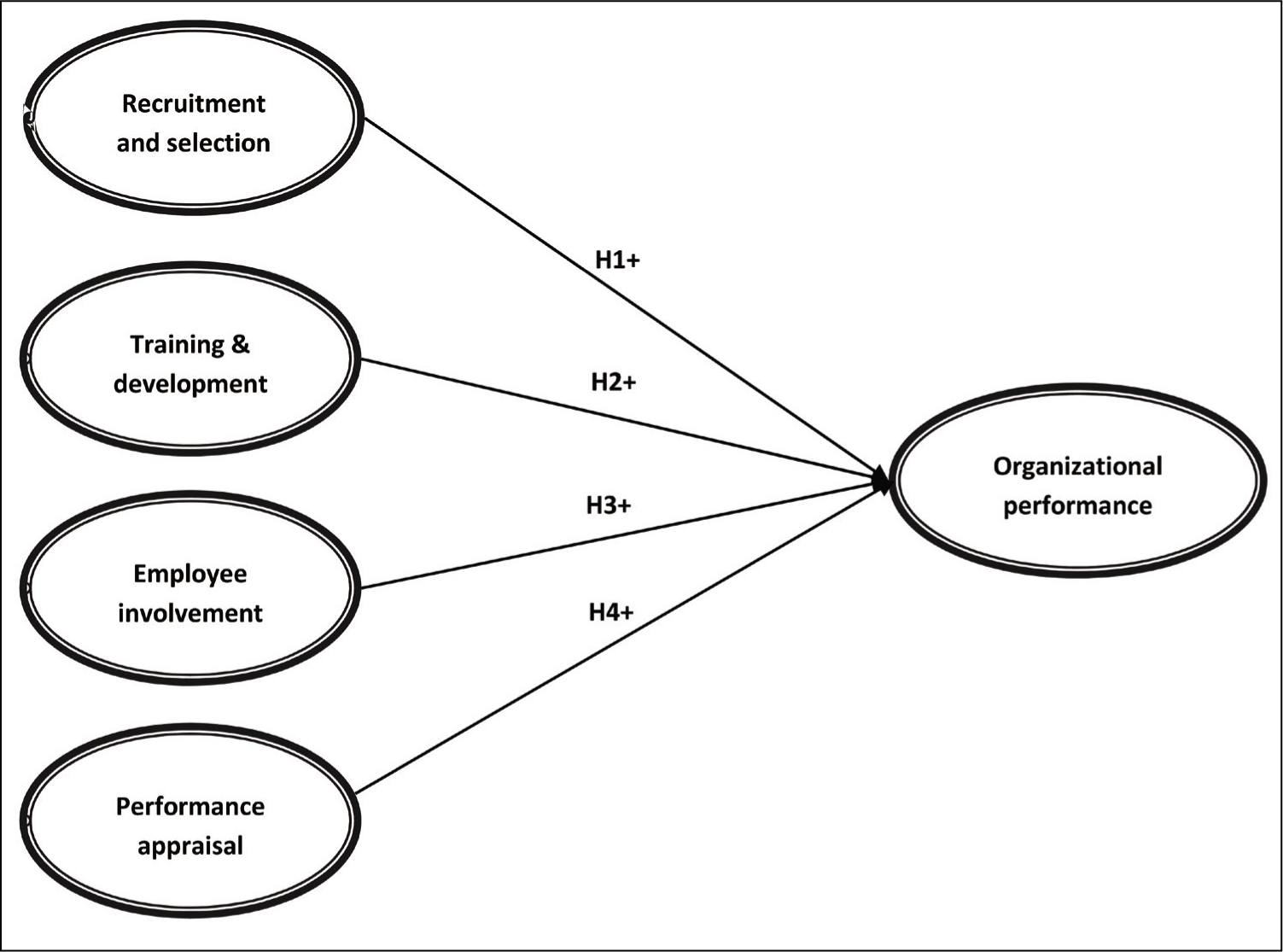
The outcome of the study contributes to the literature available on HRM in the following two ways. First, the study contributes to the literature examining the role of HRM practices in organizational performance in emerging economies. More specifically, the study measures the effect of individual HRM practices on perceived organizational performance in the Indian banking industry. The impact of individual HRM practices on organizational performance helps in understanding the relative importance of the different HR functions. HRM practices help in enhancing organizational performance to help managers recognize areas that need focus and attention. Second, the study uses a multi-method analytical approach combining quantitative Structural Equation Modeling (SEM) and qualitative (predictive analysis) techniques to enhance the model’s predictability.
The paper is structured to begin with the introduction, followed by a review of the literature and hypotheses development with regard to individual HRM practices and organizational performance, material and method, data analysis and results, and discussion, followed by the implications for theory and practice, and the limitations and direction for future research.
Theoretical Background and Hypotheses Development
Despite extant literature that examines the relationship between HRM practices and performance, the debate and discussion on how HRM improves organizational outcomes continue (Katou et al., 2021). Researchers have added to the incremental value of knowledge by providing context (Blom et al., 2020; Harney & Alkhalaf, 2021) and situation (Podolsky & Hackett, 2023) to offer more nuanced explanations. Besides, research in the last few decades has focused more on HRM systems than individual HRM practices (Boon et al., 2019; Yan et al., 2019). Research on the HRM system fails to assess the impact of individual HRM practices on organizational outcomes. Individual perceptions of implementing HRM practices that strongly influence employee behaviour and performance, which in turn affect organizational performance, are yet to be studied extensively (Dello Russo et al., 2018; Wang et al., 2020).
Researchers have not given much attention to HRM practices in Indian organizations (Narang & Singh, 2010). However, there is consensus regarding the importance of HRM studies in the Indian context (Budhwar, 2000). India is a unique context for HRM studies. This may be due to the fact that various country-specific and organization-specific variables have an impact on HR practices. Therefore, the management of HR is more challenging in Indian organizations (Singh & Sarkar, 2022). HRM practices, as an organizational resource, have an impact on employee competencies and organizational performance (Salman et al., 2020). This supports the idea that the strategic use of HR has implications that result in competitive advantage (Mutua, 2019; Sabu & Manoj, 2020; Samroodh et al., 2022; Thakur & Sharma, 2019).
The subsections that follow discuss the relationship between HRM practices and organizational performance and also how individual practices impact performance.
Human Resource Management Practices
HRM practices are those organizational actions that aim at managing the human capital employed to accomplish the organizational mission and goals (Wright & Snell, 1991; Wright et al., 1999). They embody a central management system that is in synchronization with the business plan of the organization. HRM practices form an integral part of the organizational climate and support the organization in a way its HRs will work towards accomplishing the corporate mission. The HRM system of an organization that enhances its performance is formed through the ‘effective adoption of HRM practices which boost employee competencies, commitment and productivity’ (Iyanda Ismail et al., 2021). Guest (2002) opines that the influence of HRM practices in determining the performance of an organization depends on how the employees respond to the HRM practices implemented by the organization. He suggests that the employees’ negative perceptions would reduce the organization’s performance and vice-versa. Singh and Rao (2017) claim that organizations can gain a sustained competitive advantage by implementing the best HR practices. Moreover, Ekaterini (2010), while confirming the results of Wright et al. (1994), established that organizational HR and how it is managed could influence employee and organizational performance. Likewise, Huselid (1995) opines that the efficiency and effectiveness of the employees are determined largely by their behaviour within the organization, which in turn is influenced by HRM practices.
Farouk et al. (2016) identified recruitment and selection, training and development, compensation/incentives, and performance appraisal as important HRM practices that have a strong bearing on the performance of an organization. Likewise, Taamneh et al. (2018) examined similar HRM practices and observed a significant contribution of such practices to employees’ organizational citizenship behaviour and organizational performance. Singh (2004) examined factors like selection, job definition, training, performance appraisal, compensation, career planning, and employee participation viz-a-viz organizational performance. Giauque et al. (2013) identified fairness, job enrichment, individual appraisal, and professional development as HRM practices associated with public service motivation and organizational performance. Likewise, Iyanda Ismail et al. (2021) identified hiring, training and development, performance appraisal, pay-for-performance, and succession planning as HRM practices essential for determining organizational performance. Therefore, in concurrence with previous studies, the current investigation employed four HRM practices that significantly affect organizational performance. They are recruitment and selection, training and development, performance appraisal, and employee involvement.
Organizational Performance
Researchers consider organizational performance a key construct in the literature on management and organization. To survive and succeed in the current dynamic, complex and uncertain business environment, organizations are required to consistently enhance their performance. Being a complex and multidimensional construct, organizational performance, in the literature available, has been studied from three perspectives: financial perspective, employee perspective, and operational perspective. The financial viewpoint, which is the most widely used measure of organizational performance, encompasses monetary aspects that include corporate profitability, investment returns, growth in sales, growth in revenue, market performance, financial health, and capital raising ability (Liao & Wu, 2009; Obeidat et al., 2016; Ogunyomi & Bruning, 2016; Theriou & Chatzoglou, 2014). Similarly, the employee standpoint incorporates satisfaction levels of employees, the effectiveness of employees, staff turnover, degree of absenteeism, staff participation, and overall employee performance (Jamal et al., 2021; Venkatraman & Ramanujam, 1986). The operational angle embodies the scope of product/service defects, customer complaints, market share, and quality of products and services (Venkatraman & Ramanujam, 1986; Wright et al., 2003). Recently, researchers have also attempted to measure organizational performance using a balanced scorecard that Kaplan and Norton (2007) advanced, which evaluates performance within the purview of four dimensions: financial performance, customer service, social responsibility, and employee stewardship. To evaluate the performance of the sampled banks, this study employed the criteria of performance that has been used in previous studies: quality of products and services, development of new products, satisfaction of customers, ability to attract and retain competent individuals, relationship between employee and management, and the relationships among employees (Pattnaik & Sahoo, 2020; Salman et al., 2020; Singh, 2004).
HRM Practices and Organizational Performance
Numerous investigations have been conducted on the connection between HRM practices and organizational performance (Becker & Gerhart, 1996; Otoo & Mishra, 2018; Otoo, 2019; Wright et al., 1999). However, few researchers have focused on the banking sector, particularly in the Indian context. Research shows that HRM practices influence both, subjective and objective organizational performance measures. For instance, Pattnaik and Sahoo (2020) observed a significant link between HRM practices and organizational performance. Farouk et al. (2016) and Ali et al. (2019) also confirmed the same results in the UAE and Chinese banking industries.
Similarly, according to Theriou and Chatzoglou (2014), organizational performance can be greatly enhanced by designing and implementing sound HRM practices. The results of Singh and Kassa (2016) were also found in line with those of other researchers who contend that HRM practices, in configuration with organizational goals, would enhance the organization’s overall performance. For example, Taylor et al. (2008) observed that employee and manager turnover rate, the productivity of the workforce, and return on assets are significantly influenced by a set of HRM practices, whereas Masum et al. (2016) found that strategic HRM practices significantly impact employee competencies that result in more satisfaction and retention of clients/customers and eventually lead to enhanced organizational performance.
Similarly, Kaur and Kaur (2021) confirmed a significant impact of HRM practices on employee competencies while Salman et al. (2020) established a favourable and substantial link between employee competencies and organizational performance. Kaur and Kaur (2022) observed a positive association between HR practices and organizational performance that was somewhat interceded by employee competencies. Therefore, it can be argued that organizations can considerably improve and sustain their performance in the present dynamic and exceptionally challenging business world by designing and implementing well-articulated and sound HRM practices.
Hypotheses Development
Recruitment and Selection and Organizational Performance
The basic objective of the recruitment and selection process is to hire the requisite number and kind of individuals who possess the desired competencies to perform organizational jobs efficiently and effectively (Armstrong, 2006, p. 395). An effective recruitment policy provides a strategic edge by assisting an organization in creating a culturally diverse workforce (Aswathappa, 2017, p. 186). A comprehensive hiring and selection procedure encompassing internal and external searching, vigilant screening, and robust interviews allows organizations to select the most talented candidates who possess the desired competencies (Jiang et al., 2012; Van Esch et al., 2018). Researchers have observed a positive and significant association between recruitment and selection and organizational performance in different organizational and cultural contexts (Anyango et al., 2018; Katou & Budhwar, 2006; Saddam & Mansor, 2015; Selase, 2018; Wright et al., 2005). Iyanda Ismail et al. (2021) observed that selective hiring enables an organization to attract competent, committed employees who significantly enhance organizational performance. Likewise, Abbasi et al. (2022) reported that sound recruitment and selection procedures result in enhanced employee performance and consequently lead to the growth of an organization. Recruitment and selection can induce higher profitability and greater labour productivity (Michie & Sheehan, 2005). It can also induce increased levels of employee commitment (Taylor et al., 2008), eventually leading to higher organizational performance (Takeuchi et al., 2007). Conversely, poor recruitment and selection procedures would result in the substandard performance of the organization and would also entail extra costs on training and supervision. Therefore, by employing a sound, efficient, and cost-effective yet economical recruitment and selection policy, the organization can acquire a competent and talented pool of applicants with the required competencies, consequently leading to enhanced performance. Accordingly, the following hypothesis is proposed:
H1: Recruitment and selection positively influence organizational performance.
Training and Development and Organizational Performance
In addition to comprehensive staffing procedures, organizations also need to develop and nurture those employee competencies that are required to enhance and sustain organizational performance. This can be accomplished by employing appropriate training and development practices. Implementation of sound and effective training and development programs would enable employees to shape their attitudes and behaviours in line with organizational strategies and are critical in facilitating organizational innovation (Lau & Ngo, 2004). When employees are given proper, all-embracing training and the opportunity for development, they acquire a broad spectrum of desired competencies and apply their acquired knowledge and skills effectively while performing their jobs (Van Esch et al., 2018). More specifically, in a knowledge economy where specific competencies are demanded from employees, organizations must implement appropriate training and development practices to inculcate competencies that are vital for improving their workforce (Lepak & Snell, 2002) and will eventually enhance organizational performance. Besides, given the highly dynamic business environment and the changing demands of customers, there is a strong need to train and develop employees to meet the changing demands of the customers and achieve organizational goals. In extant literature, the criterion of training and development has been found to be positively related to organizational performance (Akong’o Dimba, 2010; Al-Qudah et al., 2014; Apospori et al., 2008; Gunu et al., 2013; Obi-Anike & Ekwe, 2014; Subramaniam et al., 2011). Therefore, we propose the following hypothesis:
H2: Training and development positively influence organizational performance.
Performance Appraisal and Organizational Performance
An effective performance appraisal system assists an organization in identifying the virtues as well as shortcomings of employees, thereby ascertaining their training and development requirements. Performance feedback serves as a guide for employees to know what their organization expects from them. It provides the appropriate direction in improving their knowledge and skills to satisfy organizational requirements and demands (Yang & Lin, 2009). Likewise, research suggests that effective appraisal methods are related to increased levels of creativity and innovation (Lu et al., 2015; Schuler & Jackson, 1987) and the incorporation of new skills (Egan, 2005), all of which are instrumental in enhancing organizational performance. Performance appraisal does help in aligning individual and group performances with organizational strategies and is useful for enhancing the overall performance of an organization (Iyanda Ismail et al., 2021). It also determines the effectiveness of various HR programs such as selection, training, and transfers, and in giving the employees constructive criticism and guidance for their development, which eventually helps organizations gain a competitive advantage. Besides, researchers have observed a positive and significant association between performance appraisal and organizational performance (Iyanda Ismail et al., 2021; Tahsildari & Shahnaei, 2015). Thus, we hypothesize the following:
H3: Performance appraisal positively influences organizational performance.
Employee Involvement and Organizational Performance
In the current rapidly changing and uncertain business environment, organizations must make quick and effective decisions involving employees at every level of organizational management. Therefore, deploying comprehensive employee involvement practices that empower employees in decision-making and problem-solving is another essential vehicle that facilitates organizational performance. Research shows that employee involvement has a significant and positive association with the satisfaction as well as productivity of an employee (Singh, 2004), leading to improved organizational performance. More specifically, employee participation, empowerment programs, and self-managed teams have been positively correlated with perceived organizational performance (Sofijanova & Zabijakin-Chatleska, 2013). Likewise, the involvement of employees in an organization’s decision-making processes positively impacts employee job satisfaction, commitment, and productivity (Bhatti & Qureshi, 2007), eventually leading to improved organizational performance. Accordingly, we propose the following hypothesis:
H4: Employee involvement positively influences organizational performance.
Material and Method
The study is cross-sectional in nature and applies a multi-method analytical approach combining quantitative (SEM) and qualitative (predictive analysis) techniques to enhance the model’s predictability. For this study, a survey was conducted among the employees of four Indian banks using a convenience sampling method through a structured questionnaire. The measurement items for the survey instrument were borrowed from existing scales and discussed with three academicians/experts in the HRM and four bank employees (one from each bank) to ensure the contextual subjectivity of the measurement items. Based on suggestions and recommendations, the questionnaire was modified to improve its reliability, and pilot testing was conducted with a sample of 35 bank employees from Aligarh prior to conducting the final survey (Saunders et al., 2009).
Industry and Participants
We chose the banking industry on account of two reasons: First, the Indian banking industry is the fifth largest banking industry in the world and is expected to leap to the third position by 2025 (Chakraborty, 2013). Second, it contributes to around 8 % of the Gross Domestic Product (GDP). We included the top two public and top two private sector banks based on capitalization as the sample organization. The participating banks are the State Bank of India (SBI) and the Bank of Baroda (BOB) from the public sector and the Industrial Credit and Investment Corporation of India (ICICI), and the Housing Development Finance Corporation (HDFC) from the private sector. We believe these samples fairly represent the Indian banking industry. To ascertain that the respondents adequately understand the banks’ HRM practices and organizational performance, we selected managerial and non-managerial employees with at least three years of experience.
Survey Measures
As mentioned earlier, we adapted the items suggested by (Demo et al., 2012) to measure HRM practices and modified the questionnaire items to align with the Indian banking sector. The participants described their level of agreement or disagreement with the HRM practices used by their respective banks on a seven-point scale. This study employed subjective measures for evaluating the performance of the organization, which were found to be strongly correlated with the objective criteria (Brewer & Selden, 2000; Venkatraman & Ramanujam, 1986). Therefore, perceptual measures of employees were used to assess the performance of the banks using performance indicators of the quality of products and services, ability to attract and retain competent employees, development of new products or services, the satisfaction of customers and clients, relationships among employees and relationships between employees and the management. The scale was adapted from Delaney and Huselid (1996). On a seven-point scale, the respondents rated their respective bank’s performance compared to other banks doing similar kinds of business in the last three years.
Main Survey
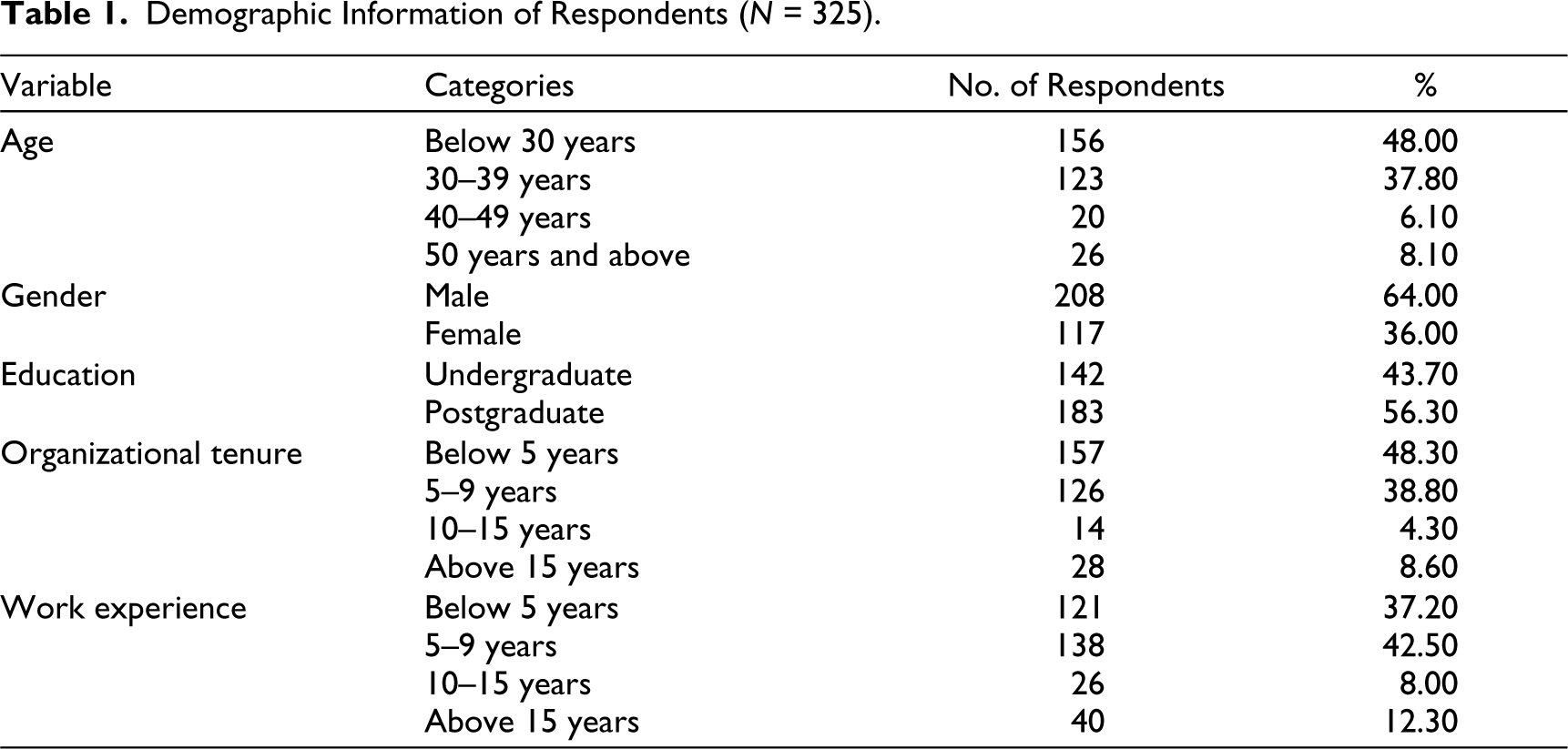
The questionnaires were distributed to respondents in the bank during working hours in four cities of India: Agra, Aligarh, Lucknow, and New Delhi. The authors personally explained the study’s objectives to each respondent and guaranteed confidentiality. The questionnaire was handed out to 400 employees, but only 350 employees completed the survey, thus representing a response rate of 87.5%. Samples were distributed evenly across sample banks and sample cities. As illustrated in Table 1, most respondents (48%) were under 30 years of age, while 8% were 50 years or more, indicating that the sampled banks are equipped with a young and dynamic workforce. More than half the responders (64%) were males, while the rest (36%) were females. Respondents with postgraduate degrees were reported to be 56%, while the rest were undergraduates. About 48% of respondents reported having less than five years of organizational tenure, whereas only 6% of respondents reported having 15 years and above tenure in the organization. Similarly, about 43% of respondents reported having work experience of five to ten years, while only 12% of respondents reported having experience of above 15 years in a banking organization.
Demographic Information of Respondents (N = 325).
Data Screening
Prior to embarking on the final analysis, the data was duly checked for outliers, unengaged responses, and missing values, besides confirming the normality and multi-collinearity of the data using SPSS (20.0). Upon examination, no data was found to be missing. However, 25 unengaged responses were detected and removed from the dataset. Further, the study also checked for statistical outliers using Cook’s distance, but no response was found to be a potential statistical outlier (Stevens, 2012). The final sample of 325 responses was achieved after the data screening process (see Table 1).
Method Bias
In addition to following the qualitative measures from Podsakoff et al. (2012) to check for possibilities of method bias while developing the survey instrument, we opted for a full-collinearity method to check statistical method bias. As suggested by Kock (2015), we interchangeably made each variable an outcome variable and ran regression models to find the VIF values while ensuring these VIF values were not over 3.3, thereby confirming no statistical method bias in the dataset.
Data Analysis and Results
The study assessed the validity and reliability of the constructs through confirmatory factor analysis (CFA) in AMOS v20.0. Notably, this study used the first-order CFA in which the lower-level variables are error-containing measured/observed variables. These can be observations in a field study or responses of a questionnaire survey. In this study, these were responses of the questionnaire survey. Finally, the researchers employed the path analysis to examine the ‘HRM practices and organizational performance’ link, followed by confirmation of the results of the path analysis with predictive analysis in SPSS Modeler v18.0.
Measurement Model
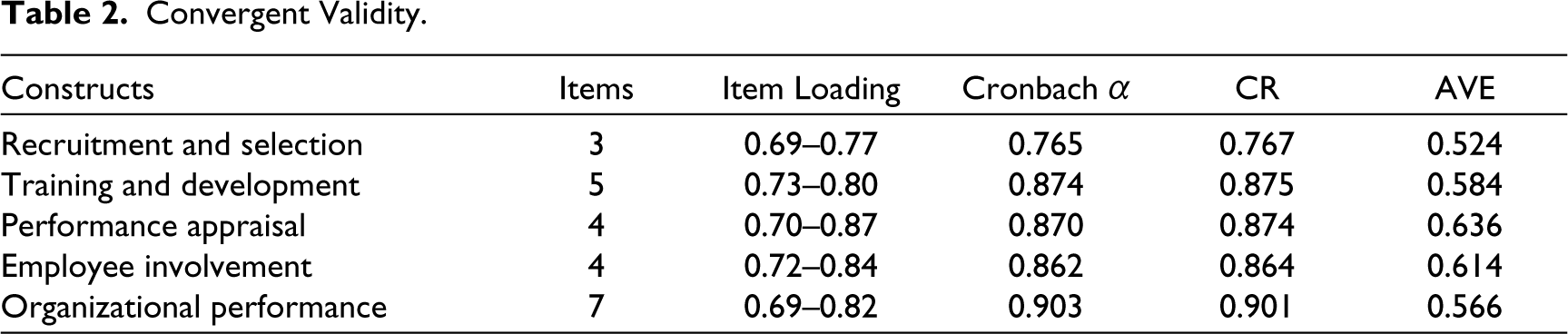
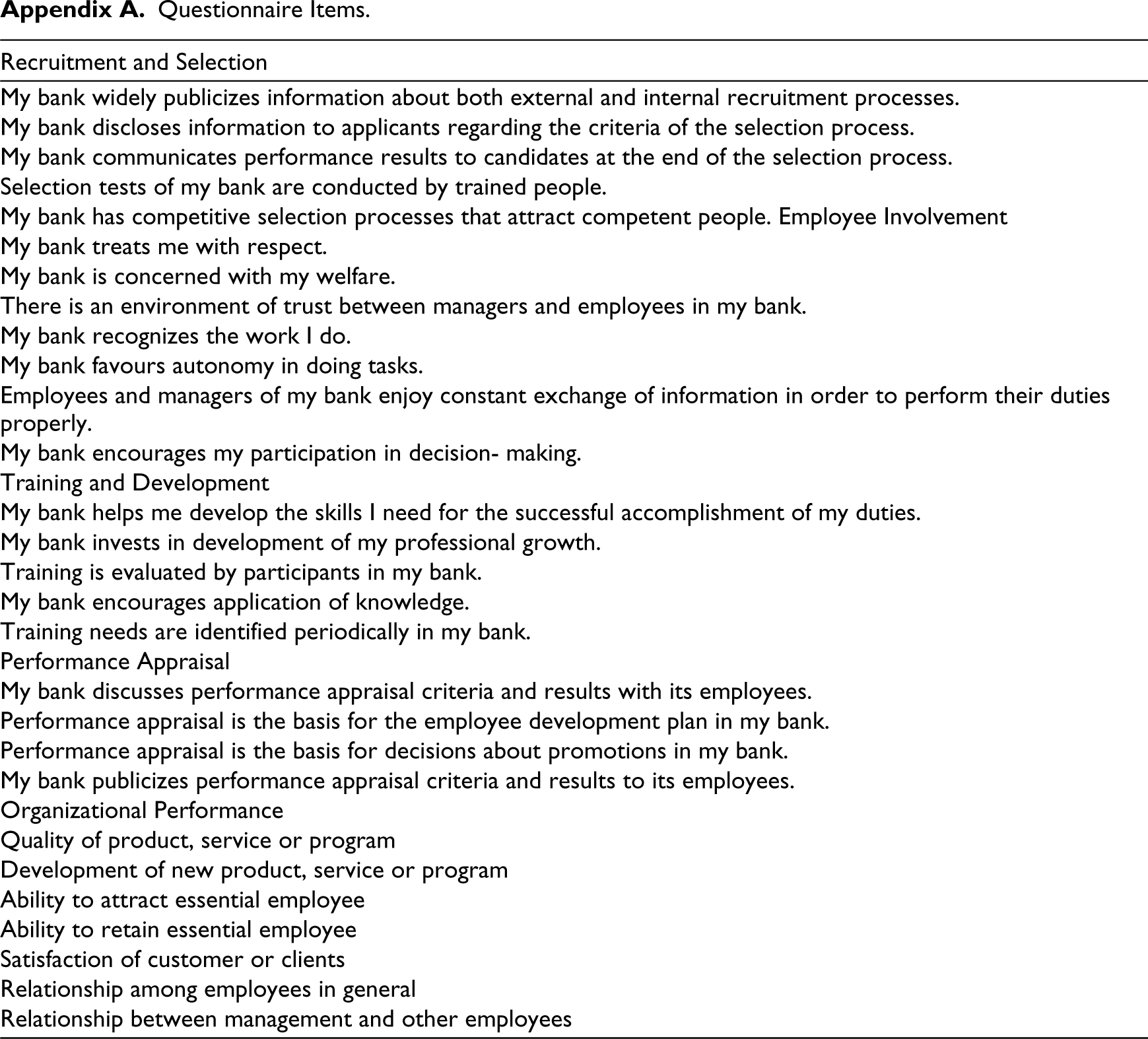
As shown in Table 2 internal reliability was assessed through Cronbach α and CR. The Factor loadings and AVE values were used to determine the convergent validity. The Cronbach α values indicate excellent internal reliability as the values for all constructs are exceeding 0.70 (Hair et al., 2006) which is the minimum acceptable limit. The questionnaire items with loadings less than 0.60 were deleted (3 items from recruitment and selection, 4 from employee involvement and 1 item each from training and development and performance appraisal) as they were considered weak as per the literature available (the questionnaire items used for the study are shown in the Appendix). The values of CR were between 0.767 and 0.901, which are above the threshold limit (Hair et al., 2006; Henseler et al., 2009). Moreover, the values of AVE are between 0.524 and 0.636 which are above the minimum required level (Hair et al., 2006; Henseler et al., 2009). All these measures indicate excellent convergent validity.
Convergent Validity.
The fitness of the model was evaluated through the following four fit indices: the root mean square error of approximation (RMSEA), the goodness of fit index (GFI), Chi-square (CMIN/DF), and the comparative fit index (CFI). For GFI, a value above 0.90 (Jöreskog & Sörbom, 1996) is acceptable, whereas, for the CFI value, more than 0.90 is good enough (Hu & Bentler, 1999). If the value of RMSEA is below 0.080, it shows that the model is acceptable (Browne & Cudeck, 1992) while a value between 1 and 3 is acceptable for CMIN/DF. The observed values from the CFA model suggest that the model fits well (see Table 3).
Model Fit Indices.

To assess the discriminant validity of the constructs, correlation values were equated with the corresponding squared root of the AVEs of each construct (Fornell & Larcker, 1981). As illustrated in Table 4, the correlation values are less than the corresponding values of the squared root of the AVEs, showing the presence of discriminant validity among the variables. Further, Table 4 also reports descriptive statistics (viz. mean and standard deviation) of latent variables.
Correlation Matrix and Discriminant Validity.
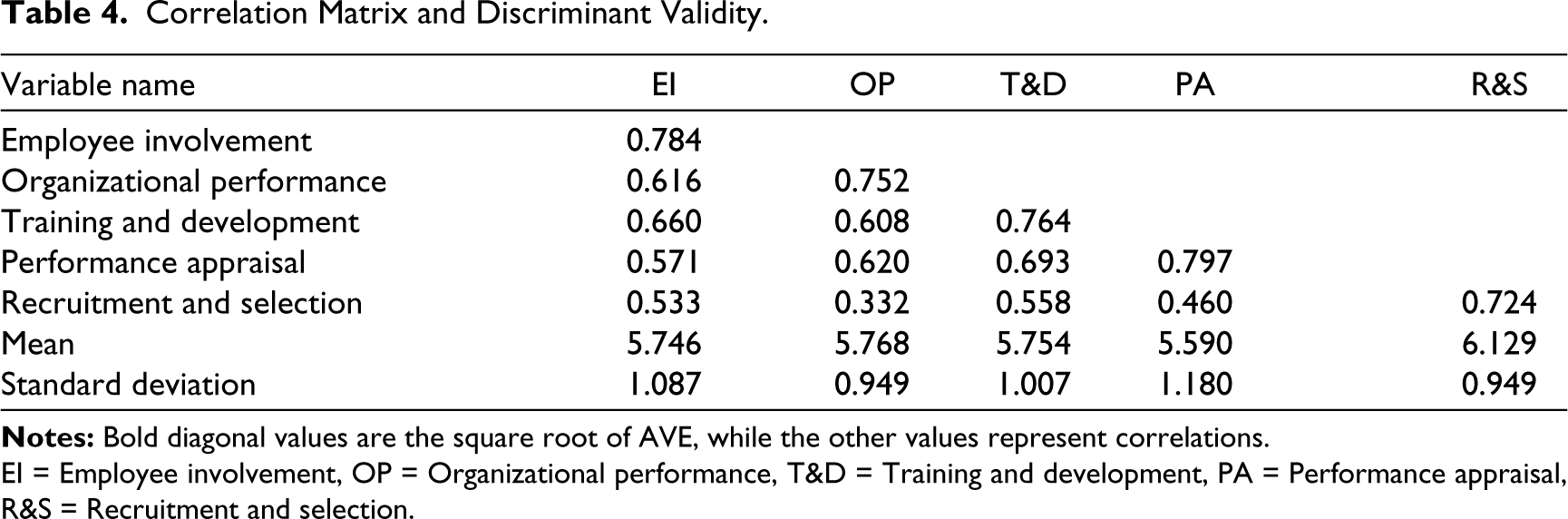
EI = Employee involvement, OP = Organizational performance, T&D = Training and development, PA = Performance appraisal, R&S = Recruitment and selection.
Hypothesis Testing (Direct Effects)
The study put forward four hypotheses related to measuring the direct effects of HRM practices on the organizational performance of the employees of Indian banks. Hypotheses H1 and H2 propose a direct positive relationship between recruitment & selection, training & development, and organizational performance, while hypotheses H3 and H4 postulate the direct positive influence of performance appraisal, and employee involvement, on organizational performance, respectively. Results from Table 5 affirm that, except for recruitment & selection (H1), training & development (β = .170; p < .01), performance appraisal (β = .311; p < .01), and employee involvement (β = .282; p < .01) positively enhance the organizational performance of the employees. Therefore, hypotheses H2, H3, and H4 stand supported, respectively.
Results of Path Analysis.
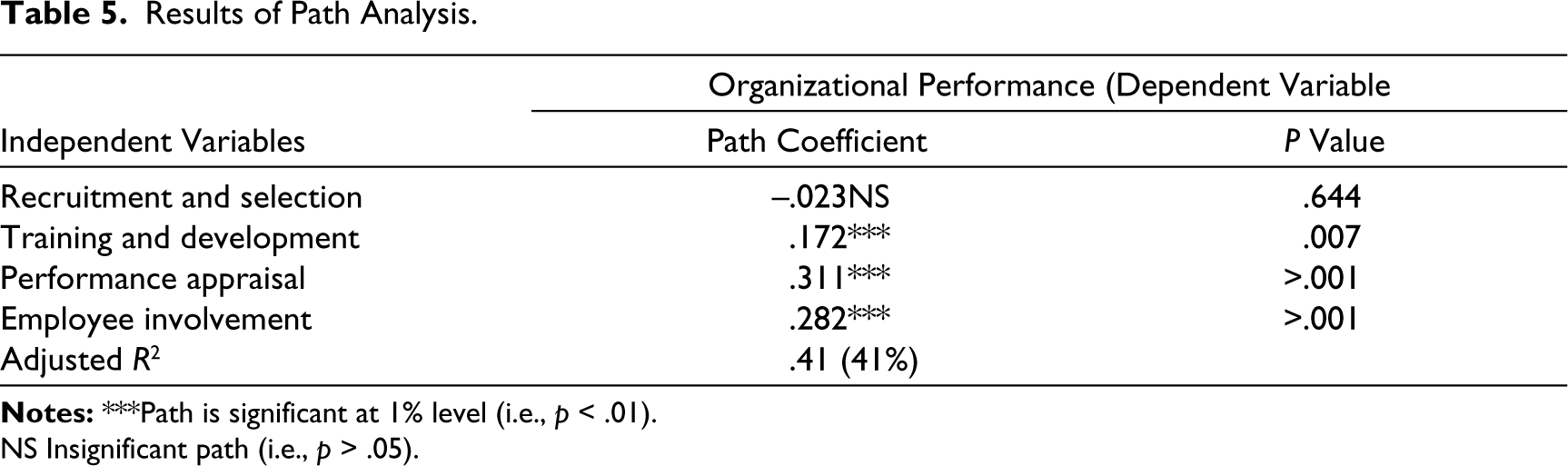
NS Insignificant path (i.e., p > .05).
Predictive Analysis
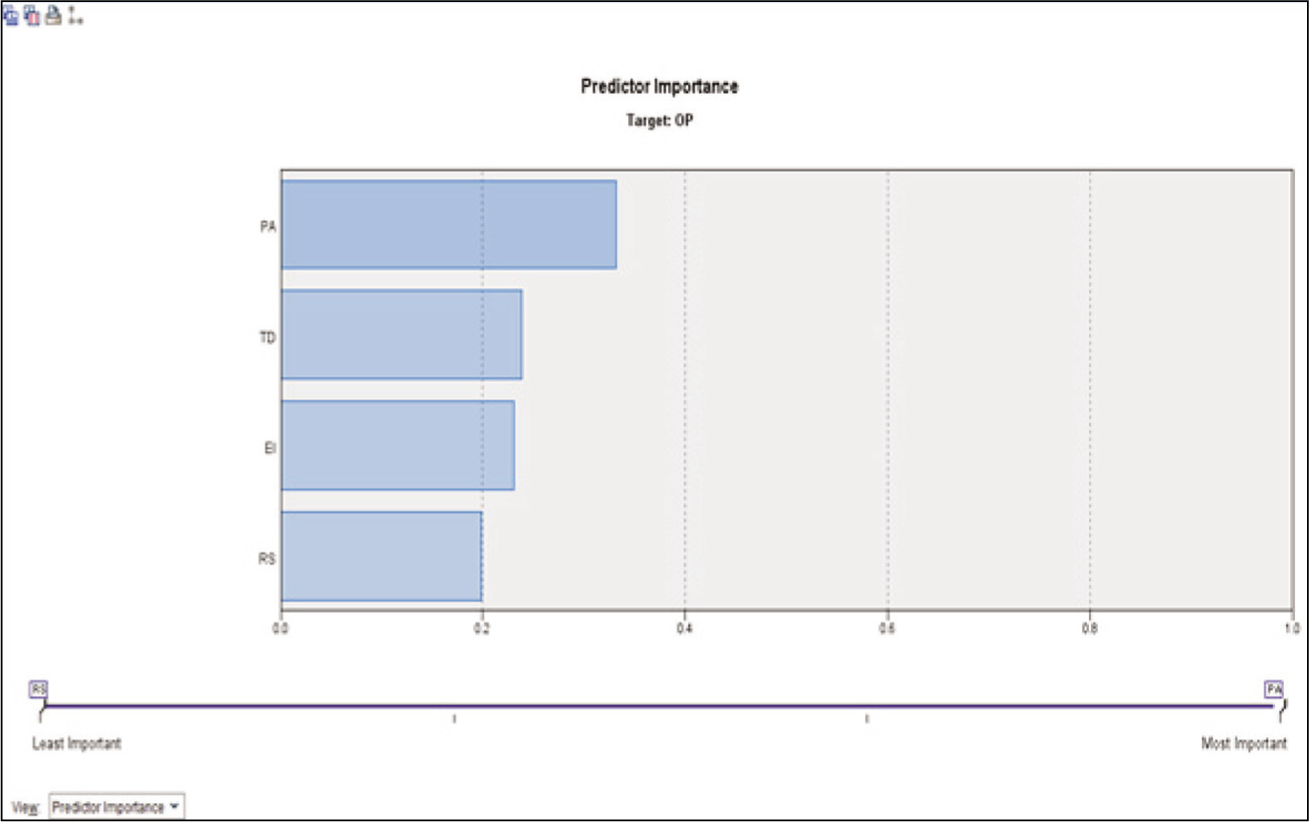
To confirm the results of the path analysis, the authors also performed ‘predictive analysis’ in SPSS Modeler v18.0, using the regression modelling technique. Figure 2 confirms the results of the path analysis and depicts that, in conformity with Table 5, performance appraisal (PA) is the most important predictor of organizational performance (OP), followed by training & development (TD), and employee involvement (EI), whereas recruitment & selection (RS) was found to be the least important and insignificant predictor of organizational performance.
Discussion
The central focus of the current investigation was to explore the effect of various HRM practices on the performance of banks in India. Accordingly, we proposed four hypotheses in connection with four different HRM practices (as shown in Figure 3). The first hypothesis (H1) investigated whether recruitment & selection affect organizational performance. As illustrated in Table 5, the results showed an insignificant effect and thus, did not support our hypothesis (β = 0.023; p = .644). The result of this hypothesis is inconsistent with most other studies in literature ((Agyei, 2016; Ekwoaba et al., 2015; Farouk et al., 2016; Saifalislam et al., 2014; Taamneh et al., 2018). The possible reason for this inconsistency may be the ineffective and improper implementation of recruitment and selection procedures by the sampled institutions. Although these institutions might have sound recruitment and selection procedures at their disposal, they would not get reflected and show their influence on the organization’s performance until and unless such procedures are implemented as per the organization’s needs.
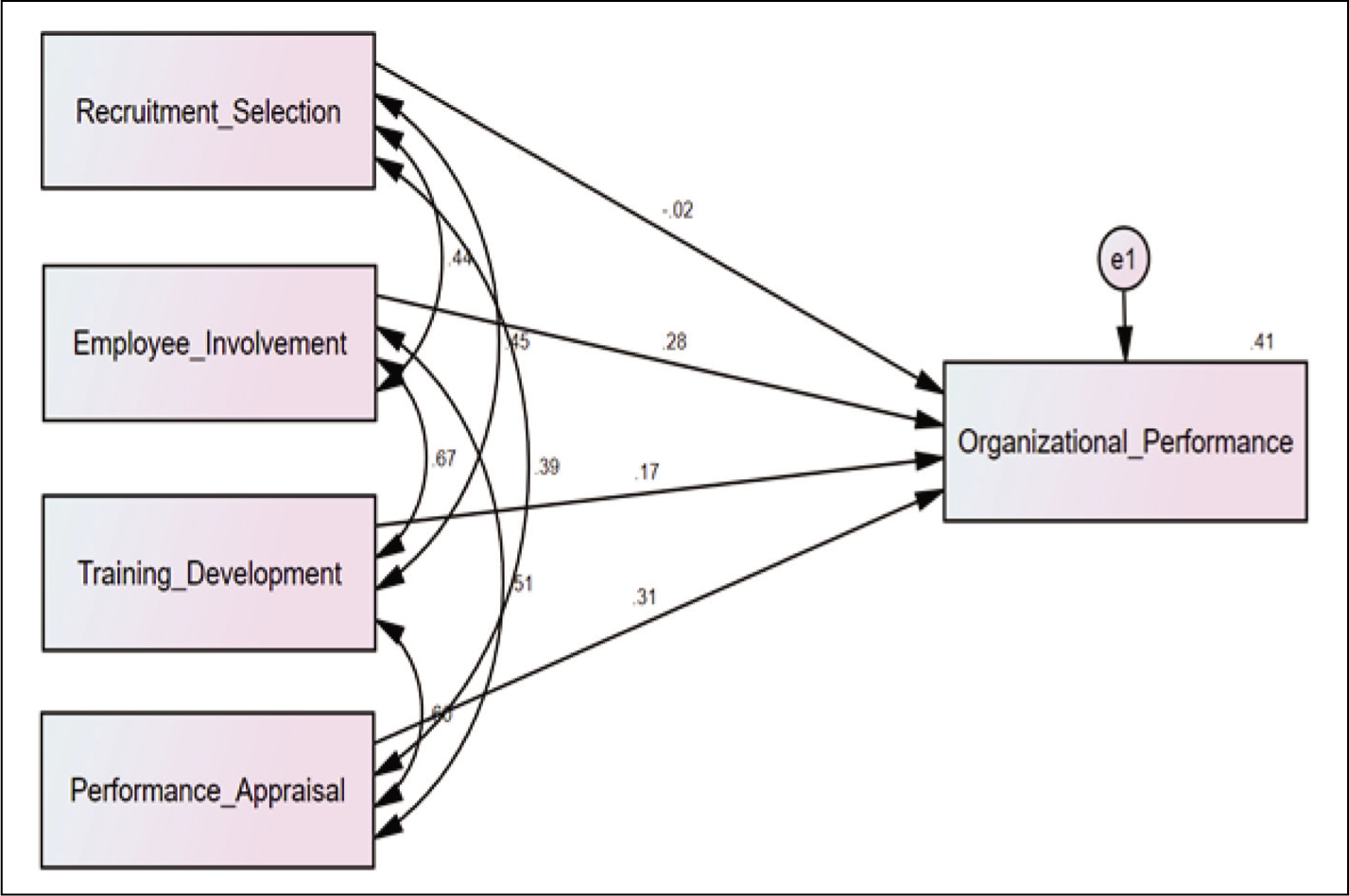
The second hypothesis (H2) attempted to determine the effect of training and development activities on organizational performance. The findings revealed a positive and significant influence and supported our hypothesis (β = 0.172; p = .007). It implies that the more effectively the training and development practices are implemented by the organization, the better would be the performance of the organization. This is because training and development programs implemented by the organization help employees carry out different roles and responsibilities efficiently and effectively and helps prepare them for better charted career paths. This sends a message to the employees that the organization’s management cares about their growth and advancement, thereby increasing their commitment to the organization. Therefore, banks must design and implement suitable training and development strategies to develop, nurture, and enhance the desired competencies of their employees, which are instrumental in improving the organization’s overall performance. This confirms the findings of other investigations in the literature available, such as those authored by Al-Qudah et al. (2014); Chahal et al. (2016); Khan et al. (2011); Niazi (2011); Obi-Anike and Ekwe (2014) and Taamneh et al. (2018).
The third hypothesis was postulated to measure the impact of performance appraisal on organizational performance. Our hypothesis was supported by results that indicated a significant and positive effect (β = 0.311; p < .001), indicating that the more effective and appropriate the performance appraisal system adopted by the organization, the more enhanced the organizational performance. This is because performance appraisals facilitate organizations to design appropriate and practical training and development programs and assist in creating suitable promotion policies for employees. Performance appraisals are positively linked to productivity, bonus, rewards, salary increments, and employee job satisfaction. Therefore, by employing fair and effective appraisal procedures, banks can boost the trust, commitment, and performance of their personnel and, consequently gain organizational success. This outcome is also in conformity with other studies in literature (Farouk et al., 2016; Singh & Rana, 2015; Taamneh et al., 2018).
Similarly, the fourth hypothesis (H4) was proposed to analyse the influence of employee involvement on organizational performance. The results confirmed a significant and positive impact and supported our hypothesis (β = 0.282; p < .01), implying that offering appropriate participation opportunities to employees in organizational matters would improve the organization’s performance. This is because providing employees with opportunities to express their opinions through different platforms and involving them in decision-making within the organization enhances their sense of belonging, importance, and trust, thereby increasing commitment to the job and organization. Moreover, giving employees autonomy, flexibility, and freedom to perform their tasks increases their productivity, performance, and eventually, the organization’s performance. The findings of this hypothesis are consistent with previous research (Sofijanova & Zabijakin-Chatleska, 2013; Taamneh et al., 2018).
It is an established fact that organizational effectiveness and competitive advantage are not just the outcomes of strategy, product or service alone; rather, they are the outcome of the ability of an organization to efficiently and effectively manage its HRs (Appelbaum et al., 2000). Investing in people and valuing employees plays a significant role in enhancing the performance of an organization. It is also believed that technological advancements and innovation practices alone are insufficient to improve performance unless effective HRM practices enhance organizational performance (Tensay & Singh, 2020). Banks provide numerous services to their customers, such as accepting deposits, advancing loans, discounting bills, currency exchange, consultancy, mobile banking and investment banking, and practically, it is the employees who provide these services. Therefore, it is necessary to develop sound HRM practices to improve their performance and, consequently, the organization’s performance.
Implications
Theoretical Implications
The present work adds to the existing body of knowledge by making various theoretical contributions. First, most researchers have studied the combined impact of different HRM practices on organizational outcomes while we have examined the independent effects of diverse HRM practices on organizational performance. Second, very few studies have focused on the linkages between HRM practices and organizational performance, specifically in the Indian context; we extended the previous research by investigating the relationships between these constructs in an emerging economy. This study also contributes to the existing body of literature by offering new insights regarding the hierarchy of practices in terms of relative contribution to performance. Third, while reviewing the relevant literature, it was found that most researchers have laid too much stress on the monetary facet of an organization as an index of its performance in investigating the impact of HRM practices on organizational performance. In the knowledge economy, only financial measures are insufficient to measure current organizational success and prospects. The overemphasis on financial performance fails to consider other HRM stakeholders, such as employees and customers. To overcome this oversight, we undertook non-financial measures encompassing both internal and external performance indicators to study the outcome of HRM practices.
Practical Implications
The study findings offer practical and policy implications for the Indian banking sector. Line managers and HR professionals may use these insights while designing and implementing HRM practices. To deal with the increased rate of growth of the banking sector and the accompanying competitive pressure, banking organizations must focus their attention on improving their HRM practices particularly in training and development, employee involvement, and performance appraisal. There is also a need to pay special attention to recruitment and selection practices and investigate why the practices are insignificant in improving organizational outcomes. Similarly, banking organizations must adequately invest in appropriate training and development and skill enhancement programs to strengthen their employees’ desired competencies, prepare them for future roles, and nurture their career paths. Besides, the increased rate of banking scams in India during the past few years requires banking organizations to strictly adhere to business and ethical principles by implementing specific training programs. Performance appraisal methods should be fair, transparent, employee-centric, and capable of developing their career. Moreover, effective participation of employees in decision-making processes should be made in letter and spirit, and autonomy and freedom should be provided to employees to perform their jobs more efficiently and effectively. Further, educational institutions must collaborate with the banking industry to introduce industry-specific courses and develop a pool of people equipped with the industry’s desired competencies.
Limitations and Scope for Future Research
This study naturally suffers from various limitations that offer abundant further research opportunities. The researchers examined the impact of only four HRM practices on organizational performance; therefore, future studies may incorporate other HRM practices such as compensation and rewards, career planning, job definition and grievance handling. Second, the current study is cross-sectional; therefore, longitudinal studies may be undertaken to better investigate the advancement of HRM practice-based organizational performance in the long run. Third, given the context of the study, the Indian banking industry, the results cannot be applied to other sectors or settings. Therefore, future research might investigate and compare the results of different sectors and regions to better generalize the results across different industries and nations using both financial and non-financial measures.
Conclusion
This study was directed to evaluate the effect of a select few HRM practices on the performance of banks in India. Findings suggest that employee involvement, training and development, and performance appraisal greatly affect banks’ performance. On the other hand, recruitment & selection was found to have a negligible effect on organizational performance. The outcomes of the study contribute to the existing knowledge by measuring the relationship between individual HRM practices and the perception of employees towards organizational performance in the banking sector of India. The study’s findings also offer insights to practitioners, line managers, and HR professionals, which may help them make decisions related to HR functions. The scope of the study is limited to the Indian banking sector that cannot be generalized across sectors. Future studies can conduct a comparative analysis and investigate the mechanism of HRM performance for a more nuanced understating of the field. In a nutshell, the study provides linkages between HRM practices and organizational performance in emerging markets, using the Indian banking sector as a context that has both theoretical and practical implications and suggests directions for future research.
Footnotes
Declaration of Conflicting Interests
The authors declared no potential conflicts of interest with respect to the research, authorship and/or publication of this article.
Funding
The authors received no financial support for the research, authorship and/or publication of this article.
Appendix
Questionnaire Items.
| Recruitment and Selection |
| My bank widely publicizes information about both external and internal recruitment processes. |
| My bank discloses information to applicants regarding the criteria of the selection process. |
| My bank communicates performance results to candidates at the end of the selection process. |
| Selection tests of my bank are conducted by trained people. |
| My bank has competitive selection processes that attract competent people. Employee Involvement |
| My bank treats me with respect. |
| My bank is concerned with my welfare. |
| There is an environment of trust between managers and employees in my bank. |
| My bank recognizes the work I do. |
| My bank favours autonomy in doing tasks. |
| Employees and managers of my bank enjoy constant exchange of information in order to perform their duties properly. |
| My bank encourages my participation in decision- making. |
| Training and Development |
| My bank helps me develop the skills I need for the successful accomplishment of my duties. |
| My bank invests in development of my professional growth. |
| Training is evaluated by participants in my bank. |
| My bank encourages application of knowledge. |
| Training needs are identified periodically in my bank. |
| Performance Appraisal |
| My bank discusses performance appraisal criteria and results with its employees. |
| Performance appraisal is the basis for the employee development plan in my bank. |
| Performance appraisal is the basis for decisions about promotions in my bank. |
| My bank publicizes performance appraisal criteria and results to its employees. |
| Organizational Performance |
| Quality of product, service or program |
| Development of new product, service or program |
| Ability to attract essential employee |
| Ability to retain essential employee |
| Satisfaction of customer or clients |
| Relationship among employees in general |
| Relationship between management and other employees |