



Abstract
In the contemporary business environment, the increasing competition and dynamics have made it very difficult for businesses to attract and retain customers. Understating the variables of consumer buying behaviour can go a long way in addressing this problem. This study explores the impact of social media on users’ complex buying behaviour. The mediating effect of perception has been studied between social media and users’ complex buying behaviour; also, the moderating effect of extended social media usage on the proposed relationships was evaluated. Data for the study were collected from social media users through an online survey using a structured questionnaire specifically developed and validated for the purpose. The data were analysed with the help of structural equation modelling using SPSS and AMOS software. The results of the study indicated that social media has a positive and significant effect on users’ complex buying behaviour as well as users’ perception. In addition, the results demonstrated that perception partially mediates the relationship between social media and users’ complex buying behaviour. Finally, the study indicated that extended social media usage acts as an enhancing moderator in the proposed framework. The outcomes of this study may be used as the basis by marketing managers to assimilate social media into the existing integrated marketing mix, to attract, retain and nurture customers.
Introduction
The ubiquitous usage of social media has amplified rapidly, thanks to the increasing number of internet and smartphone users globally (Sheth, 2018). Social media has become a branding hub, filled with potential users’ mainly young adults. These adults spend their time on social media owing to the heavy commercial content, entertainment and social gathering (Jothi et al., 2011). ‘Social media’ as a construct has its roots in sociology and communication science, it allows participants to communicate along with dyadic ties (Peters et al., 2013). It is the amalgamation of social communication with online media that results in boundless interaction among its users. Kaplan and Haenlein (2010) define social media as ‘a group of internet-based applications that are built on the ideological and technological foundations of Web 2.0 and that allow the creation and exchange of user-generated content’. Similarly, Murphy et al. (2013) define it as: ‘The network of web systems and websites that allow mass interaction, conversation, and sharing among members’. In consensus with these definitions, Filo et al. (2015) define social media as ‘New media technologies facilitating interactivity and co-creation that allow for the development and sharing of user-generated content (UGC) among individuals, groups as well organizations’.
In the context of our study, social media is considered as ‘the usage of web and mobile technologies to create, consume and share knowledge and information without any geographical, social, political or demographical boundaries through public interaction in a participatory and collaborative way’. It is a real-time and interactive online communication platform that enables and encourages UGC.
User-generated Content
UGC involves consumer online reviews, ratings, comments and feedback, as well as interactions with the firm and other consumers (Arora & Sanni, 2019). It is created, consumed and shared by users and is generally perceived as credible and trustworthy. Consumers trust information created by other consumers more than the information created by marketers or advertisements (Cheong & Morrison, 2008; MacKinnon, 2012). UGC provides information about products, services, issues, events etc. and has transformed one-to-many traditional marketing into many-to-many marketing. UGC can influence consumers’ attitudes and consequently buying behaviour (Mudambi & Schuff, 2010). UGC exhibits a stronger impact than firm-generated content (FGC) on consumer buying behaviour (Goh et al., 2013). Social media is driven by UGC and is highly significant in innumerable settings including buying behaviour (Greenwood & Gopal, 2015). Consequently, it can be deciphered that UGC affects consumers’ buying behaviour and increases their spending.
Electronic Word of Mouth
Also known as word of mouse, electronic word of mouth (E-WOM) is defined as sharing ideas, information, perceptions, etc. through online Media. WOM has a greater reported impact on brand choice than advertising or personal search (East et al., 2005). Social media platforms have helped the spread of E-WOM because of the unprecedented usage and unique properties of online interaction (Dellarocas, 2003). Kumar et al. (2013) reported that buying decisions of more than 80% of global consumers across geo-demographic barriers get influenced by WOM and social media. Unlike traditional WOM, e-WOM communication possesses unprecedented speed of diffusion and is more persistent and accessible (Cheung & Thadani, 2010). Consumers are more likely to be influenced by E-WOM than by traditional advertising media (Goldsmith & Horowitz, 2006). According to Wu and Wang (2011), consumers rely more on WOM than on other sources of information when making buying decisions. A message on social media has 20 times higher reach than marketing events and 30 times more than media appearances (Trusov et al., 2009). E-WOM is not restricted to close acquaintances; rather, it can take place between strangers who are geographically dispersed (Chu & Kim, 2011). E-WOM through social media influences consumer purchase intentions (Erkan & Evans, 2016), and purchase intention is a major determinant of consumer buying behaviour.
Perception
Perception is the process by which an organism interprets and organizes sensations to produce a meaningful experience of the world (Norman & Lindsay, 1977). It is a process in which an individual senses external information, selects from different sources of information and finally interprets the selected information (Belch & Belch, 2009). It is also defined as a process of receiving, selecting and interpreting environmental stimuli involving the five senses to define the world around us and to create meaning from our environment (Kardes et al., 2011). In other words, a person is confronted with a situation or stimuli, the person interprets this stimulus as something meaningful to him/her based on prior experiences. However, what an individual interprets or perceives may be substantially different from reality and it is based on this interpretation that a consumer reacts to a stimulus. The consumer selects certain stimuli and ignores others and perceives only a small fraction of the stimuli they are exposed to (Schiffman & Kanuk, 2007).
Complex Buying Behaviour
Consumer purchases are the backbone of every economy and, therefore, critical analysis and understanding of consumers’ behaviour are indispensable for a successful business. One of the essential elements in consumer buying behaviour is understanding how consumers develop, adopt and use decision-making strategies (Moon, 2004), and hence, it has become an area of interest for both marketers and researchers. Companies spend billions of dollars annually studying what makes consumers behave the way they do. Studying people’s buying habits isn’t just for big companies, even small businesses and entrepreneurs can study the behaviour of their customers with great success (Tanner & Raymond, 2012).
What, where, how and how often a consumer buys a product or service is termed ‘consumer buying behaviour’, it is the behavioural pattern of consumers that precedes, determines and follows the decision process for the acquisition of need-satisfying products, ideas or services (Du Plessis, 1990). It can be described as a psychological method of decision-making followed by physical action. Buying behaviour is defined as ‘The study of the processes involved when individuals or groups select, purchase, use or dispose of products, services, ideas or experiences to satisfy needs and desires’ (Solomon et al., 2009). It is also defined as ‘The dynamic interaction of affect and cognition, behavior, and environmental events by which human beings conduct the exchange aspects of their lives’ (Bennett, 1995). The act of buying, therefore, is not just a stage in the sequence of physical and mental activities that occur during a particular period. Rather, it is a combination of pre-purchase, purchase and post-purchase activities that are interlinked. Furthermore, consumer buying behaviour comprises the decisions that a consumer takes on how to spend the scarce resources available to him/her, that is, money, time and effort on products/services. Consequently, consumer buying behaviour can be summed up as the set of activities undertaken by a consumer to make the final purchase decision.
Buying behaviour is dynamic, and therefore, marketers should be able to study the behaviour in a continuum and constantly review their marketing strategy according to the market forces. Every customer has varied characteristics that make the study of their buying behaviour influencers difficult. Further, buying behaviour is not a task, it is a process of interconnected and iterative activities. A consumer passes through the five-stage process of buying behaviour, including need recognition, information search, evaluation of alternatives, purchase decision and post-purchase behaviour (Engel et al., 1968), this process is initiated in response to the disequilibrium created as a result of unsatisfied underlying needs. These stages of buying behaviour process are affected by the consumer’s internal factors such as perception, attitude, and personality, as well as external factors such as culture, values, peers, family and marketing mix. Being a complex and dynamic process, the study of consumer buying behaviour is of immense importance in marketing as it forms the basis of every marketing strategy, it facilitates the comprehension of buyers’ thought processes, feelings and how they pick among several available options. Having an insight into these factors enables marketers to better predict the demand for their products and to develop products with a higher probability of success (Khaniwale, 2015).
Based on the consumer involvement (high or low) and the difference between brands (significant or few), Kotler and Armstrong (2010) divided the consumer’s buying decision into four broad categories: (a) Complex buying behaviour: decisions involving high consumer involvement and significant difference among alternative brands; (b) variety seeking buying behaviour: decisions involving low consumer involvement and significant difference among alternative brands; (c) dissonance-reducing buying behaviour: decisions involving high consumer involvement and minimal difference among alternative brands; (d) habitual buying behaviour: decisions involving low consumer involvement and minimal difference among alternative brands. Complex buying decisions involve a considerable amount of risk and value and infrequent purchases such as a house, a car, a laptop or deciding on a wedding venue. The complex buying decision is a high-involvement decision, and consequently, the consumer does a lot of research about the product or service involved to comprehend it in totality before buying it. One thing that differentiates complex buying behaviour from the other types of buying behaviour is that every decision is almost unfamiliar because being an infrequent purchase, the purchase cycle is long and therefore a lot of things change since the last purchase. The complex buying decision becomes easy when information about attributes, benefits, price etc. of the products and services are readily available. For this study, we are analysing the effect of perception and social media on complex buying decisions made by a consumer.
Objectives of the Study
The objectives of this study are six-fold. First, we develop and describe a conceptual framework based on the gap in the existing literature. Next, we develop an instrument to measure the proposed variables of the framework. Further, we empirically analyse the proposed conceptual framework with the help of the measurement instrument developed specifically for this purpose. We analyse ‘perception’ as a mediator between social media and complex buying behaviour. Furthermore, we analyse our proposed model to investigate the moderating effect of extended social media usage on all relationships in the framework. Finally, based on the results, we provide academic and managerial implications of our study and set a research agenda for future research in the social media and consumer buying behaviour domain.
Review of Literature
Observing and learning peer purchasing behaviour increase the intention to purchase, and purchase intention significantly exerts an impact on both actual purchase and post-purchase behaviour. Social media can help marketers to predict the users’ purchase intention which can further lead to improved marketing efforts (Hill et al., 2006). Discussing the role of social media in creating a new and enduring relationship with consumers, Singh et al. (2008) claimed that the comfort level of interaction and expression through social media is high compared to the traditional media channels; in that way, social media enhances consumer participation in the business processes and that ultimately affects consumer buying behaviour. Wang and Yu (2017) found that consumers will collect information about the product’s quality, variety and price with their peers and compare alternative opinions by reading customer reviews before making a buying decision. While studying the impact of social media on consumer buying behaviour, Naidu and Agrawal (2013) concluded that social media has become a very useful promotional technique for marketing strategists, and it is influencing consumer buying behaviour directly and indirectly. Advertisements on the social media environment have a significant effect on consumer buying behaviour (Rehman et al., 2014); it is indeed effective in influencing consumer’s buying behaviour provided the promotion that is being offered is relevant, interesting and has value for the customer (Sasitharan et al., 2016).
More and more consumers are selecting products that have been reviewed by their friends and connections on social media. Owing to the popularity of social media, businesses as well as customers use it as a platform to share information and experiences (Bai et al., 2015). Consumers receive information about products and services through social media (Clemons, 2009), and before making a final buying decision, they search for people’s opinions that they trust more than traditional marketing communications (Karamian et al., 2015). The user involvement and time spent on social media increase with every passing day, and recommendations from friends and acquaintances play an important role on social media that often results in the ‘momentum effect’ (Gbadeyan, 2010). Xie and Lee (2015) advocated that consumers’ augmented exposure to social media elevates the likelihood to buy and this positive influence lasts for at least a couple of weeks. Therefore, investing in social media marketing will have a positive impact on consumer behaviour and the purchases consumers make (Kumar et al., 2016).
The benefits of social media do have a positive relationship with consumers’ buying decisions (Yoo, 2016). Social media minimizes and even removes time and place restrictions and thus minimizes the economic restrictions for businesses and consumers to access information on social media before making a final buying decision (Hayta, 2013). Lerrthaitrakul and Panjakajornsak (2014) indicated that social media significantly influences consumers’ buying decision process in the pre-purchasing, purchasing and post-purchasing stages. Yogesh and Yesha (2014) found that reviews and opinions on social media affect every stage of buying decision process. A distinctive trait of social media is the product/service review and recommendation, people count on the suggestion of their peers, connections, friends, etc. before making a purchase, visiting a place or booking an accommodation (Kapoor et al., 2018). The information provided by social media users can be successfully used to predict their buying behaviour (Zhang & Pennacchiotti, 2013). Businesses are recognizing the importance of social media as a building block of value equity that improves short-term performance and also brings long-term productivity benefits (Luo & Zhang, 2013).
Attitude towards social media advertising is a strong predictor of the behavioural response of millennials (Arora et al., 2020). Social media advertising has a positive impact on the purchase attitudes of Indian millennials (Ghouse et al., 2022). Social media users consider the buying process easier and enjoy it more as compared to those who use other information sources; additionally, they also had greater confidence and satisfaction during the process and social media improved consumer satisfaction during the initial stages of information search and alternative evaluation (Voramontri & Klieb, 2019). Social media is being used for purchasing purposes and it positively affects users’ purchasing behaviour (Shah et al., 2019). Buying behaviour is a strong measure of return on investment because of its power to predict current and future sales and such requires a thorough analysis and understanding.
As social media usage has increased manifold (Statista, 2020), we are witnessing its ever-increasing effect on users’ behaviour. The advantages of extended social media usage include relation-building, reduced communication barriers and new opportunities for businesses (Fatima et al., 2015). Consumers who use social media for long periods and update their profiles frequently displayed the most favourable attitudinal responses to social media marketing communications (Duffett, 2017). Consequently, the effect of extended social media usage needs to be studied to substantiate the above results in a different context.
Rationale
With the inclusion of social media into the marketing mix owing to its diffusion and adoption throughout the world, industry, researchers and academicians are very keen to slice and dice this disruptive marketing platform and to decipher the insights. An adequate number of studies have attempted to enquire about the effect of social media on buying behaviour, but the majority of these studies follow a micro approach, focusing either: (a) on a specific social media type (e.g., Facebook) (Hollebeek et al., 2014; Hutter et al., 2013; Wang & Kim, 2017); (b) a particular area of interest (e.g., tourism) (Jansson, 2018; Munar & Jacobsen, 2014; Zeng & Gerritsen, 2014); (c) a specific product category (e.g., luxury fashion) (Godey et al., 2016; Kim & Ko, 2012); or (d) on a particular stage of the buying process (e.g., evaluating alternatives). Consequently, several researchers believe that there is a dearth of research in understanding the influence of social media on consumer buying behaviour (Balakrishnan et al., 2014; Godey, et al., 2016; Hutter et al., 2013; McGrath & Li, 2017); therefore, an attempt has been made in this study to analyse the effect of social media on consumer’s complex buying behaviour. Also, mediation analysis would provide a deeper insight into potential pathways and mechanisms between social media and consumer behaviour (Jenkins et al., 2020). The study also analyses the moderating effect of extended social media usage on the proposed framework.
Hypotheses Development
The persuasive power of social media affects users’ perceptions. Social media significantly influences customer perception, attitude and buying behaviour from the pre-purchase stage to post-purchase (Williams & Cothrel, 2000). With around 3 billion people using social media, the influence that a person attains through it has never been more (Grace College, 2018). Social media has gained substantial reach and generated a profound effect on consumers, due to the universal diffusion and adoption of social media among adult consumers as well as due to the upsurge in the number of social media marketing campaigns. Social media plays a vital role in building consumer perception (Kim et al., 2004). The content generated by users in the form of comments affects the perception and behaviour of the audiences (Clementson, 2019). Influencers use social media to influence customer perception and attitude (Jaitly & Gautam, 2021). Based on the above discussion, this study proposed H1.
H1: Social media has a positive impact on perception.
Before purchasing a product, consumers often count on information and advice on social media (Barysevich, 2020). Social media is considered an immediate and participatory communication channel that provides credible information (Poyry et al., 2019). Social media communications are one of the most influential sources in making a buying decision, the quality of communication through social media exerts greater influence when consumer involvement is higher (Vlad, 2020). Social media communication can provide valuable and relevant information that lends support to the consumer buying decision. The opinion leaders on social media can informally influence the attitudes or behaviour of other social media users (Li & Du, 2011). In context to this, we hypothesize H2.
H2: Social media has a positive impact on complex purchasing behaviour.
Buying behaviour of people is affected by social media, and this effect increases due to an increase in the time spent on social media (Chaturvedi & Barbar, 2014). Extended social media usage may have a favourable impact on users (Duffett & Wakeham, 2016). Accordingly, we propose H3.
H3: Extended usage of social media moderates all the relationships of the proposed model.
Perception has long been studied to affect attitude, purchase intention and buying behaviour. Attitude influences consumer behaviour (Heath & Heath, 2008). Positive customer perceptions are associated with stronger purchase intentions (Aaker, 1991) and intention is the most accurate prediction of behaviour (Ajzen & Fishbein, 1980). Perception has a direct effect on behaviour (Dijksterhuis & Bargh, 2001). Thus, this study proposes H3 and H4.
H4: Perception has a positive effect on complex purchasing behaviour.
H5: Perception mediates the relationship between social media and complex purchasing behaviour.
Conceptual Model
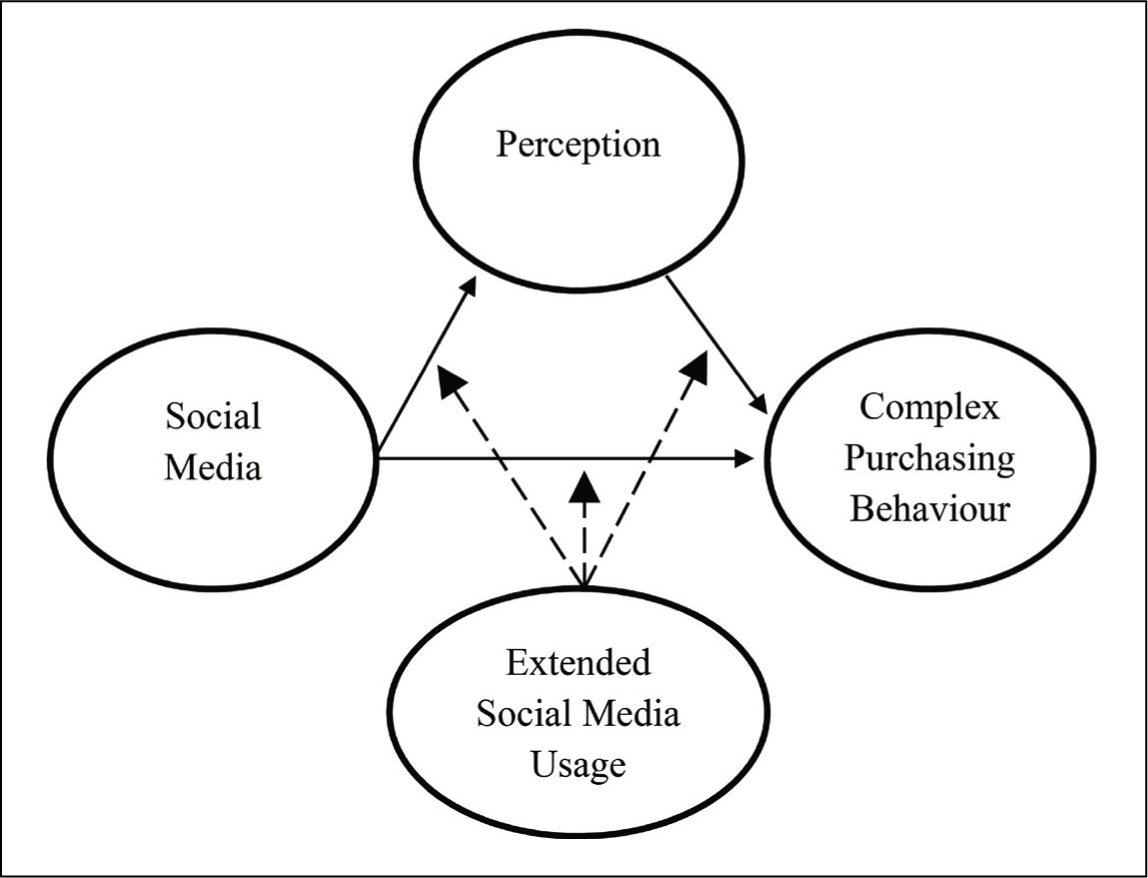
The conceptual model proposed for the current study based on the hypotheses development is presented in Figure 1. There are four variables in our proposed framework, ‘social media’ is the independent variable, and ‘complex buying behaviour’ acts as the dependent variable. ‘Perception’ has been studied as a mediating variable between social media and complex purchasing behaviour, whereas ‘extended social media usage’ has been analysed for its moderating effect on the relationships of the proposed framework.
Proposed Conceptual Model.
Research Methodology
The primary objective of our study is to generate a pool of specific items to measure the variables understudy. Later, the items were selected out of the preliminary pool of items based on exploratory factor analysis (EFA) as well as various validity and reliability measures. The items measuring the variables of our conceptual model were adapted to the study’s specific context from existing sources (Ahmad, 2017; Duffett, 2017; Huang & Benyoucef, 2017; Nazeer, 2017; Prasad et al., 2017; Shin, 2008; Tseng et al., 2013; Viswanath, 2000) and also developed by the author. The items of the questionnaire were measured on a 5-point Likert-type scale anchored at ‘strongly disagree’, ‘disagree’, ‘neither disagree nor agree’, ‘agree’ and ‘strongly agree’. The questionnaire was subjected to a pre-test and pilot-testing process to eliminate flaws and identify potential concerns. The final questionnaire was uploaded on Google Forms and the link was shared with respondents through Facebook, Twitter, LinkedIn, WhatsApp and Email with a personal message requesting the targeted respondent to fill out the questionnaire and forwarded it through all online sources available to him/her in the same manner, that is, the link and the same personal message. That way, a viral sharing effect (snowball effect) was created for the questionnaire to reach a maximum number of people within the minimum possible time.
Questionnaire Design
A structured questionnaire, comprising 45 items, divided into two parts, was developed for data collection from respondents. The questionnaire started with two check questions, ‘Do you use social media?’ and ‘Have you ever made a complex buying decision, that is, bought a car, a laptop, a house, booked a vacation or any such high-value product/service?’. Only those respondents were asked to fill in the rest of the questionnaire who answered both these questions in affirmative. The first part of the questionnaire, comprising 41 items, was measured on a 5-point Likert-type scale (1 = strongly disagree; 5 = strongly agree). Out of these 41 items, 17 items measured social media, 8 items measured perception and 16 items measured complex buying behaviour. The second part comprised four items assessing the demographic information of respondents and their social media usage. The study was completed in four phases: (a) pre-test (n = 35), (b) pilot test (n = 115), (c) nomological validity (n = 123) and (d) main study (n = 832).
Pre-test (Item Purification)
The pre-test was carried out with a group of respondents to detect problems in questionnaire design, wording and clarity and consequently to make required corrections. The pre-test was conducted with 30 research scholars and 5 professors; the participants were well-versed in social media usage. These participants commented on the listed items that corresponded to the underlying constructs. The recommendations were sought regarding instrument length, wording and format. Based on the respondents’ feedback and suggestions, certain corrections and modifications were made to the questionnaire, and five items measuring social media, two items measuring perception and two items measuring complex buying behaviour were deleted as those were considered redundant by the majority of the respondents or had limited applicability in reflecting the underlying variable. This resulted in an updated and modified instrument for further analysis.
Pilot Test
To gauge the effectiveness of the questionnaire and to test the modified research instrument for validity and reliability, a pilot study was carried out with 115 respondents. Structural equation modelling (SEM) was used with the help of the analysis of a moment structure (AMOS-23) for statistical analysis of the data. SEM is a second-generation multivariate technique that estimates a series of interrelations among various variables simultaneously based on multiple regression analysis. Substantive use of SEM has been growing in social science, and it offers a great opportunity for theory development and construct validation if properly employed (Anderson & Gerbing, 1988). SEM can measure unobserved variables, which cannot be directly measured. It analyses and evaluates multiple paths simultaneously in a single structural model. SPSS–AMOS is a highly effective structural SEM software that helps support the research and theories by extending standard multivariate analysis methods, including regression, factor analysis, correlation and analysis of variance. AMOS builds attitudinal and behavioural models reflecting complex relationships more accurately than with standard multivariate statistics techniques using either an intuitive graphical or programmatic user interface.
Exploratory Factor Analysis
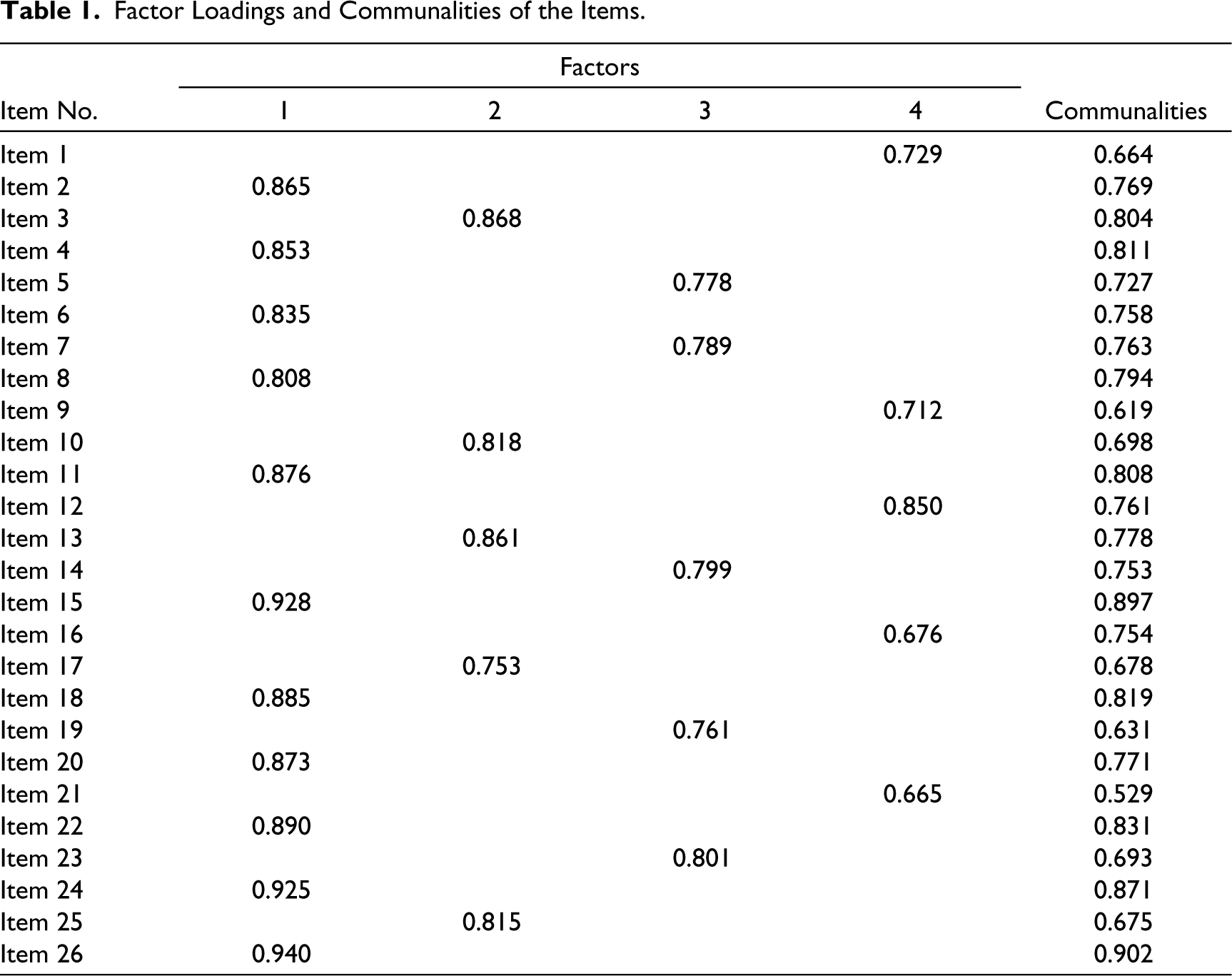
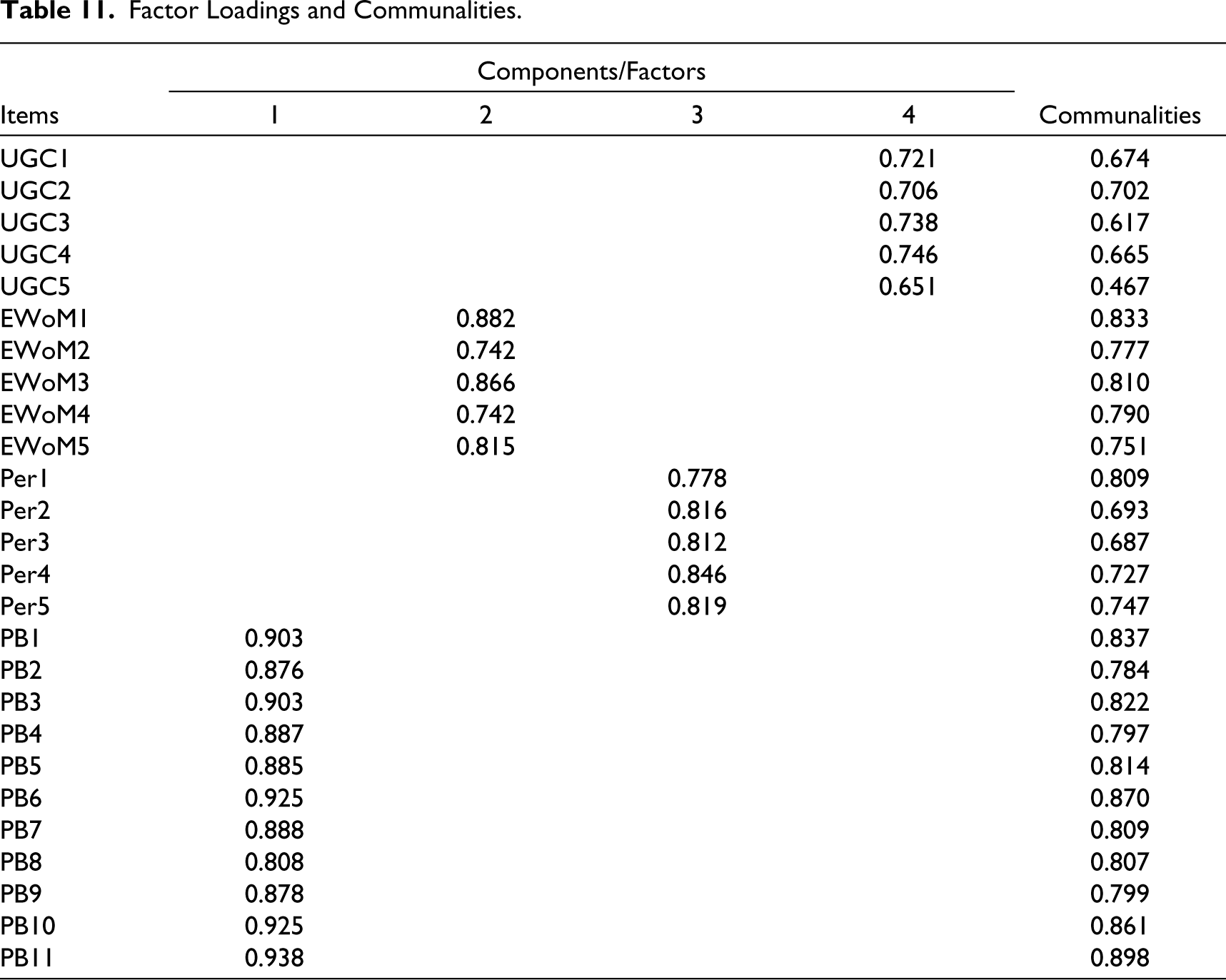
To ensure the factorability of data and to confirm that there is no correlation between the items, Bartlett’s test of sphericity and measure of sampling adequacy through the Kaiser–Meyer–Olkin (KMO) test were scrutinized. The results of this test indicated that the data fulfil the statistical requirements for factorability as Bartlett’s test score was significant (2,916.463; df 325; p 0.000); therefore, the null hypothesis for Bartlett’s test was rejected indicating that there is no relationship between the items. The KMO measure of the data was 0.807, hence acceptable according to Kaiser (1974). Consequently, the items were deemed to be appropriate for factor analysis. To check dimensionality and purify the instrument by clubbing items together into components, EFA was conducted. EFA was done to discover the factor structure of the measures/items. To reduce data and explore the underlying relationship structure, the whole data set comprising 32 items were analysed through the principal component extraction method with varimax rotation. Items with a factor loading of less than 0.5 on a single factor and items significantly cross-loading (0.4) were eliminated (Hair et al., 2009). In the process, six items were removed, and the factor loading of the retained items is presented in Table 1; the values were found to be acceptable according to Nunnally (1978). The communalities of all the remaining items were above 0.5. A minimum eigenvalue of 1 was used as the criterion, and subsequently, the items yielded four factors explaining the overall variance of 75.25%. The extracted components were named perception (Per—5 items), buying behaviour (PB—11 items) and the other two components as dimensions of social media; UGC (5 items) and FGC (5 items).
Factor Loadings and Communalities of the Items.
UGC has been identified as a dimension of social media by Christodoulides et al. (2012), Schivinski and Dabrowski (2014), Mayrhofer et al. (2020) and Sultan et al. (2021). Similarly, E-WOM has been identified as a dimension of social media by Kim and Ko (2012), Balakrishnan et al. (2014), Hossain et al. (2019) and Trevor Yu et al. (2021). The results of our study have further strengthened the findings of these studies.
Reliability
The overall reliability based on the value of Cronbach’s alpha coefficient value for the present scale is very high, as depicted by the alpha value of 0.886. The results of the split-half test are shown and indicate that correlation coefficients yielded from the split-half reliability test are highly acceptable and are presented in Table 2. The results of inter-rater reliability are presented in Table 3, and the average measures of intra-class correlation, as well as lower and upper bound, are all above 0.7 and hence highly acceptable.
Result of Split Half Reliability Test.

Result of Inter-Rater Reliability Test.

Finally, the composite reliability (CR) values for every construct/variable were found to be above the minimum cutoff of 0.6, therefore establishing the CR of the instrument.
Composite Reliability, Average Variance Extracted, Maximum Shared Variance and Correlation Matrix.

Validity
The validity of the instrument was established with the help of content/face validity, convergent validity, discriminant validity and nomological validity. Content validity was established through a pre-test (Hair et al., 2011). The average variance extracted (AVE) of all the factors of our study is above the minimum cutoff of 0.5 and hence supporting the convergent validity (Malhotra & Dash, 2011). According to Fornell and Larcker (1981), the divergent validity is established when the square root of the AVE of all the factors is more than their correlation coefficient, as well as AVE is greater than the respective maximum shared variance (MSV). The results of this test are presented in Table 4, and based on the results, discriminant validity of the instrument is established.
Nomological Validity
To analyse the nomological validity of the instrument, we conducted a theoretical review to examine the impact of social media on attitude, the impact of perception on attitude and the impact of attitude on complex buying behaviour. ‘Attitude is referred to as the tendency to evaluate a behaviour favorably or unfavorably’ (Eagly & Chaiken, 1993). Allport (1935) defined attitude as a mental or neural state of readiness, organized through experience, exerting a directive or dynamic influence on the individual’s response to all objects and situations to which it is related.
Social media significantly influences customer perception, attitude and buying behaviour from the pre-purchase stage to post-purchase (Williams & Cothrel, 2000). Social media prompts impulse purchases, drives sales from new and loyal customers and also provides credible information about customers and their interests, perceptions and attitudes (Lindsey-Mullikin & Borin, 2017). The attitude that is formed towards the advertisement helps in influencing consumers’ attitudes and perception toward the brand until their purchase intent is developed (Goldsmith & Lafferty, 2002). The better the attitude a person has towards a brand, the more likely he or she is to use the product. Conversely, the less positive the attitude, the less likely he or she would be to use the product (Chiou et al., 2008).
Accordingly, the following hypotheses were laid down and a nomological net was constructed to establish nomological validity based on the arguments from the literature.
H6: Social media has a positive impact on attitude.
H7: Perception has a positive impact on attitude.
H8: Attitude has a positive impact on complex buying behaviour.
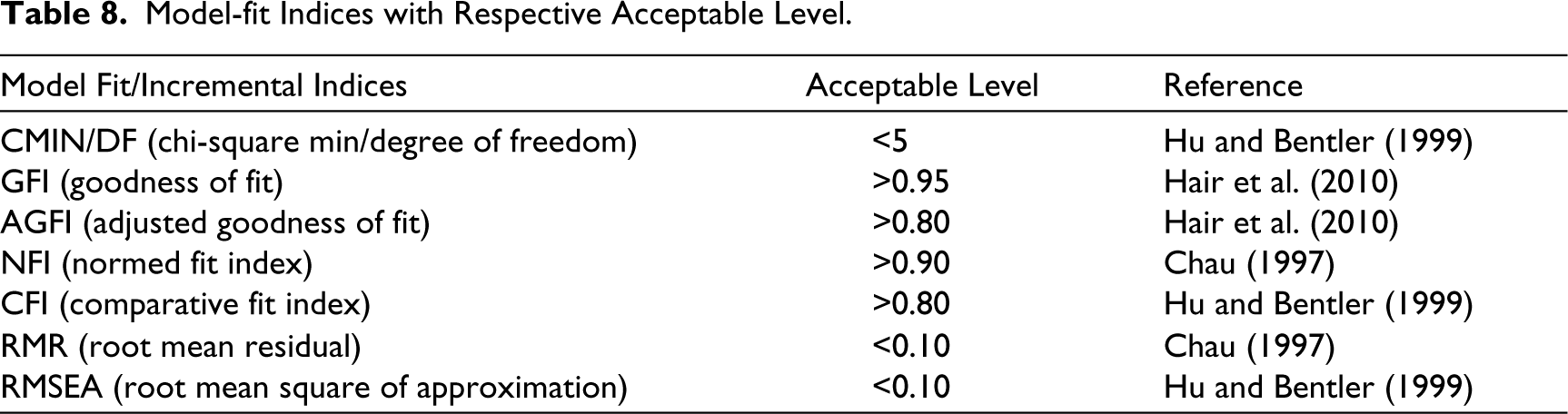
Social media, perception and complex buying behaviour were measured through the validated instrument containing 26 items, and attitude was measured with the help of four items adapted from Duffett (2017) as presented in Table 5. A new sample of 123 respondents was targeted for data collection. The path analysis and model-fit indices of the nomological validity models are presented in Tables 6 and 7, respectively. The model-fit indices and their acceptable level is presented in Table 8. The path estimates of all the hypothesized relationships are significant, confirming that the constructs behave as per the developed hypotheses. Therefore, based on the results, the nomological validity of the developed research instrument was established (Cronbach & Meehl, 1955; Liu et al., 2012).
Items Measuring Attitude (Atti).

Path Estimates of Nomological Validity Model.

Model-fit Indices of Nomological Validity Model.

Model-fit Indices with Respective Acceptable Level.
The processes resulted in the development of a reliable and valid instrument for further analysis. For the main study, the questionnaire was created on Google Forms and was distributed online through Facebook, Twitter, WhatsApp and LinkedIn; see Appendix A. The data were collected from 832 respondents; the sample size is acceptable according to Hair et al. (1998, 2009), Hill and Alexander (2006) and Tabachnick and Fidell (2012). The statistical analysis of data is affected by the way data are organized into a suitable form for analysis. Therefore, before proceeding with the analysis, data were screened, edited, coded and entered into SPSS 23. Twenty-eight incomplete questionnaires were rejected and questionnaires with less than three missing responses were processed for data imputation. Missing responses were imputed with the help of a variable median score, as that is considered the best replacement method for Likert-type data (Lynch, 2007). Twenty-four extreme responses and outliers were removed with the help of a Mahalanobis-D stem and leaf plot through SPSS. Further, data were analysed for the assumptions of linearity, normality, homoscedasticity, multi-collinearity, autocorrelation and common method bias so that parametric tests could be run with this data (Siegel & Castellan, 1988).
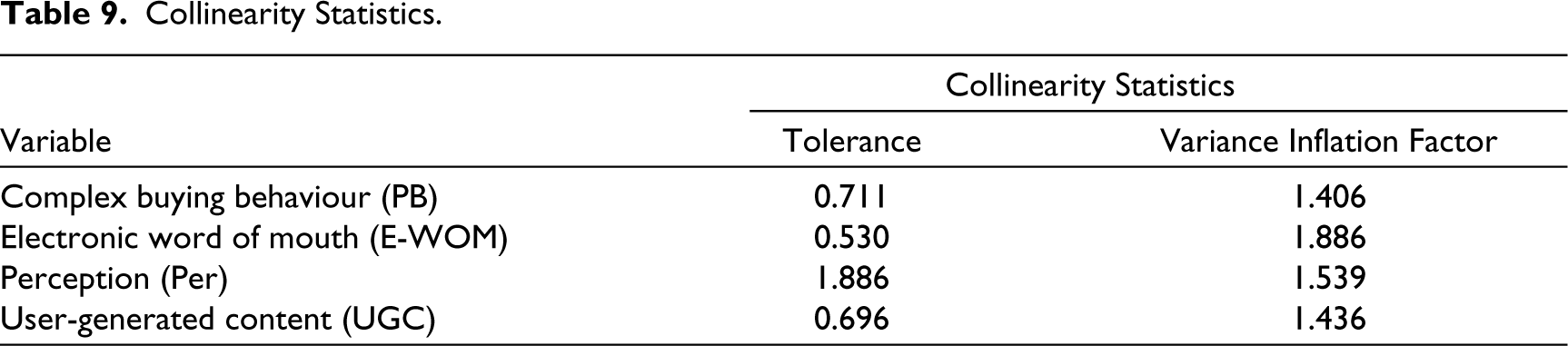
The assumption of linearity was tested with the help of QQ plots, the observed values of all the constructs were found to be very close to the expected line of fit and, hence, the data follow the linearity assumption. The normality of the data was tested with the help of Skewness and Kurtosis. The values of Skewness and Kurtosis of the data fall between the ranges of ±2.2; therefore, the data were found to be normally distributed (Sposito et al., 1983). A scatter plot of the variables, wherein the variable is on the Y-axis and its residual on X-axis is the simplest way to determine if the relation is homoscedastic or heteroscedastic. The scatter plot of all the variables shows a consistent pattern rather than being haphazardly scattered, and therefore establishing homoscedasticity of data. The inter-correlation among independent variables was tested with the help of the variance inflation factor (VIF) and tolerance. All the tolerance values were >0.2 and all the VIF test statistics were <4, Table 9, and hence acceptable (Hair et al., 2011). Durbin–Watson test was used to analyse data for autocorrelation; the result of this test indicated a statistic of 2.088 depicting the absence of autocorrelation (Fields, 2006).
Collinearity Statistics.
Common Method Bias
As the data on both the independent and dependent variables were collected from the same respondents at one point in time, this raises potential common method bias/variance issues. Although preventive steps were taken at the time of data collection like collecting data from different locations, at different points of time, and through different media, a pre-test was used to refine the instrument, items in the instrument were randomly placed, and secrecy and privacy were guaranteed to the respondents (Rodríguez-Ardura & Meseguer-Artola, 2020). Additionally, to confirm that there is no issue of common method bias in the data, we carried out the post-hoc analysis of the data based on Harman’s single-factor method. All the variables were loaded on a single factor and the total variance explained by this single factor was 34.136% only; therefore, there are no issues of common method bias in the data (Iverson & Maguire, 2000; Mossholder et al., 1998). Also, the VIF values of all the latent variables are less than 3.3, confirming the absence of common method bias (Kock, 2015; Kock & Lynn, 2012).
Demographics
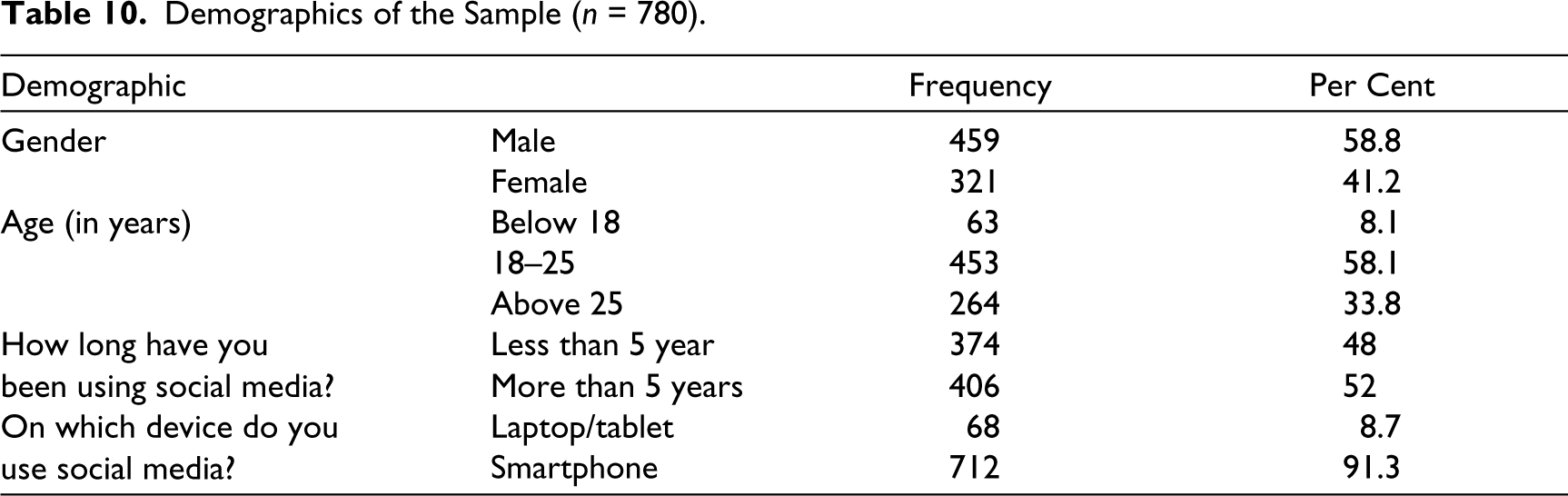
The participants of this study were 59% males and the rest were females. Nobody among the participants were identified with the third gender, and the majority of the participants, 58%, belong to the age group of 18–25. A total of 52% of respondents have been using social media for 5 or more years and 48% have been using it for less than 5 years. An absolute majority, 91%, of respondents are using social media on their smartphones, confirming the global trends of smartphone adoption. The demographic statistic of the sample is presented in Table 10.
Demographics of the Sample (n = 780).
Confirmatory Factor Analysis
Confirmatory factor analysis (CFA) of the data was conducted to verify the factor structure of the measured variables as identified by EFA. Based on the EFA pattern of 26 items, data from 780 respondents were analysed to verify the unidimensionality of the measurement constructs through CFA. CFA also tests the stability and external validity of the scale.
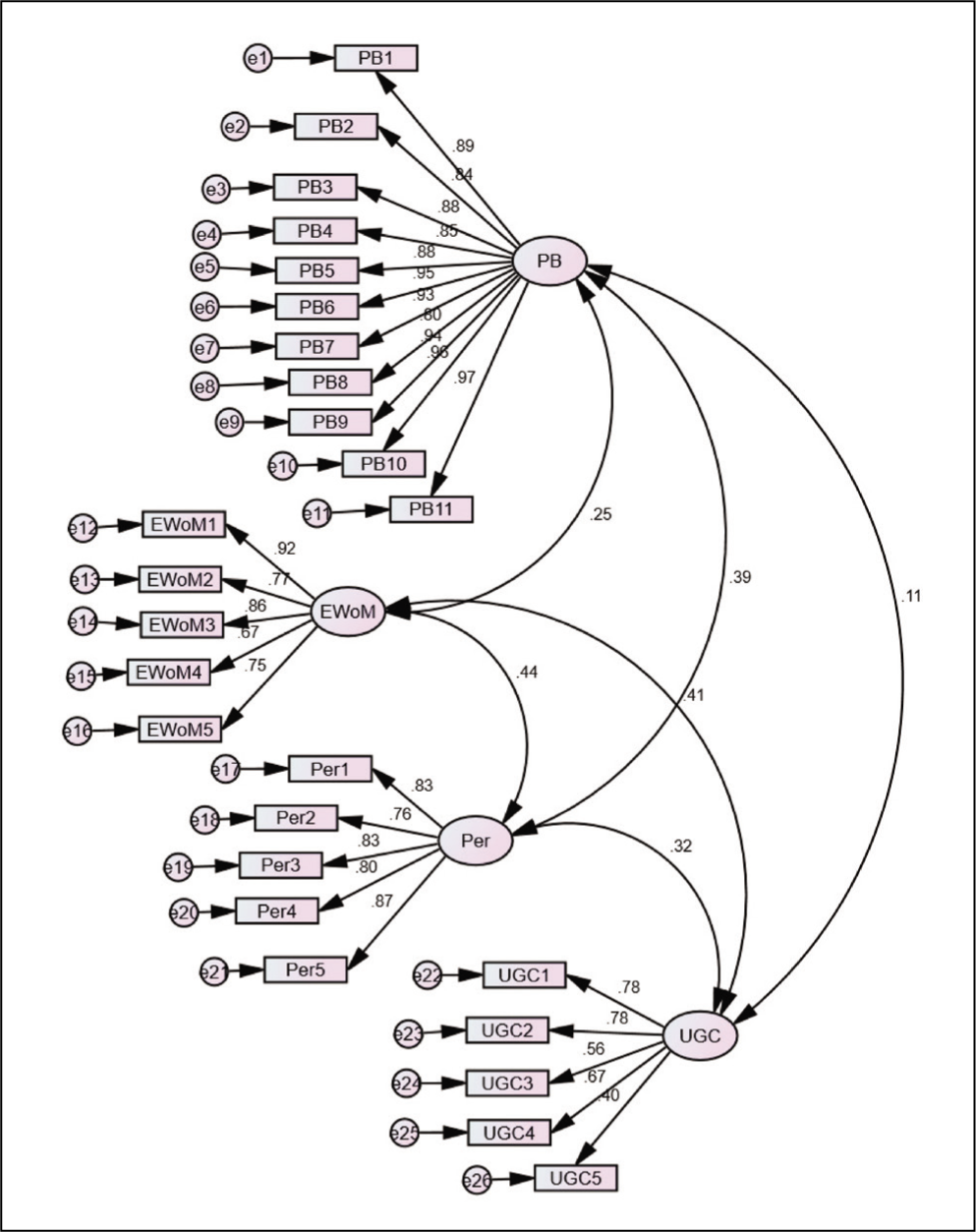
For final data, KMO measure was found to be 0.801 and the score for Bartlett’s test of sphericity was found to be 23059.959, significant at 0.000 with 325 degrees of freedom. The communalities of all the items were above 0.5. The extracted four factors explained the total variance of 72.074%. The rotated component matrix is presented in Table 11. The measurement model based on CFA is presented in Figure 2, and the assessment of CFA was done by analysing different model-fit indices (Sivo et al., 2006). The fit indices of the measurement model are presented in Table 12 and indicate excellent model fit for the data.
Factor Loadings and Communalities.
Confirmatory Factor Analysis.
Model-fit Indices of CFA.

Second-order Factor
Social media, the independent variable of this study, has been measured with the help of two primary manifest dimensions, that is, UGC and E-WOM, through second-order factor analysis. The second-order factor analysis was carried out by evaluating the path estimates of the measurement model, Figure 3. The second-order factor loadings were found to be significant: social media → UGC (0.904, p < 0.05); social media → E-WOM (0.295, p < 0.001), the results are presented in Table 13. The correlation between the first-order factor UGC and second-order factor SM is strongly positive and significant, whereas the correlation between E-WOM and SM is weak-positive but significant. Therefore, UGC explains social media more than E-WOM. Also, the model-fit indices as presented in Table 14 indicate that the model fits the data well. Hence, social media has been justified to be a second-order factor being measured from two first-order manifest factors, UGC and E-WOM.
Hypotheses Evaluation
The model-fit indices of our measurement model are presented in Table 14 and are all acceptable. Based on the measurement model, Figure 3, the structural coefficients are social media → perception (β = 0.314, CR = 1.880, p < 0.001), supporting H1; social media → complex buying behaviour (β = 0.122, CR = 1.184, p < 0.001), supporting H2; perception → complex buying behaviour (β = –0.343, CR = 2.504, p > 0.001), supporting H3. The results are provided in Table 15. All three major hypotheses that were laid down for this study have been accepted, as the results support the same.
Empirical Model.
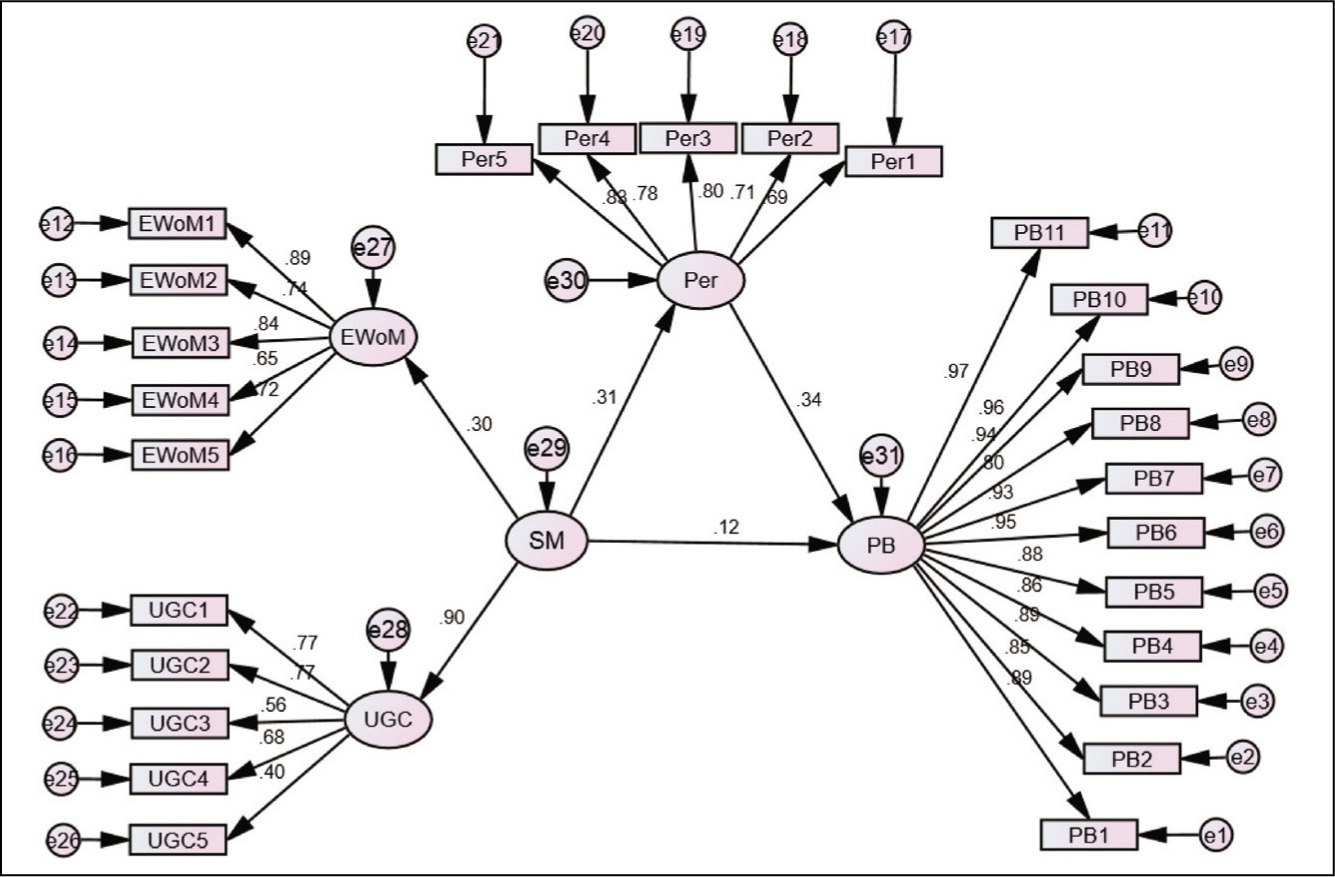
Path Estimates of the Second-Order Factor Social Media (SM).

Model-fit Indices of the Empirical Model.

Mediation
Mediation analysis was performed through bias-corrected percentile bootstrap based on 5,000 bootstraps and a 95% confidence interval to get standardized effects. Before mediation analysis, it is a prerequisite to have significant direct relation between independent and dependent variables in the absence of the mediator (James & Brett, 1984). Path estimates of the direct relationship between social media and complex buying behaviour are presented in Table 16. The relation between the independent variable and dependent variable in the absence of the mediator (perception) is significant with a magnitude of 0.29. In the presence of the mediator, the relation between the independent variable and mediator variable as well as the relations between the mediator variable and dependent variable as shown in Table 15, are both significant. This shows the presence of mediation (Baron & Kenny, 1986). The direct, indirect and total effects of the mediation are shown in Table 17. Since the direct effect between social media and complex buying behaviour (0.298, p = 0.002) and the indirect effect (0.173, p = 0.001) between social media and complex buying behaviour through perception are significant, this also confirms the presence of mediation (Hayes, 2009). Therefore, the need for analysing the direct, indirect and total effects arises for evaluating mediation. The percentage of indirect effect to total effect, that is, 0.173/0.471 is equal to 37% (approx.), which is less than the cutoff of 50%, implying partial mediation (Hair et al., 2010; Kline, 2015).
Path Estimates of Empirical Model.

Result: Perception partially mediates the relationship between social media and complex buying behaviour.
Path Estimates of Direct Relation between SM and PB.

Direct, Indirect and Total Effect between Social Media (SM) and PB.

Moderation
Extended social media usage was measured with the question, ‘How long have you been using social media?’ Upon analysis, it was found that 48% of respondents have been using social media for less than 5 years and 52% of respondents have been using social media for 5 or more years. Before proceeding with multi-group analysis, we assessed the two groups for invariance. The configural invariance was analyzed by evaluating the model fit indices of the measurement model factor structure of two groups based on social media usage (Table 18), estimated freely without any constraint (Schoot et al., 2012). The respective model fit indices specified a good model fit for the data and therefore establishing configural invariance of the two groups. Also, the p value for the chi-square degree of freedom difference test sore, as shown in Table 19, is insignificant (above 0.05), therefore establishing metric invariance of the groups under consideration.
Model-fit Indices for Assessing Configural Invariance.

Chi-square Degree of Freedom Difference Test for Assessing Metric Invariance.

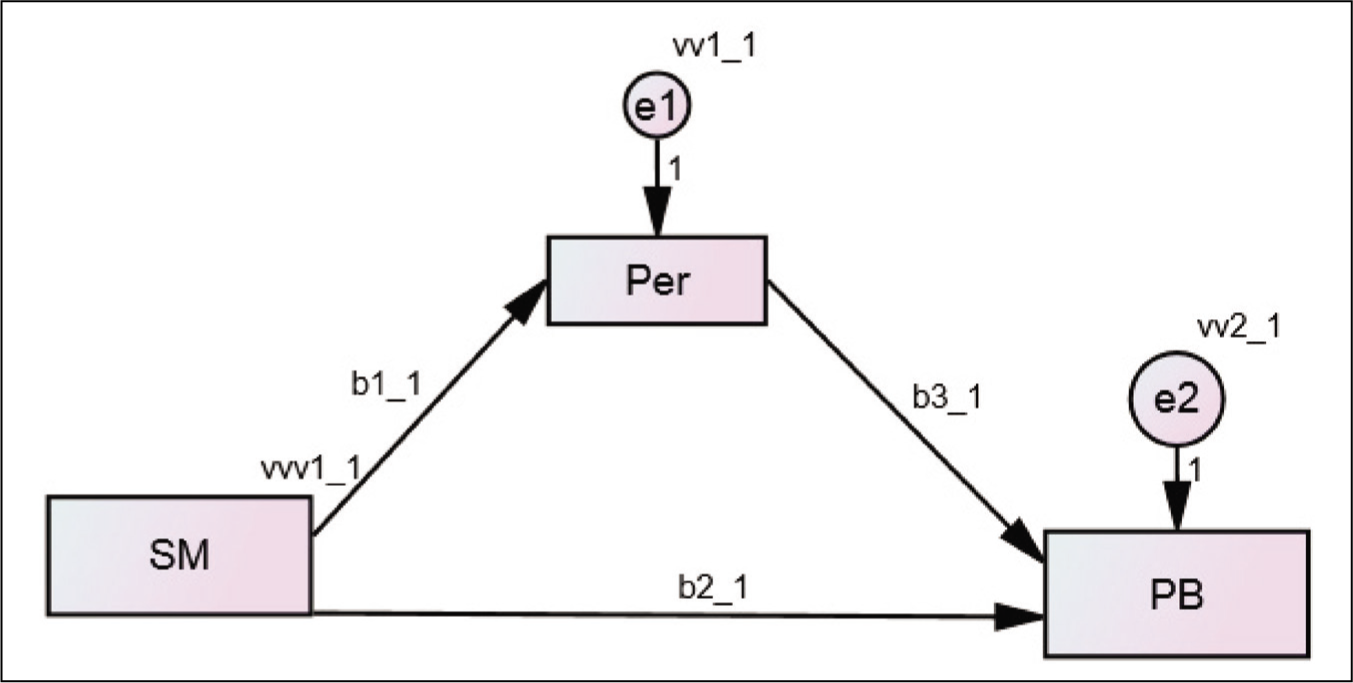
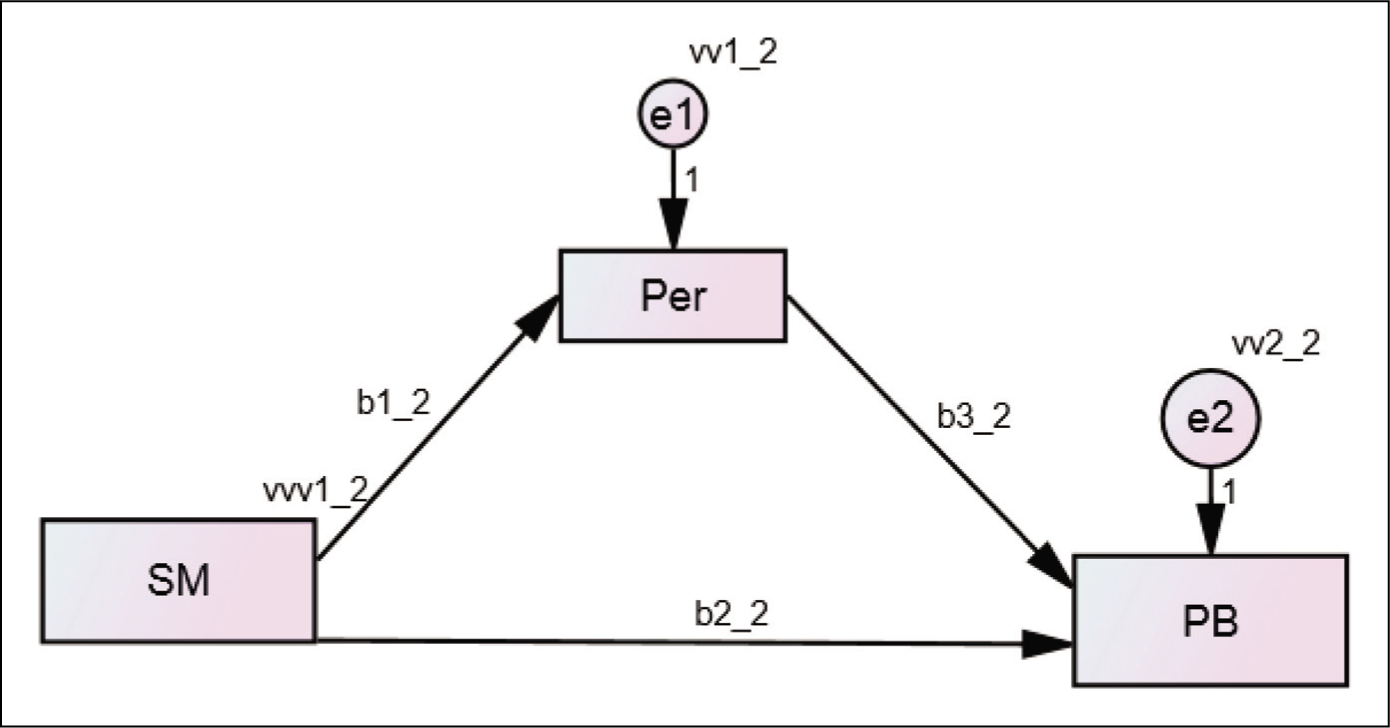
For both the groups, separate paths were created; respondents who have been using social media for less than 5 years were assigned the paths (b1_1, b2_1 and b3_1) (Figure 4) and respondents who have been using social media for 5 or more years were assigned the paths (b1_2, b2_2 and b3_2) (Figure 5). The path for every relationship is proposed to be equal for both groups (i.e., b1_1 = b1_2, b2_1 = b2_2 and b3_1 = b3_2).
Path Diagram for Less Than 5 Years Group.
Path Diagram for 5 or More Years Group.
The results of the chi-square degree of freedom difference test for every path are presented in Table 20. As can be seen, the p value for every result is less than 0.05, therefore establishing that there is a significant difference between the paths of the two groups, which in turn establishes that social media usage does act as a moderator for every relationship of our measurement model. To further analyse the strength and direction of every relationship, the standardized path estimates for both models are presented in Table 21.
Chi-square Degree of Freedom Difference Test Based on Extended Social Media Usage.

Standardized Estimates for Two Groups Based on Social Media Usage.

Nested Model Comparisons
The path estimates for every relationship of the model of respondents who have been using social media for 5 or more years are greater than the corresponding path estimate of the model of respondents who have been using social media for less than 5 years; therefore, extended social media usage acts as enhancing moderator for every relationship of our measurement model.
Discussion
As the number of products and services increases in the market so does the information available to the consumers. With the increase in the number of choices that consumers can exercise and the vast availability of related information on social media, the potential of making better-informed decisions increases. In contrast to traditional one-way communication, social media provides a platform for two-way interaction as well as horizontal integration of consumer-to-consumer connections. The information generated by the consumers or users often called UGC is more trusted by the consumers than the information disseminated by the businesses. This UGC reaches other consumers through peer-to-peer interaction known as E-WOM. Together UGC and E-WOM make social media stand out from other traditional or contemporary channels of communication. This study contributes to the understanding of consumers’ buying behaviour in the social media context by providing a comprehensive analysis of data from social media users. The article augments the social media and buying behaviour literature, by proposing, evaluating and validating the effect of social media on buying behaviour. Therefore, social media will become an important platform of influence for buying behaviour and hence unavoidable to the industry and academicians. Also, as the scale and scope of social media usage increase, it would become a more effective and impelling platform for influencing consumers’ buying behaviour.
Conclusion
The study investigated the effect of social media on users’ complex buying behaviour. Social media was measured as a second-order factor with the help of its manifest variables, that is, UGC and E-WOM. It analysed the mediating effect of perception between social media and complex buying behaviour; it also assessed the moderating effect of extended social media usage on the proposed conceptual framework. The results of the study are summarized as follows: primarily, it is noteworthy that social media significantly influences perception and buying behaviour. These results corroborate the findings of Yadav and Rahman (2017), Reuter and Spielhofer (2017), Xhema (2019) and Palalic et al. (2021). Second, our findings demonstrate that perception mediates the relationship between social media and buying behaviour. Third, our findings indicate that extended social media usage acts as an enhancing moderator for relationships between social media and perception, social media and buying behaviour, and perception and buying behaviour.
Implications
The findings of this study have several applicable suggestions for academicians. It also offers marketers practical and applicable recommendations on how to influence consumers’ buying behaviour through social media. In the current volatile marketing environment, the primary concern for marketing managers is how to attract and retain customers. The present study focuses on this concern and provides a deep understanding of the mechanics of influencing consumers’ buying behaviour through social media. We developed a conceptual framework based on an extensive review of the literature followed by the development of the measurement scale, which provides further insights into the nature and dimensionality of social media within a broader framework of consumer buying behaviour. The developed scale was validated and the proposed conceptual framework was empirically investigated. The mediation effect between social media and complex purchasing behaviour was also analysed; further, the moderating effect of extended social media in the proposed framework was assessed.
The study resulted in an enhanced understanding of social media, which can be utilized by managers to positively influence consumer buying behaviour. Managers need to integrate social media into the marketing mix, as it is clear from the results of the study that social media matters in the consumer buying process and it positively affects this process. Therefore, utilizing social media in the integrated marketing mix will positively influence the perception as well as buying behaviour of consumers. Investments in social media can have a positive effect on return on investments as influencing consumers’ buying behaviour will lead to an increase in sales.
The study also empirically investigates the effect of social media on attitude, perception on attitude and attitude on buying behaviour, and the findings are consistent with the existing literature. The outcomes of the current study are expected to be of value for researchers as well as marketers by serving as a source of better understanding consumer buying behaviour in the social media context. We hope that the proposed framework will provide a strong catalyst for researchers, academics and practitioners to further similar research.
Limitations and Suggestions for Future Research
As no research can be claimed to be flawless, the present research also has limitations, providing subsequent research opportunities to address. Primarily, this scale needs to be validated in diverse settings. More elaborate studies incorporating diverse social media users would allow for the generalization of the results. Although this study empirically established the positive effect of social media on perception and buying behaviour, the outcome of these effects on the managerial achievement of businesses or sales can be analysed. The study has identified two variables for measuring social media (UGC and E-WOM); more underlying variables measuring social media can be analysed. Fourth, the effect of social media has been analysed on the buying behaviour as a whole, and this effect can be analysed separately for every stage of consumer buying behaviour. The mediating effect of attitude between social media and consumer buying behaviour can be studied. The effect of other demographic factors (age, income, place of residence etc.) as moderating variables could be another opportunity for upcoming research. Last but not least, a vignette-based study, wherein a description of the complex buying situation should have been provided to the respondents to elicit their response, can be used. Limitations notwithstanding, we believe our study has resulted in some interesting insights, which should stimulate the appetite of researchers, academicians and industry to further the research in this important line of inquiry.
Footnotes
Acknowledgements
The authors are grateful to the editor for providing this opportunity and is highly obliged to the anonymous reviewers for their time and effort and the valuable suggestions that were provided during the review process.
Declaration of Conflicting Interests
The authors declared no potential conflicts of interest with respect to the research, authorship and/or publication of this article.
Funding
The authors received no financial support for the research, authorship and/or publication of this article.
Appendix A
Dear respondent, I’m a Social Science researcher and I would like to request you to kindly fill in this questionnaire. Your responses would only be utilized for research purpose and for the dissemination of knowledge. No data would be shared with any third party.
If the answer to both these question is in affirmative/Yes, kindly fill in the rest of the questionnaire. Otherwise, submit the questionnaire without providing the response to the questions asked below. We appreciate your cooperation, Thank you.
While recalling that complex purchasing decision, Tick mark the most appropriate response provided against each item.
Gender: ☐Male ☐Female ☐Other
Age (in years): ☐Below 18 ☐18 to 25 ☐Above 25
How long have you been using social media? ☐Less than 5 years ☐5 or More than 5 years
On which device do you use social Media? ☐Laptop/Tablet ☐Smartphone
Thank you for your participation, I once again assure you that the responses provided by you won’t be ever connected back to you and would purely be used for the research purpose.