




Abstract
The COVID-19 pandemic has exposed the economy to immense distress, ruptured multiple systems and left the economy out of breath. The present study has made an exploratory attempt to unleash the business-related issues faced by the textile entrepreneurs of India (Punjab) due to COVID-19. The data were collected from 123 entrepreneurs from the textile industry in Punjab. Factor analysis and regression analysis have been used for the purpose of analysis. It was found that the major business-related issues faced by entrepreneurs due to COVID-19 include the radical effect on the working capital of the business and on future marketing campaigns to seek new orders. However, the majority of them were found to be digitally equipped to accept digital know-how instantly and grabbed opportunities by manufacturing N95 masks and personal protective equipment (PPE). The present study is a maiden attempt to unleash the early impact of COVID-19 on the textile industry in Punjab.
Introduction
The onset of year 2020 has witnessed the outbreak of the COVID-19 pandemic, which has shaken almost the entire globe. Besides, the major threat caused to the lives of the people, COVID-19 has gravely disturbed the social, political, administrative, religious and economic status of the entire world. The stock markets around the globe have fallen off a cliff. World Economic Outlook report 2020 states that, ‘The COVID-19 pandemic is inflicting high and rising human costs worldwide, and the necessary protection measures are severely impacting economic activity. As a result of the pandemic, the global economy is projected to contract sharply by –3% in 2020, much worse than during the 2008–09 financial crises’. 1 Moreover, the fiscal resurgence from this grave illness will take at least a year. Hence, the countries around the globe are, at present, facing teething troubles to stabilize their economy.
Among the emerging superpower economies, Republic of India is one of them. India is a country with huge manpower, enormous industrial competitiveness, massive agriculture and agro-based industrial potential, inclusive and quality education, energy competent and has a strong democratic foundation on which it stands. Moreover, positive fundamentals combined with fast-growing markets have made India a striking target for foreign institutional investors. Momentous amounts of capital are flowing from developed world to emerging economies like India. But unfortunately, the COVID-19 pandemic has entered the Indian subcontinent as well. India is the second most populated country in the world, after China. Hence, there is a possibility of rapid spread of the COVID-19 infection to millions of people in the country. In order to break the cycle of infection, Prime Minister Narendra Modi declared a series of lockdowns in the country starting from 25 March 2020. The lockdown resulted in closure of all the businesses and industries, except a few industries that were dealing with the production of essential commodities.
The Indian textile industry is the second largest industry after agriculture in terms of economic input and employment creation. At present, India has great buoyancy to invite outsiders for investment and employment (Solanki, 2017). The Indian textile industry is estimated to have compounded annual growth rate (CAGR) of 10% between financial year 2016 and financial year 2021. Exports in the textiles and garment industry are expected to reach US$300 billion by 2024. 2 However, the COVID-19 pandemic has seriously affected the growth of textile industry. Many textile units have stopped their production. The crisis has pushed the textile entrepreneurs to take tough decisions such as lay-offs, introducing pay cuts, and asking employees to go on unpaid leaves. All these have resulted in entrepreneurs remaining vulnerable to emotional burnout, taking a toll on their physical and mental health. It therefore becomes essential to highlight the problems faced by this sector.
The present study is an exploratory attempt to unfold the major problems faced by entrepreneurs belonging to the textile industry in Punjab, owing to lockdown imposed due to the COVID-19 pandemic. The study also makes an effort to calculate the stress level of such entrepreneurs and the major factors leading towards the stress.
Rest of the article is organized as follows. The second section outlines the relevant literature review of the problem. The third section discusses the database and research methodology. The fourth section details the empirical results, and, finally, the fifth section presents the implications and concludes the article.
Relevant Literature Review
A few studies have been conducted around the globe examining the impact of COVID-19 on economy, business and mental health of people. For example, Fairlie (2020) analysed the impact of the COVID-19 pandemic on active small businesses in the USA, using nationally representative data. He observed that losses to business activity were felt across nearly all industries, and African American businesses witnessed 41% drop in business activity. Also, Maliszewska et al. (2020) studied the potential impact of COVID-19 on gross domestic product and trade, using a standard global computable general equilibrium model. They estimated that the gross domestic product fell up to 2.5% for developing countries, and 1.8% for developed countries. They also estimated that there was underutilization of labour by 3% across all sectors in the global economy.
Donthu and Gustafsson (2020) studied the impact of the COVID-19 pandemic on commerce and highlighted that retailers and brands faced many short-term challenges, such as those related to health and safety, the supply chain, the workforce, cash flow, consumer demand, sales and marketing. In addition, Brodeur et al. (2020) reviewed the literature on the socio-economic consequences of COVID-19 and government response, focusing on labour, health, gender, discrimination and environmental aspects. They also reviewed different studies related to effectiveness of social distancing in mitigating the spread of COVID-19 and its compliance.
Moreover, Fabeil et al. (2020) studied the impact of the COVID-19 pandemic outbreaks on emotional health of entrepreneurs of micro-enterprises of Malaysia. They observed that the entrepreneurs experienced stress-related ill health due to business cancellation or closure and reduced income due to the closure of several supporting sectors like retail and transportation. Also, Naudé (2020) studied the impact of COVID-19 on entrepreneurship, as reflected in the start-up of new firms and observed that the unintended damage to entrepreneurship, innovation and growth could be persistent in the longer term also. Hernandez-Sanchez et al. (2020) analyzed the impact that COVID-19 pandemic perception and psychological need satisfaction had on the entrepreneurial intention of university students of Latin America. Regression analysis models were built to examine the relationships between the COVID-19 pandemic perception, personality variables and entrepreneurial intention. They observed that students’ perception of COVID-19 and psychological need satisfaction were associated with entrepreneurial intention.
In addition, Zhang and Ma (2020) investigated the immediate impact of the COVID-19 pandemic on mental health and quality of life among local Chinese residents aged over18 years in Liaoning Province, mainland China. They found that respondents felt stressful, horrified and apprehensive due to the pandemic. They analysed the impact of the COVID-19 pandemic in the life of an individual as a whole. They observed that lack of social relations and social interactions resulted in loneliness, anxiety drives, depression, panic states, mental disorders, health hazards and many other issues that impacted the life of the individual and the society as a whole.
The above mentioned literature makes it evident that the studies relating to the impact of COVID-19 on business and psychological health of people have been conducted outside India. The author has not come across any attempt made so far to examine the problems faced by the textile entrepreneurs of India due to COVID-19. The present study has been conducted by interviewing textile entrepreneurs belonging to Punjab province (India). In particular, the key objectives of the present study are as follows:
to identify the major business-related issues faced by the textile entrepreneurs due to COVID-19; to measure the level of stress experienced by the textile entrepreneurs, owing to COVID-19; and to examine the relationship between the business-related issues and the stress experienced by entrepreneurs due to the COVID-19 pandemic.
Database and Research Methodology
Three major clusters of the Punjab were selected for the study. Ludhiana (a major segment for spinning, knitting and woollen garments), Amritsar (a major segment for home furnishings and made ups) and Jalandhar (for technical textiles). The present study is based on primary data collected from 123 textile entrepreneurs of Punjab. These investors were interviewed through pretested, well-structured Google Form-based questionnaire, which was administered through mails and mobile phones between April and May 2020. A convenience and judgemental sampling technique was used, keeping in view the socio-economic characteristics.
Further, the responses regarding various issues faced by entrepreneurs, owing to lockdown as a result of outbreak of COVID-19, were sought on a 5-point Likert scale, ranging from strongly disagree to strongly agree. The reliability was estimated using Cronbach’s alpha. In order to summarize the different business-related issues faced by the textile entrepreneurs, factor analysis was used.
Thereafter, the stress level of the sampled entrepreneurs was measured using the stress questionnaire proposed by International Stress Management Association, UK. 3 This questionnaire includes around 17 yes/no questions, where yes corresponded to a score of 1 and no implied a score of 0. The scores of all the respondents were totalled, and total stress score for each respondent was calculated. This scale suggests that total stress score greater than 5 implies that such respondents are more likely to experience stress-related ill health, which might be either physical or mental.
To examine the relationship between the business-related issues and the stress experienced by entrepreneurs due to COVID-19, the regression analysis has been applied. The stress score thus calculated was taken as dependent variable, and the factor scores derived from factor analysis were taken as independent variables.
Data Analysis and Interpretation
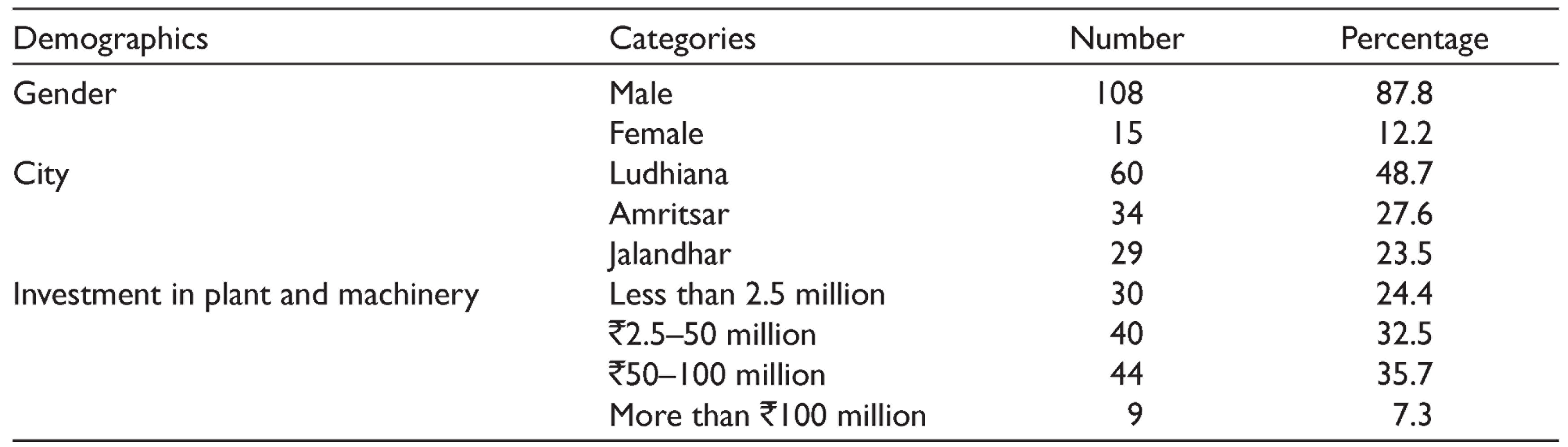
Table 1 shows the demographic characteristics of the sample of 123 textile entrepreneurs belonging to Punjab. From the gender demographic, it could be seen that out of 123, 108 were male entrepreneurs and 15 were female entrepreneurs. It was also noteworthy that Ludhiana city shared 48.7% of the total respondents, followed by Amritsar which shared 27.6% of the total respondents and Jalandhar shared 23.5% of the total respondents. It is further of note that in the case of the Indian manufacturing sector, an enterprise having investment of less than ₹2.5 million in plant and machinery is called a micro-enterprise. A small enterprise is one in which investment ranges from ₹2.5 million to ₹50 million in plant and machinery. A medium-scale enterprise has an investment of ₹50 million to ₹100 million in plant and machinery. Around 35.7% of the respondents have made investments to the tune of ₹50–100 million in plant and machinery. A total of 32.5% of the sample respondents have made investments to the tune of ₹2.5–50 million in plant and machinery.
The Demographic Profile of the Respondents
There are many business-related issues that textile entrepreneurs have faced, owing to lockdown imposed due to COVID-19. In order to identify the major ones, the respondents were provided with a list of business issues currently administered by them. They were then asked to express their opinion regarding the variables on 5-point Likert scale. Before applying factor analysis, it is important to measure the reliability of the scale. Reliability means the extent to which the scale produces consistent results if repeated measurements are made. Cronbach’s alpha has been used to measure the reliability of the scale. It measures the internal consistency between the various scale items. If all the items measure the same phenomenon, they should be highly correlated. Cronbach’s alpha has the value between 0 and 1. If its value is greater than 0.7, then it is considered satisfactory (Leung, 2001). Its value was 0.749 in the present study. Further, the Kaiser–Meyer–Olkin (KMO) measure of sampling adequacy is a useful method to show the suitability of data for factor analysis. The KMO statistic varies between 0 and 1. The value greater than 0.5 is considered as a satisfactory value (Kaiser, 1974). The KMO measure of sampling adequacy was 0.741 in the present study.
Further, Bartlett’s test for sphericity compares the correlation matrix to identity the matrix. This test provides the statistical probability that the correlation matrix has significant correlations among at least some of the variables. Regarding factor analysis to work, some relationships between variables are needed; thus, a significant Bartlett’s test of sphericity is required, say p < 0.001. Table 2 presents the values of KMO test and Bartlett test of sphericity. The significant value of Bartlett test of sphericity shows that the data are appropriate for factor analysis.
The Value of KMO Test and Bartlett Test of Sphericity

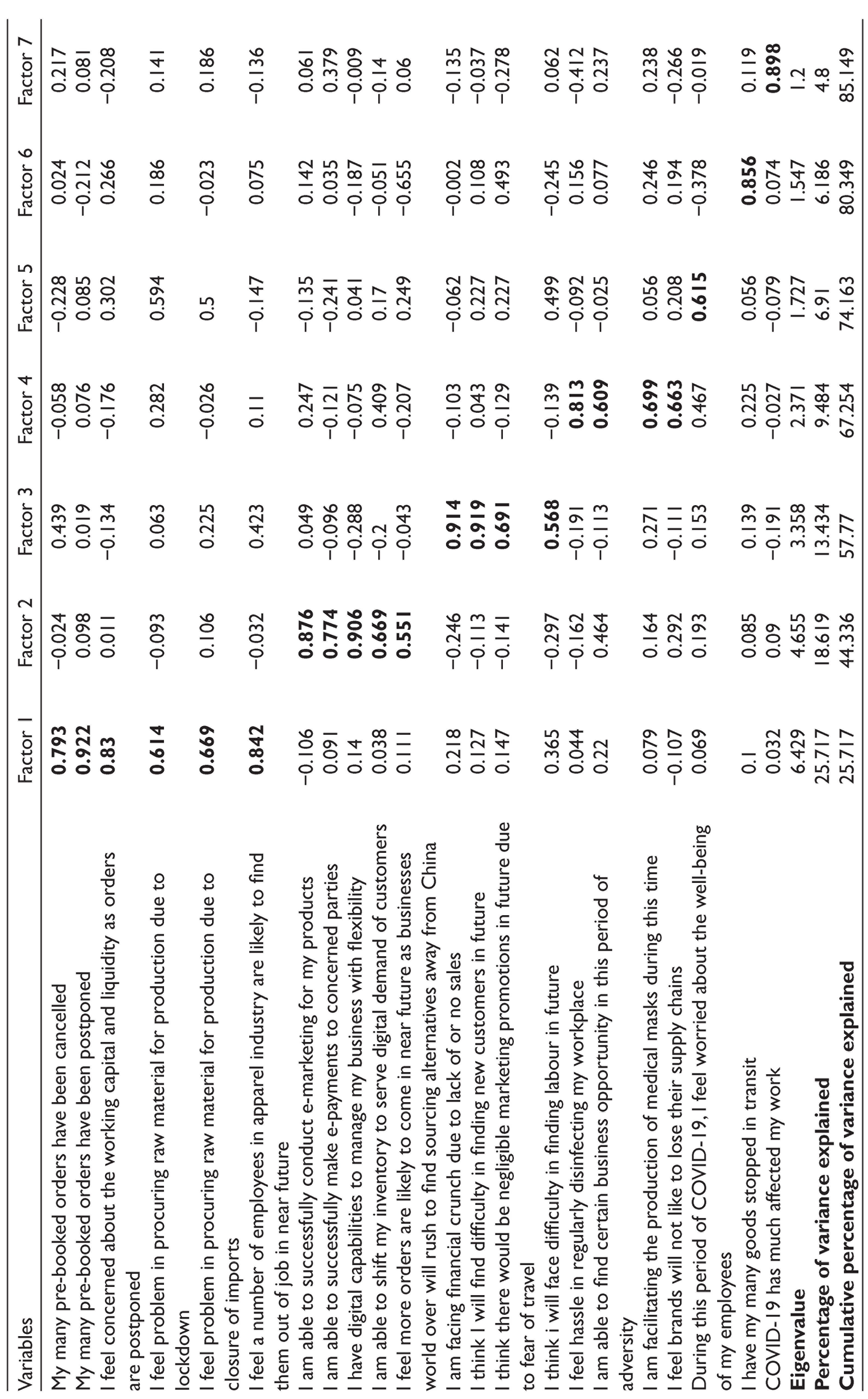
Factor analysis and principal component analysis recognize patterns in the correlations among variables. These patterns are used to surmise the existence of fundamental covert variables in the data. These covert variables are called as factors or components. Factors are then named according to their nature. In the present study, principal component factor analysis followed by varimax rotation is used for extracting factors. Table 3 presents the results of the principal component analysis such as individual factor loadings of each variable, eigenvalue of factors, percentage of variance explained by a factor and cumulative percentage of variance explained.
It is important to note that the factor loadings are the correlation coefficients between the variables and factors. The
According to Kaiser (1974), only the factors having eigenvalue greater than or equal to 1 should be considered. Table 3 presents seven factors that have eigenvalue greater than 1. It is again pertinent from Table 3 that cumulative percentage of variance explained accounts for 85.14% for the seven factors, which is very much acceptable for the principal component varimax rotated factor loading procedure (Arora & Marwaha, 2012).
Results of Principal Component Analysis with Varimax Rotation
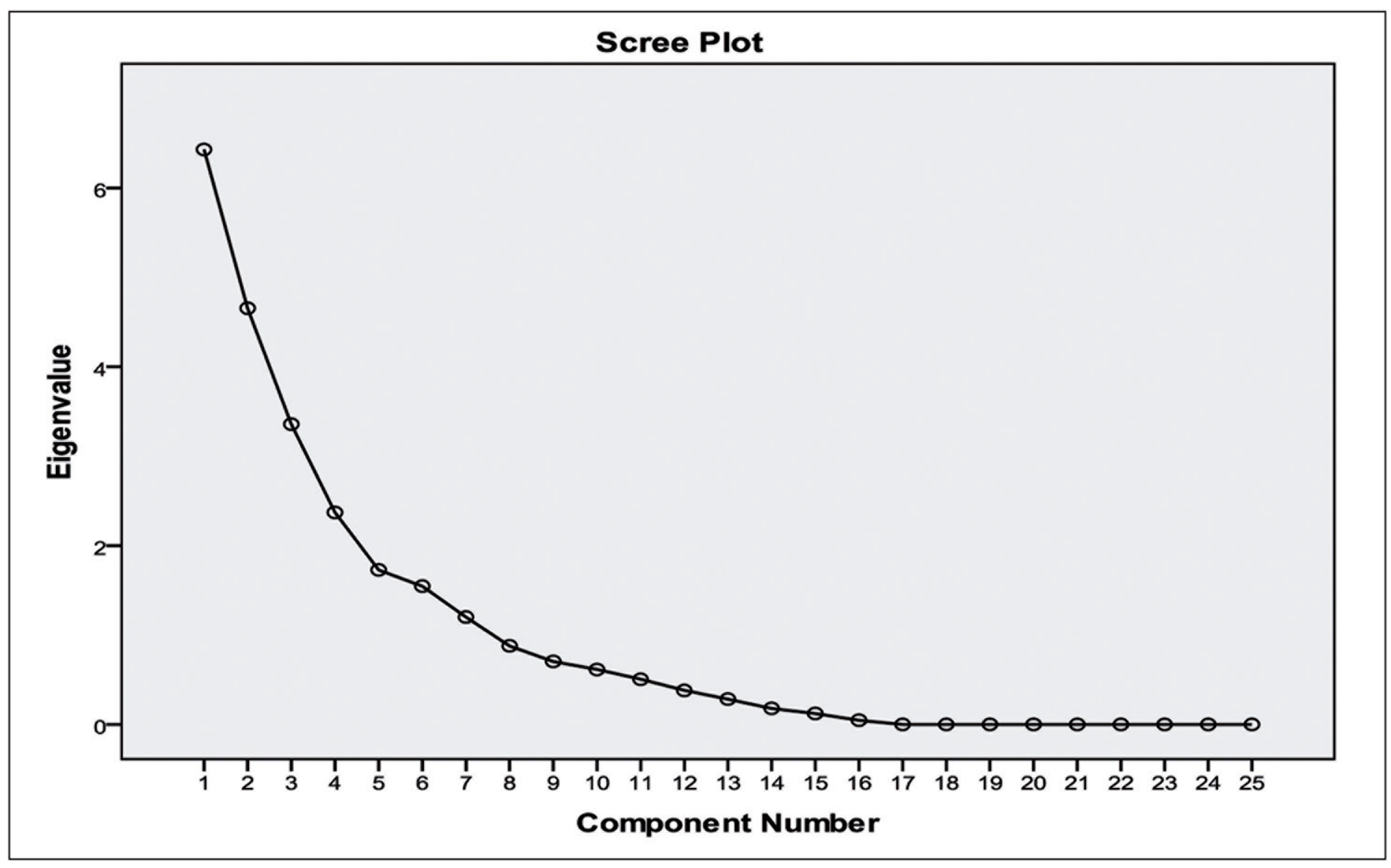
Further, Figure 1 shows the scree plot that involves plotting of eigenvalues against the possible number of factors.
The scree plot for the data analysed is presented in Figure 1. Basically, it confirms the number of factors appropriate for the study. According to this plot, the researcher should take the number of factors where the plotted line after falling instantly gradually trails off. Thus, the scree plot presented in Figure 1 supports the 7-factor choice for 25 variables.
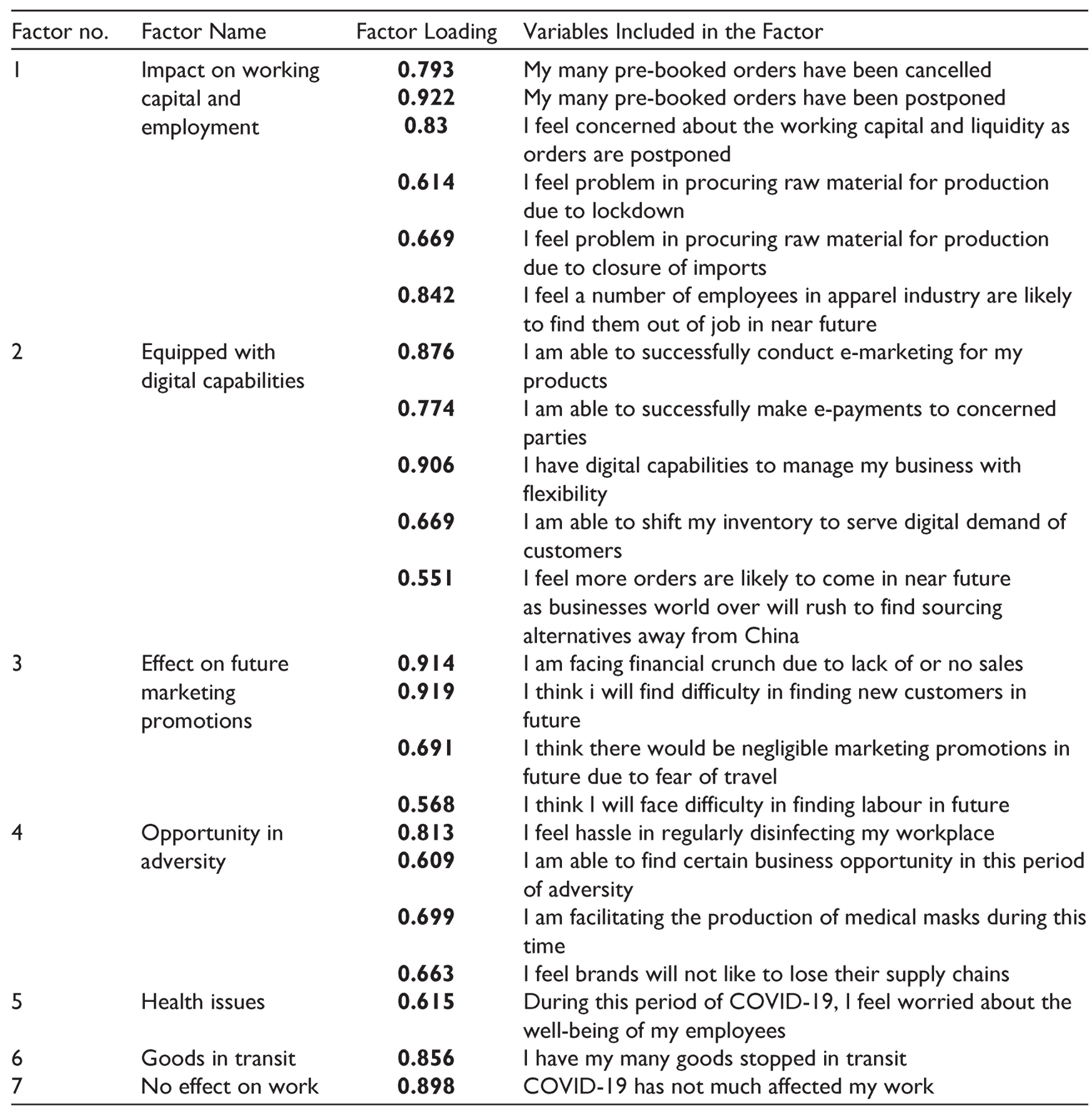
After determining the number of factors, the factors would be named according to their nature. Table 4 presents the different factor names given to the said factors.
Table 4 shows the seven factors, their names and the variables loaded on these factors. Each of the factors can be interpreted as follows:
It is the most important factor as it explains 25.7% of the variation. The factor includes the variables, such as cancellation and postponement of pre-booked orders, difficulties in procuring raw material due to lockdown as well as cancellation of imports which will adversely impact the working capital of Punjab’s textile industry. Another major business issue involved in this is that there are many migrant workers working in the industrial segment of Punjab. Owing to unemployment due of lockdown, they were forced to move to their native places. Thus, such workers will remain unemployed in the near future as well.
This is another important factor explaining 18.62% of the variation in the data. This factor shows that though the outbreak of COVID-19 has tested the textile industry business to its limits, but the textile entrepreneurs have been able to manage this crisis. The entrepreneurs have quite positively asserted to the fact that they are able to successfully conduct e-marketing of their products. Moreover, they are able to fruitfully make e-payments to their concerned parties. Also, they are hopeful that more orders are likely to be received in near future as businesses world over are looking for alternative sources in order to reduce their dependence on China.
This factor explains about 13.4% of the variation in data. The variables that have high loading on this factor include the concerns of the entrepreneurs regarding managing the finance due to lack of or negligible sales. They also worry about how the marketing promotions would be undertaken in the future due to risk and fear involved in travelling from one place to another. Thus, such a situation could create hurdles in finding new customers in the future.
Textile industry has played a significant role in facilitating the production of medical masks and personal protective equipment (PPE) kits required during the COVID-19 crisis. Thus, there are textile entrepreneurs who opine that there are opportunities that exist amidst the COVID-19 crisis. Moreover, the brand partners associated with such business houses also would not like to lose their supply chain. However, in order to facilitate production in such scenarios, entrepreneurs have to face difficulties in disinfecting workplaces time and again.
Another business issue faced by entrepreneurs during COVID-19 has been a concern regarding the health and the well-being of the employees.
There are many entrepreneurs who had their goods in transit just before the announcement of the lockdown. Lockdown led to the stoppage of the goods in transit and entrepreneurs had no information regarding the status of delivery of their goods.
The last factor covers the variable, which states that some of the textile entrepreneurs have reported that COVID-19 has not affected their business.
In order to calculate the level of stress experienced by textile entrepreneurs in Punjab, total stress score for each entrepreneur is calculated. This scale suggests that total stress score greater than 5 implies that such respondents are more likely to experience stress-related ill health, either physical or mental. Table 5 presents the number of respondents out of 123 who received different scores on the stress scale.
Factor Names
The Frequency of Total Stress Score Derived
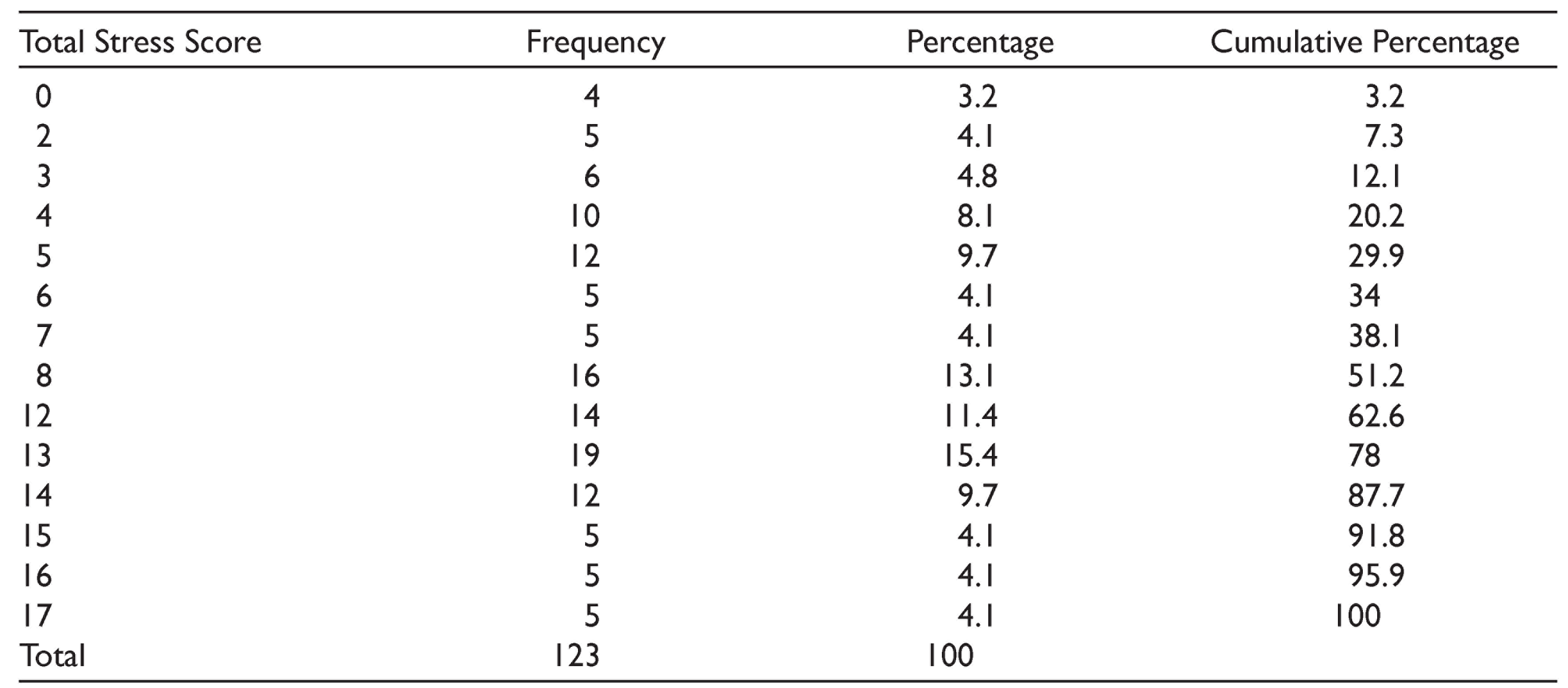
It is noteworthy from Table 5 that about 20% of the respondents have their stress score equal to or less than 4. Thus, 80% of the respondents have a stress score greater than 4. It implies that 80% of the entrepreneurs surveyed by the study are under stress.
There are many factors that are responsible for the stress among entrepreneurs due to lockdown. There is need to identify the factors that have greatest influence on the stress or anxiety of the entrepreneurs due to the outbreak of the pandemic. To examine the relationship between the business-related issues and the stress experienced by entrepreneurs due to COVID-19, the regression analysis has been applied. The stress score thus calculated was taken as dependent variable, and the factor scores of the above-mentioned factors were taken as independent variables. The results of the regression analysis are presented in Table 6.
Table 6, at first, shows the results of testing of various assumptions of the regression model. The regression analysis is considered to be efficient only if the error term is free from all kinds of disturbances.
The Results of Regression Analysis
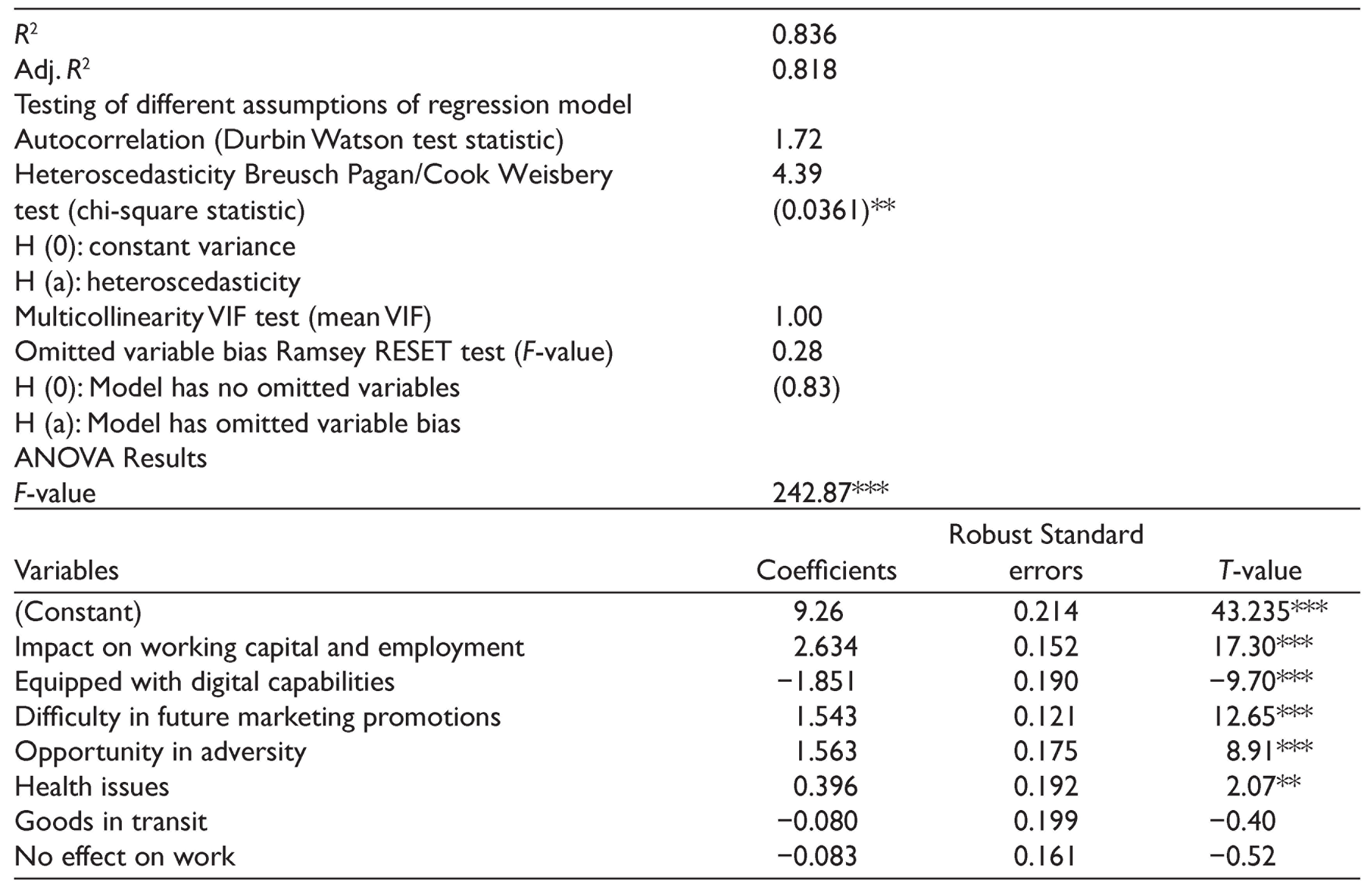
The value of Durbin Watson test statistic is 1.72. Its value should be close to 2. It shows that there is no autocorrelation in the data. Further, Breusch–Pagan test having null hypothesis of constant variance was used to detect the presence of heteroscedasticity in the error term. The chi-square value of this statistic as shown in Table 6 is 4.39, which is significant at 5% level of significance. It therefore leads to rejection of null hypothesis of constant variance. Thus, there is presence of heteroscedasticity in the data. In order to remove this disturbance from error term, robust command has been used in stata software to run the regression, and robust standard errors were reported. Furthermore, the mean value of variance inflation factor (VIF) lesser than 10 shows the lack of presence of multicollinearity among the independent variables of the regression. Also, in order to check the presence of omitted variable, Ramsey RESET test was used. The null hypothesis of this test assumes that the model has no omitted variables. The F-value of this test is 0.28, which is insignificant. Thus, the omitted variable bias is not present in the model.
The regression model shows the adjusted R2 of 81.8%. It means that 81.8% of the variation in dependent variable is explained by independent variables. Also, the analysis of variance (ANOVA) results show the F-value of 242.87, which is significant at the 1% level of significance. It shows the goodness of fit of the model. Further, the results show that out of seven factors, five factors significantly impact the dependent variable, that is, the total stress score.
The impact of COVID-19 on working capital and employment is the most significant variable affecting the stress level of the entrepreneurs. The coefficient value of this variable is 2.63, which shows that 1 unit increase in this variable would result in increase of stress level of entrepreneurs by 2.63 units. It thus confirms that the cancellation and the postponement of pre-booked orders have led to anxiety among the entrepreneurs.
On the other hand, the factor named equipped with digital capabilities is also significantly contributing towards the stress of the entrepreneurs. But this factor is negatively related to the total stress score. The coefficient value of this variable is −1.85. It shows that 1 unit increase in digital capabilities would decrease the stress level of entrepreneurs by 1.85 units. It is thus very crucial for the entrepreneurs to switch to digital capabilities to manage their business during this crisis. It would help them to manage their stress.
Another important variable impacting the stress level of the entrepreneurs is the difficulty in future marketing campaigns. The regression results show that 1 unit increase in facing difficulties in future marketing campaigns would result in 1.54 units increase in the stress levels of entrepreneurs. The textile entrepreneurs in Punjab are of the opinion that the COVID-19 pandemic would seriously impact promotional activities carried out to attract new customers. The major reason for this is the travel restrictions imposed by the government.
In addition, the factor opportunity in adversity (having coefficient value of 1.56) also significantly explains the total stress score. It also shows that 1 unit increase in this variable would result in increase of stress level by 1.56 units. Though there are entrepreneurs who have utilized the opportunity of manufacturing N95 masks and PPE kits during this crisis, facilitating manufacturing during lockdown has caused stress. One reason behind the pressure is that the internationally approved material for PPE kits is a five-layered non-woven fabric that is in short supply. Also, the entrepreneurs lack the technical expertise required in making such items as they were dealing in garment and fashion items earlier.
Moreover, the variable health issue has also significantly impacted the stress level of entrepreneurs. The model shows that 1 unit increase in this variable would result in 0.39 unit increase in the stress levels of entrepreneurs. The entrepreneurs obviously feel concerned about the health and the safety of the employees. Lastly, the other factors like goods in transit and no effect on work have also positively impacted the total stress score. But these variables are insignificant in explaining the variation in total stress score.
Conclusion and Implications
The COVID-19 pandemic has exposed the economy to immense distress, ruptured multiple systems and left the economy out of breath. It has drastically shattered traditional fundamental economic assumptions. The present study has made an attempt to identify the major business-related issues faced by the textile entrepreneurs of Punjab due to the COVID-19 pandemic. Factor analysis technique was applied to summarize the variables into few factors. Primarily, seven business-related issues were identified that entrepreneurs were experiencing during COVID-19, These issues were impact on working capital and employment, being equipped with digital capabilities, effect on future market promotions, opportunities in adversity, health issues, goods in transit and no effect on work.
In addition, the stress level of the sampled entrepreneurs was measured using the stress questionnaire, and it was observed that about 80% of the textile entrepreneurs surveyed by the study were suffering from some kind of physical or mental illness. Thereafter, an effort was made to know whether the various business-related issues currently administered by entrepreneurs had led them towards stress or not. Hence, regression analysis was used for this, whereby total stress score was taken as dependent variable and factor scores of the seven factors were taken as independent variables. The factor named ‘impact on working capital position’ was found to significantly affect the dependent variable, that is, stress. It is due to the fact that many pre-booked orders of the textile entrepreneurs were either cancelled or postponed at the time of the announcement of the lockdown. So, they were obviously stressed regarding how the liquidity cycle of the enterprise would move. Second, the factor named ‘future marketing promotions’ was also found to be significant factor of stress, owing to the travel restrictions imposed by government and the difficulties involved in planning business tours during the COVID-19 situation.
On the other hand, the factor named ‘equipped with digital capabilities’ was also found to be significantly contributing towards the stress of the entrepreneurs. But this factor negatively impacted the total stress score. It means that entrepreneurs had digital capabilities to manage their business during this crisis but they were stressed as to its usage and adoption. Finally, the factor ‘opportunity in adversity’ was also significantly related to the total stress score. Though there are entrepreneurs who have utilized the opportunity to manufacture masks and PPE kits during this crisis, facilitating manufacturing during lockdown has caused them stress. The technical expertise involved in its manufacturing, regularly disinfecting the workplace, maintaining social distancing among workforce, safety of personnel, etc., were a matter of concern to textile entrepreneurs of Punjab.
Important implications can be drawn from the findings of the above-mentioned study. The textile industry is the backbone of the Indian economy. In order to ease out the working capital stress of this industry, the government should come forward to offer some relief package to this industry. Government can extend their credit epoch, can refer them to lenders to acquire access to funding or can offer them liquidity alternatives so that they can use that for their daily expenses.
In the present situation of the COVID-19 pandemic, businesses have to re-examine their philosophy about current and future marketing and advertising campaigns. There has been an exponential growth in the online traffic; so, marketing departments have to grab the opportunities that have surfaced during these challenging times. There is a need for creative and aggressive marketing practices, such as, targeted advertising, identifying potential new products and virtual meetings with the clients.
The pandemic has offered us an important lesson that the digital technology is the need of hour. It is crucial to switch to a digital information system from traditional system. Businesses that have digital capabilities, digital payment systems, digital supply chain management, digital marketing alternatives and digital information banking are likely to sail through this phase without much difficulties. Thus, every business should endeavour to bring about digital efficiencies in order to bounce back.
Furthermore, though majority textile entrepreneurs of Punjab are able to find opportunities to facilitate the manufacturing of N95 masks and PPE, the government’s rules and regulations act as a hurdle in quickly ramping up production of the kits used by health workers. The government should ease out the norms, and in order to motivate such units, the government could incentivize them to produce medical supplies with a buy-back arrangement. This would boost the morale of the entrepreneurs, facilitating the production of medical supplies.
However, the study suffers from a major limitation, namely small sample size due to travel restrictions imposed due to lockdown. Further studies could be conducted covering a large number of entrepreneurs by adding more states and by including additional variables.
Footnotes
Declaration of Conflicting Interests
The author declared no potential conflicts of interest with respect to the research, authorship and/or publication of this article.
Funding
The author received no financial support for the research, authorship and/or publication of this article.