




Abstract
This paper attempts to examine how startups improve the performance of students and influence their affective elements towards studies. We chose the K-12 sector as it is the largest sector of edtech. We targeted the top three startup capitals of the country but due to insufficient responses, data majorly originates from Mumbai. Descriptive statistics and non-parametric tests were utilised. The tests validate the presence of a statistically significant difference between the median scores of the students’ pre and post- edtech intervention scores. In addition, this paper found that extended use of apps has improved the psychological attributes of students.
Executive Summary
Edtech start-ups benefit schools, students and teachers in different ways. For students, they provide online video lectures; for teachers, they offer various resources for professional development; and for schools, they provide administrative and management services. This article attempts to examine ways in which start-ups contribute to student learning. We attempt to examine how start-ups improve performance of students and how they affect affective elements of students towards studies. For the purpose of this study, we choose the K–12 (kindergarten to class 12) sector as it is the largest sector of edtech. We targeted the top three start-up capital cities in India—Bengaluru, Mumbai and Delhi—to study their effects. Given the limited secondary data available on start-ups and their effects, primary data for this study were collected through Google Forms as well as by approaching beneficiaries physically. Descriptive statistics and non-parametric tests were used. The various tests validate the presence of a statistically significant difference between the median scores of the students’ groups’ pre- and post-edtech intervention scores. Next, we endeavoured to assess the impact of edtech start-ups on students’ affective elements such as engagement, interest, understanding capacity, concentration, confidence, memory and mental strain. The affective elements were defined and psychological items were created for every scale. We found that the extended use of the edtech app improved the psychological attributes of students. The apps were able to make students more engaged in studies, inculcated interest, improved concentration, instilled confidence and reduced mental strain. Our study corroborates that online learning does contribute to the education sector by positively influencing student performance and improving their interest in learning. These findings are consistent with those in the existing literature. Given the sparse nature of primary data and evidence regarding the effect of edtech start-ups, we believe that these results are quite substantial.
The present decade has seen the proliferation of technology-oriented businesses, such as start-ups in different sectors of the economy. Start-ups in the education sector, too, are creating opportunities for different stakeholders. They provide new opportunities for students to learn, for teachers to improve their skills and for schools to increase their efficiency and performance. Edtech start-ups benefit schools, students and teachers in different ways. They provide online video lectures, online tests, educational resources and educational games to students. They offer resources for professional development, and teaching tools like lesson planners to teachers, and provide services such as attendance management, content management and enrolment management, to schools.
The academic literature finds that the use of technology in education is positively related to students’ performance (Lai & Bower, 2019). In addition, educational technology moderately positively affects students’ affective elements such as motivation, engagement, attitude, satisfaction, preference, etc. towards studies (Sung et al., 2016). Given an enormous amount of funds flowing into start-ups, a study assessing their impact is necessary. This article attempts to examine ways in which technology-oriented start-ups contribute to education. We attempt to examine how start-ups improve performance of students and how they affect affective elements of students towards studies.
OBJECTIVES
The objectives of this article are:
To determine the effect of edtech start-ups’ intervention on the performance of students;
To determine the effect of edtech start-ups’ intervention on students’ affective elements towards studies.
The arrangement of rest of the article is as follows: First, we review relevant literature and identify gaps, highlighting how we contribute to the existing body of work on the subject; then we describe our data sources and methodology, following which we present and discuss our findings, comparing them with what is found in the existing literature; then we conclude with a summary of the effects and caveats of the work.
EXISTING STUDIES ON EDTECH START-UPS AND THEIR EFFECTS
Edtech start-ups benefit education in different ways. Edtech start-ups benefit students by making studies engaging and improving their learning outcomes; teachers, by reducing their efforts to teach while increasing their effectiveness; and schools, by improving their overall performance.
Given the limited research on Indian edtech start-ups, we review literature which are mostly based on research in advanced countries and examine the effect of various kinds of technologies on the learning outcomes of school and college students. We, at first, begin with the theoretical literature survey, followed by an examination of the empirical literature.
Theoretical Literature and Background for the Research
The theoretical literature on learning is dominated by three schools of thought, namely the behavioural, the cognitive and the constructivist schools. The behavioural school of thought states that learning should be described in relation to changes in the observable behaviour of an individual (Alessi & Trollip, 2000). Behaviour can be conditioned by an external stimuli. Further, rewards and punishments may encourage or discourage certain types of behaviour, respectively. The cognitive school of thought gives more emphasis to the cognitive process of knowledge acquisition. It studies the processes of acquisition, storage and retrieval of information from the brain. It gives more emphasis to non-observable constructs such as memory and motivation. The third school of thought, constructivism, draws its essence from the field of biology. Its pioneer contributor, Jean Piaget (Piaget & Cook, 1952), draws analogies from dynamic systems operating in the field of biology to explain how human beings learn. He states that knowledge occurs not just due to the experiences of individuals or the innate programming within the individual but due to successive construction. Human learning is a dynamic process of interplay between the previous experiences and the new knowledge obtained by the individual, which results in the accommodation of the behaviour. Human beings constantly create their knowledge in light of the new information obtained.
We identified a theory, from the cognitive school of thought, under the ambit of which the broad theme of this article can be studied. Mayer’s (1997) generative theory of multi-media learning states that learning is enhanced when individuals are exposed to multimedia; that is, learning becomes effective when simple text is supported by image illustrations and animations. Human beings possess separate channels to process auditory and visual information. Mayer (1997) points out that when information is presented through both the channels (e.g., spoken words and text), learning is enhanced, compared to a situation when it is presented through a single channel. Mayer (1997) emphasizes the use of appropriate modalities to present information as it can admirably affect learning. For instance, spatial information can be presented more effectively through diagrams than verbally.
The theory of multi-media learning has implications for our study. Digital apps, made by edtech start-ups, use pictorial illustrations and animations along with presenting information through text, enabling students to comprehend and retain information better. The multi-media content enables students to process information through both verbal and acoustic channels, which makes learning more effective. We assess this in our article.
Mayer (1997) carried out several experiments and found that students who received co-ordinated presentation of explanation, in both verbal and visual formats, produced 75% more creative solutions than students who received verbal explanations alone. This underscores the importance of digital education apps not only in improving learning outcomes but also in making children more creative.
Empirical Literature
There are studies in India which have attempted to assess the edtech landscape and the effectiveness of edtech products; we examine them here. In their study, Sampson et al. (2019) endeavoured to assess the landscape of edtech in India and compared the effects of learning associated with product type, intensity of use, subject and adoption across countries. They examined the pattern of use of the edtech products. They found that mere provision of hardware does not improve learning performance. Different edtech products were found to be effective but individual-use products, given the one-to-one interaction and adaptivity, were more effective in improving learning performance. When edtech products were used after school, they were found to improve learning performance significantly. In-school use was effective only when it replaced traditional instruction of low quality. Personalized software which adapts to the learning level of the students had the strongest effects. Linden (2008) found similar results. In their study, Linden (2008) found that computer-assisted programme worsened performance when implemented during the school hours. Muralidharan et al. (2019) found similar results suggesting that technology-assisted teaching increased productivity in the delivery of education, if it were well designed, using evidence from middle school teaching in urban India, reporting relatively higher relative benefits for students who were poorer in studies. Banerjee et al. (2007) too reported the results from a randomized control trial in urban India, using computer-assisted learning for math, which increased math scores by 0.47 standard deviations. He et al. (2008) assessed the effectiveness of different instructional methods in implementing an English education course. They found that implementation methods with specialized machines or flash cards improved students’ performance by 0.25–0.35 standard deviations.
The above studies have assessed the impact of technology and technology-aided products on learning effectiveness. Our study assesses the impact of edtech start-ups on learning performance. Since literature on technology in education in the Indian context is far and few between, we review international literature whose findings are discussed below.
There is a burgeoning literature on the use of technology in education. Scholars who review papers from the perspective of educational technology classify them as emerging from different disciplines and educational levels, using diverse technologies and research methods, for measuring diverse themes and variables. The vast array of literature on educational technology makes it challenging to comprehend different aspects of learning that are evaluated and the possible approaches that can be used to evaluate them (Lai & Bower, 2019). Lai and Bower (2019) pointed out that technology is integrated into learning for different purposes such as improving access to learning and enhance learner motivation and learning outcomes (Bower, 2017). ‘With the continual influx of new and emerging technologies available for use in education, it is critical to evaluate the degree to which learning technology usage contributes to learning and teaching’ (Iriti et al., 2016).
We describe the broad academic literature related to educational technology carried out majorly in high-income countries. Researchers have extensively evaluated the use of learning technology to understand how technology supports learning (e.g., Bulu, 2012; Claros et al., 2016; Conole et al., 2008; Foshee et al., 2016; Pegrum et al., 2013; Wang et al., 2013, etc.). Scholars have assessed the impact of different types of learning technology on different variables. Technologies assessed include mobile learning (Crompton et al., 2017; Hwang & Tsai, 2011; Liu et al., 2012; Wong & Looi, 2011; Wu et al., 2012), e-portfolios (Beckers et al., 2016), e-learning, online learning or Massive Open Online Courses (MOOCs) (Kennedy, 2014; Means et al., 2010), microblogging and social media (Gao et al., 2012; Manca & Ranieri, 2013; Tess, 2013). Learning aided by technology, which is evaluated, also includes computer games, digital games or serious games (Boyle et al., 2016; Calderón & Ruiz, 2015; Cheng et al., 2015; Connolly et al., 2012; Kordaki & Gousiou, 2017; Petri & Gresse von Wangenheim, 2017; Young et al., 2012) and augmented reality (AR) or virtual environments (Bacca et al., 2014; Hew & Cheung, 2010; Mikropoulos & Natsis, 2011).
A large number of meta-analyses have evaluated the students’ learning effectiveness in multiple subjects, while some reviews have confined to single-domain subjects like mathematics (Cheung & Slavin, 2013; Li & Ma, 2010; Rakes et al., 2010; Slavin & Lake, 2008) and language (Archer et al., 2014). Many meta-analyses have been conducted on multiple grade levels like elementary to college (Ahmad & Lily, 1994; Fletcher-Finn & Gravatt, 1995; Kulik & Kulik, 1991; Li & Ma, 2010; Liao, 1998, 1999, 2007; Rakes et al., 2010; Sung et al., 2016) or elementary to secondary or middle school (Archer et al., 2014; Becker, 1992; Cheung & Slavin, 2013). The results of many high-quality meta-analyses show consistent, moderately positive effect sizes for the use of technology (Clark et al., 2016; Merchant et al., 2014).
In their review of 84 papers on the effect of educational technology on reading outcomes, Cheung and Slavin (2012) found that educational technology applications generally produce a positive, though small effect on reading outcomes. They found that the effect of educational technology differs according to ability, gender and socio-economic status. Randomized studies showed a lower effect of educational technology on reading outcomes than quasi-experimental studies.
Many major meta-analyses conducted on the effect of educational technology on reading reported small to moderate effects on reading outcomes with effect sizes ranging from +0.06 to +0.43 (Becker, 1992; Blok et al., 2002; Fletcher-Finn & Gravatt, 1995; Kulik, 2003; Kulik & Kulik, 1991; Ouyang, 1993; Soe et al., 2000). Blok et al. (2002) examined 42 studies from 1990 onwards and found that the overall effect size of the use of educational technology for K–3 students was +0.19. These findings were similar to the studies of Becker (1992), Fletcher-Finn and Gravatt (1995) and Ouyang (1993), which found effect sizes of +0.18, +0.12 and +0.16, respectively. The most often cited review in educational technology, conducted by Kulik and Kulik (1991), claimed that educational technology could produce a small, but positive effect on student achievement (the effect size being +0.30). They further found that technology could result in a substantial saving in instruction time and encourage a positive attitude, and such technology, in general, can help learners become better readers, writers, calculators and problem solvers.
In the broad domain of educational technology, there have been an increasing number of studies which analyse the effect of mobile handheld devices on learning outcomes. Studies have shown that mobile devices not only support traditional lecture style teaching but can also foster innovative teaching methods like cooperative learning through convenient information gathering and sharing (Lan et al., 2007; Roschelle et al., 2010), exploratory learning outside the classroom (Liu et al., 2012) and game-based learning (Klopfer et al., 2012). There is widespread use of mobile handheld devices in education (Cheung & Hew, 2009; Pegrum et al., 2013; Sung et al., 2016). ‘Mobile handheld devices have been used at all levels from primary to tertiary in a variety of curriculum and subject areas, including literacy, maths, social studies and science (for a list of K-12 studies, see Banister, 2010)’ (Pegrum et al., 2013). There is a dramatic increase in published research articles in the recent years about m-learning and u-learning (ubiquitous learning 1 ) (Hwang & Tsai, 2011). Mobile handheld devices are perceived to be intrinsically engaging by students, teachers as well as researchers (e.g ., Backer, 2010; Jones & Issroff, 2007; Pachler et al., 2010), but evidence of improved learning outcomes is much more limited (Pegrum et al., 2013). A small number of studies have shown statistically significant improvements in student learning (e.g., Cristol & Gimbert, 2011; Ernst & Harrison, 2011; Hwang et al., 2011). ‘Currently researchers found mixed results regarding the effects of mobile devices (e .g., Warschauer et al., 2014), and very few studies have addressed how best to use mobile devices, and the effectiveness of doing so’ (Sung et al., 2016).
Cheung and Hew (2009) carried out a review of studies based on mobile handheld devices in K–12 and higher education setting. The studies originated from developed as well as emerging economies which include Canada, the United Kingdom, Italy, Sweden, Taiwan, China, Australia, the United States, Japan, Israel, Norway and Singapore. They found that mobile handheld devices were primarily used as communication and multi-media access tools. The use of mobile devices as a communication tool is justified as these devices were originally designed for communication purposes. The dominant use of mobile devices as a multi-media access tool shows that the current technology primarily functions as a replacement rather than being transformative. They reviewed 44 articles from different sources and found that the papers primarily assessed four elements related to technology, namely usage, attitudes, learning outcomes and viability of mobile devices as an assessment tool. By and large, their review found that using mobile handheld devices can enhance student learning.
Sung et al. (2016), in their review of 110 papers on the effect of the use of mobile devices on students’ learning outcomes, found that the overall mean effect size of the use of mobile devices on learning outcomes is 0.523. Mobile devices had a medium effect size on affective variables such as motivation, engagement, attitude, satisfaction and preference. Their study exhibited that effect size varied across subject disciplines, learning stage, hardware and software used, implementation settings and intervention duration. He et al. (2023) reported results from satisfaction with edtech programmes targeted at undergraduates, based on surveys of some 3,000 students in more than 100 Chinese universities. Their results showed that these undergraduate students were generally not satisfied with the programmes and facilities offered. It was found that their satisfaction depended on their own academic performance, university’s funding status, their own willingness to enrol in such a programme, their edtech experience and their region. The study concluded by making suggestions for improvement of such edtech programmes in Chinese universities.
Gaps in the Literature and Contributions of This Article
As is clear, there is a burgeoning literature available on the effect of technology and mobile handheld devices on educational performance and outcomes. Descriptive, quasi-experimental as well as experimental studies can be found as summarized above. As may be seen, there is limited research in the Indian context assessing the effect of start-ups on students’ performance. Therefore, a study assessing the utility of edtech start-ups is necessary, given the findings of Sampson et al. (2019), Muralidharan et al. (2019) and Banerjee et al. (2007) in the context of urban India. Further, governments cannot solve all learning problems, and significant private participation is needed in improving educational outcomes which directly impact the quality of human capital significant for cities.
MATERIALS AND METHODS
For the purpose of this study, we define an edtech start-up as ‘a company using internet technology to deliver education services’. Besides this, we include only those start-ups which are: ‘1. Established post 2007 (as the second and third wave of digital revolution began in the late 2000s); and 2. Are of Indian origin’ (Kamaluddin & Sridhar, 2021).
For the purpose of this research, we choose K–12 as it is the largest sector of edtech. In 2023, K–12 held a 44% share of the edtech market size (Inc42, 2023). In terms of geography, we targeted the top three start-up capitals of the country—Bengaluru, Mumbai and Delhi (see Kamaluddin & Sridhar, 2021). Since there is no secondary data on edtech start-ups specifically which would help us to address the research objectives of the study, we approached start-ups located in the three cities through email. As the response rate was close to zero, we obtained responses from beneficiaries in Bengaluru and Delhi through a Google Form, but they were not sufficient. So, we approached beneficiaries physically in Mumbai. We approached junior colleges in Mumbai. Mumbai was chosen as it is the second start-up capital of the country and it is easier to reach respondents due to the ubiquitous presence of the local trains. The respondents used services of different start-ups such as Byju’s, Vedantu and Physics Wallah. 2 The fieldwork was carried out from September to December 2022.
We measured the effect of the start-ups’ intervention on performance (scores) and affective elements of the students. 3 Except for the variable ‘performance’, all other variables were measured through a Likert scale. We interviewed those students who were using the app/platform, that is, who were exposed to the intervention. Given this, a pre- and post-analysis of performance and other variables in the same students will be the best way to gauge the effect of start-ups on their performance. 4
Our respondent group was students studying in classes 11 and 12 who were using or had used online edtech applications in the past. We chose these children as they may be able to understand the questionnaire in a better way than school children. Some responses were obtained through Google Forms too. We followed convenience sampling. Altogether, we obtained 81 responses.
RESULTS
Students’ Performance (Analysis 1)
Students’ performance was measured through marks obtained in the written exams pre and post the edtech intervention. Of the 81 respondents, we excluded those students (n = 12) who subscribed exclusively to the app’s tests and notes services, as their opinions differ from those who use the audio-visual platform, in which we are interested. 5 Further, students who took tutoring for a single subject but mentioned aggregate semester marks in the questionnaire were excluded (n = 6) as the effect of availing tutoring in a single subject would not reflect in the aggregate marks. Considering these exclusion criteria, and the fact that most of the respondents failed to remember their marks (n = 22), our sample was reduced to 41, 6 who stated their marks pre and post the use of app.
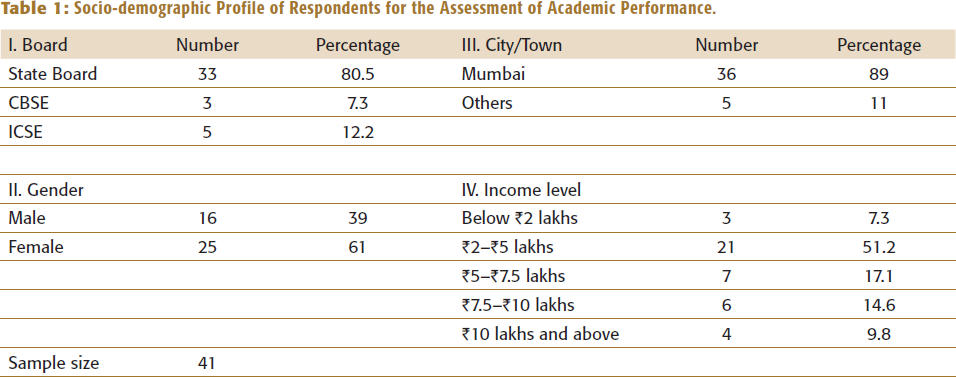
Table 1 summarizes the socio-demographic profile of the respondent students.
Most of the respondents were studying in schools using the Maharashtra State Board curriculum. Females were in a larger proportion than males in the respondent sample. More than 50% of the respondents were from the middle-income category (Table 1).
Socio-demographic Profile of Respondents for the Assessment of Academic Performance.
The students were asked to mention marks obtained in the four written school exams pre and post the intervention. A few students mentioned scores of all the four exams, but a majority stated scores for two or less. As the marks were very different from each other, we calculated proportions for the purpose of this analysis. For scores in more than one exam, proportions were added and the average was taken. This was done separately for pre- and post-intervention scores.
The frequency distribution for their pre- and post-intervention score proportions are shown in Figure 1.
Frequency Distribution of Pre- and Post-intervention Score Proportions.
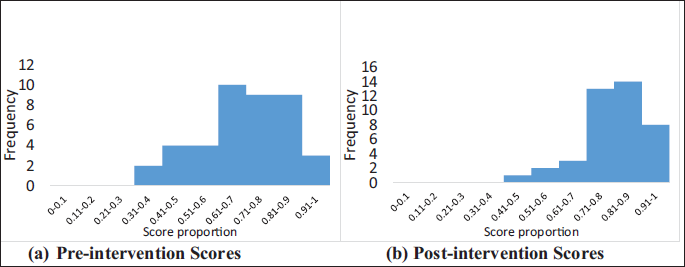
Both the distributions are negatively skewed, signifying that the sample consisted of students who usually perform well in exams. A careful look at Figure 1 reveals that the post-intervention distribution is steeper than the pre-intervention one. This suggests that the app enabled moderately performing students to achieve higher scores.
We assess statistically significant differences in the pre-intervention and post-intervention scores. Since the data was drawn from a non-random sampling method, Mood’s test of median was used.
Table 2 shows the presence of a statistically significant difference between the medians of the two groups. This indicates that the two samples come from populations of two different medians.
Results of Mood’s Test of Median: χ2 Statistic Table.
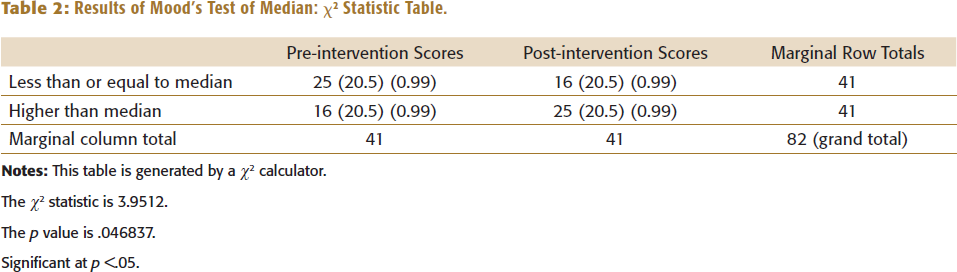
The χ2 statistic is 3.9512.
The p value is .046837.
Significant at p <.05.
We wanted to assess the effect of income and the general interest of students in studies, on their academic performance. We choose these two variables as they are among the most determining factors affecting performance. 7 The Mood’s test of median was used. Surprisingly, both the low- and middle-income (below ₹5 lakhs/annum) as well as the high-income (above ₹5 lakhs per annum) group students performed equally well. No significant difference was found. 8 This is an important finding as ‘income’ is assumed to be a determining factor in the performance of students. Regarding the general interest level of students, the high-interest group performed marginally better than the low-interest group as the difference was found significant at the 10% level. 9 One might expect students who have a high level of interest in studies to perform better than the ones with a low level of interest, but we found no such difference. This could be because our sample consisted of students who usually perform well in the exams, and therefore, a small difference is found in their interest levels.
We endeavoured to calculate the effect size of the scores. The effect size signifies the size of the difference in the means of the two groups. We calculated the effect size using Cohen’s d formula:

The effect size we obtained was 0.66. Since 0.6 is a medium effect size as per Cohen’s d (Sullivan & Feinn, 2012), it shows that the median of post-intervention scores is reasonably greater than that of the pre-intervention scores.
This is in consonance with other studies which have found effect size ranging from +0.06 to +0.43 (moderate effect sizes) (Becker, 1992; Blok et al., 2002; Fletcher-Finn & Gravatt, 1995; Kulik, 2003; Kulik & Kulik, 1991; Ouyang, 1993; Soe et al., 2000).
Affective Elements (Analysis 2)
The academic literature has extensively discussed the impact of technology on affective elements. A few papers have found a positive effect of technology on the affective elements of students (Bower, 2017; Wang & Lieberoth, 2016). In this article, we endeavour to assess the impact of technology on students’ affective elements such as engagement, interest, understanding capacity, concentration, confidence, memory and mental strain. 10 Based on the operational definitions (provided in the appendix), we created items for every scale.
Given the exclusion criteria laid out earlier, we obtained a sample of 69. 11
The socio-demographic profile of the concerned respondents is given in Table 3.
Socio-demographic Profile of Respondents for the Assessment of Affective Elements.
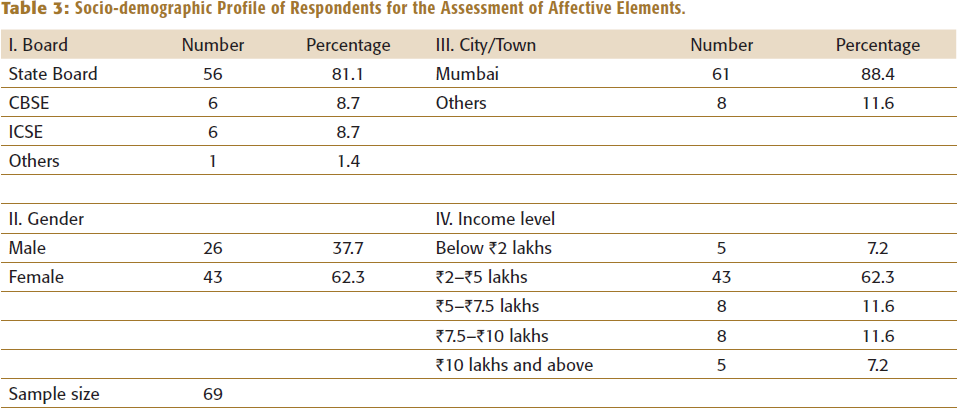
Given that the fieldwork was carried out physically in Mumbai, a large percentage of the respondents were from this city. A majority of the respondents were studying in the Maharashtra State Board. Females were in larger proportion than males. More than 50% of the respondents were from the middle-income category.
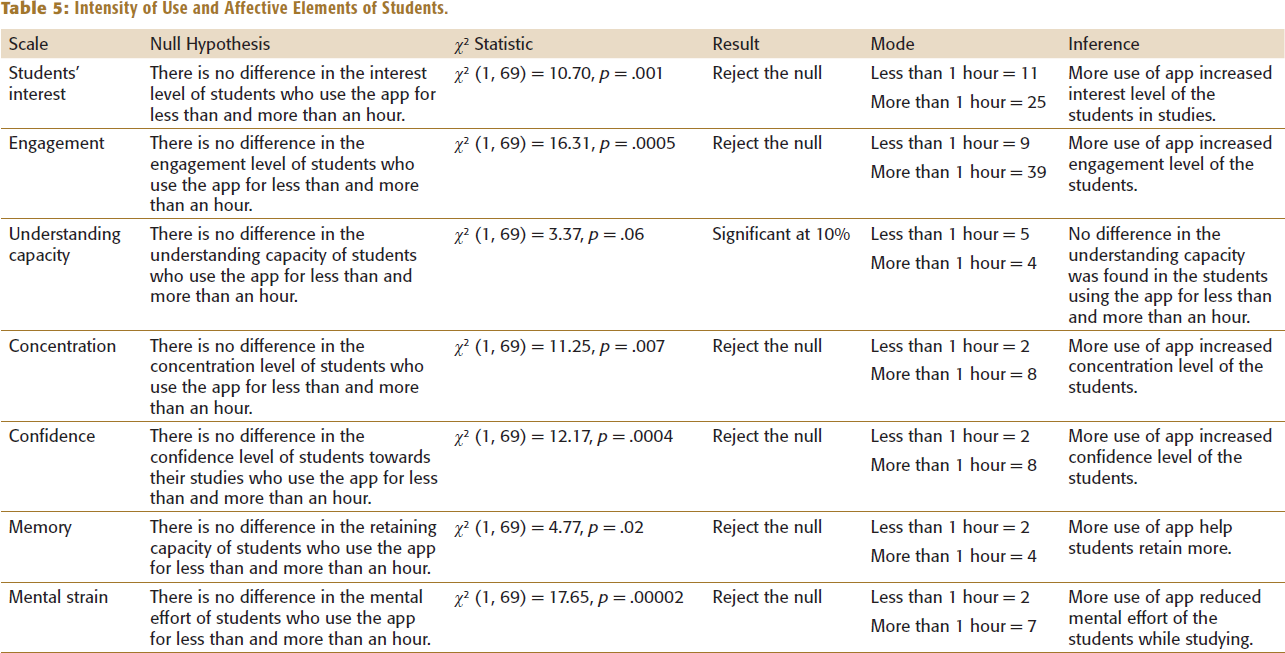
All the scales were checked for internal consistency using Kuder–Richardon (KR20) measures. Table 4 shows that all the scales are highly reliable. The item correlations of all the scales are notably high. We report correlations of the items with the total score of the scales as they indicate whether an item is contributing to the explanation of the overall scale. Items with negative correlations are dropped from the scale. We wanted to assess whether the intensity of the use of the app significantly influences the affective elements of students towards studies. For this purpose, we categorized students into two groups—those who used the app for more than 1 hour/day and those who used for less than an hour. The cut-off of 1 hour is made as it is assumed that a child who has taken exclusive subscription of the app would watch the app at least for 45 minutes to an hour in a day. As the sample sizes were unequal, Mood’s test of median was used.
As the Mood’s test of median assesses the inequality of medians of two sample groups but does not determine which median is greater, we examine the ‘mode’ of the two groups. Except ‘understanding capacity’, all the other scales demonstrate a higher mode for high-intensity users. Table 5 convincingly demonstrates that more use of app improved psychological attributes of students. It made students more engaged in studies, inculcated interest, improved memory and concentration, instilled confidence and reduced mental strain. We obtain an unusual result for the attribute ‘understanding capacity’ as it is a single-item scale and inadvertently gave less options to the students to express themselves. Inclusion of more items in the scale may change the results.
We assessed whether the 41 students in Analysis 1 scored similarly on affective elements, when compared with the 69 students in Analysis 2. We found that there is no difference in the results of the two groups (Table A1). The use of app improved psychological attributes of both the groups of students.
Psychological Scales.
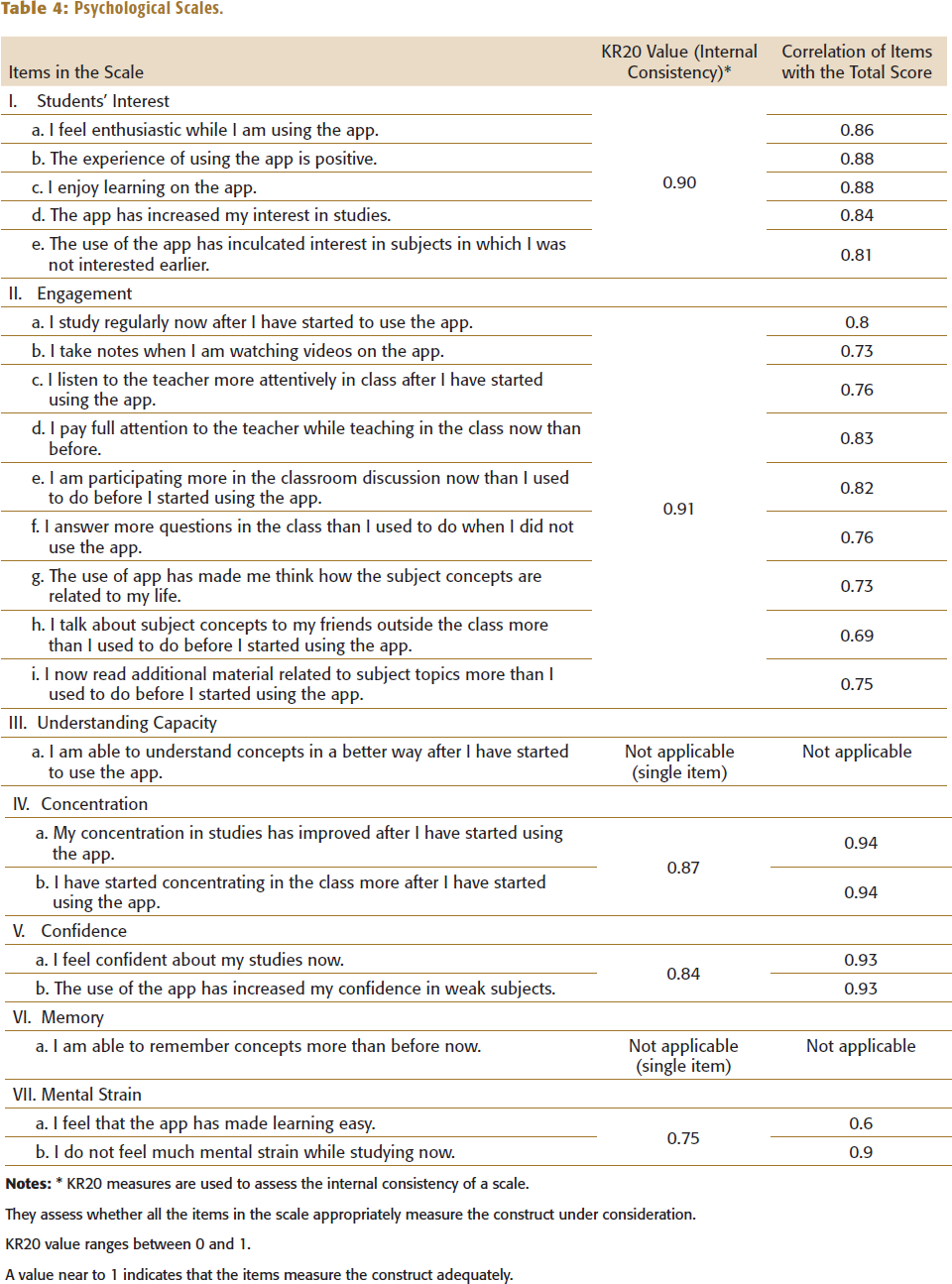
They assess whether all the items in the scale appropriately measure the construct under consideration.
KR20 value ranges between 0 and 1.
A value near to 1 indicates that the items measure the construct adequately.
Intensity of Use and Affective Elements of Students.
DISCUSSION AND CAVEATS
Our study has found positive effects of start-ups’ intervention on the academic performance of students. Our study resonates with other research which found positive effects of technology on performance (Bebell & O’Dwyer, 2010; Clark et al., 2016; Condie & Munro, 2007; Merchant et al., 2014; Sung et al., 2016) in the context of other countries. Nonetheless, evidence relating to the efficacy of technology is mixed (Warschauer et al., 2014). Computer-assisted instruction programmes were not found to lead to ‘meaningful effects’ in reading for K–12 students, based on meta-analyses of several studies (Cheung & Slavin, 2012). Robust methodological studies had lower effect sizes (Cheung & Slavin, 2012). The use of laptop was not able to achieve higher order thinking and failed to transform classroom teaching methods (Cheung & Slavin, 2012). Nonetheless, technology has been found to improve cognitive processes of children. ICT improved motivation, engagement and understanding capacity of students (Underwood, 2009). Sung et al. (2016), in their meta-analyses, found medium effect size for affective elements.
Our study, too, is in consonance with other studies and finds improvement in affective elements of children due to the extended use of digital apps. Our study corroborates Mayer’s (1997) generative theory of multi-media learning, which states that learning is enhanced when individuals are exposed to multimedia, that is, when simple text is supported by image illustrations and animations. Digital apps make use of pictorial illustrations and animations along with presenting information through text, which enables students to comprehend and retain information better. The multi-media content enables students to process information through both verbal and acoustic channels, which makes learning more effective.
The world is embarking on a journey where disruptive technologies will shatter traditional systems and give way to decentralized learning. Christensen et al. (2011) point out that disruptive technological products will take the society away from the monolithic teacher-led education system to the one where learning becomes student centric. Digital technologies will customize education according to the intelligence levels of students. This transition will move through a stage where online learning will dominate the industry, as evidenced today. Our study corroborates that online learning does contribute to educational betterment by positively influencing student performance and, more broadly, their interest in learning.
Our analysis is quasi-experimental in nature (single-group, pre-test and post-test study) without a control group, thus the claim of the apps of edtech start-ups influencing learning outcomes and affective elements of the students is weak. 12 As the data are gathered through both online and offline sources, we could not form a complementary control group which would have had similar socio-economic characteristics. This is a major limitation of our analysis; therefore, the findings of this analysis must be accepted with caution.
This article has used the ‘proportion’ of scores rather than absolute scores in the analysis. Absolute values are invariably better than ‘proportions’ as magnitude can be better understood in the former case. Second, psychological scales invariably have positive statements and lack reverse scored statements. Inclusion of reverse scored statements strengthens the robustness of the scales and must, therefore, be utilized.
Nonetheless, given the sparse nature of primary data and evidence regarding the effect of edtech start-ups, we believe that the results we find here are quite substantial. We recommend therefore that as edtech start-ups are promoted and invested in, more such evaluation studies be conducted to understand their impacts. This article is one of the first attempts to recognize their importance and understand their effects on student performance and learning in selected Indian cities more appropriately called the start-up capitals of the world.
Footnotes
ACKNOWLEDGEMENTS
We express our sincere gratitude to the Indian Council of Social Science Research for providing financial support to the student under the ICSSR fellowship. We thank the Institute for Social and Economic Change (ISEC) for giving an opportunity to the student to carry out her thesis work. This work would not have been possible without the valuable comments and suggestions of the Doctoral Committee and panel members.
DECLARATION OF CONFLICTING INTERESTS
The authors declared no potential conflicts of interest with respect to the research, authorship and/or publication of this article.
FUNDING
The authors received no financial support for the research, authorship and/or publication of this article.

NOTES
E-mail:
E-mail:
APPENDIX
Operational definitions of affective elements: