




Abstract
The article attempts to measure financial inclusion at the household level with the Wroclaw taxonomic approach as an appropriate method of construction of composite indices and study the effects of various socio-economic development indicators on financial inclusion at the disaggregated level. Data analysis exemplified that the level of financial inclusion was directly related to per-capita income, household amenities, literacy and awareness of Pradhan Mantri Jan Dhan Yojana (PMJDY) and inversely to the distance from the bank (beyond 3 km). The results also suggested that the intended outcome of creating awareness about PMJDY to promote financial inclusion was not achieved in rural areas.
Executive Summary
Organizations are universally under pressure to retain their workforce and keep them engaged. The transition from pure economic motives to spiritual development makes spirituality an inseparable and indispensable element of the holistic development of the organizational workforce. In this context, this research endeavours to examine the influence of workplace spirituality (WPS) on work engagement and organizational commitment in an Indian setting. The study also aims to bridge existing gaps in literature by establishing the association of WPS with occupational attitudes connected with the job, that is, work engagement and organizational commitment, based on the social exchange theory. A survey was conducted with a sample of 387 employees from diverse industries using a structured questionnaire to collect quantitative data. Factor, correlation, regression, and mediation analyses were performed using SPSS and AMOS software. The results showed that WPS influences work engagement and organizational commitment. Additionally, trust mediates the association of WPS with work engagement, and organizational commitment. The results suggest that WPS is an important factor in organizational theory. This research contributes extensively by projecting spirituality in the workplace as a remedy for a high degree of trust in the workforce. The study makes a contribution by filling a gap in the management and organization literature where research on WPS is inadequate. Our findings serve as stepping stones toward integrating WPS in the stream research concerning trust, work engagement, and organizational commitment. This study contends that incorporating spirituality at work enables employees to find a deeper sense of meaning and purpose, and has an impact on trust, work engagement, and organizational commitment. This study provides insights and inspiration on the application and incorporation of spirituality in work settings. Practically, the findings provide insights into the WPS practices to meet employees’ spiritual needs and promote work engagement and organizational commitment. HRM managers and practitioners should direct attention to strategies and programmes fostering employees’ WPS and trust.
Workplace spirituality (WPS) has become an indispensable topic for researchers. Primarily, there is a change in focus from financial activities to the development of spirituality in the workplace (Fry et al., 2017). This is based on the belief in holistic employee development (Garg, 2018b). An organization depends on employees’ efforts and thinking, and comprehends their souls when the organization can satisfy their needs by understanding the meaning and purpose of their lives and the coalition with the work community (Milliman et al., 2003). Modern organizations face many hurdles owing to the absence of WPS, such as stress, absenteeism, and organizational politics (Ashmos & Duchon, 2000; Nasina et al., 2011; Neal, 2000). The promotion of WPS can offer solutions to overcome the challenge of managing human resources (Garg, 2018a). Thus, WPS is a remedy for solving modern human resource problems (Garg et al., 2019) as it augments employee motivation and performance, and promotes self-esteem (Krahnke et al., 2003).
In management discourse, commitment is a central variable, given that more committed people tend to devote more effort to work, thus contributing to organizational performance (Andrew, 2017; Berberoglu, 2018). Employees’ perceptions of WPS help explain their level of organizational commitment (Rego & Cunha, 2008). The appeal of the WPS-organizational commitment link may be due to several reasons. First, organizations are a great human achievement, and work is the centrepiece of most people’s lives and is inextricably impregnated in people’s search for ultimate meaning (Mitroff, 2003). Second, in many organizations, employees only bring their arms and brains to work, not their souls (Mitroff, 2003). Consequently, organizations do not trigger the full creativity and potential of their employees. In turn, employees do not succeed in developing themselves as holistic human beings. Third, if inappropriately managed, WPS may imbue organizational structures with spiritual qualities that serve as a new technology of control, that is, as a new and more sophisticated form of domination (Driver, 2005; Cunha et al., 2006). Therefore, if properly practised, WPS (i.e., workplace opportunities to perform meaningful work in the context of a community with a sense of joy and personal fulfilment) can mitigate and/or remove what several authors have pointed out as allegedly present in many modern organizations: injuries to employee mental health, vassalage, people humiliation and destruction, dehumanized practices and serious threats to the ‘human soul’ (Brown, 2003; Mitroff, 2003).
Today, organizations pay great attention to the issues of WPS and the work engagement of employees (Baskar & Indradevi, 2020; Ke et al., 2017). The number of employees looking for the meaning and experience of WPS has increased as modern organizations attempt to discover ways to enhance their work engagement (Hill & Smith, 2010; Saks, 2011). Work engagement has received much attention in the literature as a new method by which organizations can overcome ambiguous and unstable industrial conditions (Lee, 2012). However, it has been reported that practice is declining, and employee disengagement is prevalent (Bates, 2004; Richman, 2006). Hence, promoting work engagement is critical for organizational success. Work engagement is influenced by several factors such as communication within a company, leadership style, company reputation, and corporate culture (Yadnyawati, 2012). Strong organizational culture has a major impact on employee behaviour and results in engagement (Robbins & Judge, 2017), and organizational values are based on culture (Kreitner & Kinicki, 2010). In addition, the WPS provides values that can be understood and shared. Hence, these shared values create organizational value and are embedded in WPS.
Many antecedents, characteristics, and results of trust and distrust have been described from a variety of perspectives, with the aim of increasing the trusting environment and excluding distrust (Dimoka, 2010). Employees respond differently when they trust, distrust, or behave accordingly. Trust is essential for many reasons; the literature reveals that trust has arisen from transactional exchange relations, and this object has produced many benefits such as promotion and giving relations depending on loyalty, sharing, and mutual relationships among each other (Rousseau et al., 1998). The ripple effect of the presence of a WPS is likely to engage workers in team performance, which might reflect their strength, support, and trust (Daniel, 2010). WPS promotes trust in an organization (Khan et al., 2020; Sun & Bunchapattanasakda, 2019). WPS is an association and sense of trust among workers operating in a particular work atmosphere and heartening pleasant emotions, leading to a culture of work engagement (Khan et al., 2020). Consequently, WPS augments employees’ collective performance, contributing to organizational effectiveness (Afsar & Rehman, 2015). According to social exchange theory (SET) (Blau, 1964), individuals follow reciprocity norms, sense obligated and indebted to their work and firm, and pay back their trust by displaying superior behaviors, such as work engagement and organizational commitment.
Despite the large number of studies focusing on the association between WPS and various occupational attitudes, research gaps are still evident. First, the concept of WPS is still in its development stage (Khan et al., 2020; Sarkar & Garg, 2021). An emerging body of literature has provided numerous insights into WPS. However, it has been criticized for lacking critical thinking or rigor (Gibbons, 2000). Second, the underlying mechanism linking WPS with the employee outcomes of work engagement and organizational commitment is missing in the literature. Additionally, the role of trust in the relationship between WPS and outcomes such as work engagement and organizational commitment is yet to be explored. Several scholars have revealed the importance of identifying potential moderators between WPS and employee outcomes (Jurkiewicz & Giacalone, 2004; Rego & Cunha, 2008). Third, related studies are mostly conducted in Western countries, and research in Asia, especially in India, is lacking.
This study attempts to fill these gaps by exploring how WPS influences work engagement and organizational commitment directly and indirectly via trust as a mediator. The present study aims to bridge these gaps by establishing the association of WPS with occupational attitudes connected with the job, that is, work engagement and organizational commitment, based on the social exchange theory (SET) (Blau, 1964).
Therefore, this study aims to provide evidence and inspire organizations to foster WPS that will lead to higher work engagement (WE) and organizational commitment (OC). Furthermore, this study examined trust as a mediator in the relationship between WPS, work engagement, and organizational commitment.
LITERATURE REVIEW AND HYPOTHESES FORMULATION
Social Exchange Theory
This study is anchored in social exchange theory (SET) (Blau, 1964). As per SET, workers react to superior job-associated outcomes (e.g., OC, WE) if they observe that their organization is helping them and giving them a superior learning atmosphere. It has been proposed to be positively linked to occupational attitudes (Neck and Milliman, 1994). This study used the three-dimensional notion of WPS: organizational value (OV), community at workplace (CW), and meaningful work (MW) (Milliman et al., 2003). Based on a literature survey, the current research proposes hypotheses linking WPS with three organizational behaviour variables: Trust, WE, and OC. The present research supports the argument that incorporating spiritual practices in the workplace can enhance employee commitment and WE.
Workplace Spirituality and Trust
WPS is defined as ‘the individual skill and reflection of an employee’s passion in the backdrop of the workplace and employment’ (Ashmos & Duchon, 2000). WPS combines corporate culture and spiritual structure mirrored as spiritual self, compassion, care, feeling of belongingness, integrity, benevolence, and completeness (Aboobaker et al., 2019). Workers’ associations with their employers and co-workers are called WPS. At the corporate level, WPS brings superior efficiency and importance (Mayer & Walach, 2018; Milliman et al., 2017).
We draw on social exchange theory (SET) (Blau, 1964) which states that when an individual assists other individuals constructively and positively, that individual advises others to respond in the same manner. Social exchange theory also posits that employees favour exchanging the behavior they receive from others; therefore, employees respond constructively when their colleagues are quite trustful of one another. An analysis of prior studies on WPS emphasizes the prospective and constructive influence of WPS experienced by workers (Sibley et al., 2020). Therefore, workers might produce positive outcomes through WPS by reciprocating favourable exchange associations (Zhang, 2020).
The theoretical background of this study is mostly based on three elements of the WPS: (a) inner life; (b) purposeful and meaningful work; and (c) a sense of community and interconnectedness (Houghton et al., 2016). WPS aims to help employees in deriving pleasure in their work, internal consciousness, and a sense of satisfaction as they work in an organization (Anderson & Burchell, 2019; Lata & Chaudhary, 2020). Spirituality is considered the main factor responsible for strengthening employee–employer trust (Jurkiewicz & Giacalone, 2004).
Cook and Wall (1980) defined trust as ‘the extent to which one is willing to ascribe good intentions to and have confidence in the words and actions of other people’. This definition implies that trust is the level of expectation that an individual would not act to obtain gain from the situation (Gefen et al., 2003). Trust plays a vital role (Sheep, 2006). Trust has garnered interest as organizations have started to adopt a flexible mode (Dirks & Ferrin, 2001; Mayer et al., 1995). Numerous determinants and consequences of trust have been depicted in the literature, and these studies have aimed to augment the trust environment and remove distrust (Dimoka, 2010). Individuals driven by spirituality tend to be more motivated to trust contemporaries, share information, and work together in teams to accomplish common goals (Hashemi et al., 2020). Human beings share emotional qualities, including spiritual intelligence, reliability, deliberation, and wisdom (Rahman et al., 2015). Relational trust promotes relations based on mutual bonds, information sharing, and loyalty (Rousseau et al., 1998). Trust between colleagues is essential since it has offered numerous advantages for organizations as well as for the employees (Dirks & Ferrin, 2001; Kramer, 1999). Trust is necessary due to various causes, and the literature has emphasized that trust produces numerous benefits, such as promotion. Daniel (2010) proposed a theoretical model that demonstrated the impact of WPS on team effectiveness, which turned out to be a vital element of organizational culture that results in the creation of an environment comprising creativity, empathy, respect, and trust. Previous studies have established a positive association between WPS and increased trust and integrity (Hashemi et al., 2020; Jurkiewicz & Giacalone, 2004; Rahman et al., 2016). Previous research has established that the WPS strongly predicts trustworthiness (Hassan et al., 2016). Accordingly, it is hypothesized that spirituality enhances trust among employees in an organization.
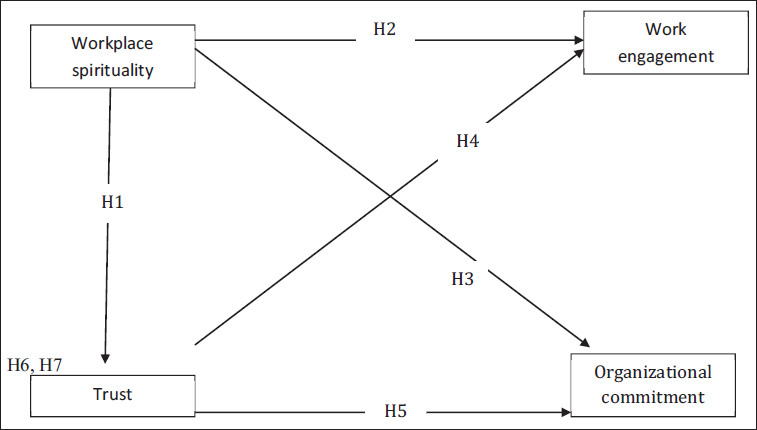
H1: Workplace spirituality has a positive relationship with trust.
Workplace Spirituality and Work Engagement
The construct of work engagement was first defined by Kahn (1990) as involving one’s preferred self ‘preferred self’ and as ‘the harnessing of organization members’ selves to their work roles; in engagement, people employ and express themselves physically, cognitively, and emotionally during role performances’. Consistent with Rosso et al.’s (2010) observation that a person’s sense of spirituality can influence their sense of work meaningfulness and purpose, we postulate that WPS influences an individual’s level of engagement. This view is supported by Saks (2011) and Izak (2012), who propose that an individual’s sense of WPS can influence their meaningfulness at work, resulting in higher levels of WE. Similarly, other scholars contend that the pursuit of a spiritual experience at work leads individuals to seek their full potential and experience a greater sense of intrinsic motivation (Osman-Gani et al., 2013) and self-fulfilment (Pawar, 2009), which lead to increased WE. Sharma and Hussain (2012) conducted the first empirical study of the relationship between engagement and WPS, which was operationalized by three dimensions: meaningful work, community, and alignment of organizational values.
Workers with positive exchange associations tend not to be involved in unethical behaviors that may affect the firm, such as stealing and cheating (Petchsawang & McLean, 2017; Van Mierlo & Bakker, 2018). The workforce shows spirituality in reciprocating constructive exchange associations with their organizations (Umphress & Bingham, 2011). If WPS concentrates on MW and WE, creating intention and participation (Ashmos & Duchon, 2000), it results in superior WE and worker happiness (Jurkiewicz & Giacalone, 2004). Consequently, workers practicing WPS engage in constructive jobs (Rahman et al., 2016). According to social exchange theory, a worker’s pleasure with his/her spiritual life intersects with professional life (Arokiasamy & Tat, 2020; Giacalone & Kolodinsky 2008). Additionally, encouraging WPS can positively influence workers’ attitudes towards their employers. If individuals believe that their organization encourages spiritual well-being, they will exert more effort and become more engaged (Van Mierlo & Bakker, 2018). Workforce-practicing WPS can unleash their full potential and attain advanced job involvement, thus resulting in superior WE by making the most of their inner drive, innovation, and commitment (Arokiasamy & Tat, 2020). WPS is positively linked to WE (Albuquerque & Cunha, 2020).
H2: Workplace spirituality has a positive relationship with work engagement.
Workplace Spirituality and Organizational Commitment
Organizational commitment (OC) is defined as ‘the relative strength of an individual’s identification with and involvement in a particular organization’ (Mowday et al., 1979). Allen and Meyer (1996) propose three elements of OC: affective commitment (AC), normative commitment (NC), and continuance commitment (CC). Affective commitment is defined as ‘an individual’s emotional and psychological attachment, sense of belonging, and connectedness to their organization’ (Rhoades et al., 2001; Shore & Wayne, 1993). Cater and Zabkar (2009) defined AC as ‘stay(ing) in a relationship because of a feeling of connectedness and identification with each other’. They added that AC depends on an individual’s level of connectedness. Moreover, AC can be perceived as a reciprocal notion of organizational connectedness (Cockshaw & Shochet, 2007). Normative commitment is defined as ‘the employee’s feelings of obligation to remain with the organization’. These feelings are thought to result primarily from early socialization processes that could be family- or culture-based, but they may also be influenced by the organization (Allen & Meyer, 1996). Continuance commitment is defined as ‘commitment based on the costs that an employee associates with leaving the organization’ (Allen & Meyer, 1990). When employees are unable to continue their activities, they experience a sense of loss. Because of the exchange nature of CC, this component of commitment is called calculative commitment (Kidron, 1978). We used these three OC elements to operationalize the OC construct.
Milliman et al. (2003) found a positive relationship between WPS and employee commitment to the organization. In a study of WPS, Kazemipour et al. (2012) asserted that WPS increases employees’ emotional attachment to their workplace. Moreover, Gotsis and Kortezi (2008) asserted that spiritual values in the workplace foster employees’ adaptability and commitment. Rego and Cunha (2008) found that when employees experience WPS, they feel more affectively and less instrumentally attached to their organization. Workers’ spiritual experiences influence their OC and sense of trustworthiness (De Carlo et al., 2020). WPS is positively linked to OC (Ghamshadzahi & Nastiezaie, 2020). A firm will induces positivity, including OC (Piryaei & Zare, 2013). Numerous studies have emphasized the impact of WPS on OC. Milliman et al. (2003) analyzed the influence of WPS dimensions, such as a sense of community at work and meaningful work, on OC. They found a positive and significant association between the WPS and OC. Dehaghi et al. (2012) in their study found that WPS augmented the organizational performance and OC of the workforce. Generous actions (e.g., benevolence towards co-workers) produce positive emotions and may lead to a more positive attitude towards the job and company; thus, sequentially, it translates into improved normative and affective OC (Gavin & Mason, 2004; Milliman et al., 2003). If workers sense that their company encourages happiness and well-being, they tend to reciprocate (Eisenberger et al., 2001) with a positive attitude, including feelings of loyalty, strong intention to stay, work effort, and productivity. The impact of WPS on family/personal life is likely to improve satisfaction with marriage/family, free time activities, and social relations, thus facilitating employee happiness (Pfeffer, 2003), which might increase their OC (Bromet et al., 1990; Jurkiewicz & Giacalone, 2004). Crawford et al. (2009) established that WPS affects OC. A higher degree of WPS leads to higher normative and affective commitments (Fry, 2003; Giacalone & Jurkiewicz, 2003; Jurkiewicz & Giacalone, 2004; Milliman et al., 2003). Accordingly, we hypothesize as follows:
H3: Workplace spirituality has a positive relationship with organizational commitment.
Trust and Work Engagement
Engaged employees are seen as providing full effort towards both their: (a) main job tasks and responsibilities; and (b) extra-role behaviors. Work engagement is seen as a distinct construct in relation to other organizational behaviour variables, in part because it involves one’s full self in the experience of work and impacts the performance of actual work tasks directly, rather than just work attitudes associated with performance (Saks, 2011).
Wong et al. (2010) found that WE can be influenced both positively and negatively by trust. Perry and Mankin (2007) and Laschinger and Finegan (2005) revealed that organizational trust and WE are strongly related. Nguyen et al. (2015) showed that a positive work environment with a high degree of trust between the leader and employee fosters WE and motivates workers to operate at their best. The opposite is also true, and leaders that lack trust and have no interest in well-being often end up with demotivated employees with low WE providing low performance (Shuck et al., 2011).
The trust between employers and employees plays a decisive role in WE (Bakker et al., 2014; Tan & Tan, 2000). Organizational trust demonstrates the workforce’s beliefs or anticipations in the firm’s functioning (Engelbrecht et al., 2017) and is reflected through their candidness to converse truthfully and stay trustworthy to their firms. Work engagement reflects workers’ consequent participation in organizational activities and enthusiasm to finish the job assigned by the organization. Organizational trust affects WE, encompassing devotion, drive, and assimilation. Individuals show commitment towards the organization if they have a trusted relationship (Bakker et al., 2014; Van Mierlo & Bakker, 2018). Trust of the workforce in the company’s operations results in social exchange interactions with organizations (Miner et al., 2015). Employees should go beyond the duties and responsibilities of their firms (Engelbrecht et al., 2017). Accordingly, we hypothesize the following relationship:
H4: Trust has a positive relationship with work engagement.
Trust and Organizational Commitment
Trust is vital to construct commitment, as it augments commitment by channelizing trust in the workplace, as substantiated by SET (Haldorai et al., 2020; Hassan et al., 2016). The association between trust and OC is significant (Rego & Cunha, 2008) as trust determines interpersonal interactions at work (McAllister, 1995). Previous studies, such as Ganesan (1994), Doney and Cannon (1997), and Brockner et al. (1997), have revealed that an employee’s trust in an organization impacts their commitment towards the organization. Meyer et al. (1989) scrutinized the link between OC and trust. Generally, workers tend to support or commit to organizations where trust is comparatively higher. Research shows that organizational trust has a positive connection with OC (Moynihan & Pandey, 2007). Accordingly, we hypothesize the following relationship:
H5: Trust has a positive relationship with organizational commitment.
Mediating Role of Trust in the Association Between Workplace Spirituality and Occupational Attitudes of Work Engagement and Organizational Commitment
This body of research proposes that trust acts as a mediator between WPS and work-related attitudes, that is, work engagement and organizational commitment. Creating MW, producing OV spiritually, and offering compassion have provided themes such as integrity, honesty, ethics, and, most importantly, trust (Marques et al., 2003). Marques (2005) investigated a WPS consisting of trust and interconnectedness with others in an organization. Krishnakumar and Neck (2002) scrutinized the diverse perspectives of WPS and highlighted the potential advantages of offering the elements of creativity and trust. Burack (1999) revealed that trust is a significant output for individuals who perceive WPS. Daniel (2010) highlighted that the presence of WPS results in the engagement of the workforce in team performance, as reflected in their support, power, and trust.
With regard to trust and WE, it appears that WPS has been significantly connected to trust significantly (Karatepe et al., 2020), and trust is an important determinant of WE (Ghamshadzahi & Nastiezaie, 2020; Miner et al., 2015), suggesting that trust acts as a bridge between WPS and WE. When employees’ WPS decreases, distrust in the workplace increases, adversely affecting WE (Karatepe et al., 2020; Singh & Chopra, 2016). Previous studies have stated that trust impacts different work attitudes, such as OC, WE, and OCB, each influencing the firm’s efficiency in general (Albuquerque & Cunha, 2020). Chouhan (2025) observed the effect of WPS on employee silence with workplace incivility as a mediator. Workers engaged in WPS tend to attain a higher level of WE, leading to a higher trust level (Ghamshadzahi & Nastiezaie, 2020). Trust normally builds the anticipation that a firm will keep commitments (Miner et al., 2015).
WPS having Meaningful work (MW), Community at workplace (CW), and Organizational value (OV) would impact WE and OC. Several authors have highlighted trust as a significant factor in WE and OC. Based on the assertions that WPS and trust have a considerable relationship with WE and OC, the following set of hypotheses are formulated:
H6: Trust mediates the relationship between workplace spirituality and work engagement.
H7: Trust mediates the relationship between workplace spirituality and organizational commitment.
Rooted in the aforementioned discussion, the current study attempts to recognize how WPS influences WE and OC directly and indirectly via trust as the mediator. Figure I depicts the proposed research model.
RESEARCH METHODS
Sample Procedure
A survey was conducted to collect quantitative data. Cross-sectional research was conducted considering time and cost constraints. Data were collected from employees working in the IT, manufacturing, and service industries (including banks and educational institutions) in India using convenience sampling. The target population was employees from the middle level of management and above because of their larger duties and higher participation in organizational affairs. A total of 459 questionnaires were randomly distributed to selected organizations in the IT, manufacturing, and service industries. These industries were selected for this study because WPS is a common phenomenon, and the impact of WPS can be observed on various occupational attitudes and behaviours in these industries. Therefore, these industries fit well with the constructs of our study.
Proposed Model.
The data collection period for this study was June–August 2021. This period was marked as the unlock phase because many states in India started lifting lockdowns and restrictions after the second wave of Covid-19 (April–May 2021). During the data collection period, numerous workers worked from home; therefore, 418 questionnaires were received overall. However, owing to a few missing values, 31 questionnaires were excluded from the data analysis. Thus a total of 387 questionnaires out of 459 were found to be usable (response rate of 84%).
Measures and Questionnaire Procurement
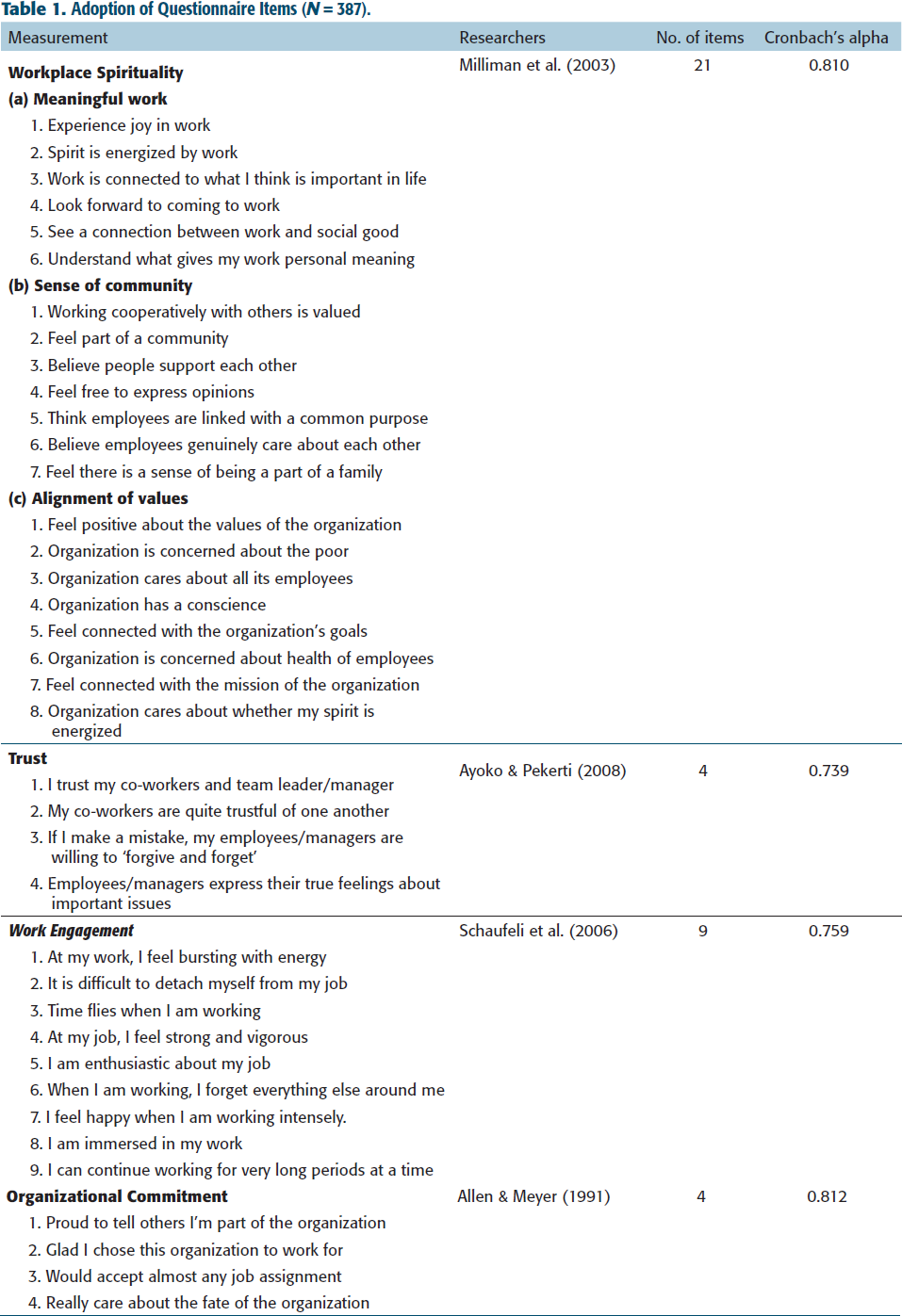
In this study, a questionnaire modified from diverse sources was used to evaluate six variables. A 5-point Likert scale (5 = strongly agree; 1 = strongly disagree) was used to measure each pertinent factor. To assess WPS, three subscales evaluating the three aspects of WPS were used: alignment with organizational values (eight items), meaningful work (six items), and sense of community (seven items). The measures used in this study were adapted from previous studies, as shown in Table 1. Cronbach’s α values are also shown for the corresponding scales.
Adoption of Questionnaire Items (N = 387)
Data Analysis
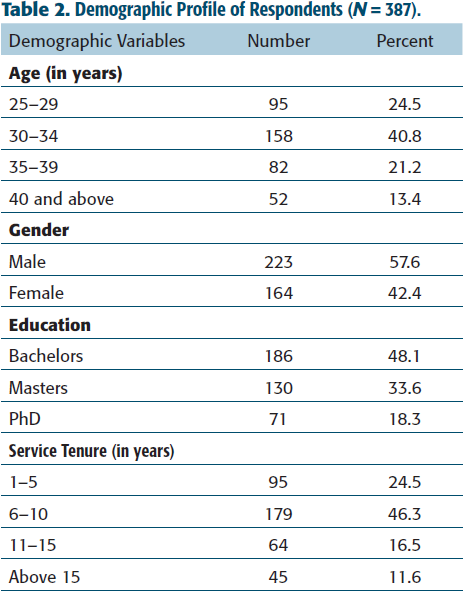
To evaluate the data, the metrics of mean, standard deviation, regression, and correlation analysis were used. SPSS was used to perform data analysis. Additionally, the SPSS PROCESS Macro function was applied to investigate the mediation effect (Hayes, 2013). The AMOS software was also used to test model fitness. Table 2 demonstrates the demographic characteristics of the respondents (N = 387).
Demographic Profile of Respondents (N = 387)
KMO and Bartlett’s Test
KMO and Bartlett’s tests were performed before conducting the factor analysis. The Kaiser-Meyer-Olkin (KMO) values for WPS, Trust, WE, and OC were 0.662, 0.715, 0.609, and 0.722, respectively. Thus, the KMO measure of sampling adequacy for our data sample was greater than 0.5, which is the minimum acceptable value (Kaiser, 1974). These test results allowed for further data analysis.
Confirmatory Factor Analyses
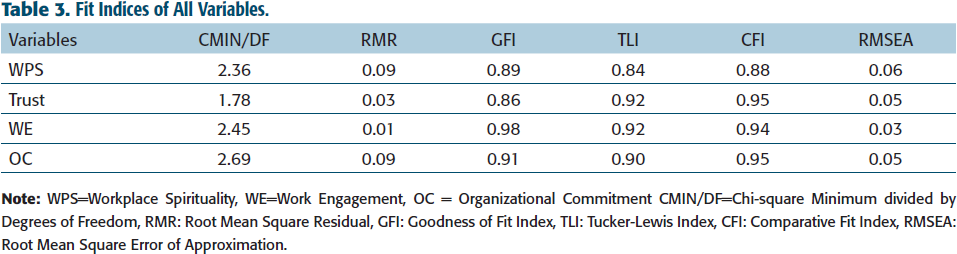
Confirmatory factor analysis (CFA) was performed to quantify each of the four factors (WPS, Trust, WE & OC). Table 3 shows the fit indices of all variables illustrating the best-fit model. The reliability of each variable meets the threshold value of 0.70 (Hair et al., 2010). The descriptive statistics, correlations, and reliability of all study variables are presented in Table 4.
Fit Indices of All Variables.
Descriptive Statistics, Correlations and Reliability (N = 387)
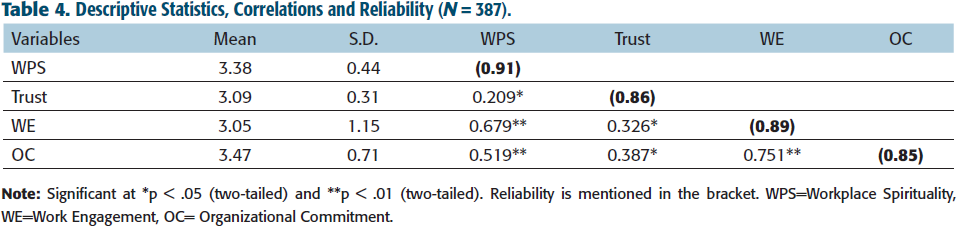
To ensure that our data did not suffer from common method variance, Harman’s single-factor test was performed, which reported a single factor accounted for 19.65% of the total variance. Therefore, the common method variance was not observed. Factor Loadings, Composite Reliability (CR), and Average Variance Extracted (AVE) are shown in Table 5. Convergent validity is established when the AVE value for each variable is higher than 0.5, and reliability is established when CR is higher than 0.7 (Nunnally, 1978; Gefen and Straub, 2005; Hair et al., 2010). Table 5 demonstrates that each measure used is valid and reliable; for example, the AVE value for each variable is greater than 0.5, displaying good convergent validity, and CR is higher than 0.7, indicating good reliability.
The Results of Factor Loadings.
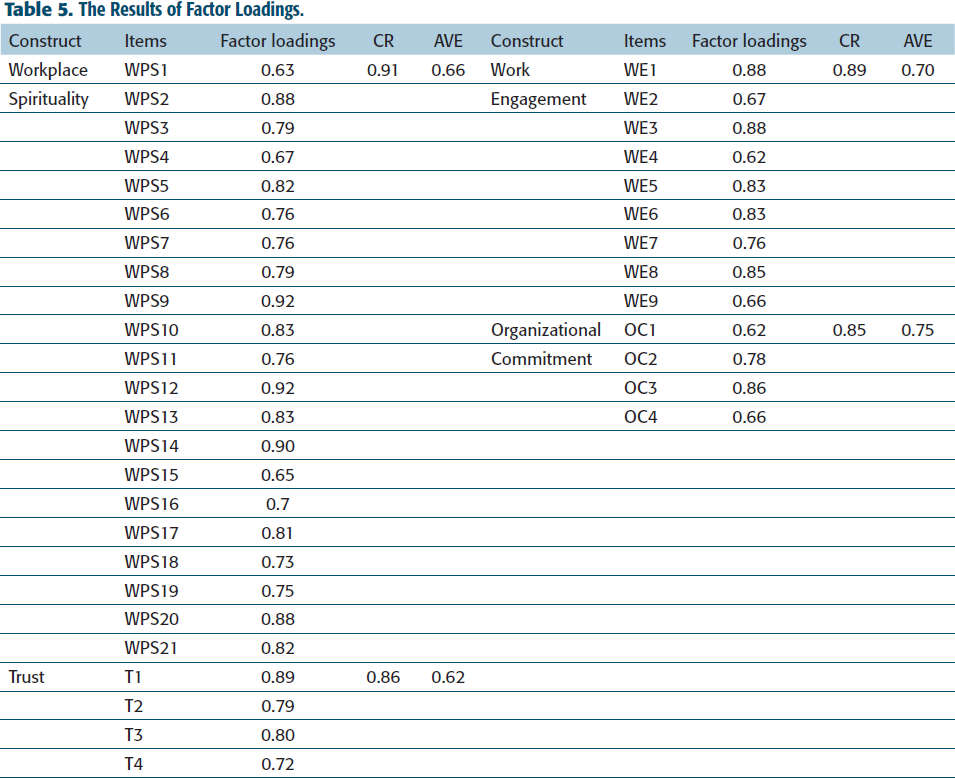
The factor structure was clear, and all six constructs were unidimensional and factorially separate. We conclude that our questionnaire has adequate psychometric properties.
HYPOTHESIS TESTING
Direct Relationship
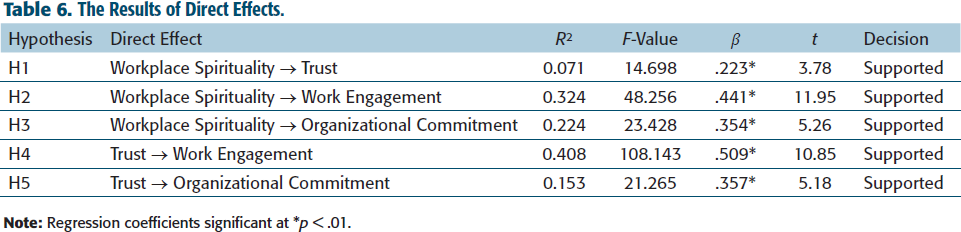
The results indicated that overall WPS significantly predicted trust (β = 0.219, p <. 01). WPS was positively associated with WE (β = 0.441, p <. 01) and OC (β = 0.354, p < .01). Similarly, trust was positively associated with WE (β = 0.509, p <.01) and OC (β = 0.357, p < .01). These results support H1, H2, H3, H4 and H5. Table 6 presents the results of the direct effects.
The Results of Direct Effects.
Mediation Analysis
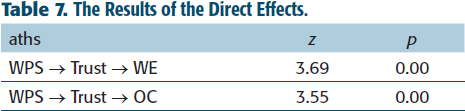
For testing mediating effect of trust, Sobel’s (1982) test was used. This test produced statistically significant results. It is concluded that the effect is greater than the desired value since the z-score is higher than 1.96 (Mallinckrodt et al., 2006; Sobel, 1982), suggesting that each path has a substantial effect as shown in Table 7.
The Results of the Direct Effects.
The SPSS macro function (Hayes, 2013) was used to test the mediating effect of trust between WPS, WE, and OC. The mediating effect was analyzed using Hayes’ method (2013). WPS was indirectly associated with WE through trust (Effect = 0.102, BootSE = 0.0309, BootULCI = 0.1624, BootLLCI = 0.0452), supporting H6 that WPS and WE are mediated by trust (see Table 8). Likewise, WPS was indirectly associated with OC via trust (Effect=0.165, BootSE=0.0276, BootULCI=0.1527, BootLLCI=0.0399), thus supporting H7.
The Bootstrap Results of Indirect Effects

DISCUSSION
This study aimed to understand how WPS determines workers’ WE and OC. Trust as a mediator was also examined in the relationship between WPS, WE, and OC. The present study highlights that WPS is linked to WE through trust. This finding is consistent with that of Lamberti and Lettieri (2009). The findings also reveal that workplace trust is a significant predictor of WE, similar to the findings of the research conducted by Chughtai and Buckley (2007). The dimensions of WPS are linked to the values prescribed by the ‘values framework of WPS’ (Jurkiewicz & Giacalone, 2004) either directly or indirectly, which are relevant to organizational performance.
In the current study, the WPS was significantly associated with OC. This finding supports the results of Houghton et al. (2016), who found that WPS is positively related to OC, honesty, and creativity. Dehaghi et al. (2012) also reported that WPS generated superior feelings of connection, emotional bonding, and job satisfaction among workers, which is consistent with the results of this study. Previous studies have demonstrated a clear positive relationship between WPS and OC. Therefore, by contributing evidence and empirical knowledge, the present research supports the findings of numerous studies, such as Sintaasih et al. (2018), Houghton et al. (2016), Nwibere and Emecheta (2012), and Milliman (2003), all of which demonstrate the impact of the dimensions of WPS on OC in diverse contexts. The findings show that as the workforce experiences WPS, they sense a strong attachment to their firms, feel loyalty/obligation towards them, and feel satisfied with their jobs.
Our results are congruent with prior studies (e.g., Duchon & Plowman, 2005; Gavin & Mason, 2004; Gull & Doh, 2004) suggesting that when employees find meaning in their activities and, in general, feel involved in richly spiritual organizational climates, they become healthier and happier, act in a more engaged and committed manner, apply their full potential to work, and bring their entire selves to the organization. Thus, they become more productive over the long run than employees in organizations where spirituality is ignored or disrespected. Concomitantly, the study suggests that neglecting WPS can lead employees to a lower commitment, thus generating higher absenteeism and turnover (Allen & Meyer, 1996; Meyer & Herscovitch, 2001), which, in turn, can lead to lower organizational performance. Worplace sprituality can assist workers to be stress-free, superior team members, and make a positive contribution to the company. Worplace sprituality would facilitate employees to be ingrained in their jobs and let them work together, which would lead to the success of the workers as well as the company (Elmes & Smith, 2001; Lewin & Regine, 2000).
Our study established that workers’ perceptions of a higher-order construct of WPS involving meaningful work, community, and alignment with organizational value were positively related to their level of WE and contributes to the literature in several ways. First, it builds upon previous WPS and WE studies (Petchsawang & McLean, 2017; Sharma & Hussain, 2012) which provided important insights into the relationship between these two constructs but also contained some limitations. The most important contribution of the current study is that it addresses the potential confounding of the WPS dimension of meaningful work with the measure of engagement used in previous research utilizing an engagement survey. In relation to Petchsawang and McLean (2017), our investigation used three dimensions of WPS that have been found to be key sources of work meaning, as noted by Rosso et al. (2010). As a result, this study contributes to the literature by establishing how multiple aspects of WPS can influence WE through the lens of work meaning.
Additionally, while prior studies have focused only on an examination of the relationship between WPS and WE, this study empirically assesses these two constructs in conjunction with trust. Furthermore, as called for by Giacalone and Jurkiewicz (2003), these results add to the literature by demonstrating how WPS relates to employee outcomes, thereby further legitimizing the WPS phenomenon. If it is agreed that WPS respects employees’ internal life, searches for a purposeful job, and provides a sense of connectedness to others, then our dimensions symbolize spiritual values in the workplace. OC is connected with WPS in this research, which implies that an employee feels that he/she is heading in the right direction towards self-actualization, that he/she belongs to the organization, that he/she can bring together the numerous dimensions of the self at work, and that the self is incorporated.
IMPLICATIONS OF THE STUDY
This study offers numerous implications for academics, researchers, practitioners, and managers in various sectors. Organizations need to discover new methods and practices to retain human resources. Therefore, WPS can help organizations to keep their employees by determining their requirements so that the workforce can realize the importance of life in the workplace.
Organizations must build and develop a trust-oriented environment where workers can appreciate their meaningful jobs, feel communal, and align their values with organizational values. The findings of the current study indicate that organizations might offer better prospects for professional growth by augmenting work engagement and organizational commitment through WPS. The presence of WPS would help organizations assess the task performance of employees concerning their workload management and task completion on time.
Having spiritual values in the workplace increases the ethical behaviour of workers and enhances trust among them. Because WPS employees would become more patient and tolerant, they would feel less stress and there would be more loyalty to their organizations. This would also assist organizations in retaining their employees with a high level of performance. Therefore, a company might get an edge over its competitors regarding having a superior workforce, and the company can even reduce its expenditure on seeking competent employees.
The positive association between WPS and trust might aid in a higher sense of regard for the company as well as for the community. This study offers novel ways of thinking to academia. For the universities and educational institutions, it is suggested that they should offer spirituality programs designed to introduce the concept of spirituality at the workplace. Universities should endorse a pragmatic, dynamic, and inventive program in which students are imparted with skills to practice spirituality.
For organizations, it is recommended that training be provided to employees to nurture and develop WPS. A significant mechanism to ensure that the benefits of WPS materialize is through training programs where employees are educated about the WPS philosophy, its importance, and how the spiritual codes can be internalized. By providing such training, a definite level of grown-up thinking can be cultivated among employees to think and act positively in their jobs.
Organizations can make employees realize that through purposeful activities, feeling communal, and making their organizational values a trusting environment can be enhanced. Employees may start trusting each other and, as a result, lead to enhanced engagement and commitment to work.
Organizations should create cultural transformation by creating a WPS. Through training, the workplace will become more spiritual, and cultural transformation will improve, which would enable people to speak the truth and trust each other. Hence, increased trust will direct them towards engagement and commitment. Positive changes are observed, such as increased work commitment and engagement, and there will be less attrition and absenteeism.
Organizations must inspect policies to enhance OC. This research recommends that overlooking WPS might cause high turnover and absenteeism and low capability to satisfy clientele, which might result in low organizational performance. Bearing in mind that OC is connected with attitudes towards organizational change (Madsen et al., 2005; Yousef, 2000), this study reveals that the success of managing the change could be supplemented with a novel or balancing viewpoint, as a high level of WPS can encourage workers to create a positive perception of the firm and, hence, they can adjust better due to high levels of job satisfaction, mental health, and OC.
Organizations should bring about cultural changes through the development of the WPS. Managers must organize various seminars, lectures, and meditation programs on WPS. Through such education and training, the workplace would become more spiritual, and rapid cultural change would occur, thus enabling the workforce to trust each other and be truthful. Therefore, enhanced trust leads towards job satisfaction. WPS augments employee engagement and OC, which leads to low absenteeism and turnover rates.
Managers should incorporate spirituality in the management as well as in the research programs. This is because human beings are spiritual beings pursuing purposeful jobs, and firms that minimize the achievement of such needs might be negatively affected. The spiritual turn would probably lead to organizational and employee benefits, but it demands a transformation in management thinking.
Organizations should initiate and implement WPS to create meaningful work by incorporating organizational values in accordance with employees’ values and taking community responsibility. This might result in the creation of a trusting atmosphere where employees depend on each other, work as a unit, and rely on their organization. WPS with meaningful work would certainly assist in taking into account co-workers’ health by recognizing that a worker’s life is not confined to professional life only.
Proper interventions in job design that focus on autonomy in the work profile may enable a spiritual and safe space for employees. This study recommends that organizations implement employee-friendly practices such as mindfulness, meditation, and yoga (spiritual activities) and spiritual coaches at workplaces to promote performance. Fair and supportive treatment of employees cultivates positive attitudes by building and spreading trust. This culture of mutual trust and confidence drives a working-engaging atmosphere and sequentially raises the performance levels of employees.
This study highlights spirituality as an important practical consideration when constructing a positive work environment. Organizations should realize that the new generation of workers assesses their work prospects not only in terms of the associated reward and/or compensation but also in terms of policies that are employee-friendly and that can provide them with a healthy work–life balance. By clarifying the ‘meaning’ and ‘measurement’ components of employees’ spirituality, organizations can implement this practice to enhance productivity. To motivate them to engage in work and thus augment productivity, organizations need to provide them with a deeper sense of connection with others, whether that is a higher power, other human beings, nature, and all living things. To do so, the firm should develop a strong set of spiritual values that shape its corporate culture. For instance, Southwest Airlines has a strong focus on commitment, emotional expression, and personal relationships, which are manifestations of WPS (Milliman et al. 1999). In addition, management should carefully monitor how employees’ values and attitudes are connected with a deeper sense of others and then provide an internal device for public relations so that the narratives of corporate spiritual values are spread through the organization, promoting shared recognition among employees that their organization truly cares about spirituality. The current study provides insights for HR practitioners in the pursuit of work-engaged employees that support the use of organizational strategies using WPS. Given the increasing evidence that employees’ spirituality has positive consequences for their performance, organizations need to care about their spirituality. Considering that today’s society is flooded with material abundance and that more individuals are now interested in working for organizations that provide ‘meaning’ and ‘identity’ to them, organizations ought to pay greater attention to employees’ spirituality in order to differentiate themselves in the marketplace by supplying ‘meaning to life and self-worth’ to employees (Shachar et al., 2011).
Trust within an organization has a positive impact on performance because the trustworthiness perceptions of employees at different levels of the organization trickle down the organizational hierarchy, from higher to lower levels, to influence performance (De Cremer et al., 2018). In this context, leadership styles (e.g., participative leadership, authentic leadership), organizational culture (egalitarian vs. hierarchical), and HRD may play a prominent role in developing trust, thus affecting performance. Accordingly, researchers and practitioners should pay attention to the role of HRD practices to promote trust in organizations as a strategy to increase performance. Because of the extensive evidence on the positive impact of trust on performance, organizations’ HRM interventions to build and spread trust could be a source of sustainable competitive advantage. The present study encourages organizations to develop and utilize more searching staff aptitude tests during the recruitment process, as this will help HR practitioners select high-calibre employees by highlighting the benefits of hiring a more spiritually competent workforce, thus increasing performance.
LIMITATIONS AND FUTURE SCOPE
Despite its invaluable findings, this study has a few limitations that may be addressed by future researchers. This study included only four variables such as WPS, trust, WE, and OC. Future researchers could analyze other variables, such as productivity, psychological well-being, turnover, organizational citizenship behaviour, and absenteeism. Trust was used as a mediating variable in this study. Variables such as leadership style or individual characteristics might be used as moderators to investigate the link between WPS and positive work outcomes in the future. The current study was cross-sectional. A longitudinal research design is necessary for in-depth analysis. A survey questionnaire was used as the only source of data from the respondents.
CONTRIBUTION OF THE RESEARCH
This study contributes to the extant literature in numerous ways. The current study offers new insights into WPS and its impact on several work outcomes, that is, WE and OC, and thus makes a theoretical contribution to the literature. In this study, trust is used as a mediator in the association of WPS with several work outcomes, that is, WE and OC, thus advancing the knowledge on trust and the implementation of actions that might endorse WE and OC. The majority of research on WPS has been performed in the Western context. This study contributes to the WPS literature by analyzing its associations with work outcomes in an emerging economy like India, thus bridging a gap in WPS literature by analyzing its associations with work outcomes. The current study contributes by empirically demonstrating how WPS predicts occupational attitudes that have garnered substantial research focus: WE and OC. Thus, this study bridges gaps in the management and organization literature.
CONCLUSION
WPS is imperative for each sector, whether industrial, service, IT, or the educational sector, in the modern era, where spirituality is indispensable in the workplace. The results also demonstrate that WPS is critical for building a trust-oriented environment that promotes commitment among workers and engages them in their jobs. Therefore, companies should focus on WPS to lead trust, WE, and OC in the workplace. Based on the empirical findings, the current study concludes that WPS is a critical element for encouraging the workforce. Therefore, it is recommended that organizations offer a spiritual workplace to help the workforce avoid hesitation as they share information and keep them engaged in their work by strengthening a trust-oriented atmosphere in the workplace.
Footnotes
DECLARATION OF CONFLICT OF INTERESTS
The authors declared no potential conflicts of interest with respect to the research, authorship and/or publication of this article.
FUNDING
The author received no financial support for the research, authorship and/or publication of this article.

e-mail: