




Abstract
This research examines the effectiveness of lean agile competencies and hybrid lean agile in mediating the relationships between lean manufacturing, agile manufacturing and operational performance. The partial least squares method was used in the form of variance-based structural equation modelling (PLS-SEM). Findings showed that hybrid lean agile had a weak effect (f2 ≤ 0.15; p<0.05) and that it did not fulfil the requirement of a mediator, while lean agile competencies variable had a strong effect (f2 ≥ 0.35; p>0.05) as a significant mediator. Hybrid lean agile implementation model should integrate lean agile competencies as a mediator for lean agile competencies activities.
Executive Summary
This research is driven by the inability of many manufacturing companies to enhance their operational performance (OP) through the adoption of a hybrid lean agile (HLA) approach. The primary challenges identified include inefficient management organization, a lack of experience in technology adoption, and an imbalance between lean manufacturing (LM), which prioritizes efficiency, and agile manufacturing (AM), which emphasizes flexibility. Furthermore, the fragmented and incomplete implementation of the HLA model contributes to the low effectiveness of this strategy. To address these issues, this study developed a strategic model using structural equation modelling (SEM) and introduced leagility competencies as a new mediating variable. Leagility competencies aim to integrate the efficiency principles of LM, focused on waste elimination, with the flexibility of AM to better respond to dynamic changes. The research involved approximately 140 manufacturing companies in Indonesia. Principal component analysis (PCA) was used to determine the variable indicators, and the effects of these variables were tested through SEM based on the partial least squares (PLS) approach.
The results revealed that the conventional HLA model did not function as a significant mediator. In contrast, leagility competencies showed a strong effect and became the primary mediator in strengthening the relationship between LM, AM and OP. The inclusion of leagility competencies enhanced the synergy between the efficiency and flexibility approaches, addressing the misalignment often seen in HLA implementations. These findings emphasize the critical role of leagility competencies in overcoming the challenges of fragmented HLA implementation. By integrating these competencies, companies can better balance the efficiency of LM with the flexibility of AM, ensuring that the HLA strategy leads to significant improvements in OP. This study provides a framework for redesigning HLA strategies, positioning leagility competencies as a key factor for achieving sustainable success in the manufacturing sector.
Keywords
Failure of manufacturing companies to improve OP by implementing HLA, including the simultaneous application of LM and AM simultaneously, has intrigued the researchers to conduct this research. The failures might be caused by ineffective management organization, lack of experience in technology adoption, an imbalance between AM and LM activities, lack of basic HLA construction, and implementation that is not total and separate. This research was performed to design a strategic model based on the structured equation model (SEM).
LM and AM are based on fundamentally different principles. LM prioritizes efficiency by eliminating waste in each process (Shah & Ward, 2007), while AM has a flexible and agile character in anticipating change (Sud-on et al., 2014). LM has always been associated with OP (Ghobakhloo & Fathi, 2020); increasing labour productivity, quality, lead time, cycle time and manufacturing costs (Uhrin et al., 2017). Meanwhile, LM is becoming one of the most popular paradigms in waste reduction in the manufacturing industry.
On the other hand, AM is seen as an evolution of LM (Iqbal et al., 2020), as lean methods are potential catalysts for agile methods (Ghobakhloo & Azar, 2018). Considering that agile production includes certain lean elements as well as more radical innovative practices, from a theoretical perspective, agile capabilities are cumulatively acquired in conjunction with lean capabilities.
HLA emerged as a manufacturing system that balances leanness and agility (Vinaytosh et al., 2019). HLA reflects the balance of LM and AM (Sindhwani et al., 2019), which includes several activities: just in time, kanban system, multi-function (machine and team), total quality management (TQM), employee empowerment and single-minute exchange. However, HLA is not an instant solution. A survey of 140 companies identified several factors causing the failures: Incomplete implementation (14%), split implementation (26%) and lack of experience in technology adoption (23%).
Manufacturing companies expect to effectively implement HLA in order to obtain the benefit from both systems (LM & AM). The purpose of this research is to provide recommendations for the implementation of HLA to improve OP. In this research, the influence of HLA on OP is mediated by another variable. This research also provides recommendations for implementing HLA to improve OP.
Factors that cause failures in HLA implementation are diverse, including: Ineffective management organization and lack of experience in technology adoption (Narkhede et al., 2020), an imbalance between AM and LM activities (Ghobakhloo & Azar, 2018), lack of basic construction (Soni & Kodali, 2012), difficulty adapting (Ahmed, 2021), non-total implementation (Iqbal et al., 2020), separate implementation (Rashad & Nedelko, 2020). On the other hand, HLA is more dominant in LM activity than AM (Qamar et al., 2020) as shown in Table 1.
Concepts and Activities of Lean, Agile, HLA.
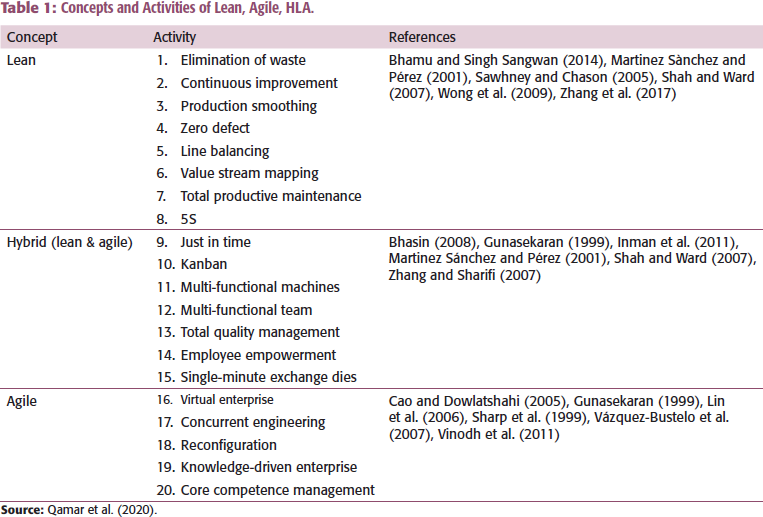
As seen in Table 1, HLA activities are predominantly dominated by LM with six activities, while AM consists of only one activity. Several researchers have claimed successful implementation of this method. HLA characteristics were further emphasized by Elmoselhy (2013) on the LM aspect (process flexibility, manufacturing system) and the AM aspect (innovation with strategic value, designing dynamic strategy). Based on empirical data, many manufacturing companies in Indonesia fail to implement HLA in their manufacturing system.
In summary, while extensive studies exist on lean agile methods, the success rate of applying LM and AM concurrently or sequentially to enhance OP is not clearly defined in the literature (Lotfi & Saghiri, 2018; Paranitharan & Babu, 2019). This ambiguity highlights the need for further development in the lean-agile debate. This research aims to assist Indonesian manufacturing companies in implementing HLA by evaluating the effectiveness of existing frameworks, integrating the principles of LM and AM into a new set of competencies termed leagility competencies, and testing the role of leagility competencies as a mediating variable between HLA and OP. The research identifies several new strategies emerging from the interplay of these variables (Vinaytosh et al., 2019), noting that while HLA is predominantly implemented in supply chain management (SCM), its application in manufacturing systems is less frequent, as depicted in Figure 1.
Mapping Research Related to Lean Agile (2010–2022), Using VOSviewer and Publish or Perish.
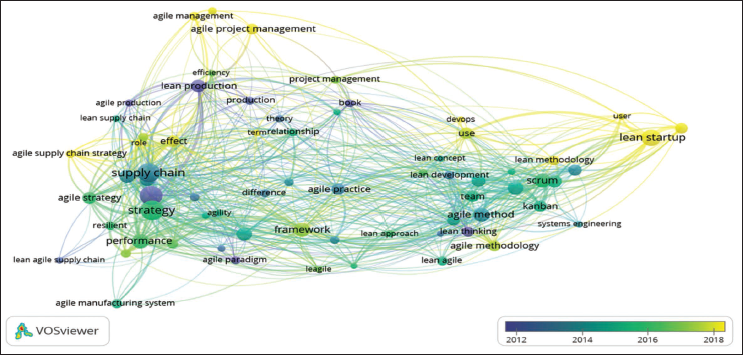
In Figure 1, research at the beginning of 2018 emphasized framework, effects, lean start-up, lean agile methodology and HLA implementation. This research is considered important in forming strategic innovation in the form of the concept of the relationship model of HLA to OP with leagility competencies mediation.
LEAGILITY COMPETENCIES
This new variable, derived from an in-depth exploration of LM and AM traits, reflects a meticulous process involving numerous manufacturing companies in Indonesia over a five-year period. The objectives are (a) getting traits/characteristics that are close to the problems that occur. (b) Filtering activities that have become a tradition (Campanelli & Parreiras, 2015), preventing losses and (c) testing to get the ideal condition (able to answer the company’s problems).
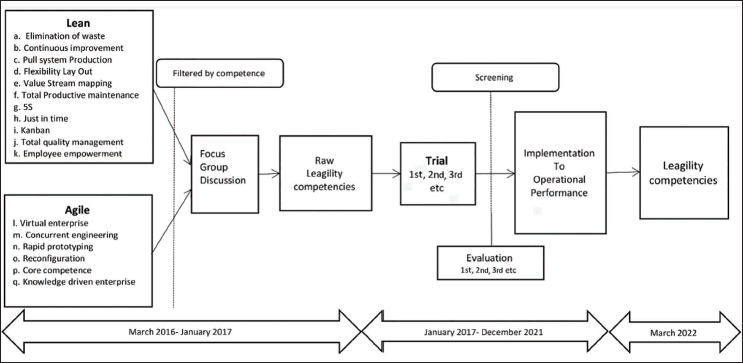
LM and AM properties were elaborated to get a balanced combination of properties. The screening process to obtain the raw leagility competencies was conducted through a one-year focus group discussions (FGD). Trials for the selection and evaluation process were strictly conducted to gain the ideal conditions. Trials were conducted more than three times over four years. There were 35 activities in eight LM indicators whose effectiveness was measured as an intervening variable. The process of LM formation is illustrated in Figure 2.
The Process of Forming the Leagility Competencies Variable.
Leagility competencies are formed through the theoretical approach of the resource-based view (RBV) and strategic management. The RBV is reflected by the competencies in the LM screening process, while AM reflects the strategic nature of management. This elaboration has been carried out (Budianto et al., 2021) in determining the mediating variables in manufacturing agility competencies. Similarly, Danilovic and Leisner (2007) and Hossain et al. (2022) suggest that RBV is a framework for understanding how strategic focus requires specialization, and resources dedicated to structures, processes and capabilities to gain competencies that have a competitive advantage.
This research was mainly conducted to develop an HLA implementation strategy to increase OP with leagility competencies mediating variables. Leagility competencies activity is expected to merge into HLA which has balanced LM and AM characteristics. In this research, the effectiveness of this strategy was examined based on the role of HLA and leagility competencies as mediating variables using the following research questions: (a) Can HLA mediate LM and AM in increasing OP? (b) Are leagility competencies capable of mediating the relationship between HLA and OP? If leagility competencies have an effect value (f2) greater than HLA, then the activity on leagility competencies is appropriate to be used as an HLA activity (indicator).
LITERATURE REVIEW
Challenges in the global industry have been identified as follows: (a) erratic fluctuations in product mix and production volume and (b) the ability to adapt and deliver products on time. The ability to respond quickly and effectively to changes in demand (Qamar et al., 2020) synergizes with efficiency. Under these conditions, it is interesting to discuss an AM as a manufacturing concept that is continuously affiliated with adaptability (Purvis et al., 2014).
LM is widely utilized and certain enhancements could potentially streamline LM processes into a more responsive manufacturing technique with a competitive advantage, known as AM. This situation presents two perspectives: (a) LM and AM have distinct views and objectives and (b) they can coexist within the same manufacturing system. However, many companies find themselves challenged when attempting to implement both LM and AM simultaneously, driven by the desire to achieve OP quickly.
In the AM technique, a company must first implement LM (Ghobakhloo & Azar, 2018) and create the basic foundation of LM (Qamar et al., 2018). On the other hand, the application of LM and AM can be done at once to make the implementation more time-efficient (Sertyeşilışık & Tezel, 2019) by conducting a series of evaluations (Singh et al., 2019), innovation of the tools used (Matějka & Válek, 2020) and filtering activities that do not support (John, 2021).
HLA is a continuous manufacturing system that balances LM and AM activities to accelerate the process of using LM and AM techniques simultaneously. It is a combination of elaboration of LM and AM that improves OP. Unfortunately, the HLA concept (Table 1) is only dominated by LM characteristics; Just in time, kanban system, multi-function (machine and team), TQM, employee empowerment and single-minute exchange.
The concepts of LM and AM are extensively utilized by strategists. LM was first pioneered by Toyota and considered the most important tool for improving OP due to its main core of reducing waste (Ghobakhloo & Fathi, 2019).
Agile management techniques allow OP to quickly adapt to changes so that they can compete and survive (Potdar et al., 2017). The main focus of AM is not on quality but on delivering products to customers in the shortest period possible (Matějka & Válek, 2020). This technique is an improved version of LM with flexible manufacturing.
Many experts argue that no technique is better or worse than each other since all techniques are interdependent and triggering to each other. This encourages the formation of HLA, although, in its development, the role of HLA has not been optimized by many industries.
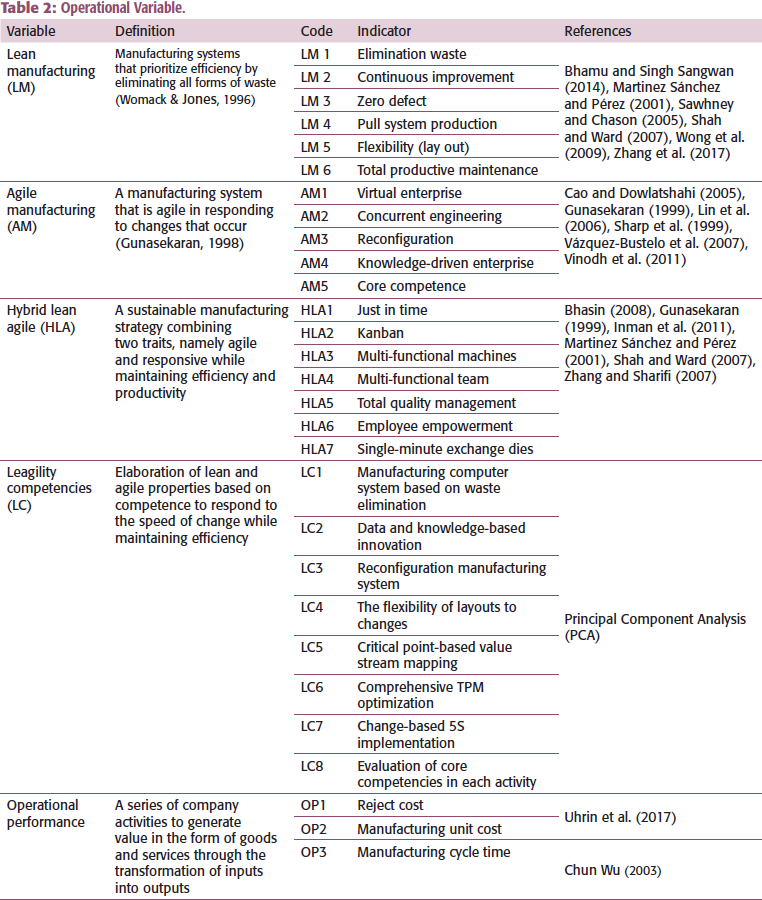
This research introduces leagility competencies as a mediating variable, an integration of LM and AM characteristics based on a robust foundational framework (Patel et al., 2020). This integration is designed to enhance adaptability (Ahmed, 2021) and comprehensive implementation (Rashad & Nedelko, 2020), aiming to boost HLA and improve OP in the manufacturing sector (Iqbal et al., 2020). The research also seeks to address the research gaps in the simultaneous application of LM and AM. A conceptual model presented here outlines the relationships between the independent variables (LM and AM) and the dependent variable (OP), mediated by HLA and leagility competencies, with detailed definitions and indicators provided in Table 2.
Operational Variable.
Direct Relationship
The direct relationship between LM and HLA brought positive results. LM activities are able to stimulate an increase in HLA within SCM (Purvis et al., 2014; Soni & Kodali, 2012), strategic management (Purvis et al., 2014), manufacturing (Elmoselhy, 2013), process design (Elmoselhy, 2015). This research examined the relationship between LM and HLA in the manufacturing system, where H1 was formulated as follows: LM has a direct positive effect on HLA.
AM activities can have a positive effect on HLA in SCM (Kant et al., 2015; Purvis et al., 2014), strategic management (Mishra et al., 2019), manufacturing (Elmoselhy, 2013), process design (Elmoselhy, 2015), quality (Salleh & Nohuddin, 2019), medical (Glazkova et al., 2019). This research focused on the use of AM on HLA in the manufacturing process. The second hypothesis was (H2): AM positively affects HLA.
The ability of HLA to increase OP has been proven in previous studies (Abele et al., 2015; Ahmed, 2021; Elmoselhy, 2013; Lotfi & Saghiri, 2018). The third hypothesis was formulated as (H3): HLA has a direct positive effect on OP.
The relationship between HLA and leagility competencies has not been extensively explored in previous research. However, the positioning of HLA is still mediated by factors such as big data analytics (Raut et al., 2021), capability (Alqudah et al., 2020) and its inclusion in the Human Resource Management dimension (Alipour, 2022). Given the lack of existing studies on the direct interaction between these variables, this research proposes hypothesis H4: HLA have a direct positive effect on legality competencies?
Although the relationship between lean agile convergence and OP has not been directly investigated in prior research, its conceptual similarity has been recognized by Naim and Gosling (2011). Additionally, the term leagility competencies are similar in nature to ‘Leagility Capability,’ which has been linked to OP in previous studies (Matawale, 2015). In this research, H5 states that leagility competencies have a positive effect on OP.
Indirect Relationship
The relationship between LM, high-level adaptability and OP has been extensively studied within the realms of SCM (Fallah Lajimi et al., 2019; García-Arca et al., 2007), manufacturing (Fallah Lajimi et al., 2019; García-Arca et al., 2007; Hilletofth & Hilmola, 2008), quality (Qamar et al., 2020) and strategy (Elmoselhy, 2015). Drawing from this extensive literature, the hypothesis proposed is H6: LM has a positive effect on OP through HLA.
Similarly, the relationship between AM, HLA and OP is well-established and frequently explored in the fields of manufacturing (Elmoselhy, 2013, 2015), SCM (Gunawardhana et al., 2014), quality (Qamar et al., 2020) and strategy (Mishra et al., 2018). The H7 states: AM has a positive effect on OP through HLA.
The leagility competencies variable is a new variable offered in this research with no indirect reference to the leagility competencies. The hypothesis was formulated as H8: LM has a positive effect on leagility competencies through HLA. H9: AM has a positive effect on leagility competencies through HLA. H10: LM has a positive effect on OP through HLA and leagility competencies and H11: AM has a positive effect on OP through HLA and leagility competencies.
MATERIAL AND METHODS
Research Conceptual Framework
This research involves five variables; namely the independent variable (LM, AM), the dependent variable (OP) and the intervening variable (HLA, leagility competencies). The research framework can be seen in Figure 3.
Conceptual Framework.
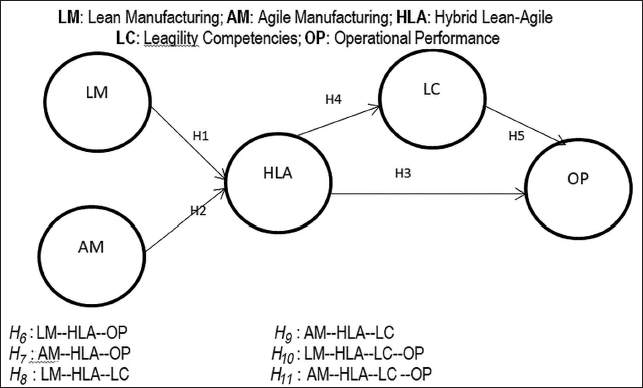
Direct relationships were shown by H1, H2, H3, H4, H5, while Indirect/mediation relationships were shown by H5, H7, H8, H9, H10 and H11.
Sample
The respondents of this research were employees at various levels: directors, managers, supervisors and staff of manufacturing companies across Indonesia. However, there appears to be an error in the reported number of manufacturing companies. According to Statistics Indonesia (BPS Statistics Indonesia, 2016), there are 43,854,200 manufacturing companies in Indonesia.
The following Slovin’s equation was used to determine the sample size for this research:
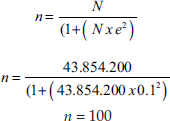
The sample size in this research was increased to 140 companies.
Where:
n: Minimum sample size taken
N: Total population size
e: Margin of error (0.1)
The characteristics of the respondents can be seen in Figure 4.
Characteristics of Respondents.
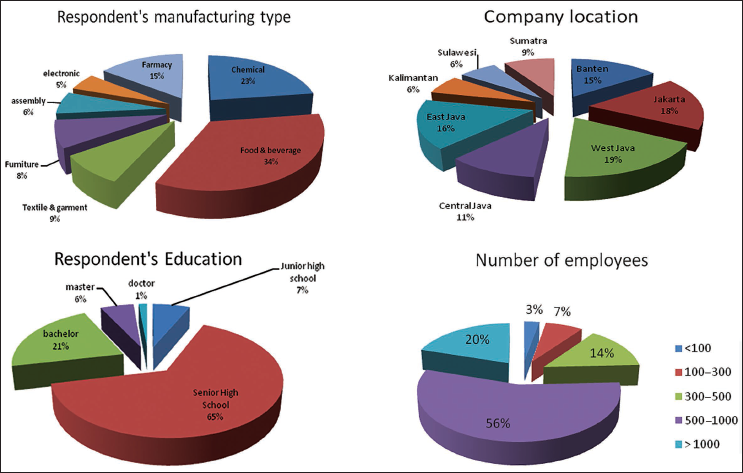
The majority of the respondents operate within the food-beverage, chemical and pharmaceutical sectors. Less than 10% are involved in textiles, furniture, assembly and electronics. The companies are located across Indonesia, with West Java having the greatest concentration. The educational background of the respondents is primarily high school graduates and bachelor’s degree holders. The size of the companies typically ranges from 500 to 1,000 employees.
The Process of Elaborating LM and AM into Leagility Competencies
Figure 2 shows that the legality competencies activity is derived from combining activities in LM and AM. This combination was carefully balanced to ensure the activities incorporate both characteristics. The development process took place in a corporate group in Jakarta with subsidiaries across the chemical, pharmaceutical, food and beverage and electronics industries. This effort was part of a strategy to implement HLA within the group. FGDs were frequently used during the screening and evaluation stages. The strategy began to take shape in 2016. Over the course of a year, the company selected LM and AM activities based on their competencies to produce preliminary leagility competencies, which were then tested in operational settings for four years. A thorough screening and evaluation process was undertaken, aiming to develop an effective strategy for HLA implementation in the company.
Test Methods
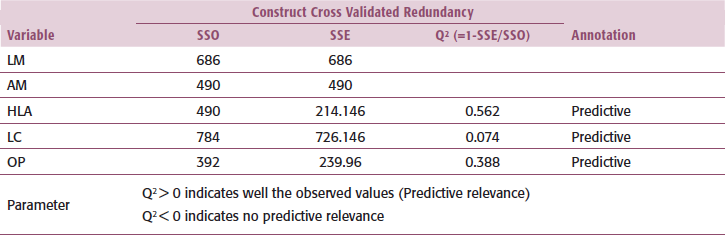
Analysis of respondents’ descriptions was carried out using SPSS statistics. The leagility competencies variable indicator was determined using PCA (Varimax with Kaiser Normalization) on IBM SPSS Statistics software. The validity and reliability were tested using PLS-SEM with the PLS Algorithm method. The effect test between models was done through the bootstrapping method and the prediction test was conducted using blindfolding on PLS-SEM based on the standards set by Hair et al. (2014) and Budianto et al. (2023).
RESULTS
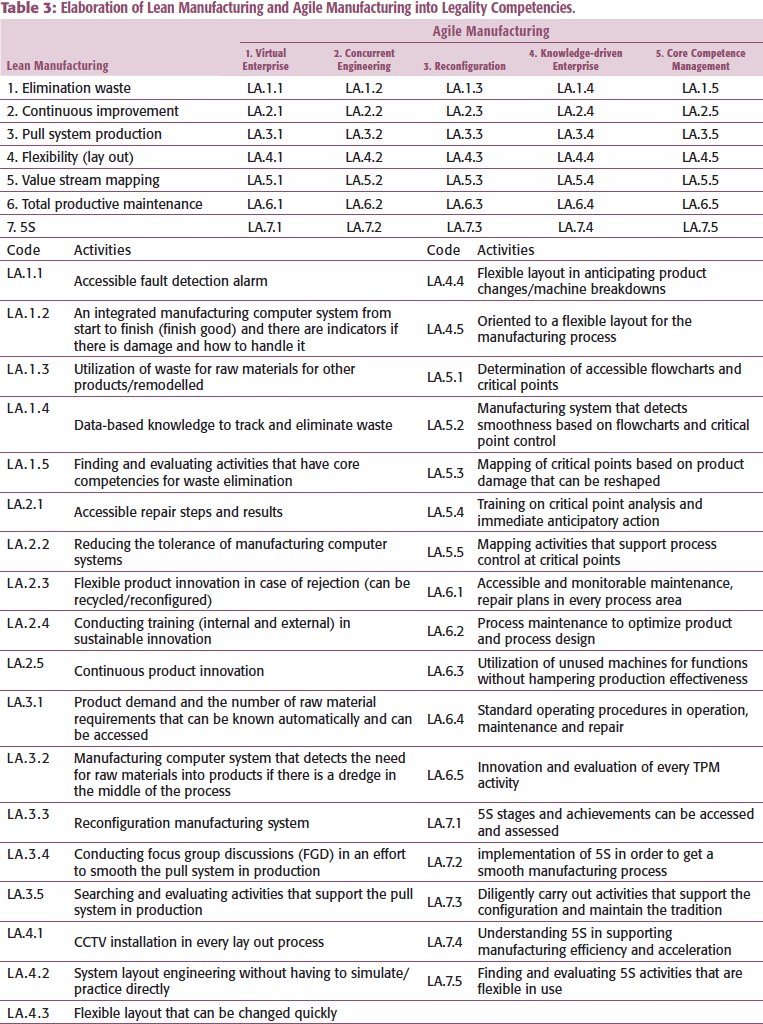
In this research, 35 leagility competencies activities were simplified into eight activities and used as indicators of these variables. Table 3 shows 35 activities from the elaboration process of LM and AM. There are seven mains LM activities and five AM activities. Elaboration was done by empowering resources to respond to changes quickly (AM) while still carrying out efficiency activities (LM).
Elaboration of Lean Manufacturing and Agile Manufacturing into Legality Competencies.
The results of the respondent description test help in understanding the extent to which the activity is effective based on the research respondents. The complete results can be seen in Table 4.
Descriptive Statistics.
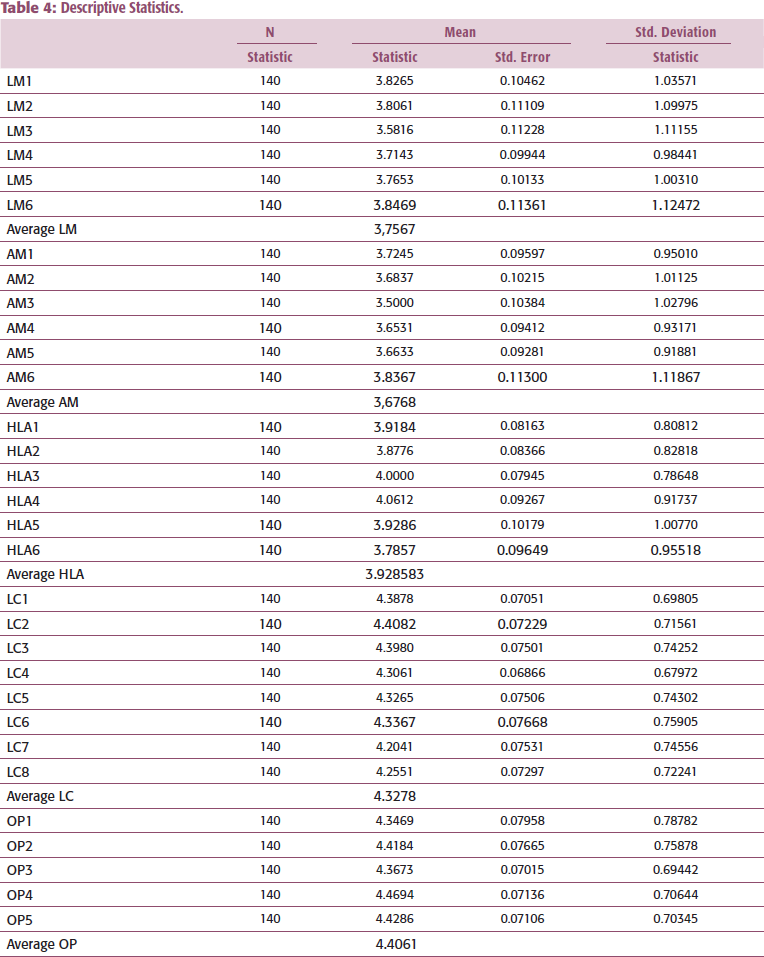
Table 4 indicates that the variable ‘activity’ performs well in its implementation (×>3.5), particularly for activities in LM, AM and HLA, with AM activity registering the lowest scores among these. Activities showing the highest performance include lean-agile competencies (LC) and OP (×>4.0). Within each variable, the least effective activities are identified as LM3 for LM, AM3 for AM, HLA6 for HLA, LC7 for leagility competencies and OP5 for OP.
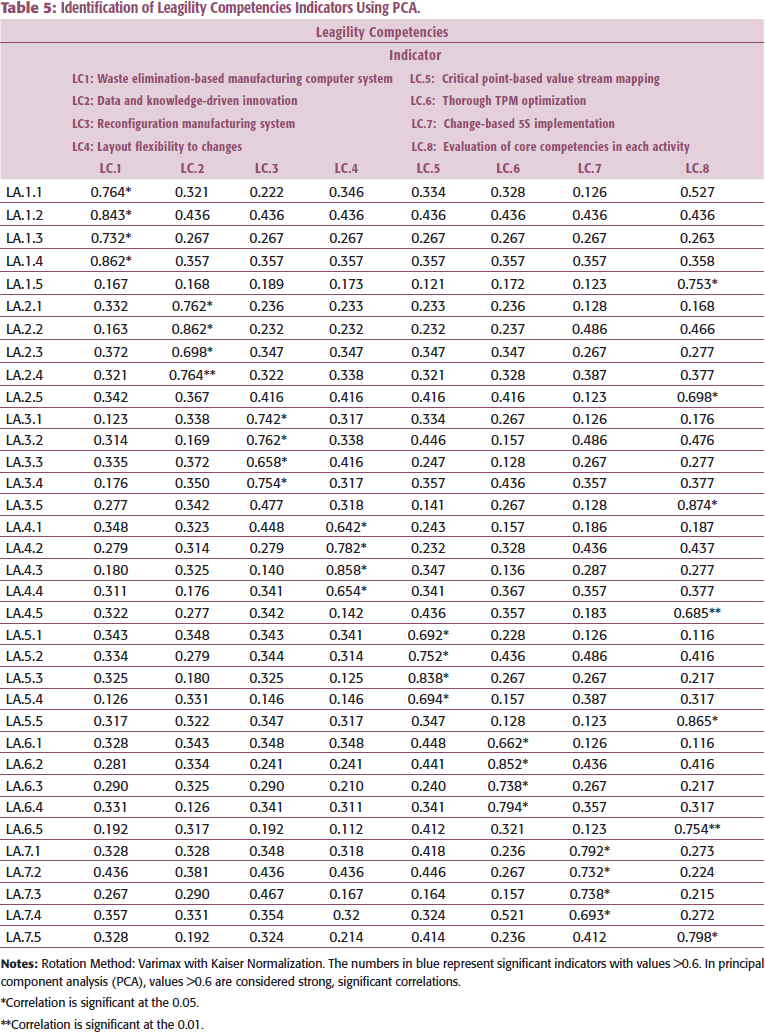
Determination of the LC indicator was done by simplifying 35 indicator items into eight indicators based on PCA using the Varimax with Kaiser Normalization method. This research used p < .05 and p < .01 (See Table 5).
Identification of Leagility Competencies Indicators Using PCA.
*Correlation is significant at the 0.05.
**Correlation is significant at the 0.01.
The development of leagility competencies indicators centred on various aspects: Eliminating waste in manufacturing systems (LC1), fostering continuous innovation (LC2), enabling product or machine reconfiguration in response to issues (LC3), ensuring layout flexibility (LC4), conducting critical point-based analysis (LC5), promoting active participation in total productive maintenance (TPM) (LC6), implementing comprehensive sanitation processes during changes (LC7) and identifying and evaluating core competencies in each activity (LC8).
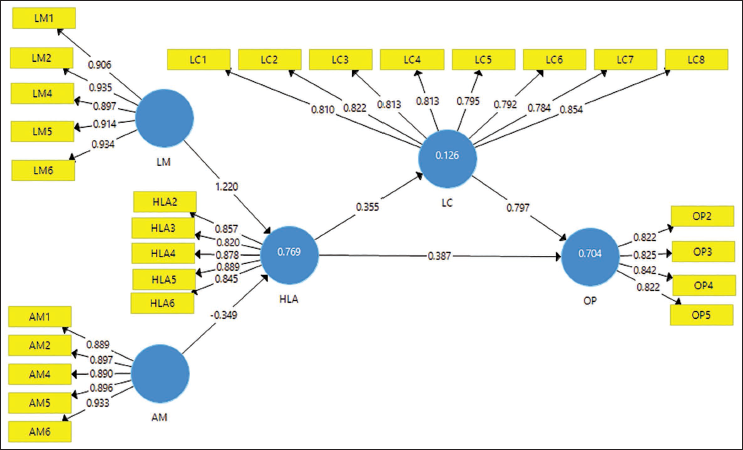
Before proceeding with further analysis such as bootstrapping and blindfolding, it was essential to test the validity and reliability of the instrument. This testing involved discarding indicators where the loading factor was less than 0.7. According to Figure 5, all indicators successfully met this criterion. The outcomes of these validity and reliability tests are detailed in Table 6.
The Relationship Among Variables with SEM-PLS.
Validity and Reliability.
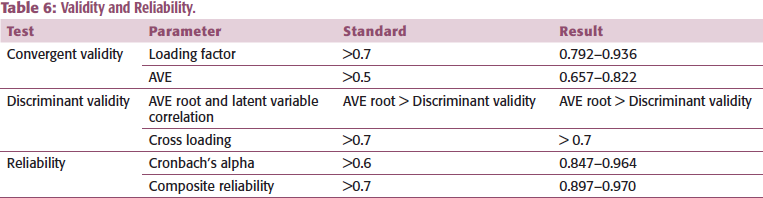
As shown in Table 6, the data from the questionnaires were tested for validity and reliability as the requirement of conducting further tests. The relationship between variables (total effect) as shown in Figure 5 and Table 7 was the basis of the hypothesis testing.
Hypothesis Test.
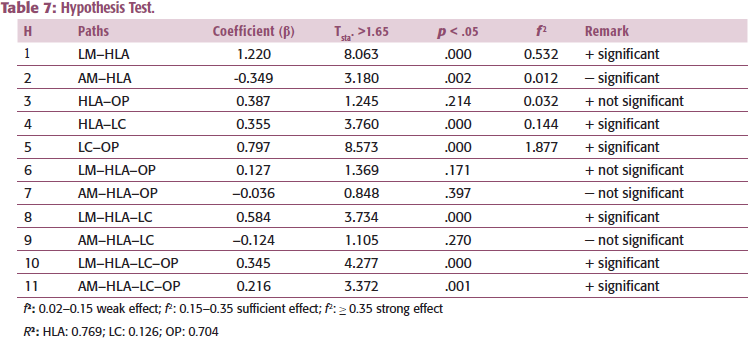
f2: 0.02–0.15 weak effect; f2: 0.15–0.35 sufficient effect; f2: ≥0.35 strong effect
R2: HLA: 0.769; LC: 0.126; OP: 0.704
The hypotheses that were accepted include H1, H4, H5, H8, H9, H10 and H11, each showing a positive effect. Hypotheses H2 and H7 were rejected due to their negative effects, while H3 and H6 were rejected because of their significant positive effects. The HLA variable was effectively explained by LM and AM, accounting for 76.9% (R2 = 0.769). The OP variable was understood by the preceding variables (leagility competencies, HLA, AM and LM) to the extent of 70.4%, whereas the leagility competencies variable could only explain 12.6% of the HLA, AM and LM variables. The remaining variance is explained by other variables not included in this study. The effect test (f2) on the direct relationships between variables indicated a strong influence for H5 and H1, a moderate effect for H4, and a weak influence for H2 and H3.
DISCUSSION
The variable influence test offers insights into how extensively these variables affect, influence and mediate other variables. A detailed description is provided below:
Direct Relationship Effect
Results showed that H1, H4 and H5 were accepted, while H2 and H3 were rejected. These five variable relationships have significant effects. The strongest effect was found in H5 (f2 = 1.877; p < .05). The relationship between leagility competencies and OP is quite significant at 79.7% (β = 0.797; p < .05). Almost all leagility competencies activity had a meaningful correlation with OP indicators. Furthermore, leagility competencies are an elaboration of a balanced nature between LM and AM. The leagility competencies variable was also formed to address failures caused by the imbalance of LM and AM activities in HLA (Ghobakhloo & Azar, 2018). This finding corroborates the statement of Ghobakhloo and Azar (2018) about the failure of HLA implementation and illustrates that the success of HLA must start from a balanced activity between LM and AM.
The second strongest influence was found in H1 (f2 = 0.532; p < .05). The relationship between LM and HLA is quite strong because the authors intentionally placed HLA similar to the one previous researcher did (see Table 1). HLA’s character traits are very similar to LM’s. Approximately 85% HLA activity is LM and the rest is AM (15%). It is understandable that LM activity promotes HLA activity, consistent with what Qamar et al. (2020) reviewed regarding previous research demonstrating a positive impact on HLA.
The weakest effect was found in H2, where AM has a negative effect on HLA. This is evident in the correlations among the indicators, where only the employee empowerment (HLA6) activities show a positive (+) correlation, while the others are negative (−). This pattern suggests that the failure of HLA implementation is primarily due to the imbalance between AM and LM activities within HLA, as indicated in the reference (Ghobakhloo & Azar, 2018), and a deficiency in foundational structure mentioned in the reference (Soni & Kodali, 2012). These results support the notion that forcing the dominant HLA characteristics onto LM traits is likely to lead to greater failure. Therefore, the concept of HLA as proposed by previous researchers, needs to be re-evaluated to ensure that HLA applications can be effectively adopted across all industrial sectors.
The results of the hypothesis on H3 were unpredictable, showing a positive yet insignificant correlation. HLA activity is not adequately strong enough to affect OP. This can be seen from the correlation between HLA indicators which still shows a negative value, namely HLA6 (employee empowerment). Meanwhile, other activities only correlated with a fairly small number (0.015–0.264). Activities in HLA are not supported by AM (HLA6). Therefore, it is unnecessary to add the basic construction of AM indicators (Soni & Kodali, 2012). The dominance of LM within HLA results in an incomplete characterization of HLA, thereby hindering its full implementation (Iqbal et al., 2020). If this situation persists, it could lead to the implementation of HLA in a fragmented manner (Rashad & Nedelko, 2020).
Hypothesis H4 suggests that the unbalanced nature of HLA can be offset by leagility competencies, acting as an active indicator. LC’s balanced integration of LM and AM characteristics helps to compensate for the shortcomings of HLA. This is supported by a significant increase in the correlation between the HLA and leagility competencies indicators, resulting in an enhanced correlation coefficient (β = 0.355; p < .05). However, the influence of leagility competencies on HLA was relatively modest, explaining only 12.6% of the variance in HLA (R2 = 0.126).
Indirect Relationship Effect
Indirect relationships were observed in hypotheses H6, H7, H8, H9, H10 and H11; however, H6 and H7 were rejected due to the ineffectiveness of HLA as a mediating variable in these direct relationships. Specifically, in H6, the coefficient value was positive but not statistically significant, highlighting the weak influence of the mediating variable (HLA) despite the strong direct effect of LM (f2 = 0.532; p < .05). Data from respondents further revealed confusion in implementing HLA (23%), adversely affecting the employee empowerment (HLA6) activity. Additionally, Just in Time (HLA1) practices were less appealing to companies reliant on imported, season-dependent raw materials, such as those in the food industry, with 17.23% of respondents expressing disfavour towards these activities.
Hypothesis H7 demonstrated a negative impact on the relationship between AM and OP, with HLA acting as a mediator. Direct interactions showed that AM failed to positively influence HLA activity, resulting in the expected negative effect. Additionally, data from respondents revealed that the most negatively affected AM indicator was AM3 (reconfiguration), which was notably unfavourable among food companies (23%). The challenge lies in reconfiguring processes where maintaining the specific taste and nutritional content of food products is essential.
In hypotheses H8 and H9, LC serves as the dependent variable, effectively drawing on LM and AM activities to rediscover their inherent characteristics through HLA mediation. Specifically, LM positively impacted leagility competencies with HLA mediation, showing a significant effect (58.4%; p < .05), whereas the influence from the AM variable was comparatively lower at around 27.1%. Designating leagility competencies as the dependent variable facilitates a more responsive interaction between LM and AM activities due to their similar properties with leagility competencies. This relationship is evidenced by the consistently positive correlations between the indicators. For instance, the LC4 activity, which involves layout flexibility, is adept at adapting to the layout flexibility needs of manufacturing companies in sectors like food, chemical and pharmaceutical. Implementing a flexible layout can be challenging when installations and machinery are fixed, and the production areas need to be isolated from other product processes. However, LC’s condition enables the adaptation of layout flexibility to suit the processing company’s needs.
In hypotheses H10 and H11, leagility competencies demonstrate a significant role by transforming LM and AM activities that were initially unsupported into competent operations. For instance, LM’s zero defects goal in production, a challenging target for many companies, is leveraged by leagility competencies to motivate continuous improvement and defect minimization. Leagility competencies also customize layout flexibility to accommodate differences between the assembly and processing industries, aligning with government regulations. Furthermore, leagility competencies successfully reinvent the less favoured pull system in industries dependent on imported and seasonal raw materials, fostering innovation with alternative materials to ensure quality consistency. For AM activities, such as reconfiguration, which finds favour in assembly, furniture and textile industries but not in processed industries, leagility competencies bridge this gap with LC3, a reconfiguration-oriented manufacturing system designed to address form defects. Additionally, the Core Competence activity, typically subdued by agile manufacturing’s interaction with HLA where LM dominates, becomes responsive under LC’s mediation, particularly with LC8 which evaluates core competencies in each activity.
The concept of HLA needs to be adaptable to ensure its acceptance across all industrial sectors. This research reveals that an HLA approach where LM predominates over AM is more likely to fail. Success in HLA depends on achieving a balance between LM and AM activities. Looking ahead, it is advisable to adopt a competency-based approach to HLA, which utilizes a balanced filtering of LM and AM practices. Leagility Competencies could serve as a preliminary reference point when HLA does not function optimally as a mediating variable. Eventually, leagility competencies activities could merge into a cohesive element within the HLA framework.
Theoretical and Managerial Implications
The formation of leagility competencies variables theoretically represents a collaboration between RBV theory and strategic management. The RBV theory is evidenced in the LM trait and the competency-based filtering process used to derive the leagility competencies trait. On the other hand, strategic management is reflected through the characteristics of AM and, to a lesser extent, HLA. These two theories combine to devise a strategy that is responsive to change while emphasizing efficiency and productivity. Introducing leagility competencies as a mediator between HLA and OP presents a novel model that addresses gaps left by prior research. Earlier studies, such as those by Naylor et al. (1999), did not explore the elaboration process that leads to the initial formation of leagility. Furthermore, previous research typically concentrated on the simultaneous full-scale implementation of LM and AM (Elmoselhy, 2013; Qamar et al., 2020), with a limited exploration into the development of flexibility or tools for HLA.
In practical settings, HLA has not successfully enhanced OP, highlighting a discrepancy between theory and actual application. This gap necessitates a mediating variable to boost HLA’s impact on OP, and leagility competencies have effectively filled this role. The suboptimal performance of HLA is attributed to the unbalanced nature of LM and AM in enhancing OP. This research lends empirical support to the findings of Mishra et al. (2019).
From an industrial perspective, forming leagility competencies represents a strategic approach to address the challenges encountered in implementing HLA. Managers can use leagility competencies activities as a preliminary framework for HLA implementation, which should undergo continuous evaluation and trials to achieve ideal conditions. It is crucial to ensure that the activities within HLA are balanced. The effectiveness of leagility competencies as a mediator has been demonstrated, and achieving a balanced integration of LM and AM characteristics within the HLA variables is likely to yield optimal results, surpassing outcomes based on previous research concepts.
This research contributes theoretically to the development of HLA tools. The tool selection is based on the balance of LM and AM properties which are reflected in the leagility competencies properties. The feasibility test of leagility competencies activity to be used as an HLA tool is based on its effect test (f2). The empirical contribution of this research is presented as a fundamental reference, specifically the proposal of the leagility competencies tool to be implemented as an HLA. Managers can immediately implement HLA activities based on this research without having to perform LM and AM elaboration which could be time-consuming.
CONCLUSION AND LIMITATION
The effectiveness of HLA as outlined in previous models was suboptimal, primarily due to its positioning as a mediating variable which did not effectively influence OP. This was exacerbated by the imbalance of LM and AM characteristics within HLA, evident from the start as AM exhibited a negative effect on HLA (β = −0.349; f2 = 0.012). Dominated by LM activities, HLA struggled to align with AM, diminishing its mediating role.
The leagility competencies variable successfully served as a mediator among LM, AM and HLA on OP. Through the pathways of LM and HLA, it increased the coefficient value to 46.6% (β = 0.466) from the previous 17.1%. Although the AM pathway was only able to increase the coefficient value by 21.6%, the balance of the composition of leagility competencies activities can attract AM, and LM activities to be more responsive to HLA demands, thus facilitating an increase in OP. The leagility competencies variable can be recommended as a mediator when HLA is less than optimal in the company.
The development of the leagility competencies variable was a collaborative effort between RBV and strategic management. RBV was integral in reflecting the LM trait and in the competency-based filtering process that led to the leagility competencies trait. Strategic management was evident in the AM and HLA aspects. Together, these theories developed a strategy that prioritizes responsiveness to change, efficiency and productivity. Positioning leagility competencies as a mediator of HLA on OP introduced a novel model to bridge existing research gaps. The role of leagility competencies in this research provided a preliminary picture of HLA implementation, which requires further evaluation and trials to achieve optimal conditions. The efficacy of leagility competencies as a mediator (f2 ≥ 0.35; p < .05) has proven superior to that of HLA in previous studies.
The results of this research are in line with the research objective of creating an HLA implementation strategy to improve OP. The role of leagility competencies as a mediating variable makes HLA more effective and confirms the practicality of using leagility competencies activities as indicators within HLA based on their impact values (f2).
However, the research faced limitations: the prolonged duration needed to optimize leagility competencies variables and the broad demographic of manufacturing company respondents, which diluted the specificity of the leagility competencies strategy. Future research should focus more narrowly on the processing industry, where product characteristics and production processes differ significantly from those in non-processing sectors such as automotive, electronics, textiles and furniture. This would help develop a more tailored strategy that considers product lifespan, raw materials and hygienic production processes.
Footnotes
DECLARATION OF CONFLICTING INTERESTS
The authors declared no potential conflicts of interest with respect to the research, authorship and/or publication of this article.
FUNDING
The authors received no financial support for the research, authorship and/or publication of this article.

e-mail:
e-mail:
e-mail:
e-mail:
e-mail: