




Abstract
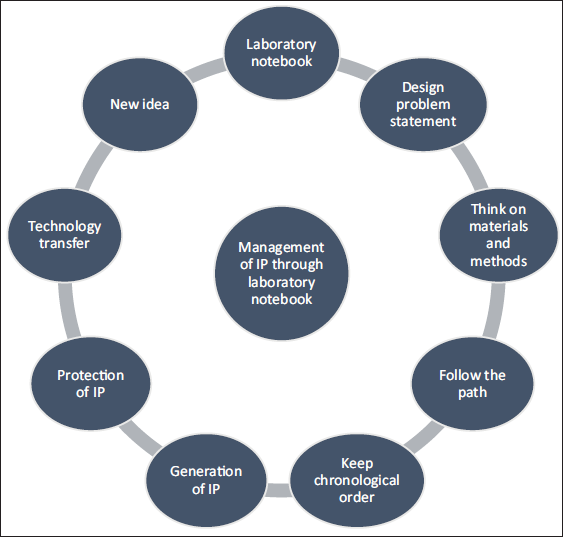
In today’s knowledge economy, intangible assets are valued more than tangible ones (Dué, 1995). Intellectual property (IP) rights are an umbrella used to legally protect the intangible products of the human mind, for example, inventions and artistic works. A laboratory notebook is the birthplace of inventions. It helps to understand the progress path of an experiment, avoids dead ends and repetition of errors, serves as a guide for future research direction and helps to generate IPs and technology transfer. Despite the fact that every researcher is aware of the concept of keeping a laboratory notebook, the true potential and legal implications of doing so are typically unknown. As developing countries emerge in the field of IP, the laboratory notebook and its proper maintenance become important (Jajpura et al., 2017). Figure 1 shows how a lab notebook can act as the central coordination point of the IP management system in an academic institute.
IP Management Through Lab Notebook.
THE LEGAL PERSPECTIVE OF USING LAB NOTEBOOKS
The inventor’s lab notebook is a legal record of inventorship and consequently plays a crucial role in protecting IP. The law requires the true and first inventor or its assignee to file a patent application (Section 6 of the Indian Patents Act 1970; 35 U.S.C. 100). A properly organized and well-maintained laboratory notebook systematically includes all essential background and references, explanations behind the experiment, procedures to perform the tests and the results (Grissom & Pressman, 2006; Hughson, 1979). Therefore, a lab notebook can help legally determine the date of conception, reduction to practice and hence the inventorship. Besides, it is also useful to validate the authorship if any allegations of fraud arise against a published research work.
Hypothetical Scenarios and Case Laws Where Lab Notebook Is Used as Legal Evidence
The laboratory notebook used to be important evidence for the legal determination of the first inventor and the date of reduction to practice in the first-to-invent system in the United States (Berges v. Gottstein, 1980; Hahn, et al. v. Wong, 1989; University of Pittsburgh v. Marc H. Hedrick and ORS, 2008). However, the United States moved to the first-inventor-to-file system (35 U.S.C. 100 (note)) after the introduction of the America Invents Act (Leahy-Smith America Invents Act, 2011).
Here, the lab notebook is the evidence for the first inventor to prove their inventorship and reduction to practice. In India, Section 29 of the Patents Act provides the provision of filing a patent application for an invention previously published without consent.
Showing the evidence of the lab notebook, the inventor can request the controller to include his/her name as an inventor under Section 28 of the Patents Act or oppose the application under section 25.
The inventor can easily use laboratory notebooks to demonstrate the inventorship and that the invention was being worked in the lab before the date of filing of the patent application.
i. If the patent application is pending, the inventor may oppose under Section 25(1)(a) for wrongful obtainment and Section 25(1)(d) for prior knowledge or use.
ii. The same grounds can be used within one year of the grant for post-grant opposition under Section 25(2)(a) and (d), and after one year for revocation under Section 64(1)(c) and (e).
In the United States, L’Oréal filed a post-grant review under 35 U.S.C. §§ 321–29 for a patent owned by Liqwd that claims methods of treating hair (U.S. Patent No. 9,668,954). Lab notebook showed that the invention was already in use in the L’Oréal lab (L’oréal USA, Inc., v. Olaplex, Inc., 2021).
Scope of the Study
The current study lays a framework for developing and implementing lab notebooks to facilitate an efficient IP management system. In addition, a case study of one of the institutes of eminence has been shared, demonstrating how the institute launched and implemented lab notebook practice.
LITERATURE REVIEW
Guidelines on Lab Notebook
One of the first guidelines for using lab notebooks can be found in the book, ‘Writing the Laboratory Notebook’ (Kanare, 1985). The importance of documenting both conception and reduction-to-practice has also been mentioned there. Writing down the conception and reduction to practice proves that the author is not only the first to invent but also the first to successfully carry it out. It is also important to witness the pages of a lab notebook by a person having ordinary skill in the art (Arjun Singh v. Anthony J. Brake, 2000; Medichem v. Rolabo, 2006; Opticurrent, LLC v. Power Integrations, Inc. et al., 2018; Universal Stabilization Technologies Inc. v. Advanced BioNutrition Corp, 2018). It is to be noted that the person skilled in the art is a legal fiction codified in the US Patents Act of 1952. It has also been mentioned in Article 56 of the European Patent Convention and Section 2(ja) of the Indian Patents Act, 1970.
Lab Notebook for Computational Research
Schnell (2015) explains the rules for maintaining a lab notebook for computational biologists. A change in the models, algorithms, programmes or scripts drastically changes the results. Therefore, unless they are not systematically recorded in the lab notebook, it is extremely difficult to track the codes used to generate certain results.
Guidelines Issued by Universities
Maintaining a lab notebook shows the scientific integrity of the inventor. According to the Office of Research Integrity at the US Department of Health and Human Services and the University of New Hampshire, ‘The integrity of research and scholarly activities depends on accurate, detailed, organised, complete, and accessible data’ (Coulehan & Wells, 2012). Several technology-transfer offices from universities are now providing guidelines for properly maintaining lab notebooks (Maryland, 2019; Massachusetts Institute of Technology, 2003; Rice University, 2016; Ryan, 2015; University College Cork, 2014).
Electronic Lab Notebook
With the digitization of the world, lab notebooks are also becoming digital (Bungers, n.d.; Oliver, 2018; Tremouilhac et al., 2017). Today’s early-career researchers tend to embrace electronic solutions (Kwok, 2018). Electronic lab notebooks (ELNs) may help in collaborative research as data can be stored by a researcher working at a remote location (Myers et al., 1996; Talbott et al., 2005). Jing et al. (2010) described the utility of LabVIEW software to maintain a database for laboratory management systems. PatentSafe is a direct replacement for the paper notebook (PatentSafe ELN, n.d.). Zaki et al. (2011) introduced an enhanced ELN for documenting chemical research data which can also be used by researchers working on complex model systems. Dirnagl and Przesdzing (2016) presented survey data about preferred features and functionalities which the biomedical researchers hope to see implemented in future ELNs. Tsalaportas et al. (2015) helped solar researchers around the world to record, combine and share solar-related digital information in an organized manner. Guerrero et al. (2019) provided a guide for using Microsoft OneNote as an ELN. On the other hand, Walsh and Cho (2013) provided a guide for using Evernote as an ELN.
Advantages and Disadvantages of ELN
ELNs offer several benefits by providing long-term storage facility, reproducibility and availability of data across multiple devices—ensuring standard operating procedure compliance, supporting IP protection, collaboration and open science (Bird et al., 2013). There are three types of ELN—(i) paid, (ii) open-source and (iii) free. However, ELN’s usage in academia is still limited (Rudolphi & Goossen, 2012). Earlier, digital copies of ELN were not allowed in trial situations for evidentiary purposes. However, with advances in technology, ELNs are now well accepted. Rather, due to distributed R&D activity across the globe, now multinational organizations prefer ELN for easy access and the development/execution of projects. Globalization demands glocalization, and such an R&D lab notebook is a boon for keeping the pace of technology development. The major advantage of an ELN is that it is less likely to be stolen or lost. However, it will be necessary to prove the originality and authenticity of data and digital signatures in the ELN in court during prosecution (Kanza et al., 2017; Palovich, 2014). According to the U.S. Patent Office, electronic records can be used as evidence in patent interferences to the same extent as they are admissible under the Federal Rules of Evidence (Holtz, 2011).
PATENTS APPLIED FOR ELN
A list of patent applications for ELNs has been provided in Table 1. It was obtained from the Espacenet patent database in March 2020 (Espacenet, 2020). The first invention presents an ELN system and a method for managing the same—allowing locally stored files to be used and served by a remotely hosted website on the internet.
Details of Recent Patents Filed for Laboratory Notebook.
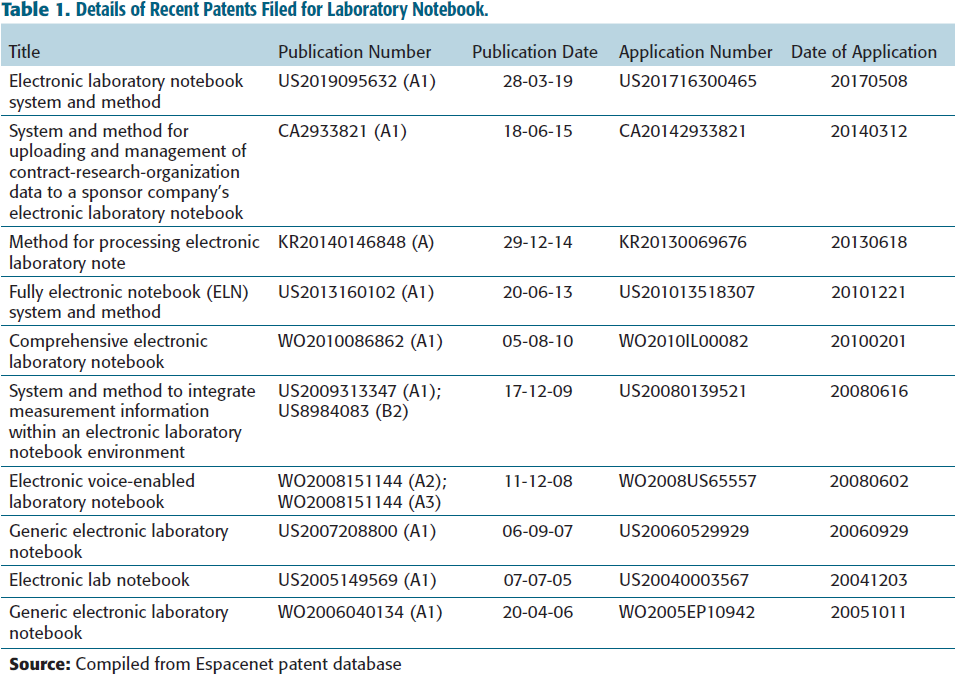
The next invention is a Canadian application for comprehensive data synchronization between a sponsor company’s central ELN system and research sites. The system features a data loader server that can be deployed within the premise or in the cloud to allow the synchronization of ELNs. The data loader software synchronizes the subsequent update of the data and automatically deletes the data from the contract research organization’s site once it is transferred. This invention provides automation, scalability and high-performance operations that focus on efficiency, security, configurability, privacy and IP protection. There is one Korean application that talks about implementing ELN in research projects for efficient recording, editing, authentication and verification of the results. The implementation process involves an approver, a recorder and a witness who respectively approves the research project and requests the transfer of the final result, records the process and witnesses the same. The US application titled ‘Fully electronic notebook (ELN) system and method’ deploys data and signature validation modules to ensure data integrity and satisfy legal requirements for signature and witnessing documents in a completely paperless environment. Three PCT publications are included in the table for the invention of comprehensive, generic and voice-enabled ELNs. The voice-enabled ELN involves a data integration step that allows the researcher to bring together information from various record-keeping systems including real-time data provided by voice. The integration is further facilitated by a graphical display, smartpen, data object manipulation, images from lab notebook pages and a voice recognition capability.
OPEN LAB NOTEBOOK
The scientific community is now moving towards open laboratory notebooks, where researchers share their research online data to synergize with their peers. It has been argued that open lab notebooks would lead to a synergistic way to do science and to more efficient use of public funds (Schapira & Harding, 2019). However, it may not be useful when the researcher wants to protect the invention for a patent as it will be challenging to identify the original inventor. However, we believe that the emerging technology of blockchain may provide a solution to this problem.
RESEARCH METHODOLOGY
The current study is based on exploratory research methods, and a case study from one of India’s institutes of eminence has been shared. To better understand lab notebook design and implementation, the researchers conducted seven case studies on academic and research institutes from developed countries. Researchers also interacted with private-sector experts with extensive research expertise in India and abroad. Finally, a laboratory notebook template for academic organizations has been shared. Further, the implementation procedure of the laboratory notebook is shared for easy IP management practice.
Case Study of an Institute of Eminence in India
Organizational structure
First, let us take a look at the organizational structure of this institute of eminence (IOE). It is an autonomous institute where the chairman of the board of governors is nominated by the President of India. The director is appointed for five years by the Ministry of Human Resource Development. The next hierarchical position is deputy director, responsible for academic and infrastructural affairs, finance and external affairs. Besides, there are several deans, for example, for R&D, academic programmes and student affairs. The Senate, comprised of all the professors of the institute and a few nominated members, is responsible for controlling the academic standards. The administrative departments are handled by the registrar and senior officials. The student and faculty strength is roughly 21,898 and 670, respectively. The total IP output in the form of patents is 222.
Implementation of lab notebook in the IOE
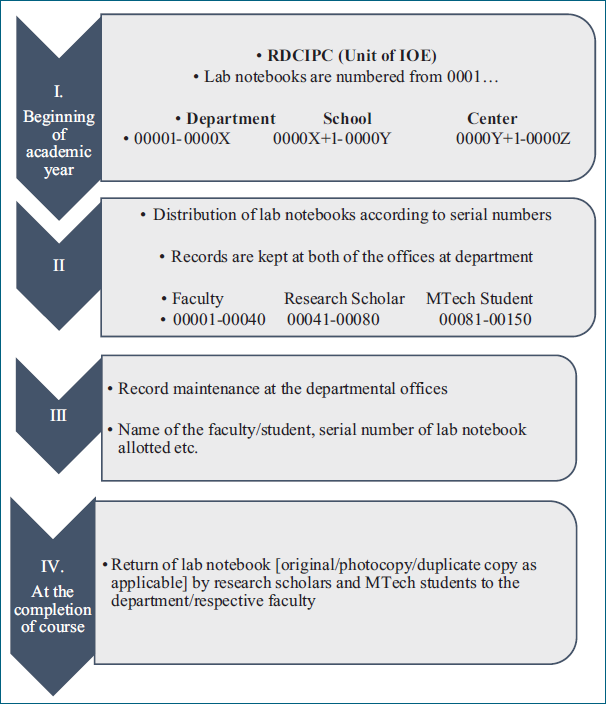
R&D activities are a critical component of this IOE. As a result, the significance of the lab notebook becomes apparent. The ‘R&D, Consultancy, and IP Centre’ (RDCIPC), a unit of this institution, plays a critical role here by offering a conducive research environment and financial support to all departments, schools and centres. RDCIPC is the institution’s lab notebook distribution, implementation and regulatory authority. The lab notebooks are distributed to all researchers, MTech students, and if necessary, to faculty members.
Figure 2 depicts a diagrammatic representation of the laboratory notebook implementation procedure in that IOE. Each lab notebook is serially numbered, and RDCIPC maintains a register to track which notebook is assigned to whom. Lab notebooks contain the institution’s watermark as well as the signature of a department officer. Thus, if correctly documented, these lab notebooks can be utilized as legal evidence.
A Diagrammatic Representation of the Implementation of Lab Notebook at IOE.
Framework for preparing laboratory notebook
Figure 3 offers a template for creating a thorough laboratory notebook in an organization.
Layout of the Lab Notebook (Refer to the Appendix).
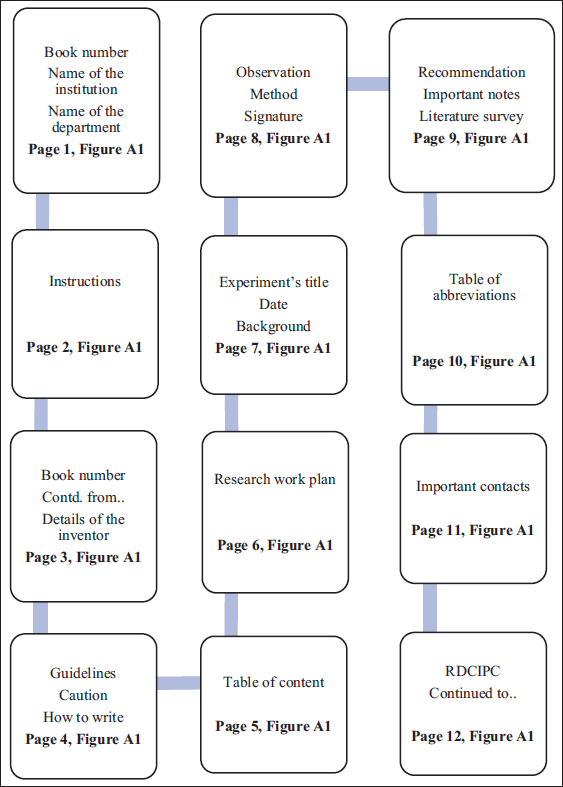
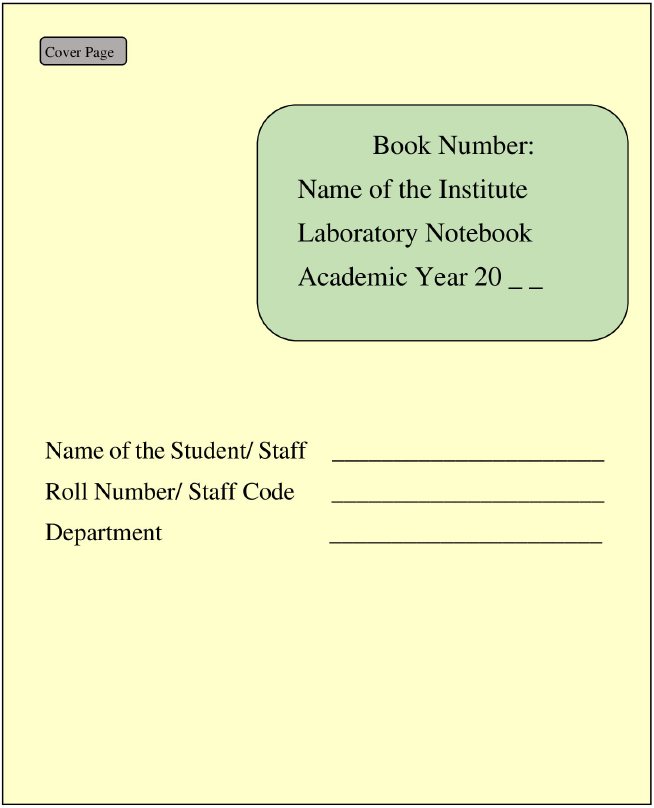
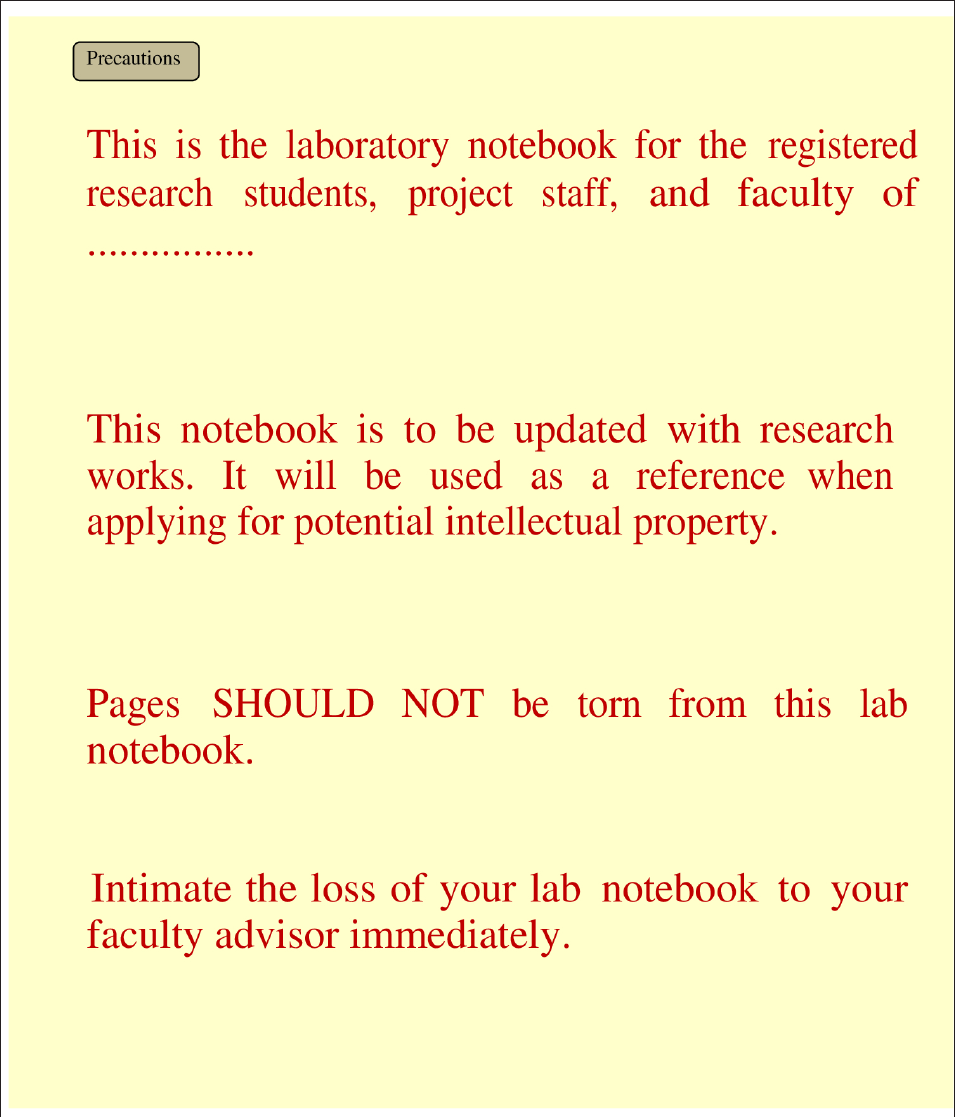
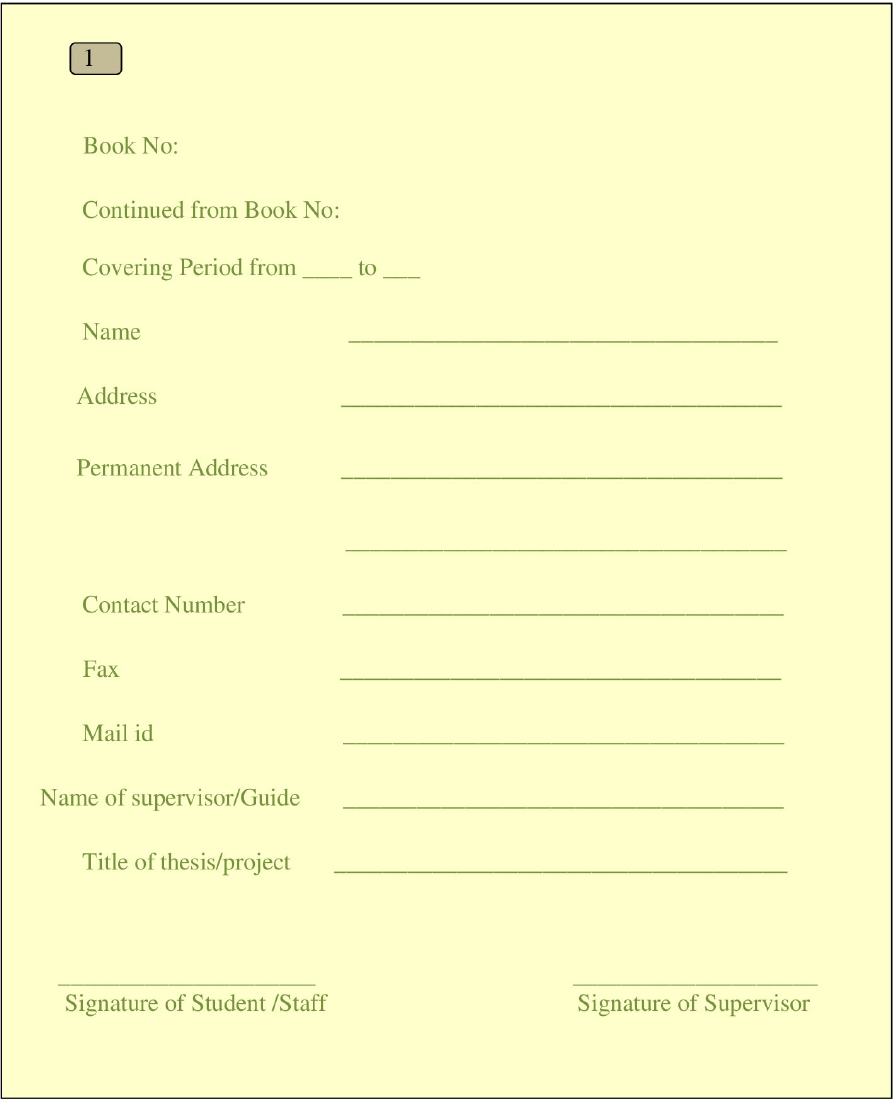
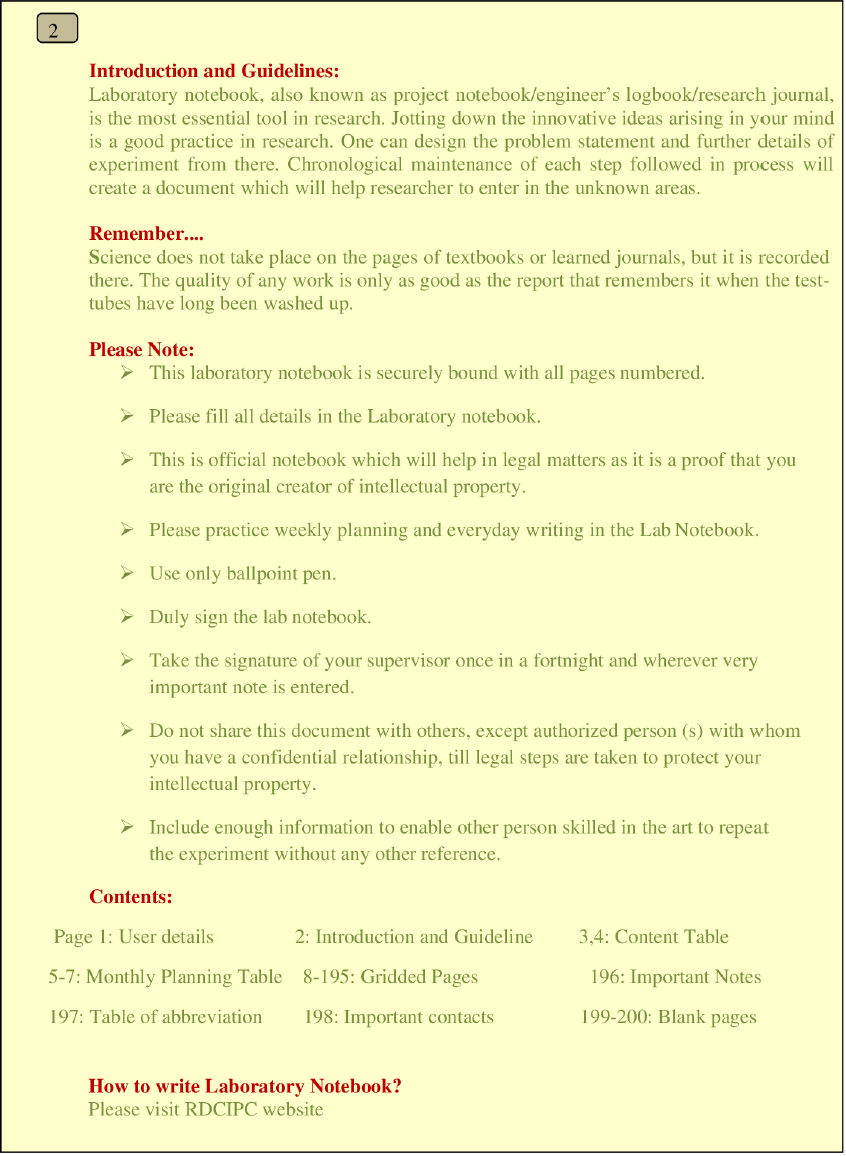
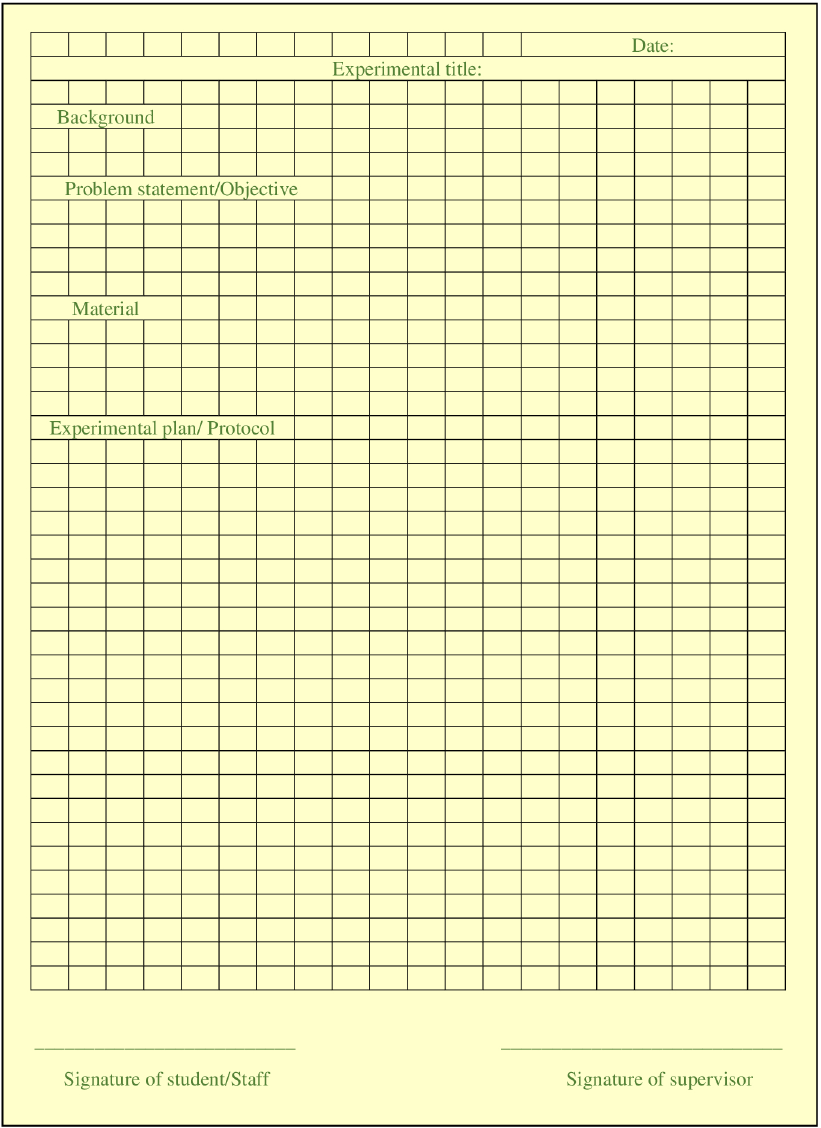
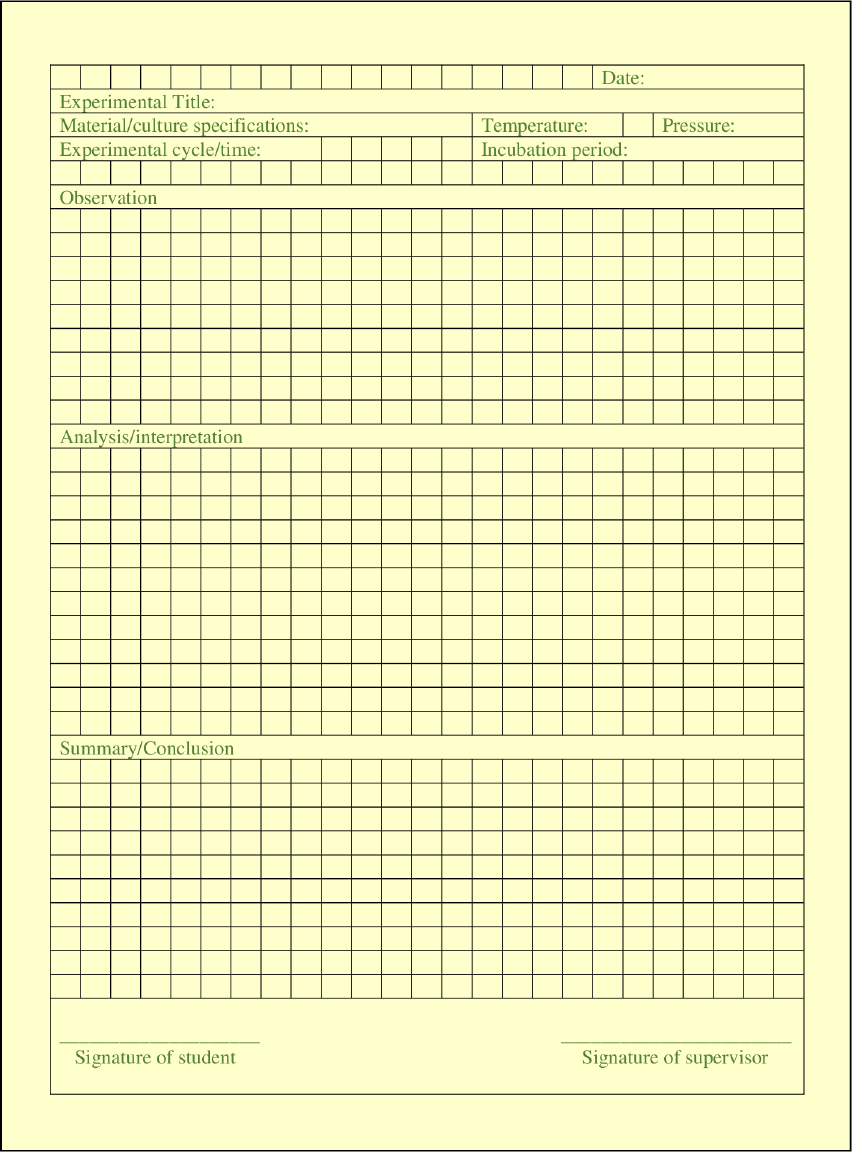
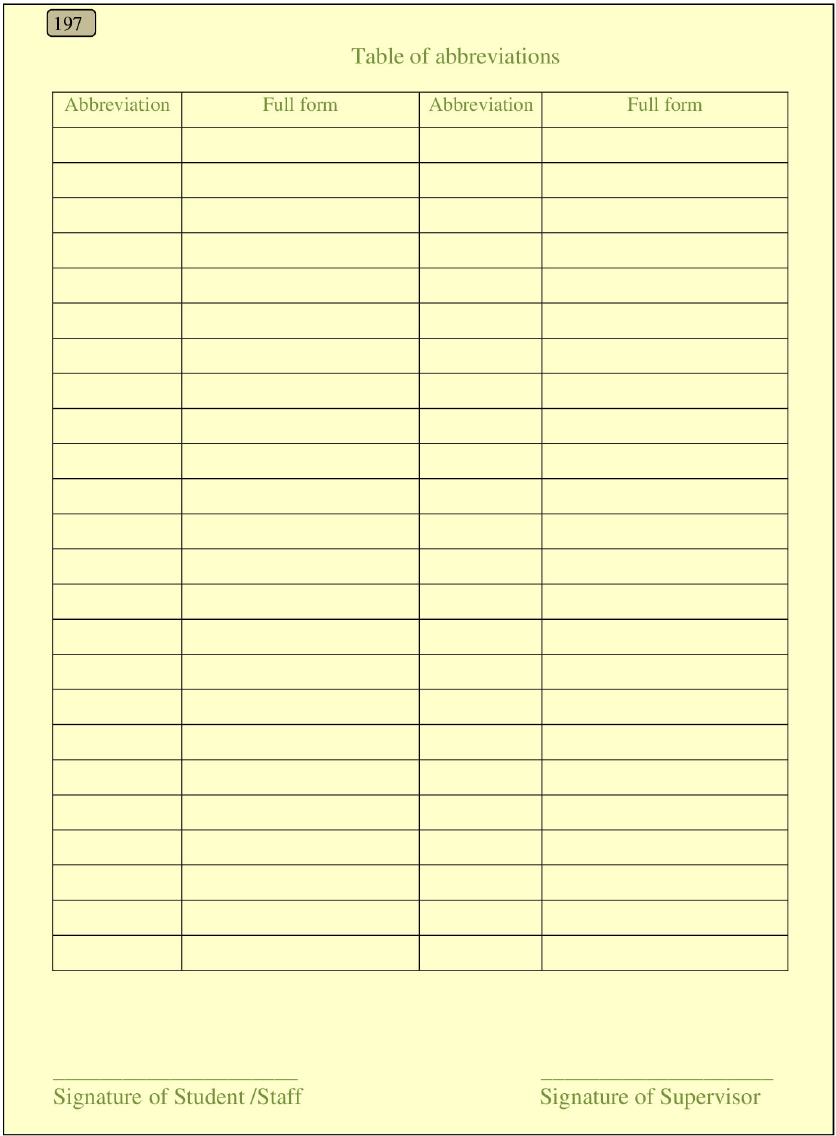
Please refer to Appendix Figure A1 for details. The serial number of the notebook, the name of the institution and the department are displayed on the first page (Page 1, Figure A1). The next page should be devoted to instructions on how to use the notebook (Page 2, Figure A1). After this, the information about the individual using the notebook, the supervisor’s name and the project title (Page 3, Figure A1) should be recorded. The lab notebook should have another page with instructions on how to use it (Page 4, Figure A1). It has to be noted that this page is different from the instruction page. It also gives an idea about the content of a lab notebook with 200 pages. After this, one or two pages should be included to insert a table of contents (Page 5, Figure A1). A few pages can be dedicated to document the plan for the research work (use Page 6 of Figure A1 for the template). Next comes the original documentation part, where the user can write down the experimental details, including the title of the experiment, data and the background (see Page 7, Figure A1). Thereafter, the user may use pages to write the experimental outcomes (use Page 8, Figure A1). It is to be noted that a signature is mandatory after recording the details. Lastly, a few pages should be dedicated for the user to write important notes, recommendations and a literature survey (Page 9, Figure A1). Also, one or two pages can include a table of abbreviations used in the notebook (Page 10, Figure A1). One page can be used to provide some important contact details (Page 11, Figure A1). Finally, the last page should include the number of the next lab notebook that will be used once this one is finished (Page 12, Figure A1). All pages should have the watermark of the institution.
Framework for implementation of lab notebook
Figure 4 shows the procedural steps required to be followed in an academic institute for the proper implementation of a lab notebook.
Layout of the Lab Notebook.
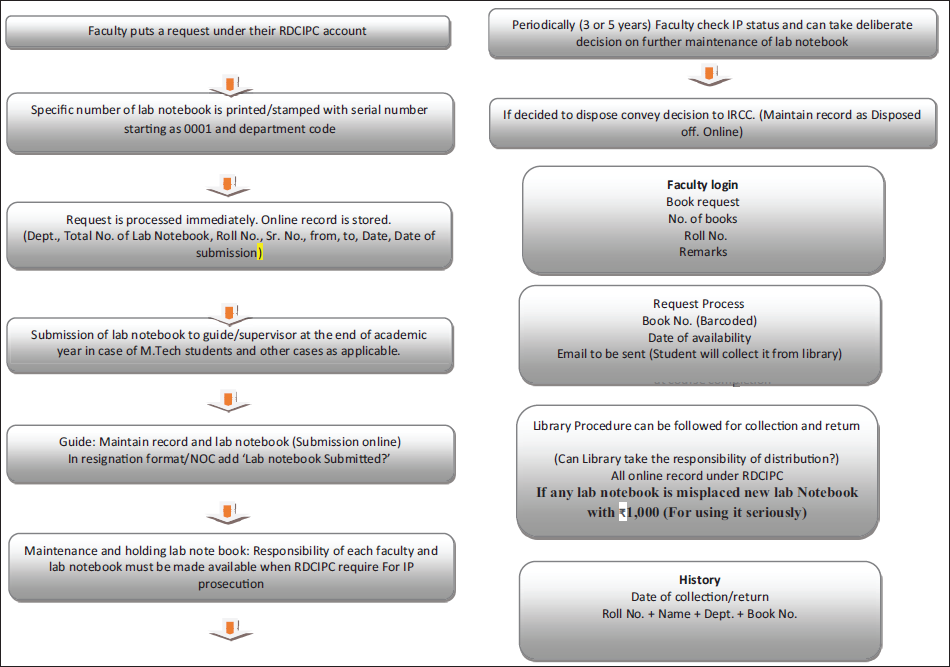
The flowchart on the left-hand side of Figure 4 shows how the operation can be followed online. The academic/research supervisor must first request the number of lab notebooks required for his/her team. Following this request, the requested number of lab notebooks will be printed with serial numbers and the departmental code or name. The number of notebooks issued, the names of the users, the associated serial numbers of the notebooks and the department will all be kept in an online database. The lab notebook will be submitted at the end of the academic year or on the completion of the courses or if any student leaves the institute, whichever is earlier. Since the lab notebook is the property of the organization, it should be submitted back to the institute when the student leaves the institution. Therefore, a column can be included, while accepting the resignation of any such person, whether the lab notebook is submitted back or not. A ‘no objection certificate’ can be issued for this. The responsibility lies with the user. However, when the student or research scholar completes their association with the institution and the notebook is with the faculty member, it is the responsibility of the faculty to keep it safe so that it can be used by the institute for IP prosecution later. The faculty may check the IP status every few years to understand whether the lab notebook is still important because the technology lifecycle depends on the market trend, and generally, legal life is more than the technology life cycle. If the lab notebook is no longer needed and the faculty wishes to discard it, the institution should be informed.
The right-hand side of Figure 4 shows four types of procedures involved in the flowchart—involving the faculty, distributing authority and an optional part involving the library. The library can be involved in distributing the lab notebook and collect it back at the end of an academic year. Further, if a lab notebook is misplaced, a new one can be issued by collecting a penalty from the user. The final step is to maintain track of the date of issuance, submission and roll number of students who used it, and current status—whether in use, returned or discarded by the faculty.
Suggestions for implementing the procedure
a. The lab notebook may also be supplied to the principal investigators (without them requesting it).
b. The convention of returning the lab notebook to the institution is generally not being followed strictly. Therefore, the institute may mandate the researchers to return it before they leave.
c. The pages of the lab notebook may be made gridded (like the MIT lab notebook) for easier drawing and charting.
Suggestions to ensure the data integrity of a lab notebook
Although there are no hard and fast rules, some basic guidelines are provided here so that it can also be used as legal evidence, if needed.
a. If the pages of the notebook are not numbered, serial numbers are required. b. A good-quality permanent ink should be used for writing in the notebook. No pencil should ever be used. A single pen should be used to write all notebook entries on a single page. c. No page should be left blank and no back-date entries should be made in the notebook. d. Overwriting should be avoided. If an error occurs while writing, a strikethrough is sufficient. However, it is recommended to witness and sign the new entry (Mitsubishi Tanabe Pharma Corporation et al. v. Sandoz Inc. et al., 2020). e. It is important to mention the unit of measured quantities. f In a biological experiment, the culture specifications must be mentioned. g. Different countries use different date formats. For example, the date format 02/04/2020 refers to the 2nd of April 2020 in India. However, it refers to the 4th of February in the United States. Therefore, it is better to explicitly write the date as 2nd April 2020. h. Loose-leaf or spiral-bound notebooks without serial numbering of pages can raise concerns about possible tampering of data and data integrity. i. The researcher must put the date on computer-generated data or images and permanently affix each page to the laboratory notebook. The pages must be witnessed by someone, ideally not from the same project, but who can understand the work. j. The notebook must be protected as a legal document and should be stored safely. It should never be treated as a freely available publication. k. It is not required to include the details that are already in the lab manual. However, if any change is done in the standard procedure, it must be mentioned. l. A lab notebook should contain sufficient detail about an invention so that the experiment becomes reproducible afterward. A recent survey of 1,576 researchers showed that more than 70% of scientists failed to reproduce results from another laboratory and more than half failed to reproduce their work (Baker & Penny, 2016).
RESULT AND CONCLUSION
A laboratory notebook is a valuable instrument in IP management, from IP production to fraud detection. For the legal determination of inventorship, a well-organized and recorded lab notebook is needed. We have provided a lab notebook template and gone through all of the steps for setting it up and managing it. This template and flowchart may assist academic or research organizations in the creation of lab notebooks and proper implementation for effective IP management.
APPENDIX





Footnotes
ACKNOWLEDGEMENT
Anindya Roy Chowdhury is supported by the KIRAN IPR (Women Scientist C) fellowship from the Department of Science and Technology, Government of India.
DECLARATION OF CONFLICTING INTERESTS
The authors declared no potential conflicts of interest with respect to the research, authorship and/or publication of this article.
FUNDING
The authors thank the IIT Bombay IPR chair for funding the research and Professor K. Jain for valuable suggestions.
e-mail:
e-mail: