




Abstract
Executive Summary
Positive change comprises an examination of the factors that influence the adaptation of a positive lens, positively deviant performance, the effects of an affirmative bias, and the impact of pursuing the best of human conditions in an organization. To generate positive change, a Middle Eastern financial services firm designed and implemented a positive business initiative ‘RACE’, which involved various sports, arts, cultural, and everyday business activities, intended to engage employees and build their psychological strengths.
In the context of RACE initiative, this study examines the role of self-efficacy, optimism, and job engagement in positive change. Self-efficacy is a specific, positive expectation of success based on belief in one’s individual abilities. Employees’ with higher levels of optimism tend to maintain positive expectation about what will happen to them in the process of change. Employees who are engaged in the jobs bring in their complete selves by investing physical, emotional, and cognitive energies.
This study explores the relationship of self-efficacy and optimism with performance outcome. It further provides an explanation of this relationship through the mediating role of three dimensions of job engagement, that is, cognitive, emotional, and physical.
Responses were collected from 406 employees who participated in the RACE initiative. While all of the respondents are based in the UAE, the sample is international in nature, encompassing 15 countries. These respondents were asked to assess their own self-efficacy, optimism, and job engagement, along with their perception of the team-level performance of the branch office in which they work. The hypothesized relationships were tested in AMOS 20 using structural equation modeling.
The results indicate that higher levels of self-efficacy and optimism significantly predict higher levels of cognitive, emotional, and physical engagement. Also, the higher levels of cognitive, emotional, and physical engagement significantly predict performance. Further, significant indirect effects support the mediating role of job engagement in relationship between these psychological strengths and performance outcome. Thus, employees’ level of self-efficacy, optimism, and job engagement can be enhanced by designing and implementing business initiatives that are relevant to positive change.
Keywords
By practices, we mean recurrent, materially bounded, and situated activities of a particular unit or organization (Orlikowski, 2002). Research indicates that organizations where positive practices are implemented show increased profitability, productivity, customer satisfaction, and employee retention (Cameron & McNaughtan, 2014). Positive practices such as providing compassionate support, forgiving mistakes, expressing gratitude, showing kindness, fostering meaningfulness, and positive relational ties lead to enhanced performance (Cameron, 2008; Cameron, Bright, & Caza, 2004; Cameron, Mora, Leutscher, & Calarco, 2011; Gittell, Cameron, Lim, & Rivas, 2006).
Literature suggests different attributes and practices for positive change. For example, building psychological strengths, virtuousness, showing social concern, investing in positive relationships, managing energy or job crafting (Avey, Wernsing, & Luthans, 2008; Cameron & McNaughtan, 2014). A longitudinal study conducted at a dangerous nuclear-polluted site is an example of practising virtuousness for change (Cameron & Lavine, 2006). Practising virtuousness (forgiveness, compassion, optimism, trustworthiness) leads to performance outcomes (Cameron et al., 2011). Both, grateful and hopeful individuals, were found to be responsible towards other members of their organization, showing social concern (Andersson, Giacalone, & Jurkiewicz, 2007).
When leaders adopt positive practices for change, it has significant outcomes (Cameron & McNaughtan, 2014). Research on organizational healing implies that leaders might help organization to recover and strengthen after a harmful experience by fostering compassion, nurturing high-quality connections, and enhancing healing process (Powley & Piderit, 2008). Individuals who energize others performed higher than even those who were in the central role in the network. Here, energy was found to be an important factor in predicting improvements in performance (Baker, Cross, & Parker, 2004). For employees who craft their job to be more meaningful, levels of job satisfaction, motivation, and performance increase significantly (Berg, Wrzesniewski, & Dutton, 2010). Job crafting is thus found to be an important contributor towards positive change.
Though many mechanisms tend to facilitate positive change, we examine the role of psychological strengths and engagement in this study. After the global financial crisis, there was an urgent need for change at a Middle-Eastern financial services firm. The management team designed a positive business initiative called ‘RACE’, which involved various sports, arts, cultural, and everyday business activities, intended to engage employees and build their psychological strengths (please see the Appendix for additional details about the initiative). The initiative was a success, generating positively deviant performance, therefore we decided to examine the nuances of such a positive change.
The RACE initiative had four major events—marathon (daily business parameters), hurdles (business challenges), sprint (sports), and relay (arts and cultural). Various activities under these major events gave the participating employees an opportunity to build psychological strengths and enhance their engagement levels. Activities under marathon and hurdle events presented employees with an opportunity to build self-efficacy through task mastery. Also, activities under sprint and relay events presented employees with an opportunity to build self-efficacy through social persuasion and emotional arousal. For example, employees who contributed in leading the remittance activity under marathon in a specific month were confident when participating in consecutive months.
All four events presented employees with an opportunity to build optimism, that is, expecting positive outcomes in challenging tasks. For example, hurdle activities were designed to catch up with lagging business parameters every month. Employees who participated in these activities tend to build their optimism levels. Daily tasks of the employees were converted into games under marathon and hurdles activities. This was done to enhance their engagement levels—cognitively, physically and emotionally. For example, participating in ‘foreign currency’ activity under marathon event would require the employee to work with intensity, be more focused, attentive, and active at the task. Also, sprint and relay events generated great enthusiasm and energy.
In this study, we adopt a positive lens by focusing attention on the life-giving elements or generative processes associated with this change. Research in POS indicates that by adopting a positive lens, challenges and obstacles are reinterpreted as opportunities and strength-building experiences rather than as tragedies or problems (Cameron, 2008; Gittell et al., 2006). While employees of the competitors firms were being laid off, the leaders of this organization decided not to do so. Instead, they designed the RACE initiative including workplace fun activities to engage employees. Leaders reinterpreted the challenging situation of financial crisis as an opportunity to build employees strengths and involve them by giving them happy moments at work. The positive practices implemented through RACE initiative focused on building employees psychological strengths. Employees who participated in the RACE activities not only build a higher level of self-efficacy and optimism but also showed a higher level of engagement in their job.
RACE initiative lead to a positively deviant performance, another key factor in studying positive change. Focusing on positively deviant performance is to investigate outcomes that exceed expected performance (Cameron & Lavine, 2006). During the grand finale address, the leaders announced that RACE initiative lead to a double-digit growth in all the key performance indicators. In this study, we propose that employees who participated in the RACE initiative had an opportunity to enhance their self-efficacy and optimism, thus building their psychological strengths. Also, they had an opportunity to engage in their jobs, investing cognitive, emotional, and physical energies at work. This resulted in higher levels of performance.
We assume an affirmative bias in this study, another connotation in positive change. This assumption is explained through broaden and build theory of positive emotions (Fredrickson, 2003). Research indicates that positivity unlocks and elevates resources in individuals and teams, such that capabilities are broadened and capacities or resources are built and strengthened (Fredrickson, 2009). During the various events of RACE, employees expressed and experienced various positive emotions. Also, while participating in various events, they had an opportunity to build physical, psychological, and social resources. When exposed to positive change through RACE initiative, employees may have experienced an amplifying effect on their strengths and resources.
POS research on positive change examines the development of and the effects associated with virtuousness and eudemonism (Bright, Cameron, & Caza, 2006). Examining virtuousness or the best of the human conditions holds a eudemonic assumption. It states that an inclination exists in all human systems towards achieving their highest aspiration (Cameron, 2008). Leaders while designing the RACE initiative tend to integrate this factor for a positive change. The participating employees shared a common motto to challenge their limits and move towards excellence. A genuine desire to perform their best was evident in all the participating employees across events. The natural human inclination towards positivity creates an opportunity for investigating the factors explaining and enabling positive change. This study examines the role of self-efficacy, optimism, and job engagement in positive change in the context of RACE initiative.
THEORY AND HYPOTHESIS
Self-efficacy
Drawn from the research of Bandura (1997), when applied to the workplace, self-efficacy is defined as ‘the employee’s conviction or confidence about his or her abilities to mobilize the motivation, cognitive resources or courses of action needed to successfully execute a specific task within a given context’ (Stajkovic & Luthans, 1998, p. 66). Self-efficacy is a specific, positive expectation of success based on belief in one’s individual abilities. Efficacious employees set challenging goals for themselves and expand efforts towards success and facilitate positive change. Efficacy can be developed from four primary sources: task mastery, vicarious learning, social persuasion, and emotional arousal (Bandura, 2012).
Task mastery is the most influential method of developing efficacy; having successfully completed a task, a person is more confident the second time. Vicarious learning happens when a person observes another successfully accomplishing the task (Bandura, 1997). Social persuasion exists when relevant team members communicate a belief of confidence that an individual will be successful in a given task. Emotional arousal temporarily raises the level of self-efficacy. Organizations which implement positive practices help employees develop efficacy. The meta-analysis by Stajkovic & Luthans (1998) found a significant relationship between efficacy and performance. Employees with higher levels of self-efficacy are ready to take on new challenges, which are required for effective change efforts. Thus, self-efficacy tends to be an important source of positive change.
Optimism
There are two key frameworks pertaining to optimism and its role in positive change: attribution or explanatory style (Seligman, 1998) and expectancy (Carver & Scheier, 2002). As per the expectancy framework, ‘optimists are people who expect good things to happen to them; pessimists are people who expect bad things to happen to them’ (Carver & Scheier, 2002, p. 231). Employees’ with higher levels of optimism tend to maintain positive expectation about what will happen to them in the process of change. In addition to this positive expectation, Seligman (1998) proposed another optimistic framework based on attribution or explanatory style.
Optimists tend to explain success as internal (attributed to personal abilities), stable (likely to happen again in the specific context), and global (likely to happen in other contexts) and failure as external, unstable, and specific. These attributions sustain the individual’s motivation and efforts. Therefore, if a failure occurs during the process of change, they attribute it to something unique (specific) and not likely to repeat again (unstable), rather than something inherent in them (external). Optimists tend to expect good things to happen to them, have more positive moods and are persevering in their endeavours throughout the change process (Seligman & Csikszentmihalyi, 2000). Thus, optimism tends to be an important source of positive change.
Job Engagement
Job engagement tends to be a significant source in facilitating positive organizational change. Based on an ethnographic study, Kahn (1990, p. 700) originally described engagement as ‘the simultaneous employment and expression of a person’s “preferred self” in task behaviours that promote connections to work and others, personal presence (physical, cognitive, and emotional) and active, full performances’. Employees who are engaged in the jobs bring in their complete selves by investing physical, emotional, and cognitive energies. Highly engaged employees are psychologically present, attentive, feel connected with others, and are focused on their role performances during the change process. Being open to themselves and connected to others, engaged employees bring their complete selves to their roles (Kahn, 1992).
The investment of physical, emotional and behavioural energies is exhibited through one’s behaviour. Physically performing tasks—cognitively being focused, vigilant and attentive; and emotionally being connected to the work and colleagues—demonstrate job engagement. When highly engaged employees invest their physical, emotional, and cognitive energies, simultaneously it might facilitate positive change. Thus, from this described perspective, job engagement is best defined as ‘a multidimensional motivational concept reflecting the simultaneous investment of an individual’s physical, cognitive and emotional energy in active, full work performance’ (Rich, Lepine, & Crawford, 2010, p. 619).
Physical Engagement
Physically engaged employees invest increased level of efforts for extended time periods (Kahn, 1990). Literature suggests three main elements of being physical engaged: time duration commitment, the intensity or force exerted, and the direction (Kanfer, 1990). The effort in terms of the time spent is merely reflective of one’s presence and not engagement. Thus, it is also important to consider how hard the individual was working on a task, as this is reflective of the employee’s intensity of investing personal resources in the work role. Effort measured as work intensity is significantly related to performance (Brown & Leigh, 1996). Employees who show higher levels of physical engagement tend to work with the intensity, which might facilitate the positive change process.
Cognitive Engagement
Cognitive engagement is composed of two components: attention and absorption (Rothbard, 2001). Attention is the amount of time one spends on thinking about the role while absorption is the level of engrossment or intensity of focus on the task. Both these aspects of cognitive engagement tend to be significant in the positive change process. There are multiple tasks seeking one’s attention, and an individual controls the allocation of cognitive resources. Kahn (1992) describes individuals to be cognitively engaged when they allocate sufficient attention to a task, despite competition from other sources for this limited resource. Absorption is a pervasive, persistent state of concentration and focuses on the task.
Emotional Engagement
Emotional experience at work results from feelings of enthusiasm, pride, and hostility. The emotional experiences, especially during the change process, can be both positive and negative. Employees with higher levels of positive affect are enthusiastic, active, and pleasured to engaging in their jobs, while negative affect brings distress, sluggishness, dullness, and disengagement (Rich et al., 2010). Emotions energize a person physiologically and induce action. Employees invest emotional energies by bringing their complete selves to role. Thus, we may say that cognitive and physical engagement is not complete unless it takes into account the emotional aspect as well.
Self-efficacy and Job Engagement
As discussed earlier, self-efficacy is an individual’s confidence to succeed in a specific task in a given context. There are four sources of efficacy development that are relevant to work engagement (Bandura, 1997; Stajkovic & Luthans, 1998). First, task mastery builds the ability of an individual to successfully accomplish specific tasks, leading to confidence building for the future (Bandura, 1997). Task mastery tends to be an important element for cognitive engagement and absorption during the change process. When individuals are competent to accomplish a specific task, they tend to be more absorbed on overall achievement (Sweetman & Luthans, 2010). Mastery can also increase physical engagement, as more energy is available for the task.
Another source of efficacy development is vicarious learning or modelling where an individual learns by observing others. The underlying notion is ‘if they can do it, I can too’. Also, positive feedback received in the form of encouragement, persuasion from a mentor or other role model would help in developing efficacy. Individuals whose confidence is built through observation or encouragement consider this as their personal accomplishment and this reduces their cynicism (Avey et al., 2008). This might result in enhanced enthusiasm and positive affect. Thus, both vicarious learning and positive feedback tend to impact employees’ engagement-level emotionally.
Bandura (1997) also suggested psychological and physiological arousal can temporarily increase one’s efficacy. This might lead to increased physical engagement, as more energy is available to work with intensity (Sweetman & Luthans, 2010). Thus, employees with high levels of efficacy have a greater likelihood of being absorbed in a given task by investing energy and efforts in it (Chen, 2015; Sweetman & Luthans, 2010). Overall, we propose that efficacy will relate with all the three dimensions of job engagement: cognitive, emotional, and physical relevant for positive change.
H1a: Self-efficacy will be positively related to cognitive engagement.
H1b: Self-efficacy will be positively related to emotional engagement.
H1c: Self-efficacy will be positively related to physical engagement.
Optimism and Job Engagement
Optimists expect good things to happen to them anticipating positive results and success in challenging individual tasks (Avey et al., 2008; Carver & Scheier, 2002; Luthans, Avolio, Avey, & Norman, 2007). Employees high on optimism believe they will succeed regardless of their abilities, so it is proposed that for optimism to be effective, it must be realistic (Seligman & Csikszentmihalyi, 2000). Another complimentary framework by Seligman (1998) is based on individuals’ explanatory or attribution style. Optimists tend to attribute success to the self, and to global factors; something they can replicate and control.
According to the job demand-resource (JD-R) model of engagement, an individual’s motivation level is influenced by both job resources and demands (Demerouti, Bakker, Nachreuner, & Schaufeli, 2001). Here, job resources help in reducing the strain experienced during high job demands. Research indicates optimism as a personal resource, which has been found to significantly predict job engagement (Xanthopoulou, Bakker, Demerouti, & Schaufeli, 2007). Although employees facing high job demands may feel low control and increased cynicism, leading to lower engagement, optimism can counteract cynicism and increase emotional engagement while acting as a buffer from the high job-related demands (Sweetman & Luthans, 2010).
Optimists tend to be more psychologically available for a given task, as they naturally expect a positive outcome and greater presence is associated with stronger cognitive engagement (Chen, 2015). Also, the expectation of positive outcomes might propel individuals to invest their physical energy to work with intensity. Thus, we propose that optimism will be directly related to the three aspects of job engagement relevant for positive change.
H2a: Optimism will be positively related to cognitive engagement.
H2b: Optimism will be positively related to emotional engagement.
H2c: Optimism will be positively related to physical engagement.
Job Engagement and Performance
In this study, we investigate the impact of developing positive psychological strengths represented by employees’ level of self-efficacy, optimism, and job engagement that may have on facilitating positive organizational change. Highly engaged employees invest emotional energy in their work roles, while disengaged employees withhold their energies from the task activity, acting in ways that are more robotic, passive and detached (Kahn, 1990). Physical energies allow workers to leverage extra effort and time for better performance, investing more of themselves into the attainment of organizational goals that tends to be associated with better performance (Brown & Leigh, 1996). Cognitive energies also contribute to organizational goals, promoting behaviour that is more vigilant, attentive and focused (Kahn, 1990).
Engaged employees invest their physical, emotional and cognitive energies to perform tasks more meticulously (Rich et al., 2010). They work with greater intensity for a longer period of time, pay more attention to details and are focused, in addition to being more emotionally connected to the tasks. Investing their complete selves in work roles facilitates superior in-role and extra-role performances by employees (Christian, Garza, & Slaughter, 2011). Job engagement would not only affect the individual employee but may also impact their team members’ motivation and emotions, which in turn be a positive influence on the overall performance. This tends to be best reflected in the individual employee’s perception of their branch performance.
H3a: Cognitive engagement will be positively related to performance.
H3b: Emotional engagement will be positively related to performance.
H3c: Physical engagement will be positively related to performance.
Mediating Role of Job Engagement in Self-efficacy, Optimism and Performance Relationship
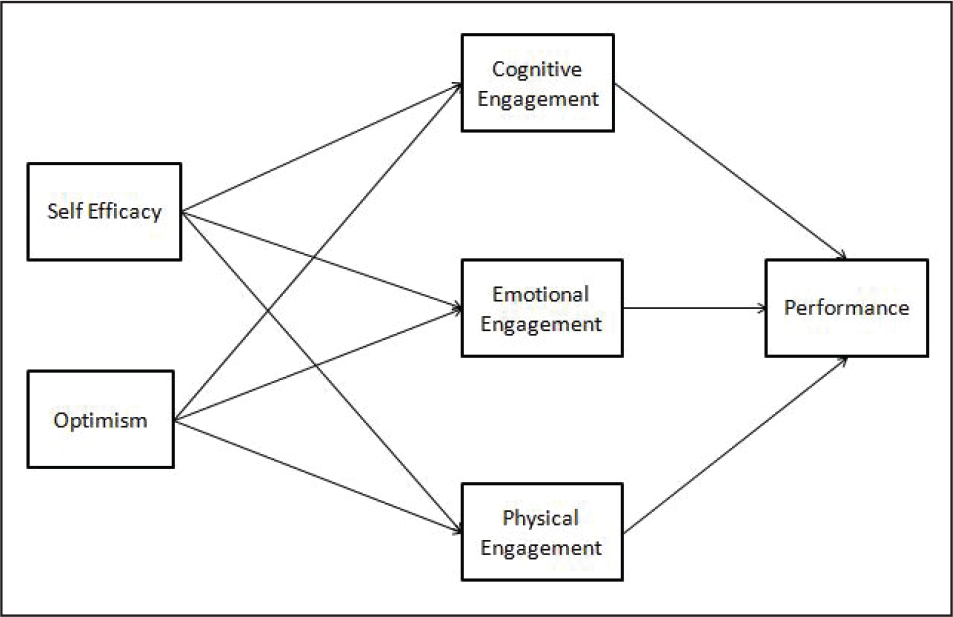
From the aforementioned discussion, we see that there is evidence that the employees’ positive psychological strengths of self-efficacy and optimism promote the simultaneous investment of cognitive, emotional, and physical energy into a work role, and that this investment, in turn, is expected to lead to positively deviant performance, as shown in Figure 1. We posit that engagement mediates the relationship between self-efficacy, optimism, and performance. While empirical research shows that both self-efficacy and optimism have a positive relationship with performance outcomes, we argue that the three dimensions of job engagement play a mediating role in explaining this relationship.
The relationship between psychological strengths and job engagement is also supported by Hobfoll’s (2001) conservation of resources theory, wherein the individual gathers and stores the positive psychological resources that are necessary to perform tasks. Individuals with higher levels of self-efficacy and optimism have more resources to pursue their goals (Hobfoll, 2002), and therefore tend to exhibit better performance, relative to those with lower strengths on these parameters. In addition to the fact that job engagement serves as the means by which positive psychological resources are translated into accomplished tasks, this implies that it plays a mediating role between self-efficacy, optimism and performance.
Fredrickson’s (2003) broaden and build theory predicts that positivity ‘broadens people’s momentary thought-action repertoire, widening the array of thoughts and actions that come to mind’ and that ‘the personal resources accrued during stated of positive emotions are conceptualized as durable’. Employees’ experience of positivity may help them to think more creatively and subsequently take actions that lead to better performance (Sweetman & Luthans, 2010). In the context of teams, an employee’s experience of positive affective state has the potential to affect the individual, while also spreading to other members.
Taking these theoretical perspectives, we assert that higher levels of self-efficacy and optimism would contribute to maintaining a higher level of motivation for job engagement, thereby impacting the performance. The guiding model representing our hypothesis is explained in Figure 1.
H4a: Cognitive engagement will mediate the relationship between self-efficacy, optimism, and performance.
H4b: Emotional engagement will mediate the relationship between self-efficacy, optimism, and performance.
H4c: Physical engagement will mediate the relationship between self-efficacy, optimism, and performance.
METHODS
Sample and Procedure
Our questionnaire-based data were collected from employees of a multinational financial services firm located in the United Arabs Emirates. At the time of data collection, all of the employees had taken part in ‘RACE’, the positive business initiative that involved various sports, arts, cultural, and everyday business activities, intended to engage employees and build their psychological strengths (please see the Appendix for additional details about the initiative).
Prior to administrating the questionnaire, one of the authors met with the heads of 99 UAE-based branch offices of the firm, informing them about the objectives of the study and how it would be undertaken and assuring them of the absolute confidentiality of the responses and the participants. With the help of these branch heads, the survey was undertaken during work hours. Of the 954 people invited to participate in the study, 406 employees completed the questionnaire, yielding a response rate of 42.6 per cent.
Guided Theoretical Model
Our sample has a gender split of 81 per cent male and 19 per cent female, which is consistent with the population in the organization. The mean age of the respondents is 31.7 years, and organizational tenure ranges from 1 to 10 years, with a mean of 4.1 years. With respect to education, all the respondents were at least high school graduates. While all of the respondents are based in the UAE, the sample is international in nature, encompassing 15 countries.
Individual respondents, all employees of the firm, were asked to assess their own self-efficacy, optimism, and job engagement, along with their perception of the team-level performance of the branch office in which they work. A prefix was added to all the study variables, ‘since the introduction of RACE’ to provide a time frame and make the context clearer to the employees.
Measures
Self-efficacy
We adopted the self-efficacy measure by Parker (1998). This scale demonstrated to have reliability and construct validity. Responses were collected using a seven-point Likert scale with the following categories: 1 = strongly disagree, 2 = disagree, 3 = somewhat disagree, 4 = neutral, 5 = somewhat agree, 6 = agree, and 7 = strongly agree. Sample items include: ‘I feel confident in representing my work area in meetings with management,’ and ‘I feel confident helping to set targets/goals in my work area.’ The coefficient α for this study was 0.89.
Optimism
The self-rater version of the optimism scale by Scheier and Carver (1985) was adopted for this study. All the items were specifically referenced to an individual’s perceptions about his or her work and not an overall dispositional trait. Sample items included ‘I always look on the bright side of things regarding my work’ and ‘I’m optimistic about what will happen to me in the future as it pertains to work.’ The coefficient α for this study was 0.83.
Job Engagement
We assessed the three dimensions of job engagement using the measure developed by Rich et al. (2010). The physical, emotional, and cognitive engagement of employees in their work roles was measured using the three scales. To measure physical engagement, the work intensity scale by Brown & Leigh (1996) was used. The measure of the emotional engagement is based on the Russell and Barrett (1999) scale for core affect. Rothbard’s (2001) components of attention and absorption were used to measure the cognitive engagement. Sample items included ‘I am more enthusiastic about my work’ (emotional engagement), ‘I am more focused on my work’ (cognitive engagement), and ‘I work with more intensity’ (physical engagement).
Exploratory factor analysis yielded a clear three-factor pattern, with all the items loading of their respective sub factors as expected. Confirmatory factor analysis (CFA), using a maximum likelihood method, indicated adequate indices for the three-factor structure, with each dimension’s items loading significantly (p < 0.01) on their respective dimensions, and standardized regression loadings ranging from 0.73 to 0.88 and all significant with 99 per cent confidence. The model fit indices for the CFA were χ2 = 71.43, CFI = 0.99, Tucker-Lewis fit index (TLI) = 0.98, Bollen’s Incremental Fit Index (IFI) = 0.99 and root-mean-square error of approximation (RMSEA) = 0.05, standardized root mean square residual (SRMR) = 0.02. The coefficient α for this study was 0.90, 0.90, and 0.91, respectively, for emotional, cognitive, and physical engagement.
Performance
Our measure of performance is perceptual, operationalized as the respondent’s perception of their branch office’s performance. We opted for a branch-level performance assessment, rather than an individual one, for several reasons. First, we anticipated that this would enhance the response rate, by removing any potential discomfort associated with respondents’ reporting on their own performance. Second, the RACE initiative placed strong emphasis on teamwork and team-based outcomes. Third, the firm’s practices mean that employees have a good sense of how their branch is doing. The organization adopts something similar to open-book finance, where information related to financial performance and key performance indicators is shared frequently with all employees, including data pertaining to monthly sales, profits, remittance, and foreign currency margins.
Based on this practice and the organization’s core areas of work, we developed a six-item scale to measure the employee’s perception of their branch office’s performance. Sample items included ‘the remittance count of my branch increased’, ‘the foreign currency margin of my branch increased’. Exploratory factor analysis, with promax rotation yielded a clear single factor. The Cronbach’s α for this factor is 0.94.
RESULTS
Given that the data were collected from a single source (i.e., employees), at one point in time, means that we need to check for the potential of common method variance. We conducted Harman’s single-factor test (Podsakoff, MacKenzie, Lee, & Podsakoff, 2003), and found that the first factor does not account for the majority of the variance among measures. Combined with the assurances of confidentiality offered by one of the authors, who has strong credibility in the organization, this result suggests that common method bias is not a substantial concern for this study.
Confirmatory Factor Analysis (CFA)
Table 1 presents the CFA results from estimating the model shown in Figure 1. The six-factor model including self-efficacy, optimism, emotional, cognitive, physical engagement, and performance, demonstrated good fit with the data, based on the χ2 = 493.27, CFI = 0.97, TLI = 0.96, IFI = 0.98, RMSEA = 0.04, and SRMR = 0.03 values. As shown in Table 1, we also tested five alternative models; the fit indices support the proposed six-factor model, providing evidence for the construct distinctiveness.
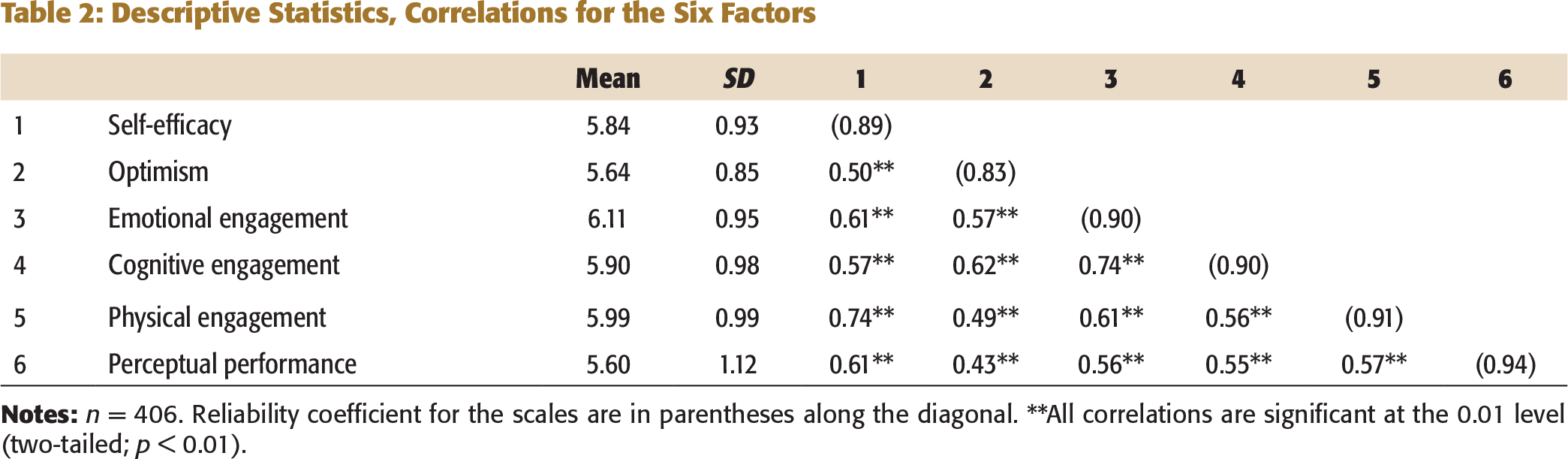
Descriptive statistics and correlations are shown in Table 2. The Cronbach’s α values for all six of the factors exceed 0.80, suggesting strong reliability.
Hypothesis Testing
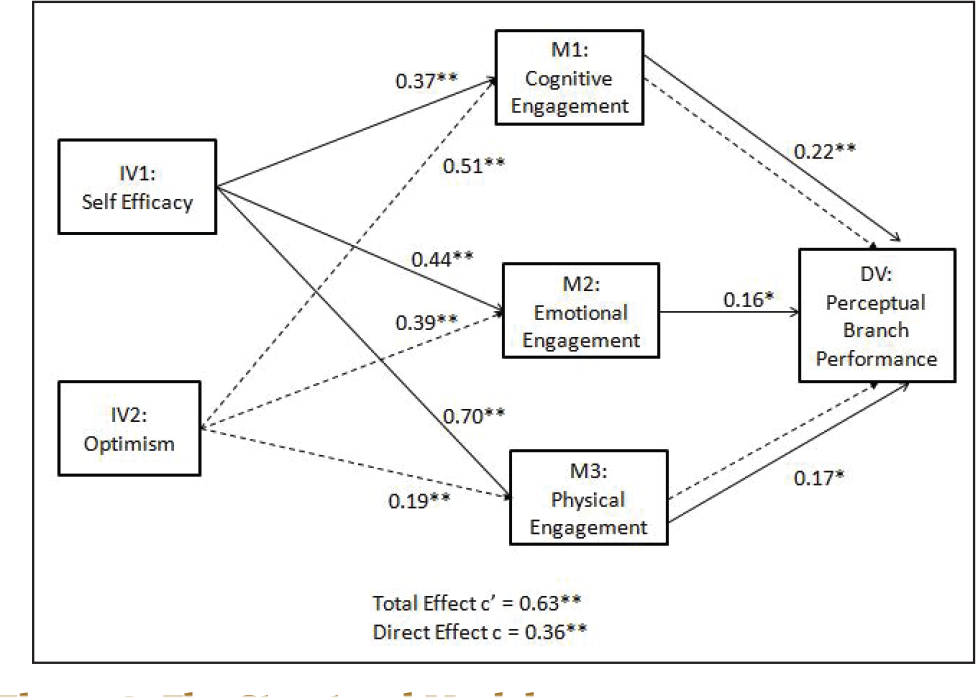
We test Hypothesis 1, 2, and 3 based on estimating the proposed relationships using structural equation modelling; the standardized path coefficients are shown in Figure 2. The model demonstrates good fit with the data, based on the χ2 = 757.85, p < 0.01, CFI = 0.95, TLI = 0.95, IFI = 0.96, RMSEA = 0.04 (0.04–0.05), and SRMR = 0.04 values. With an estimated coefficient of 0.34 (p < 0.001), 0.45 (p < 0.001), and 0.76 (p < 0.001), we find support for Hypothesis 1a, 1b, and 1c regarding the relationship between self-efficacy and cognitive, emotional, and physical engagement.
Comparison of Measurement Models
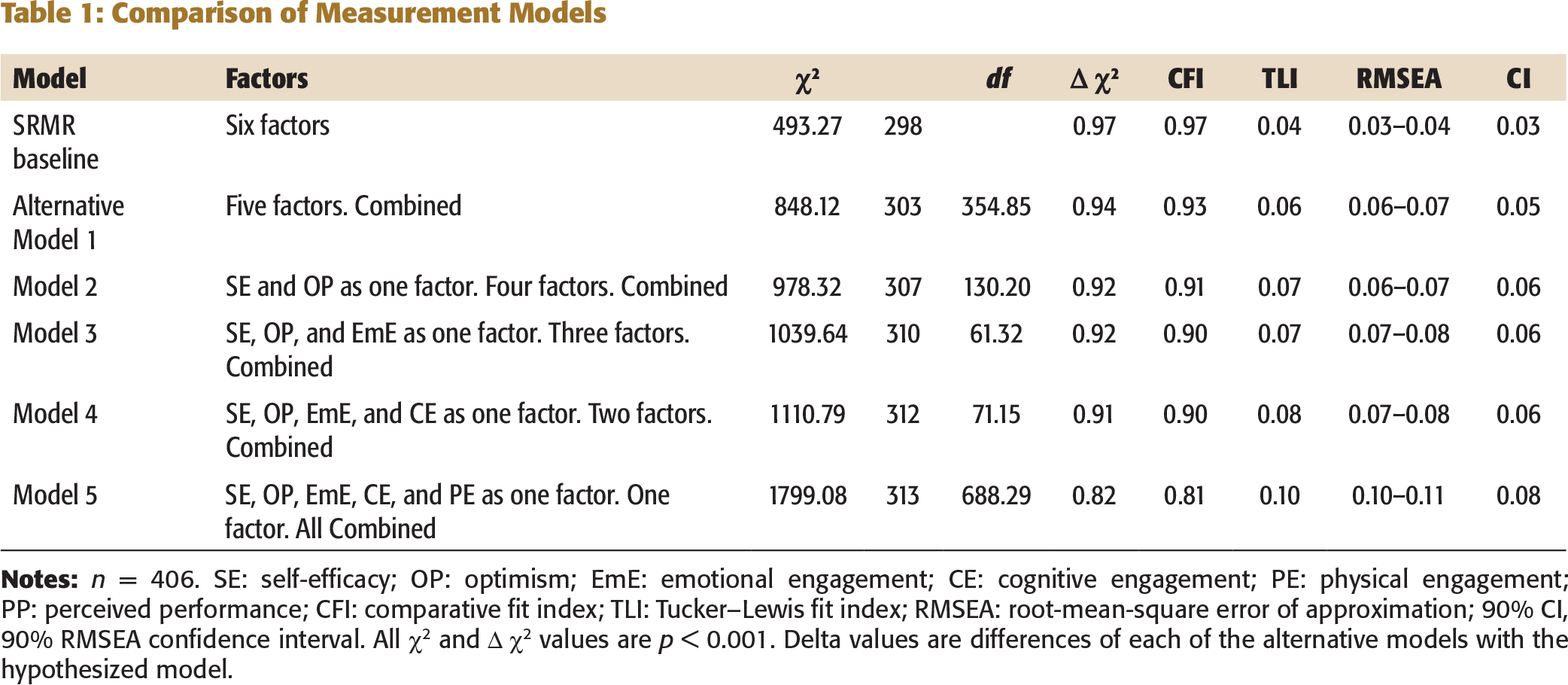
PP: perceived performance; CFI: comparative fit index; TLI: Tucker–Lewis fit index; RMSEA: root-mean-square error of approximation; 90% CI, 90% RMSEA confidence interval. All χ2 and Δ χ2 values are p < 0.001. Delta values are differences of each of the alternative models with the hypothesized model.
Descriptive Statistics, Correlations for the Six Factors
Mediation Analysis
There are many approaches to testing for mediation. We follow that of Hayes (2013), which involves the use of bootstrapping to develop confidence intervals to assess whether cognitive, emotional and physical engagement mediated the self-efficacy performance relationship; specifically, we use Hayes’ Process Model 4. The results, including the effect sizes (ES) for the mediation show significant indirect effects (IE) of self-efficacy (when controlled for optimism) on performance via cognitive engagement (IE = 0.08; 95% CI: 0.03, 0.15; ES = 0.13), emotional engagement (IE = 0.07; 95% CI: 0.01, 0.14; ES = 0.11), and physical engagement (IE = 0.12; 95% CI: 0.00, 0.25; ES = 0.18) as mediators, supporting the Hypothesis 4a, 4b, and 4c.
DISCUSSION
This study examined the role self-efficacy, optimism, and job engagement in positive change. The results indicate that the three dimensions of job engagement, namely, cognitive, emotional, and physical relevant for positive change significantly mediate the positive relationship between self-efficacy, optimism, and performance. Specifically, employees’ level of self-efficacy, optimism, and job engagement can be enhanced through positive work practices that are relevant to change. These findings have both theoretical and practical implications.
The primary contribution of this research is identifying two psychological strengths of self-efficacy and optimism relevant for positive change. The findings suggest that when employees had high levels of self-efficacy and optimism, they invest their whole selves in their work role by investing cognitive, emotional, and physical energies. This simultaneous investment of the three energies in their job is reflected in positively deviant performance. Though, in literature, we find several studies linking self-efficacy and optimism separately to performance (Bandura, 2012; Rego, Marques, Leal, Sousa, & Pina e Cunha, 2010), this study tests these two positive psychological strengths linked with performance empirically through these mediators. Literature suggests the simultaneous investment of cognitive, emotional, and physical energies for job engagement. So we proposed and tested them empirically. The current research clearly indicates these three dimensions of job engagement as potential mediators with significant IEs to explain the self-efficacy, optimism, and performance relationship.
These findings not only answer the call for investigating potential mechanisms underlying the positive organizational change and performance (Cameron & McNaughtan, 2014) but also highlight the need for developing and implementing positive practices in an organization. Specifically, this study provides evidence that psychological strengths of self-efficacy and optimism can be developed through consciously designed and implemented workplace fun activities. Also, these practices engage the employees cognitively, emotionally, and physically. These positive practices provide opportunities for the employees to participate in various business, sports, and arts events that generate positively deviant performance.
Individuals feel safe to express themselves in these informal settings. The fear of underperformance gets converted into the joy of participation. On an ongoing basis, they set goals and identify alternative pathways for goal achievement. When routine jobs are converted into games, employees are more likely to work with intensity and invest their energies into it. This process reflects in the increased core business performance indices of the branch, namely, remittance count and foreign exchange margin. Our findings suggest that the developable resources of positive psychological strengths (i.e., efficacy, optimism) could be built through positive practices of an organization for enhanced job engagement.
Our study has some potential limitations that need to be pointed out. First of all, we were unable to conduct a pre and post analysis to examine the impact of the positive practices in the positive change process, which would have given us more confidence in our findings. We could test our theoretical model only post hoc. Though in separate interviews, the leaders confirmed that the organization had a double-digit growth in all key performance indicators for the year and the negative growth trends of past years were reversed by implementing this positive initiative. Another limitation pertains to our performance measure. We use a branch-level measure based on individual employees’ perceptions of how their branch is performing. In addition, the organization provided an objective performance score for each branch. Surprisingly, the correlation between the perceptual and objective performance measures was found to be low (r = 0.20). Several potential explanations for this low correlation can be entertained, including branch-specific attributes, or even employees’ recognition, following the initiative, that their branches can perform at even higher levels than the current performance with which the company is quite pleased. The multi-level analysis may help to tease out some of these subtleties; this remains an area for future research.
In conclusion, this study makes contributions to both theory and practice by providing further support for the importance of developing the psychological strengths to engage employees at work through positive practices for positively deviant performance. The study empirically demonstrates the mediating role of cognitive, emotional, and physical engagement in the relationship between self-efficacy, optimism, and performance in the Middle Eastern context. Specifically, we found that self-efficacy and optimism relate with performance through mediating role of job engagement relevant for positive change. Finally, we contributed to the goal of better understanding the positive change that included the examination of the factors that influence the adaptation of a positive lens, positively deviant performance, the effects of an affirmative bias, and the impact of pursuing the best of human conditions in an organization. We extended the positive change research to a Middle Eastern context, involving a multinational workforce.
APPENDIX
Positive Business Initiative ‘RACE’
Organization’s Introduction: This organization is a leading global remittance firm having operations in more than 31 countries, 5 continents with more than 700 direct branches and over 2 million customers. The major services of the firm are global transfer of remittance money in the form of swift transfer, express transfers, express money transfers, Western Union money transfers, and the purchase and sale of foreign currency bank notes.
Timeline of Events
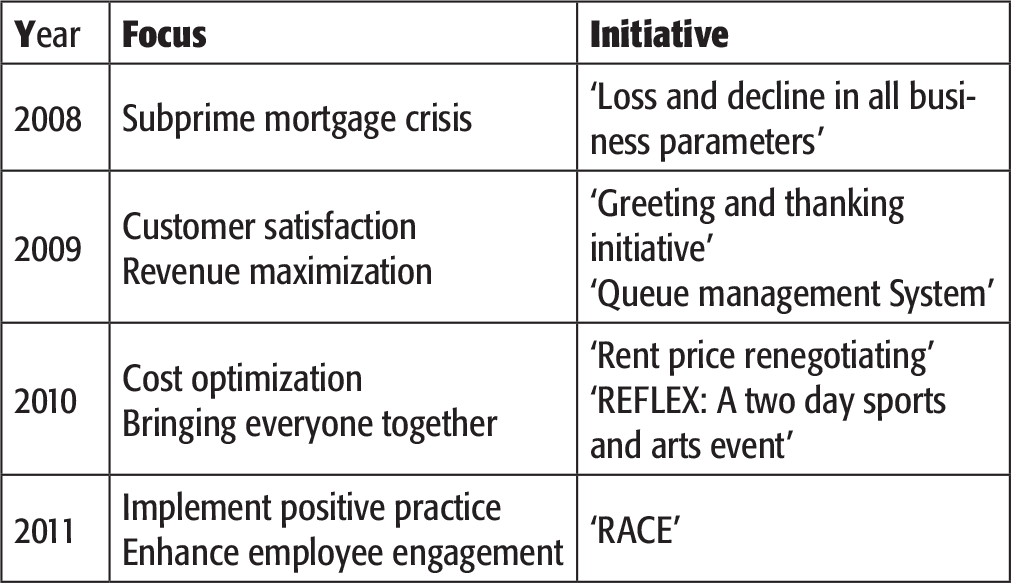

Country of Implementation: United Arab Emirates; Team Structure: seven teams lead by their respective area managers and a captain for each activity.
Four Major Events
The RACE initiative had four major events: ‘marathon’, ‘hurdles’, ‘sprint’, and ‘relay’. Marathon pertained to daily business parameters; activities addressed financial, compliance, production, and operations effectively representing a balanced scorecard approach. A long-term ‘event’ that would require both strength and determination. Marathon involved the allocation of both absolute and comparative points to co-located teams on a regular (monthly or bi-monthly) basis. The second event, hurdles, had to do with various business initiatives of the company, and had points allocated on a bi-monthly basis. This aspect of the RACE initiative was planned to give momentum to business aspects that were experiencing lower-than-desired growth. Hurdles encouraged teams to take a leap, jump over barriers, and best the firm’s competitors in the market.
Sprint, the third major event, had a very different focus: a short spell of speed and activity, based on sports. The main objective behind sprint was to develop employees’ sports-related capabilities. Sprint events were conducted monthly, with the winning teams from each month playing again in the finals at the end of the year. Finally, the fourth event, relay, was a platform designed to showcase individuals’ artistic flair which was conducted monthly. A mega-event was held at the end of the year, to determine the grand winners of each event.
Reward System: Team-based absolute & comparative point (for each activity).
Organizing Team: Small committee from country head quarter to co-ordinate the various events.
Communications: Unique webpage over company intranet to upload schedule, rules, venue, and score cards of all the events.
Cost of Operations: Employee entertainment fund.
Prizes: Various prizes along with a gold coin each to overall winning team members.
Positive Business Practices: Giving happy moments, opportunity to connect, display hidden talents, engagement and build psychological strengths of the participating employees through workplace fun activities.
Quotes from RACE Participants:
[W]hen I was not very confident to handle customers about certain products and services I made mistakes…. During RACE, I participated in Marathon event. I started to learn how to maximize the remittance count, as I had to gain points for my team…. I gained expertise in company products, as a result, our team was a winner for three months. I had forgotten dancing long back …. In RACE, my colleagues encouraged me to participate in a group dance with them. I became very nervous and had inhibitions to perform in front of other company officials …. I went for practice sessions, and finally, I participated. We won second prize, and everyone said I danced well. Being a cashier, I have to be very attentive in handling the cash at the counter …. I remember the day when my colleagues went out for practice and I worked to support them …. Handled more than 300 customers with the help of my branch head. I understood that I have so much more capacity and energy than I thought. Now I am ready to take more challenges and go at the next level. Many of the football players were from Morocco, Egypt and Yemen. They often felt left out because of the lack of English fluency … becoming captains of football teams gave them an opportunity to lead their teams with confidence. …visible in their business performance as well ….
Outcomes: Objective performance measures and interview with the management team confirm a positively deviant performance. VP Global Operations in his speech on the mega final of RACE initiative state that ‘… we reversed all the negative growth trends that we had during 2009–10 and had a double-digit growth in all business parameters for the year 2011 ….’
Declaration of Conflicting Interests
The authors declared no potential conflicts of interest with respect to the research, authorship, and/or publication of this article.
Funding
The authors received no financial support for the research, authorship, and/or publication of this article.