




Abstract

On a January morning in 2014, Mr Amit Kapoor, the Managing Director (MD) of Automotive Equipment Manufacturing Limited (AEML)1—a state government enterprise in India—was found in serious discussions with his senior management officials about the deteriorating condition of the company and how to devise a turnaround blueprint while working through many bottlenecks. The team seemed to be unable to reach any concrete decision about the future course of action.
AEML Financial Highlights for the Period 2010–2013 (in Billion $)
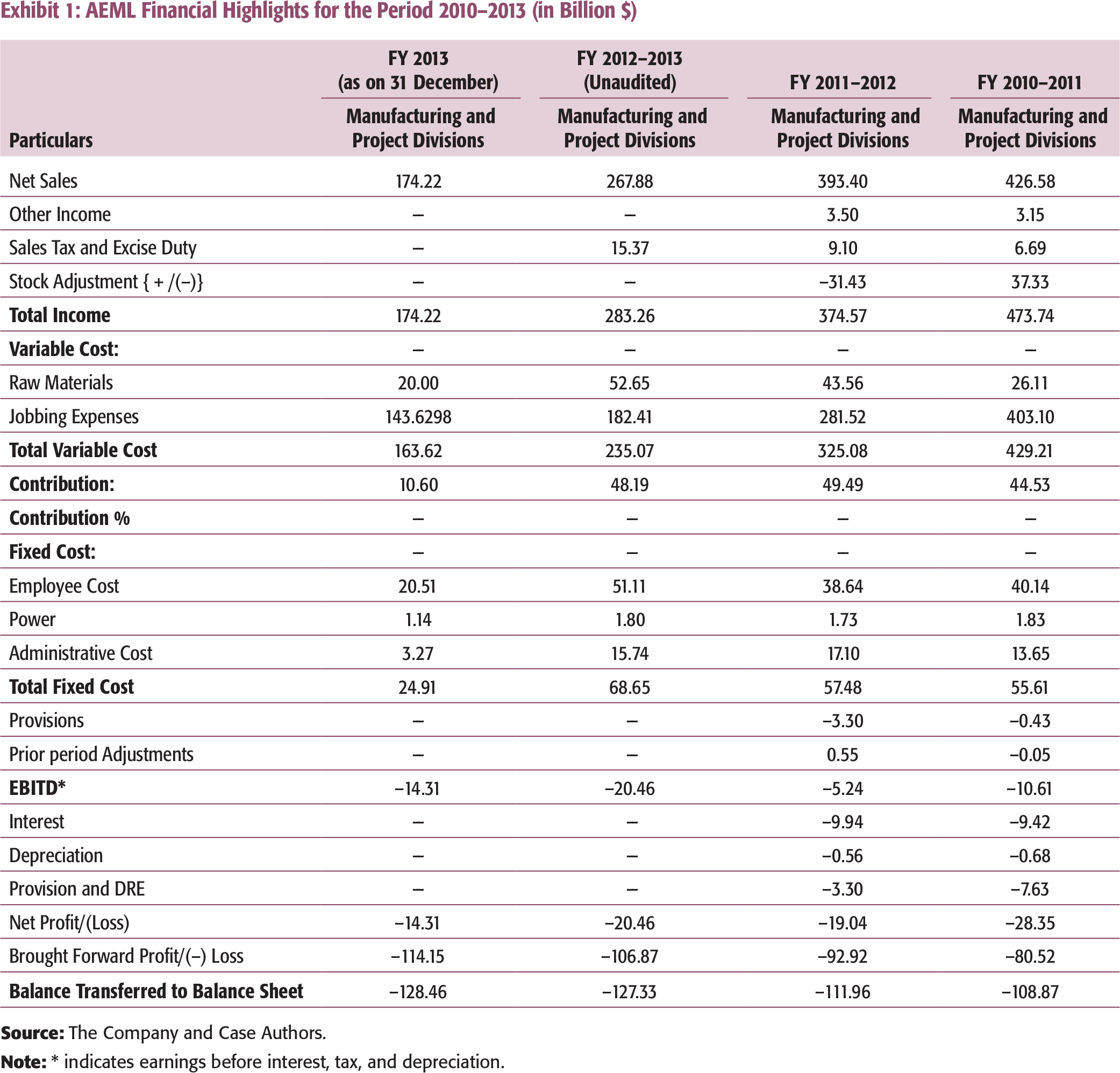
Kapoor, prior to the meeting, was hopeful about receiving continued financial support from the government for at least another year. So far, the company had managed to focus only on immediate survival like earning next month’s salaries for the employees. This put the long-term survival of the company in question. The crisis management team had an idea for the revival of the organization, but that would essentially require capital flow for immediate breathing. The organization was already in adverse financial leverage condition. The only option to acquire working capital was government support. The condition of the organization would worsen if no relief fund was allotted to AEML in the next state government budget.
Kapoor and his team were appointed to the organization with the objective of bringing about a turnaround of the company. The financial health of the state government did not allow it to continue financial support to the organization. However, neither the state nor the union government, led by the ruling party of the state, was in favour of divestment due to hidden political agendas. Thus, the crisis team faced a new challenge of redesigning the revival plan under the provision of minimal external financial assistance. The state government did promise Kapoor that it would provide minimum support for the company revival if the turnaround blueprint was realistic.
A host of external and internal factors had led to the decline, and Kapoor and his team understood that some of the root causes required immediate focus. However, if the crisis team focused on these root causes, it would hold back the long-term strategy since finances would get redirected. Therefore, the team was in a dilemma about what to focus on in designing the revival plan—the immediate survival or the long-term growth of the company.
BACKGROUND
Indian State-owned Companies
During the last century, Indian state-owned enterprises were basically run for fulfilling the social and political motives of the government. The managers of these state-owned enterprises were appointed by the government and were mostly responsible for pro-government decisions. They did not feel directly responsible for the economic performance of the enterprise as they had easy access to government funds as loans. However, improper distribution of funds, lack of monitoring, and poor economic performance made repayment of loans difficult. In order to operate successfully, they had to depend on additional government funds, leading to adverse financial leverage conditions. These enterprises also suffered from management inefficiency, orthodox mindsets, reluctance to change, and politically motivated trade union activities, all of which rendered most of them into loss-making enterprises. An overarching agenda of state-owned companies was to generate employment. Hence, irrespective of the need, they employed excess manpower which resulted in high cost burden. More recently, government initiatives to restructure these state-owned enterprises and prepare them for the competitive market have brought a ray of hope and resulted in the improved performance of these organizations (Bhalla, 2001).
The Glory Days of AEML
AEML, a 125-year-old company, started its journey in 1890 with a French collaboration in the eastern part of India. The story of AEML traces and symbolizes the development and growth of the Indian railway industry. After independence, the company was acquired by the state government from its French counterpart. Initially, the company imported railway equipment from abroad and supplied it to the Indian Railways. Gradually, the business was expanded to manufacturing automotive equipment as a whole, with railway equipment as the core business. For a long period since its inception, prior to the 1990s, AEML enjoyed a leading position in the market and fulfilled the increasing customer demands. The company was growing well until the 1980s, with an increasing demand for its products.
With its headquarters in the capital city of the state, AEML expanded to two more units to meet the market demand. All three units were geographically distinct and dedicated to manufacturing railway equipment. The company also got associated with many global partners to strengthen its supply chain. AEML’s client list included both public and private companies, with Indian Railways being the most important client. The company was also ISO 9000:2000 certified.
Product Structure
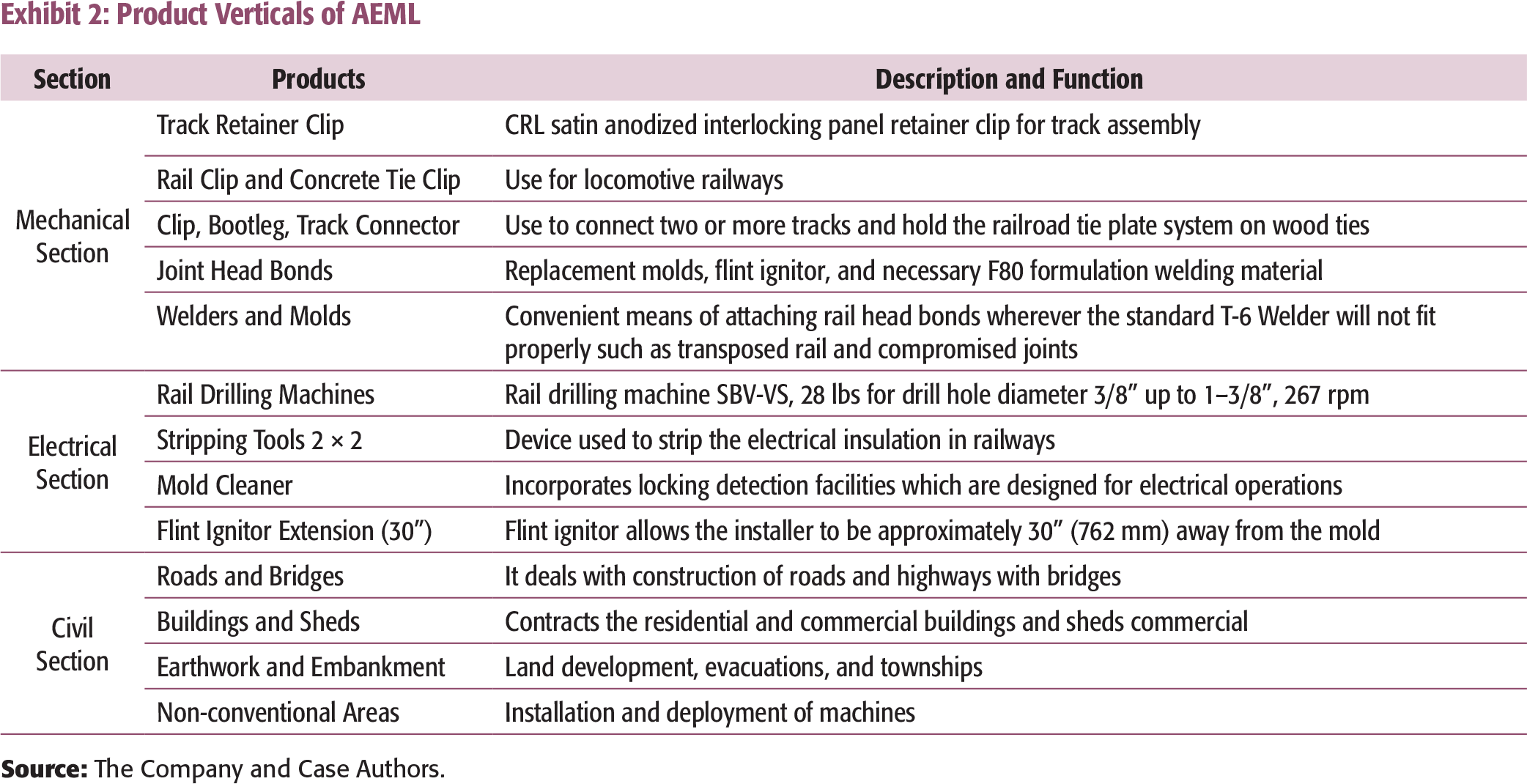
Product Verticals of AEML
THE PERIOD OF CRISIS
AEML was a state-owned company, and like other state-owned companies in India, it also suffered from various factors that put its sustainability at stake. Growth strategies were mostly adopted to fulfil political motives such as generating employment and entering new markets.
Competitive Scenario
During its glory days, the company played a pioneering role in manufacturing and supplying of equipment to its clients and enjoyed almost 90 per cent of the market share. At its peak prior to the 1990s, only a few players were operating in the market; thus AEML was the market leader. Revenue flowed in freely without much effort. However, the high-cost structure and disregard for profit changed the scenario.
Furthermore, with the modernization of the Indian Railways (initiated in the late 1970s), high-tech mechanical and electrical equipment were in demand. The changing market demand, globalization, and intense competition had an adverse impact on the company post 1990s. Global giants with their low-cost products, variety of options, updated technologies, and innovative approaches entered the market and gave tough competition to AEML as Indian Railways included a few of these global giants in its vendor list. These multinational companies (MNCs) were superior in terms of both product quality and customer service.
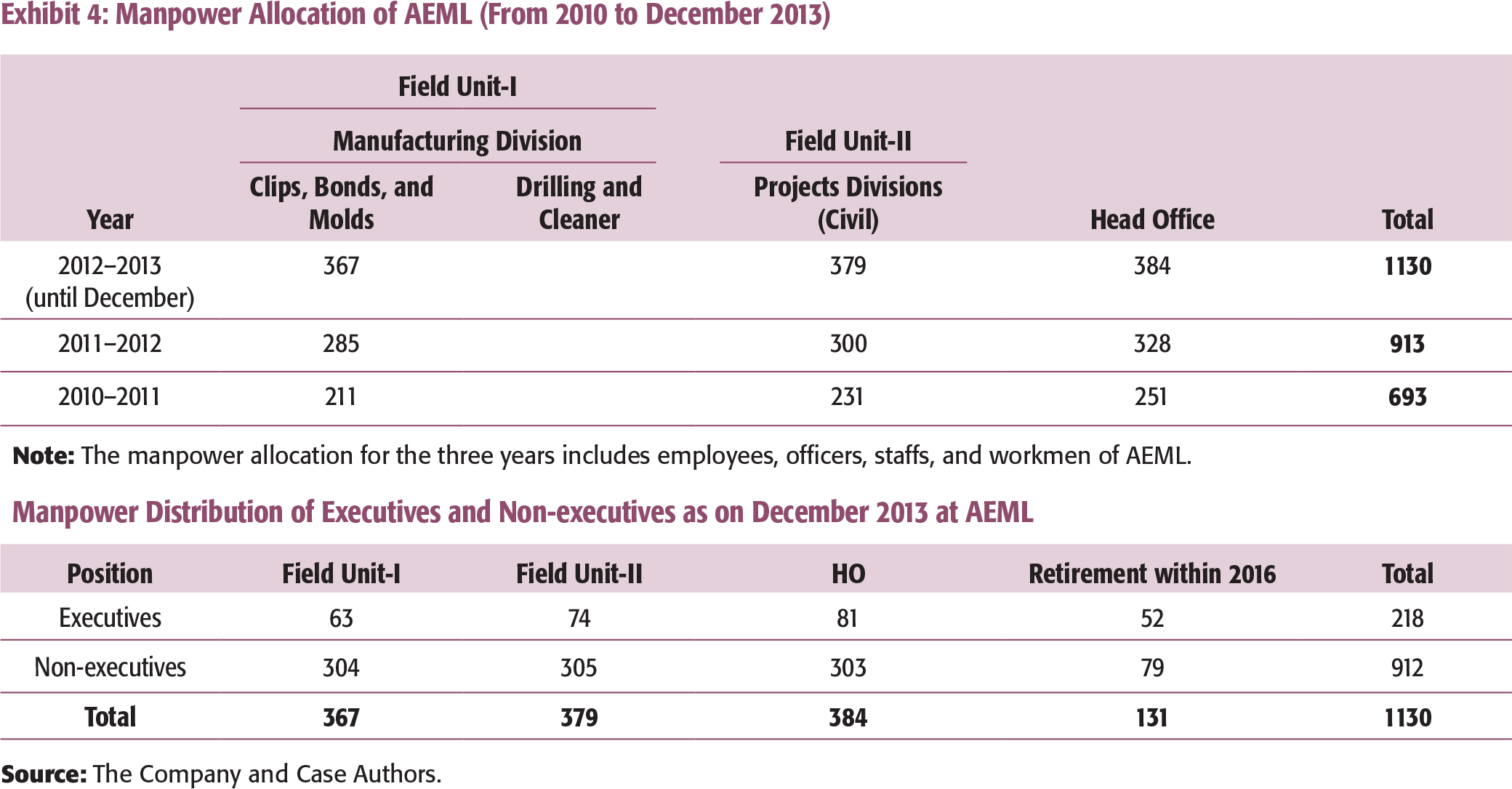
Manpower Allocation of AEML (From 2010 to December 2013)
However, these changes in the business environment did not influence the market leadership position of AEML until the mid-1990s. This made AEML complacent, and it completely overlooked the threats that the capitally and technologically rich competitors posed. The superior technology and product variations of the competitors put AEML in a difficult situation, which was further aggravated by the reluctant response of the company towards this changing business scenario. Although it implemented a few innovative processes in the late 1990s, such as computer-based tracking system of coaches and (automatic interlocking systems), the company failed to regain its competitive advantage and value in the market as these measures were not sufficient.
Outdated Products and Traditional Technology
Many AEML products (such as track retainer clips, rail clips, track connectors, welders and moulds, rail drilling machines, and mould cleaners) were too old and obsolete to attract customers from the private sector. Also, a significant number of finished products manufactured by AEML were exhibiting defects in the process of valve casting, causing sky-high reworking and repairing costs. The company’s problems were further compounded due to traditional manufacturing technology and the use of old manufacturing machinery. The much-needed fast decisions for replacements of these machineries and upgradation of technology seemed difficult to adopt due to fund crunch.
Operational Process and Customer Service
AEML was responsible for manufacturing, integration, operations, and providing customer support. However, being a state-owned company, AEML used labour-intensive techniques, that is, their operational processes were mostly manual. Lack of coordination among the operational teams and the feedback control mechanism practised at AEML led to information-asymmetry, rising defects and wastages in the finished products, and poor customer service. Customer grievances increased.
To produce modern equipment, the company needed to install high-tech machinery and modernize the operational processes, which seemed difficult at that moment. There was no separate marketing or business development department. It was the responsibility of the operation manager and his team to coordinate with the customers. Their inability to understand customers’ behaviour and respond to their demands on time made the customers dissatisfied.
Manpower and Organizational Structure
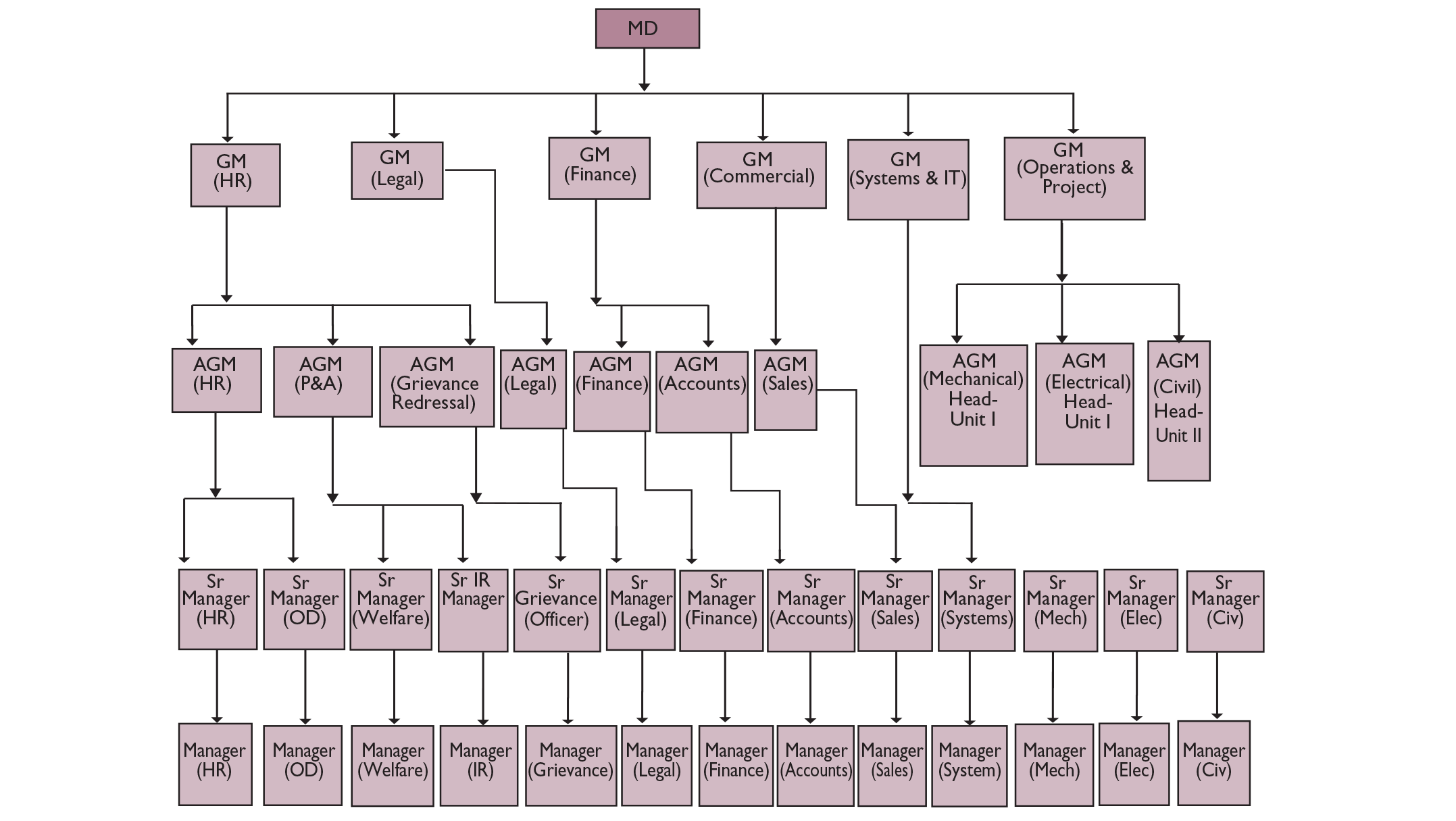
With a total manpower of 1,130 employees (on the direct payroll of the company), consisting of 218 executives and 912 non-executives at the end of 2013, AEML followed a traditional hierarchical organizational structure like any other government organization in India (detailed organizational and manpower structures are mentioned in Exhibits 3 and 4). The average age of the employees was 46. The employees were resistant to change, showed a slow pace of learning, and had low adaptability. In 2010, in order to increase productivity, the company adopted contractual employment despite strong opposition from the Union. Initially, they appointed 100 graduate engineers, with zero to two years’ work experience, on the payroll of a third party. This number was increased to 250 by the end of 2013. The average salary of permanent employees, other than senior management officials, was $201.62 per month; however, contractual employees were paid a consolidated amount, which was half of the gross salary of the permanent employees holding the same rank. Since AEML was a government enterprise, it was easy to attract young engineers even on a contractual basis.
Due to the centralized decision-making process prevalent in the organization, the process of approvals (from higher authorities) was time-consuming. This often adversely affected the customer service. The geographical dispersion of the units required employees to be empowered for certain decision-making processes but that was not encouraged in the company. This resulted in lack of coordination between different units and among different departments. Unnecessary delays in production and delivery were also caused by the centralized decision-making system. Communication gaps further aggravated the problem. Lower-level employees had grievances against the top management for not sharing requisite information at the right time. There were also no avenues for them to share their suggestions with the top management. Information asymmetry was common as the communication processes followed the channel of authority. Moreover, most of the older employees were not very comfortable using information technology-based communication systems, leading to further deterioration of the decision-making process.
Ineffective HR policy, favouritism, and undue political pressure fuelled unnecessary manpower acquisition in the organization. The lack of manpower planning and the political motive of the government for massive employment resulted in manpower surplus (around 300) in the organization. To make matters worse, employees were not informed about their respective roles and responsibilities due to the absence of a systematic job-analysis process. They were deployed to their jobs on a random basis rather than according to a planned effort. Depletion of talent due to retirement, especially at the workers’ level, was another challenge faced by the organization. The new generation of workers were not sufficiently competent for their job roles, leading to an adverse effect on productivity.
Cultural Issues
The top-level management at AEML was never keen on investing money on employee development. Technical training was held on an ad hoc basis, mostly for operational personnel. The employees were also found to be highly reluctant to attend these training programmes. Learning and innovation were never encouraged in the organization. This made the organization stagnant in product and technology innovation. The low risk-taking culture also adversely impacted the adaptation of innovative practices.
Most of the employees were found to be disengaged, resistant to change, and more interested in union activities than in their job responsibilities. There was a constant conflict between the management and trade unions. In a meeting with a consultant who was sharing information about the declining condition of the organization to the unions and asking for their cooperation, one of the trade union representatives remarked, ‘Why are you sharing this with us now? It is the worthless and inefficient management that has made the situation so bad!’ Another representative added, ‘You are talking about automated operational processes! This indicates many workers will be jobless. We will not allow the management to do so. Instead, the management should focus on increasing the demand of our products and fetching funds for machinery upgrades.’
Job security, due to the government organizational structure, was taken for granted to the extent that employees did not bother to come on time to the office. One of the junior executives expressed her annoyance about the attendance rule of the company by saying, while simultaneously knitting a sweater during office hours, ‘You know, one casual leave is deducted if anybody comes late by just five minutes. The management should not be so ruthless. We have our family obligations, too.’ Upon further enquiry, it was found that the office hours started at 8:30 am and what she meant by “five minutes late” was five minutes of grace after the extended time of one hour for reporting to duty, that is, 9:30 am. The extended one hour, that is, 9:30 am was considered as the time for reporting to duty. In addition to this, the scheduled lunchtime of one hour was often extended to two hours or more.
The managers failed to motivate the employees towards achieving organizational goals. When asked for his opinion about the declining condition of the company and the role of employees in turning it around, one employee replied, ‘What can I say? I am worried about my future. I have only five years left for retirement. The government must at least ensure our retirement benefits.’
The performance appraisal process was not given due importance at AEML because of the seniority-basis promotional policy of government enterprises in India. Therefore, because of the job security and the regular increment, a majority of the employees were not too concerned about the productivity and profitability of the organization. Many good performers were dissatisfied due to the absence of a performance-based reward system.
Trade Union
All three registered trade unions, namely Indian National Trade Union Congress (INTUC), Bharatiya Mazdoor Sangh (BMS), and Centre of Indian Trade Unions (CITU), held sway at AEML. Due to the political affiliations of these unions, tensions and conflicts prevailed in the company. After the change of the government in the state, one trade union started gaining more power with the support of the ruling party—leading to excessive conflicts with other unions. The state government’s support towards the said union brought rigidity and extremity in its approach. The trade union leaders were concerned about their political agendas rather than striving for monetary rewards, improved working conditions, and control over the work for employees. They had hidden agendas to oppose the management, and this always affected the regular productivity and the production process. The non-cooperation from union representatives restrained the management from taking any bold decision for the betterment of the company. The involvement of trade unions in unfair practices also yielded slow growth in the company. Moreover, union leaders were accustomed to spending more time promoting the political agendas of the unions rather than fulfilling their scheduled duties. Any disciplinary action against them had caused labour unrest in the past. Therefore, the management was also accustomed to ignoring their misconduct. Also, a huge communication gap existed between the management and the union. Undoubtedly, the company was not under a leadership capable of connecting with the employees and the customers. In short, a relationship of mistrust between the management, unions, and employees was prevalent in the organization.
Financial Crisis
There was an exponential decrease in the AEML market share as competitors captured the market, leading to an adverse effect on working capital accumulation. The company also had gigantic expenditures in maintaining physical and human resources, thus incurring a huge financial liability.
Consequently, it was difficult to compete with the global giants. With the aim of improving its competitive position, a few corporate-level strategies were implemented. Despite such efforts and prospects for growth in the market, the company incurred immense losses since 2008.
AEML Financial Position for Assets and Loans as on 31 December 2013
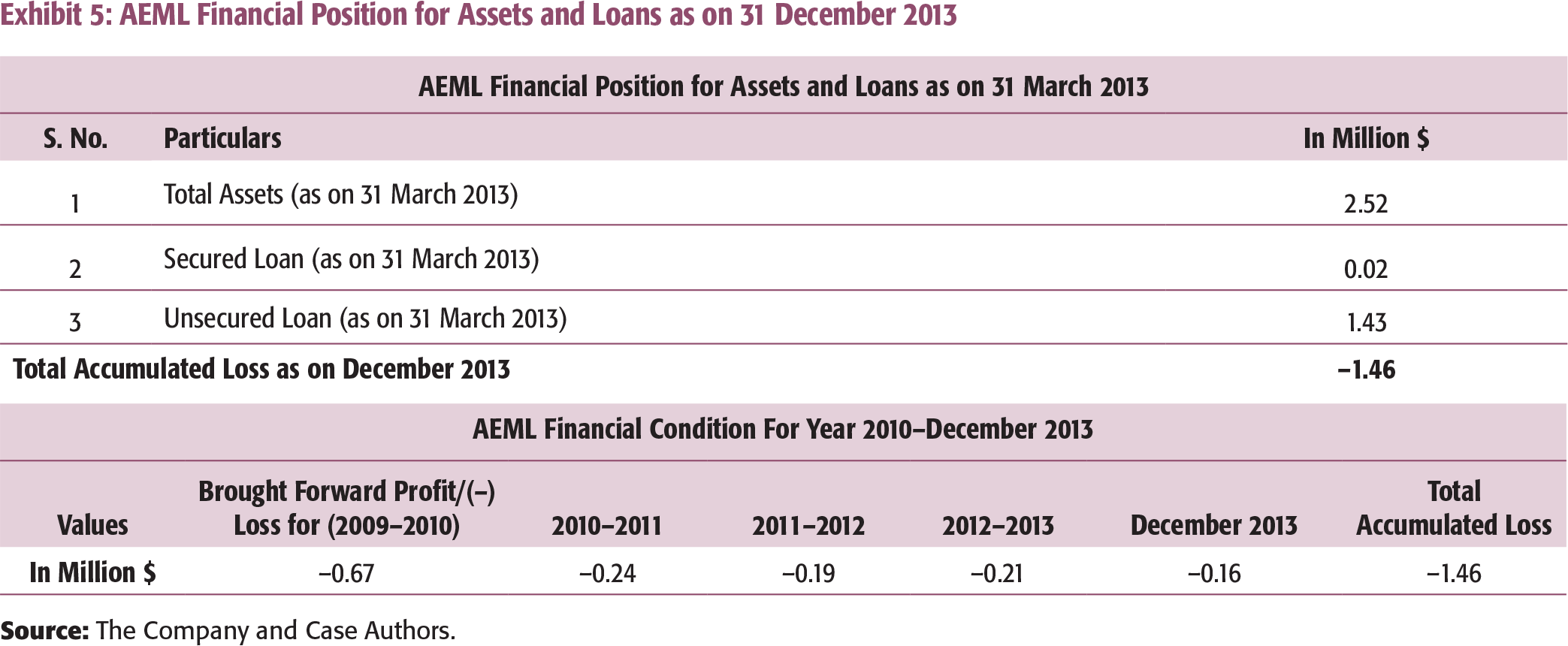
In addition to the loan repayment, company liabilities included several annual costs such as disposing of obsolete and rejected items, repairing operational defects (such as misalignment and defective products), and reworking obsolete machines. To make matters worse, the maintenance, materials, and repairing costs added to the company’s expenditure. Amidst the prevailing unfavourable financial conditions, almost all civil projects undertaken by the company were under arbitration, which further exacerbated the situation.
THE CRISIS TEAM: MD AND OTHER MEMBERS
With the change of government in the state, an initiative to revive AEML emerged—beginning with a government initiative to change the management of the company. A decision was made by the Board in the beginning of 2013 to set up a crisis team for the survival of the company. The team was to work under the guidance of a turnaround consultant. Accordingly, an expert was appointed on a full-time basis for one year, with the charge of setting up the crisis team within three months and then submitting a revival plan within the next six months. Further decisions were to be made by the Board after evaluating the situation in phases.
Mr Amit Kapoor, after completing his Bachelor of Technology (BTech) degree from the Indian Institute of Technology and postgraduation from the Indian Institute of Management, started his career in a mid-level position in a large multinational manufacturing company in India. His intelligence, leadership capability, and people management skills were soon recognized and he bagged the ‘Star Performer’ award several times. He was promoted to the India-Head position after handling a few foreign assignments successfully in the same company. He also transformed two non-performing units of the organization to profit-making units. He was known in the industry for his attitude of challenging the status quo. On being offered the role of MD in the non-performing AEML, Kapoor did not hesitate to take up the challenge despite warnings from his well-wishers. He joined the company on 1 August 2013.
After taking charge, he held several meetings with the employees of all levels in order to understand the organizational culture and identify the root causes of the current situation. He was mostly accompanied by the consultant in these meetings. After experiencing the strong opposition and negativity of the unions, Kapoor understood the relevance of connecting with the unions as well as with the employees. After a series of discussions with the consultant, the Board, and the senior managers, it was finally decided that a crisis team consisting of seven members—the consultant, the MD, chief operating officer (COO), chief finance officer (CFO), and three top-level managers of AEML who were well-accepted amongst the employees—would be formed.
Kapoor offered the position of COO to his long-term colleague and teammate from his previous organization Mr Asutosh Mukherjee. Mukherjee, a BTech and Master of Technology (MTech) graduate from the Indian Institute of Technology, was known for his sound technical knowledge and for introducing innovative approaches to the production processes. He was a workaholic and a calculated risk-taker.
The CFO was hired from outside of the organization. He was a chartered accountant with 20 years of work experience in several large-sized private organizations. The last position he held was as the general manager (GM) for finance in a steel-manufacturing company. The Kapoor–Mukherjee team then identified three more members from inside the organization for the crisis team. They included the then Head of Unit II, GM-Project, and the senior manager HR in the team.
The team was fully operational from the end of October 2013. The team took almost a month and a half to understand the financial condition of the company, its market position, operation processes, the organizational culture, and the viewpoints of the employees. Following this, on 6 January 2014, the Board categorically mentioned to Kapoor that the state government was low on funds; thus it could not continue to provide financial support to AEML except for providing funds to meet the employees’ salaries for the next six months. It was then that Kapoor called a meeting of the crisis team for deciding their next move.
TURNAROUND MEETING
The meeting began with the analysis of the current situation. Outdated product structure, traditional technologies, depletion of technical strength, centralized decision-making process, management and labour conflicts, and union rivalry were some of the aspects that plagued AEML. The organization was also extremely slow in adopting new technologies. In fact, a few old and loyal customers had started showing disinterest in purchasing AEML products. Besides, lack of innovation made them incapable of sustaining their competitiveness. However, due to mutual understanding between the state government and the central government, the Indian Railways (a central government enterprise) promised to continue its support by purchasing a few products of AEML for a certain period.
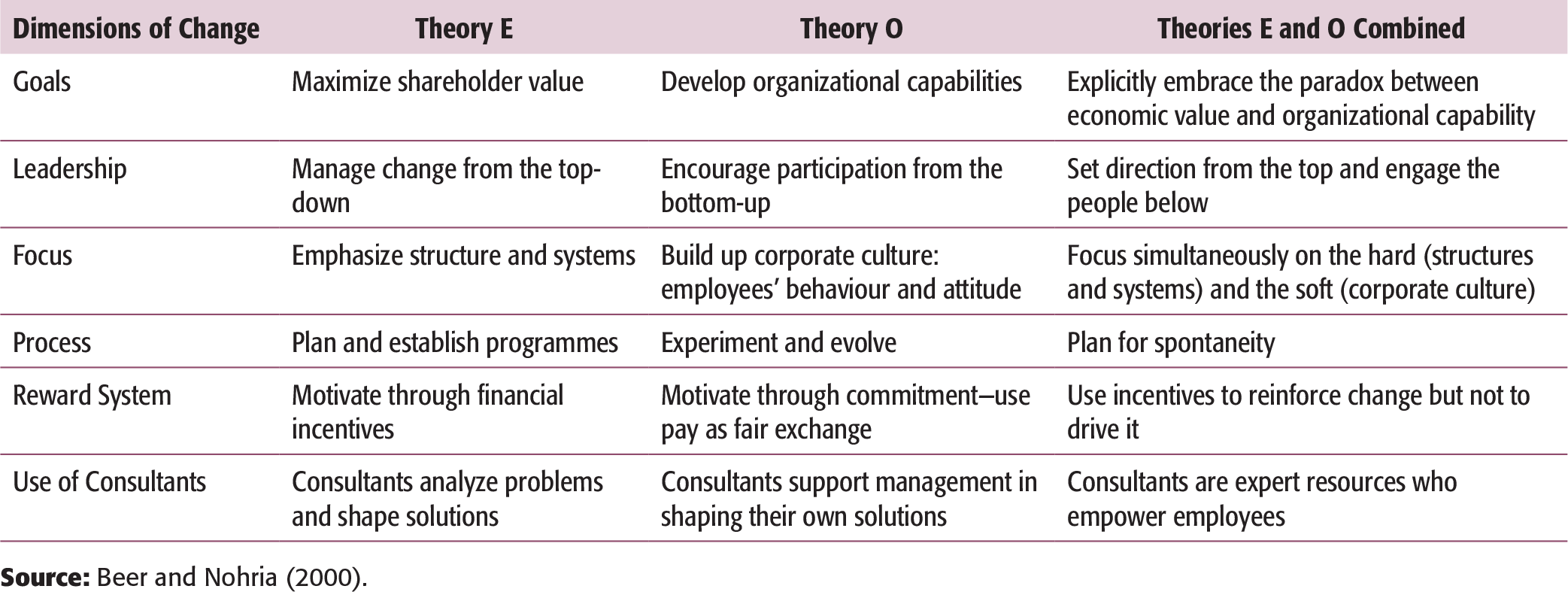
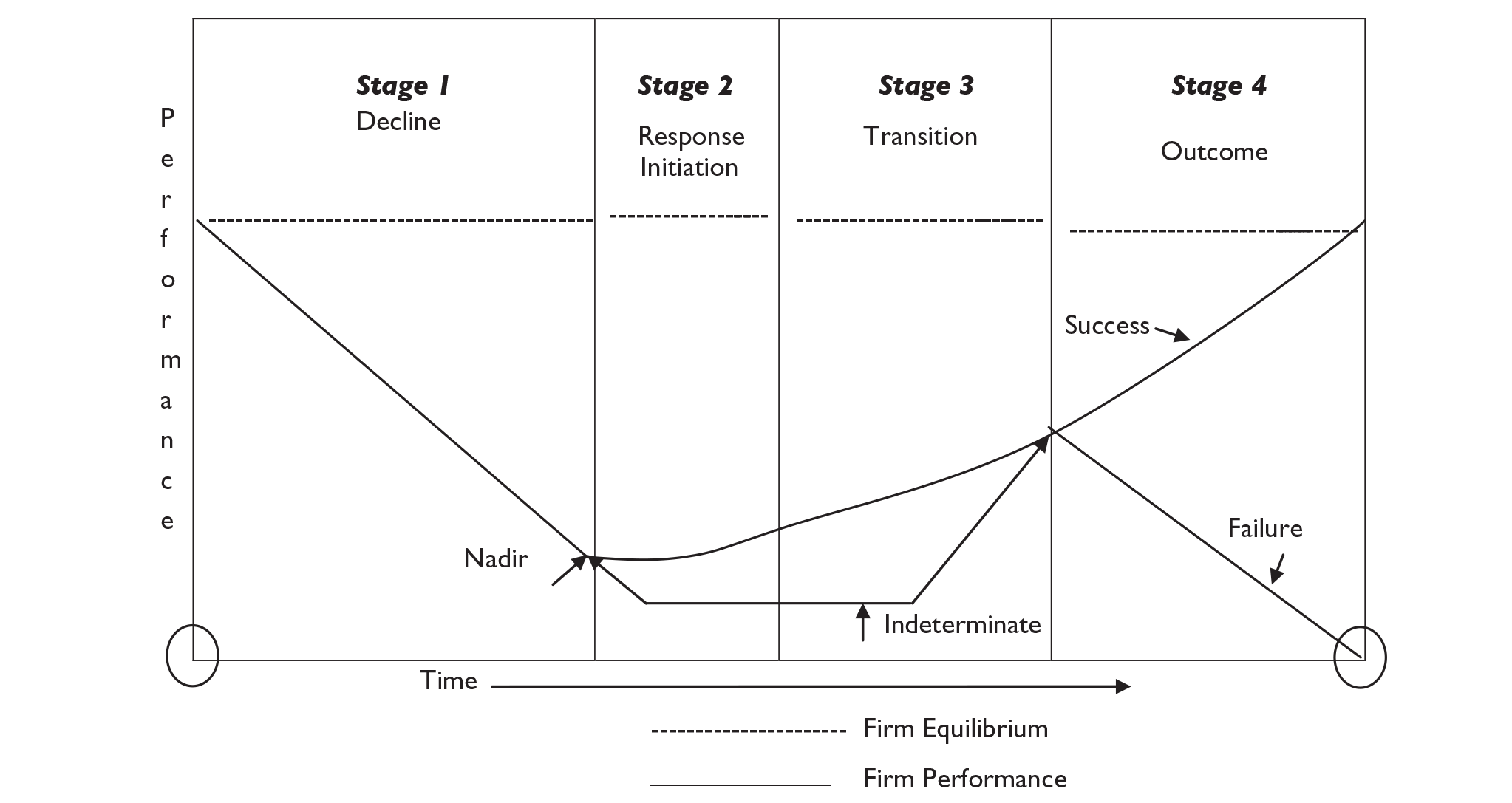
The situation became a double-edged sword for AEML. Focusing on immediate survival would cost long-term growth, and vice versa. It was then that the consultant advised that the best-suited revival plan for AEML might be to integrate both economic-value optimization (Theory E) and organizational capability-building (Theory O; Beer & Nohria, 2000). He further added that while few organizations preferred the economic-value maximization approach for immediate survival, some preferred the organizational capability-building approach, and others preferred the combination method. The COO was in favour of focusing on the economic-value generation. Despite the disagreement, team members were in consensus that whatever approach was to be followed, the turnaround should happen in stages (Chowdhury, 2002). Now, the crisis team had to come up with a stage-wise turnaround blueprint or a revival plan for AEML (see Appendices for Theory E and O, and for turnaround stages).
APPENDICES
Appendix A: Summary Points about the Current Situation of the Organization to be Considered for Turnaround Meeting
Presence of 300 redundant manpower was creating an annual loss of around $80 million. This was also eroding the working capital of the company.
The company was used to infrastructural civil work based on the contract given by another government company. Over-dependence on the single company put the business at stake.
Retirement of experts and depletion of technical strength.
The company had accumulated a huge government loan with interest that had an adverse effect on the net worth of the company. This was impeding the company from approaching the money market for its working capital requirement.
The company was incurring huge expenditure in disposing the rejected items as well as reworking and repairing the defects generated from valve castings.
Employees (workers) were unmotivated towards their job and more interested in union activities, thus were less productive. Executives were also unengaged with company objectives. There was a conflict between management and workers. The majority employees were unconcerned about the organizational performance as job security along with regular increment was a given.
Centralized decision-making process prevailed in the organization. The company had two units located in two geographically distant regions apart from the headquarter. Each unit was spread over a large area with a big manufacturing unit and office.
Lack of coordination and communication between the departments.
Poor customer service due to long decision-making process.
No efforts were directed towards marketing of the product and branding of the company.
Rigid reporting and decision-making systems.
Learning and innovation were never encouraged in the organization. While there were plans to set up an R&D department in the organization, fund crunch was a constraint. Therefore, MD initially thought that an association might be made between AEML and a premier technology institute in India based on funded projects for technology and product upgradations.
The employees had a traditional approach since they were not exposed to contemporary management approaches.
Appendix B: Cracking the Code of Change
Theory E: The change is based on economic-value generation through maximizing shareholder value through heavy use of economic incentives, layoffs, downsizing, and restructuring.
Theory O: The change is based on organizational capability-building by strengthening organizational culture.
Comparing Theories of Change
Appendix C: Turnarounds---A Stage Theory Perspective
1 Name of the company has been disguised for maintaining confidentiality.