




Abstract
DINESH SIBAL’S BACKGROUND IN THE ADVERTISING BUSINESS
Sibal was born in a Punjabi family in Delhi, which was into the business of printing press. He joined the family business and developed a keen interest in understanding the technology and management of the printing business. His understanding of technology and its role in the printing business, along with a creative mindset, saw him getting inclined towards the advertising field. Sibal met Ajit Shah, the branch manager in Everest (now known as Everest Brand Solutions)—a leading advertising agency—who happened to be his brother’s friend. Shah encouraged him to join advertising and suggested that he get familiar with the requisite skills to mould his future in the highly competitive environment of the advertising industry. Sibal started working as a trainee in 1982 to begin his advertising journey with Everest.
Sibal’s advertising journey progressed well as he learnt the ropes and was soon engaged as an executive for client servicing at Everest. As Sibal interacted with clients, he realized that he was more inclined towards strategic decisions in advertising instead of design and execution decisions. He wanted a shift in his profile and was inducted by Aly Latif, account supervisor at Clarion—India’s second-largest advertising agency at that time—in his department. While working with Aly Latif, he learnt the importance of research and planning for strategic decisions in advertising and gained hands-on experience of carrying out research and planning activities. In 1992, he joined Mudra Communications Ltd as the branch manager of their Chandigarh office. His hard work helped him in raising a business of ₹30 million within six months. However, personal family reasons compelled him to return to Delhi where he started handling the Nestle account.
During his advertising career, Sibal received training on the advertising strategy process of DDB Needham, USA (now known as DDB Worldwide). The time spent learning the process called ROI (relevancy, originality, and impact) and the work culture of the world’s leading advertising agency was an enriching experience. During this phase, he learnt the importance of integration of all marketing elements leading to a focused brand experience and other concepts for achieving extraordinary results from advertising.
After spending more than 10 years in advertising agencies, Sibal started a venture named Innovaxis, which helped clients in improving the brands experience. Coca-Cola was one of the first clients and he went to Nigeria to help Coca-Cola. The company faced a peculiar problem. Coca-Cola was sold by mobile vendors at traffic signals or during traffic jams in big cities where cars were stuck for quite some time. These mobile vendors often carried multiple bottles, which did not remain cold due to the hot climate by the time the customers purchased them. As a result, Coca-Cola was not delivering on its true brand experience of giving customers a refreshing feel. Sibal suggested technological modification in product delivery by introducing mobile cold storage container for vendors to keep the bottle chilled and serve/sell it cold, which resulted in sales improvements and a better ‘brand experience’. He continued to focus on providing similar innovations for tactical and strategic problems faced by brands. For developing his business, he stayed in Africa, Middle East, and Europe for almost nine years after which he returned to India. After coming back to India, he worked as a freelance consultant for different clients, providing his expertise in research and advertising. One of the research project he worked on pertained to the evaluation of media efficiency studies about the National Rural Health Mission (NRHM) in Assam.
DINESH SIBAL’S EXCURSION INTO ASSAM
NRHM, Assam needed to evaluate the impact of its behaviour change communication on health care patterns. Additional deliverables of the research study included gauging effectiveness of the communications channels and the content. NRHM, Assam also wanted recommendations for an optimum reach programme mix for health communication in Assam. Sibal spearheaded the research team and travelled extensively in Assam for conducting qualitative and quantitative research. He made final presentations about the findings to the Minister of Health and Family Welfare in the Assam government.
The research findings revealed that the media consumption pattern was not on the lines predicted before the start of the behaviour change communication campaign by NRHM, Assam. While radio commanded good listenership with majority of the respondents owning radios and listening to news and songs, television viewership was restricted due to limited and erratic electricity supply. However, surprisingly, many of the respondents mentioned knowing about health care messages through mobile theatre though they did not receive the message through radio and television. The respondents were able to recall and link health care messages with NRHM, Assam-sponsored dance drama which was shown through a couple of mobile theatre companies on a pilot basis (refer to Exhibit 1 for history and details of Assam mobile theatre). The 45-minute dance drama by NRHM had an Accredited Social Health Activist (ASHA) worker as a pivotal character who provided health care information useful for rural viewers in the Assamese language. NRHM asked Sibal to conduct a more detailed study of mobile theatre reach and recommend it for behaviour change communication campaigns conducted by NRHM, Assam.
Exhibit 1: History and Details of Assam Mobile Theatre
Assam mobile theatre has a remarkable long journey of more than 50 years. It was founded in 1963 when Achyut Lakhar started his travelling theatre company, named Natraj, which was inspired from travelling Jatra troupes (refer to Exhibit 16 for details on Jatra). The term ‘Mobile Theatre’ was introduced in late 1960s by social worker Radha Govinda Barua after watching a play in Guwahati (Assam). It has emerged as a major source of entertainment in Assam for both urban as well as rural audiences. In 2015, more than 40 mobile theatre companies are operating in Assam and they cover all 27 districts doing shows.
Assam mobile theatre is a major source of entertainment medium which reaches to almost 50 million viewers. The shows produced by different theatre companies have very high production value which draws audience to the show. The audience for the shows is cosmopolitan and watch the shows together irrespective of class, income, and religion divisions. Even dignitaries like ministers and senior civil servants sit with the general public in audience and enjoy shows. These shows usually last for two and half hours and are produced in the Assamese language. Sometimes, theatre companies show ‘drama in drama’ programme of 8–10 minutes before the show starts. These ‘drama in drama’ programmes are produced using folk dance and music and are presented as an additional feature to enhance the entertainment of viewers.
The dramas shown by theatre companies have varying themes comprising of mythology, socio-cultural, and moral issues. The themes are not only limited to their local context but also include national and international context. These theatres have also adapted world famous plays, novels, epics, and films in the Assamese language and cover a wide range of subjects. Theatre companies have presented shows on Indian classics (like Mahabharat and Ramayan) as well as Greek tragedies (Odyssey) and Shakespeare’s dramas (like Hamlet and Othello). They have also adapted movies like Titanic and Jurassic Park for stage performances. Some of the drama shows have been developed to include the latest current affair topics like Osama-bin-Laden’s kamikaze attack on the twin towers of World Trade Center, the life and assassination of Benazir Bhutto, the hijack of Indian Airlines flight of IC-814 from Kathmandu to Kandahar. During these shows, advance modern technologies have also been used by various theatre companies to deliver high production value for viewers. Often, these innovations, like sinking of Titanic and use of laser technology, turn out to be surprise packages, which help in mesmerizing the audience and providing high degree of entertainment.
Many well-known actors of Assamese cinema also perform in theatres. Jatin Bora, known as the Shahrukh Khan of Assamese cinema, also performs for mobile theatre companies for which it is claimed that he charges over ₹7–8 million per season. Even widely popular Bollywood singers like Angaraag ‘Papon’ Mahanta and Joi Baruah sing for mobile theatres. Adil Hussain, who has acted in hit Bollywood movies like Ishqiya and English Vinglish, has also worked with a theatre company before moving out of Assam.
The theatre owner is responsible for organizing the team and producing the shows. Each team consists of 150–200 team members—a mix of actors, technicians, musicians, directors, cooks, helpers, and others. Each theatre company assembles its team in June, two months before the commencement of season, to rehearse for the dramas finalized for the season. The team works closely for 10 months (the rehearsal and performance period) and travels together for this period without any break. The theatre company works as a well-organized unit with different team members playing important roles in successful conduction of the show. After finishing the show in one location, the team uproots itself and travels to the next location using five–six vehicles (including buses and trucks) loaded with suitcases, wooden stages, tent bamboos, wires, poles, lights and all that they need to deliver a mesmerizing performance. All crew members and actors build strong emotional and professional bonds with each other during these 10 months of friendly environment.
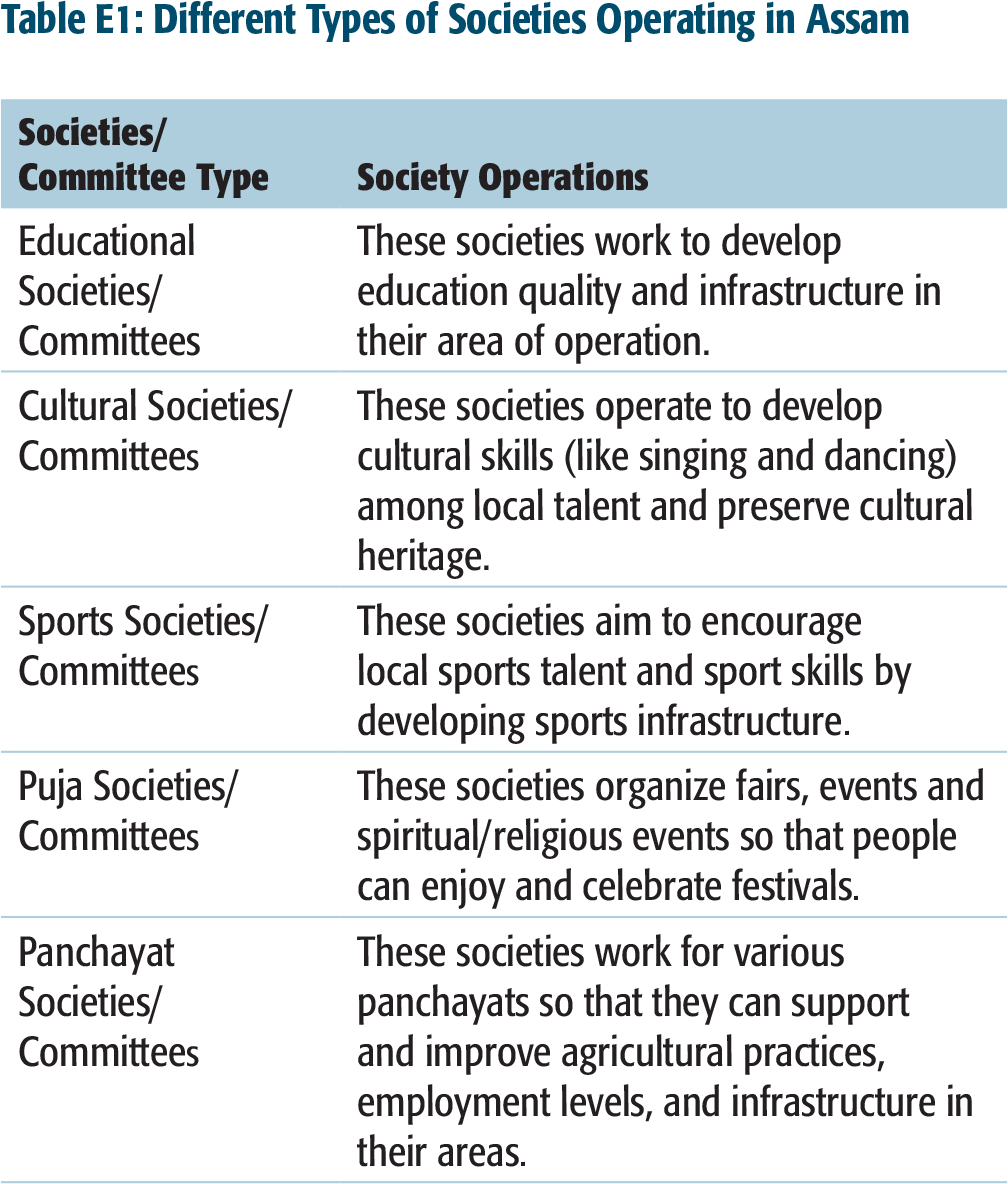
Different Types of Societies Operating in Assam
Mobile theatre is a mix of art and commerce, and it has a great impact on social, economic, and educational development of Assamese people. Assam mobile theatres perform multiple objectives by (a) entertaining all communities of Assam; (b) spreading education and awareness among people on various social issues such as family planning, health, cleanness, AIDS and so on; (c) establishing unity and integrity among people; and (d) providing financial support and benefit for artists and society. Prior to the emergence of Assam mobile theatre, Jatras were quite popular and a major source of entertainment for rural Assamese people. However, in recent years, Assam mobile theatres, which are present in rural as well as urban areas, have thrown out other entertainment options with their high quality performance.
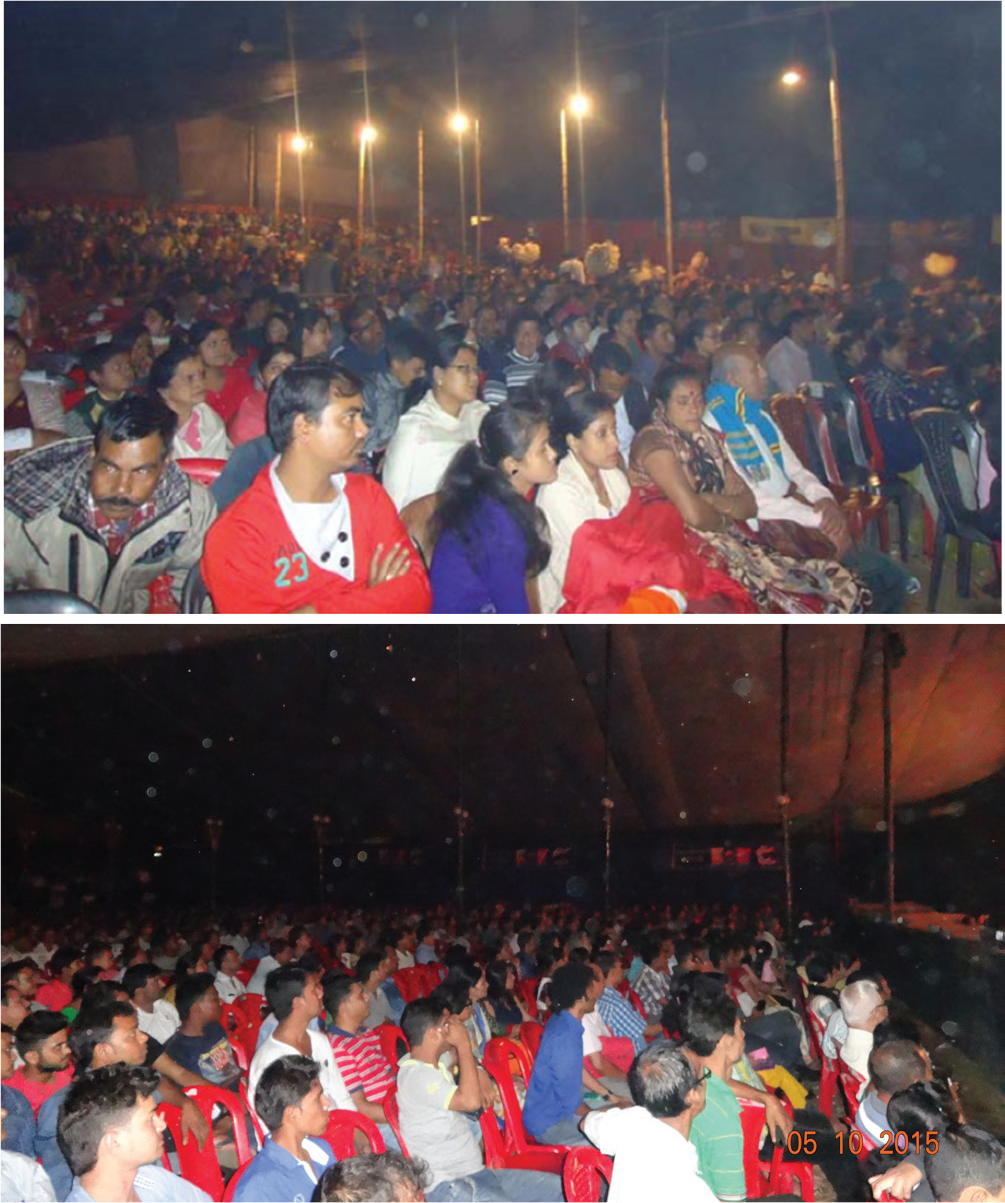
Sibal, while researching on mobile theatre in Assam, found that there were close to 40 theatre companies which travelled across Assam conducting shows. Each theatre company was stationed for three days at one place where it conducted two shows (sometimes a late night third show on audience demand) everyday. Generally, three different story lines were prepared by each theatre company for the season, which started in mid-August and ended by mid-April next year. Each day a different story line was performed during the theatre company’s stay in one place. Typically, a show was attended by 2,000–3,000 people, who paid for tickets in a price range of ₹40–₹1,200 (refer to Exhibit 2 for some photos of crowd viewing the show). Once Sibal understood the scope of operations, he realized the potential of mobile theatre in reaching out to customers in Assam. He stated:
"Assam mobile theatre provided an excellent opportunity for reaching to rural audience who were otherwise unreachable by traditional media. It was a medium to be tapped by brands as nobody fully understood about the huge eye-balls that this medium generated. Barring sporadic efforts by a few local brands, hardly any effort was made to tap this medium. If brands could integrate their message in this medium then it would help brands in making a strong impact among target audience. The research for NRHM made me realize that people remembered messages which were presented to them in their language and in entertainment form of stories. There was a need to create a story by brands, which would ensure that people remembered the brand for a long time. It appeared to me as the right medium for disseminating message to rural audience in Assam and seemed to provide a high return on investment."
While Sibal was formulating his strategy for tapping Assam mobile theatre, he met Gulancha Baruah who was the owner of Monalisha, an agency accredited with All India Radio and Doordarshan: India’s national television broadcaster. His father, Uttam Baruah, was a popular Assamese language author, who had more than 25 Assamese dramas to his credit. With the family background entrenched in drama, Gulancha Baruah grew up playing different roles in drama shows since his childhood. Baruah grew under the influence of the Assamese art and culture and, in different ways, remained connected to this inheritance for more than 30 years. Later, Baruah started to produce and direct dramas and shows in various media channels such as All India Radio and Doordarshan. While working in this field, he also plunged into advertising by helping a couple of local brands to promote themselves through banners in Assam Mobile Theatre. He also distributed LCD projectors to few theatres which were used to broadcast video commercials of local brands.
Baruah was quick to understand the big picture about Assam mobile theatre as seen by Sibal. He recognized that both of them complemented each other. Sibal was looking for a local partner, who could build relationships with theatre owners and other key local players. He also needed someone to take care of operational issues during the on-ground implementation. Baruah’s previous association with Assam mobile theatre and background of promoting brands through it gave him a good understanding of the Assam market and audience (refer to Exhibit 3 for details of Assam state). Baruah had also found that it was hard for him to attract big brands to sponsor Assam mobile theatre. Moreover, he had no experience of dealing with brand and product managers of national brands. He accepted the operational role of local networking and execution as per the vision set by Sibal. With a background in advertising and client handling, Sibal was in a position to approach and build relationships with brand and product managers. This led to the formation of a company named Q-Connect.
Exhibit 3: Details of Assam State
Assam is a state located in the eastern most region of India, called Northeast India. Assam is the largest state of the region which consists of seven sister states: Arunachal Pradesh, Assam, Manipur, Meghalaya, Mizoram, Nagaland, and Tripura. In India, the northeastern part is considered as a backward enclave of Indian economy due to the inaccessible terrain, poor industrial growth, limited agricultural land, language barriers, challenges to govern, and political/separatist movements. Assam, part of this unexploited region of India, has been among one of the poor performing states of India on social and physical indicators like electricity, transportation systems, infrastructure, health, and education. There has always been a shortage of power due to lower generation of power in comparison to demand in the state. Consequently, only around 78 per cent of the villages of Assam have electricity connection and most of the electrified villages face the problems of irregular electricity supply and continuous electricity cuts.
As per the 2011 Census, Assam has a population of 31,169,272, and almost 86 per cent of the total population lives in the rural areas of Assam comprising 26,395 villages. The state had a literacy rate of 73 per cent as per the 2011 Census. Assam has been one of the poorest states in India, with poverty headcount ratio (percentage of population) of 37.9, whereas this figure is 29.8 for India. However, the state has made progress in recent years amidst reduced insurgency and peaceful environment. In the last 15 years, per capita income of the state has increased to ₹49,480 in 2014–2015 from ₹13,059 in 2001. According to the Planning Commission of India, the growth rate of gross state domestic product (GSDP) in Assam during 2011–2012 was more than that of many developed states of India such as West Bengal, Gujarat, Odisha, Punjab, Rajasthan, Tamil Nadu, and Uttar Pradesh. Similarly, the per capita income of Assam during this period was higher than that of many states such as Haryana, Himachal Pradesh, Karnataka, Kerala, Odisha, Punjab, Rajasthan, Tamil Nadu, Uttar Pradesh, Rajasthan, and West Bengal. According to the Economic Survey of 2014–2015, the growth rate of net state domestic product (NSDP) in 2013–2014 was 15.9 per cent over 2012–2013 against the national growth rate of 11.1 per cent. Assam’s NSDP growth rate in 2012–2013 was 12.5 per cent which was also higher than the national rate of 11.5 per cent. When accounting for population, Assam’s growth rate of per capita NSDP was 14.5 per cent which was higher than the per capita NSDP national growth rate of 9.6 per cent.
Assam is known worldwide for high quality tea plantations, which have been a major contributor to economic growth in northern Assam. The Assam tea industry dates back to 1826, when East India Company, ruling over India, noticed the indigenous tea plants which existed in northern Assam plains. The cultivation of Assam tea was started in 1833 in the governance of East India Company in Lakhimpur (Assam). Over the years, tea production has consistently grown and in 2010–2011, Assam produced 525,000 tonnes of tea. Apart from tea plantations, most of the population is engaged in the primary sector consisting of agriculture, sericulture, animal husbandry, and fishery. Agriculture is the mainstay of Assam’s economy with the production of rice, jute, mustard seed and so on, which makes the agriculture sector a major source of employment in Assam. In spite of growth in the service sector and some initiatives in the manufacturing sector, the agriculture sector continues to support more than 50 per cent population of the state by providing direct or indirect employment. According to 2011 Census, the unemployment rate in Assam is 6.4 per cent, whereas it is 9.5 per cent for India.
SETTING UP Q-CONNECT
Q-Connect worked out a business model, which involved brands sponsoring theatre companies in return for communicating brand message to the theatre audience. Brands could benefit by running their video commercials to captivate audience before the show starts. Additionally, brands could also get exposure by putting up banners and displaying their name on kapaali 1
Kapaali comes from Assamese word kapaal which means forehead. It refers to the display of theatre company name at tent which is noticed by audience entering the theatre tent.
Once the broad contours of the business model were worked out, Q-Connect faced two main challenges of getting the theatre companies and brands on board. The first challenge was to persuade theatre owners to be a part of the sponsorship business model. Theatre owners needed to be explained about the benefits which they could gain by joining hands with Q-Connect. The owners also needed to be convinced that it would not compromise the image of theatre. Sibal and Baruah started approaching theatre owners with the sponsorship business model. Baruah’s background in theatre and of being the son of Uttam Baruah, whose plays had been adopted by theatre companies, helped in gaining favourable audience with theatre owners. After reaching out to a few theatre companies, Krishna Roy, owner of Abahan Theatre (based in Pathsala)—one of the oldest and highly reputed theatre of Assam—decided to come aboard. Soon, Kohinoor Theatre—another big player in Assam mobile theatre—joined hands. As the words spread about two big players coming on board, acceptance of the sponsorship business model became easier and all other theatre companies agreed to it. Theatre companies saw value in it as the sponsorship business model planned to give them hoardings, posters, kapaali, and banners free of cost, besides a significant sponsorship amount. Since theatre companies did not own LCD projector for showing commercials, Q-Connect decided to provide it free of cost.
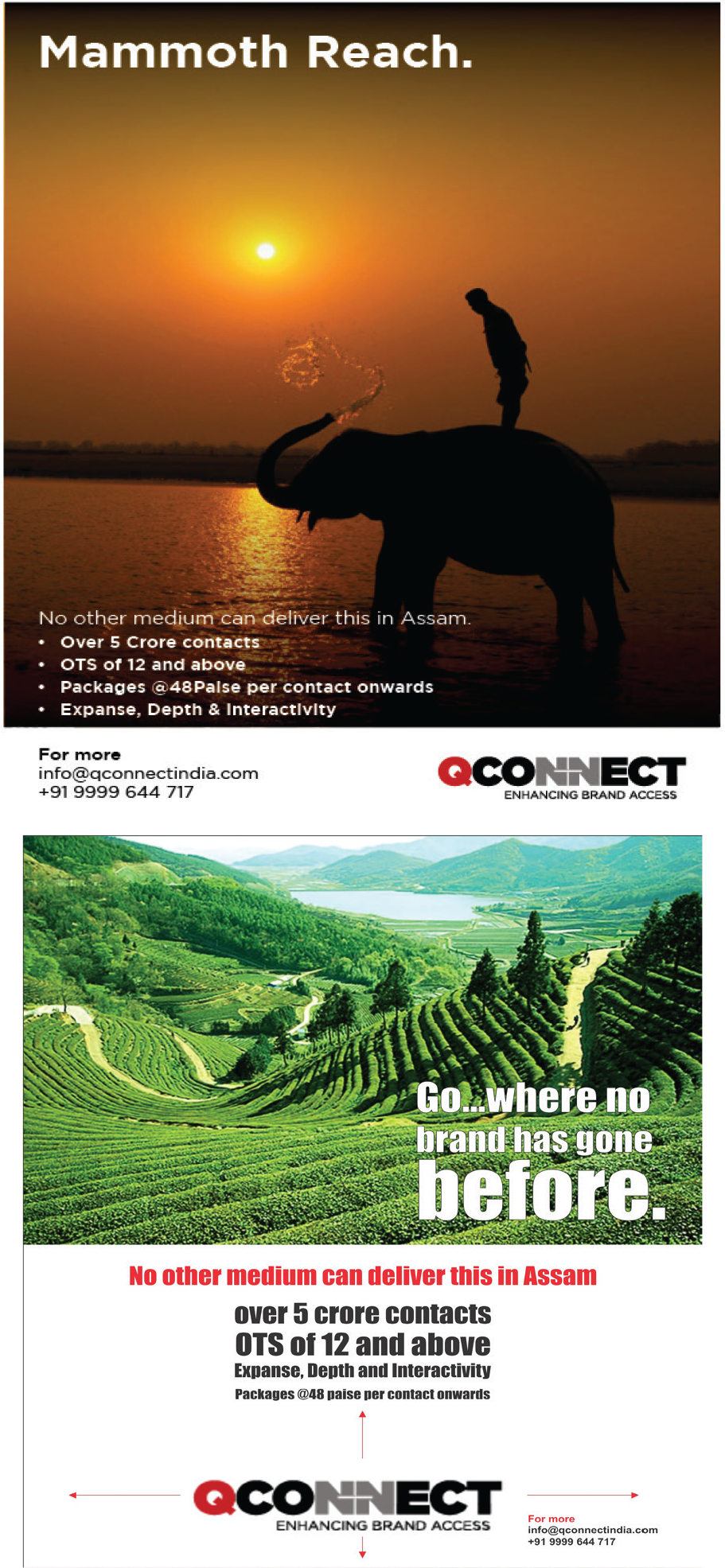
After getting in-principle agreement with theatre owners, Q-Connect started approaching different companies for showing them the potential of Assam mobile theatre. For reaching out to companies, Q-Connect sent e-mailers, which highlighted the unparalleled reach of Assam mobile theatre (refer to Exhibit 4 for the e-mailers developed by Q-Connect). Sibal made corporate presentations in which he described the associated benefits and packages to the managers in communicating brand message using Assam mobile theatre. The first two clients were Airtel and Parle. Airtel came aboard in 2011 as it wanted to communicate about the change of its logo to the target audience. Airtel signed a contract with Q-Connect in which it agreed for the sponsorship of four theatres. Once these clients were tied up, Q-Connect made exclusive contracts with theatre companies to become their sole agents for dealing with advertising and promotions in theatre company’s premises where shows were held. Later on, other companies like ITC (for its Bingo brand), SBI, Vodafone, NRHM, Aircel, and Life Insurance Corporation also signed up with Q-Connect. While engaging with clients, sometimes Q-Connect had to deal with local offices and in other cases, it had to reach out to their head offices in different metro cities of India.
COMMUNICATING TO RURAL CUSTOMERS
When Q-Connect was conceptualized, apart from Baruah’s experience of using banners for local brands and LCD projectors for video commercials, hardly any insight was available to Q-Connect for using Assam mobile theatre for communicating to rural customers. In order to plan out branding opportunities, Q-Connect followed the Aperture Concept of advertising. 2
In the Aperture Concept, aperture—referring to the opening of a camera lens—is used as a metaphor to illustrate the ideal point (time or place) where prospective customers could be reached with an advertising message. It works on the principle that advertising is most effective when it reaches the right people at the right time with the right message.
Different Advertising Options Identified by the Aperture Concept
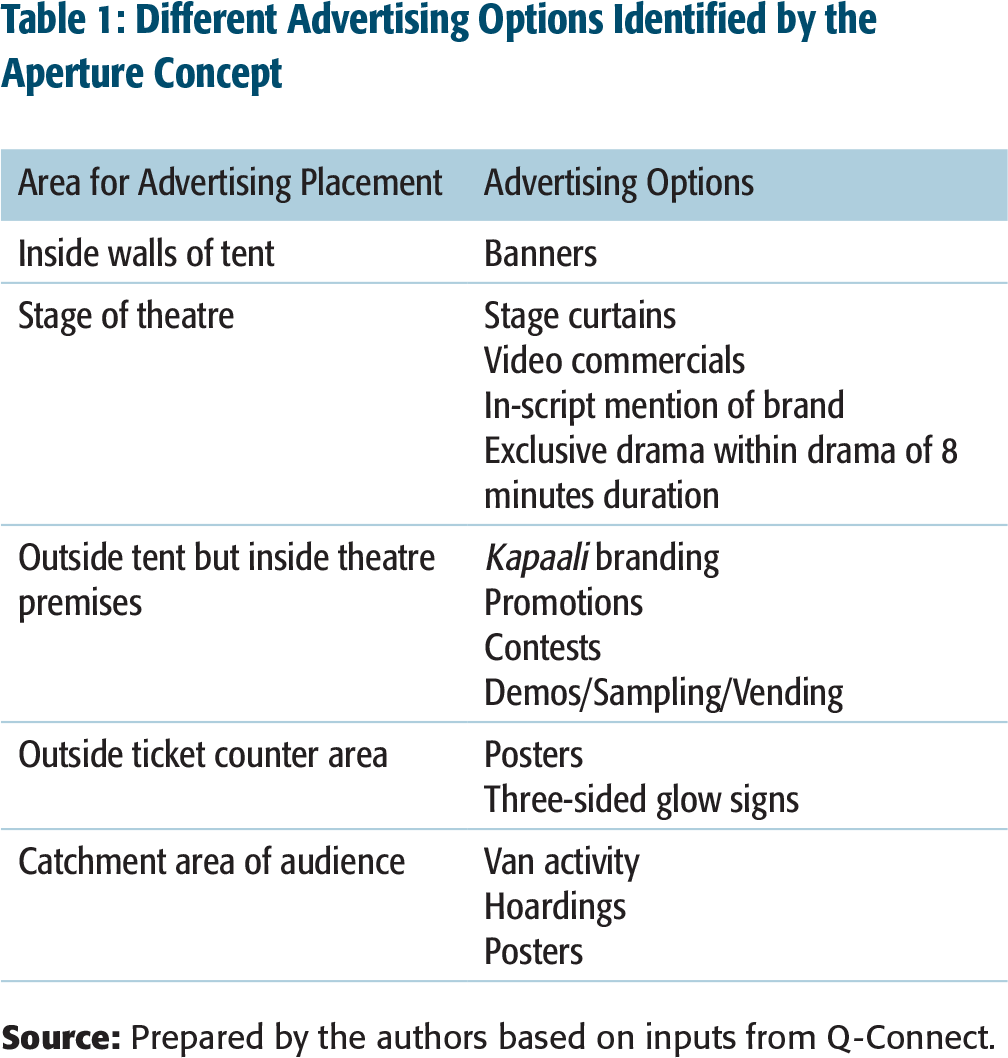
As brands started using Assam mobile theatre for communicating with rural customers, Q-Connect worked with the brands to enhance the depth of their reach. It monitored the on-ground implementation and provided feedback on success and failure stories. For example, it asked one of the companies to translate the video commercials to Assamese language as the ground team conveyed the lack of understanding for commercials in non-Assamese language. Q-Connect also experimented with newer advertising options and once their efficacy was validated, it was made available to brands (refer to Exhibits 7a and 7b for photos of inflatable balloons and ticket counter branding which were added later).
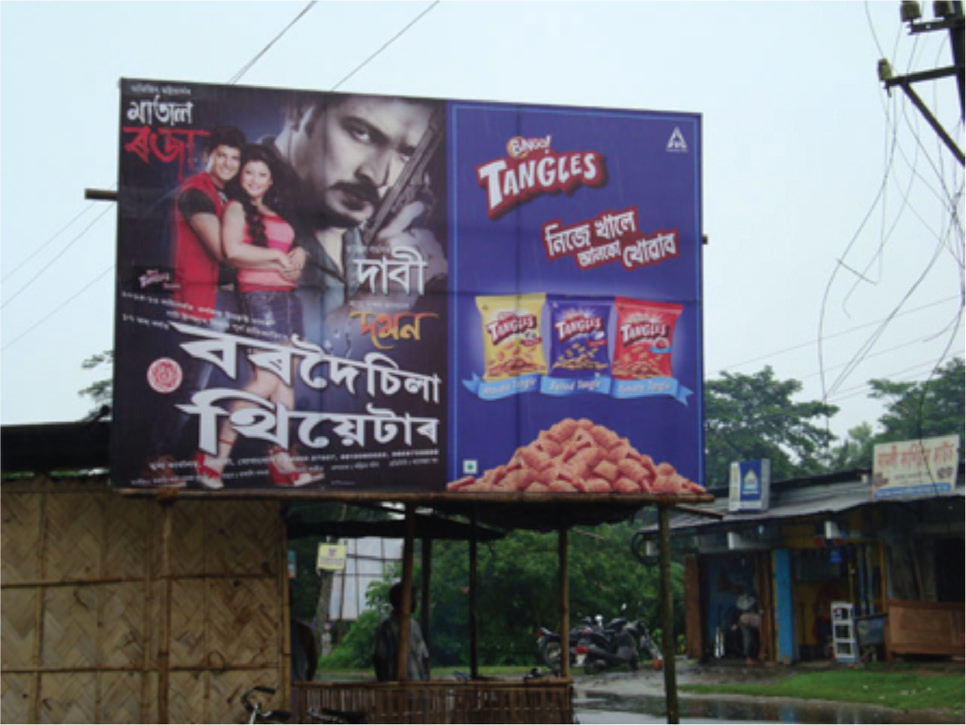
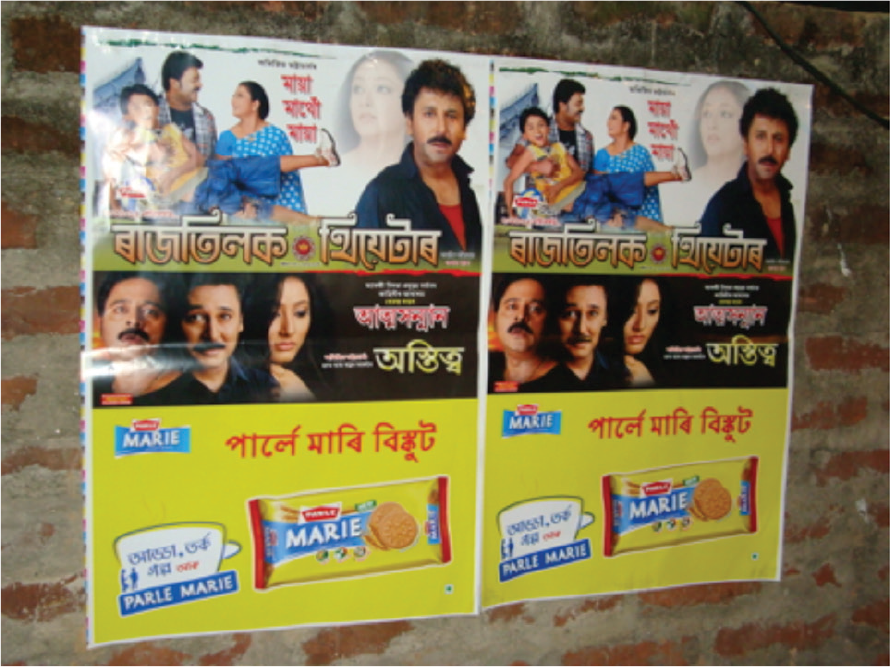
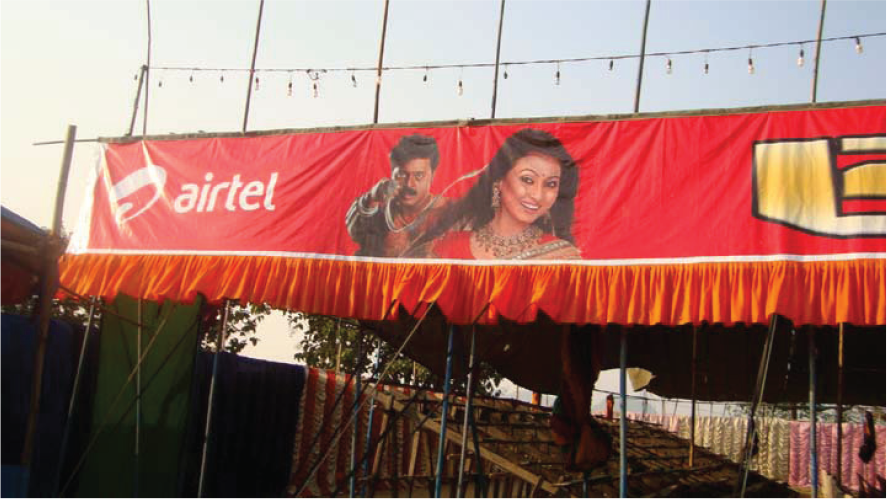
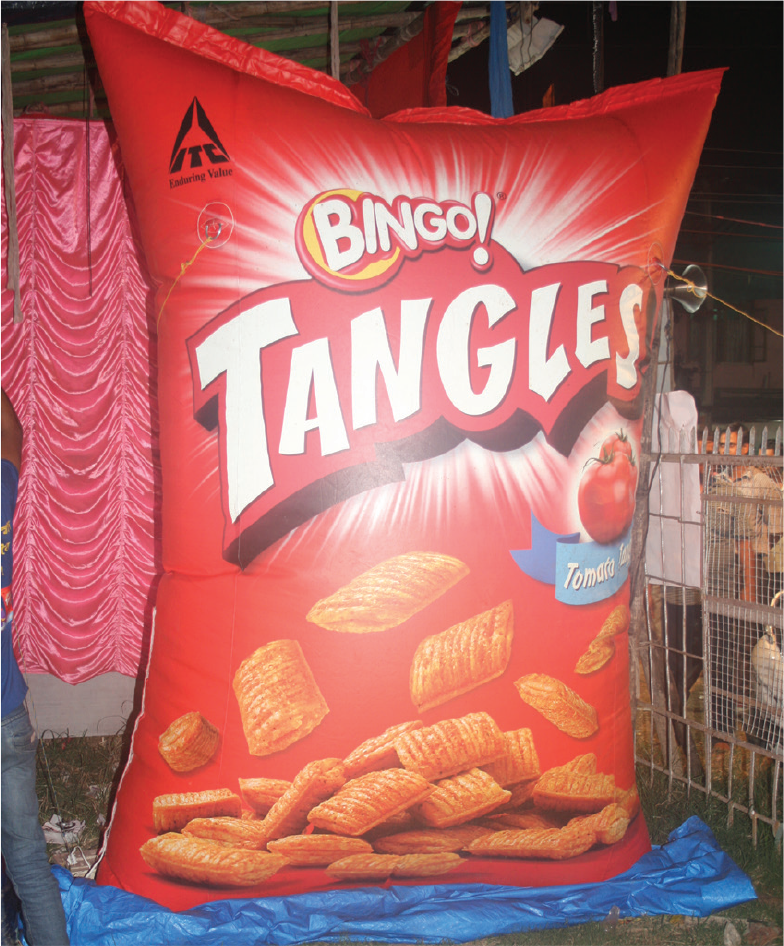
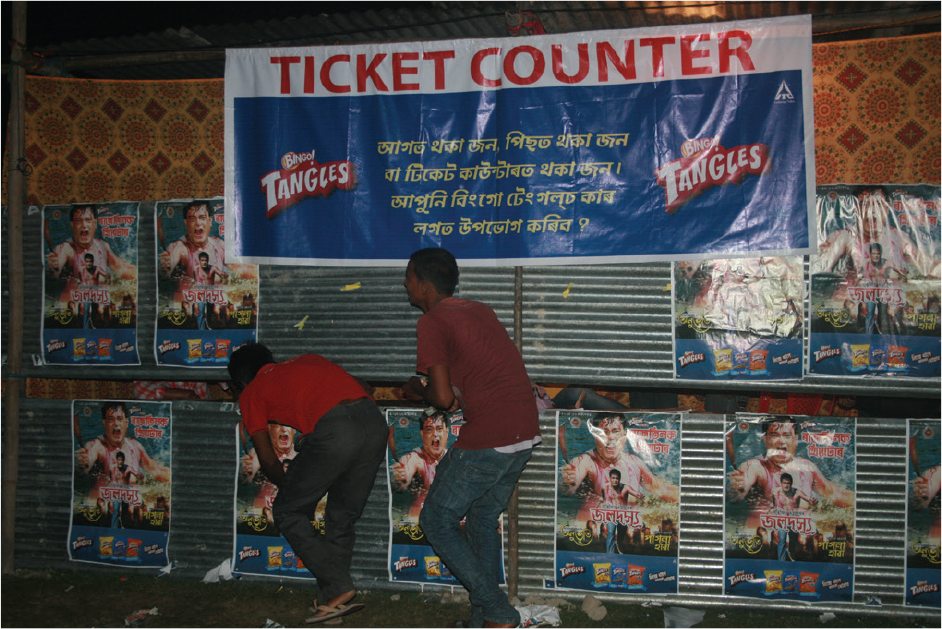
Q-Connect knew that brands will choose various advertising options based on their requirements. Thus, it labelled the different advertising options into three categories. The first category involved branding activities where companies could choose for sponsorship (pre-identified set of branding privileges), or additional branding packages or could make á la carte choice from individual advertising activities (refer to Exhibit 8 for a list of branding privileges under sponsorship available for 2015 season). The second category entitled brands to take up demonstrations, sampling, and promotions through stalls at the venue. In the third category, brands could take up extension activities through van activity within a radius of 30 km around the venue.
Exhibit 8: List of Branding Privileges under Sponsorship Available for 2015 Season
Presenting sponsorship
Gate, kapaali, and ticket counter
100 hoardings with branding
10,000 posters with branding
80 second TVC (Television Commercials) per day
10x8 hoarding outside theatre tent
4 banners inside theatre tent
One in-script mention
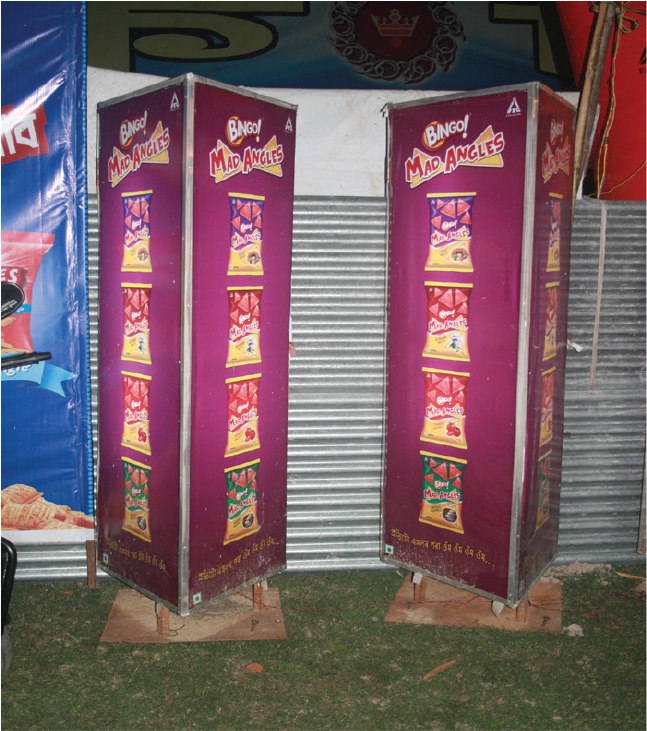
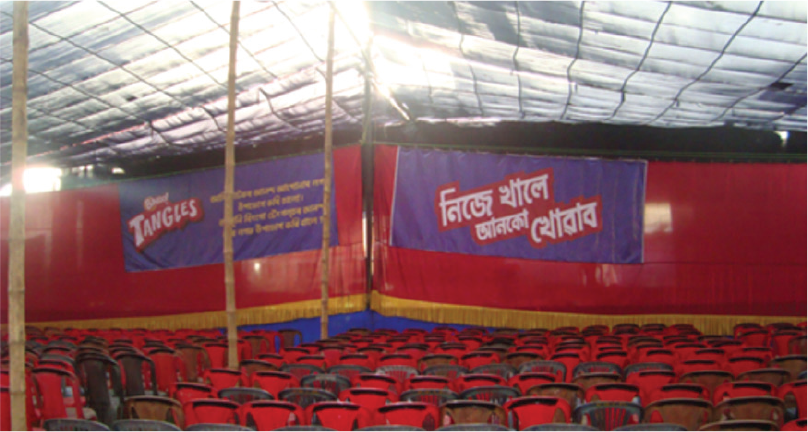
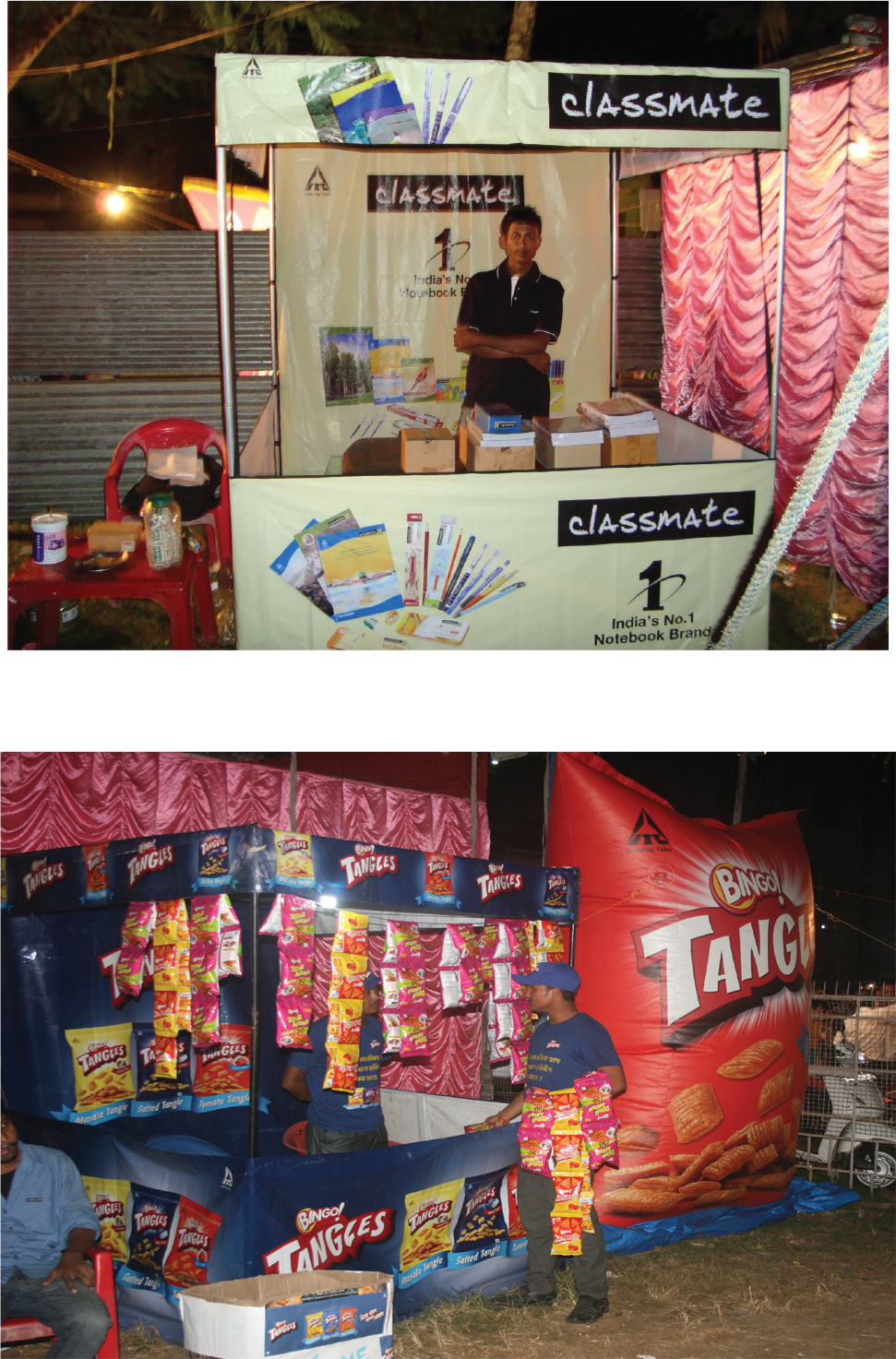
The companies approached the advertising options differently, for instance, Airtel asked Q-Connect for sponsorship and additional video commercials to announce change of its logo. ITC (for its brand Bingo: Mad Angles and Tangles) opted for sponsorship and additional video commercials, inflatable balloons, three-sided glow signs, and screen banners (refer to Exhibits 9a and 9b for photos of three-sided glow signs and screen banners). Parle used a mix of theatre sponsorship and van activity in areas peripheral to the show venue for enhancing its brand experience (refer to Exhibit 10 for photos of van activities).
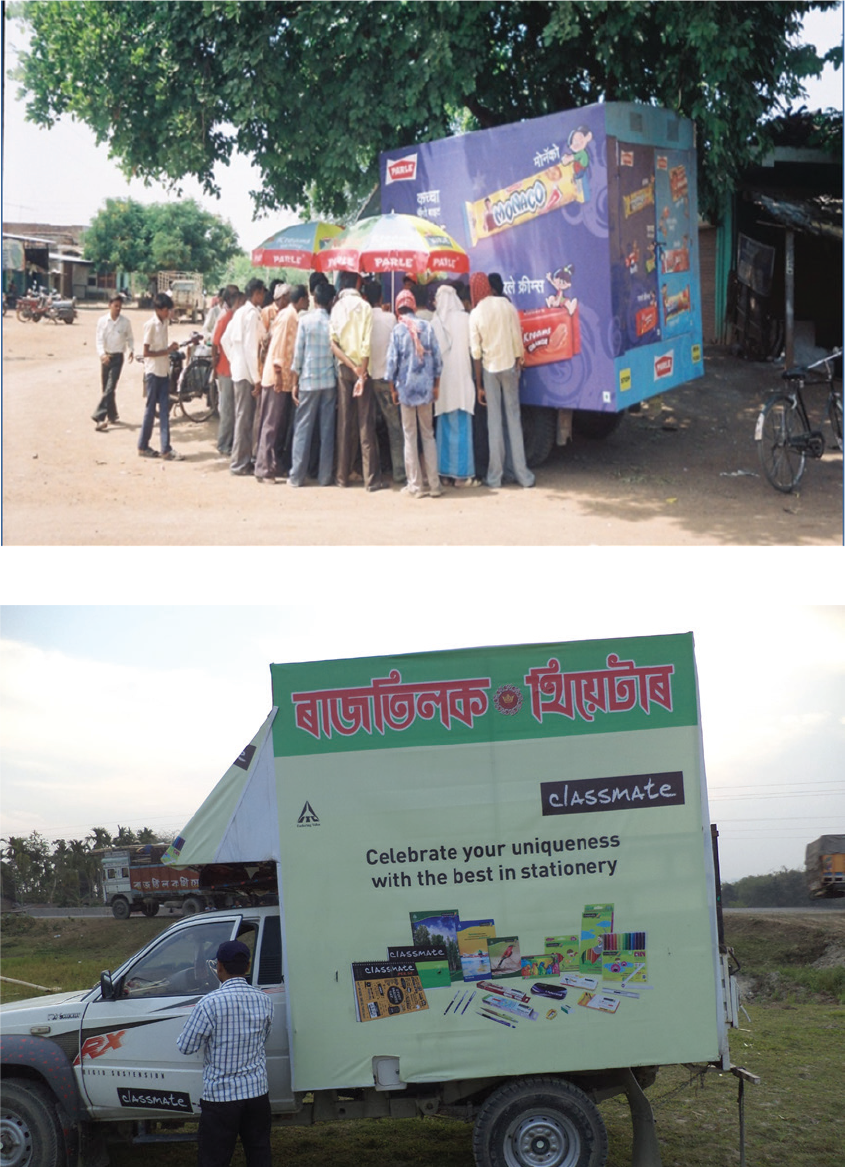
EVOLUTION OF Q-CONNECT
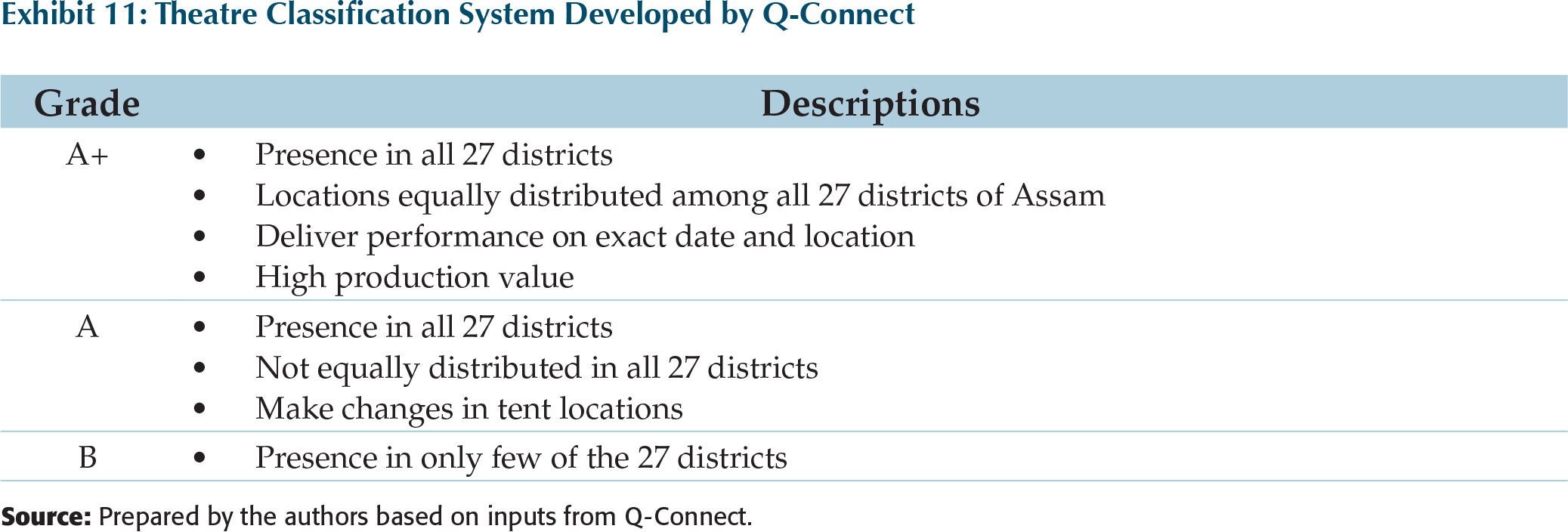
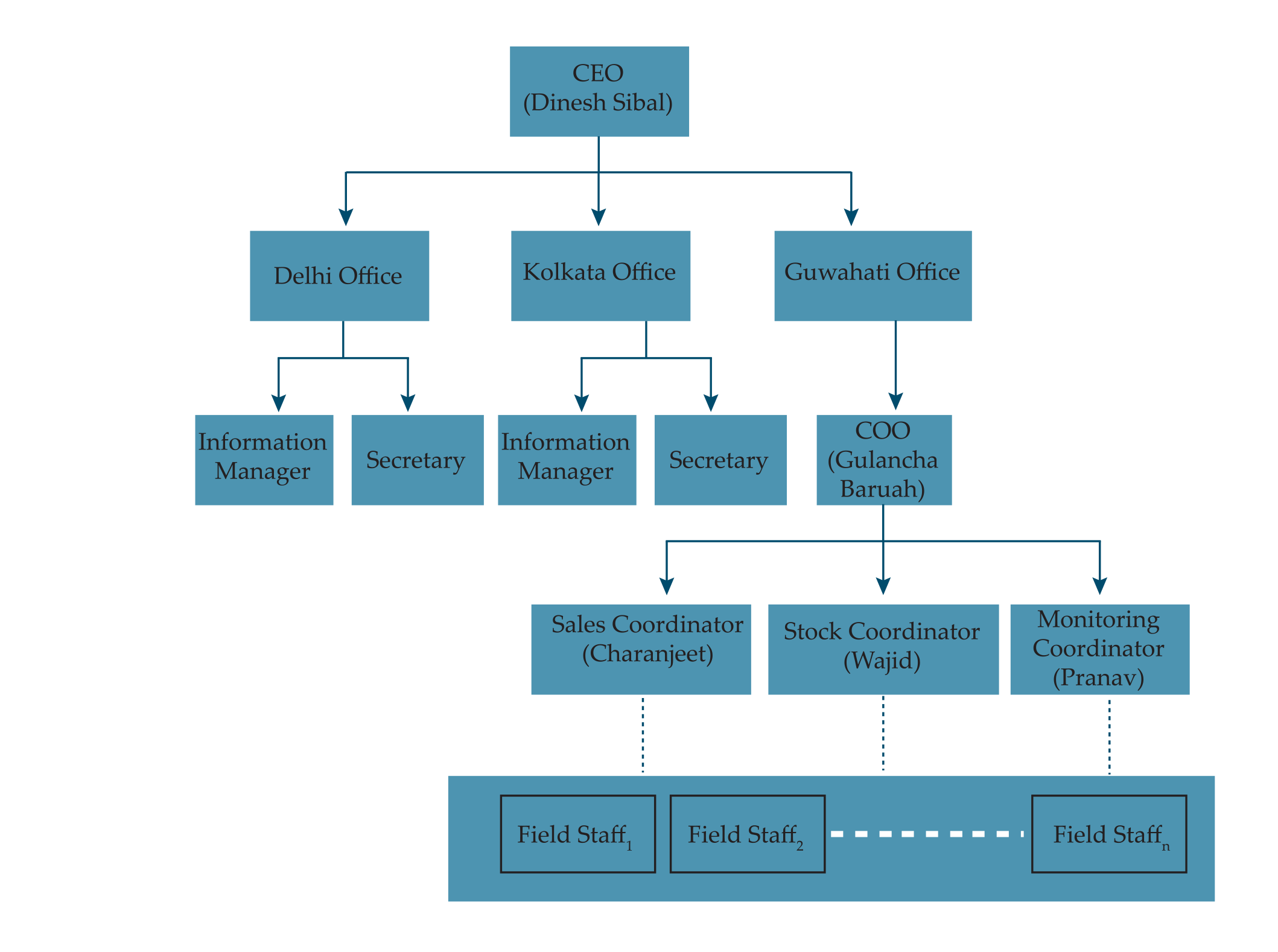
As Q-Connect added more clients who were willing to utilize Assam mobile theatre, it started growing as an organization. After working with 22 theatre companies in 2014, it was able to get sponsorship from different brands for 28 theatre companies in 2015. Q-Connect also evolved a system of classifying theatre companies into three categories which formed the basis of sponsorship payments (refer to Exhibit 11 for theatre classification system developed by Q-Connect). It also added sales activities to its set of services offered to clients. Q-Connect also received repeat business from many brands like ITC (Bingo Mad Angles and Classmate) and SBI. In order to coordinate with clients based in different cities, it appointed people in Delhi and Kolkata, who were called information managers and supported Sibal in dealing with clients. Baruah officiated as chief operating officer, based in Guwahati, where he was assisted by a team consisting of monitoring coordinator, sales coordinator, and stock coordinator. Apart from office staff, close to 80 people worked in the field (refer to Exhibit 12 for organizational chart of Q-Connect). Even though the field staff had been assigned certain key roles to perform, most of the people ended up multitasking.
Theatre Classification System Developed by Q-Connect
Monitoring Format Used by Q-Connect
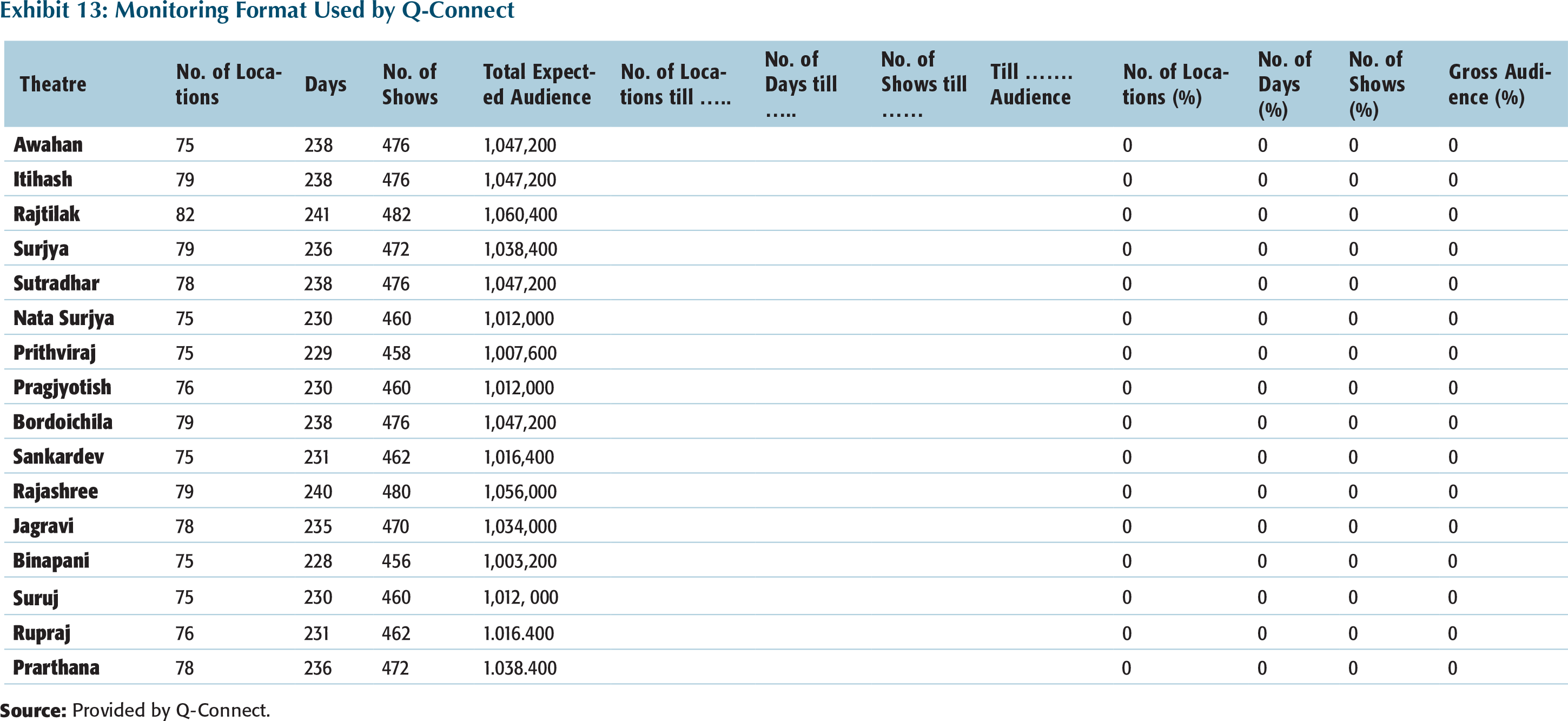
With sales activities becoming important, van operations had become crucial for Q-Connect success. Before every show, the Q-Connect van, along with three staff members, visited the theatre to organize their advertising activities such as placing billboards, banners, entry gates, kiosks and so on in and around tent. After putting up the advertising materials, they visited the catchment area for van-based promotions of the brand and also made announcements about the theatre show. During the show, they took up selling of brands’ merchandize inside the tent (refer to Exhibit 14 for photos of Q-Connect staff selling merchandize). They generally stayed with the theatre team during three days of its performance wherein food and lodging was provided by the theatre company. They also coordinated with the Guwahati office of Q-Connect during client visits. Sales were supervised by the sales coordinator who often visited the field staff to motivate and help them in achieving their sales targets. Sibal stated:
"Our field team is crucial to our operations. Apart from fixing advertising at theatre tents, their role is important in ensuring that customers’ have a pleasant experience with brand. Accordingly, I have designed an incentive system wherein all margins from the sales of merchandise go to field staff and sales coordinator. I always tell them—nothing in my pocket and nothing out of my pocket."
Sibal realized that sustaining Q-Connect required offering high quality services to its clients. It also needed to create long-term relationships with brands for them to continue/come back to Q-Connect. Therefore, Q-Connect often undertook research, helped in designing new promotional material, collected and provided feedback, and carried out other supportive activities—without demanding any financial benefits from their clients. This helped the brand’s message to reach its target audience in a deeper, interactive, and effective manner. One of the guidelines given to the field staff was to ensure that there should be no ambush marketing attempts by competitors of the brands with which Q-Connect had a tie-up.
Sibal knew very well that business thrived when there was trust among all members of the ecosystem including brands, theatres, local partners, and Q-Connect employees. To cultivate this trust, he never asked for advanced payments from the clients once the client signed up. The sponsorship model was showcased for one month and only then invoices were raised. He considered it important that Q-Connect provide mutual benefits to all members of the ecosystem. He saw it as an ideology of Q-Connect.
Challenges Faced by Q-Connect
Implementing the ideology of Q-Connect was not an easy task as the organization faced a number of challenges. The first challenge was reaching out to product managers of different brands for using Assam mobile theatre as an effective option. Although Assam has a lot of potential for sales in many product categories, it remained low in priority for money spent on advertising and consequently advertising money allocated to Assam was significantly less in many product categories. With limited budget, most of the media planners chose traditional options like newspaper and television advertisements while planning for Assam.
Second, Q-Connect dealt with a number of theatre companies, it needed to ensure that the theatre companies saw value in fulfiling the commitments made under sponsorship deal signed with Q-Connect. For example, the Hengool Theatre Company, after making all the commitments and signing the contract for sponsorship deal with Q-Connect, denied permission to paste brand logo on kapaali. This led Sibal and Baruah to detail out penalty clauses for non-fulfilment of promises. Also, as each theatre company had a different working style, legal standardization of contracts was a challenge as Q-Connect did not want to be seen as providing additional privileges to any particular theatre company.
As the set of activities increased with a large number of brands and theatre companies coming on board, Q-Connect faced challenges in execution prior to the beginning of theatre season in mid-August. The production of different types of advertising materials required detailed planning and coordination with offices of brands and theatre companies. Time management became crucial to accomplish timely delivery of advertising materials as multiple theatres started their show at different location. As theatre companies continued to have their shows on a daily basis, without any interruptions on account of rains or inclement weather, Q-Connect could not delay dispatch of materials if it received requests from its staff or theatre companies about replacement of damaged advertising materials. Though Q-Connect owned two vehicles delivery of advertising materials, delivery to faraway locations in hilly terrain made transportation tough to handle.
Another challenge, Q-Connect faced was with respect to its employees. The educational qualifications along with limited exposure to outside world and exposure of working in only rural environment, made it difficult for the employees to execute, plan, and achieve higher sales. Additionally, continuous travel and late working due to night shows of theatre required commitment from field team for Q-Connect to deliver its promise to brands. Often, finding a team member who showed the right attitude and commitment proved to be difficult.
Sometimes, Q-Connect also faced on ground objection from local communities. Though Q-Connect was the sole agents for dealing with advertising and promotions in theatre company’s premises where shows were held, local business players tried to exploit theatre shows at an unfair cost. For example, Q-Connect had to allow vendors selling locally packaged popcorn which cannibalized sales of branded snack items like Bingo Mad Angles. Q-Connect had to often accommodate such requests from local societies/committees where it lost out on monetary compensation.
While facing these challenges, Q-Connect was clear that it would not take up advertising of political parties or surrogate advertising for liquor products. Q-Connect officials realized that audience for theatre shows did not show class and income divide. The audience coming to the theatre show represented the demographics of the particular region. Even late night shows, whenever they were held, saw presence of women in large numbers. Given the cosmopolitan profile of audience, Q-Connect did not want to offend the family values or political ideology.
LOOKING AHEAD
Now that linking Assam mobile theatre with brands had been established, Sibal was thinking of further growth. He wondered if Q-Connect should take a path of vertical or horizontal expansion.
Assam had a rich tradition of different festivals, including Bihu. 3
Bihu is a traditional part of Assamese life and celebrations, consisting of three cultural festivals coinciding with distinctive phases in the farming calendar. It is celebrated through local dance, music, local food, leisure time, performing worship of god, shopping, and fishing.
Sibal was also aware about the scope of horizontal expansion using prominent traditional media options similar to the mobile theatre in Assam, in other states of India (refer to Exhibit 15 for an illustrative list of folk media options in other states of India). While some efforts had been made to commercially use these folk media options, there was no systematic effort to tie up all players present in the state. Sibal wondered if he could replicate the success of Assam mobile theatre in Bengal, neighbouring Assam, where Jatra was the common folk media (refer to Exhibit 16 for a short note on Jatra).
While Sibal had started thinking about future growth options, he was yet to take a decision on the way forward. Amidst these deliberations, he was happy to receive a request from a leading consumer durable company for reaching out to customers in Assam using Assam mobile theatre. However, he wanted to be sure about the possibility of sale of durable products like a pressure cooker through Assam mobile theatre before he responded to the company representatives. He recalled a previous experience when the advertising of cream biscuits launched by a leading FMCG player did not work out as planned since the target audience, comprising 5- to 10-year-olds, were not present in large numbers during the shows.
Sibal wondered if Q-Connect should take up promotion and sale of consumer durable products. He realized that the decision to deal with the sales of consumer durables category will also have implications for expansion decisions. He decided to sit with Baruah and discuss the issue in detail before he proceeded further.
Illustrative List of Folk Media Options in Other States of India
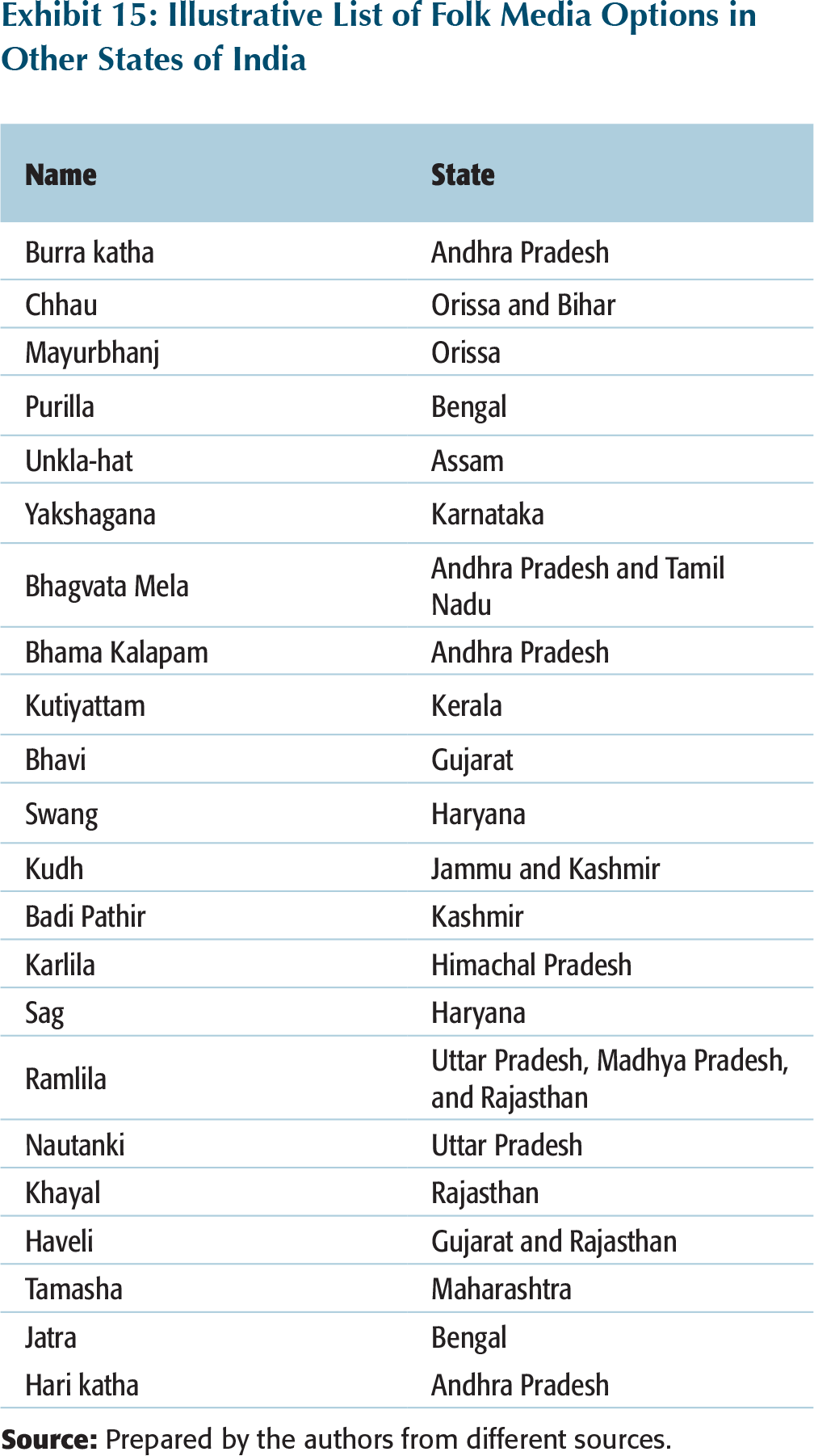
Exhibit 16: Short Note on Jatra
Jatra is a Bengali word derived from Sanskrit word Yatra, which means journey. It is a traditional folk theatre form popular in Bengali speaking regions of India such as West Bengal, Assam, Bihar, Tripura, Orissa, and in Bangladesh. Jatras are performed by mobile theatre groups in the form of an opera by moving from one place to another. Mostly, Jatras are performed under the open sky to entertain rural as well as urban population. In the earlier form, Jatra was performed in rural Bengal during festivals and village fairs with actors performing on a raised stage and audience surrounding the stage on all sides. As Jatra made its entry into urban areas, the performances started happening in auditoriums as well. Jatra season generally starts in September, just before Durga Puja (Indian festival popular in the eastern part of India) and ends in June, before the onset of the monsoon season. During the season, more than 55 touring Jatra troupes visit around 4,000 locations performing shows.
Performance in Jatra comprises four hour long plays with music as a key element. Generally, the music concert involving folk music and dance, takes almost one hour to attract and entertain audience. Musicians sit on two sides of the stage and use classical music instruments such as tabla, 4
Tabla is a pair of hand drums of contrasting sizes which is used in classical music of South Asian countries.
Dholak is a two-headed hand drum played in South Asia.
Themes of dramas are generally based on mythology, historical event, educational aspect, patriotism, and social and moral issues. Sometimes, Jatra troupes also perform shows on contemporary themes such as Iraq war, London bombing and 9/11 USA terrorist attack. By some estimates, the Jatra audience numbers around 120 million, treble that of cinema audiences. In rural Bengal, sometimes, single performance of shows draws more than 10,000 viewers. However, lately, Jatra theatres have begun to shrink as television has emerged as preferred entertainment medium.
Footnotes
ACKNOWLEDGEMENT
We gratefully acknowledge the funding support provided by Case Centre, IIM Ahmedabad in developing this case.