Abstract
Executive Summary
The e-commerce industry in India has seen unprecedented growth in last few years. Eyeing India’s substantial e-retail opportunity across multiple segments, investors have been aggressively funding the e-commerce sector. This growth has been fuelled by rapid adoption of technology, improving standards of living, an increasing young population, and economically advancing middle class, besides increasing access to the Internet through broadband and use of smartphones and tablets. The entry of global e-commerce giants has intensified the competition for home-grown players. E-retailers use web atmospherics to differentiate themselves from their competitors and evoke positive cognitive and emotional states of online consumers. However, though this Indian online market is growing at an exponential rate, it is still unexplored in terms of its shopping behaviour. Using structural equation modelling, this study applies the concept of the stimulus–organism–response to explain Indian buyers’ online shopping behaviour, besides examining the importance of design elements in enabling website satisfaction (WS). Using a survey method to test the research model, primary data were collected from five Indian metropolitan cities of Delhi, Mumbai, Kolkata, Bengaluru, and Hyderabad during the months of May and June 2015. Confirmatory factory analysis (CFA) was used to estimate the measurement model with respect to convergent and discriminant validities. This was followed by testing the structural model framework and research hypotheses. Findings suggest that both internal and external elements have direct influence on WS. As the mediating variable, WS affects purchase intention. This research highlights on why and how ‘satisfaction with website’ matters in the contribution of shopping values and website atmospherics to behavioural outcomes by presenting its mediating role.
Keywords
Eyeing India’s substantial e-retail opportunity across multiple segments, investors have been aggressively funding the e-commerce sector. The entry of global e-commerce giants such as Amazon and Alibaba in India has intensified competition. Reckoned for their financial might and strong business expertise, these players have rich learning experience in a multitude of markets at different levels of the business cycle. Increased competition has made home-grown players such as Flipkart, Snapdeal, and Jabong experiment with alternative means to attract shoppers and increase online traffic. They are increasing the number of vendors on their market place, designing customer-focused services and expanding their delivery services to the remote parts of India.
The emergence of fierce competition has made online marketers use web atmospherics and its elements to differentiate themselves from their competitors, thus creating a web environment that evokes positive cognitive and emotional states of online consumers. Kim and Lennon (2010) and Mazaheri, Richard, Laroche, and Ueltschy (2014) have noted that e-retailers endeavour this to induce a desired behaviour from shoppers like their inclination to devote more time and money on their web portal. Hence, to improve shopping experience, online marketers must conceptualize and design a web environment in such a way that it enables consumer interactions (Dailey, 2004).
Studies, like Bosnjak, Galesic, and Tuten (2007) and Chiou and Ting (2011), have examined online purchase intention(s). Other related themes such as emotional effect of online shopping (LaRose & Eastin, 2002), online shopping motivations (Lee, Kim, & Fairhurst, 2009), and online WS (Anderson & Srinivasan, 2003; Bai, Law, & Wen, 2008) have been comprehensively deliberated and researched. Conclusively, it has been shown that online shoppers’ complex buying behaviour is influenced by internal shopping values as well as external web atmospheric cues.
However, there is a vast gap in the existing literature on buying behaviour and consumption pattern in the Asia-Pacific region. The majority of studies have focused on developed economies such as the United States or European countries (Ha & Stoel, 2012). Studies on Indian shoppers’ motives for buying—internal (shopping values) and external cues (web atmospheric factors)—are far and few in the domain of marketing and online merchandising. Owing to differences in socio-cultural and demographic variables as well as other factors influencing buying, existing studies might not reflect online buying framework and pattern as applicable to the emerging markets like India. This presents a need for undertaking an empirical study to determine various antecedent factors and their relative significance in influencing online purchase intentions of Indian shoppers. Hence, this study applies the concept of stimulus–organism–response (S–O–R) to explain Indian buyers’ online shopping behaviour.
Another objective of the study is to augment the present knowledge on the importance of design elements and delivery of the controllable web environment cues in enabling WS. More precisely, the present research emphasizes on how online shoppers observe and understand the internal factors (online shopping values) and external factors (web environmental cues). The study contributes significantly in determining the robustness of factors influencing shoppers’ attitudes towards online shopping websites by investigating the rationality of the suggested framework as well as the prominence of internal (two) and external (three) factors.
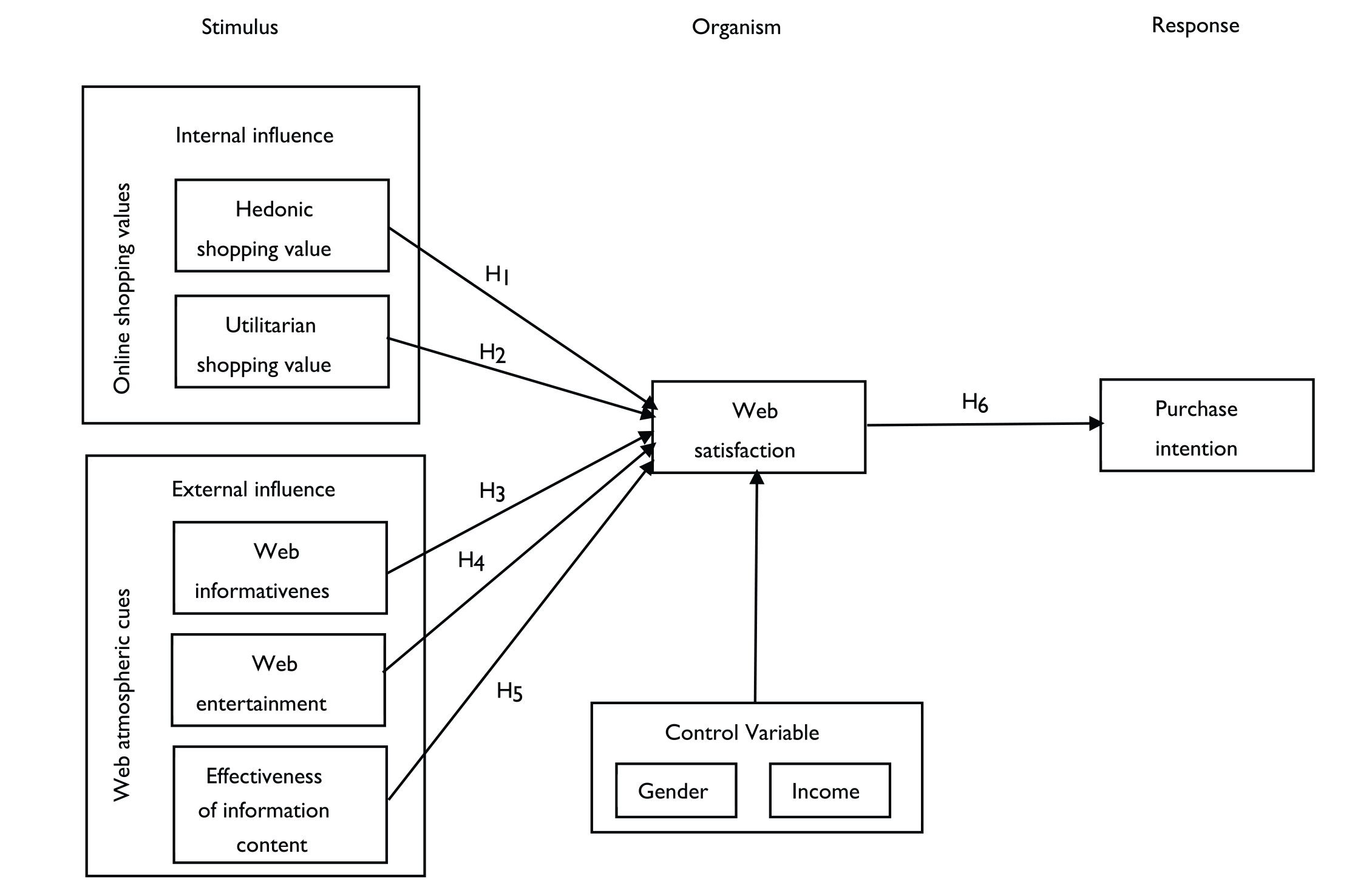
Through the S–O–R model, an attempt has been made to describe the impact of a store’s offline and online environment on consumers’ shopping behaviour. With stimuli, mediating variables, and behavioural outcomes, the proposition of the S–O–R framework is that shoppers passionately respond to environmental variables. The present study defines the relationships between online shopping values (hedonic and utilitarian) and purchase intention; the influence of web atmospheric cues on shoppers’ purchase intention; and the mediating role of WS in the relationship among shopping values, website atmospherics (stimuli), and purchasing behaviour (response).
LITERATURE REVIEW AND HYPOTHESIS FORMULATION
The Stimulus–Organism–Response Framework
In their seminal work, Mehrabian and Russell (1974) conceptualized the S–O–R framework that explains ‘the impact of environmental stimuli (S), which affect organisms (consumers; O) and result in approach or avoidance response (R) behaviours’. According to this model, physical stimuli such as colour, aroma, music, and illumination stimulate sensations such as pleasure, arousal, and dominance. As per Ha and Lennon (2010), these physical stimuli include sensory variables of everyday surroundings. The response could manifest in searching (browsing) for shopping stores and in purchase and/or repurchase intentions. Substantiating the S–O–R framework, various studies have noted that individuals’ behavioural response is induced by the influence of environmental elements on them (Ha & Lennon, 2010; Mummalaneni, 2005).
In the retail context, the S–O–R model was first used by Robert and John (1982). The authors operationalized stimuli as atmospheric cues, organism as consumers’ cognitive or emotional states, and response as approach or avoidance. Eroglu, Machleit, and Davis (2001) used this framework to comprehend atmospheric qualities of e-commerce. The study showed that online shoppers’ involvement level and atmospheric responsiveness mediate the association between atmospheric cues and buying behaviour (outcomes) like website revisit as well as time and money spent. A study by Menon and Kahn (2002) opined that when shoppers are directed to a pleasant online website, they search for stimulating products, spend more time browsing the website, and exhibit the tendency of actively engaging in impulse purchasing. It also established that e-shoppers’ emotional states, induced by the first experience with the web portal, can impact their succeeding shopping behaviours.
The S–O–R model has also been used to understand shoppers’ intrinsic motivations for online shopping and how these motivations have significant impact on their online shopping satisfaction (McKinney, 2004). Mummalaneni (2005) reported that there is a significant effect of the consumers’ emotional state on their online satisfaction. It also noted that the association between web atmospherics and WS was totally mediated by pleasure and arousal. Studying the influence of website cues on attitudes towards a website and corresponding response, Richard (2005) observed that the cues provided by a website have effect on consumer attitude and response behaviour. Koo and Ju (2010) observed that online environmental signals do impact consumers’ emotions and intentions. Wang, Hernandez, and Minor (2010) used the S–O–R model and found that there is a substantial connection among web aesthetics, service quality, and satisfaction. Similarly, establishing the influence of several website signals on online consumers, Ha and Lennon (2010) opined that pleasure and arousal, stimulated by the website atmospherics, are positively linked with shopper satisfaction, buying intention, and approach behaviour.
The present work proposes a research model based on the S–O–R concept (refer Figure 1). We use shopping values (hedonic and utilitarian) as internal motivation and web atmospheric cues (information, entertainment, and effectiveness) as external motivation. We have considered WS as ‘organism (O)’ and consumers’ purchase intention reflecting behavioural outcomes as ‘response (R)’.
Indian Consumer Research
The trend of rapid globalization has created the notion of ‘borderless’ world, a world without any boundary, nevertheless cultural influences impact many facets of consumer buying behaviour (Banerjee, 2008). In a three-country cross-cultural study of environmental friendly products, Bhate (2002) posited that UK respondents generally displayed non-committal attitude and behaviour; however, the Indian respondents exhibited greater involved attitude, which was further shown in their purchasing behaviour. Singh, Fassott, Zhao, and Boughton (2006) observed and concluded that online shoppers belonging to three different nations, namely Germany, China, and India, favoured web portals that have been adapted to their local culture. The authors also stated that values, principles, and beliefs definitely influence shoppers’ purchase intention on the Internet through an online shopping portal. The authors reported that e-commerce portals that were consistent in depicting cultural aspects were rated more positively on factors such as ease of navigation, appearance, buying intention, and attitude towards the portal. In another study, Gupta, Iyer, and Weisskirch (2010) reported that in comparison to the US consumers, Indian consumers were less apprehensive to divulge private information on the Internet.
Online Shopping Values
The extant literature on retailing suggests that experience of a consumer, while shopping, is an amalgamation of hedonic shopping value (HSV) and utilitarian shopping value (USV; Babin, Darden, & Griffin, 1994; Liu & Forsythe 2010; To, Liao, & Lin, 2007). Latent entertainment and emotional values underlying in a shopping are reflected by a hedonic tendency, which is manifested through enlarged arousal and involvement, besides perceived freedom, escapism, fantasy, and emotive facets of the buying experience (Babin et al., 1994; Sorce, Perotti, & Widrick, 2005). The USV arises when the shopper achieves specific needs, reflecting a non-emotional, goal-oriented outcome (Babin et al., 1994). Literature has identified shopping values as either intrinsic or extrinsic in nature. The hedonic (intrinsic) value indicates pleasure, delight, fun, and leisure, while the utilitarian (extrinsic) value relates to the practical characteristics/goals of shopping.
Numerous researchers have suggested that both hedonic and utilitarian values motivate buying behaviour, leading to increase in online shoppers’ web satisfaction (Kim & Eastin, 2011; Sorce et al., 2005). According to Wolfinbarger and Gilly (2001) and To et al. (2007), online shoppers with a hedonic motivation look for explicit and exclusive experiences that have the ability to increase pleasure and entertainment of shopping online. On the other hand, consumers with utilitarian motives emphasize on the functional attributes of online experiences such as a product’s price, quality, usability, and other buying task-related features (Sorce et al., 2005). Noting the impact of these two shopping values on purchasers’ attitudes towards online shopping, studies like Childers, Carr, Peck, and Carson (2002) and Chiou and Ting (2011) have established that buyers might have pre-decided goal-oriented buying motives in purchasing hedonic products that have a positive influence on their WS.
In their extensive study on hedonic shopping, Hausman and Siekpe (2009) posited that the website’s effectiveness and informativeness have a positive influence on utilitarian shoppers’ attitudes towards the web portal (satisfaction with the website) and their purchase intentions. Similarly, Bui and Kemp (2013) observed that ‘of the internal shopping values, hedonic shopping was linked to an increase in how often a customer purchases goods and services online’.
Given these, the following hypotheses are proposed for the present study:
H1: HSV has positive impact on WS.
H2: USV has positive impact on WS.
Web Atmospherics Cues
In his seminal work on atmospherics, Kotler (1973) elucidated it as a ‘conscious designing of space to create specific effects on buyers’. Baker, Grewal, and Parasuraman (1994) found store surroundings and atmospherics to be more persuasive than those marketing variables that are not available at the sales counter. Extending the concept of atmospherics to online shopping context, web atmospherics can be understood as ‘conscious designing of web environments to create positive effects among users in order to increase favourable consumer responses’ (Dailey, 2004). According to Rayburn and Voss (2013), web atmospherics is similar to the conventional store atmospherics that offers vital data about the store and tends to affect shoppers’ attitudes and outcomes. Hence, e-retailers also must build an atmosphere through their website that can favourably influence consumers’ perception of the online store and enhance experience with the same (Eroglu, Machleit, & Davis, 2003).
Scanning the comprehensive literature on online buying behaviour reveals that studies have used different features to describe the web atmospherics (Hausman & Siekpe, 2009; Ranganathan, 2012). Mummalaneni (2005) has included features such as the layout of website (roomy or cramped), display fonts (large or small), display quality (good or bad), display colours (dull or bright), and so on. In the same year, Richard (2005) defined the concept of atmospherics using dimensions such as effectiveness, navigability, entertainment, and informativeness. To study the impact of atmospheric elements, Hausman and Siekpe (2009) used characteristics such as inbuilt search options, different choices of languages, stimulating gifts or humorous content, and security features.
It is worth mentioning that there exist two streams in literature related to the portals’ environmental features. One set pivots around interface features that can be manipulated. This includes colours, font, text size, and music, if any. Studies, like Davis, Want, and Lindridge (2008) and Eroglu et al. (2003), have noted that these elemental cues have strong influence on emotions (arousal and pleasure) and their impact is automatic and subconscious. The other set of studies pertains to assessment and evaluation of website’s characteristics such as informativeness and effectiveness. This includes studies like Hoffman and Novak (1996) that described informativeness as the capability of a portal to make information available to shoppers and Chen and Wells (1999), according to whom ‘entertaining’ refers to exciting, enjoyable, cool, exhilarating, and highly imaginative experience. Furthermore, Eroglu et al. (2003) and Richard (2005) have classified atmospheric cues into high-task- (that enable the realization of shopping goals) and low-task- (relatively inconsequential) related elements.
Studies related to the influences of online portal’s atmospheric elements have been viewed from two different perspectives. While Richard (2005) highlighted cognitive responses of shoppers such as site involvement, studies like Floh and Madlberger (2013) have deliberated on their emotional response like perceived enjoyment, as generated by the shopping environment. While a very limited research has explored cognitive responses, emotional responses have been investigated by many studies (Liu, Li, & Hu, 2013). As per Liu, Li, and Hu (2013), visual appeal of cues (retail portal) positively affects buyers’ normative evaluation and immediate fulfilment (internal reaction). In an Indian context, Prashar, Vijay, and Parsad (2015) stated that e-shoppers prefer those online stores that provide them with superior web atmospherics, consisting of eye-catching graphics and an interesting website’s design and layout.
Online shoppers tend to use web portals to look out for information and purchase goods/services by spending very little time and effort. The precise, pertinent, and current information provided by web portals will decrease shoppers’ time and energy spent on searching information, which in turn help them attain enjoyable experiences (Kim & Li, 2009). In an extensive model, Mazaheri, Richard, and Laroche (2011) included emotional and cognitive variables in online buying behaviour. This study deliberated the relationship of perceptions about site atmospherics with buyers’ emotional drives such as pleasure, arousal, and dominance. Accordingly, this perception influences shoppers’ attitudes towards web portals and products, involvement with websites, and buying intentions.
As information and entertainment are two critical features of web portals, the Internet has been described as an ‘infotainment’ medium (Eighmey, 1997). Although web informativeness (WI) is an important feature, Pearson, Tadisina, and Griffin (2012) opined that ‘what type of information is provided’ and ‘how it is presented’ are equally significant. In line with Richard (2005), ‘effectiveness of information content’ (EIC) can be used to determine whether the information provided by a website is correct, latest, complete, and pertinent for shoppers.
Given this, following hypotheses are proposed for the present study:
H3: Online shopping WI has positive impact on WS.
H4: Online shopping WE has positive impact on WS.
H5: Online shopping website’s effectiveness has positive impact on WS.
Relationship between Website Satisfaction and Purchase Intention
Oliver (1980) defined customer satisfaction as ‘customers’ evaluations of a product or service with regard to their needs and expectations’. Satisfaction portrays an emotional state of mind in response to a favourable experience (Westbrook, 1981). The primary goal of any business firm being pursuit of customer satisfaction, a service provider must maintain direct interaction with customers and continually assess their intentions. In the context of online sales, buying intention is a function of the strength of a shopper’s endeavour to perform a specific buying behaviour through a web portal (Lin & Ding, 2005). In the online context, Anderson and Srinivasan (2003, p. 125) defined e-satisfaction as ‘the contentment of the customer with respect to his or her prior purchasing experience with a given electronic commerce firm’.
Various studies have empirically evidenced a positive connection between shoppers’ satisfaction with websites and their online purchase intention on the same. Zeithaml, Berry, and Parasuraman (1996) observed that upon receiving satisfactory services from an online portal, customers reveal positive behavioural intention, contributing to enhanced online buying intention. Similarly, Anderson and Srinivasan (2003) have reported that satisfaction with specific website leads to positive intention (purchase as well as repurchase). According to Yen and Gwinner (2003), total satisfaction with online retailers has a positive impact on inclination to continue buying from the same e-retailer.
Thus, shoppers’ purchase intention towards an online service provider is determined by their positive attitudinal disposition towards that site, which is an outcome of their overall satisfaction with online service encounters (Shankar, Smith, & Rangaswamy, 2003). Later, Bai et al. (2008) cemented the relationship of customer satisfaction with website on purchase intentions. Thus, considering that WS enhances the probability of buying on a web portal, the following hypothesis has been proposed:
H6: WS has positive impact on shopper’s purchase intention towards a web portal.
RESEARCH METHODOLOGY
Survey Instrument
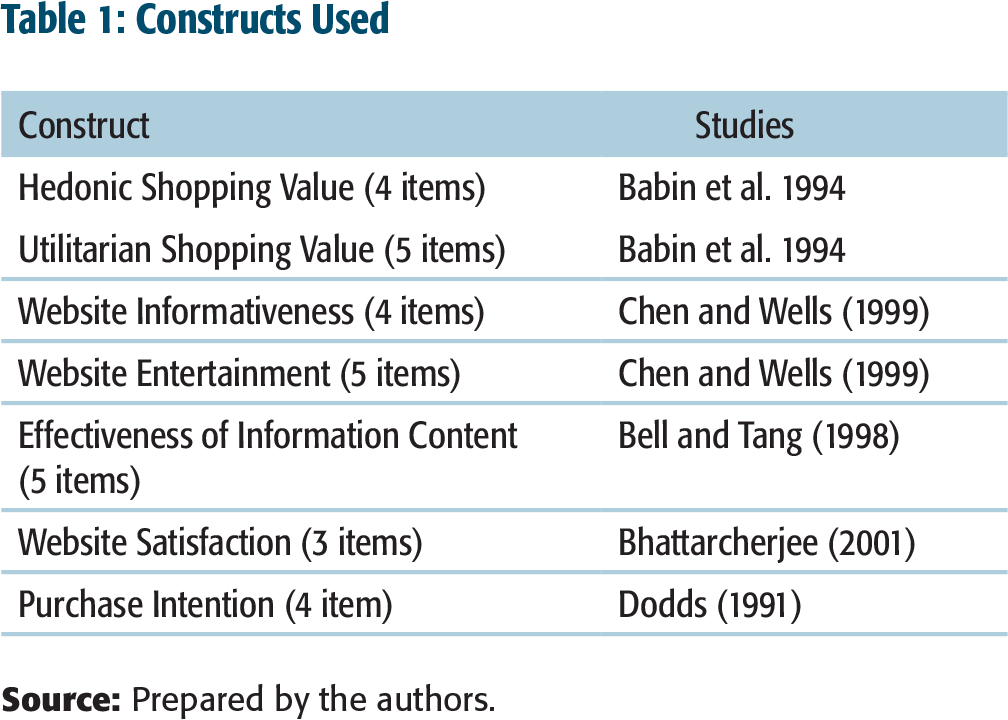
It was decided to use a survey method to test the research model. For this, the survey instrument was developed using variables from the existing empirical studies. A comprehensive literature review was undertaken and seven constructs were identified. These constructs were operationalized using validated reflective scales from the existing studies. Table 1 reflects the selected constructs and the respective studies.
Constructs Used
The measurement items for each construct were identified and shared with a panel of experts comprising of five members—two from academics and three from marketing consulting firms. After the review of appropriateness of constructs and respective items, 30 statements were selected to capture the latent constructs. A seven-point Likert scale was used to measure the items/variables chosen, where (1) and (7) denoted strongly disagree and strongly agree, respectively. To improve the robustness of the finding, we include two control variables—gender and income—as suggested by Mittal and Kamakura (2001).
The instrument was piloted among a sample of 42 respondents, and with minor changes in the language, it was finalized for survey.
Data Collection
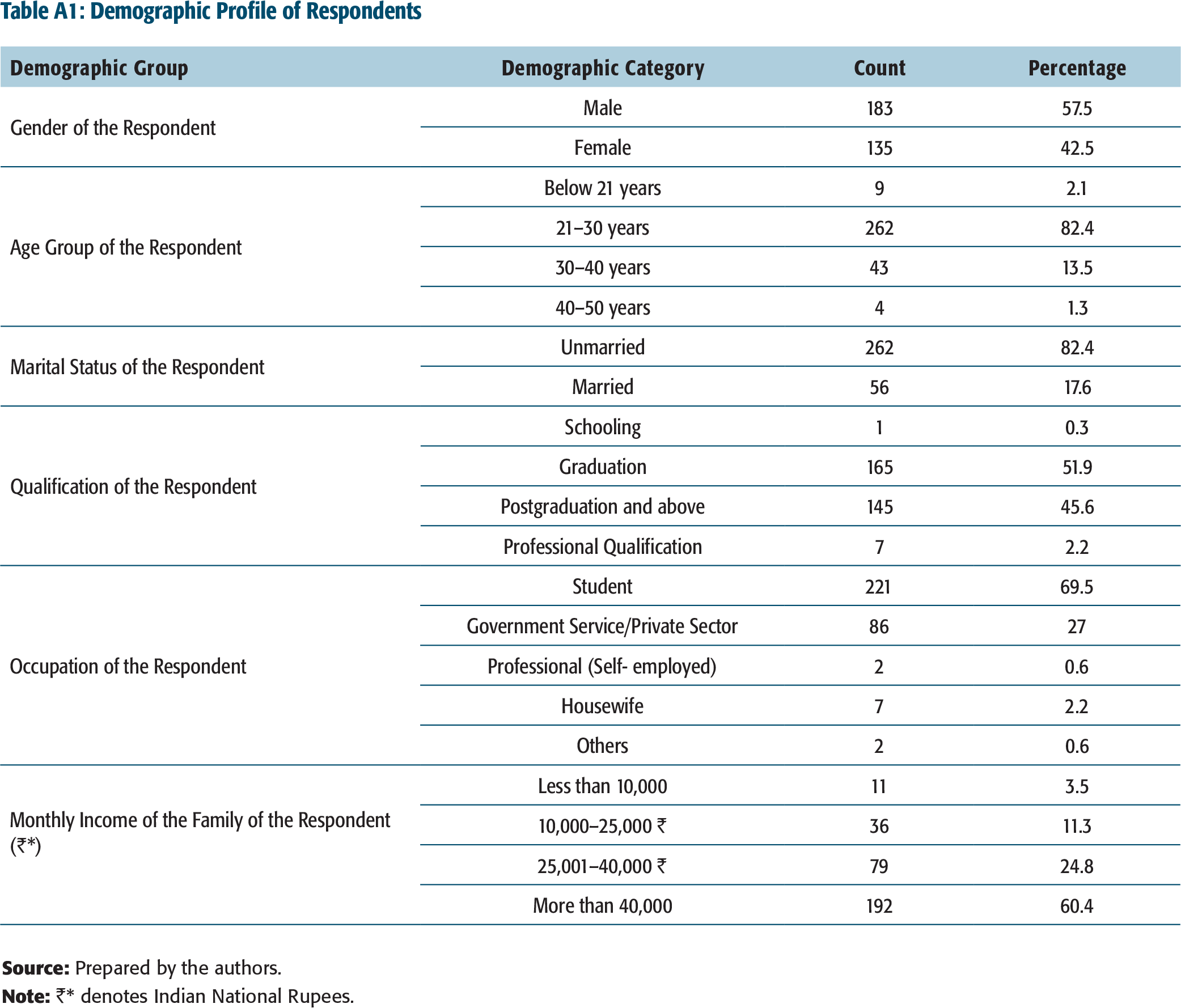
Primary data were collected from five Indian metropolitan cities of Delhi, Mumbai, Kolkata, Bengaluru, and Hyderabad during the months of May and June 2015. Using convenience sampling, the research instrument was administered to the respondents in select university campuses and around malls. Intercept method was used and persons contacted were enquired about their experience of online shopping from popular online e-retailers such as Flipkart, Snapdeal, Jabong, Amazon, eBay, and so on. Upon confirmation that they have shopped online, their consent was sought to participate in the survey. The sampling frame consisted of any individual who had carried out minimum five online transactions. The survey enumerators facilitated 404 respondents in completing the self-administered questionnaire. Of these, 318 (78.71 per cent) questionnaires were found to be usable. Due care was taken to have a majority of respondents between the age group of 21 and 30 years. The demographic profile of the respondents is shown in Table A1 of Annexure 1.
Analysis
Using structural equation modelling (SEM), the collected data were analysed with AMOS 22.0 software. We followed a two-step approach for data analysis, as has been recommended by Hair, Black, Babin, Anderson, and Tatham (2013). Confirmatory factory analysis (CFA) was used to estimate the measurement model with respect to convergent and discriminant validities. This was followed by testing the structural model framework and research hypotheses.
RESULTS
Measurement Model
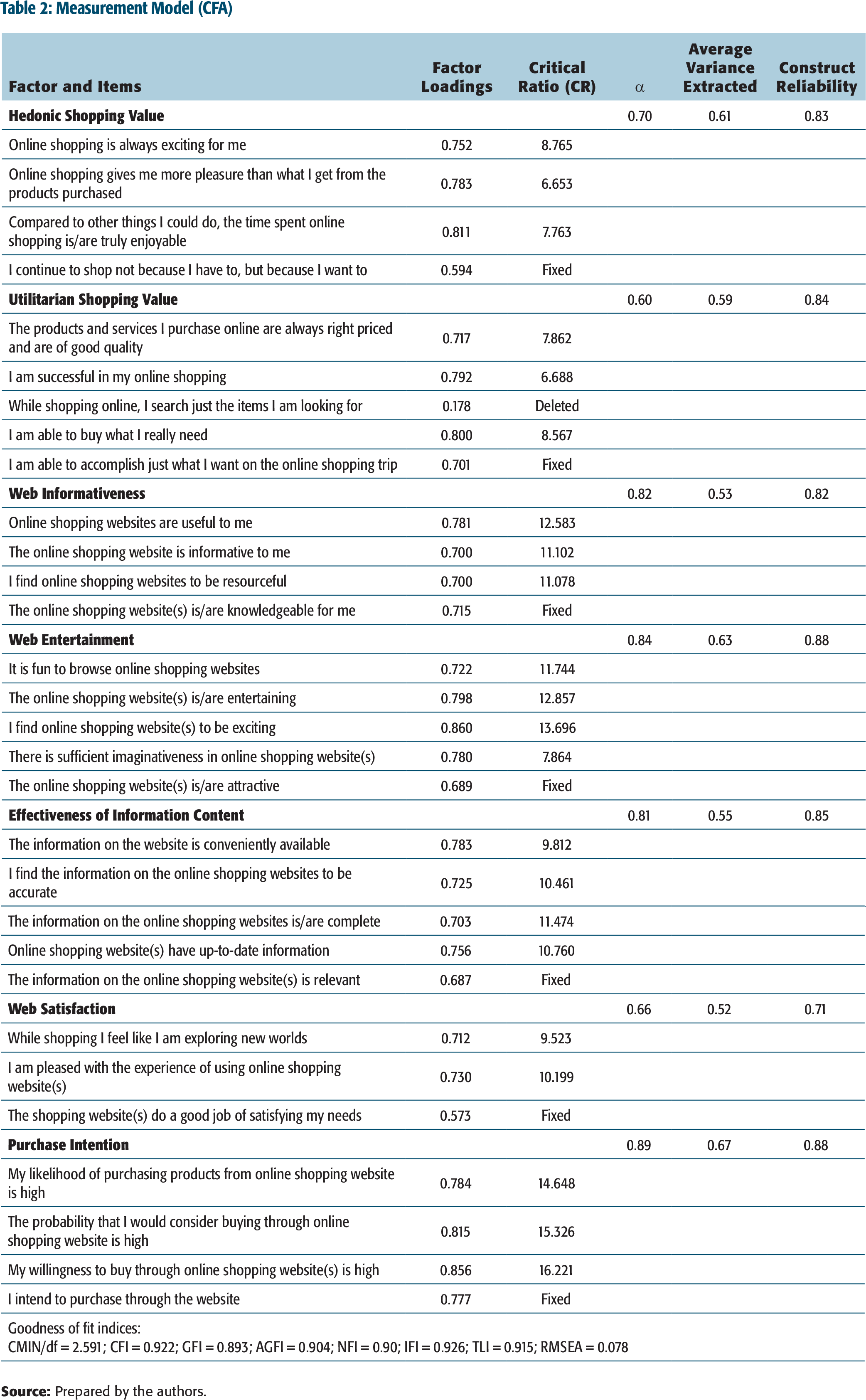
The robustness and validity of the factors were tested by subjecting the model to CFA. This permitted specification and estimation of one (or more) hypothesized model(s) of factor structure (Hair et al., 2013). From the result obtained, one variable (‘While shopping online, I search just the items I am looking for’) had to be removed from the category of USV (refer Table 2). The factor loading for this item was 0.178, which is lower than 0.50 (Netemeyer, Bearden, & Sharma, 2003). Since chi-square statistics is sensitive to the sample size, other fit indices were used (Hair et al., 2013).
Evaluation was done to check the adequacy of parameter estimates as well as that of the model as a whole. The proposed model was found to be adequate as indicated by goodness-of-fit statistics. The ratio of chi square minimum to the degree of freedom (CMIN/df) was 2.591 (Table 2), indicating a good fit between the hypothesized model and the data. Hair et al. (2013) have also suggested that other indices such as goodness-of-fit index (GFI), comparative fit index (CFI), incremental fit index (IFI), and Tucker–Lewis index (TLI) should be greater than 0.9. The root mean square error of approximation (RMSEA), which should be equal to or less than 0.8 (Hair et al., 2013, p. 641) was also used.
From the study, we received values (refer Table 2) of GFI (= 0.893), adjusted GFI (= 0.904), IFI (= 0.926), CFI (= 0.922), normed fit index (NFI) (= 0.90), TLI (= 0.915), and RMSEA (= 0.078). The statistical significance of parameter estimates was established as test-statistic t (critical ratio). These values, found to be high in each case for loadings, indicate convergent validity as shown in Table 2. The standardized loadings and the measurement model along with t values (critical ratios) are shown in the same table.
Measurement Model (CFA)
Test of Discriminant Analysis for the Measurement Model
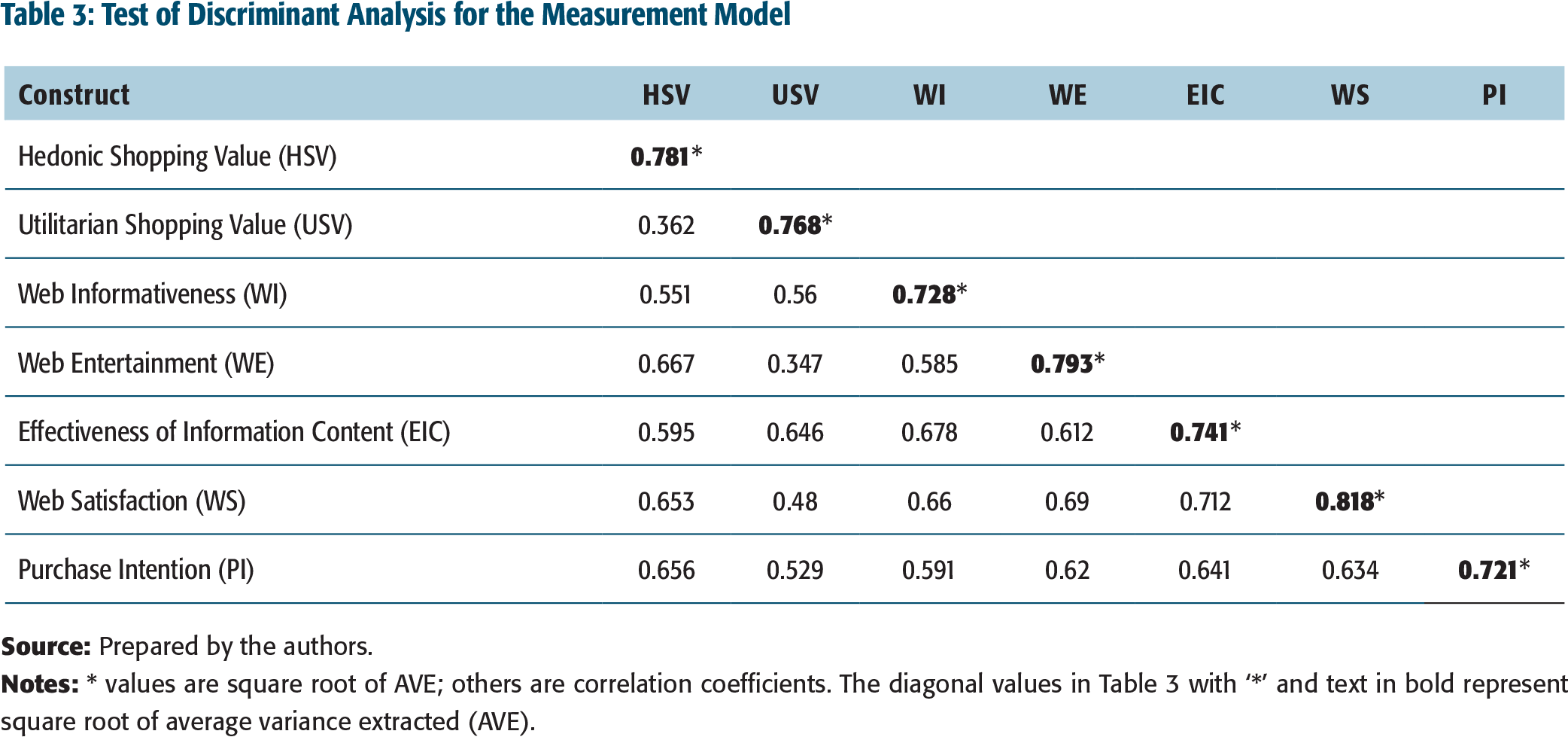
Since this is more than the minimum desired value of 0.50, it confirms convergent validity, as has been suggested by Fornell and Larcker (1981). Similarly, other indicators such as factor loadings (more than 0.5, refer Table 2) and construct reliabilities (more than 0.7, refer Table 2) also exceeded accepted criteria.
Analysis of the Structural Model
The overall measurement model, including the five exogenous latent constructs (HSV, USV, WI, WE, and EIC), the endogenous latent construct (WS), and the dependent construct (purchase intention), is tested to identify the validity of the proposed model and the hypotheses. SEM is used to evaluate the relationship between the constructs.
Figure 2 presents the path coefficients (β) and variance explained (R2 values) of hypothesized relationships.
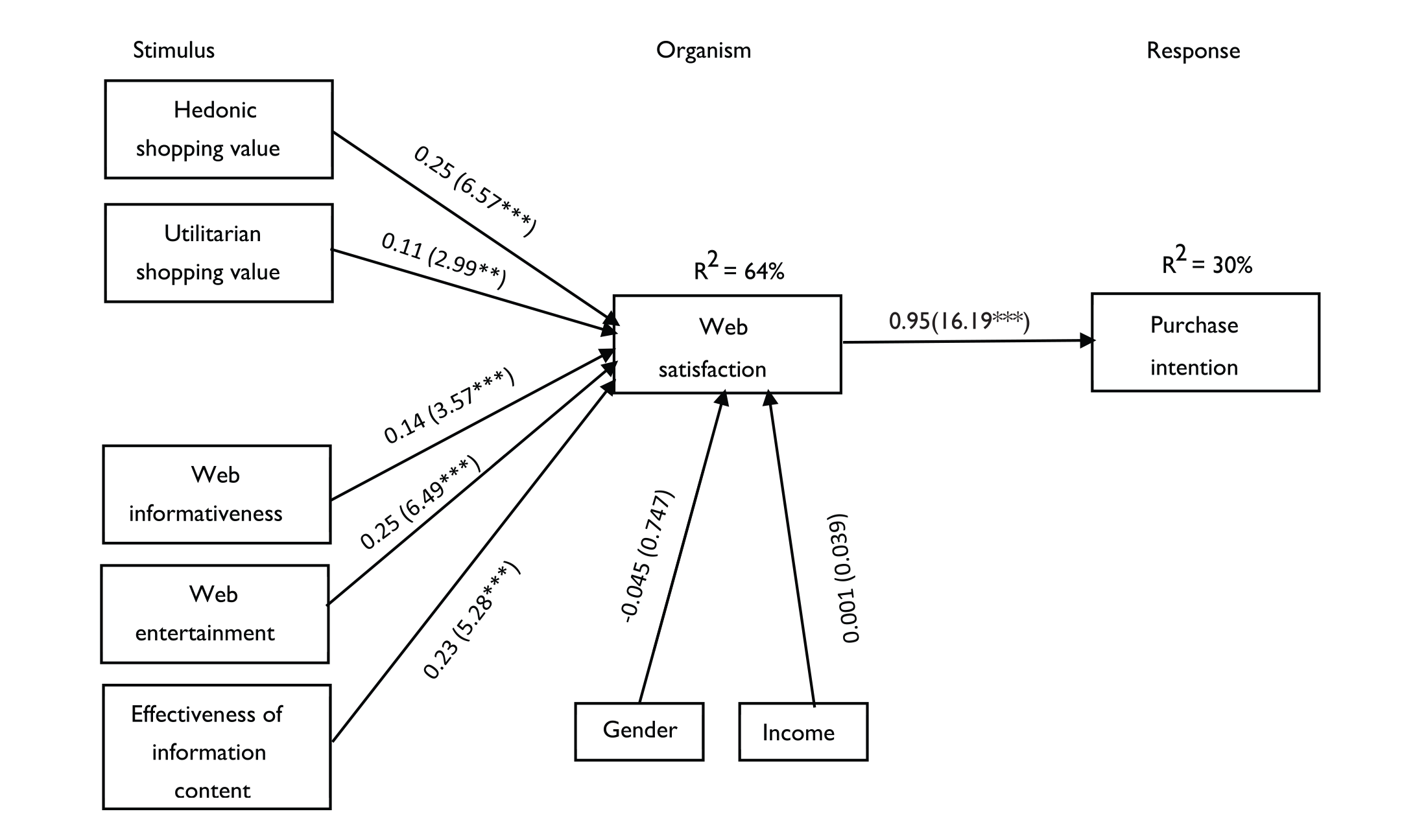
Table 4 presents structural parameter estimates and illustrates the vector impact of the standardized path coefficients. Our results indicate a good fit of the proposed model with the data (CMIN/df = 3.35; CFI = 0.974; GFI = 0.965; AGFI = 0.901; NFI = 0.963; IFI = 0.974; TLI = 0.940; RMSEA = 0.08). As indicated by Hair et al. (2013), when the RMSEA value is close to 0.08, standardized root mean square residual (SRMR) should also be used as an indicator of the model fit. The SRMR value should be less than 0.08 (Hair et al., 2013). For the present study, the SRMR value obtained was 0.04, indicating the good fit of the model. These indices indicate goodness of the model, thereby providing a sound basis for testing the hypothesized paths. Hypothesized relationships among the latent constructs are accepted or rejected by examining the structural model using significant coefficients.
Structural Parameter Estimates
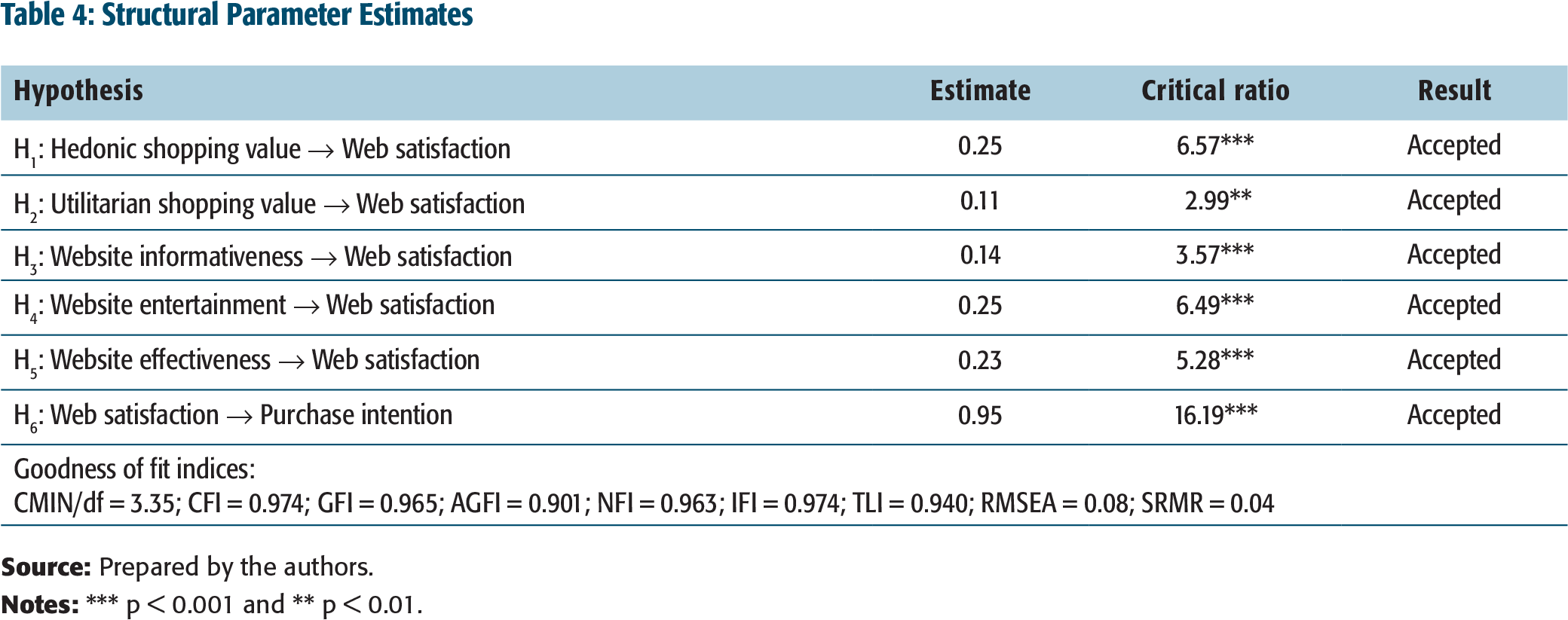
The five hypotheses (H1–H5) postulate the impact of two online shopping values (hedonic and utilitarian) and three web atmospheric cues (informativeness, entertainment, and effectiveness) on WS. From Figure 2 and Table 4, it is noted that WS is influenced by HSV (β = 0.25, t = 6.57), USV (β = 0.11, t = 2.99), WI (β = 0.14, t = 3.57), WE (β = 0.25, t = 6.49), and website effectiveness (β = 0.23, t = 5.28). Thus, the five hypotheses are accepted, with 64 per cent of total variance in WS being explained by these five cues.
The next hypothesis H6 stated the association between WS and behavioural outcome, that is, purchase intention towards the website. Results (β = 0.95, t = 16.19) support the hypothesis indicating that satisfaction from the website significantly affected purchase intention. WS explained 30 per cent of variance in purchase intention.
It is noted that gender (β = –0.045, t = –0.747) and income (β = 0.001, t = 0.039) do not influence WS.
SEM calculates the total effects based on the direct and indirect effects of the constructs on the dependent variable. Thus, the study examines the effects of antecedents of WS on WS and shoppers’ purchase intention. The results are presented in Table 5. The findings show that all the five constructs—HSV, USV, WI, WE, and EIC—have a direct effect on WS and an indirect effect on purchase intention. WS has been found to have just the direct effect and no indirect effect on purchase intention.
Standardized Direct, Indirect, and Total Effects of Construct
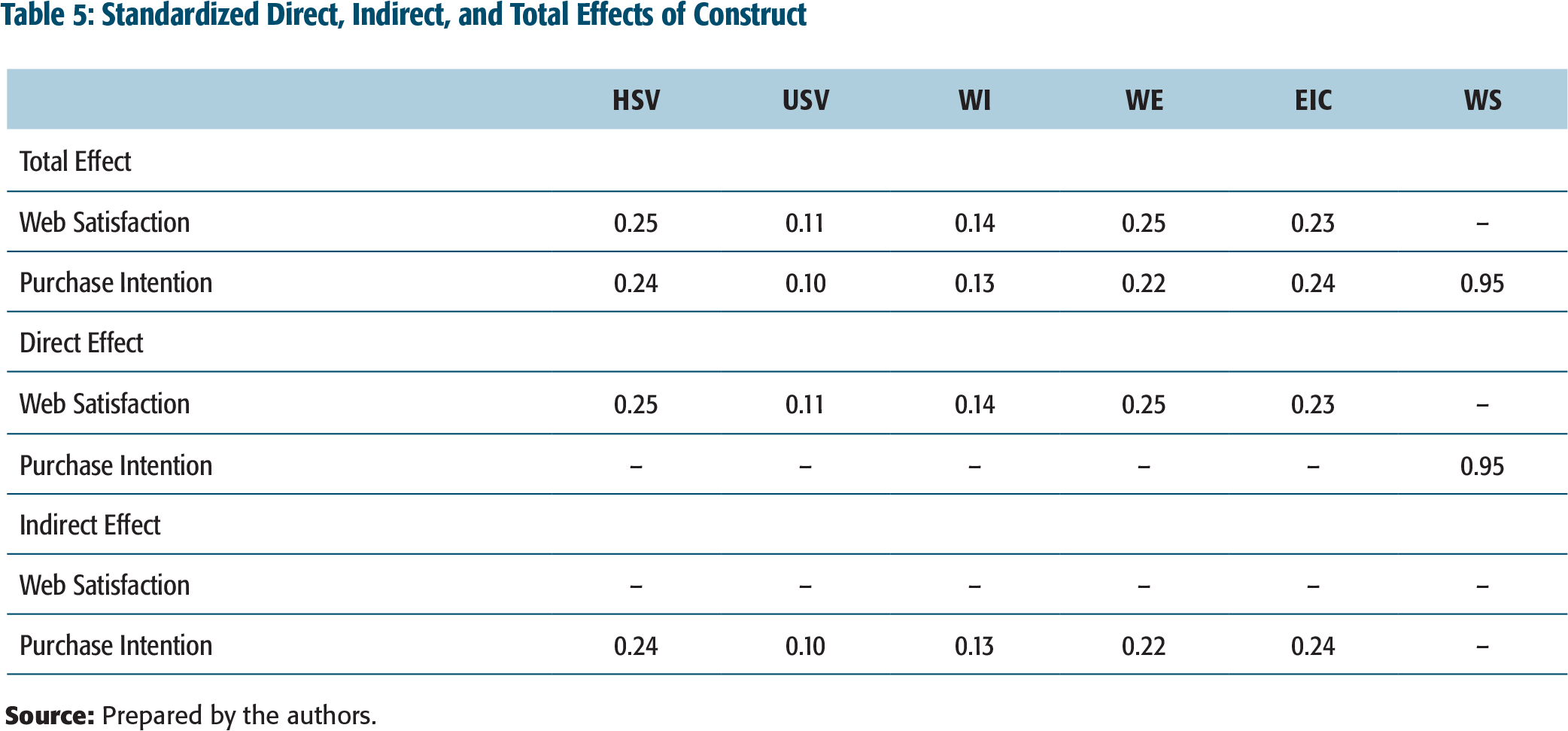
The results (Table 5) show that the effect of factors of WS on customers’ purchase intention is the indirect effect of HSV (β = 0.24), USV (β = 0.10), WI (β = 0.13), WE (β = 0.22), and EIC (β = 0.24). The total effect is 0.95, which reflects that WS with an online shopping site acts as a significant mediator in determining purchase intention. Thus, WS fully mediates the association among online shopping values, web atmospheric cues, and purchase intention.
DISCUSSION AND IMPLICATIONS
The number of internet users in India is estimated to touch 635.8 million by 2021 and the e-commerce market is expected to reach US$100 billion by 2017 (Statista, 2017; IBEF, 2017).KPMG (2016) has projected the value sales of online buying to grow at a compound annual growth rate (CAGR) of 52 per cent. Although growing at an exponential rate, this Indian online market is still unexplored in terms of its shopping behaviour. The present study uses S–O–R framework to comprehend this online buying behaviour and statistically examine the hypothesized associations influencing such behaviour. The research has cumulatively focused on investigating the effect of two online shopping values (hedonic and utilitarian) and three website atmospheric cues (WI, WE, and EIC) on WS and its impact on online purchase intention. With the application of S–O–R framework in the Indian online shopping context, this pioneer attempt contributes to the Internet marketing literature. Validating the applicability of present knowledge of S–O–R in the field of e-retailing in the developing Indian economy, the outcomes of the study support the hypothesized framework.
The study findings report that both the internal elements of stimulus (HSV and USV) and the external elements (WI, WE, and EIC) have influence on WS (organism). This WS directly affects purchase intention. Thus, the study offers a perspective on the indirect influence of the stimuli (internal and external influencers) on shoppers’ behavioural outcome. In an Indian context, WS plays an ‘intervening role’ in the relationship between online shopping values and website atmospheric cues (inputs) and purchase intention (response).
The finding of this article unravels some significant perspectives related to online shopping values, web atmospheric cues, satisfaction with website, and purchase intention(s) that have not been deliberated by earlier scholars. The study presents quite a few contributions to the existing knowledge on e-retailing and online buying behaviour, specifically for those who have academic and practical interests in the subject in a developing economy like India. The study identifies two groups of stimuli, which have influence on shoppers’ WS and which in turn influence their purchase intention in online retailing context. Whereas the first set, comprising of internal factors—HSV and USV—influences shoppers’ subconsciously, the second one has external website atmospheric influencers, which cognitively influence buyers’ external evaluation. The later set includes three stimulating cues—informativeness, entertainment, and effectiveness—which are considered elements of web portal atmospherics. The study posits the influences of these five antecedent factors on the WS (mediating variable) and purchase intention (dependent variable). The construct ‘satisfaction’ fully mediates the influence of online shopping values and website cues on purchase intention.
Thus, the study demonstrates that behavioural outcome (purchase intentions) is not directly impacted by shopping values and web environmental cues. Rather, these antecedent factors act as causes of satisfaction, which consequentially effects purchase intention. This suggests the need of incorporating mediating variable (WS) in developing the framework of purchase intention (behavioural outcome). Thus, the findings support the validity and relevance of applying S–O–R model in theorizing shoppers’ behavioural response (outcomes).
A further analysis of the empirical results revealed that the HSV and WE are the strongest predictors of WS in the Indian online shopping market. These are closely followed by EIC. The other two stimulus factors—WI and USV—have relatively weak influence on WS. None of the five predictors has a direct influence on purchase intention.
As an outcome, the study furthers theoretical implications for explaining Indian online shopping behaviour. Extending conclusions of the previous studies that have explored the influence of internal elements on consumption behaviour (Sorce et al., 2005; To et al., 2007; Wolfinbarger & Gilly, 2001), this study posits that online shopping values directly influence consumers’ WS and indirectly impact their online purchase intention. Similarly, this article reinforces the findings of studies like Carlson and O’Cass (2011) and Mazaheri et al. (2011) that suggested the influence of web atmospheric cues on WS. Congruent with finding of studies like Gross (2002), Kim and Park (2005), and Park, Han, and Park (2013), this study also points out that WS has a direct influence on purchase intention (response). It implies that the websites will have favourable purchase intention among shoppers if they are able to create higher satisfaction among them.
With respect to the role of two shopping values, the results of this study are quite similar to Yuksel (2007). Both the studies confirm positive yet weak influence of USV on shoppers’ behaviour in comparison to HSV. However, this finding is in conflict with a Chinese study by Peng and Kim (2014) which observed higher influence of utilitarian (functional) value as against hedonic value on WS. According to Gao and Bai (2014), site effectiveness of the web portal plays a more significant role than its informativeness and entertainment values. In contradiction, observations from this study show that for Indian users, informativeness of the website is the least significant among the three constituents of web atmospheric cues. For them, entertainment quotient of the website is the most influencing element. Such contradictions have been witnessed in offline markets too. With reference to traditional stores, while Jones, Reynolds, and Arnold (2006) showed that the intention to repatronage was influenced more by utilitarian value than by hedonic value, Stoel, Wickliffe, and Lee (2004) noted the opposite.
Apart from cultural differences, the possible reason for the variance could be attributed to the change in the outlook of Indian online shoppers. Although there is a spurt in income among the vast Indian middle class, the number of avenues of entertainment and enjoyment remains limited. Shopping online may have emerged to be a mode of entertainment and driving pleasure. Hence, it is suggested that global online retailers must customize marketing and promotional strategies as per distinct Indian market. The utilitarian values embedded in Chinese websites for bringing site effectiveness might not be considered enabling by Indian shoppers. The hedonic needs of Indian online shoppers should be the pivot of all strategic action plans aimed at providing an entertaining website shopping environment. They must provide an exciting, entertaining, and enjoyable e-shopping environment, besides offering interesting products and services.
However, it must be noted that though the utilitarian value has lesser effect than the hedonic value, it still has a significant effect on WS among the Indian online market. Therefore, e-retailers should consider providing high-quality products with variety to choose from, along with accurate and objective information on the site. These should be augmented with important consumer-pivoted services and offerings such as value pricing, convenient services, payment mode, and shoppers-oriented delivery processes.
The findings of this study facilitate e-retailers and marketers in India to comprehensively decipher the impact of various stimuli on satisfaction in website-related services. They highlight the complex process of WS, mainly the delivery and influence of select controllable elements of the website atmospherics. The predominant inference is the pertinence of the two atmospheric cues—site entertainment and effectiveness—in inducing WS, and thereby invoking visitors’ purchase intention(s) at the online retail website. Hence, WS can be enhanced for shoppers by creatively designing, configuring, and delivering different web atmospheric cues such as site entertainment, effectiveness, and informativeness (in the same order). Since different target audiences have differing expectations from web portals, online retailers must conceptualize, design, and implement these web elements keeping their target shoppers in consideration.
These influencing components are not of equal significance in their influence on WS. Thus, another key inference of the results relates to the apportioning of the firms’ resources. While facilitating satisfaction, online retail managers must ensure that atmospheric cues with the strongest impact on WS are delivered to shoppers. As per this study, in the Indian context, web managers must allocate more resources to those cues that contribute to entertainment and excitement values of web portals’ atmospherics. These values being the most influential cues in creating WS, core website design principle would be to keep the website attractive, imaginative, and exciting. Since the influence of information effectiveness on site satisfaction is equally robust, e-retailing mangers must commit to load the site with pertinent, relevant, and conveniently located information.
Also, e-retailers ought to offer portals that have attractive appeal with the cues having a strong influence on consumers’ satisfaction level, which further affects their buying behaviour. As a result, e-retail firms must cultivate design elements such as web portal’s layout and colour schema and uncluttered ambience. These sites must have a high transaction-enabling character that suppresses buyers’ reluctance, reduces chances of postponing shopping, and induces impulse buying. This manifests a strong desirability of considering shoppers’ subjective feelings while designing website, which very few retailers in India do. If the online retailers can ensure the provision of needed web elements, such as hedonic values and entertainment content on their websites, then the probability of e-shoppers’ engaging with the web portals would be high. These value cues would induce enhanced consumers’ engagement with the websites, thereby increasing their WS and favourable buying behaviour.
A significant contribution of the present study lies in its attempt to decipher the impact of both the internal and external influencers simultaneously on WS. This research sheds light on why and how ‘satisfaction with website’ matters in the contribution of shopping values and website atmospherics to behavioural outcomes by presenting its mediating role. Endeavouring to deliver a positive web satisfying experience, online retailers must deliver a superior website atmospherics besides providing expected shopping values. Hence, web portal marketers should delineate the key web atmospheric cues for the select target segment(s) and the shopping values that drive their WS. Deciphering and measuring these cues shall help in designing web portal’s environmental elements that are shopper-centric and in framing requisite marketing strategies. Empirical studies, aimed at exploring the influence of the various online shopping values and web atmospheric cues on WS, are relatively few so far. Hence, the findings of this study in an e-retail setting augment our understanding of how online retailers drive online consumption.
LIMITATIONS
As is the case with all empirical studies, this study also has few limitations that should be taken care of in future studies. The data collected for this article are limited with respondents’ perspectives to online retail sites present in India. The findings might differ if the proposed research framework is retested in different economic environments, nationalities, or a different industrial context. This shall help in validating the scale in other regions and/or for other product categories. Another perspective to be checked relates to the cross-sectional nature of the study. Since markets are dynamic and web portals are continually evolving, a longitudinal research design has better pertinence in identifying the shifting roles of website atmospherics and its elements in influencing web-related satisfaction. In the light of this dynamism, the Internet usage experience and online shopping experience should be included as control variables. The present study had not taken into account the issue of shopping context, which shoppers might consider. Future studies can incorporate different shopping contexts and examine whether there is any change in consumers’ response.
Appendix
Demographic Profile of Respondents