Abstract
Executive Summary
A scrutiny of existing literature suggests that traditional rural retailers are important for the success of rural marketing efforts in developing nations. The present study attempts to decipher the indications on the factors that could possibly influence purchase preferences of rural traditional retailers through the use of statistical methods of content analysis. The purpose of the study is to identify the factors that influence purchase preference, analyse the temporal movement of conceptualizations of these factors, and determine whether academic thought on this topic has a conceptual core.
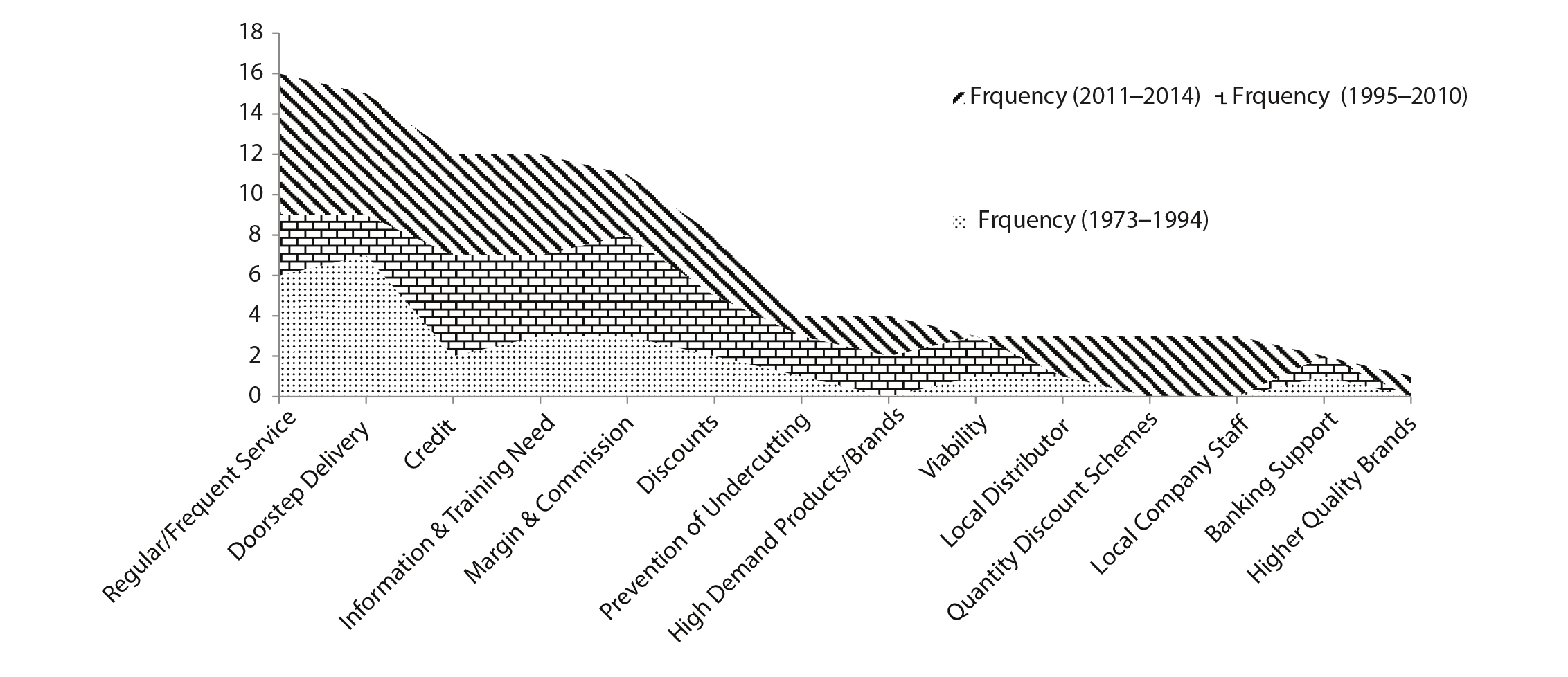
This research work presents a longitudinal analysis of the factors over a period of 40 years: the need for information and training on new products and their selling techniques seem to maintain the same significance throughout the study period; the need for discounts has maintained almost a uniform ranking over the period of study; there is also a relative stability in the need for regular/frequent service; doorstep delivery had the highest ranking in the first period, which is probably owing to the relative weakness of delivery systems during the early phase of rural marketing; the requirement for credit seems to increase from the first period to the second period and then decrease. The factor of margins and commissions seems highly ranked only in the second period.
Dimension reduction technique and frequency tabulations are the methods used for content analysis. The core concepts indicate that a traditional rural retailer can possibly be persuaded to purchase high-demand products and brands, through the provision of credit, discounts, quantity discount schemes, margins and commissions, by using local distributors and by appointment of local company staff to provide regular service. The analysis has yielded two discernible conceptual clusters: high-demand products and brands and credit; and doorstep delivery and regular service. The clusters that emerge during the content analysis of traditional rural retailers’ purchase preference factors reflect the exact content from conclusions in at least one research paper that is not used (to prevent cyclic conclusions) during the content-analysis process. The result confirms that researchers have been moving on similar lines in their conceptualizations of the purchase preference factors of traditional rural retailers.
Keywords
Theory on purchase behaviour owes its origin to the St Petersburg paradox presented by Nicholas Bernoulli in the year 1713 (recounted by Stigler, 1950). Since then, the field of consumer buying behaviour has expanded enough to warrant dedicated review papers on the past literature (e.g., MacInnis & Folkes, 2010). A buyer behaviour model can help the marketer to analyse available information about the market, identify the need for additional information, specify targets for marketing effort, and identify the kinds of information needed by various purchasing decision-makers and the criteria that they will use to make these decisions (adapted from Webster & Wind, 1972). Buyer behaviour studies may be divided into two broad classes corresponding to consumer markets and organizational markets (Wilson, 2000). A review of extant literature on organizational buyer behaviour has shown the presence of six distinct megatrends: Internet revolution, inorganic growth through mergers and acquisitions, break-up of vertical integration, privatization of public sector industries, rise of emerging economies such as China and India, and globalization of markets (Sheth, 2006). The theoretical foundations of organizational purchase behaviour studies have been extended to organized retailers—it has been suggested that retailers behave both like organizations and individual consumers (Sheth, 1981). The study on small retailers’ buyer behaviour (e.g., Runyan & Droge, 2008) has emerged as an important subset of behavioural research in the developed world. While small traditional retailers in the developed world have been struggling for survival against larger organized retail stores in both urban (Carter, Williams, & Reynolds, 1997) and rural areas (Crank et al., 1995; Phillips & Swaffin-Smith, 2004), running small shops (traditional retail) is one of the highest return, non-agricultural occupations in the rural areas of the developing countries in Latin America, Asia, and Africa (Reardon et al., 1998).
The importance of rural traditional retailers, in the context of developing world, has been noted since their recommendations have a significant bearing on the initial trial and on the continued usage of a brand or product (e.g., Aneja, 1993; Dey, Rafat, & Agarwal, 2012; John & Mishra, 2012; Raj & Selvaraj, 2007). Large organized stores would probably never enjoy the relationship and the recommendation power of a traditional rural retailer (Bhandari, 2014; Siddique & Siddique, 2012). Therefore, researchers (e.g., Balakrishnan, 1978; Kesari & Srivastava, 2012) recommend that marketers should study the factors that lead to a greater purchase preference among rural retailers since they determine the success of a rural marketer.
The purpose of this work is to present an integrative analysis of the evidence on the purchase preference factors of rural traditional retailers in developing countries using published articles on rural marketing, rural retailers, and related topics. In an attempt to synthesize the empirical evidence, statistical techniques are used, since these purchase preference factors are mostly manifested in peripheral inferences of the studies identified. The present study aims at providing valuable information to rural marketers about the areas that need attention in order to tap into rural markets using rural retailers. Furthermore, it seeks to develop an analytical framework of factors influencing purchase preference of rural tradition retailers along with a ranking of the importance of each factor.
Literature Review
‘A retailer is more like a consumer in what he buys, and more like an organizational buyer in how he buys his merchandise’; therefore, a retailer’s buying behaviour is unique (Sheth, 1981, p. 180). A review of conceptualizations of organized retailers supports the view that a retailer balances rational and personal reasons while making purchase decisions (an exhaustive review has been presented by Hansen & Skytte, 1998). While organizational buying may be a long-winding process involving multiple stakeholders (Chakravarti, 1989; Mehta et al., 1981), small retailers often make faster decisions (Pradhan, 2010). Interestingly, Runyan and Droge (2008), after analysing the contents of 134 research papers on retailers’ purchase behaviour, suggested that researchers tend to focus more on large organized retailers than on small retailers.
Traditional Retailer Buyer Behaviour Studies in Mature Markets
Research on traditional retailers in the developed world is focused on their basic survival and the challenges pertaining to their survival (Carter et al., 1997). Studies conducted in the Western developed world also delve into strategies being adopted by traditional retailers to fight large organized retailers (Shaw & Gibbs, 1999). The spatial competitiveness of chains has proved disruptive to independent stores in rural areas of the developed world (Alexander, Benson, & Shaw, 1999). Davies and Itoh (2001) investigate the effects of legislature on the decreasing number of small retail outlets. The situation, in terms of decreasing numbers of rural retailers, is even worse in rural areas (Hildebrandt, 1987).
Traditional Retailer Buyer Behaviour Studies in Rural Areas of Developed World
Small retail shops in smaller towns and rural areas have been exposed to an increasing competition from large shopping centres and supermarkets in larger cities (Guy, 1990). The unfaithfulness towards local stores in rural areas, owing to availability of better range and lower prices at large organized retailers, has resulted in an increasing erosion of smaller rural shops (Crank et al., 1995; Phillips & Swaffin-Smith, 2004). Such a development is also evident in rural markets of Sweden, where this disloyalty has been caused by changes that include increased car owning, resulting in increased mobility and out-shopping in urban centres (Forsberg, 1998). Researchers from the Western world have shown that when the local population falls below a particular threshold, marginal revenue from rural retail activities falls below a threshold value, leading to shop closures (Bresnahan & Reise, 1991; Shonkwiler & Harris, 1996). Additionally, it has been shown that the arrival of large retailers in towns relatively closer to small towns and rural communities often accelerate the demise of retailers in these communities in developed countries (Goetz & Swaminathan, 2006; Artz & Stone, 2006).
In contrast to the above observations for rural traditional retailing in economically developed countries, running small shops (traditional retail) is one of the highest return, non-agricultural occupations in rural areas of developing countries in Latin America, Asia, and Africa (Reardon et al., 1998).
Traditional Retailer Buyer Behaviour Studies in Rural Areas of Developing Countries
Although rural retail consists of firms, limited in size and often located in remote places, they are the cornerstones of the local economy (Tolbert, Lyson, & Irwin, 1998). Sociological studies in the rural areas of Latin America indicate that the ‘nucleus’ of rural community invariably consists of ‘one or two tiny shops’ (Wolfe, 1966). A similar study in the Chinese context found that consumers are not used to travelling from their homes to big branded stores or malls (Elg, Ghauri, & Tarnovskaya, 2008). A study conducted in Latin America suggested that traditional rural shopkeepers, with their limited shelf space, are in stronger positions than organized retailers when they negotiate with suppliers (Díaz, Lacayo, & Salcedo, 2007). This view for rural parts of Latin America seems to be in contrast with the reality in developed countries where traditional retailers are being forced to shut down owing to the advent of large organized retailers (Hildebrandt, 1987).
Despite being fragmented, rural retailers have considerable influence, since shop layouts do not allow consumers to browse (Dawar & Chattopadhyay, 2000). Siddique and Siddique (2012) observed that many MNC footwear giants started with exclusive stores and later realized that they did not enjoy much brand equity in rural markets, and to capture the market share in rural India, they had to go to the local shoe sellers. It has also been suggested that rural retailer plays a unique role as advisor, family friend, and micro creditor (Preeti, 2011). John and Mishra (2012) suggested that a rural retailer’s relation with consumers was based on an understanding of their needs and buying habits, and was cemented by the retailer’s extension of credit. Neuwirth (2012) had noted that due to their proximity in the local community, consumers and rural retail shop owners often formed close relationships, further cementing the power of the retailer in product recommendation. In India, data on rural consumer buying behaviour indicate that the rural retailer influences 35 per cent of the purchase occasions (Kesari & Srivastava, 2012; Khaled, 2010). The recommendations of the rural retailer have a significant bearing on the initial trial rate and usage of a brand (Aneja, 1993). This is important as the number of items stocked by the rural retail store is lower than the urban retail store—on the average, the number of product categories stocked by a rural store is 19, while in an urban store, it is 27 (Das Munshi, 2005). Rural shopkeeper’s recommendation is a significant factor in purchase decisions of rural consumers in India (Dey, Rafat, & Agarwal, 2012; Sulekha & Mor, 2013). Alur and Schoormans (2013) suggested that considering the endogenous and exogenous factors that influenced retailers’ purchase decisions would make product introduction decisions successful.
It appears that marketers in developing countries cannot borrow from the models of the developed world, since the available literature on rural retailers in the developed world is related to the concepts of central market place theory (study of the importance and influence of geographical location of rural markets, e.g., Amanor-Boadu, 2009; Christaller, 1966), out-shopping behaviour of rural consumers (rural consumers shopping at nearby market towns or at larger discount stores, e.g., Kim & Stoel, 2010; Sullivan & Savitt, 1997), or the phenomenon of declining number of traditional rural retailers (e.g., Artz & Stone, 2006; Hildebrandt, 1987). Therefore, the review indicates the importance of developing specific concepts on traditional retailers located in developing nations. Hence, researchers (e.g., Balakrishnan, 1978; Kesari & Srivastava, 2012) recommend that marketers should study the purchase behaviour of rural retailers in the context of developing countries, since the ‘motivation and attitude’ of retailers (Agadi & Paramashivaiah, 1995, p. 32) determine the success of rural marketing efforts. Indeed, ‘rural marketing’ has emerged as an important area of study in the developing world, owing to the recent ‘boom in consumption’ in rural markets (Kashyap, 2012) and also because rural traditional retailers are the conduits for accessing these markets (Balakrishnan, 1978).
Rural Marketing
‘Rural marketing’ seemingly originated as a separate subject in a seminal paper by Skinner (1964) that analysed rural marketing in China. Beginning in agricultural marketing (e.g., Ram, 1984; Shah, 1947), rural marketing as a subject has evolved to include marketing of consumer goods (e.g., Dannhaeuser, 1987; Jha, 1988), developmental marketing (e.g., Pankaj, 2005; Rao & Tagat, 1985; Vaswani et al., 2005), and holistic marketing (Jha, 2012). The evolution of rural marketing from agricultural marketing, with commodity and institutional focus, to a more comprehensive three-dimensional perspective of rural to urban, urban to rural, and rural to rural focus, in terms of flow of goods, services, and ideas, to a developmental perspective with focus on the poor and vulnerable, is presented by Modi (2009) and by Jha (2012). Since rural traditional retailers are important for rural marketers, it is important to understand what factors affect purchase preference among this class of retailers.
Factors Influencing Purchase Preference of Traditional Rural Retailers
To identify the factors from literature, we develop certain propositions that can be used to categorize themes on traditional rural retailers. These propositions are meant to help in categorization of relevant content from the available literature (as is the accepted methodology in content-analytic studies, e.g., Verbeke, Volgering, & Hessels, 1998).
Transactions between rural retailers and marketers often begin with the actual delivery of products and services—if the product can be delivered to the outlets, it would not only save transportation cost and travel time to feeder towns, but also ensure that the retailer would prefer to stock door-delivered products (Baig, 1980). Reddy (1996) had gone as far as to suggest that governments should subsidize the delivery of consumer goods to rural retailers by providing transportation subsidies or tax concessions to rural marketers. Studies in the context of developing nations in Africa (e.g., Olamigoke & Emmanuel, 2013) highlight the value of doorstep delivery of goods and even the value of a good road transportation network for rural economy. Thus, the proposition that follows is:
P1: Doorstep delivery positively influences purchase preference of rural traditional retailers.
However, doorstep delivery itself may not help if it is not combined with the regularity or frequency needed to promote a brand and also if retailers are not assured of continuous supplies (Balakrishnan, 1978). Marketers should appoint wholesalers to service smaller villages, wherever direct delivery appears to be an uneconomical proposition (Narsimham, 1995). Regular service appears to be a requirement that is different from doorstep delivery, since doorstep delivery may not imply regular delivery. The consequent proposition, therefore, is:
P2: Regular/frequent service is an influencing factor that is different from doorstep delivery, and this factor also positively influences purchase preference of rural traditional retailers.
Appointment of distributors in villages and nearby towns would be advisable so that rural outlets can be managed in such a way that goods are made conveniently available to consumers (Verma, 1980). Research shows that rural retailers prefer delivery and service by local distributors or wholesalers over national distribution houses or distributors operating from urban centres (Olamigoke & Emmanuel, 2013). It has been suggested that distributors should be appointed in feeder towns to service retailers in surrounding villages—such appointment of local distributors can help tap uncovered rural areas (Reddy, 1996). The resultant proposition is:
P3: Rural traditional retailers prefer local suppliers.
Apart from delivery and service frequency, studies (e.g., Jasim & Murali, 2013; Kilaru, 1994, as cited in Velayudhan, 2007, p. 178) have also indicated that rural retailers are motivated to stock and sell a brand if a company provides them relatively higher margins and commissions compared to other companies selling similar products. The proposition that follows is:
P4: Rural traditional retailers prefer selling brands which afford them higher margins and commissions.
Marketers also often provide for discount schemes for retailers in rural markets to build relations (Sabura, Vijaykumar, & Hameed, 2012). Kilaru (1994) highlighted the positive impact of discount schemes by observing that festival discounts given by the manufacturers to rural retailers normally contribute to increasing stock levels in the shops (as cited in Velayudhan, 2007, p. 178). It is thus proposed:
P5: Availability of discount schemes influences traditional rural retailers’ purchase preference.
Rural retailers are motivated by quantity purchase discounts, which is a special kind of discount scheme, that is, progressively higher discounts for higher volume or value of purchases by a retailer (Jasim & Murali, 2013). Sabura et al. (2012) emphasized upon the significance of schemes to push up sales quantities to rural retailers. Bhattacharjee (2014) also affirms that rural retailers are motivated by discount schemes provided by marketers on lifting relatively large quantity of goods. It is, therefore, proposed that:
P6: Traditional rural retailers prefer to purchase goods for which they get higher percentage discounts on purchasing larger quantities, that is, quantity-based discounts.
Marketers often have to keep the number of retailers limited to prevent them from competing with each other by passing on their margins and discounts to consumers (selling below recommended retail prices)—this phenomenon is termed ‘undercutting’ (Zhu & Liu, 2011). Limiting the number of rural retailers, to whom stocks are supplied, prevents undercutting and improves their margin (Kilaru, 1994, as cited in Velayudhan, 2007, p. 178). The proposition that emerges is:
P7: Rural traditional retailers patronize suppliers who prevent undercutting, that is, prevent retailers from selling at below recommended retail prices to ensure profitability.
However, despite good service, a rural traditional retailer is often unable to carry stocks without credit facility from suppliers (Siddique & Siddique, 2012). A study (Reardon & Berdegue, 2002), conducted in Latin America, highlighted the immense financial burden on rural retailers, since they provided credit to rural consumers (a practice that has stopped in urban areas)—this induces a need for supplier credit. Credit facility to rural retailers is necessary to get them to stock and sell a marketer’s products (Sabura et al., 2012). Thus, the following proposition is developed:
P8: Credit from suppliers is a purchase preference factor for rural traditional retailers, owing to their propensity to provide downstream credit to rural consumers.
An alternative to suppliers providing credit to retailers is the provision of credit lines from banks for stocking of goods (Kremer et al., 2013). Rao (1973) highlighted the challenge faced by rural dealers, owing to the lack of banking facilities in many villages. Owing to the lack of adequate banking facilities and the resultant lack of credit lines, retailers in rural areas are often unable to carry adequate stocks (Reddy, 1996). This discussion leads to the following proposition:
P9: Traditional rural retailers prefer purchasing from companies or suppliers that arrange banking support, that is, credit lines from banks for rural traditional retailers.
Margins, discount schemes, and credit have a direct bearing on the return of investment of a retailer (Fairhurst & Fiorito, 1990). Rural retailers demonstrate a subsistence-type business orientation—they seem to be content with a small profit as long as it covers their subsistence needs (Viswanathan, 2007). It has often been suggested that a retailer bases his purchase and stocking decisions on the expected profit he can earn from that specific purchase (Ramanathan, 2006; Sezen, 2004). Two interesting sub-propositions follow:
P10: (a) The viability of selling a brand should cover for subsistence need of a retailer, with least investment of capital.
(b) Purchases are preferably made from suppliers who ensure viability through sufficient margins, schemes, and credit, since all these ensure returns on invested capital.
Rural retailers also need to be equipped with information about products and trained on marketing principles so that they can promote brands and products (Nyamulinda, Ganesan, & Musonera, 2009; Sulekha & Mor, 2013). Singh (2011) indicated that the major source of consumer information was a shop in the trading areas. Rural retailers need to improve their survival and continuance by building reciprocal relationships with the community and consumers, and they can do so by seeking training to improve their marketing strategies (Jackson & Stoel, 2011). Sayulu and Reddy (1998) suggested that rural retailers provided characteristics of products to rural consumers. Pradhan (2010) presented a decision heuristic for rural retailers on the basis of information availability. The set of propositions that follow is:
P11: Rural traditional retailers need information and training
(a) to improve their own selling skills to rural consumers and
(b) to fulfil rural consumers’ need for information.
Rural retailers can often do without information and training if they stock high-demand products, which rural consumers are familiar with (Bhatia & Bawa, 2002). In a study of traditional rural retailer behaviour with respect to selected non-durable goods in Nuagaon block, in Sundargarh district of Orissa, India, Kar and Das (2008) observed that rural retailers often avoided stocking goods that were not highly demanded, owing to their lack of capital. While a high variance in assortment composition may help retailers gain operational efficiencies, it often increases the likelihood of a loss of sales in a product or service segment because of an absence of the preferred (high-demand) brands (Amine & Cadenat, 2003). From this review of literature on the demand factor, the following may be proposed:
P12: Consumer demand for a product or brand may be a factor in purchase preference of rural traditional retailers.
The quality of products may be an antecedent to the rural demand for a brand (Prajapati & Thakor, 2012). Hence, it has been suggested that retailers are motivated to sell higher quality products and brands (Jasim & Murali, 2013). The subsequent proposition is:
P13: Traditional rural retailers prefer purchasing stocks that are of a higher perceived quality.
It has been observed that the appointment of educated, unemployed villagers as salesmen for their own villages would help in better execution of specific strategies meant to ensure purchase preference among rural traditional retailers (Khan & Khan, 2012). Placement of locally selected company staff would help fulfil the requirements of rural sales force (identified by Reddy, 1996)—salespeople in rural areas should be acquainted with the local rural culture and should speak the local language. Bhattacharjee (2014) indicated the positive impact of visits by company representatives on the traditional rural retailers on the basis of a study of 60 retailers spread over four villages around the city of Guwahati in India. Viswanathan (1972, p. 10) had also included ‘selection of field force’ in his list of six tasks in ‘rural marketing’. Hence, the final proposition is as follows:
P14: Placement of locally recruited salesmen, who are aware of the local language and traditions, has a positive influence on purchases by traditional rural retailers.
Methodology
Sampling Design and Data Gathering
Literature Used for Content Analysis
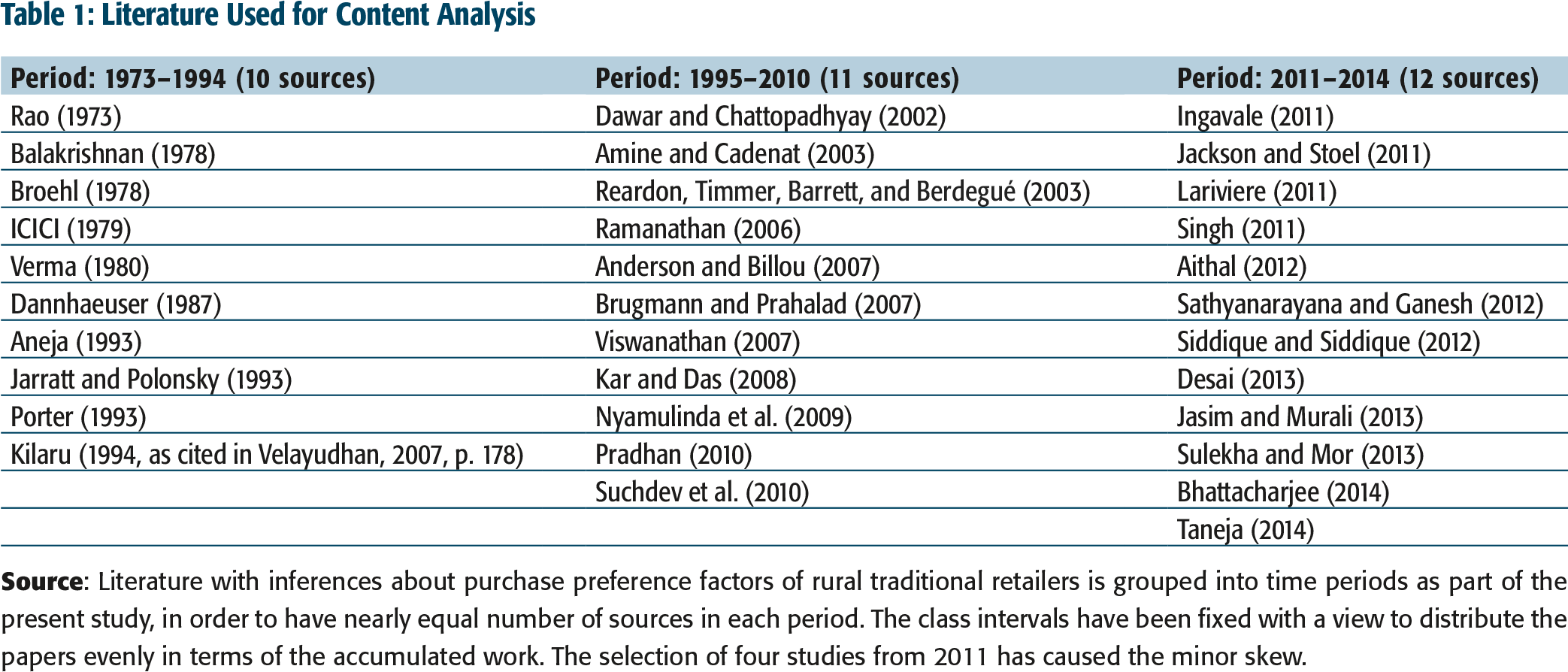
Some of the papers (e.g., Bhattacharjee, 2014; Jasim & Murali, 2013; Kar & Das, 2008) are specifically on the subject of rural retailers, while the rest suggest the possible factors of traditional rural retailer purchase preference as peripheral findings. This collection of ‘phrases’, categorized into 14 groups, constitutes the basis for this research. A content analysis begins with the assumption that the number of terms or phrases used in the reviewed literature can be classified into a smaller number of categories because of similarities in meaning. This classification was also verified with experts in the field of rural marketing through in-depth interviews.
Principal Component Analysis
A categorical PCA (CATPCA method for categorical data using SPSS 21.0) was conducted, using a tabulation of the identified categories, to trace the conceptual core and the clusters. Various researchers (Kassarjian, 1977; Namenwirth, 1967) have used principal components analysis (PCA) to identify relationships between the categories in different contexts. A casual reading of the text does not reveal the clusters, for example, an analysis of literature pertaining to Human Resource Management practices across Europe showed that the conceptual core of employee satisfaction is ‘control over one’s job’ since three basic themes emerge as a cluster during PCA, namely, ‘able to choose or change order of tasks’, ‘able to choose or change methods of work’, and ‘able to choose or change speed/rate of work’ (Ferreira, 2012, p. 147). Similarly, a content analysis of literature on customer roles in value creation threw up five clusters that denoted the five conceptual cores in the sampled studies (Moeller et al., 2013).
The statistical technique of PCA for categorical data is CATPCA. The goal of PCA is to reduce an original set of variables into a smaller set of uncorrelated components that represent most of the information found in the original variables (Muelman & Heiser, 2012). The technique is most useful when the presence of a large number of variables prohibits effective interpretation of the relationships between objects (subjects and units). By reducing the dimensionality, we may interpret a few components rather than a large number of variables (ibid.). Standard PCA assumes linear relationships between numeric variables. On the contrary, the optimal-scaling approach, used in CATPCA, allows variables to be scaled at different levels. Categorical variables are optimally quantified in the specified dimensionality. As a result, nonlinear relationships between variables can be modelled (ibid.). With CATPCA, it is, therefore, possible to summarize the links between categories in a multi-dimensional space. This space is very useful to reveal associations between different categories (clusters).
CATPCA was run on the data (using SPSS 21.0) with each source being a separate case and each category being a separate variable (taking values of ‘1’, denoting presence of a category/theme in a source or ‘2’, denoting absence of a category/theme in a source). The goal of PCA is the dimension reduction of the original set of variables into a smaller set of uncorrelated components that characterize most of the information represented in the original variables. The technique is valuable when occurrence of a large number of variables prohibits effective interpretation of the relationships between themes prevalent in literature on any particular topic. With CATPCA, it is, therefore, possible to summarize the links between categories in a multi-dimensional space.
Such an analysis reveals the clusters of themes, as manifested in studied literature, on any topic for which a content analytic study is conducted. A secondary check for the existence of such clusters (denoting a conceptual core in a topic) is performed to check whether clusters of related categories can be found in similar concepts in at least one research paper that is not used (to prevent cyclic conclusions) during the content-analysis process. The revealed clusters help in presenting a discussion that is well grounded in available literature.
Analysis, Interpretation, and Results
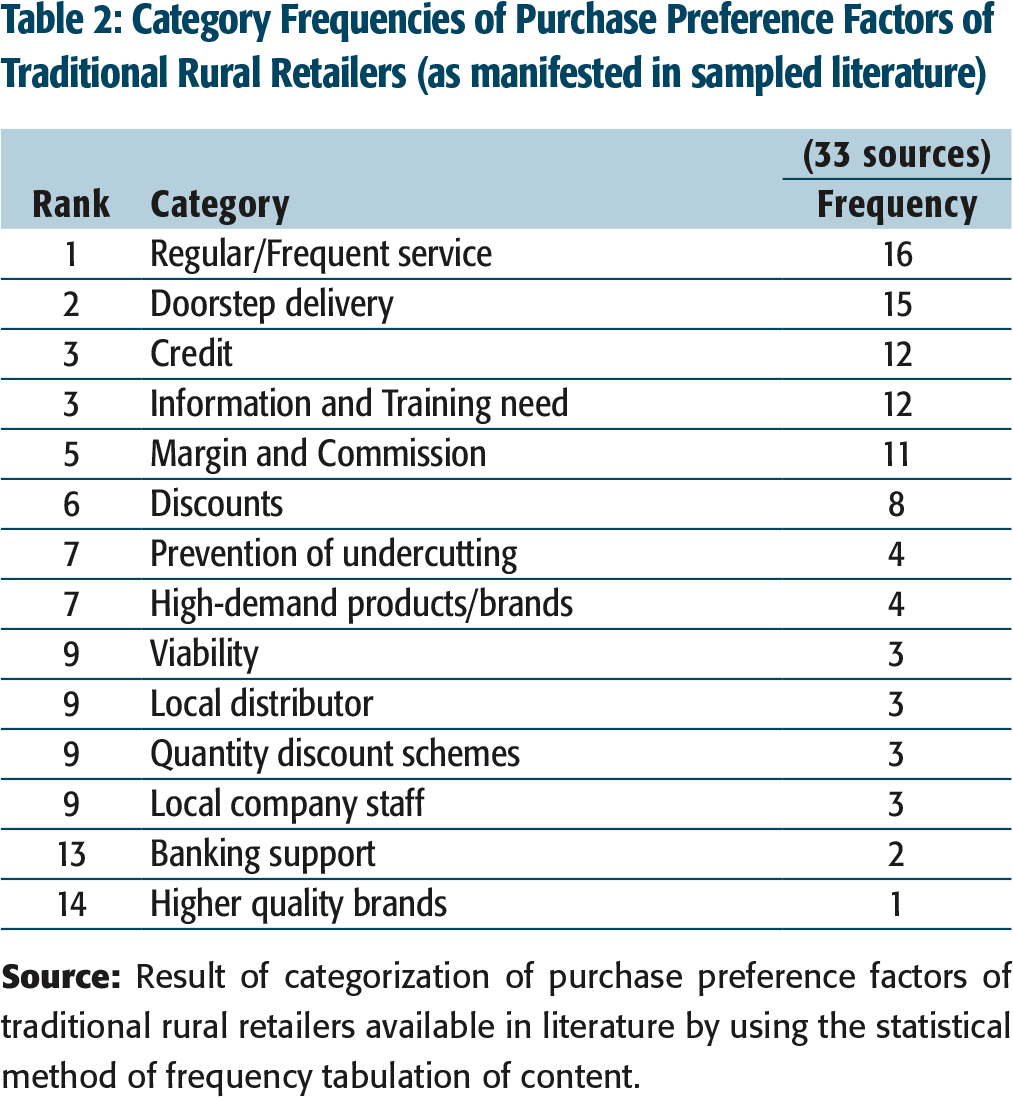
Category Frequencies of Purchase Preference Factors of Traditional Rural Retailers (as manifested in sampled literature)
Exploratory Analysis
While a spatial analysis of categories may reveal patterns in what authorities feel about rural retailer purchase preference, a temporal analysis enables a study of evolution of concepts in rural retailer purchase preference from the lens of researchers. Some existing studies (e.g., Furrer, Thomas, & Goussevskaia, 2008; Järvelin & Vakkari, 1993) suggest the use of a temporal method of content analysis to trace the evolution of management concepts.
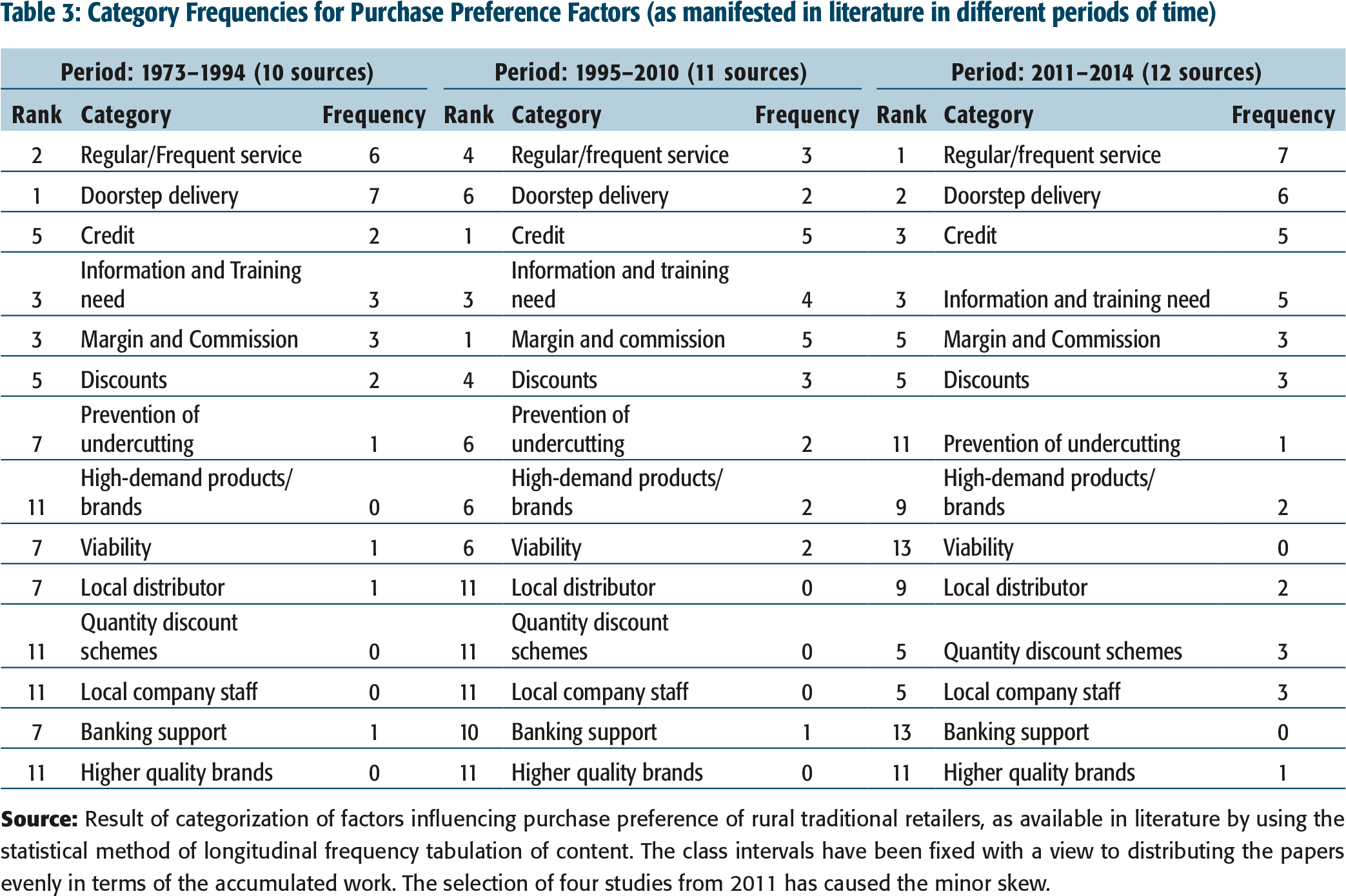
In Table 3, the categories of the purchase preference factors of traditional rural retailers have been classified for different periods of time. As far as ordering in time is concerned, the time period has been classified into three nearly equal periods, starting with the first research work of Rao (1973) and ending with the last research work by Bhattacharjee (2014).
Category Frequencies for Purchase Preference Factors (as manifested in literature in different periods of time)
Justification of Using a Dimension Reduction Method
Measures of Validity of CATPCA
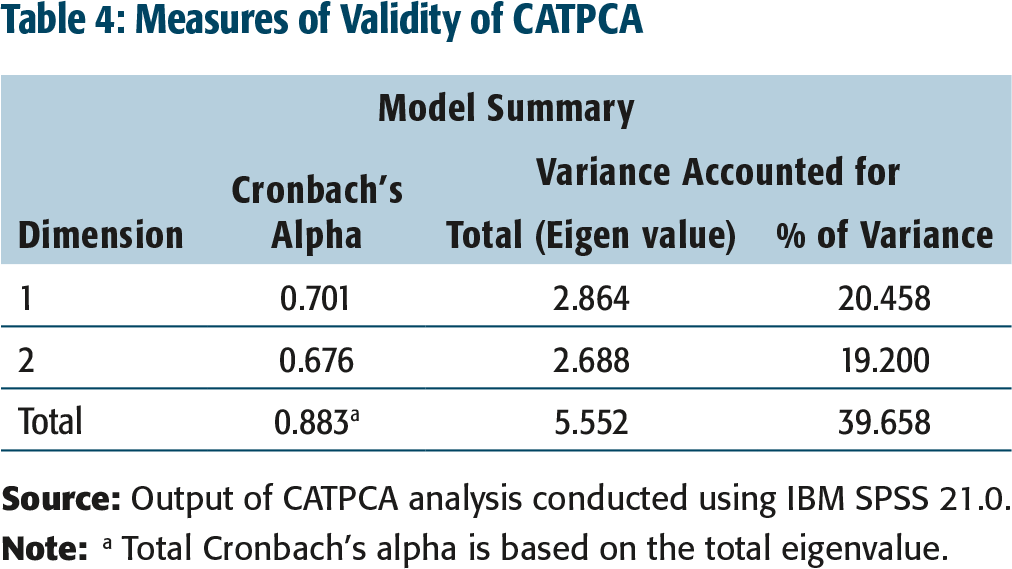
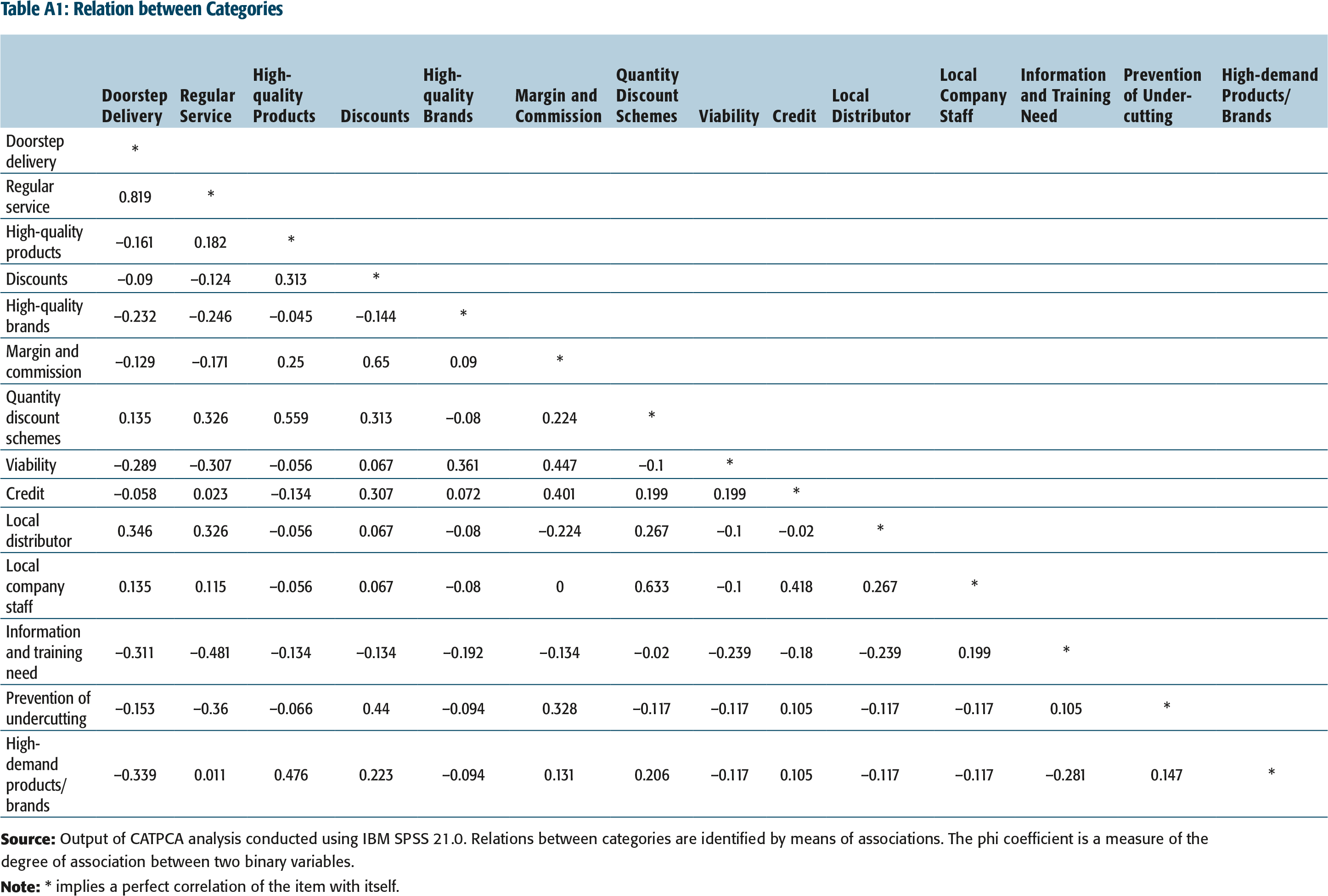
Component loadings were calculated for the categories in the analysis. The component loadings are basically the Pearson correlations between the quantified variables and the dimensions (see Table A1 for correlation matrices between categories). The component loadings of the categories placed in a two-dimensional diagram provide a visual means for interpretation. Categories that fit into the same cluster will have a similar loading on a dimension, while categories that do not fit into the same cluster will have loadings that are dissimilar.
Determining Core Concept and Clusters for Purchase Preference Factors
Figure 2 presents the factor loadings of each category of traditional rural retailer purchase preference factors to the two dimensions—a relatively higher loading on a dimension implies that the dimension is represented relatively better by the factor and a relatively lower loading on a dimension implies that the dimension is represented relatively modestly by the factor. On the first dimension (the horizontal axis), margin and commission (–0.58), prevention of undercutting (–0.48), viability (–0.47), discounts (–0.4), high-quality brands (–0.29), high-demand products/brands (–0.25), credit (–0.21), information and training need (–0.19), and high-quality products (–0.09) have negative component loadings, while the remaining categories quantity discount schemes (0.22), local company staff (0.26), local distributor (0.53), doorstep delivery (0.79), and regular service (0.82) have positive component loadings. Hence, the categories with negative factor loadings, with the exception of information and communication, seem to collectively indicate the profitability aspect of the retailer. Noticeably, the need for information and communication has a low magnitude of negative loading. The categories with positive factor loadings, with the exception of quantity discount scheme, seem to collectively indicate the localization aspect. In any case, the category of quantity discount schemes has a very low positive factor loading. Owing to the loadings of these categories, this dimension can be possibly named as profitability versus localization dimension. This is because the categories with negative loadings are possibly related to the profitability of the traditional rural retailer, whereas the categories with positive loadings within the first dimension are possibly related to the localization pursuit by marketers.
On the second dimension (the vertical axis), the categories information and training need (–0.37) and high-quality brands (–0.15) have negative factor loadings, while the rest of the categories—viability (0.02), prevention of undercutting (0.13), doorstep delivery (0.15), local distributor (0.24), regular service (0.36), local company staff (0.42), high-demand products/brands (0.43), credit (0.47), margin and commission (0.57), high-quality products (0.58), discounts (0.68), and quantity discount schemes (0.78)—have positive factor loadings. In the second dimension, the higher positive loadings are for discounts and quantity discount schemes and the negative loading is low for high-quality brands. Therefore, the second dimension can be possibly named as gross margin.
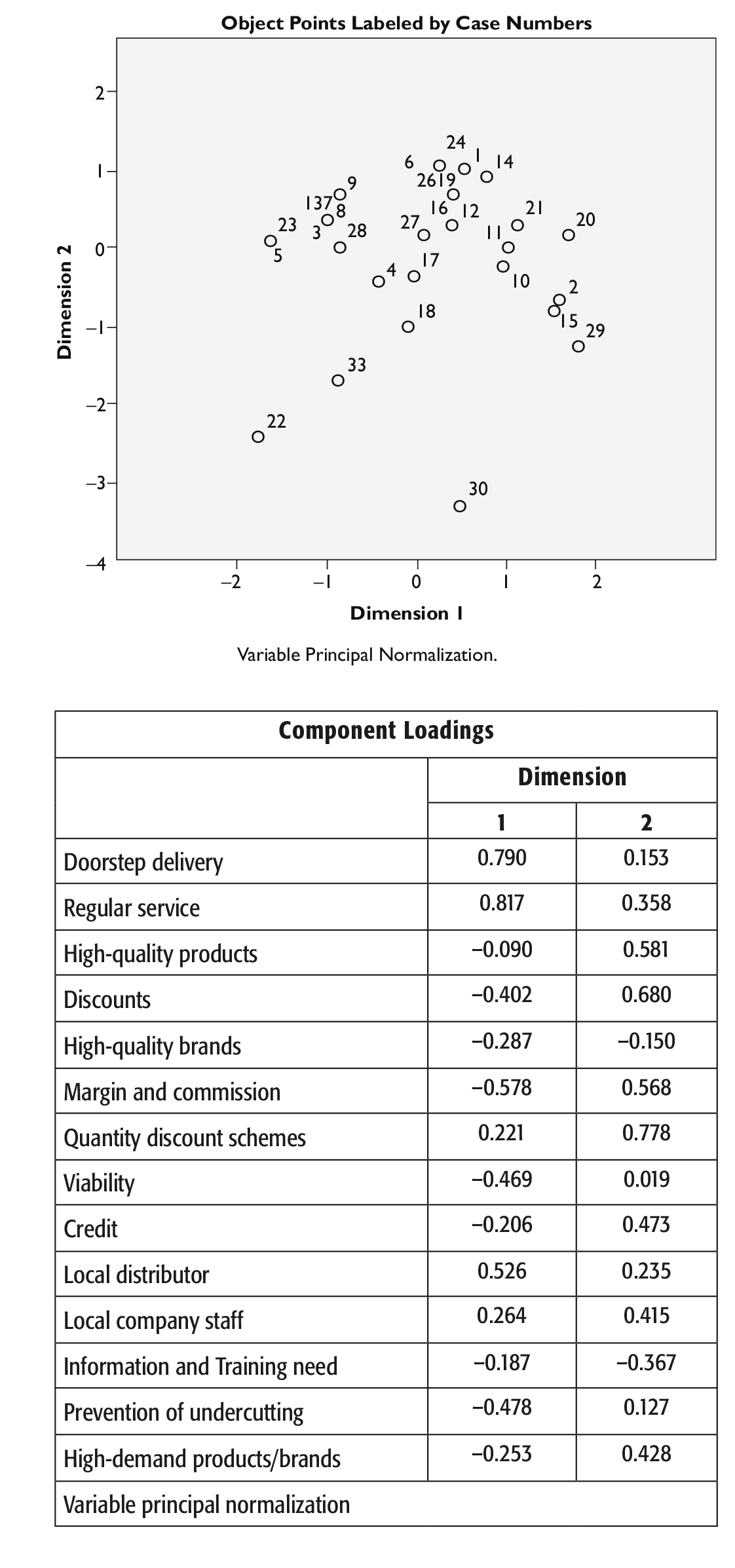
Once the dimensions have been determined, the core concepts and the different clusters can be determined. A factor loading of around 0.3 or above on both dimensions (in a two-dimensional solution) indicates a cross-loading in content-analysis studies (Verbeke et al., 1998)—this research uses a similar benchmark. There is a substantial overlap among some categories as seen from the cross-loadings that run across the two dimensions as can be seen through a visual examination of the factors’ loadings presented under the graph in Figure 2. The main overlaps are in the categories of regular service, discounts, and margins and commissions. In a minor way, there is overlap in quantity discount schemes, credit, local distributor, local company staff, and high-demand products and brands. These overlaps suggest the possible vestiges of a conceptual framework of a set of factors needed to motivate retailers to stock and sell products and brands—a framework that rural marketers need to understand and evoke while planning and implementing rural marketing strategies. Thus, while CATPCA creates two dimensions, there appears substantial overlap among the categories across the dimensions. Hence, we can possibly conclude that traditional rural retailer purchase preference requires a set of factors that marketers have to ensure.
From the factor loadings for the two dimensions, some clusters can be discerned. High-demand products and brands, and credit form one cluster—both have close levels of loadings for dimension 1 as well as dimension 2 and can be visually discerned if a graphical plot is made of the values in two axes. Doorstep delivery and regular service form a second cluster. It will also be checked if these clusters reflect exact content from conclusions in at least one research paper that is not used (to prevent cyclic conclusions) during the content-analysis process.
Based on the analysis using CATPCA, as presented in Figure 2, it is found that there is a core concept and a set of clusters, which represents conceptual variations around the core concept. This core concept of traditional rural purchase preference factors include the overlapping categories of regular service, discounts, margins and commissions, quantity discount schemes, credit, local distributor, local company staff, and high-demand products and brands. Therefore, the core purchase preference factors of traditional rural retailers can be identified as these overlapping categories of regular service, discounts, margins and commissions, quantity discount schemes, credit, local distributor, local company staff, and high-demand products and brands.
CATPCA has yielded two discernible clusters, as seen in Figure 2. High-demand products and brands, and credit form one cluster. Doorstep delivery and regular service form a second cluster. If the clusters, which emerge during the content analysis of factors of traditional rural retailer purchase preference, reflect exact content from conclusions in at least one article that is not used (to prevent cyclic conclusions) during the content-analysis process, it would imply that there is a conceptual core to the academic thought on the subject (as suggested by, Verbeke et al., 1998). Some conclusions in relatively recent studies (not included as part of content analysis to prevent cyclic error) about the purchase preference factors of traditional rural retailers are presented here, which correspond to the clusters that emerged:
(There is a) reluctance on the part of the semi-wholesalers and wholesalers to give more quantities (at a single purchase instance, indicating High Demand Products and Brands) to the rural retailer as they would not be sure if the retailer would come back to them for the next purchase, the sale being mostly on credit. (Aithal, 2012, p. 212) The Shakti entrepreneur (HUL’s rural distributor based in village) offers personalized service, doorstep delivery, and an assurance of quality to rural retailers. (Rangan & Rajan, 2007, p. 15) All possible efforts should be made to make the products available at the doorstep of the target audience … a strong distribution system, which helps brands reach the interiors of the rural market. (Saini, 2014, pp. 145–146)
This reflection of clusters in inferences present in research papers, which are not part of the statistical content analysis, substantiates the conclusion that studies pertaining to purchase preference factors of rural traditional retailers have a conceptual core.
Discussion
The objective of this study is to identify the factors that motivate traditional rural retailers in developing nations and to conceptualize a hierarchy of those needs based on a quantitative content analysis using statistical techniques. Rural retailers appear as the key influencer of rural sales and scholars and marketers feel the need to understand this entity better. Many authors have made conclusions about rural retailers while studying other aspects of rural marketing, but dedicated studies on traditional rural retailers in developing nations are rare and generally constrained by their width of study (all study less than 100 retailers or focus on products from a single company or are very qualitative in nature). This indeed makes a search for content difficult but these papers do provide a starting point for a serious and more extensive study of rural retailers. This is the first attempt to conceptualize the purchase preference factors for a traditional rural retailer using statistical methods.
Conceptual Core of Academic Thought on Traditional Rural Retailers’ Purchase Preference Factors
The result from CATPCA suggests a conceptual core for the factors that influence a rural retailer’s propensity to stock and sell a marketer’s brands and products. These accepted core factors indicate that a traditional rural retailer can possibly be persuaded to purchase high-demand products and brands, through the provision of credit, discounts, quantity discount schemes, margins and commissions, using local distributor (based in village itself) and company staff, who should provide regular service.
CATPCA has yielded two discernible clusters: High-demand products and brands and credit; and doorstep delivery and regular service. The clusters that emerge during the content analysis of factors of traditional rural retailer purchase preference reflect exact content from conclusions in at least one research paper that is not used (to prevent cyclic conclusions) during the content-analysis process. This confirms that researchers have been moving on similar lines in their conceptualizations of the purchase preference factors of traditional rural retailers. This makes it easier for further research to be conducted using the categories/themes identified in this research.
Identifying the Evolution of Studies on Traditional Rural Retailers’ Purchase Preference
This research also presents a longitudinal analysis of the categories over a period of 40 years. Traditional rural retailers have always felt the unwavering need for information and training. The need for discounts has also maintained almost a uniform ranking over the period of study. There is also a relative stability in the need for regular/frequent service. Doorstep delivery had the highest ranking in the first period, which is probably owing to the relative weakness of delivery systems during the early phase of rural marketing. The requirement for credit seems to increase from the first period to the second period and then decreases in the third period. The factor of margins and commissions seems highly ranked only in the second period. For rest of the factors, no valid temporal pattern can possibly be discerned with certainty.
Limitations of the Study
This study, however, has some limitations. First, it may have left out some research papers and books of minor importance, since a systematic citation search method has been used as the sampling method. The result may be made more robust by including more content on traditional rural retailer. Second, the categorization of factors and the propositions postulated are based on judgemental calls by the experts consulted. Some judgemental errors may have crept in while categorizing the terms found in literature.
Since this study is based on literature relevant to developing nations, it may not be applicable to mature markets. There may be some more factors that are important determinants of purchase decisions by traditional rural retailers and these may have got left out since the sampled studies have not mentioned these factors.
Managerial Implications
The 14 factors that are presented in this study may possibly guide rural marketers in designing and implementing rural marketing strategies. Since traditional rural retailers form the conduit for marketers to reach rural consumers, it follows that an understanding of the factors influencing rural retailers in stocking and selling decisions would help a marketer in tapping into rural markets. The ranking of the factors also provides some idea about the importance of each of these factors, since a larger number of studies stressing on a particular factor generally imply a greater significance of that particular factor (as suggested in a similar study by Verbeke et al., 1998). The clusters discerned through PCA imply that regular service at doorsteps of rural, traditional retailers, and providing credit for high-sales brands should be important strategic imperatives for a marketer who is keen to penetrate rural markets through traditional retailers.
Future studies may use the 14 identified factors of purchase preference to conduct empirical research on rural traditional retailers in developing nations. Such studies may even attempt to build a path diagram to represent purchase behaviour of rural traditional retailers.
Conclusion
This article points out that the research inferences, made in core as well as peripheral studies, on purchase preference factors for traditional rural retailers in developing nations comprise of a conceptual core. Although researchers have worked on multiple dimensions of rural marketing in developing nations, investigations on traditional rural retailers have only been at the periphery of studies. The aim of this research has been to analyse possibly all the research conducted on rural retailers and find out the purchase preference factors of a rural retailer. Content analysis has been used to find out the categories of factors influencing the purchase preference of traditional rural retailers in stocking and selling goods and services. This article also provides 14 categories of factors that motivate rural retailers, which would help marketers in planning and implementation of rural marketing strategies. These 14 categories can also be used as a starting point for further empirical research.
Appendix
Relation between Categories