




Abstract
Executive Summary
In today’s dynamic and competitive environment, customers have numerous choices to take decision on which products and services to use. In the wireless communications industry, the introduction of mobile number portability (MNP) may induce more and more consumers to switch their network operator, as MNP allows consumers to retain their original telephone number when switching from one carrier to another. This might have significant effect on price competition and market share of network providers (Shi, Chiang, & Rhee, 2006).
In this backdrop, the present study examines the effect of MNP on consumers’ switching intentions and also the factors affecting those switching intentions in Indian mobile phone services context. Further, the study investigates the relationship between switching intentions and actual switching (ASW) or actual staying (AST) behaviour of consumers.
The main findings of the study are:
After MNP implementation, consumers’ switching intentions have not changed, as they appear to be satisfied with the services of their current service provider and with regard to those who have already switched, they switched without MNP. Factors such as service quality, relational quality (i.e., satisfaction, trust, and commitment), price, reputation and image, attitude towards switching, perceived ease of use and usefulness, and switching costs (SCs) significantly affect consumers’ switching intentions. Consumers’ switching intentions predict both ASW and AST behaviour of consumers. However, switching intentions better predict AST than ASW behaviour. This implies that even if consumers have intentions to switch their current operator, they would not actually switch because of SCs involved in terms of time, money, and effort.
The authors have suggested initiatives that the service providers as well as the Telecom Regulatory Authority of India (TRAI) need to undertake for proper implementation and acceptance of MNP among consumers.
Keywords
In the past several years, there has been intense competition in the wireless telecommunications industry, following an unprecedented increase in the growth rate. The growth of the wireless telecommunications industry is due to the greater number of subscribers and greater variety of services, namely, wireline services, wireless services (global system for mobile communication [GSM] and code division multiple access [CDMA]), internet services, public mobile radio trunked services, global mobile personal communication by satellite (GMPCS), very small aperture terminals (VSATs), mobile value-added services, etc., that are now offered. In the early stages of market growth, the emphasis was on acquiring new subscribers but now as the market has matured, the significance of retaining current consumers has increased drastically. Indeed, acquiring new consumers is more difficult and expensive than retaining the existing consumers, which is important for manufacturing and services sectors of an economy (Saeed, Hussain, & Riaz, 2011).
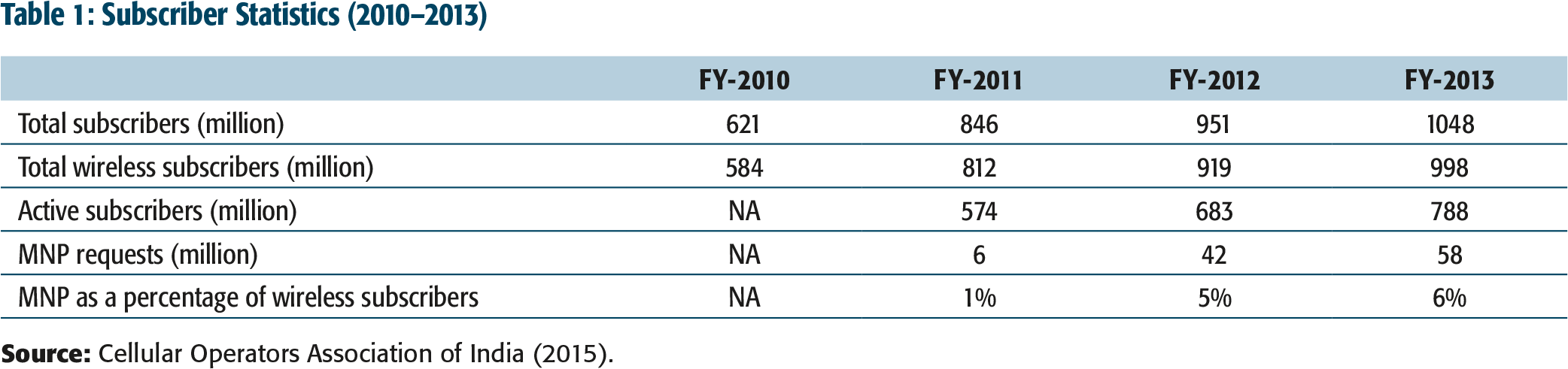
Telecommunication sector is one of the technologically developed sectors of the Indian economy, as reported by the Telecom Regulatory Authority of India (TRAI). The total number of telephone subscribers was 621 million in the year 2010, which increased to 951 million in 2012 and 1,048 million in 2013 (Table 1) (Cellular Operators Association of India, n.d.). The number of wireless subscribers reached 998 million in 2013, as consumers realized the utility of mobile services in handling their day-to-day affairs (personal as well as professional). In response to the introduction of mobile number portability (MNP), whereby consumers can retain their mobile number even when switching to another telecom operator, initially 1 per cent (in 2011) applications were received, which subsequently increased to 5 per cent (in 2012) and 6 per cent (in 2013) (Table 1). Since consumer switching has become a critical issue facing mobile service firms, leading to the relationship dissolution, the debate to attract and retain consumers has resulted in the development of relationship marketing strategies. In this regard, Duck (1982) explained relationship dissolution as the permanent dismembership, that is, migration of users from one service provider to another. In most services context, consumer switching is associated with negative consequences such as declining market share and poor profitability (Keaveney, 1995). As switching has become a common practice among mobile users, it assumes additional significance in this context. To control switching, mobile service providers are increasingly relying on contracts that would lock-in consumers for a definite time period, but with changing competitive dynamics, contracts are not being favoured by many users (Braff & Laogue, 2004). Therefore, it becomes important to understand the fundamental drivers of consumers’ switching behaviour in the context of mobile services.
Subscriber Statistics (2010–2013)
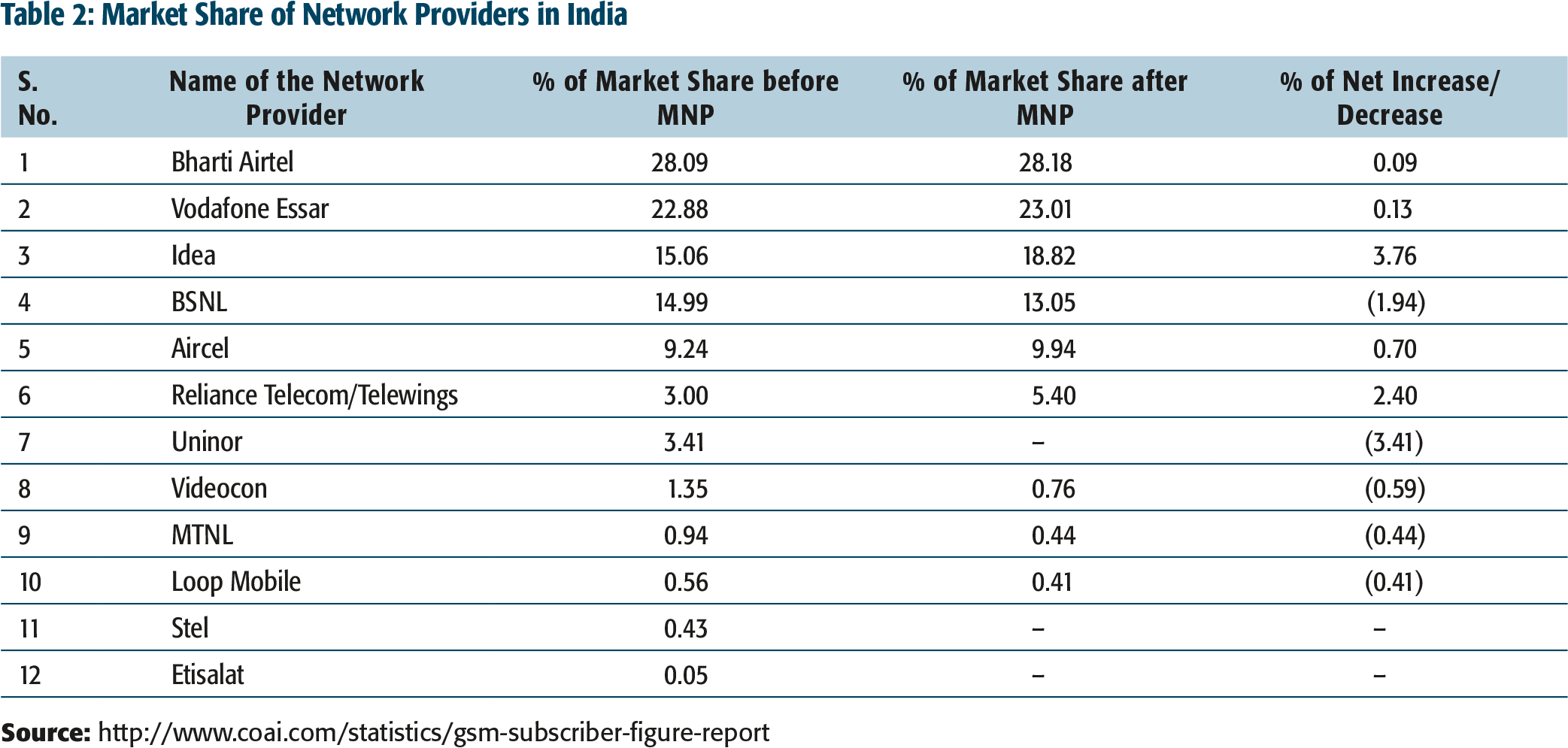
Switching cost reduces the consumers’ incentives to change their network providers, when they are not satisfied with the existing services. MNP reduces the cost associated with network switching and thus eases the burden of consumers, induces more competition, and helps the new entrants (Armstrong, 1997). Therefore, it is possible that more and more consumers get involved in switching their service providers and this switching behaviour of consumers significantly affects price competition and market share of network providers in the wireless/mobile communication industry (Shi et al., 2006).
Market Share of Network Providers in India
Several studies have been conducted to investigate the costs and benefits of MNP, consumer adoption of MNP, and the effects of MNP on call rates and service quality (SQ) (Buehler, Dewenter, & Haucap, 2006; Dick & Basu, 1994). With the exception of one study (Shin & Kim, 2008), pertinent previous literature has not examined consumers’ switching intentions with MNP and if in the past they had intentions to switch their service provider, how many of them actually switched and what were the factors behind that switching. Therefore, the present study explores the factors causing switching intentions and analyses whether MNP has increased consumers’ switching intentions. The factors predicting consumers’ switching intentions include awareness about MNP (AAMNP), SQ, satisfaction, trust, commitment, price, reputation and image, attitude towards switching (ATS), perceived ease of use (PEOU) and perceived usefulness (PU), and SCs.
A review of extant pertinent literature reveals that numerous studies have been conducted by eminent researchers in the telecom sector but only limited aspects of customer switching intentions have been covered. For example, Gerpott, Rams, and Schindler (2001) demonstrated that overall customer satisfaction (CS) had a significant impact on customer loyalty (CL), which in turn influenced a customer’s intention to terminate/extend the contractual relationship with his mobile cellular network operator. Further, the study found that mobile service price and personal service benefit perceptions were the supply-related variables with the strongest effects on network operator. However, as the study was confined to CS and CL, future research can be pursued with customer-side variables reflecting specific individual customer goals and motivations in using cellular services. Buehler and Haucap (2004) examined the consequences of MNP and revealed that the ultimate effect of introducing MNP was the abolition of SCs, that is, the cost of changing SIM card. However, the study was conceptual in nature and it ignored the empirical effects of MNP on consumers’ switching behaviour. Aydin and Ozer (2005) suggested a significant relationship between CS, CL, trust, and SC’s sub-constructs in the mobile phone market. The study tested cause–effect relationships simultaneously between the variables on the basis of correlation; in future, these relationships should be tested by using structural equation modelling (SEM). Shin and Kim (2008) found that CS, switching barriers, and demographics significantly affected subscribers’ intention to switch. Among these factors, switching barriers (positive) had the most significant influence. However, the study was confined only to the positive switching barriers and was also limited to intentions; therefore, future research needs to explore the actual staying (AST) and switching behaviour of consumers. Lyons (2009) examined the impact of MNP on mobile telephony retail prices by using international time-series cross-section data and found that MNP reduced average prices when the switching process was rapid (less than five days) but not when it was slower. However, the study is conceptual in nature. Rahman, Haque, and Ahmad (2011) determined the factors (i.e., SQ, call rate, and brand image) of customers’ perception towards an operator and suggested that price and SQ were more important factors influencing customers’ choice of service provider than brand image. As the study was conducted in Malaysia, it was felt that similar research could be conducted in different cultural settings.
Thus, the previous studies were limited to either one or two aspects of customer switching in mobile phone services. The proposed study intends to fill this research gap by examining all the dimensions of customer switching intentions such as awareness of MNP application, SQ, relational quality (RQ), perceived price, reputation and image of the operator, ATS, PEOU, PU, and SCs. The study also proposes to find out the effects of MNP on customers’ switching intentions, which have never been explored earlier. Besides this, an attempt shall be made to find factors influencing customers’ actual switching (ASW) or AST in mobile phone services.
Hypotheses Development
Keaveney (1995) was the first to develop a model of consumer switching behaviour for service incidents in which he identified eight incidents, that is, pricing, inconvenience, core service failures, employees’ response to service failures, attraction by competitors, ethical problems, involuntary switching, and seldom mentioned incidents.
In the mobile communication sector, which has oligopoly characteristics, MNP has increased the competition, protected the consumers, allowed them to switch the service provider easier than ever before, and decreased the cost of changing the provider. In this regard, Durukan, Bozaci, and Dogan (2011) analysed the relationship between awareness of MNP and consumers’ switching intentions on the basis of benefits, costs, quality, recent developments, and discounts, but revealed that there was no relationship between ‘awareness of MNP’ and ‘consumers’ switching intentions’. Though awareness regarding MNP can assist consumers in taking appropriate decisions regarding switching the service provider, consumers shall also consider economical, relational, technical, and functional factors before deciding in favour of switching the current network operator. Awareness regarding MNP can generate understanding about the industry and help in differentiating between superior and low quality product so as to keep the market updated and create awareness of what is happening in the industry; however, the decision to exit a network operator shall never solely depend on their awareness regarding MNP. Hence, the following hypothesis can be formulated.
H1: Consumers’ MNP awareness has no significant impact on their switching intentions.
SQ in the telecom industry is an important indicator to assess a firm’s performance. Mobile subscribers who perceive that operators differ in service levels are more likely to switch than those who do not see any difference among networks (Federal Communications Commission, 2005). In this context, Bansal and Taylor (1999) revealed that SQ was indirectly related to consumers’ switching intentions via ATS. Similarly, Bansal, Taylor, and James (2005) asserted that consumers would switch their existing service provider if they perceived low SQ. Chen and Wang (2009) analysed the relationship between core SQ and consumer satisfaction in insurance sector and revealed that core SQ was a critical determinant of consumer satisfaction. The higher level of core SQ increases the level of consumers’ satisfaction and decreases their intentions to switch. Also, Shin and Kim (2008) reported that SQ was indirectly related to switching intentions via satisfaction and Khan, Ghouri, Siddqui, Shaikh, and Alam (2010) demonstrated that there was a positive relationship between unfavourable SQ and consumers’ switching a bank. Similarly, Anton, Camarero, and Carrero (2007) indicated that consumers’ perception of poor SQ had a positive effect on termination intentions. In addition, Hess, Ganesan, and Klein (2003) concluded that high quality could actually motivate consumers to strengthen the relationship with their service provider. Further, Huang, Cheng, and Farn (2007) found that quality helped in promoting consumers’ loyalty and Bell, Auh, and Smalley (2005) indicated that both technical and functional SQ were positively related to consumer loyalty. Thus, the following hypothesis can be formulated.
H2: Lower level of SQ significantly leads to higher consumers’ switching intentions.
RQ is an overall construct, which is based on the previous experiences and impressions the consumer has with the service provider (Hennig-Thurau & Klee, 1997). Pi and Huang (2011) treated RQ with a service organization as a second-order latent construct encompassing satisfaction, trust, and commitment. Cronin and Taylor (1992), Oliver and Swan (1989), and Sharma and Patterson (2000) found that CS had a significant impact on repurchase intentions in a wide range of services. Also, Liang, Wang, and Farquhar (2009) provided empirical evidence that consumer satisfaction was significantly related to behavioural loyalty in financial services industry. Trust—the consumer’s feeling that the seller will fulfil his promises—is also an antecedent of consumers’ future behavioural intentions (Garbarino & Johnson, 1999; Morgan & Hunt, 1994). Trust is also a strong predictor of commitment, which leads to repurchase intentions (Hennig-Thurau, Gwinner, & Gremler, 2002; Sharma & Patterson, 2000). In the context of hair styling and auto repair services, Bansal et al. (2005) found a negative relationship between satisfaction, trust, commitment, and consumers’ switching of service provider. Further, Wetzels, Ruyter, and Birgelen (1998) reported that commitment was a strong factor, which enhanced staying intentions. In addition, Lau and Lee (1999) examined a significant positive association between customers’ trust in brand and their loyalty and Ranaweera and Prabhu (2003) confirmed that trust had a significant positive impact on consumer retention. Hence, the following hypothesis can be formulated.
H3: The lower the satisfaction, trust, and commitment towards the service provider, the higher the consumers’ switching intentions.
There are two tendencies with respect to consumers’ perception of the price. The first maintains that consumers regard high prices as a signal of high quality and vice versa (Dodds, Monroe, & Grewal, 1991); the second, in contrast, suggests that low prices can also function as a signal of good value for money (Kirmani & Rao, 2000). In either case, whether a low price is perceived as a low quality or a high price is perceived as uneconomical, when consumers are dissatisfied with the value for money or perceive the price to be unfair, their intentions are stronger to switch the supplier (Campbell, 1999). In this regard, Keaveney (1995) suggested that consumers voluntarily switched suppliers because of their personal dissatisfaction with the prices they paid. This dissatisfaction arose when the consumers perceived the price to be unfair or excessively higher than alternative options. Also, Bansal et al. (2005) indicated that among the reasons why consumers switched suppliers, price-related issues were important. Even Khan et al. (2010) concluded that price positively influenced consumer switching behaviour. Similarly, Anton et al. (2007) demonstrated that consumers’ perception of paying an unfair price for the service positively affected their intention to exit the relationship. Therefore, the following hypothesis can be formulated.
H4: Unfavourable perception of price has a positive impact on consumers’ switching intentions.
Reputation has been described as a social identity and an important intangible resource that can significantly contribute to a firm’s performance and its survival (Rao, 1994). It is a key asset to firms, as it is valuable, distinctive, difficult to duplicate, non-substitutable, and it provides the firm with a sustainable competitive advantage (Wang, Lo, & Hui, 2003). In this context, Muffatto and Panizzolo (1995) indicated that reputation played a key role in measuring consumer satisfaction and thus, it was identified as a key ingredient to retain consumers in the services sector. Also, Wang et al. (2003) revealed that the quality of product/service benefited not only by lowering costs but also by increasing competitiveness through the establishment of a good reputation and attraction and retention of consumers. Bloemer, Ruyter, and Peeters (1998) found that image was indirectly related to loyalty via perceived quality, whereas Awang (2010) demonstrated that corporate reputation was indirectly related to competitive advantage via perceived value and perceived quality of the service. Further, Khan et al. (2010) examined a positive relationship between unfavourable bank reputation and consumers’ switching of a bank. Thus, the following hypothesis can be formulated.
H5: Unfavourable reputation of service provider significantly influences consumers’ switching intentions.
The role of one’s ATS in predicting intentions to switch remains unexplored in mobile services or telecom sector. Generally, the more favourable the attitude is with respect to the behaviour in question, the stronger is an individual’s intention to perform that behaviour (Ajzen, 1999). In the context of mortgage services, Bansal and Taylor (1999) revealed that ATS was the most influential determinant of switching intentions, which was influenced by subjective norms, consequentially influencing consumers’ switching intentions. Bansal and Taylor (1999, 2002) also concluded that attitudes towards switching were associated with consumers’ switching intentions. Thus, a person holding favourable ATS will be more likely to switch his current service provider (Desbarats, 1983). Hence, the following hypothesis can be formulated.
H6: Positive ATS significantly leads to strong switching intentions.
Perceived usefulness is often regarded as a concept that includes components such as effectiveness, efficiency, availability, sociability, reassurance, and instrumentality (Leung & Wei, 2000). PEOU refers to the degree of effort that consumers associate with using a mobile service (Davis, 1989). In this regard, Hung, Ku, and Chang (2003) revealed that PEOU influenced intentions to use mobile services. In addition, Nysveen, Pederson, and Thorbjornsen (2005) concluded that there was a strong and direct effect of PU and PEOU on intentions to use goal-directed mobile services. Davis (1989) also indicated that PEOU positively influenced PU, suggesting that only if the mobile services were easy to use, the consumers would be able to take advantage of all the possible benefits of the goal-directed services. Thus, PEOU and PU are important motivations for using mobile services. Hence, the following hypothesis can be formulated.
H7: PEOU and PU are significant factors determining consumers’ switching intentions.
Switching costs are defined as those costs that consumers associate with the process of switching from one supplier to another (Burnham, Frels, & Mahajan, 2003; Wathne, Biong, & Heide, 2001). Jones, Mothersbaugh, and Beatty (2000) and Ping (1993) established a direct relationship between SCs and repurchase intentions. Lee and Cunningham (2001) found a significant impact of SC variables on service loyalty and concluded that service loyalty was not only determined by perceived SQ, but also by cost consideration that arose from present transaction and future switching possibilities. Burnham et al. (2003) affirmed that SCs drove consumers’ intention to stay with their current service provider. If SCs are low, dissatisfaction with the SQ, price, or firm will motivate the intention to switch suppliers (Bansal et al., 2005). Anton et al. (2007) also found that SCs are indirectly related to consumers’ switching intention via SQ, commitment, price, and anger incidents. Bansal and Taylor (1999) revealed that there is a direct relationship between SCs and consumers’ switching intentions. More recently, Shin and Kim (2008) indicated that switching barriers are the key factors in subscribers’ switching intentions. Thus, the following hypothesis can be formulated.
H8: The lower the SCs, the higher the consumers’ switching intentions.
A critical factor in the Theory of Planned Behaviour (TPB) is an individual’s intention to perform a particular behaviour. Behavioural intentions are considered to be a critical factor in explaining consumers’ actual behaviour, where an individual’s strong intention to perform certain behaviour is likely to result in its performance (Ajzen, 1991). The evidence for prediction of behaviour from intentions can be found in the applications of the Theory of Reasoned Action (TRA) and TPB in several behavioural contexts (Ajzen & Driver, 1992; East, 1993). In this context, Ajzen and Fishbein (1980) insisted that most individual’s behaviour was predictably based on his/her intentions. Zeithaml, Berry, and Parasuraman (1996) also demonstrated that a favourable intention to switch predicted ASW. Further, Bansal and Taylor (1999) revealed that the stronger the consumers’ intention to switch the service provider, the more likely they were to engage in switching behaviour. Hence, the following hypothesis can be formulated.
H9: Consumers’ switching intentions significantly influence their ASW.
Changing consumer preferences and spending patterns influence consumers behaviour. For example, Beckett, Hewer, and Howcroft (2000) found that bank consumers transferred their account to alternative providers because of changed lifestyle, such as marriage or shifting of house. Abratt and Russel (1999) showed that price followed by trust, SQ, and firm, being available at a time of crisis, were the most important criteria in the selection of a private bank. In contrast, Riggal (1980) confirmed that the convenience factor was most important for bank consumers followed by friends’ suggestions and low service charges. In addition, Zeithaml et al. (1996) demonstrated the existence of a positive relationship between commitment and behavioural intentions, which implied greater chances of AST behaviour. Moreover, consequences of relationship efforts on consumers’ behavioural intentions can be viewed as signals of retention or defection (Liang & Wang, 2007). Thus, the following hypothesis can be formulated.
H10: Consumers’ switching intentions have a negative impact on their AST.
One important source of constraints that consumers face in the case of switching-related behaviours is perceived SCs, which makes it costly for the consumers to switch to another supplier (Fornell, 1992; Fornell & Wernerfelt, 1987). For example, Bansal and Taylor (1999) demonstrated that the lower the SCs, the more successfully consumers were predicted to engage in switching behaviour. In the context of banks, Ghouri et al. (2010) analysed the relationship between unfavourable perceptions of price, unfavourable bank reputation, poor SQ, low SCs, and consumers’ switching, and found that there existed a positive and significant relationship between these factors and consumer’s switching. Sathish, Kumar, Naveen, and Jeevanantham (2011) revealed that poor network coverage, frequent network problems, high call rates, and influence from family and friends were the most important factors affecting switching behaviour of consumers. However, Durukan et al. (2011) demonstrated that there was no relationship between the awareness of consumers regarding MNP and their switching. Bansal et al. (2005) asserted that service switching was influenced less by consumer evaluation of service provider characteristics and service experience than by alternative attractiveness as well as personal and social factors. Holloway, Wang, and Beatty (2009) found that following a failed service recovery, consumers with high relationship quality would experience a greater decline in their intentions to repurchase from the service provider in the future. Keaveney (1995) also publicized that core service failures, service encounter failures, and inconvenience caused consumers to switch services. Further, Shin and Kim (2008) revealed that higher levels of perceived switching barriers were associated with higher levels of switching behaviour, whereas Wieringa and Verhoef (2007) found lower relationship quality to be significantly related to more switching. Therefore, the following hypothesis can be formulated.
H11a: Various predictive switching factors (namely, awareness of MNP application, SQ, RQ, perceived price, reputation and image of the operator, ATS, PEOU, and PU and SCs) significantly influence ASW.
Customer loyalty is defined as consumer’s intent to stay with an organization (Zeithaml et al., 1996). Perceived SQ, CS, and loyalty have been identified as key factors in banking and other service industries (Dick & Basu, 1994; Lewis, 1993). In this context, Bloemer et al. (1998) revealed that image of a bank did not have a direct positive effect on loyalty while quality had a direct and indirect effect on loyalty, where the indirect influence was via satisfaction. De Matos, Henrique, and Rosa (2009) found that SC was a significant antecedent of both attitudinal and behavioural loyalty, with a strong influence on attitudinal loyalty. Yen (2010) showed that high perceived risk affected the relationship of SCs and consumer loyalty. Jones et al. (2000) observed that stronger interpersonal relationships were associated with higher repurchase intentions. Bell et al. (2005) found that the effect of technical SQ on consumer loyalty was much greater than the effect of functional SQ. Dongjin, Shenghui, and Kai (2008) stated that perceived value positively influenced consumers’ repurchase intentions. Goala (2007) reported that calculative commitment resisted switching when there were inappropriate employee responses to service failures, a pricing problem, and a service encounter failure. In addition, Seo, Ranganathan, and Babad (2008) found that more complex service plan, more sophisticated handset, longer consumer association, and higher connectivity quality of wireless were positively related to consumer retention behaviour. Hence, the following hypothesis can be formulated.
H11b: Various predictive switching factors (namely, awareness of MNP application, SQ, RQ, perceived price, reputation and image of the operator, ATS, PEOU, and PU and SCs) significantly influence AST.
Research Design and Methodology
Item Generation of Switching Factors
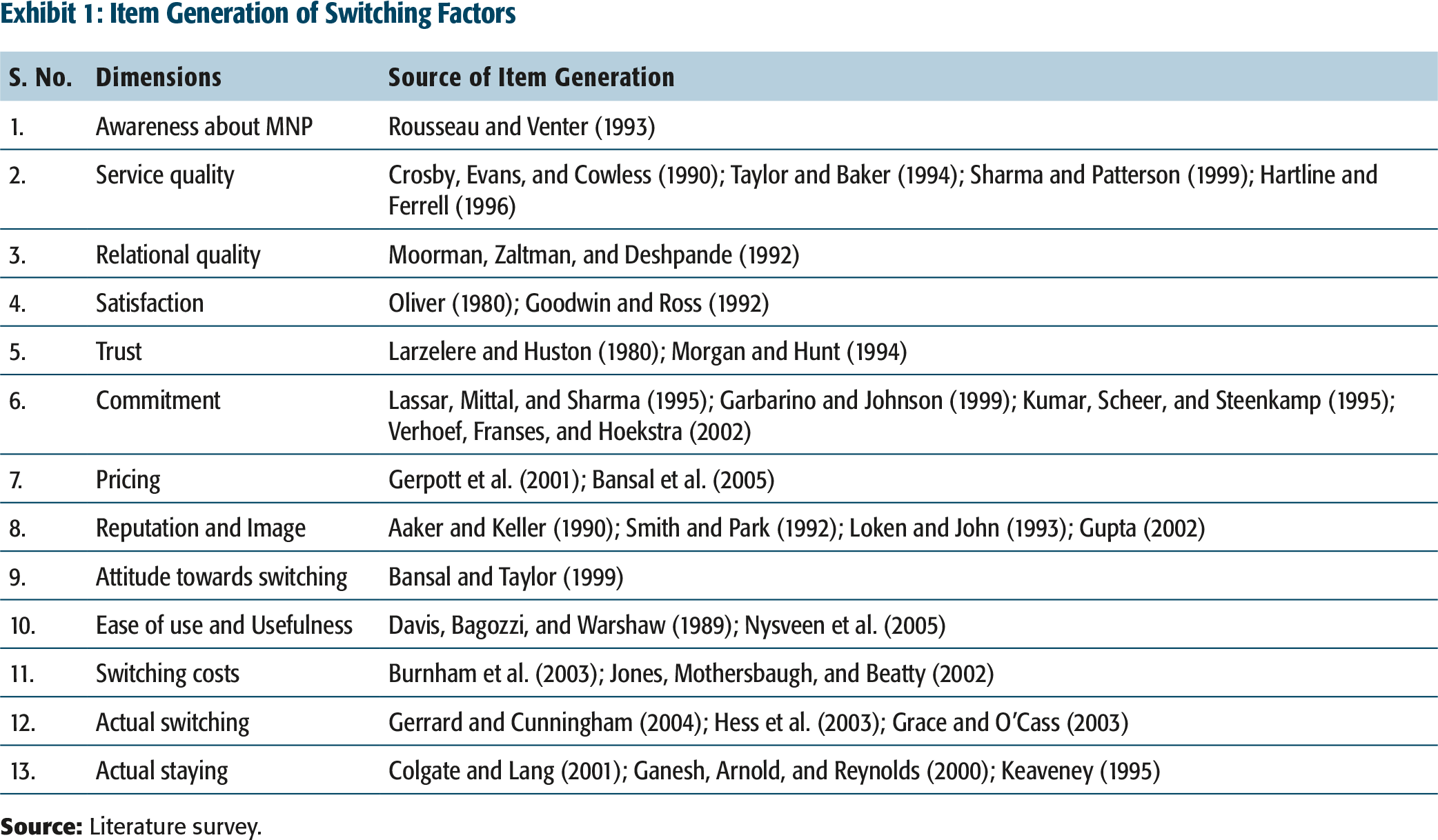
To enhance the validity of the proposed model, a pretest was conducted before the final survey. For pilot testing, students of a North Indian university were contacted on convenience basis. After analysing the data collected through pilot survey, it was realized that one item of SC, namely, ‘don’t know what we will end up having to deal with while switching’, was found ambiguous and therefore not considered for final survey. Thereafter, the instrument was finalized, which consisted of demographic profile, general information, and various aspects of consumer switching intentions. A 5-point Likert scale ranging from ‘strongly agree’ (5) to ‘strongly disagree’ (1) was employed for each item. For the final survey, the respondents were the regular postgraduate students of the same university, considering that youngsters are always in search of new services being introduced in the market, have complete awareness, and are adaptive about these new services/offerings (Amin, Ahmad, & Huib, 2012). They like creativity and innovation and easily move from one product to another. In fact, preferring new and innovative product is the core attribute associated with youngsters (Stanton, Michael, & Bruce, 1994). On the contrary, entrepreneurs, professionals, salaried persons, and senior citizens are less interested in new/innovative/value-added services being introduced, as they use their mobile phones mainly for professional purposes. These students were selected after obtaining department-wise list of students from the nodal section of the university and thereafter arranging all the departments in an alphabetical order. According to the list, the total number of regular students as on 31 December 2011 was 2,804. After arranging departments alphabetically, the sample size was calculated using the formula given by Burns and Bush (2006, p. 378) and the sample size obtained was 260. Out of 260 students, who were personally approached, 242 returned properly filled-in instruments, thus providing a response rate of 93.07 per cent.
Outliers were detected and removed before analysing the data. Normality of the data was also established, as normality is a pre-requisite for many statistical tests. In order to find out the perceptual gap between two groups of telecommunication consumers (i.e., male and female; prepaid and post-paid; consumers who switched with MNP or without MNP), independent samples t-test was applied. Confirmatory factor analysis (CFA) was used to test the adequacy of the measurement model (Anderson & Gerbing, 1988). The adequacy of the measurement model was evaluated on the criteria of convergent validity, discriminant validity, and reliability. Finally, for testing the hypotheses, SEM was used, which is a comprehensive statistical approach to test relationships among observed and latent variables (Hoyle, 1995).
Analysis and Discussion
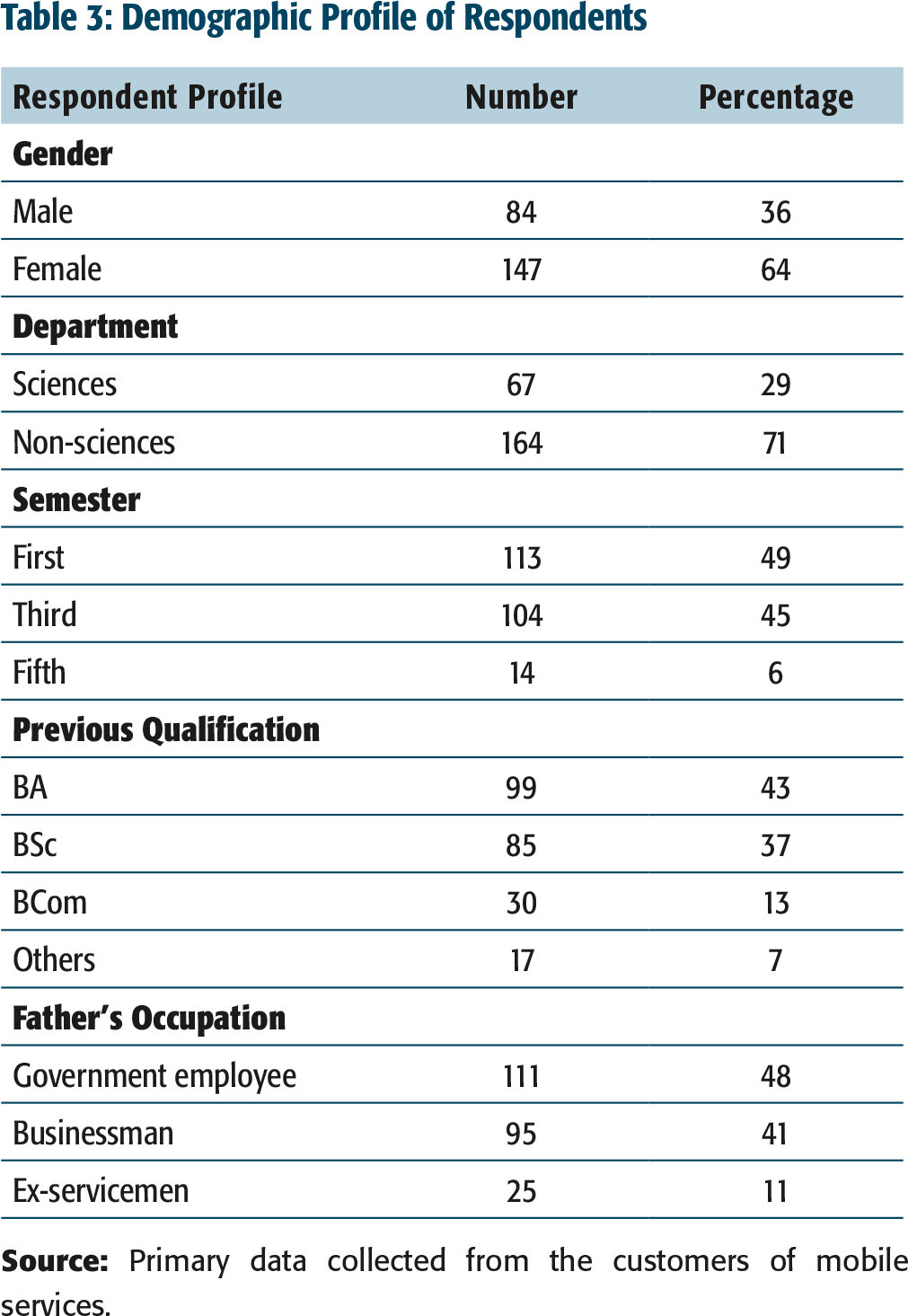
Demographic Profile of Respondents
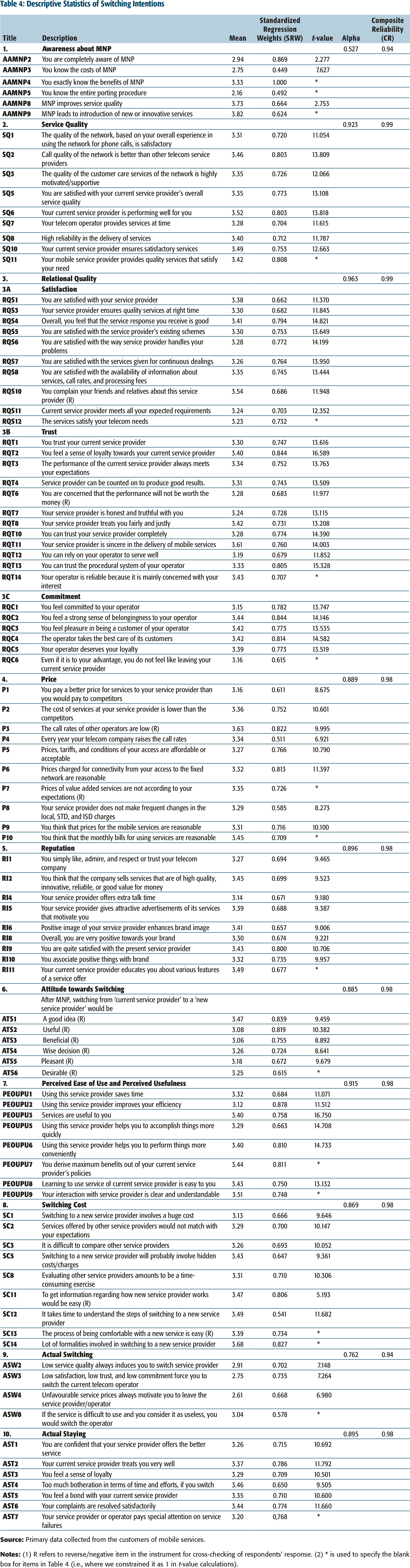
Descriptive Statistics of Switching Intentions
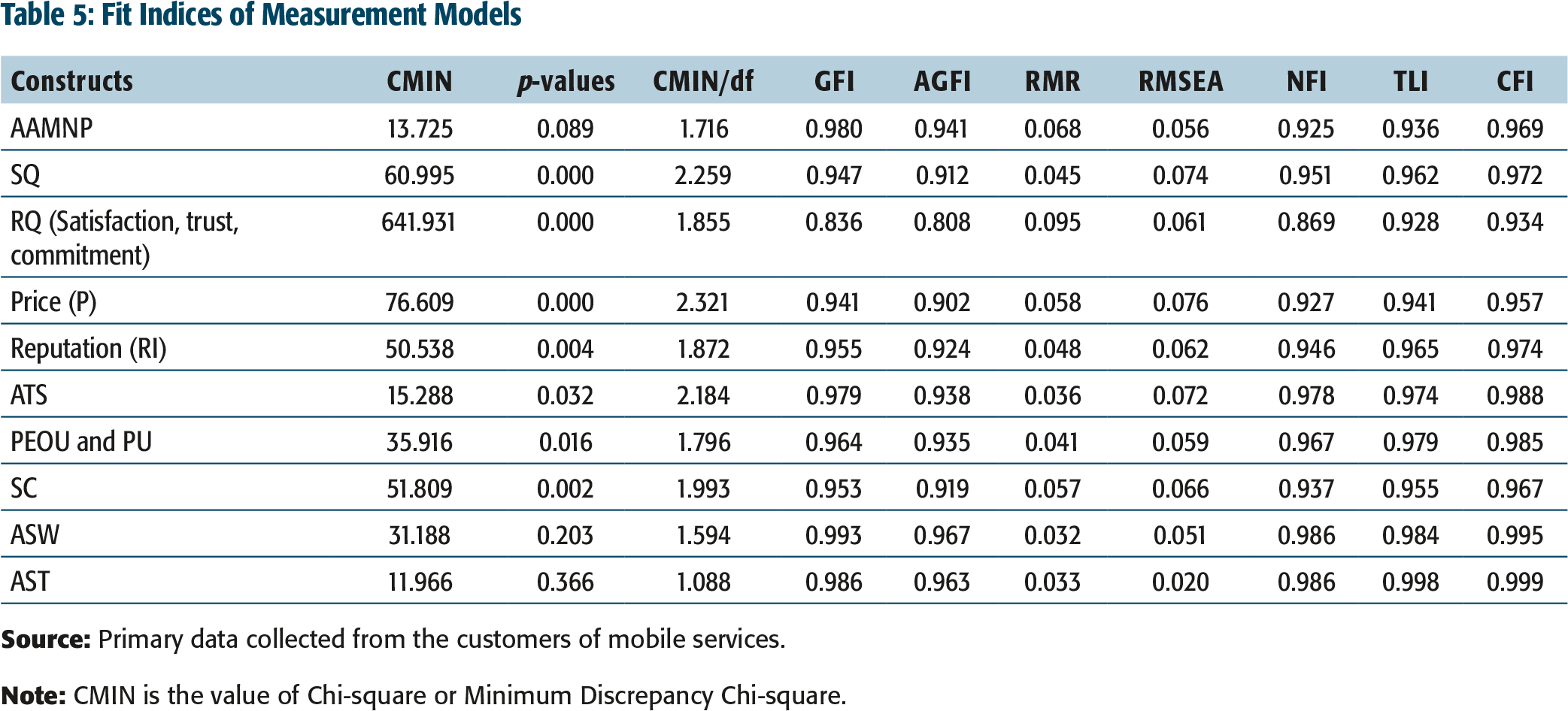
Fit Indices of Measurement Models
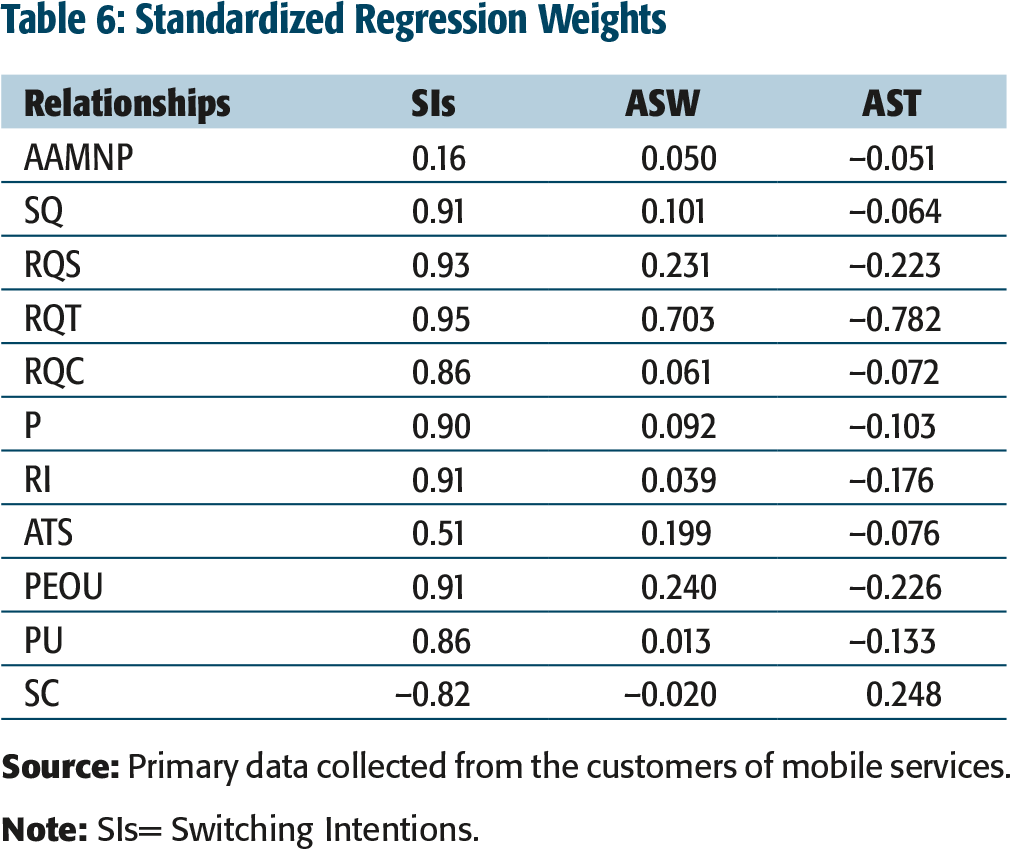
Standardized Regression Weights
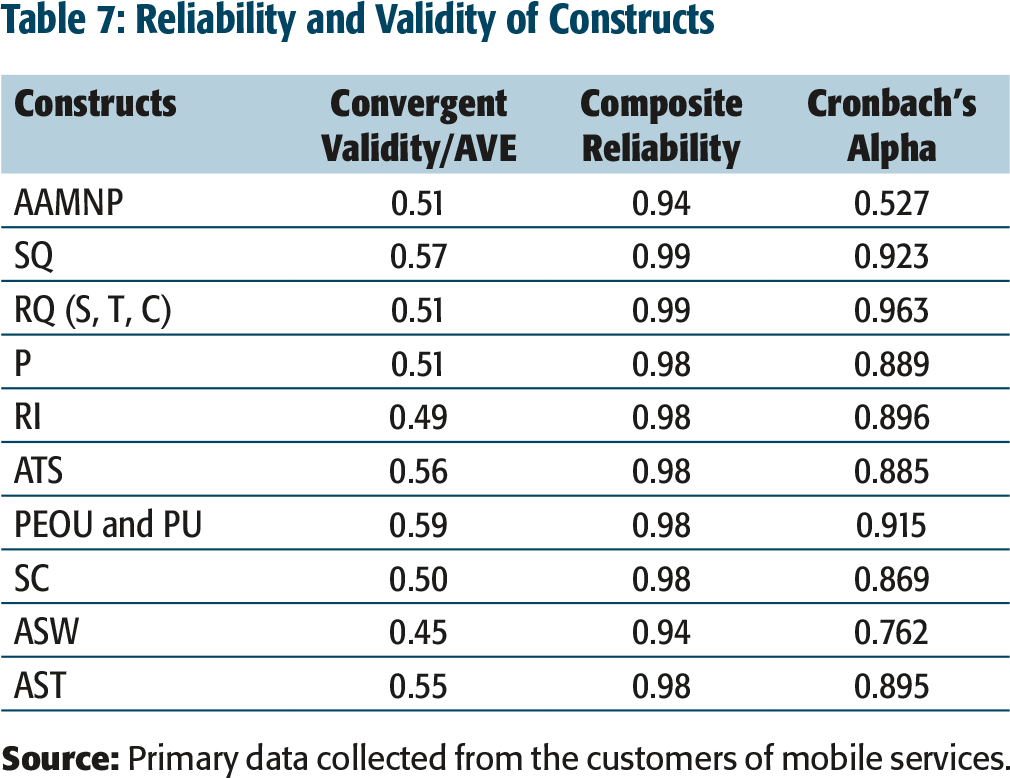
Reliability and Validity of Constructs
Correlation Matrix of Predictive Switching Factors
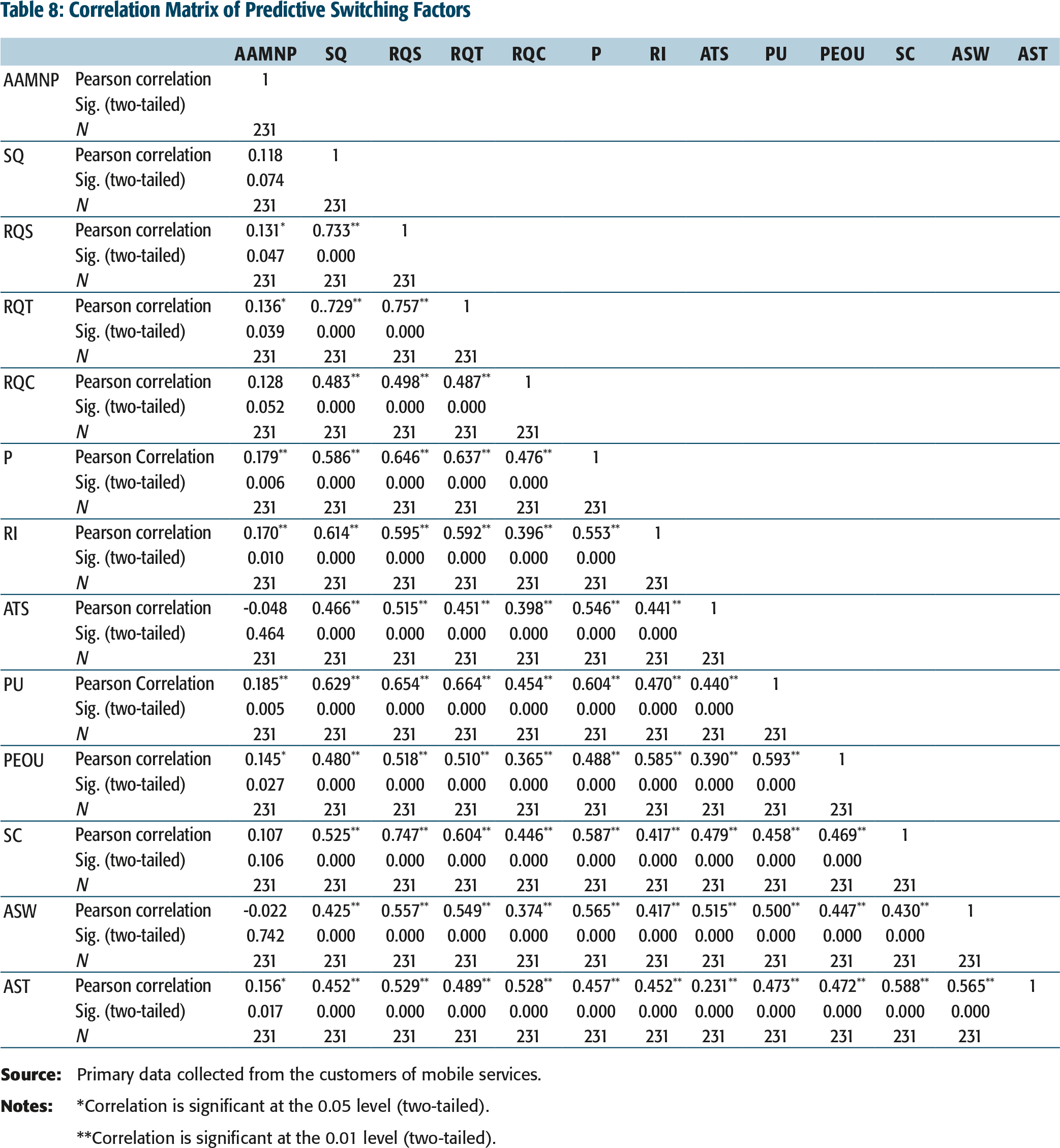
**Correlation is significant at the 0.01 level (two-tailed).
Table 6 shows the direct effects of predictive switching factors on the switching intentions, AST, and ASW. The results reveal that the highest contributing variable towards switching intentions and AST/ASW is trust (SI: 0.95, ASW:0.703, AST: -0.782). Hence, trust towards the service provider plays a significant role in influencing not only the switching intentions but also AST and ASW.
To test the hypothesized relationships in the model (Figure 1), SEM was conducted using AMOS (16.0). The structural model was examined to test the hypotheses depicting relationship among constructs (Table 9). It becomes evident from the SEM results that consumers’ awareness regarding MNP has no effect on their intentions to switch the current operator (b = 0.16, p = 0.018); thus, H1 stands accepted. This implies that consumers with complete information regarding MNP do not intend to switch current operator, possibly, because of switching barriers (i.e., SCs). In this context, Durukan et al. (2011) revealed that there was no meaningful relationship between ‘awareness about MNP’ and ‘switching intentions’. Besides the proposed model, two other models, namely, formative model and high-order formative model, were also tested. The fit indices reveal that the proposed model is the best fit model as compared to the other two models (Table 9).
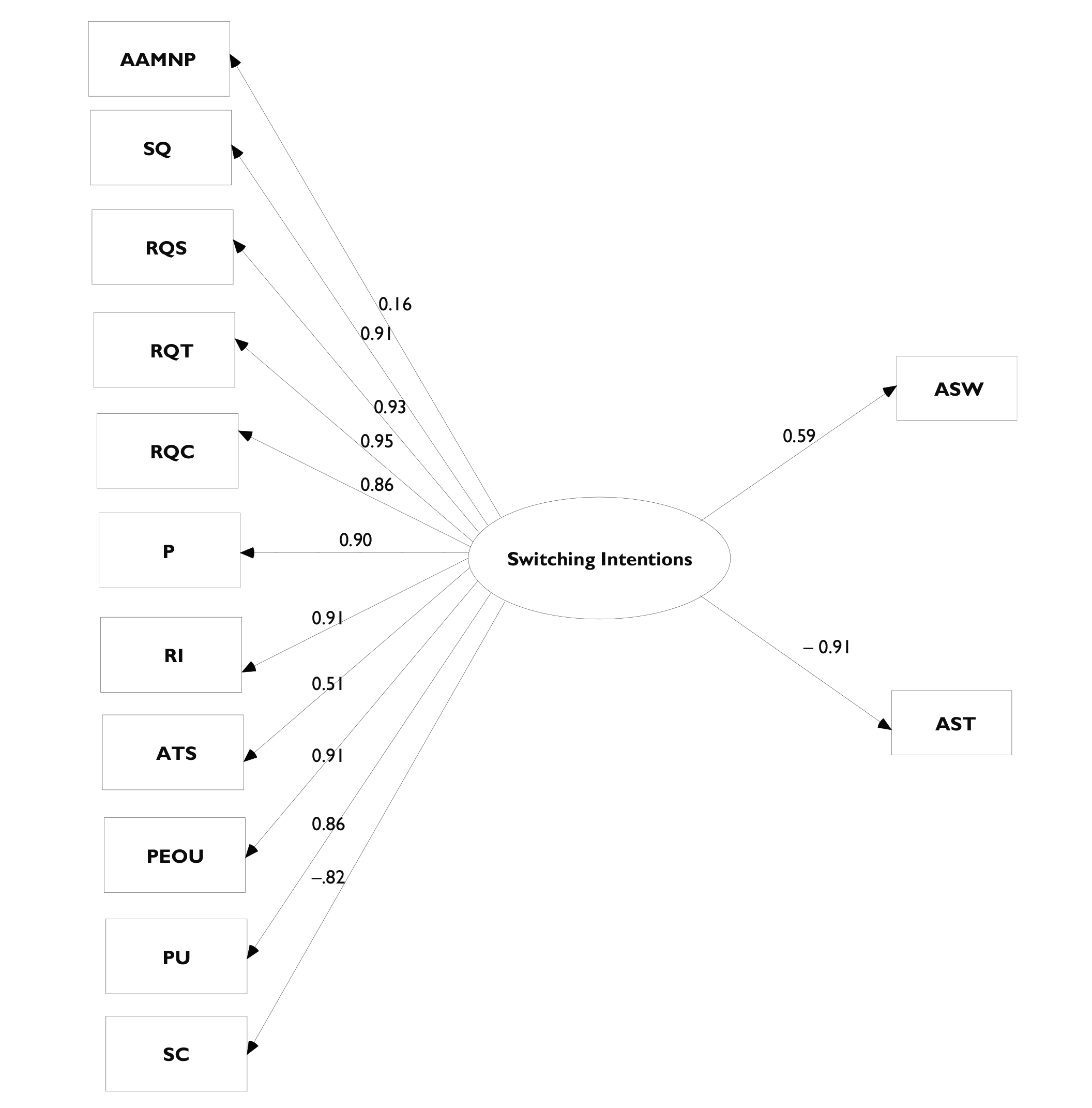
Overall Fitness of Structural Model

It is again clear from the SEM results that lower SQ significantly influences consumers’ switching intentions (b = 0.91, p = 0.00); hence, H2 is also accepted. In this regard, Saeed et al. (2011) demonstrated a positive association between poor SQ and switching intentions.
The SEM analysis further reveals that low satisfaction (b = 0.93), low trust (b = 0.95), and low commitment (b = 0.86) are the significant factors influencing consumers’ switching intentions. Hence, on the basis of these results, H3 stands accepted. The negative relationship between satisfaction with a service provider and switching intentions is well established (e.g., Bansal & Taylor, 1999; Cronin, Brady, & Hult, 2000). This signifies that if a consumer is not satisfied with the services of his/her network operator, then he/she may think of leaving that service provider. Also, if consumers trust the products/services of their current service provider, their intention to switch that service provider is low. In this regard, Anton et al. (2007) revealed a significant relationship between low commitment towards service provider and switching intentions. This explains that if consumers are highly committed to their service provider, their intention to leave that service provider is also low.
The direct effect of unfavourable prices on consumers’ switching intentions (b = 0.90) is significant and positive, which also leads to the acceptance of this hypothesis (H4). Hence, when consumers are dissatisfied with the value for money or perceive the price to be unfair, their intentions will be stronger to switch the service provider (Campbell, 1999).
The results of SEM analysis also depict that unfavourable reputation significantly affects consumers’ switching intentions (b = 0.91); therefore, H5 also stands accepted. Hence, consumers are more inclined to purchase the product/services of those companies whom they perceive as having favourable reputation among their competitors (Nguyen & Leblanc, 2001).
It also becomes clear from SEM results that consumers’ positive ATS significantly predicts their switching intentions (b = 0.51, p = 0.00), which leads to the acceptance of H6. This finds support from Bansal and Taylor (1999), who stated that ATS was the most influential determinant of switching intentions. Hence, if a consumer is holding favourable ATS, he/she will be more likely to switch his current service provider (Desbarats, 1983).
The model further explains that PEOU (b = 0.91) and PU (b = 0.86) significantly predict consumers’ switching from one service provider to another, which supports H7. Thus, when consumers perceive the services of current operator as easy to use, their intentions to leave the provider will be low and, in contrast, if they perceive that services are difficult to use, they intend to switch current operator (Nysveen et al., 2005).
The SEM results also justify that lower SCs significantly lead to higher consumers’ switching intentions (b = –0.82, p = 0.00); therefore, H8 stands accepted. This demonstrates that if SCs are low, consumers’ switching intentions will be high. The direct effect of consumers’ switching intentions on ASW behaviour of consumers is also significant and positive (b = 0.59), which leads to the acceptance of H9. This implies that if consumers have strong intention to leave their service provider, may be because of low SQ, unfavourable prices, low commitment, etc., they will definitely switch the current operator. The consequences of relationship efforts on consumers’ behavioural intentions can be viewed as signals of retention or defection (Liang & Wang, 2007).
Again, it is clear from SEM analysis that consumers’ switching intentions negatively influence AST behaviour of consumers or their loyalty with current operator (b = –0.91, p = 0.00). All this leads to the acceptance of H10. If consumers are very much satisfied with the quality and pricing of services, their intention to leave current operator decreases, which signifies consumers’ loyalty with their operator.
However, SEM analysis depicts that except for ‘trust towards the service provider’, other predictive switching factors do not significantly contribute towards ASW and AST behaviour of consumers; hence H11a and H11b stand rejected. The results reveal that predictive switching factors do not have direct significant effect on ASW or AST behaviour; this relationship is fully mediated by the switching intentions of the consumers. On the contrary, Khan et al. (2010) stated that there was a significant relationship between unfavourable perception of price, unfavourable bank reputation, poor SQ, low SCs on the one hand and consumers switching behaviour on the other. Further, according to Holloway et al. (2009), following a failed service recovery, consumers with high relationship quality would experience a greater decline in their intentions to repurchase from the service provider in the future.
After running SEM, it was found that the overall fit measures provided a good fit for the hypothesized causal model (Bagozzi & Yi, 1988; Baumgartner & Homburg, 1996). The GFI (0.915), AGFI (0.869), RMSEA (0.07) and RMSR (0.03) are all within the acceptable range. The other indices like NFI, CFI, and TLI are all above 0.90. As these values are above 0.90, it can be concluded that the model exhibits a reasonable fit to the data (Table 9).
Conclusion
The availability of a number of subscriber options for consumers and varied tariff rates of each player motivate the consumers to switch between service providers. MNP permits to switch operators without changing his/her telephone number. The present study focuses on consumers’ switching intentions after the introduction of MNP, factors affecting consumers’ switching intentions, and also the relationship between switching intentions and ASW or AST behaviour of consumers.
The findings of the present study reveal that after the implementation of MNP, consumers’ switching intentions have not enhanced, as they appear to be satisfied with the services of their current service provider; those who have already switched, did so without MNP. Also, the consumers, who intend to switch their operator in future, want to do so without MNP, as MNP involves too much cost, time, and effort.
The study findings also reveal that the factors such as SQ, RQ (i.e., satisfaction, trust, and commitment), price, reputation and image, ATS, PEOU and PU, and SCs significantly affect consumers’ switching intentions (Bansal & Taylor, 2002; Davis, 1989; Hess et al., 2003; Ping, 1993). The study has also examined the relationship between AAMNP application and switching intentions and the result finds no significant relationship between the two, a finding that is also supported by Durukan et al. (2011). Along with this, the study findings demonstrate that various switching factors significantly affect ASW and AST behaviour of consumers (Holloway et al., 2009; Yen, 2010).
The study suggests that consumers’ switching intentions predict both ASW and AST behaviour of consumers. However, switching intentions better predict AST, that is, consumer loyalty, more than ASW behaviour. This implies that even if consumers have intentions to switch their current operator, they would not switch because of SCs involved in terms of time, money, and effort. This is consistent with the findings of Chuang (2011) who found that SC was the most significant factor for retaining the subscribers. Thus, it can be concluded that with the introduction of MNP, consumers’ switching intentions have not increased and most of them want to remain with their current operator.
Managerial Implications
In order to develop socially desirable, legally justifiable, industrially feasible, and economically viable policy, it is advised that regulators should not only enforce MNP, but they should try to reduce the switching barriers and enhance consumers’ awareness of MNP, so that subscribers can take advantage of this system. By understanding consumers’ switching intentions, regulators can ensure MNP’s effective implementation, which will also make it more convenient for end users to switch current operator if the services do not meet their expectations. Thus, government as well as telecom operators should organize programmes, seminars, informative advertisements, and other communication activities about the MNP system to help in shortening and simplifying the procedure of reaching the MNP targets. The operators should open separate counters in their retail outlets for providing information to each and every consumer about the benefits and costs of MNP service.
The results of the study reveal that the factor contributing more towards ASW is the ‘trust towards the service provider’; therefore, the service provider should extend consistent and reliable services so that the consumers repose confidence in that network operator. Also these operators should resort to improving SQ, reducing prices (call rates), providing more value-added services, etc., as a mechanism to retain the current base of consumers. This shall also improve the future prospects of the service provider in the long run.
Delaying tactics and other measures used by the operator to prevent the consumers from switching implies that he or she is not properly implementing the MNP services. The government should issue show cause notice to these operators on violating the laws relating to MNP. TRAI should identify some possible measures to improve communication between the parties involved in the MNP process. One way to improve this communication is to reduce the amount of messages being exchanged between the recipient and the donors, for example, by combining execution and validation messages. The study also reveals that one reason why the consumers are not adopting MNP is the paper work involved that consumes too much of their time. To avoid this problem, TRAI should define the stages in the porting process so that operators do not misuse their position to create unnecessary delays. At present, very few telecom companies provide MNP services in India; hence, the government should take necessary steps or frame strict policies regarding mandatory introduction of MNP. The administrative arrangement of the porting process should also be taken up by the government, as administrative arrangement is equally important like the technical arrangement, which includes porting time, porting charges, etc. Also the poorly designed systems, which are very complex or easily abused, take away the benefits that the MNP is supposed to deliver. TRAI should also fix time limits for the validation process, as majority of the respondents face problems because of the time-consuming process involved in porting. As the AAMNP is generated mainly through advertisements, friends, and relatives, it is advisable that telecom operators should offer discounts and other incentives to the person who motivates his relatives and friends to avail MNP.
The present study demonstrates various factors affecting consumers’ switching intentions; hence, the operators should attempt to strengthen these switching factors in order to prevent customers from exiting. Telecom companies should train their sales personnel for promoting new products or services, and educating and informing consumers about the new offerings so that they can avail these services with proper information and knowledge.
Limitations and Future Research
The study is conducted with limited factors affecting consumers’ switching intentions, thereby excluding some more factors, namely, attractiveness of alternatives, subjective norms, service affordability, promotional offers, etc. The results of the study indicate that most of the consumers have switched from private network operator to BSNL and would prefer to subscribe to the services of BSNL in future. Therefore, research should be conducted to find out the reasons for not trusting private network operators. Our current understanding of SCs is limited to the costs involved in switching from current service provider to the new one. Future research should examine how costs associated with returning to the origin affect the decision to leave in the first place, especially in case of contractual agreements such as BSNL. The results also reveal that consumers do not favour MNP for switching their operators because companies follow delaying tactics or do not provide unique portability code. Therefore, another study should be conducted to investigate why companies are not implementing MNP properly. The concept of portability has also been recently introduced in health insurance sector. Therefore, all insurers issuing health insurance policies will allow for credit gained by the insured for pre-existing conditions in terms of waiting period when a policyholder switches from one insurer to another or from one plan to another, provided the previous policy has been maintained without break. Thus, future research can also be conducted in health insurance sector.