




Abstract

Keywords
Executive Summary
Engineering companies (ECs), operating mainly through projects, have acquired considerable importance in the Moroccan economy for they serve as a one-stop consultancy offering for all the services necessary for definition, production, and project management (PM). They play an important role in supporting government and investors' decision as well as in knowledge transfer to local businesses.
Engineering projects are managed in an environment often characterized by turbulence, complexity, and crucial need for flexibility and high quality information. The success or failure of these projects depends on decisions made during their life cycle. The burden of a bad decision in general and in the engineering sector, in particular, where business is generally run through projects, is becoming very overwhelming and these companies are urged to change the way they make decisions. They have to base their decisions more and more on high quality information, effective knowledge management (KM), and competitive intelligence (CI), tools. More importantly, they have to use an effective decision analysis process to avoid mental bias that is the most important reason behind bad decisions. Furthermore, such a project decision analysis process should reinforce the strategic alignment of the organization in order to achieve the desired decision strategic impact. However, the conjunction and harmonization of all these processes and systems require smooth and careful implementation, allowing for effective change management and high levels of maturity in project decision-making capabilities and competencies. Accordingly, the ECs need to climb suitable maturity levels, leading to both agility and flexibility. While agility relies on strong and adaptive processes covering the three main components of enterprise intelligence, namely business intelligence, CI and KM, flexibility for a project-based organization means a combination in a proper dosage of effective organizational PM processes, on the one hand, and balanced project decision processes, on the other.
In this backdrop, this article reviews literature, analyses different processes and models proposed in the last 10 years and develops an intelligent PM maturity model for the Moroccan ECs. The proposed model, grounded on strong theoretical foundations and participatory design approach, is a hybrid between staged and system-based models. It balances between rigidity and stability ensured by staged models and flexibility provided by the system-based models.
Project-based organizations (PBOs) adopt a business model that combines intelligent systems with a set of project management (PM) processes. Besides, they have to harmonize these efforts with effective project decision analysis processes (PDAPs) (Bresnen, Goussevskaia, & Swan, 2004; Vakkayil, 2010). Intelligent systems ensure agility and project knowledge capitalization and PM processes guarantee a consistent and methodical approach when framing and implementing project decisions (Virine & Trumper, 2008). According to the statistics published by FMCI (2011), the Moroccan engineering market counts more than 600 engineering companies (ECs) and employs about 6,000 employees with 400 million euro turnover. More than 70 per cent of these companies are located between Rabat, the administrative capital, and Casablanca, the economic capital. While intervening in more than 80 per cent of the total undertaken projects, they serve only 40 per cent of the market, and the rest 60 per cent is satisfied by international ECs. The principal engineering services are: construction, infrastructure, water and environment, agriculture (including fishing and forestry), industries and mines (Alami, Beidouri & Bouksour, 2013c).
The engineering market is very competitive with volatile business patterns, low barriers to entry and strong impact of political decision-making (FIDIC, 2012). Accordingly, intelligent systems, continuously improved PM processes, and effective decision analysis processes are among the urgent needs for ECs to survive in today's tougher competition (FMCI, 2011).
This research aims at developing and proposing a useful and practical prescriptive intelligent project management maturity model (IP3M) that will serve as an action plan for a gradual and methodical implementation of such combined systems in the case of Moroccan engineering sector (MES).
Inspired by the extensive literature on intelligence maturity models (MMs), project management maturity model (PMMM) and project decision-making, and an in-depth analysis of their strengths and weaknesses, this article aims at developing and testing a prescriptive IP3M, applicable first to MES and potentially extendable to PBOs in Morocco and abroad. The construction of this IP3M is mainly based on a mixed methods research, combining quantitative and qualitative methods.
PROJECT DECISION-MAKING
Approaches to Decision-making
Project decision analysis is a branch of the decision theory, which is the study of how to make better choices when faced with uncertainties. This theory is handled by authors in two different types of analyses: Normative decision theory that describes how people should make decisions and descriptive decision theory that describes how people actually make decisions. The Foundation of this theory can be traced to critical thinking theory and process literature (McAuliffe, 2005; Safi & Burrell, 2007). These two aspects, with regards to the emotional bias-critical pitfall (Johnson, 2006; Rombout & Wise, 2007; Wilson, 1998), result in three decision-making approaches that overlap in decisions (Skinner, 2009):
Intuitive approach. The manager may intuitively think that he/she is making the right decision even if he/she does not have all the required information. Advocacy-based approach. In this approach, the manager tries to follow a methodical decision process, starting by a decision framing and gathering of the needed information, but at the end, he/she turns to his/her feeling and intuition as the main decision argument. If the manager agrees with the evaluation, he/she will take it and make a decision. Otherwise, the manager will request a re-evaluation. Decision analysis approach. This approach aims at diminishing the impact of intuition and feeling towards a logical analysis of a correctly structured problem.
PROJECT DECISION ANALYSIS
Project Decision Analysis Process (PDAP)
The decision analysis process proposes a practical framework of methods and tools to promote creativity and help people make better decisions (Keeney, 1982). The main goal of this process is to help project managers overcome psychological pitfalls through suitable techniques (Massey, Robinson, & Kaniel, 2006; Virine & Trumper, 2008).
The PDAP is both practical and effective. It is practical, as it can be easily integrated into the processes in place, and does not create an additional level of bureaucracy; its effectiveness is demonstrated in the next paragraph.
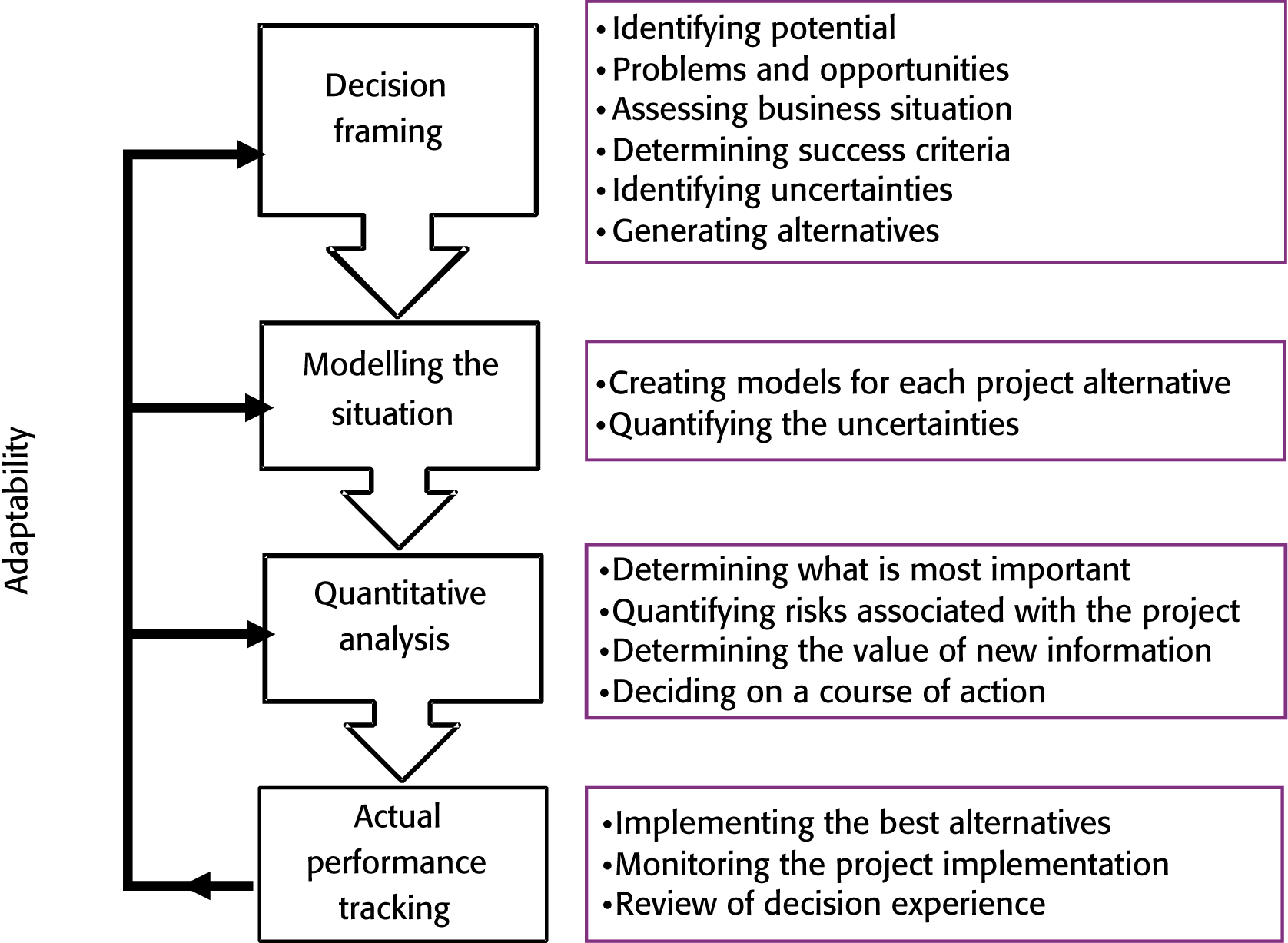
The process includes four major phases (Virine & Trumper, 2008):
Decision framing. Decision framing helps decision-makers identify potential problems or opportunities; assess business situations; determine project objectives, trade-offs and success criteria, and finally, identify uncertainties. The project manager defines the scope of the decision. Modelling the alternatives. A mathematical model can help to analyse and estimate future events. Quantitative analysis. After the mathematical model is ready, the analysis may include a number of steps, depending on the situation. Actual performance tracking. It includes implementation, monitoring, and review of the decisions.
As Figure 1 shows, the scalability and flexibility of the four phases allow effective feedbacks and adaptability.
PDAP Effectiveness
Process effectiveness is a metric that assesses the quality of the process with regard to organizational effectiveness. It can be captured with several approaches. The competing value framework (McCartt & Rohrbaugh, 1995; Quinn & Rohrbaugh, 1981, 1983; Rohrbaugh, 2005) is one of the most widely used approaches. Developed initially to assess to what extent the studied organization is effective, this model was extended (Schilling, Oeser & Schaub, 2007) to measure the fitness of the process to the overall organizational effectiveness. It highlights four dimensions that should be balanced:
adequate information (empirical perspective): referring to the internal process model; clear thinking about this information (rational perspective): referring to the rational goal model; flexibility and creativity in the process (political perspective): referring to the human relations model; and sufficient participation (consensual perspective): referring to the open system model.
The correlation between PDAP effectiveness and organizational effectiveness is qualitatively drawn in Figure 2.
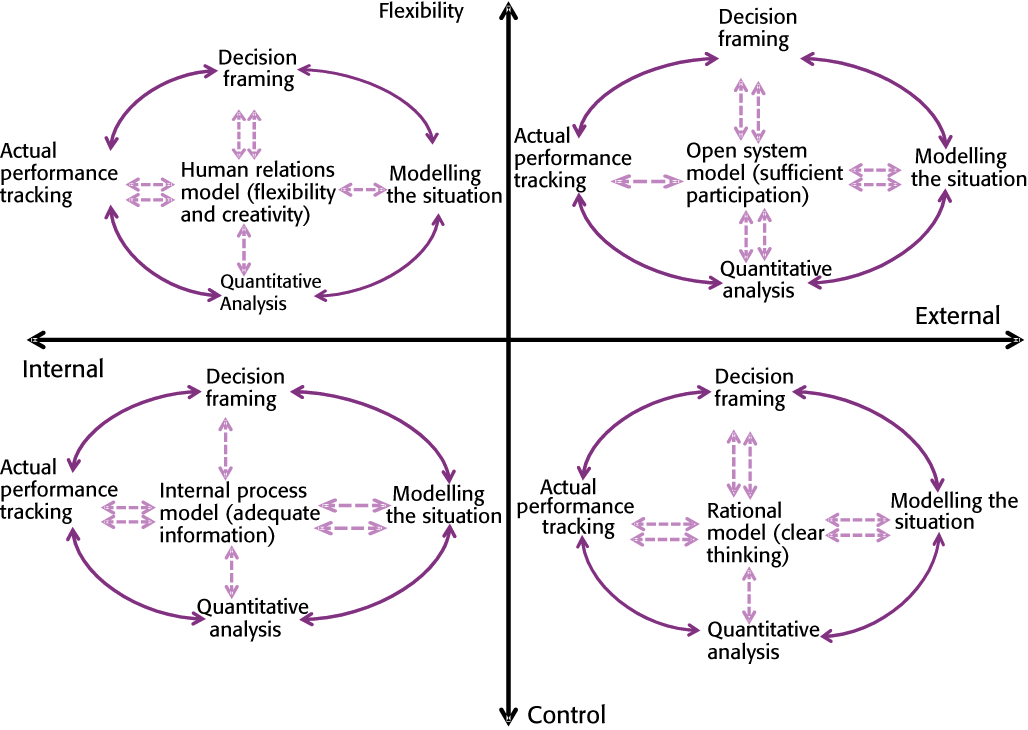
Broken arrows note the strength of correlation between PDAP phases and competing values within the organization.
Balanced PDAP
As defined by Virine and Trumper (2008), PDAP does not consider strategic alignment when implementing and tracking decisions. Therefore, it seems very beneficial to reinforce PDAP by a suitable tool that allows strategic alignment of decision-making, especially for large and sensitive projects. In this regard, balanced scorecard introduced by Kaplan and Norton (1992; 1996a; 1996b) can be of great help.
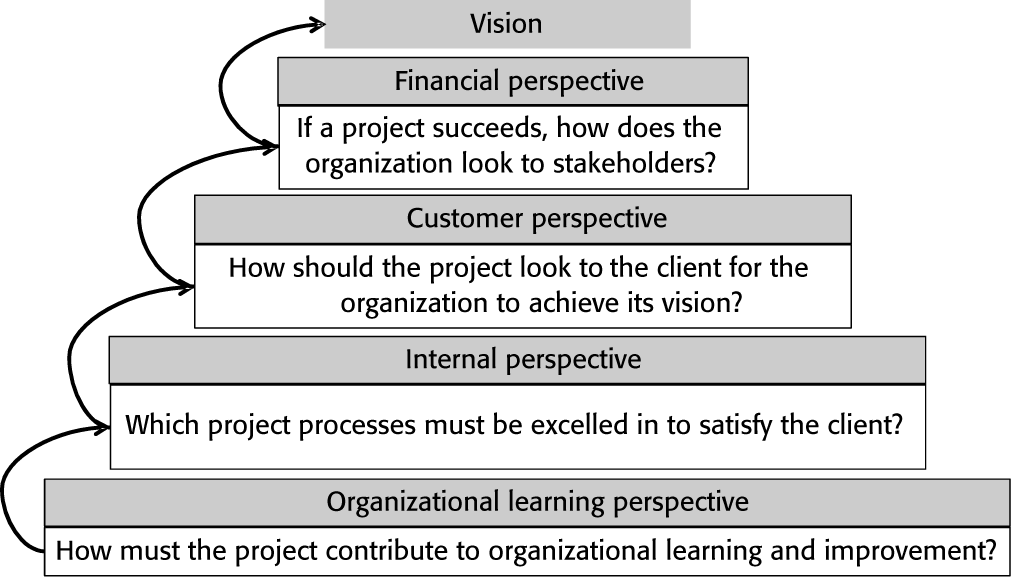
Balanced Scorecard is a performance management tool that enables a company to translate its vision and strategy into a tangible set of performance measures. However, it is more than a measuring device. The scorecard provides an enterprise view of an organization's overall performance by integrating financial measures with other key performance indicators around customer perspectives, internal business processes, and organizational growth, learning, and innovation. (Kaplan & Norton, 1992; 1996a; 1996b)
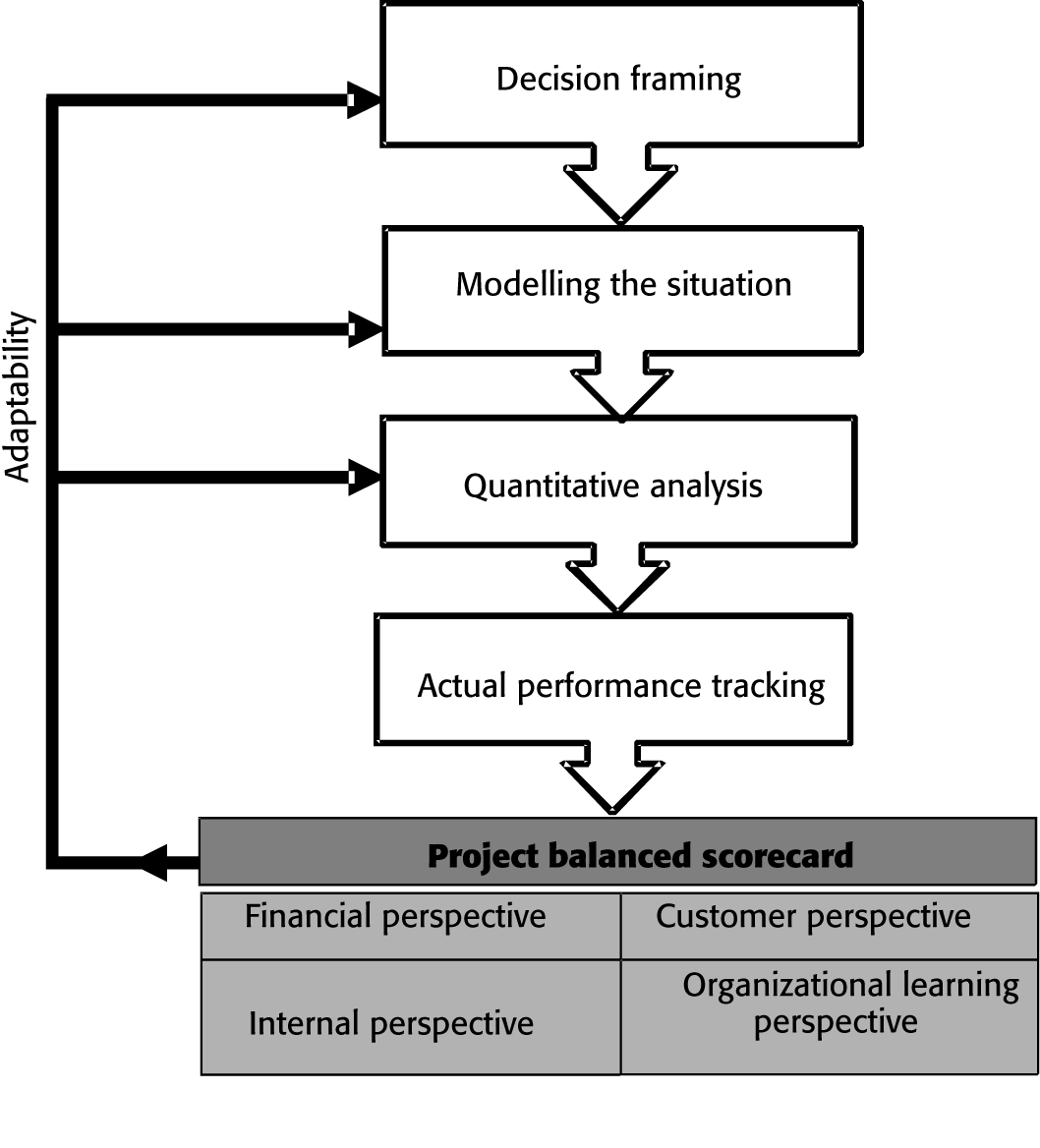
In order to ensure a strong link with the organization's strategy, the last phase of PDAP, namely actual performance tracking will serve as an information preparation phase for Balanced Scorecard (BSC) in which the adequacy of the decision's impact is tested and analyzed with regards to the four perspectives (see Figure 3). So far, a decision is either accepted or rejected and feedbacks are used to improve and develop a more balanced decision (see Figure 4).
Thus, PDAP success will be achieved and sustained only if
high quality information is available and accessible easily and systematically; the knowledge gained from projects is capitalized; competitor's knowledge is taken permanently into account; project managers (deciders), whatever their decision styles are (directive, analytical, conceptual or behavioural) (Rowe & Mason, 1987), are trained and accustomed to the process; and this process is integrated into a suitable PM process.
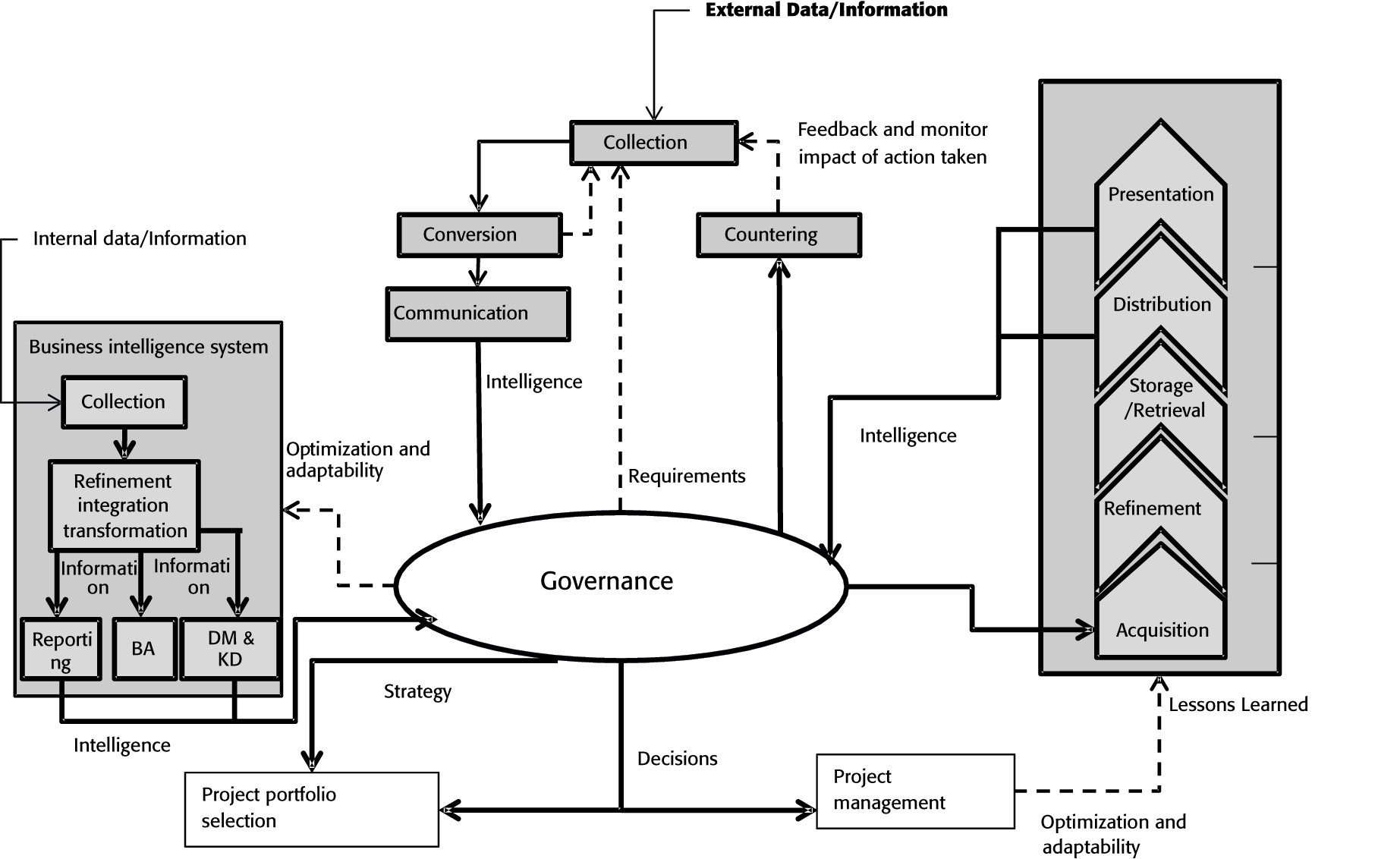
In sum, PDAP will not be able to provide desired results in terms of project decisions improvement unless an intelligent PM model is adopted. Such a model will ensure agility, knowledge capitalization and creation, and effective PM processes. In this perspective, the intelligent project-based organization model (IPBOM), proposed by Alami, Beidouri, and Bouksour (2013a) can serve as a ground for a further MM aiming at implementing, gradually and effectively, an intelligent PM business model (see Figure 5).
In the next sections, we will try to review intelligence and PMMM literature and propose a methodical, useful and practical IP3M that fits MES.
MATURITY MODELS: LITERATURE REVIEW
Concept and Origin
Based on the assumption of predictable patterns, MMs represent theories about how organizational capabilities evolve in a stage-by-stage manner along an anticipated, desired or logical maturation path (Gottschalk, 2009). They are also termed stages-of-growth models, stage models or stage theories (Rajteri, 2010).
The development of MMs is viewed as a matter of design science research by some Information Systems (IS) researchers (Becker, Knackstedt, & Pöppelbuß, 2009; Mettler & Rohner, 2009). Design science research seeks to create innovative artefacts that are useful for coping with human and organizational challenges (Hevner, March, Park, & Ram, 2004).
Design of MMs
The usefulness of MMs is rarely debated in the literature despite the popularity of MMs. A few studies refer to the process of MM design, and some others to qualities and components of MMs as design products. We will focus on the design process of MMs.
Design Process
As for the process of MM design, De Bruin, Rosemann, Freeze, and Kulkarni (2005) and Becker, Knackstedt, and Pöppelbuß (2009) suggest procedure models. De Bruin, Rosemann, Freeze, and Kulkarni (2005) propose six phases intended to guide the design of a descriptive MM and its advancement for prescriptive and comparative purposes. Becker, Knackstedt, and Pöppelbuß (2009) derive requirements and procedure model from Hevner et al.'s (2004) design science guidelines; they distinguish eight phases that provide ‘a manual for the theoretically founded development and evaluation of maturity models'. Actually, Becker, Knackstedt, and Pöppelbuß (2009) propose a similar process emphasizing the use of existing MMs and an iterative development:
Scope. The scope phase defines the focus and identifies the relevant stakeholders and targeted audiences. It determines the balance between complex reality and model simplicity. Design. The design phase addresses the requirements-based design and outlines the principal concept of maturity, structure of levels, dimensions and sub-dimensions (the meta-model). Populate. In the populate phase, the corresponding characteristics are determined and the maturity assessment is defined, which includes the specification of assessment instruments. Test. The constructed model is tested on content completeness and intended model scope accuracy and the assessment instrument is tested for validity and reliability. Deploy. The model is deployed to the initial stakeholders and to an independent community. Maintain. Once deployed, the model needs to be kept in use and for a sufficient period of time—say, a couple of years to ensure its evolution.
For designing and populating MMs, different exploratory research methods and combinations of these methods are proposed. Commonly mentioned methods are literature analysis, Delphi and case studies and focus groups (Becker, Knackstedt, & Pöppelbuß, 2009; Negash & Gray, 2008). Quantitative methods are less frequently used for constructing MMs (Fraser, Moultrie, & Gregory, 2002), as these models require a sound theoretical foundation. Testing is also mostly done qualitatively. The choice of the relevant research method is influenced by the scope, stakeholders, and targeted audiences (Lahrmann & Marx, 2010).
Comparison and Evaluation of Most Widely Used MMs
Methodical Analysis of MMs
Mettler and Rohner (2009) propose a classification scheme based on three different dimensions, namely general model attributes, MM design and MM use. These dimensions contain 16 attributes that characterize an MM. For the specificity of this work, only the following attributes are considered: origin, maturity concept, reliability, and assessment. Some other attributes are added for their relevance: structure, primary focus, assessor (self-assessment or third-party assessment), assessment, decision-making, culture and strategic alignment concerns. The structure attribute classifies the model into process-based, staged-based and system-based categories (McBride, Henderson-Sellers, & Zowghi, 2004). Staged models require total master of a process before moving forward while system-based models are mainly based on continuous improvement approach in which maturity is obtained, in addition to the implementation of new processes, by the improvement of already established processes.
Project Management Maturity Models (PMMMs)
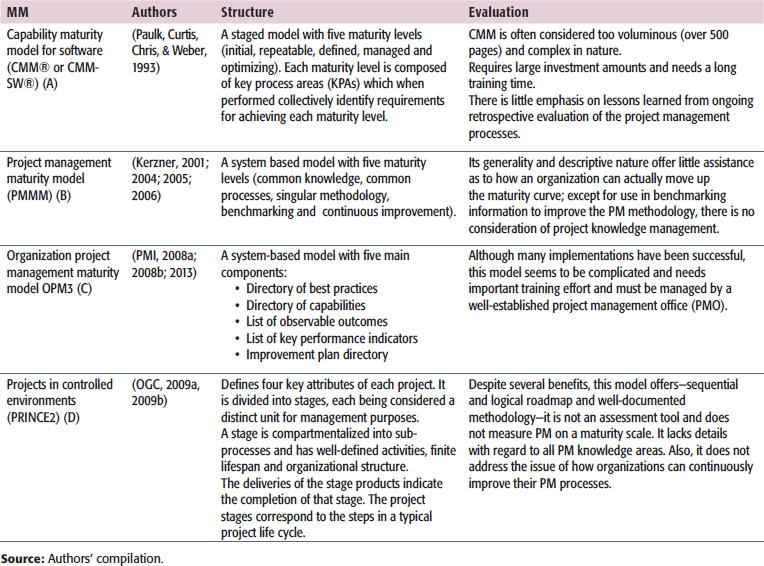
Table 1 provides a quick summary of the most popular project management MMs found in literature and examined by this research:
Limitations of Existing Frameworks
In general, the existing PMMMs suffer from the following limitations:
The models add bureaucratic red tape to their management (Kerzner, 2001; 2004; 2005; 2006). Although aimed at increasing PM maturity, the models seem to pay little attention to project knowledge capitalization and how learning from past experience can help improve PM processes. When mentioned in the models, project knowledge management is to be carried out to appropriately close a project from an administrative point of view. In most models, project reviews are in place only at the highest levels of maturity.
Intelligent MMs
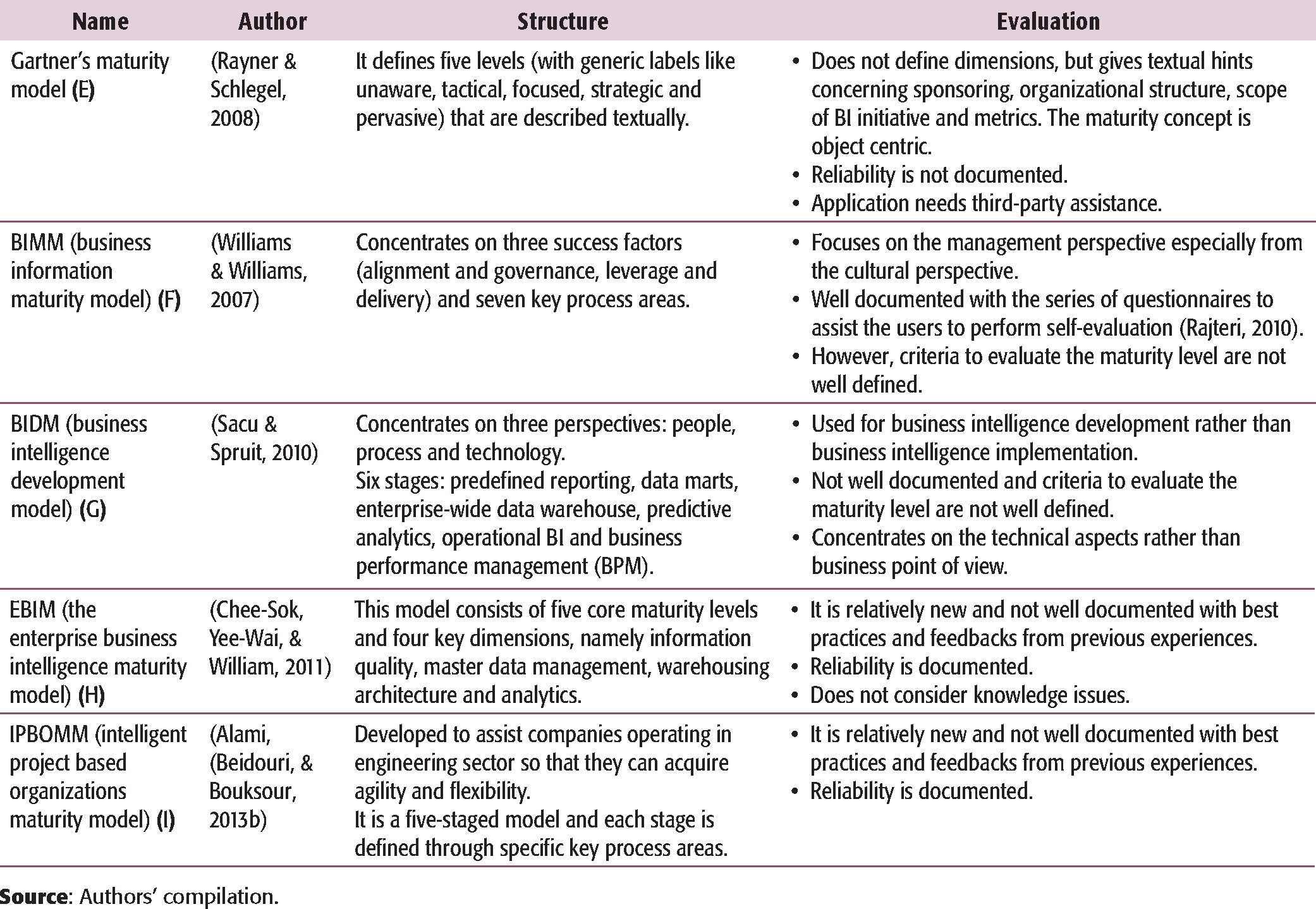
Table 2 provides a summary of the most popular intelligent MMs found in literature and their evaluation.
Evaluation
Some researchers argue that MMs oversimplify reality and lack empirical foundation (Benbasat, Dexter, Drury, & Goldstein, 1984; De Bruin, Rosemann, Freeze & Kulkarni, 2005; King & Kraemer, 1984; McCormack, et al., 2009), while others (e.g., Mettler & Rohner, 2009) propose adding a configurability aspect to MMs for the necessary flexibility required to overcome internal and external changes. King and Kraemer (1984) postulate that MMs should focus on factors driving evolution and change rather than a sequence of levels towards a predefined ‘end state'. Intelligence MMs are generally process-based models.
Comparison of PMMMs and Intelligent MMs
Table 3 summarizes the comparison of MMs with regard to its main attributes.
BUILDING THE INTELLIGENT PROJECT MANAGEMENT MATURITY MODEL (IP3M)
Why a New Project Management Maturity Model?
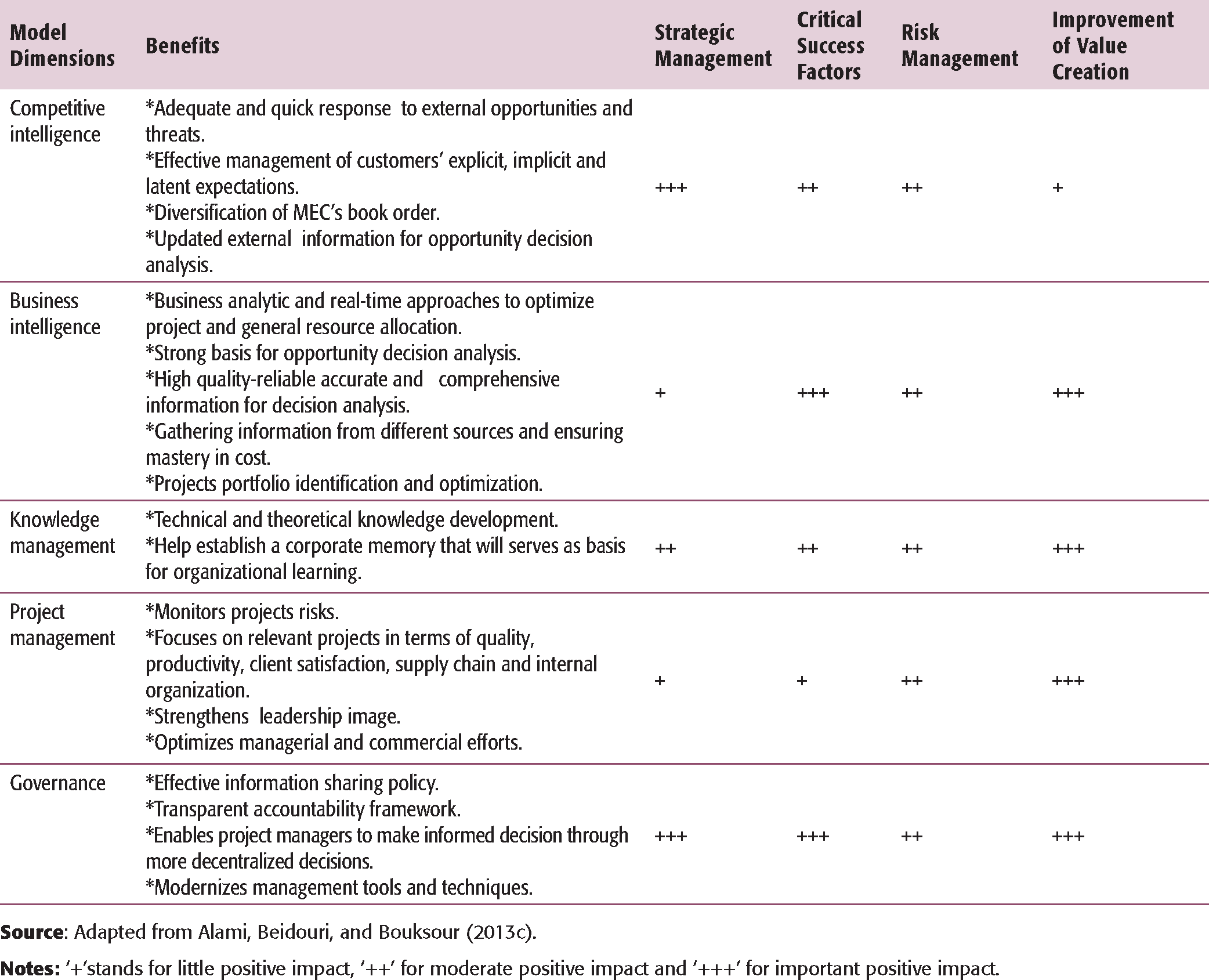
The need for a PMMM is derived from the need of a new intelligent business model that combines flexibility and agility for MECs. Major benefits of I3PM are summarized in Table 4. These benefits are derived from IPBOMM model (Alami, Beidouri, & Bouksour, 2013b) and reinforced mainly by the introduction of the PM methodology.
Structure and Evaluation of PMMMs cited in the Literature
A Literature Review and Evaluation of Intelligence MMs
Comparison of Intelligent MMs
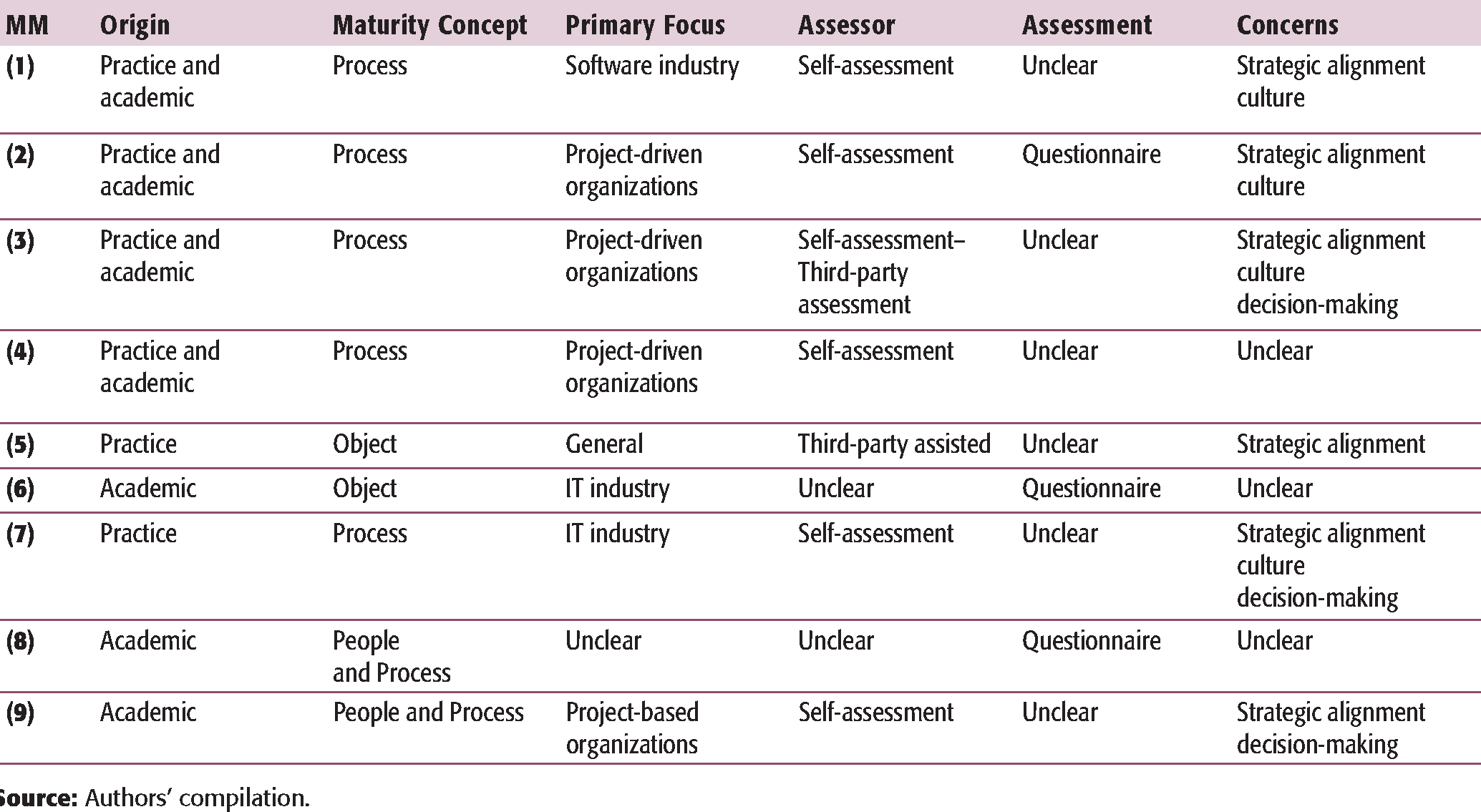
Except for IPBOMM, MMs analysed above do not combine PM maturity and intelligence maturity, and only a few of them present clear guidance towards desired maturity. These reviewed models are either stable but rigid process-based models or flexible with a considerable risk of instability, especially for developing countries' businesses. In addition, they are perceived as complicated and adding to bureaucracy levels rather than being flexible. An effective MM should rather reflect the actual concerns of the activity with regard to its constraints and challenges.
To this effect, authors propose an IP3M based on a typical case study analysis in order to take into consideration, as far as possible, the specificities of MES. IP3M is intended to balance between rigidity and stability, ensured by staged models and flexibility provided by the system-based models.
IP3M CONSTRUCTION
Methodology
The purpose of this section is to follow MMs' design process presented earlier to come up with the expected IP3M. This process includes six major phases: scope, design, populate, test, deploy, and maintain phases. Authors are more concerned about the first four phases, as deployment and maintenance wil llikely take several years.
Major Benefits of New Intelligent Business Model Dimensions
Mixed methods research is applied to these phases. ‘Mixed methods research is an approach that combines quantitative and qualitative research methods in the same research inquiry. Such work can help develop rich insights into various phenomena of interest that cannot be fully understood using only a quantitative or a qualitative method' (Viswanath, Susan, & Hillol, 2013).
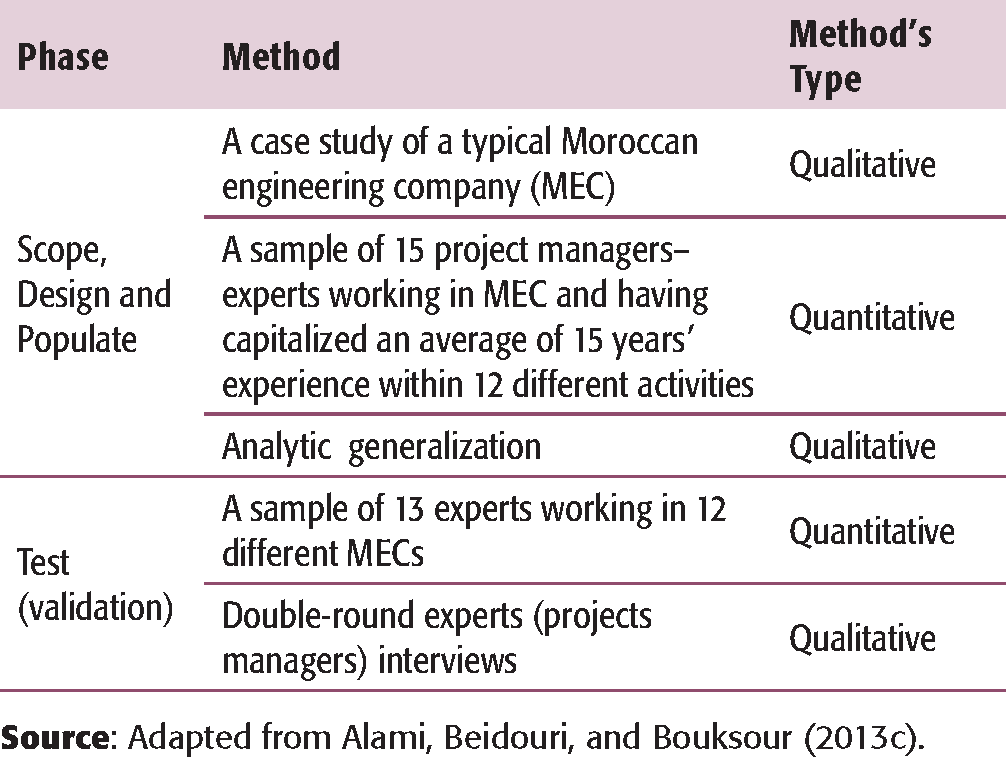
Table 5 exhibits methods and methods' type used to develop design process phases.
Methods and Methods’ Type Used to Develop Design Process Phases
Relevance of Case Study Research Method
A case study is a research strategy that empirically examines a concrete example in its actual environment. It can involve a combination of qualitative and quantitative analyses, whereby the specific procedure depends on the characteristics of each case study (Rejc, 2005).
Case study research excels at bringing to us an understanding of a complex issue or object and can extend experience or add strength to what is already known through previous research. Case studies emphasize detailed contextual analysis of a limited number of events or conditions and their relationships.
Researcher Robert K. Yin defines the case study research method as an empirical inquiry that investigates a contemporary phenomenon within its real-life context; when the boundaries between phenomenon and context are not clearly evident and in which multiple sources of evidence are used (Yin, 2009; 2011).
Critics of the case study method believe that the study of a small number and the uniqueness of studied cases can offer no grounds for establishing reliability or generality of findings. Others feel that the intense exposure to study of the case biases the findings. Some dismiss case study research as useful only as an exploratory tool. Yet, researchers craft studies of real-life situations, issues and problems.
In this research, the uniqueness of the case study research method will be reinforced by an analytic generalization of the key findings in the context of Moroccan project-based companies as well as in companies dedicating a department for project governance.
Generalization Method
Eisenhardt (1989) and Eisenhardt and Graebner (2007) argue that binding the emergent theory with the existing literature strengthens the internal validity, generalization (external validity) and the level of theory building from case study research. Internal validity demonstrates a causal relationship, in which certain conditions lead to other conditions; and external validity tests whether a study's findings could be generalized beyond the immediate case study (Yin, 2009; 2011).
There are two kinds of generalization from case to theory: statistical generalization and analytic generalization (Yin, 2009; 2011). In statistics, generalization is established by an inference made about a population on the basis of empirical data collected about a sample (Yin, 2009; 2011). However, statistical generalization should not be considered to be the method of generalizing the results of the case study (Yin, 2009; 2011).
Analytic generalization, established by the process as an existing theory, is employed as a framework with which to collate the empirical results of the case study; then, when more cases appear to support the same theory, replication can be claimed (Mccutcheon & Meredith, 1993). Analytic generalization can be used in either single case or multiple case studies (Yin, 2009; 2011).
This study employs analytic generalization in a single case study design. A single case study (i.e., MEC) is used for advocating or refining existing theories. Then, the theory established from the case study could extend to other ECs.
Statistical Generalization
While quantitative methods are used in scope, design, and populate sequences to strengthen the findings of MEC case study with a sample of 15 project managers-experts working in MEC and having capitalized an average of 15 years' experience within 12 different activities, their main use is in validation sequence. In this sequence, a sample of 13 experts working in 12 different MECs —members of the Federation of Moroccan Engineering and Consulting Companies (FMCI)—were contacted and interviewed.
Analytic Generalization
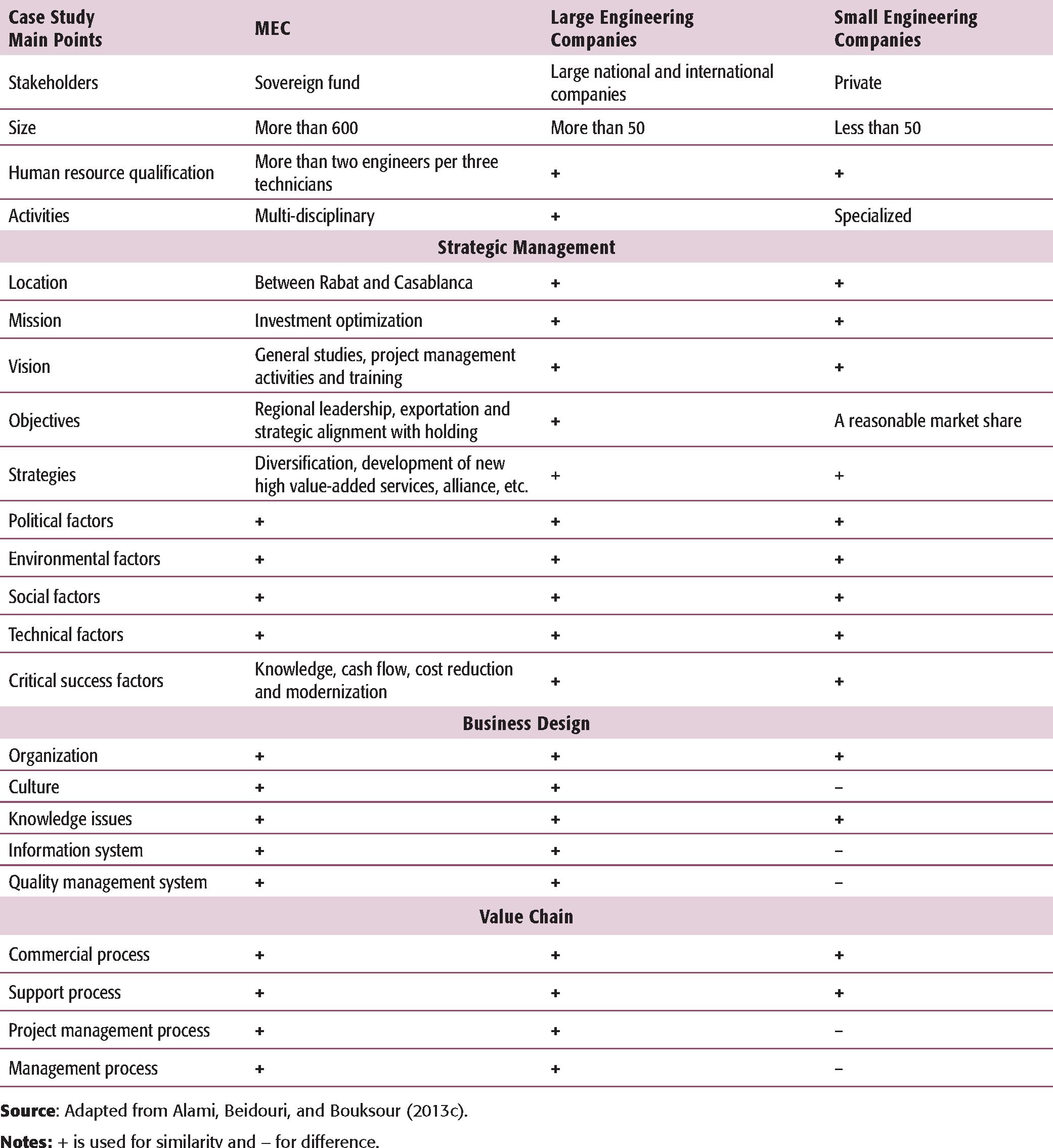
Table 6 summaries the analytic generalization of MEC's findings to large and small ECs in Morocco.
Scope of IP3M
MES is chosen for its relevance to the economy and because it represents the majority of Moroccan PBOs. Case study research method is followed to develop a suitable MM for the MES. The organization used in the case study is a large-sized company operating in the MES called MEC for confidentiality consideration. Data used in this case is collected from:
available public information in company's official websites; published activity reports of the company and the holding; notes of information, presentations, publications, and published statistics of FMCI; and national conferences, studies, and workshops held on engineering sector strategic development.
Analytic Generalization of MEC's Findings for MES
MEC Case Study
The Moroccan multi-disciplinary EC (called MEC for confidentiality reasons) operates across four different business units: construction, water and urban planning, large infrastructure and development. It is the nationally recognized leader in the marketplace. The company has a commitment to service, quality, and high standards of safety and business ethics (sustainable development chart). MEC is a national sovereign fund subsidiary that has a good standing with regards to project owners.
MEC carried out more than 3,000 projects in Morocco and abroad. It follows a matrix management structure with a Board of Directors, and consists of a branch, five divisions, 11 technical departments and four supply departments. It employs 600 people including 202 engineers, 227 technicians and 103 administrative executives. It secures staff loyalty by promoting responsibility and teamwork while fostering innovation and improving technical skills.
IP3M Design
The intelligent PBOMM (IPBOMM), already developed by Alami, Beidouri and Bouksour (2013b) (see Table 7), is introduced to a sample of 15 project managers—experts working in MEC and having capitalized an average of 15 years' experience within 12 different activities: building, urban planning, energy, agriculture, PM services and environment and software development. In order to develop an initial version of MM that considers the challenges faced through several projects they managed, experts were asked to propose an adaptation of IPBOMM to include PM maturity dimensions. They were also asked to review IPBOMM components and transition conditions. Actually, this first task was somewhat easy, as IPBOMM is a staged model tailored for a sector in which companies and different contributors are accustomed to PM terminology.
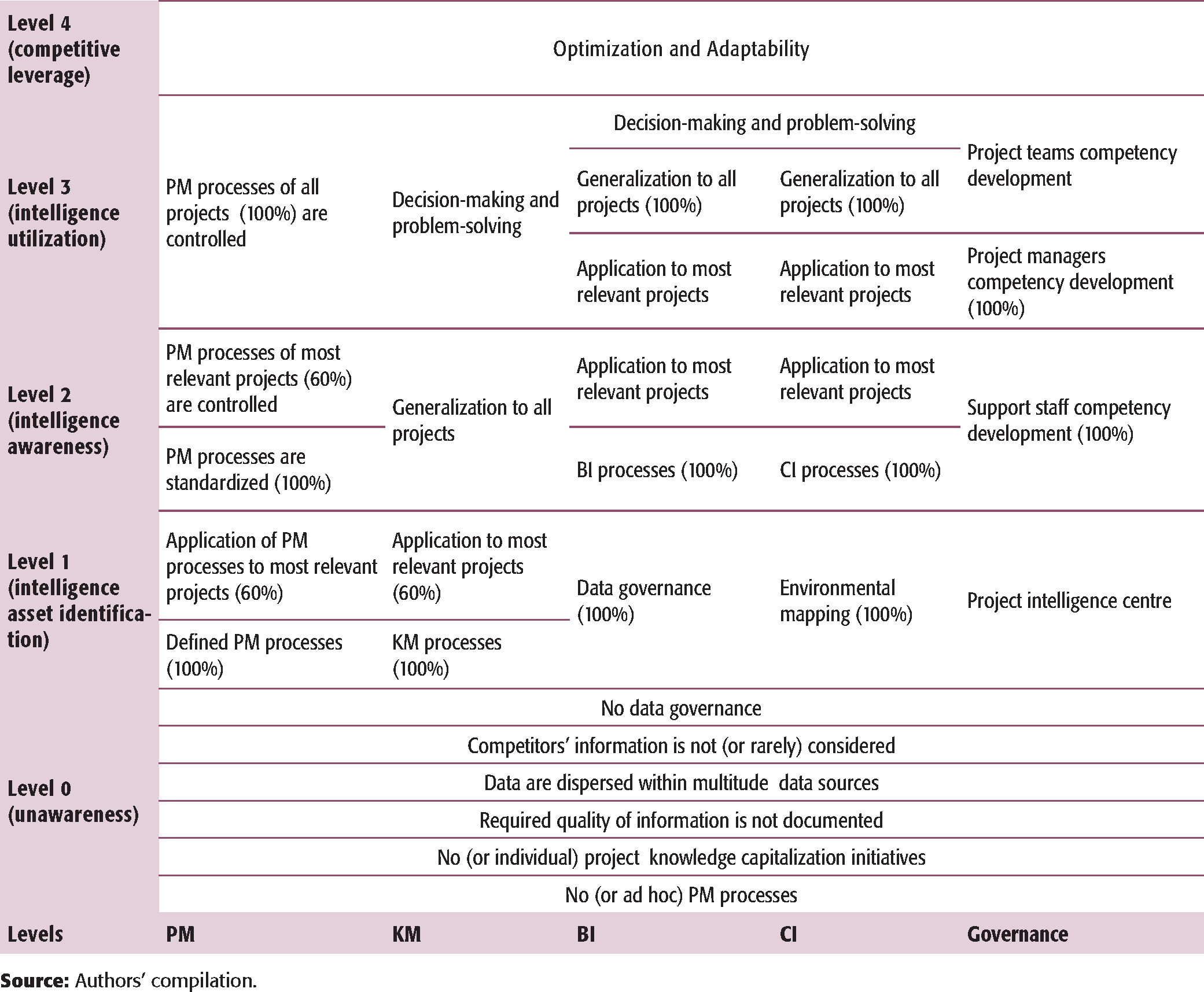
This first step resulted in the following five levels of IP3M (see Table 8).
Level 0 (unawareness). The organization is not aware of the crucial role of high quality information and accordingly intelligence initiatives are either individual or non-existent. No PM process is defined and documented; however, there may be isolated initiatives to establish particular processes like project initiation and closure processes. Level 1 (project intelligence asset identification). Intelligence awareness journey begins with capitalization of the maximum of project knowledge through the establishment of adequate processes. Internal and external data sources are identified and PM processes are defined and applied to the most relevant project with regard to an adequate indicator chosen by the organization (e.g., turnover). A project intelligence centre should manage the maturity journey and begin by a suitable competencies development policy. (In some PBOs, this task can be handled by a PM office.) Level 2 (project intelligence awareness). Intelligence process and systems are finalized and knowledge management (KM) and PM processes are extended to cover the entire project portfolio. Simultaneously, the project processes controlling activities are started by the most relevant projects. Besides, support staff is ready to utilize BI and CI processes in a significant portion of the projects. Level 3 (project intelligence utilization). Project managers and project teams are empowered by intelligent decision supportive tools and well-established PM processes. Accordingly, they start to base their decisions on high quality internal and external information as they have already developed the necessary know-how. Level 4 (competitive leverage). More familiar with the use of intelligence, project manager, project teams and support staff begin to search for ways to sustain a real competitive advantage through an agile optimization and adaptation effort with regard to competitors, stakeholders, and economic framework.
The Intelligent Project-based Organization Maturity Model (IPBOMM)
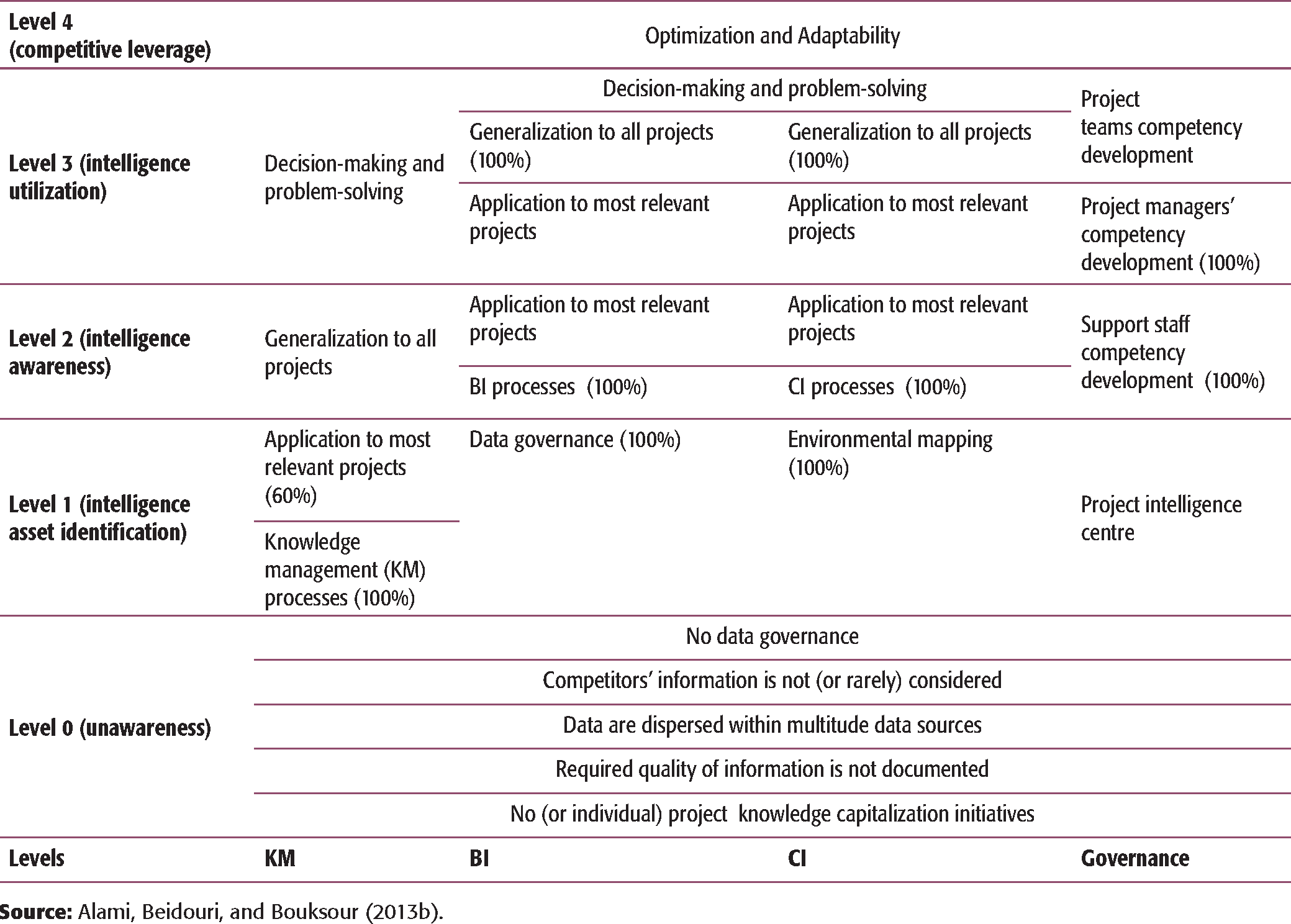
IP3M Initially Proposed by Experts
IP3M Populate Phase
The IP3M in Table 8 proposes some key process areas (KPAs), namely PM processes, KM processes, competitive intelligence (CI) processes, business intelligence (BI) processes, governance policy and establishment of project intelligence centre with their related Key Performance Indicators (KPI) and the required percentage of completion. Some KPAs are deliberately omitted (decision-making, problem-solving, optimization and adaptability) to ensure necessary flexibility to succeed in the implementation and adaptation of the model. It is up to the project intelligence centre to define the exact meaning of 100 per cent of completion of each KPA. Also, it is up to the top management, through the project intelligence centre, to adopt the suitable set of processes that fits at best with organization culture and ambitions. Furthermore, this model is supposed to be easy to use, scalable and can use processes defined in an already existing Intelligent MM or PMMM.
The transition from one level to another is conditioned by the completion of related KPAs.
Finally, the assessment of percentage of completion of every KPA will result in maturity-level assessment.
IP3M Test
In order to test the applicability, validity and reliability of the proposed model, 12 double-round interviews were conducted by authors with a sample of 13 experts working in 12 different ECs in Morocco with almost the same characteristics in terms of experience and activities. This approach is the most suitable test method in the case of MECs as the latter are neither familiar with MM terminology nor with intelligent system use.
Firstly, experts were asked to comment on the IP3M presented in Table 8. Then, they had to debate and comment on the proposed MM in terms of its components, transition conditions and the relevance of governance in developing soft skills competencies. They agreed upon the four essential needs of PBOs operating in engineering sector: project knowledge management, internal and external high quality information and, finally, effective project governance.
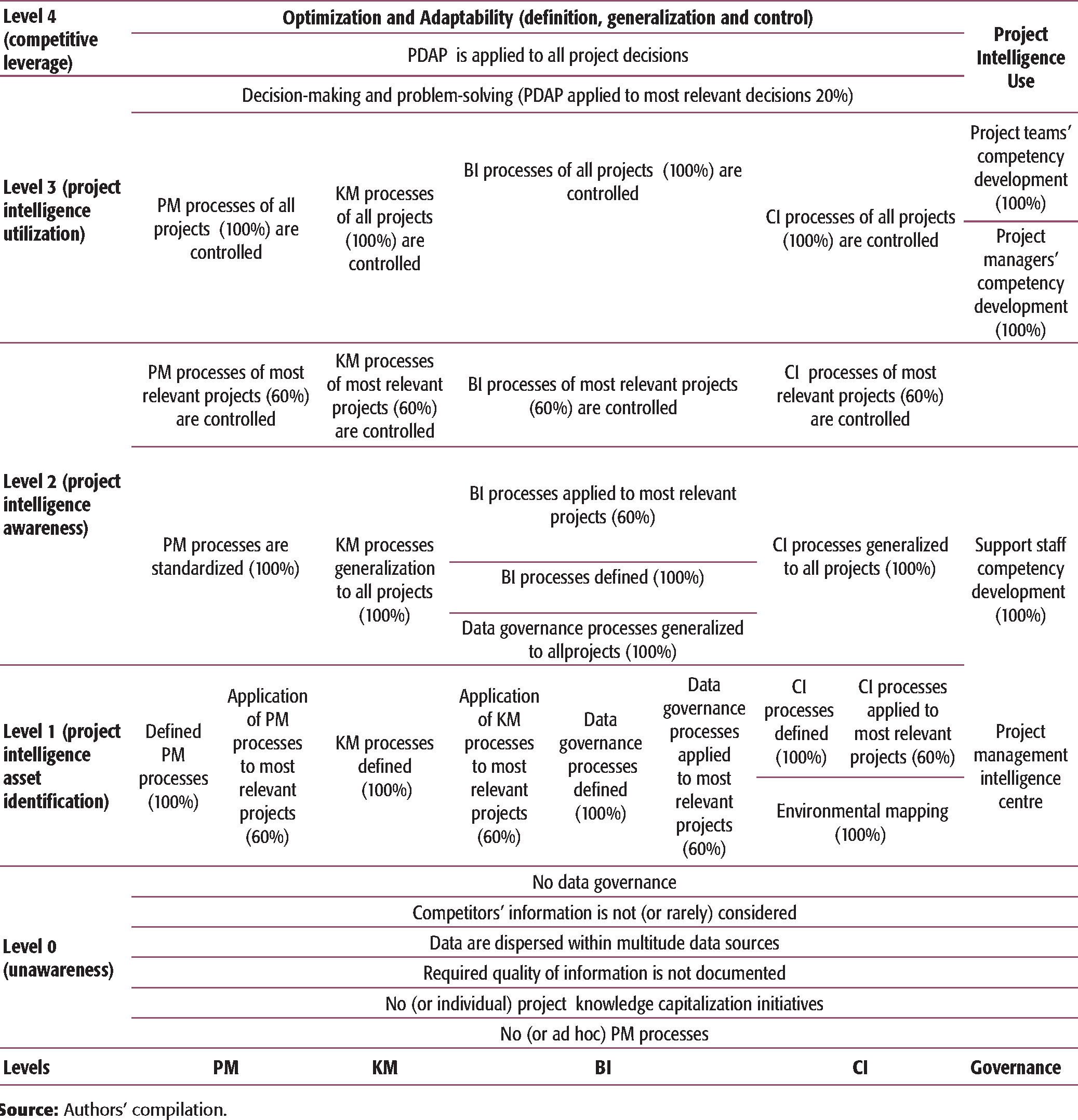
The final version of IP3M had considered experts' remarks and recommendations (see Table 9).
FINDINGS
Main Remarks and Recommendations
Experts agreed upon the relevance of such model in assessing agility of ECs. However, they recommended a gradual application of KM, BI, and CI processes to projects, starting with the most relevant projects before generalizing to the rest of the projects. They also proposed ‘forecasted turnover' and projects strategic ranking as criteria for selecting the most relevant projects. Besides that, they agreed on the importance of feedback to ensure partial continuous improvement especially in establishing and generalizing PM and KM processes. With regard to transition conditions, experts recognized the importance of fulfilment of different KPAs before moving to the upper level. With regard to governance maturity, they recommended the completion of the establishment of project intelligence centre before moving to project intelligence asset identification level. Finally, they recommended adding the following points to IP3M levels description:
Level 1 (project intelligence asset identification):
◦ Process definitions overlap with partial application to take account of feedback. ◦ PM intelligence centre is established. Level 2 (project intelligence awareness):
◦ Process standardization overlap with partial control to take account of feedback. ◦ Support staff competency development (basic and necessary competencies). Level 3 (project intelligence utilization):
◦ Process control is put in place and applied to relevant project. ◦ Project managers' competency development is fully completed (basic and necessary competencies). ◦ Project teams' competency development (basic and necessary competencies). ◦ Use of project knowledge and information in making informed and intelligent decision. ◦ Project managers start using balanced PDAP in relevant decisions with regards to a given criteria. Level 4 (competitive leverage):
◦ Balanced PADP is generalized to almost relevant projects. ◦ Process control and generalization concepts are reframed and revisited based on lessons learned from project decisions.
Intelligent Project-based Organization Maturity Model
Limitations of IP3M
The first and common limitation to all kinds of MMs is that they are often viewed as inflexible because of the disciplinary steps they embrace for improvement. They are feared to add to an organization's bureaucratic red tape, making it difficult for an organization to find creative solutions to technical problems (Herbsleb, Zubrow, Goldenson, Hayes, & Paulk, 1997).
With regard to the test method, experts with an average of 15 years' experience but representing just about 9 per cent of the PM professionals were interviewed, and that raised serious questions about the deployment and professionals' adherence to such organizational change (Alami, Beidouri, & Bouksour, 2013b).
Furthermore, as the IP3M is in the deploying phase in MEC and as Moroccan businesses are not that familiar with the maturity terminology, reaping IP3M benefits may take a long time. Meanwhile, because the results take time to be witnessed and the models can be expensive to implement, some organizations might not perceive their benefits (Alami, Beidouri, & Bouksour, 2013b).
Finally, the risk pointed out by Herbsleb, Zubrow, Goldenson, Hayes, and Paulk (1997) stipulating that ‘Some organizations by becoming “mature” fear that they will also develop into risk adverse entities, afraid to take risky endeavours (but potentially high pay-off) because they may lose their high maturity rating' can be a serious limitation of MM.
CONCLUSION
This article proposes and tests a prescriptive IP3M for companies working in MES. Researchers first adapted a balanced PDAP and then used it in designing methodically a hybrid MM—IP3M that balances between rigidity and stability, ensured by staged models and flexibility provided by system-based models.
In addition to a deep literature analysis, authors used an agreed-upon MM development methodology with a typical case study and multi-round experts' interview to propose, test and validate the model. A Moroccan large-sized EC has served for developing the IP3M while experts' interviews methodology was adopted for testing and validating findings.
The combination of case study research method and experts' interview technique is supposed to reinforce usefulness and applicability of the model in the case of MES. However, a more general quantitative test questionnaire, targeting a large range of project managers working in a large sample of MES, can be conducted to investigate the perception of future users all the way with the potential model deployment constraints.