




Abstract
This study investigates preservice music teachers’ meaningful soundscape memories and how these memories reflect students’ general musical eco-literacy. We ask: Do sound memories reflect the factors in the Paananen model of eco-literacy? A theory-driven content analysis was performed based on the Paananen model’s competency categories. The data entries were analyzed using repeated measures analysis of variance. Fleiss’ kappa was used to check for inter-rater agreement. The competency areas of the Paananen model of eco-literacy in music were present in the university students’ narratives of meaningful soundscape memories. Recognition of eco-literacy from the soundscape narratives was statistically significantly different between the different competency factors, F(3.37, 236.00) = 71.79, p < .001, partial η2 = .51. Meaningful soundscape memories as written assignments emphasize the cognitive and emotional competency factors in the eco-literate musical thinking of preservice music teachers. A large proportion of the sound memories reflected a strong sense of connection to the natural environment, was positively connected to nature, and depicted a concrete, specific location. Therefore, soundscape memories could be a pedagogical tool for promoting place-specific eco-literacy in the musical sense and in the sense of living an eco-literate life.
Introduction
Sustainable development in music education is a highly relevant research topic in the face of eco-crises that requires conceptual and practical innovation. It refers to creating and maintaining educational practices, environments, and systems in music that are equitable, inclusive, culturally and ecologically responsible, and capable of evolving over time to meet the needs of current and future learners and communities. According to the Report of the World Commission on Environment and Development published in 1987, sustainable development is an environmental issue, and all its economic, cultural, and social dimensions are important. As educators, we need to recognize the rights of the planet and take responsibility in acknowledging and facilitating our children’s right to be a part of this world (United Nations, 1987).
Eco-literacy is the capacity to understand how the planet works. The natural systems that make life on Earth possible can be divided into several self-organizing systems that co-exist in mutualistic (or sometimes parasitic/in commensality) symbioses (Capra, 1996; Haila, 2010). The ability to understand these systems, their co-dependency, and causality amounts to how eco-literate one is. Some of these systems are simple, such as planting and harvesting food (Ben Hassen & El Bilali, 2022), but others are more complicated, such as the water cycle (Allan et al., 2020). They become more complicated as we begin to understand how these different systems combine (Gentine et al., 2019). There is a growing body of literature addressing eco-literacy in educational settings through artistic processes (Barcellos & Wade-Chung, 2022; de Brito Miranda et al., 2017; D. J. Shevock, 2018), but further research is still needed if we want the planet to remain habitable for humans and to be more-than-human life. It is our duty as educators to determine how to educate future generations to be as eco-literate as possible.
Essentially, sustainability education is an interdisciplinary effort that benefits from logical and intuitive thinking (Paige et al., 2016; Østergaard, 2019). Music taps perhaps most obviously into the creative part of saving the planet, and many different initiatives have been put forth by a plethora of artists, such as Björk (2011, 2022), Oliveros (2005), and Guthrie (1940), among others, to raise awareness about the unreversible effects of the Anthropocene 1 upon our planet. The problem with awareness campaigns, no matter how eloquently they are executed, is that knowledge does not always translate into behavioral change. Although listening to and singing songs about ecological crises is a prominent way of addressing eco-literacy in music classrooms (D. J. Shevock & Bates, 2019), there remains a concern that educating about the environment through ecopoetry (or eco-music or eco-compositions for that matter), for example, might not translate automatically to eco-awareness and ecocriticism (Garrard, 2010).
However, there are many artistic initiatives that have proved to be useful in raising awareness in specific audiences. Grant et al. (2022) reported a successful revitalizing campaign in which Sumbanese Marapu communities were informed about the COVID-19 pandemic through songs written by popular artists in Kambera, their indigenous language. Järviluoma (2019) and Loveless (2020) wrote about multisensory soundwalk experiments/pieces that included reflecting on one’s own experience as a human being and connecting to the world through sound in places familiar to the experiencer. Barclay et al.’s (2020) River Listening Project is an ongoing interdisciplinary project that utilizes freshwater eco-acoustics in the conservation of river systems. By involving local communities, engaging and inspiring community members to learn about and care for underwater life through artistic projects, and sharing knowledge and resources about sustainable environmental practices and behavior, the River Listening Project has managed to draw worldwide attention to water ecology (Barclay et al., 2020). What is common among these success stories is that eco-literacy is promoted through personal involvement, multisensorial experience, and accessible language.
Eco-Literacy in Finnish Comprehensive and Secondary Education
The Finnish national core curriculum for basic education addresses the climate crisis by providing guidelines for sustainable development and eco-social education. The curriculum recognizes sustainable development and a sustainable lifestyle as ecological, economic, social, and cultural. The guiding idea is to create a lifestyle and culture that nurtures the inviolability of human dignity and the diversity and renewability of ecosystems and to build a knowledge base for a circular economy based on the sustainable use of natural resources (Finnish National Agency for Education [EDUFI], 2014). The Finnish national core curriculum for secondary education (EDUFI, 2019) also underlines the necessity of a sustainable lifestyle and advocates for a knowledge base for an economy that promotes the well-being of the environment and citizens. The goal is for students to understand the meaning of their own activities, global responsibility, and the importance of sustainable development and active citizenship (EDUFI, 2019). These are permeable themes that should be addressed in every school subject, including music.
The national objectives of education and upbringing are stipulated in the Basic Education Act and further specified in a government decree. These objectives guide the drafting of all areas of the national core curriculum, as well as the preparation of local curricula and schoolwork. 2 In addition to subject-specific competence, efforts should be made to achieve cross-curricular competence. On this basis, the national core curriculum defines the objectives and content for common subjects and the objectives for transversal competences (EDUFI, 2014, 2019). Multiliteracy, environmental competence, and building a sustainable future are among the key transversal competencies in both curricula. The normativity of these documents obligates teachers to address themes of sustainable living and multiliteracy in the subject of music. In this sense, sustainable music education becomes part of the broader framework of sustainable development, which calls for an understanding of ecological principles and the values, capacities, and resilience needed to translate this understanding into action. However, specific instruction regarding music classes is scarce. As the Finnish national core curriculum for comprehensive education states, “The aspects of consumption and sustainable well-being are also relevant in music” (EDUFI, 2014, p. 423). Conversely, the core curriculum for secondary education recognizes that imagination supports environmental literacy and a sustainable way of life, and that music education strengthens this by developing esthetic judgment and the ability to perceive connections between different fields of knowledge (EDUFI, 2019). As the curriculum serves as a guiding framework rather than a set of detailed instructions on how to promote sustainable well-being in the music classroom, the responsibility for implementing sustainable music education ultimately rests on the music educator’s own initiative and interest. Typically, music teachers address environmental themes and eco-literacy in music by choosing an environmentally relevant repertoire, reusing and recycling old instruments as well as creating new instruments from reusable materials, and using acoustic ecology and themes of sustainable development as a basis for listening, composition, and improvisation (Sutela, 2023).
However, soundscapes are specifically addressed in the Finnish national core curriculum for music. According to the learning objectives derived from the objectives of instruction, “The pupil will have inspiring experiences while listening to and observing the soundscape and music” and “The pupil is able to take part in a discussion about the experience” (EDUFI, 2014).
A survey study by Uitto and Saloranta (2017) recognized that Finnish music teachers mainly use the social, well-being, and cultural themes of sustainability education to teach the principles, values, and practices of sustainable development in music education, focusing less on ecological or economic themes. Their self-evaluated competency to teach sustainability in music classes was highest in the economic and cultural dimensions and lowest in the ecological and social dimensions (Uitto & Saloranta, 2017). This discrepancy between praxis and competency evaluations may indicate a lack of clarity concerning what sustainable education (or eco-literacy) in music education means.
The Paananen Model of Musical Eco-literacy
Paananen’s (2023) model represents an eco-centric perspective, according to which all organisms have an equal right to exist, and humans have an ethical obligation to take care of ecosystems (Salonen, 2010), so that future generations can satisfy their own needs (United Nations, 1987). The model is based on eco-social theories (Värri, 2018) in which self-expression, understanding, and recognition from other people create a more permanent experience of meaningfulness in life than pleasure based on consumption. The goals of musical eco-literacy reflect an eco-musicological perspective to see music and sound cultures as structuring, constructing, and reflecting relationships with nature (D. J. Shevock, 2018; Torvinen & Välimäki, 2019b) and as an environmental esthetic effort to integrate ecological goals, well-being, and esthetic experience (Hauru, 2015).
The concept of eco-literacy differs from the previous concept of environmental literacy in that it not only emphasizes the principles of sustainable development but also includes contextual and holistic elements (McBride et al., 2013). According to Capra (1996), (2007, eco-literacy requires four sets of competences: (1) cognitive (systemic) competence, which is the ability to understand ecological principles, think critically, assess the ethical consequences of human actions, and assess the long-term consequences of decision-making; (2) emotional competence, such as care, concern, empathy, and respect for other living beings, appreciation of multiple perspectives, and commitment to equality and justice; (3) active competence, which is the ability to make decisions and act in accordance with sustainable development in the community; and (4) connectional competence, which is the ability to experience awe and wonder, admiration, respect and a sense of kinship with nature and all living things, and a strong sense of appreciation of place (Capra, 1996, 2007).
The Paananen model of musical eco-literacy (Figure 1) perceives humans as part of nature through their embodiment and the human self as intertwined (Merleau-Ponty, 1986; Toadvine, 2009; Värri, 2018).The competencies of musical eco-literacy are interwoven through embodiment, so that the goal of the activity can be critical, evaluative and analytic (cognitive), empathetic toward nature and aiming to identify one’s own emotions (emotional), experiencing wonder, beauty, and/or connection (connectional), inspired by nature and seeking compositional ideas (creative), or aiming at eco-musically active citizenship (sociocultural) (Paananen, 2023).
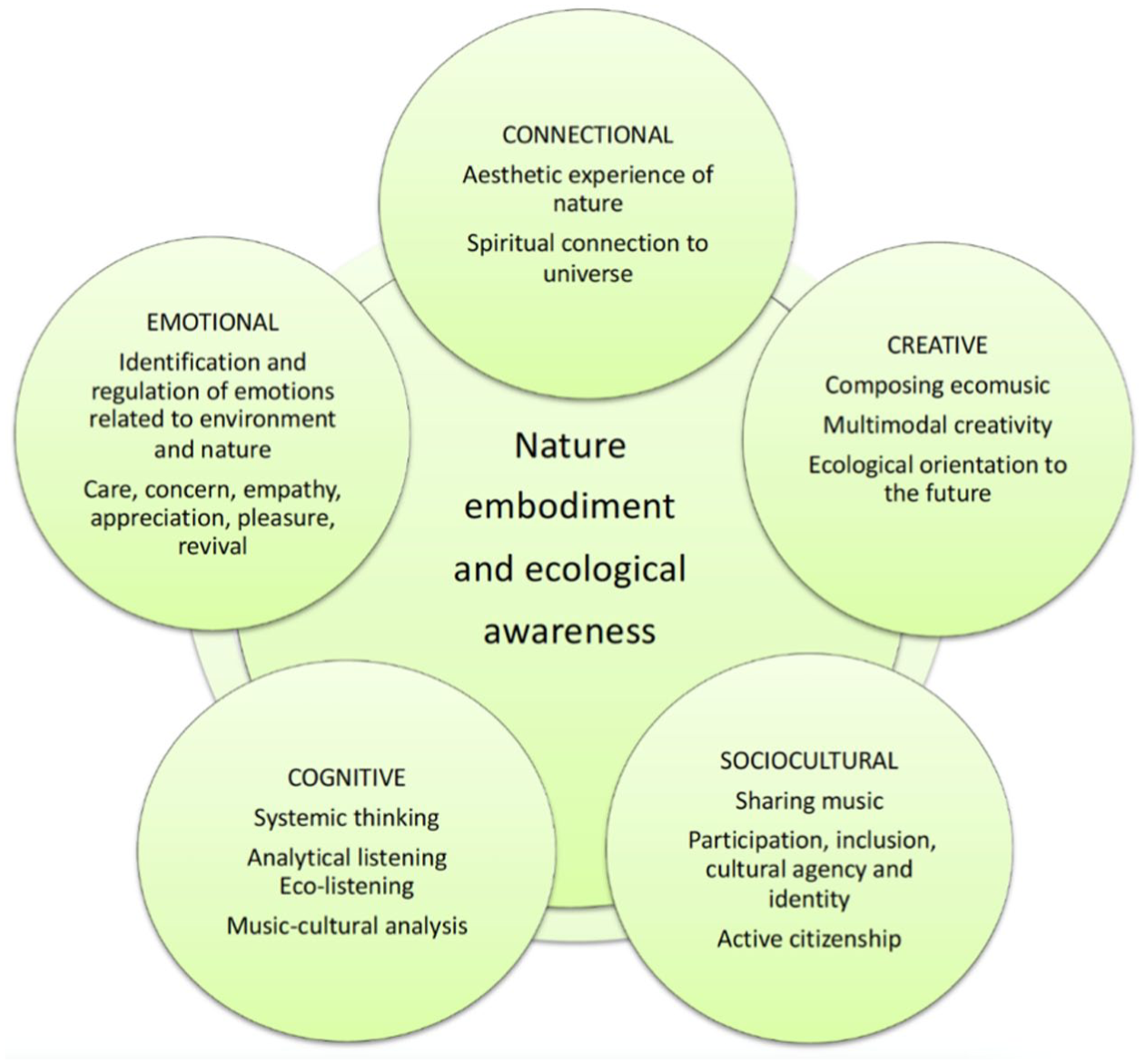
Model of musical eco-literacy (Paananen, 2023).
Cognitive competence consists of systemic thinking, cultural analysis of music, eco-listening, and analytical listening to the sound environment (Paananen, 2023). Systemic thinking examines sound and music from the economic, social, cultural, and ecological dimensions of sustainable development, such as the rarity and renewability of raw materials, recyclability and socio-economic aspects of the production chain of musical instruments, and music technological resources (Jorritsma, 2022; Salonen, 2010; D. J. Shevock, 2018). Through eco-listening (Torvinen & Välimäki, 2019a), it is possible to become conscious of the values conveyed by music cultures and genres. The transformation of ecosystems due to human activity can also be studied by mapping the sounds of the environment through soundwalks, attentive, and analytical listening, recording and analyzing sound properties to improve awareness of sounds and soundscapes (Oliveros, 2005; Schafer, 1994), and studying sounds of different species (Rothenberg, 2008). Moreover, the zoomusicological study of non-human sounds can arouse curiosity about nature (Jorritsma, 2022).
Emotional competence includes the ability to identify and process emotions evoked by the sound environment, nature, and music; care for other species and ecosystems; and empathy and appreciation toward other people and nature (Paananen, 2023). Sounds may promote recreation, recovery, and empowerment. Conversely, unpleasant sounds may cause stress and raise concerns about the state of the environment. Through soundwalks, music and art can be used to develop emotional skills toward human and non-human nature. By encountering organisms in different ecosystems, students can learn to treat other species as equals.
Paananen (2023) described connectional competence as the spiritual and esthetic experiences of nature that transcend everyday experience and are characterized by a holistic state of higher consciousness and focused attention (Ashley, 2007; Chatterjee, 2011). Spiritual experience is a state of sharpened and higher consciousness characterized by feelings of peace, happiness, harmony, awe, wonder, and humility (Ashley, 2007). Nature is perceived as the source of the mystery of life and man as part of nature that is reflected in man himself (D. Shevock, 2015). Esthetic experience refers to an individual’s immersion in sounds by focusing on the perceptual, cognitive, and emotional interpretation of sounds (Brattico & Pearce, 2013). The categories of musical esthetic non-utilitarian emotions are illustrated, for example, by Zentner et al.’s (2008) GEMS model. The esthetic experience of nature is multisensory and tied to a place (Hauru, 2015). Connectional abilities can be promoted by encountering nature in a focused way with open senses (Paananen, 2023) through attentive listening exercises, such as “ear cleaning,” “ear training” (Schafer, 1976), and “deep listening,” which is a meditative practice that requires attentive listening and improvisation, aiming at expanding one’s consciousness and the perception of sounds to include the whole space/time continuum of sound (Oliveros, 2005).
Creative competence refers to musical imagination and the production of eco-music composing and multidisciplinary creative eco-projects (Paananen, 2023). Creativity makes full use of cognitive, emotional, contextual, and social processes, but it is set in a separate area in the model because music is essentially creative as art. Students may also criticize existing conditions or design future sound environments. Schafer’s ear training prepares students for environmental awareness, auditory examination, notation and recording of the qualitative properties of sounds, and imagining mental sound events (Schafer, 1994). The material used in the composition process can have ecological meaning. Sounds can be produced by acoustic or digital means, recycled materials, or indigenous and traditional instruments. Composing can be conducted by studying and recording the music and through the sonic communication of different animal species in immediate or more distant environments (Allen, 2017; D. J. Shevock, 2018). Sound creation may also be an interspecies improvisation (Rothenberg, 2008; Titon, 2021) in which humans and other animals participate as equal subjects (Paananen, 2023).
The sociocultural competence of musical eco-literacy involves the social sharing of music and participation in groups and communities that aim to promote sustainable development, cultural dialog and active citizenship through music (Paananen, 2023). The purpose of these activities is to define and promote common goals related to ecological awareness. Activities inside and outside schools can be related to projects, campaigns, events, eco-music concerts, and the ecology of the practices of musical cultures and institutions to promote sustainable development (Torvinen & Välimäki, 2019a). According to Paananen (2023), pupils can make statements about the ecological, esthetic, and well-being state of their nearby sound environments, participate in the planning of the school’s sound environment from an ecological point of view, and participate in the selection of music learning materials and the evaluation of ecology.
Soundwalking and Soundscape Memories as a Gateway to Eco-literate Music Education
Recent investigations have pointed to an alarming situation in which students seem to be increasingly detached from nature, feeling de-rooted and alienated, and not accustomed to being outside (Østergaard, 2017, 2019). Østergaard (2019) postulated that our weakened listening skills, a particular kind of deafness toward nature (as well as ourselves as part of nature), might be the root cause of our environmental crisis. Students need to recognize and understand nature’s complexities and to be esthetically sensitive toward them (Østergaard, 2019). We care for what we know, and we protect the things we care about. To be able to care for the biosphere, students must have personal experiences in authentic environments. What art can do is facilitate experiences and relationships with nature that reach beyond the linear confines of purposive consciousness (Kagan & Kirchberg, 2016).
In their multi-part experimental study of nature connectedness, Lumber et al. (2017) found that walking in nature while engaging with it through sensory awareness and emotional activities is an effective way to build connections with nature. In their study, 72 participants either walked outdoors, walked outdoors performing activities at designated points, or walked indoors performing activities at designated points. The participants who stopped to perform emotional, reflective, and compassionate activities in beautiful nature scenes reported higher nature connectedness scores than the other participants. Lumber et al. (2017) found that activities prompting connectedness with nature and esthetic elements were crucial for the feeling of connectedness to emerge. Many writings on sustainability education in music have emphasized attentive listening as a world engagement (Kagan & Kirchberg, 2016; Varkøy & Rinholm, 2020; Østergaard, 2019). Attentive listening requires focus and attention, as it is a practice of aural engagement and presence (Østergaard, 2019). Different pedagogical practices have been developed to educate students on attentive listening in the context of music education (Oliveros, 2001; Schafer, 1992).
Soundwalk, as a practice, is a way of bringing attentive listening to an educational setting. According to Schafer (1994, p. 213), “a soundwalk is an exploration of the soundscape of a given area using a score as a guide.” Westerkamp (1974, p. 18) defined soundwalk as “any excursion whose main purpose is listening to the environment.” Westerkamp’s thinking highlights the aspects of nature connectedness in listening, and she suggested that the action of “going for a walk” could be one of the ways through which urban people try to regain contact with nature (Westerkamp, 1974). Westerkamp’s soundwalk experience at the Bamfield Marine Sciences Center showed that soundwalking could enhance participants’ sonic awareness and afford them a better understanding of their sound environment(s) (Westerkamp, 2017). Furthermore, soundwalks can deepen our connection with nature (Eusterbrock, 2022; Francomano et al., 2022; D. J. Shevock, 2018) and increase positive emotions and wellness motivation (Blasco-Magraner et al., 2025; Ednie et al., 2022).
Reminiscence therapy is an established intervention in which personally significant memories are stimulated to be recalled or told to others (Pinquart & Forstmeier, 2012). Listening to music is a common way of facilitating reminiscing (Istvandity, 2017). Campbell et al. (2019) found that everyday sounds can encourage reminiscing, similar to music. The context in which everyday sounds are embedded is critical for determining the memories and emotions that arise from them (Campbell et al., 2019). The authors found that eliciting narratives about sounds was important for understanding their meaning. Memories can function as an organizing construct for sound collections, while memory narratives can be utilized as a technique for sound presentation and interpretation (Campbell et al., 2019).
Therefore, we postulate that introducing soundwalks and soundscape reminiscence as part of eco-literate music education can facilitate place-based connectedness with nature, which might not be possible in a classroom setting. If we ask students to recall and narrate sound memories, we may be able to reflect critically on how they mirror natural and cultural ecologies. This study investigates meaningful soundscape memories and asks the following question: Do sound memories reflect the factors in Paananen’s eco-literacy model?
Materials and Methods
The participants were Finnish undergraduate music education students (minor/major) studying at a northern Finnish university in 2020–2022 (N = 71). They were all students at a graduate school of education to become either classroom teachers or music teachers. All of the participants should have experienced eco-literacy activities in their primary and secondary education, as indicated by the Finnish national core curriculums for primary and secondary education. At the university where these data were produced, sustainable development was integrated into the degree programs of all fields of study. Participation in this study was voluntary, and the participants signed informed consent forms prior to data acquisition.
The data collected in this study were short texts (max. A4) describing students’ meaningful soundscape memories (positive or negative). All narratives were written in Finnish using a word processing software. The writing assignment was part of a course aimed at broadening students’ perspectives on the significance of the sound environment as part of comprehensive music education (University of Oulu, 2021). The students were first introduced to the theme of listening to soundscapes through a deprivation soundwalk, in which one student designs and guides a route, while another walks through it blindfolded, perceiving the atmosphere using their hearing and other senses (Schafer, 1992). After the walk, the students wrote down words to describe what they had heard during the walk and then formed pairs to write a small story using the collected words. Sound stories were read aloud to other students. The soundwalk and the exercise were considered to provide the students with enough information about soundscapes so that they could write their narratives on meaningful sound experiences. The writing task (Figure 2) followed the framework and guidelines of the “Sata suomalaista äänimaisemaa” (A hundred Finnish soundscapes) research (Järviluoma et al., 2006).
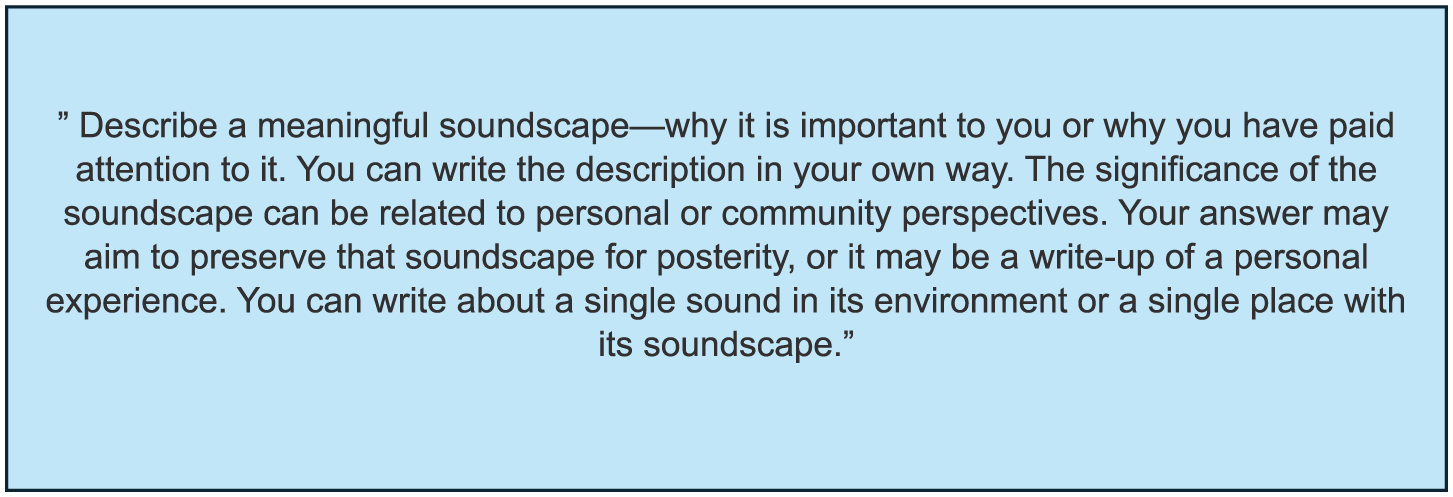
Writing task.
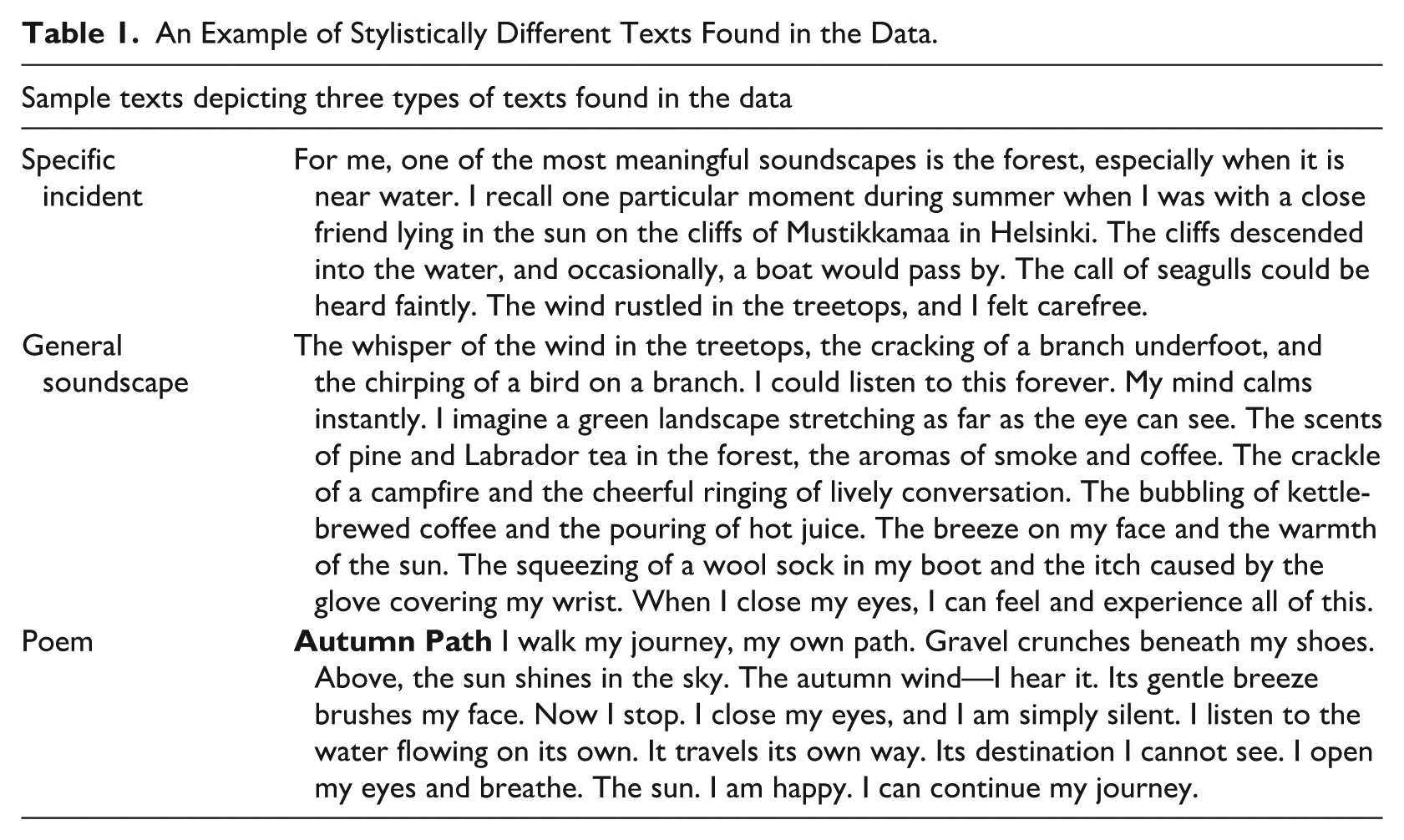
The acquired texts were stylistically different (no instruction of what style to use was given beforehand): some were in poetry form (n = 14), some described a specific incident (n = 31), and some focused on a more general soundscape (n = 28) (Table 1). Two of the texts contained both a poem (lyrical/prosaic) and a more general description.
An Example of Stylistically Different Texts Found in the Data.
The research team comprised three music educators employed in music teacher training at a Finnish university. All members possessed training in eco-literacy in music, as required by the Finnish national core curricula for primary and secondary education and aligned with the university’s strategic directives. However, no formal guidelines or pedagogical protocols exist regarding the implementation of eco-literacy in music education in Finland. Consequently, the researchers’ expertise in this area is primarily the result of independent studies and applied research. In addition to Paananen’s research (Paananen, 2023, 2024), this study is the first to systematically investigate eco-literacy in music education in Finland.
Materials were collected and saved, and the results of the analyses were published in accordance with the Finnish Data Protection Act (Chapter 5, Section 31). Permission for the study was not obtained from the Ethics Committee, as the Ethics Committee for Human Sciences at the University of Turku does not require permission for research that does not concern the physical integrity of adult participants, that does not expose participants to exceptionally strong stimuli, and that does not involve a risk of causing mental harm that exceeds the limits of normal daily life to the research participants, their family members, or others close to them. This follows the directives of the Finnish National Board on Research Integrity (TENK) concerning the ethical principles of research with human participants (Publications of TENK 3/2019, ISSN 2490-161X; The Ethical Principles of Research with Human Participants and Ethical Review in the Human Sciences in Finland).
Analysis
The university students’ meaningful sound experience narratives (N = 71) were coded using the five competency factors of the Paananen (2023) model (Figure 3).

Five competency factors of the Paananen model.
Before coding, the different competency factors were discussed among the researchers to facilitate a common understanding of what each competency factor entails. The researchers coded the soundscape memories independently to enhance the reliability of the study by reducing the likelihood of researcher error and/or bias (Krippendorff, 2011).
The narratives were first carefully read and coded into meaningful expressions (units). The expressions were classified according to musical eco-literate competencies. Several different competencies could be present in a single narrative; for example, the participant analyzed the sounds of the environment (cognitive) and then described their emotional state (emotional). It was possible to choose more than one competency factor per soundscape description.
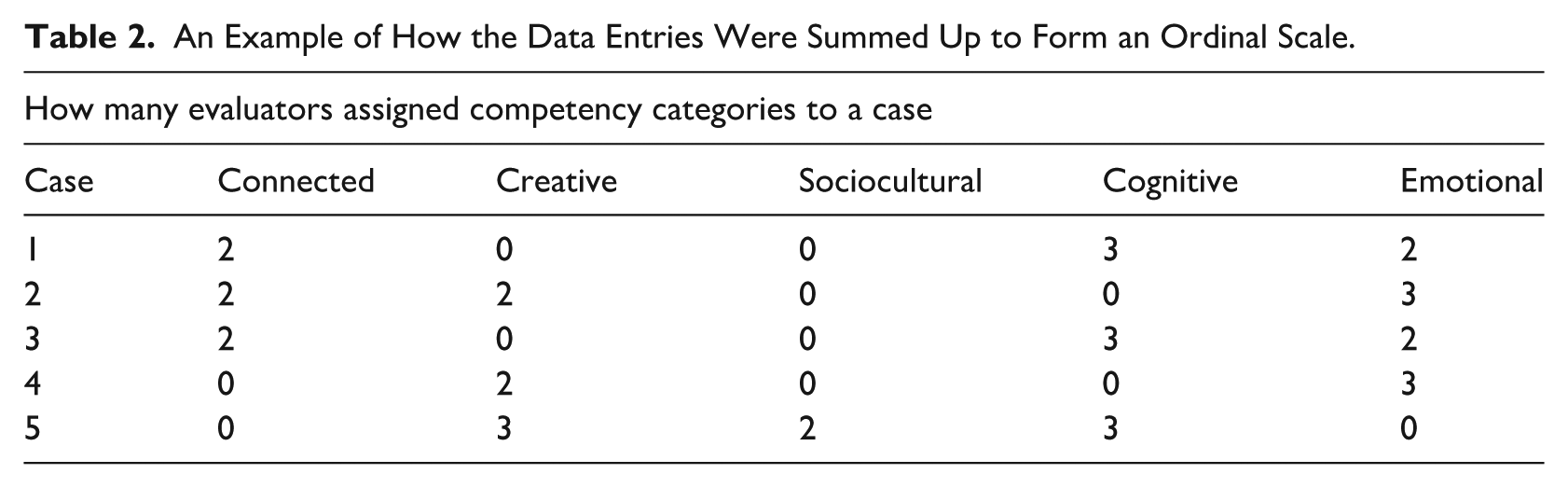
The data entries of independent researchers were summed up to form an ordinal scale for statistical analysis using repeated-measures analysis of variance (ANOVA). Data were expressed as the mean ± standard deviation of the summed expert evaluations on the following scale: 0 = no detection of category in narrative, 1 = little, 2 = some, 3 = clear (Table 2). All statistical analyses were performed using SPSS (v.29, SPSS Inc., Chicago, IL, USA). We ran Fleiss’ kappa to check for inter-rater agreement separately for each competency factor of the model. In the last stage, the group of investigators convened to discuss the factors that contributed to placing a text under a certain category.
An Example of How the Data Entries Were Summed Up to Form an Ordinal Scale.
Results
We first report the quantitative results of the categorical content analysis and then present qualitative examples of the characteristic features that steered the evaluators’ decision to place a text under a certain category. Cognitive and emotional competencies were easier to recognize from the written soundscape memories than connective, creative, and socio-cultural competencies (Figure 4).
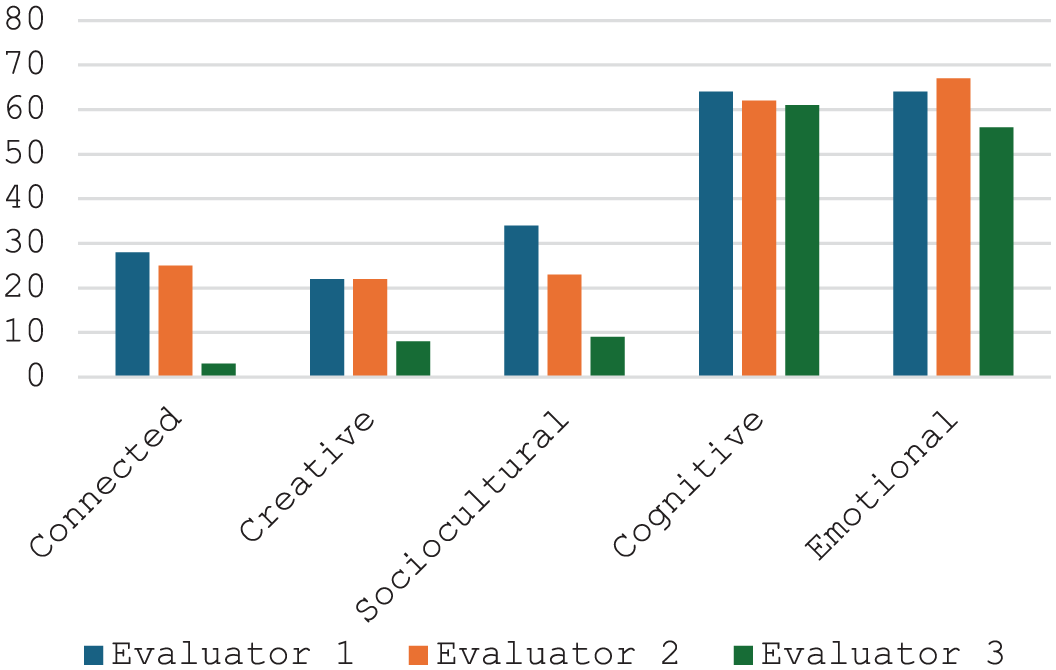
Assessment of eco-literacy markers in soundscape memories, according to expert judges.
Out of the 548 data points measured, cognitive, emotional, socio-cultural, creative, and connectional competencies were recognized 187, 187, 66, 52, and 56 times by the raters, respectively. Although the data were not normally distributed according to the Shapiro–Wilk’s test (p < .05), we ran a one-way repeated-measures ANOVA to check if there were statistically significant differences in recognizing between the five factors. Mauchly’s test of sphericity indicated that the assumption of sphericity was violated, χ2(9) = 24,64, p = .003. Epsilon (ε) was 0.843, as calculated according to Greenhouse and Geisser (1959) and was used to correct the one-way repeated-measures ANOVA.
The recognition of eco-literacy from the soundscape narratives according to Paananen’s eco-literacy model was statistically significantly different between the different competency factors, F (3.37, 236.00) = 71.79, p < .001, partial η2 = 0.51. The recognition percentage of the cognitive and emotional categories was the same at 88%. Post hoc analysis with a Bonferroni adjustment revealed that, compared with the recognition percentage of connectional (26%, 1.85, ± 0.14, p ⩽ .001), creative (24%, 1.90, ±0.19, p ⩽ .001), and socio-cultural (31%, 1.70, ±0.16, p ⩽ .001) categories, the recognition percentage was statistically significantly better in the cognitive and emotional categories.
Fleiss’ kappa was run separately for each category of the Paananen model (2023) to determine if there was an agreement between the evaluators on whether the competency factors were present in the soundscape memories. We followed Altman’s (1999) guidelines for assessing the strength of agreement. There was a fair agreement between the evaluator judgments for the connectional (κ = 0.297; 95% confidence interval [CI] [0.163, 0.432], p < .001), sociocultural (κ = 0.385; 95% CI [0.251, 0.520], p < .001), and cognitive (κ = 0.387; 95% CI [0.252, 0.521], p < .001) categories. A moderate agreement was found for the emotional category (κ = 0.430; 95% CI [0.296, 0.565], p < .001) and a good agreement for the creative category (κ = 0.644; 95% CI [0.510, 0.778], p < .001).
Examples of Categories Found in the Narratives
A soundscape narrative recognized as cognitive competence by the raters typically contained an analytical auditory analysis of the event in question: The wind hums evenly. I can feel on my feet how the water makes its sounds, flapping. I also hear a bird singing somewhere nearby. There is also occasional rustling and rattling as a squirrel climbs a few meters up in its tree, shaking the pine branches and dropping cones on the ground. I hear a buzz that gets louder quickly. (Text 1)
Stories containing detailed visual and tactile observations were easily labeled as cognitive by the raters. The embodied core of the Paananen model was reflected in the multisensory nature of the stories. Specifically, many narratives that the raters evaluated as emotional competence echoed the multisensory nature of reminiscing. In the example below, the narrator describes how standing in the yard of their cottage, listening to their surroundings, affects the homeostasis of the listener’s body, which refers to emotional change. Simultaneously, the sound space created by the surrounding nature allows the narrator’s imagination to “run wild,” hinting at an alert body state and a heightened capacity for imagination prompted by the soundsphere.
My cottage is the place where I can immediately calm down. It can be so quiet there on a windless autumn evening that your ears start ringing. [Then you can clearly hear the leaves shivering from the trees, and even the slightest crack in the forest can make your imagination run wild.] However, you are never scared there, even if you are alone in the cottage or walking in the yard in the dark. When you stand there, you can really feel how your heart rate decreases when you let yourself be in the moment. At the same time, the tempo of life seems to decrease. (Text 3)
Most of the texts recognized as emotional competence by the raters depicted elements of a phenomenological counterpoint. Connectional competence was detected unanimously only from samples depicting otherworldly sceneries, both esthetic and spiritual, in natural and socio-cultural contexts.
I worked with grenade launchers during my military service and remember several times during mortar firing how pleasant the silence was immediately after the firing ended. The decibels of the launchers increased above 120 dB during shooting, which usually scared wildlife away from the forest area. One misty foggy morning in October, when we were conducting direct firing, the soundscape was truly magical, as the birds took flight from the launch of the throwers, and all that was left was the hum of the forest and swamp. Somehow, the contrast was so drastic in that situation that it really stuck in my mind. I was frightened by the sound of throwers myself (as I am sensitive to loud noises), but immediately, the calm hum of the swamp made me calm down and fully focused on the moment. I’ve been looking for a similar soundscape while walking in the forest, but of course, it’s not as genuine an ambience as far away in Lapland by a swamp. (Text 13) “. . . at the concert, we had a very special experience. The orchestra played the Wahlberg Variations of Swedish composer Jan Sandström. During one part of the work, it felt like time stood still. The feeling was weird and, at the same time, really arresting. After the concert, I was very confused because my little brother told me that he felt exactly the same way. (Text 64)
Creative competence was easiest to detect from the texts reflecting traditional creative forms, such as poems and prose.
The cool summer evening is darkening, but the campfire is wonderfully warming. The rustling of dry bark and the crackling of burning wood. The play of flames and the blaze, that magical atmosphere. The lapping of water in the distance, the opposite of fire. Quietly, the waves beat on the shore when it gets dark on a beautiful summer night. I’m feeling good, here by the campfire. (Text 7)
The narratives evaluated by all raters as reflecting socio-cultural competence in musical eco-literacy were descriptions of different kinds of concert settings, except for one, which was a delightful rendition of an afternoon in a waterpark.
I am under 10 years old. The smell of chlorine is strong in my nose, and a loud humming sound surrounds me. The joy and splashing of other children are infectious. Suddenly, a sound signaling great excitement echoes through the air. A pentatonic scale played with a soothing synth tone. The joy around me bursts into full bloom, and the splashing intensifies. For the next few minutes, we surrender ourselves to the waves of Eden’s wave machine. (Text 70)
Discussion
The competency areas of the Paananen model of musical eco-literacy (2023) were all present in the university students’ narratives of meaningful soundscape memories. The majority of the narratives reflected the cognitive and emotional categories more, leaving the connective, socio-cultural, and creative categories less pronounced. This was most likely due to the way in which the writing task was constructed. Writing about meaningful sound memories requires the writer to find a vivid enough memory that they can bring back to cognitive processing to deduct the sound elements and convert them to written language. This usually requires a strong emotional stimulus to be attached to the memory in question (Kensinger & Schacter, 2008).
Most of the sound memories were positively connected to nature, and the memories reflected a strong sense of connection to the natural environment, even though the task instructions did not ask the participants to focus specifically on natural soundscapes. The feelings associated with soundscape memories were connected to the sensations of the body and were part of the interaction between people and the more-than-human world. Personal involvement, multisensorial experience, and accessible language have been found to be important for successful eco-awareness education (Barclay et al., 2020; Grant et al., 2022; Järviluoma, 2019; Loveless, 2020). Writing about personally meaningful soundscapes may recontextualize stories of lived life and offer new perspectives to the (sound) environments we live in. Elaborate auditory environments linked to personal memories, coupled with an individual’s storytelling, may present greater possibilities for learning about sound than using either general sound environments connected to a narrative or isolated individual sounds (Campbell et al., 2019).
Place-basedness was evident in the sound memories in that they were associated with concrete, specific locations, such as the writer’s family cabin or a familiar forest path. Many music educators have advocated for the importance of place (either experienced or remembered) in eco-literate music education (Jorritsma, 2022; Paine, 2017; D. Shevock, 2015). Most of the participants were young Finnish adults; thus, most of the narratives depicted themes similar to the characteristics of the Finnish soundscape. The four Finnish seasons, such as snowy winters and summers spent in a family cottage, were well represented in the narratives. The darkness that descends upon us in November and the gradual melting of the snow as we get closer to spring were all voiced in the texts. Certain types of acoustic spatial experiences recur in materials in which people reminisce about personally meaningful soundscapes (Järviluoma et al., 2006). Flowing water, the patter of rain, and the crackling of fire were all frequently recurring metaphors in the texts. Personal recollections often have shared frames of reference (Järviluoma et al., 2006). It can be said that the soundscape narratives reveal something about the collective mindset of young adults living at the same time in the same geographical area. Soundscape memories connect us to a specific place and a specific soundscape in a way that allows us to analyze the sounds we hear (or heard) in accordance with our being (in the world). Therefore, we can postulate that soundscape memories as a pedagogical tool can promote place-specific eco-literacy in the musical sense and in the sense of living an eco-literate life.
According to the model of musical eco-literacy (Paananen, 2023), soundwalks play a central role in all competencies of eco-literacy. The model was developed for music education to promote ecological awareness through the subject of music and from the perspective of music and sound. Through soundwalks, pupils and classroom teachers, students specializing in music, and subject teacher students in music develop their awareness of sound environments and their listening skills. To be able to teach pupils about sound environments and listening skills, students need firsthand experience themselves.
Most of the soundscape descriptions in this study received more than one competency evaluation from the evaluators. Ticking multiple boxes in the model matrix reflected the multimodal essence of the soundscape memories. Most of the memories depicted a vivid multisensory scene with other senses intertwining with the aural memory. The competencies described in the Paananen model seem to merge in the soundscape descriptions. The way that the competencies weigh in the descriptions seems to depend on the memory and the person reminiscing. Most of the narratives also described bodily affects: listening was conducted in a certain homeostatic state, which is meaningful for memory trace formation.
It should also be noted that the Paananen model was developed to promote musical eco-literacy through various pedagogical approaches, of which observing the sonic environment is only one method. For instance, eco-composing is a clear example of creative competence, while community-based eco-critical interventions in sound environments represent socio-cultural and activist endeavors. Moreover, the soundwalking/reminiscing assignment did not explicitly instruct students to adopt an eco-critical perspective; rather, the materials were produced based on everyone’s subjective experiences of meaning.
Conclusion
Meaningful soundscape memories as written assignments may prompt an analytical–emotive mindset in students, thus specifically activating cognitive and emotional competency factors in eco-literate musical thinking. Descriptions of everyday emotions were more frequent in the data than those of esthetic and spiritual emotions, which are peak experiences in nature. Creative and socio-cultural competences were less observable, probably because the task did not directly encourage creative outputs or reminiscing about communal activities. It could also be that the active and social aspects of the model and the spiritual and esthetic modalities were more difficult for the students to describe or even recognize in a reminiscence task. Nevertheless, as the Paananen (2023) model suggests, the five competencies are not separate but interconnected, overlapping, and mutually reinforcing through embodiment.
Footnotes

Ethical Considerations
Material was collected and saved, and the results of the analyses were published respecting the Finnish Data Protection Act (Chapter 5, section 31). A permission for the study was not applied from the Ethical Committee as the Ethics Committee for Human Sciences at the University of Turku does not require a permission to be applied for research that does not concern the physical integrity of the adult participants, that does not expose participants to exceptionally strong stimuli and that doesn’t involve a risk of causing mental harm that exceeds the limits of normal daily life to the research participants or their family members or others close to them. This follows the directives of the Finnish National Board on Research Integrity (TENK) concerning the ethical principles of research with human participants (Publications of TENK 3/2019, ISSN 2490-161X; The ethical principles of research with human participants and ethical reviw in the human sciences in Finland).
Author Contributions
Funding
The authors received no financial support (other than salary) for the research, authorship, and/or publication of this article.
Declaration of Conflicting Interests
The authors declared no potential conflicts of interest with respect to the research, authorship, and/or publication of this article.
Consent to Participate
The participants were volunteers, and they signed informed consent prior data acquisition.
Data Availability Statement
Data is available upon request.